💥UPSC 2026, 2027, 2028 UAP Mentorship (March Batch) + Access XFactor Notes & Microthemes PDF

Archives: News

  • Delhi Full Statehood Issue

    Ending ambiguity in Delhi government through amendment to NCT Act

    The article highlights the objectives of amendments to the Government of the National Capital Territory (NCT) of Delhi Act.

    Background of Article 239AA and 239AB

    • On December 20, 1991, Home Minister S B Chavan tabled the Constitution Amendment Bill in the Lok Sabha to add Article 239AA and 239AB to our Constitution.
    • The Bill was passed unanimously with all 349 members in the Lok Sabha supporting the bill.
    • The amendment paved the way for setting up a legislative assembly and a council of ministers for the National Capital Territory (NCT) of Delhi.

    What the recent amendment to NCT Act seeks to achieve

    • The amendments aimed to clear ambiguities in the roles of various stakeholders.
    • It also seeks to provide a constructive rules-based framework for stakeholders within the government of Delhi to work in tandem with the Union government.
    • The amendment that was passed by Parliament aims to bring in consistency that the Delhi government has acknowledged and course-corrected on.
    • As the Act now has the President’s assent, we also need to ensure that the LG is made more accountable.
    • This can be done by stipulating a maximum time limit to decide on matters that are referred to the LG in the case of legislative proposals and administrative matters in the rules.
    • The constitutional amendment passed in 1991 empowers the Parliament to enact laws supplementing constitutional provisions.
    • Similarly, the Government of NCT of Delhi also has the power to enact laws regarding matters specified under the state list and concurrent list, to the extent these apply to a Union territory.
    •  In the case of the Government of NCT of Delhi, it has no legislative competence in matters pertaining to the police, public order, and land, which are in the state list but do not apply to Union Territories.
    • The risk of incremental encroachments on these subjects by the Delhi Legislative Assembly can have severe ramifications for Delhi.
    • Similarly, making the Delhi assembly rules consistent with the rules of the Lok Sabha or ensuring that the opinion of the LG is taken can only ensure clarity and foster an environment of co-operation.

    Promoting cooperative federalism

    • The government has been promoting cooperative federalism, which is evident from the tangible steps that have been taken.
    • The creation of NITI Aayog, the establishment of the GST council, and the restructuring of central schemes are clear examples of promoting fiscal federalism.
    • Cooperative federalism requires an environment of trust and mutual cooperation.
    • A necessary condition for such an environment is the distinct delineation of roles and responsibilities, the removal of ambiguities, and the definition of a clear chain of command among stakeholders.
    • In this regard, it was important to define, without a doubt, who represents the government in the unique case of Delhi.

    Consider the question “What are the objectives of the recent amendment to the NCT Act? What will be its implications for governance in Delhi?” 

    Conclusion

    Our national capital hosts the country’s legislature, the seat of the Union government, the judiciary, diplomatic missions, and other institutions of national importance. It deserves smooth functioning and cannot be subject to misadventures arising from the ambiguities in the roles and responsibilities of its stakeholders.

  • Foreign Policy Watch: India-Afghanistan

    Heart of Asia – Istanbul Process (HoA-IP)

    External Affairs Minister S Jaishankar has attended the Heart of Asia Conference in Dushanbe, Tajikistan.

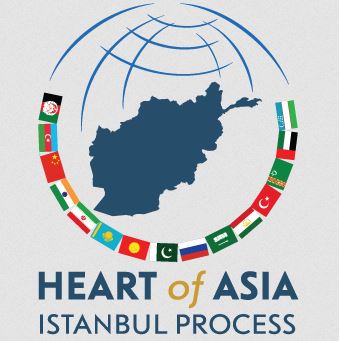
    The 9th Heart of Asia-Istanbul Process (HoA-IP) ministerial conference is part of the Istanbul Process – a regional initiative on security and cooperation for a stable and peaceful Afghanistan – that was launched on November 2, 2011, in Turkey.

    Note the participating countries from the logo itself.

    Heart of Asia – Istanbul Process

    • The Heart of Asia – Istanbul Process (HoA-IP) is an initiative of Afghanistan and Turkey, which was officially launched at a conference hosted by Turkey in Istanbul on 2 November 2011.
    • Since then, Afghanistan supported by fourteen participating countries and supporting countries beyond the region as well as 12 Regional and International Organizations is leading and coordinating this Process.

    Goals of the Process

    • The HoA-IP aims at promoting and strengthening peace, security, stability and prosperity in Afghanistan and in the region.
    • The HoA-IP has become one of the most interactive voluntary state-groupings in the HoA Region.
    • It brings Afghanistan’s immediate and extended neighbours as well as international supporters together through the following focus areas:
    1. Political Consultations
    2. Implementation of the Confidence Building Measures (CBMs)
    3. Cooperation with Regional Organizations

    Note: India too, has held the Ministerial Conferences of HoA-IP back on 4 December 2016 at Amritsar.

  • Uniform Civil Code: Triple Talaq debate, Polygamy issue, etc.

    CJI’s remarks on Uniform Civil Code

    The Chief Justice of India (CJI) has lauded Goa’s Uniform Civil Code and encouraged “intellectuals” indulging in “academic talk” to visit the state to learn more about it.

    Again a controversial, conventional yet contested topic has come at our dispense! Save such articles for general idea esp. for essays.

    What is a Uniform Civil Code?

    • A Uniform Civil Code is one that would provide for one law for the entire country, applicable to all religious communities in their personal matters such as marriage, divorce, inheritance, adoption etc.
    • Article 44, one of the directive principles of the Constitution lays down that the state shall endeavour to secure a Uniform Civil Code for the citizens throughout the territory of India.
    • These, as defined in Article 37, are not justiciable (not enforceable by any court) but the principles laid down therein are fundamental in governance.

    Greater role for State

    • Fundamental rights are enforceable in a court of law.
    • While Article 44 uses the words “the state shall endeavour”, other Articles in the ‘Directive Principles’ chapter use words such as “in particular strive”; “shall, in particular, direct its policy”; “shall be the obligation of the state” etc.
    • Article 43 mentions “state shall endeavour by suitable legislation” while the phrase “by suitable legislation” is absent in Article 44.
    • All this implies that the duty of the state is greater in other directive principles than in Article 44.

    What are more important — fundamental rights or directive principles?

    • There is no doubt that fundamental rights are more important.
    • The Supreme Court held in Minerva Mills (1980): Indian Constitution is founded on the bedrock of the balance between Parts III (Fundamental Rights) and IV (Directive Principles).
    • To give absolute primacy to one over the other is to disturb the harmony of the Constitution.
    • Article 31C inserted by the 42nd Amendment in 1976, however, lays down that if a law is made to implement any directive principle, it cannot be challenged on the ground of being violative of the FRs under Articles 14 and 19.

    Does India not already have a uniform code in civil matters?

    • Indian laws do follow a uniform code in most civil matters – Indian Contract Act, Civil Procedure Code, Sale of Goods Act, Transfer of Property Act, Partnership Act, Evidence Act etc.
    • States, however, have made hundreds of amendments and therefore in certain matters, there is diversity even under these secular civil laws.
    • Recently, several states refused to be governed by the uniform Motor Vehicles Act, 2019.

    What about personal laws?

    • If the framers of the Constitution had intended to have a Uniform Civil Code, they would have given exclusive jurisdiction to Parliament in respect of personal laws, by including this subject in the Union List.
    • But “personal laws” are mentioned in the Concurrent List.
    • Last year, the Law Commission concluded that a Uniform Civil Code is neither feasible nor desirable.

    Is there one common personal law for any religious community governing all its members?

    • All Hindus of the country are not governed by one law, nor are all Muslims or all Christians.
    • Not only British legal traditions, even those of the Portuguese and the French remain operative in some parts.
    • In Jammu and Kashmir until August 5, 2019, local Hindu law statutes differed from central enactments.
    • The Shariat Act of 1937 was extended to J&K a few years ago but has now been repealed.

    Various customary laws

    • Muslims of Kashmir were governed by a customary law, which in many ways was at variance with Muslim Personal Law in the rest of the country and was, in fact, closer to Hindu law.
    • Even on the registration of marriage among Muslims, laws differ from place to place. It was compulsory in J&K (1981 Act), and is optional in Bengal, Bihar (both under 1876 Act), Assam (1935 Act) and Odisha (1949 Act).
    • In the Northeast, there are more than 200 tribes with their own varied customary laws.
    • The Constitution itself protects local customs in Nagaland. Similar protections are enjoyed by Meghalaya and Mizoram.
    • Even reformed Hindu law, in spite of codification, protects customary practices.

    How does the idea of a Uniform Civil Code relate to the fundamental right to religion?

    • Article 25 lays down an individual’s fundamental right to religion;
    • Article 26(b) upholds the right of each religious denomination or any section thereof to “manage its own affairs in matters of religion”;
    • Article 29 defines the right to conserve distinctive culture.
    • An individual’s freedom of religion under Article 25 is subject to “public order, health, morality” and other provisions relating to FRs, but a group’s freedom under Article 26 has not been subjected to other fundamental rights
    • In the Constituent Assembly, there was division on the issue of putting UCC in the fundamental rights chapter. The matter was settled by a vote.
    • By a 5:4 majority, the fundamental rights sub-committee headed by Sardar Patel held that the provision was outside the scope of FRs and therefore the UCC was made less important than freedom of religion.

    Minority opinion in the Constituent Assembly

    • Some members sought to immunize Muslim Personal Law from state regulation.
    • Mohammed Ismail, who thrice tried unsuccessfully to get Muslim Personal Law exempted from Article 44, said a secular state should not interfere with the personal law of people.
    • B Pocker Saheb said he had received representations against a common civil code from various organisations, including Hindu organisations.
    • Hussain Imam questioned whether there could ever be uniformity of personal laws in a diverse country like India.
    • B R Ambedkar said, “no government can use its provisions in a way that would force the Muslims to revolt”.
    • Alladi Krishnaswami, who was in favour of a UCC, conceded that it would be unwise to enact UCC ignoring strong opposition from any community.
    • Gender justice was never discussed in these debates.

    How did the debate on a common code for Hindus play out?

    • In June 1948, Rajendra Prasad, President of the Constituent Assembly, warned Nehru that to introduce “basic changes” in personal law was to impose “progressive ideas” of a “microscopic minority” on the Hindu community as a whole.
    • Others opposed to reforms in Hindu law included Sardar Patel, Pattabhi Sitaramayya, M A Ayyangar, M M Malaviya and Kailash Nath Katju.
    • When the debate on the Hindu Code Bill took place in December 1949, 23 of 28 speakers opposed it.
    • On September 15, 1951, President Prasad threatened to use his powers of returning the Bill to Parliament or vetoing it. Ambedkar eventually had to resign.
    • Nehru agreed to trifurcation of the Code into separate Acts and diluted several provisions.
  • Primary and Secondary Education – RTE, Education Policy, SEQI, RMSA, Committee Reports, etc.

    What is Happiness Curriculum?

    The Delhi Deputy CM has said that during the pandemic, the Happiness Curriculum immensely helped them to apply life skills to deal with stressful situations.

    Try this question:

    Q.What is Happiness Curriculum? Discuss the scope of introducing happiness curriculum supplementary to the regular curriculum across the country.

    What is Delhi’s ‘happiness curriculum’?

    • The curriculum calls for schools in India to promote development in cognition, language, literacy, numeracy and the arts along with addressing the well-being and happiness of students.
    • It further says that future citizens need to be “mindful, aware, awakened, empathetic, firmly rooted in their identity…” based on the premise that education has a larger purpose, which cannot be in isolation from the “dire needs” of today’s society.
    • For the evaluation, no examinations are conducted, neither will marks be awarded.
    • The assessment under this curriculum is qualitative, focusing on the “process rather than the outcome” and noting that each student’s journey is unique and different.

    Objectives of the curriculum

    The objectives of this curriculum include:

    • developing self-awareness and mindfulness,
    • inculcating skills of critical thinking and inquiry,
    • enabling learners to communicate effectively and
    • helping learners to apply life skills to deal with stressful and conflicting situations around them

    Learning outcomes of this curriculum

    The learning outcomes of this curriculum are spread across four categories:

    • becoming mindful and attentive (developing increased levels of self-awareness, developing active listening, remaining in the present);
    • developing critical thinking and reflection (developing strong abilities to reflect on one’s own thoughts and behaviours, thinking beyond stereotypes and assumptions);
    • developing social-emotional skills (demonstrating empathy, coping with anxiety and stress, developing better communication skills) and
    • developing a confident and pleasant personality (developing a balanced outlook on daily life reflecting self-confidence, becoming responsible and reflecting awareness towards cleanliness, health and hygiene).

    How is the curriculum implemented?

    • The curriculum is designed for students of classes nursery through the eighth standard.
    • Group 1 consists of students in nursery and KG, who have bi-weekly classes (45 minutes each for one session, which is supervised by a teacher) involving mindfulness activities and exercise.
    • Children between classes 1-2 attend classes on weekdays, which involves mindfulness activities and exercises along with taking up reflective questions.
    • The second group comprises students from classes 3-5 and the third group is comprised of students from classes 6-8 who apart from the aforementioned activities, take part in self-expression and reflect on their behavioural changes.
  • Innovation Ecosystem in India

    [pib] PRISM Scheme

    The Ministry of Science & Technology has inaugurated an Alignment and Awareness Event for the publicity of the DSIR-PRISM Scheme.

    Crux lies in the acronym. Remember the primary aim and objectives. UPSC can also go with numbers esp. the grants.

    PRISM Scheme

    • PRISM stands for Promoting Innovations in Individuals, Start-ups and MSMEs.
    • It is an initiative of the Department of Scientific and Industrial Research (DSIR).
    • It is aimed at transforming an individual innovator into a successful technopreneur by promoting, supporting, and funding implementable and commercially viable innovations created for society.
    • Under the initiative, an Indian innovator- student, professional and common citizen – is provided technical, strategic, and financial assistance by DSIR for idea development, prototype development and pilot scaling, and patenting.
    • The programme is implemented across various sectors from energy to healthcare to waste management and others.

    Grants under the scheme

    The grant is given in two phases:

    1. Phase I and Phase II, catering to both the initial innovation stage and the advanced enterprise setup phase through DSIR outreach-cum-cluster innovation centres available throughout India.
    2. The grant amount in Phase I is around Rs. 2.0 lakhs to Rs. 20.00 lakhs and in Phase II maximum of Rs. 50.00 lakhs.

    Success of the scheme

    • The scheme has been instrumental in supporting individual innovators enabling inclusive development of India.
    • It has extended its support to any citizen through direct benefit transfer in the core technology areas such as-

    Affordable Healthcare, Water, Sewage Management, Green Technology, Clean Energy, Industrially Utilizable Smart Materials, Waste to Wealth aligned with our national objectives

  • New Species of Plants and Animals Discovered

    Species in news: Nacaduba sinhala ramaswamii Sadasivan

    The discovery of the species Nacaduba sinhala ramaswamii Sadasivan in the Agasthyamalais in the Western Ghats a decade ago has now found a place in the Journal of Threatened Taxa.

    William Shakespeare’s words hold true! Really “Whats in a name!”

    Nacaduba sinhala ramaswamii Sadasivan

    • The new taxon of Lycaenid butterflies belonging to the Nacaduba genus had been first sighted by a team of Bombay Natural History Society.
    • Line Blues are small butterflies belonging to the subfamily Lycaenidae and their distribution ranges from India and Sri Lanka to the whole of southeastern Asia, Australia and Samoa.
    • It is the first time that a butterfly species was discovered by an all-Indian research team from the Western Ghats.

    Try this PYQ from CSP 2020:

    Q.With reference to India’s Biodiversity, Ceylon frogmouth, Coppersmith barbet, Gray-chinned minivet and White-throated redstart are

    (a) Birds

    (b) Primates

    (c) Reptiles

    (d) Amphibians

  • Banking Sector Reforms

    Lessons from past for the new financial institutions

    The article explains the factors that resulted in the failure of several financial institutions created by the government.

    Establishment of Development Finance Institution

    • As promised in the Budget, the Lok Sabha recently passed The National Bank for Financing Infrastructure and Development (NBFID) Bill, 2021.
    • The Bill seeks to establish a development finance institution (DFI) to fund infrastructure.

    Providing finance to NBFID

    • The government will initially own 100% of the proposed NBFID’s 20,000-crore share capital.
    • The government’s stake will be reduced later to 26%.
    • The government will also support NBFID in raising cheap, long-term finance.
    • Apart from the initial share capital, the government will also provide a 5,000-crore grant at the end of its first financial year, presumably to defray initial costs.
    • The government has also committed to guarantee NBFID’s borrowings and bond issuances in the domestic and overseas markets.
    • In addition, the government will underwrite NBFID’s foreign exchange hedging costs.

    Concerns and lessons from the past

    • Studying the performance of IL&FS Ltd and IDFC Ltd, two infrastructure financing institutions, set up in the public sector, will be instructive.
    • IL&FS had borrowed short-term loans to finance long-term infrastructure assets.
    • Sustaining this became difficult when a slowing economy and political interference forced infrastructure borrowers to stop repaying loans.
    • Also, it had grown unwieldy, was mismanaged, and escaped scrutiny for too long by handing out plum postings to select bureaucrats.
    • Similarly, 1996 budget speech announced the setting up of IDFC to address the lack of long-term infrastructure financing.
    • In 2004, interference by the bureaucrats to tackle slow growth of loan led to the resignation of several senior executives in IDFC.
    • IDFC, created originally to finance infrastructure projects, has since then wound down its project finance book.
    • 2021-22 Budget speech also mentioned the creation of another institution that will acquire the banking sector’s stressed assets.
    • On the similar lines, Industrial Reconstruction Corporation of India was create in 1971.
    • Mandated with nursing sick and weak companies, it collapsed under this onerous burden.
    • The institution was eventually shut down in 2012.

    Consider the question “Examine the role the National Bank for Financing Infrastructure and Development will play in the infrastructure development in the country. Also, examine the factors that led to the failure of development finance institutions in the past.”

    Conclusion

    The short lesson is this: Fix the distorted demand side before increasing supply. Any number of institutions can be launched, but cannot be expected to work miracles in a corroded system.

  • Trade Sector Updates – Falling Exports, TIES, MEIS, Foreign Trade Policy, etc.

    Suez Shows Civilization Is More Vulnerable Than We Think

    The recent closure of the Suez Canal highlights the inherent flaw in the global supply chains. Choking of one of the many such points leads to disruption in the global trade.

    Points of vulnerability

    • Suez Canal was blocked this week by a container ship named Ever Given when a gust of wind moved the ship out of the course and grounded it.
    • Egypt has expanded parts of the canal to enable two-way traffic and accommodate larger carriers.
    • The Ever Given ship went off course and got stuck in a part of the waterway that’s still narrow.
    • But it’s also a reminder that even an advanced civilization like ours has points of acute vulnerability. 

    Avoiding single points of failures

    • Systems designers strive to avoid these single points of failure, so that transport, energy and communication networks are able to withstand attacks or unexpected calamities.
    • Technological advances and globalization were also supposed to make us less susceptible to this type of problem.
    • The internet, for example, was conceived as a decentralized system that’s pretty difficult to break, as was Bitcoin.
    • But global infrastructure, defined broadly, still has a surprising number of pinch points.
    • These can be difficult to remedy, as creating back-up options is expensive and counteracts economies of scale.
    • In some cases, the problem is even getting worse:
    • Industries are becoming more concentrated due to corporate takeovers.
    • Big chunks of our lives are now mediated by a just handful of technology companies.
    • The governments are now more cognizant of the political and economic power held by those who control choke points.

    How canal can disrupt the global trade

    • The Panama Canal, the Suez Canal and the Strait of Hormuz are places where container ships and oil tankers are forced to navigate narrow passages.
    • The alternative is a long detour or more expensive air freight.
    • For decades these waterways have been recognized as areas of huge strategic importance and as being susceptible to military or terror attacks.
    • Various back-up routes have been mooted but most haven’t materialized.

    Vulnerabilities in economic sphere

    • In seeking to rid itself of one pinch point — pipelines that traverse Ukraine provides gas to Europ — Germany has created another: the twin Nord Stream gas pipelines that connect Russia and Germany under the Baltic Sea.
    • The U.S. worries these will weaken eastern Europe and increase Germany’s dependence on Russia.
    • In the realm of finance, trillions of dollars of financial instruments are tied to the London interbank offered rate.
    • This rate was easy to manipulate until they were exposed in the years following the 2008 financial crisis.
    • Libor is now being replaced.
    • Similarly, Europe has long relied on the Swift payments system and the U.S. dollar, but that dependence came into question in 2018 as it disagreed with the U.S. over Iran sanctions.
    • In technology, people have warned for years that the U.S. needs a back-up for the Global Positioning System.
    • The system can be spoofed or otherwise disrupted.
    • Semiconductors are where the clearest pinch points are emerging.
    • A global computer chip shortage during Covid has forced auto manufacturers to tear up production plans.
    • Very few companies are able to produce the most advanced chips, due to the technical challenges and vast cost of constructing foundries.
    • The most important of these, Taiwan Semiconductor Manufacturing Co., is based on an island that’s under constant threat of invasion by Beijing.
    • ASML Holding NV of the Netherlands has a monopoly on the machines needed to fabricate the best chips.
    • Now China’s inability to buy the most cutting edge gear from ASML is holding back its own semiconductor ambitions.

    Way forward

    • None of these choke-point problems are easy to resolve.
    • Not only are there geopolitical ambitions at work here but there are also usually trade-offs between building greater resilience and efficiency.
    • But because redundancy offers protection and is therefore a public good, there’s an argument that governments should play a role in providing it.
    • Antitrust polies can be used to challenge monopolies and foster more competition.

    Consider the question “What are the threat emanating from the various forms of choke points to the global trade? Suggest the ways to deal with it.”

    Conclusion

    Having a back-up is a good idea. We learn that when the roof falls in, or when a ship called the Ever Given snarls up the Suez Canal.

  • Agricultural Sector and Marketing Reforms – eNAM, Model APMC Act, Eco Survey Reco, etc.

    Need for technological solutions to use water for agriculture more sustainably

    The article examine the use of water for sugarcane and rice cultivation in India and its impact. 

    Water availability and usage in India

    • As per the Central Water Commission’s reassessment of water availability, India receives a mean annual precipitation of about 3,880 billion cubic meters (BCM) but utilises only 699 BCM (18 percent) of this; the rest is lost to evaporation and other factors.
    • The demand for water is likely to be 843 BCM in 2025 and 1,180 BCM by 2050.
    • As per the UN’s report on Sustainable Development Goal-6 (SDG-6) on “Clean water and sanitation for all by 2030”, India achieved only 56.6 per cent of the target by 2019.
    • Further, as per the Niti Aayog’s Composite Water Management Index (2019), 75 per cent households in India do not have access to drinking water on their premises.
    • India ranks 120th amongst 122 countries in the water quality index.
    • India is identified as a water-stressed country with its per capita water availability declining from 5,178 cubic metre (m3)/year in 1951 to 1,544 m3 in 2011 — this is likely to go down further to 1,140 cubic metre by 2050.

    How free or highly subsidised electricity skews water use pattern

    • Despite decades of large public and private investments in irrigation, only about half of India’s gross cropped area:198 million hectares is irrigated.
    • Groundwater contributes about 64 per cent, canals 23 per cent, tanks 2 per cent and other sources 11 per cent to irrigation.
    • This results primarily from incentive policy of free or highly subsidised power, particularly in the country’s north-west, the site of the erstwhile Green Revolution.
    • Overexploitation of groundwater has made this region amongst the three highest water risk hotspots.
    • Overall, about 1,592 blocks in 256 districts in India are either critical or overexploited.

    Need to focus on rice and sugarcane

    • Agriculture uses about 78 per cent of fresh water resources.
    • As per a NABARD-ICRIER study on Water Productivity Mapping, these crops alone consume almost 60 per cent of India’s irrigation water.
    • We need a paradigm shift to increase land productivity measured as tonnes per hectare (t/ha), and to maximise applied irrigation productivity measured as kilogrammes, or Rs, per cubic metre of water (kg/m3).
    • Figure 1 shows applied irrigation water productivity against land productivity for rice and sugarcane in important growing states.
    • Note that while Punjab scores high on land productivity of rice, it is at the bottom with respect to applied irrigation water productivity.
    • In the case of sugarcane, irrigation water productivity in Andhra Pradesh, Karnataka, Maharashtra and Tamil Nadu is only 1/3rd of that in Bihar and UP (Figure 2).
    • There is, thus, a need to realign cropping patterns based on per unit of applied irrigation water productivity.

    Use of technology

    • There are technologies to produce the same output of rice and sugarcane with almost half the irrigation water.
    • Jain Irrigation, for instance, has set up drip irrigation pilots for paddy and sugarcane.
    • The results of these pilots indicate while it takes 3,065 litres of water to produce 1 kg of paddy grain (yield level 7.75 t/ha) under traditional flood irrigation, under drip, it can be reduced to just 842 litres.
    • The benefit cost ratio of drip with fertigation in case of sugarcane in Karnataka is observed to be 2.64.
    • An extension to this is the “Family Drip System” innovated by Israel-based — Netafim.
    • The company has also launched its largest demonstration project in Asia at Ramthal, Karnataka.
    • Technologies like Direct Seeded Rice (DSR) and System of Rice Intensification (SRI) can also save 25-30 per cent of water compared to traditional flood irrigation.

    Need for right pricing policies

    • Technological solutions cannot make much headway unless pricing policies of agri-inputs are put on the right track and farmers are incentivised for saving water.
    • The Punjab government, along with the World Bank and J-PAL, has started some pilots with an innovative policy of “Paani Bachao Paise Kamao” to encourage rational use of water among farmers.

    Consider the question “Examine the impact of rice and sugarcane cultivation on the groundwater table in India. How technological solutions can help use water more sustainably for agriculture?”

    Conclusion

    Overall, it seems it is time to switch from the highly subsidised price policy of water/power (and even fertilisers) to direct income support on a per hectare basis, and investment policies that help with newer technologies and innovations.

  • Foreign Policy Watch: India-Afghanistan

    The Afghan Endgame and the US

    As the May 1 deadline for pulling out all American troops from Afghanistan nears, US President Joe Biden faces some difficult decisions.

    Key tasks for the US before they exit

    • The U.S. could abide by the promise made in the U.S.-Taliban agreement signed in February 2020 to withdraw the last of the around 2,500 American Marines stationed in Afghanistan.
    • However, Mr Biden has said it would be tough given the levels of violence there.
    • The US could negotiate with the Taliban for an extension of the agreement, offering other incentives like the release of more prisoners and the delisting of sanctioned Taliban terrorists.
    • The other option is to scrap the 2020 agreement and back the Ashraf Ghani government to continue towards a negotiated settlement, even as US troops remain in Afghanistan to stabilize the security situation.

    What is the US likely to do?

    • The US exit plan is still underway and that no decision on the length of stay or troop numbers have been made to this point, cleared the US Secy of Defence.
    • No U.S. troops have been targeted by Taliban militants in the past year, but violence against Afghan civilians, particularly women, journalists, students and activists has gone up manifold despite the peace agreement.
    • More than 3,000 civilians were killed in 2020.
    • The US has shown some impatience with the Ghani government as well, believing that it is dragging its feet on intra-Afghan negotiations that began last year in Doha but have stalled for the moment.

    Plans for Ashraf Ghani

    • A US plan proposes that Mr Ghani step up negotiations with the Taliban for “power-sharing”, discuss principles of future governance and step aside eventually for a “more inclusive” or interim government. The
    • The tone of the letter seems to make it clear that the US is not in favour of completely scrapping the 2020 agreement.
    • Therefore, it is most likely to pursue the option of negotiating for an extension of the agreement, according to experts, as it builds other dialogue platforms.

    Try this question from our AWE Initiative:

    What is President Ghani’s plan?

    • Ghani has proposed his own peace plan.
    • It would involve a full ceasefire, inviting the Taliban to participate in early elections in Afghanistan, and then for Mr Ghani to hand over power to the elected government.
    • He also said no regional talks could be successful if they did not include India, which is a development partner and a stakeholder.

    Where does India stand?

    • India’s position has been to back an “Afghan-owned, Afghan-led, Afghan-controlled” peace process, backing the elected government in Kabul, and it has not yet held talks with the Taliban directly.
    • As a result, its option remains to stand with the Ghani government and support the constitution that guarantees a democratic process and rights of women and minorities, over any plans the Taliban might have if they come to power.
    • At the same time, India has not foreclosed on the option of talking to the Taliban if it does join the government in Afghanistan.
    • India too has made it clear that it seeks to be an integral part of the process, as the outcomes will have a deep impact on India’s security matrix as well.

Join the Community

Join us across Social Media platforms.
