💥UPSC 2027,2028 Mentorship (April Batch) + Access XFactor Notes & Microthemes PDF

Archives: News

  • Hunger and Nutrition Issues – GHI, GNI, etc.

    [pib] Food and Agriculture Organization (FAO)

    On the occasion of 75th Anniversary of Food and Agriculture Organization (FAO) on 16th October 2020, PM has released a commemorative coin of Rs 75.

    Try this MCQ:

    Q.The FAO accords the status of ‘Globally Important Agricultural Heritage Systems (GIAHS)’ to traditional agricultural systems. What is the overall goal of this initiative?

    1. To provide modern technology, training in modern farming methods and financial support to local communities of identified GIAHS so as to greatly enhance their agricultural productivity.
    2. To identify and safeguard eco-friendly traditional farm practices and their associated landscapes, agricultural biodiversity and knowledge systems of the local communities.
    3. To provide Geographical Indication status to all the varieties of agricultural produce in such identified GIAHS Select the correct answer using the code given below:

    (a) 1 and 3 only

    (b) 2 only

    (c) 2 and 3 only

    (d) 1, 2 and 3

    About FAO

    • It is a specialized agency of the United Nations that leads international efforts to defeat hunger and improve nutrition and food security.
    • It was founded in October 1945 and is headquartered in Rome.
    • It maintains regional and field offices around the world, operating in over 130 countries.
    • It also conducts research, provides technical assistance to projects, operates educational and training programs, and collects data on agricultural output, production, and development.
    • Composed of 197 member states, the FAO is governed by a biennial conference representing each member country and the European Union, which elects a 49-member executive council.
    • The Director-General serves as the chief administrative officer.

    India and FAO

    • India has had a historic association with FAO.
    • Indian Civil Service Officer Dr Binay Ranjan Sen was the Director-General of FAO during 1956-1967.
    • The World Food Programme, which has won the Nobel Peace Prize 2020, was established during his time.
    • India’s proposals for the International Year of Pulses in 2016 and the International Year of Millets 2023 have also been endorsed by FAO.

  • Primary and Secondary Education – RTE, Education Policy, SEQI, RMSA, Committee Reports, etc.

    [pib] STARS Project

    The Union Cabinet has approved the sum of Rs. 5718 crore for the World Bank aided project STARS.

    Try this MCQ:

    Q. The STARS Project recently seen in news is an initiative of:

    World Bank/ Bill and Melinda Gates Foundation / UNECOSOC/ UNICEF

    STARS Project

    • ‘STARS’ is an acronym for Strengthening Teaching-Learning and Results for States (STARS).
    • The STARS project will be implemented through the Samagra Shiksha Abhiyan, the flagship central scheme.
    • The six states include- Himachal Pradesh, Kerala, Madhya Pradesh, Maharashtra, Odisha and Rajasthan.
    • It will help improve learning assessment systems, strengthen classroom instruction and remediation, facilitate school-to-work transition, and strengthen governance and decentralized management,
    • Some 250 million students (between the age of 6 and 17) in 1.5 million schools and over 10 million teachers will benefit from the STARS program.
    • STARS will support India’s renewed focus on addressing the ‘learning outcome’ challenge and help students better prepare for the jobs of the future – through a series of reform initiatives.

    Major components of the STARS

    1)      At the national level, the project envisages the following interventions which will benefit all states and UTs:

    • To strengthen MOE’s national data systems to capture robust and authentic data on retention, transition and completion rates of students.
    • To support MOE in improving states PGI scores by incentivizing states governance reform agenda through SIG (State Incentive Grants).
    • To support the strengthening of learning assessment systems.
    • To support MOE’s efforts to establish a National Assessment Center (PARAKH).

    2)       At the State level, the project envisages: 

    • Strengthening Early Childhood Education and Foundational Learning
    • Improving Learning Assessment Systems
    • Strengthening classroom instruction and remediation through teacher development and school leadership
    • Governance and Decentralized Management for Improved Service Delivery.
    • Strengthening Vocational education in schools through mainstreaming, career guidance and counselling, internships and coverage of out of school children
  • Mother and Child Health – Immunization Program, BPBB, PMJSY, PMMSY, etc.

    [pib] Thalassemia Bal Sewa Yojna

    Union Health Ministry has launched the second phase of “Thalassemia Bal Sewa Yojna” for underprivileged Thalassemic patients.

    Thalassemia Bal Sewa Yojna

    • This scheme was launched in 2017 under the Coal India CSR funded Hematopoietic Stem Cell Transplantation (HSCT) program.
    • It aims to provide a one-time cure opportunity for Haemoglobinopathies like Thalassaemia and Sickle Cell Disease for patients who have a matched family donor.
    • The initiative was targeted to provide financial assistance to a total of 200 patients by providing a package cost not exceeding Rs. 10 lakhs per HSCT.

    What is Thalassemia?

    • Thalassemia is an inherited blood disorder characterized by less oxygen-carrying protein (haemoglobin) and fewer red blood cells in the body than normal.
    • When there isn’t enough haemoglobin, the body’s red blood cells don’t function properly and they last shorter periods of time, so there are fewer healthy red blood cells travelling in the bloodstream.
    • Symptoms include fatigue, weakness, paleness and slow growth.
    • Mild forms may not need treatment. Severe forms may require blood transfusions or a donor stem-cell transplant.
  • Monetary Policy Committee Notifications

    The RBI tunes in to the economy

    The article analyses the recent changes signalled by the RBI in its policymaking.

    Changes in the economic policymaking

    • Recently the U.S. Fed declared that the Fed will not let inflation stand in the way of maximising employment.
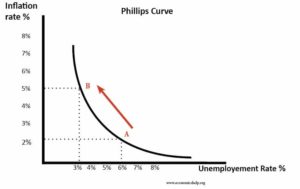
    • The reason for this was that the Phillips Curve, the relationship between inflation and unemployment, may no longer hold in the U.S. economy.
    • This is significant, given that the Anglo-American economics has been dominated by Phillips Curve.

    Why there was need for change in inflation targeting

    • Data show that the model that currently guides India’s inflation control strategy may be quite irrelevant.
    • This is seen in the recent behaviour of inflation.
    • We know that output contracted by more than 23% in the first quarter of this year.
    • Despite this staggering decline the inflation rate did not change,
    • This was contrary to experience that inflation reflects an ‘over heating’ economy, one growing too fast in relation to its potential.
    • This view represents the RBI’s official understanding of inflation, and presumably forms the basis of its policy of inflation targeting.
    • It was endorsed by the Government of India when it legislated the modern monetary policy framework to enable the RBI to pursue inflation targeting.
    • If the Phillips Curve, which the RBI’s approach internalises, exists, inflation should have decreased as India’s economy contracted during the lockdown.
    • The current inflation targeting mechanism had been imagined with developing economies in mind.
    • Inflation targeting mechanism is based on the idea that food prices are an important determinant of inflation along with imported inflation.
    • Accordingly, a macroeconomic contraction need not lower inflation.

    Role of food prices in India

    • A recent working paper of the RBI’s research department suggested that a more eclectic model than the one that underlies inflation targeting does a better job of forecasting inflation in India.
    • This model accepts a role for food prices, a possibility that is missed when embracing economic models developed in the western hemisphere, where food prices have stopped trending upwards over half a century ago.

    Conclusion

    The RBI shifting away from its rigid inflation targeting policy is in tune with the time and signals that the central bank is finally alive to India’s economy.


    Back2Basics: What is Philips Curve?

    • The Phillips curve is an economic concept, stating that inflation and unemployment have a stable and inverse relationship.
    • The theory claims that with economic growth comes inflation, which in turn should lead to more jobs and less unemployment.
    • However, the original concept has been somewhat disproven empirically due to the occurrence of stagflation in the 1970s, when there were high levels of both inflation and unemployment.

  • Gravitational Wave Observations

    New Shephard Rocket System

    New Shephard, a rocket system meant to take tourists to space successfully completed its seventh test launch.

    Note the features of the Karman Line. It is a new terminolgy in our recent space vocab.

    What is New Shephard?

    • New Shephard has been named after astronaut Alan Shephard, the first American to go to space, and offers flights to space over 100 km above the Earth and accommodation for payloads.
    • Essentially, it is a rocket system that has been designed to take astronauts and research payloads past the Karman line – the internationally recognised boundary of space.
    • The idea is to provide easier and more cost-effective access to space meant for purposes such as academic research, corporate technology development and entrepreneurial ventures among others.
    • It is built by Amazon founder Jeff Bezos’s Space Company called Blue Origin.
    • In 2018, Blue Origin was one of the ten companies selected by NASA to conduct studies and advance technologies to collect process and use space-based resources for missions to the Moon and Mars.

    How does it work?

    • The rocket system consists of two parts, the cabin or capsule and the rocket or the booster.
    • The cabin can accommodate experiments from small mini payloads up to 100 kg.
    • The cabin is designed for six people and sits atop a 60-feet tall rocket and separates from it before crossing the Karman line, after which both vehicles fall back to the Earth.
    • The system is a fully reusable, vertical takeoff and vertical landing space vehicle that accelerates for about 2.5 minutes before the engine cuts off.
    • After separating from the booster, the capsule free falls in space, while the booster performs an autonomously controlled vertical landing back to Earth.
    • The capsule, on the other hand, lands back with the help of parachutes.

    Back2Basics: Karman line

    • The Karman line is an attempt to define a boundary between Earth’s atmosphere and outer space.
    • The line is named after Theodore von Kármán (1881–1963), a Hungarian American engineer and physicist, who was active primarily in aeronautics and astronautics.
    • He was the first person to calculate the altitude at which the atmosphere becomes too thin to support aeronautical flight and arrived at 83.6 km (51.9 miles) himself.

    Locating the line

    • The Fédération Aéronautique Internationale (FAI) defines Karman Line as the altitude of 100 kilometres (62 miles; 330,000 feet) above Earth’s mean sea level.
    • However, other organizations do not use this definition. There is no international law defining the edge of space, and therefore the limit of national airspace.
    • For instance, the US Air Force and NASA define the limit to be 50 miles (80 km) above sea level.
    • The line is approximately at the turbopause, above which atmospheric gases are not well-mixed.
  • Roads, Highways, Cargo, Air-Cargo and Logistics infrastructure – Bharatmala, LEEP, SetuBharatam, etc.

    Places in news: Zojila Tunnel

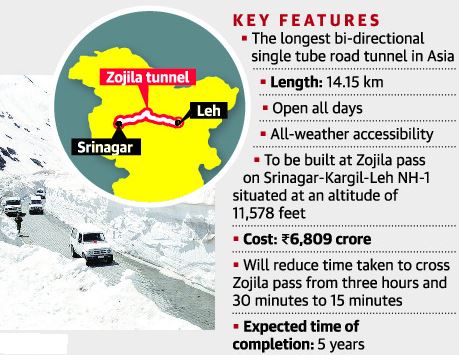
    Union Transport Ministry has launched the first blasting for construction-related work at the Zojila tunnel that will provide all-year connectivity between Srinagar valley and Leh.

    These days various Himalayan passes and tunnels are overwhelmingly seen in news. Open your Atlas and try to spot all of them for now and once before the exam.

    Zojila Tunnel

    • The Zojila is set to be Asia’s longest bi-directional tunnel.
    • It will connect Srinagar, Dras, Kargil and Leh via a tunnel through the famous Zojila Pass.
    • Located at more than 11,500 feet above sea level, the all-weather Zojila tunnel will be 14.15 km long and ensure road connectivity even during winters.
    • It will make the travel on the 434-km Srinagar-Kargil-Leh Section of NH-1 free from avalanches, enhance safety and reduce the travel time from more than 3 hours to just 15 minutes.
    • The speed limit inside the tunnel is likely to be the same as in the Atal tunnel – 80 kmph.

    Its significance

    • The project holds strategic significance as Zojila Pass is situated at an altitude of 11,578 feet on the Srinagar-Kargil-Leh National Highway and remains closed during winters due to heavy snowfall.
    • At present, it is one of the most dangerous stretches in the world to drive a vehicle and this project is also geo-strategically sensitive.
  • Industrial Sector Updates – Industrial Policy, Ease of Doing Business, etc.

    Feasibility of Export Driven Growth for India

    To aim for achieving high growth rate by focusing only on the domestic consumption and domestic demand could result in failure. The article argues for the focus on export to achieve the objective of growth.

    Domestic-demand led growth and its limitations

    • The debate in India has focused on domestic-demand led growth.
    • But there is no known model of domestic demand/consumption-led growth, anywhere that has delivered quick, sustained, and high rates of economic growth for developing countries.
    • India’s GDP growth of over 6 per cent after 1991 was associated with real export growth of about 11 per cent.
    • Moreover, domestic-demand led growth requires more public spending, tax cuts, private investment, and/or financial sector reforms: which is not feasible in the present context due to pandemic.
    • Consumption growth will be limited by the fact that household debt has grown rapidly in the last few years.
    • Consumption now can grow only if incomes grow.
    • Government spending could be a short run option, but COVID has limited that possibility.

    Why India should not follow advanced countries’ fiscal policies

    • India’s interest rates are not at zero and are unlikely to be so because of persistent inflation.
    • India’s borrowing is still considered risky which is reflected in ratings.
    • The favourable interest rate-growth differential that supports expansionary policy in the advanced countries is absent in India.
    • India may well have scope for expansionary fiscal policy in the short run but not as a medium run growth strategy.

    Why India should focus on export

    • Given all the above factors, India does not have the luxury of abandoning export orientation because the alternatives are so limited.
    • India’s market is too small to sustain any kind of serious import substitution strategy.
    • Small size of the market makes it difficult to offer investors the domestic market as bait and incentivising them to export.
    • India’s big, unexploited opportunities are in unskilled labour exports.
    • India is vastly under-exporting relative to its labour force.
    • Because China’s wages are rising as it has become richer, it has vacated about $140 billion in exports in unskilled-labour intensive sectors.
    • Post-COVID, the move of investors away from China will probably accelerate to hedge against supply chain disruptions.
    • India did not take advantage of the first China opportunity, now, a second opportunity stemming from geo-politics should be seized by India.
    • As India contemplates atmanirbharta, two deeper advantages of export orientation are always worth remembering.
    • 1) Foreign demand will always be bigger than domestic demand for any country.
    • 2) If domestic producers are competitive internationally, they will be competitive domestically and domestic consumers and firms will also benefit.

    Why openness of ecnonomy is important

    • Exploiting this opportunity in unskilled exports requires more not less openness.
    • To be internationally competitive, many parts and components have to be imported from so many different sources.
    • One indicator is the foreign or import contribution to exports.
    • China and Vietnam at the time of their export boom in textiles and clothing suggests that exports were highly dependent on imports (between 40 and 45 per cent).
    • In contrast, India’s import share is about 16 per cent.
    • Achieving Chinese and Vietnamese levels of success will therefore require greater imports and openness.

     Way forward

    • Export success will require genuine easing of costs of trading and doing business in India.
    • In the case of clothing, a key policy change in India will be to eliminate tariffs on all inputs. 
    • It will also require signing free trade agreements with Europe that still impose high duties on India’s clothing export, while Bangladeshi and Vietnamese exports which enjoy preferential access to world markets.

    Consider the question “As India contemplates atmanirbharta, we should not forget that export dynamism is essential for the rapid and sustained high economic growth. Comment.”

    Conclusion

    In sum, resisting the misleading allure of the domestic market, India should zealously boost export performance and deploy all means to achieve that. Pursuing rapid export growth in manufacturing and services should be an obsession with self-evident justification.

  • Foreign Policy Watch: India-China

    Four lessons for the Quad from Asia’s history and geopolitics

    The article highlights the 4 issues related to the history and geopolitics of Asian that the Quad members should pay attention to while formulating the future course of action. 

    The 4 factors

    If the Quad is to prosper as a geopolitical construct, it would do well to heed four lessons drawn from the long arc of Asia’s history and geopolitics.

    1) Lack of existence of Indo-Pacific system

    • There has never been Indo-Pacific system ever since the rise of the port-based kingdoms of Indochina in the first half of the second millennium.
    •  There were two Asian systems — an Indian Ocean system and an East Asian system — with intricate sub-regional balances.
    • The effort by a U.S. to artificially manufacture to combine the Indo and the Pacific into a unitary system is unlikely to succeed.

    2) Lack of peaceful existence dominated by any power

    • The Indo-Pacific region possesses no prior experience of long period of peace, prosperity and stability engineered from its maritime fringes.
    • Rather, dynamic long cycles of Chinese influence radiating outwards have alternated with sharp periods of turmoil.
    • The of ASEAN-centred multilateralism is more in tune with regional tradition and historical circumstance.
    • For their part, the Indo-Pacific’s ‘flanking powers’, India and Japan, have never balanced Chinese power throughout their illustrious histories.

    3) India must use its leverage judiciously

    •  The sea lines of communication constitute the important links connecting Indian Ocean to the Western Pacific.
    • It is also a valuable arena of leverage vis-à-vis Chinese shipping and resource flows.
    • This leverage must be wielded judiciously on India’s terms, not on the Quad’s terms.
    • The Quad, after all, has little to offer materially with regard to New Delhi’s continental two-front dilemma.
    • However, ceding this chokepoint leverage will invite overwhelming Chinese pressure against the full range of India’s South Asian interests — to which the other Quad members possess neither will nor desire to answer.

    4) Check on China’s India Ocean Ambitions

    •  The Quad has a valuable role to play as a check on China’s Indian Ocean ambitions.
    • India must develop ingrained habits of interoperable cooperation with its Quad partners.
    • This interoperable cooperation could pre-emptively dissuade China from mounting a naval challenge in its backyard.

    Conclusion

    The Quad must consider these factors while formulating the future course of action.

  • Banking Sector Reforms

    Dilution of efficiency based principles and its implications for finacial markets

    The article discusses the themes of the recently published books by Viral Acharya and Urjit Patel. Both the books deal with the issues with the financial markets in India

    Context

    • Two recently published books by Viral Acharya and Urjit Patel throws light on the issues with India’s finance market and role of RBI and the government.

    Importance of financial markets

    • Banks along with bond and equity markets oversee the matching of savers with borrowers.
    • Without financial markets, businesses would be restricted to investing out of retained earnings alone.
    • The financial markets have to satisfy the return appetites of savers while minimising their risk exposure.

    Undue preference to fiscal interest of the government

    • A major theme of Acharya’s book is the rampant subjugation of the financial and monetary infrastructure to the fiscal interests of the government.
    • Consider, for example, the conduct of monetary policy.
    • Since bank assets are marked to market, cuts in interest rates induce treasury gains for banks that effectively recapitalises them.
    • Consequently, rate cuts are preferred by governments needing to inject capital into public sector banks (PSBs).
    • For the same reasons, liquidity injections, which raise bond prices, are preferred to liquidity absorptions.
    • Fiscal compulsions of government can induce liquidity policies that have the opposite effect on the rate-setting by the MPC.
    • This contradiction is further complicated by the fact that the RBI is also the debt management agency for the government.
    • As a debt management agency, RBI’s key tasks is to sell government bonds at the highest possible price.
    • Pressures for regulatory forbearance in recognising NPAs often arise from the government wanting to avoid having to recapitalise PSBs.
    • The sameexplains the fact that stock exchanges in India having a 30-day disclosure norm for registered borrowers who default on their bank loans.
    • The standard in developed capital markets is immediate disclosure.
    • But that would induce an overnight rating downgrade of the concerned borrower thereby triggering additional capital provisioning needs for the lending bank.

    Conflict in government owning the PSBs

    • Patel’s book deals with conflicts inherent in the state owning the banks that control about three-fourth of total banking assets in India.
    • The primary problem with PSBs is that governments have used them as tools for macroeconomic management.
    • PSBs are regularly used for resource mobilisation to finance fiscal deficits.
    • The government often announces credit policies rather than having the banks allocate credit based on risk-return management criteria.
    • PSBs are the favoured instrument for meeting employment targets, supporting farmers through loan write-offs, etc.

    What are the implications of government owning PSBs

    • This kind of state interface naturally induces extreme levels of moral hazard in the behaviour of both debtors and creditors.
    • PSBs are not incentivised to exercise due diligence since they expect regulatory forbearance and recapitalisation in the event of rising NPAs.
    • The dilution of efficiency-based principles for banking has implications for all borrowers.
    • Creditworthy borrowers pay the risk premia to cover the riskiness due to unhealthy borrowers.
    • The worsening risk pool of borrowers is partly to blame for the fact that long term borrowing rates have remained stubbornly high despite repeated rate cuts by the MPC over the past 18 months.

    3 Problems and 3 Reforms

    Problems

    • There are three obvious problems with the existing architecture.
    • The first is the state ownership of banks.
    • The second is the chronically high fiscal deficit run by the consolidated public sector.
    • The third is the widespread perception that market regulators work under close government direction. 

    Reforms

    • Dealing with this will require, at a minimum, three reforms.
    • First, there has to be a wholehearted attempt at privatisation of PSBs.
    • Second, the RBI needs to be relieved of its public debt management role.
    • Third, the RBI has to be empowered to act independently of the government.

    Conclusion

    The growth of firms, which is a key driver of productivity and growth, requires well-functioning financial markets. India has a lot of work to do.


    Back2Basics: How cuts in interest rates induce treasury gains for banks?

    • Falling rates across the debt markets increase the demand for instruments that pay higher interest.
    • At this stage, prices of bonds which banks had bought when interest rates were high rise.
    • Hence, the value of government securities that banks have bought for the SLR requirement rises.
    • This increases profits as banks record the market value of these securities in their books.
    • Under this process, called marking to market, organisations record profits/losses in their books on a daily basis without actually booking any profit or loss.
    • So, more SLR bonds the bank holds, the higher its mark-to-market profit.
    • The other reasons bank profits rise when interest rates fall are pick-up in growth as companies borrow at lower rates as well as improvement in liquidity.

    Source:-

    https://www.businesstoday.in/moneytoday/banking/banks-to-make-huge-treasury-gains-on-bonds-on-rbi-rate-cut/story/193552.html

  • Nobel and other Prizes

    Explained: Auction theory

    This year, the Nobel Prize for Economics was awarded to Paul R Milgrom and Robert B Wilson for “improvements to auction theory and inventions of new auction formats”.

    Do you remember the 2G spectrum scam, Coalgate scam etc. that rocked the nation? Can you relate this auction theory for bidding public assets to private entities?

    What is Auction?

    • Essentially, it is about how auctions lead to the discovery of the price of a commodity.
    • Auction theory studies how auctions are designed, what rules govern them, how bidders behave and what outcomes are achieved.
    • When one thinks of auctions, one typically imagines the auction of a bankrupt person’s property to pay off his creditors.
    • Indeed, this is the oldest form of auction. This simple design of such an auction — the highest open bidder getting the property (or the commodity in question) — is intuitively appealing as well.

    Evolving definitions of auction

    • Over time, and especially over the last three decades, more and more goods and services have been brought under auction.
    • The nature of these commodities differs sharply. For instance, a bankrupt person’s property is starkly different from the spectrum for radio or telecom use.
    • Similarly, carbon dioxide emission credits are quite different from the spot market for buying electricity, which, in turn, is quite different from choosing which company should get the right to collect the local garbage.
    • In other words, no one auction design fits all types of commodities or seller.

    The Auction Theory

    Three key variables need to be understood before we move to actual propositions.

    (1) Rules of the auction

    • Imagine participating in an auction. Your bidding behaviour is likely to differ if the rules stipulate open bids as against closed/sealed bids.
    • The same applies to single bids versus multiple bids, or whether bids are made one after another or everyone bids at the same time.

    (2) Commodity or service

    • The second variable is the commodity or service being put up for auction. In essence, the question is how each bidder values an item.
    • This is not always easy to ascertain. In terms of telecom spectrum, it might be easier to peg the right value for each bidder because most bidders are likely to put the spectrum to the same use.
    • This is called the “common” value of an object.

    (3) Uncertainty

    • The third variable is uncertainty.
    • For instance, which bidder has what information about the object, or even the value another bidder associates with the object.

    The theory

    • Wilson developed the theory for auctions of objects with a common value — a value which is uncertain beforehand but, in the end, is the same for everyone”.
    • Wilson showed what the “winner’s curse” is in an auction and how it affects bidding.
    • As shown in the illustration, it is possible to overbid — $50 when the real value is closer to $25. In doing so, one wins the auction but loses out in reality.
    • Milgrom “formulated a more general theory of auctions that not only allows common values but also private values that vary from bidder to bidder”.
    • He analysed the bidding strategies in a number of well-known auction formats, demonstrating that a format will give the seller higher expected revenue when bidders learn more about each other’s estimated values.

    Significance of Auction theory

    • Throughout history, countries have tried to allocate resources in various ways.
    • Some have tried to do it through political markets, but this has often led to biased outcomes. For Ex: The rationing of essential goods worked in State-controlled economies. People who were close to the bureaucracy and the political class came out ahead of others.
    • Lotteries are another way to allocate resources, but they do not ensure that scarce resources are allocated to people who value it the most.
    • Auctions, for a good reason, have been the most common tool for thousands of years used by societies to allocate scarce resources.
    • When potential buyers compete to purchase goods in an auction, it helps sellers discover those buyers who value the goods the most.
    • Further, selling goods to the highest bidder also helps the seller maximise his or her revenues. So, both buyers and sellers benefit from auctions.
    • Whether it is the auction of spectrum waves or the sale of fruits and vegetables, auctions are at the core of allocation of scarce resources in a market economy.

    What are the criticisms levelled against auctions and what are the economists contribution?

    1.Issue of Winner’s Curse

    • The most common one is that auctions can lead buyers to overpay for resources whose value is uncertain to them.
    • This criticism, popularly known as the ‘winner’s curse’, is based on a study that showed how buyers who overpaid for U.S. oil leases in the 1970s earned low returns. Dr. Wilson was the first to study this matter.
    • The rational bidders may decide to underpay for resources in order to avoid the ‘winner’s curse’, and Dr. Wilson argued that sellers can get better bids for their goods if they share more information about it with potential buyers

    2.Auction formats

    • Economists traditionally working on auction theory believed that all auctions are the same when it comes to the revenues that they managed to bring in for sellers. The auction format, in other words, did not matter.
    • This is known as the ‘revenue equivalence theorem’.
    • But Dr. Milgrom showed that the auction format can actually have a huge impact on the revenues earned by sellers.
    • The most famous case of an auction gone wrong for the seller was the spectrum auction in New Zealand in 1990.
    • In what is called a ‘Vickrey auction’, where the winner of the auction is mandated to pay only the second-best bid, a company that bid NZ$1,00,000 eventually paid just NZ$6 and another that bid NZ$70,00,000 only paid NZ$5,000.
    • In particular, Dr. Milgrom showed how Dutch auctions, in which the auctioneer lowers the price of the product until a buyer bids for it, can help sellers earn more revenues than English auctions.
    • In the case of English auctions, the price rises based on higher bids submitted by competing buyers. But as soon as some of the bidders drop out of the auction as the price rises, the remaining bidders become more cautious about bidding higher prices.

    Conclusion

    • The contributions of Dr. Milgrom and Dr. Wilson have helped governments and private companies design their auctions better.
    • This has, in turn, helped in the better allocation of scarce resources and offered more incentives for sellers to produce complex goods.

Join the Community

Join us across Social Media platforms.