💥UPSC 2027,2028 Mentorship (April Batch) + Access XFactor Notes & Microthemes PDF

Archives: News

  • New Species of Plants and Animals Discovered

    Species in news: Troglomyces twitteri

    A new species has just been identified on an old image on Twitter. It is named as Troglomyces twitteri.

    The species Troglomyces twitteri has something unique in its name. UPSC may ask a straight forward question like – The specie Troglomyces twitteri recently seen in news is a- (a) Algae (b) Fungi (c) Fish (d) Sea Grass …….

    Troglomyces twitteri

    • Troglomyces twitteri is a type of parasitic fungus.
    • It belongs to an order called Laboulbeniales — tiny fungal parasites that attack insects and millipedes.
    • These fungi live on the outside of host organisms; in this case, on the reproductive organs of millipedes.
    • Laboulbeniales were first discovered in the middle of the 19th century.
  • Defence Sector – DPP, Missions, Schemes, Security Forces, etc.

    War and Peace: Analysis of BSF’s role

    The BSF came into being in the wake of the 1965 India-Pakistan war. So, its ‘innate’ tasks involves both wartime and peacetime roles. This article is written by a retired IPS officer who has been ADG of BSF.  Our aim is to provide you with on-ground experience of issues in this security force. Focus of the article is on the preparedness of the BSF for its wartime role. From the exam perspective, focus on issues and possible solutions.

    Role of BSF

    • Officially, its role is defined in expansive terms like ‘security of the border of India and matters connected therewith’.
    • The tasks of BSF are divided into peacetime and wartime.
    • 1) The peacetime tasks include preventing smuggling and any other illegal activity, and unauthorised entry into or exit from the territory of India, etc.
    • 2) The wartime tasks of the BSF include holding ground in less threatened sectors, etc.

    Unpreparedness in wartime role

    • The BSF, in terms of its defences, equipment, weaponry and training, is not at all prepared for its wartime role.
    • This means that in the eventuality of any military assault, our ‘first line of defence’ would simply crumble.
    • Falling back on army’s mobilizations for a counterattack may take up to several days.
    • Retreat and loss of territory in this period is a possible scenario.
    • The report titled ‘Border Security: Capacity Building and Institutions’ of the department-related Parliamentary Standing Committee on Home Affairs, submitted to the Rajya Sabha on April 11, 2017:
    • Does not talk about the wartime role of the BSF even once.
    • It talks only of its peacetime role including fencing, floodlights and roads along the borders, development of integrated check posts, and construction of strategic roads.

    The fallacy of infantry attack

    • The founders of the BSF, including the committee of secretaries, had a wrong presumption that the assault on the ‘first line of defence’ will be by the enemy’s ‘exposed’ infantry.
    • This assault, they imagined, would be repulsed by BSF soldiers wielding similar arms.
    • But that presumption is a folly.
    •  Now, as a rule of thumb, infantry assault, whether supported by armour or not, or even a purely armour assault on any position is preceded by as heavy and as accurate artillery bombardment as possible.
    • If the attacking nation could afford it, such as the US during the 1991 Gulf War the bombardment could be aerial also.

    Unprepared to withstand shelling

    • Our ‘first line of defence’ does not have any defensive structures or fortifications that could withstand artillery bombardment even for a minute.
    • According to photographs available in the public domain, most BSF observation posts on the international border are ramshackle structures of tin sheets and sandbags erected on small mounds of earth.
    • Adding to that, the mounds are in full view of the enemy and their locations are known to them to the last centimetre.

     Uninspiring weaponry

    • The photographs of the 105 mm Indian Field Gun and their staple, the 7.62 mm medium machine gun are available in public domain.
    • The 105 mm Indian Field Guns have been placed under the operational command of the army, and BSF would not be able to use them when the enemy makes first contact with them.
    • That leaves them with their 51 mm and 81 mm mortars.
    • The 51mm mortar, with just 109 grams of explosive per shell and a maximum range of  850 m is as good as useless in a war.
    • The 81 mm mortar bomb with an explosive charge of 750 grams has a maximum range of 6000 m.
    • The enemy artillery would in any case be firing from way beyond that range, thereby making effective retaliation through mortars impossible.
    • Even when enemy IFV/APC or armour would come closer and in range, the smooth-bore 81 mm mortar is inherently not accurate enough to hit a moving vehicle. (smoothness of bore reduces accuracy)
    • Even the NATO rifled 120 mm mortars have a CEP (circular error probable) of 136 m.
    • As for the 7.62 mm medium machinegun, it is an anti-personnel weapon with the armour penetration of the M80 bullet being just 3 mm at 500m.
    • That makes it useless against even lightly armoured vehicles.
    • This means that the BSF outposts will not be able to deliver any effective fire at all on an enemy assault.

    IPS leadership issue

    • Since the BSF’s inception, the force’s Indian Police Service (IPS) leadership has not focused on the wartime role of the BSF.
    • The IPS officers in top positions in the BSF lack knowledge of military science that could enable them to appreciate and address the wartime role.

    Way forward

    •  The only defence feasible against artillery bombardment is to go sub-surface—in the form of deep concrete dugouts and fire trenches.
    • Then we also need elaborate anti-tank ditches.
    • To deliver effective fire on enemy armoured and lightly armoured vehicles, and infantry operating under their protection, the BSF needs weapons which carry enough explosive payloads to tackle armour, both light and heavy.
    • Portability, manoeuvrability and accuracy are important considerations in the ‘first line of defence’ attacking armour.
    • A veritable battery of ATGMs and cheaper yet accurate options like the 80 mm Breda Folgore RCL are available.
    • Using them effectively would require defensive fighting positions interconnected by communication trenches.
    • Research needs to be done to mount weapons like the Shipunov 2A42 30 mm autocannon on platforms faster than the BMP-2.
    • Similarly, MMGs/GPMGs need mobile platforms like Humvees to increase their survivability as well as effectivity.

    Consider the question “The BSF, which is often hailed as India’s ‘first line of defence’ has tasked with wartime and peacetime roles. Though it is quite adept in peacetime role, its wartime preparedness needs an overhaul. Comment.”

    Conclusion

    These issues with the BSF could result in a  situation where there is every possibility of rout and retreat in the early days of the war. This issue needs to be urgently addressed by the government.


  • Coronavirus – Economic Issues

    Tale of two crises: Global Financial Crisis (GFC) and Corona Financial Crisis (CFC)

    Not all financial crises are the same. And this is more so about the two crises that we have been witness to – the 2008 Global Financial Crisis (GFC) and the current Corona Financial Crisis (CFC). The author points out the four key difference in the two crises. These four difference also mean that the solution for 2008 GFC may not be the solution for the present CFC. But why is it so? Read to know more…

    1. Origin of the two crises

    • The GFC originated in the financial sector.
    • In GFC, banks and financial intermediaries got carried away by irrational exuberance and recklessly piled on risk.
    •  CDS, CDO, MBS, ABS and various other became the villains in the GFC drama as it unfolded in the rich countries.
    • As people lost their wealth and savings in the financial meltdown, demand collapsed and growth slumped.
    • The contagion, which originated in the financial sector, spread to the real economy.
    • In contrast, the CFC came from outside the economic system.
    • The first impact came by way of a supply shock as China-centred supply chains broke down.
    • And then as countries ordered lockdowns and economies shut down, demand slumped.
    • The ensuing distress in the real economy led to distress in the financial system.

    So, how origin of the crisis matter for its resolution?

    • Restoring the faith in the financial system was key to the resolution of GFC.
    • Which meant rescue and rehabilitation of banks and other financial institutions.
    • Once that task in the financial sector was accomplished, repair of the real economy fell in place.
    • The demand came back, supply resumed and growth picked up.
    • In contrast, the central challenge in the resolution of the CFC is to beat the pandemic, and that solution has to come from science.
    • Only when there is public confidence that the incidence of the pandemic has been brought down to a low-level equilibrium, will there be a resolution in both the real and financial economies.
    • We are seeing that even during this crisis, just like in 2008, governments are coming out with fiscal stimulus packages and central banks with monetary stimulus packages.
    • But these are not solutions to the pandemic; they are just holding operations till the central problem is resolved.

    2. No one country hold key to solution

    • The second difference between the two crises arises from the asymmetry of the solutions.
    • The GFC originated in the subprime mortgage sector of the US and then, rapidly engulfed the world.
    • The CFC originated in the Hubei province of China and rapidly engulfed the world.
    • But the similarity ends there.
    • For the resolution of the GFC, restoring financial stability in the US was necessary, and a sufficient condition for restoration of financial stability everywhere.
    • But the situation with the CFC is different.
    • Every country needs to control the pandemic within its borders.
    • But that is not sufficient because the virus can hit back from across the border.
    • No country is safe until every country is safe.

    3. Policy interventions involve a dilemma

    • How the policy interventions interact with one another makes for the third difference between the two crises.
    • During the resolution of the GFC, solutions in the financial sector and in the real economy reinforced each other.
    • For example, to mitigate the crisis, the RBI cut rates and intervened in the forex market, the government extended special concessions for housing and real estate sectors to provide stimulus in the real economy.
    • There was synergy in these actions.
    • In contrast, in managing the challenge of the CFC, what we are seeing is tension between the various sets of policy actions.
    • The effort to contain the pandemic is exacerbating the challenges in both the real economy and the financial sector.
    • The more stringent the lockdown to save lives, the more extensive the loss of livelihoods.
    • Managing this tension is by far the biggest dilemma for governments battling the crisis.

    4. No single large economy to keep the world afloat

    • The global financial crisis, although it was called “global” did not affect all countries equally.
    • China was less affected even as all rich countries were in a financial meltdown.
    • In fact, one of the less acknowledged facts of the 2008 crisis is that it was the stimulus provided by China that kept the global economy afloat.
    • In contrast, now all rich and big economies are weighed down by the virus, and there is not a single large economy to keep the rest of the world afloat.

    Consider the question “Analyse the key differences in the Global Financial Crisis of 2008 and the financial crisis caused by the Covid-19.”

    Conclusion

    If pandemics are going to be more frequent, as is now suspected, it is all the more important that there is a more enforceable global protocol on early warning and information sharing. For all their differences, the GFC and CFC are similar in one respect — they both teach us life-enhancing lessons. The GFC forcefully reminded us that greed and avarice will only bring tears in the end. The CFC is teaching us that the force of nature is bigger than the combined force of our science and technology.


    Back2Basics: Credit Default Swap (CDS)

    • A credit default swap (CDS) is a type of credit derivative that provides the buyer with protection against default and other risks.
    • The buyer of a CDS makes periodic payments to the seller until the credit maturity date.
    • In the agreement, the seller commits that, if the debt issuer defaults, the seller will pay the buyer all premiums and interest that would’ve been paid up to the date of maturity.

    Collateralised Debt Obligations (CDO), MBS and ABS

    • To create a CDO, investment banks gather cash flow-generating assets—such as mortgages, bonds, and other types of debt.
    • These assets are then repackaged into discrete classes or tranches based on the level of credit risk assumed by the investor.
    • These tranches of securities become the final investment products: bonds, whose names can reflect their specific underlying assets.
    • For example, mortgage-backed securities (MBS) are comprised of mortgage loans.
    • And asset-backed securities (ABS) contain corporate debt, auto loans, or credit card debt.
    • CDOs are called “collateralized” because the promised repayments of the underlying assets are the collateral that gives the CDOs their value.
    • Mortgage-backed securities played a central role in the financial crisis that began in 2007 and went on to wipe out trillions of dollars in wealth, bring down Lehman Brothers, and roil the world financial markets.
    • In retrospect, it seems inevitable that the rapid increase in home prices and the growing demand for MBS would encourage banks to lower their lending standards and drive consumers to jump into the market at any cost.
  • Civil Aviation Sector – CA Policy 2016, UDAN, Open Skies, etc.

    Ensuring the take off of aviation industry

    Primarily the major driver of connectivity, the aviation industry is one of the worst affected industries in the corona crisis. It is in the need of relief package from the government. The article discusses the contribution of the industry in the economy. Finer details of the operation of the industry are also explained. In the end, details of the measures expected from the government relief package are discussed.

    Significance of aviation industry in Indian economy

    • The air transport industry, including airlines and its supply chain, is estimated to contribute directly or indirectly $72 billion of GDP to India.
    • India being the fastest-growing domestic market in the world at 18.6 per cent per annum, followed by China at 11.6 per cent. (IATA report)

    Impact of Covid-19 crisis

    • The same IATA report says that in India, 29.32 lakh jobs in the aviation sector are at risk.
    • Airlines in the Asia Pacific region may see the largest revenue drop.
    • The air transport business along with its supply chain may see a near wipeout of approximately 40 per cent of business volume in the current financial year.
    •  The two-month-long shutdown has eroded the capital of most airlines.
    • The cost of maintaining Aircraft on Ground (AoG) is extremely high, and with nil revenues, this is a sure-shot recipe for disaster.

    Economics of running airlines profitably

    • You should be flying your entire fleet, with no Aircraft on Ground. (Airbus A-320 or similar)
    • Every plane must fly for 11 hours a day.
    • Which will be possible only if you have a turnaround time of 30-45 minutes.
    • And you have an average Passenger Load Factor (PLF) of around 65 to 67 per cent.

    Now, consider this:

    • Forty per cent of your fleet is grounded.
    • Due to social distancing and other hygiene protocols, an aircraft can fly only eight hours because of the elongated turnaround time.
    • One-third seats are to be kept vacant.
    • And finally, you are flying with a reduced 50 per cent PLF.
    • The break-even ticket price in such a scenario would be astronomical.

    Demand for  financial relief package

    • The Asia Pacific division of the IATA has corresponded with the Indian government, citing the case of some of the other nations which have announced financial relief packages for the sector.
    • As per reports, countries like Australia, New Zealand and Singapore, have announced relief packages for airlines.
    • FICCI has urged the government to immediately provide direct cash support to Indian carriers whereby the airlines can meet their fixed costs.

    What relief measures could be provided?

    • First, a moratorium for the next 12 months on all interest on the principal amount of loans without limitations of size or turnover through a direction to all financial institutions.
    • Second, VAT on ATF by state governments, which ranges from 0-30 per cent, should be rationalised with immediate effect to a maximum of 4 per cent across all states for the next six months.
    • Third, aviation turbine fuel needs to be brought under the ambit of 12 per cent GST, with full input tax credit on all goods and services.
    • Fourth, a waiver for private airport operators space rentals and AAI, royalty, landing, parking, route navigation and route terminal changes for the next one year.
    • This should be done not only for the airlines but all aviation-related businesses.
    • Fifth, all airlines and aviation-related business must be treated as priority sector lending.
    • Sixth, no loans to airlines and other aviation-related business should be classified as NPAs and no collateral enforced or enhanced during this moratorium.
    • Finally, support the airlines and other-aviation related companies by paying or taking care of salaries of the employees for a period of six months.
    • This will allow employee retention and is being done in a lot of countries.

    A question was asked by the UPSC in 2017 related to the development of Airports in India under PPP model. This shows the importance of the aviation sector from UPSC point of view. Consider the question asked by the UPSC “Examine the development of Airports in India through joint ventures under PPP model. What are the challenges faced by the authorities in this regard?”

    Conclusion

    Recovery from this crisis is going to be a long and uphill task. It will take effort, planning and, most importantly, coordination between the aviation industry and the government.


    Back2Basic: IATA-International Air Transport Association

    • IATA was founded in Havana, Cuba, on 19 April 1945.
    • It is the prime vehicle for inter-airline cooperation in promoting safe, reliable, secure and economical air services – for the benefit of the world’s consumers.
    • The international scheduled air transport industry is more than 100 times larger than it was in 1945.
    • Few industries can match the dynamism of that growth, which would have been much less spectacular without the standards, practices and procedures developed within IATA.




  • Coronavirus – Economic Issues

    Economic stimulus package for Agriculture

    FM has announced plans to enact a central law to permit barrier-free inter-State trade of farm commodities and ensure a legal framework to facilitate contract farming under the third tranche of the Atmanirbhar Bharat Abhiyan economic stimulus package.

    Try this question:

    ‘Doubling Farmer’s Income’ and ‘USD 5 trillion economy’  seems more like slogans today in wake of COVID pandemic. Comment on the statement with keeping in view the Atmanirbhar Bharat Abhiyan of the government.

    Details of the package

    • The third tranche included plans to invest ₹1.5 lakh crore to build farm-gate infrastructure and support logistics needs for fishworkers, livestock farmers, vegetable growers, beekeepers and related activities.
    • The Centre will deregulate the sale of six types of agricultural produce, including cereals, edible oils, oilseeds, pulses, onions and potatoes, by amending the Essential Commodities Act, 1955.
    • Stock limits will not be imposed on these commodities except in case of national calamity or famine or an extraordinary surge in prices.
    • The Centre is considering introducing a law on contract farming under the Contract Act of 1872 to enable farmers to directly engage with processors, aggregators, large retailers and exporters in a fair and transparent manner.
    • It would allow private players to invest in inputs and technology in the agricultural sector.

    Must read:

    [pib] Atmanirbhar Bharat Abhiyan (Self-reliant India Mission)

  • Foreign Policy Watch: India-Pakistan

    Diamer-Bhasha Dam in Pak-occupied Kashmir (PoK)

    Pakistan government has signed a contract with a joint venture of a Chinese state-run firm for the construction of the Diamer-Bhasha dam in the PoK.

    Make a note of major dams in India along with the rivers, terrain, major Wildlife sanctuaries and national parks incident to these rivers.

    Diamer-Bhasha Dam

    • Diamer-Bhasha Dam is a concreted-filled gravity dam, in the preliminary stages of construction, on the River Indus between Kohistan district in Khyber Pakhtunkhwa and Diamer district in Gilgit Baltistan region of PoK.
    • The dam will have a gross storage capacity of 8.1 Million Acre Feet (MAF) and power generation capacity of 4500 MW.
    • The eight Million Acre Feet (MAF) reservoir with 272-metre height will be the tallest roller compact concrete (RCC) dam in the world.
    • It will have a spillway, 14 gates and five outlets for flushing out silt.
    • The diversion system involves two tunnels and a diversion canal — all three having 1 km length each.
    • The bridge — a box girder structure — under the contract will be constructed downstream of the dam structure while the 21MW power plant will be built to meet the energy requirements of the project during construction.

    Why is this dam being built?

    • The project is designed to serve as the main storage dam of the country, besides Mangla and Tarbela dams, and its storage would be helpful for alleviating flood losses.
    • The project is estimated to help alleviate acute irrigation shortage in the Indus basin irrigation system caused by progressive siltation of the existing reservoirs.
    • It aims to reduce the intensity, quantum and duration of floods and reduce the magnitude and frequency of floods in the River Indus downstream.

    Issues with the Dam

    • The dam is located in the Gilgit-Baltistan region which is an Indian territory illegally occupied by Pakistan.
    • India has consistently conveyed her protest and shared concerns with both China and Pakistan on all such projects in the Indian territories under Pakistan’s illegal occupation.
    • In the past too, India has opposed projects jointly taken up by Pakistan and China in PoK as part of the China-Pakistan Economic Corridor.
  • Wildlife Conservation Efforts

    Species in news: 40 Gharials released into Ghaghara River in UP

    Forty gharials (Gavialis gangeticus) were released in the Ghaghara River by the Bahraich forest division of Uttar Pradesh.

    This year, we have seen many news focusing on species reintroduction into the wild. Can you recall them?? If not, Click Here.

    And one may often get confused between the Mugger, Gharial and the Saltwater Crocodile. Note the differences about their IUCN status, habitat (freshwater/saltwater) etc..

    Gharials

    • The Gharial is a fish-eating crocodile is native to the Indian subcontinent. They are a crucial indicator of clean river water.
    • Small released populations are present and increasing in the rivers of the National Chambal Sanctuary, Katarniaghat Wildlife Sanctuary, Son River Sanctuary.
    • It is also found at the rainforest biome of Mahanadi in Satkosia Gorge Sanctuary, Orissa.
    • Gharials are ‘Critically Endangered’ in the IUCN Red List of Species.
    • The species is also listed under Schedule I of the Wild Life (Protection) Act, 1972.

    Into the wild

    • A major chunk of gharials in India is found in the Chambal River, which has about 1,000 adults.
    • The Ghaghara acts as an important aquatic corridor for gharials in Uttar Pradesh. The river is a major left-bank tributary of the Ganges.
    • About 250 gharials have been released in the Ghaghara since 2014.
    • However, there are satellite populations of less than 100 adults in the Girwa River (Katarniaghat Wildlife Sanctuary in Uttar Pradesh, the Ramganga River in Jim Corbett National Park and the Son River).
    • Like Uttar Pradesh, Bihar too is releasing gharials in the Valmiki Tiger Reserve as part of restocking the wild population. Unlike crocodiles, gharials do not pose any danger to humans.

    Back2Basics

    Mugger

    • The mugger is a marsh crocodile which is found throughout the Indian subcontinent.
    • It is a freshwater species and found in lakes, rivers and marshes.
    • IUCN Status: Vulnerable

    Saltwater Crocodile

    • It is the largest of all living reptiles.
    • It is found along the eastern coast of India.
    • IUCN Status: Least Concerned
  • Innovations in Biotechnology and Medical Sciences

    Species in news: Quinine Nongladew

    Quinine, the most primitive antimalarial avatar of Hydroxychloroquine (HCQ), has made a village in Meghalaya latch on to its past for a curative future.

    Relate Quinine Nongladew with the following question. Such peculiar names are very important.

    Q. Recently, there was a growing awareness in our country about the importance of Himalayan nettle (Girardinia diversifolia) because it is found to be a sustainable source of (CSP 2019)

    (a) anti-malarial drug

    (b) bio-diesel

    (c) pulp for paper industry

    (d) textile fibre

    Quinine Nongladew

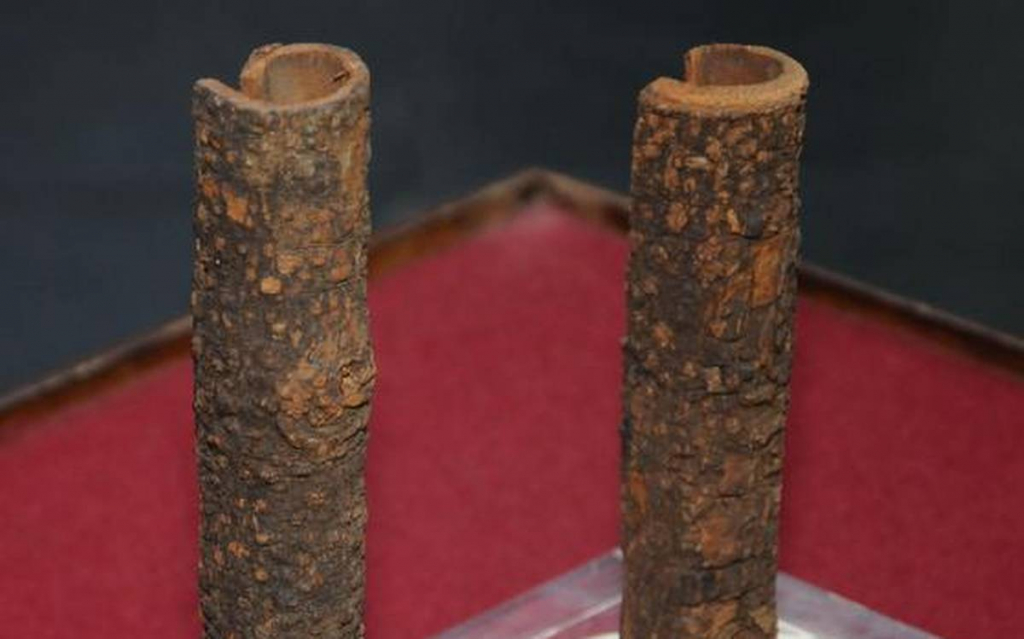
    • The herb Quinine Nongladew is the alkaloid quinine extracted from the bark of cinchona, a plant belonging to the Rubiaceae family and classified as either a large shrub or a small tree
    • The tree is named after a village about 70 km south of Guwahati, on the highway to Meghalaya capital Shillong.
    • The cinchona nursery was raised in the 19th century, probably around 1874, when Shillong became the British administrative headquarters for Assam Province.
    • Large swathes of Meghalaya used to be, and still are, malaria-prone.
    • The British had the foresight to start the plantation to combat malaria and other diseases caused by mosquitoes.

    Back2Basics: Hydroxychloroquine (HCQ)

    • HCQ is an oral tablet used as an anti-malarial drug. It is used to treat malaria, lupus erythematosus, and rheumatoid arthritis.
    • It may be used as part of a combination therapy where it is taken with other drugs.
  • Defence Sector – DPP, Missions, Schemes, Security Forces, etc.

    [pib] Defence Testing Infrastructure Scheme (DTIS)

    In order to give a boost to domestic defence and aerospace manufacturing, Raksha Mantri has approved the launch of the Defence Testing Infrastructure Scheme (DTIS).


    Practice question for mains:

    Q. Self-reliance in defence manufacturing is one of the key objectives of ‘Make in India’. Discuss.


    Defence Testing Infrastructure Scheme (DTIS)

    • The DTIS would run for the duration of five years and envisages set up six to eight new test facilities in partnership with private industry.
    • The scheme has been allocated with an outlay of Rs 400 crore for creating a state of the art testing infrastructure for this sector.
    • This will facilitate indigenous defence production, consequently, reduce imports of military equipment and help make the country self-reliant.
    • While the majority of test facilities are expected to come up in the two Defence Industrial Corridors (DICs), the Scheme is not limited to setting up Test Facilities in the DICs only.

    Funding pattern

    • The projects under the Scheme will be provided with up to 75 per cent government funding in the form of ‘Grant-in-Aid’.
    • The remaining 25 per cent of the project cost will have to be borne by the Special Purpose Vehicle (SPV) whose constituents will be Indian private entities and State Governments.
    • The SPVs under the Scheme will be registered under Companies Act 2013 and shall also operate and maintain all assets under the Scheme, in a self-sustainable manner by collecting user charges.
  • Coronavirus – Economic Issues

    How the economic package will play out for MSMEs?

    Recently, a stimulus package worth 20 lakh crore was announced by the government. How effective will these measures prove for the MSMEs? How the liquidity issue plaguing the NBFCs is sought to be solved? Finally, what are the issues with the package? All such question are dwelled upon here!

    Why ensuring flow of credit is important?

    • While assessing policy measures during the lockdown there are two over-arching principles one must keep in mind
    • One, the flow of funds will slow down with economic activity.
    • Two, firms do not go bankrupt because of insolvency, but because of lack of access to funds also called liquidity.
    • World over policymakers are pulling out all stops to make sure that the flow of credit continues.
    • Of the Rs 20-lakh-crore economic support announced by the Prime Minister on May 12, we have details for about Rs 16 lakh crore.
    • Monetary and financial interventions taken by the government and the RBI to provide credit to those who need it make up more than 90 per cent of it.

    Limited impact of RBI’s measures

    • Most of the measures announced by the RBI earlier have not had the desired effect.
    • The quantum of cheap funds being made available being more or less the same as the increase in the amount being deposited in the RBI every night by banks.
    •  Just reducing the cost of funds (i.e. lower Repo rate and LTRO) had no impact on the volume and cost of the credit they provided.
    • This happened due to the heightened risk aversion in banks.

    So, how government sought to address this problem?

    • The series of measures announced to provide credit support to the micro, small and medium enterprises (MSMEs) attempts to address this gap.
    • For MSMEs that have been servicing their loans so far new loans up to 20 per cent of the current outstanding credit will be fully backstopped by the government.
    • That is, if there is a default, the government will pay the bank.(i.e. act as a backstop).
    • So, how backstop by the government could help?
    • The move could lead to immediate credit creation, as guarantees are available only for loans extended in the next six months.
    • Also, the lenders have zero risk, and the borrowers are most likely stressed and would want these funds.
    • It is possible if not likely that firms will use these loans to just pay interest and cover losses.
    • But if so, that in a way is the purpose of this scheme — the government absorbing losses upfront rather than the likely larger lost taxes and potential bank bailouts if there is a bankruptcy.
    • For the government, the costs of this guarantee would be spread over several years, with at most 10 per cent incurred in this fiscal year.

    Move to provide liquidity to NBFCs

    • The two schemes together, targeting to provide Rs 75,000 crore of liquidity to non-banking finance companies (NBFCs), may be a bit less successful.
    • The special purpose vehicle that is to provide liquidity to NBFCs provides funds for three months at a time, may succeed in addressing problems like an NBFC defaulting due to lack of liquidity.
    • But it may not suffice to get them to grow.
    • The partial credit guarantee given to banks’ loans to NBFCs may be more effective for a subset of NBFCs.
    • But as it is only available to public sector banks, it would depend on their willingness and ability to extend new loans.

    Fund to provide equity for MSMEs

    • The Rs 50,000 crore fund to provide equity for MSMEs, with a corpus of Rs 10,000 crore being provided by the government, which would then be leveraged, is an interesting initiative.
    • Losses incurred in the current lockdown are depleting risk capital.
    • Replenishing if not growing that is paramount to restoring India’s growth potential.
    • While global as well as local private equity and venture capital funds would continue to explore and invest in smaller firms, such a fund can scale up the funds availability significantly.

    Issues with the package

    • The natural limitation of the policy interventions thus far is that they only affect enterprises in the formal sector and in agriculture.
    • The problems in informal non-agricultural enterprises may stay unaddressed, and remain an impediment on growth.
    • While less than 10 per cent of the announcements thus far has been the fiscal cost.
    • One senses a fiscal caution in government measures that is overdone, and could hurt more than it helps. (avoiding direct expenditure)

    Stability: of bond market and value of rupee

    • Two things minimised the volatility in the bond market: 1) pre-announcing the additional bond issuance for the year 2) giving an implicit assurance that additional deficits would be financed separately.
    • Even though that potentially means the RBI purchasing government bonds, the rupee has been remarkably stable.
    • There was fear that fiscal spending financed by the central bank would be frowned upon and drive currency weakness.

    Consider the question-“MSME sector forms the backbone of Indian economy. List challenges it faces in present times. Critically analyse whether the current stimulus package is suitable to boost growth in this sector.”

    Conclusion

    The road ahead remains unclear, but it is likely that the economic damage is already much larger than the measures undertaken so far. A continued focus on reforms and on sustaining India’s growth potential will be critical in preventing macroeconomic instability.


    Back2Basics: The two schemes announced for NBFCs

    • The FM announced a Rs 30,000-crore liquidity scheme for NBFCs.
    • The government will buy debt papers by NBCs, MFIs and HFCs.
    • The buying of papers will be fully guaranteed by the government of India.
    • Under this scheme investment will be made in both primary and secondary market transactions in investment-grade debt paper ofNBFCs/HFCs/MFIs.
    • The move is seen providing liquidity support for NBFCs and mutual funds and create confidence in the market.
    • The FM also announced Rs 45,000 crore partial credit guarantee scheme (PCGS) 2.0 for NBFCs.
    • Existing PCGS scheme will be extended to cover borrowings such as primary issuance of bonds/ CPs of such entities.
    • The first 20 per cent of loss will be borne by the government of India.

    50000 Crore fund for MSMEs

    • Finance Minister Nirmala Sitharaman announced Rs 50,000-crore equity infusion through Fund of Funds for MSMEs.
    •  The Fund of Funds will be set up with a corpus of Rs 10,000 crore.
    • The Fund of Funds will be operated through a mother fund and a few daughter funds.
    • The fund structure will help leverage Rs 50,000 crore at daughter-fund levels.
    • This will help MSMEs expand size as well as capacity.
    • It will encourage MSMEs to get listed on the main board of stock exchanges, the government said.
    • Based on the recommendations of UK Sinha Committee, the Fund of Funds was first announced in the Union Budget on February 1, 2020.
    • An investment of Rs. 10,000 crore was proposed in the Budget for the scheme.


Join the Community

Join us across Social Media platforms.