💥UPSC 2026, 2027, 2028 UAP Mentorship (April Batch) + Access XFactor Notes & Microthemes PDF

Archives: News

  • Communicable and Non-communicable diseases – HIV, Malaria, Cancer, Mental Health, etc.

    Making the private sector care for public health

    Context

    As India enters the second week of a national lockdown imposed in response to COVID-19, it is still unclear how well prepared the healthcare system is in dealing with the pandemic.

    Need for roping in the private healthcare

    • No indication of an increase in expenditure on health: A preparedness plan has to address all levels of care in terms of infrastructure, equipment, testing facilities and human resources in both the public and private sectors.
    • However, so far, the Central and State governments have given little indication of bringing an increase in public expenditure on health.
    • So, an already overburdened public health system will be unable to meet the increase in moderate and severe cases of COVID-19 that would require hospitalisation.
    • Need for the comprehensive national policy: While some individual private sector companies have come forward with offers of creating capacity and making it available to COVID-19 patients, there is a need for a comprehensive national policy to ensure that private healthcare capacity is made available to the public.
    • Some states like Chhattisgarh, Rajasthan, Madhya Pradesh and Andhra Pradesh have already roped in the private sector to provide free treatment.

    What the government should do?       

    • Provide universal health service: The governments at the Centre and in States have to take responsibility for providing universal health services free of charge and accessible to all.
    • Tap into private sector capacity: This will require governments to not just expand the capacity within the public sector, but also to tap into the available capacity in the private sector.
    • Faced with a serious health emergency, the silence of the government on the expected role of the private sector is intriguing.
    • Include COVID-19 testing in PM-JAY: The National Health Authority has recommended that the testing and treatment of COVID-19 be included in the PM-Jan Arogya Yojana (PM-JAY) but this proposal is still awaiting clearance.
    • Form the central command: The governance of the health service system is clearly fragmented and has created anxiety among the public.
    • There is a lack of a visible central command, which should be created under the supervision of the Union Health Minister, aided by a team of experts.
    • They should be tasked to make policies as and when required and communicate them to State governments, taking into account an evolving situation.
    • Ensure that there is no cost to the patient: There have been some tentative measures taken by States to allow individuals seeking testing for COVID-19 to access private laboratories at subsidised rates.
    • At present, the government has put a cap on the cost at ₹4,500 per test, which is a burden for even a middle-class patient.
    • The poor will clearly have no access to this and the government itself does not have adequate facilities to meet the increasing demand. It is here that the government needs to ensure that there is no cost to the patient.
    • Create adequate testing facilities: At this point, and certainly, before the lockdown is lifted, it is absolutely essential that adequate testing and quarantine facilities are created.
    • The Central government has already taken over some private hotels to accommodate persons quarantined for COVID-19.
    • One way of expanding such facilities would be for the government to ‘take over’ private corporate laboratories and hospitals for a limited period.
    • Standard treatment protocol: The political directive for such a move needs to come from the Central government while ensuring that the Ministry of Health provides standard treatment protocols for health personnel.

    Learning lessons from Spanish and British experience

    • The Spanish government issued an order bringing hospitals in the large private corporate sector under public control for a limited period.
    • This tough decision was taken with the understanding that existing public healthcare facilities would not be able to cope with the sudden, if short-term, rise in COVID-19 cases.
    • British trade unions have demanded that the government make the 8,000 beds in 570 private hospitals in the country available.
    • They have argued that while beds in private hospitals are lying empty, there is a severe shortage of beds in public hospitals.
    • The unions have also been critical of the U.K. government decision to rent these beds at an exorbitant cost to the exchequer.

    Way forward

    • Rope in the private healthcare sector: In India, private corporate hospitals have, in the past, received government subsidies in various forms and it is now time to seek repayment from them.
    • They are also well poised to provide specialised care and have the expertise and infrastructure to do so.
    • Bring in the universal public healthcare: Universal public healthcare is essential not only to curb outbreaks but also to ensure crisis preparedness and the realisation of the promise of the right to health.

  • Important Judgements In News

    The SC order on migrants labours raises several issues

    Context

    On March 31, the Supreme Court of India (SC), entertaining a writ petition under Article 32, passed an order which raises more questions than it seeks to answer.

    What were the issues involved in the writ petition?

    • The writ petition was purportedly filed in the public interest, “for redressal of grievances of migrant workers in different parts of the country”.
    • Directions which are in favour of the Union government: The Court has proceeded to issue several directions which are clearly in favour of the respondent, the Union of India.
    • The following three directions were uncalled for:

    What were the directions issued by the Supreme Court?

    • One, that under section 54 of the Disaster Management Act, 2005, persons can be punished with imprisonment, which may extend to one year, or with a fine for making or circulating a false alarm or warning.
    • Disobedience of the order including an advisory by a public servant would result in punishment under section 188 of the IPC.
    • Two, all concerned, that is the state government, public authorities and citizens will faithfully comply with directives, advisory and orders issued by the Union of India in letter and spirit in the interest of public safety.
    • Three, the media should only refer to and publish the official version of the Government of India, publishing a daily bulletin.
    • The SC observations about migrant labourers: After giving substantial reliefs to the Union of India, the SC proceeded to make mere observations about migrant labourers by directing that they should be dealt with “in a humane manner”.
    • And that “trained counsellors, community leaders and volunteers must be engaged along with the police to supervise the welfare activities of migrants”.
    • The SC has virtually absolved the government for its handling of the situation.

    What was the basis for issuing orders and issues with it

    • The basis of the directions is a statement made by the Solicitor General of India and some status reports to the effect that “the exodus of migrant labourers was triggered due to panic created by some fake/misleading news and social media”.
    • What is an issue with basis? The SC has proceeded on assumptions and surmises which were untested and unchallenged.
    • What the court should have done? In a matter of such seriousness, the least it should have done was to have appointed an amicus curiae (a friend of the court) to assist it rather than simply accept the self-serving status reports and statements made before it.
    • The Court overlooked the fact that in India, hundreds of millions of people work during the day and are paid at the end of the day and then go and buy their foodstuffs.
    • They have no savings, nor do they have foodgrains stored.
    • It is surprising that the Court, the custodian of fundamental rights, should be oblivious to this reality.

    Issue of press freedom

    • Citizens have the right to freedom of speech and expression. Press freedom is a part of this. Citizens have the right to receive information as well.
    • Article 13 (2) of the Constitution says that the state cannot make any law which takes away or abridges the fundamental rights.
    • If Parliament cannot do so, the Supreme Courtthe upholder of the constitutional rights — surely cannot do so.
    • The SC has itself held in M Nagraj (2006): “A right becomes a fundamental right because it has foundational value. The fundamental right is a limitation on the power of the State. A Constitution, and in particular that part of it which protects and which entrenches fundamental rights and freedoms to which all persons in the State are to be entitled, is to be given a generous and purposive construction.”
    • The SC should not have made all media subservient to the government by directing that the former “refer to and publish the official version about the developments”.
    • Such an order could be justified only during an emergency and that too by the executive, subject to challenge before the courts.

    Conclusion

    The SC has given a carte blanche to the authorities, and citizens appear to have no avenues of redress. Most of all, by condemning the media and social media, holding them responsible for fake news, the SC has done a great disservice to the institution which provides information to citizens and upholds democracy.

  • Issues related to Economic growth

    Opportunity in the Covid-19 crisis

    Context

    Coronavirus pandemic offers a trigger to fundamentally strengthen the Indian economy, and protect the vulnerable. This requires cooperation between the Centre and states.

    Opportunity to do things good for the medium term

    • Minimising the impact on the vulnerable: The current crisis is so terrible in its toll of life and livelihoods that the need of the hour must be minimising the health, humanitarian and economic costs, especially for the most vulnerable.
    • Rising expenditure may force hard choices: Rising public expenditures to help tens of millions of workers and their families alongside plummeting resources will inevitably force hard choices.
    • Appropriately, much of the policy discussion and the government’s first response have focussed on addressing the immediate imperatives.

    This crisis is also an opportunity to do things that are not only good for now but for the medium term as well. Few are discussed below.

    1. Revamp macro-fiscal framework

    • Massive fiscal expenditure may require: If the pandemic follows the exponential trajectory seen in other countries, the crisis is going to entail massive fiscal expenditures, perhaps up to 4-5 per cent of GDP, much more than what the government has announced.
    • Macro-fiscal targets have to be exceeded: Consequently, the basic macro-fiscal framework — for example, the Centre’s FRBM target of 3.5 per cent of GDP, and the revenue and deficit estimates for 2020-21 — has been fundamentally overtaken by events.
    • Allow states to exceed deficit targets: The Centre should immediately announce that even the states will be allowed to exceed their fiscal responsibility legislation targets because they will be in the front line of taking action against the pandemic.
    • Opportunity to review the FRBM: The crisis is an opportunity to revisit the entire framework.
    • The focus on unattainable targets, the fact that the FRBM has been honoured only in the breach, and the consequences in terms of loss in budgetary integrity and transparency need serious review, even overhaul.
    • Once the crisis ebbs, India might be looking at overall deficits well in excess of 10 per cent and debt levels much greater than those today. If the starting point is going to be so different, the old goals and targets won’t retain meaning.

    2. Remake finance and adopt a data-driven lending model

    • Going into the crisis, India’s corporate and financial sector were under severe stress — the so-called Four Balance Sheet problem.
    • This crisis will, unfortunately, add consumers and small and medium enterprises to that This will be an extremely hard — but critical — problem to address.
    • A takeover of bad loans will be unavoidable: To allow banks to revert to normalcy, a largescale takeover of their bad loans will be unavoidable not least because the current bankruptcy process will be severely inadequate.
    • Opt for the tech. driven lending model: This crisis opens the door for the new lending model proposed by Nandan Nilekani i.e. technology-driven lending.
    • What is Technology-driven lending? It uses data rather than collateral, allowing the 10 million-odd businesses with deep digital footprints (for example, based on GST invoices), to get loans from the thriving ecosystem of new financial players.

    3. Complete JAM

    • One of the major achievements of the government was to create the plumbing — Jan Dhan, Aadhaar, and Mobile (JAM)to augment weak state capacity.
    • How JAM is proving helpful in this crisis? The state could now make cash transfers swiftly, with reduced leakages, whether as income support, scholarships or pensions, and potentially eventually implementing a Universal Basic Income.
    • In the current crisis, it is proving to be an important part of the social safety net that is helping to cushion the most adversely affected groups.
    • JAM is not complete yet: But the JAM plumbing is still incomplete because there is a “last mile problem”.
    • Not all those with bank accounts can access money either because of difficult geography or because bank functionaries give incomplete or misleading information.
    • Opportunity to fix the shortcomings: This crisis is an opportunity not just to leverage JAM to enhance cash transfers, but to empower citizens. This will require the government to identify remaining weaknesses on a war footing and fix them.

    4. Re-shape Indian agriculture

    • Need to create one market for agriculture: The need to preserve supply chains in agriculture in times of crisis reinforces the need to create one market for agriculture across India.
    • This requires eliminating legislation like the Essential Commodities Act and the panoply of resulting restrictions.
    • Phase-out subsidies and opt for DBT: Second, the crisis has shown the possibilities created by JAM and direct transfers.
    • Phasing out in cycles: Building on PM-Kisan and various state-level schemes, pernicious subsidies, especially for fertilisers and power, could be phased out over 5-6 crop cycles.
    • This could be done through small but frequent increases in fertiliser prices (the technique used to eliminate fuel subsidies).

    5. Focus on Make in India

    • The critical source for almost all the essential Active Pharmaceutical Ingredients (API) used to manufacture drugs, the ability also to fight death, is largely made in China.
    • India was once a major producer of such APIs but lost ground to China.
    • Frame intelligent industrial policy: The crisis should be the opportunity to go on war footing to do intelligent industrial policy — incentives, regulatory help, trade policy — that would resurrect India’s manufacturing capability.
    • Previous Make in India attempts have shown lackadaisical results.
    • Focus on the pharmaceutical sector: The crisis creates the momentum to focus the effort on one sector, pharmaceuticals. As a result, the ability to save lives could be Made in India, again.

    6. Establish migrants as full citizens

    • Need to change the place-based benefits to person-based benefits: The plight of migrant workers reinforces the need to move from immobile place-based benefits to mobile person-based benefits, which is possible as the JAM infrastructure is strengthened.
    • Portability of benefits: This will require portability of benefits, including access to the PDS, Ujjwala and Ayushman Bharat.
    • The crisis has highlighted the travails of migrant labour and their second-class status.
    • The large gap between the organised and unorganised sector worker: It reflects a broader chasm between the few securely employed in the organised sector and the vast majority subject to the vicissitudes of the unorganised sector.
    • Differences not just in the levels of income but in their volatility as well as differential access to social insurance (healthcare, pensions) distinguish these two classes.

    7. Upgrade Health

    • Weakest state capacity in health and education: State capacity over 70 years in India has been weakest in the areas of education and health.
    • The COVID-19 pandemic must lead to a serious strengthening of the health infrastructure for dealing with pandemics.
    • Set up an apex institution on the lines of US’s CDC: To start with, India needs an apex institution like the US’ Centers for Disease Control with a network across all the states.
    • They should invest in disease surveillance systems, set up diagnostics labs, be able to gather real-time data and analyse them etc.
    • The Taiwan model, which has been so successful in this pandemic, could be studied.
    • More fundamentally, the crisis is a wake-up call to address India’s severe limitations in the provision of basic health.
    • Focus on basic public health: Creating tertiary health facilities must be subservient to strengthening basic public health and early childhood care.

    8. Build a National Solidarity Fund

    • The severe downturn in economic activity ahead will savagely hit the informal poor.
    • How would the Solidarity fund be set up? The government should consider a Solidarity Fund with a one-time annual contribution coming from the wealthy and the employees in the organised sector.
    • Contribution to the fund: This contribution can take the form of taxes or elimination of middle-class subsidies identified in the Economic Survey of 2016.
    • The wealthy could contribute via a wealth tax with thresholds set by property values say above Rs 5 crore.
    • Salaried employees in the public and private sectors could contribute via a small, progressive tax on salaries and pensions.
    • Middle-class subsidies that could be eliminated include interest and tax deductions for small savers, favourable taxation of gold and other luxuries.
    • Wealth taxes and elimination of subsidies for the rich should, in any event, be part of the long-run reform agenda to reduce growing inequality.

    Conclusion

    These examples illustrate how the crisis can be converted to an opportunity to fundamentally strengthen the Indian economy, and protect the vulnerable. A common thread to many of these actions — indeed prerequisites for their success — is cooperation between the Centre and states. Central direction combined with flexibility and nimbleness in the states and local bodies is India’s way through the crisis and beyond.

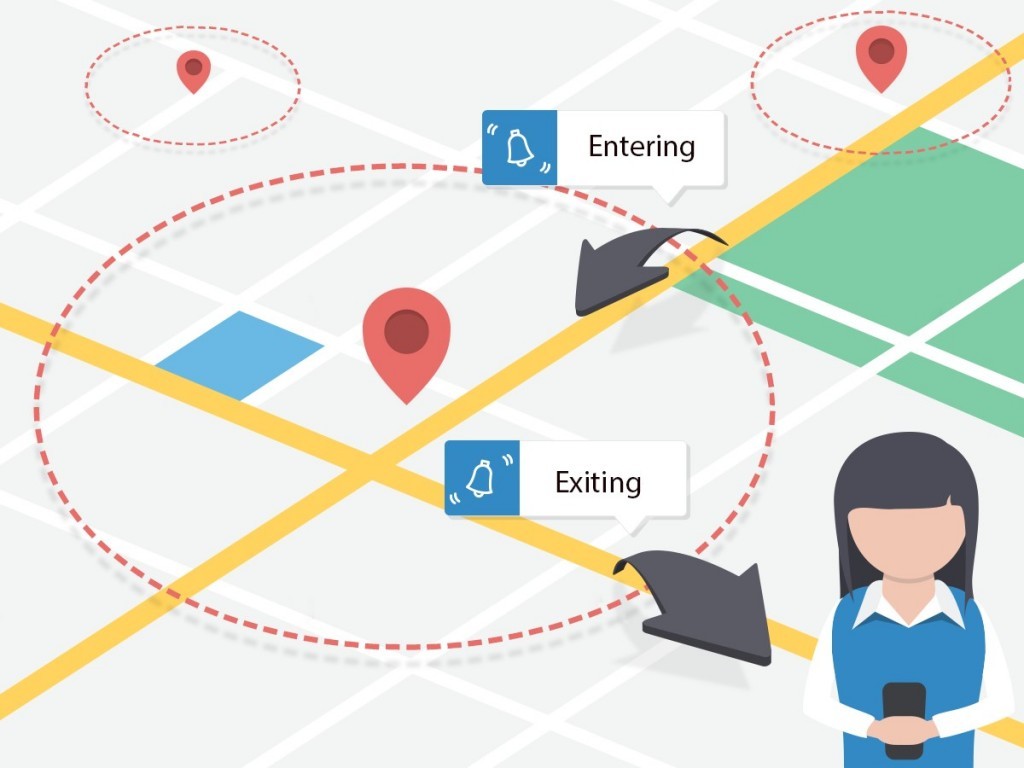
  • What is Geo-fencing?

    The Centre is using powers under the Indian Telegraph Act to “fetch information” from telecom companies every 15 minutes to track COVID-19 cases across the country.

    What is Geo-fencing?

    • A geofence is a virtual perimeter for a real-world geographic area.
    • A geo-fence could be dynamically generated—as in a radius around a point location, or a geo-fence can be a predefined set of boundaries (such as school zones or neighbourhood boundaries).
    • The use of a geofence is called geofencing, and one example of usage involves a location-aware device of a location-based service (LBS) user entering or exiting a geo-fence.
    • This activity could trigger an alert to the device’s user as well as messaging to the geo-fence operator.

    Tracking COVID-19 patients

    • The government has tested an application that triggers e-mails and SMS alerts to an authorised government agency if a person has jumped quarantine or escaped from isolation, based on the person’s mobile phone’s cell tower location.
    • This “geo-fencing” is accurate by up to 300 m.
  • International Space Agencies – Missions and Discoveries

    GRACE-FO Mission

    NASA releases new global maps mapping groundwater, soil wetness using GRACE-FO satellites.

    GRACE-FO Mission

    • The Gravity Recovery and Climate Experiment Follow-On (GRACE-FO) mission is a partnership between NASA and the German Research Centre for Geosciences (GFZ).
    • GRACE-FO is a successor to the original GRACE mission, which orbited Earth from 2002-2017.
    • It carries on the extremely successful work of its predecessor while testing a new technology designed to dramatically improve the already remarkable precision of its measurement system.

    Why need such data on groundwater and soil moisture?

    • Groundwater and soil moisture — which depicts wetness in soil — are crucial for irrigation and crop growth.
    • The need to constantly monitor groundwater and soil moisture is important since both act as useful indicators for predicting drought conditions.
    • One of the goals of the new global maps is to make the same consistent product available in all parts of the world, especially in countries that do not have any groundwater-monitoring infrastructure.
    • The data would help in managing the selection of appropriate agricultural crops and predicting yields.
  • Health Sector – UHC, National Health Policy, Family Planning, Health Insurance, etc.

    BCG vaccine

    According to a  US-based research, a combination of reduced morbidity and mortality could make the Bacillus Calmette-Guerin (BCG) vaccination a “game-changer” in the fight against novel coronavirus.

    What is BCG Vaccine?

    • Bacillus Calmette–Guérin (BCG) vaccine is a vaccine primarily used against tuberculosis (TB).
    • In countries where TB or leprosy is common, one dose is recommended in healthy babies as close to the time of birth as possible.
    • In areas where tuberculosis is not common, only children at high risk are typically immunized, while suspected cases of tuberculosis are individually tested for and treated.

    How can TB vaccine help fight COVID-19?

    • The BCG vaccine contains a live but weakened strain of tuberculosis bacteria that provokes the body to develop antibodies to attack TB bacteria.
    • This is called an adaptive immune response, because the body develops a defense against a specific disease-causing microorganism, or pathogen, after encountering it.
    • Most vaccines create an adaptive immune response to a single pathogen.
    • Unlike other vaccines, the BCG vaccine may also boost the innate immune system, first-line defenses that keep a variety of pathogens from entering the body or from establishing an infection.
  • Industrial Sector Updates – Industrial Policy, Ease of Doing Business, etc.

    [pib] CCI Green Channel Route

    The Competition Commission of India (CCI) has received a request for merger of a company following green channel combination route.

    What is a Green Channel Route?

    • In a bid to facilitate mergers and acquisitions (combination) in the country, the Competition Commission of India (CCI) has taken inspiration from the customs department and established a ‘green channel’.
    • Every Combination above a certain threshold, seeking to be sanctioned has to necessarily pass the CCI scanner in order to be approved.
    • The CCI characterizes the ‘green channel’ as an automatic system of approval for Combinations wherein the Combination is deemed to be approved upon filing the notice in the format prescribed.
    • The ‘green channel automatic approval upon notification route’ is a right step by CCI towards the propaganda of ease of doing business in India.
  • Oil and Gas Sector – HELP, Open Acreage Policy, etc.

    The battle to set oil prices

    Context

    The global economy, grappling with the COVID-19 pandemic, is now facing an energy war, with crude oil prices crashing in the international market.

    Developments that contributed to the fall in oil prices

    • First, Crude oil prices tanked, as the Organisation of the Petroleum Exporting Countries (OPEC) and its alliance partners failed to reach any consensus on cutting back production to levels that would enable prices to remain stable.
    • Second, the U.S., as the largest oil producer today, has stayed away from the OPEC-plus arrangement, hoping that production cuts by OPEC-plus countries will help it increase its market share.
    • Russia refused any production cuts, unleashing an energy war with Saudi Arabia. There has been a spectacular fall of around 30% in crude oil prices.
    • The International Energy Agency (IEA) has scaled down global demand for oil, a move not taken by the energy watchdog since 2009.
    • COVID-19 Factor: Demand for oil had already weakened owing to the global economic slowdown, and this weakening has become more pronounced due to the COVID-19 pandemic, which has hit China’s economy and reduced consumption by the world’s largest importer.

    The US-Russia oil war

    • Denying market share to the US oil producer: Russia’s decision to reject any production cuts is driven directly by its strategy of denying market share to American shale oil producers.
    • Shale oil companies can sustain in high prices only: The American shale oil producers rely on higher prices in the range of $50-$60 to remain profitable because of higher production costs.
    • At $31 per barrel, not more than five American shale oil producers can remain profitable.
    • Sanctions on Rosneft: Russia also remains resentful of sanctions imposed on Rosneft, which is building the gas pipeline project Nord Stream 2 across the Baltic Sea, carrying Siberian gas to Germany, a major consumer.
    • Delay in completion of the pipeline: This pipeline was delayed due to opposition from Denmark’s environmental activists and could not be completed before the U.S. sanctions kicked in.
    • Moscow has accused Washington of using geopolitical tools for commercial reasons.
    • The energy war over prices is Russia’s revenge, to cripple the American shale oil industry.
    • Russia’s signal to Saudi Arabia: Russia is also signalling to Saudi Arabia that its American patrons can do little to protect its oil interests and it would be prudent for Saudi Arabia to reach some understanding with Russia.
    • Both Saudi Arabia and Russia depend heavily on oil revenues — upwards of 80% of export revenues accrue from crude oil.
    • Russia and Saudi Arabia fighting for market share: Both are also fighting to retain market share.
    • Impact on India: It has been reported that Saudi Arabia has agreed to supply crude oil at lower rates to refiners in India and China, two primary customers, but refused to supply to other refiners in Asia. This will have an impact on India’s oil procurement from the U.S.

    The benefits to importing countries

    • Why the price drop matters to India? Lower crude oil prices are not necessarily bad news for oil importing countries like India, which is the world’s third-largest importer of crude oil and the fourth largest importer of LNG.
    • Collateral adverse consequences: There are, however, collateral adverse consequences like the battering of the stock markets worldwide.
    • Impact on the global economy: The global economy, already impacted by President Donald Trump’s trade war with China and other countries, including India, and the COVID-19 pandemic, may find lower energy costs helpful in overall growth.

    Benefits for India

    • From a high of $147 per barrel in 2008, crude oil prices have fallen to around $24 per barrel and may even go further southwards.
    • How much the price drop matter for India? India, with 80% of its energy requirements met by imports from the international market, stands to save ₹10,700 crores for every $1 drop in prices.
    • Non-oil related factors: While this may help manage the current account deficit, fiscal deficit and inflation, there are non-oil related collateral factors that can cause countervailing adverse economic impact.

    How long Russian and Saudi Arabia can sustain the war?

    • Can Russia and Saudi Arabia sustain the energy war for long?
    • Saudi Arabia’s production cost is the cheapest in the world and it can ramp up production to around 12 million barrels a day.
    • By offering discounts, it can undercut other producers, including Russia.
    • Domestic considerations also matter.

    Conclusion

    There is no doubt that India will benefit from lower oil prices if the cost of fuel at the pump is passed on to consumers. It will reduce transportation costs and boost demand. The consumer, however, may not benefit much since the government may choose to use this financial windfall for other purposes, like bailing out banks which have been hollowed out by NPAs to leading Indian companies.

  • Defence Sector – DPP, Missions, Schemes, Security Forces, etc.

    Still no bullseye, in volume and value

    Context

    Based on the latest estimates released by the Stockholm International Peace Research Institute (SIPRI) in the period between 2009-13 and 2014-18, Indian defence imports fell even as exports increased.

    What are the factors responsible for the shift?

    • Make in India initiative: The first is the ‘Make in India’ initiative, as part of which a number of components from Indian private and public sector enterprises have been prioritised by the government.
    • Delay by vendors in supplying equipment: The second set of factors is extraneous to India in the form of delays in supplying equipment by vendors and the outright cancellation of contracts by the Indian government or at least a diminution of existing contracts.

    How ‘Make in India’ made the difference?

    • DPP’s measures to build India’s defence industry: Under the ‘Make in India’ initiative, the Defence Procurement Procedure (DPP) lays out the terms, regulations and requirements for defence acquisitions as well as the measures necessary for building India’s defence industry.
    • It created a new procurement category in the revised DPP of 2016 dubbed ‘Buy Indian Indigenously Designed, Developed and Manufactured’ (IDDM).
    • Earmarking projects for MSMEs: The ‘Make’ procedure has undergone simplification “earmarking projects not exceeding ten crores” that are government-funded and ₹3 crores for Micro, Small and Medium Enterprises (MSMEs) that are industry-funded.
    • Technology transfer to private companies: In addition, the government has also introduced provisions in the DPP that make private industry production agencies and partners for technology transfers.
    • The growing share of SMEs in the defence market: Small and Medium Enterprises (SMEs) until 2016 accounted for a 17.5% share of the Indian defence market.
    • According to the government of India data for the financial year 2018-19, the three armed services for their combined capital and revenue expenditures sourced 54% of their defence equipment from Indian industry.
    • Four companies among the top 100: Among arms producers, India has four companies among the top 100 biggest arms producers of the world.
    • It is estimated, according to SIPRI, their combined sales were $7.5 billion in 2017, representing a 6.1% jump from 2016.
    • All four of these companies are public sector enterprises and account for the bulk of the domestic armament demand.
    • The largest Indian arms producers are the Indian ordnance factories and the Hindustan Aeronautics Limited (HAL), which are placed 37th and 38th, respectively, followed by Bharat Electronics Limited (BEL) and Bharat Dynamics Limited (BDL).

    Reasons for falling imports

    • Cancellation of contracts: Indian defence acquisitions have also fallen due to the cancellation of big-ticket items. For instance the India-Russia joint venture for the development of the advanced Su-57 stealth Fifth Generation Fighter Aircraft (FGFA).
    • India cancelled involvement in 2018 due to rising dissatisfaction in delays with the project as well as the absence of capabilities that would befit a fifth-generation fighter jet.
    • Reduction in order: In 2015, the Modi government also reduced the size of the original acquisition of 126 Rafale Medium Multi-Role Combat Aircraft (MMRCA) from Dassault to 36 aircraft, which is also responsible for significantly driving down the import bill.
    • Delay by suppliers: That apart, the delays in the supplies of T-90 battle tanks, and Su-30 combat aircraft from Russia and submarines from France, in 2009-13 and 2014-18, also depressed imports.
    • Industrial model at odds with the global trend: India’s defence model faces challenges despite the positive trends generated by ‘Make in India’.
    • SMEs still face stunted growth because India’s defence industrial model is at odds with global trends in that it tends to create disincentives for the private sector.
    • Governments, including the incumbent, have tended to privilege Defence Public Sector Units (DPSUs) over the private sector, despite ‘Make in India’.
    • Undermining the private sector: This model is highly skewed, undermining the growth of private players and diminishes the strength of research and development.

    The rise in Indian defence export

    • Considerable rise between 2012 and 2019: The period between 2012 and 2019 saw Indian defence exports experiencing a considerable jump sourced from Indian public and private sector enterprises.
    • In the last two fiscal years, 2017-18 and 2018-19, exports have witnessed a surge from ₹7,500 crore to ₹11,000 crores, representing a 40% increase in exports.
    • Measures introduced by the government: The sharpest rise in defence export products can be attributed to the measures introduced by the government which in 2014, delisted or removed several products that were restricted from exports.
    • It dispensed with the erstwhile No Objection Certificate (NOC) under the DPP restricting exports of aerospace products, several dual-use items and did away with two-thirds of all products under these heads.
    • According to the Ministry of Commerce and the Industry, Export-Import Data Bank export of defence items in the aerospace category has witnessed an increase in value.
    • Small naval crafts account for the bulk of India’s major defence exports. However, the export of ammunition and arms remain low.
    • As a percentage of total Indian trade, defence-related exports for the fiscal years 2017-18 and 2018-19 were 8 and 0.73%, respectively.

    Conclusion

    From a volume and value standpoint, Indian defence exports, while showing a promising upward trend, still remain uncompetitive globally. It is likely that Indian defence exports will take several years before they are considered attractive by external buyers. But green shoots are emerging in a sector that has long been devoid of any dynamism and Indian policymakers should make the most of the opportunities this represents.

  • Issues related to Economic growth

    Pull out all the stops

    Context

    Though there is coherence in India’s response to the Covid-19, still there is more that needs to be done.

    Sense of coherence in India’s response

    • Since last week, a sense of coherence is settling over India’s response to the COVID-19 outbreak.
    • The national lockdown, the incomes and credit support, and the three-month debt moratorium announced by the government and the RBI are the needed first steps to contain the outbreak on the one hand and lessen the economic impact on the other hand.

    Uncertainty in two important factors

    • Several laundry lists of measures have already been proffered by many, however, these are not of much help.
    • Uncertainty: Given the extreme uncertainty clouding how long and intensely social distancing policies will need to be pursued, the attendant economic impact and, crucially, how quickly and strongly the recovery can take place.
    • 1. The answer to the first depends on how much the outbreak tests the capacity of the already-stretched public health system.
    • Extending the social distancing policy: If the lockdown does not slow the spread of the virus to a rate that the healthcare system can handle, then the social distancing policies, in some form or another, will need to be extended.
    • Destruction of demand: The longer such containment measures last, the larger will be the destruction to (of) demand and the bigger the collapse in output and incomes.
    • 2. Then, there is the question about the pace and strength of the recovery.
    • Much will depend on how much damage the eventual output loss inflicts on households’ and corporates’ balance sheets.
    • Lower consumption: For example, even if a worker starts earning once the lockdown is lifted if one has incurred large debts in the interim, one’s consumption demand will naturally be much lower than before the crisis.
    • The same holds for corporates, both big and small.
    • No help from global demand: What makes the situation worse is that there is not likely to be much help coming from global demand.
    • Growth estimates: It is now expected global growth would decline to 5 per cent (annualised) in 1H20 (first half 2020), considerably more than during the global financial crisis, and rebound only partially in 2H20, leaving global GDP 2.5 percentage points below its pre-crisis level at the end of this year.

    How the uncertainty makes policy response calibration difficult?

    • Difficulty in assessing economic damage: Given these extreme uncertainties, it is very hard to assess the economic damage with any degree of conviction.
    • In fact, in last week’s policy review, the Monetary Policy Committee refrained from providing any projections for future growth and inflation, breaking from its normal practice.
    • So, if the outlook is so uncertain, how does one calibrate the policy response?
    • 1. Under-support the economy: One can easily under-support the economy, which could prolong the slowdown.
    • 2. Or over-support the economy, which could end up stoking inflation (as it did in 2010-13 when the massive monetary and fiscal easing during the global financial crisis was not withdrawn quickly) or creating asset price bubbles.

    What is the way out in such a situation?

    • Don’t try to calibrate: The way out is not to even try calibrating policies under such extreme uncertainty but to let the size of the support be determined endogenously by the extent and nature of the economic damage.
    • Falling back of first principles: This requires falling back on first principles. We know that the economic damage could be very large.
    • Delay in recovery: We also know that if the damage to households’ and firms’ balance sheets is substantial, then the recovery could be delayed and weakened.
    • Give extensive income support: This calls for extensive income support through existing government Jan Dhan and Mudra accounts to households and SMEs, and temporary tax cuts or deferments to the larger corporates.
    • Tax cuts needed: It also needs substantial cuts in indirect taxes (GST) when social distancing is relaxed.

    Problems with RBI measures

    • RBI providing support: The RBI has begun to provide support via its liquidity facility (TLTRO) and regulatory forbearance that allows banks to offer a debt moratorium to their customers for the next three months.
    • But both these measures work through banks.
    • The problem of bank turning risk-averse: Given that banks have turned substantially risk-averse because of the restructuring and bad debt problems of the last few years, the RBI likely needs to start providing liquidity directly to corporates, as recently announced by the US Fed.
    • At the same time, any debt moratorium will reduce profit and, in turn, capital, banks might be reluctant to extend it to all their customers.
    • Accommodate capital shortfall in the bank: Consequently, the RBI also needs to change regulations to accommodate possible shortfalls in bank capital because of the debt moratorium.

    What should be the scope and size of the policy support?

    • Support should be based on the extent of the damage: The scope and size of such policy support need to be determined by the extent of the economic damage, and not by perceived limits about what India can afford or those imposed by existing institutional arrangements and practices.
    • It is quite possible that the size of the economic damage ends up requiring support that widens the fiscal deficit substantially.
    • India clearly does not have the fiscal space to provide any material economic support when measured against standard benchmarks of fiscal prudence.
    • Directly funding the budget deficit: The market is on edge, and fears of eventual large government borrowing has spiked long-term interest rates despite large cuts in short-term rates by the RBI, which are likely to delay and weaken the recovery.
    • Any large bond auction by the government, even if it is offset by the RBI through open market operations, is not likely to calm market nerves and bring down lending rates.
    • The government should invoke “natural disaster” clause: What is needed is for the government to invoke the “escape” or the “natural disaster” clause in the fiscal responsibility act (FRBM) that allows the RBI to directly fund the budget deficit without having to go through market auctions.

    Conclusion

    Such a proposal is likely to raise the hackles of any fiscal conservative and there is the natural question about how rating agencies might react. As long as the government credibly commits to reversing the action as soon as the crisis is over, rating agencies and fiscal conservatives alike will likely treat this kindly, as it is a response to a crisis caused not by poor economic policies, but by an act of nature.

Join the Community

Join us across Social Media platforms.