💥UPSC 2027,2028 Mentorship (April Batch) + Access XFactor Notes & Microthemes PDF

Archives: News

  • Government Budgets

    States at centre

    Context

    Concerned over the impact on their revenues, several state governments planned cuts in salaries of government employees.

    State finances showing the signs of stress

    • The fiscal crisis stemming from the disruption in economic activity due to the coronavirus is now beginning to show.
    • Concerned over the impact on their revenues, several state governments planned cuts in salaries of government employees.
    • The stress to state finances stems from multiple sources.
    • First, as economic growth falters, their own income streams, for instance, revenues from petroleum products, real estate transactions, will slow down further, as will GST collections, and the amount collected through the compensation cess will not be enough to meet budgeted expectations.
    • Second, as the Centre’s own revenues also slow down, transfers to states will take a hit. It is quite likely that tax devolution to states, which has been budgeted at Rs 7.8 lakh crore in 2020-21, will not materialise.
    • Collectively, state expenditure far outstrips that by the Centre, with revenues falling short, any cutbacks in their spending, at a time when there is a need for a bold fiscal expansion, will further aggravate the economic stress.
    • Need assurance of adequate resource: Thus, states, which are at the frontline of fighting the public health crisis, need to be assured of adequate resources.

    Increase in the WMA limit will not address the issue

    • Limit increased by 30%: The Reserve Bank of India decided to increase the ways and means advances (WMA) limit by 30 per cent for state governments.
    • What is WMA? The WMA is a temporary liquidity arrangement with the RBI which helps governments tide over their short-term liquidity woes.
    • A short term measure: While states have been averse to opting for this facility in the past, and the new WMA limits may need to be revised further if the mismatch rises, this is a short-term measure, and does not address the underlying issue of significant revenue slippages.
    • Contradictory impulse: Under the existing fiscal deficit constraint, the collapse in revenues will force states to cut back on spending, imparting a contractionary impulse to the economy.

    Way forward

    • The Centre must take several steps to ensure an adequate flow of resources to states.
    • First, it must immediately clear all its pending dues to state governments.
    • Second, while it is cheaper for the Centre to borrow and transfer to states, even though the spreads between state and central government bonds have now widened, making state borrowing more costly, states must be allowed to borrow more.
    • Third, as some state chief ministers have suggested, the fiscal deficit limits imposed on states must be relaxed.

  • Policy Wise: India’s Power Sector

    Explained: 9 minutes light-out and its impact on grids

    In his address to the nation, our PM has urged people across to turn off the lights in their homes for 9 minutes on April 5, starting at 9 pm. In response to this appeal, grid managers across states have flagged some risks.

    Why is the 9-minute exercise a problem?

    • India is one of the largest synchronous interconnected grids in the world, with an installed capacity of about 370 GW (3,70,000 MW), and a normal baseload power demand of roughly 150 GW.
    • The big worry is that just before 9 pm there may be unprecedented load reduction, followed by a sudden increase in load post at 9.09 pm.
    • The concern is that grid frequency should not swing beyond permissible limits and that all generators across the country must give frequency response as per the Grid Code.
    • During this 9-minute lights out exercise, up to 10,000-15,000 MW of power demand could to drop suddenly and then come on stream a few minutes later.

    How does grid function normally?

    • Power System Operation Corporation Ltd (POSOCO), the national electricity grid operator, projects daily demand for power and regulates supply from power generators based on these projections.
    • Frequency reflects the load generation balance in the grid at a particular instant and is one of the most important parameters for assessment of the security of the country’s power system.
    • The nominal frequency is 50 hertz and POSOCO endeavours to maintain frequency within a permissible band (49.9- 50.5 hertz), primarily by balancing the demand-supply equation.

    Impacts of light-out

    • The frequency needs to be maintained within this range as all the electrical equipment and appliances at our homes are designed to perform safely and efficiently in a certain power supply band.
    • An increase in frequency results in an increase in the voltage and a decrease in frequency results in a decrease in voltage.
    • Exigency does occur during an outage at a power plant or the tripping of a transmission line or a sudden change in electrical demand.
    • The grid operator needs to ensure that there is an automatic corrective response manually by curtailing demand or ramping generation from another source within a really short period of time.
    • Handling imbalances are the most crucial function of the grid operator.

    What are the key areas of concern?

    While the possibility of the grid tripping on account of this is highly unlikely, operators expect a “jerk”. While the system is generally planned for an outage of the single largest unit outage, there are two riders:

    1) Lockdown has severed domestic consumption

    • One, the grid load is primarily on account of the domestic load now, especially since the lockdown implemented.
    • The normal baseload power demand of roughly 150 gigawatts has already dropped by 20 per cent since the lockdown announcement as most of the industry and commercial establishments are not operational.
    • With hotels and factories, malls, railway stations, airports closed, the domestic load is the predominant load.
    • So the lighting load as a percentage of total loads is much higher now and the impact of a sudden drop in lighting load could be more accentuated than during regular times.

    2) Fear of complete power-offs

    • The second concern is if housing clusters and societies switch off mains, or if overzealous discoms switch off street lighting or even feeders to show compliance.
    • During this part of the year, domestic load peaks at about 9 pm.
    • This load could then be impacted much more than what’s being anticipated in the normal course, a concern that grid operators are flagging.

    Why is this demand of significance in such a big grid?

    • The domestic load is about 30-32 per cent of total load during normal times.
    • Of India’s total electricity demand load pattern, industrial and agricultural consumption accounts for 40 per cent and 20 per cent load, while commercial electricity consumption accounts for 8 per cent of demand.
    • So, theoretically, if only lighting load goes off, it should not have a major impact on grid frequency during normal times.
  • Wildlife Conservation Efforts

    Tropical Butterfly Conservatory

    The Tropical Butterfly Conservatory Tiruchirappalli (TBCT) has been developed in Tamil Nadu’s Tiruchirappalli to create awareness among the public about the importance of the butterfly and its ecology.

    Tropical Butterfly Conservatory

    • The TBC is located in the Upper Anaicut Reserve Forest, sandwiched between the Cauvery and Kollidam rivers in Tiruchirappalli.
    • It was inaugurated during November 2015 at Tiruchirappalli with the objective of propagating the importance of butterflies and conserving the biodiversity of the district through environmental education.
    • It  is spread over 27 acres and is considered to be Asia’s largest butterfly park.
    • The park has an outdoor as well as indoor conservatory, a ‘Nakshatra Vanam’ and a ‘Rasi Vanam’ in addition to a breeding lab for non-scheduled species.
    • So far, about 109 butterfly species have been observed here.

    Conservation measures

    • Eggs of non-scheduled butterfly species are collected and bred in captivity in the in-house incubation laboratory by keeping them in ventilated plastic containers with the leaves of host plants as feed.
    • After attaining the transformation of larva (caterpillar) and pupa (transition), the adult butterfly finally comes out with gorgeous colours and at this stage they are released into the natural habitat.
    • Non-scheduled butterfly species are bred and released by the park authorities into their natural surroundings.

    Significance of butterflies

    • Butterflies are known for their intrinsic, aesthetic, educational, scientific, ecological, health and economic values.
    • As butterflies form an important part of nature’s food web, it is very essential to protect the species for ecological balance.
    • They play a key role in the pollination of plant species, the global food chain depends on their well-being.

    Various threats

    • The major threats to butterfly diversity are destruction, degradation and fragmentation of their habitats, grazing, fires and application of pesticides and weedicides in agricultural and urban ecosystems.
  • Foreign Policy Watch: India-Maldives

    Operation Sanjeevani

    An Indian Air Force (IAF) C-130J transport aircraft o delivered 6.2 tonne of essential medicines and hospital consumables to Maldives under Operation Sanjeevani.

    Operation Sanjeevani

    • At the request of the govt. of Maldives, the IAF aircraft activated Operation Sanjeevani and lifted these medicines from airports in New Delhi, Mumbai, Chennai and Madurai before flying to the Maldives.
    • Among other things, these medicines include influenza vaccines, anti-viral drugs such as lopinavir and ritonavir — which have been used to treat patients with COVID-19 in other countries.
    • The flights are being operated on commercial basis following demands from pharmaceutical companies and their intermediaries and will carry cargo on inbound as well as outbound flights.
    • The cargo operations will help the airline earn some revenue at a time there is a ban on passenger flights and the entire fleet is grounded.
  • Communicable and Non-communicable diseases – HIV, Malaria, Cancer, Mental Health, etc.

    Making the private sector care for public health

    Context

    As India enters the second week of a national lockdown imposed in response to COVID-19, it is still unclear how well prepared the healthcare system is in dealing with the pandemic.

    Need for roping in the private healthcare

    • No indication of an increase in expenditure on health: A preparedness plan has to address all levels of care in terms of infrastructure, equipment, testing facilities and human resources in both the public and private sectors.
    • However, so far, the Central and State governments have given little indication of bringing an increase in public expenditure on health.
    • So, an already overburdened public health system will be unable to meet the increase in moderate and severe cases of COVID-19 that would require hospitalisation.
    • Need for the comprehensive national policy: While some individual private sector companies have come forward with offers of creating capacity and making it available to COVID-19 patients, there is a need for a comprehensive national policy to ensure that private healthcare capacity is made available to the public.
    • Some states like Chhattisgarh, Rajasthan, Madhya Pradesh and Andhra Pradesh have already roped in the private sector to provide free treatment.

    What the government should do?       

    • Provide universal health service: The governments at the Centre and in States have to take responsibility for providing universal health services free of charge and accessible to all.
    • Tap into private sector capacity: This will require governments to not just expand the capacity within the public sector, but also to tap into the available capacity in the private sector.
    • Faced with a serious health emergency, the silence of the government on the expected role of the private sector is intriguing.
    • Include COVID-19 testing in PM-JAY: The National Health Authority has recommended that the testing and treatment of COVID-19 be included in the PM-Jan Arogya Yojana (PM-JAY) but this proposal is still awaiting clearance.
    • Form the central command: The governance of the health service system is clearly fragmented and has created anxiety among the public.
    • There is a lack of a visible central command, which should be created under the supervision of the Union Health Minister, aided by a team of experts.
    • They should be tasked to make policies as and when required and communicate them to State governments, taking into account an evolving situation.
    • Ensure that there is no cost to the patient: There have been some tentative measures taken by States to allow individuals seeking testing for COVID-19 to access private laboratories at subsidised rates.
    • At present, the government has put a cap on the cost at ₹4,500 per test, which is a burden for even a middle-class patient.
    • The poor will clearly have no access to this and the government itself does not have adequate facilities to meet the increasing demand. It is here that the government needs to ensure that there is no cost to the patient.
    • Create adequate testing facilities: At this point, and certainly, before the lockdown is lifted, it is absolutely essential that adequate testing and quarantine facilities are created.
    • The Central government has already taken over some private hotels to accommodate persons quarantined for COVID-19.
    • One way of expanding such facilities would be for the government to ‘take over’ private corporate laboratories and hospitals for a limited period.
    • Standard treatment protocol: The political directive for such a move needs to come from the Central government while ensuring that the Ministry of Health provides standard treatment protocols for health personnel.

    Learning lessons from Spanish and British experience

    • The Spanish government issued an order bringing hospitals in the large private corporate sector under public control for a limited period.
    • This tough decision was taken with the understanding that existing public healthcare facilities would not be able to cope with the sudden, if short-term, rise in COVID-19 cases.
    • British trade unions have demanded that the government make the 8,000 beds in 570 private hospitals in the country available.
    • They have argued that while beds in private hospitals are lying empty, there is a severe shortage of beds in public hospitals.
    • The unions have also been critical of the U.K. government decision to rent these beds at an exorbitant cost to the exchequer.

    Way forward

    • Rope in the private healthcare sector: In India, private corporate hospitals have, in the past, received government subsidies in various forms and it is now time to seek repayment from them.
    • They are also well poised to provide specialised care and have the expertise and infrastructure to do so.
    • Bring in the universal public healthcare: Universal public healthcare is essential not only to curb outbreaks but also to ensure crisis preparedness and the realisation of the promise of the right to health.
  • Important Judgements In News

    The SC order on migrants labours raises several issues

    Context

    On March 31, the Supreme Court of India (SC), entertaining a writ petition under Article 32, passed an order which raises more questions than it seeks to answer.

    What were the issues involved in the writ petition?

    • The writ petition was purportedly filed in the public interest, “for redressal of grievances of migrant workers in different parts of the country”.
    • Directions which are in favour of the Union government: The Court has proceeded to issue several directions which are clearly in favour of the respondent, the Union of India.
    • The following three directions were uncalled for:

    What were the directions issued by the Supreme Court?

    • One, that under section 54 of the Disaster Management Act, 2005, persons can be punished with imprisonment, which may extend to one year, or with a fine for making or circulating a false alarm or warning.
    • Disobedience of the order including an advisory by a public servant would result in punishment under section 188 of the IPC.
    • Two, all concerned, that is the state government, public authorities and citizens will faithfully comply with directives, advisory and orders issued by the Union of India in letter and spirit in the interest of public safety.
    • Three, the media should only refer to and publish the official version of the Government of India, publishing a daily bulletin.
    • The SC observations about migrant labourers: After giving substantial reliefs to the Union of India, the SC proceeded to make mere observations about migrant labourers by directing that they should be dealt with “in a humane manner”.
    • And that “trained counsellors, community leaders and volunteers must be engaged along with the police to supervise the welfare activities of migrants”.
    • The SC has virtually absolved the government for its handling of the situation.

    What was the basis for issuing orders and issues with it

    • The basis of the directions is a statement made by the Solicitor General of India and some status reports to the effect that “the exodus of migrant labourers was triggered due to panic created by some fake/misleading news and social media”.
    • What is an issue with basis? The SC has proceeded on assumptions and surmises which were untested and unchallenged.
    • What the court should have done? In a matter of such seriousness, the least it should have done was to have appointed an amicus curiae (a friend of the court) to assist it rather than simply accept the self-serving status reports and statements made before it.
    • The Court overlooked the fact that in India, hundreds of millions of people work during the day and are paid at the end of the day and then go and buy their foodstuffs.
    • They have no savings, nor do they have foodgrains stored.
    • It is surprising that the Court, the custodian of fundamental rights, should be oblivious to this reality.

    Issue of press freedom

    • Citizens have the right to freedom of speech and expression. Press freedom is a part of this. Citizens have the right to receive information as well.
    • Article 13 (2) of the Constitution says that the state cannot make any law which takes away or abridges the fundamental rights.
    • If Parliament cannot do so, the Supreme Courtthe upholder of the constitutional rights — surely cannot do so.
    • The SC has itself held in M Nagraj (2006): “A right becomes a fundamental right because it has foundational value. The fundamental right is a limitation on the power of the State. A Constitution, and in particular that part of it which protects and which entrenches fundamental rights and freedoms to which all persons in the State are to be entitled, is to be given a generous and purposive construction.”
    • The SC should not have made all media subservient to the government by directing that the former “refer to and publish the official version about the developments”.
    • Such an order could be justified only during an emergency and that too by the executive, subject to challenge before the courts.

    Conclusion

    The SC has given a carte blanche to the authorities, and citizens appear to have no avenues of redress. Most of all, by condemning the media and social media, holding them responsible for fake news, the SC has done a great disservice to the institution which provides information to citizens and upholds democracy.

  • Issues related to Economic growth

    Opportunity in the Covid-19 crisis

    Context

    Coronavirus pandemic offers a trigger to fundamentally strengthen the Indian economy, and protect the vulnerable. This requires cooperation between the Centre and states.

    Opportunity to do things good for the medium term

    • Minimising the impact on the vulnerable: The current crisis is so terrible in its toll of life and livelihoods that the need of the hour must be minimising the health, humanitarian and economic costs, especially for the most vulnerable.
    • Rising expenditure may force hard choices: Rising public expenditures to help tens of millions of workers and their families alongside plummeting resources will inevitably force hard choices.
    • Appropriately, much of the policy discussion and the government’s first response have focussed on addressing the immediate imperatives.

    This crisis is also an opportunity to do things that are not only good for now but for the medium term as well. Few are discussed below.

    1. Revamp macro-fiscal framework

    • Massive fiscal expenditure may require: If the pandemic follows the exponential trajectory seen in other countries, the crisis is going to entail massive fiscal expenditures, perhaps up to 4-5 per cent of GDP, much more than what the government has announced.
    • Macro-fiscal targets have to be exceeded: Consequently, the basic macro-fiscal framework — for example, the Centre’s FRBM target of 3.5 per cent of GDP, and the revenue and deficit estimates for 2020-21 — has been fundamentally overtaken by events.
    • Allow states to exceed deficit targets: The Centre should immediately announce that even the states will be allowed to exceed their fiscal responsibility legislation targets because they will be in the front line of taking action against the pandemic.
    • Opportunity to review the FRBM: The crisis is an opportunity to revisit the entire framework.
    • The focus on unattainable targets, the fact that the FRBM has been honoured only in the breach, and the consequences in terms of loss in budgetary integrity and transparency need serious review, even overhaul.
    • Once the crisis ebbs, India might be looking at overall deficits well in excess of 10 per cent and debt levels much greater than those today. If the starting point is going to be so different, the old goals and targets won’t retain meaning.

    2. Remake finance and adopt a data-driven lending model

    • Going into the crisis, India’s corporate and financial sector were under severe stress — the so-called Four Balance Sheet problem.
    • This crisis will, unfortunately, add consumers and small and medium enterprises to that This will be an extremely hard — but critical — problem to address.
    • A takeover of bad loans will be unavoidable: To allow banks to revert to normalcy, a largescale takeover of their bad loans will be unavoidable not least because the current bankruptcy process will be severely inadequate.
    • Opt for the tech. driven lending model: This crisis opens the door for the new lending model proposed by Nandan Nilekani i.e. technology-driven lending.
    • What is Technology-driven lending? It uses data rather than collateral, allowing the 10 million-odd businesses with deep digital footprints (for example, based on GST invoices), to get loans from the thriving ecosystem of new financial players.

    3. Complete JAM

    • One of the major achievements of the government was to create the plumbing — Jan Dhan, Aadhaar, and Mobile (JAM)to augment weak state capacity.
    • How JAM is proving helpful in this crisis? The state could now make cash transfers swiftly, with reduced leakages, whether as income support, scholarships or pensions, and potentially eventually implementing a Universal Basic Income.
    • In the current crisis, it is proving to be an important part of the social safety net that is helping to cushion the most adversely affected groups.
    • JAM is not complete yet: But the JAM plumbing is still incomplete because there is a “last mile problem”.
    • Not all those with bank accounts can access money either because of difficult geography or because bank functionaries give incomplete or misleading information.
    • Opportunity to fix the shortcomings: This crisis is an opportunity not just to leverage JAM to enhance cash transfers, but to empower citizens. This will require the government to identify remaining weaknesses on a war footing and fix them.

    4. Re-shape Indian agriculture

    • Need to create one market for agriculture: The need to preserve supply chains in agriculture in times of crisis reinforces the need to create one market for agriculture across India.
    • This requires eliminating legislation like the Essential Commodities Act and the panoply of resulting restrictions.
    • Phase-out subsidies and opt for DBT: Second, the crisis has shown the possibilities created by JAM and direct transfers.
    • Phasing out in cycles: Building on PM-Kisan and various state-level schemes, pernicious subsidies, especially for fertilisers and power, could be phased out over 5-6 crop cycles.
    • This could be done through small but frequent increases in fertiliser prices (the technique used to eliminate fuel subsidies).

    5. Focus on Make in India

    • The critical source for almost all the essential Active Pharmaceutical Ingredients (API) used to manufacture drugs, the ability also to fight death, is largely made in China.
    • India was once a major producer of such APIs but lost ground to China.
    • Frame intelligent industrial policy: The crisis should be the opportunity to go on war footing to do intelligent industrial policy — incentives, regulatory help, trade policy — that would resurrect India’s manufacturing capability.
    • Previous Make in India attempts have shown lackadaisical results.
    • Focus on the pharmaceutical sector: The crisis creates the momentum to focus the effort on one sector, pharmaceuticals. As a result, the ability to save lives could be Made in India, again.

    6. Establish migrants as full citizens

    • Need to change the place-based benefits to person-based benefits: The plight of migrant workers reinforces the need to move from immobile place-based benefits to mobile person-based benefits, which is possible as the JAM infrastructure is strengthened.
    • Portability of benefits: This will require portability of benefits, including access to the PDS, Ujjwala and Ayushman Bharat.
    • The crisis has highlighted the travails of migrant labour and their second-class status.
    • The large gap between the organised and unorganised sector worker: It reflects a broader chasm between the few securely employed in the organised sector and the vast majority subject to the vicissitudes of the unorganised sector.
    • Differences not just in the levels of income but in their volatility as well as differential access to social insurance (healthcare, pensions) distinguish these two classes.

    7. Upgrade Health

    • Weakest state capacity in health and education: State capacity over 70 years in India has been weakest in the areas of education and health.
    • The COVID-19 pandemic must lead to a serious strengthening of the health infrastructure for dealing with pandemics.
    • Set up an apex institution on the lines of US’s CDC: To start with, India needs an apex institution like the US’ Centers for Disease Control with a network across all the states.
    • They should invest in disease surveillance systems, set up diagnostics labs, be able to gather real-time data and analyse them etc.
    • The Taiwan model, which has been so successful in this pandemic, could be studied.
    • More fundamentally, the crisis is a wake-up call to address India’s severe limitations in the provision of basic health.
    • Focus on basic public health: Creating tertiary health facilities must be subservient to strengthening basic public health and early childhood care.

    8. Build a National Solidarity Fund

    • The severe downturn in economic activity ahead will savagely hit the informal poor.
    • How would the Solidarity fund be set up? The government should consider a Solidarity Fund with a one-time annual contribution coming from the wealthy and the employees in the organised sector.
    • Contribution to the fund: This contribution can take the form of taxes or elimination of middle-class subsidies identified in the Economic Survey of 2016.
    • The wealthy could contribute via a wealth tax with thresholds set by property values say above Rs 5 crore.
    • Salaried employees in the public and private sectors could contribute via a small, progressive tax on salaries and pensions.
    • Middle-class subsidies that could be eliminated include interest and tax deductions for small savers, favourable taxation of gold and other luxuries.
    • Wealth taxes and elimination of subsidies for the rich should, in any event, be part of the long-run reform agenda to reduce growing inequality.

    Conclusion

    These examples illustrate how the crisis can be converted to an opportunity to fundamentally strengthen the Indian economy, and protect the vulnerable. A common thread to many of these actions — indeed prerequisites for their success — is cooperation between the Centre and states. Central direction combined with flexibility and nimbleness in the states and local bodies is India’s way through the crisis and beyond.

  • What is Geo-fencing?

    The Centre is using powers under the Indian Telegraph Act to “fetch information” from telecom companies every 15 minutes to track COVID-19 cases across the country.

    What is Geo-fencing?

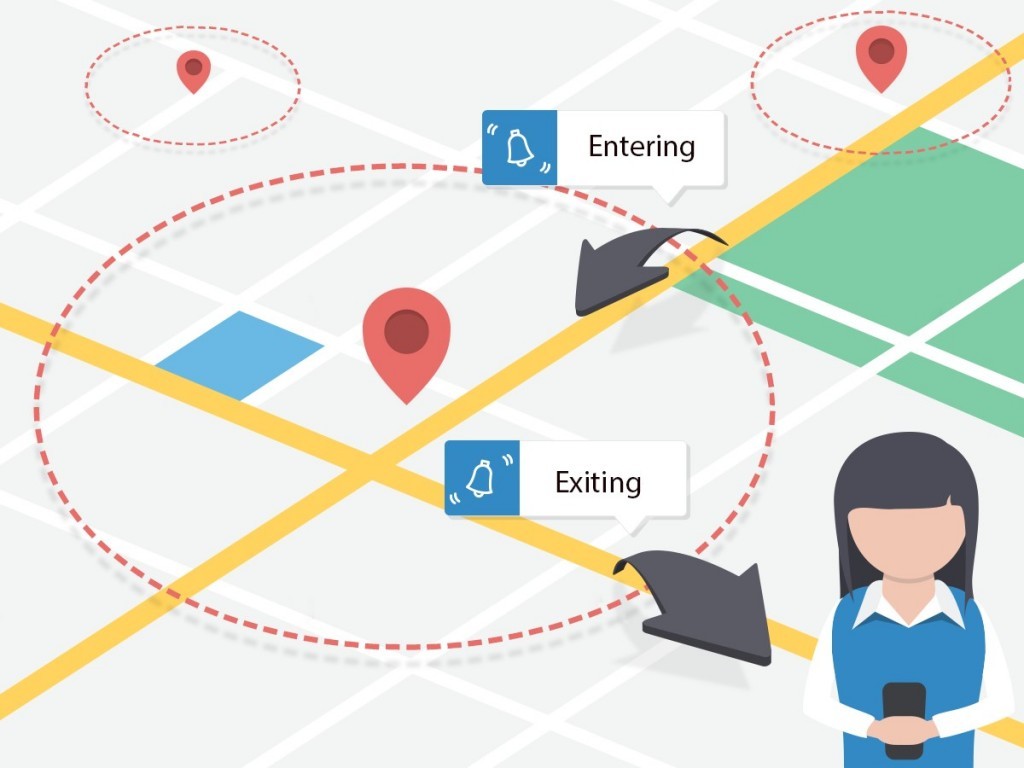
    • A geofence is a virtual perimeter for a real-world geographic area.
    • A geo-fence could be dynamically generated—as in a radius around a point location, or a geo-fence can be a predefined set of boundaries (such as school zones or neighbourhood boundaries).
    • The use of a geofence is called geofencing, and one example of usage involves a location-aware device of a location-based service (LBS) user entering or exiting a geo-fence.
    • This activity could trigger an alert to the device’s user as well as messaging to the geo-fence operator.

    Tracking COVID-19 patients

    • The government has tested an application that triggers e-mails and SMS alerts to an authorised government agency if a person has jumped quarantine or escaped from isolation, based on the person’s mobile phone’s cell tower location.
    • This “geo-fencing” is accurate by up to 300 m.
  • International Space Agencies – Missions and Discoveries

    GRACE-FO Mission

    NASA releases new global maps mapping groundwater, soil wetness using GRACE-FO satellites.

    GRACE-FO Mission

    • The Gravity Recovery and Climate Experiment Follow-On (GRACE-FO) mission is a partnership between NASA and the German Research Centre for Geosciences (GFZ).
    • GRACE-FO is a successor to the original GRACE mission, which orbited Earth from 2002-2017.
    • It carries on the extremely successful work of its predecessor while testing a new technology designed to dramatically improve the already remarkable precision of its measurement system.

    Why need such data on groundwater and soil moisture?

    • Groundwater and soil moisture — which depicts wetness in soil — are crucial for irrigation and crop growth.
    • The need to constantly monitor groundwater and soil moisture is important since both act as useful indicators for predicting drought conditions.
    • One of the goals of the new global maps is to make the same consistent product available in all parts of the world, especially in countries that do not have any groundwater-monitoring infrastructure.
    • The data would help in managing the selection of appropriate agricultural crops and predicting yields.
  • Health Sector – UHC, National Health Policy, Family Planning, Health Insurance, etc.

    BCG vaccine

    According to a  US-based research, a combination of reduced morbidity and mortality could make the Bacillus Calmette-Guerin (BCG) vaccination a “game-changer” in the fight against novel coronavirus.

    What is BCG Vaccine?

    • Bacillus Calmette–Guérin (BCG) vaccine is a vaccine primarily used against tuberculosis (TB).
    • In countries where TB or leprosy is common, one dose is recommended in healthy babies as close to the time of birth as possible.
    • In areas where tuberculosis is not common, only children at high risk are typically immunized, while suspected cases of tuberculosis are individually tested for and treated.

    How can TB vaccine help fight COVID-19?

    • The BCG vaccine contains a live but weakened strain of tuberculosis bacteria that provokes the body to develop antibodies to attack TB bacteria.
    • This is called an adaptive immune response, because the body develops a defense against a specific disease-causing microorganism, or pathogen, after encountering it.
    • Most vaccines create an adaptive immune response to a single pathogen.
    • Unlike other vaccines, the BCG vaccine may also boost the innate immune system, first-line defenses that keep a variety of pathogens from entering the body or from establishing an infection.

Join the Community

Join us across Social Media platforms.