💥UPSC 2026, 2027, 2028 UAP Mentorship (March Batch) + Access XFactor Notes & Microthemes PDF

Archives: News

  • Oil and Gas Sector – HELP, Open Acreage Policy, etc.

    [pib] Saksham Campaign

    ‘Saksham’ Campaign for fuel conservation has been launched.

    ‘Saksham’ Campaign

    • It is an annual one-month long, people-centric fuel conservation mega campaign of Petroleum Conservation Research Association (PCRA) under the aegis of Ministry of Petroleum and Natural Gas.
    • PCRA and Oil & Gas companies carry out various interactive programs during this month-long campaign.
    • Activities like ‘Saksham’ Cycle Day, Cyclothons, Workshops for drivers of commercial vehicles, Seminars for housewives/cooks on adopting simple fuel saving measure.
  • Trade Sector Updates – Falling Exports, TIES, MEIS, Foreign Trade Policy, etc.

    HSN Code


    No imports will be allowed without HSN code into the country clarified the Union Minister of Commerce & Industry.

    What is HSN Code?

    • HSN code stands for “Harmonized System of Nomenclature”.
    • This system has been introduced for the systematic classification of goods all over the world.
    • HSN code is a 6-digit uniform code that classifies 5000+ products and is accepted worldwide.
    • It was developed by the World Customs Organization (WCO) and it came into effect from 1988.
    • The main purpose of HSN is to classify goods from all over the World in a systematic and logical manner. This brings in a uniform classification of goods and facilitates international trade.
  • Indian Navy Updates

    Exercise ‘Sahyog-Kaijin’

    Exercise ‘Sahyog-Kaijin’

    • Indian and Japanese coast guards participated in a joint exercise ‘Sahyog-Kaijin’ on January 16.
    • The aim behind ‘Sahyog-Kaijin’ is to strengthen the bond between the two countries.
    • One ship of the Japanese Coast Guard and four ships and an aircraft of the Indian Coast Guard participated in the joint exercise.
    • The drill is a five-day event.
  • Goods and Services Tax (GST)

    [op-ed of the day] GST may not have been revenue-neutral

    Context

    In theory, the shift to GST made eminent sense, yet in practice, some of these expectations have been belied.

    Why have GST collections not measured up to expectations?

    • This could be due to a combination of three factors:
    • First:  The tax rates under GST are lower than in the earlier regime-GST was not revenue neutral, to begin with.
    • Second: There has been massive tax evasion due to under-reporting, input credit scams and fake invoices
    • Third: A slowing economy has impacted firm revenues, and thus tax collections.

    GST should have been revenue-neutral but it is not

    • Fitment exercises not carried out: The fitment exercise should have been undertaken in a manner so as to ensure that collections pre and post GST are the same.
      • But, this fundamental principle was not adhered to, and other considerations dominated.
      • Revenue neutrality Vs. Multiple objectives: The GST council began its deliberations not with the single objective of revenue neutrality, but with multiple objectives in mind.
      • Closeness to existing tax: Council wanted to ensure that rates were close to the existing tax incidence (accounting for cascading); to ensure minimal impact on inflation.
      • Not regressive: The council also wanted the proposed rate structure was not regressive in nature.
      • The council wanted that items of mass consumption were not taxed at a higher rate.
      • Achieving all these objectives simultaneously proved a difficult task.

    The issue of tax evasion

    • It is difficult to arrive at firm estimates of the scale of the problem but there are some indications of its size.
    • In West Bengal, it was estimated that the value of goods (July 2017 to March 2018) entering a state appeared to be under-reported by around Rs 50,000 crore.
    • Rs 60,000 crore in Madhya Pradesh, and Rs 1,50,000 crore in Maharashtra.
    • Numerous cases of tax fraud and fake invoice scams have also been detected since then

    Problems involve and possible solutions

    • Invoice matching:  It is argued that invoice matching will help if implemented it from the beginning.
      • It could have helped plug the loopholes.
    • Issue of under-reporting: It is debatable whether invoice matching can end under-reporting (collusion) and fake invoices.
    • Limit of state capacity in handling cases: The Central and state administrations can intervene in only about 3 lakh cases in a year.
      • Their capacity to track lakhs of transactions on a daily basis is questionable.
    • Slowing economy: Already existing structural issues have been compounded by the slowing economy.

    Way forward

    • There are certain options available to the government.
    • First: Either recalibrate the expectation or carry on the efforts to plug the loopholes and the shortcoming in the system.
    • Second: Lower the cut-off for composition scheme. A higher level simply encourages business “splitting”.
    • Third: Reduce exemptions.
    • Fourth: The council must deliberate on the rate structure, bringing it in line with pre-GST levels.
  • Economic Indicators and Various Reports On It- GDP, FD, EODB, WIR etc

    [op-ed snap] A rough patch

    Context

    High inflation has reduced the fiscal space available for a rate cut.

    RBI target of 6% breached.

    • CPI at 7.35 %: Retail inflation, as measured by the consumer price index (CPI), has surged to 7.35 per cent in December 2019.
    • Latest inflation data seems to corroborate fears articulated by the Monetary Policy Committee (MPC) in its December meeting.
    • In the meeting, MPC refrained from cutting the benchmark repo rate.

    Consequences for the economy

    • Reduced scope for fiscal slippage: High inflation reduced the space for further easing of policy rates.
      • Even after clarity over the extent of the Centre’s fiscal slippage emerged.
    • Rise in yield for 10-year securities: The 10-year G-sec yields have reacted sharply to these developments, rising to 6.67 on Tuesday.
      • Offsetting operation twist: Rise in yield resulted in offsetting the impact of the RBI’s recent open market operations.
    • Inflation targeting under stress: The combination of weak economic activity and higher than expected supply-side inflationary pressures has put the inflation-targeting regime under test.

    Reasons for the inflation rise and chances of easing

    • Food prices rise: Much of the rise in the headline inflation number can be traced to higher food prices.
      • Food inflation has risen to a near six-year high of 14.12 per cent in December 2019, up from 10.01 per cent in the previous month.
      • Vegetable prices have surged to 60.5 per cent in December, contributing nearly 3.7 percentage points to the headline numbers.
    • Chances of ease in coming months: While vegetable crop cycles tend to be short, and supply-side pressures may ease in the coming months.
      • The stickiness in prices of protein items is likely to provide a floor for food inflation.

    Bleak outlook for inflation easing

    • No short-term return to normal level: Food inflation is unlikely to revert to previous levels in the short term.
    • Household inflation expectations, a key metric in the MPC’s assessment, are more responsive to food inflation, this will further exert upward pressure on MPC.
    • A factor of hostilities in the Middle East: The uncertainty over oil prices on account of hostilities in the Middle East, adds to the bleak outlook for inflation.

    Conclusion

    With limited fiscal space for a meaningful stimulus, the government intends to support the economy during this rough patch, and return growth to a higher trajectory.


  • Primary and Secondary Education – RTE, Education Policy, SEQI, RMSA, Committee Reports, etc.

    [op-ed snap] Not ready for school

    Context

    The draft NEP (National Education Policy) document points out that close to five crore children currently in elementary school do not have foundational literacy and numeracy skills. 

    Severe learning crisis: The document cites several possible reasons for this crisis.

    • First reason:  Many children enter school before age six.
      • Lack of options: This is partly due to the lack of affordable and accessible options for pre-schooling.
      • Therefore, too many children go to Std. I with limited exposure to early childhood education.
      • Consequences for the poor: Children from poor families have a double disadvantage -lack of healthcare and nutrition and the absence of a supportive learning environment on the other.
    • Second reason: Lack of developmentally appropriate activities by age and phase.
      • The misplaced focus of ICDS: School readiness or early childhood development and education activities have not had a high priority in the ICDS system.
      • Acting as an extension of pre-school education: Private preschools that have increased access to preschool but are often designed to be a downward extension of schooling.
      • Thus, they bring in school-like features into the pre-school classroom, rather than developmentally appropriate activities by age and phase.

    Three clear trends in ASER-2019 data

    • First trend: Scope for expansion of Anganwadi network.
      • Expansion network: There is considerable scope for expanding Anganwadi outreach for three and four-year-old children.
      • All-India data from 2018 shows that slightly less than 30 per cent children at age three and 15.6 per cent of children at age four are not enrolled anywhere.
    • Second trend: Under 6 students in class I.
      • ASER 2018 data show that 27.6 per cent of all children in Std I are under six.
      • It is commonly assumed that children enter Standard I at age six and that they proceed year by year from Std I to Std VIII.
      • The Right to Education Act also refers to free and compulsory education for the age group six to 14.
      • However, the practice on the ground is quite different.
    • Third trend: There are important age implications for children’s learning.
      • Association with learning output: ASER-2019 indicate the higher learning output associated with age in the same class.
      • In Std. I, the ability to do cognitive activities among seven-eight-year olds can be 20 percentage points higher than their friends who are five years old but in the same class.
      • In terms of reading levels in Std. I, 37.1 per cent children who are under six can recognise letters whereas 76 per cent of those who are seven or eight can do the same.
      • Age distribution in Std. I vary considerably between government and private schools.
      • Private schools in many states have a relatively older age distribution.

    Way forward

    • Understanding the children: Understanding the challenges that children face when they are young is critical if we want to solve these problems early in children’s life.
    • Providing for developmentally appropriate skill: Instead of focusing on the pre-school years as the downward extension of school years there is a need for providing developmentally appropriate skill in these years.
    • Pedagogy: On the pedagogy side reworking of curriculum and activity is urgently needed for entire age band of four to eight.


  • Citizenship and Related Issues

    Explained: Article 131, on which Kerala has based its challenge to the CAA

    • The Kerala government moved the Supreme Court against the Citizenship (Amendment) Act becoming the first state to challenge the law.
    • It filed a petition under Article 131 of the Constitution and asked for the law to be declared unconstitutional and in violation of Articles 14 (equality before law), 21 (protection of life and personal liberty) and 25 (freedom of conscience and free profession, practice, and propagation of religion).

    What is Article 131 of the Constitution?

    • The Article vests the Supreme Court with original jurisdiction over disputes occurring between states or between states and the Centre.
    • The original jurisdiction of a court means the power to hear a case for the first time, as opposed to appellate jurisdiction, in which the court reviews the decision of a lower court.
    • Unlike the original jurisdiction under Article 32 (which gives the top court the power to issue writs, etc.), the jurisdiction in Article 131 is exclusive, meaning it is only the Supreme Court which has this authority.
    • Under Article 226, the High Courts too have the power to issue writs, directions etc.

    Original jurisdiction

    • Article 131 reads, “Original jurisdiction of the Supreme Court. — Subject to the provisions of this Constitution, the Supreme Court shall, to the exclusion of any other court, have original jurisdiction in any dispute —

    (a) between the Government of India and one or more States; or
    (b) between the Government of India and any State or States on one side and one or more other States on the other; or
    (c) between two or more States,
    if and in so far as the dispute involves any question (whether of law or fact) on which the existence or extent of a legal right depends:

    • The said jurisdiction shall not extend to a dispute arising out of any treaty, agreement, covenant, engagement, sanad, or other similar instrument which, having been entered into or executed before the commencement of this Constitution.
    • However they continue in operation after such commencement, or which provides, that the said jurisdiction shall not extend to such a dispute.

    What kinds of disputes are covered under Article 131?

    • In ‘State of Rajasthan vs Union of India’, 1977, the Supreme Court ruled that the existence or extent of a legal right is a precursor before a suit under Article 131 is entertained. But mere wrangles between governments have no place in the scheme of that Article.
    • Similarly, in the 1978 case, ‘State of Karnataka vs Union of India’, which involved the Centre’s authority to order an inquiry into a state Chief Minister’s conduct, jurisdiction under Article 131 was held valid.
    • In the present case filed by Kerala, central legislation (CAA) is being challenged. In 2011, a two-judge Supreme Court Bench in ‘Madhya Pradesh v Union of India’ had held such a suit was not maintainable.
    • Later in 2013, another two-judge Bench in ‘State of Jharkhand v State of Bihar and Another’ disagreed with the previous verdict and referred the matter to a larger Bench. Kerala’s plaint relies on the 2013 verdict.
  • Health Sector – UHC, National Health Policy, Family Planning, Health Insurance, etc.

    National Policy for the treatment of 450 ‘Rare Diseases’

    The Union Ministry of Health and Family Welfare has published a national policy for the treatment of 450 ‘rare diseases’.

    About the Policy

    • The Centre first prepared such a policy in 2017 and appointed a committee in 2018 to review it.
    • It was created on the direction of the Delhi High Court to the Ministry of Health and Family Welfare.
    • This was in response to writ petitions for free treatment of such diseases, due to their “prohibitively” high cost of treatment.
    • Hence, a policy was deemed necessary to devise a “multipronged” and “multisectoral” approach to build India’s capacity for tackling such ailments.

    Why need such a policy?

    • As per the policy, out of all rare diseases in the world, less than five per cent have therapies available to treat them.
    • In India, roughly 450 rare diseases have been recorded from tertiary hospitals, of which the most common are Haemophilia, Thalassemia, Sickle-cell anemia, auto-immune diseases, Gaucher’s disease, and cystic fibrosis.

    Features of the policy

    • While the policy has not yet put down a detailed roadmap of how rare diseases will be treated.
    • It has mentioned some measures, which include creating a patient registry for rare diseases, arriving at a definition for rare diseases that is suited to India, taking legal and other measures to control the prices of their drugs etc.
    • It intends to kickstart a registry of rare diseases, which will be maintained by the Indian Council of Medical Research (ICMR).
    • Under the policy, there are three categories of rare diseases — requiring one-time curative treatment, diseases that require long-term treatment but where the cost is low, and those needing long-term treatments with high cost.
    • Some of the diseases in the first category include osteopetrosis and immune deficiency disorders, among others.
    • As per the policy, the assistance of Rs 15 lakh will be provided to patients suffering from rare diseases that require a one-time curative treatment under the Rashtriya Arogya Nidhi scheme.
    • The treatment will be limited to the beneficiaries of Pradhan Mantri Jan Arogya Yojana.

    What are rare diseases?

    • Broadly, a ‘rare disease’ is defined as a health condition of low prevalence that affects a small number of people when compared with other prevalent diseases in the general population. Many cases of rare diseases may be serious, chronic and life-threatening.
    • While a majority of rare diseases are believed to be genetic, many — such as some rare cancers and some autoimmune diseases — are not inherited, as per the NIH.
    • According to the policy, rare diseases include genetic diseases, rare cancers, infectious tropical diseases, and degenerative diseases.

    Definition

    • India does not have a definition of rare diseases because there is a lack of epidemiological data on its incidence and prevalence.
    • While there is no universally accepted definition of rare diseases, countries typically arrive at their own descriptions, taking into consideration disease prevalence, its severity and the existence of alternative therapeutic options.
    • In the US, for instance, a rare disease is defined as a condition that affects fewer than 200,000 people.
    • The same definition is used by the National Organisation for Rare Disorders (NORD) in India.
  • Primary and Secondary Education – RTE, Education Policy, SEQI, RMSA, Committee Reports, etc.

    Annual Status of Education Report (Rural) 2019

    The Annual Status of Education Report (ASER) 2019 (rural) was recently released by NGO Pratham.

    Highlights of the report

    • Only 16% of children in Class 1 in 26 surveyed rural districts can read text at the prescribed level, while almost 40% cannot even recognise letters.
    • Only 41% of these children could recognise two digit numbers.

    Private schools ahead

    • Of six-year olds in Class 1, 41.5% of those in private schools could read words in comparison to only 19% from government schools.
    • Similarly, 28% of those in government schools could do simple addition as against 47% in private schools.
    • This gap is further exacerbated by a gender divide: only 39% of girls aged 6-8 are enrolled in private schools in comparison to almost 48% of boys.
    • The report also found that a classroom could include students from a range of age-groups, skewing towards younger children in government schools.

    Determinants of learning outcomes

    • The ASER report shows that a large number of factors determine the quality of education received at this stage, including the child’s home background, especially the mother’s education level; the type of school, whether anganwadis, government schools or private pre-schools; and the child’s age in Class 1.
    • More than a quarter of Class 1 students in government schools are only 4 or 5 years old, younger than the recommended age.
    • The ASER data shows that these younger children struggle more than others in all skills.
    • Permitting underage children into primary grades puts them at a learning disadvantage which is difficult to overcome,” said the report.

    Role of Mothers

    • Among the key findings of ASER 2019 is that the mother’s education often determines the kind of pre-schooling or schooling that the child gets.
    • The report says that among children in the early years (ages 0-8), those with mothers who had completed eight or fewer years of schooling are more likely to be attending anganwadis or government pre-primary classes.
    • With 75% women in the productive age group not in the workforce, they can be better engaged in their children’s development, learning and school readiness.

    Key suggestions made by the report

    • ASER found that the solution is not to spend longer hours teaching children the 3Rs.
    • Counter-intuitively, the report argues that a focus on cognitive skills rather than subject learning in the early years can make a big difference to basic literacy and numeracy abilities.
    • The survey shows that among Class 1 children who could correctly do none or only one of the tasks requiring cognitive skills, about 14% could read words, while 19% could do single digit addition.
    • However, of those children who could correctly do all three cognitive tasks, 52% could read words, and 63% could solve the addition problem.

    Focus on productive learning

    • ASER data shows that children’s performance on tasks requiring cognitive skills is strongly related to their ability to do early language and numeracy tasks,” says the report.
    • This suggests that focussing on play-based activities that build memory; reasoning and problem-solving abilities are more productive than an early focus on content knowledge.
    • Global research shows that 90% of brain growth occurs by age 5, meaning that the quality of early childhood education has a crucial impact on the development and long-term schooling of a child.
  • Classical languages in India

    Recently in a Marathi literary festival, a resolution was passed demanding its declaration as a ‘Classical’ language.

    ‘Classical’ languages in India

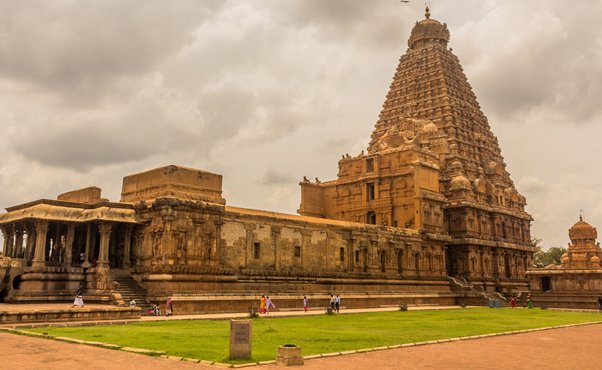
    Currently, six languages enjoy the ‘Classical’ status: Tamil (declared in 2004), Sanskrit (2005), Kannada (2008), Telugu (2008), Malayalam (2013), and Odia (2014).

    How are they classified?

    According to information provided by the Ministry of Culture in the Rajya Sabha in February 2014, the guidelines for declaring a language as ‘Classical’ are:

    • High antiquity of its early texts/recorded history over a period of 1500-2000 years;
    • A body of ancient literature/texts, which is considered a valuable heritage by generations of speakers;
    • The literary tradition be original and not borrowed from another speech community;
    • The classical language and literature being distinct from modern, there may also be a discontinuity between the classical language and its later forms or its offshoots.”

    How are the Classical languages promoted?

    The HRD Ministry noted the benefits it provides once a language is notified as a Classical language:

    • Two major annual international awards for scholars of eminence in classical Indian languages
    • A Centre of Excellence for studies in Classical Languages is set up
    • The University Grants Commission is requested to create, to start with at least in the Central Universities, a certain number of Professional Chairs for the Classical Languages so declared.

Join the Community

Join us across Social Media platforms.