💥UPSC 2027,2028 Mentorship (April Batch) + Access XFactor Notes & Microthemes PDF

Archives: News

  • Indian Army Updates

    Exercise Talisman Sabre, 2025

    Why in the News?

    India is taking part in Talisman Sabre 2025, the 11th and largest edition of the Australia-U.S.-led multinational military exercise, involving over 35,000 personnel from 19 countries.

    About Exercise Talisman Sabre:

    • Overview: It is a biennial multinational joint military exercise, co-led by Australia and the United States.
    • Inception: It began in 2005 and has been conducted every 2 years, typically during odd-numbered years.
    • Objective: The primary aim is to enhance combat readiness, improve interoperability, and strengthen the joint operations capability of participating armed forces.
    • Scope of Operations: It focuses on high-end warfighting, including:
      • Crisis-action planning
      • Contingency response
      • Multi-domain operations across land, air, sea, cyber, and space
    • Strategic Importance: It plays a key role in promoting regional security cooperation and supports the vision of a free, open, and inclusive Indo-Pacific.

    Key Features of the 2025 Edition:

    • Scale: The 2025 edition involves over 35,000 military personnel from 19 participating countries, making it the largest and most complex iteration of the exercise so far.
    • Participating Nations:
      • Full participants: Australia, the United States, India, Canada, Fiji, France, Germany, Indonesia, Japan, the Netherlands, New Zealand, Norway, Papua New Guinea, the Philippines, South Korea, Singapore, Thailand, Tonga, and the United Kingdom.
      • Observer nations: Malaysia and Vietnam.
    • Geographical Expansion: For the first time, parts of the exercise will be conducted outside Australia, with training also planned in Papua New Guinea.
    • New Defence Capabilities: The 2025 edition will showcase:
      • UH-60M Black Hawk helicopters
      • Precision Strike Missile (PrSM) system introduced by the Australian Defence Force
    • Multi-Domain Focus: Operations will span across land, sea, air, space, and cyberspace, reflecting the modern, multi-domain nature of warfare.
    • Strategic Outcome: It aims to improve regional response capabilities, strengthen defence partnerships, and promote peace and stability in the Indo-Pacific region.
    [UPSC 2008] ‘Hand-in-Hand 2007’, a joint anti-terrorism military training was held by the officers of the Indian Army and officers of the Army of which one of the following countries?

    Options: (a) China *(b) Japan (c) Russia (d) USA


  • Festivals, Dances, Theatre, Literature, Art in News

    Literature in News: Thirukkural

    Why in the News?

    Tamil Nadu CM stressed the need to declare the Thirukkural as a national book and to set up a major organisation in Delhi to promote Thiruvalluvar’s ideas.

    Literature in News: Thirukkural

    About Thirukkural:

    • Overview: Thirukkural is a classical Tamil literary work consisting of 1,330 couplets (kurals), each containing seven words.
    • Form and Message: Composed in the Kural Venba poetic form, it is renowned for its universal values, secular ethics, and moral guidance that transcend time, religion, and culture.
    • Authored by: The text is traditionally attributed to Thiruvalluvar, also known simply as Valluvar.
    • How old is it: Scholars date the text between 300 BCE and 500 CE, though its exact period remains debated.
    • Components: The Thirukkural is divided into 3 major sections:
      1. Aram (Virtue / Dharma): Deals with personal morality, non-violence, and ethical conduct—emphasizing values such as truth, charity, self-control, and compassion.
      2. Porul (Wealth / Artha): Focuses on social, political, and economic life, including governance, justice, taxation, warfare, diplomacy, and administration.
      3. Inbam (Love / Kama): Explores human emotions, love, and personal relationships, especially themes of romance, domestic life, and emotional well-being.

    Key Features of Thirukkural:

    • Ethical Emphasis: Promotes timeless values like non-violence (ahimsa), truth, self-restraint, gratitude, and hospitality.
    • Societal Themes: Highlights issues such as education, friendship, agriculture, social justice, and temperance.
    • Cultural Reverence: Referred to by honorifics such as “Tamil Veda” and “Divine Book”, symbolizing its moral and spiritual stature.
    • Literary Qualities: Celebrated for its brevity, clarity, and philosophical depth, making it accessible and universally admired.

    Back2Basics: Sangam Literature

    • Overview: It refers to the ancient body of Tamil texts composed during the Sangam period, traditionally dated from 3rd century BCE to 3rd century CE.
    • Meaning: The word Sangam means “assembly” or “academy”, referring to gatherings of Tamil poets under the patronage of Pandya kings.
    • Historical Context: According to Tamil tradition, there were three Sangams:
      1. First Sangam (Madurai): No known literary works have survived.
      2. Second Sangam (Kapadapuram): Only Tolkappiyam (grammar and poetics) survives.
      3. Third Sangam (Madurai): Source of most surviving Sangam literature.
    • Nature and Content:
      • Literary Form: Written in classical Tamil poetry, the texts reflect secular themes like love, war, charity, governance, agriculture, and trade.
      • Societal Insight: Offers a detailed glimpse into the social, political, and economic life of ancient Tamil society.
    • Key Texts:
      • Tolkappiyam: The earliest Tamil grammar and work on poetic theory.
      • Ettuthogai (Eight Anthologies): Collections of short poems.
      • Pattupattu (Ten Idylls): Longer narrative poems.
      • Padinenkilkanakku (Eighteen Minor Works): Didactic works focused on ethics and morality.
      • Three Epics: Silappatikaram, Manimekalai, Sivaga Sindamani/. These were compiled later but are deeply influenced by Sangam themes.


    [UPSC 2023] Which one of the following explains the practice of Vattakirutal’ as mentioned in Sangam poems?

    Options: (a) Kings employing women bodyguards

    (b) Learned persons assembling in royal courts to discuss religious and philosophical matters

    (c) Young girls keeping watch over agricultural fields and driving away birds and animals

    (d) A king defeated in a battle committing ritual suicide by starving himself to death*


  • Parliament – Sessions, Procedures, Motions, Committees etc

    Nominated Members to the Rajya Sabha

    Why in the News?

    The President of India has nominated Harsh Vardhan Shringla, Ujjwal Nikam, C. Sadanandan Master, and Meenakshi Jain to the Rajya Sabha.

    Nominated Members to the Rajya Sabha

    About Nominated Members to the Rajya Sabha:

    • Number and Tenure: The President of India nominates 12 members to the Rajya Sabha for a six-year term.
    • Purpose of Nomination: This provision is meant to honor individuals with exceptional contributions in the fields of arts, literature, science, and social service.
    • Constitutional Basis: This right is granted to the President under the Fourth Schedule, in accordance with Articles 4(1) and 80(2) of the Constitution of India.
    • Constitutional Provisions for Nominated Members:
      • Article 80(1)(a): Provides for nomination of 12 members to the Rajya Sabha by the President.
      • Article 80(3): Specifies that the nominees must have special knowledge or practical experience in one or more of the following fields: Literature; Science; Art; Social service.

    Composition of the Rajya Sabha:

    • Total Strength: The current strength of the Rajya Sabha is 245 members, comprising:
      • 233 elected members representing States and Union Territories
      • 12 nominated members by the President
    • Permanent Nature: The Rajya Sabha is a permanent body and is not subject to dissolution.
    • Biennial Retirement: One-third members retire every two years, and elections are held to fill the vacant seats.

    Powers and Privileges of Nominated Members:

    • Equal Rights in House Proceedings: Nominated members enjoy all powers, privileges, and immunities of an elected Member of Parliament.
    • Participation in Proceedings: They can take part in all debates, discussions, and committees in the House.
    • Voting Rights Exceptions:
      • They cannot vote in the election of the President of India.
      • They can vote in the election of the Vice President.
    • Political Affiliation Provision: According to Article 99, a nominated member is given six months to join a political party after being nominated.
    [UPSC 2014] Consider the following statements:

    1. The Chairman and the Deputy Chairman of the Rajya Sabha are not the members of that House. 2. While the nominated members of the two Houses of the Parliament have no voting right in the presidential election, they have the right to vote in the election of the Vice President.

    Which of the statements given above is/are correct?

    Options: (a) 1 only (b) 2 only* (c) Both 1 and 2 (d) Neither 1 nor 2


  • Wildlife Conservation Efforts

    Specie in news: Lion-Tailed Macaque

    Why in the News?

    The National Board for Wildlife (NBWL) has granted approval for diverting 142.76 hectares of forest land in Sharavathi Valley Lion-Tailed Macaque Wildlife Sanctuary, Karnataka.

    https://www.downtoearth.org.in/environment/in-principle-nod-to-sharavathi-valley-hydel-project-in-endangered-lion-tailed-macaque-sanctuary 

    About Lion-Tailed Macaque:

    • Scientific Classification: The Lion-Tailed Macaque (Macaca silenus), also known as the Wanderoo or Bearded Monkey, is an primate species endemic to the Western Ghats of India.
    • Distribution: It is found primarily in the states of Karnataka, Kerala, and Tamil Nadu.
    • Physical Characteristics: Recognized by a silver-white mane surrounding a black face and a lion-like tuft at the end of its tail, the body is covered in glossy black fur, and both sexes look similar.
    • Habitat and Behaviour
      • Preferences: The species inhabits tropical evergreen rainforests, and is also found in monsoon forests and shola-grassland ecosystems.
      • Habitat: It is arboreal (tree-dwelling) and diurnal (active during the day).
      • Elevation Range: Typically lives at altitudes between 600 and 1,800 metres above sea level.
      • Human Avoidance: Known for being shy, it tends to avoid human contact, staying high in the forest canopy.
      • Social Structure: Lives in social groups of 8 to 20 individuals, usually led by a dominant male.
    • Behaviour:
      • Dietary Habits: Primarily frugivorous, eating fruits, but also consumes leaves, stems, flowers, buds, fungi, and occasionally insects and small animals.
      • Communication System: Possesses a rich vocal communication system with over 17 distinct vocalizations.
      • Territorial Behavior: Males use loud calls to mark territory and warn intruders.
    • Conservation Status:
      • IUCN Status: Classified as Endangered on the IUCN Red List.
      • Legal Protection: Appendix I of CITES; Schedule I of the Indian Wildlife (Protection) Act, 1972.
    • Population and Conservation Efforts:
      • Population: It is estimated at around only 2,500 individuals.
      • Key Protected Area: The Sharavathi Valley Lion-Tailed Macaque Wildlife Sanctuary in Karnataka hosts the largest known population in any protected area, with around 700 individuals.
    • Ecological Importance:
      • Serves as an indicator species for rainforest health.
      • Plays a vital role in seed dispersal, contributing to forest regeneration.
    [UPSC 2023] Consider the following fauna:

    1. Lion-tailed Macaque 2. Malabar Civet 3. Sambar Deer

    How many of the above are generally nocturnal or most active after sunset?

    Options: (a) Only one (b) Only two* (c) All three (d) None


  • Wildlife Conservation Efforts

    Revising Guidelines to declare Eco-Sensitive Zones (ESZ)

    Why in the News?

    The Standing Committee of the National Board for Wildlife (SC-NBWL) has decided to review and revise the 2011 guidelines on the declaration of Eco-Sensitive Zones (ESZs) around wildlife sanctuaries and national parks.

    What are Eco-Sensitive Zones (ESZs)?

    • Overview: ESZs, also called Ecologically Fragile Areas (EFAs), are areas notified by the Ministry of Environment, Forest and Climate Change (MoEFCC) around Protected Areas (PAs) like national parks and wildlife sanctuaries.
    • Purpose:
      • Act as “shock absorbers” to protect areas by regulating potentially harmful activities.
      • Serve as transition zones from highly protected to less protected ecosystems.
      • Help conserve biodiversity, maintain landscape connectivity, and prevent fragmentation of habitats.
    • Legal Basis:
      • Environment (Protection) Act, 1986, particularly Section 3(2)(v).
      • Rule 5(1) of Environment (Protection) Rules, 1986.
    • Wildlife Conservation Strategy, 2002: Recommended declaring 10 km radius around PAs as default ESZ.
    • Demarcation Process:
      • ESZ boundaries vary in width based on ecological sensitivity and ground realities.
      • Factors considered: species presence, migration routes, landscape linkage, human settlements, etc.
    • Activity Zonation:
      • Prohibited: Commercial mining, polluting industries, major hydro projects, wood logging.
      • Regulated: Tree felling, large-scale agriculture change, road widening, tourism infrastructure.
      • Permitted: Rainwater harvesting, organic farming, green energy use.
    • Present Status:
      • 347 final notifications issued.
      • Where no ESZ is notified, a default 10-km ESZ is applicable (SC 2022 ruling).

    2011 Guidelines on ESZs:

    • Issued by MoEFCC to standardize and guide the process of ESZ declaration.
    • Key Features:
      • Emphasized flexibility and site-specific demarcation.
      • Classified activities into permitted, regulated, prohibited.
      • Directed preparation of a Zonal Master Plan (ZMP) within 2 years of ESZ notification.
      • Called for community involvement, scientific input, and buffer management.

    Recent Context:

    • Reasons Behind: Revision One-size-fits-all (10-km blanket rule) is not effective:
      • Urban examples: Sanjay Gandhi National Park (Mumbai), Asola Bhatti Sanctuary (Delhi).
      • In Himachal Pradesh, ~65% area already under forest cover.
      • Kerala: Fear of new sanctuary leading to more restrictions.
    • Over-generalized: Existing guidelines unsuitable for marine sanctuaries, need ecosystem-specific norms.
    [UPSC 2014] With reference to ‘Eco-Sensitive Zones’, which of the following statements is/are correct?

    1. Eco-Sensitive Zones are the areas that are declared under the Wildlife (Protection) Act, 1972.

    2. The purpose of the declaration of Eco-Sensitive Zones is to prohibit all kinds of human activities in those zones except agriculture.

    Select the correct answer using the code given below.

    Options: (a) 1 only (b) 2 only (c) Both 1 and 2 (d) Neither 1 nor 2 *


  • Women empowerment issues – Jobs,Reservation and education

    [12th July 2025] The Hindu Op-ed: View India’s Gender Gap Report ranking as a warning

    PYQ Relevance:

    [UPSC 2023] Why did human development fail to keep pace with economic development in India?

    Linkage: The report says that India’s low scores in areas like women’s jobs and health show a deep problem that is slowing down the country’s progress. Even though the economy is growing, women are still left behind in key areas. That’s why the report’s low ranking is a strong warning.


    Mentor’s Comment:  The World Economic Forum’s Global Gender Gap Report 2025 has brought renewed attention to India’s poor performance in gender equality, ranking it 131 out of 148 countries. Despite being a global economic and digital power, the report highlights serious structural deficits in India, especially in women’s health, economic participation, and decision-making roles.

    Today’s editorial analyses the World Economic Forum’s Global Gender Gap Report 2025 for India. This topic is important for  GS Paper II (Social Justice) in the UPSC mains exam.

    _

    Let’s learn!

    Why in the News?

    Recently, India was ranked very low in the World Economic Forum’s Global Gender Gap Report 2025, showing that there are serious and long-standing inequalities between men and women, especially in jobs and economic roles.

    Why is India’s low gender gap ranking seen as a structural failure?

    • Low Global Ranking in Gender Gap: According to the Global Gender Gap Report 2025, India ranks 131 out of 148 countries, reflecting persistent inequality in key areas such as economic participation and health. This ranking indicates a structural issue beyond isolated policy failures.
    • Poor Female Labour Force Participation: India ranks 143rd in economic participation and opportunity, with women earning less than one-third of what men do. Female labour force participation remains below 25%, revealing systemic barriers to employment despite rising educational levels.


    What health barriers limit women’s economic participation in India?

    • High Anaemia Prevalence: Nearly 57% of women aged 15–49 suffer from anaemia (NFHS-5), which weakens physical capacity, affects cognitive ability, and reduces safe maternal outcomes, ultimately restricting their ability to work or study.
    • Gendered Gaps in Healthcare Access: Women, especially in rural and low-income groups, face inadequate access to reproductive health, preventive care, and nutrition, leading to poor health outcomes and lower life expectancy than men.
    • Neglect of Women’s Health in Policy: Public health systems often fail to prioritise women’s specific needs, with underfunded primary care, weak maternal services, and poor sanitation, resulting in chronic health issues that hinder long-term workforce participation.

    How does unpaid care work hinder gender equality and growth?

    • Limits Women’s Workforce Participation: Indian women perform nearly seven times more unpaid domestic work than men (Time Use Survey), leaving little time for formal employment or skill development.
      For instance, many women drop out of jobs after childbirth due to lack of childcare support.
    • Undervalued in National Economy: Despite its economic value, unpaid care work is invisible in GDP calculations and often excluded from policy priorities. Countries like Uruguay have tried to measure and integrate care work into development plans to promote inclusive growth.
    • Worsens Gender Inequality in Decision-Making: The burden of care responsibilities keeps women out of leadership roles and policy spaces, reinforcing their marginalisation in public and private institutions. Low representation of women in budget committees leads to underfunding of women-centric welfare schemes.
    Note: The Time Use Survey, conducted by the National Statistical Office (NSO) in India (latest available: 2019), provides valuable data on how individuals allocate time to various activities over a 24-hour period.


    Which global models can India adopt for care economy reforms?

    • Uruguay’s Approach: The National Integrated Care System ensures universal access to services like childcare, eldercare, and disability assistance, aiming to reduce the unpaid care burden and promote professionalisation of care work.
    • South Korea’s Model: Through expansive public investment in care services, including care vouchers and subsidised facilities, South Korea has enhanced female workforce participation and addressed the care gap in ageing and young populations.
    • Nordic Countries’ Example: Nations like Sweden and Norway offer state-supported childcare, generous parental leave, and policies that promote shared caregiving roles, fostering strong welfare systems and improving gender equity.

    What are the demographic risks of excluding women from the workforce?

    • Rising Dependency Ratio: When women are excluded, fewer people contribute economically while more depend on them, especially as India’s population ages. Eg: By 2050, nearly 20% of Indians will be senior citizens, increasing the burden on a shrinking working population.
    • Shrinking Labour Force: Low female participation limits the potential of India’s large youth base, reducing the nation’s demographic dividend. Eg: India’s female labour force participation was just 24% in 2023, compared to over 60% in many developing nations.
    • Stagnant Economic Growth: Without women’s inclusion, GDP growth slows, and the country may miss massive income gains. Eg: McKinsey Global Institute estimated India could add $770 billion to its GDP by 2025 by closing gender gaps.
    What are the demographic risks of excluding women from the workforce?

    • Beti Bachao Beti Padhao (BBBP): Launched in 2015, this scheme aims to improve the child sex ratio, ensure education for girls, and raise awareness against gender discrimination.
    • Pradhan Mantri Matru Vandana Yojana (PMMVY): This maternity benefit scheme provides financial support to pregnant and lactating women for their first childbirth, promoting nutrition and health.
    • Mahila Shakti Kendra (MSK): MSKs offer support services at the grassroots level, including skill training, employment guidance, legal aid, and digital literacy to empower rural women.


    Way forward: 

    • Invest in Women-Centric Infrastructure: Enhance public spending on healthcare, childcare, and eldercare services, especially at the primary level, to support women’s well-being and free up time for economic participation.
    • Institutionalize Gender-Responsive Policies: Implement gender budgeting, time-use surveys, and inclusive labour reforms to recognize unpaid care work and promote women’s entry into the formal workforce.

  • Festivals, Dances, Theatre, Literature, Art in News

    ‘Maratha Military Landscapes’ included in the UNESCO World Heritage List

    Why in the News?

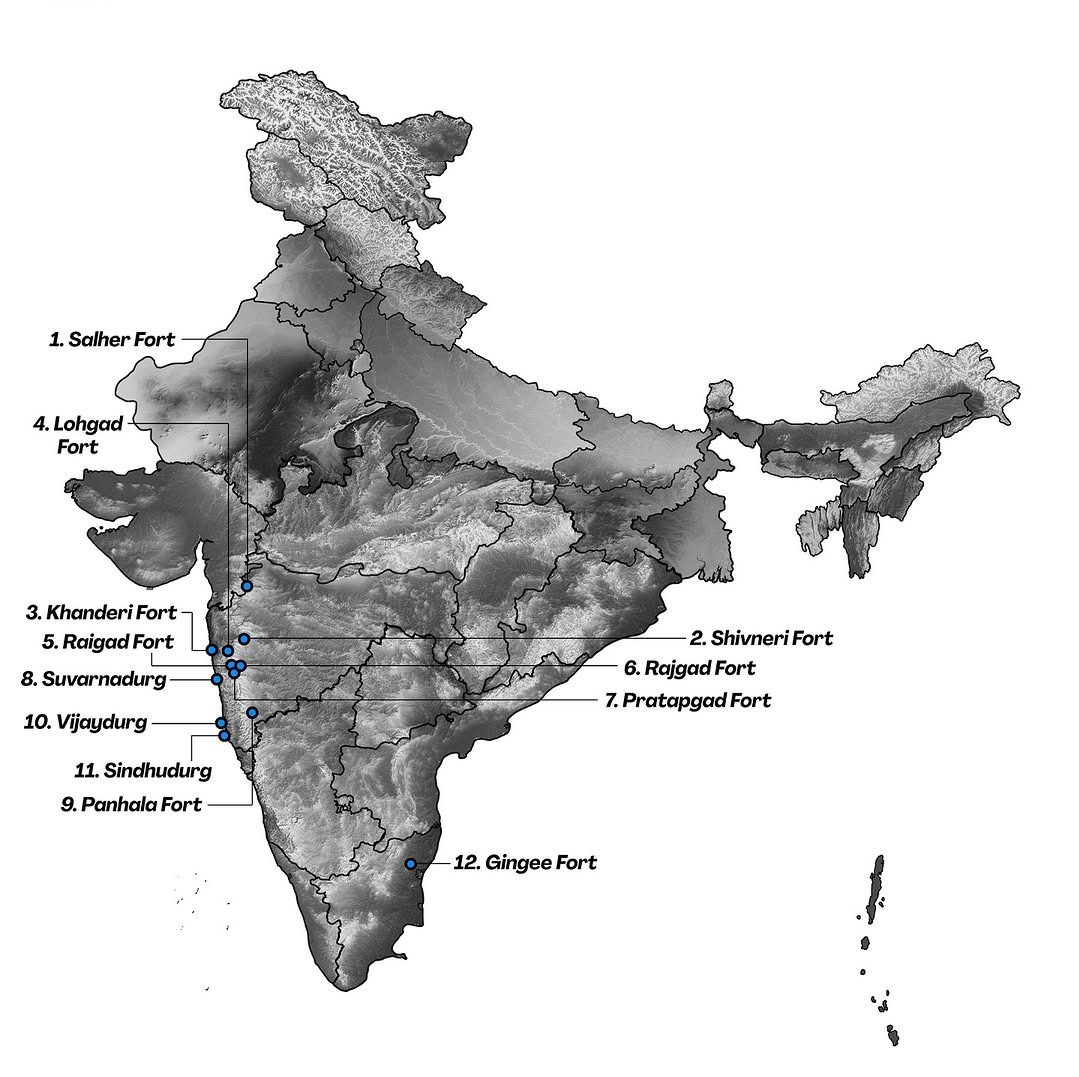
    The ‘Maratha Military Landscapes’ of India have been inscribed on the UNESCO World Heritage List under the cultural category during the 47th session of the World Heritage Committee held in Paris.

    About Maratha Military Landscapes:

    • Overview: A network of 12 forts showcasing the Maratha Empire’s military architecture and strategic fortification from the 17th to 19th centuries.
    • Time Period: Developed between 1670 CE (Shivaji’s era) and 1818 CE (end of Peshwa rule).
    • Geographical Spread: 11 forts in Maharashtra and 1 in Tamil Nadu (Gingee Fort), covering hill, coastal, forest, plateau, and island terrains.
    • Key Forts: Salher, Shivneri, Lohgad, Raigad, Rajgad, Pratapgad, Khanderi, Suvarnadurg, Panhala, Vijaydurg, Sindhudurg (Maharashtra); Gingee (Tamil Nadu).
    • Types:
      • Hill forts: Rajgad, Raigad
      • Hill-forest: Shivneri
      • Coastal: Suvarnadurg, Vijaydurg
      • Island: Khanderi, Sindhudurg
    • Protection:
      • 8 forts by Archaeological Survey of India (ASI)
      • 4 forts by Maharashtra’s Directorate of Archaeology & Museums
    • Ideology: Reflects Shivaji’s military decentralization, terrain-based defense, and self-sustaining fort systems.
    • Tagged under cultural criteria:
      • (iii) Exceptional testimony to a cultural tradition
      • (iv) Outstanding example of military architecture
      • (vi) Association with historic events and traditions

    What are UNESCO World Heritage Sites?

    • A WHS is a landmark or area recognized for its cultural, historical, natural, or scientific value to humanity.
    • It is governed by the UNESCO World Heritage Convention (1972).
      • India formally signed the Convention on November 14, 1977.
    • Sites are selected by the World Heritage Committee, comprising 21 elected state parties.
    • Categories include:
      • Cultural (e.g., forts, temples, cities)
      • Natural (e.g., forests, parks, biodiversity sites)
      • Mixed (having both cultural and natural value)
    • Selection is based on 10 criteria (6 cultural + 4 natural); at least one must be met.
    • Once inscribed, sites are eligible for global recognition, protection, and funding.


    [UPSC 2024] Consider the following properties included in the World Heritage List released by UNESCO:

    1. Shantiniketan 2. Rani-ki-Vav 3. Sacred Ensembles of the Hoysalas 4. Mahabodhi Temple Complex at Bodhgaya

    How many of the above properties were included in 2023?

    Options: (a) Only one (b) Only two* (c) Only three (d) All four


  • Telecom and Postal Sector – Spectrum Allocation, Call Drops, Predatory Pricing, etc

    [pib] Sanchar Mitra Scheme

    Why in the News?

    The Department of Telecommunications (DoT) has launched an expanded Sanchar Mitra Scheme to engage engineering students as digital ambassadors for promoting telecom literacy, digital safety, and citizen engagement.

    What is the Sanchar Mitra Scheme?

    • Launching Body: An initiative by the Department of Telecommunications (DoT), Government of India.
    • Primary Aim: To engage student volunteers as “Sanchar Mitras” or digital ambassadors to spread awareness about telecom-related issues.
    • Purpose:
      • Bridge the communication gap between citizens and the telecom ecosystem.
      • Promote safe and informed use of telecom services.
      • Encourage public participation in India’s digital transformation.
    • Implementation Status:
      • Piloted in select institutions.
      • Now being scaled up for nationwide rollout.

    Key Features and Highlights:

    • Target Audience: It primarily targets students from engineering and technical backgrounds such as telecommunications, computer science, electronics, and cybersecurity.
    • Selection of Volunteers: Students will be nominated as Sanchar Mitras in consultation with DoT field units and educational institutions.
    • Training Modules: Volunteers will be trained to conduct grassroots campaigns on cyber fraud prevention, EMF radiation concerns, and responsible digital behavior.
    • Training Institutions: Training will be delivered by the National Communications Academy–Technology (NCA-T) and the Media Wing of the DoT.
    • Core Pillars: The scheme is structured around three key pillars: Connect, Educate, and Innovate.
    • Tech Awareness Promotion: Sanchar Mitras will promote awareness on emerging telecom technologies like 5G, 6G, AI, and cybersecurity.
    • Community Outreach: Students will engage with communities, NGOs, and schools to foster a culture of informed digital citizenship.
    • Strategic Alignment: It aligns with India’s strength in the “Four Ds”: Democracy, Demography, Digitisation, and Delivery.
    [UPSC 2010] Which among the following do/does not belong/belongs to the GSM family of wireless technologies?

    Options: (a) EDGE (b) LTE (c) DSL* (d) Both EDGE and LTE


  • Electric and Hybrid Cars – FAME, National Electric Mobility Mission, etc.

    [pib] E-Truck Incentive Scheme

    Why in the News?

    The Ministry of Heavy Industries (MHI) has launched E-Truck Incentive Scheme to provide financial incentives for electric trucks (e-trucks) under the PM E-DRIVE initiative.

    What is E-Truck Incentive Scheme?

    • Overview: It is a dedicated scheme to provide financial incentives for electric trucks under the broader PM E-DRIVE initiative.
    • First-of-its-Kind Support: This is the first direct government support specifically for electric trucks to promote clean, efficient, and sustainable freight mobility.
    • Target Vehicle Categories: It targets N2 and N3 category trucks, as per Central Motor Vehicle Rules (CMVR):
      • N2: GVW above 3.5 tonnes up to 12 tonnes
      • N3: GVW above 12 tonnes up to 55 tonnes
    • Incentive for Articulated Vehicles: For articulated vehicles, the incentive applies only to the puller tractor of the N3 category, not the trailer.
    • Warranty Requirements:
      • Battery: 5 years or 5 lakh km, whichever comes first
      • Motor & Vehicle: 5 years or 2.5 lakh km
    • Incentive Details:
      • Based on Gross Vehicle Weight (GVW)
      • Maximum support capped at ₹9.6 lakh per e-truck
      • Incentives are given as upfront discounts, reimbursed to Original Equipment Manufacturers (OEMs) through the PM E-DRIVE portal
    • Deployment Goal: It aims to support the deployment of 5,600 electric trucks across India.
      • 1,100 trucks reserved for Delhi, with ₹100 crore allocated due to high pollution levels
    • Mandatory Scrappage Clause: To qualify, applicants must scrap an old diesel truck via scrappage centres approved by the Ministry of Road Transport and Highways (MoRTH).
    • Sectoral Impact: It is expected to benefit sectors like steel, ports, cement, and logistics by reducing fuel costs and improving air quality.

    About PM E-DRIVE Scheme:

    • Overview: It stands for Prime Minister’s Electric Drive Revolution in Innovative Vehicle Enhancement, launched by the Ministry of Heavy Industries in September 2024.
    • Long-Term Goal: To to foster an EV ecosystem, reduce carbon emissions, and help India achieve Net Zero emissions by 2070.
    • Budget Allocation: It has a total outlay of ₹10,900 crore for two years, aimed at accelerating India’s electric mobility transition.
    • Scope and Coverage: It supports multiple vehicle categories: Two-wheelers; Three-wheelers; Electric trucks; Electric buses and Electric ambulances.
    • Demand Incentive: It provides direct demand incentives to buyers through OEMs, lowering the upfront cost of EVs.
    • Category-wise Allocation:
      • 3,679 crore: For two-wheelers, three-wheelers, ambulances, and trucks
      • 500 crore: Specifically for electric ambulance procurement
      • 4,391 crore: To procure 14,028 electric buses in 9 major cities (Delhi, Mumbai, Kolkata, Chennai, Ahmedabad, Surat, Bangalore, Pune, Hyderabad)
    • Charging Infrastructure: ₹2,000 crore allocated to build 72,300 public charging stations nationwide, including:
      • Fast chargers for four-wheelers, buses, two-wheelers, and three-wheelers
    • Digital E-Voucher System:
      • Incentives claimed through Aadhaar-authenticated e-vouchers
      • Signed digitally by both buyer and dealer for transparency
    • Vehicle Scrappage Mandate: Scrapping of old vehicles is mandatory to claim certain incentives, especially for electric trucks, promoting fleet modernization.


    [UPSC 2025] Consider the following types of vehicles:

    I. Full battery electric vehicles II. Hydrogen fuel cell vehicles III. Fuel cell electric hybrid vehicles

    How many of the above are considered as alternative (powertrain) vehicles?

    Options: (a) Only one (b) Only two (c) All the three* (d) None


  • North-East India – Security and Developmental Issues

    What are Autonomous District Councils (ADC)?

    Why in the News?

    Mizoram Governor has imposed Governor’s Rule in the Chakma Autonomous District Council (CADC) due to prolonged political instability and repeated leadership changes.

    About Autonomous District Councils (ADCs):

    • Basis: They are local self-governing institutions established under the Sixth Schedule of the Indian Constitution.
    • Coverage: ADCs are constituted in tribal areas of the northeastern states—Assam, Meghalaya, Tripura, and Mizoram (ATM2).
    • Purpose: These councils aim to provide autonomy to tribal communities to preserve their culture, customs, and govern their local affairs.
    • Notification: Each tribal area notified under the Sixth Schedule is declared an autonomous district, governed by its respective ADC.
    • Objective: The primary objectives of ADCs are to promote tribal self-governance, ensure local development, and protect tribal identity and rights.

    Key Features of ADCs

    • Legal Status: ADCs are formed through constitutional provisions under the Sixth Schedule and are not governed by state laws.
    • Council Composition: Each ADC comprises up to 30 members, of which 26 are elected by adult suffrage and 4 are nominated by the Governor.
    • Tenure: The tenure of an ADC is 5 years from the date of its constitution.
    • Scope of Authority: ADCs have legislative, executive, and limited judicial powers specific to the needs of tribal communities.
    • Applicability of Laws: State and Central laws do not automatically apply in ADC areas unless explicitly extended by the Governor.

    Powers and Functions of ADCs:

    • Law-Making Powers: ADCs can enact laws on land management, agriculture, and forest use (excluding reserved forests).
    • Customary Regulations: They can regulate inheritance, marriage, divorce, and social customs, and appoint traditional chiefs and headmen.
    • Local Administration: It oversee services such as primary education, dispensaries, roads, markets, and fisheries.
    • Judicial Functions: Councils can establish village courts to try civil and criminal cases involving tribal members, with sentencing powers up to five years.
    • Regulation of Trade: They may regulate money lending and trade by non-tribals, subject to Governor’s approval.
    • Revenue Sources: It can levy taxes on professions, trades, animals, vehicles, markets, ferries, and public infrastructure like roads and schools.

    Autonomy and Limitations:

    • Degree of Autonomy: ADCs enjoy substantial legislative and administrative autonomy within their territorial jurisdiction.
    • Non-Applicability of General Laws: Parliamentary and State laws apply only when directed by the Governor, ensuring self-rule.
    • Governor’s Oversight: Despite autonomy, the Governor retains discretionary powers and can approve, modify, or annul council decisions.
    • Financial Constraints: ADCs often face limited revenue generation, which restricts their developmental effectiveness.
    • Administrative Challenges: Operational issues include leadership instability, shortage of trained personnel, and state-level interference in council functions.
    [UPSC 2015] The provisions in Fifth Schedule and Sixth Schedule in the Constitution of India are made in order to:

    Options: (a) protect the interests of Scheduled Tribes * (b) determine the boundaries between States (c) determine the powers, authority and responsibilities of Panchayats (d) protect the interests of all border States


Join the Community

Join us across Social Media platforms.