💥Mains Ready By December. Smash Mains & Smash PYQ Admissions Open

Archives: News

  • Before salt, there was water: why Mahad Satyagraha deserves its centenary

    Why in the News?

    The Mahad Satyagraha is in the news due to its upcoming centenary in 2027, prompting reflection on its legacy. It is significant as it marked an organised Dalit assertion of civil rights, while also highlighting the continuing gap between constitutional equality and social reality.

    What was the Mahad Satyagraha?

    The Mahad Satyagraha (also known as the Chavdar Tale Satyagraha) was a non-violent social movement led by Dr. B.R. Ambedkar on March 20, 1927. It was a landmark event in the struggle for Dalit rights in India, aimed at asserting the right of “untouchables” to use water from the public Chavdar Tank in Mahad, Maharashtra.

    Key Aspects of the Movement

    1. The Act of Defiance: Dr. Ambedkar led thousands of followers to the tank and publicly drank water from it, symbolically breaking the traditional caste-based prohibition.
    2. Historical Context: Although the Mahad Municipality had officially opened the tank to all in 1924 following the 1923 Bole Resolution, local upper-caste resistance had effectively barred Dalits from using it until this direct action.
    3. Beyond Water: Dr. Ambedkar famously stated that the movement was not just about water, but about establishing human rights and dignity. He viewed it as a “social revolution” against the caste hierarchy.
    4. Backlash and Rituals: Following the protest, upper-caste individuals “purified” the tank using cow urine and other rituals, highlighting the deep-seated prejudice of the time.
    5. Manusmriti Dahan Din: Later that year, in December 1927, as part of the ongoing struggle in Mahad, Ambedkar and his followers publicly burned the Manusmriti, a text they saw as the ideological source of caste oppression.

    What structural inequalities did the Mahad Satyagraha challenge?

    1. Caste-based exclusion: Enforced denial of access to public resources; e.g., Dalits prohibited from using Chavdar tank despite legal sanction.
    2. Social segregation: Institutionalised untouchability dictated everyday practices; e.g., separate access to water, temples, and public spaces.
    3. Denial of dignity: Reduced individuals to impure status; e.g., prohibition on touching vessels or shared resources.
    4. Legal-social disconnect: Laws permitted access but social enforcement denied it; e.g., 1923 resolution remained ineffective.

    How did Mahad transform the idea of rights in India?

    1. Assertion over petitioning: Shift from appeals to direct action; e.g., Ambedkar leading thousands to drink water publicly.
    2. Civil rights framework: Established access to public resources as a fundamental right, not charity.
    3. Collective mobilisation: Mass participation of Dalits signified organised resistance; e.g., large procession in Mahad.
    4. Symbolic transformation: Water became a symbol of equality and citizenship.

    What was the legal and constitutional legacy of Mahad?

    1. Social Empowerment Day: The date of the satyagraha, March 20, is observed annually in India as Social Empowerment Day (Samajik Sabalikaran Din).
    2. Article 15 foundation: Prohibits discrimination in access to public places; reflects Mahad’s core demand.
    3. Article 17 embodiment: Abolishes untouchability and criminalises its practice.
    4. Constitutional morality: Reinforces equality as a lived principle, not abstract ideal.
    5. Judicial validation: Courts eventually upheld rights to public resources; e.g., prolonged litigation confirmed access rights.

    Why does caste discrimination persist despite constitutional guarantees?

    1. Social inertia: Deep-rooted caste norms resist legal change; e.g., continued exclusion in rural areas.
    2. Invisible discrimination: Shift from overt to subtle practices; e.g., indirect denial of services.
    3. Economic dependency: Marginalised groups lack bargaining power to assert rights.
    4. Weak enforcement: Laws exist but implementation gaps remain.

    How does Mahad compare with other nationalist movements like Dandi March?

    1. Different objectives: Mahad targeted internal social injustice; Dandi challenged colonial authority.
    2. Scope of reform: Mahad addressed civilisational inequalities; Dandi addressed economic exploitation.
    3. Moral depth: Mahad required reform within society itself, making it more complex.
    4. Historical imbalance: National narrative prioritised anti-colonial struggles over social reform movements.

    What does the centenary demand from contemporary India?

    1. Social audit: Evaluates realisation of equality in everyday life; e.g., access to water, sanitation, education.
    2. Behavioural change: Moves beyond legal compliance to societal transformation.
    3. Inclusive citizenship: Ensures dignity irrespective of birth.
    4. Policy prioritisation: Strengthens anti-discrimination enforcement mechanisms.

    Conclusion

    The Mahad Satyagraha remains a foundational moment in India’s journey toward equality, but its centenary exposes an unfinished agenda. The persistence of caste-based discrimination reveals that legal abolition has not translated into social transformation. The event calls for renewed commitment to constitutional morality, ensuring that dignity and equality move from text to lived reality.

    PYQ Relevance

    [UPSC 2021] Trace the rise and growth of socio-religious reform movements with special reference to Young Bengal and Brahmo Samaj.

    Linkage: The PYQ tests evolution of socio-religious reform movements and their role in transforming Indian society. Mahad Satyagraha marks the shift from elite reform (Brahmo, Young Bengal) to mass-based assertion of equality and dignity by Scheduled Castes.
  • SC Strikes Down 3-Month Cap on Maternity Leave for Adoptive Mothers

    Why in the News

    • The Supreme Court of India (March 2026) struck down the 3-month age cap for maternity leave for adoptive mothers under:
      • Maternity Benefit Act, 1961
      • Code of Social Security, 2020

    What the Law Earlier Said

    • 12 weeks maternity leave was allowed only if child < 3 months at adoption
    • Result: Most adoptive mothers could not qualify

    Supreme Court Ruling

    • Adoptive mothers: Entitled to 12 weeks maternity leave regardless of child’s age
    • Held: “Motherhood cannot depend on child’s age”

    Why SC Struck Down the Cap

    1. Violation of Equality (Article 14)

    • Article 14 of the Indian Constitution
    • Court said: Distinction between mothers based on child’s age is: Artificial and unreasonable
    • Same caregiving responsibilities: Infant (2 months) vs child (4 months)

    2. Violation of Right to Life & Dignity (Article 21)

    • Article 21 of the Indian Constitution
    • Includes:
      • Reproductive autonomy
      • Right to form a family (including adoption)

    3. Law was “Illusory” in Practice

    • Adoption process (under Juvenile Justice Act, 2015):
      • Mandatory waiting periods
      • Legal procedures
    • Result: Child rarely available below 3 months

    4. Importance of Child Bonding

    • Maternity leave ensures: Emotional bonding and Child’s adjustment in new family
    • Applies equally to: Adoptive mothers (even more critical)

    5. Rejection of Government Argument

    • Govt suggested: Use crèche facilities
    • Court response:
      • Not universal (only for ≥50 employees)
      • Cannot replace maternal care
    [2019] With reference to the Maternity Benefit Amendment Act, 2017, consider the following statements: Pregnant women are entitled for three months pre-delivery and three months post-delivery paid leave. This act applies to all organisations with 20 or more employees. It has made it mandatory for every organisation with 100 or more employees to have a crèche. Which of the statements given above is/are correct? (a) 1 and 2 only (b) 2 only (c) 3 only (d) 1, 2 and 3
  • Ras Laffan Attack & India’s LNG Concerns  

    Why in News

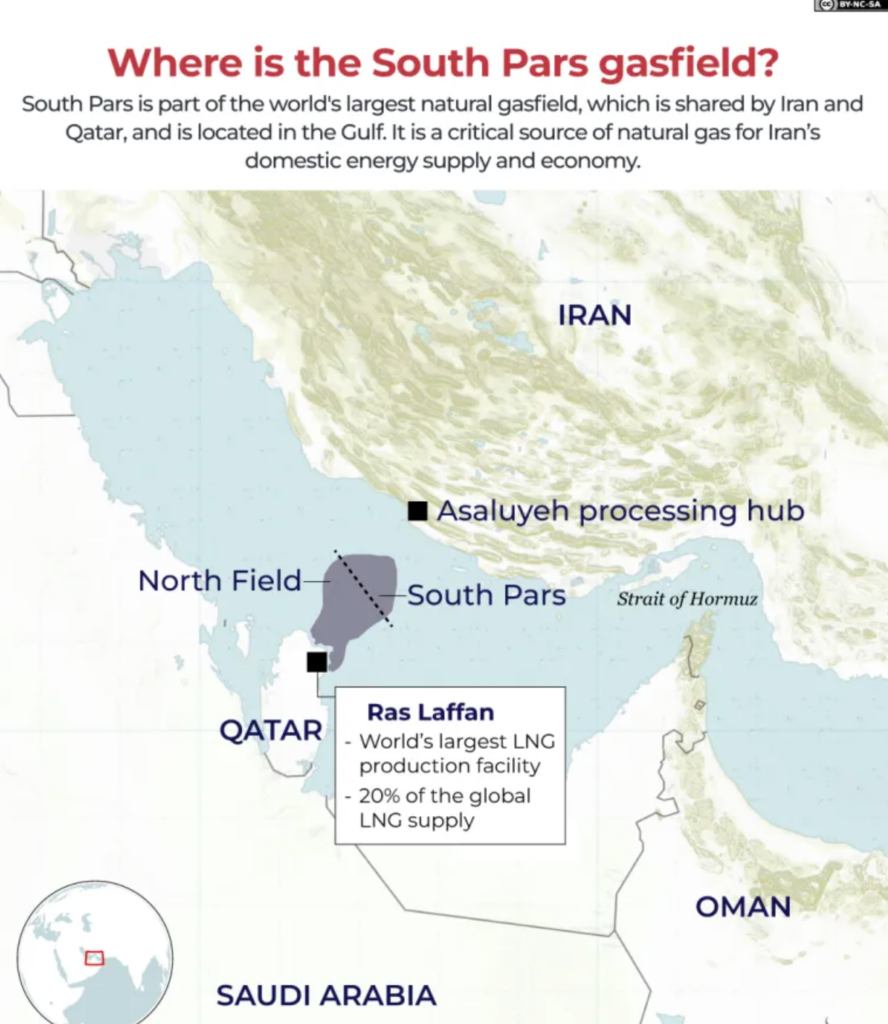
    • Missile strikes on Ras Laffan Industrial City, the world’s largest LNG facility, amid West Asia conflict have raised concerns over global energy supply and India’s energy security.

    What Happened

    • Iran targeted:
      • LNG facilities in Qatar (Ras Laffan)
      • Other energy sites in Saudi Arabia, Kuwait
    • Earlier: Attack on South Pars Gas Field (world’s largest gas field)
    • Marks escalation from transport disruption → production disruption

    Why Ras Laffan is Important

    • Accounts for ~20% of global LNG supply
    • Hub of:
      • LNG production
      • Liquefaction
      • Export infrastructure
    • Damage may cause long-term supply disruption

    Impact on Global Energy

    • Brent crude: Jumped above $119/barrel
    • Natural gas prices: Sharp rise
    • Risk: From supply chain issue → full supply crisis

    India’s Energy Dependence

    1. LNG Dependence

    • ~50% of gas demand met via imports
    • >40% LNG from Qatar
    • Most from Ras Laffan

    2. Overall Energy Imports

    • Crude oil: ~88% import dependent
    • LPG: ~60%
    • Natural gas: ~50%

    3. Strategic Chokepoint

    • Strait of Hormuz:
      • ~50% of India’s crude imports
      • ~60% LNG
      • ~90% LPG

    Immediate Impact on India

    • LNG supply cuts to industries
    • LPG supply concerns
    • Rising energy import costs
    [2024] Consider the following statements: Statement-I: Sumed pipeline is a strategic route for Persian Gulf oil and natural gas shipments to Europe . Statement-II: Sumed pipeline connects the Red Sea with the Mediterranean Sea . Select the correct answer using the code given below: (a) Both Statement-I and Statement-II are correct and Statement-II explains Statement-I (b) Both Statement-I and Statement-II are correct but Statement-II does not explain Statement-I (c) Statement-I is correct but Statement-II is incorrect (d) Statement-I is incorrect but Statement-II is correct
  • India–Myanmar Pulse Deal Extended

    Why in the News

    • India plans to extend its pulses import agreement with Myanmar for 5 more years (beyond 2025-26) to ensure food security amid global supply disruptions.

    Background of the Agreement

    • Original MoU signed in 2021
    • Between: India’s Ministry of Consumer Affairs and Myanmar’s Ministry of Commerce. 

    Import Commitments (2021–26)

    • Urad dal: 2.5 lakh tonnes/year
    • Tur dal: 1 lakh tonnes/year

    New Developments

    • Extension proposed till 2030-31
    • Additional: +1 lakh tonnes Tur dal (2026-27)

    Why Extension is Needed

    1. Demand–Supply Gap

    • India’s pulses demand: 28–29 million tonnes
    • Domestic production: 24–25 million tonnes
      • Persistent import dependence

    2. Falling Domestic Production

    • Tur: ↓ from 3.64 → 3.45 million tonnes
    • Urad: ↓ from 2.24 → 1.74 million tonnes

    3. Global Supply Chain Disruptions

    • Due to geopolitical tensions: US–Israel–Iran conflict.
      • Risks to: Fuel supply, Fertilizer availability, and Food imports.

    Role of Myanmar

    • Key supplier of pulses to India
    • Imports rising:
      • Tur: ↑ 44% (2025-26)
      • Urad: ↑ significantly

    Significance

    • Food Security: Ensures stable supply of protein-rich pulses (dal)
    • Price Stability: Prevents inflation in essential commodities
    • Strategic Trade Diversification: Reduces risk from global disruptions
    [2020] With reference to pulse production in India, consider the following statements: Black gram (Urad) can be cultivated as both kharif and rabi crop. Green-gram alone accounts for nearly half of pulse production. In the last three decades, while the production of kharif pulses has increased, the production of rabi pulses has decreased. Select the correct answer using the code given below: (a) 1 only (b) 2 and 3 only (c) 2 only (d) 1, 2 and 3
  • Rising CO₂ Threatens Mangrove Fish Nurseries 

    Why in the News

    • A study in AGU Advances highlights declining oxygen levels in mangrove waters due to rising CO₂.

    Key Concept: Hypercapnic Hypoxia

    • Condition of: High CO₂ + Low dissolved oxygen
    • Occurs in: Mangrove estuaries (especially low tide, tropical regions)

    Major Findings

    • By 2100:
      • Oxygen ↓ 5–35%
      • CO₂ ↑ 8–60%
    • Events will:
      • Become 15× more frequent
      • Last longer (12–24 hours at 78% sites)

    Impact on Ecosystem

    1. Fish Nurseries at Risk

    • Reduced safe time for fish entry
    • Decline in juvenile fish survival

    2. Biodiversity Loss

    • Shift away from: Large reef-associated fish
    • Affects commercially important species

    3. Fisheries Impact

    • Mangroves: Support ~20,000 extra fish/ha/year
    • ~4 million fishers depend globally
    [2012] The acidification of oceans is increasing. Why is this phenomenon a cause of concern? The growth and survival of calcareous phytoplankton will be adversely affected. The growth and survival of coral reefs will be adversely affected. The survival of some animals that have phytoplanktonic larvae will be adversely affected. The cloud seeding and formation of clouds will be adversely affected. Select the correct answer using the code given below: (a) 1, 2 and 3 only (b) 2 only (c) 1 and 3 only (d) 1, 2, 3 and 4
  • India Power Sector Outlook (CEA 2026) 

    Why in the News

    • Central Electricity Authority released midterm review of 20th Electric Power Survey (EPS).

    About Central Electricity Authority: 

    • The Central Electricity Authority of India advises the government on policy matters and formulates plans for the development of electricity systems. 
    • It is a statutory organisation constituted under section 3 of Electricity Supply Act 1948, which has been superseded by section 70 of the Electricity Act, 2003.

    Demand & Growth

    • Peak demand: 459 GW (2035-36)
    • Electricity need: 3,365 BU
    • Growth: ~5.6–6.4% CAGR

    Capacity Expansion

    • From ~520 GW (2026) → 1,121 GW (2035-36)

    Energy Mix:

    • Solar: 509 GW (45%)
    • Coal: 315 GW (28%)
    • Wind: 155 GW (14%)
    • Hydro: 77 GW
    • Others: small share
      • Non-fossil capacity ~70%

    Key Insight

    • Solar leads in capacity
    • Coal dominates generation (51%) → ensures baseload power

    Energy Storage Need

    • 174 GW / 888 GWh
      • BESS: 80 GW
      • Pumped storage: 94 GW
    • Critical for renewable integration + grid stability
    • Investment: ~$2.2 trillion required

    Challenges

    • Import dependence: 75–80% lithium-ion cells
    • Critical minerals vulnerability: Lithium, Cobalt, Nickel
    [2024] Recently, the term “pumped-storage hydropower” is actually and appropriately discussed in the context of which one of the following? (a) Irrigation of terraced crop fields (b) Lift irrigation of cereal crops (c) Long duration energy storage (d) Rainwater harvesting system
  • [19th March 2026] The Hindu OpED: The opportunity in Cameroon to rebalance the WTO

    PYQ Relevance[UPSC 2023] What are the direct and indirect subsidies provided to the farm sector in India? Discuss the issues raised by the World Trade Organization (WTO) in relation to agricultural subsidies.Linkage: It directly tests understanding of WTO norms, subsidy regimes, and global trade fairness, which are central to GS-III (Indian Economy & Agriculture). It closely aligns with the article’s focus on market distortions, subsidy transparency, and need for WTO reform to balance equity between developed and developing nations.

    Mentor’s Comment

    The upcoming World Trade Organisation (WTO) Ministerial Conference (MC14) in 2026 at Yaoundé, Cameroon, comes at a critical juncture as the organization faces its most severe institutional crisis since 1995, with the dispute settlement system paralysed and rising unilateral trade actions undermining multilateralism. With 166 members struggling to reach consensus and digital trade rapidly expanding beyond regulatory frameworks, the relevance of WTO itself is under question. This makes reform not optional but existential.

    Why is the WTO facing an existential institutional crisis?

    1. Dispute Settlement Paralysis: Weakens enforceability of trade rules due to stalled Appellate Body appointments; reduces trust in multilateral commitments.
    2. Consensus Deadlock: The WTO’s consensus-based decision-making process (requiring all 164+ members to agree) has resulted in a deadlock, rendering the institution unable to update rules for modern challenges such as e-commerce, digital trade, and environmental sustainability.
    3. US-China Rivalry and Structural Disagreements: The US argues that the Appellate Body has engaged in “judicial overreach” by creating new obligations rather than just applying rules. Furthermore, the US contends that existing WTO rules are inadequate to handle China’s state-led economic model, specifically regarding subsidies and intellectual property theft.
    4. Developmental Divides: There is an ongoing conflict between developed and developing nations regarding “Special and Differential Treatment” (S&DT). Developed nations argue that self-declared developing countries (like China, India) should not receive special exemptions, while developing nations view these as essential for their economic growth. 
    5. Digital Trade Lag: Fails to regulate rapidly expanding digital commerce; creates regulatory gaps in cross-border trade.
    6. Unresolved Legacy Issues: Retains long-pending disputes and negotiations without resolution; reduces institutional credibility.

    How is global trade shifting from rules-based to power-based systems?

    1. Geopolitical Instrumentalisation: Uses tariffs and economic dependence as strategic tools; shifts trade from economics to power politics.
    2. Unilateral and Bilateral Actions: Bypasses WTO frameworks through preferential trade agreements and unilateral tariffs.
    3. “Wrecking-ball Politics”: Encourages short-term deals over institutional commitments, as highlighted in Munich Security Report 2026.
    4. Ad-hoc Arrangements: Replaces rule-based governance with power-driven negotiations lacking shared principles.

    How have changes in global production patterns challenged WTO frameworks?

    1. Technological Transformation: Expands trade in advanced and technology-intensive goods; requires updated regulatory frameworks.
    2. Climate-linked Trade Measures: Introduces carbon-related regulations impacting trade flows and equity concerns.
    3. Digital Integration: Reshapes global value chains through e-commerce and data flows beyond WTO’s current scope.
    4. Obsolete Rule Structure: Retains late 20th-century frameworks unsuitable for 21st-century trade dynamics.

    Why is dispute settlement reform central to WTO revival?

    Dispute settlement reform is central to World Trade Organization (WTO) revival because the system, often called the “crown jewel” of the organization, has been paralyzed since December 2019. The inability to appoint new Appellate Body members has rendered the binding dispute resolution mechanism dysfunctional, threatening to turn the WTO from a rule-based system into a power-based one, where larger economies can bypass trade norms with impunity.

    1. Credibility Restoration: Currently, over 20 panel rulings have been “appealed into the void,” meaning they cannot be resolved until new Appellate Body members are appointed. Reforms will ensure enforceability of rules through a functioning dispute resolution mechanism.
    2. Predictability in Trade: Reduces uncertainty in global trade relations; stabilizes economic expectations.
    3. Conflict Reduction: Prevents escalation of trade disputes into political conflicts.
    4. Trust Rebuilding: Encourages members to rely on institutional processes instead of unilateral actions.

    How can WTO reforms balance fairness with flexibility?

    1. Transparency in Subsidies: Ensures equitable competition through clearer reporting and monitoring mechanisms.
    2. Special and Differential Treatment (SDT): Updates provisions to reflect current economic realities while protecting developing countries.
    3. Inclusive Institutional Design: Maintains openness and universality in reform processes.
    4. Flexible Frameworks: Allows plurilateral initiatives while ensuring integration into broader WTO norms.

    What are the risks of failure to reform WTO?

    1. Fragmentation of Trade System: Leads to competing trade blocs and regional arrangements.
    2. Marginalisation of Developing Countries: Increases vulnerability due to lack of negotiating power.
    3. Erosion of Rule-based Order: Replaces predictability with coercion and economic dominance.
    4. Global Instability: Creates uncertainty in trade flows affecting growth and development.

    How can MC14 in Cameroon become a turning point?

    1. Procedural Reforms: Updates negotiation processes to overcome consensus paralysis.
    2. Institutional Modernisation: Aligns WTO rules with digital, climate, and technological realities.
    3. Collective Political Will: Ensures shared responsibility among members for sustaining multilateralism.
    4. Rebalancing Trade Governance: Restores equilibrium between power and principles in global trade.

    Conclusion

    WTO reform represents a systemic necessity to preserve rule-based global trade. MC14 offers a critical opportunity to restore institutional credibility, prevent fragmentation, and ensure equitable participation in an increasingly complex global economy.

  • India’s national symbols under scrutiny over use, meaning and law

    Why in the News?

    A recent complaint against a cricketer for allegedly mishandling the national flag during post-match celebrations has reignited a wider debate on the use, sanctity, and legal regulation of India’s national symbols. The issue is significant because it reflects a growing trend of casual or performative display of national symbols in mass celebrations, often in violation of codified norms like the Flag Code of India, 2002 and the Prevention of Insults to National Honour Act, 1971.

    What explains the renewed controversy over national symbols?

    1. Legal Trigger: Complaint filed against Hardik Pandya for alleged violation of flag norms during ICC World Cup celebrations.
    2. Public Behaviour Shift: Increasing use of national symbols in mass celebrations, rallies, and sports events, often without awareness of legal provisions.
    3. Political Context: Renewed debates over Vande Mataram and its mandatory singing in institutions.

    How did India’s national flag evolve historically?

    1. 1906 (Calcutta Flag): It was hoisted on August 7, 1906, in Calcutta (now Kolkata), during the Swadeshi and Boycott struggle. It featured three horizontal stripes of orange (top, with eight lotus flowers), yellow (middle, with Vande Mataram), and green (bottom, with a sun and crescent moon).
    2. 1907 (Berlin Committee Flag): Madam Bhikaji Cama hoisted this modified 1906 flag in Paris, with the top stripe being saffron, featuring a lotus and seven stars representing the Saptarishi constellation. This flag was also exhibited in Berlin at a socialist conference and thus came to be called the Berlin Committee Flag.
    3. 1917 (Home Rule Movement): Annie Besant and Lokmanya Tilak used a flag featuring five red and four green horizontal stripes, with the Union Jack in the corner and a seven-star design. The flag signified autonomous rule for Indians within the Colonial Empire.
    4. 1921 (Pingali Venkayya’s Design): In 1921, at the Bezwada (now Vijayawada) session of Congress, Pingali Venkayya presented a design to Mahatma Gandhi with white, green, and red stripes (representing different communities). Gandhi added a spinning wheel (charkha) to symbolize self-reliance, though the flag was not officially adopted by the Congress.
    5. 1931 (Pre-independence Flag): In 1931, a formal resolution was passed adopting Pingali Vekaiah’s flag with a little modification. It was a tricolour flag featuring saffron (top), white (middle), and green (bottom), with a charkha in the center. This served as the basis for the current flag.
    6. 1947 (National Flag of India): On July 22, 1947, the Constituent Assembly adopted the 1931 design, but replaced the charkha with the Ashoka Chakra (a 24-spoke wheel) from the Sarnath Lion Capital, representing the eternal wheel of law. 

    What legal framework governs the use of national symbols?

    1. Prevention of Insults to National Honour Act, 1971: Penalizes any public burning, defiling, or disrespect of the national flag, constitution, or national anthem.
    2. Flag Code of India, 2002: While not a statute, this code consolidates conventions and instructions for the proper display of the national flag by citizens, private organizations, and government institutions.
    3. Emblems and Names (Prevention of Improper Use) Act, 1950: Prevents the improper use of national symbols, names, and emblems for professional, commercial, or personal gain. It prohibits using government emblems, names, or pictorial representations in trademarks, patents, or advertisements.
    4. State Emblem of India (Prohibition of Improper Use) Act, 2005: Restricts the improper usage of the official State Emblem, ensuring it is not used by non-governmental entities to suggest official association. It specifies that only authorized personnel may use it.

    Why do national symbols evoke strong emotional responses?

    1. Historical Memory: Symbols are linked to freedom struggle and collective sacrifice.
    2. Identity Formation: They function as markers of national unity and belonging.
    3. Emotional Mobilization: Used in movements and events to generate solidarity and patriotism.
    4. Example: Public reactions to flag misuse during sports celebrations show deep emotional attachment.

    What is the debate surrounding Vande Mataram?

    1. Constitutional Status: National song, not equivalent to the national anthem (Jana Gana Mana).
    2. Historical Context: Written by Bankim Chandra Chattopadhyay; associated with freedom struggle.
    3. Controversy: Some verses invoke religious imagery, raising concerns about inclusivity in a secular state.
    4. Policy Debate: Recent discussions on making it mandatory in schools and official functions.

    How does law balance symbolism and freedom?

    1. Regulatory Balance: Ensures respect without curbing individual expression excessively.
    2. Challenge: Over-regulation may conflict with freedom of expression (Article 19).
    3. Judicial Approach: Courts emphasize dignity of symbols while safeguarding fundamental rights.
    4. Example: Supreme Court rulings on anthem in cinemas reflect evolving interpretation.

    Conclusion

    India’s national symbols operate at the intersection of law, history, and emotion. Ensuring their dignity requires not only legal enforcement but also civic awareness and constitutional sensitivity, balancing pride with responsibility.

    PYQ Relevance

    [UPSC 2014] “In the context of defence services, ‘patriotism’ demands readiness to even lay down one’s life. According to you, what does patriotism imply in everyday civil life?”
    Linkage: It tests the value of patriotism in everyday conduct, linking duty, integrity, and constitutional morality beyond symbolic acts. It connects to debates on flag, anthem, and Vande Mataram, highlighting the shift from performative nationalism to ethical patriotism guided by law.

  • India’ future demographic challenges 

    Why in the News?

    A new report ‘Unravelling India’s Demographic future: Population Projections for States and Union Territories, 2021-2051, by the International Institute of Migration and Development (IIMAD) and the Population Foundation of India projects, for the first time, that India will move beyond a youth-dominated demographic profile into an ageing society. This marks a sharp departure from earlier fears of population explosion. The elderly population is set to double to 20.5% (325.3 million) by 2051, while the demographic dividend window will begin closing after 2041, making this transition a critical policy challenge with long-term economic implications.

    How is India’s demographic structure fundamentally changing?

    1. Population Growth Slowdown: Decline in growth rate to 0.5% annually, indicating demographic stabilisation.
    2. Shift from Youth Bulge: Transition from youth-heavy to ageing population structure.
    3. Median Age Increase: Rise from 28 years (2021) to 40 years (2051), signalling advanced demographic transition.
    4. Balanced Demography: Movement toward a more urbanised and ageing society

    How is the demographic dividend window evolving and why is it time-bound?

    1. Working-age Population Growth: Rise to 65.5% (1,009 million) by 2041.
    2. Post-2041 Decline: Fall to 62.8% by 2051, indicating end of demographic advantage.
    3. Economic Opportunity: Larger workforce enables higher productivity and growth (example: China, Japan, South Korea).
    4. Urgency Factor: Limited window necessitates rapid skill and employment generation policies.
    5. Workforce Share: Nearly 60% population expected in workforce by 2051.

    What are the implications of India’s rapidly ageing population?

    1. Elderly Population Growth: Increase from 130.5 million (9.62%) in 2021 to 325.3 million (20.5%) in 2051.
    2. Healthcare Pressure: Rising demand for geriatric care and chronic disease management.
    3. Social Security Burden: Increased strain on pensions and welfare systems.
    4. Fiscal Stress: Growing elderly dependency ratio impacts state finances.
    5. Silver Economy Potential: New economic opportunities in elder care, healthcare services, and assisted living.

    Why is declining fertility creating structural challenges for the education system?

    1. Falling Child Population: Reduction from 113.5 million (2021) to 86 million (mid-century) in the 0-4 age group.
    2. Declining Government Schools: Drop from 11.07 lakh (2014-15) to 10.18 lakh (2023-24) (~90,000 schools).
    3. Rise of Private Schools: Increase from 2.88 lakh to 3.31 lakh, reflecting shift in parental preferences.
    4. Uneconomic Schools: Lower enrolments threaten viability of government institutions.
    5. Kerala Example: Long-term trend of declining fertility impacting school infrastructure.

    How are socio-economic shifts influencing schooling and human capital formation?

    1. Parental Preference Shift: Movement toward private schools due to perceived quality differences.
    2. Smaller Families: Improved affordability increases investment per child.
    3. Reduced Enrolment: Lower fertility reduces demand for schooling infrastructure.
    4. Quality Gap: Government schools perceived to lag in education quality.

    What policy signals emerge from declining fertility and ageing trends?

    1. Education Reform Need: Strengthens skill development and quality education systems.
    2. Healthcare Reorientation: Facilitates resource optimisation and improved healthcare delivery.
    3. Women Workforce Participation: Expands the labour force by reducing gender gaps.
    4. Reproductive Rights: Ensures access to family planning and prevents unintended pregnancies.
    5. Employment Expansion: Supports formal employment generation to offset workforce decline.

    Conclusion

    India’s demographic trajectory signals a transition from opportunity to responsibility. The closing demographic dividend window, combined with rapid ageing, requires immediate investments in human capital, healthcare systems, and employment generation. Effective policy adaptation will determine whether India sustains growth or faces structural stagnation.

    PYQ Relevance

    [UPSC 2016] “Demographic Dividend in India will remain only theoretical unless our manpower becomes more educated, aware, skilled and creative.” What measures have been taken by the government to enhance the capacity of our population to be more productive and employable?

    Linkage: Demographic dividend potential is time-bound, with workforce share peaking around 2041, requiring urgent investment in skills and human capital. The article highlights declining fertility and ageing trends, reinforcing the need to enhance productivity before the demographic window closes.

  • India’s Frogs: Conservation Gains through Science & Citizen Action

    Why in News

    • On World Frog Day (March 20), attention is drawn to India’s amphibians, where citizen science and conservation initiatives are helping address rising threats like climate change and habitat loss.

    Ecological Importance of Frogs

    • Act as link between aquatic and terrestrial ecosystems
    • Control insect populations (pests)
    • Serve as food for higher vertebrates
    • Help convert: → Insect biomass → Vertebrate biomass

    Global & Indian Status

    • As per International Union for Conservation of Nature:
      • Amphibians = most threatened vertebrates
      • 37 species extinct globally
    • India:
      • 450+ amphibian species
      • ~25% threatened
      • ~20% data deficient

    Major Threats to Frogs

    1. Disease (Historical Driver)

    • Chytridiomycosis caused by:
      • Batrachochytrium dendrobatidis
      • Batrachochytrium salamandrivorans
    • Affects frog skin (critical for respiration & ion balance)
    • Impact: → Affected >60% amphibians globally

    2. Climate Change (Current Major Driver)

    • Impacts 39% species
    • Causes:
      • Mismatch in monsoon timing
      • Breeding failures due to: Early rains + prolonged dry spells

    3. Habitat Loss

    • Impacts 37% species
    • Includes: Wetland loss, Deforestation, and Urbanisation. 
    [2024] Consider the following: 
    1. Butterflies 
    2. Fish 
    3. Frogs 
    How many of the above have poisonous species among them? 
    (a) Only one (b) Only two (c) All three (d) None