💥UPSC 2027,2028 Mentorship (April Batch) + Access XFactor Notes & Microthemes PDF

Archives: News

  • Road and Highway Safety – National Road Safety Policy, Good Samaritans, etc.

    The shock of crumbling infrastructure and the solution

    Why in the News?

    The recent collapse of under-construction bridges in Bihar highlights ongoing quality control challenges in India’s infrastructure sector, despite efforts like PM Gati Shakti and increased capital expenditure in 2024.

    Issues of Quality Control and Project Implementation in Infrastructure in India 

    • Quality Control Deficiencies: There are significant gaps in the quality control mechanisms for infrastructure projects. Many projects lack a robust system for monitoring and ensuring quality at every stage, from planning to execution. The absence of comprehensive quality assurance frameworks as evidenced by recent bridge collapses in Bihar.
    • Need for Modern Project Management Practices: Traditional project management practices are often outdated and ineffective in addressing the complexities of modern infrastructure projects.

    Internal Challenges in India’s Infrastructure Sector:

    • Project Delays and Cost Overruns: Infrastructure projects frequently experience delays and cost overruns, with a report indicating that 431 projects faced a total cost overrun of ₹4.82 lakh crore.  
    • Lack of Comprehensive Planning: Many infrastructure projects, especially in urban areas, suffer from poor planning and project management, with urban local bodies and local self-governments lacking the necessary capacity and expertise.
    • Multiple Clearances and Bureaucratic Delays: Industrial and commercial activities often require numerous clearances, leading to delays in project conception and commissioning.
    • Funding and Resource Misallocation: Delayed and poorly managed projects crowd out funding for other essential projects, burdening the government with extra expenditures and increasing procurement costs.

    Need to Integrate Modern Tools and Techniques: (Way forward)

    • Real-time Data Management: Traditional project management methods need an overhaul to incorporate modern tools like real-time data collection and analysis, which can help track progress and make timely interventions.
    • Global Best Practices in Project Management: The government must adopt international best practices, like the UK’s Infrastructure and Projects Authority model, which emphasizes efficient project delivery.
    • Program Management Approach: A holistic approach to managing multiple projects systematically, integrating resources, time, and information efficiently, as seen in successful projects like the Shendra-Bidkin industrial corridor.
    • GIS-Based Platforms: Initiatives like PM Gati Shakti demonstrate the integration of GIS-based platforms for real-time monitoring, enabling better coordination among various stakeholders to meet deadlines and enhance project quality.

  • Judicial Reforms

    Public comments on the PM-CJI puja meet are based on a 1997 document on judicial values

    Why in the News?

    Concerns about Prime Minister Modi’s visit to CJI Chandrachud’s residence for the Ganapati puja stem from the 1997 ‘Restatement of Values of Judicial Life’ guidelines on judicial conduct.

    What does the ‘Restatement of values of judicial life’ state?  

    It is a 16-point code of conduct adopted by the Supreme Court of India in May 1997 to guide the ethical behaviour of judges of the Supreme Court and High Courts.

    • Impartiality and Credibility: The first tenet emphasizes that judges’ behaviour must reinforce public faith in the judiciary’s impartiality. Any actions that could undermine this perception should be avoided.
    • Aloofness: Judges are advised to maintain a degree of aloofness that is consistent with the dignity of their office, ensuring they do not engage in relationships that could compromise their neutrality.
    • Public Awareness: Judges must be conscious of their public image and avoid any conduct seen as unbecoming of their high office.
    • Political Neutrality: Judges should remain politically neutral and avoid public discussions on political matters or cases pending judicial determination.
    • Avoiding Conflicts of Interest: Judges must not allow family members of the Bar to appear before them, nor should they engage in speculative financial activities or accept gifts beyond those from close friends and family.
    • Public Trust: The document underscores the importance of maintaining public trust through ethical conduct and discourages close associations with advocates practising in the same court.

    Types of Integrity

    Integrity in the judicial context can be categorized into several types:

    • Personal Integrity: This relates to the character and ethical standards of individual judges, emphasizing honesty and adherence to moral principles.
    • Institutional Integrity: This refers to the judiciary as a whole, ensuring that the institution operates independently and maintains public confidence.
    • Procedural Integrity: This involves the adherence to legal processes and standards that uphold justice, ensuring that all actions taken by judges are fair and transparent.

    Significance of Maintaining Integrity and Public Confidence through Probity

    • Trust in the Judiciary: Upholding integrity is crucial for maintaining public confidence in the judiciary, as it reassures citizens that justice is administered fairly and without bias.
    • Separation of Powers: The judiciary’s integrity is essential for maintaining the constitutional balance between the judiciary and the executive. Any perceived compromise can lead to public skepticism about the independence of judicial decisions.
    • Ethical Standards: The Restatement serves as a guide for judges to navigate their professional responsibilities while adhering to ethical standards, which is vital for the credibility of the judicial system.
    • Public Perception: Actions that appear to blur the lines between the judiciary and executive can lead to gossip and speculation, undermining the institution’s integrity. Judges must be mindful of their public image to prevent any erosion of trust.

    Way forward: 

    • Strengthen Judicial Training: Implement continuous ethical training for judges, emphasizing the importance of maintaining impartiality, political neutrality, and avoiding conflicts of interest to uphold public confidence.
    • Establish Oversight Mechanisms: Create robust internal oversight frameworks to monitor and address potential breaches of judicial integrity, ensuring transparency and accountability in judicial conduct.
  • Coastal Zones Management and Regulations

    Controversy over Mumbai’s salt pans

    Why in the News?

    The Centre has recently approved transferring 256 acres of Mumbai’s salt pan land to DRPPL, a joint venture with Adani Realty, for constructing rental housing for slum residents.

    What are Salt Pan Lands?

    • Salt pan lands are low-lying areas where seawater is allowed to flow in and evaporate, leaving behind salt and other minerals.
    • These lands are part of an important ecological system that, along with mangroves, helps in flood control by absorbing excess water during heavy rainfall and high tides.

    Why are Mumbai’s Salt Pan Lands at Risk?

    • Development Pressures: Salt pans are valuable as undeveloped land in Mumbai, leading to proposals for various development projects, including affordable housing and infrastructure.
    • Government Plans: Recent approvals, such as the transfer of 256 acres of salt pan land for the Dharavi Redevelopment Project, have faced criticism due to concerns that such development will encroach on these ecologically sensitive areas.
    • Legal and Administrative Challenges: Past plans for using saltpan lands for development have been put on hold or altered due to legal and environmental challenges, including those concerning the Coastal Regulation Zone (CRZ) norms.

    Why do Salt Pans Matter?

    • Flood Prevention: Salt pans play a crucial role in preventing flooding in Mumbai’s eastern suburbs by acting as natural reservoirs for excess water during heavy rains and high tides.
      • During significant rainfall events, such as the July 2005 deluge, salt pans helped mitigate the impact of flooding, emphasizing their importance in urban flood management.
    • Environmental Protection: They support local biodiversity, including various species of birds and insects. Destroying or altering these lands could disrupt these ecosystems.
    • Climate Resilience: Salt pans contribute to the city’s climate resilience strategy, making their preservation crucial for managing future climate-related challenges.

    National Context:

    • Across India, approximately 60,000 acres are designated as salt pan lands, distributed among states like Andhra Pradesh, Tamil Nadu, and Maharashtra.
    • These lands are crucial for local ecosystems and flood management, highlighting the broader importance of preserving such areas from development pressures.

    Way Forward: 

    • Strengthen Environmental Regulations: Enhance the enforcement of Coastal Regulation Zone (CRZ) norms and other environmental regulations to safeguard salt pan lands.
    • Promote Sustainable Land Use Planning: Integrate salt pan lands into urban planning strategies as critical components of flood management and biodiversity conservation.
  • Indian Ocean Power Competition

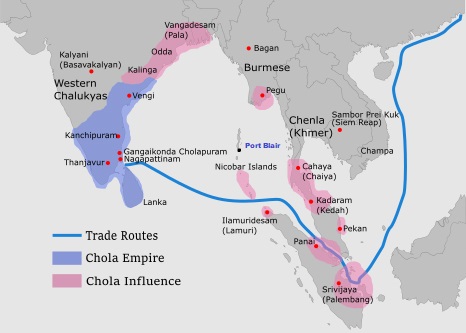
    Port Blair renamed as Sri Vijaya Puram

    Why in the News?

    Union Home Minister announced that Port Blair, the capital of the Andaman and Nicobar Islands, will be renamed Sri Vijaya Puram.

    On December 30, 2018, three islands in the Andaman and Nicobar archipelago were renamed by the Government of India to honor Netaji Subhas Chandra Bose and to commemorate India’s independence struggle:

    • Ross Island renamed as Netaji Subhas Chandra Bose Island
    • Neil Island renamed as Shaheed Dweep
    • Havelock Island renamed as Swaraj Dweep

    Historical Importance of Port Blair

    • The city was named after Lieutenant Archibald Blair, a British naval officer who served during the early 18th century.
    • The infamous Cellular Jail, known as Kaala Paani, was established in 1906.
    • Many prominent freedom fighters, including Veer Savarkar, were incarcerated here under oppressive circumstances.
    • It is also the place that hosted the first unfurling of our ‘Tiranga’ by Netaji Subhash Chandra Bose.

    Port Blair renamed as Sri Vijaya Puram

    Behind the new name ‘Sri Vijaya Puram’: Chola History

    • The Chola Empire, under Rajendra Chola I, used the Andaman Islands as a strategic naval base in the 11th century.
      • He launched a naval expedition to attack the Srivijaya Empire in present-day Indonesia.
    • His victory over Srivijaya resulted in the capture of the king Sangrama Vijayottunggavarman and looting valuable treasures, further cementing the Chola dominance.
    • The Thanjavur inscriptions (1050 CE) refer to the islands as Ma-Nakkavaram (great open land), later evolving into the name Nicobar Islands.

    PYQ:

    [2014] Which one of the following pairs of islands is separated from each other by the ‘Ten Degree Channel’?

    (a) Andaman and Nicobar

    (b) Nicobar and Sumatra

    (c) Maldives and Lakshadweep

    (d) Sumatra and Java

  • Indian Army Updates

    [pib] Exercise AL NAJAH

    Why in the News?

    The Indian Army contingent has departed to Salalah, Oman for the 5th edition of the India-Oman Joint Military Exercise AL NAJAH. T

    About Exercise AL NAJAH

    • AL NAJAH has been conducted biennially since 2015, alternating between India and Oman. The last edition of the exercise was held at Mahajan, Rajasthan.
    • Aim: to enhance the capability of both nations’ forces to carry out counter-terrorism operations.
    • Significance: It will focus on operations in a desert environment, preparing both sides for complex challenges in such terrains.
    • Features:
    1. Joint Planning for operations
    2. Cordon and Search Operations
    3. Fighting in Built-Up Areas
    4. Mobile Vehicle Check Posts
    5. Counter-Drone Operations

    PYQ:

    [2024] Which of the following statements about the Exercise Mitra Shakti-2023 is/ are correct?

    1. This was a joint military exercise between India and Bangladesh.
    2. It commenced in Aundh (Pune).
    3. Joint response during counter-terrorism operations was a goal of this operation.
    4. Indian Air Force was a part of this exercise.

    Select the answer using the code given below:

    (a) 1, 2 and 3

    (b) 1 and 4

    (c) 1 and 4

    (d) 2, 3 and 4

  • Artificial Intelligence (AI) Breakthrough

    What is OpenAI o1?

    Why in the News?

    • OpenAI has introduced OpenAI o1, the first in a series of advanced AI models under its Project Strawberry initiative.
      • This new model is designed for tackling more complex tasks in science, coding, and maths.

    About OpenAI o1 

    • This model has been built to approach problems like humans, carefully considering various angles before arriving at an answer.
    • It improves its performance by learning from different perspectives and checking its output for errors.
    • In trials, the upcoming version of the o1 model performed on par with PhD students in areas like physics, chemistry, and biology, and excelled particularly in maths and coding.
    • For instance, it solved 83% of problems in a math contest, compared to earlier versions which solved just 13%.
      • In coding, the model ranked higher than 89% of participants.

    Key Features and Offerings

    • OpenAI is also releasing OpenAI o1-Mini, an economical version designed for developers, offering similar reasoning capabilities at 80% lower cost compared to the o1-preview version.
    • The o1 model excels in generating and debugging complex code and is expected to assist in software development, data analysis, and problem-solving tasks.

    Safety Measures

    • OpenAI has introduced new training methods to ensure the safety of these models, improving their ability to follow safety guidelines and prevent AI jail-breaking.
      • Jailbreaking is a form of hacking that aims to bypass an AI model’s ethical safeguards and elicit prohibited information.
    • In safety tests, the new version scored 84/100, a significant improvement from the previous 22/100 score.
    • The company is collaborating with UK and US governments on AI safety and conducting red teaming to identify and address any weaknesses.
  • Parliament – Sessions, Procedures, Motions, Committees etc

    What does the dissolution of SCoS entail?

    Why in the News?

    The Union Ministry dissolved the Standing Committee on Statistics (SCoS) headed by eminent economist and former chief statistician of the country Pronab Sen citing overlapping roles with the Steering Committee.

    Why was the SCoS dissolved?

    • Overlapping Responsibilities: The primary reason cited for the dissolution of the SCoS was that its functions overlapped with those of the newly formed Steering Committee for National Sample Surveys.
    • Concerns Raised by Members: Members of the SCoS had consistently questioned the delay in conducting the census, which has been a critical source of data for policymakers.
    • Lack of Communication: Dr. Pronab Sen, the chair of the SCoS, noted that members were not provided with a specific reason for the committee’s dissolution, which raised concerns about transparency in the decision-making process.

    What are the main roles of the new Steering Committee?

    • Advisory Role: The Steering Committee will advise the Ministry on survey methodologies, including aspects like sampling frames, design, and survey instruments, similar to the SCoS.
    • Finalizing Tabulation Plans: This will play a crucial role in finalizing the tabulation plans for various national sample surveys, ensuring that the data collected is organized and presented effectively.
    • Reviewing Methodologies: The committee will review subject results, methodologies, and questionnaires related to national sample surveys, maintaining the continuity of statistical rigor established by the SCoS.
    • Tenure and Composition: The Steering Committee consists of 17 members, including at least four members retained from the SCoS, and will serve a tenure of two years.

    How do the SCoS and the Steering Committee differ?

    • Composition: The Steering Committee has a higher number of official members compared to the SCoS, which includes several non-official members. This shift may influence the dynamics and perspectives within the committee.
    • Mandate Overlap: While both committees have similar mandates regarding survey methodologies and data collection, the Steering Committee is positioned to focus more on the operational aspects of national sample surveys, potentially leading to a more streamlined approach.
    • Response to Criticism: The formation of the Steering Committee appears to be a response to criticisms of the statistical system in India, aiming to address survey-related issues more effectively than the SCoS could.

    How does the SCoS’s dissolution impact statistical data quality?

    • Delay in Census Data: The dissolution of the SCoS amid ongoing delays in conducting the census raises concerns about the availability of reliable and updated data. The last census was conducted in 2011, and reliance on outdated data can negatively affect policy-making and the distribution of welfare benefits.
    • Quality of Administrative Data: Critics argue that administrative data, which the government has been relying on, may not accurately reflect the employment scenario, as it is often threshold-based and susceptible to manipulation. This could lead to a distorted view of the economic situation.
    • Need for Comprehensive Data: The census is crucial for providing comprehensive demographic, economic, and social data, which is essential for effective policy formulation. The absence of updated census data can hinder the government’s ability to address issues like employment, poverty, and social welfare effectively.

    Way forward: 

    • Reinstate Independent Oversight: Establish an independent statistical body with clear roles to ensure transparency, timely data collection, and oversight of key surveys like the census, addressing concerns of data reliability.
    • Modernize Data Collection: Leverage technology to streamline and accelerate the census and national surveys, ensuring that updated and accurate data is available for policy-making and welfare distribution.
  • Financial Inclusion in India and Its Challenges

    Is it time for India to introduce a Universal Basic Income?

    Why in the News?

    The rise in jobless growth, driven by automation and AI, has led to growing inequality, prompting discussions on implementing Universal Basic Income (UBI) in many countries.

    What does the ILO say on Inflation and unemployment in India? 

    • The ILO reports that 83% of the unemployed population in India are youth, due to the rapidly changing economy influenced by automation and AI.
      • This trend has exacerbated income inequality, with a 1.6% drop in global labour income share between 2004 and 2024, significantly affecting developing nations like India.
    • The report indicates that persistent inflation and geopolitical tensions have led to aggressive monetary policies, which could further strain the labor market.
      • The ILO anticipates a slight increase in global unemployment in 2024, reflecting ongoing structural issues in labor markets.

    What will be its implications on Indian growth and development? 

    • Social Implications: Falling living standards and weak productivity due to automation could lead to greater inequality, undermining social justice efforts in India.
      • The ILO suggests that increasing unemployment and inflation could result in social unrest and political instability without effective social safety nets.
    • Political Implications: It makes it difficult for the decision making and governance due to the drop in global labour income, prompting India to increase budget allocations for welfare programs.
    • Economic Implications: The emphasis on generating employment in labor-intensive sectors is crucial. The government policies should prioritize job creation to counteract the effects of automation and ensure that growth benefits a broader segment of the population.

    What are the safety nets for India? 

    • Cash Transfer Schemes: Programs targeting farmers and women, as well as cash transfers for unemployed youth, represent existing safety nets that provide some level of income support.
    • Employment Guarantee Schemes: Initiatives like the Mahatma Gandhi National Rural Employment Guarantee Act (MGNREGA) aim to provide employment and income security to rural households, although funding and implementation have faced challenges.
    • Universal Basic Social Safety Nets: Experts suggest that rather than a full UBI, India should focus on enhancing existing social safety nets to ensure they are more universal and effective in addressing the needs of the unemployed and underemployed populations.
  • Historical and Archaeological Findings in News

    The Great Stupa of Sanchi

    Great Stupa of Sanchi

    Why in the News?

    External Affairs Minister S. Jaishankar visited the replica of the East Gate of Sanchi’s Great Stupa in Berlin.

    About the Great Stupa of Sanchi

    Details
    Establishment
    • Commissioned by Emperor Ashoka in the 3rd century BCE.
    • UNESCO World Heritage Site.
    Purpose Built to enshrine the relics of Buddha and symbolise the Buddhist faith.
    Construction
    • Overseen by Ashoka’s wife, Devi, from Vidisha.
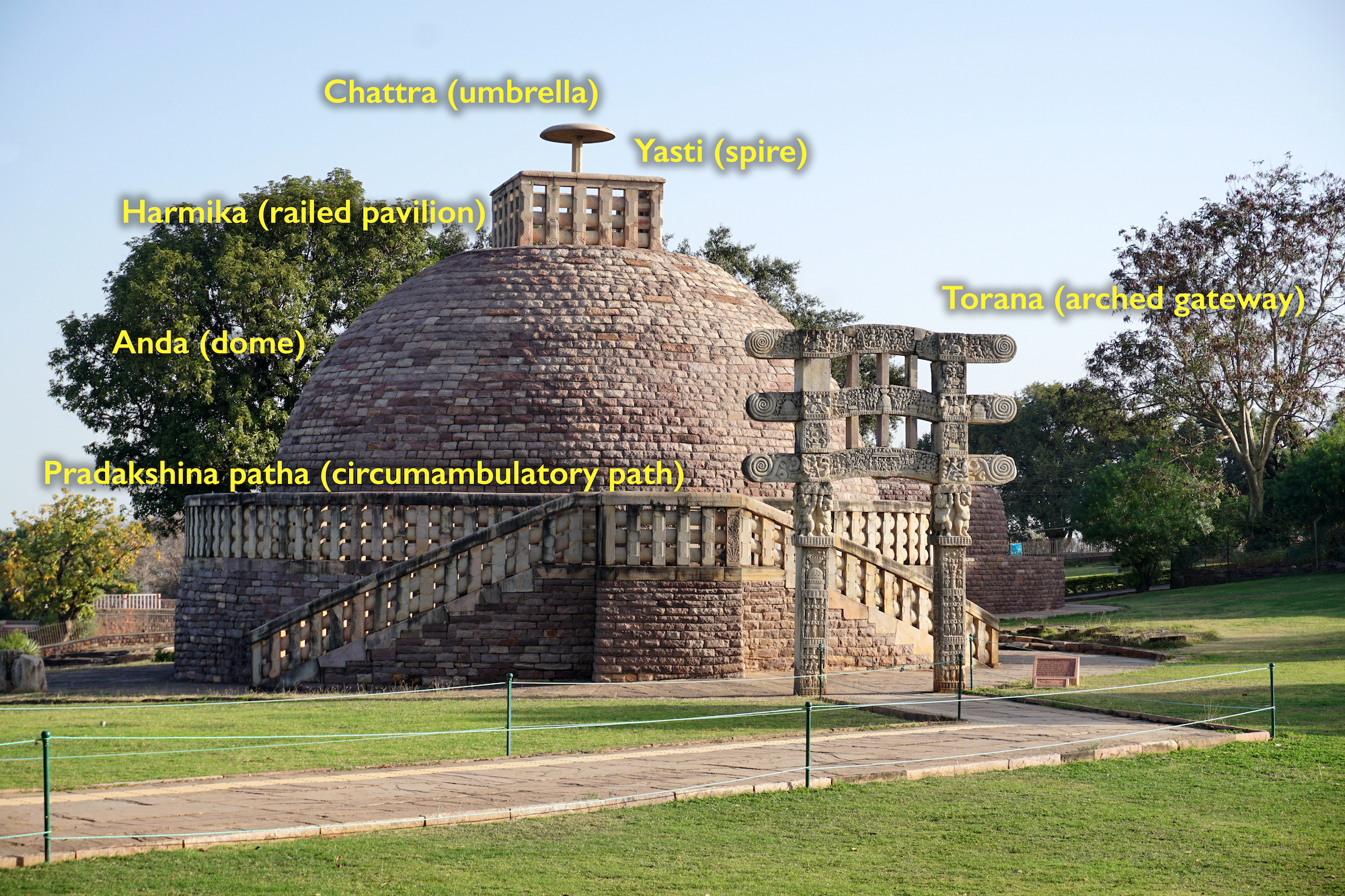
    • Stupa is a simple hemispherical structure crowned by a chhatra (parasol), symbolizing high rank.
    • Development of the Sanchi complex was supported by the mercantile community of Vidisha.
    Design
    • Follows a simple hemispherical dome structure.
    • Later, in the 1st century BCE, under the Satavahana dynasty, 4 ornamental gateways (toranas) were added in four cardinal directions.
    Toranas (Gateways) Each torana consists of 2 pillars supporting 3 architraves, adorned with bas-reliefs depicting scenes from Buddha’s life, Jataka tales, and Buddhist symbols.
    Artistic Features The toranas are famous for their intricate carvings, depicting elephants, winged lions, peacocks, and shalabhanjikas (fertility symbols).
    Symbolism Upper architrave shows seven Manushi Buddhas (previous Buddhas), the middle depicts the Great Departure of Prince Siddhartha, and the lower shows Ashoka’s visit to the Bodhi tree.
    Restoration Rediscovered in 1818 by British officer Henry Taylor and restored by John Marshall (ASI director) in the early 1900s with financial aid from the Begums of Bhopal.
    Replica of East Gate
    • A plaster cast of the East Gate was made in the 1860s by Henry Hardy Cole for the Victoria and Albert Museum.
    • A replica now stands in front of the Humboldt Forum Museum in Berlin.


    PYQ:

    [2013] Consider the following historical places:

    1. Ajanta Caves

    2. Lepakshi Temple

    3. Sanchi Stupa

    Which of the above places is / are also known for mural paintings?

    (a) 1 only

    (b) 1 and 2 only

    (c) 1, 2 and 3

    (d) None

    [2016] Early Buddhist Stupa-art, while depicting folk motifs and narratives successfully expounds Buddhist ideals. Elucidate.

  • Modern Indian History-Events and Personalities

    Why September 12 is observed as Saragarhi Day?

    Saragarhi

    Why in the News?

    127th Anniversary of the Battle of Saragarhi was observed on September 12.

    About the Battle of Saragarhi

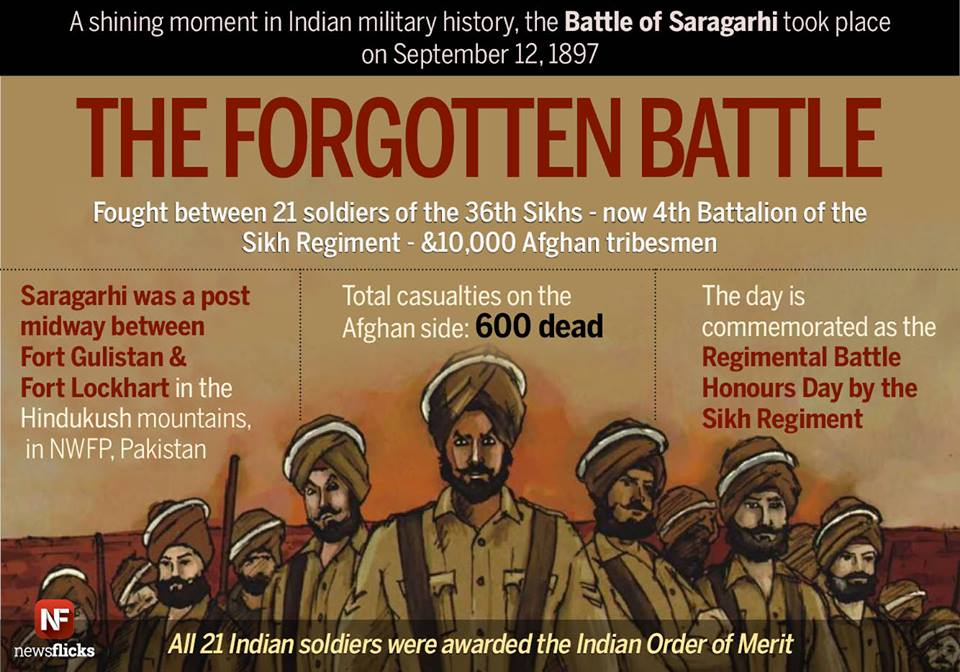
    • The Battle of Saragarhi occurred on September 12, 1897, between 21 Sikh soldiers of the then 36th Sikh Regiment and around 8,000 Afridi and Orakzai tribals.
    • The soldiers defended a communication post at Saragarhi, connecting Fort Lockhart and Fort Gulistan in the North West Frontier Province (now Pakistan).
    • Led by Havildar Ishar Singh, the Sikhs fought to the last man, marking one of the greatest last stands in military history.
    • Despite their bravery, the soldiers were eventually outnumbered and killed.
    • Their sacrifice gave the British time to strengthen positions at Fort Lockhart and Gulistan, halting enemy advances.

    Implication of the Battle

    • The Sikh soldiers showed extraordinary courage, fighting against overwhelming odds.
    • The 21 soldiers killed around 200 militants and injured 600, holding the enemy for seven hours.
    • The British Government posthumously awarded all 21 soldiers the Indian Order of Merit.
    • The battle highlighted the importance of discipline, leadership, and sacrifice, and underscored the role of Sikh regiments in the British Indian Army.

    PYQ:

    [2020] Wellesley established the Fort William College at Calcutta because:

    (a) He was asked by the Board of Directors at London to do so

    (b) He wanted to revive interest in oriental learning in India

    (c) He wanted to provide William Carey and his associates with employment

    (d) He wanted to train British civilians for administrative purpose in India

Join the Community

Join us across Social Media platforms.