💥UPSC 2026, 2027, 2028 UAP Mentorship (March Batch) + Access XFactor Notes & Microthemes PDF

Archives: News

  • International Space Agencies – Missions and Discoveries

    NASA’s Cassini-Huygens Mission

    Why in the News?

    • US space agency NASA’s Cassini-Huygens spacecraft launched in October 1997.
      • Using Cassini’s radar data, scientists from Cornell University have discovered new information about the liquid ocean on Titan, Saturn’s largest moon.

    Observations made about Titan

    • Titan is composed of hydrocarbons – organic chemicals consisting of carbon and hydrogen.
    • The astronomers have reportedly located calm seas of methane with a slow tidal current.

    About Cassini-Huygens Mission

    • The Cassini-Huygens mission was a collaborative project between NASA, the European Space Agency (ESA), and the Italian Space Agency (ASI) to explore Saturn and its moons.
    • The spacecraft was named after astronomers Giovanni Cassini and Christian Huygens.
    • The mission consisted of the Cassini orbiter and the Huygens probe.
    • It was launched on October 15, 1997.
    • It ended its mission on September 15, 2017 by plunging into Saturn’s atmosphere.

    Key Achievements:

    • Saturn Exploration:
      • Detailed study of Saturn’s atmosphere, rings, and magnetosphere.
      • Discovered new rings and observed the complex structure of the existing ones.
    • Moons of Saturn:
      • Titan Exploration: Huygens probe successfully landed on Titan, Saturn’s largest moon, on January 14, 2005, providing the first direct exploration of Titan’s surface and atmosphere.
      • Enceladus Discoveries: Found water-ice plumes erupting from Enceladus, indicating a subsurface ocean that could potentially harbor life.
    • Other Moons: Provided detailed images and data on other moons like Lapetus, Rhea, Dione, and Tethys.
    • Technological Milestones:
      • Demonstrated the success of long-duration missions in deep space.
      • Advanced the understanding of spacecraft navigation and operation in complex planetary environments.

    PYQ:

    [2014] Which of the following pairs is/are correctly matched?

    Spacecraft Purpose
    1. Cassini-Huygens Orbiting the Venus and transmitting data to the Earth
    2. Messenger Mapping and investigating the Mercury
    3. Voyager 1 and 2 Exploring the outer solar system

    Select the correct answer using the code given below:

    (a) 1 only
    (b) 2 and 3 only
    (c) 1 and 3 only
    (d) 1, 2 and 3

  • Women Safety Issues – Marital Rape, Domestic Violence, Swadhar, Nirbhaya Fund, etc.

    What is the Hema Commission Report?

    Why in the News?

    • A single bench of the Kerala High Court has stayed the release of the Justice Hema Commission report.
      • The report investigated women’s working conditions in the Malayalam film industry.

    About the Assault that Exposed the Deep Gender Divide      

    • On February 17, 2017, a leading Malayalam film actress was abducted and sexually assaulted in her car while traveling from Thrissur to Kochi.
    • The incident caused shock and outrage across Kerala as disturbing details emerged, including a video purportedly intended for blackmail.
    • Six of the ten accused were arrested quickly, and popular actor Dileep was named an accused and remanded to judicial custody in July. He is currently out on bail, with the trial ongoing since 2020.

    Formation of the Women in Cinema Collective (WCC)

    • The incident highlighted the discriminatory treatment faced by women in the film industry.
    • The Women in Cinema Collective (WCC) was formed in response, submitting a petition to the Chief Minister demanding an inquiry into gender issues in the industry.

    The Hema Commission

    • In July 2017, five months after the incident, the state government formed a 3-member committee headed by retired Kerala High Court judge, Justice K Hema.
    • The committee’s objective was to investigate issues of sexual harassment and gender inequality in the Malayalam film industry.
    • In December 2019, a 300-page report was submitted to the CM Pinarayi Vijayan, including documents, audio, and video evidence.

    Findings and Recommendations

    • The commission consulted multiple women professionals in the industry, recording detailed accounts of sexual harassment, wages earned, and possible blacklisting.
    • The report highlighted the existence of a casting couch, and the presence of alcohol and drugs on film sets.
    • The commission recommended forming a tribunal to investigate these allegations.
    • Other recommendations included making job contracts mandatory, ensuring wage parity across genders for the same job, banning drugs and liquor on shooting locations, and ensuring safe working conditions for women.

    PYQ:

    [2010] Two of the schemes launched by the Government of India for Women’s development are Swadhar and Swayam Siddha. As regards the difference between them, consider the following statements:

    1. Swayam Siddha is meant for those in difficult circumstances such as women survivors of natural disasters or terrorism, women prisoners released from jails, mentally challenged women etc., whereas Swadhar is meant for holistic empowerment of women through Self Help Groups.
    2. Swayam Siddha is implemented through Local Self-Government bodies or reputed Voluntary Organizations whereas Swadhar is implemented through the ICDS units set up in the states.

    Which of the statements given above is/are correct?

    (a) 1 only
    (b) 2 only
    (c) Both 1 and 2
    (d) Neither 1 nor 2


    [2014] We are witnessing increasing instances of sexual violence against women in the country. Despite existing legal provisions against it, the number of such incidences is on the rise. Suggest some innovative measures to tackle this menace.

  • OBOR Initiative

    Niger struggles with Security, Economic Crises

    Why in the News?

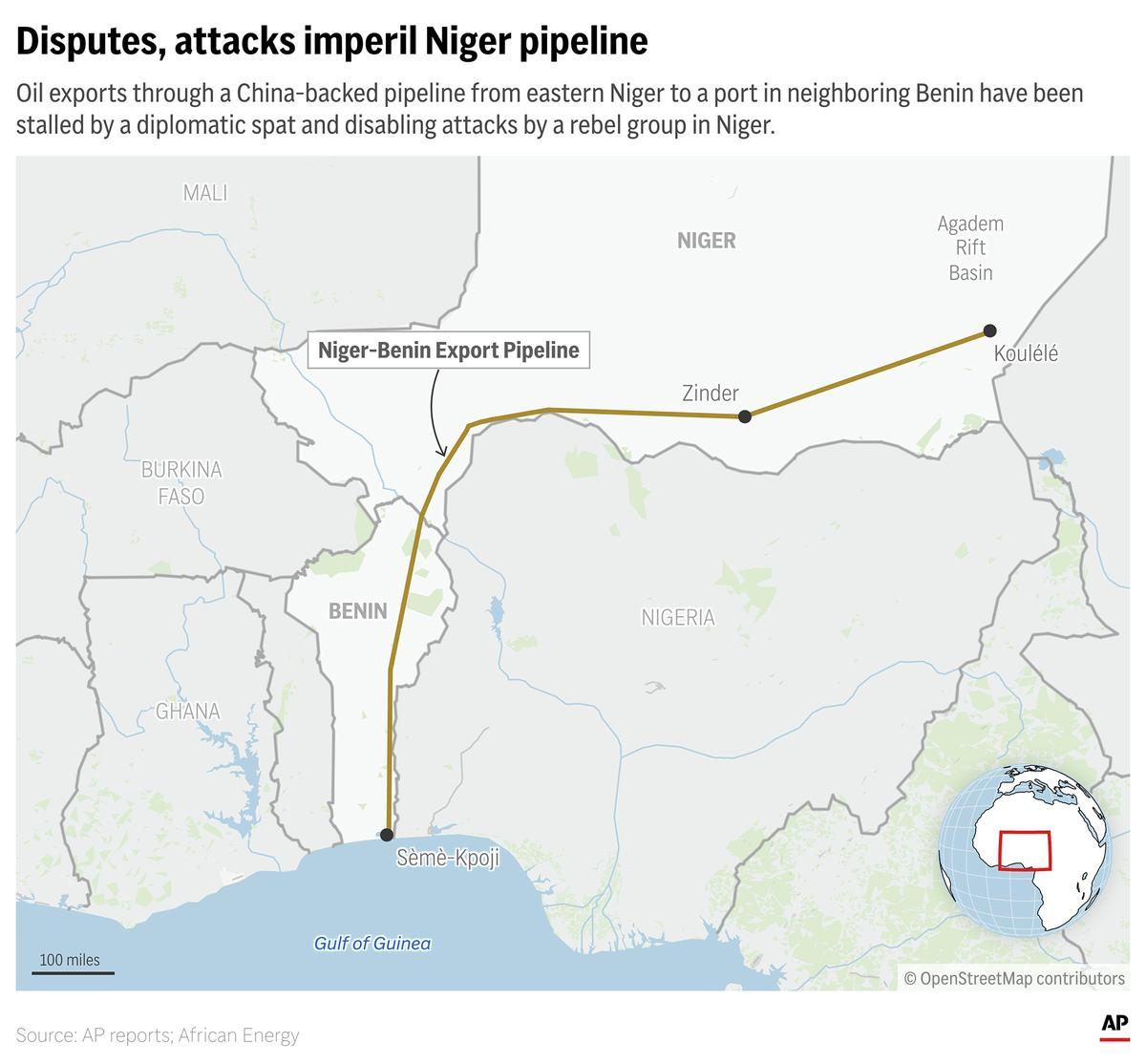
    • The China-backed Niger-Benin Export Pipeline that would make Niger an oil-exporting country is being threatened by an internal security crisis and a diplomatic dispute with neighboring Benin.
      • These issues arose after last year’s coup that toppled Niger’s democratic government.

    About Niger

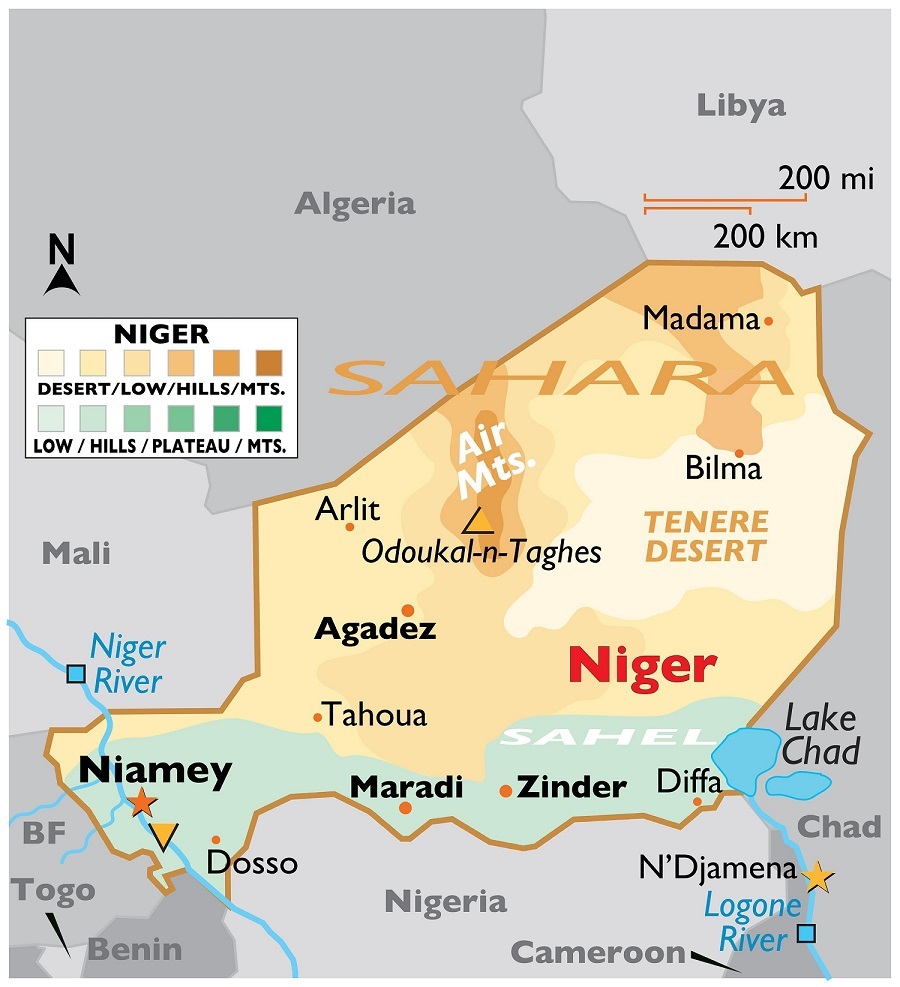
    • Niger, located in West Africa, is a landlocked country known for its vast desert landscapes and significant cultural heritage.
    • The northern region of Niger is dominated by the Sahara Desert, comprising more than half of the country.
    • The central part of Niger is characterized by the Sahel, a semi-arid transition zone between the Sahara
    • The Aïr Mountains, located in the northern central part are a significant mountain range with the highest peak, Mont Idoukal-n-Taghès (2,022 m).
    • The Niger River is the country’s primary water source.
    • Lake Chad is a significant body of water shared with Nigeria, Chad, and Cameroon. Its size keep on fluctuating.

    About Niger Benin Export Pipeline

    • The 1,930-kilometer pipeline runs from Niger’s Chinese-built Agadem oil field to the port of Cotonou in Benin.
    • It was designed to help Niger achieve an almost 5x increase in oil production through a $400 million deal with China’s state-run national petroleum company.
    • The pipeline faces significant challenges, including a recent diplomatic disagreement with Benin.
    • These issues threaten to strain Niger’s economy, heavily reliant on external support now withheld after a coup.


    PYQ:

    [2018] Which of the following has/have shrunk immensely/dried up in the recent past due to human activities?

    1. Aral Sea
    2. Black Sea
    3. Lake Baikal

    Select the correct answer using the code given below:

    (a) 1 only

    (b) 2 and 3

    (c) 2 only

    (d) 1 and 3

  • Foreign Policy Watch: India-Nepal

    Parliamentary Democracy: A Comparison between Nepal and India

    Why in the News?

    • On July 14, K. P. Sharma Oli was sworn in as Nepal’s Prime Minister for the fourth time, leading a new coalition government.
      • Since the abolition of the monarchy in 2008, Nepal has had 14 governments despite a new constitution in 2015 promising progress.

    Evolution of Nepal’s Constitution

    • 1948: The Government of Nepal Act was the first attempt at creating a constitution.
    • 1951: The Interim Government of Nepal Act aimed to establish democracy but was replaced in 1959.
    • 1959: Introduced a multi-party system, but the Panchayat Constitution of 1962 established a party-less system under King Mahendra.
    • 1990: A constitutional monarchy restored the multi-party system.
    • 2007: An Interim Constitution was adopted after continued political upheavals.
    • 2015: The current constitution established Nepal as a federal democratic republic.

    Comparing the Indian Constitution and Nepal’s Constitution:

    India Nepal
    Historical Background Adopted on November 26, 1949, and came into effect on January 26, 1950.

    Framed by the Constituent Assembly elected in 1946.

    Current constitution promulgated on September 20, 2015.

    Many attempts since 1948, 1951, 1959, 1962, 1990, and 2007.

    Form of Government Quasi-federal nature of the Indian constitution is described as a “Union of States” in Article 1. Other factors also talk about the quasi-federal like Emergency power and independent judiciary. etc

    Parliamentary system with the President as the ceremonial head and the Prime Minister as the head of government.

    Federal democratic republic.

    Parliamentary system with the President as the ceremonial head and the Prime Minister as the executive head.

    Structure of Government Bicameral legislature: Lok Sabha (House of the People) and Rajya Sabha (Council of States).

    Three levels of government: central, state, and local.

    Bicameral legislature: House of Representatives and National Assembly.

    Three levels of government: federal, provincial, and local.

    Federal Structure More centralized federal structure. The central government has significant authority over states.

    Flexible to allow greater central control when necessary.

    More decentralized federal structure. Greater autonomy to provinces.

    Includes seven provinces, each with its own government and legislature.

    Elections and Representation First-past-the-post (FPTP) system for Lok Sabha elections. Representation through single-member constituencies and multi-party systems. Mixed electoral system with both FPTP and proportional representation (PR). Ensures broader representation but leads to the proliferation of smaller parties.
    Judiciary The Supreme Court of India is the highest judicial authority.

    Ensures protection of fundamental rights and upholds the rule of law.

    The Supreme Court of Nepal is the highest judicial body.

    Interprets the Constitution and protects citizens’ rights. Aims to uphold the rule of law and safeguard fundamental rights.

    Fundamental Rights and Duties Comprehensive list of Fundamental Rights in Part III, including equality, freedom, religion, and constitutional remedies. Fundamental Duties in Part IV-A. Extensive fundamental rights, covering civil, political, and socio-economic rights. Emphasizes affirmative action for marginalized groups.
    Secularism and Religion A secular state with no official religion which mentioned in the Preamble of the Constitution. The secular state was declared in the 2015 Constitution.

    Protects religious freedom and promotes harmony among religious communities.


    PYQ:

    [2023] Compare and contrast the British and Indian approaches to Parliamentary sovereignty.

    [2022] Critically examine the procedures through which the Presidents of India and France are elected.

    [2021] Analyze the distinguishing features of the notion of Right to Equality in the Constitutions of the USA and India.

    [2021] Analyse the distinguishing features of the notion of Right to Equality in the Constitutions of the USA and India.

    [2020] The judicial systems in India and the UK seem to be converging as well as diverging in recent times. Highlight the key points of convergence and divergence between the two nations in terms of their judicial practices.

    [2019] What can France learn from the Indian Constitution’s approach to secularism?

    [2018] India and the USA are two large democracies. Examine the basic tenets on which the two political systems are based.

  • Genetically Modified (GM) crops – cotton, mustards, etc.

    Why SC couldn’t agree on the environmental release of GM mustard? 

    Why in the news?

    A two-judge Bench of the Supreme Court delivered a split verdict on Tuesday, July 23, regarding the “environmental release” of Genetically Modified (GM) mustard.

    About GM Mustard Crop 

    • Development and Approval Process: On September 15, 2015, the Centre for Genetic Manipulation of Crop Plants (CGMCP) at Delhi University sought approval from the Genetic Engineering Appraisal Committee (GEAC) for the environmental release of GM mustard DMH-11.
    • Biosafety Dossier: The CGMCP submitted a biosafety dossier to the GEAC, which created a sub-committee to examine its contents. After revisions, the sub-committee submitted its report, inviting comments in September 2016.
    • GEAC Recommendations: On May 11, 2017, the GEAC recommended the environmental release of GM mustard, allowing field tests to assess the crop’s effects. However, the Ministry of Environment sent the proposal back for re-examination in March 2018 after receiving several representations.
    • Deferred Tests: The GEAC directed the CGMCP to examine the effects of GM mustard on honey bees and soil microbial diversity, but these tests were deferred through 2020-21.
      • The GEAC-appointed expert committee found that honeybees do not discriminate between other GM crops such as genetically engineered canola.

    What is the case before the Supreme Court?

    • Background of the Case: The case arose from challenges by environmentalist Aruna Rodrigues and the organization Gene Campaign against the GEAC’s approval for the environmental release of GM mustard, arguing that the decision violated the precautionary principle and lacked proper scientific scrutiny.
    • Split Verdict: The Supreme Court delivered a split verdict regarding the approval for the environmental release of genetically modified (GM) mustard, specifically the hybrid DMH-11. Justices B.V. Nagarathna and Sanjay Karol had differing opinions on the legality of the Genetic Engineering Appraisal Committee’s (GEAC) decision-making process.
    • Justice Nagarathna’s Opinion: Justice Nagarathna held that the GEAC’s approval was flawed and did not follow the necessary procedures, particularly failing to conduct promised field tests. She emphasized that the approval violated public trust and the precautionary principle, which is essential for protecting the environment and public health.
    • Justice Karol’s Opinion: In contrast, Justice Karol argued that the GEAC’s decision was valid and aligned with the development of scientific temper. He stated that field trials are necessary to assess the environmental safety of GM mustard and that the decision-making process was independent and reasoned.
    • Unanimous Directives: Despite the split decision, both judges agreed on the need for the Union government to formulate a national policy regarding GM crops. This policy should involve consultations with various stakeholders, including experts, farmers, and state governments.
    • Case referred to larger bench: The case will be referred to a larger bench for further adjudication due to the differing opinions. The Supreme Court directed that the Ministry of Environment, Forest, and Climate Change (MoEF&CC) should conduct a national consultation within four months to develop this policy.
    • Concerns Raised: Justice Nagarathna pointed out that the GEAC did not consider the long-term effects of GM mustard on health and the environment, while Justice Karol noted the importance of conducting field trials under strict safeguards to monitor the crop’s impact.

    Conclusion: The Union government should formulate a detailed and inclusive national policy on genetically modified crops. This policy should be based on extensive consultations with experts, farmer representatives, state governments, and other stakeholders to ensure a balanced approach that considers scientific, environmental, and public health perspectives.

    Mains PYQ: 

    Q  What are the present challenges before crop diversification? How do emerging technologies provide an opportunity for crop diversification? (2021)

  • Government Budgets

    A big step towards the transformation of various sectors  

    Why in the news?

    The 2024-25 Budget is a progressive proposal featuring several commendable initiatives aimed at boosting India’s economic growth and advancing social progress.

    Prioritized areas in the recent Budget 2024-25

    • Job Creation and Skilling: The budget allocates ₹1.48 lakh crore towards job creation, employment, and skilling, emphasizing the importance of developing a skilled workforce to support India’s service sector. This shift from a focus on manufacturing to skilling reflects a strategic move towards building a service-oriented economy.
    • Energy Transformation: There is significant investments are directed towards energy transformation initiatives, including solar panel manufacturing and nuclear energy development. The budget allocates ₹89,287 crore to crucial sectors, indicating a commitment to sustainable energy solutions.
    • Healthcare Initiatives: The budget includes measures to enhance healthcare access, such as customs duty exemptions on life-saving cancer medications and components for advanced medical equipment.
    • Technology and Innovation: A framework with nine priorities is introduced to leverage advanced technology and foster collaboration between the government and private sector, promoting growth and innovation across various sectors.
      • For example: The budget allocates ₹1 lakh crore specifically for research and innovation, accompanied by a 50-year interest-free loan.

    What does the budget say on Accessibility and Affordability?    

    • Customs Duty Exemptions on drugs: The budget exempts customs duties on three essential cancer medications, making them more affordable and accessible to patients. This move addresses the high costs associated with cancer treatments, which often pose significant barriers to access.
    • Support for Medical Equipment: Customs duties are also waived for components of X-ray tubes and digital detectors, which are crucial for advanced medical technologies.
    • Alignment with Domestic Capacity: The budget emphasizes aligning customs duties with domestic capacity under the phased manufacturing program, fostering a conducive environment for startups and encouraging local manufacturing.

    On Prioritizing Inclusivity and Fiscal Prudence

    • Women’s Workforce Participation: The budget focuses on boosting women’s participation in the economy through targeted initiatives such as hostels, creches, and skilling programs.
      • According to a report by McKinsey, India can increase its 2025 GDP, estimated at $4.83 trillion, by 16%-60% simply by enabling women to participate in the economy on par with men
    • Research and Development: With India spending only 0.7% of its GDP on research, the budget encourages private sector collaboration with the government to increase investments in R&D. This collaboration is vital for fostering innovation and ensuring sustainable economic growth.
    • Public-Private Partnerships: The budget promotes public-private partnerships to enhance healthcare delivery and infrastructure, reflecting a commitment to inclusivity and collaboration in achieving economic and social goals.

    Conclusion: The government should expand the scope of skilling programs to cover a wider range of sectors and skill levels while ensuring the workforce is equipped to meet the evolving demands of the service-oriented economy.

  • Parliament – Sessions, Procedures, Motions, Committees etc

    Is immunity for the President and Governors absolute?  

    Why in the news?

    The Supreme Court has agreed to examine if the immunity granted to the President and Governors under Article 361 violates fundamental rights and constitutional principles.

     What is the case?  

    • The Supreme Court is examining a petition filed by a contractual woman employee of the West Bengal Raj Bhavan, who has accused Governor C.V. Ananda Bose of sexual harassment and molestation.
      • The petitioner argues that the “absolute immunity” granted to the Governor under Article 361 of the Constitution undermines her fundamental rights and the fairness of the legal process.

    Immunity Under Article 361: 

    • Article 361 provides immunity to the President and Governors from being answerable to any court for acts performed in their official capacity.
    • Specifically, clause (2) of Article 361 states that no criminal proceedings can be initiated or continued against the President or a Governor during their term of office. The petitioner contends that this immunity should not apply to illegal acts that violate fundamental rights.
    • The petitioner argues that the Governor’s immunity caused negligent handling of her complaint by police, delaying justice and hindering investigations.
    • The Supreme Court will determine if Article 361(2) immunity is absolute or can be challenged in serious cases like sexual harassment.

    Does Article 361 Grant Absolution to the Governor against Criminal Charges?

    • Scope of Article 361: Article 361 does grant significant immunity to Governors, shielding them from criminal proceedings during their term. However, the immunity is not absolute.
      • The first provision allows for the conduct of the President to be reviewed by designated bodies for impeachment, while the second provision allows for civil suits against the government.
    • Judicial Precedents: Previous court rulings have indicated that while Governors enjoy immunity under Article 361, this does not prevent judicial scrutiny of their actions, especially if those actions infringe upon fundamental rights.
      • For example, in the case of Rameshwar Prasad vs. Union of India, the Supreme Court stated that civil immunity does not preclude challenges based on malafide actions.
    • Potential for Legal Challenge: The current case may set a precedent for how Article 361 is interpreted regarding criminal acts committed by Governors.
      • If the court finds that immunity does not apply to acts that violate fundamental rights, it could pave the way for accountability and legal recourse for victims of misconduct by constitutional authorities.

    Conclusion: The Supreme Court’s interpretation of Article 361 could redefine the immunity of Governors, potentially allowing criminal proceedings for actions violating fundamental rights, thereby ensuring accountability and justice for victims.

    Mains PYQ:

    Q Discuss the essential conditions for the exercise of the legislative powers by the Governor. Discuss the legality of the re-promulgation of ordinances by the Governor without placing them before the Legislature. (UPSC IAS/2022)

  • Health Sector – UHC, National Health Policy, Family Planning, Health Insurance, etc.

    A Budget that places health on the margins

    Why in the news?

    • With the worst of the COVID-19 pandemic behind us (though the World Health Organization warns the virus still lingers), the Union Budget shifted focus to economic growth levers like infrastructure and employment.
    • It was also hoped that recognizing population health as crucial for economic growth would lead to continued investment in strengthening health systems.
    A budget estimate refers to the initial allocation of funds designated for various programs, departments, or projects within a fiscal year. It represents the government’s expectations regarding how much money will be required to meet planned expenditures.

    In contrast, revised estimates come into play later in the fiscal year. After assessing the actual expenditures and needs after the first six months, the government may adjust the initial budget estimates based on how much of the allocated funds have been utilised and what additional resources may be necessary.

    Comparisons with Previous Years

    • Budgetary Estimates: The comparison of the Budget Estimates (BE) for health between 2023-24 and 2025-25, reveals minimal increases:
      • Overall Health Ministry Budget: 1.98% increase
      • National Health Mission (NHM): 1.16% increase
      • PMJAY: 1.4% increase
    • Overall Health Ministry budget: The present allocation made in the current Budget is deemed to be inadequate for expanding health coverage services and enhancing the impact of flagship health programs, particularly in light of rising non-communicable diseases and the goal of universal health coverage by 2030.
    • Misleading Comparisons: When we compare the Budget estimates with the previous Revised estimates (RE) the budgetary increase of nearly 12% is misleading, as the RE reflects actual spending rather than the program’s needs.

    Missed Opportunities

    • Health Workforce Development: While the budget mentioned an increase in new medical colleges, it failed to address the critical need for a multi-layered, multi-skilled health workforce.
    • Drug Pricing Mechanisms: Although customs duties were waived on three anti-cancer drugs. However, the budget missed the chance to implement price controls and pooled procurement strategies that could have lowered drug costs across both public and private healthcare sectors. Establishing such mechanisms could enhance the affordability and accessibility of essential medications.
    • Climate-Resilient Agriculture: While the budget committed to climate-resilient agriculture, which is crucial for food security, it did not sufficiently link these efforts to health outcomes, such as nutrition and public health, which are critical in the context of rising health challenges.

    Challenges to the Inclusivity of PMJAY

    • Limited Coverage of Middle Class: PMJAY primarily targets the bottom 40% of the population based on economic status, leaving the middle class without coverage.
    • Focus on Secondary and Tertiary Care: The program emphasizes secondary and tertiary healthcare, often neglecting primary care services. This approach limits comprehensive health coverage and fails to address preventive healthcare needs, which are crucial for achieving UHC.
    • Awareness and Accessibility Issues: There is a significant disparity in awareness and accessibility of PMJAY across states.
      • For example, awareness is notably higher in Tamil Nadu (80%) compared to Bihar (20%). 

    Way forward: 

    • Targeted Funding for Flagship Programs: Need to allocate a more substantial increase in the budget for the National Health Mission (NHM) and Pradhan Mantri Jan Arogya Yojana (PMJAY) to the eradication of non-communicable diseases, tuberculosis elimination by 2025.
    • Strengthen Primary Healthcare: Govt. should ensure adequate funding for primary healthcare services, which form the foundation for preventive and community health initiatives.

    Mains PYQ:

    Q The public health system has limitations in providing universal health coverage. Do you think that the private sector can help in bridging the gap? What other viable alternatives do you suggest? (2015)

  • Tuberculosis Elimination Strategy

    ICMR develops CRISPR Cas-based TB Detection Kit

    Why in the News?

    The Indian Council of Medical Research (ICMR) Regional Medical Research Centre for North East has developed the “world’s cheapest CRISPR Cas-based TB testing system”.

    Back2Basics: CRISPR-Cas9 Technology

    • CRISPR-Cas9 stands for Clustered Regularly Interspaced Short Palindromic Repeats and CRISPR-associated protein 9.
    • It is a technology that allows geneticists and researchers to edit parts of the genome by altering sections of the DNA sequence.
    • Emmanuelle Charpentier and Jennifer Doudna’s work on CRISPR-Cas9 as a ‘molecular scissor’ earned them the 2020 Nobel Prize in chemistry.
    • The system consists of two key components:
    1. Cas9: This is the enzyme that acts like a pair of molecular scissors. It is responsible for cutting the DNA strand at a specific location, allowing for the removal, addition, or alteration of DNA at that site.
    2. Guide RNA (gRNA): This is a piece of RNA that is designed to find and bind to a specific sequence of DNA that matches its code. The gRNA guides the Cas9 enzyme to the exact spot in the genome where an edit is desired.
    • Mechanism:
      • The process begins with the design of a gRNA that matches the DNA sequence where an edit is needed.
      • Once inside the cell, the Cas9 enzyme and the gRNA form a complex that can identify and bind to the target DNA sequence.
      • The Cas9 then cuts the DNA at this location.
      • After the DNA is cut, the cell’s natural repair mechanisms can be harnessed to add or remove genetic material, or to make specific changes to the DNA.
    • Applications: Used for gene editing to correct genetic disorders, develop targeted cancer therapies, enhance diagnostics for infectious diseases, and create personalized medicine approaches.

    About the New TB Detection System

    • The system can detect TB bacteria using DNA from a patient’s saliva at a very low cost.
      • Specific DNA sequences unique to Mycobacterium tuberculosis (the bacteria causing TB) are identified.
    • It can identify the bacteria in preliminary stages and test over 1,500 samples simultaneously within approximately two hours.
    • The technology is simple enough to be used in primary health centres in villages.

    TB Situation in India:

    • TB kills an estimated 480,000 Indians annually, or over 1,400 patients every day.
    • India has more than a million ‘missing’ TB cases each year, which remain undiagnosed or inadequately diagnosed and treated in the private sector.

    National Goals for Elimination of TB: 

    • Pradhan Mantri TB Mukt Bharat Abhiyan (2022): It is stipulated to meet the goal of ending the TB epidemic by 2025 from the country, five years ahead of the Sustainable Development Goals (SDG) for 2030.
    • Nikshay Poshan Yojana (2018): Launched in 2018, this scheme provides nutritional support to TB patients. Under this scheme, TB patients receive a direct benefit transfer (DBT) of Rs. 500 per month to purchase food.

    PYQ:

    [2019] What is Cas9 Protein that is often mentioned in news?

    (a) A molecular scissors used in targeted gene editing

    (b) A biosensor used in the accurate detection of pathogens in patients

    (c) A gene that makes plants pest-resistant

    (d) A herbicidal substance synthesized in genetically modified crops

    [2014] Can overuse and free availability of antibiotics without Doctor’s prescription, be contributors to the emergence of drug-resistant diseases in India? What are the available mechanisms for monitoring and control? Critically discuss the various issues involved.

  • Wildlife Conservation Efforts

    In news: Gandhi Sagar Sanctuary

    Why in the News?

    • The Gandhi Sagar sanctuary in Madhya Pradesh is the preferred location for the next batch of cheetah’s relocation plan.
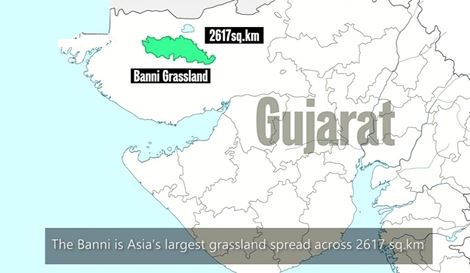
      • However, Banni in the Rann of Kutch, Gujarat is also being prepared to house some of them.

    Cheetah Reintroduction in India:

    • In India, cheetahs disappeared in the early 1950s due to hunting and the loss of their habitat.
    • The ‘Action Plan for Reintroduction of Cheetah in India /Project Cheetah (2022)’ aims to bring cheetahs from African countries to various national parks.
    • It is spearheaded by the National Tiger Conservation Authority (NTCA).
    • Recently, cheetahs from Namibia were reintroduced in Kuno National Park, Madhya Pradesh.
    • Cheetah are listed as VULNERABLE by the IUCN; Schedule II of the Wild Life (Protection) Act, 1972.
    • Kuno NP and Gandhi Sagar has an ideal habitat parallel to Maasai Mara (a National Park) in Kenya, suitable for cheetahs.

    About Gandhi Sagar Wildlife Sanctuary

    • It is located in western Madhya Pradesh and covers an area of 368.62 sq km.
    • It is a flat rocky plateau characterized by shallow topsoil and exposed sheetrock.
    • It is divided by the Chambal River, with the Gandhi Sagar dam and reservoir within its boundaries.
    • Flora and Fauna:
      • Flora: The sanctuary features a savannah ecosystem with open grasslands interspersed with dry deciduous trees. Riverine valleys within the sanctuary support evergreen vegetation.
      • Fauna: The sanctuary is home to a diverse range of wildlife, including species like leopards, sloth bears, striped hyenas, grey wolves, golden jackals, jungle cats, Indian foxes, and marsh crocodiles.

    About Banni Grasslands:

    • The Banni Grassland is located in the Kutch district of Gujarat, covering around 3,847 square km.
    • The climate is arid and semi-arid, with extremely hot summers (temperatures above 45°C) and mild winters (12°C to 25°C), receiving 300-400 mm of annual rainfall mainly during the monsoon.
      • Flora: Grasses such as Dichanthium, Sporobolus, and Cenchrus species, with salt-tolerant plants, shrubs, and trees like Acacia and the invasive Prosopis juliflora.
      • Fauna: Indian wolf, hyena, chinkara, Great Indian Bustard, flamingos, and various raptors, reptiles, and invertebrates.
    • It is inhabited by pastoral communities like the Maldharis, who rely on livestock grazing (cattle, buffalo, and sheep) for their livelihood.
    • Agriculture is limited due to arid conditions, with some areas used for salt production.

    PYQ:

    [2024]  Consider the following statements:

    1. Lions do not have a particular breeding season.

    2. Unlike most other big cats, cheetahs do not roar.

    3. Unlike male lions, male leopards do not proclaim their territory by scent marking.

    Which of the statements given above are correct?

    (a) 1 and 2 only

    (b) 2 and 3 only

    (c) 1 and 3 only

    (d) 1, 2 and 3

    [2012]  Consider the following: (2012)

    1. Black-necked crane
    2. Cheetah
    3. Flying squirrel
    4. Snow leopard

    Which of the above are naturally found in India?

    (a) 1, 2 and 3 only
    (b) 1, 3 and 4 only
    (c) 2 and 4 only
    (d) 1, 2, 3 and 4

Join the Community

Join us across Social Media platforms.