💥UPSC 2026, 2027, 2028 UAP Mentorship (March Batch) + Access XFactor Notes & Microthemes PDF

Archives: News

  • Tobacco: The Silent Killer

    Vasco da Gama’s toxic legacy is now a ‘pandemic’ that kills 8 million globally   

    Why in the news? 

    On July 8th, 1497, Vasco da Gama’s historic voyage began, reshaping global maritime routes and leaving a lasting impact on trade and culture. This era of exploration introduced and disseminated tobacco, profoundly affecting societies in numerous ways.

    Cultivation and Production of Tobacco

    • Historical Introduction: Tobacco was originally cultivated by Native Americans and brought to Europe in the 16th century. It was introduced to South Asia by European traders and colonizers, notably the Portuguese, Dutch, and British.
    • Economic Significance: Tobacco is a drought-tolerant crop providing livelihoods to many. It accounts for about 2% of India’s agricultural exports and employs over 45 million people.
    • Revenue Generation: The tobacco industry is a major source of revenue through taxation and exports, generating over ₹22,000 crores annually.

    Implications on Human Health

    • Health Issues: Tobacco use contributes to various cancers (lung, mouth, throat, oesophagus, pancreas, and bladder), respiratory diseases (COPD, emphysema, chronic bronchitis), cardiovascular problems (heart disease, stroke, hypertension), and other conditions like diabetes, infertility, weakened immune system, and complications in pregnancy.
    • Addiction: Nicotine, a highly addictive substance in tobacco, alters brain function leading to severe addiction.
    • Health Crisis: In India, tobacco use causes over 1.2 million deaths annually. It is responsible for 27% of all cancers and adds significant costs to healthcare and productivity losses, totaling approximately ₹1.82 trillion annually.

    Ethical and Revenue Considerations

    • Economic Benefits vs. Health Costs: While tobacco provides economic benefits and employment, it comes with tremendous human and financial costs due to tobacco-related illnesses.
    • Constitutional Provisions: Under Article 21 of the Indian Constitution guarantees the right to life and health. The Directive Principles of State Policy mandate the state to improve public health and living standards.So,Govt. has responsibility to prevent tobacoo consumption.

    Indian needs to Stack Up Its Priorities

    • Institutional Conflict: The Indian Council of Medical Research (ICMR) focuses on eliminating tobacco to mitigate health impacts, while the Indian Council of Agricultural Research (ICAR) aims to increase tobacco crop yields.
    • Policy and Ethical Dilemma: The conflicting priorities between ICMR and ICAR create significant policy challenges. The constitutional mandate to prioritize public health should guide policy decisions.

    Will CRISPR make a difference?

    • Gene Editing Potential: CRISPR technology offers potential solutions by developing genetically modified tobacco plants with reduced nicotine content.
    • Research Developments: Studies have shown promise in using CRISPR to significantly lower nicotine levels in tobacco plants. However, further characterization is needed to ensure these modifications do not negatively impact other important traits.
    • Collaborative Efforts: Collaboration between ICMR and ICAR is crucial to align scientific advancements with public health goals and agricultural sustainability.

    The Tobacco Lobby and Surrogate Advertising

    • Circumventing Regulations: The tobacco industry employs surrogate advertising to promote its products despite stringent advertising bans. These tactics perpetuate tobacco consumption, especially among youth, undermining public health efforts.
    • Aggressive Lobbying: The tobacco industry has a large network of 1,027 registered lobbyists at the state level in 2024, many of whom are former government employees. They engage in extensive lobbying to weaken, delay or block life-saving tobacco control measures.

    Way forward: 

    • Implement Stricter Regulations: Enforce stringent regulations on tobacco advertising, including surrogate advertising, and ensure compliance through regular monitoring and penalties.
    • Ban on Public Smoking: Implement and strictly enforce smoking bans in public places to reduce exposure to second-hand smoke.

    Mains PYQ: 

    Q What are the research and developmental achievements in applied biotechnology? How will these achievements help to uplift the poorer sections of the society? (UPSC IAS/2021)

  • Citizenship and Related Issues

    How do Assam’s Foreigners Tribunals function? 

    Why in the news? 

    On July 5, the Assam government instructed the Border wing of the State police not to refer cases of non-Muslims who entered India illegally before 2014 to the Foreigners Tribunals (FTs).

    About Foreigners Tribunals: 

    • Foreigners Tribunals are quasi-judicial bodies established to determine if a person staying illegally in India is a “foreigner” or not.
    • They were set up under the Foreigners (Tribunals) Order, 1964, enacted by the central government under the Foreigners Act, 1946.
    • Initially, only the central government could set up these tribunals. But a 2019 amendment empowered district magistrates in all states and UTs to establish Foreigners Tribunals.
    • The tribunals have the powers of a civil court to summon witnesses, require document production, and examine evidence.

    Decision-Making Process of Foreigners Tribunals:

    • Referral: Individuals suspected of being foreigners are referred to FTs by local authorities or border police. This referral can be based on various factors, including lack of documentation or doubtful voter status.
    • Notice Issuance: Upon receiving a reference, the FT issues a notice to the person alleged to be a foreigner. This notice is served in English or the state’s official language.The person has 10 days to respond to the notice and an additional 10 days to submit evidence supporting their claim of citizenship.
    • Submission of Evidence: The individual must present evidence to prove their Indian citizenship. This may include documents like birth certificates, school certificates, land records, or other official records.
    • Verification: The tribunal examines the documents and evidence provided, and may call witnesses or seek additional information if necessary.
    • Hearing: The FT has the authority to summon and examine the individual on oath, and to require the production of additional documents. The tribunal operates with certain powers of a civil court.
    • Judgment: If the evidence provided is deemed insufficient to prove citizenship, the individual may be declared a foreigner. If evidence is adequate, the person is recognized as an Indian citizen.
    • Detention and Deportation: If declared a foreigner and unable to appeal successfully, the person may be sent to a detention center (transit camp) for deportation.

    Role of Border Police:

    • Detection and Referral: The Assam Police Border Organisation is responsible for detecting illegal foreigners and referring suspicious cases to FTs.
    • Patrolling and Defence: They patrol the India-Bangladesh border, work with the Border Security Force, and maintain a second line of defense.
    • Monitoring: They monitor people settled in riverine and char (sandbar) areas.
    • Cases of ‘D’ Voters: They refer cases of ‘D’ (doubtful) voters to FTs as directed by the Election Commission of India.
    • NRC Appeals: People excluded from the NRC can appeal to the FTs through this wing to prove their citizenship.

    Challenges and Criticisms:

    • Supreme Court Rulings: The Supreme Court has overturned FT orders citing grave miscarriages of justice, such as the wrongful declaration of a deceased farmer, Rahim Ali, as a foreigner.
    • Corruption and Malpractice: Observations have been made about corruption within the system, with allegations of notices being improperly served.

    Conclusion: Need to Implement stricter oversight and auditing of Foreigners Tribunals to ensure fairness and adherence to legal procedures. Regular reviews and monitoring can help prevent corruption and malpractice, ensuring that notices are properly served and tribunal processes are transparent.

    Mains PYQ: 

    Q How far are India’s internal security challenges linked with border management particularly in view of the long porous borders with most countries of South Asia and Myanmar? (UPSC IAS/2013)

  • Forest Conservation Efforts – NFP, Western Ghats, etc.

    The issue with India’s tree planting schemes

    Why in the news? 

    India’s tree planting schemes have garnered attention as part of the country’s efforts to combat climate change and restore degraded ecosystems. However, these initiatives face several challenges and criticisms.

    Recent Trends of Special Conservation Drives:

    • Increased Initiatives: There has been a surge in global and national tree planting drives, such as the “One Trillion Project” by the World Economic Forum, Pakistan’s “10 Billion Tree Tsunami,” China’s “Great Green Wall,” and the “Bonn Challenge” to restore degraded landscapes.
    • High Media Attention: These drives often feature catchy slogans and glamorous campaigns that attract substantial media attention and public involvement.
    • Annual Events: India celebrates Van Mahotsava annually in July, aiming to promote tree planting and environmental conservation.

    Issues Associated with These Drives:

    • Limited Community Participation: Many programs lack significant involvement from local communities, affecting their effectiveness and sustainability.
    • Post-Planting Measures: Insufficient focus on post-planting care and monitoring hinders the success of tree planting efforts.
    • Monoculture Risks: Some drives promote monoculture, which can be detrimental to biodiversity and carbon sequestration.
    • Ecological Impact: Inappropriate tree planting in non-deforested areas like grasslands or animal habitats can damage ecosystems, increase wildfire risk, and exacerbate global warming.

    India’s Accountability and Challenges Toward Environmental Goals:

    • Achievements: India claims to have fulfilled its Paris Agreement commitments and achieved an additional carbon sink of 1.97 billion tonnes of CO2 equivalent.
    • Encroachment and Loss: Approximately 10 million hectares of Indian forests are under encroachment, and about 5.7 million hectares have been lost for non-forestry purposes.
    • Dependence on Forests: Nearly 27.5 crore people rely on forests for subsistence, highlighting the importance of sustainable management.
    • Restoration Goals: India aims to restore 26 million hectares of degraded forests by 2030, but faces challenges such as encroachment and the need for effective tree planting strategies.

    Way forward: 

    • Community Involvement: Need to foster local participation in tree planting drives by involving communities in planning, execution, and ongoing maintenance.
    • Monitoring and Maintenance: Try to implement robust post-planting monitoring and care systems to ensure the survival and growth of planted trees.
    • Policy and Strategy Improvements: To address criticism of mass planting drives, India needs to prioritize adequate financing, active community participation, and technical considerations in forestry and restoration strategies.
  • Capital Markets: Challenges and Developments

    Decline in popularity of Equity Linked Savings Schemes (ELSS)

    Why in the News?

    • Equity Linked Savings Schemes (ELSS) are mutual fund schemes that offer tax benefits under Section 80C of the Income Tax Act.
      • Recently, ELSS has seen a decline in popularity, with more money being withdrawn from these schemes than invested.

    What is Section 80C of the Income Tax Act?

    • Section 80C permits certain investments and expenses to be tax-exempted.
    • By well-planning the 80C investments that are spread diversely across various options like National Savings Certificate (NSC), Unit Linked Insurance Plan (ULIP), Public Provident Fund (PPF), etc., an individual can claim deductions up to Rs 1,50,000.
    • By taking tax benefits under 80C, one can avail of a reduction in tax burden.

    About Equity Linked Savings Schemes (ELSS)

    • An ELSS fund or an equity-linked savings scheme is the only kind of mutual funds eligible for tax deductions under the provisions of Section 80C of the Income Tax Act, 1961.
    • Investors can claim a tax rebate of up to Rs 1,50,000 and save up to Rs 46,800 a year in taxes by investing in ELSS mutual funds.
    • ELSS mutual funds’ asset allocation is mostly (65% of the portfolio) made towards equity and equity-linked securities such as listed shares.
    • They may have some exposure to fixed-income securities as well.
    • These funds come with a lock-in period of 3 years only, the shortest among all Section 80C investments.
    • Being market-linked, they are subject to market risk, but may offer potentially higher returns compared to traditional tax-saving instruments like National Savings Certificate (NSC) or Public Provident Fund (PPF).

    Recent Trends in ELSS

    • In the past few months, more money has been taken out of ELSS than put in.
    • For example, last month ₹445 crore was withdrawn, while in April it was ₹144 crore.
    • In the last fiscal year, only ₹1,041 crore was invested in ELSS, compared to ₹7,744 crore the previous year.

    Impact of the New Tax Regime

    • A new tax regime was introduced in 2020-21, which is now the default option.
    • The old tax regime offered various tax exemptions and deductions, helping to reduce income tax.
    • These benefits are not available under the new tax regime, making ELSS less attractive to investors.

    PYQ:

    [2021] Indian Government Bond Yields are influenced by which of the following?

    1. Actions of the United States Federal Reserve
    2. Actions of the Reserve Bank of India
    3. Inflation and short-term interest rates

    Select the correct answer using the code given below.

    (a) 1 and 2 only
    (b) 2 only
    (c) 3 only
    (d) 1, 2 and 3

  • Artificial Intelligence (AI) Breakthrough

    What is OpenAI’s secret Project ‘Strawberry’?

    Why in the News?

    • US-based OpenAI emerged as a major player with its AI chatbot ChatGPT, capable of answering questions and processing images.
      • OpenAI is now reportedly developing a new AI model with improved reasoning capabilities, potentially changing the AI landscape.

    What is Project Strawberry?

    • Nearly six months ago, OpenAI’s secretive Project Q* (Q-Star) gained attention for its innovative approach to AI training.
    • OpenAI is now working on a new reasoning technology under the code name “Strawberry” believed to be the new name for Project Q*.
    • Strawberry aims to enable AI models to plan ahead, autonomously search the internet, and conduct deep research.

    What are Large Language Models (LLMs)?

    • LLMs are advanced artificial intelligence (AI) systems designed to understand, generate, and process human language.
    • They are built using deep learning techniques, particularly neural networks, and are trained on vast amounts of text data.

    Difference from Existing AI Models

    • Existing Large Language Models (LLMs) can summarize texts and compose prose but struggle with common sense problems and multi-step logic tasks.
    • Current LLMs cannot plan ahead effectively without external frameworks.
    • Strawberry models are expected to enhance AI reasoning, allowing for planning and complex problem-solving.
    • These models could enable AI to perform tasks that require a series of actions over an extended time, potentially revolutionizing AI’s capabilities.

    Potential Applications of Strawberry Models

    • Advanced AI models could conduct experiments, analyze data, and suggest new hypotheses, leading to breakthroughs in sciences.
    • In medical research, AI could assist in drug discovery, genetics research, and personalized medicine analysis.
    • AI could solve complex mathematical problems, assist in engineering calculations, and participate in theoretical research.
    • AI could contribute to writing, creating art and music, generating videos, and designing video games.

    Ethical Considerations  

    • Impact on Jobs: Improved AI capabilities may intensify concerns about job displacement and the ethical implications of AI reproducing human work.
    • Power Consumption and Ethics: The vast amounts of power required to run advanced AI models raise environmental and ethical questions.

    PYQ:

    [2020] With the present state of development, Artificial Intelligence can effectively do which of the following?

    1. Bring down electricity consumption in industrial units.
    2. Create meaningful short stories and songs.
    3. Disease diagnosis.
    4. Text-to-Speech Conversion.
    5. Wireless transmission of electrical energy.

    Select the correct answer using the code given below:

    (a) 1, 2, 3 and 5 only
    (b) 1, 3 and 4 only
    (c) 2, 4 and 5 only
    (d) 1, 2, 3, 4 and 5

  • Wildlife Conservation Efforts

    845 Elephant Deaths recorded in Kerala in eight years

    Why in the News?

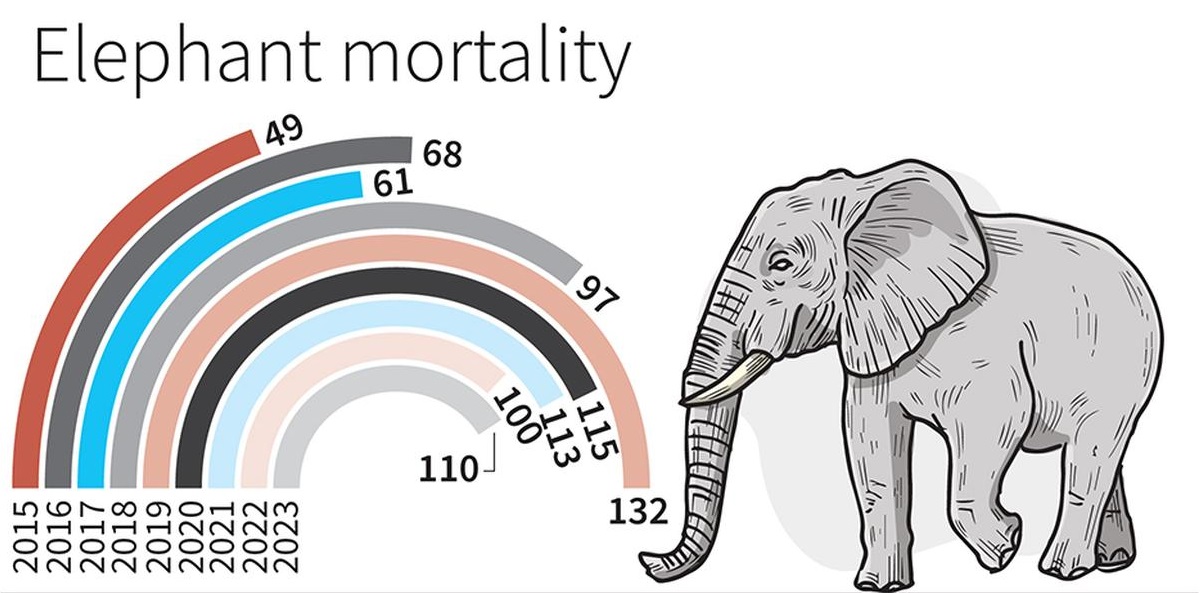
    • Kerala’s forests have recorded 845 elephant deaths between 2015 and 2023.
      • Studies indicate an increasing trend in the death rate over time.

    Habitat and Population Challenges

    • Elephants face increasing vulnerability due to shrinking habitats and rising fragmentation exacerbated by climate change.
    • Factors contributing to their susceptibility include:
    1. Declining population sizes
    2. Sensitivity to high temperatures
    3. Competition from invasive plant species disrupting food sources
    4. Heightened susceptibility to diseases

    Elephant Mortality: Key Trends

    • Younger elephants, particularly those under 10 years of age, face the highest risk of mortality.
    • The mortality rate for calves is approximately 40%.
    • The increase in deaths among calves is primarily due to Elephant Endotheliotropic Herpesviruses – Haemorrhagic Disease (EEHV-HD).

    Influence of Herd Size on Survival:

    • A recent study in Sri Lanka highlights potential mitigating factors against the herpesvirus.
    • Calves in larger herds exhibit better survival rates due to shared immunity.
    • Exposure to various virus strains within larger herds helps calves develop antibodies, improving their chances of survival.

    About Elephants in India

    Details
    Population Estimate
    • India hosts the largest population of wild Asian Elephants (Elephas maximus), with around 29,964 individuals,
    • Approximately 60% of the global population (2017 census).
    Leading States Karnataka holds the highest number of elephants, followed by Assam and Kerala.
    Conservation Status
    • IUCN Red List:  Endangered.
    • CMS: Appendix I.
    • Wildlife (Protection) Act, 1972: Listed under Schedule I,
    • CITES: Appendix I.
    Conservation Initiatives
    • Project Elephant launched in 1992, covering 23 states across India.
    • India is home to more than 60% of all wild Asian elephants.
    • Contributed to the increase in wild elephant population from around 25,000 in 1992 to about 30,000 in 2021.
    • Establishment of Elephant Reserves. Total 33 in numbers covering approximately 80,777 Sq.km.


    PYQ:

    [2020] With reference to Indian elephants, consider the following statements:

    1. The leader of an elephant group is a female.
    2. The maximum gestation period can be 22 months.
    3. An elephant can normally go on calving till the age of 40 years only.
    4. Among the States in India, the highest elephant population is in Kerala.

    Which of the statements given above is/are correct?

    (a) 1 and 2 only

    (b) 2 and 4 only

    (c) 3 only

    (d) 1, 3 and 4 only

  • Foreign Policy Watch: India-Africa

    Places in News: Niger, Ivory Coast and Pacific Island States

    Why in the News?

    Details

    Niger

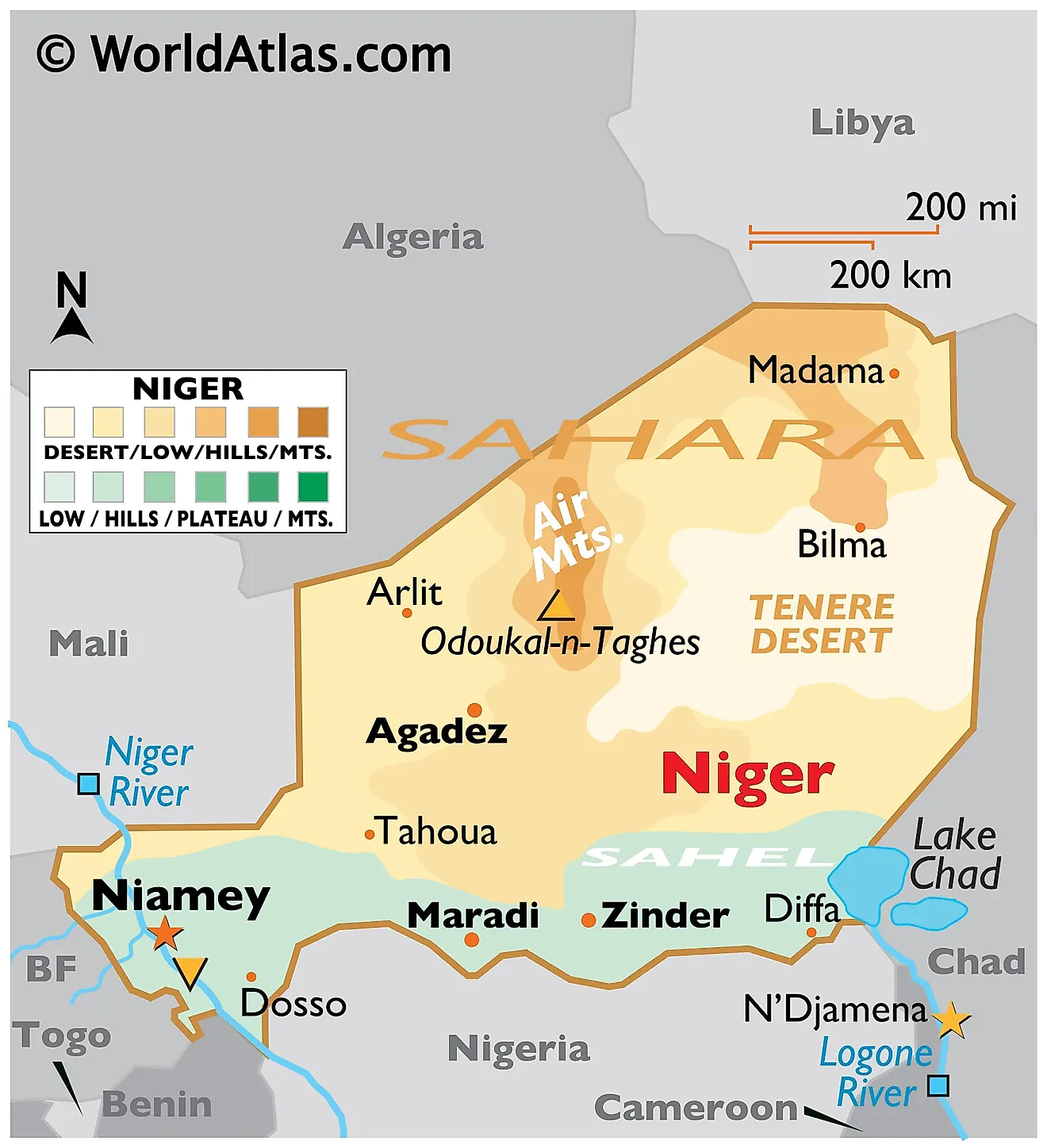
    • Turkish delegation visited to strengthen military cooperation with the junta, shifting alliances to Turkey and Russia.
    Geography: Landlocked in West Africa, bordered by Algeria, Libya, Chad, Nigeria, Benin, Burkina Faso, and Mali. Population ~26.3 million; capital Niamey.

    Key Points:

    • Gained independence from France in 1960.
    • Political instability with coups and a military junta in 2023.
    • It faces significant challenges including desertification, water scarcity, and economic development issues.
    • It is one of the world’s poorest nations despite having large uranium reserves.

    Ivory Coast

    • Recent discoveries have revealed substantial oil reserves estimated at six billion barrels, potentially making Ivory Coast a net oil exporter by the end of the decade.
    • The Baleine field, operated by Eni, aims to reach significant production levels by 2026.
    Geography: Located on the southern coast of West Africa; bordered by Liberia, Guinea, Mali, Burkina Faso, Ghana, and the Gulf of Guinea. Population ~30.9 million; capital Yamoussoukro.

    Key Points:

    • Gained independence from France in 1960.
    • Experienced political instability, now relatively stable since 2016.
    • Fast-growing economy dependent on cocoa, coffee, and expanding into gold mining and oil refining.
    • Abidjan is a major hub for West African economic activities.

    Pacific Island States

    • Participated in a summit with Japan expressing concerns over military build-ups and the need for regional peace and security.
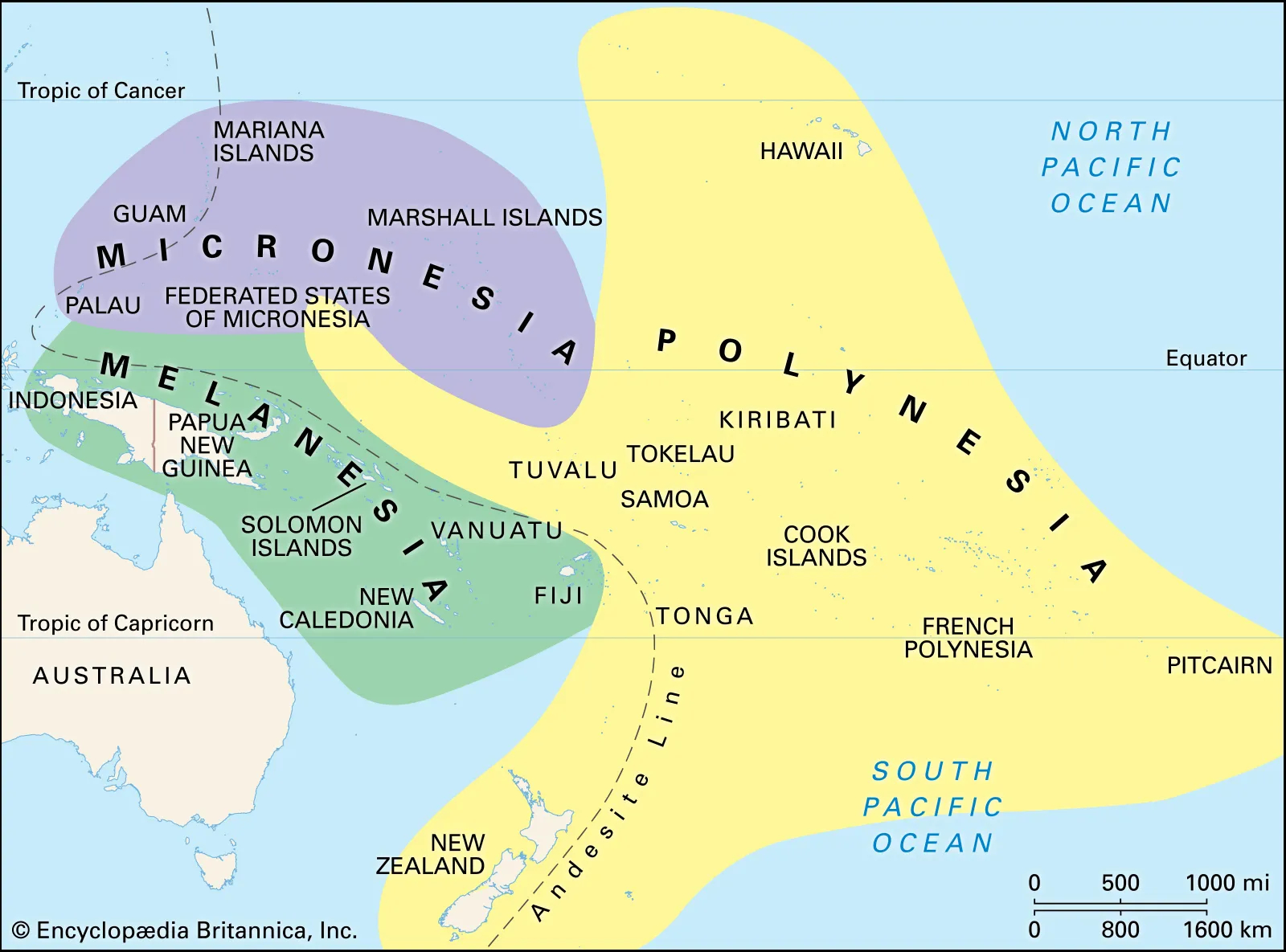
    • Geography: Vast region in the Pacific Ocean, categorized into Melanesia, Micronesia, and Polynesia; diverse climates and ecosystems.
    • They face challenges such as climate change impacts, biodiversity loss, and varying levels of development.
    • Economic activities include tourism, agriculture (especially coconut and palm oil), and fishing.
    • These islands play a crucial role in global biodiversity and climate resilience efforts.


    PYQ: 

    [2022] Consider the following pairs:

    Region often mentioned in the news: Country

    1. Anatolia: Turkey
    2. Amhara: Ethiopia
    3. Cabo Delgado: Spain
    4. Catalonia: Italy

    How many pairs given above are correctly matched?

    (a) Only one pair

    (b) Only two pairs

    (c) Only three pairs

    (d) All four pairs

    [2018] Consider the following pairs:

    Towns sometimes mentioned in news: Country

    1. Aleppo: Syria

    2. Kirkuk: Yemen

    3. Mosul: Palestine

    4. Mazar-i-Sharif:  Afghanistan

    Which of the pairs given above are correctly matched?

    (a) 1 and 2

    (b) 1 and 4

    (c) 2 and3

    (d) 3 and 4

  • e-Commerce: The New Boom

    The State of India’s Informal Economy    

    Why in the news? 

    The NSSO’s 2021-22 and 2022-23 survey outcomes reveal effects of significant economic shocks due to demonetisation, GST implementation, and the COVID-19 pandemic on India’s economy.

    About NSSO: 

    • The NSSO is India’s premier agency for conducting large-scale nationwide sample surveys on socio-economic aspects that collects data on employment, consumption, health, education, and other areas to provide essential inputs for policy and planning.
    • The NSSO was merged with the Central Statistical Office in 2019 to form the National Statistical Office.

    Key highlight as per the recent survey by NSSO   

    • Impact of Economic Shocks: The surveys reflect the aftermath of major economic events such as demonetisation (November 2016), the rollout of GST (July 2017), and the COVID-19 pandemic (starting March 2020).
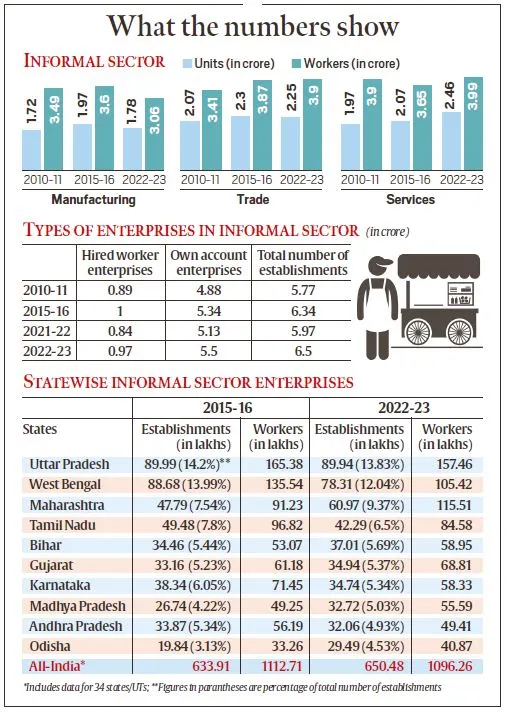
    • Employment Trends: There has been a noticeable decline in employment within the informal sector over the past seven years, with around 16.45 lakh jobs lost.
    • Sectoral Dynamics: The unincorporated manufacturing sector saw a significant contraction, with the number of enterprises declining by 9.3% from 19.7 million in 2015-16 to 17.82 million in 2022-23.

    What are unincorporated enterprises?  

    • Unincorporated enterprises are informal businesses not legally registered as companies.
    • They include MSMEs, household units, own-account enterprises, and partnerships, operating outside formal regulatory frameworks but contributing significantly to employment and economic activity.

    Why are these survey results important and what do they represent?  

    • Timely Insights: These survey results offer current data crucial for understanding the evolving role of the informal sector in job creation, particularly during economic slowdowns when formal sector employment may decline.
    • Impact Assessment: They provide a detailed analysis of how significant economic events like demonetisation, GST implementation, and the COVID-19 lockdowns have affected the informal sector, highlighting vulnerabilities and resilience.
    • Policy Relevance: The findings inform policymaking aimed at supporting and regulating the informal sector, ensuring that measures address its unique challenges and contributions to overall economic stability and inclusivity.

    What has been the pattern of ‘Informal Employment’ across states?

    • The data shows a mixed pattern across states, with 16 out of 34 states/UTs recording a decline in informal sector workers in 2022-23 compared to 2015-16.
    • Around 63 lakh informal enterprises shut down due to GST between 2015-16 and 2022-23, resulting in a loss of about 1.6 crore jobs.
    • The number of informal enterprises plunged from 50.32 lakh with 85.6 lakh workers in April-June 2021 at the peak of the COVID-19 second wave, to 1.91 crore firms with 3.12 crore employees in January-March 2022.

    Way Forward: 

    • The government should provide targeted support and incentives to help informal enterprises adapt to the post-GST and post-pandemic environment.
    • Policymakers should aim to facilitate a gradual transition of informal enterprises to the formal sector.

    Mains PYQ: 

    Q How globalization has led to the reduction of employment in the formal sector of the Indian economy? Is increased informalization detrimental to the development of the country? (UPSC IAS/2016)

  • Women empowerment issues – Jobs,Reservation and education

    On political representation of women  

    Why in the News?

    In the recently concluded general elections in the U.K., a record 263 women MPs, making up 40% of the total, have been elected to the House of Commons.

    Political representation of Women in the world: 

    Have women been fairly represented in Parliament in independent India?

    Women were granted the right to vote from the First General Elections in 1952, yet their representation in the Lok Sabha has been low.

    • Statistics about women’s representation: The women’s representation in Lok sabha in between of  1952 and 2004 was about ranged from 5% to 10%.
      • The percentage women’s representation had increased to 12% in 2014 and stands at 13.6% in the 18th Lok Sabha while in the Rajya Sabha (upper house), the figure is 13%.
    • Constitutional Amendments: The 73rd and 74th amendments in 1992/1993 provided one-third reservation for women in panchayats and municipalities, but similar reservations for the Lok Sabha and State assemblies have not been successful until recently.

    Note: The global average of 26.9% of women in National parliaments.

    Women’s Representation in State Legislatures:

    • No state has more than 20% women representation in its legislative assembly.
    • Chhattisgarh has the highest representation with 18% women MLAs.
    • Himachal Pradesh has just one woman MLA and Mizoram has none.

    Should political parties provide internal reservations to increase women’s political participation?

    • Globally, higher representation for women is achieved through voluntary or legislated compulsory quotas for candidates within political parties or reserved seats in parliament.
    • So, quotas within political parties offer more democratic choices to voters and flexibility in candidate selection. It means quota in Political parties could be the most important step to increase women’s representation in Parliament.
    • Some parties, like Naam Tamilar Katchi in Tamil Nadu, have adopted voluntary quotas (50% for women candidates), but such measures alone have not significantly improved overall representation.

    When will the 106th constitutional amendment be implemented?

    • The 106th Amendment Act provides for 33% reservation for women in the Lok Sabha and state legislative assemblies, including the Delhi Legislative Assembly.
    • The reservation will come into effect after an exercise of delimitation is undertaken following the first census conducted after the commencement of the 106th Amendment Act.
    • The women’s reservation will be in operation for a period of 15 years from its commencement.

    Way Forward: 

    • Public Awareness and Advocacy: Need to conduct widespread awareness campaigns to highlight the importance of gender equality in political representation.
    • Capacity Building and Support Mechanisms: Need to implement comprehensive capacity-building programs aimed at empowering women politically. For example,provide training in leadership skills, campaign management, and legislative processes.

    Mains PYQ: 

    Q The reservation of seats for women in the institutions of local self-government has had a limited impact on the patriarchal character of the Indian Political Process.” Comment. (UPSC IAS/2019)

  • Agricultural Sector and Marketing Reforms – eNAM, Model APMC Act, Eco Survey Reco, etc.

    Choosing the right track to cut post-harvest losses

    Why in the News? 

    India holds the position of the second-largest agricultural producer globally however, it only accounts for 2.4% of global agricultural exports, ranking eighth worldwide due to the post-harvest loss.

    A closer look at India’s post-harvest loss:

    • Economic Impact: India faces annual post-harvest losses amounting to approximately ₹1,52,790 crore, significantly impacting farmer incomes and the agricultural economy.
    • Perishable Commodities: The biggest losses occur in perishable commodities like livestock produce (22%), fruits (19%), and vegetables (18%). Export processes further add to these losses, particularly at the import-country stage.
    • Supply Chain Inefficiencies: There is Inefficiencies in storage, transportation, and marketing, alongside a lack of assured market connectivity, contribute to significant post-harvest losses. Small and marginal farmers, who make up 86% of the farming community, struggle with economies of scale and market access.

    Initiatives taken by the Railways Department:

    • Truck-on-Train Service: Indian Railways introduced the truck-on-train service, allowing loaded trucks to be transported on railway wagons. This service has been expanded following successful trials with commodities like milk and cattle feed.
    • Parcel Special Trains: During the COVID-19 pandemic, the Railways introduced parcel special trains to transport perishables and seeds between producers and markets, ensuring timely delivery and reducing post-harvest losses.
      • The DFI (Doubling farmers’ income) committee recommends streamlining loading and unloading processes to minimize transit times and address staffing shortages through recruitment and training initiatives.
    • Kisan Rail Scheme: It was launched to connect production surplus regions with consumption regions. This scheme facilitates the transportation of perishables (including milk, meat, and fish) more efficiently.
    • Specialized Wagons and Facilities: Investment in specialized wagons for temperature-controlled transport and establishing rail-side facilities for safe cargo handling are essential steps taken by the Railways.

    Way for Untapped Opportunities:

    • Enhanced Environmental Benefits: Rail transport generates up to 80% less carbon dioxide for freight traffic compared to road transport.
    • Public-Private Partnerships: The private sector can play a crucial role in enhancing operational efficiency and strengthening rail infrastructure through public-private partnerships, thereby improving the overall logistics ecosystem for agricultural produce.
    • Budgetary Support and Infrastructure Development: The budgetary allocation for agriculture in 2024 aims to bridge the farm-to-market gap with modern infrastructure and value-addition support.
    • Technology Integration: Incorporating advanced technologies like real-time tracking, temperature monitoring, and automated loading/unloading systems.

    Way forward: 

    • Expand climate-controlled storage facilities and cold storage capacity to accommodate a larger share of agricultural produce.
    • Provide small and marginal farmers access to storage facilities through cooperatives or subsidies.
    • Invest in specialized rail wagons for temperature-controlled transport and establish rail-side cargo handling facilities.

    Mains PYQ: 

    Q How do subsidies affect the cropping pattern, crop diversity and economy of farmers? What is the significance of crop insurance, minimum support price and food processing for small and marginal farmers? (UPSC IAS/2017)

Join the Community

Join us across Social Media platforms.