💥UPSC 2026, 2027, 2028 UAP Mentorship (March Batch) + Access XFactor Notes & Microthemes PDF

Archives: News

  • Disasters and Disaster Management – Sendai Framework, Floods, Cyclones, etc.

    Factory accidents, a pointer to rusty inspection reform  

    Why in the news?

    In May 2024, an explosion at a reactor in a chemical factory within the Dombivli Maharashtra Industrial Development Corporation (MIDC) area caused fatalities and injuries among workers and local residents.

    Present Scenario in India       

    • India continues to witness frequent fatal industrial accidents, often due to non-compliance with safety regulations, inadequate inspections, and compromised safety practices.
    • Recent incidents, such as the Dombivli MIDC chemical factory explosion, highlight the recurring nature of these accidents and their devastating impact on lives and infrastructure.
    • There is a significant disparity between the number of registered factories and the inspection rates across states like Maharashtra, Gujarat, and Tamil Nadu.

    Causes of fatal industrial accidents   

    • Non-compliance with Safety Regulations: Many industrial accidents occur due to the failure of companies to adhere to mandated safety regulations and standards. Examples include improper maintenance of machinery, lack of safety equipment, and inadequate training of personnel in handling hazardous materials.
    • Inadequate Maintenance and Inspection Practices: Poor maintenance of industrial equipment and facilities can lead to malfunctions and accidents. Insufficient or irregular inspection practices contribute to undetected hazards and safety violations that increase the risk of accidents.
    • Human Error and Unsafe Practices: Accidents often result from human errors such as negligence, fatigue, or lack of training. Unsafe work practices, including shortcuts taken to save time or reduce costs, can compromise safety standards and escalate the likelihood of accidents.

    Need for the right reforms 

    • Strengthening Regulatory Framework: Reforms should focus on updating and strengthening safety regulations to align with international standards and best practices. There is a need to close loopholes and ambiguities in existing laws to enhance clarity and enforceability.
    • Improving Inspection and Enforcement: Enhancing the capacity and effectiveness of regulatory bodies responsible for inspecting industrial facilities. Increasing the number of qualified inspectors, improving their training, and implementing advanced inspection techniques like digital monitoring and real-time compliance checks.
    • Promoting Transparency and Accountability: Establishing transparent mechanisms for reporting and investigating industrial accidents to identify root causes and prevent recurrence.

    What can be the solution? (Way forward)

    • Enhanced Regulatory Oversight: Strengthening and strictly enforcing safety regulations and standards across all industries. Regular updates to ensure regulations are comprehensive, up-to-date with technological advancements, and aligned with international best practices.
    • Improving Inspection and Compliance: Increasing the number of qualified inspectors and improving their training and capabilities.Implementing regular and surprise inspections using modern technologies such as digital monitoring and remote sensing to ensure compliance with safety standards.
    • Promoting Safety Culture: Encouraging a proactive safety culture within industries through training, awareness programs, and incentives for compliance.

    Mains PYQ: 

    Q What is the significance of Industrial Corridors in India? Identifying industrial corridors, explain their main characteristics. (UPSC IAS/2018)


  • Foreign Policy Watch: India-France

    An overview of the French elections

    Why in the news? 

    On June 30, during the first phase of the French elections called after President Emmanuel Macron unexpectedly dissolved parliament, the far-right National Rally (RN) and its allies emerged as frontrunners with a 33% vote share.

    Why did French President Emmanuel Macron decide to dissolve parliament and call for snap elections?

    • Strategic Decision: Macron dissolved parliament three years early to seek a clear majority for governance. His centrist bloc suffered a major defeat in the European Parliament elections against the RN. The decision aimed to consolidate votes against the rising far-right influence.
    • Low Approval Ratings: Macron’s approval ratings plummeted to 36%. The snap election was seen as a gamble to prevent the RN from gaining more power.

    How did the far-right National Rally become so popular?

    • Rebranding and Policy Changes: Under Marine Le Pen, the RN rebranded from the National Front (FN). The party softened its stance on extreme policies, like leaving the EU.
    • Response to Societal Issues: Capitalized on fears of cultural clashes, cost-of-living crises, and dissatisfaction with Macron’s policies. Opposed immigration and advocated for ‘national priority’ policies favoring French citizens in social services.
    • Political Strategy: Increased its presence in provincial towns and among blue-collar workers. Rose from 7 seats to 89 in the French parliament in 2022, aiming for 240-300 seats now.

    How are the two rounds of elections conducted in France?

    • First Phase: Equivalent to a qualifying round where candidates need at least 12.5% of locally registered votes.Candidates who get more than half the votes win outright.
    • Second Phase: Candidates meeting the qualifying criteria move to the second round. Common practice of ‘horse-trading’ where parties form alliances to avoid splitting votes.
    • Overall Structure:577 seats in the French parliament. A party needs 289 seats for an absolute majority.

    Why have left-wing parties also formed a bloc?

    • Republican Front Strategy: Centrist and left-wing parties team up to prevent right-wing parties from gaining power.Formation of the New Popular Front is a reference to the 1936 alliance against far-right rioters.
    • Electoral Tactics: Over 200 candidates from centre and left alliances have dropped out to consolidate votes against the RN. Aimed at countering the RN’s rise and preventing fragmentation of the anti-RN vote.
    • Challenges and Unity: Presence of controversial leftist figures like Jean-Luc Mélenchon has made the unity fragile.Despite internal differences, the bloc aims to present a united front against the far-right surge.

    Conclusion: The rise of the far-right National Rally in France may lead to stricter immigration policies, affecting Indian students, workers, and diaspora. Economic relations could face uncertainties, impacting trade and bilateral cooperation. So,India’s diplomatic strategies may need adjustments to navigate the changing political landscape in France.

    Mains PYQ: 

    Q Critically examine the procedures through which the Presidents of India and France are elected. (UPSC IAS/2022)

  • Capital Markets: Challenges and Developments

    Why has SEBI accused Hindenburg of breaking Indian law?  

    Why in the news? 

    Hindenburg Research received a SEBI show cause notice for short-selling Adani Enterprises Ltd stock before and after their report accusing Adani of fraud.

    What is the Hindenburg Report on Adani?

    • On January 24, 2023, the New York-based Hindenburg Research accused the Adani Group of “brazen stock manipulation and accounting fraud scheme over the course of decades.”
    • The report led to a significant drop in the shares of Adani companies and the calling off of Adani Enterprises Ltd’s Rs 20,000-crore follow-on Public Offer (FPO). Adani Group denied all allegations, claiming the report was a “calculated attack on India.”

    What is SEBI’s show cause notice about?

    • Hindenburg received a show-cause notice from SEBI on June 27, 2024.SEBI alleged that Hindenburg colluded with certain entities to use non-public information to short-sell Adani Enterprises Ltd (AEL) stock before and after the release of its report, making profits.
    • The notice named Hindenburg, its founder Nathan Anderson, investor Mark Kingdon, and related entities, accusing them of sharing the report draft and building short positions in AEL futures.

    How has Hindenburg responded to the show cause notice?

    • Hindenburg dismissed the notice as an attempt to silence those exposing corruption. They stated their investment stance was legal and disclosed, and criticized SEBI for targeting them instead of investigating the Adani Group’s alleged malpractices.
    • Accusations: Hindenburg accused SEBI of pressuring brokers to close short positions in Adani stocks to protect the stock prices.

    Where does Kotak come into this picture?

    • Involvement of Kotak: SEBI’s notice did not name Kotak Bank, which Hindenburg claims created the offshore fund structure used for shorting Adani stocks.
    • Response: Kotak Mahindra Bank stated that Hindenburg has never been a client and that their KYC procedures were followed with regard to clients, with investments made by Kingdon as a principal.

    How much profit did Hindenburg earn by short selling Adani stocks?

    • Revenue: Hindenburg earned approximately $4.1 million in gross revenue through gains related to Adani shorts from its investor relationship.
    • Own Short Position: Hindenburg made about $31,000 from their short of Adani US bonds.After legal and research expenses, Hindenburg indicated they might only slightly come out ahead of break-even on their Adani short.

    Way forward: 

    • Conduct Investigation: SEBI should initiate an independent, comprehensive investigation into the allegations against both Adani Group and Hindenburg Research. This investigation should be conducted by a neutral third party to ensure impartiality and transparency.
    • Policy Review: SEBI could review and possibly update its regulations on short-selling and market manipulation to prevent similar incidents in the future. This could include stricter disclosure requirements for short sellers and enhanced monitoring of market activities.

    Mains PYQ: 

    Q The product diversification of financial institutions and insurance companies, resulting in overlapping of products and services strengthens the case for the merger of the two regulatory agencies, namely SEBI and IRDA. Justify.(UPSC IAS/2013)

  • Innovations in Biotechnology and Medical Sciences

    What makes mosquitoes suck blood?

    Why in the News?

    A study published in the Proceedings of the National Academy of Sciences (PNAS) 1 has suggested that a pair of hormones work together to activate or suppress mosquitoes’ blood cravings.

    Mosquito Species and Behavior

    • There are around 3500 mosquito species globally, found on every continent except Antarctica.
    • Female mosquitoes consume blood to aid in egg development.
    • After feeding, female mosquitoes lose their appetite for blood until they lay their eggs.

    Research by Michael Strand and Team

    • Strand observed that levels of the mosquito gut hormone F (NPF) spiked when mosquitoes were seeking a host and dropped after feeding.
    • Their study analyzed mosquito enteroendocrine cells responsible for gut hormone production.
    • Hormonal Mechanisms:
      • NPF levels increased before blood meals and decreased six hours after feeding.
      • Another gut hormone, RYamide, was found to influence mosquitoes’ blood lust. As NPF levels decreased after a blood meal, RYamide levels increased, and vice versa.
      • The researchers concluded that NPF and RYamide work together to regulate mosquitoes’ attraction to humans and other hosts.

    Implications of the Study

    • Controlling the Deadliest Animal: Mosquitoes are the deadliest animal on the planet, acting as vectors for diseases such as malaria, dengue, West Nile virus, yellow fever, Zika, chikungunya, and lymphatic filariasis, which collectively kill more people than any other creature.
    • Pesticide Development: The discovery could lead to new pesticide targets for preventing mosquito reproduction and disease transmission.

    Note: Mosquitoes are responsible for over 1 million human deaths per year worldwide. They transmit deadly diseases like malaria, yellow fever, dengue, and Zika virus

    PYQ:

    [2023] ‘Wolbachia method’ is sometimes talked about with reference to which one of the following?

    (a) Controlling the viral diseases spread by mosquitoes
    (b) Converting crop residues into packing material
    (c) Producing biodegradable plastics
    (d) Producing biochar from thermo-chemical conversion of biomass

  • International Space Agencies – Missions and Discoveries

    Universe had Spiral Galaxies 4 billion years sooner than expected: Study

    Why in the News?

    A new study has revealed more spiral galaxies in the universe’s youth than astronomers had previously expected.

    Universe’s Age and Galaxy Types

    • The universe is about 13.8 billion years old and hosts various kinds of galaxies, from spiral to elliptical.
    • Astronomers believed spiral galaxies formed about 6 billion years ago, but the new study calls this into question.
    • Younger galaxies tend to spiral, while older ones have a variety of shapes, making the study of older galaxies more challenging due to fainter light.

    Back2Basics: Spiral Galaxy

    • Spiral galaxies are a type of galaxy characterized by their spiral structure.
    • They are among the most common types of galaxies in the universe.
    • Our own Milky Way is a classic example of a spiral galaxy.

    Key Characteristics:

    • Central Bulge: A dense, spherical structure at the centre composed mainly of older stars.
    • Disk: Surrounding the bulge is a flat, rotating disk of stars, gas, and dust. The disk contains younger stars and spiral arms.
    • Spiral Arms: These are the defining features, winding outward from the central bulge. The arms are sites of active star formation and appear brighter due to the presence of young, hot stars.
    • Halo: A roughly spherical region surrounding the disk, containing old stars and globular clusters.

    Formation and Evolution:

    • Spiral galaxies are thought to form from the gravitational collapse of gas and dust in the early universe.
    • They maintain their structure through the rotation of the disk and the gravitational influence of the central bulge and halo.
    • Interactions and mergers with other galaxies can distort or destroy their spiral structure, potentially transforming them into elliptical galaxies.

    Formation of Galaxies

    • As the universe cooled from a dense plasma state, hot gas formed clumps that became galaxies.
    • These early galaxies had irregular shapes and lacked disks.
    • Spiral Formation Theory:
      • The traditional theory suggested that it took billions of years for hot, thick disks to become thinner and form spiral arms.
      • The new study suggests that cooling and spiral formation occur around the same cosmic time.

    How is this verified?

    • Astronomers observe star formation in real time but study galaxy evolution through “astronomical archaeology.”
      • Understanding the fraction of spiral galaxies helps astronomers trace the biography of galaxies.
      • Infrared and optical wavelengths are used to detect early galaxies, requiring powerful telescopes due to the faint light of older galaxies.
    • Study Methodology:
      • The University of Missouri team used the JWST to study 873 galaxies and identified at least 216 spiral galaxies, some dating to 1.5 billion years after the universe’s birth.
      • Each of the six authors classified the images as spiral or non-spiral, ensuring the result is free of human bias.

    Findings and Implications

    • The fraction of spiral galaxies increased from about 8% to 48% between 3 billion and 7 billion years after the Big Bang, higher than previously observed.
    • The study challenges existing models and suggests that galaxy formation theories need to be more complex.

    PYQ:

    [2022] Launched on 25th December, 2021, James Webb Space Telescope has been much in the news since then. What are its unique features which make it superior to its predecessor Space Telescopes? What are the key goals of this mission? What potential benefits does it hold for the human race?

  • Wildlife Conservation Efforts

    Great Indian Bustard Recovery Plan

    bustard

    Why in the News?

    • The Compensatory Afforestation Fund Management and Planning Authority (CAMPA) approved Rs 56 crore for the next phase of the conservation program for the Great Indian Bustard (GIB) and the Lesser Florican for the 2024-2029 period.

    Note: Both the Bustard and Lesser Florican are critically endangered, with only 140 Bustards and less than 1,000 Lesser Floricans surviving.

    Back2Basics:  Compensatory Afforestation Fund Management and Planning Authority (CAMPA)

    Details
    Establishment
    • Established by the MoEFCC.
    • Legal Basis: Compensatory Afforestation Fund Act, 2016.
    Objective Ensure effective utilization of funds for compensatory afforestation, catchment area treatment, wildlife management, and forest resource development.
    Background Created due to the diversion of forest land for non-forest purposes; aimed at mitigating the loss of forest cover through compensatory afforestation.
    Structure National CAMPA Advisory Council: Provides policy advice and ensures inter-ministerial coordination.

    State CAMPAs: Manage funds and oversee implementation at the state level.

    Fund Utilization Funds are used for afforestation, forest ecosystem regeneration, wildlife protection, forest infrastructure, and conservation activities.
    Key Activities
    • Afforestation and reforestation
    • Wildlife management
    • Forest management
    • Soil and moisture conservation
    Financial Management
    • Managed by CAMPA at national and state levels;
    • Funds are non-lapsable and specifically allocated for forestry and wildlife activities.
    Monitoring and Reporting Includes regular audits and progress reports to ensure transparency and accountability in fund utilization and project implementation.
    Legal Framework Governed by the Compensatory Afforestation Fund Act, 2016

    CAMPA Guidelines.

    Impact and Significance Crucial for mitigating deforestation impacts, supporting ecological balance, biodiversity conservation, and sustainable forest management.

    About Great Indian Bustards

    • GIBs are the largest among the four bustard species found in India, the other three being MacQueen’s bustard, the lesser florican, and the Bengal florican.
    • GIBs’ historic range included much of the Indian sub-continent but it has now shrunken to just 10 percent of it.
      • Among the heaviest birds with flight, GIBs prefer grasslands as their habitats.
    • GIBs are mainly found in Desert National Park, Rajasthan.
    • Bustards face major threats, including habitat changes and collisions with power lines.
    • Protection accorded:
      • Birdlife International: uplisted from Endangered to Critically Endangered (2011)
      • Protection under CITES: Appendix I
      • IUCN status: Critically Endangered
      • Protection under Wildlife (Protection) Act: Schedule I

    What is the GIB Recovery Plan?

    • The proposal was prepared by the Wildlife Institute of India (WII).
    • The proposal includes:
      • Rewilding Bustards bred in ex-situ conservation centres,
      • Conducting detailed population studies, and
      • Developing artificial insemination techniques.

    Back2Basics: Wildlife Institute of India (WII)

    • WII is an autonomous institution under the Ministry of Environment, Forest and Climate Change.
    • It was established in 1982.
    • It is based in Dehradun, Uttarakhand.
      • Functions: It offers training programs, academic courses, and advisory in wildlife research and management.

    Why such a move?

    • Indicator Species: The GIB is a key indicator species of grassland habitat, signalling the health of these environments.
    • Population Decline: The population has declined from around 700 individuals to less than 150 due to habitat loss, predation, and death by overhead power lines.
    • Supreme Court Order: The Supreme Court recognized the threat from power lines and constituted an expert committee to assess the feasibility of overhead and underground electric lines in the bustard’s habitats.

    Conservation Efforts and Achievements

    • Recovery Plan: Initial efforts began between 2012-2013 with a long-term recovery project, which firmed up in 2016 with a Rs 33.85 crore funding outlay.
    • Funding and Agreements: The project was funded by the Compensatory Afforestation Fund, with a tripartite agreement in 2018 involving the Environment Ministry, Rajasthan Forest Department, and WII.
    • In-Situ Breeding: Conservation breeding began in 2019, resulting in a founder population of 40 GIBs at the Ramdevra centre.

    Achievements at Breeding Centres

    • Successful Breeding: Eggs collected from the wild were incubated and chicks were hand-reared. The breeding centres now have a founder population of 40 GIBs.
    • Scientific Reasoning: Creating a founder population prevents extirpation and captures genetic variability. The goal is to have at least 20 adult birds including 15 females.

    Future Plans

    • Next Phase (2024-2033): The immediate next phase will run until 2029, targeting the upgradation of the CBC at Ramdevra and the development of the Lesser Florican CBC at Sorsan.
    • Population Surveys: Surveys will be conducted in Rajasthan and other range states to monitor population status.
    • Release into the Wild: The most important target is releasing captive-bred GIBs into the wild, preceded by soft release in enclosures.

    PYQ:

    [2020] With reference to India’s Desert National Park, which of the following statements are correct?
    1. It is spread over two districts.
    2. There is no human habitation inside the Park.
    3. It is one of the natural habitats of the Great Indian Bustard.
    Select the correct answer using the code given below:
    (a) 1 and 2 only
    (b) 2 and 3 only
    (c) 1 and 3 only
    (d) 1, 2 and 3

    [2019] Consider the following statements:

    1. As per law, the Compensatory Afforestation Fund Management and Planning Authority exists at both National and State levels.
    2. People’s participation is mandatory in the compensatory afforestation programmes carried out under the Compensatory Afforestation Fund Act, 2016.

    Which of the statements given above is/are correct?

    (a) 1 only
    (b) 2 only
    (c) Both 1 and 2
    (d) Neither 1 nor 2

  • Historical and Archaeological Findings in News

    Significance of ‘Abhaya Mudra’


    Why in the News?

    The Leader of Opposition invoked the Abhaya Mudra in his inaugural address as Leader of Opposition in Lok Sabha.

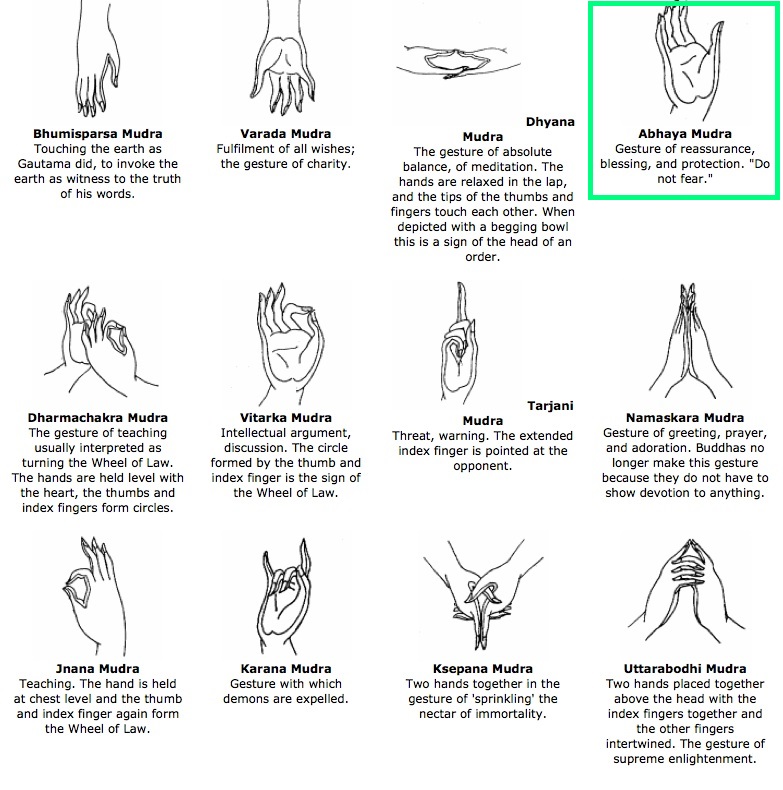
    What is Abhay Mudra?

    • Abhaya mudra, the motif of an open palm (gesturing to stop), is prevalent across many South Asian religions, including Hinduism, Buddhism, Jainism, and Sikhism.
    • Known as the ‘fearlessness gesture’, ‘abhaya’ in Sanskrit means fearlessness. The gesture symbolizes protection and peace.
    • In yoga circles, the abhaya mudra is believed to promote courage and reduce fear and anxiety.
    • While common across many religions, the abhaya mudra is most prominently featured in Buddhism, especially in Thailand and Laos, where it is associated with images of the walking Buddha.

    Origins of the Gesture

    • According to Stanford University, the gesture of an open palm pointed outwards appears to be a natural gesture used since prehistoric times as a sign of good intentions and peace.
    • The gesture also asserted power in antiquity, similar to the magna manus of the Roman Emperors who legislated and gave peace simultaneously.
    • The motif likely originated from a universal gesture associated with human communication, eventually integrating into major South Asian religions.

    Evolution of Mudras in Buddhism

    • For about 500 years after the Buddha, he was not depicted in physical form.
    • Early representations appeared around the first millennium, influenced by Gandhara and Gupta art.
    • With the evolution of these Buddhist traditions, hundreds of mudras entered Buddhist iconography.
    • In tantric Buddhist traditions, mudras symbolized material offerings, enacted forms of worship, or relationships with visualized deities. (as shown in the above diagram)

    Significance of ‘Abhaya Mudra’ in Buddhism: 

    • In Buddhism, the abhaya mudra is linked to a legend involving Devadatta, a cousin of the Buddha, who tried to murder the Buddha by losing a rampaging elephant into his path.
    • The Buddha calmed the elephant by displaying the abhaya mudra, indicating appeasement of the senses and the absence of fear.
    • The gesture is popularly pronounced in Buddhist cultures, symbolizing fearlessness and peace.

    Significance of ‘Abhaya Mudra’ in Hindu Religion:

    • The Buddha was absorbed into the Hindu pantheon as the 9th incarnation of Vishnu.
    • Hindus regarded the Buddha as an avatar of Vishnu between AD 450 and the sixth century, with the first mention in the Vishnu Purana (400-500 CE).
    • The abhaya mudra appears in depictions of Hindu deities, commonly seen in images of Lord Shiva, Lord Vishnu, and Lord Ganesha.

    PYQ:

    [2014] Lord Buddha’s image is sometimes shown with a hand gesture called ‘Bhumisparsha Mudra’. It symbolizes:

    (a) Buddha’s calling of the Earth to watch over Mara and to prevent Mara from disturbing his meditation

    (b) Buddha’s calling of the Earth to witness his purity and chastity despite the temptations of Mara

    (c) Buddha’s reminder to his followers that they all arise from the Earth and finally dissolve into the Earth and thus this life is transitory

    (d) Both the statements ‘a’ and ‘b’ are correct in this context

    [2014] Gandhara sculpture owed as much to the Romans as to the Greeks. Explain.

    [2016] Early Buddhist Stupa-art, while depicting folk motifs and narratives, successfully expounds Buddhist ideals. Elucidate.

  • [3rd July 2024] Great expectations, liberalism in dark times


    PYQ Relevance:

    Mains: 

    Q. In the context of the neo-liberal paradigm of development planning, multi-level planning is expected to make operations cost-effective and remove many implementation blockages.” Discuss. (UPSC IAS/2019)

    Q. ‘Whether National Commission for Scheduled Castes (NCSC) can enforce the implementation of constitutional reservation for the Scheduled Castes in the religious minority institutions? Examine. 

     (UPSC IAS/2018)

    Note4Students: 

    Prelims: Definition of Liberalism;

    Mains: Challenges to liberalism;

    Mentor comment: Politics, like philosophy, aims to reconcile diversity, where contradictions converge in a multicultural society. Understanding this harmony reflects an idealistic state that prioritizes coexistence and universal welfare. However, global democratic history reveals ongoing challenges to liberalism, which safeguards against authoritarianism and protects civil rights. Amid rising sectarianism, the fundamental question persists: Who deserves basic rights? This issue underscores civil discrimination, racial politics, and xenophobia, exacerbated by the rise of right-wing nationalism and global migration dynamics.

    Let’s learn.

    Why in the News?

    There remains a glimmer of hope in the resilience of democratic forces, which can effectively counteract and uproot any divisive political aberration when the time is ripe.

    What is Liberalism?

    • Liberalism is a political and philosophical ideology that emphasizes individual rights, liberty, equality under the law, and limited government intervention in personal and economic affairs. It advocates for freedoms such as freedom of speech, press, religion, and assembly, and supports democratic processes, rule of law, and protection of civil liberties. Liberalism typically promotes social progress through tolerance, pluralism, and a commitment to human rights and justice.


     Electoral outcomes

    • Shift in Public Opinion: There is a noticeable shift towards conservative and right-wing ideologies, marked by sentiments such as climate scepticism, anti-migration views, and nationalism. This trend was reflected in recent elections both in Europe and India.
    • Voter Response: Despite expectations favouring right-wing outcomes, the electorate, particularly in India, was surprised with a strong rejection of what was perceived as authoritarianism and communalism. This indicates a robust defense of democratic values and fundamental rights.
    • Impact on Minority Communities: The election results have been seen as a reassurance to minority communities, particularly Muslims, who felt marginalized and insecure due to perceived policies of exclusion and communal tension.
    • Democratic Fortitude: The outcome is portrayed as a reaffirmation of democracy’s strength in allowing for checks and balances against oppressive regimes and divisive politics.
    • Hope for Robust Opposition: There is optimism about the emergence of a strong opposition capable of holding the government accountable, promoting debate, and safeguarding diverse civil society interests.
    • Challenges and Aspirations: The electorate expects rational governance, justice, and responsiveness to marginalized groups’ issues such as poverty, unemployment, and hunger.
    • Ethical Governance: Emphasis is placed on governance that respects human rights universally, avoiding discrimination or exclusion based on ethnicity, religion, or political affiliation.

    Verdict and the Advent of Hope

    • Challenge to Democracy: The passage highlights a global erosion of democratic values, with right-wing governments accused of manipulating truth and resorting to oppressive tactics to maintain power.
    • Call for Tempered Liberalism: There’s a plea for ruling dispensations to embrace a more moderate form of liberalism, abandoning illiberal practices that undermine democratic norms and freedoms.
    • Role of Opposition: Expectations are set on opposition alliances to uphold principles of humility, pluralism, and modesty, providing a counterbalance to dominant political forces.
    • Philosophical Reflection: The outcome of elections prompts reflection on political astuteness and statesmanship, essential for navigating the trajectory of democracy amidst global challenges.
    • Natural vs Civil Order: Drawing from Spinoza, the clash between natural self-interest and civil responsibility underscores the necessity of societal order governed by law and morality to prevent chaos and uphold rights.
    • Hope and Scepticism: The Indian electoral outcome reflects a dual sentiment of hope and scepticism, shaping the future direction of democracy and fostering philosophical introspection.

    Challenges to liberalism:

    • Rise of Right-Wing Sentiment: There is a global trend towards right-wing ideologies, marked by climate scepticism, anti-migration sentiment, and nationalist fervour, posing challenges to liberal values and policies.
    • Authoritarianism and Communalism: The resurgence of authoritarianism and communal politics threatens democratic principles and societal harmony, particularly impacting marginalized communities like Muslims.
    • Hope and Despair: The electorate’s response reflects a mix of hope and despair, with optimism placed in a robust opposition and democratic institutions to safeguard fundamental rights and uphold civil society diversity.
    • Balancing Public and Private: The need for a nuanced approach in reconciling private religious beliefs with public, politicized lifestyles without diminishing individual rights is crucial for fostering a tolerant society.

    Way forward: 

    • Policy Reforms: Implement inclusive policies that address economic disparities, social inequalities, and regional disparities effectively. This includes measures to tackle poverty, unemployment, and hunger through targeted welfare programs.
    • Social Integration: Foster initiatives that promote social cohesion and integration across diverse communities. Encourage dialogue and understanding among different cultural and religious groups to mitigate communal tensions.
    • Democratic Checks and Balances: Enhance the autonomy and effectiveness of democratic institutions such as the judiciary, election commissions, and anti-corruption bodies. Ensure they operate independently and transparently to uphold democratic principles.
    • Dialogue and Consensus-Building: Foster inclusive decision-making processes that involve stakeholders from diverse backgrounds. Encourage political parties to engage in constructive dialogue and seek consensus on key policy issues.
  • Nuclear Diplomacy and Disarmament

    What we know about North Korea’s new ballistic missile test  

    Why in the news?

    North Korea has announced that it has successfully tested a new tactical ballistic missile designed to carry a “super-large warhead”.

    About the Recent Hwasongpho-11 Da-4.5 Test

    • North Korea announced the successful test of a new tactical ballistic missile, Hwasongpho-11 Da-4.5, capable of carrying a “super-large warhead.”The test was conducted with a simulated heavy warhead to verify flight stability and accuracy.
    • The test violates UN prohibitions on North Korea testing ballistic projectiles and is part of their ongoing efforts to advance nuclear capabilities. North Korea’s military plans another launch of the same missile type in July to test the “explosion power” of the super-large warhead.

    South Korea’s Reaction

    • Dismissal as Deception: South Korea’s Joint Chiefs of Staff spokesperson, Colonel Lee Sung-jun, dismissed the test as likely “deception,” questioning the success of the inland test-fire.
    • Artillery Drills: South Korea’s military conducted artillery drills near the Military Demarcation Line in response.
    • Military Pact Suspension: These drills resumed following North Korea’s launch of balloons carrying garbage into South Korea, which led to the suspension of a military pact with Pyongyang.
    • Concerns Over Russia Ties: South Korea is increasingly worried about North Korea’s warming relations with Russia, suspecting North Korea of supplying ballistic missiles and artillery shells to Russia, despite both countries denying these allegations.

    Geopolitical Implications on the Indo-Pacific Region

    • Increased Tensions: North Korea’s missile tests exacerbate tensions in the Indo-Pacific region, raising security concerns among neighbouring countries and global powers.
    • Regional Arms Race: The tests could prompt an arms race, with countries like South Korea and Japan potentially enhancing their military capabilities in response.
    • US and Allies’ Response: The United States and its allies in the region may increase military presence and conduct joint exercises to counter North Korea’s missile advancements.
    • Impact on Diplomacy: The tests complicate diplomatic efforts to denuclearize the Korean Peninsula and might lead to further sanctions and isolation of North Korea.
    • China’s Role: China’s influence in the region and its relationship with North Korea could be pivotal in addressing the security challenges posed by these missile tests.

    Way forward ( What can India do?)

    • Strengthen Regional Alliances and Diplomatic Engagements: India should enhance its collaboration with key regional players like Japan, South Korea, and ASEAN countries to ensure collective security and stability in the Indo-Pacific region.
    • Enhance National Defense Capabilities: India should focus on bolstering its own defense infrastructure and capabilities to prepare for any potential threats arising from the increased militarization in the region.

    Mains PYQ: 

    Q The new tri-nation partnership AUKUS is aimed at countering China’s ambitions in the Indo-Pacific region. Is it going to supersede the existing partnerships in the region? Discuss the strength and impact of AUKUS in the present scenario. (UPSC IAS/2021)

  • Urban Floods

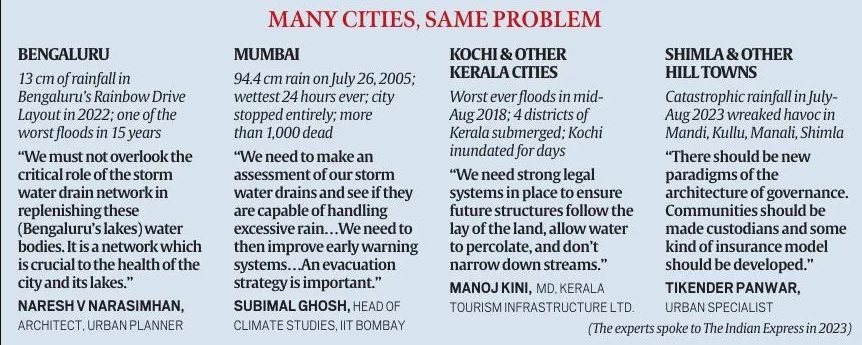
    How urban expansion makes Delhi susceptible to flooding? 

    Why in the news?

    Heavy rain brought Delhi and NCR to a standstill, causing severe water-logging, traffic snarls, power cuts, property damage, and 11 deaths from structural collapses and electrocution.

    • Climate change and rising temperatures have intensified the overflow of rivers and lakes, snowmelt, storm surges (such as hurricanes and cyclones), and abnormally heavy rains. This, coupled with locational vulnerabilities, has resulted in increased instances of urban flooding.

    Principal Reasons Behind Chronic Urban Flooding in Delhi

    • Unchecked Urban Expansion: Rapid, ill-planned urban growth without considering natural topography and drainage patterns.
    • Inadequate Drainage Systems: Existing drainage systems are unable to handle high-intensity rainfall, leading to significant runoff.
    • Concrete Overdevelopment: Excessive construction on low-lying areas and flood plains, leaving little room for water absorption.
    • Destruction of Water Bodies: Reduction of water bodies that could manage floodwaters, with many converted into real estate.
    • Neglect of Water in Urban Planning: Lack of a comprehensive water masterplan that integrates water management into urban development.

    Present Scenario of Rapid Urbanization in Delhi NCR

    • Fastest Urban Expansion: Delhi is one of the fastest-growing cities globally, with its geographic size almost doubling between 1991 and 2011.
    • Population Growth: Predicted to overtake Tokyo as the world’s most populous city by 2030, with an estimated population of 39 million.
    • Urban Sprawl: Expansion primarily on the peripheries, converting rural areas into urban zones, and rapid urbanization in NCR cities like Ghaziabad, Faridabad, Noida, and Gurugram.

    Challenges and Limitations

    • Topographical Neglect: Building in low-lying areas and on flood plains, disrupting natural drainage and increasing flood risks.
    • Inadequate Infrastructure: Insufficient desilting of drains, inadequate stormwater management systems, and improper solid waste management.
    • Lack of a Water Masterplan: Absence of comprehensive planning for clean and wastewater flows, leading to issues like the flooding of new infrastructures like the Pragati Maidan Tunnel.
    • Reduction of green space and water bodies: Conversion of green spaces and water bodies into concrete developments, further aggravating flood situations.
    • Inconsistent Urban Planning: No systematic approach to integrating natural water flows and gradients into urban development plans.

    Recommendations (Way Forward)

    • Integrated Urban Planning: Develop a water masterplan that prioritizes water management in urban development.
    • Protection of Water Bodies: Preserve and restore existing water bodies to manage floodwaters effectively.
    • Sustainable Development: Implement policies to prevent construction in low-lying and flood-prone areas.
    • Infrastructure Improvement: Enhance drainage systems, desilting processes, and solid waste management to reduce water logging.
    • Public Awareness: Increase awareness about the importance of sustainable urban planning and the risks of unchecked urbanization.
    Case study: Copenhagen, Denmark has an excellent “Five Finger Plan” that integrates urban infrastructure, transport, and green spaces. The city emphasizes sustainability, public life, and sensitive development. Indian Government can consider this plane.

    Mains PYQ: 

    Q Account for the huge flooding of million cities in India including the smart ones like Hyderabad and Pune. Suggest lasting remedial measures. (UPSC IAS/2020)

Join the Community

Join us across Social Media platforms.