💥UPSC 2026, 2027, 2028 UAP Mentorship (March Batch) + Access XFactor Notes & Microthemes PDF

Archives: News

  • Foreign Policy Watch: India-Russia

    The Yuan Challenge: How India-Russia trade gap may threaten rupee internationalization efforts    

    Why in the News? 

    New Delhi aims to boost trade with Moscow to $100 billion by 2030, but India faces a $57 billion trade deficit due to strong oil imports from Russia.

    Background

    • India’s trade with Russia has been skewed since the onset of the Ukraine war in 2022. Russia has become India’s top oil supplier, while Indian exports to Russia have struggled, resulting in a large trade deficit.
    • The trade deficit in the bilateral trade stood at $57 billion in FY24, with a total trade value of $66 billion. This deficit is primarily driven by India’s significant oil imports from Russia.

    Why is the widening trade gap with Russia benefiting the Yuan?

      • Increase in Balanced Trade with China: Unlike India, China has been able to maintain a more balanced trade relationship with Russia since the Ukraine war began in 2022.
        • China’s exports to Russia have surged, with shipments increasing by 47% year-on-year to $111 billion in 2023.
        • 95% of trade between China and Russia is conducted in domestic currencies, making the yuan the most popular currency in the Russian stock market.
      • Increase in volatility of Rubble and Rupee:  Unlike the yuan, both the Indian rupee and Russian ruble have experienced considerable volatility, complicating trade in domestic currency.
        • The yuan’s relative stability compared to the rupee and ruble has made it a more attractive currency for settling Russia-India trade
    • Reluctance of Private Banks: The Indian private banks have been reluctant to facilitate trade with Russia due to fears of Western sanctions.
      • Most Indian private banks have significant business interests in Western countries and fear their branches could face sanctions if they engage with Russia.
      • As Russia prefers the yuan for payments, India’s limited exports to Russia have hindered the use of the rupee in bilateral trade.

    What are the benefits of the Internationalisation of the Rupee?

    • Reduced Dependence on USD: Internationalizing the rupee would reduce India’s reliance on foreign currencies like the US dollar for international trade and financial transactions.
      • This would enhance India’s economic sovereignty and reduce exposure to currency fluctuations.
    • Enhanced Trade Efficiency: Using the rupee for international transactions can simplify trade processes and reduce transaction costs.
      • Internationalization of the rupee would eliminate the need for currency conversions, reducing transaction costs and simplifying cross-border trade.
    • Mitigating Risks: Protection from currency volatility not only reduces the cost of doing business but also enables better growth of business, improving the chances for Indian businesses to grow globally
    • Increased Global Influence: A widely accepted rupee would boost India’s economic and political influence on the global stage.

    How can India internationalize the rupee?

    • The Reserve Bank of India permitted settling trade using the rupee through its circular in July 2022.
      • Trade invoicing: For the rupee to be recognized as an international currency, it needs to be increasingly used for trade invoicing.
      • Trade invoicing refers to the process of issuing invoices for goods or services exchanged between international trading partners. It includes detailing the terms of sale, such as prices, quantities, payment terms, and currencies used for settlement.
    • Increase Rupee Turnover: The rupee needs to achieve a global forex turnover share of around 4% to be regarded as an international currency, up from the current 1.6%.
    • Government Support: Strengthening industrial cooperation and addressing banking sector concerns can promote the use of the rupee.

    Challenges involved:

    • Banking Sector Reluctance: Private banks are hesitant to facilitate trade with Russia due to fear of Western sanctions.
    • Rupee Settlement Mechanism: Indian exporters face difficulties using the rupee settlement mechanism due to the absence of a Standard Operating Procedure (SOP) for banks.
      • Note: A Standard Operating Procedure (SOP) for banks is a formal document outlining step-by-step instructions for routine processes and activities to ensure consistency and compliance.
    • Currency Volatility: Both the ruble and the rupee have experienced considerable volatility, complicating trade in domestic currencies.
    • International Sanctions: Private banks’ significant business interests in Western countries make them wary of facilitating trade with Russia.

    How are Russia and India planning to boost trade?

    • Both countries have decided to eliminate non-tariff and tariff barriers in trade.
      • Negotiations for a trade deal with the Russia-led Eurasian Economic Union (EEU) could ease the flow of Indian products into the EEU.
    • Cooperation in manufacturing sectors like transport engineering, metallurgy, and chemicals.
      • Implementation of joint projects in priority areas and expanding reciprocal trade flows of industrial products.
    • Discussions on a Migration and Mobility partnership agreement to facilitate trade and movement between the two countries.

    Way Forward 

    • Enhanced Banking Support and Infrastructure: Develop a robust Standard Operating Procedure (SOP) for banks to facilitate smoother implementation of the rupee settlement mechanism for trade with Russia.
    • Strategic Economic Diplomacy: Strengthen bilateral economic ties through high-level diplomatic engagements to mitigate banking sector reluctance and enhance trust between Indian and Russian financial institutions.

    Mains PYQ: 

    Q Craze for gold in Indian has led to surge in import of gold in recent years and put pressure on balance of payments and external value of rupee. In view of this, examine the merits of Gold Monetization scheme. (UPSC IAS/2015)

  • Historical and Archaeological Findings in News

    Ratna Bhandar of Puri Jagannath Temple, opened after 46 years

    Why in the News?

    After 46 years, the sacred treasury of Shree Jagannath Temple, Puri, known as Ratna Bhandar, was reopened amid years of legal battles, controversies, and debates.

    About the Ratna Bhandar

    • The Ratna Bhandar stores the gold and jewels offered by devotees to the deities Lord Jagannath, Lord Balabhadra, and Goddess Subhadra.
    • It is located adjacent to the prayer hall on the north side of the temple.
    • It consists of two sections: the ‘Bhitar Bhandar’ (Inner Treasury) and the ‘Bahar Bhandar’ (Outer Treasury), with the last inventory in 1978 noting significant amounts of gold and silver items in both chambers.
    • Legend says, Odisha’s King Anangabhima Dev (1211 to 1238) donated 2.5 lakh madhas of gold to prepare jewellery for the almighty.
    • The Odisha government passed the Jagannath Temple Act, 1952 to have a greater role in the temple’s management, which included maintaining an inventory of the offerings in the Puri collectorate’s Record Room.

    Recent Developments:

    • The safety of the Ratna Bhandar is managed by the Temple’s Committee, chaired by the titular ‘King of Puri’ and includes IAS officers and other state-appointed members.
    • Originally, keys to the Ratna Bhandar were held by the Puri royal family, temple committee, and collectorate, with significant changes in ownership and access protocols over the years due to legal rulings.
    • The recent reopening involved breaking the locks of the inner chamber as they could not be opened traditionally, following strict procedures.

    About Jagannath Puri Temple

    • The Jagannath Temple is an important Vaishnavite temple dedicated to Jagannath, a form of Sri Krishna in Puri in Odisha.
    • The present temple was rebuilt from the 10th century onwards, on the site of an earlier temple, and begun by Anantavarman Chodaganga Deva, the first king of the Eastern Ganga dynasty.
    • The Puri temple is famous for its annual Ratha Yatra, or chariot festival, in which the three principal deities are pulled on huge and elaborately decorated temple cars.

    Its Architecture:

    • With its sculptural richness and fluidity of the Oriya style of temple architecture, it is one of the most magnificent monuments of India.
    • The huge temple complex covers an area of over 400,000 square feet and is surrounded by a high fortified wall.
    • This 20 feet high wall is known as Meghanada Pacheri.
    • Another wall known as kurma bedha surrounds the main temple.

    The temple has four distinct sectional structures, namely:

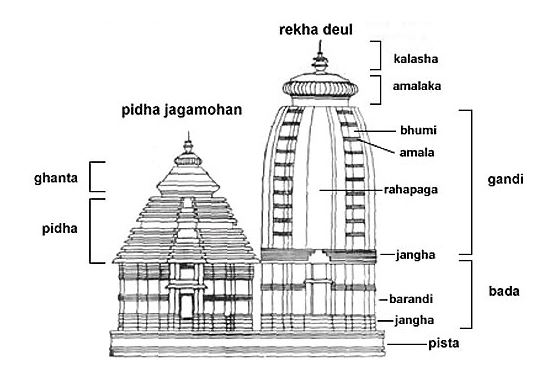
    1. Deula, Vimana or Garba griha (Sanctum sanctorum) where the triad deities are lodged on the ratnavedi (Throne of Pearls). In Rekha Deula style;
    2. Mukhashala (Frontal porch);
    3. Nata mandir/Natamandapa, which is also known as the Jagamohan (Audience Hall/Dancing Hall), and
    4. Bhoga Mandapa (Offerings Hall)


    PYQ:

    [2012] The Nagara, the Dravida and the Vesara are the:

    (a) Three main racial groups of the Indian subcontinent

    (b) Three main linguistic divisions into which the languages of India can be classified

    (c) Three main styles of Indian temple architecture

    (d) Three main musical Gharanas prevalent in India

  • Historical and Archaeological Findings in News

    Temples in News: Mahabodhi Temple, Puri Jagannath Temple

    Description

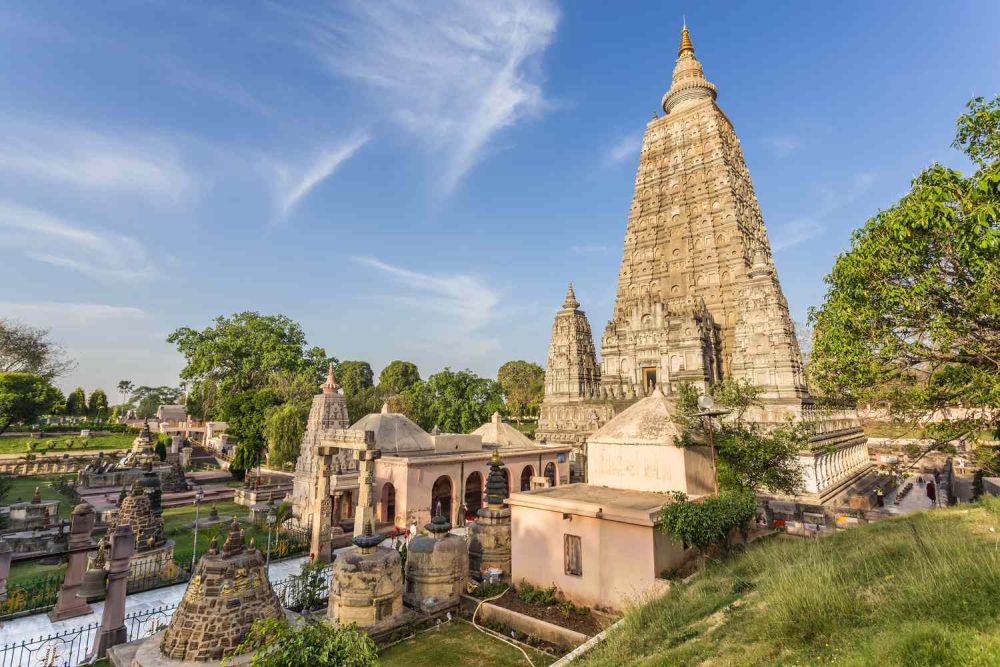
    Mahabodhi Temple Complex

    Mahabodhi Temple Tourism (Bodh Gaya) (2024) - A Complete Travel Guide

    • Location: Bodh Gaya, Bihar
    • Significance: Marks the location where Buddha attained enlightenment.
    • UNESCO Status: World Heritage Site since 2002.
    • Historical Importance: One of the four holy sites related to Buddha’s life (Enlightenment).
    • Original Construction: Built by Mauryan Emperor Ashoka around 260 BCE.
    • Reconstruction: Reconstructed in brick during the late Gupta period (5th or 6th centuries).
    • Archaeological Finds: Indicates a site of veneration since the Mauryan period; Vajrasana (Diamond Throne) dated to the third century BCE.
    • Main Temple Structure: Dates from the 6th century CE, incorporates parts from 2nd or 3rd century CE.
    • Architectural Features: Two large shikhara towers, the largest over 55 meters high; influenced Jain, Hindu, and Buddhist architecture globally.
    • Materials: Made mostly of brick covered with stucco.
    • Bodhi Tree: A direct descendant of the original tree under which Buddha attained enlightenment.
    • Traditional Accounts: Describes 7 weeks Buddha spent meditating after enlightenment at various spots within the complex.
    • Decline and Revival: Declined after the Huna and early Islamic invasions; revived under the Pala Empire (8th-12th century); declined again after 12th century CE invasions by Turk armies.

    Ratna Bhandar of Jagannath Puri Temple

    • Location: Puri, Odisha
    • Significance: Important Vaishnavite temple dedicated to Jagannath, a form of Sri Krishna
    • History: Rebuilt from the 10th century onwards, begun by Anantavarman Chodaganga Deva, first king of the Eastern Ganga dynasty
    • Annual Event: Famous for its annual Ratha Yatra (chariot festival) where three principal deities are pulled on huge, elaborately decorated temple cars
    • Architecture: Oriya style of temple architecture; complex covers over 400,000 square feet, surrounded by a high fortified wall (Meghanada Pacheri); main structures include Deula (Sanctum sanctorum), Mukhashala (Frontal porch), Nata mandir/Natamandapa (Audience Hall/Dancing Hall), Bhoga Mandapa (Offerings Hall)

    Ratna Bhandar:

    • Context: The sacred treasury of Shree Jagannath Temple, Puri, known as Ratna Bhandar, was reopened after 46 years amid legal battles and controversies
    • Contents: Stores gold and jewels offered by devotees to the deities Lord Jagannath, Lord Balabhadra, and Goddess Subhadra
    • Location: Adjacent to the prayer hall on the north side of the temple.
    • Sections: Consists of two sections: the ‘Bhitar Bhandar’ (Inner Treasury) and the ‘Bahar Bhandar’ (Outer Treasury)
    • Historical Significance: Legend says Odisha’s King Anangabhima Dev (1211 to 1238) donated 2.5 lakh madhas of gold to prepare jewelry for the deities
    • Management: Safety managed by the Temple’s Committee chaired by the titular ‘King of Puri’; keys held by the Puri royal family, temple committee, and collectorate with changes over the years
    • Recent Developments: Reopened by breaking the locks of the inner chamber due to inability to open traditionally, following strict procedures


    Also in news: World Heritage Young Professional Forum

    • India is hosting the UNESCO’s World Heritage Committee meeting for the first time in New Delhi.
      • Theme: “World Heritage in the 21st Century: Building Capacities and Exploring Opportunities for Youth.”
    • The World Heritage Young Professionals Forum is an initiative by UNESCO to engage young professionals in the field of heritage conservation.
    • The first World Heritage Young Professionals Forum was organized in 1995.
    • The primary aim is to engage young professionals in heritage conservation and management through capacity building, networking, and awareness-raising.

    PYQ:

    [2012] The Nagara, the Dravida and the Vesara are the:

    (a) Three main racial groups of the Indian subcontinent

    (b) Three main linguistic divisions into which the languages of India can be classified

    (c) Three main styles of Indian temple architecture

    (d) Three main musical Gharanas prevalent in India

  • Innovations in Sciences, IT, Computers, Robotics and Nanotechnology

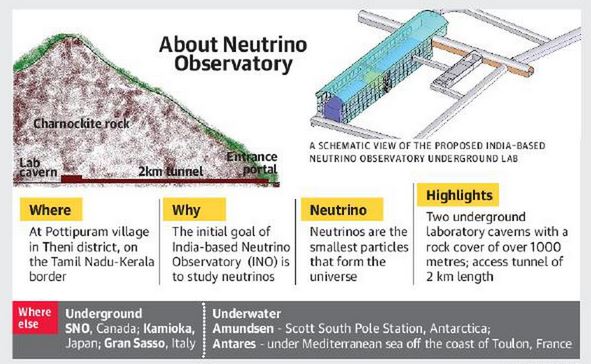
    India-based Neutrino Observatory

    Why in the News?

    • Takaaki Kajita, a Nobel laureate has supported India’s pursuit of a neutrino lab.
      • Despite numerous obstacles, Kajita believes that the India-based Neutrino Observatory (INO) project, which would rank as one of the largest basic science projects in the country, is still worth pursuing.

    Who is Takaaki Kajita?

    • Takaaki Kajita is a Japanese physicist who was awarded the 2015 Nobel Prize in Physics for discovering the oscillations of neutrinos from one flavour to another, which proved that those subatomic particles have mass.
    • He shared the prize with Canadian physicist Arthur B. McDonald.16 May 2024

    About India-based Neutrino Observatory (INO):

    Details
    Location INO Peak near Theni, Tamil Nadu, India
    Objective Study atmospheric neutrinos and provide precise measurements of neutrino mixing parameters
    Project Scope One of the largest experimental particle physics projects in India
    Initial Completion Date Originally planned for 2015
    Key Equipment
    • Iron Calorimeter (ICAL) Detector, designed to probe Earth matter effects on neutrino propagation and determine neutrino oscillation parameters.
    • 50,000 tonnes, the world’s largest magnet, four times larger than CERN’s CMS detector magnet
    Research Goals
    • Neutrino Oscillation Parameters: Unambiguous and precise determination using atmospheric neutrinos.
    • Matter Effects: Study through electric charge identification to determine the sign of mass differences.
    • CP Violation: Investigate charge-conjugation and parity violations in the leptonic sector.
    • CPT Violation: Possible studies of charge-conjugation, parity, and time-reversal violations.
    • Kolar Events: Study possible identification of very-high-energy neutrinos and multi-muon events in Kolar Gold Fields.
    Historical Discussions Initial discussions in 1989, formal collaboration in 2001, and MoU signed in 2002
    Current Status Construction stalled as of July 2021 due to local opposition and environmental concerns; ongoing legal and governmental deliberations


    What is Neutrinos?

    Neutrinos, often referred to as “ghost particles,” are subatomic particles with nearly zero mass and no electric charge.

    Other issues in space:

    Last week, ISRO Chairman S Somanath expressed the possibility of engaging with the asteroid Apophis during its close approach to Earth at a distance of 32,000 km in 2029.

    What is Apophis?

    • Apophis is classified as a near-Earth asteroid (NEA), specifically a Potentially Hazardous Asteroid (PHA) due to its size and proximity to Earth’s orbit.
    • Apophis is approximately 335 meters (1,100 feet) in diameter, making it one of the larger near-Earth asteroids.
    • Discovered in 2004, Apophis initially posed a 2.7% chance of colliding with Earth, raising alarms due to its size (about 450 m wide).
    • Subsequent observations ruled out immediate collision risks in 2029, 2036, and 2068, but it will pass close to Earth in 2029 at 32,000 km.


    PYQ:

    [2010] India-based Neutrino Observatory is included by the planning commission as a mega-science project under the 11th Five-year plan. In this context, consider the following statements:

    1. Neutrinos are chargeless elementary particles that travel close to the speed of light.
    2. Neutrinos are created in nuclear reactions of beta decay.
    3. Neutrinos have a negligible, but non-zero mass.
    4. Trillions of Neutrinos pass through the human body every second.

    Which of the statements given above are correct?

    (a) 1 and 3 only

    (b) 1, 2 and 3 only

    (c) 2, 3 and 4

    (d) 1, 2, 3 and 4

  • Tribes in News

    Asur Tribes to get Forest Land Rights

    Why in the News?

    The Gumla district administration in Jharkhand has announced that the Asur community, a particularly vulnerable tribal group (PVTG) residing in the Netarhat plateau region of Gumla, will soon benefit from the Forest Rights Act (FRA), 2006.

    About Asur Community

    • The Asur tribe primarily resides in the districts of Gumla, Lohardaga, Palamu, and Latehar in Jharkhand, India.
    • They speak Asuri, a Munda language belonging to the Austroasiatic language family.
    • Traditionally, the Asur were skilled iron-smelters, practicing metallurgy using indigenous techniques.
    • Over time, many have shifted to agriculture, although some are still involved in mining work.
    • The Asur community has a traditional council (jati panch) to settle disputes.
    • They maintain kinship ties with neighboring tribes like Kharwar and Munda.

    Social Structure of Asur Community:

    • They live in forest-surrounded clearings called pats, with houses made of mud walls, wooden poles, and roofs covered with paddy straw.
    • Asurs follow a religion that combines animism, animatism, naturalism, and ancestral worship.
    • Their chief deity is Singbonga, and they celebrate festivals like Sarhul and Karma.
    • Marriage is significant, following rules of monogamy with exceptions for barrenness or widowhood.
    • Widow remarriage is allowed, and marriages occur within the tribe (endogamy).

    Back2Basics: Forest Rights Act, 2006

    Details
    Purpose Recognizes and vests forest rights in Forest Dwelling Scheduled Tribes (FDST) and Other Traditional Forest Dwellers (OTFD).
    Eligibility Individuals or communities residing in forest land for at least 3 generations (75 years) prior to December 13, 2005.
    Rights Recognized
    • Title Rights: Ownership up to 4 hectares for cultivation.
    • Use Rights: Includes Minor Forest Produce and grazing areas.
    • Relief and Development Rights: Rehabilitation and basic amenities in case of eviction.
    • Forest Management Rights: Conservation and sustainable use of community forest resources.
    Authority Gram Sabha initiates the process of determining Individual Forest Rights (IFR) or Community Forest Rights (CFR).
    Conservation Balances forest conservation with livelihood and food security of FDST and OTFD.


    PYQ:

    [2021] At the national level, which ministry is the nodal agency to ensure effective implementation of the Scheduled Tribes and Other Traditional Forest Dwellers (Recognition of Forest Rights) Act, 2006?

    (a) Ministry of Environment, Forest and Climate Change

    (b) Ministry of Panchayati Raj

    (c) Ministry of Rural Development

    (d) Ministry of Tribal Affairs

  • Parliament – Sessions, Procedures, Motions, Committees etc

    [pib] Samvidhaan Hatya Diwas’ on 25th June Every Year

    Why in the News?

    The Government of India has decided to observe 25th June every year as ‘Samvidhaan Hatya Diwas.’ 

    National Emergency imposition in India

    • June 25, 2025, will mark fifty years since the imposition of the Emergency.
    • The Emergency lasted from June 25, 1975, to March 21, 1977.
    • It was characterized by the suspension of civil liberties, press freedom, mass arrests, the cancellation of elections, and rule by decree.

    What was the Emergency?

    • PM Indira Gandhi’s government used constitutional provisions to impose sweeping executive and legislative control.
    • Opposition leaders were jailed, and fundamental rights, including freedom of speech and expression, were curtailed, leading to press censorship.
    • The federal structure was effectively converted into a unitary one, with the Union controlling state governments.
    • Parliament extended its term, made laws on state subjects, and extended the Union’s executive powers to the states.

    Legal and Constitutional Sanction

    • Article 352 allowed the President to proclaim an emergency if India’s security was threatened by war, external aggression, or armed rebellion.
    • In 1975, “internal disturbancewas used as grounds for the Emergency, citing incitements against the police and armed forces.
    • This was the only instance of emergency due to “internal disturbance,” later removed by the 44th Amendment in 1978.
      • Article 358 suspended limitations on Article 19 (“Right to freedom”).
      • Article 359 allowed the President to suspend the right to court enforcement of rights during an emergency.

    Political and Social Circumstances: A Timeline 

    • In 1974, the Navnirman movement against corruption in Gujarat led to President’s Rule.
    • Inspired by Navnirman, a student movement in Bihar, led by Jayaprakash Narayan (JP), aimed to cleanse the country of corruption and misgovernance.
    • In May 1974, George Fernandes led a massive railway workers’ strike.
    • On June 5, 1974, JP called for “Sampoorna Kranti” (total revolution).
    • On June 12, 1975, Justice Jagmohanlal Sinha of the Allahabad High Court convicted Indira Gandhi of electoral malpractice.
    • On June 25, 1975, President Fakhruddin Ali Ahmed signed the Proclamation of Emergency, cutting power to major newspapers and informing the Cabinet the next morning.

    Impact on Opposition Leaders, Media, and Political Dissenters

    • Almost all opposition leaders, including JP, were detained under the Maintenance of Internal Security Act (MISA).
    • Newspapers faced pre-censorship, with UNI and PTI merged into a state-controlled agency, Samachar.
    • More than 250 journalists were jailed, and The Indian Express resisted by printing blank spaces when stories were censored.
    • Sanjay Gandhi’s “five-point programme” included forced family planning and slum clearance, leading to forced sterilizations and violent clashes.

    Sanjay Gandhi’s “Five-Point Programme”

    Sanjay Gandhi, the younger son of then PM, Mrs. Indira Gandhi had come forward with a programme to ‘improve’ the condition of the poor people.

    His programme can be divided under five Headings, i.e.

    1. Adult Education.
    2. To abolish Dowry.
    3. To Grow more trees.
    4. Family planning – only two children.
    5. Eradication of caste system.

    Legal Changes during the Emergency

    • With opposition leaders in jail, Parliament passed amendments barring judicial review of the Emergency and securing the Prime Minister’s election.
    • The 42nd Amendment expanded Union authority over states and gave Parliament unbridled power to amend the Constitution.
    • In ADM Jabalpur vs. Shivkant Shukla (1976), the Supreme Court ruled that detention without trial was legal during an emergency, with Justice H.R. Khanna dissenting.

    Lifting the Emergency and Aftermath

    • Indira Gandhi lifted the Emergency in early 1977, leading to her defeat in the elections.
    • The Janata Party emerged victorious, with Morarji Desai becoming India’s first non-Congress Prime Minister.
    • The Janata government reversed many constitutional changes from the 42nd Amendment, made judicial review of emergency proclamations possible, and removed “internal disturbance” as grounds for emergency imposition.

    PYQ:

    [2022] Which of the following is/are the exclusive power(s) of Lok Sabha?

    1. To ratify the declaration of Emergency
    2. To pass a motion of no-confidence against the Council of Ministers
    3. To impeach the President of India

    Select the correct answer using the code given below:

    (a) 1 and 2

    (b) 2 only

    (c) 1 and 3

    (d) 3 only

  • New Species of Plants and Animals Discovered

    Squalus hima: A new deep-water Dogfish Shark discovered in Kerala

    Why in the News?

    Scientists from the Zoological Survey of India (ZSI) have discovered a new species of deep-water dogfish shark, Squalus hima, from the Sakthikulangara fishing harbour in Kerala along the Arabian Sea.

    About Squalus hima

    • Squalus is a genus of dogfish sharks in the family Squalidae, commonly known as spurdogs, characterized by smooth dorsal fin spines.
    • The new species, Squalus hima sp. nov., has been misidentified with S. mitsukurii and S. lalannei in the past.
    • Squalus hima differs from other species by the number of precaudal vertebrae, total vertebrae, teeth count, trunk and head heights, fin structure, and fin colour.

    Comparison with Other Species

    • On the Indian coast, two species of Squalus are found from the southwest coast of India.
    • The new species, Squalus hima n.sp., is very similar to Squalus lalannei but differs in many characteristics.
    • Species in the Squalus megalops group are characterized by an angular short snout, a small mouth almost as wide as the snout, the first dorsal fin origin behind the pectoral fins, and a body without any spots.

    Economic and Conservation Implications

    • Sharks in the genus Squalus and Centrophorus are exploited for their liver oil, which contains high levels of squalene, used in high-end cosmetic and anti-cancer products.
    • Fishermen from southern India and the Andaman and Nicobar Islands harvest these sharks for their liver oil, making conservation of these species critical.

    Importance of the Discovery

    • The discovery of Squalus hima is significant for the conservation of shark species exploited for commercial purposes.
    • Dogfish sharks are commercially important for their fins, liver oil, and meat and are sometimes caught as by-catch in fisheries targeting other species.

    PYQ:

    [2019] Consider the following pairs:

    Wildlife Naturally found in
    1. Blue-finned Mahseer Cauvery River
    2. Irrawaddy Dolphin Chambal River
    3. Rusty-spotted Cat Eastern Ghats

    Which of the pairs given correctly matched?

    (a) 1 and 2 only

    (b) 2 and 3 only

    (c) 1 and 3 only

    (d) 1, 2 and 3

  • RBI Notifications

    RBI Circular on Liberalised Remittance Scheme (LRS)

    Why in the News?

    The Reserve Bank of India (RBI) has broadened the regulations governing remittances to International Financial Services Centres (IFSCs) under the Liberalised Remittance Scheme (LRS). The RBI’s circular authorizes “authorised persons” to facilitate remittances for all permissible purposes under LRS to IFSCs.

    About Liberalised Remittance Scheme (LRS)

    • LRS is governed by the Foreign Exchange Management Act (FEMA) 1999, regulated by the Reserve Bank of India (RBI).
    • The scheme was introduced by the RBI in 2004 to facilitate outward remittances from India.
    • LRS allows resident individuals, including minors, to remit a specified amount of money abroad each financial year (April – March).
    • Currently, individuals are allowed to remit up to USD 250,000 per financial year under LRS.
    • Funds remitted under LRS can be used for permissible current or capital account transactions, or a combination of both.
    • Permissible Uses:
      • Expenses related to travel (private or for business).
      • Medical treatment abroad.
      • Payment of fees for education abroad.
      • Gifts and donations.
      • Maintenance of close relatives.
      • Investment in shares, debt instruments, and immovable properties overseas.
    • Accounts: Individuals can open and maintain foreign currency accounts with banks outside India for transactions permitted under LRS.
    • Exclusions: LRS is NOT available to corporations, partnership firms, Hindu Undivided Families (HUFs), trusts, etc.

    Prohibited Transactions:

    • Remittances for activities prohibited under Schedule-I of FEMA, such as purchase of lottery tickets, sweepstakes, proscribed magazines, etc.
    • Trading in foreign exchange abroad.
    • Remittances to countries identified as non-cooperative by the FATF.
    • Remittances to individuals/entities identified as posing a terrorism risk by the RBI.

    Significance of the move

    • The RBI’s decision reinforces GIFT IFSC’s position as a prominent international financial services hub.
    • By broadening the scope of LRS, GIFT IFSC aims to attract more diverse investments and transactions, contributing to the growth of India’s financial sector.
  • Wetland Conservation

    Species in News

    Description

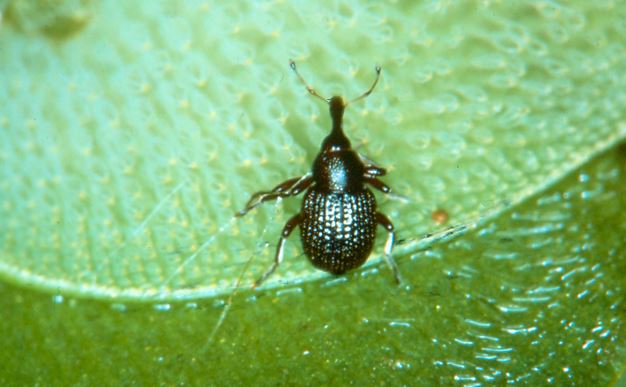
    Cyrtobagus salvinia

    • Context: Used to eradicate the invasive weed Salvinia molesta from the Sarani reservoir in Betul district, Madhya Pradesh.
    • Biological Details: Exotic beetle from Brazil, targets and eradicates Salvinia molesta, dies naturally post-eradication.
    • Bioremediation: Implemented by ICAR-DWR (Indian Council of Agricultural Research-Directorate of Weed Research), started in April 2022, completed within 15 to 18 months.
    • Economic and Social Impact: Restored livelihoods for fishermen by reviving fish populations; initial challenges included high cost and impracticality of manual removal.
    • Conservation Status: No risk, as the beetle dies naturally after eradicating the weed.

    Squalus hima


    • Context: Newly discovered species of deep-water dogfish shark found in the Arabian Sea off the coast of Kerala.
    • Biological Details: Genus Squalus, family Squalidae, commonly known as spurdogs; differs in vertebrae count, teeth, and fin structure from other species.
    • Discovery: Discovered by Zoological Survey of India (ZSI) at Sakthikulangara fishing harbour, Kerala; significant for new species identification and conservation.
    • Economic and Social Impact: Important for commercial products like liver oil used in cosmetics and anti-cancer products; challenges include high exploitation for liver oil, fins, and meat.
    • Conservation Status: Critical due to high commercial exploitation for liver oil, fins, and meat; important for conservation efforts.


    PYQ:

    [2018] Why is a plant called Prosopis juliflora often mentioned in the news?

    (a) Its extract is widely used in cosmetics.

    (b) It tends to reduce the biodiversity in the area in which it grows.

    (c) Its extract is used in the synthesis of pesticides.

    (d) None of the above.


    [2019] Consider the following pairs:

    Wildlife Naturally found in
    1. Blue-finned Mahseer Cauvery River
    2. Irrawaddy Dolphin Chambal River
    3. Rusty-spotted Cat Eastern Ghats

    Which of the pairs given correctly matched?

    (a) 1 and 2 only

    (b) 2 and 3 only

    (c) 1 and 3 only

    (d) 1, 2 and 3

  • Food Procurement and Distribution – PDS & NFSA, Shanta Kumar Committee, FCI restructuring, Buffer stock, etc.

    The PDS impact on household expenditure   

    Why in the news? 

    The Household Consumption Expenditure Survey Data provides an opportunity to analyze the effects of social transfers.

    About Public Distribution System (PDS):

    • The Public Distribution System (PDS) aims to ensure food security by providing subsidized foodgrains to economically vulnerable sections of society. Under the National Food Security Act (NFSA), 2013, up to 75% of the rural population and 50% of the urban population are eligible for subsidized foodgrains.
    • Foodgrains procured by the Food Corporation of India (FCI) are distributed through a network of Fair Price Shops (FPS).

    Its structural mandate: 

    • Procurement and Distribution: The PDS operates through the procurement of foodgrains by the Food Corporation of India (FCI) from farmers at Minimum Support Prices (MSP). These foodgrains are then allocated to states and union territories based on their requirements and distributed to Fair Price Shops (FPS), which deliver subsidized foodgrains to eligible beneficiaries.
    • Identification and Subsidy: Beneficiaries are identified based on the Socio-Economic and Caste Census (SECC) data, classifying households into Priority Households and Antyodaya Anna Yojana (AAY) households. Under the National Food Security Act (NFSA), 2013, eligible households receive rice at ₹3 per kg, wheat at ₹2 per kg, and coarse grains at ₹1 per kg. The system aims to ensure that food security is maintained for the economically vulnerable sections of society.

    Observations made by the HCES:2022-23 report  

    • The Household Consumption Expenditure Survey (HCES) 2022-23 provides insights into the coverage of social welfare programs, including the Public Distribution System (PDS).
    • The survey highlights discrepancies between administrative data and survey estimates due to inclusion and exclusion errors, offering detailed characteristics of households benefiting from these programs.

    Imputation of values for food and non-food items    

    Note: Imputation of values for food and non-food items refers to the process of assigning a monetary value to items received by households for free or at a subsidised rate through social welfare programs like the Public Distribution System (PDS) in India.

    • Purpose: Imputation is done to estimate the total consumption expenditure of households more accurately. It accounts for the fact that households receive goods (such as foodgrains from PDS) without directly paying for them, thus impacting their overall consumption.
    • Methodology: The National Sample Survey Office (NSSO) and other agencies use statistical methods to assign a value to these items. This involves determining the modal (most common) or percentile prices of the items received, which may vary by state and rural/urban classification.
    • Types of Items Imputed: Imputation covers both food and non-food items. In the context of the PDS, it primarily includes foodgrains but can extend to other essential commodities provided through government schemes.
    • Data Sources: Data for imputation can come from surveys like the HCES, where households report receiving these items. NSSO surveys typically provide detailed guidelines on how imputation values are derived and applied in their reports.
    • Impact on Analysis: Imputing values allows analysts to compute metrics like the Monthly Per Capita Consumption Expenditure (MPCE) accurately, reflecting the true economic status and welfare impact of households.

     Implications for Poverty

    • Economic Relief for Poorer Households: By providing foodgrains at highly subsidized rates, the PDS reduces the financial burden on poorer households, allowing them to allocate their limited resources to other essential needs.
    • Enhanced Measurement of Poverty: Imputing the value of free or subsidised items received through programs like the PDS allows for a more comprehensive assessment of household consumption. Including these imputed values in poverty measurements provides a more accurate reflection of the economic well-being of households.
    • Policy Insights and Targeting: Understanding how imputed values impact poverty metrics helps policymakers in targeting social welfare programs more effectively.
    • Diversification of Diet: Access to subsidized foodgrains from the PDS allows households to free up resources, potentially enabling them to purchase a more diverse range of nutrient and protein-rich foods such as vegetables, milk, pulses, eggs, fish, and meat

    Way forward: 

    • Enhancing Efficiency and Targeting: Improve the identification and targeting of beneficiaries through updated and accurate data collection methods. Continuous validation and updating of Socio-Economic and Caste Census (SECC) data can help in reducing inclusion and exclusion errors.
    • Promoting Nutritional Security and Health Outcomes: Expand the scope of subsidized items beyond basic grains to include more nutritious food options like pulses, edible oils, and fruits.

    Mains PYQ: 

    Q What are the major challenges of Public Distribution System (PDS) in India? How can it be made effective and transparent? (2022)

    Q Food Security Bill is expected to eliminate hunger and malnutrition in India. Critically discuss various apprehensions in its effective implementation along with the concerns it has generated in WTO. (2013)

Join the Community

Join us across Social Media platforms.