💥UPSC 2026, 2027, 2028 UAP Mentorship (March Batch) + Access XFactor Notes & Microthemes PDF

Archives: News

  • Russian Invasion of Ukraine: Global Implications

    EU Sanctions Indian Tech Firm over Dual-Use Items

    In the news

    • The EU has sanctioned Si2 Microsystems, an Indian tech company for its connections with Russia.
    • It has faced previous sanctions, including being banned by the US from transferring “dual-use” technology.

    What are Dual-Use Items?

    • Definition: Dual-use items refer to commodities that possess the potential for application in both civilian and military contexts.
    • Regulatory Scrutiny: These items are subject to stringent regulation due to their capability to be initially designed for civilian purposes but later repurposed for military or even terrorist activities.
    • Examples: Examples of dual-use items include global positioning satellites, missiles, nuclear technology, chemical and biological weapons, night vision technology, drones, precision-engineered aluminium pipes, and specific types of ball bearings.

    Global Control Mechanisms for Dual-Use Items

    (1) Missile Technology Control Regime (MTCR):

    • Established: In 1987 by G-7 countries.
    • Purpose: To limit the proliferation of missiles capable of delivering weapons of mass destruction.
    • Membership: Consists of 35 member countries.
    • Guidelines: Members coordinate national export controls to prevent missile proliferation.
    • India’s Membership: India became the 35th member in 2016.

    (2) Wassenaar Arrangement (WA):

    • Established: In 1996 with 42 participating states.
    • Purpose: Prevent destabilizing accumulations of conventional arms and dual-use goods and technologies.
    • Export Controls: Member countries apply controls on listed items to avoid enhancing military capabilities.
    • India is not a member: It it has expressed interest in joining to strengthen its export controls and enhance its non-proliferation efforts.

    (3) Australia Group (AG):

    • Formation: Prompted by Iraq’s use of chemical weapons in 1985.
    • Focus: Initially on chemical weapons precursor chemicals, expanded to include biological weapons prevention.
    • Membership: Composed of 42 member countries. India is NOT a member.
    • Objective: Harmonization of international export controls on chemical and biological technologies.

    (4) Nuclear Suppliers Group (NSG):

    • Established: In 1974 in response to India’s nuclear tests.
    • Purpose: Control nuclear and nuclear-related technology to prevent proliferation.
    • Membership: Consists of 48 participating governments.
    • Guidelines: Aim to prevent the spread of nuclear weapons through control measures.

    [Note: India is also party to key conventions such as the Chemical Weapons Convention (CWC) and Biological and Toxic Weapons Convention (BWC).]

    India’s in-house mechanisms against Dual-Use Items

    • Role of DGFT: The Director General of Foreign Trade (DGFT) in India oversees the regulation of dual-use items through the SCOMET list (Specialty Chemicals, Organisms, Materials, Equipment, and Technologies).
    • SCOMET List: SCOMET items encompass special chemicals, organisms, materials, equipment, and technologies with dual-use potential.
    • Regulatory Framework: Exporting SCOMET items is subject to strict regulations, either requiring a license or being prohibited altogether.
    • Alignment with International Controls: The SCOMET control list aligns with the control lists of various multilateral export control regimes and conventions.

    Try this PYQ from CSP 2015:

    Q.Consider the following countries

    1. China
    2. France
    3. India
    4. Israel
    5. Pakistan

    Which among the countries given above are Nuclear Weapons States as recognized by the Treaty on the Non-proliferation of Nuclear Weapons, commonly known as Nuclear Non-Proliferation Treaty (NPT)?

    1. 1 and 2 only
    2. 1, 3, 4 and 5 only
    3. 2, 4 and 5 only
    4. 1, 2, 3, 4 and 5
    Post your answers here.
  • Police Reforms – SC directives, NPC, other committees reports

    Powers of the Enforcement Directorate (ED)

    In the News:

    • The Supreme Court witnessed a clash between the Tamil Nadu government and the Directorate of Enforcement (ED) concerning the jurisdiction of the ED to probe “illegal” sand mining activities in the state.
    • TN contested the ED’s authority to investigate sand mining under the Prevention of Money Laundering Act (PMLA), asserting that sand mining offenses were not scheduled under the PMLA.

    Why did the ED step in?

    • Whenever any offence is registered by a local police station, which has generated proceeds of crime over and above ₹1 crore, the investigating police officer forwards the details to the ED.
    • Alternately, if the offence comes under the knowledge of the Central agency, they can then call for the First Information Report (FIR) or the chargesheet if it has been filed directly by police officials.
    • This will be done to find out if any laundering has taken place.

    About Enforcement Directorate (ED)

    Details
    Establishment May 1, 1956

    Initially set up as an ‘Enforcement Unit’

    Nodal Agency Department of Revenue, Ministry of Finance
    Jurisdiction Nationwide
    Functional Focus Economic and financial offenses including money laundering, foreign exchange irregularities
    Investigative Powers Attachment, confiscation, and arrest

    Conduct raids and searches

    Summon and question individuals

    Collaboration Coordinates with various agencies (CBI, local police) and banks
    Reporting Authority Department of Revenue, Ministry of Finance
    Corruption Investigations Has a separate Economic Offenses Division
    Notable Cases Vijay Mallya extradition

    PNB fraud case

    Augusta Westland VVIP chopper scam

    International Cooperation Works with international law enforcement for cross-border investigations (Interpol, FATF)
    Public Interface Accepts complaints and information regarding economic offenses
    Transparency and Accountability Regular reports to the Ministry of Finance; subject to oversight by judiciary and government bodies

    Legal Authority of the ED

    Description
    Conservation of Foreign Exchange and Prevention of Smuggling Activities Act (COFEPOSA), 1974 To sponsor cases of preventive detention related to contraventions of FEMA.
    Foreign Exchange Management Act (FEMA), 1999 ED to investigate suspected contraventions of foreign exchange laws and regulations, adjudicate and impose penalties, and

    Trace assets derived from proceeds of crime.

    Prevention of Money Laundering Act (PMLA), 2002 ED to investigate, trace assets derived from proceeds of crime, provisionally attach property, and

    Ensure prosecution and confiscation by Special Court (PMLA Court under Section 4 of PMLA).

    Fugitive Economic Offenders Act (FEOA), 2018 ED to enforce provisions related to attachment and confiscation of properties belonging to FEOs who have fled India to evade the legal process.


    Also read:

    [Burning Issue] Enforcement Directorate (ED): Dreaded nightmare of Indian Politicians & Businessmen


  • Climate Change Negotiations – UNFCCC, COP, Other Conventions and Protocols

    Representative Concentration Pathways (RCPs) by IPCC

    In the news

    • This newscard is an excerpt from an original article published in the TIE.

    What are Representative Concentration Pathways (RCPs)?

    • The Representative Concentration Pathways (RCPs) were rolled out as part of the Fifth Assessment Report (AR5) of the IPCC in 2014.
    • These are basically emission scenarios that depict pathways of greenhouse gas and aerosol emissions resulting from human activities over time, crucial for climate modelling and forecasting.
    • These pathways were introduced to provide a consistent set of GHGs concentration trajectories for climate modelling and research purposes.
    • The RCPs were officially selected and defined based on their total radiative forcing levels in the year 2100.

    These pathways describe various climate change scenarios based on the amount of greenhouse gases emitted.

    1. RCP 2.6: Limits global warming to less than 2°C above pre-industrial levels while also attempting to keep ocean acidification under control. Greenhouse gas emissions must be reduced significantly compared to current levels.
    2. RCP 4.5: Reflects an intermediate scenario where emissions peak around 2040 and then gradually decrease. Global mean temperature rise is projected to reach approximately 2°C above pre-industrial levels by 2100.
    3. RCP 6: Stabilizes radiative forcing at 6 watts per square meter (W/m²) after 2100 following peaking around mid-century. It aims to achieve a lower level of global warming but does not exclude temporary overshoots beyond 2°C.
    4. RCP 8.5: Presents a high-emission scenario characterized by increasing radiative forcing throughout the century. By 2100, it results in a global mean temperature increase of over 4°C above pre-industrial levels.

    Back2Basics: Intergovernmental Panel on Climate Change (IPCC)

    Description
    Establishment Established in 1988 by WMO and UNEP
    Membership 195 member countries.
    Objective Assess scientific info on human-induced climate change, impacts, and mitigation/adaptation options.
    Main Activity Prepares assessment, special, and methodology reports, crucial for international climate negotiations.
    Scientific Research Relies on global scientific community for literature review and conclusions.
    Working Groups Comprises three groups:

    1. I (climate physics),
    2. II (impacts/adaptation), and
    3. III (mitigation)
    Reports Each group issues reports, compiled into a synthesis report.

    Try this PYQ from CSP 2018:

    “Momentum for Change: Climate Neutral Now” is an initiative launched by:

    (a) Intergovernmental Panel on Climate Change

    (b) UNEP Secretariat

    (c) UNFCCC Secretariat

    (d) World Meteorological Organisation

    Post your answers here.

  • Innovations in Sciences, IT, Computers, Robotics and Nanotechnology

    Room-Temperature Qubits: A Gateway to Affordable Quantum Computing

    In the news

    • Quantum computing holds immense potential, yet many systems operate only at extremely low temperatures, making them costly and commercially unfeasible.
    • Researchers are exploring alternative technologies to drive down costs and enhance the commercial viability of quantum computers.

    Quantum Computing

    • Quantum computing is a paradigm of computation that utilizes principles from quantum mechanics to process information.
    • In quantum mechanics, particles exhibit wavelike properties, and their behavior is governed by the Schrodinger equation, which describes how these waves behave.

    Key Concepts:

    • Wave-Particle Duality: Quantum objects, like electrons and photons, exhibit both particle-like and wave-like properties simultaneously, known as wave-particle duality.
    • Superposition: Objects in quantum science can exist in superposition states, where their quantum state is a combination of multiple states until measured. This concept allows qubits to represent multiple states simultaneously.
    • Quantum States and Qubits: Qubits are the fundamental units of quantum information, representing a two-state quantum system that can be in a superposition of 0 and 1 until measured.
    • Quantum Gates: Quantum computers use quantum gates to manipulate qubits through reversible unitary transformations, enabling complex computations based on algorithms.
    • Entanglement: Quantum entanglement is a unique property where multiple qubits can be correlated in such a way that the state of one qubit is dependent on the state of another, allowing for powerful computational capabilities.

    Understanding Qubits and their Fragility

    • Classical vs. Quantum: Similar to classical computers, which rely on bits with two states (0 and 1), quantum computers operate using qubits—physical systems with two quantum states.
    • Unique Feature: Unlike classical bits, qubits can exist not only in one of the two states but also in a superposed state, where they simultaneously hold both states. However, this superposition is fragile and prone to disruption from external interactions.

    Challenges in Qubit Implementation

    • Requirement for Identical Qubits: A collection of qubits is necessary for a quantum device, each needing to be identical—a challenge due to manufacturing imperfections.
    • Controllability and Robustness: Qubits must be controllable, allowing manipulation and interaction, while also being robust enough to maintain quantum features at room temperature over extended durations.

    Exploring Qubit Systems

    • Diverse Options: Various physical systems serve as qubits, including superconducting junctions, trapped ions, and quantum dots. However, these systems typically require low temperatures or vacuum conditions for operation.
    • High Cost Barrier: The necessity for such conditions renders quantum computers based on these technologies expensive, prompting research into simpler, cost-effective alternatives.

    Breakthrough in Room-Temperature Qubits

    • Metal-Organic Framework (MOF): In a recent collaborative study reported in Science Advances, researchers in Japan achieved qubits at room temperature within a metal-organic framework.
    • Composition: The MOF consists of repeated molecular arrangements, with zirconium as the metal component and an organic molecule containing the chromophore pentacene bridging the metal atoms.
    • Singlet Fission Mechanism: Singlet fission, facilitated by interaction between chromophores within the porous MOF networks, generates two triplet excited chromophores from a singlet excited state.
    • Enhanced Stability: The rotation of chromophores within the MOF networks modulates interactions, ensuring long-lived coherence of triplet states even at room temperature.
  • Blockchain Technology: Prospects and Challenges

    Bitcoin Halving: A Quadrennial Crypto Phenomenon

    bitcoin halving

    In the news

    • Just as the sporting world anticipates the Olympics every four years, the cryptocurrency community eagerly awaits its own quadrennial event: the Bitcoin halving.
    • Scheduled for April, this event marks a crucial milestone in the world of Bitcoin mining and trading.

    Bitcoin

    • Bitcoin is a digital currency created in 2009 by an unknown person or group using the pseudonym Satoshi Nakamoto.
    • It operates on a decentralized distributed ledger called blockchain, which records all transactions.
    • The blockchain acts as a public ledger where each new set of verified transactions (a “block”) is added to the existing chain, creating an unalterable history of all Bitcoin transactions.
    • The process of verifying these blocks, referred to as mining, requires solving complex mathematical problems, which not only secures the network but also rewards miners with newly minted Bitcoins.

    What is Bitcoin Halving?

    • Reward Reduction: Bitcoin halving entails a 50% reduction in the reward paid to Bitcoin miners for successfully processing cryptocurrency transactions. This reduction aims to maintain the scarcity of Bitcoin and regulate its supply.
    • Mining Process: Bitcoin miners utilize advanced computer equipment to solve complex mathematical puzzles through a process called ‘Proof of Work,’ crucial for expanding Bitcoin’s blockchain.
    • Blockchain Integrity: The halving mechanism ensures the integrity and security of the Bitcoin blockchain by adjusting the rate at which new coins are created, maintaining a controlled inflation rate.

    Analogical Explanation

    • Grocery Store Contest: Analogous to a group of cashiers competing to tally up items in a grocery store, Bitcoin miners race to solve cryptographic puzzles to claim rewards.
    • Equipment Advantage: Cashiers with superior equipment have a higher chance of winning the contest, akin to Bitcoin miners with cutting-edge technology.
    • Economic Incentives: The analogy highlights the economic incentives driving both miners and cashiers to optimize their resources for maximum efficiency and profitability.

    Implications for Crypto Investors

    • Scarcity and Value: Bitcoin halving reduces the rate at which new coins are released, enhancing Bitcoin’s scarcity and potentially driving up its value, similar to gold.
    • Historical Context: Bitcoin halving occurs approximately every four years, with past events influencing market dynamics and investor sentiment.
    • Market Speculation: Investors often speculate on the impact of halving events, with some anticipating price surges while others remain cautious due to the unpredictability of market reactions.

    Impact on Mining and Market Dynamics

    • Corporate vs. Individual Miners: Corporate miners may prioritize maximizing rewards before the halving, while individual traders and investors may strategize based on market trends.
    • Geopolitical Factors: Shifts in mining operations across different countries, driven by factors like regulatory changes and electricity costs, influence Bitcoin’s ecosystem.
    • Technological Advancements: The evolution of mining hardware and techniques plays a significant role in determining mining efficiency and profitability, especially in the lead-up to halving events.
    • Market Volatility: Despite attempts to predict market movements, Bitcoin’s journey remains highly volatile, influenced by factors beyond halving events.

    Try this PYQ from CSP 2020:

    1. It is a public ledger that everyone can inspect, but which no single user controls.
    2. The structure and design of blockchain is such that all the data in it are about cryptocurrency only.
    3. Applications that depend on basic features of blockchain can be developed without anybody’s permission.

    Which of the statements given above is/are correct?

    d) 1 and 3 only


    Post your answers here.
  • Festivals, Dances, Theatre, Literature, Art in News

    In news: Theyyam Performance Art of Kerala

    Theyyam

    In the news

    • This newscard is an excerpt from an image published in today’s edition of TH.

    About Theyyam

    • Theyyam is a traditional ritualistic performance art form native to the northern region of Kerala.
    • It is believed to have evolved over centuries, combining elements of music, dance, and drama to honor various Hindu deities, especially Goddess Kali.

    Key Features

    • Unique format: Theyyam performances take place at village shrines or in joint-family homes rather than on stages.
    • Lengthy duration: Performances can span from 12 to 24 hours, reflecting their importance within the community.
    • Ritual: The chief dancers live near the shrine during the entire event and do not eat after sunset.
    • Masks and costumes: Various types of masks and face paints are used, characterized by vibrant colors.
    • Musical accompaniment: Traditional Kerala instruments like chenda (drum), tuti (flute), kuzhal (wind instrument), and veekni (percussion instrument) support the dancers.
    • Dance steps: Specific dance steps called “Kalaasams” follow a structured sequence.
    • Religious influence: Certain aspects of Theyyam, such as abstaining from eating after sunset, indicate religious influences from Jainism and Buddhism.

    Try this PYQ from CSP 2017:

    Q. With reference to Manipuri Sankirtana, consider the following statements:

    1. It is a song and dance performance.
    2. Cymbals are the only musical instruments used in the performance.
    3. It is performed to narrate the life and deeds of Lord Krishna.

    Which of the statements given above is/are correct?

    a) 1, 2 and 3

    b) 1 and 3 only

    c) 2 and 3 only

    d) 1 only

    Post your answers here.

  • Land Reforms

    An expansive land management policy is overdue


    Mains Pyq:  Discuss the role of land reforms in agricultural development. Identify the factors that were responsible for the success of land reforms in India. (UPSC CSE 2016)


    Prelims Pyq: With reference to land reforms in independent India, which one of the following statements is correct?  (UPSC CSE 2019)

    1. The ceiling laws were aimed at family holdings and not individual holdings.
    2. The major aim of land reforms was providing agricultural land to all the landless.
    3. It resulted in cultivation of cash crops as a predominant form of cultivation.
    4. Land reforms permitted no exemptions to the ceiling limits. 

    India lost 2.5 per cent of GDP to land degradation

    Context:

    Land is central to all human activities. It provides ecological, economic, social, and cultural services. But this multi-dimensional character of land is often overlooked in land management practices, resulting in excessive stress, land degradation, and environmental draw down.

    What do various reports highlight about land degradation and management?

    • Global Losses Due to Land Degradation: The annual losses of ecosystem services due to land degradation have been estimated at a staggering $6 trillion globally. This highlights the significant economic impact of neglecting land management.
    • UN Convention to Combat Desertification (COP14): The COP14 held in New Delhi in 2019 focused on discussing the problem of land degradation experienced by different countries. It emphasized the need to achieve land degradation neutrality, indicating the urgency of addressing this issue on a global scale.
    • Intergovernmental Panel on Climate Change (IPCC) Special Report: The IPCC’s special report on ‘Climate Change and Land’ in 2019 underscored the importance of country-level stocktaking of land management practices. It recommended near- and long-term actions aimed at reducing competition for land while maximizing co-benefits and minimizing negative impacts on key ecosystem services.
    • Food and Agriculture Organization (FAO) Report: The FAO’s report titled ‘State of the World’s Land and Water Resources for Food and Agriculture: The System at Breaking Point’ in 2021 emphasized the urgent need to prioritize land, soil, and water management. It highlighted the neglected area of public policy and human welfare, stressing the importance of caring for the long-term future of land resources.

    What are the challenges in land management in India?

    • Limited Geographical Area, High Population Density: Despite having only 2.4% of the world’s geographical area, India accommodates more than 17% of the world population. This high population density exacerbates land management issues, increasing pressure on available land resources.
    • Degraded Land: Approximately 30% of India’s total geographical area is degraded land. This degradation reduces agricultural productivity, diminishes ecosystem services, and contributes to environmental issues such as soil erosion and desertification.
    • Competition for Arable Land: With around 55% of India’s total geographical area classified as arable land, there is intense competition among farmers and various sectors for access to agricultural land. This competition is further fueled by the demand for land due to rapid urbanization, infrastructure development, and industrial expansion.
    • Urbanization and Infrastructure Development: Rapid urbanization and infrastructure development are leading to the conversion of agricultural land into urban areas, resulting in the loss of fertile land and natural habitats. This trend contributes to land use conflicts, escalating land prices, and changing land rights.
    • Environmental Degradation and Loss of Ecological Functions: The encroachment on natural areas and degradation of land lead to the loss of ecological functions and biodiversity. This not only affects the livelihood opportunities of people dependent on environmental resources but also undermines the buffering capacity of natural ecosystems against disasters such as floods, droughts, and pollution.
    • Climate Change Impacts: Climate change exacerbates land management challenges by altering precipitation patterns, increasing the frequency of extreme weather events, and contributing to temperature rise. These changes further stress land resources, exacerbating land degradation and impacting agricultural productivity.

    What is the current status of land management in India?

    • Sectoral Approach and Administrative Complexity: Land management practices in India are predominantly sectoral, with different government departments implementing their own approaches. This fragmented governance structure leads to administrative complexity and coordination challenges among various stakeholders involved in land management.
    • State Government Jurisdiction: Land management falls under the purview of state governments in India. While this decentralization allows for localized decision-making, it can also lead to inconsistencies in policies and regulations across different regions.
    • Privately Owned Cultural Land: A significant portion of land in India, particularly cultural land, is privately owned. Land-use decisions are constitutionally vested with the owner, which further complicates the regulatory framework and implementation of land management practices.

    Status of Adoption and Implementation Land management practices:

    • Knowledge Gaps: Limited understanding of sustainable land management practices and their implications.
    • Short-Term Planning Bias: Emphasis on short-term gains over long-term sustainability in land-use planning.
    • Fragmented Approach: Lack of coordination among government agencies and stakeholders, leading to disjointed efforts in land management.
    • Lack of Action for Unforeseen Events: Inadequate preparedness and response mechanisms for unforeseen events such as natural disasters or climate change impacts.
    • Regulatory Barriers: Complex regulatory frameworks and bureaucratic hurdles that impede effective land management initiatives.

    What suggestions does this article give for addressing land management challenges in India?

    • Establishment of Multi-Stakeholder Platforms: Setting up multi-stakeholder platforms at the district and sub-district levels to bring together farmers, land managers, policymakers, civil society organizations, business leaders, and investors. This collaborative approach aims to facilitate sectoral integration and collective decision-making in land management.
    • Activation of District Planning Committees: Utilizing Article 243ZD (1) of the Constitution, which provides for district planning committees, to consolidate plans from panchayats and municipalities. These committees can be activated to prepare comprehensive land management plans covering both agricultural and non-agricultural sectors.
    • Adoption of a Landscape Approach: Embracing a landscape approach to land management, which considers the interconnectedness of various land uses and ecosystems. This approach provides deep insights into the potential of land and facilitates the allocation and reallocation of land for appropriate uses. It also enables evaluation, negotiation, trade-offs, and decision-making processes.
    • Integration of Climate-Smart Strategies: Incorporating climate-smart strategies into land management practices to address climate objectives, enhance agricultural production, improve local livelihoods, and promote the conservation of biodiversity. This entails implementing measures that mitigate climate change impacts and enhance resilience in land use planning and management.


    Case study of netherland for value addition 

    • Room for the River Program initiated by the Dutch government in 2006 to address flood risks.
    • Program adopts an integrated approach to water and land management, recognizing interconnectedness of river systems, floodplains, and landscapes.
    • Emphasizes nature-based solutions like creating floodplains, restoring wetlands, and constructing bypass channels.
    • Stakeholder engagement crucial for success, involving local communities, landowners, and stakeholders.
    • Aims for resilient landscapes, employing adaptive management for flexible responses to changing environmental conditions.

    In conclusion, effective land management is paramount for sustainable development, global stability, and environmental resilience. By embracing integrated approaches, nature-based solutions, and community engagement, India can address its land management challenges and pave the way for a more sustainable future. It is imperative for policymakers to prioritize these strategies, fostering collaboration and adaptability to safeguard India’s landscapes for generations to come.


     

  • Innovation Ecosystem in India

    Drop the ‘garland model’ to let science in India blossom


    Mains PYQs

    1. “Effectiveness of the government system at various levels and people’s participation in the governance system are interdependent.” Discuss their relationship with each other in the context of India. (2016)
    2. Scientific research in Indian universities is declining, because a career in science is not as attractive as business professions, engineering, or administration, and the universities are becoming consumer-oriented. Critically comment. (2014)


    A Beginner's Guide to Neuroscience - iMotions

    Why in the News?

    The persistence of outdated frameworks in the conduct of scientific meetings in India is affecting its scientific practice.

    Context:

    • There is a need to revamp the traditional mode of scientific conferences in India to align with contemporary values of egalitarianism, diversity, inclusivity, accessibility, and sustainability
    • By modernizing these conferences, India can enhance its position in the global science and technology research ecosystem. 
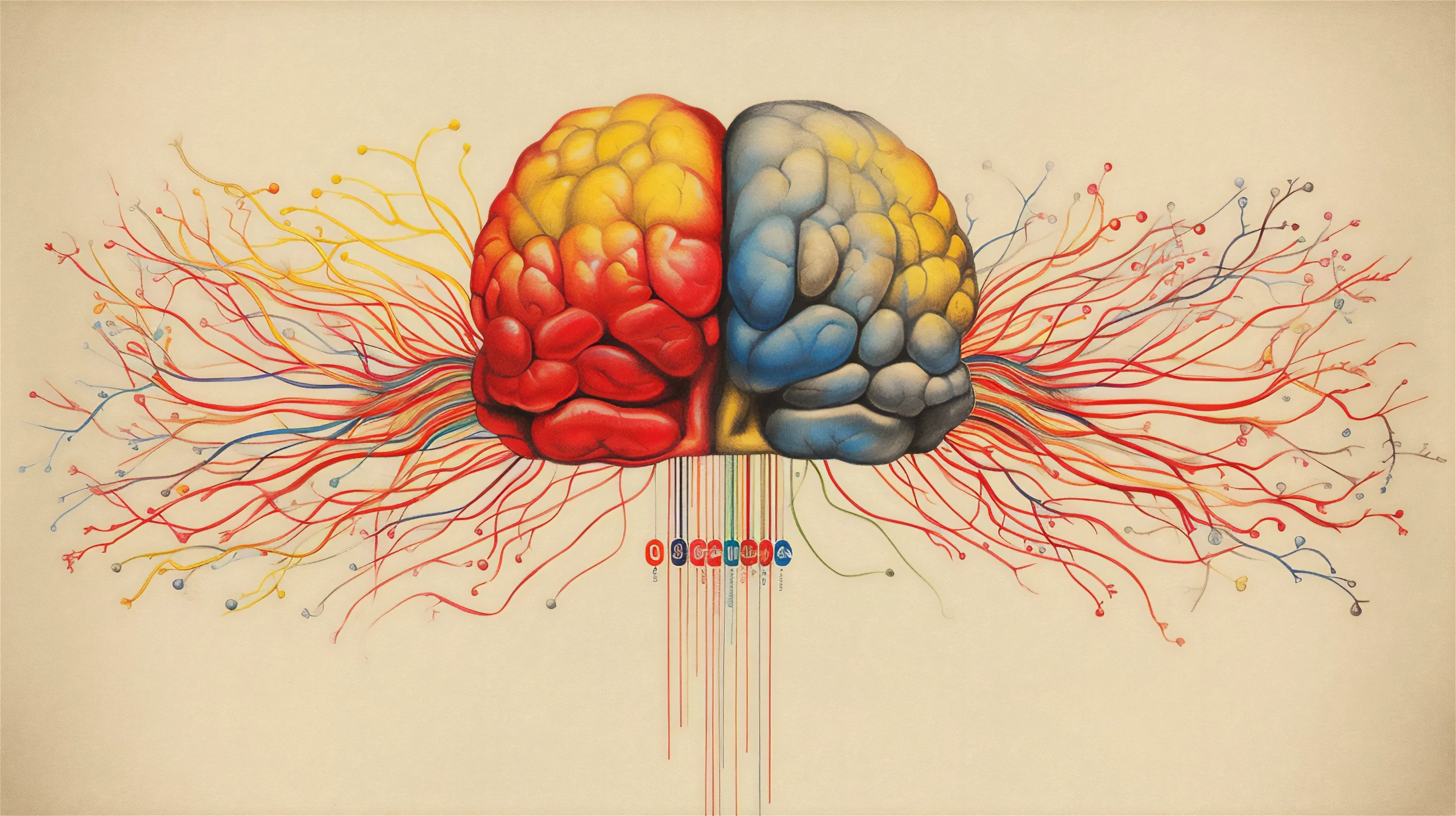
    • The article emphasizes ‘‘No Garland Neuroscience’ that science in India should reflect and promote these values in its practice and dissemination to support broader societal conversations.

    How are the present scientific meetings held in India?

    • The Core groups of organizers are responsible for planning, inviting experts, disseminating info, and fundraising. It includes invited speakers and paid attendees sharing the latest research discoveries.
    • Scientific meetings, or conferences, are where researchers with similar or aligned areas of interest gather and serve as important avenues for the discussion and dissemination of science.
    • These meetings often include presentations or talks on contemporary research findings, along with expert interactions on topics of science and professional development. 

    Challenges associated with the Traditional ‘bouquet giving’ model:

    • Persistent outdated practices:
        • Persistent outdated practices perpetuate long-standing academic challenges and career-stage inequities.
        • For example, continued reliance on bureaucratic, hierarchical frameworks, prolonged opening speeches by science administrators, delayed commencement due to dignitary arrivals, and hierarchical seating arrangements.
    • Ignoring gender and diversity issues:
      • Inclusivity: Lack of gender and diversity awareness evidence lines up for the limited acknowledgment of wider diversity issues.
      • For example, all-male speakers or panelists and sessions such as ‘Women in Science’ completely fail to account for larger diversity issues in science, such as historically marginalized groups and LGBTQIA+ scientists.
      • Scientific ecosystem:  In light of demands for secular scientific practice, gender, and social inclusivity, it is essential to reassess the practices like – religiously symbolic conference materials (like lamp lightening) or devotional songs during inaugurations, and gifting rituals in the Indian context.
    What is the ‘No Garland Neuroscience’ (NGN) model?

    • The annual meeting series of NGN, uses a simple, sustainable, and low-in-cost approach, while keeping the focus on the scientific content and discussions.
    • Initiated in 2009, the Young Investigators’ Meeting (YIM) series from India Bioscience has focused on scientific networking and mentorship among life scientists in India. 
      • They have continued with ‘no-garland’ features’, for example, speaker lists in alphabetical order, round table seating, equal gender representation, open interactions among scientists who are in every stage of their careers.
      • Hence there is absence of religious symbolism, formal inaugural ceremonies, and salutations for speakers, and souvenir and bouquet distributions.


    How ‘No Garland Neuroscience’ (NGN) model can be significant for Indian scientists? 

      • Can counter the Traditional Framework: The contemporary implementation of NGN can counterbalance the long-standing issue of outdated frameworks in the conduct of the majority of scientific meetings in India. 
        • The conduct of scientific meetings can make planning and budgetary room for improved practices such as hybrid and multi-hub conference formats.
    • Can Revamp the Ecosystem: Outdated practices fuel inequities and overlook diversity challenges. Hybrid conference formats, code of ethics, diversity inclusion, care caregiver support can propose towards new scientific ecosystem in India.
    • To enhance India’s position in the global science ecosystem a more equitable and progressive scientific community can be built using the capability of NGN model.


    Conclusion: Revamping scientific conferences in India to align with modern values of inclusivity, diversity, and sustainability is crucial for fostering a more equitable and progressive scientific community. Embracing these changes can not only address current challenges but also position India as a leading player in the international science and technology research landscape.


  • Foreign Policy Watch: India-Pakistan

    India stops Ravi water flow to Pakistan

    Why in the News?

    • India has completed the Shahpur Kandi Barrage Project, halting the flow of water from the Ravi river into Pakistan after 45 years of waiting.
    • Under the 1960 Indus Water Treaty, India possesses exclusive rights to the waters of the Ravi river, enabling it to utilize the resource for local agricultural purposes.

    What are the Potential Benefits for India of stopping Ravi River Water to Pakistan?

    • Water Security: Retaining Ravi river water can enhance water security for Indian regions. The Jammu and Kashmir region will now benefit from the 1,150 cusecs of water that was previously allocated to Pakistan.
    • Agricultural Productivity: By ensuring access to Ravi river water, India can support increased agricultural productivity and efficiency, promoting sustainable farming practices and boosting food security
    • Economic Opportunities: Retaining control over Ravi river water can lead to the creation of new job opportunities, additional revenue streams from commercial activities along the riverbanks, and improved habitat quality supporting biodiversity
    • Urban Development: Halting the flow of Ravi river water to Pakistan can facilitate the development of sustainable urban areas along the riverbanks, contributing to planned urban housing and economic growth in India.
      • India can implement modern waste management systems, promote recycling industries, and adopt circular economies for sustainable water usage and protection of ecosystems.
    • Health Benefits: India can ensure cleaner drinking water sources, reducing health risks associated with contaminated water and enhancing public health outcomes.

    About Shahpur Kandi Barrage Project

    • It is located on the Ravi River, in Punjab’s Pathankot district, near the border of Punjab and Jammu and Kashmir.
    • Project Evolution:
      • The foundation stone of the Shahpur Kandi Barrage Project was laid by then Prime Minister PV Narasimha Rao in 1995.
      • In 2016, the government started to optimize water resources from the Sutlej, Beas, and Ravi rivers for Indian farmers, leading to renewed efforts to complete the project.
      • Finally, Jammu and Kashmir and Punjab signed an agreement in 2018 to resume work on the Shahpur-Kandi dam project, which had been hanging fire for the last 40 years.
    • Project Capacity:
      • The project comprises a 5 m high concrete gravity dam, a 7.7 km long hydel channel, two head regulators, and two powerhouses.
      • It is expected to generate up to 206MW of electricity and provide irrigation to Punjab (5,000 Ha) and Jammu and Kashmir (32,173 Ha).

    Indus Waters Treaty

    • The Indus Waters Treaty is an agreement between India and Pakistan, mediated by the World Bank in 1960.
    • The treaty allocates the Western Rivers (Indus, Jhelum, Chenab) to Pakistan and the Eastern Rivers (Ravi, Beas, Sutlej) to India.
    • However, the treaty permits limited usage of the Eastern Rivers by Pakistan and vice versa.
    • The treaty created the Permanent Indus Commission, comprising one representative from each nation, to facilitate communication and dispute resolution.
    • The treaty facilitated the construction of dams, link canals, barrages, and tube wells, providing water to Pakistan as per its previous entitlement.
    • The treaty came into effect due to the partition in 1947, leading to the division of the water systems.
    • After the expiry of the temporary Standstill Agreement of 1947, India started holding back water from canals flowing towards Pakistan.
    • The Inter-Dominion Accord of May 4, 1948, mandated India to supply water to Pakistani areas of the basin in exchange for yearly payments.

    Try this PYQ from CSP 2021:

    d) Sutlej

    Q. Present an account of the Indus Water Treaty and examine its ecological, economic and political implications in the context of changing bilateral relations. (UPSC 2016)


    Post your answers here.​

  • Economic Indicators and Various Reports On It- GDP, FD, EODB, WIR etc

    Key Insights: All India Household Consumption Expenditure Survey

    Why in the News?

    • Recently, the government has disclosed the broad findings of the All India Household Consumption Expenditure Survey conducted between August 2022 and July 2023.

    About All India Household Consumption Expenditure Survey (CES):

    • The CES is a quinquennial (recurring every five years) survey conducted by the National Statistical Office (NSO).
    • It is designed to collect information on the consumption spending patterns of households across the country, both urban and rural.
    • The data gathered in this exercise reveals the average expenditure on goods (food and non-food) and services.
    • It helps generate estimates of household Monthly Per Capita Consumer Expenditure (MPCE) as well as the distribution of households and persons over the MPCE classes.

    Key Findings of the recent Survey:

    • Rise in Monthly Per Capita Consumption Expenditure:
      • Urban: Witnessed a 33.5% increase to ₹3,510.
      • Rural: Marked a 40.42% surge to ₹2,008 since 2011-12.
    • Shift in Spending Pattern:
      • Food Expenditure: Decreased from 52.9% to 46.4% in rural households and from 42.6% to 39.2% in urban households since 2011-12.
      • Implications: Potential impact on retail inflation calculations due to reduced weightage of food prices.
    • Inclusion of Social Welfare Benefits:
      • Separate calculation for items received through schemes like PM Garib Kalyan Ann Yojana.
      • Items Included: Computers, mobile phones, bicycles, and clothing.
    • Adjusted Monthly Per Capita Expenditure:
      • Rural: ₹2,054;
      • Urban: ₹3,544 (excluding free education and healthcare sops).
    • Socio-Economic Disparities:
      • Bottom 5%: Rural – ₹1,373; Urban – ₹2,001.
      • Top 5%: Rural – ₹10,501; Urban – ₹20,824.
    • State-wise analysis:
      • Sikkim: Highest MPCE – Rural: ₹7,731; Urban: ₹12,105.
      • Chhattisgarh: Lowest MPCE – Rural: ₹2,466; Urban: ₹4,483.

    Major Shifts Includes:

    • Broad-based Growth:
      • Rural-Urban Dynamics: B.V.R. Subrahmanyam, CEO of Niti Aayog, highlights that India’s growth story is “broad-based,” with rural incomes and expenditures outpacing those in urban areas.
      • Narrowing Divide: The urban-rural consumption gap has decreased from 91% in 2004-05 to 71% in 2022-23, indicating diminishing inequality.
    • Shifts in Consumption Patterns:
      • Food Expenditure: Rural households’ spending on food has fallen below 50% of their total expenditure for the first time. Lower spending on staples like pulses and cereals is accompanied by increased expenditure on consumer durables and services.
      • Income Growth: Rising expenditures on items such as TVs, fridges, and mobile phones suggest improved incomes and evolving lifestyles.
    • Changing Poverty Metrics:
      • Poverty Estimates: Based on MPCE averages, poverty levels are projected to be below 5%, according to Mr. Subrahmanyam. Informal estimates indicate a decline in poverty, with destitution nearly eradicated due to various welfare schemes.
      • Inclusive Growth: Government initiatives such as Ayushman Bharat and free education have contributed to lifting millions out of poverty, reflecting a multi-dimensional approach to poverty alleviation.

Join the Community

Join us across Social Media platforms.