💥UPSC 2027,2028 Mentorship (April Batch) + Access XFactor Notes & Microthemes PDF

Archives: News

  • The urban future with cities as dynamic ecosystems

    Why in the News

    The article gains significance amid India’s rapid urban transition, where cities are absorbing unprecedented internal migration while urban planning frameworks continue to rely on static, infrastructure-centric models. There is a sharp contrast between how cities are officially designed and how they are actually inhabited, particularly by migrants and linguistic minorities. The “invisible tax of exclusion” imposed through language, documentation, and cultural conformity represents a systemic governance failure rather than individual inability to integrate.

    Introduction

    Cities function as engines of economic growth, innovation, and opportunity. However, urban planning has largely prioritised physical infrastructure over social integration. The article argues that cities are not fixed spatial units but fluid, evolving ecosystems shaped by continuous migration and cultural diversity. Failure to recognise this reality results in exclusion, weakened social cohesion, and reduced urban resilience.

    What is the ‘invisible tax of exclusion’ in urban spaces?

    1. Linguistic assimilation: Enforces dominant language norms as prerequisites for access to jobs, welfare, and services, marginalising migrants from different linguistic zones.
    2. Cultural conformity: Normalises “do what the Romans do” expectations, delegitimising diverse identities within the city.
    3. Administrative barriers: Converts routine processes such as housing, healthcare, and welfare access into bureaucratic obstacles due to monolingual documentation.
    4. Economic penalty: Pushes migrants into informal employment with higher exploitation and reduced social mobility.

    How does language become a tool of urban exclusion?

    1. Primary integration standard: Establishes language as the non-negotiable gateway to urban belonging.
    2. Access denial: Restricts full participation in economic and civic life for non-native speakers.
    3. Labour contradiction: Extracts migrant labour while denying equal access to opportunities and services.
    4. Resilience erosion: Undermines long-term social and economic stability of cities dependent on migrant populations.

    What are the structural flaws in modern urban planning?

    1. Static city assumption: Treats cities as stable entities with homogenous users.
    2. Established-resident bias: Designs infrastructure around existing residents, rendering newcomers invisible.
    3. Smart city selectivity: Benefits populations already fluent in dominant languages and compliant with documentation norms.
    4. Governance homogeneity: Planning bodies fail to reflect cultural and demographic diversity of metropolitan realities.

    Why does infrastructure-led planning fail to deliver inclusion?

    1. Blueprint dominance: Prioritises physical design over lived experience.
    2. Human element neglect: Ignores belonging as a determinant of service effectiveness.
    3. Mismatch of needs: Public amenities fail to align with demographic shifts and migrant realities.
    4. Policy blindness: Treats exclusion as incidental rather than systemic.

    What does designing cities ‘for all’ require?

    1. Layered reimagination: Integrates social, cultural, and administrative inclusion with infrastructure.
    2. Dynamic governance: Recognises cities as fluid spaces capable of expansion and adaptation.
    3. Anticipatory planning: Accounts for friction between established residents and new entrants.
    4. Cultural sensitisation: Trains public-facing officials to manage diversity efficiently and democratically.

    How can governance adapt to cities as dynamic ecosystems?

    1. Fluid identity recognition: Accepts cities as continuously reshaped by migration.
    2. Inclusive imagination: Designs cities for present and future inhabitants.
    3. Managed disruption: Accepts temporary discomfort as necessary for equitable transformation.
    4. Belonging-centric success metric: Measures urban performance through lived security and validation.

    Conclusion

    Urbanisation cannot be evaluated solely through infrastructure expansion or economic output. Cities that ignore language, culture, and lived experience institutionalise exclusion and weaken social resilience. Treating cities as dynamic ecosystems, designed around belonging, inclusion, and adaptive governance, is essential for sustainable, equitable, and democratic urban futures.

    PYQ Relevance

    [UPSC 2023] Does urbanisation lead to more segregation and/or marginalisation of the poor in Indian metropolises?

    Linkage: This question falls under GS Paper I (Indian Society-Urbanisation) and examines the social consequences of rapid urban growth in Indian cities. It directly links to the article’s argument that urban planning prioritising infrastructure over lived experience leads to structural exclusion, segregation, and marginalisation of the urban poor, especially migrants.

  • Industrial Sector Updates – Industrial Policy, Ease of Doing Business, etc.

    GCGs keep India’ technology job market alive as IT lags

    Introduction

    Global Capability Centres are offshore subsidiaries of multinational corporations established to handle technology, engineering, analytics, and innovation functions. In India, GCCs are increasingly replacing traditional IT services firms as the primary creators of high-value technology jobs. Their rapid expansion signals a structural transformation in the nature of work, skill demand, and geographic dispersion of technology employment.

    Why in the News

    Global Capability Centres (GCCs) have emerged as the primary drivers sustaining India’s technology job market amid a hiring slowdown by large IT services firms. During October-December FY26, GCCs recorded 5-7% sequential growth and 48% workforce expansion plans, contrasting sharply with muted IT hiring. India currently hosts 1,850 GCCs employing nearly 2 million professionals, with projections of 2,400 GCCs by 2030, employing over 3 million workers and generating a $25 billion market size. The transition of GCCs from cost-arbitrage centres to strategic hubs for AI, R&D, and specialised digital work marks a qualitative shift in India’s technology employment trajectory.

    What are Global Capability Centres (GCCs)?

    1. Global Capability Centres (GCCs) are wholly-owned offshore units of multinational corporations established to deliver core, high-value functions such as technology development, data analytics, research and development, finance, risk management, and enterprise AI solutions.
    2. Ownership structure: Operate as captive centres under direct control of parent multinational firms.
    3. Functional role: Handle strategic and mission-critical operations, not routine outsourcing tasks.
    4. Evolutionary shift: Transitioned from cost-arbitrage back offices to innovation, R&D, and decision-support hubs.
    5. Indian context: India hosts the world’s largest concentration of GCCs due to its skilled workforce, digital infrastructure, and cost competitiveness.
    6. Economic significance: Contribute to high-skill employment, technology transfer, and integration into global value chains.

    Why are GCCs sustaining technology hiring when IT services firms are slowing?

    1. Hiring resilience: Demonstrated 5-7% sequential growth during Q3 FY26 despite industry-wide slowdown.
    2. Workforce expansion intent: 48% of GCCs reported active workforce expansion plans for the coming year.
    3. Structural insulation: Operate as captive centres aligned to parent firms’ long-term strategies rather than cyclical client demand.

    How has the role of GCCs evolved beyond cost arbitrage?

    1. High-value pivot: Transition from back-office operations to specialised, strategic, and hyperactive roles.
    2. Capability creation: Function as centres of AI adoption, enterprise AI transition, and advanced analytics.
    3. Talent positioning: Serve as strategic cores for high-end talent and R&D, not merely support units.

    What is the scale and future trajectory of GCC expansion in India?

    1. Current footprint: 1,850 GCCs employing ~2 million professionals.
    2. Projected growth: 2,400 GCCs by 2030, employing over 3 million workers.
    3. Economic value: Expected to generate $25 billion market size by 2030.
    4. Enterprise integration: Increasing integration into global decision-making and innovation pipelines.

    How are GCCs reshaping India’s technology geography?

    1. Non-metro diffusion: Growth spreading beyond Tier I cities to Nagpur, Indore, Coimbatore, and other Tier II-III cities.
    2. Quarterly growth rate: Non-metro GCC employment grew at 8-9% per quarter.
    3. Workforce decentralisation: Expansion supports regional talent absorption and reduces metropolitan concentration.

    Why do GCC jobs command higher salaries than IT services roles?

    1. Compensation premium: GCCs offer 12-20% higher salaries compared to IT services firms.
    2. Skill intensity: Higher pay reflects demand for specialised, AI-driven, and leadership roles.
    3. Leadership expansion: Leadership talent pool in GCCs grew from 88,600 to 90,700 between Dec 2024 and Dec 2025.

    How does GCC growth compare with traditional IT services employment?

    1. Net additions: GCCs added 3,400 leaders, increasing total leadership strength from 44,000 to 47,400.
    2. Growth rate: 7.7% growth in GCC leadership roles compared to 2.4% growth in IT services.
    3. Structural contrast: Indicates stronger long-term expansion prospects for GCC-driven employment.

    Conclusion:

    The rise of Global Capability Centres marks a structural shift in India’s technology economy from volume-led IT services to value-driven, innovation-centric employment. While GCCs strengthen India’s position in global digital and AI value chains, sustaining long-term and inclusive growth will depend on aligning skill development, regional dispersion, and workforce readiness with this high-end transformation.

    PYQ Relevance

    [UPSC 2023] What is the status of digitalization in the Indian economy? Examine the problems faced in this regard and suggest improvements.

    Linkage: The question assesses the depth, quality, and inclusiveness of digitalisation in India’s economic transformation. The expansion of GCCs as AI- and data-driven enterprise hubs reflects advanced digitalisation, while also exposing gaps in skill readiness and digital inclusion.

  • Industrial Sector Updates – Industrial Policy, Ease of Doing Business, etc.

    Kimberley Process 

    Why in the News?

    The Kimberley Process Plenary has selected India to assume the Chairmanship of the Kimberley Process from 1 January 2026. This will be the third time India will chair the process.

    About the Kimberley Process

    • It is a tripartite initiative involving governments, the international diamond industry, and civil society.
    • Aim is to prevent the trade in conflict diamonds.
    • Conflict diamonds are rough diamonds used by rebel groups to finance armed conflicts against legitimate governments, as defined by UN Security Council resolutions.

    Governance Structure

    • Chair and Vice Chair are appointed by Plenary consensus.
    • Vice Chair of a year automatically becomes Chair the following year.
    • Plenary is the highest decision making body of the Kimberley Process.

    Participants

    • 60 participants representing 86 countries.
    • European Union is counted as a single participant.

    India and the Kimberley Process

    • India has been participating in the Kimberley Process Certification Scheme since 2003.
    • This is the third time India has been entrusted with the Chairmanship.
    • India is a major global hub for diamond cutting and polishing, giving it strategic importance in KP deliberations.

    Prelims Pointers

    • Kimberley Process deals only with rough diamonds, not polished diamonds.
      • KP is not a UN body, but works in alignment with UN Security Council resolutions.
      • Certification is mandatory for international trade in rough diamonds among KP participants.
      • EU counts as one participant despite multiple countries.
    Consider the following pairs: (2025)

    Country –        Resource-rich in; 

    I. Botswana:   Diamond; 

    II. Chile:         Lithium; 

    III. Indonesia: Nickel. 

    In how many of the above rows is the given information correctly matched? 

    (a) Only one (b) Only two (c) All the three (d) None

  • Electronic System Design and Manufacturing Sector – M-SIPS, National Policy on Electronics, etc.

    Minamitori Island  

    Why in the News?

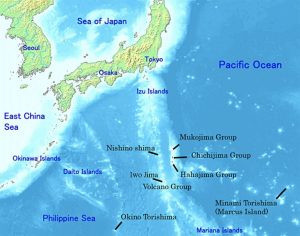
    Japan has decided to conduct test mining of rare earth rich mud from the deep seabed near Minamitori Island to reduce dependence on imported critical minerals.

    About Minamitori Island

    • Minamitori Island is also known as Marcus Island.
    • It is an isolated Japanese coral atoll located in the northwestern Pacific Ocean.
    • It marks the easternmost territorial point of Japan.
    • It is the first location in Japan to witness sunrise due to its eastern position.
    • The island is situated about 1,950 kilometres southeast of central Tokyo.

    Geographical and Geological Features

    • Minamitori Island represents the exposed summit of a massive underwater seamount.
    • The seamount rises from the deep ocean floor along the Marcus Necker Ridge.
    • It is the only landmass of Japan that lies entirely on the Pacific Plate.
    • The island provides Japan with a large Exclusive Economic Zone in the Pacific Ocean.

    What is Rare Earth Mud

    • Rare earth mud is a type of pelagic sediment formed from the accumulated remains of plankton.
    • Over millions of years, these sediments become enriched with rare earth elements.
    • The mud contains significant quantities of neodymium and dysprosium.
    • These elements are essential for manufacturing high performance permanent magnets.
    Consider the following statements: (2021)

    1. The Global Ocean Commission grants licenses for seabed exploration and mining in international waters. 

    2. India has received licenses for seabed mineral exploration in international waters. 

    3. ‘Rare earth minerals’ are present on the seafloor in international waters. 

    Which of the statements given above are correct? 

    (a) 1 and 2 only (b) 2 and 3 only (c) 1 and 3 only (d) 1, 2, and 3

  • New Species of Plants and Animals Discovered

    Himalayan Red Fox 

    Why in the News?

    A roadside sighting of a Himalayan Red Fox near Pangong Tso in Ladakh went viral on social media. Wildlife authorities cautioned that human interaction with wild animals can disturb their natural behaviour and pose ecological risks.

    About Himalayan Red Fox

    • Subspecies of the widespread red fox
      • One of the most adaptable predators of high altitude Himalayan ecosystems

    Conservation Status

    • Classified as Least Concern on the IUCN Red List

    Distribution

    • Native to the Himalayan mountain range
      • Found in India, Nepal, Bhutan, Tibet
      • In India, distributed across Jammu and Kashmir, Himachal Pradesh, Uttarakhand, Sikkim and Arunachal Pradesh

    Key Facts about Pangong Tso

    • High altitude endorheic lake in the Ladakh Himalayas
      • One third lies in India and two thirds in China
      • World’s highest saltwater lake
      • Known for changing colours such as blue, green, and reddish shades

    Prelims Pointers

    • Himalayan Red Fox shows high ecological adaptability
      • Pangong Tso is saline and landlocked
      • Wildlife disturbance from tourism is an emerging conservation concern
      • Least Concern species can still face localised threats
    Consider the following: (2012)

    1. Black-necked crane 

    2. Cheetah 

    3. Flying squirrel 

    4. Snow leopard. 

    Which of the above are naturally found in India? 

    (a) 1, 2 and 3 only (b) 1, 3 and 4 only (c) 2 and 4 only (d) 1, 2, 3 and 4

  • Global Geological And Climatic Events

    Tsunami Ready Recognition Programme 

    Why in the News?

    India is expected to have more than 100 tsunami ready villages under the Tsunami Ready Recognition Programme in the Indian Ocean region.

    About Tsunami Ready Recognition Programme

    • An international community based recognition programme
    • Developed by the Intergovernmental Oceanographic Commission of UNESCO
    • Focuses on coastal communities vulnerable to tsunami hazards

    Objectives

    • Build resilient coastal communities
    • Enhance awareness and preparedness against tsunamis
    • Protect life, livelihoods and property
    • Reduce loss and damage during tsunami events

    Prelims Pointers

    • Programme is recognition based, not funding based
    • Focus is on last mile preparedness
    • Applies to coastal and island communities
    • Part of global efforts for tsunami risk reduction
    • India is a member of the Indian Ocean tsunami preparedness framework
    The 2004 Tsunami made people realize that mangroves can serve as a reliable safety hedge against coastal calamities. How do mangroves function as a safety hedge? (2011)

    (a) Mangrove swamps separate human settlements from the sea by a wide zone in which people neither live nor venture out. 

    (b) Mangroves provide both food and medicines which people are in need of after any natural disaster. 

    (c) Mangrove trees are tall with dense canopies and serve as an excellent shelter during a cyclone or Tsunami. 

    (d) The mangrove trees do not get uprooted by storms and tides because of their extensive roots.

  • Police Reforms – SC directives, NPC, other committees reports

    NATGRID Linked with NPR 

    Why in the News?

    The National Intelligence Grid has been linked with the National Population Register, enabling real time access to family wise population data for law enforcement and intelligence agencies.

    National Intelligence Grid (NATGRID)

    • Secure and indigenous intelligence sharing platform
      • Conceptualised in 2009 after the 26/11 Mumbai terror attacks
      • Became operational in 2024
      • Receives around 45,000 queries per month on average
      • Accessible only to authorised law and security agencies
      • Access expanded to Superintendent of Police rank officers
      • Earlier limited to select central agencies

    Key Agencies with Access

    • Intelligence Bureau
    • Research and Analysis Wing
    • National Investigation Agency
    • Enforcement Directorate
    • Financial Intelligence Unit
    • Narcotics Control Bureau
    • Directorate of Revenue Intelligence

    Prelims Pointers

    • NATGRID is not a law enforcement agency
      • It is a data access and integration platform
      • NPR is different from Census but linked administratively
      • NPR data is family based not biometric centric
      • Gandiva supports facial recognition and analytics
      • NATGRID enhances counter terrorism and organised crime investigation
    Q. With reference to the Government of India, consider the following information: Organization Some of its functions It works under (2025)

    I.Directorate of EnforcementEnforcement of the Fugitive Economic Offenders Act, 2018Internal Security Division- I, Ministry of Home Affairs 

    II.Directorate of Revenue IntelligenceEnforces the Provisions of the Customs Act, 1962Department of Revenue, Ministry of Finance 

    III.Directorate General of Systems and Data ManagementCarrying out big data analytics to assist tax officers for better policy and nabbing tax evadersDepartment of Revenue, Ministry of Finance 

    In how many of the above rows is the information correctly matched? 

    [A] Only one 

    [B] for Only two 

    [C] All the three 

    [D] None

  • Labour, Jobs and Employment – Harmonization of labour laws, gender gap, unemployment, etc.

    [25th Dcember 2025] The Hindu OpED: New labour codes, the threats to informal workers

    [UPSC 2024] Discuss the merits and demerits of the four ‘Labour Codes’ in the context of labour market reforms in India. What has been the progress so far in this regard?

    Linkage: This question directly falls under GS Paper III, Labour Reform, testing the ability to critically evaluate structural labour market reforms under liberalisation. The article on new labour codes provides concrete evidence on demerits which can be used to balance the “merits vs demerits” and assess reform progress.

    Introduction

    India enacted four labour codes in 2019-20 to consolidate existing labour laws relating to wages, industrial relations, social security, and occupational safety. While projected as universalising worker welfare, the codes substantially marginalise unorganised workers, who constitute over 90% of India’s workforce and contribute nearly 65% of GDP. The article flags structural exclusions, regulatory dilution, and erosion of welfare institutions affecting informal labour across sectors.

    Why in the News

    The issue has gained prominence as States, including Tamil Nadu, deliberate on notifying rules under the Social Security Code. Unions and worker organisations have intensified opposition, citing first-time dismantling of long-standing welfare boards, dilution of inspection systems, and absence of funding guarantees. The transition marks a sharp departure from sector-specific, State-level welfare architectures built over decades.

    What are the new labour codes and how were they enacted?

    1. Legislative Consolidation: Replaced 29 labour laws with four codes covering wages, industrial relations, social security, and occupational safety.
    2. Consultative Deficit: Enacted without tripartite consultation at the Indian Labour Conference, violating established labour law-making practice.
    3. Coverage Gap: Unorganised workers excluded from consideration in three codes, except limited mention in the Social Security Code.

    How do the codes affect unorganised workers structurally?

    1. Workforce Magnitude: Unorganised workers constitute over 90% of India’s workforce and generate 65% of GDP.
    2. Policy Blindness: Codes assume uniform work conditions, ignoring sectoral diversity across agriculture, construction, salt pans, beedi, mining, and domestic work.
    3. Legal Erasure: Repeal of sector-specific laws removes tailored protections evolved over decades.

    How does consolidation weaken occupational safety and health?

    1. Regulatory Dilution: Occupational Safety, Health and Working Conditions (OSHWC) Code replaces site-based inspections with process-based systems.
    2. Safety Deficit: Absence of nearly 180 safety rules earlier applicable to construction sites under BOCW Act.
    3. International Violation: Contravenes ILO Convention 81, ratified by India, mandating effective labour inspections.

    Why are occupational diseases inadequately addressed?

      1. Sectoral Health Risks:
    • Construction: High prevalence of silicosis.
    • Agriculture: Cancer linked to pesticide exposure.
    • Salt Work: Chronic eye, skin, and kidney diseases.
    1. Institutional Gap: OSHWC Code ignores diagnosis, treatment, and rehabilitation obligations.
    2. Convention Breach: Violates ILO Convention 161, which mandates national occupational health services.

    How does the Social Security Code undermine welfare boards?

    1. Institutional Replacement: Creates a single national welfare board with no sectoral differentiation.
    2. Board Dissolution Risk: Threatens dissolution of 39 State-level welfare boards in Tamil Nadu.
    3. Benefit Loss: Eliminates protections such as old-age pensions, maternity assistance, and education support for workers’ children.

    What are the funding-related risks under the new framework?

    1. Cess Abolition: Removes sector-specific cesses (beedi, salt, mining) without replacement revenue.
    2. Funding Uncertainty: No guaranteed employer contribution for welfare funds.
    3. Unutilised Corpus: Centralised e-Shram registration may allow Centre to access nearly ₹11 lakh crore in unspent welfare funds, especially from construction sector.

    How have States responded to these changes?

    1. Legislative Resistance: Andhra Pradesh shut down welfare boards post-codes.
    2. Institutional Strength: Tamil Nadu retains strong welfare architecture under the Tamil Nadu Manual Workers Act, 1982.
    3. Worker Coverage: Approximately 3 crore informal workers registered across welfare boards in Tamil Nadu.

    What needs to be done?

    1. Institutional Protection: Preserve State-level welfare boards and sector-specific laws.
    2. Fiscal Safeguards: Retain saving clauses for welfare funds and statutory cesses.
    3. Legislative Resistance: Refuse notification of rules under the codes, as done by Kerala and Tamil Nadu.
    4. Welfare Continuity: Strengthen existing State welfare infrastructure instead of centralisation.

    Conclusion

    The four labour codes mark a significant shift in India’s labour market architecture by prioritising consolidation, flexibility, and ease of compliance. However, as highlighted in the article, this reform has simultaneously weakened occupational safety regimes, dismantled sector-specific welfare institutions, and left unorganised workers, who form the backbone of the economy, without assured social security or funding guarantees. Unless States retain and strengthen existing welfare boards, inspection mechanisms, and financing arrangements, labour market reforms risk deepening informality and inequality rather than enabling inclusive and sustainable growth.

  • Industrial Sector Updates – Industrial Policy, Ease of Doing Business, etc.

    Why manufacturing has lagged in India

    Introduction

    Manufacturing has historically been the backbone of structural transformation, productivity growth, and mass employment. While economies such as China and South Korea used manufacturing to transition from agrarian to industrial societies, India’s manufacturing share in GDP has stagnated and, in recent years, declined relative to services. 

    Why in the News?

    India’s manufacturing sector has recently lost relative ground to services, despite decades of policy emphasis on industrialisation. This is significant because manufacturing traditionally absorbs surplus labour and drives productivity convergence. The article highlights a sharp contrast with China and South Korea, where manufacturing shares expanded rapidly. A key concern raised is that high public sector wages, limited technological upgrading, and reliance on services-led growth have made Indian manufacturing less competitive, contributing to wage stagnation, inequality, and weak employment outcomes.

    Why has India lagged behind China and South Korea in manufacturing growth?

    1. Relative manufacturing performance: Shows India’s manufacturing share in GDP remaining stagnant while China and South Korea experienced sustained expansion.
    2. Structural divergence: Reflects different growth models, with India relying on services while East Asia leveraged labour-intensive manufacturing.
    3. Growth consequences: Results in weaker productivity growth and limited mass employment creation.

    How do public sector wages distort manufacturing competitiveness?

    1. High government salaries: Raise economy-wide wage benchmarks beyond productivity levels in manufacturing.
    2. Cost escalation: Increases prices of non-tradable services, raising input costs for manufacturing firms.
    3. Labour diversion: Pulls skilled workers away from manufacturing into public employment.
    4. Competitiveness impact: Makes Indian manufactured goods less competitive in global markets.

    What is the role of the ‘Dutch disease’ mechanism in India’s case?

    1. Conceptual framework: Explains how income windfalls distort relative prices across sectors.
    2. Indian variant: Public sector wage expansion acts as a de facto windfall similar to natural resource booms.
    3. Real exchange rate appreciation: Makes imports cheaper and exports less competitive.
    4. Manufacturing crowding-out: Reduces incentives for domestic industrial production.

    Why has technological upgrading in manufacturing remained weak?

    1. Limited productivity pressure: Firms rely on cheap labour rather than innovation.
    2. Absence of induced innovation: High wages have not translated into capital-intensive or technology-driven growth.
    3. Contrast with East Asia: China and South Korea used competitive pressures to upgrade technology.
    4. Outcome: Indian manufacturing remains trapped in low productivity equilibrium.

    How has services-led growth shaped income distribution and employment?

    1. Skewed wage growth: Benefits high-skill workers disproportionately.
    2. Inequality expansion: Concentrates income gains among elite service sector employees.
    3. Employment mismatch: Services fail to absorb surplus labour from agriculture.
    4. Structural imbalance: Weakens broad-based economic transformation.

    Why has private sector dynamism not translated into manufacturing expansion?

    1. Sectoral allocation: Private investment favours services over manufacturing.
    2. Technological complacency: Growth driven by labour abundance rather than innovation.
    3. Limited spillovers: Services growth generates fewer backward and forward linkages.
    4. Long-term constraint: Manufacturing stagnation limits sustained productivity gains.

    Conclusion

    India’s manufacturing stagnation is best understood as a structural political-economy outcome rather than a cyclical or policy-intent failure. The article demonstrates that high public sector wages, acting as an economy-wide benchmark, have raised costs, appreciated the real exchange rate, and weakened manufacturing competitiveness. Simultaneously, services-led growth has generated productivity and income gains without inducing technological upgrading or mass employment, unlike East Asian manufacturing-led transitions. In the absence of sustained productivity pressure and induced innovation, Indian manufacturing has remained trapped in a low-productivity equilibrium. Reversing this trajectory requires addressing wage–productivity mismatches, technology incentives, and structural distortions, without which manufacturing cannot play its intended role in employment generation and inclusive growth.

    PYQ Relevance

    [UPSC 2017] Account for the failure of the manufacturing sector in achieving the goal of labor-intensive exports. Suggest measures for more labor-intensive rather than capital-intensive exports. 

    Linkage: The article directly explains manufacturing failure through public sector wage distortions, weak technological upgrading, real exchange rate appreciation, and services-led growth. This offers a structural political-economy explanation to this question.

  • Forest Conservation Efforts – NFP, Western Ghats, etc.

    The great wall in the North: Why the Aravallis matter

    Introduction

    The Aravalli range, dating back over a billion years to the Precambrian era, stretches approximately 700 km across Gujarat, Rajasthan, Haryana, and Delhi. Despite being one of the most degraded mountain systems in India, it remains central to water security, climate regulation, biodiversity conservation, and livelihood support in north and north-western India. The current policy moment exposes tensions between mineral exploitation, urbanisation, and ecological protection.

    Why in the News

    The Aravalli range has returned to public debate following a new definition notified by the Centre in October 2023, subsequently accepted by the Supreme Court in November, which excludes nearly 90% of the Aravalli landscape from protection against mining and development. This marks a sharp departure from earlier judicial and administrative approaches, which treated large parts of the range as ecologically sensitive regardless of formal forest classification.

    How extensive is the Aravalli range and why does its geography matter?

    1. Spatial spread: Extends across four states and 37 districts, underscoring inter-state ecological interdependence.
    2. Length and distribution: Covers about 700 km, with 560 km located in Rajasthan alone, indicating uneven conservation pressures.
    3. Topographical role: Forms a physical barrier separating the Thar Desert from the Indo-Gangetic plains, limiting eastward sand movement.

    Why are the Aravallis described as a natural sand and climate barrier?

    1. Desertification control: Blocks desert sand from advancing into Delhi, Haryana, and western Uttar Pradesh, reducing dust storms and land degradation.
    2. Air quality protection: Prevents sand ingress that worsens air pollution episodes in urban centres such as Delhi-NCR.
    3. Climate moderation: Acts as a climatic shield for north-west India, similar in function to the Western Ghats for peninsular India.

    What role do the Aravallis play in groundwater recharge and river systems?

    1. Aquifer recharge: Rocky, fractured, and porous formations allow rainwater to percolate underground instead of surface runoff.
    2. Water security: Supports groundwater reserves for rapidly expanding urban centres such as Gurugram, Faridabad, and Sohna.
    3. River origins: Forms part of the watershed for rivers flowing into both the Arabian Sea and the Bay of Bengal, including tributaries linked to the Chambal system.

    How does the Aravalli ecosystem support biodiversity and wildlife?

    1. Habitat diversity: Supports dry deciduous, semi-arid, and savanna ecosystems, enabling species adaptation in arid conditions.
    2. Protected areas: Hosts 22 wildlife sanctuaries, with 16 in Rajasthan alone.
    3. Tiger reserves: Includes Ranthambore, Sariska, and Mukundra, three of India’s critical tiger landscapes.
    4. Species presence: Supports fauna such as leopard, sloth bear, hyena, jackal, desert fox, and diverse avifauna.

    What human activities are driving the degradation of the Aravallis?

    1. Mining and quarrying: Extensive legal and illegal extraction of stone and minerals, weakening hill structures.
    2. Deforestation: Reduces soil stability and accelerates erosion.
    3. Urbanisation: Expansion of cities like Gurugram and Alwar encroaches on hill systems and recharge zones.
    4. Ecological fragmentation: Creation of at least 12 major gaps in the range, enabling desert sand movement eastwards.

    Why has the new Aravalli definition triggered concern?

    1. Regulatory dilution: Redefines Aravallis largely based on elevation and revenue records, excluding large ecologically active areas.
    2. Protection rollback: Removes mining and development restrictions from nearly 90% of the range.
    3. Ecological risk: Weakens safeguards for groundwater recharge zones and wildlife corridors.
    4. Governance gap: Shifts focus from ecosystem function to narrow land classification criteria.

    Conclusion

    The Aravalli range functions as a critical ecological infrastructure for northern India by regulating desert expansion, sustaining groundwater recharge, and supporting biodiversity across a densely populated region. The ongoing degradation of the range, driven by mining, deforestation, and regulatory dilution, undermines these life-supporting functions and amplifies risks of desertification, water stress, and ecological fragmentation. Ensuring landscape-level protection of the Aravallis is therefore essential not merely for environmental conservation, but for long-term economic resilience and human security in north and north-western India.
    PYQ Relevance

    [UPSC 2020] The process of desertification does not have climatic boundaries. Justify with examples.

    Linkage: This question is relevant to GS-I (Physical Geography) as it examines desertification as a geomorphological and environmental process driven by both climatic and anthropogenic factors. The Aravalli degradation exemplifies how mining, deforestation, and urbanisation enable desert expansion beyond arid climatic zones, validating the non-climatic spread of desertification.

Join the Community

Join us across Social Media platforms.
