💥UPSC 2026, 2027, 2028 UAP Mentorship (March Batch) + Access XFactor Notes & Microthemes PDF

Type: Explained

  • Foreign Policy Watch: India – Germany

    With an eye on Indo-Pacific, Germany seeks greater defence ties with India

    Note4Students

    From UPSC perspective, the following things are important:

    Prelims level: Tarang Shakti;

    Mains level: India and Germany Relations;

    Why in the News?

    External Affairs Minister S. Jaishankar, currently in Germany as part of a three-nation tour, met with German Foreign Minister Annalena Baerbock in Berlin. They discussed various defence topics, including Ukraine, Gaza, and the Indo-Pacific region.

    Defence Partnership between India and Germany:

    • Late Engagement: Germany has been late in engaging India’s defence interests compared to France and the U.S., who have stronger partnerships with India.
    • Opportunity Post-Russia-Ukraine War: With Russia’s industrial capacity focused on the war, Germany sees an opportunity to enhance its defence exports to India. 
      • German defence manufacturers like ThyssenKrupp Marine Systems are already involved in projects like submarine construction for the Indian Navy.
    • Technology Transfer: Technology transfer is a key condition for India’s defence partnerships, and Germany’s ability to meet this requirement could shape future cooperation.
    • Complementary Systems: Germany’s Eurofighter and its future replacement by U.S.-made F-35s highlight Germany’s readiness to integrate its defence systems with Western platforms, easing potential interoperability issues for India.

    Exercise Tarang Shakti:

    • Tarang Shakti is one of the most extensive multilateral air exercises hosted by the Indian Air Force (IAF), showcasing India’s commitment to international defence cooperation.
    • This exercise marked the first time the German Luftwaffe (Air Force) participated in air sorties over Indian skies, symbolizing Germany’s growing defence ties with India.
    • It would become a biennial exercise, highlighting India’s intent to make such multinational military cooperation a regular feature.
    • Tarang Shakti was seen as a tryout for the larger Pacific Skies 24 air exercise involving France, Germany, and Spain, further emphasizing the Indo-Pacific’s growing military relevance.

    Present Dilemma of China:

    • Germany’s Strategic Interest in the Indo-Pacific: China’s aggressive actions, such as building artificial islands in the South China Sea, pose a significant threat to regional stability, international shipping, and trade routes, which Germany heavily depends on.
    • Germany’s Balancing Act: While Germany has clear political positions against China’s actions in the Indo-Pacific, its economic dependence on China complicates the situation. Germany’s increasing defence presence in the region is partly aimed at ensuring free and secure shipping routes.
    • Europe’s Shift in Focus: Post Russia-Ukraine war, Europe, including Germany, is recalibrating its foreign policy towards the Indo-Pacific, recognizing the region as the future centre of global economic and geopolitical influence, which is driving greater German defence engagement in the region.

    Way Forward: 

    • Enhance Defence Collaboration: India and Germany should focus on deepening defense cooperation, particularly in areas like technology transfer, joint military exercises, and advanced systems integration to build long-term strategic partnerships.
    • Strengthen Indo-Pacific Engagement: Germany and India should align their Indo-Pacific strategies to ensure regional stability, emphasizing free trade routes and countering China’s assertiveness while balancing economic dependencies.

    Mains PYQ:

    Q To what extent can Germany be held responsible for causing the two World Wars? Discuss critically. (UPSC IAS/2015)

  • Mother and Child Health – Immunization Program, BPBB, PMJSY, PMMSY, etc.

    India’s Sickle Cell Challenge  

    Note4Students

    From UPSC perspective, the following things are important:

    Prelims level: Sickle Cell Anaemia Elimination;

    Mains level: Challenges related to the National Sickle Cell Anaemia Elimination Mission;

    Why in the News?

    The Prime Minister has reaffirmed the government’s dedication to addressing sickle cell disease, a genetic blood disorder that alters the shape of red blood cells.

    About the National Sickle Cell Anaemia Elimination Mission:

    • The Union Budget 2023-24 announced a mission to eliminate sickle cell anemia by 2047. The mission focuses on awareness and screening programs for people ages 0 to 40.
    • The mission aims to reduce the burden of sickle cell disease, which primarily affects India’s tribal belt (Odisha, Jharkhand, Chhattisgarh, Madhya Pradesh, Maharashtra).
    • These include nationwide screening programs and the inclusion of vital medicines like hydroxyurea in the essential medicines list, improving access to treatment.

    Challenges faced by the Indian Government:

    • High Disease Burden: India has the world’s second-largest burden of sickle cell disease, with over a million affected individuals, primarily in tribal areas.
    • Low Treatment Coverage: Only 18% of those affected receive consistent treatment, with significant drop-offs in screening, diagnosis, and treatment adherence.
    • Stigma and Misinformation: Social stigma around the disease, myths such as “God’s curse” or “black magic,” and mistrust of public health systems, particularly in tribal areas, result in delayed diagnosis and treatment.
    • Treatment Adherence Issues: Challenges include inconsistent availability of medicines like hydroxyurea, long travel distances for treatment, and stock shortages at health centers.
    • Poor Vaccination Coverage: Vaccination, which reduces infection rates and improves quality of life, remains inadequate in many affected regions.
    • Research and Development: The lack of ongoing research into treatments and understanding of the disease in India, and the unaffordability of emerging therapies like gene therapy, hinder long-term progress.
    • Financial and Operational Gaps: Health systems in tribal areas require additional funding and operational strengthening to address region-specific health challenges effectively.

    What are the WHO recommendations?

    • Early Identification: Implement newborn screening programs to identify sickle cell disease at birth.
    • Integration into Health Systems: Sickle cell management should be integrated into national health services. This includes establishing specialized centers for comprehensive care and ensuring that primary healthcare providers are trained in managing sickle cell disease.
    • Public Education and Awareness: Conduct public education campaigns to raise awareness about sickle cell disease, reduce stigma, and inform communities about genetic risks and prevention strategies.
    • Genetic Counseling: Provide genetic counselling to families, especially in communities with high prevalence, to inform them about the risks of having children with sickle cell disease and the importance of carrier screening.

    Mains PYQ:

    Q Stem cell therapy is gaining popularity in India to treat a wide variety of medical conditions including leukaemia, Thalassemia, damaged cornea and several burns. Describe briefly what stem cell therapy is and what advantages it has over other treatments. (UPSC IAS/2017)

  • Trade Sector Updates – Falling Exports, TIES, MEIS, Foreign Trade Policy, etc.

    UAE-India ties are rooted in affnity, trust, and respect

    Note4Students

    From UPSC perspective, the following things are important:

    Prelims level: India-UAE relation;

    Why in the News?

    During Sheikh Khaled’s recent visit, new cooperation agreements were signed, including those related to civil nuclear technology and renewable energy, showcasing the commitment to collaborative advancements in critical sectors.

    Evolving Bilateral Relations:

    • In 1972:  India and the UAE bilateral relationship has been formalized since the establishment of diplomatic relations in 1972, gaining momentum with high-level visits and agreements over the years.
    • In 2015: The greater push was achieved when the visit of India’s PM to the UAE in August 2015 marked the beginning of a new Strategic partnership.
    • In 2017: The relationship was elevated to a Comprehensive Strategic Partnership in 2017, during the visit of the Crown Prince of Abu Dhabi to India in January 2017 as the chief guest at India’s Republic Day.
      • The UAE is India’s third-largest trading partner and a significant source of investment.
    • Today, the UAE hosts over 3.5 million Indian expatriates, which strengthens cultural ties and economic collaboration.

    Present Scenario of Strategic Development

    • Trade and Investment Growth: Bilateral trade reached approximately USD 85 billion in 2022-23, with goals to increase it to USD 100 billion by 2030.
      • The UAE has become a significant investor in India, with FDI from the UAE surging to USD 3.35 billion in FY23.
    • Comprehensive Economic Partnership Agreement (CEPA): India and the UAE signed a CEPA in February 2022, with India being the first country to secure such a deal with the UAE. This agreement led to a 15% rise in bilateral trade within its first year of operation.
    • Regional Ties: India and the UAE are actively engaged in various regional groupings and initiatives such as the I2U2 and the India-Middle East-Europe Economic Corridor (IMEC), reflecting shared interests and strategic alignment.
    • Energy Ties: The UAE plays a crucial role in India’s energy security, with strategic oil reserves stored in India.
    • Fintech Ties: Since August 2019, the RuPay card, India’s domestic card payment network, has been accepted at 21 businesses and 5,000 ATMs across the UAE. This makes the UAE the first Gulf nation to adopt the Indian payment system.
    • Cultural Ties: India participated as the Guest of Honour Country in Abu Dhabi International Book Fair 2019. Indian cinema/TV/radio channels are easily available and have good viewership.
      • The inauguration of the Indian Institute of Technology (IIT) Delhi’s Abu Dhabi campus marks a significant milestone, representing India’s growing educational influence in the UAE.

    Challenges in India-UAE Relations

    • Labor Rights and Kafala System: Concerns regarding the treatment of Indian expatriates under the Kafala labor system necessitate diplomatic engagement to improve labor rights and welfare.
    • Geopolitical Balancing: As India strengthens its ties with the UAE, it must navigate its relationships with other Gulf nations and maintain a balanced approach to regional conflicts, such as the Chinese market dominance and the Israel-Palestine issue.
    • Economic Diversification: While trade is growing, there is a need to diversify economic cooperation beyond traditional sectors like energy and real estate to include technology and innovation.

    Way forward: 

    • Strengthen Labor Rights Cooperation: India and the UAE should engage in continuous diplomatic dialogues to reform labor practices, improving the welfare and rights of Indian expatriates under the Kafala system, and ensuring a more humane and fair working environment.
    • Diversify Economic and Strategic Cooperation: Both countries should focus on expanding collaboration into emerging sectors such as technology, innovation, and renewable energy while maintaining geopolitical neutrality and balancing relations with other Gulf nations.

    Mains PYQ:

    Q How will I2U2 (India, Israel, UAE and USA) grouping transform India’s position in global politics?  (UPSC IAS/2016)

  • Health Sector – UHC, National Health Policy, Family Planning, Health Insurance, etc.

    The grave threat from AMR

    Note4Students

    From UPSC perspective, the following things are important:

    Prelims level: Antimicrobial resistance;

    Mains level: Reason behind the AMR Increasing;

    Why in the News?

    Ahead of the UN General Assembly High-Level Meeting on antimicrobial resistance, WHO published its first-ever guidance on Antibiotic pollution from manufacturing.

    Common Pathogens Found in India

    The three most common pathogens associated with antimicrobial resistance (AMR) in India, as reported by the Indian Council of Medical Research (ICMR), are:

    • Escherichia coli (E. coli): Known for causing gut infections, E. coli has shown a significant decrease in susceptibility to antibiotics, particularly carbapenems, from 81.4% in 2017 to 62.7% in 2023.
    • Klebsiella pneumoniae: This pathogen can lead to pneumonia and urinary tract infections. Its susceptibility to carbapenem-class antibiotics has also declined, with rates dropping from 58.5% to 35.6% and from 48% to 37.6% between 2017 and 2023.
    • Acinetobacter baumannii: Primarily associated with hospital-acquired infections, this pathogen has a high resistance rate to carbapenems, standing at 88% in 2023.

    What is Antimicrobial Resistance (AMR) and Why is it a Cause for Concern?

    • Antimicrobial resistance (AMR) occurs when pathogens evolve to survive despite the presence of antimicrobial drugs, rendering standard treatments ineffective. This situation arises mainly due to the misuse and overuse of antibiotics, leading to the development of resistant strains or “superbugs.” 
    • According to the WHO, emergence and spread of AMR could significantly undermine the effectiveness of antibiotics globally, impacting healthcare outcomes, especially for patients with multiple diseases.

    Why is AMR Increasing?

    Several factors contribute to the increasing rates of AMR in India:

    • Self-medication: Many individuals self-prescribe antibiotics for conditions like fever without proper medical consultation, often for viral infections where antibiotics are ineffective.
    • Prescribing habits: A significant percentage of antibiotics are prescribed not for treating infections but for prevention. Doctors often resort to broad-spectrum antibiotics without conducting necessary diagnostic tests, leading to inappropriate usage.
    • Lack of regulation: The management of pharmaceutical waste from antibiotic manufacturing is largely unregulated, contributing to environmental pollution and the spread of resistant bacteria.

    What needs to be done?

    • Prevention of Infections: Implementing better hygiene practices, improving sanitation, and promoting vaccinations can help reduce the incidence of infections, thereby decreasing the reliance on antibiotics.
    • Education for Healthcare Providers: Train doctors to prescribe antibiotics judiciously, reserve stronger antibiotics for hospital patients, and emphasise the importance of diagnostic testing, which can help ensure appropriate antibiotic use.
    • Regulatory Improvements: Strengthening regulations around antibiotic manufacturing and waste management is crucial for controlling antibiotic pollution and preventing the emergence of resistant strains.

    Mains PYQ:

    Q Can overuse and free availability of antibiotics without Doctor’s prescription, be contributors to the emergence of drug-resistant diseases in India? What are the available mechanisms for monitoring and control? Critically discuss the various issues involved.  (UPSC IAS/2016)

  • Freedom of Speech – Defamation, Sedition, etc.

    On ANI’s defamation suit against Wikipedia

    Note4Students

    From UPSC perspective, the following things are important:

    Mains level: Cause of fack information;

    Why in the News?

    The news agency ANI filed a defamation lawsuit against the Wikimedia Foundation, over a description on the site that portrayed the agency as a promoter of government propaganda.

    Why has the news agency ANI filed a lawsuit against the Wikimedia Foundation?

    • ANI has filed a defamation lawsuit against the Wikimedia Foundation over the description of the agency on Wikipedia. The page accused ANI of being a “propaganda tool” for the Indian government, citing sources like The Diplomat, EU DisinfoLab, and The Caravan magazine.
    • ANI claims that these descriptions are defamatory and is seeking ₹2 crore in damages from the Wikimedia Foundation.
    • Wikipedia’s policies emphasize neutrality and reliable sourcing, though it’s often accused of liberal bias. OpIndia claims the site propagates liberal “propaganda” and has criticised the site’s description of the riots for allegedly downplaying attacks by Muslim rioters.
    • Wikipedia has faced government criticism for vandalism, such as on Arshdeep Singh’s page. It lacks a blocking procedure under Indian law, unlike social media platforms.

    What has the Delhi High Court asked the Foundation to reveal?

    • The Delhi High Court ordered the Wikimedia Foundation to provide details about the users who edited ANI’s Wikipedia page. Specifically, the court asks for information about three users involved in the contentious edits.
    • The suit invokes provisions of the Information Technology Act, particularly Section 79, which outlines the responsibilities of intermediaries like Wikipedia.
      • Section 79 provides a framework for the exemption from liability for intermediaries in India regarding third-party content.
    • Justice Navin Chawla has issued a notice to Wikipedia and scheduled the next hearing for August 20, 2024. The court has acknowledged the right of Wikipedia to express opinions but will examine whether the claims made about ANI are backed by facts.

    Will Wikipedia be blocked in India?

    • During the case hearing, the Delhi High Court judge verbally threatened to order the Indian government to block Wikipedia if the Wikimedia Foundation did not comply with its request for user information.
    • Although Wikipedia has faced censorship in countries like China and partial censorship in Russia, it has not yet been blocked in India. However, the current legal proceedings could lead to a similar action if compliance is not met.

    Conclusion: The Indian government should ensure that any legal actions respect user privacy rights while compelling platforms like Wikimedia to cooperate with legitimate legal requests for information, balancing transparency with data protection laws.

  • Agricultural Sector and Marketing Reforms – eNAM, Model APMC Act, Eco Survey Reco, etc.

    The role of district agro-met offces in supporting farmers 

    Note4Students

    From UPSC perspective, the following things are important:

    Mains level: Challenges to Indian agriculture;

    Why in the News?

    Last week, PTI reported that the India Meteorological Department (IMD) plans to reintroduce District Agro-Meteorology Units (DAMUs) as part of the Gramin Krishi Mausam Sewa (GKMS) scheme.

    Background: In 2018, the IMD set up 199 District Agro-Meteorology Units (DAMUs) in collaboration with the Indian Council of Agricultural Research to provide sub-district level agricultural advisories based on weather data. However, these DAMUs were shut down in March following an order from the IMD.

    What are Agro-Meteorological Advisories?

    • Agro-meteorological advisories provide farmers with critical information about weather conditions that affect agricultural practices. This includes forecasts related to rainfall, temperature, and wind speeds, which are crucial for planning sowing, harvesting, irrigation, and the use of fertilizers and pesticides.
    • These advisories are particularly important for small and marginal farmers, who make up about 80% of India’s farming community and primarily rely on rain-fed agriculture.
    • The advisories are disseminated in local languages, ensuring accessibility. They are shared through various channels, including text messages, WhatsApp groups, newspapers, and direct communication from DAMU staff.
    • By providing timely weather information, these advisories help farmers plan their agricultural activities effectively and ultimately contribute to enhancing crop yields and farmers’ incomes.

    Why Did the Government shut down the District Agro-Met Units (DAMUs)?

    • Agro-meteorological data was automated: The closure of DAMUs was influenced by claims from the NITI Aayog that agro-meteorological data was automated, which undermined the role of DAMU staff in preparing and disseminating agricultural advisories. This misrepresentation led to recommendations for privatization and monetization of the services previously offered for free.
    • Financial and Administrative Issues: The decision to shut down DAMUs was attributed to ongoing financial challenges, including delayed salary disbursements for DAMU staff, and administrative issues that hampered the program’s effectiveness.
    • Shift Towards Centralization: The government suggested transitioning to a centralized model for weather data collection and advisory services, which could potentially reduce the localized support that DAMUs provided to farmers.

    Way forward: 

    • Re-establish Local Support: Reinstate District Agro-Meteorology Units (DAMUs) to provide localized, targeted weather advisories and support, ensuring that small and marginal farmers receive timely, relevant information.
    • Improve Data Integration and Communication: Enhance the integration of automated weather data with localized advisory services, and streamline communication channels to reach farmers through various platforms effectively.
  • Road and Highway Safety – National Road Safety Policy, Good Samaritans, etc.

    On the challenges to road safety in India  

    Note4Students

    From UPSC perspective, the following things are important:

    Mains level: Road safety in India;

    Why in the News?

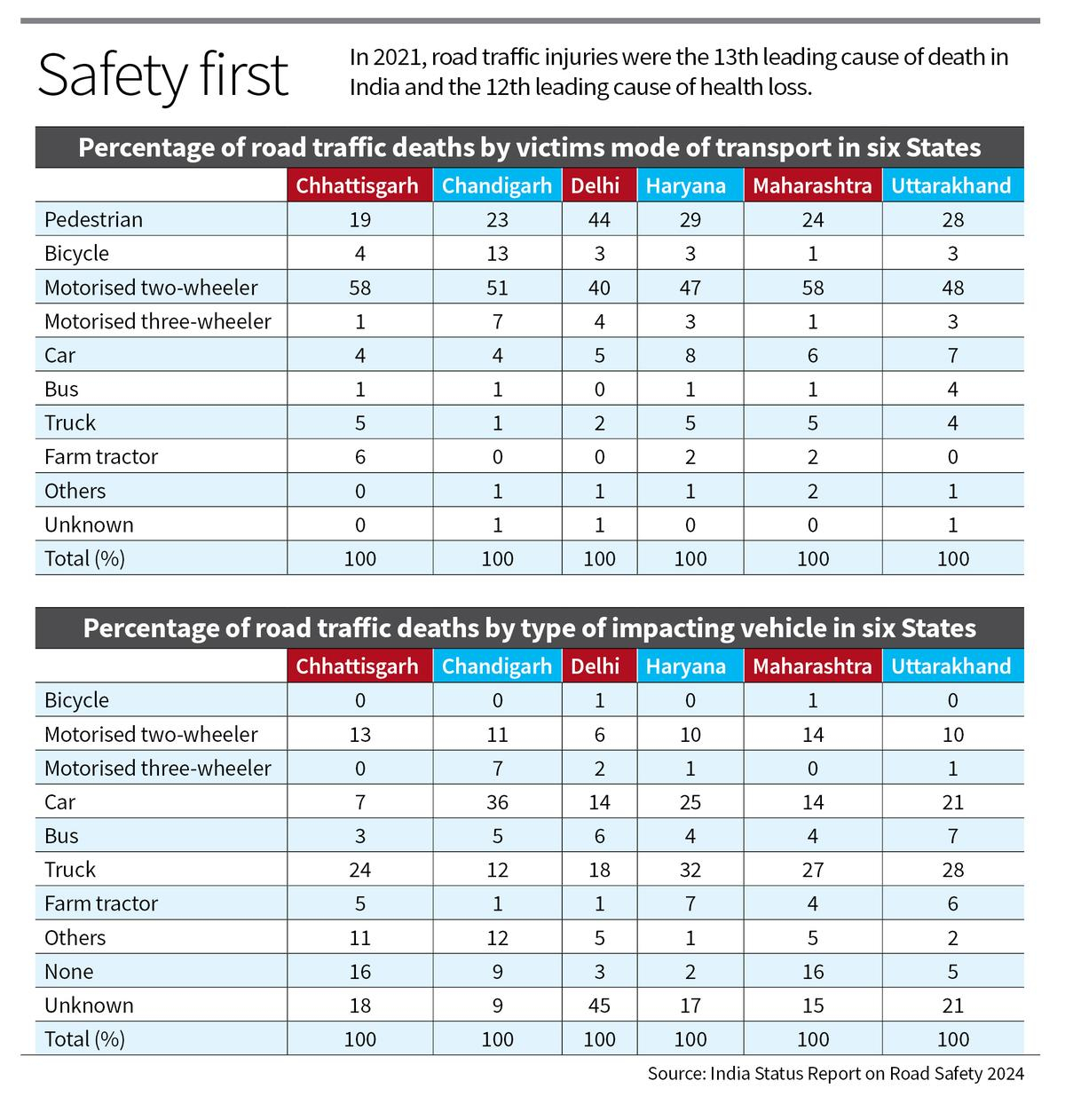
    The India Status Report on Road Safety 2024 highlights India’s slow progress in reducing road fatalities and stresses the need for tailored approaches to improve road safety.

    What does the ‘India Status Report on Road Safety 2024’ state?

    • The report highlights India’s limited success in reducing road accident fatalities, despite the country’s efforts in other sectors. The report stresses that most Indian States are not on track to meet the UN Decade of Action for Road Safety goal to halve traffic deaths by 2030.
      • It emphasizes the connection between road construction, mobility, and safety,
    • Road traffic injuries remain a significant public health challenge. In 2021, these injuries were the 13th leading cause of death and the 12th leading cause of health loss (measured in Disability-Adjusted Life Years or DALYs).
    • The report reveals significant disparities in road traffic death rates across Indian States, with vulnerable groups such as motorcyclists and truck-involved crashes being particularly high.

    Note: The report used FIR data from six States and audits of State compliance with Supreme Court directives on road safety.

    Which States have the lowest rates of road accident deaths?

    • West Bengal and Bihar have the lowest rates of road accident deaths, with 5.9 per 1,00,000 people in 2021

    What is a crash surveillance system?

    • A crash surveillance system is a national-level database that records detailed data on road accidents, including specific variables like the mode of transport of victims.
    • India lacks such a system, with current data being aggregated from police station records, limiting the depth of analysis and effectiveness of interventions.
    • Implementing this system would enhance road safety management and allow for better evaluation of policy interventions.

    Way forward: 

    • Establish a National Crash Surveillance System: Implement a comprehensive database for road accidents to enable detailed analysis and improve targeted interventions for road safety. This would enhance data accuracy and guide more effective policies.
    • Prioritize State-Specific Road Safety Strategies: Tailor interventions to the unique challenges of each State, focusing on vulnerable road users like motorcyclists and improving safety infrastructure, such as helmet usage, traffic calming, and trauma care facilities.
  • Waste Management – SWM Rules, EWM Rules, etc

    India generates highest plastic pollution in world 

    Note4Students

    From UPSC perspective, the following things are important:

    Prelims level: Paris Agreement (2015);

    Mains level: Plastic pollution;

    Why in the News?

    A study published last week in the journal Nature revealed that India is responsible for contributing one-fifth of the world’s plastic pollution.

    What did the Paris Agreement (2015) and the UN Environmental Assembly (2022) say on plastic pollution? 

    • Paris Agreement (2015): Primarily on climate change, the Paris Agreement doesn’t directly address plastic pollution. However, the agreement encourages countries to reduce emissions and promote sustainable practices. 
    • UN Environmental Assembly (2022): The UNEA agreed in 2022 to develop the first legally binding international treaty on plastic pollution by the end of 2024. Objectives: The treaty aims to curb plastic pollution through measures like phasing out single-use plastics.

    Challenges in Implementation

    • Lack of Cohesive Policies: There is often a disconnect between global agreements and national policies, leading to fragmented approaches that fail to address the scale of plastic pollution effectively.
    • Infrastructure Deficiencies: Many countries, particularly in the Global South, lack the necessary infrastructure for waste management, leading to high levels of unmanaged plastic waste. Inadequate public services and resources exacerbate this situation.
    • Economic Dependencies: Countries reliant on plastic production for economic growth may resist regulations aimed at reducing plastic use, complicating the implementation of international agreements.

    Why do we need more research on this issue? 

    • Understanding Environmental Impact: Comprehensive studies are needed to elucidate the sources and impacts of plastic pollution, including its relationship with climate change and public health.
    • Informing Policy Development: Research can guide policymakers in creating effective strategies for reducing plastic waste and improving waste management systems, ensuring that solutions are tailored to specific regional challenges.
    • Health Implications: As microplastics increasingly infiltrate ecosystems and human bodies, understanding their health impacts is critical for public health initiatives and regulatory frameworks.

    Way forward: 

    • Strengthen Global Plastic Reduction Targets: Implement binding international commitments to reduce plastic production, particularly single-use plastics, and promote sustainable alternatives, aligning with climate goals.
    • Improve Waste Management Infrastructure: Prioritize investment in waste management systems, especially in the Global South, to ensure proper collection, recycling, and disposal, reducing unmanaged plastic pollution.
  • Health Sector – UHC, National Health Policy, Family Planning, Health Insurance, etc.

    Policy paralysis, a weakened public health sector

    Note4Students

    From UPSC perspective, the following things are important:

    Mains level: Issues in the health sector

    Why in the News?

    Primary care remains underdeveloped, while the private sector has seen significant growth in secondary and tertiary care.

    What are the major necessities in Public Health? 

    • Diseases of Poverty: This includes health issues predominantly affecting the poor and vulnerable populations, such as tuberculosis, malaria, undernutrition, maternal mortality, and illnesses caused by food and water-borne infections like typhoid and diarrheal diseases
      • Addressing these needs is critical not only from a health perspective but also as a matter of human rights.
    • Middle-Class Health Concerns: The second category focuses on health issues related to environmental pollution, including air and water quality, waste management, and food safety. 
      • These issues are often exacerbated by inadequate infrastructure and poor market regulations, leading to chronic illnesses and road traffic accidents.
    • Curative Care Needs: The most visible public health needs are those related to curative care, which is divided into three levels: primary, secondary, and tertiary care
      • The poor often rely on public primary health care for affordable services, while secondary care remains historically neglected. 
      • Tertiary care is primarily addressed through government schemes like the Pradhan Mantri Jan Arogya Yojana (PMJAY) under Ayushman Bharat, aimed at providing coverage for serious health issues.

    How do the private hospitals become a real beneficiary in present times? 

    • Limited Coverage: India’s health insurance primarily covers only hospitalisation expenses, leaving out outpatient and primary care services. This benefits private hospitals as they can monopolise high-cost medical treatments, while the larger uninsured population faces commercialised care at market rates.
    • Weakening of Public Health Sector: The government’s shift in focus from strengthening public sector health care to outsourcing via insurance schemes like PMJAY indicates a failure to build adequate secondary and tertiary public health services.  

    Threats to Public Healthcare:

    • Neglect of Secondary and Tertiary Care: The inadequate investment in strengthening secondary- and tertiary-level health care in the public sector, leads to a reliance on private hospitals.
    • Transformation of Primary Health Centres (PHCs) and Sub-centres: The conversion of sub-centres and PHCs into Health and Wellness Centres (HWCs) has undermined their original role in preventive and promotive health care.  
    • Loss of Trust in Public Healthcare: Due to overcrowding, poor infrastructure, and inadequate funding, public health institutions are losing credibility. Coupled with the commercial interests of private providers, this creates a dual crisis of access and quality in the healthcare system.
    • Rebranding of Health Centres: The recent renaming of HWCs as “Ayushman Arogya Mandirs” raises concerns about cultural relevance and secularism in public health institutions, especially for non-Hindi-speaking populations, further undermining trust in the system.

    Way forward: 

    • Strengthen Public Healthcare Infrastructure: Invest in enhancing secondary and tertiary care facilities in the public sector to reduce dependence on private hospitals.  
    • Integrate Health Insurance and Primary Care: Expand health insurance coverage to include outpatient and primary care services, and ensure that public health centers retain their focus on preventive and promotive care.  

    Mains PYQ:

    Q Public health system has limitation in providing universal health coverage. Do you think that private sector can help in bridging the gap? What other viable alternatives do you suggest? (UPSC IAS/2015)

  • Cyclones

    On uncommon cyclones in the Arabian Sea

    Note4Students

    From UPSC perspective, the following things are important:

    Prelims level: Tropical and temperate cyclone;

    Mains level: Impact of climate change on cyclone;

    Why in the News?

    A rare August cyclone, named ‘Asna’, currently positioned off the Kutch coast is even more remarkable for having originated over land.

    Why was there a lot of excitement over Asna?

    • “Asna” is notable because it’s the first cyclone in August in the North Indian Ocean since 1981. August is typically not part of the cyclone season in this region.
    • The cyclone began as a land-born depression that intensified as it moved over the warm waters of the Arabian Sea. It formed from a rare strong low-pressure system that grew unusually powerful over land.
    • Asna’s formation is linked to the broader context of rapid warming over the Arabian Sea, influenced by climate change. The northward shift of the low-level jet stream due to warming over West Asia contributed to its development.

    Why does the North Indian Ocean have two cyclone seasons?

    The North Indian Ocean has two distinct cyclone seasons due to the unique monsoonal circulation patterns in the region:

    • Pre-monsoon season (March-May): The Arabian Sea warms rapidly during this time as the sun crosses over to the Northern Hemisphere. The Bay of Bengal is relatively warmer and begins producing atmospheric convection and rainfall. This leads to cyclogenesis in both the Arabian Sea and the Bay of Bengal.
    • Post-monsoon season (October-December): This is the northeast monsoon season for India. The Arabian Sea cools due to the strong southwesterly winds and mixing of cold subsurface waters. However, the Bay of Bengal remains favourable for cyclogenesis. The post-monsoon season is the major cyclone season in the North Indian Ocean

    How is climate change affecting the region?

    • Warming of the Indian Ocean: Climate change is amplifying the warming of the Indian Ocean, with more heat being transferred from the Pacific Ocean and Southern Ocean. This increases the overall sea surface temperature (SST), crucial for cyclone formation.
    • Monsoon and cyclones: The warming affects the monsoon patterns and has the potential to change cyclone intensity. More heat and moisture from the warming seas lead to more energy available for cyclones.
    • Impact on global ocean circulation: The warming of the Indian Ocean is also affecting global ocean currents, impacting heat uptake by the Pacific Ocean and water sinking in the North Atlantic. The Indian Ocean is playing a central role in global climate change processes.

    Way forward: 

    • Strengthening Early Warning Systems: Enhance real-time monitoring and forecasting of cyclones, particularly in the pre- and post-monsoon seasons, using satellite data and advanced models.
    • Building Climate Resilience: Implement climate adaptation strategies, especially for coastal communities, by improving infrastructure and disaster preparedness to cope with increasing cyclone intensity due to climate change.

    Mains PYQ:

    Q Discuss the meaning of colour-coded weather warnings for cyclone prone areas given by India Meteorological Department. (UPSC IAS/2022)
