💥UPSC 2026, 2027, 2028 UAP Mentorship (March Batch) + Access XFactor Notes & Microthemes PDF

Type: Explained

  • Civil Services Reforms

    Mission Karmayogi: For civil servants who are better prepared and citizen-oriented

    Note4Students

    From UPSC perspective, the following things are important:

    Prelims level: About Mission Karmayogi and Gati Shakti

    Mains level: What is Needed to Achieve the $30 Trillion Economy by 2047?

    Why in the news?

    The” Indian Institute of Public Administration” evaluated the impact by gathering feedback from supervisors on recently trained staff, and reported enhanced proficiency in data analytics and e-governance tools.

    Observations Assessed by the Indian Institute of Public Administration

    • Increased Proficiency: The Indian Institute of Public Administration (IIPA) observed increased proficiency in data analytics and e-governance tools among recently trained staff.
    • Skill Development: Section officers and administration assistants across the country have completed 15 lakh online learning modules on data analytics, Government e Marketplace (GeM) modules, and advanced software tools like Excel, leading to enhanced skill levels.
    • Supervisor Feedback: Feedback from supervisors indicated noticeable improvements in the capabilities and efficiency of the trained staff, reflecting the positive impact of the training programs.

    About Mission Karmayogi and Gati Shakti

    • Mission Karmayogi: Launched by Prime Minister Narendra Modi, this initiative aims to transform India’s three million civil servants into citizen-centric, future-ready, and result-oriented professionals. It includes digital training courses and the use of an online learning portal, iGOT Karmayogi Bharat.
    • Capacity Building Commission (CBC): Constituted in 2021, the CBC provides policy guidance and tools to enhance the capabilities of all levels of India’s civil services, collaborating with various ministries and training institutions.
    • PM Gati Shakti: This platform integrates legal and geographic layers to plan and execute mega infrastructure projects efficiently. It promotes a “whole of government” approach for de-siloed, harmonized national priorities.
    • Training and Certification: Over 24,000 officials have completed PM Gati Shakti learning modules, and over 3,88,000 personnel have been certified in emerging technologies through iGOT Karmayogi Bharat.

    Issues and challenges 

    • Resistance to Change: Bureaucracy often resists change due to a preference for the status quo, which can hinder the adoption of new approaches and technologies.
    • Shift from Generalist to Specialist Approach: Moving from generalist to specialist roles can encounter resistance despite the need for domain expertise, which may slow down the development of specialized skills.
    • Technical Governance Demands: Effective governance today requires technical proficiency, necessitating skilled personnel. The lack of such skills can hinder the effective implementation of the mission

    What is Needed to Achieve the $30 Trillion Economy by 2047?

    • Improved Governance: Efficient and competent civil services are essential for achieving India’s ambitions. Civil servants must be trained to be citizen-centric, future-ready, and result-oriented.
    • Infrastructure Development: Speed up the construction of mega infrastructure projects such as railways and highways.Overcome delays caused by inter-ministerial permissions through integrated planning.
    • Skill Development and Training: Equip civil servants with skills in emerging technologies like AI, IoT, and Big Data. Ensure continuous learning and skill enhancement for civil servants through platforms like iGOT Karmayogi Bharat.
    • Citizen-Centric Approaches: Promote citizen-centric approaches among civil servants to improve public service delivery.Enhance the capacity of police personnel and other frontline workers to address citizen concerns effectively.
    • State and Municipal Roles: Strengthen the role of state governments and municipal corporations in delivering services and infrastructure.Implement capacity-building programs at the municipal level for better service delivery.
    • Tax System Reforms:Develop a tax system that is painless and rewards honest taxpayers. Train tax personnel to address systemic taxpayer grievances effectively.

    Way forward:

    • Continuous Training and Development: Expand online learning platforms like iGOT Karmayogi Bharat to offer specialized courses in emerging technologies, leadership, and governance for civil servants at all levels.
    • Performance Evaluation and Feedback Mechanisms: Establish robust performance evaluation systems to assess the effectiveness of training programs and identify areas for improvement.

    Mains PYQ:

    Q Initially Civil Services in India were designed to achieve the goals of neutrality and effectiveness, which seems to be lacking in the present context. Do you agree with the view that drastic reforms are required in Civil Services. Comment (UPSC IAS/2017)

  • Labour, Jobs and Employment – Harmonization of labour laws, gender gap, unemployment, etc.

    Why Federal Polity is the key to more jobs? 

    Note4Students

    From UPSC perspective, the following things are important:

    Prelims level: Real GDP Growth

    Mains level: The Centre has to Work Through the States for Reforms

    Why in the news?

    India’s general election results were surprising, defying exit poll predictions. Despite high economic growth, voters, especially informal workers earning under ₹10,000 monthly, expressed economic concerns.

    About the 8% Real GDP Growth in FY24:

    • Growth Not Inclusive: The 8% real GDP growth has not reached the majority of the population, especially informal-sector workers.
    • Rural Wages: There’s a contraction in real rural wages, highlighting the dire state of the rural economy.
    • Income Inequality: High economic growth has not alleviated income inequality, which is reflected in the election results.

    The Plight of Taking the Masses into Consideration:

    • Economic Concerns: Despite the hype around economic growth, voters expressed deep concerns over the state of the economy.
    • Low Incomes: Over 90% of informal-sector workers registered on the e-Shram portal have a monthly income of ₹10,000 or less.
    • Election Results: Voters in poorer states have different perceptions; some still support the incumbent government in the hope of better employment and future prospects.
    • Policy Priorities: The new government must prioritize creating employment opportunities and addressing the economic challenges faced by the masses.

    CASE STUDY: Bangladesh:

    • Role of NGOs: In Bangladesh, NGOs have significantly contributed to social development, especially for women.
    • Employment Generation: NGOs have provided skilled women power to the apparel industry, enhancing employment opportunities.
    • NGOs in India: The NGO sector in India has faced scrutiny and high-handedness. The new government should collaborate with NGOs for development programs and employment generation activities.

    The Centre has to Work Through the States for Reforms:

    • Agricultural Sector: With a significant workforce employed in agriculture but contributing minimally to the GVA, reforms in agriculture and allied sectors are essential.
    • Animal Husbandry and Fisheries: Encouraging growth in animal husbandry, fisheries, and poultry can provide additional income to farmers.
    • Employment in Other Sectors: To address the surplus workforce in agriculture, employment opportunities must be created in other sectors like textiles, leather, construction, and food processing.
    • Incentives for Investment: Correcting past policy mistakes and providing incentives for investment in key sectors is crucial.
    • Infrastructure Development: Improving infrastructure in smaller towns can boost the handicraft, tourism, and hospitality sectors, generating higher incomes and better market access.
    • Open Network for Digital Commerce (ONDC): Utilizing ONDC to provide new opportunities for craftsmen to access broader markets.
    • Government Vacancies: Filling government vacancies transparently can address educated unemployment and prevent demotivation among young people.

    Conclusion: Develop schemes that specifically cater to informal-sector workers, ensuring they benefit from economic growth. This could include social security measures, skill development programs, and financial inclusion initiatives.


    Mains PYQ:

    Q ”Economic growth in the recent past has been led by increase in labour productivity.” Explain this statement. Suggest the growth pattern that will lead to creation of more jobs without compromising labour productivity. (UPSC IAS/2022)

  • Climate Change Impact on India and World – International Reports, Key Observations, etc.

    A call to action for a sustainable future  

    Note4Students

    From UPSC perspective, the following things are important:

    Prelims level: World Environment Day 2024

    Mains level: How COVID-19 Shows Us the Way Forward

    Why in the news?

    World Environment Day (WED) on June 5th is a global event where people come together to celebrate the importance of environmental conservation and sustainability, emphasizing the urgent need to tackle environmental challenges.

    World Environment Day 2024 Theme

    Theme: “Land Restoration, Desertification, and Drought Resilience”

    • Highlighting Critical Issues: Focuses on the significant threats posed by land degradation and desertification, which impact food security, biodiversity, and climate change. For example, the United Nations estimate that about 30% of land is degraded worldwide
    • The urgency for Action: Emphasizes the need for immediate actions in the face of the triple planetary crisis: Climate Change, Nature and Biodiversity Loss, and Pollution and Waste.
    • Shared Responsibility: Stresses collective action and individual responsibility in restoring ecosystems, urging everyone to contribute to solutions.
    • Empowering Youth: Encourages young people to lead the change towards a sustainable future with the #GenerationRestoration slogan.
    • Alignment with Global Goals: Supports the UN Decade on Ecosystem Restoration (2021-2030) and the Sustainable Development Goals, promoting a comprehensive approach to environmental protection.

    India’s Ambitious Renewable Targets

    • Renewable Energy Goals: India aims to achieve 450 GW of renewable energy capacity by 2030, emphasizing solar and wind energy.
    • Solar Energy Initiatives: Major solar projects, including the world’s largest solar park in Karnataka and the International Solar Alliance (ISA), aim to promote solar energy adoption.
    • Wind Energy: India is one of the world’s largest producers of wind energy, with significant wind farms in Tamil Nadu and Gujarat.
    • Policy Support: The government has introduced various policies and incentives to encourage investment in renewable energy, including subsidies, tax benefits, and easier land acquisition processes.
    • Sustainable Development: These initiatives align with India’s commitments under the Paris Agreement to reduce carbon emissions and promote sustainable development.

    How COVID-19 Shows Us the Way Forward

    • Environmental Awareness: The pandemic has heightened awareness of the interconnectedness between human health and the environment, highlighting the importance of preserving natural habitats to prevent zoonotic diseases.
    • Reduction in Pollution: Lockdowns and reduced industrial activities during the pandemic led to significant decreases in air and water pollution, demonstrating the impact of human activities on the environment.
    • Green Recovery: The concept of building back better suggests incorporating green recovery strategies into post-pandemic economic plans, focusing on sustainable practices and renewable energy investments.
    • Resilient Systems: Emphasizes the need for resilient and adaptive systems that can withstand future shocks, including those caused by climate change and environmental degradation.
    • Global Cooperation: COVID-19 underscored the importance of international cooperation and collective action to tackle global challenges, a principle that is equally applicable to environmental issues.

    Conclusion: By embracing the lessons from the pandemic, setting ambitious renewable energy targets, and focusing on land restoration and resilience, the global community can work towards a sustainable and resilient future. World Environment Day 2024 serves as a pivotal moment to reflect on these goals and renew our commitment to environmental stewardship.

    Mains PYQ:

    Q Access to affordable, reliable, sustainable and modern energy is the sine qua non to achieve Sustainable Development Goals (SDGs)”.Comment on the progress made in India in this regard. (150 Words, 10 Marks) (UPSC IAS/2018)

  • Health Sector – UHC, National Health Policy, Family Planning, Health Insurance, etc.

    The delicate balancing of health-care costs    

    Note4Students

    From UPSC perspective, the following things are important:

    Mains level: Private Healthcare System in India

    Why in the news?

    With growing health disparities and inconsistent access to medical services, the need for fair and sustainable healthcare policies has never been more pressing.

    Private Healthcare System in India

    • Private hospitals in India, especially those accredited by the Joint Commission International (JCI) and National Accreditation Board for Hospitals (NABH), are hubs of specialised care and innovation.
    • These institutions invest heavily in top-tier infrastructure and advanced technologies, significantly enhancing patient outcomes, particularly in complex procedures. Integration of telemedicine and remote care is common, broadening access and building patient trust.

    Price Caps, Quality, and Innovation

    • Affordability vs. Quality: The Supreme Court’s deliberation on standardising medical procedure rates across government and private sectors highlights the tension between affordability and quality. A study indicates a 15% increase in patient dissatisfaction in hospitals under financial pressure from price caps
    • Impact on Innovation: Price caps could slow the development of new treatments and technologies, particularly in high-investment fields like cancer research and robotic surgery. Value-based pricing, where payments reflect health outcomes rather than service volume, is proposed as a potential solution.
    • Economic Implications: Properly implemented rate standardisation can alleviate healthcare disparities but must avoid destabilising providers’ economic health. Dynamic pricing models, which adjust based on medical complexity and patient financial status, are recommended. Thailand’s tiered pricing system is cited as a successful example.

    Legal and regulatory challenges

    • No regulation on Rate Fixation: States like Rajasthan and Tamil Nadu have identified significant gaps in the provisions for rate fixation, indicating a need for more robust legal frameworks to ensure fair and standardised pricing across different regions.
    • Inadequate Laws as per Local Conditions: Current laws may not adequately consider local demographic and economic conditions, necessitating reforms that allow for more customised approaches to healthcare cost management.
    • Lack in uniform regulation: Moreover,” the Clinical Establishment Act of 2011″, aimed at setting standards for quality, transparency, and accountability, has been adopted by only a few states, and its implementation remains lax​​. This lack of uniform regulation allows for wide disparities in service costs and quality.

    Role of Data in Shaping Policies

    • Data-Driven Insights: Predictive analytics can foresee the long-term impacts of rate fixation on healthcare innovations, helping policymakers adjust regulations to encourage innovation and accessibility.
    • Pilot Projects: Implementing pilot projects in select districts can gauge the impact of rate caps on healthcare quality and innovation.

    Way Forward 

    • Balanced Pricing Models: Implement value-based pricing where payments are linked to health outcomes rather than the volume of services provided.
    • Supporting Innovation: Allocate government subsidies and grants for research and development in private hospitals.

    Mains PYQ

    Q Appropriate local community-level healthcare intervention is a prerequisite to achieve ‘Health for All’ in India. Explain. (UPSC IAS/2018)

  • Disasters and Disaster Management – Sendai Framework, Floods, Cyclones, etc.

    What’s missing in the disaster database?

    Note4Students

    From UPSC perspective, the following things are important:

    Prelims level: Missing Data and Limitations of Disaster Databases

    Why in the news?

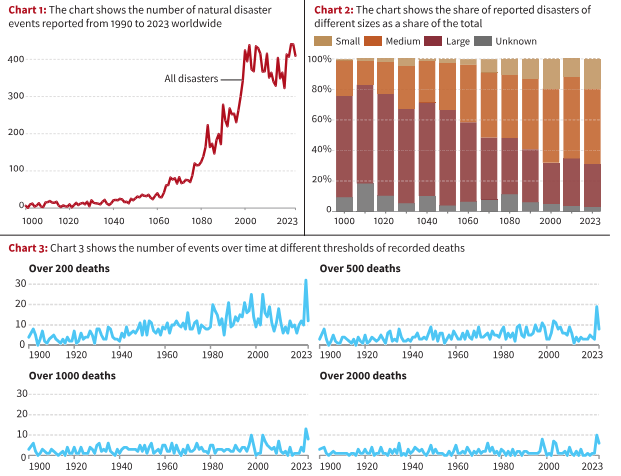
    The Food and Agriculture Organization (FAO) of the United Nations noted a rise in global disasters from roughly 100 yearly in the 1970s to about 400 in recent years, influenced partly by reporting biases.

    Recent Observations

    • Increase in Disaster Events: The number of disaster events reported worldwide has risen from 100 events per year in the 1970s to around 400 per year in the last 20 years. Patterns in disaster data reveal factors such as increased resilience, climate change, and improved humanitarian response.
    • Improved Reporting: Reporting of small events, particularly those with fewer than 200 deaths, has increased significantly since the 1980s and 1990s. Historical data mainly included major events due to limited interest and capacity for data collection in earlier periods.

    Missing Data and Limitations of Disaster Databases

    • Biases and Gaps in Historical Records: Earlier records predominantly captured major disasters, with smaller events often missing. Data coverage is particularly poor in low-income regions such as Sub-Saharan Africa and South Asia, where economic losses from disasters are frequently underreported.
    • Missing Economic Damage and Insured Losses: More than 40% of disasters between 1990 and 2020 lacked estimates of monetary damages. Insured damages were missing in 88% of disaster reports, and 96% needed records of reconstruction costs.
    • No coverage of Heat Events and Health Impacts: Reporting of heat events is concentrated in a few countries, suggesting underreporting in other regions. Indirect health effects of extreme temperatures, such as increased cardiovascular disease risk, are challenging to quantify and often underestimated.

    Need for Data (Way Forward) 

    • Improving Data Coverage: Enhanced data collection in low-income regions and better integration of smaller events into disaster databases are crucial.
    • Accurate Health Impact Quantification: Improved methods for estimating indirect health effects of extreme temperatures and other disaster-related conditions are needed. Utilising statistical methods to capture the broader health impacts of disasters can aid in better policy formulation.
    • Policy and Resilience Planning: Reliable and comprehensive disaster data are essential for effective policy-making and resilience planning. Data-driven insights and predictive analytics can help foresee the long-term impacts of disasters and guide regulatory measures to enhance disaster preparedness and response.

    Mains PYQ:

    Q Discuss the recent measures initiated in disaster management by the Government of India departing from the earlier reactive approach. (UPSC IAS/2020)

  • Economic Indicators and Various Reports On It- GDP, FD, EODB, WIR etc

    India’s GDP growth is impressive, but can it be sustained?

    Note4Students

    From UPSC perspective, the following things are important:

    Prelims level: Credit rating agencies

    Mains level: How to ensure the benefits of high growth trickle down to the lower income categories?

    Why in the news?

    The release of India’s GDP data was eagerly anticipated, especially following the recent upgrade in the “sovereign rating outlook” by S&P. It comes just days before the announcement of the union election results.

    Back2Basics: Rating Agency

    • A rating agency is a company that assesses the financial strength of companies and government entities, especially their ability to meet principal and interest payments on their debts.
    • Fitch Ratings, Moody’s Investors Service and Standard & Poor’s (S&P) are the big three international credit rating agencies controlling approximately 95% of the global rating business.
    • In India, six credit rating agencies are registered under the Securities and Exchange Board of India (SEBI): CRISIL, ICRA, CARE, SMERA, Fitch India and Brickwork Ratings.

    What does the data say?

    • India’s GDP growth for 2023-24 is 8.2%, exceeding market expectations and surpassing the previous year’s growth of 7%.
    • Fourth-quarter growth is particularly robust at 7.8%, with upward revisions in previous quarters contributing to overall growth.
    • Notable divergence of 1 percentage point between GDP and GVA growth in 2023-24, mainly due to increased net taxes.
    • Sectoral analysis reveals mixed performance, with manufacturing and construction showing strong growth, while agriculture remains subdued.
    • Expenditure-side breakdown highlights a slower growth rate in private consumption but healthy growth in investment, led mainly by government spending.

    Pillars need to be sustained:

    • Private Consumption: Ensuring sustained consumer spending, particularly by addressing high inflation and low wage growth, to maintain economic momentum.
    • Investment: Continuously stimulating both government and private sector investment to drive economic expansion and foster innovation and productivity.
    • Exports: Maintaining competitiveness in global markets and promoting export-oriented growth to leverage external demand and diversify revenue sources.

    How to ensure the benefits of high growth trickle down to the lower-income categories?

    • Improving Private Consumption: Focus on reviving private consumption, especially among lower-income groups. Address concerns of high inflation and low wage growth affecting consumer confidence.
    • Enhancing Employment Opportunities: Prioritize improving the employment scenario, particularly in sectors generating significant employment like IT and the unorganized sector. Recognize the importance of employment in sustaining consumption growth and overall economic stability.
    • Investment in Rural Development: Ensure spatial and temporal distribution of rainfall for rural demand recovery. Moderating food inflation and improving employment conditions crucial for rural consumption revival.
    • Boosting Private Capex Cycle: Create an environment conducive to private investment, focusing on policy certainty and confidence in economic stability. Encourage private sector investment through favourable policies and supportive regulatory frameworks.
    • Policy Focus on Inclusive Growth: Direct policy attention towards ensuring that the benefits of high growth extend to lower-income categories. Implement targeted social welfare programs and initiatives to support vulnerable groups and reduce income inequality.
    • Monitoring Global Developments: Stay vigilant of global economic trends and developments that could impact the Indian economy, such as geopolitical tensions and supply shocks. Adapt policies accordingly to mitigate risks and capitalize on opportunities for sustained economic growth.

    Conclusion: The Indian government aims to bolster equitable growth through measures such as stimulating private consumption, enhancing employment prospects, and fostering a conducive investment environment, supported by targeted policies and proactive global monitoring.

    Mains PYQ:

    Q Explain the difference between the computing methodology of India’s Gross Domestic Product (GDP) before the year 2015 and after the year 2015. (UPSC IAS/2021)

  • Health Sector – UHC, National Health Policy, Family Planning, Health Insurance, etc.

    Women often outlive men but in poorer health: what new Lancet study says

    Note4Students

    From UPSC perspective, the following things are important:

    Prelims level: Lancet Report;

    Mains level: Women Issues in Indian Society; Health Issues;

    Why in the news?

    Over 30 years, a study examining 20 diseases revealed minimal advancements in narrowing the disparity between genders as per “the Lancet Public Health Journal”.

    What does the New Lancet report say?

    • On Health Disparities: The study highlights that women tend to suffer more from lower back pain, depression, and headaches, while men have shorter life expectancies due to higher rates of road accidents, cardiovascular diseases, and, recently, COVID-19.
    • On Health Burden: Women spend more time in poor health, while men are more likely to die prematurely from severe conditions.
    • Overall Global Analysis: The analysis examines differences in the 20 leading causes of illness and death globally, considering all ages and regions.

    What Causes the Differences in Diseases Between Women and Men? (Observations)

    • Biological Factors:
        • Hormonal Differences: Hormonal fluctuations in women, such as during menstrual cycles, pregnancy, and menopause, can influence susceptibility to certain conditions like migraines, depression, and autoimmune diseases.
        • Genetic Variations: Variations in genes and genetic predispositions may contribute to differences in disease susceptibility and severity between sexes.
        • Anatomical Variances: Physiological differences, such as in skeletal structure and hormonal regulation, can affect the manifestation of certain diseases like lower back pain and reproductive disorders.
    • Societal and Gender Norms:
        • Healthcare-Seeking: Societal norms and gender roles may influence healthcare-seeking behaviors, with men often less likely to seek medical attention for mental health issues due to perceived notions of masculinity.
        • Occupational Hazards: Occupational differences between genders can lead to varying exposures to health risks, with certain professions associated with higher rates of injury or exposure to harmful substances.
        • Socioeconomic Factors: Disparities in socioeconomic status can impact disease prevalence and outcomes differently for women and men.
    • Healthcare System Bias:
        • Diagnostic Bias: Gender biases in healthcare may result in underdiagnosis or misdiagnosis of certain conditions in women, leading to delays in treatment and poorer health outcomes.
        • Treatment Disparities: Differences in treatment approaches and responses may exist between sexes, with women sometimes receiving less aggressive treatment for cardiovascular diseases or being undertreated for pain conditions.
        • Research Bias: Historically, medical research has often focused on male subjects, leading to a lack of understanding of how diseases manifest and progress differently in women.
    • No Improvement in Care for Women Over Time
      • Stable Gender Gap: Despite overall health improvements, the disparity between male and female health conditions remains stable.
      • Conditions Affecting Women: Conditions like lower back pain and depressive disorders have shown little to no decrease over time compared to male-dominated conditions.
      • Reproductive Focus: Global health systems have historically focused on women’s reproductive health, neglecting other significant health issues affecting women.

    What Needs to Be Done (Way Forward)

    • Better Data Collection: Governments should consistently collect and categorize health data by sex and gender to better understand and address health disparities.
    • Targeted Health Interventions: Specific health interventions should be developed and implemented based on detailed sex and gender data.
    • Increased Funding: More financial resources should be allocated to underfunded conditions that disproportionately affect women, such as mental health.
    • Addressing Healthcare Bias: Efforts should be made to eliminate biases in healthcare to ensure women receive appropriate and timely treatment for their conditions.

    Mains PYQ: 

    Q Can the vicious cycle of gender inequality, poverty and malnutrition be broken through microfinancing of women SHGs? Explain with examples. (UPSC IAS/2021)

  • Capital Markets: Challenges and Developments

    Can domestic MFs invest in their overseas counterparts?

    Note4Students

    From UPSC perspective, the following things are important:

    Prelims level: Function of SEBI

    Mains level: Market Regulations in India;

    Why in the news?

    SEBI issued a consultation paper, proposing a framework to enable domestic Mutual Funds (MFs) to invest in their overseas counterparts or Unit Trusts (UTs) that allocate a portion of their assets to Indian securities.

    About the Framework for Facilitating Investments by Domestic Mutual Funds (MFs)

    • Aim: To clarify the process and regulations surrounding such investments to encourage domestic MFs to diversify globally while maintaining limited exposure to Indian securities.

    About the Proposals:

    • On Investment Cap: SEBI proposes that overseas instruments being considered for investment by domestic MFs must not have more than 20% exposure to Indian securities.
      • This cap is intended to balance facilitating global investments while preventing excessive exposure to Indian markets.
    • On Pooling of Contributions: Indian MFs must ensure that all investors of the overseas MF/UT pool their contributions into a single investment vehicle. This ensures fair distribution of gains among investors, proportional to their contributions, without any preferential treatment.
    • On Autonomous Management: Investments must be made autonomously by the manager of the overseas instrument, without influence from investors or undisclosed parties, to avoid conflicts of interest.
    • About Transparency and Disclosure: SEBI requires periodic public disclosures of the portfolios of such overseas MF/UTs for transparency.
    • No Advisory Agreements: SEBI warns against any advisory agreement between the Indian MF and the overseas MF/UT to prevent conflicts of interest and avoid undue advantage.
    • On Observance Period: If an overseas instrument breaches the 20% limit, the Indian MF scheme will enter a six-month observance period for rebalancing the portfolio.
      • Further investments will only be allowed when the exposure is below the limit. If not rebalanced within six months, the MF must liquidate its investment in the overseas instrument.

    Impacts of the Regulation

    • Diversification of Opportunities: The framework provides a structured path for Indian MFs to invest in overseas instruments, enhancing diversification opportunities for Indian investors.
    • Market Transparency: The requirement for periodic public disclosures of portfolios will increase transparency and investor confidence in overseas investments.
    • Risk Management: The 20% exposure cap and autonomous management of investments help mitigate risks associated with excessive exposure to Indian securities and conflicts of interest.
    • Compliance Burden: The need to adhere to strict regulations and rebalance portfolios within specified periods may increase the compliance burden on domestic MFs.
    • Potential for Growth: By facilitating global investments, the framework can potentially attract more investors to Indian mutual funds, contributing to the growth of the mutual fund industry in India.

    What are the concerns associated with this framework?

    • RBI’s Upper Limit: The Reserve Bank of India’s (RBI) upper limit for overseas investment by mutual funds poses a concern. RBI Governor Shaktikanta Das indicated there are no plans to increase this limit, which means the overall industry limit for overseas investments is already exhausted.
    • Practical Impact: As the industry limit for overseas investments is effectively exhausted, the changes to regulations may not have an immediate practical impact, limiting the diversification opportunities for Indian investors.
    • Implementation and Compliance: Ensuring compliance with the 20% exposure cap and other regulations may pose challenges for domestic MFs, requiring careful monitoring and management of their overseas investments.

    Conclusion: Need to establish collaborations with global investment firms to gain insights and best practices in managing overseas investments. Learning from established global players can help Indian mutual funds navigate the complexities of international markets more effectively.

    Mains PYQ:

    Q The product diversification of financial institutions and insurance companies, resulting in overlapping of products and services strengthens the case for the merger of the two regulatory agencies, namely SEBI and IRDA. Justify. (UPSC IAS/2013)

  • Economic Indicators and Various Reports On It- GDP, FD, EODB, WIR etc

    Does inequality lead to growth? | Explained

    Note4Students

    From UPSC perspective, the following things are important:

    Prelims level: Inequality and Democratic Governance;

    Why in the news?

    Studies conducted by researchers from “the Paris School of Economics” indicate that inequality in contemporary India surpasses that of colonial times.

    How does Inequality harm Democratic processes?

    • Concentration of Power: Inequality can lead to the concentration of monopoly power among a few capitalists relative to the labor force. This concentration allows dominant business groups to set prices, resulting in lower real wages and reduced purchasing power for the majority.
    • Impact on Consumption and Welfare: High inequality can negatively impact consumption and welfare due to higher mark-ups and lower real wages.
      • Lower real wages mean that workers can afford fewer goods, which reduces overall consumption and welfare.
    • Effect on Democratic Processes: Economic inequality can translate into unequal political power, undermining democratic processes.
      • Those with significant wealth can have disproportionate influence over political decisions, policies, and elections, leading to governance that favours the wealthy over the general populace.

    How Redistribution and Growth Can Work Together

    • Wealth Taxes and Redistribution: Taxing wealth and redistributing it can enhance economic growth by increasing incomes and consumption among the lower and middle classes, who have a higher propensity to consume.
    • Multiplier Effect: Redistribution can strengthen the multiplier effect, where an initial increase in investment leads to a greater overall increase in income and consumption. Higher incomes among workers and goods-sellers lead to more purchases, driving further economic activity and growth.
    • Investment and Profit Expectations: Investment is driven by future profit expectations rather than past wealth. Therefore, taxing wealth does not necessarily reduce investment.
    • Creation of New Entrepreneurs: Redistribution can support the emergence of new entrepreneurs by providing financial resources and reducing dependence on wage employment. This can foster innovation and competition, further contributing to economic growth.
    • Curtailing Monopolies: Reducing monopolistic power through redistribution and other policy measures can lower prices and increase real wages. Higher real wages boost demand, leading to increased investment and economic expansion.

    Conclusion:  Addressing inequality through redistribution can promote inclusive growth, empowering marginalized communities and advancing progress towards a more equitable society, essential for fulfilling SDG Goal 10 (Reduced Inequalities).


    Mains PYQ:

    Q How did land reforms in some parts of the country help to improve the socio-economic conditions of marginal and small farmers? (UPSC IAS/2021)

  • Women empowerment issues – Jobs,Reservation and education

    Fewer women are being hired for leadership positions

    Note4Students

    From UPSC perspective, the following things are important:

    Mains level: Women Issues;

    Why in the news?

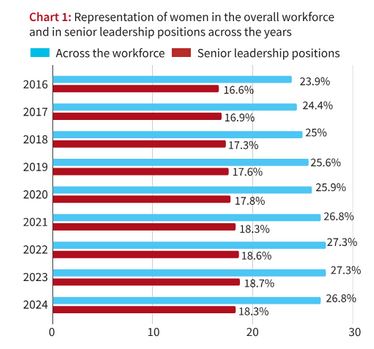
    Although women’s representation in the workforce has grown over the years “LinkedIn’s Economic Graph data”  indicates that progress has stalled since 2022 and declined in 2024.

    What does the data show?

    • Representation of women in the workforce has increased over the years but progress has stalled since 2022 and declined in 2024. The promotion of women to senior and leadership roles has stagnated in recent years.
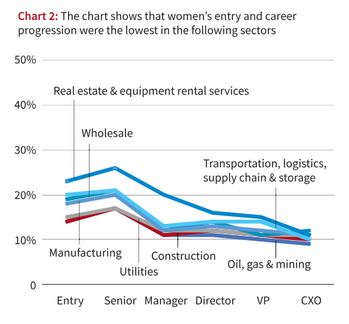
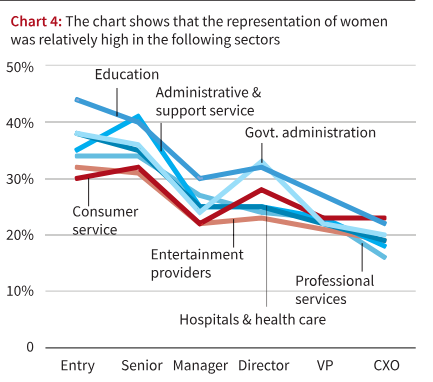
    • Sectors like healthcare, education, administrative, and support services have higher female representation in senior positions, while sectors like manufacturing, construction, oil, and gas have poor representation.

    Representation of women in the overall workforce and in senior positions 

    Entry and career progression of women  


    • Oil, Gas, and Mining: Among the lowest representation of women in leadership roles, at around 11%.
    • Construction: Very few women are represented, especially in senior roles.
    • Utilities: Women face significant barriers in advancing to leadership positions.
    • Wholesale: Low entry and career progression for women.
    • Manufacturing: Poor representation of women across all positions, including senior roles.
    • Transportation: Limited career progression opportunities for women.
    • Real Estate: Few women in leadership positions, with significant entry barriers.

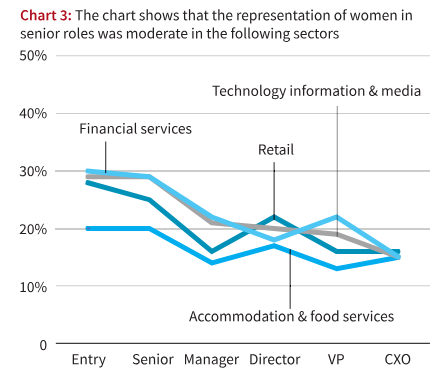
    About the accommodation and other services  

    • Representation of women in senior roles within the accommodation and food services sector falls between 15% and 20%.
    • This sector exhibits a moderate level of female representation compared to other industries.
    • While not the highest, it surpasses sectors like oil, gas, mining, construction, utilities, wholesale, manufacturing, transportation, and real estate, where women hold just 11%-14% of leadership positions.
    • The data suggests there’s still room for improvement in increasing the number of women in leadership roles within the accommodation and food services sector.
    • Efforts to improve gender diversity and inclusion should be continued and perhaps intensified in this sector, aligning with broader industry and societal goals for gender parity in the workforce.

    Administrative and support services:

    • Women hold senior positions in administrative and support services at a rate of 22% to 30%, indicating a moderate level of representation compared to other sectors.
    • This sector demonstrates a higher level of female representation in leadership roles compared to industries like oil, gas, mining, construction, utilities, wholesale, manufacturing, transportation, and real estate, where women’s leadership roles range from 11% to 14%.
    • The education sector boasts the highest representation of women in senior positions at 30%, suggesting that sectors like administrative and support services still have room for improvement.
    • Efforts to promote gender diversity and inclusion within administrative and support services should be sustained, aiming for further increases in the representation of women in leadership roles.
    • Continued focus on addressing biases, societal norms, and structural barriers is essential to achieving greater gender parity and advancement opportunities for women within this sector.

    Way Forward

    • Efforts by policymakers and business leaders are needed to tackle challenges faced by women in reaching leadership roles, focusing on “women-led development”.
    • Stricter enforcement of laws such as the Companies Act, 2013, which mandates women directors on company boards. Between April 2018 and December 2023, 507 companies were fined for non-compliance, with 90% being listed companies.

    Mains PYQ 

    Q Micro-Finance as an anti-poverty vaccine, is aimed at asset creation and income security of the rural poor in India”. Evaluate the role of the Self Help Groups in achieving the twin objectives of empowering women in rural India. (UPSC IAS/2020)