💥UPSC 2026, 2027, 2028 UAP Mentorship (March Batch) + Access XFactor Notes & Microthemes PDF

Type: PIB

  • Higher Education – RUSA, NIRF, HEFA, etc.

    [pib] Unnat Bharat Abhiyan 2.0

    Note4Students

    From UPSC perspective, the following things are important:

    Prelims level: Unnat Bharat Abhiyan 2.0

    Mains level: Various initiaitves for rural transformation

    The Union Minister for Human Resource Development has informed Lok Sabha about the progress of the Unnat Bharat Abhiyan (UBA).

    Unnat Bharat Abhiyan 2.0

    • Unnat Bharat Abhiyan 2.0 is the upgraded version of Unnat Bharat Abhiyan 1.0.
    • The scheme is extended to all educational institutes; however, under UBA 2.0 Participating institutes are selected based on the fulfilment of certain criteria.

    About UBA

    • It is a flagship programme of the Ministry of HRD, which aims to link the Higher Education Institutions with a set of at least 5 villages so that these institutions can contribute to the economic and social betterment of these village communities using their knowledge base.
    • It is a significant initiative where all Higher Learning Institutes have been involved for participation in development activities, particularly in rural areas.
    • It also aims to create a virtuous cycle between the society and an inclusive university system, with the latter providing knowledge base; practices for emerging livelihoods and to upgrade the capabilities of both the public and private sectors.
    • Currently under the scheme UBA, 13072 villages have been adopted by 2474 Institutes.
  • Labour, Jobs and Employment – Harmonization of labour laws, gender gap, unemployment, etc.

    [pib] Employees’ Pension Scheme (Amendment) Scheme, 2020

    Note4Students

    From UPSC perspective, the following things are important:

    Prelims level: EPS Scheme

    Mains level: Scope and benefits of EPS

    The Union Ministry of Labour & Employment has informed about the total enrollments under EPS.

    Employees Pension Scheme (EPS)

    • EPS is a social security scheme that was launched in 1995 and is facilitated by EPFO.
    • The scheme makes provisions for pensions for the employees in the organized sector after retirement at the age of 58 years.
    • Employees who are members of EPFO automatically become eligible for EPS.
    • Both employer and employee contribute 12% of employee’s monthly salary (basic wages plus dearness allowance) to the Employees’ Provident Fund (EPF) scheme.
    • EPF scheme is mandatory for employees who draw a basic wage of Rs. 15,000 per month.
    • Of the employer’s share of 12 %, 8.33 % is diverted towards the EPS.

    Features of the 2020 Amendment

    • EPS pensioners will get normal pension even after getting a reduced pension due to commutation.
    • On retirement, if the employee opts for commutation of pension, a portion is paid as a lump sum based on the commutation factor while on the balance the pension begins.
    • In simple terms, commutation means a lump sum payment in lieu of periodic payments of pension.
    • In such a case, the amount of pension will be lower than the amount of pension without any commutation.
    • The amendment seeks to restore the original amount of pension as per the commutation table, after 15 years equal to the same amount as it would have been without commutation.
  • Port Infrastructure and Shipping Industry – Sagarmala Project, SDC, CEZ, etc.

    Ro-Pax Ferry Service

    Note4Students

    From UPSC perspective, the following things are important:

    Prelims level: Ro-Pax Ferry

    Mains level: Not Much


    Mumbai – the first metropolitan city in India has introduced Ro-Pax service to its transport infrastructure. M2M1 Ferry Vessel has commenced operations between Mumbai and Mandwa.

    Ro-Pax Ferry

    • Ro-Pax Ferry is a ferry that combines the features of a cruise ship and a roll-on/roll-off service.
    • This service has brought much to the relief of daily commuters, job seekers and holiday-goers travelling between Mumbai and Mandwa and also other parts of Alibaug.
    • Ro-Pax service enables people to ferry along with their vehicles on board, between Mumbai and Mandwa.
    • With this, Mumbai, Alibaug and the adjoining Konkan region will experience a boost in tourism, hinterland connectivity and also job opportunities.
  • Global Geological And Climatic Events

    [pib] Effects of Himalayan slip on its Hydrology

    Researchers from the Indian Institute of Geomagnetism have found the mighty Himalayas subside and move up depending on the seasonal changes in groundwater.

    Tectonic activity and groundwater

    • The Himalayan foothills and the Indo-Gangetic plain are sinking because its contiguous areas are rising due to tectonic activity associated with landmass movement or continental drift.
    • The new study shows that subsidence and uplift are found to be associated with seasonal changes in groundwater, apart from the normal, common reasons.
    • Water acts as a lubricating agent, and hence when there is water in the dry season, the rate of the slip of the fault in this region is reduced.
    • In the Himalaya, seasonal water from glaciers, as well as monsoon precipitation, plays a key role in the deformation of the crust and the seismicity associated with it.
    • The subsidence rate is associated with groundwater consumption.

    Findings of the study

    • The researchers have made the combined use of GPS and Gravity Recovery And Climate Experiment (GRACE) data, which has made it possible for them to quantify the variations of hydrologic mass.
    • The GRACE satellites, launched by the US in 2002, monitor changes in water and snow stores on the continents.
    • The combined data suggest a 12% reduction in the rate of the subsurface slip. This slip refers to how fast the fault is slipping relative to the foot and hanging wall.
    • The slip occurs at the Main Himalayan Thrust (MHT), due to hydrological variations and human activities, over which there is the periodic release of accumulated strain.

    About GRACE Mission

    • The Gravity Recovery and Climate Experiment (GRACE) was a joint mission of NASA and the German Aerospace Center.
    • Twin satellites took detailed measurements of Earth’s gravity field anomalies from its launch in March 2002 to the end of its science mission in October 2017.
    • By measuring gravity anomalies, GRACE showed how mass is distributed around the planet and how it varies over time.


  • Women empowerment issues – Jobs,Reservation and education

    [pib] National Creche Scheme

    The WCD Minister has informed about some progress in the National Creche Scheme. As of today, 6453 creches are functional across the country under the Scheme.

    National Creche Scheme

    • Earlier named as Rajiv Gandhi National Creche Scheme, the NCS is being implemented as a Centrally Sponsored Scheme through States/UTs with effect from 1.1.2017.
    • It aims to provide daycare facilities to children (age group of 6 months to 6 years) of working mothers.

    Salient features of the Scheme

    • Daycare Facilities including Sleeping Facilities.
    • Early Stimulation for children below 3 years and pre-school education for 3 to 6 years old children.
    • Supplementary Nutrition ( to be locally sourced)
    • Growth Monitoring
    • Health Check-up and Immunization

    Further, the guidelines provide that :

    • Crèches shall be open for 26 days in a month and for seven and a half (7-1/2) hours per day.
    • The number of children in the crèche should not be more than 25 per crèche with 01 Worker and 01 helpers respectively.
    • User charges to bring in an element of community ownership and collected as under:
      1. BPL families – Rs 20/- per child per month.
      2. Families with Income (Both Parents) of up to Rs. 12,000/- per month – Rs. 100/- per child per month
      3. Families with Income (Both Parents) of above Rs. 12,000/- per month – Rs. 200/- per child per month.


  • Air Pollution

    [pib] Methanotrophs: the methane-oxidizing bacteria

    Note4Students

    From UPSC perspective, the following things are important:

    Prelims level: Methanotrophs

    Mains level: Methane emission


    Scientists at Agharkar Research Institute (ARI), Pune have isolated 45 different strains of methanotrophic bacteria which have been found to be capable of reducing methane emissions from rice plants.

    What are Methanotrophs?

    • They are bacteria that metabolize and convert methane into carbon-di-oxide.
    • They can effectively reduce the emission of methane, which is the second most important greenhouse gas (GHG) and 26 times more potent as compared to carbon-di-oxide.
    • In rice fields, Methanotrophs are active near the roots or soil-water interfaces.
    • Besides methane mitigation studies, Methanotrophs can also be used in methane value addition (valorization) studies.
    • Bio-methane generated from waste can be used by the Methanotrophs and can be converted to value-added products such as single-cell proteins, carotenoids, biodiesel, and so on.

    Why rice fields?

    • Rice fields are human-made wetlands and are waterlogged for a considerable period. Anaerobic degradation of organic matter results in the generation of methane.
    • Rice fields contribute to nearly 10% of global methane emissions.
    • Very few studies in the world have focused on Methanotrophs from tropical wetlands or tropical rice fields.
    • Practically no cultures of indigenously isolated Methanotrophs from India were available.
    • Native and relevant Methanotrophs isolated from rice fields can be excellent models to understand the effect of various factors on methane mitigation.

    Must read:

    https://www.civilsdaily.com/news/greenhouse-gas-emissions-from-indian-paddy-fields-very-high-ny-based-study/


  • Coal and Mining Sector

    [pib] The Mineral Laws (Amendment) Bill, 2020

    Note4Students

    From UPSC perspective, the following things are important:

    Prelims level: Not Much

    Mains level: Mining regulations in India

    Parliament has passed The Mineral Laws (Amendment) Bill, 2020 for amendments in Mines & Mineral (Development and Regulation) Act 1957 and The Coal Mines (Special Provisions) Act, 2015. The bill will transform the mining sector in the country boosting coal production and reducing dependence on imports.

    Acts to be amended

    • The MMDR Act regulates the overall mining sector in India.
    • The CMSP Act provides for the auction and allocation of mines whose allocation was cancelled by the Supreme Court in 2014.
    • Schedule I of the Act provides a list of all such mines; Schedule II and III are sub-classes of the mines listed in the Schedule I.
    • Schedule II mines are those where production had already started then, and Schedule III mines are ones that had been earmarked for a specified end-use.

    Features of the Mineral Laws (Amendment) Bill, 2020 

    Removal of restriction on end-use of coal

    • Currently, companies acquiring Schedule II and Schedule III coal mines through auctions can use the coal produced only for specified end-uses such as power generation and steel production.
    • The Bill removes this restriction on the use of coal mined by such companies.
    • Companies will be allowed to carry on coal mining operation for own consumption, sale or for any other purposes, as may be specified by the central government.

    Eligibility for auction of coal and lignite blocks

    • The Bill clarifies that the companies need not possess any prior coal mining experience in India in order to participate in the auction of coal and lignite blocks.
    • Further, the competitive bidding process for auction of coal and lignite blocks will not apply to mines considered for allotment to:
    1. a government company or its joint venture for own consumption, sale or any other specified purpose; and
    2. a company that has been awarded a power project on the basis of a competitive bid for tariff.

    Composite license for prospecting and mining

    • Currently, separate licenses are provided for prospecting and mining of coal and lignite, called prospecting license, and mining lease, respectively.
    • Prospecting includes exploring, locating, or finding mineral deposit.  The Bill adds a new type of license, called prospecting license-cum-mining lease.
    • This will be a composite license providing for both prospecting and mining activities.

    Non-exclusive reconnaissance permits holders to get other licenses

    • Currently, the holders of non-exclusive reconnaissance permit for exploration of certain specified minerals are not entitled to obtain a prospecting license or mining lease.
    • Reconnaissance means preliminary prospecting of a mineral through certain surveys.
    • The Bill provides that the holders of such permits may apply for a prospecting license-cum-mining lease or mining lease.   This will apply to certain licensees as prescribed in the Bill.

    Transfer of statutory clearances to new bidders

    • Currently,upon expiry, mining leases for specified minerals (minerals other than coal, lignite, and atomic minerals) can be transferred to new persons through auction.
    • This new lessee is required to obtain statutory clearances before starting mining operations.
    • The Bill provides that the various approvals, licenses, and clearances given to the previous lessee will be extended to the successful bidder for a period of two years.

    Reallocation after termination of the allocations

    • The CMSP Act provides for the termination of allotment orders of coal mines in certain cases.
    • The Bill adds that such mines may be reallocated through auction or allotment as may be determined by the central government.
    • The central government will appoint a designated custodian to manage these mines until they are reallocated.

    Prior approval from the central government

    • Under the MMDR Act, state governments require prior approval of the central government for granting reconnaissance permit, prospecting license, or mining lease for coal and lignite.
    • The Bill provides that prior approval of the central government will not be required in granting these licenses for coal and lignite, in certain cases.
    • These include cases where: (i) the allocation has been done by the central government, and (ii) the mining block has been reserved to conserve a mineral.

    Advance action for auction

    • Under the MMDR Act, mining leases for specified minerals (minerals other than coal, lignite, and atomic minerals) are auctioned on the expiry of the lease period.
    • The Bill provides that state governments can take advance action for auction of a mining lease before its expiry.

    With inputs from PRS India

  • Innovations in Biotechnology and Medical Sciences

    [pib] ARI-516 Grape Variety

    Note4Students

    From UPSC perspective, the following things are important:

    Prelims level: ARI-516

    Mains level: Not Much


    Pune’s Agharkar Research Institute (ARI), an autonomous institute of the DST has developed a hybrid variety of grapes which is resistant to fungal diseases, high yielding and has excellent juice quality.

    ARI-516

    • The hybrid variety ARI-516 has been developed by interbreeding of two species from the same genus — Catawba variety of Vitis labrusca and Beauty seedless variety of Vitis vinifera.
    • It is a result of collaboration between Maharashtra Association for the Cultivation of Science (MACS) and ARCI and can benefit farmers, the processing industry and consumers.
    • This variety of grapes is resistant to fungal diseases, high yielding and has excellent juice quality.
    • The fungal resistance of ARI-516 has been derived from Catawba, which is an American grape variety.

    Commercial benefits

    • It is also suitable for preparation of juice, raisin, jam and red wine and farmers are enthusiastically adopting the variety.
    • It has superior quality fruits and higher yield per unit area.
    • An early ripening hybrid, it matures in 110 – 120 days after pruning.
    • Being moderately resistant to a majority of fungal diseases, its cost of production is lower.

    Back2Basics

    Grape production in India

    • India ranks twelfth in the world in terms of grape production.
    • About 78% of grape production in India is utilized for consumption, 17-20 % for raisin production, 1.5 % for wine and 0.5 % for juice.
    • Maharashtra leads in the production of grapes in India with a share of 81.22 %. A negligible share of grapes is used for juice production.
    • A majority of farmers in Maharashtra cultivate ‘Thompson seedless’ and its clones for table purpose or raisin making.
  • Forest Conservation Efforts – NFP, Western Ghats, etc.

    [pib] Person in news: Gaura Devi

    Note4Students

    From UPSC perspective, the following things are important:

    Prelims level: Gaura Devi and her contributions in Chipko Movement

    Mains level: Chipko Movement


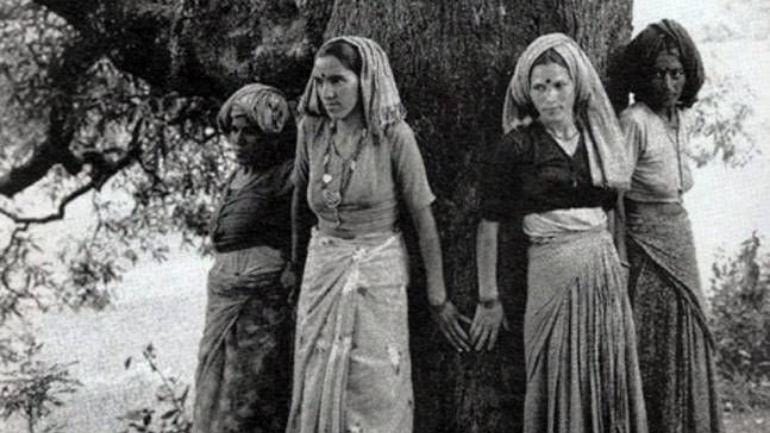
    Union HRD Minister along with senior women officers of the Ministry planted a sapling in memory of Gaura Devi, Chipko Activist in New Delhi.

    Gaura Devi

    • Gaura Devi was born in 1925 in a village named Lata in the state of Uttarakhand. She moved to a nearby village named Reni by the Alaknanda River.
    • She was elected to lead the Mahila Mangal Dal (Women’s Welfare Association) in the wake of the Chipko movement. The organization worked on the protection of community forests.

    Her contributions in Chipko Movement

    • Gaura Devi came to notice in 1974 when she was told that local loggers were cutting the trees.
    • The men of Reni village had been tricked out of the village by news that the government was going to pay out compensation for land used by the army.
    • She challenged the men to shoot her instead of cutting down the trees and she described the forest with her maika (mother’s house).
    • They managed to halt their work by hugging the trees despite the abuse of the armed loggers.
    • They kept guard of the trees that night and over the next three or four days other villages and villagers joined the action. The loggers left leaving the trees.

    Impact

    • After this incident, the Uttar Pradesh Government established a committee of experts to investigate the issue of felling of trees, and the lumber company withdrew its men from Reni.
    • The committee stated that the Reni forest was an ecologically sensitive area and that no trees should be felled there.
    • Thereafter the government of Uttar Pradesh placed a 10-year ban on all tree-felling in an area of over 1150 km².
  • Innovations in Sciences, IT, Computers, Robotics and Nanotechnology

    [pib] Quantum coin or ‘qubit’ and Entanglement Theory

    Note4Students

    From UPSC perspective, the following things are important:

    Prelims level: Qubit, Quantum Entanglement

    Mains level: Quantum Computing and its applications

    Researchers from Raman Research Institute (RRI), an autonomous institution under the Dept. of Science & Technology, have devised a new test for fairness of quantum coin or ‘qubit’ using entanglement theory. The Qubit is the basic unit of information in a quantum computer.

    Entanglement Theory

    • It is a special type of correlation that exists in the quantum world with no classical counterpart.
    • The researchers from RRI made use of this quantum resource to arrive at a test for fairness of a quantum coin (a qubit).
    • Their strategy, which makes use of entanglement, enables better discrimination between quantum states. Such advantage is valuable in quantum sensors.
    • This work is a significant contribution to the domain of quantum state discrimination, which is an essential aspect of quantum information science.
    • It brings out the crucial role of entanglement in improving our ability to discriminate quantum states.
    • In this work the researchers concretely implemented the theoretical idea on the simulation facility of the IBM quantum computer.

    Quantum coins

    • By repeated trials, one can determine the fairness of a classical coin with a confidence which grows with the number of trials.
    • A quantum coin can be in a superposition of heads and tails.
    • Given a string of qubits representing a series of trials, one can measure them individually and determine the state with a certain confidence.
    • The team has shown that there is an improved strategy which measures the qubits after entangling them, which leads to a greater confidence.

    Significance

    • This is a significant contribution to quantum state discrimination, an essential aspect of quantum information science which is expected to influence quantum sensing.
    • The domain of Quantum Information and Quantum Computing Technology is a growing area of research which is expected to influence Data Processing, which in turn, plays a central role in our lives in this Information Age.
    • For instance, bank transactions, online shopping and so on crucially depend on the efficiency of information transfer.
    • Thus the recent work on quantum state discrimination is expected to be valuable in people’s lives in the current era.