💥UPSC 2026, 2027, 2028 UAP Mentorship (March Batch) + Access XFactor Notes & Microthemes PDF

Archives: News

  • Cyber Security – CERTs, Policy, etc

    Compound effect: On digital arrest scams

    Introduction

    The Supreme Court of India’s recent directive for a comprehensive probe into proliferating digital scams underscores the scale and sophistication of cyber fraud plaguing Indian citizens. The Court’s focus on “digital arrest” scams, where criminals impersonate law enforcement officials to extort money highlights a disturbing transformation in global cybercrime: industrial-scale scam operations embedded in Southeast Asian conflict zones.

    Why in the News

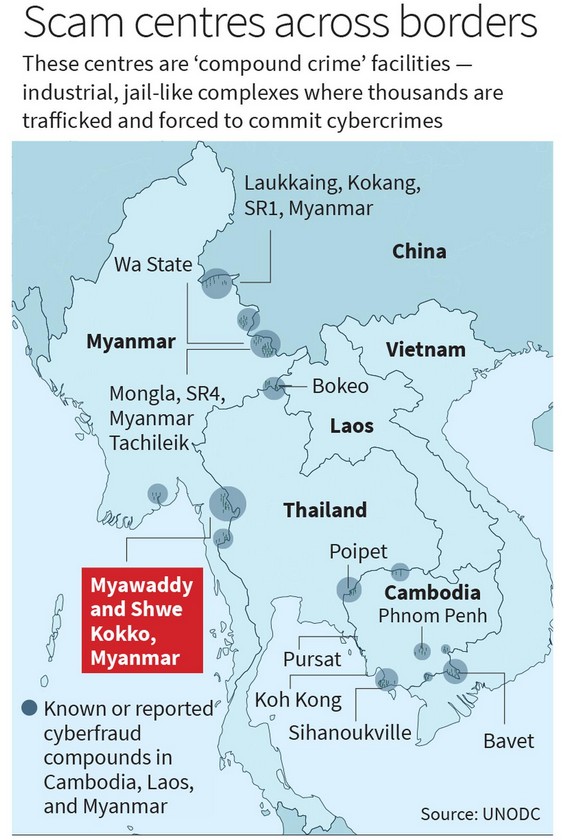
    For the first time, the Supreme Court has intervened directly to address the globalised architecture of digital scams targeting Indian citizens. These scams run from “scam compounds” in Myanmar, Cambodia, and other parts of Southeast Asia combine human trafficking, digital slavery, and organised crime. Thousands of Indians have fallen victim, some trafficked to operate scams, others defrauded online. The situation represents both a national security concern and a humanitarian crisis, demanding urgent multilateral action.

    Understanding the ‘Scam Compound’ Phenomenon

    1. Industrial-scale operations: Scam compounds operate from conflict-ridden or special economic zones in Myanmar, Cambodia, and Laos, exploiting weak governance.
    2. Cross-border architecture: These are not isolated crimes but coordinated, transnational enterprises involving militias, private entities, and local regimes.
    3. Digital slavery model: Trafficked individuals are forced, under threat and torture, to perpetrate scams such as “digital arrest,” “pig butchering,” and crypto investment frauds.
    4. State complicity: In Myanmar, regime-backed Border Guard Forces allegedly facilitate these compounds, converting scams into revenue streams for military operations.
    KK Park Cyber Scam Hub in Myanmar

    How the Digital Scam Network Operates

    1. Recruitment through deception: Victims are lured by fake job ads in cities like Bangkok, offering attractive salaries under visa-free entry regimes.
    2. Trafficking & confinement: Once recruited, they are trafficked into border regions controlled by ethnic militias in Myanmar and held captive in “digital sweatshops.”
    3. Coercive work environment: Workers face violence, sexual harassment, and torture if they fail to meet scam targets.
    4. Key scam types:
      1. “Digital arrest scams” impersonation of law enforcement to extort money.
      2. “Pig butchering scams” combining online romance and crypto fraud.
    5. Crypto laundering networks: Proceeds are funneled via money mules and institutions like Cambodia’s Huione Pay, then converted into cryptocurrency to evade tracing.

    Why Southeast Asia Became the Epicentre

    1. Conflict & weak governance: Myanmar’s post-2021 coup turmoil has enabled militia-run economies.
    2. Borderland lawlessness: Regions under Border Guard Forces function beyond formal state oversight.
    3. Economic desperation: Regional instability and poverty create fertile recruitment grounds.
    4. Regime complicity: Militias tax scam centres to fund armed operations, sustaining a vicious cycle of profit and repression.

    India’s Dual Crisis

    1. Forced scam labour: Thousands of Indian citizens trafficked and enslaved in these compounds.
    2. Domestic victimisation: Thousands more in India fall prey to online frauds orchestrated by these same captives.
    3. Diplomatic and enforcement challenge: Tackling both victim rescue abroad and fraud prevention at home requires synchronised national and international coordination.

    Policy Imperatives and India’s Way Forward

    1. Public awareness campaigns: The Reserve Bank of India and Union Ministries must amplify citizen education about emerging digital fraud patterns.
    2. Cybercrime infrastructure: Strengthening cyber policing, digital forensics, and cross-border data sharing frameworks.
    3. Regional cooperation: Collaborate with China, Thailand, Vietnam, and affected ASEAN nations to forge joint task forces.
    4. Diplomatic pressure: Use bilateral and multilateral diplomacy to pressurise Myanmar’s junta and Cambodia’s regime to dismantle scam hubs.
    5. Global recognition: Mobilise the United Nations to classify this crisis as a modern manifestation of slavery needing urgent international intervention.

    Conclusion

    The proliferation of scam compounds across Southeast Asia exposes the dark underbelly of the global digital economy where technology meets trafficking. For India, the challenge is dual: protect citizens from victimisation and rescue those coerced into perpetration. This crisis demands that India integrate cyber security, diplomacy, and human rights enforcement under one coordinated regional framework.

    PYQ Relevance

    [UPSC 2021] Keeping in view India’s internal security, analyse the impact of cross-border cyber attacks. Also, discuss defensive measures against these sophisticated attacks.

    Linkage: This question directly relates to the rise of transnational scam compounds in Southeast Asia that exploit digital networks to target Indian citizens. It underscores the urgent need for coordinated international and domestic cyber defense frameworks.

  • Women empowerment issues – Jobs,Reservation and education

    Recalling the landmark Shah Bano Case

    Why in the News?

    The upcoming Bollywood film revisits the historic Shah Bano case (1985), one of India’s most politically charged legal battles.

    Recalling the landmark Shah Bano Case

    Background of the Case:

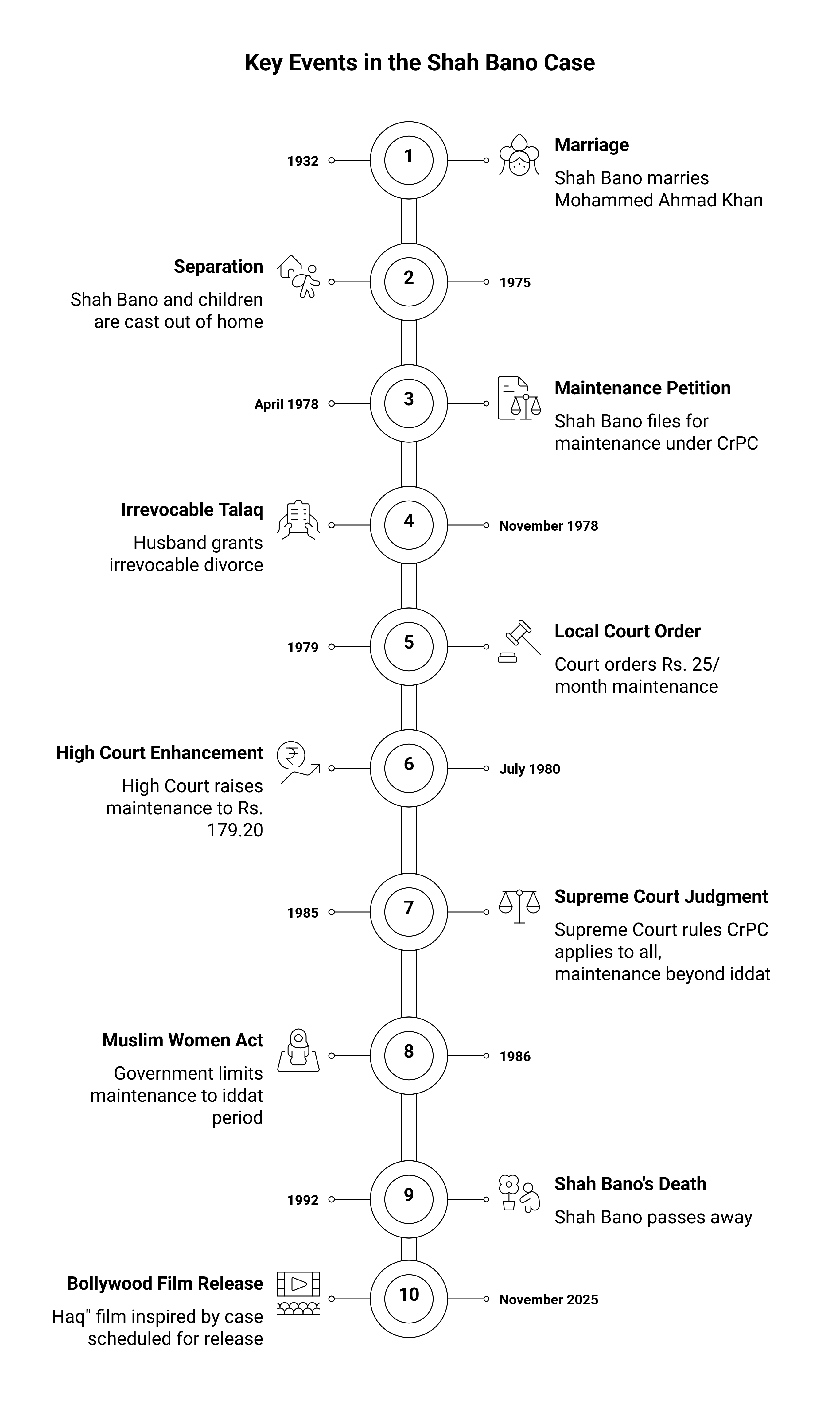
    • Origin: In 1978, Shah Bano Begum, a 62-year-old Muslim woman from Indore, was divorced by her husband, Mohammad Ahmad Khan, a lawyer, via triple talaq after 43 years of marriage.
    • Legal Action: She filed for maintenance under Section 125 of the CrPC (1973), a secular law ensuring financial support for dependents unable to maintain themselves.
    • Husband’s Argument: Claimed that under Muslim personal law, his obligation ended after the iddat period (~3 months) and that payment of mahr (dower) fulfilled his duty.
    • Lower Court Ruling: Ordered payment of ₹25/month; the Madhya Pradesh High Court raised it to ₹179.20. Khan appealed to the Supreme Court, triggering the landmark 1985 judgment.

    Supreme Court Verdict of April 23, 1985:

    • Bench & Ruling: A five-judge Constitution Bench led by CJI Y.V. Chandrachud dismissed the appeal, upholding the High Court’s decision.
    • Secular Applicability: Held that Section 125 CrPC applies to all religions, as its purpose is to prevent destitution, not to regulate personal law.
    • Maintenance Beyond Iddat: Affirmed that a divorced Muslim woman is entitled to maintenance beyond the iddat period if she cannot sustain herself.
    • Religious Harmony: Cited Quranic verses to show consistency between Islamic principles and maintenance under secular law.
    • Uniform Civil Code (UCC): Expressed concern that Article 44 remained a “dead letter,” urging steps toward a common civil code.

    Muslim Women (Protection of Rights on Divorce) Act, 1986:

    • Enactment: Passed after protests from Muslim organisations and AIMPLB, reversing the Shah Bano ruling.
    • Key Provision: Limited husband’s liability to maintenance during iddat, shifting later responsibility to relatives or Waqf Boards.
    • Judicial Interpretation:
      • Danial Latifi v. Union of India (2001) – Upheld the Act but read it progressively, requiring lump-sum payment within iddat for lifetime support.
      • Mohd. Abdul Samad v. State of Telangana (2024) – Reaffirmed that Muslim women may still claim relief under Section 125 CrPC, preserving the choice of remedy.

    Legacy and Significance:

    • Landmark Impact: Became a watershed case in India’s struggle between gender justice and religious identity.
    • Political Consequence: The 1986 Act was seen as appeasement politics, deepening the secularism debates.
    • Reform Catalyst: Revived the UCC discourse, influenced feminist legal reform, and reinforced constitutional morality.
    • Enduring Symbol: Continues to shape discussions on minority rights, women’s empowerment, and judicial activism in India’s plural legal framework.
    [UPSC 2020] Customs and traditions suppress reason, leading to obscurantism. Do you agree?


  • BRICS Summits

    BRICS Pay and the Push to De-dollarize Global Finance

    Why in the News?

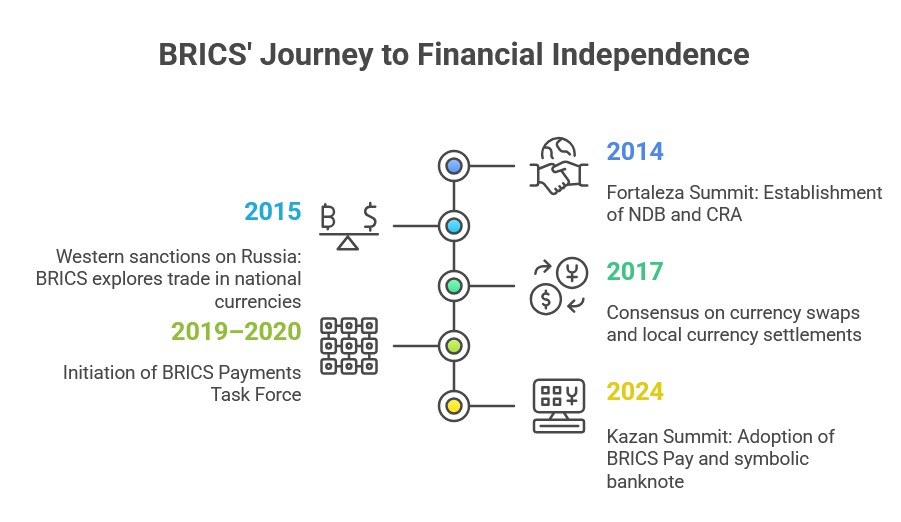
    Since 2014, BRICS nations have worked to cut dependence on the U.S. dollar, launching the New Development Bank (NDB), Contingent Reserve Arrangement (CRA), and now BRICS Pay to promote local currency trade and rival the SWIFT system.

    BRICS Pay and the Push to De-dollarize Global Finance

    About BRICS Pay Initiative:

    • Overview: BRICS Pay is a proposed cross-border digital payment and settlement platform developed by the BRICS nations (Brazil, Russia, India, China, South Africa) to facilitate trade in local currencies and reduce reliance on the U.S. dollar and the SWIFT network.
    • Origins: The idea emerged after the 2014 Fortaleza Summit, where BRICS established its own financial architecture, the New Development Bank (NDB) and the Contingent Reserve Arrangement (CRA).
    • Purpose: To enable direct financial transactions among member nations using local currencies, minimizing the role of Western-controlled financial systems and avoiding U.S.-led sanctions.
    • Development Path:
      • 2017: BRICS agreed to enhance currency cooperation via swaps, local currency settlements, and direct investments.
      • Early 2020s: The BRICS Payments Task Force (BPTF) was created to design interoperable systems.
      • 2024 Kazan Summit: Leaders highlighted strengthening of correspondent banking networks and settlements in local currencies under the BRICS Cross-Border Payments Initiative.
    • Prototype: A demo of BRICS Pay was unveiled in Moscow (October 2024), marking a concrete step toward implementation.
    • Supporting National Systems:
      • India: Unified Payments Interface (UPI)
      • China: Cross-Border Interbank Payment System (CIPS)
      • Russia: System for Transfer of Financial Messages (SPFS)
      • Brazil: Pix instant payment system
    • Strategic Importance: The initiative seeks to establish a self-reliant financial network, bypass SWIFT, and enhance monetary sovereignty among emerging economies.

    Back2Basics: Society for Worldwide Interbank Financial Telecommunication (SWIFT) System

    • Establishment: Founded in 1973 by 239 banks from 15 countries to standardize and secure cross-border financial communications.
    • Headquarters: La Hulpe, Belgium.
    • Nature: A messaging network, not a bank, it does not hold or transfer funds but enables secure interbank communication for financial transactions.
    • Coverage: Connects over 11,000 financial institutions across 200+ countries, making it the largest international payment messaging system.
    • Operation:
      • Assigns each member a Bank Identifier Code (BIC) of 8–11 characters.
      • Standardizes message formats to ensure seamless global financial communication.
      • Facilitates fund transfer instructions, trade settlements, and foreign exchange operations.
    • Governance:
      • Supervised by G10 central banks, the European Central Bank (ECB), and the National Bank of Belgium.
      • Managed by a 25-member board of directors, representing about 3,500 member institutions.
    • Strategic Role:
      • Forms the backbone of global finance, allowing efficient movement of capital.
      • Exclusion from SWIFT acts as a powerful economic sanction tool, isolating nations (e.g., Russia and Iran) from the international financial system.
    • Significance: SWIFT’s dominance reflects Western control over global finance, making it a central target for alternative networks like BRICS Pay, China’s CIPS, and Russia’s SPFS that seek a multipolar monetary order.


    [UPSC 2023] With reference to the Central Bank digital currencies, consider the following statements:

    1. It is possible to make payments in a digital currency without using US dollar or SWIFT system.

    2. A digital currency can be distributed with a condition programmed into it such as time-frame for spending it.

    Which of the statements given above is/are correct?

    Options: (a) 1 only (b) 2 only (c) Both 1 and 2* (d) Neither 1 nor 2


  • Gravitational Wave Observations

    Gamma-Ray Bursts from Black Hole ‘Morsels’ could expose Quantum Gravity

    Why in the News?

    A recent theoretical study (accepted in Nuclear Physics B, August 2025) introduces the idea of “black hole morsels”, tiny, asteroid-mass micro-black holes possibly formed during black hole mergers.

    What are Gamma-Ray Bursts (GRBs)?

    • Overview: They are extremely energetic cosmic explosions that emit intense bursts of gamma radiation, the highest-energy form of electromagnetic waves.
    • Discovery: First detected in the late 1960s by U.S. Vela satellites, initially built to monitor nuclear tests.
    • Duration-Based Classification:
      • Short GRBs: Lasting <2 seconds, typically formed by merging neutron stars or neutron stars–black hole collisions.
      • Long GRBs: Lasting 2–1000 seconds, arising from supernova collapses of massive stars (collapsars).
    • Energy Output: A single GRB can release as much energy in seconds as the Sun emits over its entire lifetime (~10⁵¹–10⁵⁴ ergs).
    • Afterglow: Follows the main burst in X-ray, optical, and radio wavelengths, allowing astronomers to study host galaxies and distances.

    Hypothesis about Black Hole ‘Morsels’:

    • Study Context: Research proposes the existence of “black hole morsels”, tiny remnants formed during black hole mergers.
    • Formation Mechanism: During merger, spacetime “pinches off” into ultra-dense pockets, creating micro-black holes or morsels that may later evaporate.
    • Emissions: These morsels are predicted to release gamma rays and high-energy particles via Hawking radiation, providing a possible observational signature of quantum gravity.
    • Scientific Goal: The hypothesis aims to bridge general relativity and quantum mechanics, offering a natural test case for quantum spacetime dynamics.

    What are Black Hole Morsels?

    • Overview: Hypothetical micro–black holes formed as fragments during black hole mergers under extreme gravitational stress.
    • Origin: Result from pinched-off regions of spacetime during coalescence of two black holes.
    • Mass & Size: Much smaller than parent black holes, roughly asteroid-scale mass but with extreme density.
    • Temperature & Radiation: Extremely hot, emitting intense Hawking radiation– photons, neutrinos, and high-energy particles.
    • Lifetime: Short-lived — ranging from milliseconds to years, depending on initial mass.
    • Detectability: Expected to produce isotropic gamma-ray bursts, unlike directional jets of typical GRBs.
    • Observation Instruments: Potential detection via HESS (Namibia), HAWC (Mexico), LHAASO (China), and Fermi Space Telescope (USA).

    Scientific Significance:

    • Quantum Gravity Evidence: Detection would confirm that gravity behaves quantum mechanically at microscopic scales.
    • Spacetime Structure: Provides direct insight into the quantum texture of spacetime near black hole singularities.
    • Cosmic Accelerator Analogy: Morsels could probe energy scales far beyond the LHC, acting as natural high-energy laboratories.
    • Current Status: None observed yet, but existing gamma-ray data are being analysed to set upper mass limits and refine the model.
    [UPSC 2019] Recently, scientists observed the merger of giant ‘Blackholes’ billions of light-years away from the Earth. What is the significance of this observation?

    Options: (a) Higgs boson particles were detected.

    (b) Gravitational waves were detected.*

    (c) Possibility of inter-galactic space travel through ‘wormhole’ was confirmed.

    (d) It enabled the scientists to understand ‘singularity’.


  • Dams and Hydroprojects

    Meghalaya’s Umngot River turns Muddy

    Why in the News?

    The Umngot River, celebrated for its crystal-clear waters and tourist appeal at Dawki and Shnongpdeng, has turned murky and opaque.

    Meghalaya’s Umngot River turns Muddy

    About Umngot River:

    • Location: Flows through West Jaintia Hills district, Meghalaya, close to the India–Bangladesh border.
    • Origin: Arises from the Jaintia Hills, traversing limestone-rich terrain that naturally filters impurities and maintains clarity.
    • Distinct Appearance: Known for its crystal-clear waters that create the illusion of boats floating on air, earning it global recognition.
    • Length & Course: Flows southward to Dawki town, where it merges with Bangladesh’s Piyain River.
    • Ecological Features: Possesses high dissolved oxygen levels, preventing algal growth and supporting diverse aquatic biodiversity.
    • Tourism Hub: Popular at Dawki and Shnongpdeng for boating, fishing, camping, and eco-tourism, drawing thousands of visitors annually.
    • Infrastructure Landmark: The Dawki Suspension Bridge (1932) is a heritage structure spanning the river and serving as a trade route link.
    • Economic Role: Sustains cross-border trade, local fishing, and tourism-driven livelihoods vital to Meghalaya’s rural economy.
    • Cultural Boundary: Serves as a natural divider between Ri Pnar (Jaintia Hills) and Hima Khyrim (Khasi Hills).

    Cause of Discoloration:

    • Primary Cause: Linked to Shillong–Dawki road-widening project upgrading it to a two-lane highway with a 400 m bridge at Dawki.
    • Pollution Source: Hill-cutting, excavation, and soil dumping along sites near Umtyngar and Dawki caused heavy sediment runoff.
    • Inspection Findings: The Meghalaya State Pollution Control Board (MSPCB) detected uncontained debris and sliding soil entering the river, reducing water transparency.
    [UPSC 2021] Consider the following rivers:

    1. Brahmani 2. Nagavali 3. Subarnarekha 4. Vamsadhara

    Which of the above rise from the Eastern Ghats?

    Options: (a) 1 and 2 (b) 2 and 4* (c) 3 and 4 (d) 1 and 3


  • Festivals, Dances, Theatre, Literature, Art in News

    ‘Phool Walon Ki Sair’ Festival

    Why in the News?

    For the first time since its 1962 revival (except during COVID-19), Delhi’s interfaith festival Phool Walon Ki Sair will not be held this year.

    About ‘Phool Walon Ki Sair’ Festival:

    • Timing: Held annually post-monsoon (September–November), attracting large participation from artisans, locals, and cultural groups.
    • Meaning: Literally translates to “Procession of the Florists,” celebrated annually in Mehrauli, Delhi.
    • Origin: Began in 1811 under Mughal Emperor Akbar Shah II when Begum Mumtaz Mahal offered floral chadars at both the Yogmaya Temple and the dargah of Khwaja Bakhtiar Kaki.
    • Symbolism: Represents Hindu–Muslim unity, interfaith respect, and religious harmony in Delhi’s cultural fabric.
    • Historical Timeline:
      • Banned by the British (1942) during the freedom movement.
      • Revived in 1962 by then Prime Minister Jawaharlal Nehru as a symbol of secular revivalism.
    • Celebrations: Include floral processions, decorative pankhas (fans), qawwali, folk dances, and traditional fairs.

    Cultural Significance:

    • Ganga–Jamuni Tehzeeb: Embodies Delhi’s composite Indo-Islamic culture, celebrating shared heritage and pluralism.
    • Interfaith Harmony: Promotes unity, peace, and mutual respect between communities.
    • Secular Ethos: Serves as a living symbol of Indian secularism, transcending religious and social boundaries.
    [UPSC 2017] Consider the following pairs:

    Traditions: Communities

    1. Chaliha Sahib Festival- Sindhis 2. Nanda Raj Jaat Yatra- Gonds 3. Wari-Warkari- Santhals

    Which of the pairs given above is/are correctly matched?

    Options: (a) 1 only * (b) 2 and 3 only (c) 1 and 3 only (d) None of the above


  • Renewable Energy – Wind, Tidal, Geothermal, etc.

    [4th November 2025] The Hindu Op-ed: The case for energy efficiency

    PYQ Relevance

    [UPSC 2022] Do you think India will meet 50 percent of its energy needs from renewable energy by 2030? Justify your answer. How will the shift of subsidies from fossil fuels to renewables help achieve the above objective? Explain.

    Linkage: The question relates to India’s renewable energy transition and the feasibility of meeting its 2030 targets. The article links by emphasizing that without efficiency and subsidy realignment, rising renewable capacity alone cannot ensure a cleaner grid.

    Mentor’s Comment

    India’s clean energy transition faces a paradox: even as renewable capacity doubles, the electricity flowing into homes is becoming dirtier. The rise in India’s grid emission factor despite record renewable expansion reveals deep systemic challenges, capacity-generation mismatch, demand peaks, and underutilization of renewables. This editorial decodes why energy efficiency, the “first fuel”, must become central to India’s decarbonisation strategy.

    Introduction

    India’s non-fossil fuel sources now account for about 50% of total installed capacity, yet its grid emission factor (GEF) has worsened from 0.703 tCO₂/MWh in 2020-21 to 0.727 tCO₂/MWh in 2023-24 (Central Electricity Authority). This anomaly highlights that while renewable capacity has expanded, fossil-fuel-based generation still dominates. To make India’s grid cleaner and more reliable, scaling up energy efficiency and flexibility is essential.

    Why Is India’s Grid Getting Dirtier Despite More Renewables?

    1. Grid Emission Factor (GEF): This measure of carbon intensity has increased instead of falling, reflecting rising dependence on coal during peak demand hours.
    2. Installed capacity doesn’t always equate to generation: Renewables deliver less electricity annually compared to thermal or nuclear sources.
    3. Coal’s dominance: Fossil fuels continue to meet the marginal demand, making India’s grid more emission-intensive even with rising renewable capacity.

    What Explains the Capacity-Generation Mismatch?

    1. Low capacity utilisation: Solar and wind plants run at only 15-25% utilisation, versus 65-90% for coal and nuclear.
    2. Temporal mismatch: Solar peaks during afternoon hours, while demand peaks at night, requiring fossil backup.
    3. System inflexibility: Lack of energy storage, flexible grids, and responsive pricing structures forces reliance on coal during non-solar hours.
    4. Data point: In 2023-24, renewables (including hydro) supplied only 22% of total electricity; the rest came from fossil fuels.

    How Can Energy Efficiency Bridge the Gap?

    1. First fuel approach: Efficiency reduces demand before generation, lowering peak load, reducing reliance on coal during evening peaks.
    2. Economic benefit: Bureau of Energy Efficiency (BEE) reports savings of 200 million tonnes of oil equivalent (MTOE) between FY2017-FY2023. This is equivalent to 1.29 GT of CO₂ and savings of ₹76,000 crore.
    3. Enabler of renewables: Efficiency flattens demand peaks, preventing renewable curtailment and enhancing integration of solar and wind.
    4. Preventing lock-in: Replacing old, inefficient technologies avoids long-term carbon lock-ins.

    What Policy and Structural Changes Are Needed?

    1. Battery integration: Enabling homes and offices to connect storage systems for balancing demand.
    2. Appliance efficiency: Transition to 4-star and 5-star appliances with updated standards.
    3. Market mechanisms: Incentives for consumers to shift electricity usage to periods of high renewable availability.
    4. Scrappage policy: Phasing out inefficient fans, motors, and air conditioners through targeted rebates.
    5. RTC renewable procurement: Promote Round-the-Clock (RTC) renewable electricity, currently costing less than ₹5/kWh, to replace coal power.

    Why Energy Efficiency Must Be at the Core of Decarbonisation Strategy

    1. Invisible yet indispensable: Efficiency is distributed and diffuse, but without it, India’s energy transition remains incomplete.
    2. Global comparison: Nations like France, Norway, and Sweden have achieved GEFs of 0.1-0.2 tCO₂/MWh via high efficiency and nuclear-hydro mix.
    3. India’s targets: National Electricity Plan (2023) projects India’s GEF to fall to 0.548 by 2026-27 and 0.430 by 2031-32.
    4. Integrated approach: A balance of renewable expansion, storage, and efficiency measures is key to achieving India’s Net Zero by 2070 target.

    Conclusion

    India’s clean energy paradox underscores that generation capacity alone cannot drive decarbonisation. Efficiency, flexibility, and policy coherence must shape the next phase of transition. Making energy efficiency the “first fuel” and embedding it across homes, industries, and infrastructure will determine how India powers its future while keeping its grid truly green.

  • Hunger and Nutrition Issues – GHI, GNI, etc.

    Need to shift focus from food security to nutrition security

    Introduction

    India’s post-Green Revolution success ensured adequate food grain availability and established the foundation for food security through schemes like the Public Distribution System (PDS) and National Food Security Act (2013). However, caloric sufficiency has not translated into nutritional adequacy. Over 35% of Indian children remain stunted, and anaemia affects over half of women of reproductive age (NFHS-5). The Prime Minister’s address at ESTIC emphasizes the need for biofortified crops, sustainable fertilizers, and innovation-led solutions to make nutrition, not just food, accessible and affordable.

    Why in the News

    Prime Minister Modi’s call for a shift from food security to nutrition security at the first ESTIC represents a significant policy evolution. For the first time, a national scientific forum has explicitly linked agriculture, health, and technology to address malnutrition. This highlights India’s new priority: from ensuring “enough food for all” to ensuring “healthy food for all.”

    What is Nutrition Security and How is it Different from Food Security?

    1. Food Security ensures availability and access to sufficient food to meet caloric needs.
    2. Nutrition Security ensures access to safe, diverse, and balanced diets that meet both energy and micronutrient requirements.
    3. Holistic scope: It includes food diversity, clean water, healthcare, and education, linking agriculture to overall well-being.
    4. Policy evolution: India’s focus must evolve from distributing cereals to promoting dietary quality, fortified foods, and local nutrition systems.

    Why is Nutrition Security Critical for India?

    1. Persistent Malnutrition: Over three decades after economic liberalization, India still ranks low in the Global Hunger Index (111/125 in 2023).
    2. Hidden Hunger: Deficiencies of iron, vitamin A, zinc, and iodine affect productivity and cognitive growth.
    3. Economic cost: Malnutrition can cause an annual GDP loss of 2-3%, according to World Bank estimates.
    4. Demographic Dividend: Nutritional well-being determines the cognitive and physical potential of India’s young population.

    What are the Major Challenges to Achieving Nutrition Security?

    1. Calorie-centric PDS: Current public distribution primarily ensures cereals (rice/wheat) with low nutritional diversity.
    2. Agricultural bias: Focus remains on yield maximization, not on nutrient content or crop diversification.
    3. Socio-cultural patterns: Poor dietary habits, gender-based food discrimination, and lack of nutrition awareness persist.
    4. Implementation gaps: Fragmented nutrition programmes (like ICDS, Poshan Abhiyan, Mid-day Meal) lack convergence and data monitoring.
    5. Climate stress: Rising temperatures affect micronutrient quality of crops and food affordability.

    What Strategies Can Strengthen Nutrition Security in India

    1. Biofortification: Development of nutrient-rich crop varieties (e.g., iron-rich bajra, zinc wheat) to tackle hidden hunger.
    2. Crop diversification: Encouraging millets, pulses, and coarse grains through missions like the International Year of Millets 2023.
    3. Fortification of staples: Government’s push for fortified rice in all social schemes (PDS, ICDS, MDM) by 2024.
    4. Integrated policies: Poshan 2.0 integrates various nutrition initiatives under one umbrella for targeted delivery.
    5. Community-based models: Promoting local kitchen gardens and women SHGs for decentralized nutrition access.
    6. Nutrition-sensitive agriculture: Linking agriculture with public health goals via cross-sectoral planning and R&D.

    How Can Science and Technology Catalyze Nutritional Transformation?

    1. Genomic mapping: Identifying crop genes that enhance micronutrient profiles and resilience.
    2. Low-cost fertilizers: Innovations for soil and plant health, directly impacting food nutrition levels.
    3. Digital nutrition monitoring: Use of AI for dietary tracking, malnutrition mapping, and localized health data.
    4. Clean energy for cold chains: Affordable storage systems to prevent nutrient loss post-harvest.
    5. Public-private R&D: Funding mechanisms like the Anusandhan National Research Foundation (₹1 lakh crore) can boost nutrition-focused innovation.

    What are the Policy and Governance Interventions for Nutrition Security?

    1. National Nutrition Mission (Poshan Abhiyaan): Convergence-based approach using real-time monitoring and community mobilization.
    2. Food Fortification Policy: Fortified rice, edible oils, and milk distributed under welfare schemes.
    3. Mid-day Meal Scheme (PM POSHAN): Integration of eggs, fruits, and regional food habits into school nutrition.
    4. Anaemia Mukt Bharat & ICDS: Focused maternal and child health interventions.
    5. NFSA Reforms: Potential inclusion of nutrient-diverse baskets beyond rice and wheat.
    6. NITI Aayog’s SDG Localization: Linking nutrition with sustainable agriculture and local governance through district-level nutrition action plans.

    Conclusion

    India’s food story has been one of abundance without adequacy. As the nation aspires to become a developed economy by 2047, the focus must shift from feeding the population to nourishing it. Nutrition security integrates agriculture, health, gender equity, and science, symbolizing a mature, human-centered development vision. The future lies in a “Nutrition Revolution”, where innovation, inclusivity, and sustainability converge to ensure every Indian is not just fed, but well-nourished.

    PYQ Relevance

    [UPSC 2024] Poverty and malnutrition create a vicious cycle, adversely affecting human capital formation. What steps can be taken to break the cycle?

    Linkage: It captures the core developmental challenge of transforming food sufficiency into nutrition sufficiency. It emphasizes how malnutrition erodes human capital and inclusive growth.

  • Ocean Governance – UNCLOS, ISA, High Seas Teaty, etc.

    What are the challenges with the High Seas Treaty

    Introduction

    The High Seas Treaty, formally known as the Biodiversity Beyond National Jurisdiction (BBNJ) agreement, establishes a legal framework to conserve and sustainably use marine biodiversity in areas outside national control. It covers nearly two-thirds of the ocean’s surface. Adopted under the UN Convention on the Law of the Sea (UNCLOS), 1982, it aims to address threats from climate change, overfishing, and pollution through tools like Marine Protected Areas (MPAs) and Environmental Impact Assessments (EIAs). Ratified by over 60 nations in 2024, it will come into effect in January 2026. This makes it one of the most comprehensive global conservation instruments after the Paris Agreement.

    Why in the News? 

    The High Seas Treaty being ratified by 60+ nations represents a historic step in ocean governance, a domain previously beyond formal protection. For the first time, the international community has agreed on a legally binding mechanism to preserve marine life that exists outside any country’s jurisdiction. This is strikingly different from the earlier regime under UNCLOS, which lacked clear provisions for protecting biodiversity.

    What is the High Seas Treaty About?

    1. Biodiversity Beyond National Jurisdiction (BBNJ): Creates an all-inclusive framework to conserve and manage marine biodiversity beyond national boundaries.
    2. Marine Genetic Resources (MGRs): Recognised as a common heritage of humankind, ensuring equitable benefit-sharing between nations.
    3. Area-Based Management Tools (ABMTs): Establishes Marine Protected Areas (MPAs) to safeguard biodiversity and improve climate resilience and food security.
    4. Environmental Impact Assessments (EIAs): Mandates prior assessment of projects with potential cross-border or cumulative ecological impact.
    5. Capacity Building and Technology Transfer: Facilitates scientific collaboration, especially for developing nations, combining modern science and indigenous knowledge.

    Major Challenges with the High Seas Treaty

    1. Uncertainty over Core Principles
      1. Common Heritage vs. Freedom of High Seas: The “common heritage” principle promotes equitable access and benefit-sharing, while “freedom of the high seas” allows unrestricted navigation and resource use.
      2. Partial Application: The treaty applies the “common heritage” principle only partially, especially for MGRs, reflecting a compromise rather than resolution.
      3. Result: Creates ambiguity in rights and responsibilities of states in exploration, research, and benefit distribution.
    2. Ambiguity in Marine Genetic Resources (MGRs) Governance
      1. Undefined Governance Mechanism: Earlier, no clear framework existed for using or sharing MGRs.
      2. Biopiracy Concerns: Developing nations fear exploitation by developed countries, who could monopolize genetic discoveries and profits.
      3. Equity Gap: The lack of clarity risks excluding Global South nations from scientific and commercial benefits.
    3. Implementation and Enforcement Gaps
      1. Jurisdictional Complexity: The high seas lie beyond national boundaries, making monitoring and enforcement difficult.
      2. Institutional Limitations: While UNCLOS provides a broad legal foundation, there’s no dedicated global enforcement body to ensure compliance.
      3. Dependence on Voluntary Reporting: Could weaken accountability, especially in regulating corporate activities.
    4. Financial and Technological Inequities
      1. Unequal Capabilities: Developing countries lack access to marine technologies for monitoring and sustainable use.
      2. Technology Transfer Gap: The treaty mandates capacity-building, but without specific funding mechanisms, commitments may remain rhetorical.
      3. Risk: Could widen the North-South divide in ocean research and benefit sharing.
    5. Balancing Conservation and Development
      1. Sustainable Use vs. Conservation: Striking a balance between environmental protection and economic opportunities (like deep-sea mining or biotechnology) remains contentious.
      2. Unclear Prioritization: Without clear hierarchy between ecological and developmental objectives, policy conflicts may persist.

    Conclusion

    The High Seas Treaty represents a landmark effort to bring order and justice to the global commons. Yet, the true test lies in resolving philosophical ambiguities and ensuring equitable implementation. Without robust funding, technology sharing, and accountability mechanisms, it risks becoming another well-intentioned but weak global accord. For India, aligning its Blue Economy strategy with the treaty’s framework will be key to ensuring both ecological and economic dividends.

    PYQ Relevance

    [UPSC 2022] Discuss global warming and mention its effects on the global climate. Explain the control measures to bring down the level of greenhouse gases which cause global warming, in the light of the Kyoto Protocol, 1997.

    Linkage: Both Kyoto Protocol and High Seas Treaty are UN-backed frameworks aimed at addressing global commons issues, air and ocean respectively.

  • Blockchain Technology: Prospects and Challenges

    Madras HC calls Cryptocurrency ‘Property’

    Why in the News?

    In a historic first for India, the Madras High Court has recognized cryptocurrency as “property” under Indian law, providing judicial validation to digital assets long trapped in a regulatory grey zone.

    What is Cryptocurrency?

    • Overview: Cryptocurrency is a digital or virtual currency that uses cryptography for security, making it difficult to counterfeit or double-spend.
    • Nature: It is decentralized, operating on blockchain technology — a distributed ledger maintained across a network of computers.
    • Key Features: Pseudonymity, transparency, global accessibility, and independence from central banks.
    • Examples: Bitcoin (BTC), Ethereum (ETH), Ripple (XRP), and others.
    • Function: Used as a medium of exchange, store of value, or investment asset, depending on its design and acceptance.

    Case Details:

    • Case Title: Rhutikumari vs Zanmai Labs Pvt. Ltd. (WazirX Operator) — Madras High Court, October 25, 2025.
    • Context: WazirX froze the petitioner’s account after a $230 million crypto hack (July 2024), even though her assets (3,532 XRP) were unrelated to the theft.
    • Petitioner’s Argument: Her cryptocurrency holdings constituted private property wrongfully frozen without due process.
    • Respondent’s Defence: The freeze was a security measure, and disputes should be referred to Singapore arbitration.
    • Court’s Decision: Justice N. Anand Venkatesh ruled that cryptocurrencies, though intangible, qualify as property since they can be owned, possessed, transferred, and enjoyed.
    • Order: WazirX directed to deposit ₹9.56 lakh in escrow until arbitration concludes.
    • Precedents Cited:
      • Ruscoe v. Cryptopia Ltd (New Zealand): Crypto assets recognized as property held in trust.
      • AA v. Persons Unknown (UK): Bitcoin acknowledged as an asset capable of ownership and protection.

    Legal Implications of the Ruling:

    • Recognition of Ownership Rights: Establishes that cryptocurrency holders have property rights enforceable under Indian civil law.
    • Investor Protection: Enables crypto investors to seek injunctions, escrow relief, and proprietary claims in disputes with exchanges.
    • Liability of Exchanges: Exchanges can be held accountable for wrongful freezing or security failures; “force majeure” cannot justify loss of investor assets.
    • Insolvency Proceedings: Cryptocurrencies can now be treated as assets of an estate, strengthening recovery mechanisms in bankruptcy or liquidation.
    • Judicial Precedent: First Indian ruling to recognise crypto as legally protectable property, likely to influence future regulatory and tax interpretation.

    Legal Status of Cryptocurrency in India (as of 2025):

    • Legality: Cryptocurrencies are not legal tender but are legal to hold, trade, and invest within a regulated framework.
    • Taxation:
      • Classified as Virtual Digital Assets (VDAs) under the Finance Act, 2022.
      • 30% tax on gains; 1% TDS on trades above threshold limits.
    • Regulatory Oversight:
      • RBI: Monitors systemic risk; does not recognize crypto as currency.
      • SEBI: Supervises investment-related aspects.
      • FIU-IND: Enforces anti–money laundering compliance under PMLA (2023 extension).
    • Judicial Framework: Supreme Court (2020) struck down the 2018 RBI ban, enabling continued operation of exchanges.
    • RBI Policy Direction:
      • Promotes Digital Rupee (CBDC) as a regulated alternative.
      • Allows limited banking access to compliant crypto entities under strict KYC/AML rules.

    Conclusion:

    • Crypto is legal to own and trade, taxable as VDA, non-tender, and subject to compliance norms.
    • The Madras High Court ruling elevates its status from a digital asset to a judicially recognized form of property, filling a key legal gap in India’s crypto regulation.
    [UPSC 2020] Discuss how emerging technologies and globalisation contribute to money laundering. Elaborate measures to tackle the problem of money laundering both at national and international levels?

    [UPSC 2019] What is Cryptocurrency? How does it affect global society? Has it been affecting Indian society also?


Join the Community

Join us across Social Media platforms.