💥UPSC 2027,2028 Mentorship (April Batch) + Access XFactor Notes & Microthemes PDF

Archives: News

  • Health Sector – UHC, National Health Policy, Family Planning, Health Insurance, etc.

    Big Tech’s contempt for Indian Public Health

    Introduction

    India’s Drugs and Magic Remedies (Objectionable Advertisements) Act, 1954 (DMRA) prohibits advertisements claiming to cure 54 specific medical conditions without proven efficacy. However, the advent of Big Tech advertising has bypassed this framework. Platforms such as Meta, Google, and others are now running sponsored ads for unapproved ayurvedic and homeopathic treatments, violating DMRA provisions. Despite clear illegality, these violations persist due to jurisdictional leniency, U.S.-based corporate protection, and absence of enforcement by Indian regulators.

    Why in the News

    Big Tech’s persistent advertising of unverified health products and ayurvedic “cures” on Indian social media platforms has triggered major concern. The issue marks a systemic regulatory failure, even after India’s decades-old legal framework (DMRA, PNDT Act) prohibits such practices, platforms continue to profit from misleading medical claims. The scale of harm, coupled with cross-border corporate impunity, has made this a critical governance challenge and a new frontier in public health ethics and digital accountability.

    How Has Advertising in Public Health Evolved in the Digital Era?

    1. Shift from Traditional to Digital: Advertisement control has weakened as digital and social media replaced print and broadcast.
    2. Rise of Big Tech Platforms: Meta, Google, and others allow sponsored advertisements promoting “miracle cures,” violating the DMRA.
    3. Absence of Oversight: Digital platforms operate transnationally, making regulatory enforcement difficult.
    4. Public Health Implication: Continuous exposure to false medical claims undermines rational drug use and increases health risks.

    Why Are Big Tech Platforms Violating Indian Law?

    1. Profit-Driven Algorithms: Platforms profit from “sponsored” or “boosted” posts, regardless of legality or health implications.
    2. Weak Accountability: Advertisers and intermediaries claim immunity as “third-party hosts,” avoiding liability under Indian law.
    3. Jurisdictional Escape: Since most Big Tech firms are headquartered in the U.S., Indian laws like DMRA lack cross-border enforcement power.
    4. Regulatory Vacuum: Absence of a unified digital advertising regulator allows platforms to function without deterrence.

    What Legal Frameworks Are Being Ignored?

    1. Drugs and Magic. Remedies (Objectionable Advertisement) Act, 1954: Prohibits advertisements for 54 medical conditions; violation is a criminal offence.
    2. Pre-Conception and Pre-Natal Diagnostic Techniques (PNDT) (Prohibition of Sex Selection) Act, 1994: Bans sex-selection advertisements; Big Tech platforms earlier violated this as well.
    3. Drugs & Cosmetics Act, 1940: Requires all medicines to be clinically established before advertising.
    4. IT Act, 2000 (Section 79): Provides conditional immunity to intermediaries, which is being misused to escape responsibility.
    5. U.S. Corporate Protection: American law shields these corporations from Indian prosecution, leading to managerial impunity.

    What Are the Broader Implications for Governance and Sovereignty?

    1. Erosion of Regulatory Authority: India’s ability to enforce its health and advertising laws is weakened.
    2. Public Interest vs. Corporate Freedom: Public health suffers as profit-driven digital advertising goes unchecked.
    3. Failure of Accountability Mechanisms: Courts and regulators have struggled to bring Big Tech executives under Indian jurisdiction.
    4. Threat to Rule of Law: Unequal treatment between Indian entities and global corporations undermines trust in domestic regulation.

    What Policy Reforms Are Needed?

    1. Legal Recalibration: DMRA and PNDT Act need alignment with the Information Technology Act to hold intermediaries accountable.
    2. Managerial Responsibility: Indian courts should compel Big Tech executives to appear before regulators and face prosecution if violations persist.
    3. Strengthened Digital Health Advertising Rules: Mandate health ads to carry verification tags or disclaimers by government-authorized bodies.
    4. Bilateral Cooperation: India-U.S. digital diplomacy must address cross-border legal immunity for tech corporations.
    5. Institutional Oversight: Establish a Digital Health Advertising Authority (DHAA) under the Ministry of Health to oversee compliance.

    Conclusion

    Big Tech’s disregard for Indian health advertising laws symbolizes the intersection of technology, law, and public welfare. Without regulatory modernization and corporate accountability, digital platforms will continue to operate beyond the reach of Indian law. Ensuring managerial accountability, legal parity, and public health protection must now be central to India’s digital governance reform agenda.

    PYQ Relevance

    [UPSC 2023] Introduce the concept of Artificial Intelligence (AI). How does AI help clinical diagnosis? Do you perceive any threat to privacy of the individual in the use of AI in healthcare?”Introduce the concept of Artificial Intelligence (AI). How does AI help clinical diagnosis? Do you perceive any threat to privacy of the individual in the use of AI in healthcare?

    Linkage: Health related topics are a recurring theme in both GS2 and GS3 papers. The growing use of AI by Big Tech in healthcare mirrors the same challenge of data misuse and weak accountability seen in misleading health advertisements. Both reflect how unchecked digital algorithms can exploit personal health data for profit, posing grave risks to privacy and public trust in India’s health governance system.

  • Terrorism and Challenges Related To It

    The complicated history of U.S-Pakistan relations

    Introduction

    The U.S.-Pakistan relationship has oscillated between strategic intimacy and mutual distrust. Built on Cold War exigencies, it evolved through shared military interests, geopolitical bargains, and recurring disappointments. As new global alignments emerge, Pakistan’s dual engagement with China and the U.S. once again tests the durability and intent of its foreign policy choices.

    Evolution of the U.S.-Pakistan Strategic Partnership

    1. Cold War Origins: Pakistan aligned with the U.S. through SEATO (1954) and CENTO (1955), positioning itself as a frontline ally against communism.
    2. Military and Economic Aid: U.S. assistance included arms, technology, and infrastructure funding, strengthening Pakistan’s military elite.
    3. Transactional Nature: The partnership thrived on mutual utility rather than shared values; Pakistan sought defense support; the U.S. sought regional leverage.

    Impact of Shifting U.S. Priorities during and after the Cold War

    1. Soviet Invasion of Afghanistan (1979): The U.S. re-engaged Pakistan as a base for arming Mujahideen fighters. Aid and weapon transfers surged.
    2. Post-Withdrawal Abandonment: After Soviet withdrawal, Washington invoked sanctions under the Pressler Amendment (1990) over Pakistan’s nuclear program, halting delivery of F-16 aircraft.
    3. Cycle of Engagement and Sanctions: Every phase of cooperation was followed by punitive measures, reflecting deep distrust.

    9/11 and the Recasting of the U.S.-Pakistan Ties

    1. Post-9/11 Alignment: Pakistan became a major non-NATO ally in the U.S.-led “War on Terror,” receiving over $30 billion in aid.
    2. Military Dependence: U.S. logistics for operations in Afghanistan relied heavily on Pakistani routes and intelligence.
    3. Strategic Mistrust: U.S. accused Pakistan of harboring militants while receiving counter-terrorism aid, the Osama bin Laden incident (2011) deepened suspicion.

    Trump’s Policy Reversal and Conditional Engagement

    1. Harsh Rhetoric: In 2018, Donald Trump accused Pakistan of “lies and deceit”, suspending over $300 million in military aid.
    2. Focus on “Double Game”: The U.S. alleged Islamabad’s duplicity, fighting terrorism publicly while sheltering terror networks privately.
    3. China Factor: Trump’s tilt towards India and containment of China indirectly alienated Pakistan, pushing it further into Beijing’s orbit.

    The China Variable and Strategic Realignment

    1. Deepening Sino-Pak Ties: The China-Pakistan Economic Corridor (CPEC) and defense collaboration highlight Pakistan’s strategic drift eastward.
    2. U.S. Withdrawal from Afghanistan (2021): Reignited Pakistan’s regional leverage but also increased scrutiny of its Taliban links.
    3. Balancing Act: Pakistan now seeks to balance its Chinese dependence with limited U.S. engagement to avoid isolation.

    Sanctions, Contradictions and Mutual Suspicion

    1. Sanctions Regime: U.S. invoked multiple sanctions, Symington (1977), Pressler (1990), and Brown (1995) Amendments targeting nuclear proliferation.
    2. Contradictory Approach: Despite sanctions, Washington relied on Pakistan’s logistics during Afghan conflicts, exposing policy inconsistency.
    3. Enduring Distrust: Mutual dependence persisted but never matured into stable diplomacy, defined by suspicion rather than trust.

    India’s Dimension in the Context of U.S.-Pakistan Relations

    Positive Implications for India

    1. Strategic Leverage: Weakening U.S.-Pakistan ties strengthened India’s position as a reliable democratic partner in South Asia.
    2. Defence Cooperation: India gained access to advanced U.S. defence technology, joint exercises (like Malabar), and strategic dialogues (2+2 format).
    3. Global Standing: Partnership in QUAD and Indo-Pacific frameworks enhanced India’s geopolitical influence.
    4. Counterterrorism Support: U.S. alignment with India’s stance against cross-border terrorism increased diplomatic pressure on Pakistan.

    Negative Implications for India

    1. Regional Instability: Strained U.S.-Pakistan ties can destabilize Afghanistan, indirectly impacting India’s security interests.
    2. China-Pakistan Nexus: The gap left by U.S. withdrawal pushed Pakistan deeper into China’s orbit via CPEC and military cooperation.
    3. U.S. Policy Unpredictability: Frequent shifts in U.S. South Asia policy raises doubts about long-term reliability.
    4. Reduced Mediation Influence: India faces difficulty in balancing ties with both U.S. and Russia amid sanctions and defence dependencies.

    Way Forward

    1. Strategic Autonomy: Maintain balanced ties with all major powers while safeguarding national interests.
    2. Regional Dialogue: Promote multilateral frameworks including Afghanistan and Central Asia to counter instability.
    3. Deepened Indo-U.S. Cooperation: Expand collaboration in critical tech, energy, and intelligence without compromising sovereignty.
    4. Focus on Neighbourhood: Strengthen regional engagement to offset Pakistan’s external alignments and ensure South Asian stability.

    Conclusion

    The U.S.-Pakistan relationship remains an exemplar of “strategic utility without strategic trust.” Despite recurring phases of cooperation, both nations continue to perceive each other through transactional lenses. As Pakistan deepens ties with China and the U.S. recalibrates Indo-Pacific priorities, their future engagement will depend on how Islamabad reconciles its global ambitions with domestic constraints and regional realities.

    PYQ Relevance

    [UPSC 2019] What introduces friction into the ties between India and the United States is that Washington is still unable to find for India a position in its global strategy, which would satisfy India’s national self-esteem and ambitions’. Explain with suitable examples.

    Linkage: U.S.-Pakistan ties were transactional and interest-driven, creating India’s distrust of U.S. intentions. This history causes friction in U.S.-India ties, as India seeks equality while the U.S. retains a hierarchical outlook.

  • Judicial Appointments Conundrum Post-NJAC Verdict

    CJI Gavai recommends J. Kant as the 53rd Chief Justice of India

    Why in the News?

    Chief Justice of India (CJI) B.R. Gavai formally recommended Justice Surya Kant, the senior-most judge of the Supreme Court of India, as his successor and 53rd CJI.

    About the Chief Justice of India (CJI):

    • Position and Authority: She/He is the head of the Supreme Court and the highest-ranking judicial officer in the Republic of India. Acts as the “Master of the Roster”, empowered to constitute benches, allocate cases, and schedule hearings.
    • Administrative and Judicial Role: Leads both judicial and administrative functions of the Supreme Court, as affirmed in State of Rajasthan v. Prakash Chand (1997). Embodies the idea of “first among equals”, where every Supreme Court judge is equal in judicial authority, though the CJI heads administration.
    • Judicial Powers (Constitutional Basis):
      • Article 145 – Constitutes Constitution Benches and interprets laws involving substantial constitutional questions.
      • Article 136 – Exercises special leave jurisdiction for appeals involving major legal principles.
      • Article 32 – Safeguards Fundamental Rights under the Court’s original jurisdiction.
    • Judicial Leadership: Shapes the jurisprudential direction of the Supreme Court through allocation of landmark constitutional cases and formation of larger benches.
    • Administrative Responsibilities:
      • Manages the Supreme Court’s roster system, case assignments, and judicial schedules.
      • Oversees registry operations, staff management, and disciplinary matters across subordinate courts.
      • Ensures judicial governance, transparency, and institutional coordination with the executive and legislature.
    • Advisory Jurisdiction (Article 143): The President of India may refer legal or constitutional questions for the Court’s advisory opinion; the CJI leads and represents the Court’s collective advisory view.
    • Appointment Process (Article 124):
      • The President appoints the CJI based on seniority convention — the senior-most Supreme Court judge is recommended by the outgoing CJI.
      • The Law Minister seeks the outgoing CJI’s recommendation, which is forwarded via the Prime Minister to the President for formal appointment.
    • Historical Exceptions:
      • Justice A.N. Ray (1973) – superseded three senior judges post-Kesavananda Bharati.
      • Justice M.H. Beg (1977) – superseded Justice H.R. Khanna after ADM Jabalpur.
    • Qualifications (Article 124(3)): Must be an Indian citizen with either:
      • 5 years as a High Court judge, or
      • 10 years as a High Court advocate, or
      • Recognition as a distinguished jurist by the President.
    • Tenure and Retirement: Holds office until age 65 under Article 124(2).
    • Removal (Article 124(4)): Possible only through impeachment by Parliament for proven misbehaviour or incapacity, requiring:
      • Majority of total membership in both Houses, and
      • Two-thirds majority of members present and voting.
    [UPSC 2021] With reference to the Indian judiciary, consider the following statements:

    1.  Any retired judge of the Supreme Court of India can be called back to sit and act as a Supreme Court judge by the Chief Justice of India with the prior permission of the President of India.

    2. A High Court in India has the power to review its own judgment as the Supreme Court does

    Which of the statements given above is/are correct?

    Options:  (a) 1 only  (b) 2 only (c) Both 1 and 2 * (d) Neither I nor 2


  • Telecom and Postal Sector – Spectrum Allocation, Call Drops, Predatory Pricing, etc

    What is Adjusted Gross Revenue (AGR)?

    Why in the News?

    The Supreme Court has allowed the Union Government to reconsider its additional Adjusted Gross Revenue (AGR) dues from Vodafone-Idea for FY 2016–17, giving relief to the debt-ridden telecom firm.

    About Adjusted Gross Revenue (AGR):

    • Overview: AGR is the revenue base used by the Department of Telecommunications (DoT) to calculate license fees and spectrum usage charges (SUC) owed by telecom operators.
    • Origin: Introduced under the National Telecom Policy, 1999, AGR represents a share of total earnings payable by service providers to the government.
    • DoT’s Interpretation: Encompasses all revenues, both core telecom (e.g., call, SMS, data) and non-telecom (e.g., interest, rent, capital gains, dividends).
    • Telecom Operators’ View: Contended that AGR should cover only core operational revenues, excluding non-telecom income unrelated to telecom services.
    • Components (as upheld by the Supreme Court, 2019):
      • Included: Call charges, data usage, roaming/interconnection fees, value-added services, interest, rent, and forex gains.
      • Excluded: Goods and Services Tax (GST) and revenue already shared with other operators.
    • Financial Fallout: The 2019 verdict imposed ₹1.47 lakh crore in retrospective dues, triggering a liquidity crisis and sectoral consolidation.
    • Current Context (2025): The Supreme Court has permitted policy reconsideration of excess AGR demands, signalling a more flexible, reform-oriented telecom regime.

    What is the AGR Dispute?

    • Legal Conflict:  between telecom operators and the DoT on the scope of “gross revenue” used for fee computation.
    • Operators’ Argument: Only telecom-related income, from calls, SMS, and internet, should form part of AGR.
    • DoT’s Position: AGR must also include non-core revenues, expanding liability through inclusion of financial and ancillary income.
    • Supreme Court Ruling (2019): Upheld DoT’s broad definition, mandating payment of full dues with interest, penalty, and interest on penalty.
    • Sectoral Consequence: The judgment destabilised telecom finances, leading to the exit of smaller players and near-duopoly between Reliance Jio and Bharti Airtel.
    • Vodafone-Idea Case: With dues over ₹58,000 crore, Vi became the worst-hit; the government later converted part of its dues into equity, acquiring a 49% stake to prevent insolvency.
    • Policy Evolution: AGR, once a litigation issue, now reflects a governance reform debate, balancing fiscal interests, sector viability, and consumer protection within India’s telecom ecosystem.


  • Asia-Pacific Economic Cooperation (APEC)

    Why in the News?

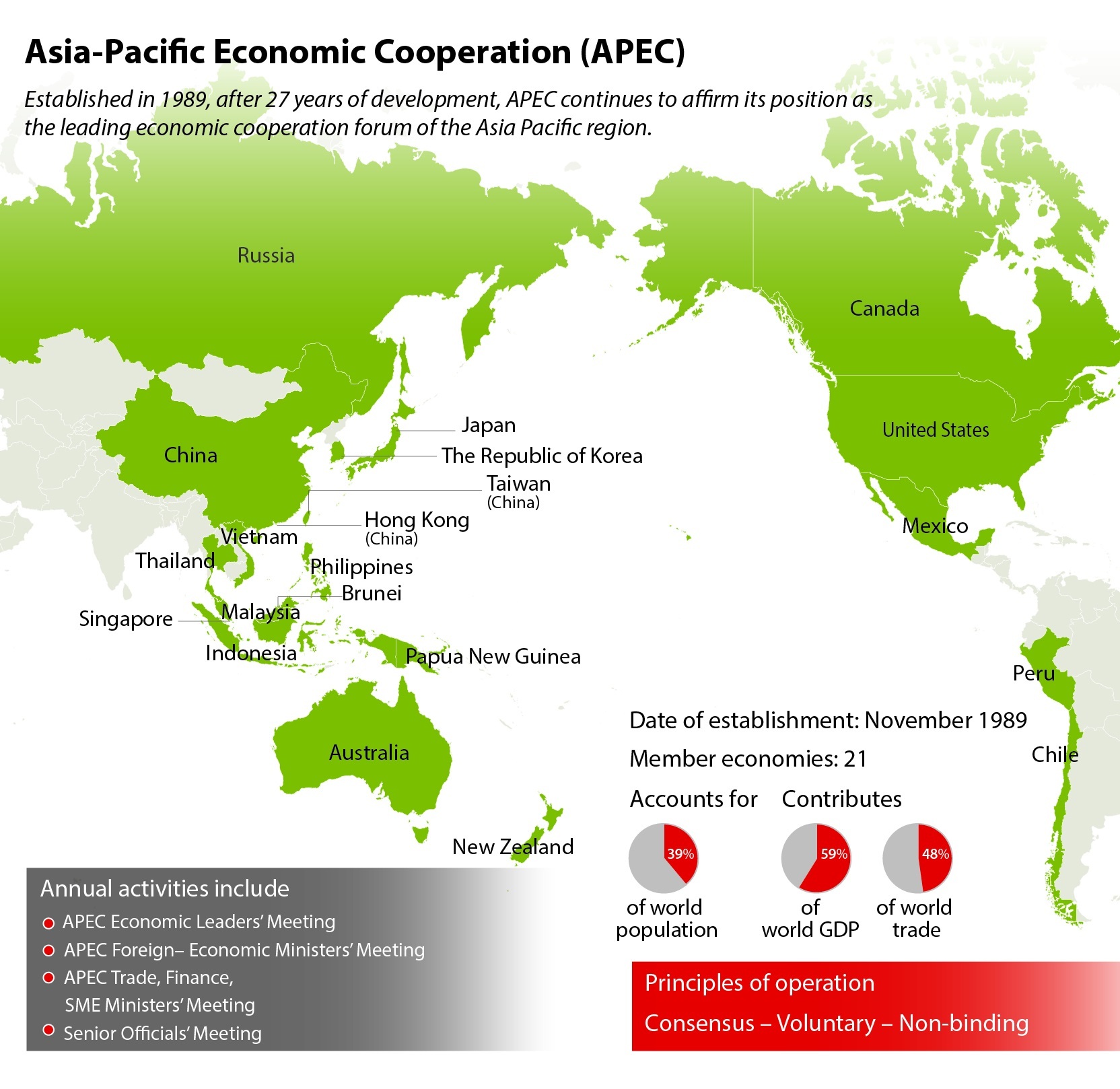
    The 32nd APEC Economic Leaders’ Summit (2025) is being held in Gyeongju City, South Korea

    About Asia-Pacific Economic Cooperation (APEC):

    • Establishment: Created in 1989 as a regional economic forum to enhance the growing interdependence of the Asia-Pacific region.
    • Objective: Promote balanced, inclusive, sustainable, innovative, and secure growth, and accelerate regional economic integration.
    • Membership: Comprises 21 member economies– Australia, Brunei, Canada, Chile, China, Hong Kong, Indonesia, Japan, South Korea, Malaysia, Mexico, New Zealand, Papua New Guinea, Peru, the Philippines, Russia, Singapore, Taiwan, Thailand, the United States, and Vietnam.
    • Secretariat: Headquartered in Singapore, coordinating policy dialogues, working groups, and capacity-building across member economies.
    • Decision-Making Principle: Functions on voluntary, non-binding, and consensus-based commitments rather than treaty obligations.
    • Economic Scale: Represents 2.9 billion people, accounting for ~60% of global GDP and ~48% of global trade.
    • Terminology: Refers to its members as “economies” (not countries) to accommodate non-sovereign entities like Hong Kong and Taiwan.
    • Major Frameworks:
      • Bogor Goals (1994) – Free and open trade and investment in the Asia-Pacific.
      • APEC Putrajaya Vision 2040 – Envisions an open, dynamic, resilient, and peaceful Asia-Pacific community by 2040.
    • Focus Areas: Trade liberalisation, digital economy, supply chain resilience, sustainable energy, and inclusive growth.

    India and APEC:

    • Membership: India is NOT a member but has shown consistent interest since the early 1990s, aligning with its Look East / Act East Policy.
    • Geographical Criterion: APEC’s membership is limited to Asia-Pacific economies, while India is categorised under South Asia, restricting eligibility.
    • Economic Context: India’s gradual liberalisation in the 1990s contrasted with APEC’s open market orientation, reducing its early appeal to members.
    • Political Resistance: China has reportedly opposed India’s entry to maintain regional influence and prevent rival power balancing.
    • Moratorium: A 1997 freeze on new memberships continues to block India’s formal inclusion.
    • Current Engagement: Participates in Track-II dialogues, observer consultations, and partner discussions with APEC economies.
    • Strategic Significance:
      • APEC economies drive 60% of world GDP and 48% of global trade.
      • Membership would improve market access, FDI inflows, and digital integration.
      • Enhances India’s engagement with U.S., Japan, China, and ASEAN through multilateral diplomacy.
    • Alternative Platforms: India engages APEC members via BRICS, QUAD, IPEF, and RCEP-linked forums, expanding Indo-Pacific economic influence.
    • Future Outlook: Once the moratorium is lifted, India’s robust economic scale, digital economy, and supply chain capacity make it a strong candidate for future APEC membership.


    [UPSC 2017] With reference to `Asia Pacific’ Ministerial Conference on Housing and Urban Development (APMCHUD)’, consider the following statements:

    1. The first APMCHUD was held in India in 2006 on the theme `Emerging Urban Forms – Policy Responses and Governance Structure’.

    2. India hosts all the Annual Ministerial Conferences in partnership with ADB, APEC and ASEAN.

    Which of the statements given above is/are correct?

    Options: (a) 1 only (b) 2 only (c) Both 1 and 2 (d) Neither 1 nor 2*


  • Digital India Initiatives

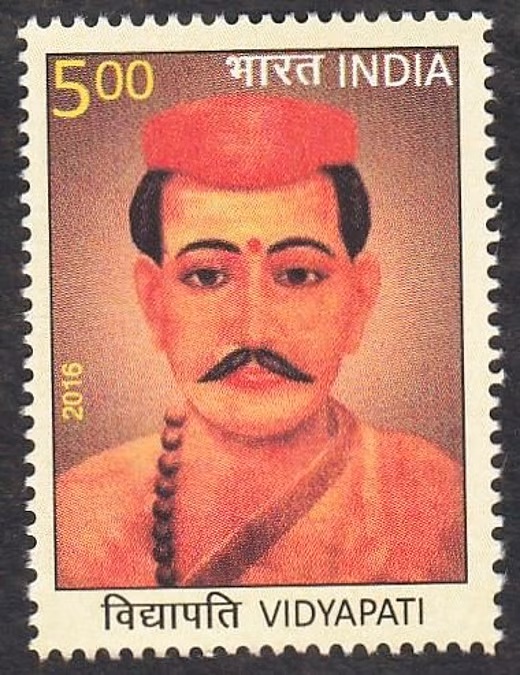
    Who was Vidyapati Thakur (1352-1448)?

    Why in the News?

    This newscard is an excerpt from the original article published in Down To Earth.

    About Vidyapati Thakur (1352 – 1448):

    • Identity and Origin: Celebrated Maithili poet, philosopher, and scholar from Mithila (northern Bihar), active under the Oiniwar dynasty during the 14th–15th centuries.
    • Languages Used: Composed in Maithili, Sanskrit, and Avahatta, blending classical and vernacular idioms into a unified literary tradition.
    • Cultural Role: Revered as the “Father of Maithili Literature”, he elevated a regional tongue to a medium of devotion and philosophy, breaking Sanskrit monopoly.
    • Historical Setting: Lived amid the Bhakti movement’s eastern rise, when devotional currents merged with courtly Sanskrit and folk traditions.

    Major Contributions:

    • Bhakti Poetry (Padavali): Authored lyrical songs of Radha–Krishna love, giving women voice and agency through emotive Maithili verse.
    • Linguistic Innovation: Asserted “Desil bayana sab jan mittha” – the sweetness of native speech – thereby legitimising vernacular expression against Sanskrit elitism.
    • Ethical and Philosophical Thought: In Purusha-Pariksha, upheld knowledge and humility as the marks of true nobility, challenging caste and wealth hierarchies.
    • Ecological Vision: Bhu-Parikramanam portrayed rivers, groves, winds as moral presences, anticipating environmental ethics centuries before modern discourse.
    • Devotional Hymns: His Ganga Stuti personified the river as divine mother and moral teacher, uniting spirituality with ecological reverence.
    • Administrative Scholarship: Likhanavali functioned as a manual of governance and record-keeping, showing mastery beyond poetics.
    • Regional Influence: His idiom spread to Bengal, Odisha, and Assam, inspiring the Brajabuli tradition and Chaitanya-era Vaishnava poets.
    • Culture–Nature Synthesis: Saw land as sacred, trees as temples, and rivers as teachers, merging ecology with devotion and ethics.
    • Enduring Legacy: A bridge between Sanskrit classic and regional modernity, Vidyapati’s ideals of love, humility, and environmental ethic continue to define Mithila’s cultural identity.
    [UPSC 2019] Consider the following statements:

    1. Saint Nimbarka was a contemporary of Akbar. 2. Saint Kabir was greatly influenced by Shaikh Ahmad Sirhindi.

    Which of the statements given above is/are correct?

    Options: (a) 1 only (b) 2 only (c) Both 1 and 2 (d) Neither 1 nor 2*


  • [27th October 2025] The Hindu Op-ed: The contours of constitutional morality

    PYQ Relevance

    [UPSC 2021] Constitutional Morality’ is rooted in the Constitution itself and is founded on its essential facets. Explain the doctrine of ‘Constitutional Morality’ with the help of relevant judicial decisions.

    Linkage: This topic is highly significant for UPSC Mains, especially in GS Paper II (Polity & Governance) and GS Paper IV (Ethics), as it tests the understanding of how ethical governance aligns with constitutional principles.

    Mentor’s Comment

    Constitutional morality lies at the heart of India’s democratic ethos, acting as the invisible moral compass that guides law, governance, and justice. The article, written by Justice K. Anand Venkatesh, explores how morality is embedded within constitutional functioning. It is not embedded as a sentimental ideal, but as a living principle that upholds the dignity of institutions and individuals alike. In a time when popular morality often clashes with constitutional values, this debate assumes renewed urgency.

    Introduction

    The Supreme Court of India has repeatedly reaffirmed the link between law and morality, from P. Rathinam v. Union of India (1994) to the Indian Young Lawyers Association v. State of Kerala (2018). The concept of constitutional morality, originally discussed by Greek historian George Grote in 1846, has resurfaced as a vital restraint against arbitrary governance and populist impulses. It demands adherence to constitutional values, equality, liberty, justice, and fraternity, by all organs of the State and its citizens.

    Why in the News

    Recent judicial pronouncements have revived debates around constitutional morality as a guiding force for both lawmakers and administrators. Justice Venkatesh’s commentary highlights that democracy without moral discipline risks degenerating into majoritarian rule, where transient popular sentiments override fundamental rights. The renewed emphasis on cultivating constitutional morality reflects India’s struggle to reconcile ethical governance with political pragmatism.

    Evolution and Context of Constitutional Morality

    1. Historical Roots: Greek historian George Grote coined “constitutional morality” to describe citizens’ disciplined adherence to constitutional norms ensuring liberty and restraint in governance.
    2. Indian Adoption: The term entered Indian discourse through Dr. B.R. Ambedkar, who viewed it as essential for the successful working of democracy in a diverse society.
    3. Judicial Recognition: The Supreme Court acknowledged the interlinkage of law and morality in P. Rathinam (1994). It emphasized the law’s moral purpose , “to conserve not only the safety and order but also the moral welfare of the State.”
    4. Hart-Devlin Debate: In the 1960s, the famous Hart-Devlin debate discussed whether the law should enforce moral standards. This is an idea that continues to influence Indian jurisprudence.

    What Distinguishes Constitutional Morality from Popular Morality

    1. Constitutional Morality: Reflects adherence to constitutional principles such as rule of law, equality before law, and institutional propriety.
    2. Popular Morality: Represents transient societal opinions or majoritarian values, often inconsistent with constitutional ethics.
    3. Judicial Balancing: Courts have often upheld constitutional morality against majoritarian pressures, as seen in Navtej Singh Johar v. Union of India (2018), where decriminalization of homosexuality was justified on constitutional grounds rather than social acceptance.
    4. Outcome: Promotes stability, fairness, and inclusivity in democratic functioning.

    Judicial Approach and Key Judgments

    1. S.R. Bommai v. Union of India (1994): Reinforced secularism as a constitutional principle forming part of basic structure.
    2. Kesavananda Bharati v. State of Kerala (1973): Introduced the “basic structure doctrine,” embedding constitutional morality as a restraint on legislative excess.
    3. Indian Young Lawyers Association v. State of Kerala (2018): Stressed that constitutional morality must prevail over religious or social morality, allowing women’s entry into Sabarimala Temple.
    4. Navtej Singh Johar (2018): Affirmed that constitutional morality demands protection of individual autonomy and dignity, even if social morality disagrees.
    5. State (NCT of Delhi) v. Union of India (2018): Asserted that constitutional functionaries must act within “constitutional morality,” not political expediency.

    Challenges in Practising Constitutional Morality

    1. Institutional Erosion: Weakening of legislative debate and executive accountability dilutes constitutional culture.
    2. Majoritarian Pressures: Electoral populism often overrides institutional restraint and judicial independence.
    3. Moral Ambiguity: Absence of a codified moral code makes enforcement of constitutional morality subjective.
    4. Public Awareness: Limited civic understanding of constitutional ethics hampers its internalization at citizen level.

    Way Forward

    1. Cultivation of Ethical Citizenship: Strengthens democratic maturity through civic education and moral training.
    2. Institutional Accountability: Ensures public functionaries act within constitutional boundaries through transparent checks.
    3. Judicial Vigilance: Maintains the moral compass of the State through continued emphasis on rights-based interpretation.
    4. Political Restraint: Encourages lawmakers to prioritize constitutional conscience over populist demand.

    Conclusion

    Constitutional morality ensures that democracy functions not merely through elections but through adherence to constitutional ethics. It provides a moral foundation for governance, ensuring that justice, liberty, equality, and fraternity are lived realities, not abstract ideals. In an era of polarization, it acts as the Republic’s moral compass, binding the State and its citizens to the spirit of the Constitution.

  • Foreign Policy Watch: India-Nepal

    Winding up the clock of India-Nepal Ties

    Introduction

    On October 1, 2025, RBI Governor Shaktikanta Das unveiled steps to deepen INR–NPR linkages. This move signals India’s intent to make the rupee a regional trade and investment currency. These include:

    1. Allowing Authorised Dealer (AD) banks to lend INR to non-residents from Nepal, Bhutan, and Sri Lanka.
    2. Permitting Special Rupee Vostro Accounts for foreign banks to hold Indian bonds and corporate papers.
    3. Establishing a transparent reference rate for major trading partner currencies to facilitate INR-based transactions.

    This marks a strategic departure from decades of tightly controlled cross border monetary flows. It aligns with India’s ambition to make the rupee a “South Asian Settlement Currency” and deepen economic resilience across borders.

    The Significance of RBI’s Move:

    1. Internationalisation of INR: Strengthens INR’s role as a regional settlement currency, reducing dependence on the dollar.
    2. Cross border integration: Enables Nepal, Bhutan, and Sri Lanka to engage in INR based transactions, supporting regional financial stability.
    3. Investor confidence: Allows Nepalese investors to diversify holdings in Indian bonds and securities.
    4. Trade facilitation: Establishes a transparent mechanism for pricing and settlement of bilateral trade.

    The Hurdles in Nepal

    1. COVID-19 Economic Fallout: Nepal’s economy struggled with post-pandemic recovery as industrial performance remained weak.
    2. Credit Crunch: Low confidence among banks led to restricted lending, making it difficult for small businesses to sustain.
    3. Supply Chain Strain: Domestic credit shortages impacted internal supply chains and imports, amplifying inflationary pressures.
    4. Structural Weakness: Chronic trade deficit, narrow industrial base, and dependency on remittances limit growth resilience.
    5. Political Uncertainty: Frequent political instability has deepened investor hesitation.

    How India’s Lending Outreach Could Change the Game

    1. Rupee Lending Window: RBI’s INR credit facility allows Nepalese firms to access Indian capital markets, easing liquidity pressure.
    2. Reduced Dollar Dependence: Using INR for trade and lending could insulate both economies from dollar exchange fluctuations.
    3. Enhanced Trust: Transparent reference rates can reduce cross border settlement disputes and improve institutional confidence.
    4. Joint Ventures: Encourages cross border investments and participation in sectors like hydropower, manufacturing, and tourism.

    The Trade Equation Between India and Nepal

    1. High Interdependence: India remains Nepal’s largest trading partner, accounting for 65% of its total trade.
    2. FDI Flows: India is Nepal’s largest FDI source, contributing 33% of total foreign investment, worth nearly $670 million.
    3. Export–Import Composition: India imports billion dollar worth of goods from Nepal, including coffee, tea, and herbal products, while exporting essential commodities and petroleum.
    4. Monetary Peg: The INR–NPR peg (₹1 = NPR 1.6) has stabilised bilateral transactions for decades, but rising inflation and dollar volatility demand recalibration.

    Challenges to Implementation

    1. Institutional Compliance: Nepal Rastra Bank (NRB) must reform regulatory processes to align with RBI’s updated norms.
    2. Risk of Overdependence: Over reliance on INR could expose Nepal’s economy to India’s monetary shocks.
    3. Operational Barriers: Currency convertibility limits and legal harmonisation may delay smooth execution.
    4. Political Sensitivity: Perception of “rupee dominance” may spark internal opposition in Nepal’s political circles.

    Possible Multiplier Effects

    1. Stronger INR: If successfully implemented, the move can strengthen INR internationally while stabilising Nepal’s currency.
    2. Reduced Dollar Outflows: Bilateral INR use saves foreign exchange reserves, improving both nations’ current account positions.
    3. Boost to Trade Financing: Easier credit availability to Nepalese traders can expand import capacity for Indian goods.
    4. Regional Model: Success may inspire replication with Bhutan, Sri Lanka, and Bangladesh under the Neighbourhood First Policy.

    Conclusion

    The RBI’s initiative represents more than a banking reform, it is a strategic assertion of economic diplomacy in South Asia. By aligning monetary instruments with foreign policy, India aims to create a shared financial ecosystem that stabilises its neighbourhood while propelling the rupee towards international recognition. For Nepal, this marks a chance to integrate deeper into India’s growth story and move towards sustainable, confidence driven development.

    PYQ Relevance

    [UPSC 2018] How would the recent phenomena of protectionism and currency manipulations in world trade affect macroeconomic stability of India?

    Linkage: This question relates to currency stability and external sector management. The RBI–Nepal rupee measures reflect India’s proactive approach to enhance rupee resilience and reduce dollar dependence, aligning with UPSC’s recurring focus on monetary stability and economic diplomacy.

    Value Addition

    Internationalisation of the Indian Rupee (INR)

    • Definition: Internationalisation of the rupee refers to the increasing use of INR in cross-border trade, investment, and financial transactions, reducing reliance on foreign currencies like the US dollar.
    • Objective: Strengthen India’s economic sovereignty, reduce exchange rate risk, and enhance global confidence in the rupee as a settlement currency.
    • Recent Policy Measures:
      • RBI’s 2022 Circular: Allowed INR invoicing and settlement of international trade.
      • Special Vostro Accounts: Enabled partner nations (e.g., Russia, UAE, Nepal) to hold rupee balances for bilateral trade.
      • RBI–Nepal Measures (2025): Permitted INR lending, rupee-based bonds, and reference rate mechanisms.
      • INR–Dirham Linkage: Facilitated oil payments in rupees via UAE, strengthening South–South trade.
    • Benefits:
      • Reduces Forex Outflows: Decreases demand for dollars in trade settlements.
      • Improves External Stability: Mitigates impact of global currency volatility.
      • Boosts Trade Competitiveness: Simplifies invoicing for neighbouring countries.
      • Supports Regional Integration: Promotes South Asian financial architecture anchored in INR.
      • Enhances India’s Soft Power: Projects rupee as a symbol of economic strength and trust.
    • Challenges:
      • Limited convertibility of INR in capital account.
      • Regulatory asymmetry among trading partners.
      • Need for deep rupee-denominated financial markets abroad.
      • Possible geopolitical resistance to India’s monetary expansion.
    • Global Examples:
      • China’s Yuan (CNY): Integrated into IMF’s SDR basket (2016).
      • Euro (EUR): Serves as a model for regional monetary integration.
    • Reports & Committees:
      • RBI Inter-Departmental Group (2023): Highlighted steps for gradual and phased INR internationalisation.
      • IMF Report (2023): Identified INR among potential emerging reserve currencies.


  • Artificial Intelligence (AI) Breakthrough

    Governance, cybersecurity move to centrestage in AI conversations

    Introduction and Why in the News

    Artificial Intelligence, once hailed purely as an efficiency enhancer, is now at the centre of ethical, cybersecurity, and accountability debates. The AI@Work roundtable in Mumbai, moderated by industry and data leaders, highlighted that as organisations adopt AI to accelerate operations, they are simultaneously confronting unprecedented risks. These risks arise from data breaches and AI unpredictability to physical and digital intrusions. Globally, the scale of the threat is stark: over 36,000 AI-driven cyber incidents have been detected recently, revealing vulnerabilities that demand robust governance mechanisms. The focus is shifting from innovation for profit to AI for responsible, transparent, and accountable governance.

    How is AI reshaping governance and business operations?

    1. AI as a catalyst: AI is transforming industries, automating functions, and unlocking efficiency, especially in large corporations like HPCL.
    2. Governance shift: The emphasis is moving from using AI for automation to using it for secure, ethical, and explainable decision-making.
    3. Corporate accountability: Company Boards are now integrating AI risk management as part of business strategy and compliance mechanisms.

    What are the major cybersecurity challenges emerging from AI integration?

    1. Dual challenge: HPCL and similar enterprises face both digital intrusions and physical tampering, such as pipeline or fuel data manipulation.
    2. Data breaches and tampering: AI systems amplify vulnerabilities by collecting, analysing, and predicting based on sensitive data.
    3. AI unpredictability: As one executive noted, AI “can behave unpredictably”, even making errors like confusing CAPTCHA, reflecting how AI mimics but doesn’t fully understand human behaviour.
    4. Evolving threats: Traditional cybersecurity tools like SIEM systems are being replaced by AI-based predictive defence models.

    How are organisations building responsible AI frameworks?

    1. Ethical design: Companies are embedding AI hygiene protocols involving legal, ethical, and operational reviews.
    2. Cross-functional training: AI safety and compliance are being promoted through employee retraining and AI literacy initiatives.
    3. Accountability culture: “Who builds, who manages, and who owns AI” is now being formalised as part of corporate accountability structures.
    4. AI governance frameworks: Emphasis on explainability, transparency, and traceability of AI decisions.

    How is India’s corporate sector responding to data and cybersecurity concerns?

    1. AI-based monitoring: Firms like HPCL have set up ATOM – Autonomous Threat Operations Machines capable of detecting and neutralising threats within minutes.
    2. Prioritisation of data integrity: Secure perimeters, application firewalls, and endpoint safety are now standard.
    3. Rise of human-AI synergy: Human oversight remains essential even as AI automates responses.
    4. New compliance model: AI-driven auditing and data lineage tools enhance traceability and prevent tampering.

    Why is accountability and explainability central to future AI governance?

    1. Ownership and transparency: AI accountability now spans design to deployment stages.
    2. Explainability: Organisations must show how AI works, not just that it works, to maintain compliance.
    3. Ethical responsibility: AI ethics involves documenting data sources, audit trails, and decisions for regulatory and consumer trust.
    4. Broader awareness: Employees and consumers alike are being educated about AI literacy and bias detection.

    Conclusion

    The shift of AI conversations towards governance and cybersecurity signifies India’s entry into a new phase of responsible innovation. As AI pervades every domain, from finance to fuel, the focus must remain on trust, transparency, and traceability. Building ethical AI ecosystems that value both progress and protection is now essential for sustainable digital governance.

    PYQ Relevance

    [UPSC 2023] Introduce the concept of Artificial Intelligence (AI). How does AI help clinical diagnosis? Do you perceive any threat to privacy of the individual in the use of AI in healthcare?

    Linkage: Both the article and the question highlight how AI, while enhancing efficiency in fields like healthcare and governance, raises critical concerns over data privacy, transparency, and ethical accountability. 

  • Modern Indian History-Events and Personalities

    150 years of ‘Vande Mataram’

    Why in the News?

    In his Mann Ki Baat broadcast, Prime Minister Narendra Modi called upon citizens to commemorate 150 years of our national song “Vande Mataram”.

    About Vande Mataram:

    • Overview: Written by Bankim Chandra Chattopadhyay around 1875, originally in Sanskrit (Bengali script) and later included in his novel Anandamath (1882), depicting the Sannyasi Rebellion against British rule.
    • Meaning: It means “I bow to thee, Mother”, symbolising devotion to the motherland, unity, and the spirit of sacrifice.
    • First Rendition: First sung publicly by Rabindranath Tagore at the 1896 Indian National Congress Session, transforming it into a nationalist anthem.
    • Role in Freedom Struggle: Became a rallying cry for revolutionaries in Swadeshi Movement, sung in protests, prisons, and meetings representing Ma Bharati as a symbol of resistance and national pride.
    • Official Status: In 1937, the Indian National Congress adopted its first two stanzas as the National Song; on January 24, 1950, Dr. Rajendra Prasad granted it equal status with Jana Gana Mana in the Constituent Assembly.
    • Structure & Style: Comprises six stanzas, combining Sanskrit precision and Bengali rhythm, praising India’s nature, strength, and divinity.
    • Translations & Music: Sri Aurobindo translated it into English (Karmayogin, 1909); V.D. Paluskar and Ravi Shankar popularised musical renditions.
    • Cultural Symbolism: Personifies India as the Divine Mother, transcending religious and regional divides; played instrumentally at the end of Parliamentary sessions.
    [UPSC 2016] ‘Swadeshi’ and ‘Boycott’ were adopted as methods of struggle for the first time during the
    Options: (a) Agitation against the Partition of Bengal *
    (b) Home Rule Movement
    (c) Non-Cooperation Movement
    (d) Visit of the Simon Commission to India


Join the Community

Join us across Social Media platforms.