💥UPSC 2027,2028 Mentorship (April Batch) + Access XFactor Notes & Microthemes PDF

Archives: News

  • The Crisis In The Middle East

    Why Trump’s proposed stabilization force in Gaza will not find things easy

    Introduction

    With the Gaza conflict entering its third year, US President Donald Trump’s “Comprehensive Plan to End the Gaza Conflict” , a 20-point roadmap, has reignited global discussion on Palestine’s future. While both Israel and Hamas have agreed to an immediate ceasefire and prisoner exchange, the second, more ambitious part, a long-term peace framework and deployment of an International Stabilisation Force (ISF), faces deep geopolitical and operational challenges. The ISF, envisioned as a temporary yet long-term internal security mechanism under a “Board of Peace” chaired by Trump, is supposed to oversee “terror-free areas” handed over from Israel’s Defence Forces (IDF). But historical evidence from Afghanistan, Lebanon, and Iraq shows why such an effort may fail before it even begins.

    What is the International Stabilisation Force (ISF)?

    1. Temporary but long-term mechanism: The ISF is designed to act as a “temporary” yet enduring internal security arrangement, forming part of a larger apolitical Palestinian committee.
    2. Trump’s oversight: It would be supervised by a “Board of Peace” chaired by Trump, tasked with ensuring security transition in Gaza.
    3. Mandate confusion: The ISF’s deployment is proposed “immediately” after Israeli Defence Forces withdraw from designated “terror-free zones.”
    4. Not UN-mandated: Unlike traditional UN peacekeeping forces, the ISF would lack international legitimacy and neutrality, as it is not under the UN Security Council’s (UNSC) authorisation.

    Why is the ISF Not Comparable to UN Peacekeeping?

    1. Absence of neutrality: International peacekeeping has always required UN-mandated neutrality; the ISF, dominated by US and allied interests, lacks this legitimacy.
    2. Hostility in the region: Due to Arab hostility towards the US and Israel’s disregard for UN mandates, any non-UN force would face rejection from regional actors.
    3. UN precedent: Since 2004, UNSC resolutions have repeatedly called for peacekeeping only under UN authority, especially within occupied Palestinian territories until a two-state solution is achieved.
    4. Contradiction with global norms: Past experiences, from NATO’s ISAF in Afghanistan to multinational forces in Lebanon, show that non-UN interventions invite political opposition and legitimacy crises.

    Why is Implementation Difficult in Palestine?

    1. Israel’s selective compliance: Israel has historically undermined UN peacekeeping mandates (e.g., UNIFIL in Lebanon) and is unlikely to cooperate fully with an externally led force.
    2. Hamas’ rejection of disarmament: Hamas has refused to disarm without Israel’s full withdrawal, a non-negotiable precondition.
    3. Political vacuum: There are no strong Palestinian institutions capable of ensuring political control and governance in post-conflict Gaza.
    4. UNSC resolutions ignored: While resolutions call for a two-state solution and prohibit occupation, Israel’s actions, including settlements and security zones, contravene these commitments.
    5. Lack of Arab consensus: Arab states remain divided on participation in any force seen as legitimising Israeli occupation.

    What Lessons Do Historical Precedents Offer?

    1. Afghanistan (2001–2021): The NATO-led ISAF mission initially succeeded in stabilising Kabul but failed to create self-sustaining security institutions; the Taliban returned to power in 2021.
    2. Lebanon (1982–2000): The Multinational Force (MNF), dominated by the US and UK, withdrew amid heavy local opposition and attacks, transferring responsibility to the UN’s UNIFIL.
    3. Iraq (post-2003): The absence of a UN framework led to severe legitimacy deficits, insurgency, and long-term instability.
    4. These precedents underscore that external interventions without inclusive local ownership often end in strategic failure.

    What Are the Broader Challenges in Trump’s Plan?

    1. Contradictory goals: Trump’s plan envisions Israel’s partial withdrawal but simultaneously retains security control, an inherent contradiction.
    2. Palestinian exclusion: The proposal does not recognise any Palestinian political institutions or grant them meaningful authority.
    3. Legal limitations: Without UNSC authorisation, the ISF would lack the legal basis to operate or enforce peace.
    4. Regional optics: Arab and Islamic states would perceive this as another Western attempt to militarise peace under the guise of “stabilisation.”

    Conclusion

    Trump’s proposed International Stabilisation Force may appear bold on paper, but it suffers from a crisis of legitimacy, political trust, and historical amnesia. Without a UN mandate, regional consensus, or Palestinian participation, the plan risks deepening divisions rather than healing them. As history shows, no external force can impose peace where sovereignty and justice remain unresolved.

    PYQ Relevance

    [UPSC 2024] ‘Terrorism has become a significant threat to global peace and security.’ Evaluate the effectiveness of the United Nations Security Council’s Counter Terrorism Committee (CTC) and its associated bodies in addressing and mitigating this threat at the international level.

    Linkage: Trump’s proposed International Stabilisation Force (ISF), lacking a UN mandate, underscores the limits of ad-hoc coalitions in tackling terrorism, contrasting with the UNSC-CTC’s institutional approach to coordinated, legitimate counter-terrorism efforts. It highlights the need for UN-backed, multilateral mechanisms over unilateral interventions for sustainable global peace.


  • Nobel and other Prizes

    The Nobel laurates’ work has redefined the immune system itself

    Introduction

    For decades, the immune system was viewed as a binary apparatus either attacking foreign invaders or remaining silent toward the body’s own cells. This year’s Nobel laureates, Mary Brunkow, Fred Ramsdell, and Shimon Sakaguchi, dismantled that simplistic view by uncovering the critical role of regulatory T-cells (Tregs) and the FOXP3 gene in maintaining self-tolerance. Their findings fundamentally redefined how scientists perceive immune regulation and opened the path for precision immunotherapy — one of modern medicine’s most promising frontiers.

    The Science of Self-Tolerance: Why It’s in the News

    The Nobel Committee’s recognition of research on regulatory T-cells (Tregs) and FOXP3 marks a watershed moment in immunology. For the first time, the prize acknowledges discoveries that explain how the immune system prevents itself from attacking the body. The work explains why autoimmune disorders like Type 1 diabetes, rheumatoid arthritis, and lupus occur when this “self-check” mechanism fails. It also connects molecular immunology to emerging therapies for cancer and transplantation. This is a landmark shift from viewing immunity as mere “defence” to seeing it as a balance of activation and restraint, a concept that has redefined global biomedical research.

    nobel

    How the Nobel-winning Discovery Unfolded

    1. Early Understanding: In the 1990s, immunologists believed that self-reactive T-cells were deleted during their maturation. However, this could not explain why some autoreactive T-cells still existed in healthy people.
    2. Sakaguchi’s Breakthrough (1995): Identified a subset of CD4⁺ T-cells whose removal in mice led to multiple autoimmune disorders. Restoring them prevented disease — proving they act as regulators of immune overreaction.
    3. Discovery of FOXP3 Gene: Brunkow and Ramsdell, working in an industry lab (Celltech Chiroscience), traced severe autoimmune disease in male “scurfy” mice to a gene mutation on the X chromosome. They named it FOXP3.
    4. Human Correlation: Soon, mutations in FOXP3 were linked to lethal autoimmune syndromes in boys, confirming its pivotal role in human immune regulation.

    How These Discoveries Transformed Immunology

    • Redefining the Immune System: The immune system is now seen not as an on/off mechanism but as a dynamic ecosystem that balances activation (attack) with restraint (tolerance).
    • New Therapeutic Frontiers:
      1. Autoimmune Diseases: Efforts are underway to expand or stabilise Tregs to curb harmful immune activation without broad immunosuppression.
      2. Transplant Medicine: Infusion of engineered Tregs improves graft acceptance and reduces rejection rates.
      3. Cancer Research: Selective depletion or reprogramming of tumour-associated Tregs enhances anti-tumour immunity without triggering autoimmunity.

    From Lab to Life: The Translational Challenge

    1. Incremental Progress: Immunologists warn against overestimating breakthroughs. The immune system has multiple overlapping control layers, making clinical translation slow.
    2. High Cost Barrier: Cell-based therapies remain expensive, leading to inequitable access between high- and low-income populations.
    3. Ethical and Policy Dilemmas: Who gets access first? How do we regulate genetic manipulation or Treg engineering? These questions highlight the intersection of science, ethics, and public policy.

    Private Sector and Scientific Innovation

    1. Industrial Discovery: The fact that Brunkow and Ramsdell made their discoveries in an industry setting (Celltech Chiroscience) underscores the potential of private-sector-led innovation in fundamental science.
    2. Public–Private Synergy: It reinforces how collaborations between academic research and biotech industry can accelerate discovery and application, a model India can emulate in its biotechnology policy framework.

    Broader Implications for India and Global Health

    1. Indian Relevance: India’s growing burden of autoimmune diseases (such as lupus, celiac, and thyroiditis) highlights the need for indigenous immunogenetic research.
    2. Policy Perspective: Translating such research into affordable therapies aligns with National Biotechnology Development Strategy and Ayushman Bharat’s preventive healthcare goals.
    3. Global Impact: These discoveries open a new era of personalised immunotherapy, integrating molecular biology, bioethics, and equitable access.

    Conclusion

    The 2025 Nobel Prize reminds the world that progress in science often lies not in creating new weapons against disease but in understanding balance, the balance within nature and within ourselves. The discovery of Tregs and FOXP3 has rewritten textbooks, inspired therapies, and expanded our conception of what “self” and “immunity” truly mean. For policymakers and scientists alike, it represents the future, a fusion of molecular precision, ethical responsibility, and social justice.

    PYQ Relevance

    [UPSC 2021] The Nobel Prize in Physics of 2014 was jointly awarded to Akasaki, Amano and Nakamura for the invention of Blue LEDs in the 1990s. How has this invention impacted the everyday life of human beings?

    Linkage: Both the 2014 Nobel for Blue LEDs and the 2025 Nobel for Treg–FOXP3 discovery represent paradigm shifts where scientific breakthroughs moved from lab theory to real-world transformation — the former revolutionised energy efficiency, while the latter is redefining human health and immune regulation.

  • Organic Farming – Paramparagat Krishi Vikas Yojna (PKVY), NPOF etc.

    [pib] 10 Years of Paramparagat Krishi Vikas Yojana (PKVY)

    Why in the News?

    After a decade (2015–2025), Paramparagat Krishi Vikas Yojana (PKVY) has evolved from a pilot cluster model into a national ecosystem of training, certification, and market access.

    About Paramparagat Krishi Vikas Yojana (PKVY):

    • Launch: Introduced in 2015 under the Ministry of Agriculture & Farmers Welfare as part of the National Mission for Sustainable Agriculture (NMSA) to promote organic and traditional chemical-free farming.
    • Cluster-Based Model: Farmers form 20 ha+ clusters for collective organic adoption, resource sharing, and easier certification & marketing.
    • Eligibility & Funding Flow: Open to farmers/institutions with land up to 2 ha; applications via Regional Councils → Annual Action Plans → States → DBT to farmers.
    • Financial Support: ₹31,500/ha over 3 years, covering inputs, training, certification, and marketing.
    • Certification Systems:
      1. NPOP (Third-Party Certification): for export and formal markets.
      2. PGS-India (Participatory Guarantee System): community-driven, peer-reviewed certification for domestic markets.
      3. Large Area Certification (LAC): initiated in 2020 to fast-track certification in areas with no prior chemical use, reducing conversion time.
    • Digital Integration: Jaivik Kheti portal links farmers, buyers, input suppliers for transparent, traceable organic trade.

    Achievements (as of Jan 2025):

    • Scale: ₹2,265.86 crore released; 15 lakh ha organic area, 52,289 clusters, 25.3 lakh farmers.
    • Certification: Sikkim fully organic, Lakshadweep & Dantewada LAC-certified, expansion to Nicobar & Ladakh.
    • Digital Reach: 6.23 lakh farmers, 19,016 groups, 8,676 buyers on Jaivik Kheti portal.
    • Institutional Growth: 9,268 FPOs formed; expanded market linkages for premium organic produce.
    • Ecological Gains: Reduced chemical load, improved soil fertility, local input ecosystems strengthened.

    Challenges:

    • Yield Dip: Transitional productivity loss strains small farmers.
    • Certification Costs: Verification and residue testing remain expensive.
    • Market Gaps: Uneven price premiums and weak buyer networks.
    • Cluster Variation: Success depends on local leadership and coordination.
    • Sustainability: Post-funding continuity often uncertain; technical gaps persist.
    [UPSC 2018] With reference to organic farming in India, consider the following statements:

    1. The National Programme for Organic Production’ (NPOP) is operated under the guidelines and directions of the Union Ministry of Rural Development.

    2. The Agricultural and Processed Food Products Export Development Authority’ (APEDA) functions as the Secretariat for the implementation of NPOP.

    3. Sikkim has become India’s first fully organic State.

    Which of the statements given above is/are correct?

    Options: (a) 1 and 2 only (b) 2 and 3 only* (c) 3 only (d)1, 2 and 3


  • Higher Education – RUSA, NIRF, HEFA, etc.

    [pib] PM-SETU Scheme

    Why in the News?

    PM has launched the Pradhan Mantri Skilling and Employability Transformation through Upgraded ITIs (PM-SETU) Scheme to modernize India’s Industrial Training Institutes (ITIs) into industry-aligned centers of excellence.

    About the PM-SETU Scheme:

    • Overview: Centrally Sponsored Scheme under the Ministry of Skill Development & Entrepreneurship (MSDE).
    • Objective: Upgrade 1,000 Government ITIs into modern, industry-linked institutions that address evolving global skill demands.
    • Financing: Supported by the World Bank and Asian Development Bank (ADB); co-funded by Centre, States, and Industry.
    • Implementation Model: Operates on a Hub-and-Spoke structure
      • 200 Hub ITIs act as Centres of Excellence.
      • 800 Spoke ITIs extend outreach and training access across districts.
    • Target: Skill 20 lakh youth over five years through new and revamped programs.

    Key Features:

    • Industry Partnership: Each cluster managed by a Special Purpose Vehicle (SPV) with an Anchor Industry Partner, ensuring outcome-based, employment-linked training.
    • Curriculum Reform: New demand-driven, industry-aligned courses and flexible pathways — diplomas, short-term modules, and executive programs.
    • Infrastructure Modernization:
      • Advanced machinery, incubation and innovation centres, and production units in hub ITIs.
      • Integration of placement services and trainer-training facilities.
    • Centres of Excellence (NCOEs): Upgradation of 5 National Skill Training Institutes (NSTIs) at Bhubaneswar, Chennai, Hyderabad, Kanpur, and Ludhiana into global-standard NCOEs with international collaboration.
    • Pilot Phase: Begins with Patna and Darbhanga ITIs (Bihar) as the first upgraded hubs.
    • Youth Empowerment Focus: Links skilling with innovation, startups, and MSMEs to create self-employment opportunities and strengthen India’s human-capital base.

    Also in News: National Scheme for ITI Upgradation & NCOEs

    • Cabinet-approved (May 2025) companion initiative with an outlay of ₹60,000 crore:
      • Central Share: ₹30,000 cr;  State: ₹20,000 cr;  Industry: ₹10,000 cr.
      • 50 % of the Central share co-financed by World Bank and ADB.
    • Purpose: Upgrade 1,000 ITIs and establish 5 NCOEs as Government-owned, Industry-managed skill institutions.
    • Features:
      • Need-based investment flexibility for each ITI.
      • Training-of-Trainers (ToT) infrastructure upgrade and training for 50,000 trainers.
      • Enhanced alignment of local workforce supply with MSME and industrial demand.
      • Introduction of an industry-led SPV model for better accountability and course relevance.


    [UPSC 2018] With reference to Pradhan Mantri Kaushal Vikas Yojana, consider the following statements:

    1. It is the flagship scheme of the Ministry of Labour and Employment.

    2. It, among other things, will also impart training in soft skills, entrepreneurship, financial and digital literacy.

    3. It aims to align the competencies of the unregulated workforce of the country to the National Skill Qualification Framework.

    Which of the statements given above is/are correct?

    Options: (a) 1 and 3 only (b) 2 only (c) 2 and 3 only* (d) 1, 2 and 3


  • Tax Reforms

    SC to examine Constitutional Validity of Securities Transaction Tax (STT)

    Why in the News?

    The Supreme Court of India has agreed to examine a petition challenging the constitutional validity of the Securities Transaction Tax (STT) imposed under the Finance Act, 2004.

    Legal Context of this Case:

    Petitioner: Aseem Juneja – contends that STT violates fundamental and economic rights.

    Bench: Headed by Justice J.B. Pardiwala; formal notice issued to Union Ministry of Finance.

    • The plea invokes Article 265“No tax shall be levied or collected except by authority of law.”
    • The Court will assess reasonableness, equity, and proportionality in transaction-based taxation.
    • A ruling against STT may impact ₹30,000-crore annual revenue and require redesign of securities taxation.

    SC to examine Constitutional Validity of Securities Transaction Tax (STT)

    What is the Securities Transaction Tax (STT)?

    • About: A direct tax levied on purchase and sale of securities through recognised stock exchanges.
    • Introduction: Under the Finance Act, 2004, to ensure transparency and curb tax evasion in capital markets.
    • Objective: Replace complex capital-gains tracking with a small, upfront levy to counter under-reporting and increase tax buoyancy.
    • Administered by: Central Board of Direct Taxes (CBDT), Ministry of Finance.
    • Scope: Applies to-
      1. Equity shares of listed companies
      2. Derivatives (futures & options)
      3. Equity-oriented mutual funds and ETFs.
    • Purpose:
      • Simplify tax collection from capital market participants.
      • Create a traceable, automated tax mechanism.
      • Generate steady revenue while discouraging speculative trading.
    • Nature: A transaction-based tax (TBT) collected automatically at the time of trade, irrespective of overall profit or loss.
    • Distinctive features:
        • Applies even on loss-making trades payable merely for conducting a transaction.
        • Non-refundable and non-adjustable, unlike TDS.
        • Raises transaction costs for high-frequency traders.
    • Imposition of STT:
      • Mode of collection: Automatically deducted by stock exchanges on every taxable trade and deposited into the government account; Ensures near-universal compliance and minimal evasion.
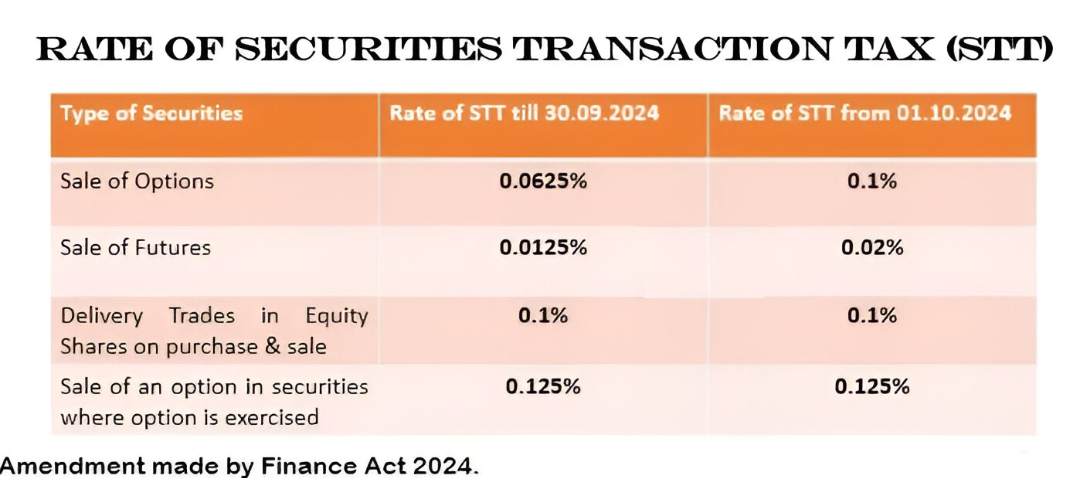
      • Rate & coverage: Varies across instruments and between buy/sell transactions; Periodically revised through Union Budgets.

    Key Grounds of Challenge:

    • Violation of Fundamental Rights:
      1. Article 14 (Equality): Unequal treatment; tax imposed irrespective of gain or loss.
      2. Article 19(1)(g) (Right to Trade): Penalises the act of trading itself.
      3. Article 21 (Livelihood & Dignity): Non-refundable levy burdens small traders.
    • Double Taxation: Traders already pay Capital Gains Tax on profits; STT adds a second layer on the same transaction.
    • Arbitrariness / Lack of Proportionality: Taxing even unprofitable transactions violates the principle of reasonable classification and fiscal fairness.
    • No Refund or Adjustment Mechanism: Absence of provision similar to TDS refunds; creates permanent loss even when income is negative.
    • Changed Circumstances: With digital audit trails, PAN-linked demat accounts, and near-complete transparency, the original rationale (to curb evasion) may no longer hold.
    [UPSC 2009] Consider the following:

    1. Fringe Benefit Tax 2. Interest Tax 3. Securities Transaction Tax

    Which of the above is/are Direct Tax/Taxes?

    Options: (a) 1 only (b) 1 and 3 only (c) 2 and 3 only (d) 1,2 and 3*


  • Indian Missile Program Updates

    India’s Dhvani Hypersonic Missile

    Why in the News?

    The DRDO is preparing for the maiden test of the “Dhvani” hypersonic missile.

    About the Dhvani Missile and Its Features

    • Overview: The Dhvani hypersonic missile is being developed by India’s Defence Research and Development Organisation (DRDO) as part of its advanced hypersonic weapons programme.
    • Type: It is designed as a Hypersonic Glide Vehicle (HGV) — a next-generation missile system capable of travelling at hypersonic speeds (beyond Mach 5 or over 7,400 km/h) while performing sharp maneuvers at high altitudes.
    • Range and Speed:
      • Expected operational range: 6,000–10,000 km, potentially doubling the reach of India’s Agni-V ICBM.
      • Speed: Exceeds Mach 5, making interception nearly impossible with current missile defence systems.
    • Flight Mechanism:
      • Launched to extreme altitudes before entering a glide phase in the atmosphere at hypersonic speeds.
      • The glide vehicle can change direction mid-course, allowing unpredictable trajectories that evade radar and anti-missile systems.
    • Design and Engineering:
      • Length: ~9 metres; Width: ~2.5 metres.
      • Blended Wing-Body Configuration: Enhances lift and stability while reducing aerodynamic drag.
      • Thermal Protection System: Uses ultra-high-temperature ceramic composites capable of withstanding 2,000–3,000°C during re-entry.
      • Stealth Features: Angled surfaces and smooth contours minimise radar cross-section, making it virtually undetectable to enemy radars.
    • Development Heritage:
      • Builds upon DRDO’s success with the Hypersonic Technology Demonstrator Vehicle (HSTDV), which validated India’s scramjet propulsion and heat-resistant materials.
      • Represents the transition from technology demonstrator to operational weapon system, signalling India’s arrival in the hypersonic era.

    Comparison with Global Hypersonic Systems:

    System Name Type Speed (Mach) Operational Status
    Russia Avangard HGV 20+ Deployed
    China DF-ZF HGV 10 Deployed
    United States Dark Eagle / HACM Hypersonic Glide / Cruise 8–10 In testing
    India Dhvani (HGV) Hypersonic Glide Vehicle 5–6+ Pre-test stage (2025)

    Strategic Significance for India:

    • Global Standing: Positions India alongside the U.S., Russia, and China in the exclusive club of hypersonic powers, showcasing its advanced defence R&D capacity.
    • Regional Deterrence: Creates a technological and strategic edge over Pakistan and provides a credible counterbalance to China’s hypersonic arsenal.
    • Survivability and Precision: The missile’s speed, stealth, and maneuverability make interception nearly impossible while enabling pinpoint strikes on both land and sea targets.
    • Indigenous Achievement: Developed entirely through Indian expertise, aligning with the Atmanirbhar Bharat vision in critical defence technologies.
    • Force Multiplier: Strengthens India’s nuclear deterrent and strategic triad, ensuring readiness for long-range precision and deterrence missions.
    [UPSC 2014] Which reference to Agni-IV Missile, which of the following statements is/are correct?

    1. It is a surface-to-surface missile.

    2. It is fuelled by liquid propellant only.

    3. It can deliver one-tonne nuclear warheads about 7500 km away.

    Select the correct answer using the code given below:

    (a) 1 only  (b) 2 and 3 only  (c) 1 and 3 only  (d) 1, 2 and 3


  • New Species of Plants and Animals Discovered

    News specie “Chlorophytum vanapushpam” found

    Why in the News?

    Researchers have discovered a new species of perennial herb Chlorophytum vanapushpam from the Vagamon hills of Idukki district, Kerala.

    Chlorophytum vanapushpam

    About Chlorophytum vanapushpam:

    • Discovery & Location: Newly discovered perennial herb of the Asparagaceae family, identified in Vagamon and Neymakkad hills (Idukki, Kerala) within the Western Ghats biodiversity hotspot.
    • Name & Meaning: “Vanam” (forest) + “Pushpam” (flower) = forest flower.
    • Publication & Context: Reported in Phytotaxa, reaffirming the Western Ghats as the centre of origin for the Chlorophytum genus (18 Indian species).
    • Related Species: Closely allied to C. borivilianum (safed musli) but differs in form and lacks underground tubers.

    Key Features:

    • Growth Form: Herb up to 90 cm tall, clinging to rocky hill slopes.
    • Habitat & Range: Found between 700 m – 2,124 m elevation in moist, rocky terrains.
    • Leaves & Flowers: Slender, grass-like leaves; white clustered blossoms.
    • Reproduction: Seeds 4–5 mm; flowering and fruiting Sep–Dec.
    [UPSC 2016] Recently, our scientists have discovered a new and distinct species of banana plant which attains a height of about 11 metres and has orange-coloured fruit pulp.

    In which part of India has it been discovered?

    Options: (a) Andaman Islands * (b) Anaimalai Forests (c) Maikala Hills (d) Tropical rain forests of northeast


  • Labour, Jobs and Employment – Harmonization of labour laws, gender gap, unemployment, etc.

    [6th October 2025] The Hindu Op-ed: Treating employment as a national priority

    PYQ Relevance

    [UPSC 2022] Economic growth in the recent past has been led by increase in labour productivity. Explain this statement. Suggest the growth pattern that will lead to creation of more jobs without compromising labour productivity

    Linkage: The article highlights that India needs consistent, job-oriented growth policies focusing on labour-intensive sectors like textiles, tourism, and MSMEs to ensure “growth with jobs” rather than jobless productivity gains — directly aligning with the UPSC 2022 question’s call for a balanced growth pattern.

    Mentor’s Comment

    Employment generation is not just an economic issue, it is the moral and strategic foundation of India’s long-term growth story. As India moves toward Viksit Bharat 2047, it must transform its demographic dividend into productive employment. This article explores why employment must be treated as a national mission, the urgent need for an integrated framework, and how inclusive job creation can become the cornerstone of equitable and resilient growth.

    Why in the News?

    India is standing at a historic demographic crossroads, poised to add 133 million people to its working-age population in the next 25 years, accounting for 18% of the global workforce addition. However, this window is closing fast, with the working population expected to peak by 2043. Despite multiple government schemes, India still lacks a unified national framework for employment and livelihoods. Sanjiv Bajaj, Past President of CII, argues for treating employment as a national priority through a coherent, multi-level policy that integrates growth, skilling, social protection, and mobility. This issue is not merely about job numbers; it’s about ensuring equity, inclusion, and sustainable economic resilience. In a consumption-driven economy like India, employment is both the driver and the outcome of growth.

    India’s Employment Challenge: The Demographic Window is Closing

    1. Demographic Dividend – India will add 133 million working-age individuals by 2047, nearly 18% of global addition, creating a unique window for productivity gains.
    2. Limited Timeframe – Worker population expected to peak by 2043, after which the demographic advantage will fade.
    3. Risk of Wasted Potential – Without large-scale, quality employment, India risks a demographic disaster rather than a dividend.
    4. Consumption Linkage – Quality jobs at scale broaden consumption, ensuring equitable and stable growth.

    Why a Unified Employment Policy is the Need of the Hour?

    1. Fragmented Efforts – Despite initiatives like Skill India, PMEGP, and social security schemes, India lacks an Integrated National Employment Policy (INEP).
    2. Need for Coordination – Employment generation spans multiple ministries — Labour, Skill Development, Industry, and Education — requiring unified planning and execution.
    3. Institutional Mechanism – Bajaj recommends an Empowered Group of Secretaries for oversight and District Planning Committees for implementation.
    4. Policy Alignment – Trade, industrial, education, and labour policies must be synchronised to ensure job-oriented growth.

    Bridging the Demand–Supply Divide in Labour Markets

    1. Demand-Side Drivers – Growth in high-employment-potential sectors like textiles, tourism, healthcare, agro-processing, real estate, and MSMEs.
    2. Supply-Side Gaps – Low employability of graduates, outdated curricula, and poor skilling alignment with emerging technologies (AI, robotics, green tech).
    3. Policy Reform – Curricula revamp, vocational training integration, and targeted skilling to meet industry needs.
    4. Mobility Barriers – Need for Centre–State cooperation on migration policies and worker support systems to promote “One India for Employment”.

    Labour Codes, Urban Employment, and MSME Empowerment

    1. Labour Code Implementation – Timely execution of the four Labour Codes is critical, with clear transition and business support guidelines.
    2. MSMEs as Job Engines – Employing over 25 crore people, MSMEs need enhanced access to finance, markets, and technology to drive “growth with jobs.”
    3. Urban Employment Guarantee – Piloting schemes in selected cities can address urban job distress, akin to MGNREGA for urban India.
    4. Regional Focus – Targeted interventions in 100 underdeveloped districts and rural internships for graduates can promote balanced employment.

    The Gig Economy Revolution

    1. Current Size – The gig economy currently employs 80 lakh–1.8 crore workers, expected to rise to 9 crore by 2030.
    2. Opportunity for Formalisation – With Tier-2 and Tier-3 cities participating, gig platforms can transform informal work into semi-formal, tech-enabled livelihoods.
    3. National Gig Policy – Should ensure worker protection, financial inclusion, and social security, supported by a centralised worker registry.
    4. Workplace Dignity – Ensure fair contracts, safety standards, and grievance redressal mechanisms.

    Enhancing Female Labour Force Participation

    1. Current Gaps – India’s female labour force participation (FLFP) remains among the lowest globally.
    2. Policy Incentives – Employment-Linked Incentive (ELI) schemes, childcare and eldercare infrastructure, and formalising Anganwadi and ASHA roles can improve participation.
    3. Societal Barriers – Campaigns must challenge gender norms restricting women’s economic mobility.
    4. Economic Multiplier – A 10% rise in FLFP could add up to $700 billion to India’s GDP by 2025 (McKinsey estimate).
    5. The Missing Link: Reliable Employment Data
      • Data Gaps – Existing surveys understate informal and rural employment realities.
      • Need for Real-Time Data – A dedicated task force must improve methodologies and reduce data publication lag.
    6. Policy Relevance – High-frequency data can guide interventions in dynamic sectors like gig work and MSMEs.

    Conclusion

    India’s demographic dividend offers a fleeting window to achieve inclusive and sustainable growth. Treating employment as a national priority through an integrated policy, labour reforms, skill alignment, and gender inclusion is essential. Generating growth with jobs will ensure equitable prosperity and long-term resilience. Employment, therefore, is not just an economic goal, it is the foundation of nation-building and social justice.

  • Disasters and Disaster Management – Sendai Framework, Floods, Cyclones, etc.

    India’s direction for disaster resilience

    Introduction

    India’s approach to disaster management has entered a new phase, one that focuses not only on response and recovery but equally on risk reduction, preparedness, and resilience. With climate change intensifying heat waves, floods, and landslides, the country’s policy architecture, led by the Ministry of Home Affairs (MHA) and the National Disaster Management Authority (NDMA), has embraced a multi-hazard, multi-stakeholder, and science-backed model. The guiding compass remains the Prime Minister’s Ten-Point Agenda on Disaster Risk Reduction (2016), now reinforced by major financial and institutional reforms.

    Why in the News

    For the first time, India’s disaster management strategy has been fully integrated into public finance planning, through the 15th Finance Commission’s ₹2.28 lakh crore allocation for disaster risk reduction over five years. This is a paradigm shift: from ad hoc post-disaster relief to structured, science-driven, and nature-based risk mitigation. With new funding for fire safety, glacial risk monitoring, and bioengineering-led landslide prevention, the government’s efforts represent a bold move towards building a climate-resilient India. The initiative is also significant because it establishes clear budget-to-project chains, accountability mechanisms, and cross-institutional linkages, something missing in previous regimes.

    India’s Evolving Disaster Management Framework

    1. Multi-hazard nation: India faces diverse risks, floods, droughts, landslides, heat waves, cyclones, necessitating a multi-faceted approach.
    2. Shift in focus: Earlier systems were relief-centric; now, they integrate prevention, mitigation, capacity building, and sustainable reconstruction.
    3. Institutional leadership: The MHA and NDMA lead both pre- and post-disaster phases, ensuring coordination across States and institutions.
    4. Guiding vision: The Prime Minister’s Ten-Point Agenda (2016) promotes risk-informed investments, community participation, and technology integration.

    How the 15th Finance Commission Redefined Disaster Financing

    • Historic allocation: ₹2.28 lakh crore ($30 billion) allocated over five years, a landmark in linking public finance with disaster resilience.
    • Segmented approach:
      • Preparedness and Capacity Building – 10%
      • Mitigation – 20%
      • Response – 40%
      • Reconstruction – 30%
    • End of debt dependency: Earlier, post-disaster reconstruction relied on multilateral loans; now, domestic fiscal mechanisms fill that gap.
    • Five priority reforms:
      1. Evaluate multi-hazard risks and prioritize them.
      2. Integrate scientific mitigation models into fiscal systems.
      3. Avoid duplication with other schemes.
      4. Enhance Centre-State and institutional synergy.
      5. Ensure light-touch regulation for flexibility and speed.

    Investing in Pre-Disaster Preparedness and Capacity Building

    1. Fire safety modernization: ₹5,000 crore earmarked for upgrading urban and rural fire infrastructure.
    2. Community-based volunteers: Apda Mitra and Yuva Apda Mitra programs train 2.5 lakh volunteers to act as first responders.
    3. Strengthening institutions:
      1. National Institute of Disaster Management (NIDM) given a central role with geo-spatial training labs and action-based research.
      2. 36 streams of disaster management courses were introduced to mainstream DRR down to the panchayat level.
    4. Outcome: Shift from theoretical to practical, localised risk management.

    Nature-Based Solutions and Climate Adaptation

    1. ₹10,000 crore mitigation projects across States emphasize nature-based, long-term solutions.
    2. Bioengineering for landslides: Stabilizing slopes in Himalayan regions using vegetation and soil binding.
    3. Urban flood control: Revitalizing water bodies and green spaces to restore natural drainage.
    4. Glacial lake monitoring: Remote sensing and automated stations for real-time surveillance.
    5. Forest fire prevention: Creating break lines, rejuvenating water bodies, and fuel evacuation corridors.
    6. Brahmaputra beels rejuvenation: Ecological restoration to mitigate monsoon flooding.
    7. Precursor success: National Cyclone Mitigation Programme (2011–22): ₹5,000 crore initiative, drastically reduced coastal vulnerability through shelters, embankments, and early warnings.

    Building Technological and Institutional Resilience

    1. Advanced early warning systems: Multi-hazard platforms with seven-day lead time for cyclones.
    2. Common Alerting Protocol: Delivers region-specific alerts in local languages via multi-media.
    3. Human resource development:
      • Training at NIDM, NDRF Academy, and National Fire Service College for hundreds of officers annually.
      • Mock drills, school safety programmes, and local awareness drives improve community response.
      • Network of 327 universities: Build research and innovation pipelines for disaster science and policy.

    India’s Global Leadership in Disaster Resilience

    1. Coalition for Disaster Resilient Infrastructure (CDRI): India-led global initiative for climate-resilient infrastructure systems.
    2. Active participation: G-20, SCO, BIMSTEC, and IORA platforms for sharing best practices.
    3. Knowledge exchange: India’s experience in nature-based DRR and community-driven risk management now shaping global policy dialogues.

    Conclusion

    India’s journey from disaster relief to disaster resilience marks a tectonic policy evolution. With fiscal integration, scientific innovation, and community participation, the nation is shifting from reactive recovery to proactive risk management. The emerging focus on nature-based, sustainable, and locally-driven mitigation reflects India’s understanding that resilience is not built after a disaster, it is cultivated every day, across every sector.

    PYQ Relevance

    [UPSC 2024] What is disaster resilience? How is it determined? Describe various elements of a resilience framework. Also mention the global targets of Sendai Framework for Disaster Risk Reduction (2015-2030).

    Linkage: This PYQ is directly linked as the article highlights India’s evolving resilience framework under NDMA and the 15th Finance Commission, reflecting Sendai-aligned efforts to mainstream disaster risk reduction into national policy and finance.

  • Alternative Dispute Resolution Mechanism – NCA, Lok Adalats, etc.

    Why is ADR crucial for India’s courts?

    Introduction

    India’s courts are gasping under the weight of delays. According to the National Judicial Data Grid (NJDG), there are 4.57 crore pending cases, with nearly 63 lakh in High Courts and over 80,000 in the Supreme Court. For many citizens, justice delayed has become justice denied. Against this backdrop, the government’s renewed commitment to strengthen Alternative Dispute Resolution (ADR) marks an important turning point. ADR, rooted in India’s traditional dispute resolution practices, represents not just a procedural alternative, but a philosophical one. It shifts justice from confrontation to consensus, from hierarchy to harmony.

    Why is ADR in the News?

    The Minister of Law and Justice, Arjun Ram Meghwal, recently emphasized that India’s legal reforms must draw from its civilisational roots, particularly the doctrine of Panch Parmeshwar, the age-old village system of resolving disputes through collective wisdom. This announcement is significant for three reasons:

    1. Civilisational continuity: For the first time in recent years, legal reform is being explicitly linked to indigenous justice philosophy.
    2. Crisis in pendency: With cases exceeding 4.5 crore and vacancy rates of 33% in High Courts and 21% in district courts, India’s formal judicial system is overburdened beyond capacity.
    3. Demand for inclusion: ADR offers an alternative that is faster, cheaper, and socially inclusive, especially for marginalised groups who find formal litigation intimidating.

    In essence, ADR is not just reform, it is rescue.

    What is Alternative Dispute Resolution (ADR) and How Does It Work?

    1. Definition: ADR refers to mechanisms outside formal courts that help parties resolve disputes through mutual understanding, mediation, arbitration, conciliation, or Lok Adalats.
    2. Objective: To provide speedy, affordable, and amicable resolution while reducing judicial burden.
    3. Legal Framework:
      1. Article 39A of the Constitution mandates equal justice and free legal aid.
      2. Section 89 of the Code of Civil Procedure (CPC), 1908 formally recognizes ADR processes.
      3. Arbitration and Conciliation Act, 1996 (amended in 2021) gives statutory backing to arbitration agreements and conciliation processes.
    4. Time-bound resolution: The Arbitration Act, 2021 fixes a maximum 180-day period for dispute resolution — a stark contrast to the years spent in litigation.
      1. Exit Clause: If a party is dissatisfied, they can opt out after two sessions of mediation.
    5. Pre-litigation mediation: Encouraged for civil and commercial disputes, helping prevent new cases from entering the judicial pipeline.
    6. Example: Many commercial entities now resolve contractual disputes through institutional arbitration centres such as the Delhi International Arbitration Centre (DIAC), saving both time and cost.

    How Do Lok Adalats Strengthen Access to Justice?

    1. Legal Basis: Lok Adalats are governed by the Legal Services Authorities Act, 1987, deriving strength from Article 39A.
    2. Types of Lok Adalats:
      • Permanent Lok Adalats (Section 22-B)
      • National Lok Adalats (held periodically)
      • E-Lok Adalats (virtual platforms launched post-COVID-19).
      • First Lok Adalat: Held in Gujarat in 1999 — symbolizing people’s justice at minimal cost.
    3. Finality of Decisions: Awards are final and binding, with no provision for appeal, ensuring swift closure.
    4. Safeguards: If dissatisfied, parties can still approach formal courts, preserving fairness.
    5. Impact: Lok Adalats have successfully resolved lakhs of cases annually, especially in motor accident and bank recovery disputes.

    Why is Strengthening ADR a Necessity, Not a Choice?

    1. Judicial Overload: Judges in Uttar Pradesh, Himachal Pradesh, and Kerala handle over 4,000 cases each, severely limiting judicial attention.
    2. Delay and Disillusionment: A large portion of cases have been pending for over 10 years, eroding public faith in formal justice.
    3. Vacancies and Infrastructure Gaps: With 33% High Court and 21% district court vacancies, the backlog is worsening.
    4. Societal Benefits: As former CJI D.Y. Chandrachud noted, mediation is a tool for social change, aligning community norms with constitutional values through open dialogue.
    5. Cultural Relevance: ADR resonates with India’s traditional ethos, the village panchayat system was historically based on consensus, not contest.
    6. ADR thus not only decongests courts but humanises justice, making it conversational rather than confrontational.

    Which States Have the Highest Backlog and Why It Matters

    1. Data from the India Justice Report 2025:
      • Andhra Pradesh, Uttar Pradesh, and Bihar have the highest backlog.
      • High Court pendency: Nearly 63 lakh cases.
      • District courts: The majority of the 4.57 crore pending cases.
    2. Vacancy crisis: Shortage of judges and staff deepens the delays.
    3. State ranking mechanism: The India Justice Report evaluates states on justice delivery, infrastructure, and human resources, revealing wide inter-State disparities.
    4. Call for reform: Strengthening ADR is crucial to ensure per capita justice delivery, especially in states lagging behind in judicial capacity.

    Conclusion

    ADR is not merely an alternative, it is an evolution of justice delivery in India. Rooted in India’s cultural traditions yet aligned with global best practices, ADR offers a pragmatic pathway to tackle pendency and ensure timely justice. Strengthening awareness, institutional capacity, and legal infrastructure around ADR will be key to transforming India from a litigating society into a resolving society — where justice is swift, simple, and shared.

    PYQ Relevance

    [UPSC 2015] What are the major changes brought in the Arbitration and Conciliation Act, 1996 through the recent Ordinance promulgated by the President? How far will it improve India’s dispute resolution mechanism? Discuss.

    Linkage: The 2015 Ordinance streamlined arbitration by fixing strict timelines and limiting court interference, strengthening India’s move toward faster, credible, and globally competitive dispute resolution, aligning with the core goals of ADR reform.

Join the Community

Join us across Social Media platforms.