💥UPSC 2027,2028 Mentorship (April Batch) + Access XFactor Notes & Microthemes PDF

Archives: News

  • J&K – The issues around the state

    Delimitation in the UT of Jammu and Kashmir

    The newly created UT of Jammu and Kashmir (J&K) will be the only one in the country to undergo a delimitation exercise based on the population figures recorded in the 2011 census.

    Delimitation in J&K

    • The latest readjustment of boundaries of constituencies in other States and UTs has been done on the basis of 2001 census and in future it will be carried out according to the 2031 census.
    • As per 2011 Census, the population in Kashmir region is 68,88,475, Jammu has a population of 53,78,538 and Ladakh has 2,74,289.
    • Delimitation was last done in J&K in the year 1995.

    The legal basis for delimitation

    • Section 63 was introduced in the J&K Reorganisation Act so that delimitation exercise can be conducted smoothly without overlapping with other provisions of Delimitation Commission Act, 2002.
    • It is a saving clause and since J&K is a UT, it now has constitutional safeguards.
    • The provision did not require any separate legislation as it was incorporated in the primary Act.
    • It says that “until the relevant figures for the first census taken after the year 2026 have been published,” it shall not be necessary to readjust the constituencies.
    • And any reference to the “latest census figures” in shall be construed as a reference to the 2011 census figures.
    • The delimitation will be done for 90 seats as 24 seats fall in Pakistan Occupied Kashmir (PoK).

    Back2Basics

    https://www.civilsdaily.com/news/explained-delimitation-of-constituencies/

  • Citizenship and Related Issues

    Defining Anti-national Activities

    Ever since the anti-CAA protests erupted across the country, the MHA has been quite active in filtering out foreigners among the protesters and serving them with ‘Leave India’ notices’.

    What contributes to ‘Anti-government’ activities?

    • According to visa guidelines laid out by the MHA, Foreign nationals shall be required to strictly adhere to the purpose of visit declared while submitting the visa application.
    • However, a foreign national (other than a Pakistani national) coming to India on any type of visa will be allowed to avail activities permitted under tourist visa.
    • However, there are no provisions specified under “anti-government” activities subhead.
    • The absence of any such provision in visa laws or Foreigner’s Act makes it necessary for the government to define “anti-government” activities under a statute.
    • Visa laws are not in any derogation with any other law, so inferences can be drawn — which means a court can rule that whatever are defined as “anti-government” activities for Indian national is “anti-government” for foreign national too.”

    What do ‘anti-government’ activities mean for an Indian national?

    • According to the lawyers, anti-government activities are those which are listed as punishable under Section 124A (sedition) of the Indian Penal Code.
    • Section 124A IPC deals with attempts to bring into hatred or contempt, or excites or attempts to excite disaffection towards, the Government established by law in India.
    • Such offences shall be punished with imprisonment for life, to which a fine may be added; or, with imprisonment which may extend to three years, to which a fine may be added; or, with fine.

    Does a foreigner on Indian visa have a right to protest?

    • Right to protest peacefully is enshrined under Article 19(1)(a) of Indian Constitution which guarantees the freedom of speech and expression.
    • Article (19)(b) guarantees the citizens of the country the right to assemble peacefully and without arms.
    • Since Article 14 of the Constitution ensures equality to any person before the law or the equal protection of the laws within the territory of India, foreigners also have the right to protest peacefully, argue proponents.
    • However, the act done by the foreigner must not be anything in contravention to the existing laws of India.
    • Being a part of a peaceful protest isn’t illegal and thus, being a part of it isn’t anything wrong even if that is against the Indian government, critic says.
  • Bharat Emission Standards

    Bharat Stage (BS) VI emission norms

    Oil marketing companies have informed that there will definitely be a marginal increase in retail prices of the fuels from April 1. Starting April 1, Bharat Stage (BS) VI emission norms come into force. This will be an upgrade on the currently prevalent BS-IV and BS-III norms.

    Why rise in Oil prices?

    • In effect, as India moves up the BS scale, automobiles become cleaner and greener but fuel will go costly.
    • Oil refiners have invested heavily to upgrade their refineries to produce the cleaner, BS-VI compliant fuel.
    • The increase in the pump price of fuel will partially offset this cost that the oil marketing companies have paid.
    • In effect, consumers will have to pay a little extra for auto fuel that is cleaner, and which, ultimately, is expected to lead to cleaner air.

    The BS norms

    • The BS emission standards are norms instituted by the Indian government to regulate the output of air pollutants from internal combustion engine equipment, including motor vehicles.
    • India has been following the European (Euro) emission norms, although with a time lag.
    • The more stringent the BS norm, lower is the tolerance for pollutants in automobile tailpipe emissions. Lower tailpipe emissions are the function of both more efficient engines, and cleaner fuels.

    How is BS-VI fuel different from BS-IV fuel?

    • The main difference between BS-IV and BS-VI (which is comparable to Euro 6) is in the amount of sulphur in the fuel.
    • The lower the sulphur, the cleaner the fuel, so BS-VI fuel is essentially low-sulphur diesel and petrol.
    • BS-VI fuel is estimated to bring around an 80% reduction in sulphur content — from 50 parts per million (ppm) to 10 ppm.
    • Also NOx emissions from diesel cars are expected to come down by nearly 70% and, from cars with petrol engines, by 25%.

    How will things change with the new fuels?

    • Cleaner fuel alone will not make a dramatic difference to air pollution.
    • For the full benefits to be experienced, the introduction of the higher grade fuel must go hand in hand with the rollout of BS-VI compliant vehicles as well.
    • While automakers will sell only BS-VI vehicles from April 1, all BS-IV vehicles sold before that date will stay on the road for as long as their registration is valid.
    • This, however, could be a concern because using BS-VI fuel in the current BS-IV engines (or conversely, running BS-VI engines on the current-grade fuel), may be both ineffective in curbing vehicular pollution, as well as damage the engine in the long run.

    Back2Basics

    History of BS norms in India

    • India introduced emission norms first in 1991, and tightened them in 1996, when most vehicle manufacturers had to incorporate technology upgrades such as catalytic converters to cut exhaust emissions.
    • Fuel specifications based on environmental considerations were notified first in April 1996, to be implemented by 2000, and incorporated in BIS 2000 standards.
    • Following the landmark Supreme Court order of April 1999, the Centre notified Bharat Stage-I (BIS 2000) and Bharat Stage-II norms, broadly equivalent to Euro I and Euro II respectively.
    • BS-II was for the National Capital Region and other metros; BS-I for the rest of India.
    • From April 2005, in line with the Auto Fuel Policy of 2003, BS-III and BS-II fuel quality norms came into existence for 13 major cities, and for the rest of the country respectively.
    • From April 2010, BS-IV and BS-III norms were put in place in 13 major cities and the rest of India respectively.
    • As per the Policy roadmap, BS-V and BS-VI norms were to be implemented from April 1, 2022, and April 1, 2024 respectively.
    • But in November 2015, the Road Transport Ministry issued a draft notification advancing the implementation of BS-V norms for new four-wheel vehicle models to April 1, 2019, and for existing models to April 1, 2020.
  • Wildlife Conservation Efforts

    Migratory species in India


    With new additions to the wildlife list put out by the Convention on the Conservation of Migratory Species (CMS), scientists say that the total number of migratory fauna from India comes to 457 species.

    Migratory species in India

    • Globally, more than 650 species are listed under the CMS appendices and India, with over 450 species, plays a very important role in their conservation.
    • The Zoological Survey of India (ZSI) had for the first time compiled the list of migratory species of India under the CMS before the Conference of Parties (COP 13) held in Gujarat recently.
    • It had put the number at 451. They are the Asian elephant, great Indian bustard, Bengal florican, oceanic white-tip shark, urial and smooth hammerhead shark.
    • Birds comprise 83% (380 species) of this figure.

    Various species mentioned

    • India has three flyways (flight paths used by birds): the Central Asian flyway, East Asian flyway and East Asian–Australasian flyway.
    • In India, their migratory species number 41, followed by ducks (38) belonging to the family Anatidae.
    • The estimate of 44 migratory mammal species in India has risen to 46 after COP 13.
    • The largest group of mammals is definitely bats belonging to the family Vespertilionidae. Dolphins are the second highest group of mammals with nine migratory species of dolphins listed.
    • Fishes make up another important group of migratory species. Before COP 13, the ZSI had compiled 22 species, including 12 sharks and 10 ray fish.
    • Seven reptiles, which include five species of turtles and the Indian gharial and salt water crocodile, are among the CMS species found in India. There was no addition to the reptiles list.
  • Wildlife Conservation Efforts

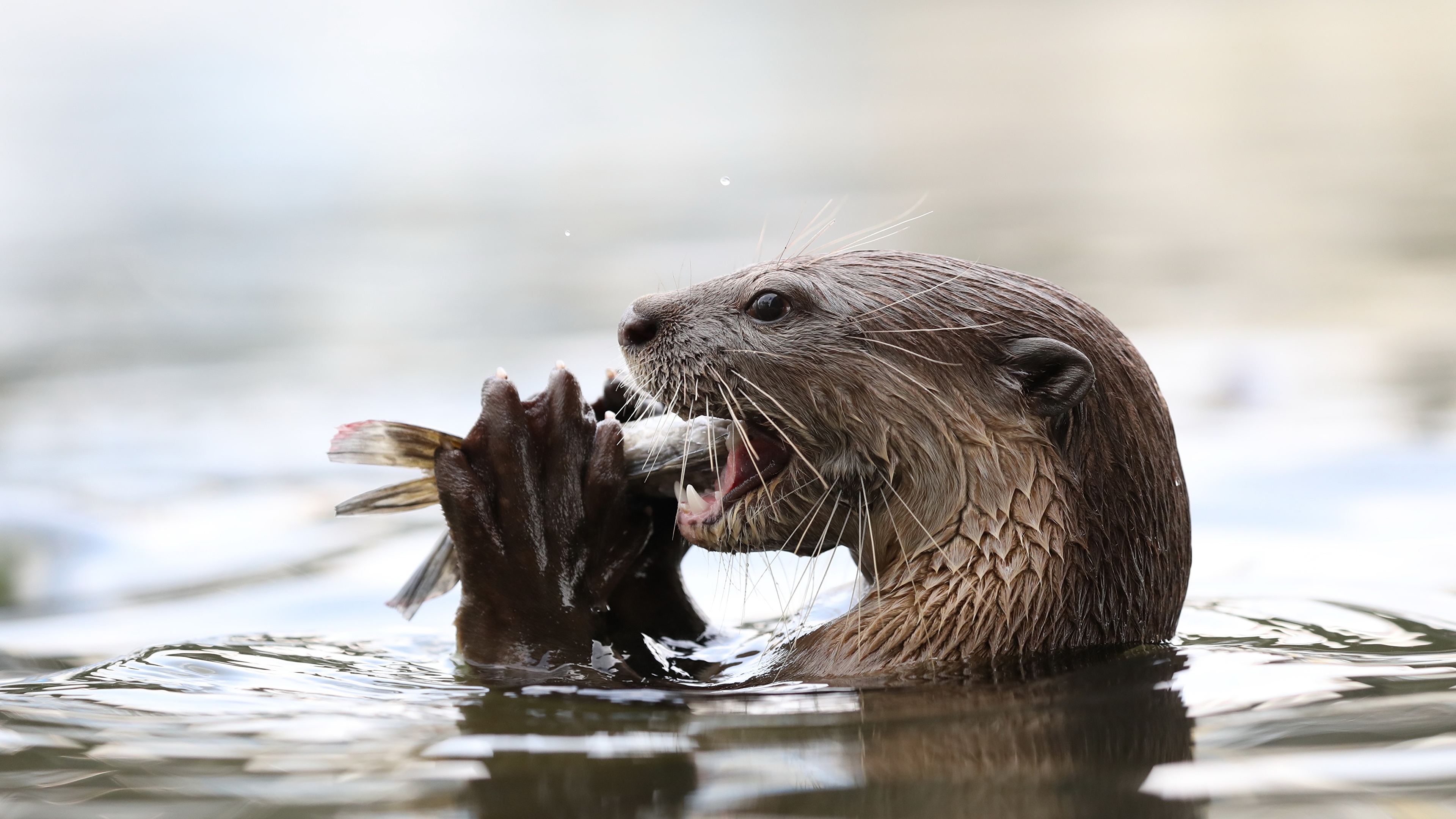
    Species in news: Eurasian Otters


    Researchers conducting a study in Odisha’s Chilika Lake have found the presence of a viable, breeding population of Eurasian Otters, a fishing cat in the brackish water lagoon.

    Eurasian Otters

    • IUCN Status: Near Threatened
    • Species in India: Smooth-coated, Asian small-clawed and Eurasian Otters
    • Habitat: Smooth-coated — all over India; Asian small-clawed — only in the Himalayan foothills, parts of the Eastern and southern Western Ghats; Eurasian — Western Ghats and Himalayas.
    • Diet comprises several small animals, mainly crabs and small fishes.
    • Lives in small packs, is mostly nocturnal, but can be diurnal in areas which are less disturbed.
  • Health Sector – UHC, National Health Policy, Family Planning, Health Insurance, etc.

    State lethargy amidst cough syrup poisoning

    Context

    A few days ago, 12 children died in Udhampur district of Jammu due to poisoned cough syrup (Coldbest-PC).

    Fourth mass glycol poisoning

    • What was the cause of the poisoning? A team of doctors at the Post Graduate Institute of Medical Education & Research, Chandigarh, attributed the deaths to the presence of diethylene glycol in the cough syrup.
    • What is Diethylene glycol? It is an anti-freezing agent that causes acute renal failure in the human body followed by paralysis, breathing difficulties and ultimately death.
    • This is the fourth mass glycol poisoning event in India that has been caused due to a pharmaceutical drug.

    Measures required and example from the US

    • Preventing further deaths: The immediate concern for doctors, pharmacists and the drug regulators should be to prevent any more deaths.
      • The only way to do so is to account for each and every bottle of the poisoned syrup that has ever been sold in the Indian market and stop patients from consuming this drug any further.
    • The US example in such case: United States Food and Drug Administration (USFDA), in 1937, when the United States faced a similar situation with glycol poisoning.
      • Tracking down every bottle: Entire field force of inspectors and chemists were assigned to the task of tracking down every single bottle of the drug.
      • Even if a patient claimed to have thrown out the bottle, the investigators scoured the street until they found the discarded bottle.
      • This effort was accompanied by a publicity blitz over radio and television.
    • What is being done in India? We do not see such public health measures being undertaken here.
      • Seriousness not communicated to the pubic: Authorities are simply not communicating the seriousness of the issue to the general public.
      • A general statement: At most, the authorities in Himachal Pradesh (H.P.), who are responsible for oversight of the manufacturer of this syrup, have made general statements that they have ordered the withdrawal of the drug from all the other States where it was marketed.
      • Lack of transparency: There is no transparency in the recall process and information about recalls and batch numbers is not being communicated through authoritative channels.
      • No public announcement by the DCGI: There is no public announcement by the Drug Controller General of India (DCGI), which is responsible for overall regulation of the entire Indian market.
      • The suspect product, although manufactured in H.P., has been sold across the country.
      • The website of the DCGI, which is supposed to communicate drug alerts and product recalls, has no mention of Coldbest-PC as being dangerous as of this writing.

    Need for the recall policy

    • No rules or binding guidelines on recall: One of the key reasons why the DCGI and state drug authorities have been so sloppy is because unlike other countries, India has not notified any binding guidelines or rules on recalling dangerous drugs from the market.
    • Warnings to the DGCI on lack of framework: The 59th report of the Parliamentary Standing Committee on Health as well as the World Health Organization (in its national regulatory assessment) had warned the DCGI on the lack of a national recall framework in India.
      • A set of recall guidelines was drafted in 2012 but never notified into law.

    Conclusion

    The drug regulator needs to take the urgent steps to avoid the repeat of such tragedies in the future and formulate a policy on the drug recall at the earliest.

  • Foreign Policy Watch: India-SAARC Nations

    Regional bonding: On Ranil Wickremesinghe’s prescription for peace

    Context

    Former Sri Lankan Prime Minister Ranil Wickremesinghe’s push for regional economic integration and for India-Pakistan dialogue should be studied carefully by New Delhi.

    What are the issues with SAARC?

    • Recent moves by India: India has more or less shut down all conversations on the South Asian Association for Regional Cooperation (SAARC).
      • India also walked away from the ASEAN-led Regional Comprehensive Economic Partnership (RCEP).
    •  Mr Wickremesinghe set out a number of suggestions:
    • The original purpose of SAARC-Regional growth: India-Pakistan tensions have brought economic integration within the SAARC region to a “standstill”.
      • That the original purpose of the South Asian group was to build a platform where bilateral issues could be set aside in the interest of regional growth.
    • Start at the sub-grouping levels: To engender more intra-regional trade, an even smaller sub-grouping of four countries with complementary economies: India, Sri Lanka, Bangladesh and Thailand, can start the process of reducing tariffs and demolishing non-tariff barrier regimes.
      • When it comes to the intra-regional share of total trade, SAARC and BIMSTEC languish behind groupings such as ASEAN, EU and MERCOSUR.
    • Economic Integration Road Map: The Sri Lankan leader also suggested that with India’s leadership, a more integrated South Asian region would be better equipped to negotiate for better terms with RCEP so as not to be cut out of the “productivity network” in Asia, and envisioned an Economic Integration Road Map to speed up the process.

    Governments stand

    • Talks with Pakistan off the table: The government has made it clear that talks with Pakistan are strictly off the table, and that a SAARC summit, which has not been held since 2014, is unlikely to be convened anytime soon.
    • More reliance on bilateral deals: The government, which has taken a protectionist turn on multilateral trade pacts, is relying more on direct bilateral deals with countries rather than overarching ones that might expose Indian markets to flooding by Chinese goods.
    • India’s trade deficit with the neighbours: For any regional sub-grouping in South Asia to flourish, it is India that will have to make the most concessions given the vast trade deficits India’s neighbours have at present, which it may not wish to do.

    Conclusion

    • The overall projection that India’s global reach will be severely constrained unless it is integrated with its neighbours, and tensions with Pakistan are resolved, cannot be refuted. India needs to be more accommodative for the realisation of its ambitions.


  • Coronavirus – Health and Governance Issues

    One country, two viruses

    Context

    China’s handling of coronavirus, in contrast to SARS, has been effective, should be a template for others.

    Why lockdown of Wuhan is a big deal?

    • A move without precedent: China’s lockdown of roughly 60 million people in Wuhan and other cities in Hubei province for more than a month now is without precedent in the history of public health.
    • Best way to stop the virus from spreading: The best way to stop a virus from spreading from person to person, is to give it no place to spread to.
      • This is achieved by isolating those who are infected and quarantining those who might be infected.
    • Cordon sanitaire: In China, though, the control has moved beyond traditional quarantine to a cordon sanitaire-an exclusion zone people cannot travel into or get out of.
      • In most countries, this simply would not work for a period this long and a population that large.
    • Inconceivable move in other places: Wuhan is a city of 11 million people, slightly larger than Chennai or Bengaluru. It would be inconceivable to think of cutting off transportation in and out of these cities or asking people to stay at home for even a day, let alone a month.
      • No political control nor administrative mechanism: Like India, most countries in the world have neither the political control to impose their will on people this way nor the administrative mechanism to enforce this degree of control.

    Human cost and ethic of the lockdown

    • The human cost: The human cost of such a strategy is immense.
      • Feeling of being unable to escape: The fear induced by being unable to escape from a place where a new virus is circulating is immense.
      • The worries and stresses of everyday life multiply one hundred-fold when everything from shopping for food to occupying children stuck at home becomes a challenge.
      • The slightest cough, cold or fever can trigger panic.
    • Ethics involved in the move: The ethics of the cordon sanitaire in Wuhan, as well as the quarantining by Japanese authorities of the cruise ship Diamond Princess, will be debated for years after this particular outbreak is over.
    • Slowing the spread: But whatever its human and financial cost, China’s actions in the first month of the outbreak helped to slow the spread of the virus within the country as well as internationally.

    How China’s response this time is different from the SARS

    • On December 31, the Chinese government informed the WHO, and the world, of the existence of a form of pneumonia of unknown cause
      • It also told the people of Wuhan to wear masks if they had symptoms and seek medical attention.
    • Virus identification: For the world, the big breakthrough from China came on January 7, when researchers in Wuhan identified the virus as a new coronavirus.
    • Sharing of the genetic sequence of the virus: Two days later, China shared its genetic sequence with the world.
      • How genetic sequence helped? The sharing of the genetic sequence allowed labs all over the world to develop testing kits to detect the disease.
      • It also put countries on the alert for travellers with the disease, without which the new coronavirus would have spread much quicker and farther than it has so far.
    • China’s response to SARS: The Chinese response to SARS in 2003, in contrast to this, was a cover-up.
      • The disease circulated for nearly three months, enabled by government secrecy and censorship.
      • Spread of disease without warning: When travellers from China brought the disease first to Hong Kong and from there to other cities across the globe, there was no warning.
      • It was only after the disease spread in Hong Kong, that scientists and public health experts began to decipher this new virus.
      • Lessons learned: China, fortunately, learned the lessons for SARS and put together systems to identify and respond to this new disease quickly.

    What India can learn from China

    • Infrastructure with speed: Public health officials all over the world, including in India, should study the speed with which China put together an infrastructure to deal with this new disease.
      • Modern, well-equipped hospitals dedicated to coronavirus patients were constructed in weeks.
    • Centralised information and logistic system: Centralised information and logistics systems and systems to ensure coordination between multiple levels of government -from the central government to provincial and municipal governments, were put into place.
      • All the systems seem to have worked reasonably smoothly, given the chaotic and complex atmosphere of a disease outbreak.
    • Unique approach: The way China has tackled this disease has been an “all of government, all of the society approach”, in the words of Bruce Aylward, the leader of the WHO team that recently spent two weeks in the country.
      • It was, as he described it, “a very old-fashioned approach”, but one that had “prevented at least tens of thousands, but probably hundreds of thousands of cases.”

    Conclusion

    • In all probability, it is only a matter of time before India sees new cases. The Indian health system, as in China, is multi-layered. Some states like Kerala have strong public health infrastructure and a strong response capability. Many other states like Uttar Pradesh and Bihar do not have strong public health systems. They will find it difficult to respond and will learn that diseases, like the revolution, can be brutal.
  • Climate Change Impact on India and World – International Reports, Key Observations, etc.

    Explained: Marine Heatwave (MHW)


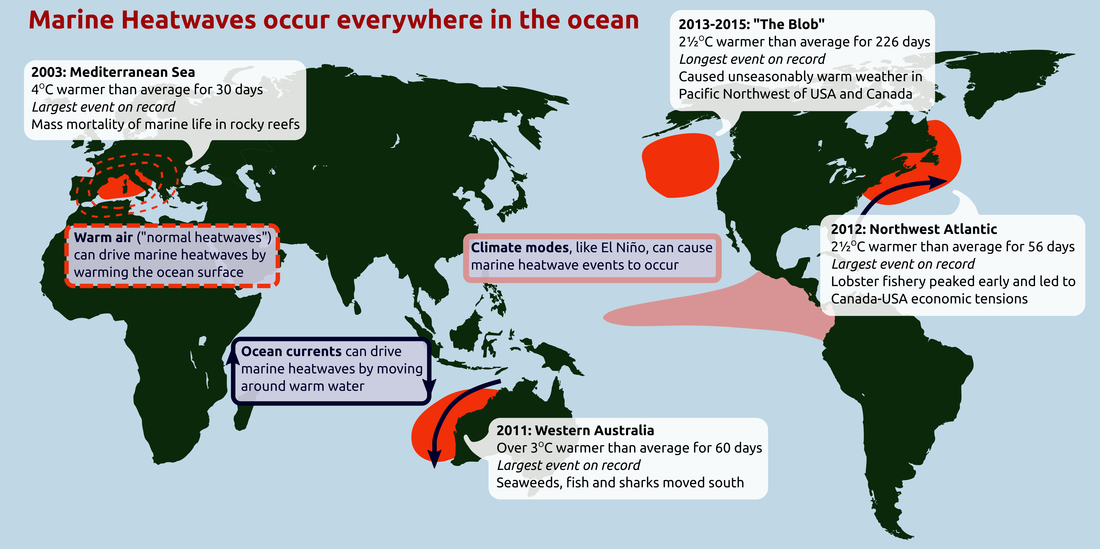
    Scientists have observed unusually high sea surface temperatures (SSTs) in the Pacific Ocean around the western coast of the United States.  This marine heatwave (MHW), covering an area of roughly 6.5 million square kilometres, can affect marine life and lead to droughts in the surrounding regions.

    What are MHWs?

    • We know that heatwaves occur in the atmosphere. We are all familiar with these extended periods of excessively hot weather.
    • However, heatwaves can also occur in the ocean and these are known as marine heatwaves, or MHWs.
    • These marine heatwaves, when ocean temperatures are extremely warm for an extended period of time can have significant impacts on marine ecosystems and industries.

    When do they occur?

    • Heatwaves can happen in summer and also in winter, where they are known as “winter warm-spells”.
    • These winter events can have important impacts, such as in the southeast of Australia where the spiny sea urchin can only colonize further south when winter temperatures are above 12 °C.

    What causes marine heatwaves?

    • Marine heatwaves can be caused by a whole range of factors, and not all factors are important for each event.
    • The most common drivers of marine heatwaves include ocean currents which can build up areas of warm water and air-sea heat flux, or warming through the ocean surface from the atmosphere.
    • Winds can enhance or suppress the warming in a marine heatwave, and climate modes like El Niño can change the likelihood of events occurring in certain regions.
    • MHWs can be caused due to large-scale drivers of the Earth’s climate like the El Niño Southern Oscillation (ENSO).

    Impacts of the MHWs

    • Marine heatwaves affect ecosystem structure, by supporting certain species and suppressing others.
    • For example, after the 2011 marine heatwave in Western Australia the fish communities had a much more “tropical” nature than previously and switched from kelp forests to seaweed turfs.
    • Marine heatwaves can cause economic losses through impacts on fisheries and aquaculture.
    • Temperature-sensitive species such as corals are especially vulnerable to MHWs. In 2016, marine heatwaves across northern Australia led to severe bleaching of the Great Barrier Reef.

    How do we measure marine heatwaves?

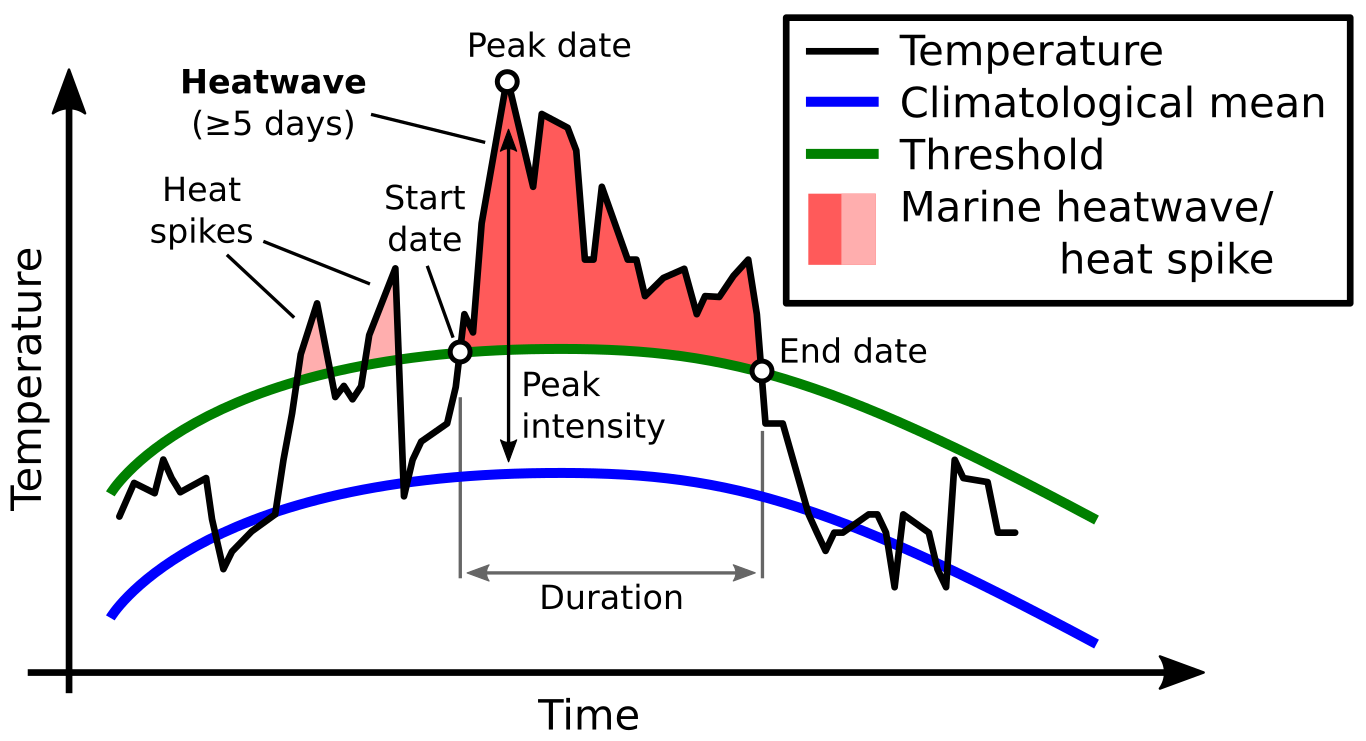
    • A marine heatwave occurs when seawater temperatures exceed a seasonally-varying threshold (usually the 90th percentile) for at least 5 consecutive days.
    • Successive heatwaves with gaps of 2 days or less are considered part of the same event.

    Why study MHWs?

    • MHWs are increasing in frequency due to climate change. MHWs increased by 54 per cent in the last 30 years.
    • Despite their potential impact on the health of marine ecosystems, MHWs remain one of the least studied consequences of global warming.

    Way Forward

    • Marine heatwaves clearly have the potential to devastate marine ecosystems and cause economic losses in fisheries, aquaculture, and ecotourism industries.
    • However, their effects are often hidden from view under the waves until it is too late.
    • By raising general awareness of these phenomena, and by improving our scientific understanding of their physical properties and ecological impacts, we can better predict future conditions and protect vulnerable marine habitats and resources.
  • Wildlife Conservation Efforts

    Locust Invasions and its mitigation


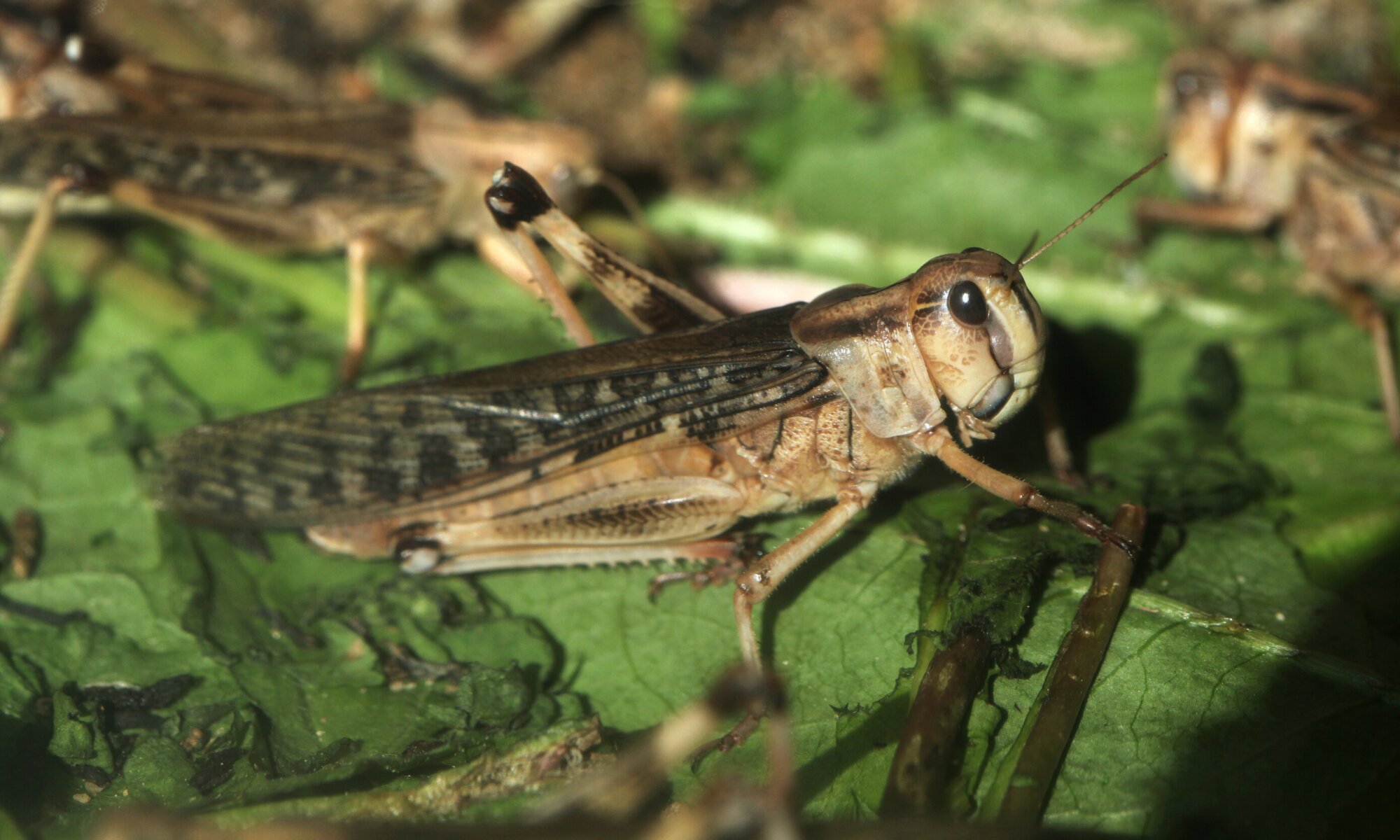
    The locust, a short-horned, desert grasshopper that attacks standing crops and green vegetation, has been making news in India since May-June 2019 when it appeared in Rajasthan and Gujarat. In Kharif season last year, it was also seen in a few areas along Punjab’s border with Rajasthan.

    Context

    • The Locust Warning Organisation (LWO) has been taking measures to control attacks by the pest for the past eight decades in the country.
    • Despite all of LWO’s efforts, the chain of periodic locust attacks in India is yet to be broken.

    Why Locusts attacks are deadly?

    • Adult locust swarms can fly up to 150 km (93 miles) a day with the wind and adult insects can consume roughly their own weight in fresh food per day.
    • A very small swarm eats as much in one day as about 35,000 people.
    • If allowed to breed unchecked in favourable conditions, locusts can form huge swarms that can strip trees and crops over vast areas.

    About LWO

    • In India, the scheme Locust Control and Research (LC&R) is responsible for control of Desert Locust.
    • It is being implemented through Organisation known as “Locust Warning Organisation (LWO)” established in 1939 and later amalgamated with the Directorate of Plant Protection Quarantine and Storage in 1946.
    • Locust Warning organization (LWO) is responsible to monitor and control the locust situation in Scheduled Desert Area (SDA) mainly in the States of Rajasthan and Gujarat while partly in the States of Punjab and Haryana.
    • It keeps itself abreast with the prevailing locust situation at National and International level through monthly Desert Locust Bulletins of FAO.

    What measures are being taken by the LWO to control locust breeding/attacks in India?

    • Experts at the LWO said around three dozen offices including 10 circle offices are working on this issue.
    • They have been doing regular field surveys to keeping a close and regular watch on an over two lakh sq. km area (nearly 11,500 villages) of three states including 1.79 lakh sq. km in Rajasthan (52 per cent of the state’s total area), and the remaining in Gujarat and Haryana.
    • To observe the locust, intensive surveys are conducted by walking along the wind direction and driving at low speed to count flying locusts.

    How often have there been locust attacks in India?

    • The pests have been appearing periodically after a gap of 2-3 or 5-7 years. Around 26 locust attacks have taken place in India in two major cycles.
    • After independence (1947), 25 attacks were observed. Among these, the attacks of 1949-55, 1962 and 1993 were most devastating when 167 and 172 swarms were noticed in 1962 and 1993 respectively.
    • Since 1993, locust attacks have occurred less frequently. The latest attack of 2019-20, has had quite a severe effect on crops in Rajasthan.

    Financial losses incurred

    • According to LWO, to date, the financial loss due to locusts is said to be Rs 50 lakh, Rs 2 lakh and Rs 7.18 lakh in 1962, 1978 and 1993 respectively.
    • A loss of Rs 2 crore was incurred in 1940-46 and 1949-55. Before the LWO was formed, a loss of Rs 10 crore is estimated in the 1926-31 cycle.

    Why has the chain not been broken even after 80 years?

    • LWO experts said it is because there are 30 countries in four regions of different continents that have an arid climate with large deserts that provide an ideal breeding ground for the locust.
    • Most of the time, locusts are coming to India from Pakistan, or from the Middle East via Pakistan.
    • There are four commissions for these 30 countries which include Iran, Pakistan, Afghanistan and India.
    • Laxity by any country would lead to its spread in all these countries which they invade one after another by following almost the same path.
    • The swarms which are coming to India (Rajasthan) have been following the same path, starting from central or western region and then Pakistan mostly in summers.
    • Apart from breaking the chain of summer attacks, the winter swarm has now posed another challenge.

    Where did the current locust attack originate?

    • The locust breeds in high temperatures and high humidity, which is prevalent in areas around the Red Sea.
    • The current attack in India, which started in 2019, has its origin in Yemen, where there was internal conflict and civil war.
    • When the locust was breeding in heavy numbers there in 2018-19, the country could not take care due to its attention towards the civil war and lack of resources to control it.
    • The insect went out of control, took the route of Saudi Arabia, Iran, Pakistan, Somalia, Ethiopia and other countries located on both sides of the Red Sea where they multiplied rapidly.

    Control measures

    • The chain can be broken only when the pest is killed at the time of breeding or before migration to another country.
    • Farmers used to try to drive away the locusts by lighting fires. They also dug up the eggs.
    • Now crops can be sprayed with insecticides from vehicles or airplanes.
    • Scientists are trying to improve the control of locusts, by preventing or dispersing swarms.

    Also read:

    https://www.civilsdaily.com/news/desert-locusts-incursion-in-india/

Join the Community

Join us across Social Media platforms.