💥UPSC 2027,2028 Mentorship (April Batch) + Access XFactor Notes & Microthemes PDF

Archives: News

  • Police Reforms – SC directives, NPC, other committees reports

    Grant of Bail in India

    Why in the News?

    The US President has stopped federal funds that allowed cashless bail, sparking debate on whether the system is fair to the poor.

    Cashless Bail System in the US:

    • Cashless Bail: Removes upfront cash requirement, relying on non-financial conditions like monitoring or appearance assurance.
    • Criticism of Cash Bail: Disadvantages the poor, keeping undertrials jailed for minor offences. Imposes financial strain that may itself push individuals toward further crime.

    About Bail Provisions in India (BNSS, 2023, replacing CrPC, 1973):

    • Bail is essentially a mechanism to release an accused from custody with assurances that they will not abscond or tamper with evidence.
    • Governed by Chapter 35 of the Bharatiya Nagarik Suraksha Sanhita (BNSS), 2023.

    Types of Bail under BNSS:

    1. Regular Bail:
      • For bailable offences (Sec. 478): Bail is a right.
      • For non-bailable offences (Secs. 480, 483): Bail is at court’s discretion, depending on seriousness of offence, evidence, risk of absconding, and public interest.
    2. Anticipatory Bail (Sec. 482): Pre-arrest bail in non-bailable offences, granted by higher courts with conditions such as no interference in investigation or threats to witnesses.
    3. Interim Bail: Temporary release while a regular or anticipatory bail application is pending.
    4. Statutory/Default Bail (Sec. 187): Accused has the right to bail if chargesheet not filed within the stipulated period.

    Bail Mechanisms in Practice:

    • Bond: Accused signs a bond and deposits cash as guarantee; refunded after trial unless terms are violated.
    • Bail Bond: Surety given by another person such as a friend, family member, or employer. Courts verify their documents, financial stability, and residence. In Mumbai, a solvency certificate issued by a revenue officer is required, which delays bail.
    • Personal Recognisance (PR) Bond: Accused released without immediate cash deposit but must arrange money within a specified time. Courts often hesitate to grant PR bonds citing trial integrity.

    Challenges in India’s Bail System

    • Undertrials stuck despite bail:
      • Many accused cannot furnish surety or small sums (₹5,000 or less).
      • Maharashtra (2022): 1,600+ persons in jail unable to meet bail conditions; 600 in Mumbai Metropolitan Region alone.
      • Prisons overcrowded: Maharashtra prisons had 12,343 excess prisoners (July 2025).
    • Judicial concerns: 268th Law Commission Report (2017):
      • Monetary bail system is discriminatory & unconstitutional.
      • Violates right to fair trial; leads to arbitrary classifications.
    • Supreme Court (2023 guidelines):
      • If an accused remains in jail >1 week despite bail, jail superintendent must inform District Legal Services Authority (DLSA).
      • DLSA can send para-legal volunteers/lawyers to assist release.
      • Based on NALSA data: ~5,000 undertrials jailed despite bail.
    • Reform under BNSS (2023):
      • Jail authorities must apply for bail for undertrial prisoners who have:
        • Served 1/3 of maximum sentence (first-time offenders).
        • Served 1/2 of maximum sentence (repeat offenders).
      • Not applicable in life imprisonment or death penalty cases.
    [UPSC 2021] With reference to India, consider the following statements:

    1.Judicial custody means an accused is in the custody of the concerned magistrate, and such an accused is locked up in the police station, not in jail.

    2.During judicial custody, the police officer in charge of the case is not allowed to interrogate the suspect without the approval of the court.

    Which of the statements given above is/are correct?

    Options: (a) 1 only (b) 2 only* (c) Both 1 and 2 (d) Neither 1 nor 2


  • Policy Wise: India’s Power Sector

    [pib] State Energy Efficiency Index, 2024

    Why in the News?

    The Bureau of Energy Efficiency (BEE) has released the latest edition of State Energy Efficiency Index 2024 (SEEI 2024).

    About State Energy Efficiency Index (SEEI), 2024:

    • Released by: Bureau of Energy Efficiency (BEE), Ministry of Power, in association with Alliance for an Energy Efficient Economy (AEEE).
    • Coverage: Assesses 36 States/UTs on energy efficiency performance for FY 2023–24.
    • Framework:
      • 6th edition, implementation-focused.
      • 66 indicators across sectors – Buildings, Industry, Municipal Services, Transport, Agriculture, DISCOMs, Cross-sector.
      • Includes new focus areas: EV adoption, star-rated buildings, Demand Side Management (DSM).
    • Classification:
      • Front Runners (>60%), Achievers (50–60%), Contenders (30–50%), Aspirants (<30%).
      • Top performers: Maharashtra (>15 MToE), Andhra Pradesh (5–15 MToE), Assam (1–5 MToE), Tripura (<1 MToE).
    • Key Highlights:
      • 24 states notified Energy Conservation Building Code (ECBC 2017).
      • 31 states adopted EV policies.
      • 13 states promoted solar pumps (Kerala – 74% adoption).
      • All 36 prepared State Energy Efficiency Action Plans (SEEAPs); 31 formed State Energy Transition Committees.
    • Significance: Supports India’s Net Zero 2070 goal by promoting state-level energy transition.

    Back2Basics: Bureau of Energy Efficiency (BEE):

    • Established: 1 March 2002, under the Energy Conservation Act, 2001.
    • Nodal Ministry: Ministry of Power.
    • Mission: To assist in developing policies & strategies for energy efficiency, with the aim of reducing energy intensity of the Indian economy.
    • Functions:
      • Regulatory: Implementation of Energy Conservation Act provisions.
      • Promotional:  Encourage adoption of efficient technologies & practices.
    • Key Achievements:
      • Contributed to 3.5% reduction in India’s overall energy consumption.
      • Implements programmes like Perform, Achieve, Trade (PAT), Standards & Labelling, Energy Efficiency Financing Platform, etc.
    [UPSC 2016] On which of the following can you find the Bureau of Energy Efficiency Star Label?

    1. Ceiling fans 2. Electric geysers 3. Tubular fluorescent lamps

    Select the correct answer using the code given below.

    Options: (a) 1 and 2 only (b) 3 only (c) 2 and 3 only (d) 1, 2 and 3*


  • New Species of Plants and Animals Discovered

    Ice Age-era Dragon Fly rediscovered

    Why in the News?

    Odonatologists have reconfirmed the presence of the elusive dragonfly species Crocothemis erythraea in the southern Western Ghats.

    About Crocothemis erythraea Dragonfly:

    • Species Type: A rare dragonfly species, usually found in Europe, Asia, and the Himalayas.
    • Recent Finding: Reconfirmed in the Western Ghats, specifically in Kerala and Tamil Nadu high ranges.
    • Comparison: Closely resembles the common lowland species Crocothemis servilia, leading to earlier misidentifications.
    • Habitat Preference: Inhabits cooler, high-altitude areas above 550 metres.
    • Historical Origin: Likely spread to South India during the Ice Age and survived in montane habitats such as Sholas and grasslands.

    Significance of the Discovery:

    • Biodiversity Insight: Demonstrates how ancient climate changes influenced current biodiversity patterns.
    • Ecological Importance: Reinforces the Western Ghats’ status as a biodiversity hotspot of global value.
    • Conservation Message: Highlights the need to protect sensitive high-altitude habitats like Sholas and montane grasslands.
    • Scientific Contribution: Adds to India’s growing record of documenting and conserving rare species.
    [UPSC 2024] The organisms Cicada, Froghopper and Pond skater are:

    Options: (a) Birds (b) Fish (c) Insects* (d) Reptiles


  • Global Geological And Climatic Events

    Mount Etna Eruption

    Why in the News?

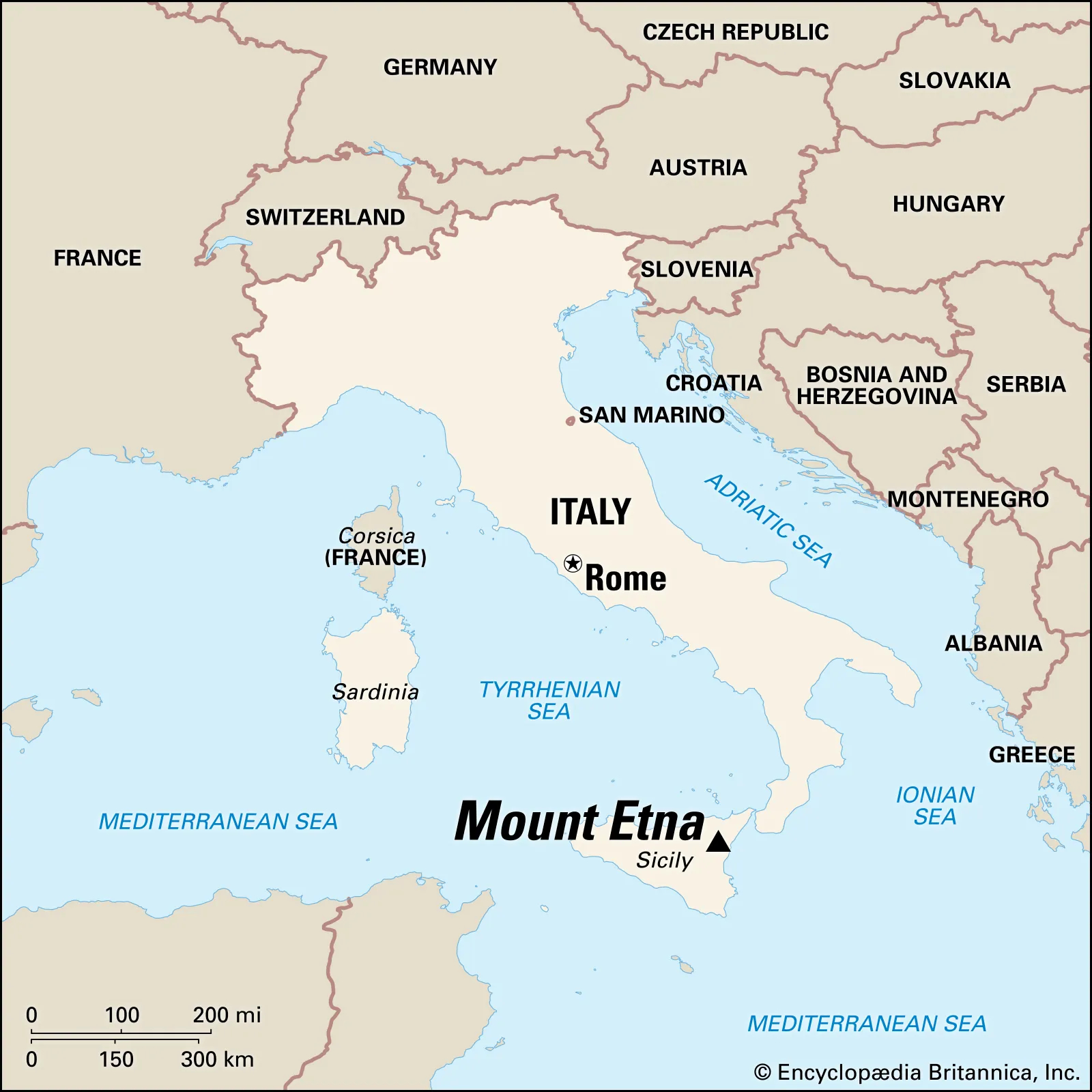
    Mount Etna has erupted again after its recent eruption in June.

    About Mount Etna:

    • Location: Situated on the east coast of Sicily, Italy, near the city of Catania.
    • Type: Mount Etna is a stratovolcano (also called a composite volcano), which is formed from layers of hardened lava, volcanic ash, and rocks.
    • Height: It stands at approximately 3,300 meters, making it the tallest volcano in Europe south of the Alps.
    • Recognition: Declared a UNESCO World Heritage Site in 2013, with documented volcanic activity for at least 2,700 years.
    • Eruption Record: Etna is almost constantly active. Notable eruptions have occurred in 1400 B.C., 1669, 2001, 2018, 2021, 2024, and 2025.
    • Volcanic Activity Style: Known for Strombolian and effusive eruptions, with occasional Plinian eruptions (rare and more explosive).

    Reasons Behind the Eruption:

    • Nature of Eruption: The eruption is classified as either Strombolian or possibly Plinian, depending on interpretation:
      • Strombolian Eruption: Characterized by moderate explosive bursts, caused by gas bubbles in magma suddenly bursting at the surface.
      • Plinian Eruption: Some volcanologists suggest this classification due to the large ash column that may have reached the stratosphere.
    • Eruption Trigger: The eruption likely began due to pressure buildup from gas within the magma chamber, leading to collapse of the southeast crater and lava flows.
    [UPSC 2014] Consider the following geological phenomena:

    1. Development of a fault

    2. Movement along a fault

    3. Impact produced by a volcanic eruption

    4. Folding of rocks Which of the above cause earthquakes?

    Options: (a) 1, 2 and 3 (b) 2 and 4 (c) 1, 3 and 4 (d) 1, 2, 3 and 4*


  • [29th August 2025] The Hindu Op-ed: India’s demographic dividend as a time bomb

    Mentor’s Comment

    India’s celebrated demographic dividend, once viewed as a sure path to prosperity, is at risk of turning into a demographic time bomb. The article highlights how an outdated education system, misaligned curricula, lack of skilling, and the AI-driven disruption are threatening the employability of millions of young Indians. With over 800 million citizens below 35, the stakes are immense: India’s future growth, social stability, and global aspirations hinge on whether this youth bulge is transformed into an asset or left to fester as a liability.

    Introduction

    Demographic dividend refers to the economic growth potential that arises when a country has a larger share of its population in the working-age group compared to dependents. It is essentially the window of opportunity where youth can drive productivity, innovation, and national prosperity. India today stands at such a pivotal moment, with more than half of its population below the age of 35. This unprecedented youth bulge offers a chance to accelerate growth, but whether it becomes a dividend or a disaster depends entirely on how well the country equips its people with education, skills, and employability.

    The scale of India’s demographic challenge

    1. Youth bulge: Over 800 million people under 35, one of the world’s largest youth populations.
    2. Graduate glut: India produces millions of graduates annually, but many remain underemployed or unemployable.
    3. Engineering crisis: 40–50% of engineering graduates in the last decade were not placed in jobs.
    4. Employability gap: According to Mercer-Mettl (2025), only 43% of graduates are job-ready.

    The impact of Artificial Intelligence on jobs and employability

    1. Automation threat: McKinsey projects 70% of jobs in India could be impacted by automation by 2030.
    2. Task replacement: Nearly 30% of current job tasks will be automated globally.
    3. Job churn: World Economic Forum (WEF) predicts 170 million new jobs by 2030, but 92 million displaced in the same period.
    4. Urgency: India’s curriculum runs on 3-year cycles, too slow compared to fast-moving technology disruptions.

    The roots of the education–employment mismatch in schools

    1. Career ignorance: 93% of students (Classes 8–12) are aware of only 7 traditional careers (doctor, engineer, lawyer, teacher).
    2. Career options: The modern economy offers 20,000+ career paths.
    3. Guidance gap: Only 7% of students receive formal career guidance.
    4. Wrong fit: 65% of high school graduates pursue degrees not aligned with their aptitude or market demand.

    The shortcomings of India’s skilling missions

    1. Skill India shortfall: Aimed to train 400 million individuals by 2022, but fell short.
    2. Fragmented approach: Policies such as Pradhan Mantri Kaushal Vikas Yojana (PMKVY), Pradhan Mantri Kaushal Kendras (PMKK), Jan Shikshan Sansthan (JSS), Pradhan Mantri Yuva Yojana (PMYY), Skills Acquisition and Knowledge Awareness for Livelihood Promotion (SANKALP), and the Prime Minister’s Internship Scheme have been launched, but they often function in silos without effective integration.
    3. Funding without impact: Large-scale spending has not yielded industry-ready graduates.
    4. Need of the hour: Cohesive, industry-aligned national skilling strategy.

    The risks of neglecting the demographic crisis

    1. Economic setback: Risk of educated but unemployable workforce undermining India’s growth.
    2. Social unrest: Historical precedent in the Mandal protests of 1990, where youth frustration erupted violently.
    3. Paradox at scale: As Lant Pritchett noted in Where Has All the Education Gone?, mere schooling without employability worsens the crisis.
    4. Civilizational risk: The crisis is not just about jobs, but about the social contract between state and youth.

    Conclusion

    India stands at a crossroads. The very youth once seen as its greatest strength may become its Achilles’ heel if the education–employment gap remains unaddressed. The AI revolution makes this transition even more urgent. With the right mix of foresight, reforms, and collaboration between government, private sector, and academia, India can convert its youth bulge into a global competitive advantage. The clock is ticking, the dividend must be harnessed before it explodes into a time bomb.

    PYQ Linkage

    [UPSC 2016] “Demographic Dividend in India will remain only theoretical unless our manpower becomes more educated, aware, skilled and creative.” What measures have been taken by the government to enhance the capacity of our population to be more productive and employable?

    Linkage: The question emphasizes that India’s demographic dividend will remain theoretical without real improvements in education, awareness, skills, and creativity. This connects with the fact that, despite schemes like Skill India Mission, PMKVY, NEP 2020 and SANKALP, a large share of graduates remain unemployable — with only 43% job-ready and 40–50% of engineering graduates jobless — underscoring the urgent need for aligning skilling with industry demands.

  • Disasters and Disaster Management – Sendai Framework, Floods, Cyclones, etc.

    Challenges of Monsoon Variability and Disaster Preparedness

    Introduction

    Heavy rains in August 2025 have wreaked havoc across North India, Himachal Pradesh cut off, Jammu and Kashmir reporting over 40 deaths, Punjab’s farmland submerged, and the Yamuna swelling in the capital. The floods highlight the increasing unpredictability of the southwest monsoon, where rainfall comes in concentrated bursts rather than spread across weeks. Beyond the immediate tragedy, this points to systemic governance challenges, unplanned infrastructure in fragile zones, inadequate early warning systems, and a reactive rather than preventive disaster management model.

    Increasing unpredictability of the monsoon

    1. Erraticism of rainfall: Concentrated bursts replace evenly spread rains, overwhelming slopes, rivers, and cities.
    2. Amplified erosion: Short, intense rain accelerates slope destabilisation in Himalayas.
    3. Recurring phenomenon: Evidence now suggests such rainfall patterns are no longer exceptional but likely regular.

    Fragility of Himalayan ecosystems and their weakening

    1. Deforestation and clearance: Forest cover removal and road-widening continue unchecked.
    2. Slope destabilisation: Lack of slope-safe engineering increases landslide risks.
    3. Shrinking catchments: Reduced buffering capacity heightens chances of slope failure and siltation downstream.

    Insufficiency in disaster preparedness

    1. Early warning gaps: Despite better forecasts, reliable ground-level alerts are absent.
    2. Relief over resilience: Agencies mobilise post-damage; pre-positioned supplies and community drills are missing.
    3. Reactive model: Each disaster treated as unforeseeable, ignoring repeated expert warnings.

    Policy choices aggravating vulnerabilities

    1. Strategic projects: Roads and urban expansion pursued in unstable landscapes.
    2. Poor compensatory afforestation: Quality of replanted forests does not match original ecological value.
    3. Climate-resilient infrastructure lag: Development focus prioritises speed over sustainability.

    Shifts required in disaster governance

    1. Shift to preventive strategies: Focus on reducing vulnerabilities before disasters occur.
    2. Systematic preparedness: Regular drills, community participation, and pre-emptive relief stocks.
    3. Balanced growth: Infrastructure that respects ecological fragility and integrates climate resilience.

    Conclusion

    The 2025 floods across North India are not isolated accidents but part of a pattern of climate-driven extreme weather. Treating each calamity as “unprecedented” delays learning and perpetuates cycles of loss. Building resilience means moving beyond post-disaster relief to preventive strategies: sustainable infrastructure, landslide mitigation, community drills, and early-warning systems. Unless governance shifts from reaction to anticipation, monsoon seasons will continue to leave trails of destruction.

    PYQ Relevance

    [UPSC 2019] Disaster preparedness is the first step in any disaster management process. Explain how hazard zonation mapping will help disaster mitigation in the case of landslides.

    Linkage: The 2025 North India floods highlight how slope destabilisation and unchecked construction in Himalayan States amplify landslide risks. Hazard zonation mapping could have guided slope-safe engineering, restricted high-risk land use, and improved early warning. Thus, it directly connects preparedness to mitigation, aligning with the UPSC 2019 question.

  • Health Sector – UHC, National Health Policy, Family Planning, Health Insurance, etc.

    Building health for 1.4 billion Indians

    Introduction

    India’s health care is at a defining juncture, balancing between privilege and universal right. The system must simultaneously expand access for millions who remain underserved while ensuring affordability in an era of rising costs. This requires a systemic framework, strengthening insurance, leveraging efficiency, embedding prevention, accelerating digital health adoption, and ensuring regulatory trust. If successful, India can set a global benchmark for inclusive, financially viable, and aspirational health care.

    India’s Health Care at an Inflection Point

    1. Dual challenge: Expanding access to underserved populations while making care affordable amid rising costs.
    2. Low insurance penetration: Only 15–18% of Indians are insured compared to global standards.
    3. Huge opportunity: Premium-to-GDP ratio at 3.7% vs global 7%, indicating scope for rapid growth.
    4. Global benchmark potential: India has already demonstrated how high-quality care at scale is possible, an MRI machine in India handles multiple times the scans compared to Western systems.

    Insurance as the Foundation of Affordability

    1. Pooling risk: Even modest premiums (₹5,000–₹20,000 for individuals) can cover several lakhs of treatment.
    2. Current gap: India’s gross written premiums stood at $15 billion in 2024, projected to grow at 20% CAGR till 2030.
    3. Ayushman Bharat success: Covers 500 million people with ₹5 lakh per family; led to a 90% rise in timely cancer treatments.
    4. Challenge: Expanding private hospital participation requires fair reimbursements and transparency.

    Prevention as the Strongest Cost-Saver

    1. Outpatient costs crisis: Punjab study showed even insured families faced catastrophic expenses for Non-Communicable Diseases (NCD) outpatient care.
    2. Redesign needed: Insurance must include outpatient + diagnostics.
    3. People’s role: Preventive mindset across schools, employers, and communities is essential.
    4. Economic benefit: Every rupee invested in healthier lifestyles saves multiples in treatment costs.

    Digital Health and AI for Democratising Access

    1. Early adoption: India pioneered telemedicine and now uses AI for sepsis detection, diagnostic triage, remote consultations.
    2. Bridging gaps: Specialists in metros can guide treatments in remote villages hundreds of km away.
    3. Continuity of care: The Ayushman Bharat Digital Mission aims for universal health records accessible nationwide.

    Regulation and Trust as the Missing Links

    1. Cost pressures: Insurers may hike premiums 10–15% due to pollution-related illnesses.
    2. Trust deficit: Without confidence in fair claims and grievance redressal, households avoid insurance.
    3. Government push: Finance Ministry has urged Insurance Regulatory and Development Authority of India (IRDAI) to strengthen claims settlement and consumer protection.
    4. Capital skew: In 2023, health sector drew $5.5 billion in private equity and venture capital investment (PE/VC investment), but mostly in metros, tier-2 and 3 remain underserved.

    Conclusion

    India’s health care future will be shaped by its ability to marry efficiency with equity, technology with trust, and prevention with cure. Insurance must evolve to cover everyday health needs, providers must expand beyond metros, and digital tools must bridge rural-urban divides. With bold public-private partnerships and strong regulation, India can make health care not a privilege but a fundamental right and a global model for inclusive growth.

    PYQ Relevance

    [ UPSC 2015] Public health system has limitations in providing universal health coverage. Do you think that the private sector could help in bridging the gap? What other viable alternatives would you suggest?

    Linkage: The article shows that while India’s public health system has expanded through PM-JAY, universal coverage is still limited by low insurance penetration (15–18%) and uneven rural access, reflecting the very limitations highlighted in the PYQ. It also stresses that private sector participation, anchored in fair reimbursements and transparent processes, is essential to bridge the gap, especially in tier-2 and tier-3 cities. Further, it suggests viable alternatives such as preventive health campaigns, digital health innovations, and public-private partnerships to make health care inclusive and affordable.

  • Modern Indian History-Events and Personalities

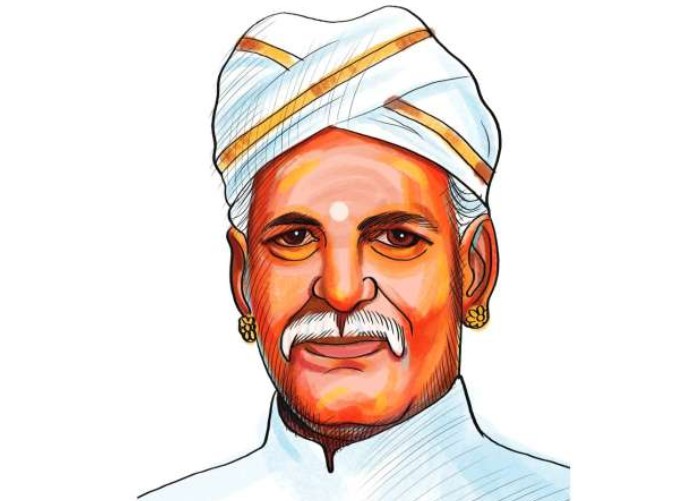
    [pib] Mahatma Ayyankali (1863–1941)

    Why in the News?

    On his Jayanti (August 28), PM paid tribute to Mahatma Ayyankali.

    About Mahatma Ayyankali:

    • Birth: August 28, 1863, in Venganoor, Travancore (present-day Thiruvananthapuram, Kerala).
    • Community: Belonged to the Pulayar caste, among the most oppressed and excluded groups.
    • Background: Faced severe caste discrimination despite family owning land; denied access to temples, schools, roads, and public spaces.
    • Legacy: Remembered as a Dalit leader of modern Kerala and a pioneer of social justice, education, and labour rights.

    Key Reforms and Contributions:

    • Caste Defiance: Famous Villuvandi Yatra (1893) – ox-cart ride on caste-restricted roads, triggering riots but also mass mobilization for Dalit rights.
    • Education Movement: Demanded access for Dalit children to public schools; Travancore government issued 1907 order allowing entry, implemented by 1910.
    • Sadhu Jana Paripalana Sangham (SJPS): Founded in 1907 to promote Dalit education, legal aid, and social upliftment; expanded into hundreds of branches.
    • Legislative Role: In 1910, became the first Dalit member of the Sree Moolam Popular Assembly (Travancore Legislative Council).
    • Labour Reforms: Fought for higher wages and dignity for agricultural labourers.
    • Social Reforms: Campaigned for Dalit women’s right to cover their upper bodies in public, a practice denied earlier.
    • Temple Entry Movement: Early campaigns from 1895 onwards contributed to the 1936 Temple Entry Proclamation, ending exclusion of Dalits from temples in Travancore.
    • Recognition: Admired by Mahatma Gandhi, who called him the “Pulaya King”. Indira Gandhi later hailed him as “India’s greatest son”.
    [UPSC 2025] Who among the following was the founder of the ‘Self-Respect Movement’?

    Options: (a) ‘Periyar’ E. V. Ramaswamy Naicker * (b) Dr. B. R. Ambedkar (c) Bhaskarrao Jadhav (d) Dinkarrao Javalkar


  • Festivals, Dances, Theatre, Literature, Art in News

    [pib] Nuakhai Festival

    Why in the News?

    PM extended wishes to the Odia-speaking communities on the occasion of Nuakhai.

    About Nuakhai Festival:

    • Meaning: Derived from “Nua” (new) and “Khai” (food); literally “new food”, marking the first consumption of freshly harvested rice.
    • Region: Celebrated mainly in Western Odisha and also observed in parts of Chhattisgarh and Jharkhand by Odia-speaking communities.
    • Significance: Agrarian thanksgiving to deities, ancestors, and the earth; symbol of prosperity, good harvest, and family unity.
    • Date: Observed on Bhadraba Sukla Panchami (5th day after Ganesh Chaturthi).
    • Historical Roots: Traces to Vedic rituals of first grain offerings (Pralambana yajna); formalized in the 14th century by Raja Ramai Deo of Patna State, Sambalpur.
    • Social Role: Strengthens community bonds; people greet with “Nuakhai Juhar”, reconcile disputes, and seek elders’ blessings.

    Festivities and Cultural Elements:

    • Preparations: Begin 15 days in advance; involve nine ritual steps (Navaranga) such as fixing the date, cleaning homes, harvesting grain, offering puja, and sharing food.
    • Ritual Practice: Family head or priest performs puja, offering the first grain to the local deity, followed by distribution within the family.
    • Cultural Celebrations: Sambalpuri folk dances like Rasarkeli, Dalkhai, Maelajada, Sajani; folk songs praising harvest and community spirit.
    [UPSC 2018] Consider the following pairs: Tradition | State

    1. Chapchar Kut festival — Mizoram

    2. Khongjom Parba ballad — Manipur

    3. Thong-To dance — Sikkim

    Which of the pairs given above is/are correct?

    Options: (a) 1 only (b) 1 and 2* (c) 3 only (d) 2 and 3


  • Climate Change Negotiations – UNFCCC, COP, Other Conventions and Protocols

    United Nations Conference on Environment and Development (UNCED)

    Why in the News?

    This year marks three decades since the landmark Earth Summit in Rio de Janeiro in 1992, which established the United Nations Framework Convention on Climate Change (UNFCCC).

    About United Nations Conference on Environment and Development (UNCED):

    • Event: Also called the Earth Summit, held in Rio de Janeiro, Brazil (June 3–14, 1992).
    • Participation: 178 countries, 117 heads of state, thousands of NGOs and civil society groups.
    • Objective: Reconcile economic growth with environmental protection, mainstreaming sustainable development globally.
    • Key Outcomes:
      • Rio Declaration (27 principles, including precautionary principle & Common but Differentiated Responsibilities (CBDR)).
      • Agenda 21 (non-binding action plan for sustainable development).
      • UNFCCC (binding treaty on climate change; later Kyoto Protocol, Paris Agreement).
      • Convention on Biological Diversity (CBD) (binding treaty on biodiversity).
      • Statement of Forest Principles (non-binding guidelines for sustainable forests).
      • Commission on Sustainable Development (CSD) created to monitor implementation.
    • Significance: Landmark in international environmental diplomacy, embedding sustainability in global policy and leading to follow-ups (Rio+10, Rio+20).

    India and UNCED:

    • Stance & Advocacy:
      • Strongly pushed for Common but Differentiated Responsibilities (CBDR); developed nations must bear greater responsibility due to historical emissions and resource use.
      • Emphasized poverty eradication and the right to economic growth for developing countries.
      • Called for financial support and technology transfer from developed countries to the Global South.
    • Commitments:
      • Signed & ratified all key Rio agreements: Rio Declaration, Agenda 21, UNFCCC, CBD.
    • Domestic Follow-up:
      • Integrated Agenda 21 principles into national policies (sustainable resource use, biodiversity protection, EIAs).
      • Strengthened environmental legislation under the Environment Protection Act (1986).
    • Role: Positioned itself as a voice of developing countries, balancing environment with development imperatives.
    [UPSC 2010] The United Nations Framework Convention on Climate Change (UNFCCC) is an international treaty drawn at-

    Options:

    (a) United Conference on the Human Environment, Stockholm, 1972

    (b) UN Conference on Environment and Development, Rio De Janerio, 1992 *

    (c) World Summit on Sustainable Development, Johannesburg, 2002

    (d) UN Climate Change Conference, Copenhagen, 2009


Join the Community

Join us across Social Media platforms.