💥UPSC 2027,2028 Mentorship (April Batch) + Access XFactor Notes & Microthemes PDF

Archives: News

  • Innovations in Biotechnology and Medical Sciences

    WHO classifies Hepatitis D as Carcinogenic

    Why in the News?

    The World Health Organization (WHO) has reclassified hepatitis D virus (HDV) as carcinogenic, following the International Agency for Research on Cancer (IARC) assessment based on data from The Lancet Oncology.

    About Hepatitis D:

    • What is it: Hepatitis D is a serious liver infection caused by the hepatitis D virus (HDV).
    • Cause: Hepatitis D virus (HDV), an incomplete virus needing hepatitis B virus (HBV) for replication.
    • Infection Types:
      • Co-infection – HDV + HBV at the same time.
      • Superinfection – HDV infects someone already with HBV.
    • Transmission: Parenteral exposure (injections, transfusions), mother-to-child, sexual contact.
    • Diagnosis: Blood tests for HDV antibodies and HDV-RNA.
    • Prevention: HBV vaccination, safe blood practices, safe sex, screening, avoid needle sharing.

    Why Hepatitis D is Carcinogenic?

    • Causes more severe liver damage than HBV alone.
    • HBV–HDV co-infection raises liver cancer risk 2–6 times compared to HBV-only cases.
    • Up to 75% develop cirrhosis within 15 years.
    • Can cause cancer even without cirrhosis due to HBV DNA integration + HDV-induced damage.

    Back2Basics: Hepatitis

    • Definition: Liver inflammation from viruses, alcohol, toxins, drugs, autoimmune disorders, or metabolic issues.
    • Viral Types:
      • A – Fecal-oral; acute; vaccine available.
      • B – Blood/body fluids; chronic risk; vaccine available.
      • C – Blood-to-blood; often chronic; no vaccine; treatable with antivirals.
      • D – Discussed above.
      • E – Fecal-oral; usually acute.
    • Chronic B, C, D: Major drivers of cirrhosis and liver cancer.
    • Prevention: Vaccination (A, B), safe injections, screened blood, safe sex, good hygiene.


    [UPSC 2019] Which one of the following statements is not correct?

    (a) Hepatitis B virus is transmitted much like HIV. (b) Hepatitis B, unlike Hepatitis C, does not have a vaccine. * (c) Globally, the number of people infected with Hepatitis B and C viruses are several times more than those infected with HIV. (d) Some of those infected with Hepatitis B and C viruses do not show the symptoms for many years.


  • Historical and Archaeological Findings in News

    Mauryan-Era archaeological discoveries at Topra Kalan, Haryana

    Why in the News?

    A Ground Penetrating Radar survey in Topra Kalan, Haryana, has uncovered signs of a 1,500 BCE settlement, with painted grey ware (PGW), stamped pottery, moulded bricks, and a possible Buddhist stupa.

    About Topra Kalan Excavation:

    • Agencies: Haryana Archaeology and Museums Department with Indian Institute of Technology Kanpur.
    • Method: Ground Penetrating Radar survey in January 2025 to map subsurface features without extensive digging.
    • Purpose: Assess archaeological significance and preserve ancient heritage sites in Haryana.
    • Location: Topra Kalan, Yamunanagar district — believed to be the original site of the Delhi-Topra Ashokan pillar moved by Firoz Shah Tughlaq in the 14th century.
    • Estimated Age: ~1,500 BCE, indicating continuous habitation and possible Buddhist presence.

    Key Findings:

    • Structures: Buried walls, platforms, and room-like enclosures at 4–5 m depth.
    • Religious Feature: Dome-like structure possibly a Buddhist stupa.
    • Material Culture: Painted grey ware, black-and-red ware, black-on-red ware, black ware, stamped pottery, moulded bricks, beads.
    • Discovery Sources: Both official surveys and artifacts unearthed by locals during construction.
    • Historical Links: Accounts by Sir Alexander Cunningham and Hiuen Tsang identify the site as a Buddhist centre.
    [UPSC 2024] Consider the following information:

    Archaeological Site :: State :: Description

    1. Chandraketugarh : Odisha : Trading Port town

    2. Inamgaon : Maharashtra : Chalcolithic site

    3. Mangadu : Kerala : Megalithic site

    4. Salihundam : Andhra Pradesh : Rock-cut cave shrines

    In which of the above rows is the given information correctly matched?

    Options: (a) 1 and 2 only  (b) 2 and 3 only* (c) 3 and 4 (d) 1 and 4


  • Climate Change Negotiations – UNFCCC, COP, Other Conventions and Protocols

    Fifth Session of Intergovernmental Negotiating Committee (INC)

    Why in the News?

    The second part of the fifth session of the Intergovernmental Negotiating Committee (INC-5.2) on plastic pollution has opened in Geneva, Switzerland.

    About Intergovernmental Negotiating Committee (INC):

    • Formation: Created by the United Nations Environment Programme (UNEP) in March 2022 to develop a global treaty on plastic pollution.
    • Nature: UN-mandated body with equal participation of all member states.
    • Output: Produces consensus-based treaties, sometimes including voluntary provisions.
    • Precedents: Similar to the Convention on Biological Diversity (1992) and UN Framework Convention on Climate Change (1992).
    • Mandate: By 2024, draft a legally binding treaty covering plastic’s full life cycle—production, design, use, and disposal.

    Negotiation Process & Timeline:

    • Method: Plenary sessions, technical groups, and stakeholder consultations.
    • Sessions:
      1. Uruguay (Nov–Dec 2022)
      2. France (May–June 2023)
      3. Kenya (Nov 2023)
      4. Canada (Apr–May 2024)
      5. South Korea (Nov–Dec 2024, final session)
    • Key Debates: Scope, binding vs. voluntary rules, financing, compliance, and differentiated responsibilities.
    • Outcome: Treaty text refined until consensus or majority approval.

    Goals on Plastic Pollution:

    • Standards: Global production and waste management norms.
    • Targets: Combination of binding goals and voluntary approaches.
    • Financing: Creation of funding mechanisms for treaty implementation.
    • Sustainability: Promotion of circular economy and efficient resource use.
    • Participation: Inclusion of governments, industry, civil society, Indigenous groups, and waste pickers.
    [UPSC 2021] The ‘Common Carbon Metric,’ supported by UNEP, has been developed for:

    (a) Assessing the carbon footprint of building operations around the world* (b) Enabling commercial farming entities around the world to enter carbon emission trading (c) Enabling governments to assess the overall carbon footprint caused by their countries (d) Assessing the overall carbon footprint caused by the use of fossil fuels by the world in a unit time


  • Foreign Policy Watch: India-Pacific Island Nations

    [8th August 2025] ​The Hindu Op-ed: Mending ties: On state visit of Philippines President to India

    Philippines’ President Ferdinand Marcos Jr.’s visit to India strengthened bilateral ties through a Strategic Partnership Agreement, focusing on defence cooperation, Indo-Pacific security, and future trade collaboration, while also serving broader strategic goals in ASEAN and Indo-Pacific diplomacy.

    Key Highlights of the Visit:

    1. Strategic Partnership Agreement: The Philippines becomes only the fifth country (after Japan, Vietnam, Australia, and South Korea) with which India has signed such an agreement.
    2. Maritime and Defence Cooperation: The Indian Navy held its first joint maritime exercise with the Philippine Navy in the South China Sea. India reaffirmed its support for the 2016 UNCLOS Arbitration Award favouring the Philippines in its dispute with China. Discussions were held to expand defence exports, especially BrahMos missiles and other Indian military hardware. New agreements include exchanges between all three services and Coast Guards.
    3. Connectivity and People-to-People Ties: Both countries agreed to begin direct flights and ease visa restrictions to facilitate travel and business.
    4. Economic and Trade Dimensions:
      • Bilateral trade remains modest at $3.3 billion (2024-25).
      • Investments are growing in technology and pharmaceuticals.
      • Talks to launch a Preferential Trade Agreement (PTA) have been initiated.
      • India’s decision to revise the ASEAN-India Trade in Goods Agreement (AITIGA) reflects renewed trade diplomacy.

    India’s Broader Indo-Pacific Strategy:

    1. Indo-Pacific strategy beyond the spectrum of Quad: India’s engagement with the Philippines shows its intention to look beyond the Quad (India, USA, Japan, Australia) in Indo-Pacific diplomacy. India is pushing for multipolar partnerships, focused on maritime security, trade resilience, and a rules-based international order.
    2. ASEAN & Indo-Pacific Messaging: The Philippines is the incoming chair for ASEAN in 2026 and the coordinator for the ASEAN-India comprehensive strategic partnership. This gives India a crucial partner to enhance its engagement with the bloc.

    Dimensions of India-Philippines Relations

    Historical and Cultural Links:

    • Diplomatic relations were formally established on November 26, 1949, soon after both nations gained independence.
    • Historical ties and shared civilizational links, though not fully documented, point to a long-standing connection.
    • A Treaty of Friendship was signed in 1952.
    • India’s “Look East Policy” (1992) and subsequent “Act East Policy” (2014) have been instrumental in revitalizing and intensifying the relationship.
    • 2019: BrahMos missile deal initiated, the Philippines becomes the first foreign buyer

    Common Issues and Contemporary Challenges:

    • South China Sea Dispute: Both countries face challenges from China’s expansive territorial claims and assertive actions. India supports international law and a rules-based order, which aligns with the Philippines’ interests.
    • Terrorism and Maritime Security: Both nations are susceptible to terrorism and face non-traditional security threats, making cooperation in these areas crucial.
    • Economic Liberalization and Trade: Navigating the complexities of global trade, especially in the face of protectionist policies from major powers like the U.S., is a common challenge that both countries are addressing through initiatives like the potential PTA.

    The recent meeting has elevated India-Philippines ties to a new level, rooted in mutual concerns over regional security, strategic autonomy, and economic cooperation. As ASEAN dynamics evolve and geopolitical tensions rise, such partnerships provide stability and avenues for cooperation in the Indo-Pacific. India’s outreach to the Philippines affirms its commitment to an inclusive regional order and diversified diplomacy.

    Mains Practice Question:

    1. The recent elevation of India-Philippines relations to a Strategic Partnership is part of India’s larger Indo-Pacific vision. Discuss the significance of this development in the context of ASEAN, regional security, and India’s Act East Policy.
  • Port Infrastructure and Shipping Industry – Sagarmala Project, SDC, CEZ, etc.

    The Coastal Shipping Bill, 2024: A Legislative Milestone for Maritime Growth

    The Coastal Shipping Bill, 2024, which replaced Part XIV of the Merchant Shipping Act, 1958, marks a significant legislative reform aimed at modernizing and streamlining India’s coastal trade. It is a key component of the government’s vision for a “Viksit Bharat” and “Aatmanirbhar Bharat,” aiming to unlock the vast potential of India’s coastline. It provides a dedicated legal framework to boost coastal trade, reduce logistics costs, and promote sustainable transportation.

    Need for the new Coastal Shipping Bill, 2024:

    1. Repeals Part XIV of the Merchant Shipping Act, 1958, which was outdated and limited in scope.
    2. Coastal cargo movement had been growing (119% increase from 2014–15 to 2023–24), yet regulatory hurdles, outdated provisions, and fragmented oversight hindered its full potential.
    3. Aligns with key national missions such as PM Gati Shakti, National Logistics Policy, Sagarmala Programme and Maritime Amrit Kaal Vision 2047

    Key Provisions of the Coastal Shipping Bill, 2024

    The Act’s jurisdiction extends to vessels engaged in trade within India’s coastal waters, which include territorial waters (up to 12 nautical miles) and adjoining maritime zones (up to 200 nautical miles).

    1. Expanded Definition of Coastal Trade:
      • Earlier: Only carriage of goods and passengers.
      • Now: Includes services such as exploration, research, and commercial activities, excluding fishing.
      • Recognizes maritime zones up to 200 nautical miles from the Indian coast.
    2. Simplified Licensing Framework: Supports Indian shipbuilding, maritime employment, and reduces regulatory burden.
    Vessel Type Licensing Requirement
    Indian-owned vessels Exempted for coastal trade
    Foreign/chartered vessels License required (issued by DG Shipping)
    OCI-chartered vessels operating outside India No license required


    1. Mandated Strategic Planning: National Coastal and Inland Shipping Strategic Plan must be prepared within 2 years and reviewed biennially. It is to be designed by a committee with state representation, ensuring cooperative federalism.
    2. National Database for Coastal Shipping: Aims for real-time tracking, transparency, and data-driven policymaking. It keeps investors informed and supports infrastructure planning.
    3. Modernised Penalties and Decriminalisation


    Strategic Vision and Long-term Impact

    This is a forward-looking, holistic framework aligned with global cabotage practices.”

    — Union Minister of Ports, Shipping and Waterways

    1. Economic Transformation:
      1. Aims to increase India’s coastal cargo share to 230 million metric tonnes by 2030.
      2. Reduces logistics cost (currently ~14% of GDP) by shifting cargo from roads/rails to coastal routes
      3. Coastal shipping is 80% cheaper and more energy-efficient than road transport
    2. Environmental Sustainability:
      1. Supports Net Zero by 2070
      2. Encourages green transport and lower-emission logistics
    3. Job Creation and Industry Support:
      1. Boosts shipbuilding, port services, and manning jobs
      2. Encourages Make in India in the maritime sector.
    4. Strengthened Maritime Security: Greater share of domestic cargo handled by Indian ships reduces reliance on foreign vessels.
    5. Cooperative Federalism: Includes states and UTs in decision-making, enabling inclusive and participatory governance.

    The Coastal Shipping Bill, 2024, represents a landmark step towards building a seamless, efficient, and globally competitive maritime ecosystem in India. By modernizing regulations, promoting domestic industry, and integrating coastal shipping with inland waterways, the Act lays the foundation for a future-ready logistics network that is central to the nation’s economic and strategic goals.

    Mains Practice Question:

    1. Discuss the significance of the Coastal Shipping Act, 2025 in India’s vision for a sustainable and cost-effective transport ecosystem.
    2. Evaluate the role of strategic planning and digital infrastructure under the new Coastal Shipping Act in achieving India’s Maritime Amrit Kaal Vision 2047.

  • Water Management – Institutional Reforms, Conservation Efforts, etc.

    How groundwater contamination is fuelling chronic illnesses

    India’s groundwater is increasingly getting contaminated with toxic substances. Over 85% of rural drinking water and 65% of irrigation needs are met through groundwater, yet unregulated extraction, industrial waste, agricultural runoff, and poor sanitation have turned this life source into a silent killer.

    Scale of the Crisis

    The 2024 Annual Groundwater Quality Report by the Central Ground Water Board (CGWB) reported the following:

    1. Nitrates: Found in 20%+ samples (due to chemical fertilisers & septic tank leakage).
    2. Fluoride: Detected in 9%+ samples, leading to skeletal & dental fluorosis.
    3. Arsenic: Found in parts of Punjab, Bihar, Uttar Pradesh causing cancers & neurological damage.
    4. Uranium: Detected in Punjab, Andhra Pradesh, Rajasthan linked to kidney damage.
    5. Heavy metals: Iron, lead, cadmium, chromium, causing developmental & immune system issues.

    Major Contaminants and Health Impacts

    • Fluoride Contamination: 
      1. Affects 230 districts across 20 states.
      2. Health impact: Skeletal fluorosis, stunted growth, joint pain.
      3. Rajasthan, MP, and UP report high prevalence.
      4. Example: Jhabua (MP) – 40% of tribal children affected
    • Arsenic Exposure:
      1. Concentrated in Gangetic belt.
      2. Health impact: Skin lesions, respiratory illness, cancers (skin, liver, kidney, bladder).
      3. Example: Ballia (UP) – Arsenic 200 g/L (20× WHO limit) linked to 10,000+ cancer cases.
    • Nitrate Pollution: 
      1. 56% districts exceed safe limits.
      2. Health impact: Blue Baby Syndrome in infants, gastrointestinal distress.
      3. Driven by fertilisers & poor waste management.
    • Uranium Contamination:
      1. Increasing due to over-extraction & phosphate fertilisers.
      2. Health impact: Nephrotoxicity, chronic organ damage.
      3. Example: Malwa (Punjab) – 66% samples risky for children.
    • Heavy Metal Pollution: 
      1. Sources: Industrial discharge, mining.
      2. Health impact: Neurological issues, anaemia, developmental delays.

    Groundwater Death Zones: Case Studies

    1. Budhpur, Baghpat (UP) – 13 deaths in 2 weeks from kidney failure linked to industrial waste.
    2. Jalaun (UP) – Petroleum-like fluids from hand pumps due to underground fuel leaks.
    3. Paikarapur (Bhubaneswar) – Sewage leakage caused illness in hundreds.

    Why the Crisis Persists: Root Causes and Systemic Failures:

    1. Institutional Fragmentation: Various agencies like the CGWB, the CPCB, the SPCBs, and the Ministry of Jal Shakti operate in silos, leading to a lack of a unified, coordinated approach.
    2. Weak Legal Enforcement: The Water (Prevention and Control of Pollution) Act, 1974, has inadequate provisions for groundwater. This, combined with lax enforcement and regulatory loopholes, emboldens polluters.
    3. Lack of Real-Time Data: Monitoring is infrequent and poorly disseminated. Without early warning systems, contamination is often discovered only after serious health consequences have emerged.
    4. Excessive Groundwater Extraction: Over-pumping lowers water tables and concentrates pollutants, making aquifers more vulnerable to both geogenic toxins and industrial contaminants.
    5. Deficient Waste Management: Inadequate industrial effluent treatment and poor sanitation infrastructure, especially in rural areas, allow pollutants to seep directly into aquifers

    The Way Forward: A Multi-Dimensional Strategy

    Addressing this crisis requires a bold, multi-dimensional strategy that integrates regulation, technology, health, and public participation.

    1. National Framework: Enact a comprehensive National Groundwater Pollution Control Framework with clear legal authority to regulate groundwater use and discharge.
    2. Modern Monitoring Infrastructure: Deploy real-time monitoring systems using sensors and public dashboards to create an early warning network.
    3. Targeted Remediation: Implement targeted interventions for specific contaminants, such as defluoridation plants in high-fluoride zones and arsenic removal technologies in affected regions.
    4. Waste Management Reforms: Enforce strict industrial effluent treatment norms and promote sustainable agricultural practices to reduce the use of chemical fertilizers.
    5. Citizen-Centric Governance: Empower local communities through Jal Gram Sabhas to manage local water resources, conduct community water testing, and raise public awareness.

    Value Addition: Key Concepts:

    • Geogenic Contamination: Naturally occurring pollutants like arsenic and fluoride mobilized by human activity.
    • Anthropogenic Contamination: Human-induced pollution from industries, agriculture, and urban waste.
    • Skeletal Fluorosis: A debilitating condition causing bone deformities.
    • Methemoglobinemia (“Blue Baby Syndrome”): A potentially fatal condition in infants caused by nitrate-laced water.

    Practice UPSC MAINS question:

    “Groundwater pollution in India is no longer about scarcity—it is about safety and survival.” Discuss this statement with recent examples and suggest a multi-pronged approach to tackle this issue.


  • Urban Floods

    District Flood Severity Index (DFSI)

    Why in the News?

    Researchers from IIT Delhi and IIT Gandhinagar have developed a District Flood Severity Index (DFSI) to aid flood planning using past data and human impact indicators.

    About the District Flood Severity Index (DFSI):

    • Objective: To provide a comprehensive, data-based assessment of flood severity across Indian districts.
    • Focus: District-level analysis, as districts are the core units for planning and implementation of disaster management in India.
    • Based on long-term data (since 1967): Collected annually by the India Meteorological Department (IMD) on major flood events.
    • Significance: Responds to the lack of an official national index that incorporates human impact, not just flood magnitude.

    Key Parameters Used in DFSI:

    The index incorporates multiple indicators to measure both the scale and impact of flooding:

    1. Mean duration (in days) of flood events per district.
    2. Percentage of district area historically affected by floods.
    3. Total deaths and injuries due to floods.
    4. Population of the district — used to assess per capita impact.
    5. 40-year curated dataset developed at IIT Delhi used for historical flood mapping.

    Key Insights from the Index:

    • Thiruvananthapuram (Kerala): Recorded the highest number of flood events (231), but does not feature in the top 30 most severely impacted districts as per DFSI.
    • Patna (Bihar): Ranked #1 on the severity index due to higher population impact and flood spread.
    • Assam districts like Dhemaji, Kamrup, and Nagaon consistently face high flood frequency (178+ events), but ranking depends on combined indicators.


    [UPSC 2014] What are the benefits of implementing the ‘Integrated Watershed Development Programme’?”

    1. Prevention of soil runoff 2. Linking the country’s perennial rivers with seasonal rivers

    3. Rainwater harvesting and recharge of groundwater table 4. Regeneration of natural vegetation

    Options: (a) 1 and 2 only (b) 2, 3 and 4 only (c) 1, 3 and 4 only* (d) 1, 2, 3 and 4 only


  • Innovations in Biotechnology and Medical Sciences

    Prophylaxis Therapy for Haemophilia

    Why in the News?

    With haemophilia care evolving globally, the shift from reactive to preventive treatment has brought Prophylaxis Therapy to the forefront of modern clinical practice.

    About Haemophilia:

    • What is it: Rare genetic bleeding disorder due to deficiency of clotting factors, mainly Factor VIII (Haemophilia A).
    • Effect: Causes prolonged bleeding, even from minor injuries; can lead to internal bleeds in joints, muscles, or brain.
    • Key Symptoms: Excessive bleeding, painful joint swelling, risk of disability or brain hemorrhage.
    • Prevalence: Estimated 1–1.5 lakh cases in India; only ~29,000 diagnosed (~20%).
    • Underdiagnosis Causes: Low awareness, poor access to diagnostics, and socio-economic challenges.
    • Impact if Untreated: Each untreated bleed may reduce lifespan by ~16 days; leads to pain, disability, missed school/work, and job loss.

    Prophylaxis (Regular Replacement Therapy) and its Benefits:

    • What It Is: Regular infusion of clotting factors or non-factor therapies to prevent bleeds.
    • Global Standard: Replaces on-demand therapy; adopted as best practice in developed countries.
    • Joint Protection: Prevents recurrent bleeds, avoids deformities and long-term disability.
    • Quality of Life: Reduces pain and fear, enables normal schooling, work, and social life.
    • Healthcare Savings: Cuts emergency visits, hospital stays, and long-term costs.
    • Global Status: ~90% of haemophilia patients in developed countries are on prophylaxis.
    • India’s Progress: On-demand remains common; some states offer prophylaxis for children under 10.
    [UPSC 2021] In the context of hereditary diseases, consider the following statements:

    1.Passing on mitochondrial diseases from parent to child can be prevented by mitochondrial replacement therapy either before or after in vitro fertilization of the egg.

    2.A child inherits mitochondrial diseases entirely from the mother and not from the father.

    Which of the statements given above is/are correct?

    Options: (a) 1 only (b) 2 only (c) Both 1 and 2* (d) Neither 1 nor 2


  • Wildlife Conservation Efforts

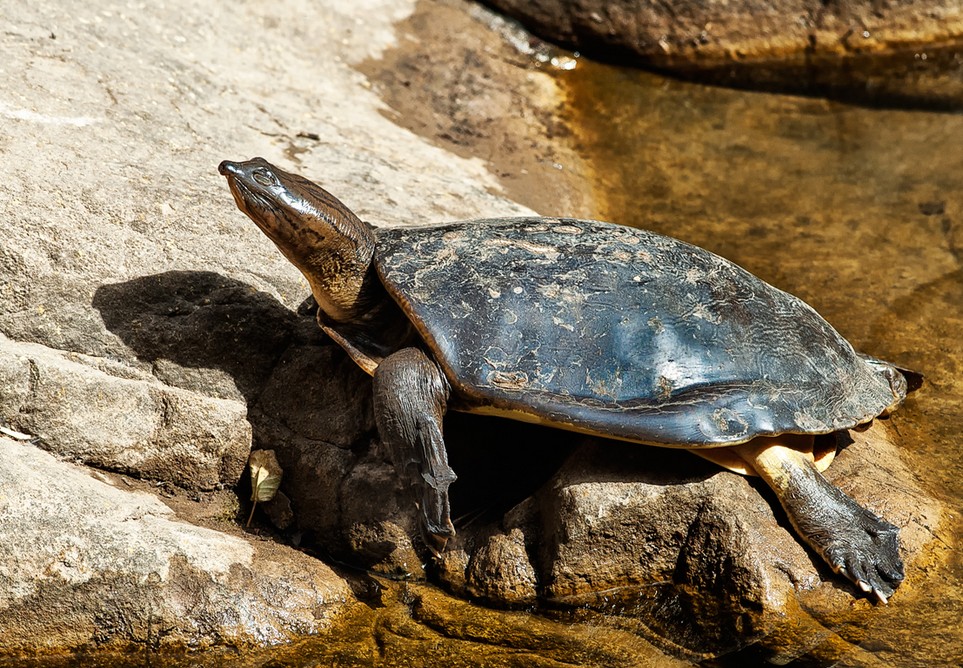
    Specie in news: Indian flapshell turtle (Lissemys punctata)

    Why in the News?

    The Social Forestry Department of Vadodara rescued an Albino Indian flapshell turtle (Lissemys punctata) from a freshwater lake in Chikhodra, Gujarat.

    Specie in news: Indian flapshell turtle (Lissemys punctata)

    About Indian Flapshell Turtle (Lissemys punctata):

    • Type: Small, freshwater softshell turtle native to South Asia
    • Unique Feature: Named for femoral flaps on the plastron that cover the limbs when retracted
    • Geographic Range: Found in India, Pakistan, Nepal, Bangladesh, Sri Lanka, and Myanmar
    • River Systems: Occurs in the Indus, Ganges, Irrawaddy, and Salween basins
    • Habitat: Prefers shallow, quiet freshwater bodies like rivers, ponds, lakes, marshes, tanks, and canals with muddy or sandy bottoms for burrowing
    • Conservation Status:
      • IUCN Red List: Vulnerable
      • CITES Listing: Appendix II
      • Wildlife (Protection) Act, 1972: Schedule I (maximum protection)
    • Major Threats:
      • Poaching for meat, blood-based potions, aphrodisiacs, and traditional medicine
      • Illegal trade for fishing bait, livestock feed, leather, and exotic pets
      • Habitat loss due to pollution, encroachment, and waterbody destruction
      • Albino individuals especially targeted in the illegal pet market
    [UPSC 2013] Consider the following fauna of India:

    1. Gharial 2. Leatherback turtle 3. Swamp deer

    Which of the above is/are endangered?

    Options: (a) 1 and 2 only (b) 3 only (c) 1, 2 and 3* (d) None


  • Women empowerment issues – Jobs,Reservation and education

    Yashoda AI Literacy Program

    Why in the News?

    The National Commission for Women (NCW) has launched “Yashoda AI”, an AI literacy program to empower women with skills in cybersecurity, digital privacy, and safe online practices, promoting digital inclusion across India.

    About Yashoda AI:

    • Launch: Introduced in May 2025 as an Artificial Intelligence Literacy Program for women.
    • Organisers: Joint initiative by the NCW and Future Shift Labs.
    • Objective: To train women in cybersecurity, digital privacy, and safe online practices.
    • Focus Areas: Covers AI-driven crimes, digital safety, and practical risk mitigation strategies.
    • Reach: Over 2,500 women trained to date.
    • Beneficiaries: Includes Self-Help Group members, local representatives (Sarpanchs, Pradhans, Mayors, Members of Legislative Assemblies), and frontline workers like Accredited Social Health Activists (ASHA workers).

    Back2Basics: National Commission for Women

    • Status: Statutory body established in 1992 under the NCW Act, 1990.
    • Composition: Consists of a Chairperson, 5 Members, and a Member-Secretary—appointed by the Central Government.
    • Term: All members serve for a term of 3 years.
    • Powers: Holds civil court powers during inquiries:
      • Can summon individuals and enforce attendance
      • Examine witnesses under oath
      • Demand records and receive affidavits
      • Issue commissions for examination of witnesses or documents


    [UPSC 2017] What is the purpose of Vidyanjali Yojana’?

    1. To enable the famous foreign campuses in India.

    2. To increase the quality of education provided in government schools by taking help from the private sector and the community.

    3. To encourage voluntary monetary contributions from private individuals and organizations so as to improve the infrastructure facilities for primary and secondary schools.

    Select the correct answer using the code given below:

    Options: (a) 2 only * (b) 3 only (c) 1 and 2 only (d) 2 and 3 only


Join the Community

Join us across Social Media platforms.