💥UPSC 2027,2028 Mentorship (April Batch) + Access XFactor Notes & Microthemes PDF

Archives: News

  • Foreign Policy Watch: India-Maldives

    The Maldives: A brief history of the nation and its ties with India

    Why in the News?

    Recently, Prime Minister Narendra Modi’s two-day state visit to the Maldives (July 2025) marked a significant reset in bilateral ties after months of strain following the election of President Mohamed Muizzu, who had earlier run on an ‘India Out’ platform.

    What caused the India-Maldives ties reset under Muizzu?

    • Troop Withdrawal & Civilian Substitution: President Muizzu demanded the removal of Indian military personnel, citing sovereignty. India responded by replacing them with civilian technical staff 
    • High-Level Diplomatic Engagements: Muizzu visited New Delhi in October 2024, signaling openness to dialogue.Indian PM reciprocated with a state visit to Male in July 2025, the first by a foreign Head of State under Muizzu.  
    • Economic Support & Debt Relief: India extended budgetary support and credit lines, easing Maldives’ financial burden. Eg: A ₹4,850 crore Line of Credit and 40% debt repayment reduction in 2025.
    • Softening of Rhetoric & Public Signals: President Muizzu acknowledged historical ties, calling the Indian Ocean a testament to shared heritage. This marked a shift from his earlier India-Out campaign tone.
    • Launch of Institutional Mechanisms: Announcement of India-Maldives Parliamentary Friendship Group and FTA discussions in 2025.

    How has India ensured the Maldives’ security?

    • Military Intervention in Crisis: In 1988, India launched Operation Cactus to foil a coup attempt, securing the capital and leadership.
    • Bilateral Defence Cooperation:  The DOSTI maritime exercise, started in 1991, strengthens Coast Guard coordination.
    • Strategic Presence and Infrastructure Support: India maintained a defensive presence (now civilian) and supported surveillance capabilities like helped set up coastal radar systems.
    • Humanitarian and Disaster Relief Operations: India has provided quick assistance during natural disasters, showcasing readiness and goodwill. India provided critical aid to Maldives after the 2004 Indian Ocean tsunami.
    • Regional Security Engagements: Maldives is a key member of the Colombo Security Conclave, focusing on counter-terrorism and maritime security.

    Why is the Maldives vital for India amid China’s presence?

    • Strategic Location in the Indian Ocean: The Maldives lies along key international shipping lanes, making it critical for India’s maritime security and energy supply routes. Eg: Over 80% of India’s energy imports pass close to the Maldives archipelago, near the Eight Degree Channel.
    • Countering China’s Expanding Influence: China’s increasing investments and debt diplomacy in Maldives threaten to shift the regional balance. Eg: The Sinamale Bridge, built with Chinese funding, raised concerns over strategic dependence.
    • Ensuring Regional Stability and Security Cooperation: Maldives’ support is essential for coordinated patrols, anti-terrorism, and anti-piracy efforts.

    Way forward: 

    • Strengthen People-to-People Ties and Institutional Dialogue: Promote educational, cultural, and tourism exchanges while deepening parliamentary and civil service cooperationto build long-term goodwill and trust.
    • Enhance Transparent and Sustainable Development Partnerships: Focus on jointly planned, community-driven projects with clear benefits to Maldivian citizens, countering external influence through mutual respect and shared values.

    Mains PYQ:

    [UPSC 2024] Discuss the geopolitical and geostrategic importance of Maldives for India with a focus on global trade and energy flows. Further also discuss how this relationship affects India’s maritime security and regional stability amidst international competition?


    Linkage: The article talk about the Maldives’ geographical location in the northern Indian Ocean and its historical and ongoing ties with India. It also highlights India’s concerns about “growing Chinese influence in the region”, which directly relates to “international competition” and its impact on “regional stability.” The question also touches upon “global trade and energy flows” and “maritime security,” which are intrinsic to the strategic importance of an island nation like Maldives.

  • International Monetary Fund,World Bank,AIIB, ADB and India

    IMF releases World Economic Outlook (WEO)

    Why in the News?

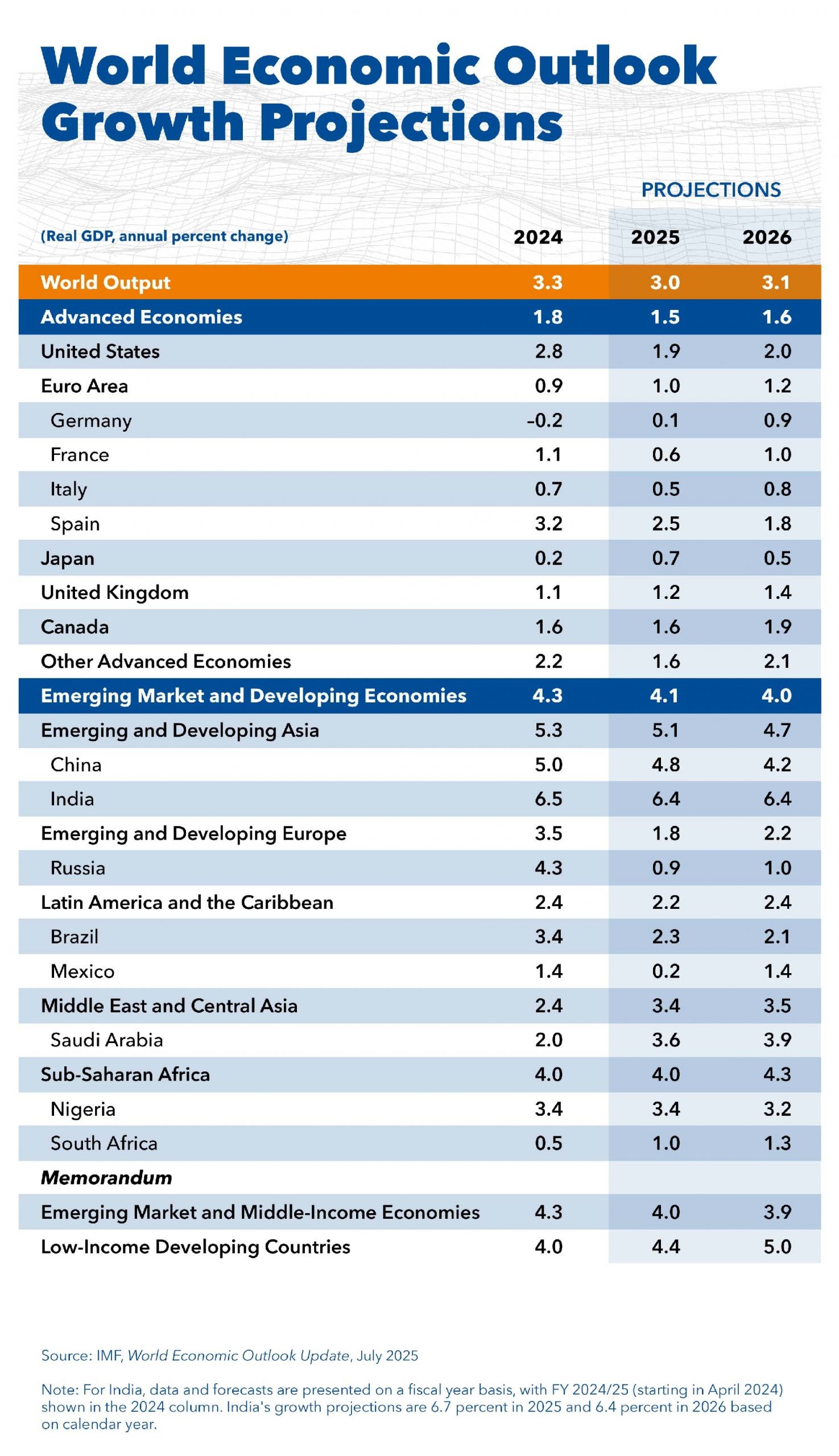
    The International Monetary Fund (IMF) has released the July 2025 update to its World Economic Outlook (WEO).

    IMF releases World Economic Outlook (WEO)

    About World Economic Outlook (WEO):

    • Published By: International Monetary Fund (IMF)
    • Frequency: Biannual (April, October) + updates in January and July
    • Purpose: Provides global forecasts on GDP, inflation, trade, and policy trends
    • Data Sources: IMF consultations with member nations and internal models
    • Audience: Governments, institutions, investors, researchers
    • July 2025 Update Title: “Global Economy: Tenuous Resilience amid Persistent Uncertainty”

    Key Highlights – July 2025 Update:

    • Global Growth Projections:
      • 2025: 3.0% (↑ from 2.8% in April)
      • 2026: 3.1% (↑ from 3.0%)
    • Despite multiple shocks—COVID-19, the Ukraine war, tariff increases—global growth continues.
      However, resilience remains fragile due to:

      • US–China tariff tensions and rising protectionism
      • Conflicts in Ukraine and the Middle East
      • High public debt in advanced economies is raising interest rates
    • Country Forecasts for 2025:  United States: 1.9%,  China: 4.8% (↑ from 4.0%),  Euro Area: 1.0%,  Germany: 0.1%,  United Kingdom: 1.2%,  Japan: 0.7%,  Russia: 0.9%,  Pakistan: 2.7%.

    India – The Bright Spot:

    • Growth Rate: 2023: 9.2%;  2024: 6.5%;  2025: 6.4% (strongest among major economies).
    • Drivers of Growth:
      • Robust domestic demand
      • Strong services and manufacturing output
      • Effective inflation and monetary policy management
    • Strategic Position:
      • Set to overtake several advanced economies in GDP size
      • Viewed globally as a “bright spot” amid persistent uncertainties
    [UPSC 2014] Which of the following organisations brings out the publication known as ‘World Economic Outlook?

    Options: (a) The International Monetary Fund * (b)The United Nations Development Programme (c) The World Economic Forum (d) The World Bank


  • Skilling India – Skill India Mission,PMKVY, NSDC, etc.

    What are Skill Impact Bonds (SIB)?

    Why in the News?

    Skill Impact Bonds (SIB) were recently highlighted by the Skill Development Ministry.

    About the Skill Impact Bond:

    • Launched: November 2021
    • Nature: India’s first Development Impact Bond (DIB) focused on employment-linked skill development
    • Lead Agency: National Skill Development Corporation (NSDC), under the Ministry of Skill Development and Entrepreneurship
    • Collaborators: British Asian Trust, HSBC India, Michael & Susan Dell Foundation
    • Target: Train and place 50,000 youth over 4 years, with 62% women participation
    • How it Works:
      • Risk Investors: Provide upfront capital to training providers
      • Training Providers: Deliver skill training and ensure job placements
      • Outcome Funders: Repay investors only if job outcomes are achieved
      • Evaluators: Independently assess outcomes via CATI surveys and document verification

    Key Features:

    • Outcome-Focused Approach: Measures success by certification, placement, and 3-month retention, not just enrolment
    • Eligibility Criteria:
      • Age: 18–40 years; Education: Undergraduate or below
      • Status: Unemployed or earning below ₹15,000/month, or household income below ₹25,000/month
    • Sectoral Coverage: Retail, Healthcare, Apparel, Logistics, Information Technology & IT-enabled Services, Banking, Financial Services & Insurance.
    • Women-Focused Design: Ensures 62% female participation to bridge the gender employment gap
    [UPSC 2018] With reference to Pradhan Mantri Kaushal Vikas Yojana, consider the following statements:

    1. It is the flagship scheme of the Ministry of Labour and Employment.

    2. It, among other things, will also impart training in soft skills, entrepreneurship, financial and digital literacy.

    3. It aims to align the competencies of the unregulated workforce of the country to the National Skill Qualification Framework.

    Which of the statements given above is/are correct?

    Options: (a) 1 and 3 only (b) 2 only (c) 2 and 3 only* (d) 1, 2 and 3


  • Differentiated Banks – Payment Banks, Small Finance Banks, etc.

    [pib] Digital Payments Index (DPI)

    Why in the News?

    According to the Reserve Bank of India (RBI), digital payments registered a 12.6% year-on-year rise as of March 31, 2024, as measured by the RBI’s Digital Payments Index (DPI).

    About RBI’s Digital Payments Index (DPI):

    • Launched by: Reserve Bank of India (RBI) in January 2021
    • Purpose: Measures the extent of digital payment adoption across India
    • Base Period: March 2018 (Index value = 100)
    • Release Frequency: Semi-annually (with a 4-month lag)
    • Objective: Track usage, infrastructure, and growth in digital payments
    • Key Parameters (with Weightage): These evaluate infrastructure readiness, transaction volume, user adoption, and innovation.
      1. Payment Enablers – 25%
      2. Payment Infrastructure – Demand Side – 10%
      3. Payment Infrastructure – Supply Side – 15%
      4. Payment Performance – 45%
      5. Consumer Centricity – 5%

    Growth Highlight:

    • Growth Trends in RBI-DPI: DPI grew nearly 5 times from 100 in March 2018 to 493.22 in March 2025, reflecting India’s rapid digital payment adoption.
    • Nearly 5× increase from the base value in 7 years
    • Driven by rapid expansion of Unified Payments Interface (UPI), mobile wallets, and QR code infrastructure
    [UPSC 2024] Consider the following countries:

    I. United Arab Emirates II. France III. Germany IV. Singapore V. Bangladesh

    How many countries amongst the above are there other than India where international merchant payments are accepted under UPI?”

    Options: (a) Only two (b) Only three* (c) Only four (d) All the five

    Answer: (b) Only three (UAE, France, Singapore)


  • NGOs vs. GoI: The Conflicts and Scrutinies

    National Cooperation Policy (NCP), 2025

    Why in the News?

    The National Cooperation Policy (NCP) 2025 recently unveiled by Union Home and Cooperation Minister Amit Shah has drawn criticisms from SKM (Samyukt Kisan Morcha).

    Also in news:

    • The Union Cabinet has also approved a ₹2,000 crore Central Sector Scheme to aid National Cooperative Development Corporation (NCDC) from 2025–26 to 2028–29.
    • NCDC was established in 1963 as a statutory Corporation under Ministry of Agriculture & Farmers Welfare (now functions under the Ministry of Cooperation since 2021).


    About Cooperatives in India:

    • What is it: A cooperative is a voluntary, autonomous association of individuals who unite to meet common economic, social, or cultural needs through a jointly-owned and democratically-controlled enterprise.
    • Key Principles:
      • One member, one vote: Equal say in governance, regardless of financial contribution.
      • Based on collective benefit, democratic control, and mutual aid.
    • Historical Evolution:
      • 1904 & 1912: Cooperative Acts laid the foundation for the cooperative movement in India.
      • Post-independence: Emphasis on rural credit, dairy, and agriculture cooperatives (e.g., Amul).
      • Key Institutions: NABARD (National Bank for Agriculture and Rural Development), NCDC (National Cooperative Development Corporation).
    • Constitutional & Legal Backing:
      • 97th Constitutional Amendment (2011):
        • Article 19(1)(c): Right to form cooperative societies.
        • Article 43B: Directive Principle promoting cooperative societies.
        • Part IXB (Articles 243ZH to 243ZT): Provides governance framework.
      • MSCS Act, 2002: Governs multi-state cooperatives (under Central Registrar).
      • State List (Entry 32): State legislatures regulate intra-state cooperatives.
    • Scale:
      • India has over 8.42 lakh cooperatives with 29 crore members (~27% of global total).
      • Leading states: Maharashtra, Gujarat, Telangana, MP, Karnataka.
      • Notable cooperatives: IFFCO, Amul — ranked among top 300 cooperatives globally.

    National Cooperation Policy (NCP) 2025:

    • Launch: Introduced by Union Minister Amit Shah on July 24, 2025.
    • Vision: “Sahakar se Samriddhi” — promoting prosperity through cooperatives.
    • Objective:
      • Establish a comprehensive national framework for cooperative growth (2025–2045).
      • Replace the 2002 policy and drive inclusive development through grassroots cooperatives.
    • Key Features:
      • 2 lakh new Primary Agricultural Credit Societies (PACS) in 5 years
      • Scheme convergence: e.g., PM Matsya Sampada Yojana, NPDD
      • Inclusive focus: Women, Dalits, Adivasis, youth
      • Sector expansion: Into 25+ areas—dairy, fisheries, exports, technology
      • Education: First cooperative university—Tribhuvan Sahkari University
      • Export support: Through National Cooperative Exports Limited (NCEL)
      • Digital thrust: Emphasis on digitisation and platform integration

    Issues with NCP, 2025:

    • Federalism Undermined
      • Entry 32: Cooperatives are a State Subject
      • SC Verdict (2021): Centre cannot regulate intra-state cooperatives
      • Criticism: Policy lacks ratification by half the states (Article 368(2))
    • Corporate Entry Fears
      • Emphasis on digital platforms may enable indirect corporatisation
      • Potential marginalisation of small farmers and FPOs
    • Weak Social Inclusion
      • Lacks focus on Minimum Support Price (MSP), surplus sharing
      • No robust support for producer cooperatives or fair wages
      • Inclusion of tribals, Dalits, women remains rhetorical
    [UPSC 2021] With reference to ‘Urban Cooperative banks’ in India, consider the following statements:

    1. They are supervised and regulated by local boards set up by the State Governments.

    2. They can issue equity shares and preference shares.

    3. They were brought under the purview of the Banking Regulation Act, 1949 through an Amendment in 1966.

    Which of the statements given above is/are correct?”

    Options: (a) 1 only (b) 2 and 3 only* (c) 1 and 3 only (d) 1, 2, and 3


  • Wetland Conservation

    [31st July 2025] The Hindu Op-ed: Restoring mangroves can turn the tide on India’s coastal security 

    PYQ Relevance:

    [UPSC 2019] Discuss the causes of depletion of mangroves and explain their importance in maintaining coastal ecology.

    Linkage: The article explicitly details the importance of mangroves, stating they are “critical in India’s pursuit of climate resilience, biodiversity conservation, and the empowerment of coastal communities”. It explains their role as “natural barriers, protecting coastal communities from cyclones, tidal surges, and erosion”, and their significance in “biodiversity conservation”. The article also discusses the threats leading to their “depletion,” such as “urban expansion, aquaculture, pollution, and changing climate patterns”.


    Mentor’s Comment:  India’s mangrove forests have come into focus due to growing efforts to restore and protect them amid increasing threats from urban expansion, climate change, and pollution. Recent successful restoration projects in Tamil Nadu, Gujarat, and Mumbai, along with support from government missions and private partners, highlight India’s growing role in mangrove conservation. These forests are vital for climate resilience, coastal protection, and biodiversity, making their preservation a national priority.

    Today’s editorial analyses India’s growing efforts to restore mangrove forests. This topic is important for GS Paper III (Environment) in the UPSC mains exam.

    _

    Let’s learn!

    Why in the News?

    Recently, mangrove restoration efforts in Tamil Nadu, Gujarat, and Mumbai have been successful.

    What is the extent of Mangroves in India?

    • India’s total mangrove cover is 4,992 sq km, accounting for 0.15% of the country’s geographical area (as per ISFR 2021).
    • West Bengal, Gujarat, and the Andaman & Nicobar Islands hold the largest mangrove areas, with West Bengal (Sundarbans) alone covering over 42% of the total.

    Why are mangroves vital for climate and coastal resilience in India?

    • Natural Coastal Shield: Mangroves act as buffers against cyclones, storm surges, and coastal erosion. Eg: During the 2004 tsunami, villages protected by mangroves in Tamil Nadu suffered less damage compared to those without them.
    • Climate Change Mitigation: They store “blue carbon” in biomass and deep soil, helping to absorb excess CO₂. Eg: India’s mangroves contribute significantly to carbon sequestration, aiding in climate targets under the Paris Agreement.
    • Biodiversity Hotspots: Provide breeding grounds for fish, crabs, birds, and other marine life. Eg: Thane Creek Flamingo Sanctuary in Mumbai supports over 180 bird species due to nearby mangroves.
    • Livelihood Support for Communities: Sustain traditional occupations like fishing, honey gathering, and crab farming. Eg: Sunderbans communities rely on mangroves for fishing and honey collection.
    • Disaster Risk Reduction: Reduce the impact of natural disasters by slowing floodwaters and stabilising shorelines. Eg: In Odisha, mangroves helped minimise damage during Cyclone Phailin (2013).

    What threatens India’s mangroves?

    • Urbanisation and Industrial Expansion: Mangrove areas are cleared for ports, housing, and industrial zones. Eg: Mangrove loss in Mumbai due to Navi Mumbai airport construction.
    • Aquaculture and Agriculture Encroachment: Conversion of mangrove land into shrimp farms or paddy fields disrupts ecosystems. Eg: Andhra Pradesh lost mangroves to extensive aquaculture projects.
    • Pollution: Discharge of industrial effluents, plastic, and sewage harms mangrove health. Eg: Thane Creek, Mumbai, faces heavy pollution impacting biodiversity.
    • Climate Change and Sea Level Rise: Changes in salinity, temperature, and rising sea levels affect mangrove regeneration. Eg: Sundarbans face submergence and loss due to rising sea levels.
    • Overexploitation of Resources: Excessive collection of wood, honey, and fodder leads to degradation. Eg: In West Bengal, unsustainable practices by local communities reduce forest cover.

    How has community involvement aided mangrove restoration in Tamil Nadu?

    • Collaborative Restoration Projects: Community members partnered with institutions like the M.S. Swaminathan Research Foundation and the Tamil Nadu Forest Department for restoring degraded mangroves. Eg: In Muthupettai’s Pattuvanachi estuary, locals helped implement a 115-hectare restoration plan.
    • Tidal Canal Digging for Hydrology Restoration: Villagers participated in digging 19 major canals to restore natural tidal flow, crucial for mangrove survival. Eg: This intervention successfully revived water movement in Muthupettai, enabling mangrove regrowth.
    • Seed Collection and Plantation: Locals actively collected and planted seeds of native mangrove species like Avicennia and Rhizophora. Eg: Over 4.3 lakh Avicennia seeds and 6,000 Rhizophora propagules were planted by community members.
    • Removal of Invasive Species: Community groups helped clear invasive weeds like Prosopis juliflora, which compete with mangroves for space and nutrients. Eg: In Kazhipattur near Buckingham Canal, Chennai, invasive plants were removed before mangrove restoration began.
    • Support for Green Missions and Monitoring: Local residents supported and maintained mangrove cover under the Green Tamil Nadu Mission, ensuring long-term success. Eg: Community participation helped double Tamil Nadu’s mangrove area from 4,500 ha to 9,000 ha (2021–2024).

    What is the role of corporate partnerships in mangrove revival in Mumbai?

    • Financial and Technical Support: Amazon’s Right Now Climate Fund invested $1.2 million (₹10.3 crore) in a restoration project along Thane Creek, enabling large-scale ecological rehabilitation.
    • Pollution Control and Ecosystem Restoration: Partnered with Hasten Regeneration and Brihanmumbai Municipal Corporation to install trash booms that intercept plastic waste, aiming to collect 150 tonnes over 3 years while planting 3.75 lakh mangrove saplings.
    • Community Empowerment and Livelihood Generation: Created paid employment opportunities for local women in planting and maintenance, linking ecological recovery with socio-economic upliftment.

    Why is Gujarat leading in mangrove restoration?

    • Ambitious Scale under MISHTI Scheme: Under the Mangrove Initiative for Shoreline Habitats and Tangible Incomes (MISHTI), launched in 2023, Gujarat planted over 19,000 hectares of mangroves within two years—far exceeding the national five-year target of 54,000 hectares.
    • Strategic Coastal Coverage & Biodiversity Focus: Gujarat holds about 23.6% of India’s total mangrove cover, with major plantations in Kutch, Bhavnagar, Surat, and Dumas-Ubhrat. These areas support critical ecological balance, biodiversity, and local livelihoods.
    • Strong Governance, Planning & Local Institutional Support: Efficient coordination between the Gujarat Forest Department, state environment agencies, and local communities has ensured success. Structured coastal mapping, restoration planning, and promotion of ecotourism-linked livelihoods have further strengthened outcomes.

    What are the steps taken by the Indian government? 

    • Green India Mission & State Missions: Through the National Green India Mission and state-level initiatives like the Green Tamil Nadu Mission, the government supports afforestation, ecosystem restoration, and community-based conservation efforts.
    • Inclusion in Coastal Regulation Zone (CRZ) Rules: Mangrove areas are designated as Ecologically Sensitive Zones (ESZ) under the CRZ Notification, restricting construction and promoting their protection through legal safeguards and regulatory oversight.

    Way forward: 

    • Strengthen Community-Based Conservation: Empower local communities through training, incentives, and formal roles in monitoring and maintaining mangroves to ensure sustainable, long-term protection.
    • Integrate Mangroves into Climate and Development Planning: Recognise mangroves as vital climate infrastructure by integrating them into coastal zone management, disaster resilience strategies, and carbon credit frameworks.
  • Police Reforms – SC directives, NPC, other committees reports

    India’s Police must get out of Dirty Harry’s shadow

    Why in the News?

    Recently, the custodial death of Ajith Kumar in Tamil Nadu has reignited concerns about police torture and custodial violence in India, drawing attention to the ongoing abuse of power, lack of accountability, and systemic failures in law enforcement

    Note: “Dirty Harry’s shadow” is the ethical grey zone that officers may enter when they justify unethical or illegal behavior (e.g., excessive force, illegal search, or planting evidence) on the grounds that it’s necessary to serve a greater good (like convicting a dangerous criminal). 

    What is the status of custodial torture in India?

    • Between 2010 and 2020, NHRC data reports 17,146 custodial deaths (judicial/police), averaging nearly five deaths per day.
    • From 2001 to 2020, only 26 police personnel were convicted out of 1,888 recorded custodial deaths, reflecting a severe lack of accountability in the system.

    Why does custodial torture persist in India despite legal safeguards?

    1. Weak Enforcement of Legal Safeguards: Supreme Court guidelines (e.g., D.K. Basu guidelines) are often ignored, especially by lower-level police.
    The D.K. Basu guidelines are a set of procedural safeguards laid down by the Supreme Court of India in 1996 in the landmark case D.K. Basu vs. State of West Bengal to prevent custodial torture, deaths, and abuse of police power.

    Key Guidelines (To be followed during arrest and detention):

    1. Arrest memo must be prepared, signed by the arrestee and a witness, with time and date.
    2. Inform a relative/friend: The person arrested must be allowed to inform someone about the arrest.
    3. Right to legal counsel: The arrestee has the right to meet their lawyer during interrogation.
    4. Medical examination: Arrestees must be medically examined every 48 hours by a government doctor.
    5. Copy of arrest memo: Sent to the local magistrate for records.
    6. Daily diary entry: Time, place of arrest, and custody details must be recorded in the police diary.
    7. Police identification: Arresting officers must have name tags and their details must be recorded.
    8. Notice board in police station: Display of rights of arrested persons.
    9. Timely production before magistrate: Within 24 hours of arrest, as per Article 22 of the Constitution.
    1. Lack of Accountability: Very few police personnel are punished, creating a culture of impunity.
      3. Societal Indifference and Pressure: Public tolerance for “tough policing” and pressure to solve cases fast encourages use of force to extract confessions.
    2. Legal Gaps That Enable Torture:
    • No Standalone Law: There’s no specific law criminalising custodial torture. The 2010 Prevention of Torture Bill was never passed.
    • Non-Ratification of UNCAT: India signed but hasn’t ratified the UN Convention Against Torture, so it lacks binding obligations to reform.
    • Poor Protection for Victims/Witnesses: Those who report torture often face threats, with little legal protection – delaying or discouraging justice. Eg: The Jayaraj-Bennicks case (2020)

    Should India ratify the UN Convention Against Torture?

    • Enhances Legal Accountability and Human Rights Protections: Ratifying UNCAT would require India to enact a dedicated anti-torture law, ensuring clear definitions, accountability, and punishment for custodial abuse. Eg: In the Jayaraj and Bennicks case (2020), the absence of a strong torture law delayed justice and highlighted the need for international legal standards.
    • Strengthens India’s Global Human Rights Image: As a democracy and UN member, ratification would align India with global norms, reinforcing its commitment to human dignity and justice. India often faces criticism at UN Human Rights Council reviews for non-ratification, which weakens its diplomatic stance on rights issues.

    What reforms are needed? (Way forward)

    • Enact a Dedicated Anti-Torture Law: Clearly define torture, prescribe strict punishment, and ensure victim compensation and rehabilitation.

    • Set Up Independent Oversight Bodies: Create state and district-level police complaints authorities for unbiased investigation.

    • Ensure Custodial Surveillance: Install CCTVs in all custody areas and mandate regular monitoring and audits.

    • Train Police on Human Rights: Conduct regular training programs focused on rights-based policing and legal safeguards.

    Mains PYQ:

    [UPSC 2023] The Constitution of India is a living instrument with capabilities of enormous dynamism. It is a constitution made for a progressive society”. Illustrate with special reference to the expanding horizons of the right to life and personal liberty.

    Linkage: The article explicitly links the Supreme Court’s reaffirmation of “dignity and bodily autonomy as fundamental rights” in the K.S. Puttaswamy case (2017) to the ongoing issue of rampant torture in custody. This question allows for a discussion on how judicial interpretations have broadened the scope of fundamental rights, which are directly challenged by the “Dirty Harry” policing methods that the source criticises. 

  • Arrest and unrest: Communal agenda is behind the arrest of nuns for human trafficking

    Why in the News?

    Recently the arrest of two Catholic nuns in Chhattisgarh on charges of human trafficking and forced religious conversion has sparked widespread political and religious backlash.

    Why are anti-conversion laws controversial in tribal regions?

    • Misuse Against Voluntary Conversions: These laws, intended to curb conversions through force or fraud, are often misused to harass tribal Christians and missionaries involved in voluntary and lawful religious activities. Eg: In Chhattisgarh, two Catholic nuns were arrested for alleged forced conversion, despite the tribal girls and their families confirming it was voluntary.
    • Targeting of Minority Rights: Anti-conversion laws disproportionately affect Christian and Muslim minorities, leading to surveillance, fear, and restricted religious freedom, especially among tribal converts. Eg: Several tribal states like Madhya Pradesh, Jharkhand, and Odisha have used these laws to criminalise conversions, even when done without coercion.
    • Threat of Delisting ST Converts: There is a growing debate on removing Scheduled Tribe status from tribals who convert to Christianity, threatening their constitutional safeguards and entitlements. Eg: In Chhattisgarh, such debates have intensified, questioning the identity and rights of Christian Adivasis.

    What is the Sarna Religious Code?

    The Sarna religious code is a demand by tribal (Adivasi) communities in India to recognize Sarnaism as a distinct religion in official government records, especially in the Census.

    Key Features:

    • Nature Worship Tradition: Sarna followers worship nature — like sacred groves (called Sarnas), hills, rivers, and the Earth. They follow traditional Adivasi customs, not Hindu, Christian, or Muslim practices.
    • Cultural Assertion and Legal Recognition: Recognizing the Sarna code would safeguard tribal culture, language, and identity, and protect their constitutional and land rights from religious assimilation.

    What constitutional rights to religious freedom are being undermined?

    • Right to Freedom of Religion (Article 25): Citizens have the right to freely profess, practice, and propagate any religion. This is undermined when voluntary conversions are falsely labelled as forced or illegal, especially among tribals and minorities.
    • Right to Personal Liberty (Article 21): The right to make autonomous choices—including choosing one’s religion—is a part of personal liberty. Anti-conversion laws infringe on this by criminalizing voluntary decisions, often without evidence of coercion.
    • Equality Before Law (Article 14): These laws are selectively enforced against Christians and Muslims, leading to discriminatory treatment. This violates the principle of equality and non-discrimination, a core part of India’s secular constitutional framework.

    What are the actual conversions happened in India?

    • Mass Dalit Conversions to Buddhism (1956 and after): Led by Dr. B.R. Ambedkar, over 5 lakh Dalits converted to Buddhism in 1956 to escape caste-based oppression and reclaim dignity. Eg: Ambedkar’s historic mass conversion in Nagpur triggered a broader movement of religious shift rooted in social reform.
    • Christian Conversions in Tribal Regions: In states like Jharkhand, Chhattisgarh, and Odisha, many tribal communities have converted to Christianity, often due to access to education, healthcare, and social support from missionaries. Eg: The Kandhamal district in Odisha has seen a significant rise in Christian population over decades, leading to communal tensions.
    • ‘Ghar Wapsi’ or Reconversion to Hinduism: Organised by Hindu groups like the Vishwa Hindu Parishad (VHP), ‘Ghar Wapsi’ aims to reconvert people who earlier embraced other faiths back to Hinduism. Eg: In Uttar Pradesh (2014), VHP claimed hundreds of Muslims and Christians were brought back to Hinduism through Ghar Wapsi drives, raising ethical and legal concerns.

    Do Conversions Impact Indian Society Negatively?

    • Social Polarisation and Communal Tensions: Conversions whether into or out of a religion often become flashpoints for communal conflict, especially when framed as threats to majority identity. This can disrupt social harmony and lead to violence, as seen in Kandhamal (Odisha, 2008) and other conflict-prone areas.
    • Political Exploitation and Fear-Mongering: Conversion is frequently politicised, used to mobilise vote banks or target minority communities, which undermines democratic values and diverts focus from genuine socio-economic development.
    • Distrust and Fragmentation in Local Communities: Conversions may sometimes lead to social alienation or loss of community ties, especially in tightly-knit rural or tribal areas, where religious identity is deeply linked with cultural belonging.

    Way forward: 

    • Strengthen Constitutional Safeguards: Ensure that anti-conversion laws align with Articles 25-28 of the Constitution by protecting voluntary religious choicewhile penalizing only coercive or fraudulent practices.
    • Promote Interfaith Dialogue and Tribal Autonomy: Encourage community-level engagement and interfaith dialogue, and recognize tribal cultural rights including support for demands like the Sarna religious code to prevent polarization and protect indigenous identities.

    Mains PYQ:

    [UPSC 2024] Intercaste marriages between castes which have socio-economic parity have increased, to some extent, but this is less true of interreligious marriages. Discuss.

    Linkage: The arrest of the nuns and the subsequent clarification by the girls’ kin that there was “no forceful conversion” directly touches upon the sensitive issue of interreligious interactions and alleged conversions, which anti-conversion laws are often used to criminalize, especially in the context of interfaith marriages.

  • Global Geological And Climatic Events

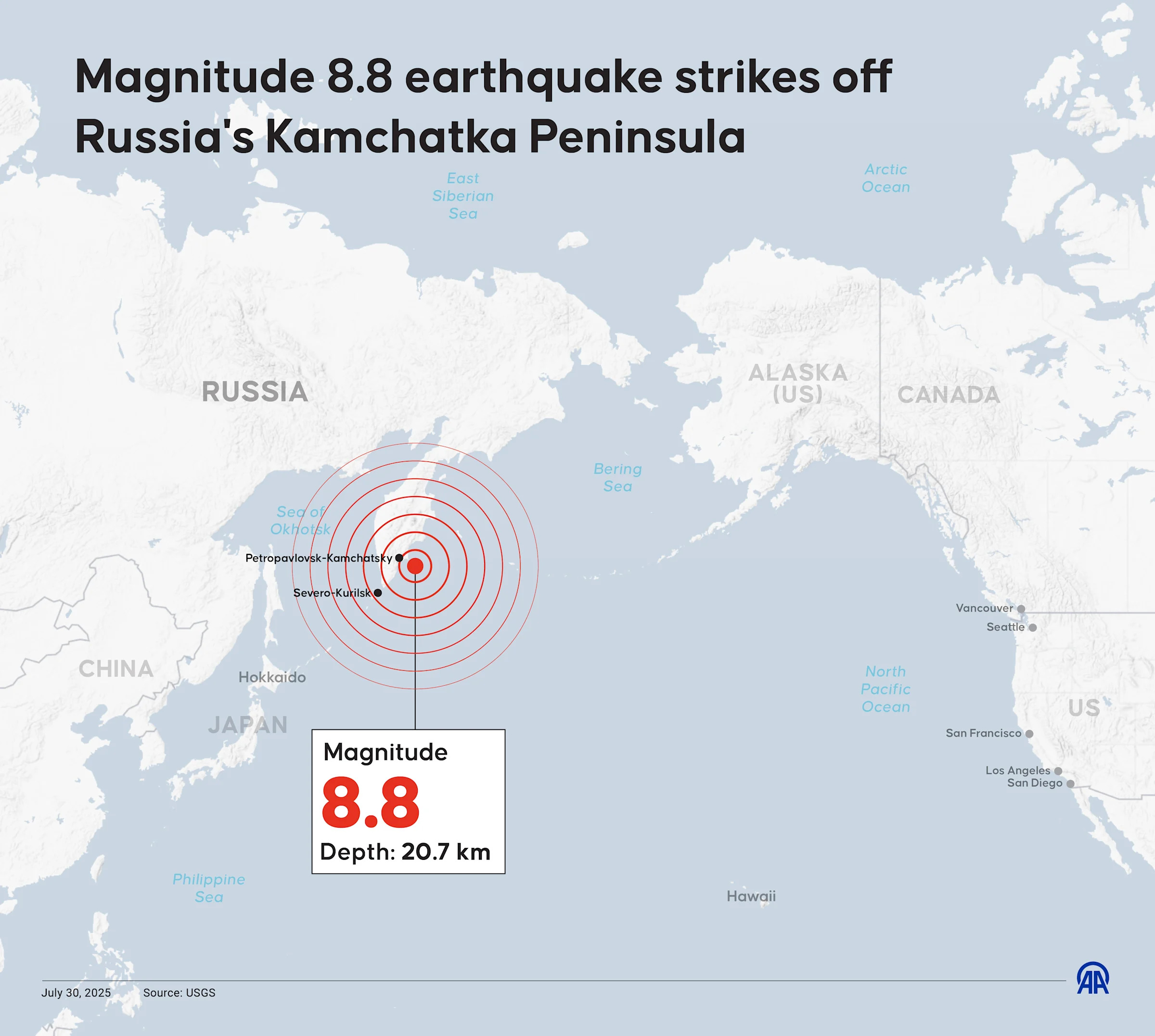
    Tsunami Waves triggered by quakes in Kamchatka Peninsula

    Why in the News?

    An 8.8 magnitude earthquake hit off Russia’s Kamchatka Peninsula, triggering 16-foot tsunamis that reached Hawaii and northern California in the US.

    About Earthquakes:

    • Overview: Sudden ground shaking caused by release of stored energy in Earth’s crust due to tectonic stress.
    • Cause: Occurs when tectonic plates slip at fault lines where stress had built up due to friction.
    • Seismic Waves: Energy travels as:
      • Primary Waves (P-waves): Fastest, compressional.
      • Secondary Waves (S-waves): Slower, shear motion.
    • Key Terms:
      • Focus (Hypocenter): Underground origin point.
      • Epicenter: Surface point directly above the focus.
    • Measurement:
      • Magnitude: Energy released (Richter Scale, logarithmic).
      • Intensity: Observed ground shaking (varies by location).
      • Seismograph: Records seismic wave activity.

    How Earthquakes Trigger Tsunamis?

    • Underwater Epicenter: Must occur beneath oceans to displace water.
    • Shallow Depth: Quakes at <70 km transfer energy more efficiently to water surface.
    • Reverse Faulting: One tectonic plate pushes over another, vertically shifting the seafloor.
    • Rapid Displacement: Sudden seafloor uplift/downthrust generates massive water waves.
    • High Magnitude: Quakes >7.0 (especially >8.0) likely to trigger tsunamis.

    About the Kamchatka Region:

    • Overview: Russian Far East; borders the North Pacific Ocean.
    • Tectonic Zone: Sits on the Kuril-Kamchatka Trench—Pacific Plate subducting under Okhotsk Plate at ~86 mm/year.
    • Seismic Hotspot: Historical major quakes in 1841, 1923, 1952, 2006, and 2020.
    • Ring of Fire: Part of the 40,000 km Pacific Ring of Fire , known for quakes and volcanoes.
    • 2025 Earthquake:
      • Depth:3 km (shallow)
      • Impact: Triggered tsunami waves up to 16 ft—one of the strongest earthquakes since 1900.
    [UPSC 2004] Consider the following geological phenomena:

    1. Development of a fault 2. Movement along a fault 3. Impact produced by a volcanic eruption 4. Folding of rocks

    Which of the above cause earthquakes?

    Options: (a) 1, 2 and 3 (b) 2 and 4 (c) 1, 3 and 4 (d) 1, 2, 3 and 4*


  • Higher Education – RUSA, NIRF, HEFA, etc.

    Setubandha Scholar Scheme

    Why in the News?

    The Ministry of Education, in collaboration with the Indian Knowledge Systems (IKS) Division at Central Sanskrit University, has launched the Setubandha Scholarship Scheme.

    About the Setubandha Scholarship Scheme:

    • Objective: Acts as a bridge between traditional Gurukul learning and modern research, enabling the mainstreaming of Indian Knowledge Systems (IKS) into higher education.
    • Target Group: Students trained under Gurus or in Gurukul systems for a minimum of 5 years.
    • Focus: Encourages postgraduate and doctoral research across disciplines rooted in IKS.
    • Institutions Involved: Provides access to mentorship and research facilities at top institutions like Indian Institutes of Technology (IITs).

    Key Features:

    • Financial Support:
      • Postgraduate Scholars: Up to ₹1 lakh.
      • PhD Candidates: Up to ₹2 lakh.
      • Monthly Scholarships: Starting from ₹40,000.
    • Eligibility:
      • Age limit: Below 32 years.
      • Minimum 5 years of Gurukul-based learning.
      • No formal degree required—classical knowledge proficiency is the key criterion.
    • Scope of Research:
      • Supports 18 disciplines rooted in IKS, including:
        • Vedic philosophy, Jyotisha, Ayurveda, Rasa Shastra
        • Vastu Shastra, Dandaniti (political science), Indian arts and education
        • Traditional law, linguistics, agriculture, and astronomy
    • Broader Impact:
      • Fosters integration of ancient wisdom with modern scientific inquiry.
      • Recognizes and rewards excellence in traditional systems of knowledge.

Join the Community

Join us across Social Media platforms.