💥UPSC 2027,2028 Mentorship (April Batch) + Access XFactor Notes & Microthemes PDF

Archives: News

  • Rural Infrastructure Schemes

    Integrated Tribal Development Programme by NABARD

    Why in the News?

    National Bank for Agriculture and Rural Development (NABARD) is set to launch an integrated tribal development programme in Kulathupuzha grama panchayat, Kollam.

    About Integrated Tribal Development Programme

    • Thanal, an environment organisation, will be the implementing agency of the project that aims to transform livelihoods of tribal families over the next five years.
    • The five-year initiative targets the sustainable livelihood and agricultural enhancement of 413 families residing in eight hamlets.
    • The programme focuses on promoting diverse agricultural crops such as pepper, arecanut, coconut, ginger, Thai ginger, turmeric, and plantain.
    • It encompasses initiatives in goat rearing, poultry, beekeeping, fish farming, and fodder production.
    • The establishment of a Tribal Farmer Producer Company (FPO) is also planned to further economically empower the community.

    Components of the Programme

    • Water Resource Development: Initiatives aimed at enhancing water resources for agricultural purposes.
    • Leadership Training: Training sessions to empower local leaders within the tribal communities.
    • Awareness Creation: Campaigns to raise awareness about sustainable practices and community development.
    • Sanitation and Hygiene Initiatives: Efforts to improve sanitation and hygiene standards among the tribal families.
    • Marketing and Branding Training: Training programmes to enhance marketing skills and brand awareness among participants.
    • Skill Development Workshops: Workshops focused on enhancing both agricultural and non-agricultural skills among the tribal community.

    About NABARD:

    • It was established on July 12, 1982, based on the recommendation of the Sivaraman Committee to promote sustainable rural development and agricultural growth in India.
    • Aim:  To facilitate credit flow for the promotion and development of agriculture, small-scale industries, cottage and village industries, handicrafts, and other rural crafts.
    • It operates as a statutory body under the Reserve Bank of India (RBI) Act, 1934, with its headquarters located in Mumbai.
    • It is governed by a Board of Directors appointed by the GoI:
      • Representatives from the RBI;
      • Central and state governments;
      • Experts from various fields related to Rural Development and Finance.

     Functions of NABARD:

    • Refinance Support: NABARD provides refinance facilities to banks and financial institutions for agricultural and rural development activities, including crop loans and rural infrastructure projects.
    • Financial Inclusion: It promotes financial inclusion by expanding banking services in rural areas, supporting SHGs, FPOs, and MFIs, and facilitating access to credit for rural communities.
    • Priority Sector Lending: NABARD plays a crucial role in channelling credit to priority sectors such as agriculture, small-scale industries, and rural infrastructure, in alignment with the Reserve Bank of India’s priority sector lending guidelines.
    • Direct Lending: It extends direct loans to institutions for specific rural development projects, such as agricultural production, rural infrastructure development, and agri-processing units.
    • Scheme Implementation: The organization administers government schemes and funds like Rural Infrastructure Development Fund (RIDF), Watershed Development Fund (WDF) to finance rural infrastructure projects and watershed development activities.
    • Credit Planning: NABARD collaborates with central and state governments, RBI, and other stakeholders to formulate credit policies and plans for agriculture and rural sectors.
    • Research and Training: NABARD promotes research and development in agriculture, supports capacity building and training programs for rural stakeholders, and facilitates technology transfer initiatives.


    PYQ:

    [2013] Which of the following grants/grants direct credit assistance to rural households?

    1. Regional Rural Banks
    2. National Bank for Agriculture and Rural Development
    3. Land Development Banks

    Select the correct answer using the codes given below:

    (a) 1 and 2 only

    (b) 2 only

    (c) 1 and 3 only

    (d) 1, 2 and 3

  • Minority Issues – SC, ST, Dalits, OBC, Reservations, etc.

    [pib] National Commission for Minorities (NCM)

    Why in the News?

    The National Commission for Minorities (NCM) has advised State Governments/UTs to conduct “Sarv Dharma Meetings”.

    Advisory on “Sarv Dharma Meetings”

    • NCM advised State Governments/UTs to conduct “Sarv Dharma Meetings”:
    1. At Sub-divisional level of States monthly.
    2. At District level half-yearly.
    • It is aimed at curbing attacks and hate crimes against minority communities to prevent communal disharmony.
    • NCM emphasized that hate crimes stem from mental weakness and anger, highlighting citizens’ rights to practice and preach their religion freely.

    Responsibilities and Recommendations

    • Citizens and society urged to disown and condemn hate crimes.
    • Advocated for punitive actions by authorities against anti-social elements.
    • Proposed mechanisms involving civic society to deter anti-social and anti-national forces and prevent societal violence.


    About National Commission for Minorities (NCM)

    • It is a statutory body formed on the basis of National Commission for Minorities Act, 1992 and replaced an earlier body called Minorities Commission.
    • The Commission consists of a total of 7 persons to be nominated by the Central Government from amongst persons of eminence, ability and integrity.
    • It consists of a Chairperson, a Vice- Chairperson and 5 Members.
    • Each Member holds office for a period of 3 years from the date of assumption of office.

    Functions of NCM:

    1. Evaluate minority development progress.
    2. Monitor constitutional and legal safeguards.
    3. Recommend effective safeguard implementation.
    4. Address complaints regarding deprivation of rights.
    5. Conduct studies on discrimination and recommend measures.
    6. Research socio-economic and educational development.
    7. Suggest measures to Central or State Governments.
    8. Make periodical or special reports to the Central Government.
    9. Address any matter referred by the Central Government.

    Powers of NCM:

    1. Summon and enforce attendance of any person from India.
    2. Require discovery and production of documents.
    3. Receive evidence on affidavit.
    4. Requisition public records from courts or offices.
    5. Issue commissions for examining witnesses and documents.

    Who are Minorities?

    • The Central has notified minority communities at the national level in consultation with various stakeholders under Section 2 (c) of the National Commission for Minorities (NCM), Act, 1992.
    • The six communities notified as minority communities under Section 2(c) of the NCM Act are Christians, Sikhs, Muslims, Buddhists, Parsis, and Jains.
      • Jains were notified as minority community in January 2014.
    • Notification of any community-specific to a State as a minority community within a State comes under the purview of the respective State.

    Total Minority Population in India as per 2011 Census: 

    19.3% of the total population (Muslims: 14.2%; Christians: 2.3%; Sikhs: 1.7%; Buddhists: 0.7%; Jains: 0.4%; Parsis: 0.006%)

    Rights & Safeguards for Minorities:

    Under Fundamental Rights (Part III of the Indian Constitution):

    1. Article 29(1): Right to conserve distinct language, script, or culture.
    2. Article 30(1): Right to establish and administer educational institutions.
    3. Article 30(2): Freedom from discrimination in receiving state aid.

    Under Official Language (Part XVII of the Indian Constitution):

    1. Article 347: Rights for language spoken by any section of the population.
    2. Article 350A: Instruction in mother tongue.
    3. Article 350B: Special officer for linguistic minorities.

    Sachar Committee Report (2006):

    Constitution Date: 9 March 2005

    Key Recommendations:

    • Create a National Data Bank (NDB) for socio-religious data.
    • Establish an Equal Opportunity Commission.
    • Provide incentives for a ‘diversity index.’
    • Ensure high-quality education for children aged 0-14.
    • Set up government schools in Muslim-concentrated areas.
    • Increase Muslim employment share in public-facing jobs.
    • Enact state laws for minority representation.
    • Support initiatives in Muslim-concentrated occupations.
    • Improve minority participation in commercial banks.
    • Focus on inclusive development while respecting diversity.


    PYQ:

    [2011] In India, if a religious sect/community is given the status of a national minority, what special advantages it is entitled to?

    1. It can establish and administer exclusive educational institutions.
    2. The President of India automatically nominates a representative of the community to Lok Sabha.
    3. It can derive benefits from the Prime Minister’s 15-Point Programme.

    Which of the statements given above is/are correct?

    (a) 1 only
    (b) 2 and 3 only
    (c) 1 and 3 only
    (d) 1, 2 and 3

  • Finance Commission – Issues related to devolution of resources

    [pib] XVI Finance Commission constitutes Advisory Council

    Why in the News?

    The Sixteenth Finance Commission (chaired by Arvind Panagariya, the former Vice-Chairman of NITI Aayog) has constituted an Advisory Council of five members.

    Role and Functions of the Advisory Council

    • To advise the Commission on any of the Terms of Reference (ToR) or related subjects that may be of relevance.
    • To assist in the preparation of papers or research studies and to monitor or assess studies commissioned by the Finance Commission, thereby enhancing the Commission’s understanding of the issues in its ToR.
    • To help broaden the Commission’s ambit and understanding by seeking the best national and international practices on matters pertaining to fiscal devolution and improving the quality, reach, and enforcement of its recommendations.

    About Finance Commission

    • The Finance Commission is a Constitutional body created every five years to transfer financial resources from the centre to states.
    • It is a quasi-judicial body.
    • The origin of the Finance Commission lies in Article 280 of the Constitution.
    • The President of India shall constitute a Finance Commission every five years to give recommendations about the transfer of central revenues (tax) to the states and its allocation among them (states).
    • The recommendations of the Fifteenth Finance Commission are valid up to the financial year 2025-26.

    Composition of the FC:

    • The Finance Commission consists of a chairman and four other members appointed by the President.
    • They hold office for such a period as specified by the president in his order and are eligible for reappointment.

    Qualifications:

    • Parliament determines the qualifications of members of the commission and the manner in which they should be selected.
      • Chairman should be a person having experience in public affairs, and
      • Four other members should be selected from amongst individuals with specialized knowledge of finance, accounts, economics, or administration.

    Terms of Reference for 16th Finance Commission

    • Division of Tax Proceeds, principles for Grants-in-Aid, enhancing State Funds for Local Bodies and evaluation of Disaster Management Financing

    PYQ:

    [2023] Consider the following:

    1. Demographic performance
    2. Forest and ecology
    3. Governance reforms
    4. Stable government
    5. Tax and fiscal efforts

    For the horizontal tax devolution, the Fifteenth Finance Commission used how many of the above as criteria other than population area and income distance?

    (a) Only two
    (b) Only three
    (c) Only four
    (d) All five

  • FDI in Indian economy

    How to read India’s Balance of Payments?  

     Why in the news? 

    India’s current account showed a surplus in Q4 of 2023-24. However, current account surpluses are not always beneficial, and deficits are not inherently detrimental.

    Latest Data from the Reserve Bank of India (RBI)

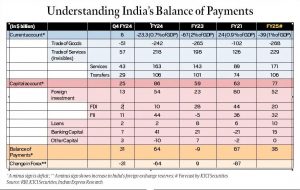
    • Current Account Surplus: India registered a current account surplus during the fourth quarter (Jan-Mar) of the 2023-24 financial year, marking the first surplus in 11 quarters.
    • Quarterly vs. Annual Data: Despite the Q4 surplus, the current account balance for the entire FY2023-24 remained in deficit, indicating underlying economic trends and demands.

    What is Balance of Payments (BoP)?

    • The BoP is a ledger of a country’s transactions with the rest of the world, recording all monetary transactions between residents of a country and the rest of the world.
    • It shows the amount of money flowing into and out of the country, indicating the relative demand for the rupee compared to foreign currencies (usually in dollar terms).

    Constituents of the BoP

    The BoP has two main accounts: the Current Account and the Capital Account.

    • Current Account: It covers the trade in goods (exports and imports), trade in services (transportation, tourism, licensing, etc.), Income (wages, interest, dividends, etc.), and current transfers (remittances, foreign aid, etc.).
      • Trade of Goods (Merchandise Account): Records export and import of physical goods. A trade deficit occurs when imports exceed exports.
      • Invisibles of Trade: Includes services (banking, insurance, IT, tourism), transfers (remittances), and income (earnings from investments). These are transactions not visible like physical goods.
      • Net Balance: The sum of the merchandise trade and invisible trade determines the current account balance. Q4 showed a surplus in the current account due to a surplus in invisible despite a trade deficit.
    • Capital Account: It covers debt forgiveness, migrants’ transfers of financial assets, taxes on gifts and inheritances, and ownership transfers of fixed assets.
      • Investments: Captures transactions related to investments such as Foreign Direct Investment (FDI) and Foreign Institutional Investments (FII).
      • Net Balance: Q4 showed a net surplus of $25 billion in the capital account.

    Impact on the Indian Economy: 

    • Exchange Rate Stability: The current account surplus in Q4 helped stabilize the exchange rate of the rupee. By absorbing excess dollars, the Reserve Bank of India (RBI) prevented excessive appreciation of the rupee, which helps maintain the competitiveness of Indian exports.
    • Improved Sovereign Ratings: A current account surplus can positively impact India’s sovereign credit ratings, as it indicates stronger external financial health and reduces reliance on foreign borrowing.
    • Foreign Exchange Reserves: The surplus contributed to an increase in India’s foreign exchange reserves, enhancing the country’s ability to manage external shocks and providing a buffer against global economic uncertainties.
    • Investment Climate: A surplus in the capital account, driven by Foreign Direct Investment (FDI) and Foreign Institutional Investments (FII), indicates investor confidence in the Indian economy, potentially leading to more robust economic growth and development.
    • Economic Health Indicators: Despite the Q4 surplus, the annual current account deficit suggests robust domestic demand and investment needs. This aligns with a growing economy that requires imports of capital goods to enhance production capacity and future export potential.

    Way forward: 

    • Enhance Export Competitiveness: India should focus on boosting its export sector by diversifying export products and markets, improving product quality, and providing incentives for export-oriented industries.
    • Promote Sustainable Foreign Investment: Encouraging sustainable and long-term foreign investments, particularly in sectors like manufacturing, technology, and renewable energy, can strengthen the capital account. 

    Mains PYQ: 

    Q Craze for gold in Indian has led to surge in import of gold in recent years and put pressure on balance of payments and external value of rupee. In view of this, examine the merits of Gold Monetization scheme. (UPSC IAS/2015)

  • Health Sector – UHC, National Health Policy, Family Planning, Health Insurance, etc.

    Indigenous HPV vaccine, the rhetoric and the reality

    Why in the news?

    Recent discourse suggests HPV vaccination prevents cervical cancer, but evidence linking HPV to cancer is inconclusive and most infected individuals don’t develop cancer, raising doubts about vaccine necessity.

    What is Cervical Cancer?

    Cervical cancer is a type of cancer that starts in the cells lining the cervix, which is the lower part of the uterus that connects to the vagina. It is usually a slow-growing cancer that may not have symptoms in its early stages.

    Present  trends of cervical cancer prevalence in India and the Globe                

    • Global Trends: Cervical cancer is the fourth most common cancer among women globally, with an estimated 604,000 new cases and 342,000 deaths reported in 2020. 
      • Mortality rates vary widely by region, with the highest rates observed in low- and middle-income countries due to limited access to screening and treatment.
    • Trends in India: In India, cervical cancer is the second most common cancer among women aged 15-44 years. It accounts for approximately 17% of all female cancer deaths in the country, with over 97,000 new cases reported annually.


    Recent debate – How does vaccination against HPV prevent cervical cancer and consequent death?                                                       

    • Efficacy Against HPV Infection and Cervical Cancer: HPV vaccines target high-risk HPV types, notably types 16 and 18, which are responsible for a significant proportion of cervical cancer cases worldwide. 
      • Clinical trials and real-world data consistently demonstrate the effectiveness of HPV vaccines in reducing HPV infection rates and preventing cervical cancer.
    • Public Health Impact and Benefits: Countries with high HPV vaccination coverage have observed significant declines in HPV infection rates and cervical cancer incidence among vaccinated populations. 
      • Vaccination programs aim to achieve herd immunity, thereby reducing overall transmission of HPV and protecting unvaccinated individuals.
    • Debate and Challenges: Debate surrounds the universal versus selective vaccination strategies, with considerations on cost-effectiveness, accessibility, and cultural acceptance.
      • Challenges include vaccine hesitancy, particularly in some regions, as well as affordability and logistical barriers to widespread vaccination coverage.

    Challenges Prevalent in Vaccine Manufacturing    

    • Complex Manufacturing Processes: Vaccine manufacturing involves complex biological processes and stringent quality control measures. 
      • Developing and scaling up production requires specialized facilities and skilled personnel, which can be costly and time-consuming to establish.
    • High Regulatory Standards: Vaccines are subject to rigorous regulatory scrutiny to ensure safety, efficacy, and consistency. 
      • Meeting regulatory requirements in multiple jurisdictions adds complexity and may delay the approval and market entry of new vaccines.
    • Supply Chain and Distribution: Maintaining a reliable supply chain for vaccine components and ensuring cold chain storage and distribution are critical challenges. 
      • This becomes even more pronounced in resource-constrained settings or during global health emergencies where demand surges.

    Its Impact on India                     

    • Delayed Access to Affordable Vaccines: India’s capability to produce vaccines at scale is hindered by stringent patent laws and complex regulatory requirements. 
      • This delays the availability of affordable vaccines domestically, impacting public health initiatives and access for vulnerable populations.
    • Economic and Health Implications: High costs associated with vaccine development and production limit affordability and accessibility, exacerbating healthcare inequalities. 
      • This affects India’s ability to address preventable diseases effectively, impacting public health outcomes and economic productivity.

    Unavailability of Competing Vaccines and Future Scope

    • Lack of Market Competition: Despite the expiration of earlier patents, there is a notable absence of competing HPV vaccines from domestic manufacturers in India. 
      • This limits options for consumers and healthcare providers, potentially leading to higher prices and reduced accessibility, particularly in the private market.
    • Potential for Future Development: Several Indian biotech companies had announced plans to develop HPV vaccines, indicating a future scope for competition and potentially lower prices. 
      • However, these initiatives have not materialized into market-ready products, highlighting challenges in vaccine development and commercialization in India’s regulatory and economic environment.

    Way forward: 

    • Promote Research and Development Incentives: Encourage and support Indian biotech companies through research grants, tax incentives, and streamlined regulatory pathways for HPV vaccine development.  
    • Enhance Public-Private Partnerships: Foster collaborations between government entities, academic institutions, and private-sector vaccine manufacturers to improve vaccine accessibility and affordability. 

    Mains PYQ: 

    Q What are the research and developmental achievements in applied biotechnology? How will these achievements help to uplift the poorer sections of the society? (UPSC IAS/2021)

  • Women Safety Issues – Marital Rape, Domestic Violence, Swadhar, Nirbhaya Fund, etc.

    The share of women in the unincorporated sector is highest in the south   

    Why in the News? 

    Recently the Annual Survey of Unincorporated Sector 2022-23 revealed higher shares of women owners and workers in southern and some eastern states, and lower in western, northern, and central states.

    Gender disparity in India concerning working-owners and unpaid family workers:

    • Prevalence of Women in Unpaid Family Worker Roles: Data from the Annual Survey of Unincorporated Sector 2022-23 reveals that women are predominantly represented as unpaid family workers.
      • For instance, in Telangana, while 43% of working owners are women, a substantial 59% are unpaid family workers, illustrating a significant gender disparity.
    • Lower Representation of Women as Working Owners: Across India, the proportion of women in working-owner roles is considerably lower compared to men. 
      • For example, in Telangana, women constitute 43% of working owners, reflecting a gender gap where men are more likely to own and operate businesses.
    • Regional Trends Highlighting Gender Disparities: The southern states, such as Telangana, Karnataka, and Tamil Nadu, display a relatively higher share of women in both working-owner and unpaid family worker roles. 
      • Despite this, the overall pattern shows more men in ownership positions and more women in unpaid roles, reinforcing the gender imbalance.
    • Sector-Specific Disparities: In the manufacturing sector, women’s representation as working-owners and hired workers is lower than in unpaid family roles. 
      • For example, in Telangana, women constitute 52% of formal hired workers but only 26% of informal hired workers, indicating a disparity in employment types and compensation.
    • National Overview of Gender Roles: On a national level, the survey indicates that the share of women in unincorporated enterprises varies by state and job type. 
      • While women play a significant role in unpaid family work, their representation as working owners remains limited. 
      • This trend is consistent across different regions, with southern states showing relatively better but still imbalanced gender representation in the workforce.

    The reason behind these issues: 

    • Cultural and Societal Norms: Traditional gender roles in India often assign women the responsibility of unpaid domestic and family work, limiting their opportunities for paid employment and entrepreneurship.
    • Access to Resources and Opportunities: Women often have less access to financial resources, credit, and capital needed to start and run businesses compared to men. This financial barrier restricts their ability to become working-owners.
    • Work-Life Balance and Family Responsibilities: Women typically bear a disproportionate share of caregiving and household responsibilities, limiting their availability for formal employment and entrepreneurial activities.
    • Network and Mentorship Gaps: Women often have fewer professional networks and mentorship opportunities, which are crucial for business growth and career advancement.

    Steps taken by the Indian Government: 

    Scheme/Initiative Year Objective Key Features
    Beti Bachao Beti Padhao (BBBP) 2015 Address declining child sex ratio and empower girls through education ·         Awareness and advocacy campaigns

    ·         Enforcement of PC&PNDT Act

    ·         Improving enrolment of girls in schools

    One Stop Centres (OSC) 2015 Provide integrated support and assistance to women affected by violence ·         Medical aid

    ·         Police assistance

    ·         Legal aid

    ·         Psycho-social counseling

    ·         Temporary shelter

    Ujjwala Yojana 2016 Provide LPG connections to women from BPL households to safeguard their health ·         Clean cooking fuel

    ·         Reduce health hazards associated with unclean fuels

    Mahila Shakti Kendra (MSK) 2017 Empower rural women through community participation ·         Interface for rural women to approach government

    ·         Skill development training at grassroots level

    Nari Shakti Puraskar 2015 Recognize exceptional work in empowering women and promoting gender equality ·         Highest civilian honors for women

    ·         Conferred by the President of India on International Women’s Day


    Way forward: 

    • Enhance Access to Financial Resources and Training: Implement targeted financial programs to provide women with easier access to credit, grants, and capital needed to start and grow businesses. This can include microfinance initiatives, low-interest loans, and financial literacy training.
    • Strengthen Legal and Social Support Systems: Enforce and improve existing gender equality laws and policies to ensure women’s rights in the workforce and in business ownership. This includes better implementation of anti-discrimination laws and providing legal support to women entrepreneurs.

    Mains question for practice: 

    Q Despite various government initiatives and policies aimed at promoting gender equality, significant gender disparities persist in the ownership and workforce participation in unincorporated enterprises across different regions of India. Discuss the reasons behind these disparities and suggest measures to address them.15M

    Mains PYQ: 

    Q “Though women in post-Independent India have excelled in various fields, the social attitude towards women and feminist movement has been patriarchal.” Apart from women education and women empowerment schemes, what interventions can help change this milieu? (UPSC IAS/2021)

  • What are the new provisions for Police Officers?  

    Why in the News? 

    The Bureau of Police Research and Development (BPRD) has issued Standard Operating Procedures (SOPs) to assist police officers in implementing these new provisions in the criminal laws.      

    With the new criminal laws coming into effect, how have the basic duties of police officers changed?

    • Registration of FIRs: The officer in charge cannot refuse to register an FIR due to jurisdiction issues. They must register a zero FIR and transfer it to the respective station. Non-registration can attract penal action.
    • Electronic Filing of FIRs: Information for FIRs can be given electronically, which must be signed within three days.
    • Mandatory Videography: Videography is now required during searches, crime scene documentation, and property possession processes. This is to ensure transparency and integrity in investigations.
    • Display of Arrest Information: Information about arrested individuals must be displayed prominently in police stations, ensuring transparency and accountability.

    What are some of the changed provisions concerning arrests of elderly and infirm people?

      • Permission from an officer not below the rank of DySP is required to arrest individuals above 60 years or those who are infirm for offenses punishable by less than three years.
      • Handcuffing is restricted and can only be used if there is a possibility of the person escaping custody or causing harm. This aligns with the Supreme Court guidelines.
    • What about preserving electronic evidence?
      • The new laws emphasize maintaining the sequence of custody for electronic devices to ensure the integrity of evidence.
      • The investigating officer must inform the informant or victim about the progress of the investigation within 90 days.

    How can electronic evidence be stored?

    • Use of eSakshya App: A cloud-based mobile app, eSakshya, allows police to capture photos and videos, ensuring they are geo-tagged and time-stamped.
    • Integration with ICJS: The data captured via eSakshya is part of the Inter-operable Criminal Justice System (ICJS), making it accessible to the judiciary, prosecution, and forensic experts.
    • Training and Equipment: Investigating officers must be provided with electronic devices and proper training to handle and preserve electronic evidence effectively.

    Challenges and Implementation Issues: 

    • Implementation and Training: The transition to new protocols, such as mandatory videography and electronic filing of FIRs, requires extensive training for police officers. 
      • Ensuring that all officers are proficient with the new technology and understand the updated procedures can be a significant logistical and financial challenge.  
    • Infrastructure and Connectivity: Effective implementation of electronic evidence preservation and zero FIR registration demands robust digital infrastructure and reliable internet connectivity, especially in remote or rural areas. 
      • Many police stations may lack the necessary resources or face frequent connectivity issues, potentially hindering the timely and accurate processing of electronic evidence and FIRs.  

    Way forward:

    • Need Enhanced Training Programs: Implement comprehensive training programs for police officers nationwide to familiarize them with the new criminal laws and technological advancements.
    • Need Improved Digital Infrastructure: Invest in upgrading digital infrastructure and ensuring reliable internet connectivity across all police stations, especially in rural and remote areas.

    Mains PYQ: 

    Q The jurisdiction of the Central Bureau of Investigation (CBI) regarding lodging an FIR and conducting probe within a particular State is being questioned by various States. However, the power of the States to withhold consent to the CBI is not absolute. Explain with special reference to the federal character of India. (UPSC IAS/2021)


  • Electric and Hybrid Cars – FAME, National Electric Mobility Mission, etc.

    In an electric vehicle, what is Regenerative Braking?

    Why in the News?

    The Regenerative Braking device market is set to witness immense growth during the period 2024-2031 due to rise in prominence of e-vehicles.

    What is Regenerative Braking? 

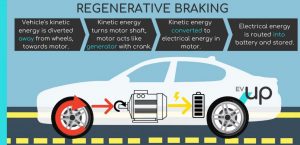
    Regenerative braking is a technology used in electric and hybrid vehicles to capture and reuse energy that would otherwise be lost during braking.

    How Does It Work?

    1. Normal Braking: In a traditional vehicle, when you brake, the car’s kinetic energy (the energy it has while moving) is turned into heat and wasted.
    2. Regenerative Braking: 
    • In cars with regenerative braking, when you press the brake pedal, the electric motor runs in reverse.
    • This reverse action slows down the car, just like traditional brakes.
    • Instead of converting kinetic energy into heat, the motor converts it back into electrical energy.
    • This electrical energy is then stored in the vehicle’s battery for later use.
    1. Energy Conversion: This reversed motor converts the kinetic energy of the moving car into electrical energy.
    2. Energy Storage: The electrical energy produced is sent back to the car’s battery and stored for future use, such as powering the vehicle or running electrical systems.

    Significance:

    • Energy Efficiency: Saves energy by reusing it, reducing the need for frequent battery recharges.
    • Extended Range: Helps electric and hybrid vehicles travel further on a single charge.
    • Less Wear and Tear: Reduces wear on traditional brake components, leading to lower maintenance costs.

    Example: Imagine riding a bicycle down a hill. Normally, if you press the brakes, you slow down and the energy goes away as heat. But if you could somehow capture that energy and use it to help you pedal back up the hill, that would be similar to what regenerative braking does in a car.


    How does a Motor become a Generator?

    • A motor consists of a rotor (which rotates) and a stator (which is stationary)
      • The stator contains magnets or electromagnets, while the rotor has current-carrying coils.
    • The Lorentz Force acts on the charged particles in the magnetic field, causing the rotor to spin.
    • In a generator, mechanical energy induces a current in the stator EVs can implement regenerative braking by switching the traction motor between these configurations.

    Downsides of Regenerative Braking

    • Regenerative braking alone often cannot bring a vehicle to a complete stop and must be supplemented by conventional braking systems.
    • Regenerative brakes may not prevent vehicles from backsliding downhill.
    • The efficiency of energy recovery drops as the vehicle’s speed decreases, though regenerative brakes are beneficial in stop-start traffic.

    Other Ways to Recover Energy

    • The design of a regenerative brake depends on the form of energy conversion. EVs convert mechanical energy into electrical energy stored in batteries or supercapacitors.
    • Flywheels can store mechanical energy by increasing angular momentum, useful in applications like Formula One racing and satellite navigation.
    • Kinetic energy can also be used to compress air, which can be useful for starting internal combustion engines.
    PYQ:

    [2021] Magnetite particles, suspected to cause neurodegenerative problems, are generated as environmental pollutants from which of the following?​

    1. Brakes of motor vehicles​

    2. Engines of motor vehicles​

    3. Microwave stoves within homes​

    4. Power plants​

    5. Telephone line​

    Select the correct answer using the code given below.​

    a)1, 2, 3 and 5 only​

    b)1, 2 and 4 only​

    c)3, 4 and 5 only​

    d)1, 2, 3, 4 and 5​


  • International Monetary Fund,World Bank,AIIB, ADB and India

    State of Economic Emergency in Argentina

    Why in the News?

    Argentina faces one of the world’s highest inflation rates and a decade-long economic stagnation.

    • The International Monetary Fund’s (IMF) earlier decision to release $4.7 billion from a $57 billion bailout package to Argentina, despite missed targets, raised eyebrows.

    IMF’s Controversial Decision:

    • The IMF dispersed $4.7 billion, including overdue and advanced payments, to bolster President Milei’s nascent government.
    • This move contradicted IMF guidelines requiring adherence to economic conditions, signaling geopolitical influence and strategic support.

    Argentina’s Economic Struggles

    • Persistent fiscal deficits and chronic inflation have plagued Argentina, with historical inflation averaging 190% from 1944 to 2023.
    • The government defaulted on sovereign debt nine times, exacerbating economic instability.
      • Since 2009, fiscal deficits persisted, reaching 4.4% of GDP in 2023, fueled by overspending and reliance on the inflation tax.
    • Milei’s administration targets fiscal reform to eliminate large deficits, contrasting with past failed attempts like the Austral Plan.
      • Alfonsín launched the Austral Plan, an austerity program that implemented a new currency (the austral), wage and price controls, and currency devaluations.

    IMF and its Bailout

    • The IMF is an international organization (190 member countries) that provides loans, technical assistance, and policy advice to member countries.
    • Established in 1944 to promote international monetary cooperation, exchange rate stability, balanced economic growth, and poverty reduction.
    • Hq: Washington, D.C.
    • An IMF bailout, or an IMF program, is a loan package provided to financially troubled countries.
      • Bailout programs have specific terms and conditions that borrowing countries must meet to access the funds.

    Types of IMF Bailout Packages:

    Description Duration Conditionality
    Stand-by Arrangements Short-term lending programs for countries with temporary balance of payments problems. 1-2 years Specific macroeconomic policies for stabilization
    Extended Fund Facility Medium-term lending programs to address balance of payments difficulties from structural weaknesses. Longer-term Extensive conditionality and significant reforms
    Rapid Financing Instrument Loan program providing quick financing for countries with urgent balance of payments needs. Flexible Fewer conditions and shorter application process


    PYQ:

    [2016] With reference to the International Monetary and Financial Committee (IMFC), consider the following statements:

    1. IMFC discusses matters of concern affecting the global economy and advises the International Monetary Fund (IMF) on the direction of its work.

    2. The World Bank participates as an observer in IMFC’s meetings.

    Which of the statements given above is/are correct?

    (a) 1 only

    (b) 2 only

    (c) Both 1 and 2

    (d) Neither 1 nor 2 


  • Health Sector – UHC, National Health Policy, Family Planning, Health Insurance, etc.

    Scientists find proof that Pain-Sensing Cells are either Male or Female

    Why in the News?

    Recent research has uncovered significant differences in how male and female nociceptors (pain receptors) are activated, paving the way for more precise, sex-specific pain management therapies. 

    About Pain and Differences in Perception:

    • The International Association for the Study of Pain defines it as “an unpleasant sensory and emotional experience associated with actual or potential tissue damage, or described in terms of such damage.”
    • Subjectivity: Pain perception is highly personal and varies among individuals.
    • Scientific Findings: Recent research by the University of Arizona Health Sciences demonstrated functional sexual dimorphism in nociceptors, the nerve cells responsible for perceiving pain

    Why do we perceive Pain?

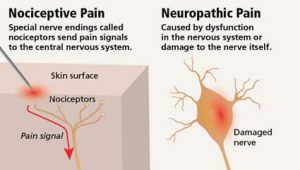
    • Role of Nociceptors: Nociceptors are nerve cells with bare endings found throughout the body. They detect extreme pressure, temperature, and chemical signals, converting them into electrical signals sent to the brain via the spinal cord.
    • Activation Mechanism: Nociceptors in both men and women produce similar pain perceptions but are activated differently. 
      • Normally, they respond to high-intensity stimuli, but their activation threshold can decrease under certain conditions, causing low-intensity stimuli to trigger pain.

    Nociceptor Response Threshold

    • Gender Differences: Females generally have a lower nociceptor response threshold than males.
    • Peripheral Nociceptor Sensitisation: External factors can lower the pain threshold, causing nociceptors to react to stimuli they would normally ignore.

    The Old Vs New Study

    • Previous research showed that the hormone prolactin increases pain responses in female rodents, while the neurotransmitter orexin B sensitized male rodents to pain.
    • According to the New study, the Prolactin hormone increased nociceptor activation in female mice, while orexin-B had a similar effect in male mice. These findings were consistent across monkeys and humans.
    • Nociceptors in males and females can be differentially sensitized, leading to varying pain thresholds.

    Significance of this Pain Research

    • Sex-Specific Pain Treatment: Current pain management often overlooks the patient’s sex, despite differences in pain conditions between men and women.
      • Conditions like irritable bowel syndrome, migraines, and painful bladder syndrome are more common in women, while cluster headaches and gout are more frequent in men.


    PYQ:

    [2021] What are the research and developmental achievements in applied biotechnology? How will these achievements help to uplift the poorer sections of the society?


Join the Community

Join us across Social Media platforms.