💥UPSC 2027,2028 Mentorship (April Batch) + Access XFactor Notes & Microthemes PDF

Archives: News

  • Historical and Archaeological Findings in News

    PM inaugurates Nalanda University  

    Why in the News?

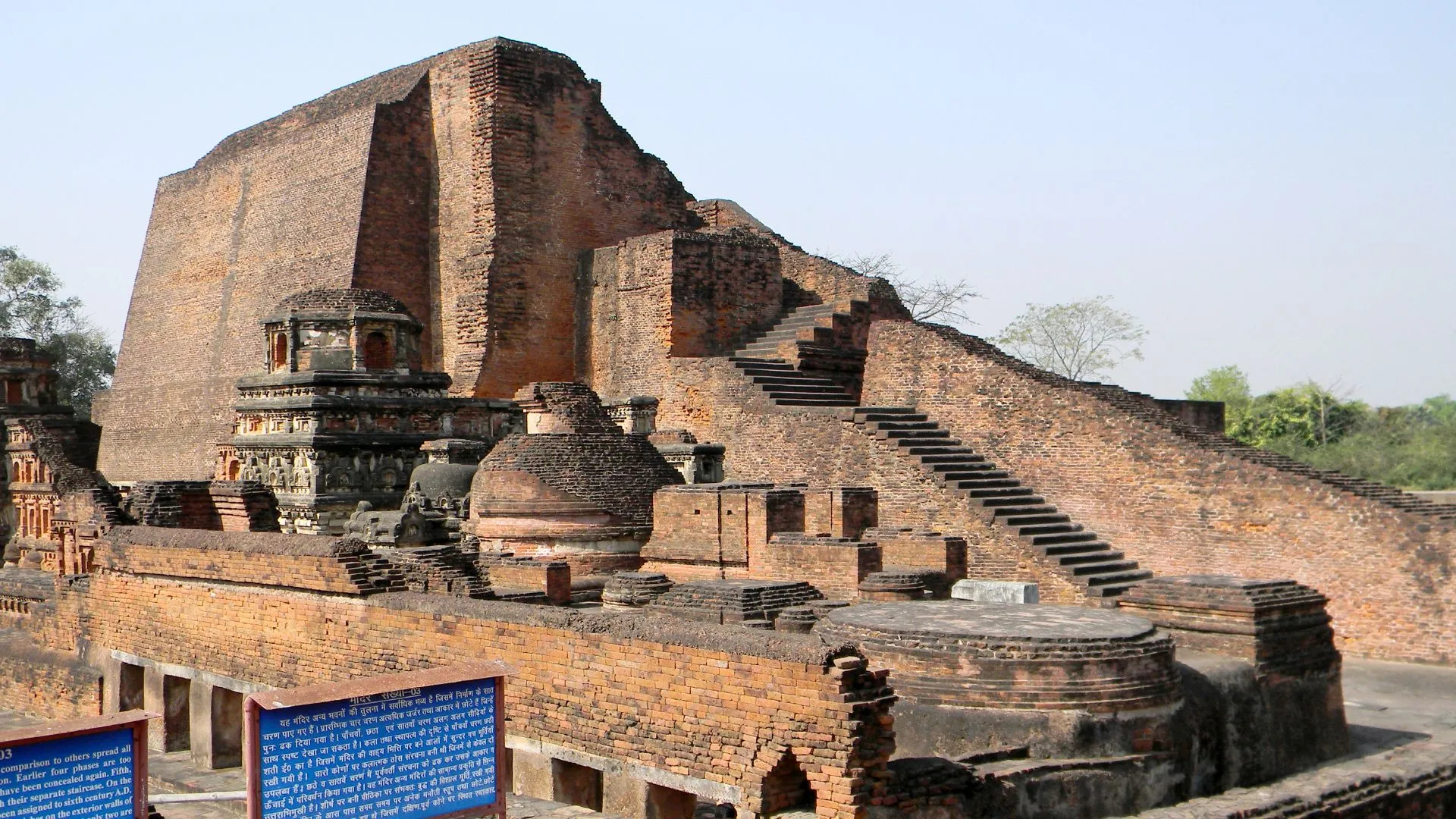
    The Prime Minister has inaugurated the new campus of Nalanda University, an international institution located near the ancient ruins of Nalanda in Rajgir, Bihar.

    Revival of Nalanda University

    • The idea to revive Nalanda University was proposed by former president Dr APJ Abdul Kalam in 2006, leading to the passing of the Nalanda University Bill in 2010.
    • The university’s revival was operationally launched in 2014 from a temporary location.
    • Former president Pranab Mukherjee laid the foundation stone for the permanent campus in 2016, with construction starting in 2017 and culminating in today’s inauguration.
    • The Parliament established the university following decisions from the second East Asia Summit (EAS) in 2007 and the fourth EAS in 2009.

    International Collaboration and Courses

    • Nalanda University has participation from 17 countries, including Australia, Bangladesh, Bhutan, China, Indonesia, and others, which have signed MoUs to support the university.
    • It offers 137 scholarships to international students, sponsored by the ASEAN-India Fund, BIMSTEC, and Bhutan’s Ministry of External Affairs.
    • The university provides postgraduate and doctoral research courses, as well as short-term certificate courses.

    Historical Background

    • Nalanda University was established in the 5th century CE in the ancient kingdom of Magadha (modern-day Bihar) and was the world’s first residential university.
    • Establishment and Patronage:
      • The Gupta dynasty, under Emperor Kumaragupta I, established Nalanda University in 427 AD, promoting it as a premier center for Buddhist scholarship.
      • It received substantial endowments from monarchs like King Harsha and rulers of the Pala Empire, enhancing its stature and influence across Asia.
    • Countries: It attracted scholars from China, Korea, Japan, Tibet, Mongolia, Sri Lanka, and Southeast Asia.
    • Subjects taught included medicine, Ayurveda, Buddhism, mathematics, grammar, astronomy, and Indian philosophy.
    • The university thrived under the patronage of the Pala dynasty during the 8th and 9th centuries CE and made significant contributions to mathematics and astronomy.
    • Aryabhatta, a pioneer of Indian mathematics and the inventor of zero, was one of the esteemed educators at Nalanda.

    Admission and Academic Rigor

    • Admission to Nalanda was highly competitive, akin to today’s top institutions like IIT, IIM, or Ivy League schools.
    • Students underwent rigorous interviews and were mentored by scholars and Buddhist masters like Dharmapala and Silabhadra.
    • The university’s library, known as ‘Dharma Gunj’ or the ‘Mountain of Truth,’ contained 9 million handwritten palm-leaf manuscripts, making it the richest repository of Buddhist knowledge.

    Destruction and Rediscovery

    • In the 1190s, Bakhtiyar Khilji, a Turko-Afghan military general, destroyed Nalanda University by arson, which burned for three months and destroyed invaluable Buddhist manuscripts.
    • Some surviving manuscripts are preserved in the Los Angeles County Museum of Art and the Yarlung Museum in Tibet.
    • The university was rediscovered in 1812 by Scottish surveyor Francis Buchanan-Hamilton and officially identified in 1861 by Sir Alexander Cunningham.

    Scholarly Influence

    • Nalanda’s intellectual legacy includes contributions from scholars like Nagarjuna, known for his foundational work in the Madhyamaka school of Mahayana Buddhism, and his disciple Aryadeva.
    • Dharmapala’s commentaries further enriched Buddhist philosophy.
    • These scholars’ insights into metaphysics and epistemology extended Nalanda’s influence, shaping religious and philosophical thought across Asia and inspiring subsequent generations of thinkers.

    Foreign Travellers Account of Nalanda University 

    Visit Period Key Details
    Xuanzang 7th century CE
    • Described Nalanda as vast with lecture halls and residential quarters.
    • Noted a large library with thousands of manuscripts.
    • Mentioned numerous teachers and students engaged in debates.
    • Provided detailed records of Nalanda’s organization and academic activities.
    I-Tsing 7th century CE
    • Spent several years studying at Nalanda.
    • Emphasized rigorous academic environment.
    • Noted diverse student population from Asia.
    • Contributed to understanding Nalanda’s curriculum and scholarly environment.
    Al-Biruni 11th century CE
    • Wrote about Nalanda’s reputation as a premier center of learning in India.
    • Highlighted its attraction for scholars across Asia.
    • Introduced Nalanda’s achievements to the medieval Islamic world.


    PYQ:

    [2020] Pala period is the most significant phase in the history of Buddhism in India. Enumerate.

    [2018] Assess the importance of the accounts of the Chinese and Arab travellers in the reconstruction of the history of India.

    [2014] Taxila university was one of the oldest universities of the world with which were associated a number of renowned learned personalities of different disciplines. Its strategic location caused its fame to flourish, but unlike Nalanda, it is not considered as a university in the modern sense. Discuss.

  • Innovations in Biotechnology and Medical Sciences

    CRISPR Cas9 Gene Therapy for Sickle Cell Disease

    Why in the News?

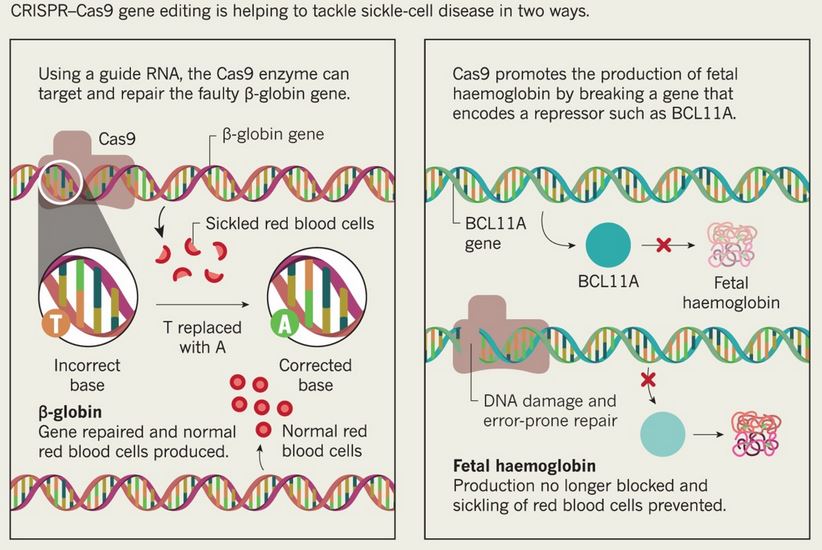
    • India is close to developing a gene therapy using CRISPR-Cas9, a gene-editing tool for sickle cell disease (SCD).
      • SCD is a genetic blood disorder prevalent among the Scheduled Tribes.

    What is Sickle Cell Disease?

    • Sickle cell disease (SCD) is a group of inherited blood disorders caused by a genetic mutation in the hemoglobin-β gene located on chromosome 11.
    • This mutation results in defective hemoglobin, which forms rod-like structures after releasing oxygen.
    • As a result, red blood cells become rigid and assume a sickle shape.
    • The disease is inherited in an autosomal recessive pattern, meaning both parents must carry the abnormal gene for a child to inherit it.
    • Symptoms may not manifest immediately in newborns but can include extreme tiredness, fussiness, swollen hands and feet, and jaundice.
    • Implications:
        • The mis-shapen RBCs can block small blood vessels, leading to impaired blood flow and causing chronic anaemia.
        • Individuals with SCD often experience acute pain episodes, severe bacterial infections, and tissue damage due to inadequate blood supply.
    • Treatment:
      • Presently treatment includes medications for pain relief, regular blood transfusions to replace damaged red blood cells.
      • In rare cases, a bone marrow or stem cell transplant, which carries significant risks, is recommended.

    Eliminating Sickle Cell Disease: Global and National Context

    • This progress follows the approval of CRISPR-Cas9 technology by the U.S. Food and Drug Administration for a cell-based gene therapy to treat sickle cell disease in December 2023.
    • One of the main challenges for India is to develop a cost-effective therapy, as part of its mission to eradicate sickle cell disease by 2047, launched by Prime Minister in July 2023.
    • The mission aims to conduct over 7 crore screenings among vulnerable tribal populations across 17 States and Union Territories, with three crore screenings completed so far.

    Back2Basics: CRISPR-Cas9 Gene Editing

    • CRISPR-Cas9 stands for Clustered Regularly Interspaced Short Palindromic Repeats and CRISPR-associated protein 9.
    • It is a technology that allows geneticists and researchers to edit parts of the genome by altering sections of the DNA sequence.
    • Emmanuelle Charpentier and Jennifer Doudna’s work on CRISPR-Cas9 as a ‘molecular scissor’ earned them the 2020 Nobel Prize in chemistry.
    • The system consists of two key components:
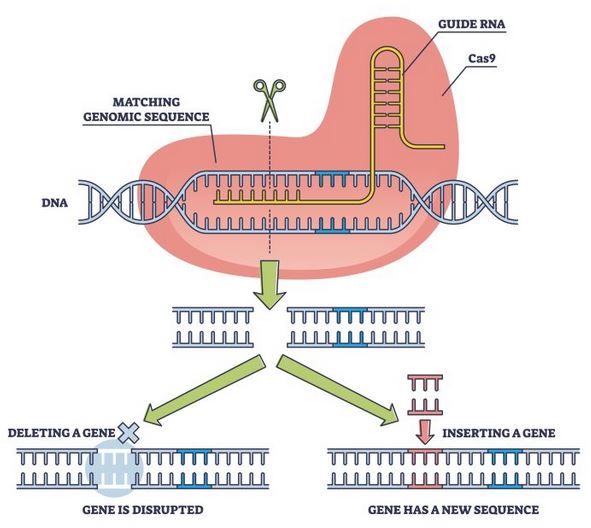
    1. Cas9: This is the enzyme that acts like a pair of molecular scissors. It is responsible for cutting the DNA strand at a specific location, allowing for the removal, addition, or alteration of DNA at that site.
    2. Guide RNA (gRNA): This is a piece of RNA that is designed to find and bind to a specific sequence of DNA that matches its code. The gRNA guides the Cas9 enzyme to the exact spot in the genome where an edit is desired.
    • Mechanism:
      • The process begins with the design of a gRNA that matches the DNA sequence where an edit is needed.
      • Once inside the cell, the Cas9 enzyme and the gRNA form a complex that can identify and bind to the target DNA sequence.
      • The Cas9 then cuts the DNA at this location.
      • After the DNA is cut, the cell’s natural repair mechanisms can be harnessed to add or remove genetic material, or to make specific changes to the DNA.


    PYQ:

    [2023] Consider the following statements in the context interventions being undertaken under Anaemin Mukt Bharat Strategy :

    1. It provides prophylactic calcium supplementation for pre-school children, adolescents and pregnant women.
    2. It runs a campaign for delayed cord clamping at the time of child-birth.
    3. It provides for periodic deworming to children and adolescents.
    4. It addresses non-nutritional causes of anaemia in endemic pockets with special focus on malaria, hemoglobinopathies and fluorosis.

    How many of the statements given above are correct?

    (a) Only one
    (b) Only two
    (c) Only three
    (d) All four

  • Human Rights Issues

    NHRC Notice to Centre on Worker Rights Violation in Haryana

    Why in the News?

    • The National Human Right Commission (NHRC) issued notice to the Centre over reports from a Amazon company’s warehouse in Haryana’s Manesar.
      • Employees were allegedly forced to pledge not to take toilet or water breaks until unloading six trucks post 30-minute tea break.

    NHRC’s Observations and Actions

    • NHRC views this as a serious human rights violation, potentially breaching labour laws and Ministry guidelines.
    • Notice was issued to the Secretary, Union Ministry of Labour and Employment for a detailed report within a week.

    About National Human Rights Commission (NHRC)

    Details
    Establishment
    • A Statutory Body;
    • Established under the Protection of Human Rights Act, 1993.
    Functions
    • Inquire into any violation of human rights
    • Recommend immediate interim relief to victims or their families
    • Intervene in court proceedings involving human rights violations
    • Review constitutional and legal safeguards for human rights
    • Study international instruments on human rights
    • Promote human rights literacy
    • Support the efforts of NGOs working in the field of human rights
    Powers
    • Regulate its own procedure
    • Possess all the powers of a civil court
    • Proceedings have a judicial character
    Chairperson
    • Must be a former Justice of the Supreme Court or Chief Justice of the Supreme Court
    • Appointed by the President of India
    Members Four full-time members;

    • Chairperson: former Supreme Court Justice or Chief Justice;
    • Other Member: former Judge of the Supreme Court;
    • Other Member: former Chief Justice of a High Court;
    • Three Members: with knowledge or experience in human rights, including at least one woman –

    Seven ex-officio members:  Chairpersons of National Commissions viz., National Commission for Scheduled Castes, National Commission for Scheduled Tribes, National Commission for Women , National Commission for Minorities, National Commission for Backward Classes, National Commission for Protection of Child Rights; and the Chief Commissioner for Persons with Disabilities.

    Appointment
    • Appointed by the President, based on a committee recommendation including the Prime Minister, Speaker of Lok Sabha, Home Minister, Leaders of the Opposition in Lok Sabha and Rajya Sabha, and others
    • Consultation with the Chief Justice of India for judicial appointments
    Removal
    • Removal by order of the President of India
    • Consultation with the Supreme Court before removal
    Terms of Office
    • Hold office for a term of three years or until the age of 70
    • Ineligibility for further government employment after office
    • Eligible for reappointment
    Salaries Determined by the Central government
    Reporting
    • Submits annual or special reports to the Central government and the concerned State government
    • Reports laid before the respective legislatures, along with a memorandum of action taken on the recommendations and reasons for non-acceptance of any recommendations
    Limitations
    • The commission is not empowered to inquire into any matter after the expiry of one year from the date on which the act constituting the violation of human rights is alleged to have been committed
    • Functions are recommendatory in nature, with no power to punish or award relief to violators
    • Limited role concerning armed forces violations

    Government Initiatives for Worker Welfare in India:

    Description
    Constitutional Framework Labour falls under the Concurrent List, allowing both Central and State governments to enact laws.

    Articles 14, 16, and 39(c) ensure equality and welfare principles.

    Judicial Interpretation under Randhir Singh vs Union of India (1982) Upholds ‘Equal pay for Equal work’ through constitutional articles, promoting fairness in employment.
    Legislative Framework Introduction of 4 labour codes:

    • Code of Wages, 2019: Standardizes wage payments across sectors.
    • Industrial Relations Code, 2020: Consolidates laws related to industrial disputes and trade unions.
    • Social Security Code, 2020: Expands social security benefits coverage for workers.
    • Occupational Safety, Health and Working Conditions Code, 2020:  Ensures safety and welfare standards in workplaces.
    “Shramev Jayate” Initiative Launched in 2014 to maximize benefits for workers through enhanced welfare initiatives.
    Maternity Benefit Amendment Act, 2017 Increases paid maternity leave from 12 to 26 weeks, supporting maternal health and childcare.

    PYQ:

    [2015] “Success of ‘Make in India’ programme depends on the success of ‘Skill India’ programme and radical labour reforms.” Discuss with logical arguments.

    [2011] Consider the following:

    1. Right to education.
    2. Right to equal access to public service.
    3. Right to food.

    Which of the above is/are Human Right/Rights under “Universal Declaration of Human Rights”?

    (a) 1 only

    (b) 1 and 2 only

    (c) 3 only

    (d) 1, 2 and 3

  • Wildlife Conservation Efforts

    In news: Pobitora Wildlife Sanctuary

    Why in the News?

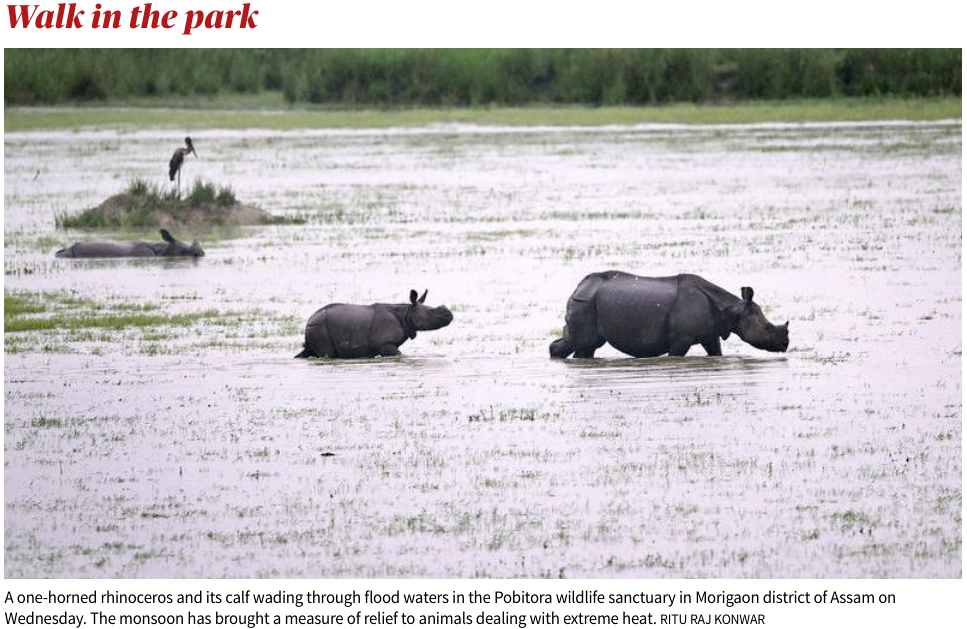
    The monsoon has brought a measure of relief to animals especially the one-horned rhinoceros in Pobitora Wildlife Sanctuary dealing with extreme heat.

    About Pobitora Wildlife Sanctuary 

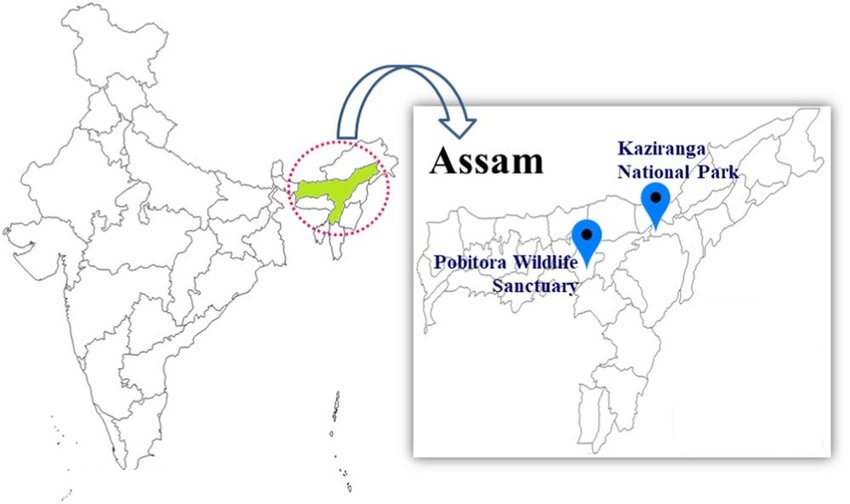
    • Pobitora Wildlife Sanctuary boasts the highest density of one-horned rhinos globally, second only to Kaziranga National Park in Assam.
    • Often dubbed as ‘Mini Kaziranga,’ Pobitora shares a similar landscape and vegetation to its renowned counterpart.
    • The sanctuary shelters various endangered species, including one-horned rhinoceros, leopards, leopard cats, fishing cats, jungle cats, feral buffaloes, wild pigs, and Chinese pangolins.
    • Approximately 72% of Pobitora’s area comprises a wet savannah dominated by Arundo donax and Saccharum grasses, while the rest is covered by water bodies.

    About One-Horned Rhino:

    • IUCN Red List Status: Vulnerable.
    • Habitat– Rhinos are mainly found in Assam, West Bengal and Uttar Pradesh.
      • Assam has an estimated 2,640 rhinos in four protected areas, i.e. Pobitora Wildlife Reserve, Rajiv Gandhi Orang National Park, Kaziranga National Park, and Manas National Park.

    Note: About 2,400 of them are in the Kaziranga National Park and Tiger Reserve (KNPTR).


    PYQ:

    [2019] Consider the following statements:

    1. The Asian lion is naturally found in India only
    2. Double-humped camel is naturally found in India only
    3. One-horned rhinoceros is naturally found in India only

    Which of the statements given above is/are correct?

    (a) 1 only

    (b) 2 only

    (c) 1 and 3 only

    (d) 1, 2 and 3

  • Coal and Mining Sector

    Critical Minerals under iCET

    Why in the News?

    What are Critical Minerals?

    • Critical minerals are elements that are crucial to modern-day technologies and are at risk of supply chain disruptions.
    • These minerals are mostly used in making electronic equipment such as mobile phones, computers, batteries, electric vehicles, and green technologies like solar panels and wind turbines.
    • Many of these are required to meet the manufacturing needs of green technologies, high-tech equipment, aviation, and national defence.

    List of critical minerals includes:

    The centre has released a list of 30 critical minerals for India in 2023:

    1. Identified Minerals: Antimony, Beryllium, Bismuth, Cobalt, Copper, Gallium, Germanium, Graphite, Hafnium, Indium, Lithium, Molybdenum, Niobium, Nickel, Platinum Group elements (PGE), Phosphorous, Potash, Rare Earth Elements (REE), Rhenium, Silicon, Strontium, Tantalum, Tellurium, Tin, Titanium, Tungsten, Vanadium, Zirconium, Selenium and Cadmium.
    2. Fertilizer Minerals: Two minerals critical for fertilizer production, phosphorous and potash, are also included in the above list.

    Critical Mineral Blocks in India

    • Distribution: There are 20 blocks spread across eight states, including Tamil Nadu, Odisha, Bihar, Uttar Pradesh, Gujarat, Jharkhand, Chhattisgarh, and Jammu & Kashmir.
    • Types of Licenses: Four blocks are for a Mining License (ML), allowing immediate mining post-clearance. The remaining 16 blocks are for a Composite License (CL), permitting further exploration before potentially converting to an ML.
    • Approvals Required: Licensees must obtain various approvals, including forest clearance and environmental clearance.
    • Forest Land: Approximately 17% of the total concession area, or 1,234 hectares, is forest land.

    India’s Critical Mineral Imports

    • Lithium Imports: In FY23, India imported 2,145 tonnes of lithium carbonate and lithium oxide, costing Rs 732 crore.
    • Nickel and Copper Imports: The country imported 32,000 tonnes of unwrought nickel and 1.2 million tonnes of copper ore, costing Rs 6,549 crore and Rs 27,374 crore, respectively.
    • Import Dependence: India relies entirely on imports for lithium and nickel, and 93% for copper.

    Country-wise dependence:

    1. China: India heavily relies on China for the import of critical minerals like lithium, cobalt, nickel, and graphite.
    2. Australia: India is actively engaged with Australia for acquiring mineral assets, particularly lithium and cobalt, to secure its supply chain for critical minerals.
    3. Argentina, Bolivia, and Chile: India is engaging with these countries, known for their reserves of battery metals like lithium and cobalt, to diversify its sources for critical minerals.

    India’s Strategic Mineral Initiatives

    • Amendments to the Mines and Minerals (Development and Regulation) Act, 1957 support expanded exploration.
    • Establishment of Khanij Bidesh India Ltd. (KABIL) with equity from National Aluminium Company Ltd, Hindustan Copper Ltd, and Mineral Exploration and Consultancy Ltd for global mineral asset acquisition.

    International Collaborations and Partnerships

    • India joined the U.S.-led mineral security partnership to secure critical mineral supply chains.
    • Creation of an India-U.S. advanced materials research forum to foster collaboration in universities, laboratories, and private sectors.
    • Bilateral technology collaboration on neodymium-iron-boron and studies on minerals like lithium, titanium, gallium, and vanadium.

    Back2Basics: Indo-US Comprehensive Economic and Trade Agreement (iCET)

    Details
    Initiation Announced in May 2022, officially launched in January 2023
    Management Overseen by the National Security Councils of India and the US
    Objectives Enhance bilateral cooperation in critical and emerging technologies
    Focus Areas of the Initiative
    1. AI Research Agency Partnership
    2. Defense Industrial and Technological Cooperation
    3. Innovation Ecosystems
    4. Semiconductor Ecosystem Development
    5. Cooperation on Human Spaceflight
    6. Advancement in 5G and 6G Technologies
    Key Achievements
    • Quantum Coordination Mechanism
    • Public-private dialogues on telecommunications and AI
    • MoU on semiconductor supply chain
    • Defense industrial cooperation roadmap
    Upcoming Initiatives
    • Finalization of major jet engine deal
    • Launch of India-US Defence Acceleration Ecosystem (INDUS-X)
    • Strategic Trade Dialogue establishment


    PYQ:

    [2019] With reference to the management of minor minerals in India, consider the following statements:

    1. Sand is a ‘minor mineral’ according to the prevailing law in the country.
    2. State governments have the power to grant mining leases of minor minerals, but the powers regarding the formation of rules related to the grant of minor minerals lie with the Central Government.
    3. State Governments have the power to frame rules to prevent illegal mining of minor minerals.

    Which of the statements given above is/are correct?

    (a) 1 and 3

    (b) 2 and 3

    (c) 3 only

    (d) 1, 2 and 3

  • Artificial Intelligence (AI) Breakthrough

    How will AlphaFold 3 change life sciences research?

    Why in the News?

    AlphaFold 3, and AI System introduced in a May 2024 Nature paper, extends capabilities to predict protein-protein interactions, DNA, RNA structures, and their interactions.

    Importance of Proteins

    • Proteins are crucial molecules regulating nearly every biological function.
    • They are composed of amino acids, which determine their structure and function.
    • Understanding protein folding is essential for comprehending cellular and organismal functions.

    The Protein-Folding Problem

    • The process of protein folding is complex and not fully understood, known as the protein-folding problem.
    • It is vital for deciphering how cells, organisms, and life itself operate.
    • Frank Uhlmann emphasizes the significance of understanding protein structure for molecular biology.

    What is AlphaFold?

    • Google DeepMind’s AlphaFold debuted in 2020, employs AI and machine learning to predict protein structures.
    • AlphaFold 2, released in 2021, significantly improved accuracy in protein structure prediction.
    • Derek Lowe acknowledges AlphaFold’s achievement in predicting structures effectively, although the deeper biological principles remain less explored.
    • AlphaFold 3’s Advancements:
      • It democratizes research by offering accessible structure prediction tools, even for non-experts.

    Technology behind AlphaFold 3

    • Unlike its predecessors, AlphaFold 3 utilizes a diffusion model akin to image-generating software.
    • This approach involves training on noisy data and de-noising to predict accurate protein structures.
    • Working:
      • Given an input list of molecules, AlphaFold 3 generates their joint 3D structure, revealing how they all fit together.
      • It models large biomolecules such as proteins, DNA and RNA, as well as small molecules, also known as ligands — a category encompassing many drugs.

    Applications of AlphaFold 3

    • AlphaFold 3 excels in predicting protein structures and interactions, aiding drug discovery efforts.
    • DeepMind’s spin-off, Isomorphic Labs, utilizes AlphaFold 3 for drug candidate identification.

    Challenges

    • The model’s code restriction has sparked criticism among researchers for hindering scientific collaboration and transparency.
    • DeepMind initially withheld AlphaFold 3’s full code, prompting calls for open access from the scientific community.
    • Responding to backlash, DeepMind plans to release the complete code within six months.

    PYQ:

    [2020] With the present state of development, Artificial Intelligence can effectively do which of the following?

    1. Bring down electricity consumption in industrial units
    2. Create meaningful short stories and songs
    3. Disease diagnosis
    4. Text-to-Speech Conversion
    5. Wireless transmission of electrical energy

    Select the correct answer using the code given below:

    (a) 1, 2, 3 and 5 only

    (b) 1, 3 and 4 only

    (c) 2, 4 and 5 only

    (d) 1, 2, 3, 4 and 5

  • Electric and Hybrid Cars – FAME, National Electric Mobility Mission, etc.

    The high cost of a Global Economic Decoupling

    Why in the News?

    The announcement by United States President Joe Biden in May to impose a new set of tariffs on various Chinese imports has reignited concerns about a new phase of economic decoupling globally.

    • According to the World Economic Forum, Economic Decoupling is a policy change that raises barriers to trade in goods and services where firms respond to these changes. If policy decoupling occurs despite the efforts of economic agents, the global economy is negatively affected.

    Latest Tariff on Chinese Electric Vehicles (EV) by USA:

    • Reason for Tariff: The U.S. imports few EVs from China, and the decision to impose high tariffs on them reinforces President Biden’s pro-union stance and support for the United Auto Workers (UAW) efforts to increase domestic EV manufacturing.
    • Tariff Increase: The tariffs on Chinese EVs have been quadrupled from 25%.
    • Pre-emptive Measure: This tariff acts as a pre-emptive measure to protect the American auto industry from the fast-growing Chinese car and battery industry. The tariff aims to support traditional domestic automakers and the American auto union against competition from China.

    Significant Observations of these decisions made by the USA on Global Geo-politics:

    • Firstly, the latest tariffs imposed by the USA which include steep increases for several other products, ranging from semiconductors to needles and syringes are the final nail in the coffin of US-China trade cooperation. The US and China are now in a full-blown economic war which will have far-reaching geopolitical consequences.
    • Secondly, the tariffs signal defeat. Biden and his political party feel obliged to join the anti-China, anti-trade fervor that has emerged as one of the very few unifying issues in a polarized country. Moreover, the tariffs, combined with US complaints that China is producing too much and putting pressure on the global economic system, speak to a deep-seated anxiety about America’s international competitiveness.

    Long-term Effects

    • Protectionism: Continued tariffs may lead to a vicious cycle of tit-for-tat measures, exacerbating protectionism worldwide.
    • Global Green Transition: New import restrictions on Chinese clean energy products could delay global green transition targets and the expansion of renewables.
    • Economic Impact on Multinationals: Western multinationals dependent on China’s consumer market may see a dip in earnings due to China’s slowing growth and rising household debts.
    • Impact on Resource-rich Countries: Countries like Australia and Brazil, heavily reliant on exports to China, may face economic challenges due to a slowing Chinese economy and falling commodity prices.
    • Supply Chain Risks: The European Union’s de-risking strategy might lead to China tightening its control over critical raw mineral supply chains, complicating the global value chain of rare earths.
    • Southeast Asia’s Challenges: Despite potential benefits from shifting production and investment from China, Southeast Asia remains highly dependent on Chinese technology and investment.
    • India’s Manufacturing Struggles: India’s prospects of benefiting from decoupling dynamics are uncertain due to competition from neighboring countries and deep economic ties with China.

    Potential Crisis

    • Psychological Impact on Investors: The cycle of escalation in tariffs and decoupling creates significant psychological effects on global investors.
    • Distance from WTO: The U.S. strategy involves deliberate distancing from the World Trade Organization (WTO), evidenced by blocking the appointment of judges to the WTO Appellate Body.
    • Geopolitical Rivalry: The intensifying geopolitical rivalry and fragmentation of the global economy pose a high risk to the liberal international order.
    • Risk to Global Stability: The ongoing decoupling strategy is likely to benefit neither the U.S., China, nor the rest of the world, leading to potential global instability.

    Conclusion: The new tariffs and decoupling strategies, while aiming to protect domestic interests, risk escalating global protectionism and instability, highlighting the need for balanced, multilateral trade policies.

    Mains PYQ:

    Q What are the key areas of reform if the WTO has to survive in the present context of ‘Trade War’, especially keeping in mind the interest of India? (15M) (UPSC IAS/2018)

  • Women empowerment issues – Jobs,Reservation and education

    Time for a Census, come what may

    Why in the news?

    Why has the 2021 Census been delayed for so long? One plausible explanation is that the Bharatiya Janata Party (BJP) is postponing the Census to expedite the “delimitation” process in preparation for the 2029 Lok Sabha elections.

    The 84th Amendment of the Constitution

    • Delimitation Based on Census: The 84th Amendment specifies that the next delimitation exercise must be based on the first census conducted after 2026.
    • Timing for Delimitation: If the next census occurs before 2026, delimitation would be delayed until after the subsequent census in the 2030s.
    • Impact on State Representation: Delimitation aims to adjust the shares of different states in Lok Sabha seats to match their population shares, and ensure similar population sizes across constituencies.
    • Shift in Seat Balance: The upcoming delimitation is expected to favour northern states with faster population growth since 1973, potentially at the expense of southern states.

    About the 106th Amendment

    • Women’s Reservation: Passed in September 2023, this amendment provides for one-third reservation of seats for women in the Lok Sabha and State Assemblies.
    • Implementation: The reservation is to come into effect “after an exercise of delimitation is undertaken for this purpose after the relevant figures for the first census taken after [2023] have been published.”
    • Separate Delimitation for Women: The phrase “for this purpose” suggests that women’s reservation could be implemented through its own delimitation exercise, separate from the broader delimitation mandated by the 84th Amendment.
    • Interpretation: This allows for the possibility of initiating women’s reservation based on an early census, without waiting for the larger delimitation exercise.

    Overall Implications

    Impact on the Southern States:

    • Seat Redistribution: Delimitation is expected to shift more Lok Sabha seats to northern states with higher population growth, potentially reducing the representation of southern states.
    • Political Backlash: Southern states may react negatively to losing representation, which could lead to increased regional tensions and opposition to the BJP in these areas.

    Women’s Reservation:

    • Implementation Delay: Postponing the census could delay the implementation of the 106th amendment, which mandates one-third reservation for women in the Lok Sabha and State Assemblies.
    • Separate Delimitation: There is a possibility of initiating women’s reservation through a separate delimitation exercise, independent of the broader delimitation mandated by the 84th Amendment.

    Welfare and Entitlements:

    • Updated Data Needs: Census data are crucial for implementing welfare schemes and ensuring that resources are allocated based on the most recent population figures.
    • Impact on Beneficiaries: Delaying the census deprives millions of people of updated entitlements, such as food rations under the National Food Security Act, affecting their access to essential services.

    Way forward: 

    • Timely Census Completion: Ensure the 2021 Census is conducted promptly to provide accurate data for welfare schemes and fair resource allocation, benefiting millions of citizens who rely on updated population figures for essential services.
    • Separate Delimitation for Women’s Reservation: Implement women’s reservation through a separate delimitation exercise as allowed by the 106th Amendment, enabling the reservation to take effect without waiting for the broader delimitation mandated by the 84th Amendment.

    Mains PYQ:

    Q Empowering women is the key to controlling the population growth.” Discuss. (UPSC IAS/2019)

  • Zoonotic Diseases: Medical Sciences Involved & Preventive Measures

    Does H5N1 pose a threat for humans? | Explained

    Why in the news?

    The highly pathogenic avian influenza (HPAI) H5N1’s spread to cattle and first human cases in U.S. dairy workers heighten fears of wider human transmission.

    Can the highly pathogenic avian influenza H5N1 strain spread from cattle to humans?

    • Recent Infections: Three cases of human infection in dairy farm workers were reported in the U.S., indicating the potential for the virus to spread from cattle to humans.
    • Transmission: The virus appears to spread to humans who are in close interaction with infected birds or animals without adequate personal protection.
    • Current Risk Level: Scientists note that the virus currently lacks changes that would make it better adapted to human-to-human transmission, keeping the risk to human health low. However, the potential for the virus to rapidly evolve remains a concern.

    What is the strategy to identify and contain the spread of the virus?

    • Surveillance in Kerala: Kerala has implemented a community-based disease surveillance network involving 2.5 lakh volunteers trained in the ‘One Health’ concept across four districts: Alappuzha, Pathanamthitta, Kottayam, and Idukki.
    • Early Warning System: These volunteers report any unusual events or deaths of animals/birds in their locality, allowing for early warning and prompt preventive or control measures.
    • Global Coordination: There is a call for a robust and coordinated response to H5N1, as emphasized in a recent editorial by The Lancet.

    What is the concept of ‘One Health’ 

    • ‘One Health’ Concept: ‘One Health’ is an approach that recognizes the interconnection between people, animals, plants, and their shared environment, emphasizing the need for collaborative efforts across different sectors to achieve optimal health outcomes.

    How is Kerala using it to limit the spread of avian influenza?

    • Implementation of the ‘One Health’ concept in Kerala: Kerala has operationalized the ‘One Health’ concept through the World Bank-aided ‘Rebuild Kerala’ project. This involves a community-based disease surveillance network where volunteers are trained to monitor and report on animal and bird health, ensuring early detection and response to potential outbreaks.
    • Other Operational Measures: The state has taken proactive steps beyond the conceptual framework of ‘One Health’ by establishing an on-ground, volunteer-driven network for disease monitoring and control.

    Way forward:

    • Strengthen Global Surveillance and Collaboration: Enhance international cooperation for surveillance, data sharing, and rapid response mechanisms to monitor and control the spread of H5N1, leveraging the ‘One Health’ approach for coordinated action across human, animal, and environmental health sectors.
    • Implement Rigorous Biosecurity and Safety Protocols: Ensure strict biosecurity measures and personal protective equipment (PPE) for workers in close contact with animals, particularly in high-risk areas, to prevent zoonotic transmission and reduce the potential for human infections.

    Mains PYQ: 

    Q The public health system has limitations in providing universal health coverage. Do you think that the private sector can help in bridging the gap? What other viable alternatives do you suggest? (UPSC IAS/2015)

  • Minority Issues – SC, ST, Dalits, OBC, Reservations, etc.

    Why caste should inform debates on inequality in the country?

    Why in the News?

    A recent working paper from the World Inequality Lab has sparked renewed debate about the growing divide between the rich and the poor.

    Disparities in Consumption Patterns:

    • Population vs. Consumption Share: Scheduled Tribes (ST): Despite making up 9% of the population, their consumption share is only 7%. Scheduled Castes (SC): Represent 20% of the population but have a consumption share of 16%. Other Backward Classes (OBC): Align more closely with their population percentage, constituting 43% of the population and a 41% consumption share.General Category: Comprises 28% of the population but commands a significantly higher consumption share of 36%.
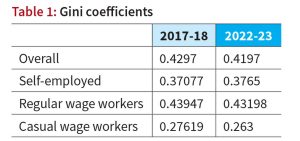
    • Reduction in Consumption Inequality: The overall Gini coefficient decreased from 0.359 in 2017-18 to 0.309 in 2022-23. Gini coefficients for ST, SC, OBC, and General categories also saw reductions, indicating a slight improvement in the equitable distribution of consumption within these communities.

    • Economic Disparities Among Social Groups: The bottom 20% decile experienced a decrease in consumption levels for ST, SC, and OBC groups, although marginally. The General category saw a more pronounced decrease in consumption levels among the poorest segment, highlighting a relative decline in consumption among this group.
    • Concentration of Wealth in Higher Deciles: Consumption has increased for all social groups in the top 20% decile. The General category experienced a significant 10% points surge in consumption between 2017-18 and 2022-23, implying a potential concentration of wealth among high-caste elites and persistent economic disparities.

    Efforts to Augment Income Generation Abilities:

    • Targeted Policies:
      • Reservation: Affirmative action programs to improve opportunities for SCs, STs, and OBCs.
      • Rural Development Initiatives: Policies aimed at enhancing infrastructure, education, and healthcare in rural areas.
      • Direct Benefit Transfers (DBT): Financial aid is directly transferred to beneficiaries to ensure they receive the intended benefits without middlemen.
    • Focus on Lower Deciles: Emphasis on increasing income generation and consumption abilities, particularly within the lower deciles of SC, ST, and OBC communities—the importance of fostering social harmony and economic stability through equitable income distribution.
    • Monitoring and Intervention: Continuous monitoring of consumption trends and economic disparities. They are implementing targeted interventions addressing the specific socio-economic challenges faced by different groups to ensure sustained progress towards economic equity.

    Way forward:

    • Strengthen and Expand Affirmative Action Programs: Enhance and rigorously implement affirmative action policies such as reservations in education and employment for SCs, STs, and OBCs. This should include increasing access to quality education, vocational training, and skill development programs to empower these communities economically and socially
    • Promote Inclusive Economic Development Initiatives: Implement comprehensive rural development initiatives that focus on improving infrastructure, healthcare, and education in marginalized areas.

    Mains PYQ: 

    Q What are the main factors responsible for gender inequality in India? Discuss the contribution of Savitribai Phule in this regard.(UPSC IAS/2020)

Join the Community

Join us across Social Media platforms.