💥UPSC 2027,2028 Mentorship (April Batch) + Access XFactor Notes & Microthemes PDF

Archives: News

  • Genetically Modified (GM) crops – cotton, mustards, etc.

    Can GM Crops promise Food Security?

    Why in the news?

    A new “gene revolution” is being promoted as a solution to increasing global food demand and the impact of climate change on agriculture.

    What does the World Economic Forum (WEF) say?

    • The WEF supports GM technology and believes it can help ensure food security for a global population expected to reach 10 billion by 2050.
    • Research into new strains of rice, maize, wheat, potato, and cassava can help these staples survive extreme weather and new climate-induced diseases.
    • Latest bioengineering technologies can help plants and soils capture and store atmospheric carbon, potentially reducing planet-heating carbon.
    • Projects are optimizing photosynthesis in crops like maize and rice to improve yields and reduce atmospheric carbon.

    Industrial-Scale GMOs Perpetuate Climate Change

    • Critics argue that GM crops sustain an “agro-industrial system” responsible for significant greenhouse gas emissions. Current food systems contribute to around one-third of global greenhouse gas emissions.
    • GMOs often involve large-scale monocultures requiring significant amounts of artificial fertilizers, pesticides, and irrigation.
    • This system is criticized for being energy-intensive and unsustainable, benefiting large agro-industrial companies that dominate the seed, food, pesticide, and fertilizer markets.

    What is the Present Scenario?

    • Over half of harvested cropland in the US uses genetically modified seeds.
    • Despite the proliferation of GM crops, food insecurity remains widespread, with 250 million people in nearly 60 countries experiencing crisis-level food insecurity.
    • Successful campaigns, like in the Philippines, have led to production moratoriums on certain GM crops due to health and ecological concerns.

    Are Non-GM Ecological Crops Also a Food Security Solution?

    • Resistance to GMOs persists, with scepticism about their safety and ecological impact.
    • Non-GM ecological approaches face challenges due to limited research support, as most funding comes from large agri-biotech companies.
    • Ecological, non-GM crops aim to produce toxic-free food and nurture biodiverse ecosystems that can resist and mitigate climate change.
    • There is ongoing development of ecological, non-GM seed, food, and nutrition systems to address food security in a warming world.

    Way forward:

    • Enhanced Regulatory Oversight and Support for Ecological Practices: Strengthen regulations to ensure the safe development, testing, and deployment of GM crops while supporting research and development of non-GM ecological farming practices.
    • Public Awareness and Inclusive Research Funding: Launch comprehensive public education campaigns to inform communities about the benefits and risks of GM and non-GM crops, promoting informed decision-making.

    Note:  India has approved the commercial cultivation of only one GM crop, Bt cotton. No GM food crop has been approved for commercial cultivation in the country.

    Mains PYQ:

    Q What are the present challenges before crop diversification? How do emerging technologies provide an opportunity for crop diversification? (UPSC IAS/2021)


  • Judicial Reforms

    What is ‘Blood Money’ in Islamic Law?

    Why in the News?

    • The Indian Government has approved the transfer of the sum of $40,000 for preliminary discussions regarding the release of Nimisha Priya from a Yemeni prison.
      • Currently, Priya’s mother is in Yemen, trying to waive her death penalty by paying “blood money” to the murdered man’s family.

    Nimisha Priya’s Case Details

    • Priya, a nurse, moved to Yemen in 2008 and married Tomy Thomas in 2011 before returning to Yemen.
    • She faced abuse and exploitation by Talal Abdo Mahdi, leading to the tragic events resulting in Mahdi’s death and Priya’s arrest.
    • The $40,000 payment aims to initiate negotiations for Priya’s release.
    • To waive the death penalty, Priya’s family may need to raise $300,000-$400,000.
    • The ‘Save Nimisha Priya International Action Council’ is fundraising to meet this requirement.

    What is Blood Money?

    • According to Islamic law, victims of crimes have a say in how criminals are to be punished.
    • In the case of murder, this principle applies to the families of victims.
    • Although murder is punished via the death penalty, the victim’s family (specifically, heirs) may choose to “forgive” the murderer in exchange for monetary compensation.
    • This is the principle of Diyya, or, as it is commonly referred to “blood money”.
    • It can be traced to the Holy Quran.
    • Applicability:
      • Blood money is applicable in cases of unintentional homicide (Qatl Khata) or accidental death, as well as in cases of bodily injury or harm caused by negligence or unintentional actions.

    Practical Implications of Blood Money

    • Scholars believe that the idea behind this is to encourage the virtue of forgiveness, while also providing reparative justice to the victims’ family.
    • The scriptures do not set any specific amount as compensation.
    • The sum is generally arrived at via negotiation between the murderer’s family/representatives and the victim’s family.
    • Some Islamic countries, however, have set minimum compensation amounts.

    Significance of Blood Money

    • Forgiveness from the victim’s family is highly encouraged and considered virtuous in Islam.
    • Blood money aims to prevent cycles of vengeance or retaliation (Qisas) that could lead to further social harm or conflict.
    • It promotes reconciliation and mutual understanding.
  • Tourism Sector

    In news: PARIVESH Portal

    Why in the News?

    • Kerala is set to construct a ropeway in Sabarimala by compensating the Forests department with alternative land at Chinnakkanal in Idukki.
    • The 2.7-kilometre-long ropeway aims to transport goods from the Pampa base station to the Sabarimala Sannidhanam.
      • Once the land is transferred for compensatory afforestation, an application will be submitted in the PARIVESH portal for clearance from the Ministry of Environment and Forests.

    What is PARIVESH Portal?

    • PARIVESH, which stands for Pro-Active and Responsive facilitation by Interactive Virtuous & Environmental Single-window Hub.
    • It is an online portal developed by the Ministry of Environment, Forests, and Climate Change.
    • It is designed to streamline and expedite the process of obtaining clearances related to environment, forests, wildlife, and Coastal Regulation Zone (CRZ) from central, state, and district-level authorities.
    • Purpose and Scope:
      • PARIVESH is intended to enhance efficiency, transparency, and accountability in the clearance processes for environment, forests, wildlife, and CRZ.
      • It aims to reduce the turnaround time for obtaining clearances and improve responsiveness through workflow automation and real-time information availability.
    • Functionality:
      • It serves as a role-based, web-based workflow application where user agencies can submit proposals online for clearances.
      • It operates on a Web Architecture using IIS as an Application Server, .NET framework, and SQL Server as a database server.

    Benefits to Users:

    • Allows for online submission and monitoring of compliance reports, including geo-tagged images of sites through a Mobile App, enhancing compliance monitoring.
    • Integrates Geographic Information System (GIS) interface for Appraisal Committees to analyze proposals efficiently.
    • Accessible 24×7 from any PC with internet connectivity, ensuring continuous availability for users across different locations and time zones.

    PYQ:

    [2019] Consider the following statements:

    The Environment Protection Act, 1986 empowers the Government of India to

    1. State the requirement of public participation in the process of environmental protection, and the procedure and manner in which it is sought.
    2. Lay down the standards for emission or discharge of environmental pollutants from various sources

    Which of the statements given above is/are correct?

    (a) 1 only

    (b) 2 only

    (c) Both 1 and 2

    (d) Neither 1 nor 2

  • 10th International Yoga Day

    Why in the News?

    Prime Minister Narendra Modi is leading the celebrations of the 10th International Day of Yoga at the Sher-e-Kashmir International Convention Centre (SKICC) in Srinagar.

    About International Day of Yoga

    • The International Day of Yoga is observed annually on June 21 worldwide since 2014 to celebrate the practice of Yoga, which originated in ancient India.
    • Yoga is renowned for its physical and mental health benefits, promoting well-being globally.
    • PM Modi proposed the idea of a Yoga Day during his UN address in September 2014.
    • In December 2014, India’s Permanent Representative to the UN introduced the draft resolution in the UN General Assembly.
    • It was adopted with support from 177 countries without a vote.
    • The first International Day of Yoga was successfully celebrated on June 21, 2015, in cities around the world, including New York, Paris, Beijing, and New Delhi.

    Why 21st June was chosen for this day?

    • The date of June 21 was chosen because it is the longest day of the year in the Northern Hemisphere, symbolizing spiritual significance across various cultures.
    • In Hindu mythology, this day marks the transition to Dakshinayana and is associated with the first yogi, Shiva, who began teaching Yoga to humanity.

    Back2Basics: Yoga

    • Yoga originated in ancient India and has its roots in Indian philosophy, spirituality, and culture.
    • The word “yoga” is derived from the Sanskrit word “yuj,” which means “to join” or “to unite.” It signifies the union of mind, body, and spirit.
    • Historical References:
      • Yoga-like practices were mentioned in the Rig-Veda, an ancient Hindu text dating back to approximately 1500 BCE.
      • References to yoga can also be found in the Upanishads, which are philosophical texts from around 800 to 400 BCE.
    • Contributions of Sage Patanjali:
      • Patanjali is considered the father of classical yoga.
      • He compiled the Yoga Sutras, a foundational text that provides a systematic and philosophical framework for the practice of yoga.
      • The Yoga Sutras were written around the 2nd century BCE.

    Eight Limbs of Yoga:

    Patanjali’s Yoga Sutras outline the eight limbs or stages of yoga, known as Ashtanga Yoga. These limbs include:

    1. Ethical principles (yamas),
    2. Positive duties or observances (niyamas)
    3. Physical postures (asanas),
    4. Breath control (pranayama),
    5. Sense withdrawal (pratyahara),
    6. Concentration (dharana),
    7. Meditation (dhyana), and
    8. Self-realization (samadhi).

    Schools and Styles: There are various schools and styles of yoga, each with its own approach and emphasis. Some popular styles include Hatha, Vinyasa, Ashtanga, Iyengar, Bikram, Kundalini, and Yin yoga.


    PYQ:

    [2014] Which one of the following pairs does not form part of the six systems of Indian Philosophy?

    (a) Mimamsa and Vedanta

    (b) Nyaya and Vaisheshika

    (c) Lokayata and Kapalika

    (d) Sankhya and Yoga

  • Wildlife Conservation Efforts

    Striped Caecilian: Limbless Amphibian spotted in Kaziranga’s fauna

    Why in the News?

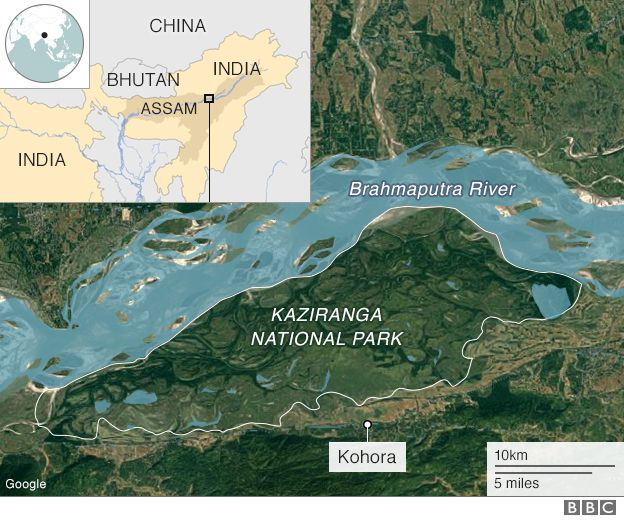
    • A limbless amphibian, the striped caecilian (Ichthyophis spp), has been newly identified within the 1,307.49 sq. km Kaziranga National Park and Tiger Reserve.
      • Assam’s wildlife officials reported its discovery during a herpetofauna survey.

    Back2Basics: Herpetofauna

    • Herpetofauna refers to a group of reptiles and amphibians collectively.
    • The term combines “herpeto-” from the Greek “herpeton,” meaning “creeping animal,” and “fauna,” referring to the animal species found in a particular region or time.
    • Herpetofauna play essential roles in ecosystems:
      • They act as both predators and prey, help regulate insect populations, and serve as indicators of environmental health.
      • They serve as environmental indicators and play significant roles in pest control.

    About Striped Caecilian

    • The Striped Caecilian (Ichthyophis spp.) is a type of limbless amphibian belonging to the family Ichthyophiidae.
    • Caecilians are often mistaken for snakes or worms due to their elongated, cylindrical bodies and lack of limbs.
    • They are primarily found in tropical regions of Africa, Asia, and the Americas.
    • They usually live underground or in moist soil habitats.

    Key features of the Striped Caecilian include:

    1. They have smooth, cylindrical bodies with a ringed or striped pattern, hence the name “striped.”
    2. Caecilians are predominantly fossorial (burrowing), spending most of their lives underground or in leaf litter. This behaviour makes them elusive and difficult to study.
    3. They are carnivorous, feeding on small invertebrates found in soil and leaf litter.
    4. Their eyesight is generally poor, and they rely on chemoreception (sensing chemicals in the environment) to locate prey.
    5. Caecilians are known for their unique reproductive strategies, which can involve live births or laying eggs. Some species exhibit parental care, with adults guarding eggs or young offspring.

    Significance: Kaziranga’s Biodiversity

    • Kaziranga National Park’s diverse ecosystem, encompassing flood plains, wetlands, grasslands, and hill tracts, provides an ideal habitat for herpetofauna.
    • The park hosts 24 amphibian species, 74 reptile species, and 21 of India’s 29 species of tortoises and freshwater turtles.

    About Kaziranga National Park

    Details
    Location Assam, India
    Geographical Features Situated between Brahmaputra River and Karbi (Mikir) Hills
    Significance Eastern Himalayan Biodiversity Hotspot
    Rivers Diphlu River runs through the park
    Highways National Highway 37 passes through the park
    Legal Status
    • Designated as a National Park in 1974.
    • UNESCO World Heritage Site (1985).
    • Important Bird Area by Birdlife International
    Key Conservation Achievements
    • Houses around 2/3rd of the world’s Great Indian One-Horned Rhinoceros.
    • Declared a Tiger Reserve due to high tiger density
    ‘Big Five’ species Great Indian One-Horned Rhino, Asian Elephant, Royal Bengal Tiger, Asiatic Water Buffalo, Swamp Deer
    Aquatic Species Gangetic River Dolphin
    Vegetation Wet Alluvial Grasslands, Tropical Moist Deciduous Forests, Semi-Evergreen

    Forests


    PYQ:

    [2024] The organisms “Cicada, Froghopper and Pond skater are:

    (a) Birds

    (b) Fish

    (c) Insects

    (d) Reptiles

  • Insolvency and Bankruptcy Code

    Proposed Amendments to Insolvency Resolution Process by IBBI

    1. Why in the News?
    • The Insolvency and Bankruptcy Board of India (IBBI) has proposed amendments to the Insolvency Resolution Process for Corporate Process regulations to enhance efficiency, reduce costs, and increase transparency.
      • This aims to align with the Companies (Registered Valuers and Valuation) Rules and streamline the Corporate Insolvency Resolution Process (CIRP).

    Do You Know?

    Since its enactment, the IBBI has achieved notable successes in resolving insolvency cases and recovering debts:

    • Debt Resolution: The IBC has successfully resolved Rs. 3.16 lakh crore of debt across 808 cases within seven years (as per CRISIL).
    • Higher Recovery Rates: Creditors have realized an average of 32% of admitted claims and 169% of the liquidation value through IBC proceedings, demonstrating higher recovery rates compared to previous mechanisms.
    • Behavioural Change: Companies have been proactively involved in the settlement of debts amounting to over Rs. 9 lakh crore before cases enter formal insolvency processes.

    Proposed amendments by IBBI

    • Simplified Valuation: Instead of separate reports for different types of assets, there will be one comprehensive valuation report covering the entire company. This helps in keeping valuation consistent and clear.
    • Single Valuer for Small Companies: For smaller companies with assets up to ₹1,000 crore and MSMEs, only one valuer will be appointed to determine the company’s value unless there’s a good reason for more than one.
    • Option for Two Valuers: If needed, the creditors’ committee can choose to have two valuers to deal with complex cases, but they have to explain why.
    • Faster Appointment of Representatives: Representatives appointed to represent creditors can start participating in meetings as soon as their application is submitted, to avoid delays.
    • Guarantees in Resolution Plans: If a resolution plan suggests releasing guarantees, it won’t stop creditors from going after guarantors or using the guarantees according to their agreements.

    About Insolvency and Bankruptcy Board of India (IBBI)

    Details
    Establishment Established on 1st October 2016 under the Insolvency and Bankruptcy Code (IBC), 2016.

    • Objective: To promote a creditor-driven insolvency resolution process and enhance India’s credit culture and business environment.
    Responsibility Responsible for implementing and enforcing the IBC,

    IBC consolidated laws related to insolvency resolution for individuals, partnership firms, and corporate entities.

    Functions
    • Regulates insolvency professionals and processes.
    • Oversees insolvency professional agencies, entities, and information utilities.
    • Enforces rules for corporate and individual insolvency resolution, liquidation, and bankruptcy.
    • Sets eligibility criteria and curriculum for insolvency professionals.
    • Collects and maintains records on insolvency cases and disseminates related information.
    Composition Total 10 members

    • Chairperson appointed by the Central Government.
    • Three members from central government officers (Ministries of Finance, Corporate Affairs, Law).
    • One member nominated by RBI (Reserve Bank of India).
    • Five other members nominated by the Central Government, including at least three full-time members.

    The term is 5 years or until age 65, with reappointment possible.

    Adjudicating Authorities under the IBC:

    Under the IBC, two primary adjudicating authorities handle insolvency cases based on the nature of the entity:

    • National Company Law Tribunal (NCLT): NCLT adjudicates insolvency cases involving corporate entities and other limited liability entities.
    • Debt Recovery Tribunal (DRT): DRT has jurisdiction over insolvency cases concerning individuals and partnership firms, excluding Limited Liability Partnerships (LLPs).

    Recent Amendments to the IBC:

    • Approval for segregated sale of assets or resolution plans.
    • Increase in the number of NCLT benches to 16 for faster adjudication.
    • Extension of timelines for filing claims to accommodate procedural complexities.
    • Sector-specific amendments tailored to address unique challenges in various industries.
    • Modifications in procedural forms such as Form G2 to enhance clarity and efficiency in insolvency proceedings.

    PYQ:

    [2017] Which of the following statements best describes the term ‘Scheme for Sustainable Structuring of Stressed Assets (S4A)’, recently seen in the news?

    (a) It is a procedure for considering the ecological costs of developmental schemes formulated by the Government.

    (b) It is a scheme of RBI for reworking the financial structure of big corporate entities facing genuine difficulties.

    (c) It is a disinvestment plan of the Government regarding Central Public Sector Undertakings.

    (d) It is an important provision in ‘The Insolvency and Bankruptcy Code’ recently implemented by the Government.

  • Sri Lanka’s Constitution – Strides in the Right Direction

    A story of displacement to one of empowerment

    Why in the news?

    Over 45% of Sri Lankan Tamils in Tamil Nadu’s rehabilitation camps were born in India, per a recent interim report by a State government panel.

    Causes of Tamilian Displacement

    • Ethnocentric Violence: The primary cause of displacement was the ethnocentric violence in Sri Lanka, particularly against the Tamil population. The violence led to significant loss of life and property, forcing Tamils to flee for their safety.
    • Proximity and Linguistic Commonality: Many Tamils chose India, particularly Tamil Nadu, due to its geographical proximity and the shared Tamil language, making it a more accessible and familiar refuge.

    Government Initiatives

    • Provision of Basic Amenities: Refugees receive free housing, electricity, water, and monthly food rations. Additionally, they get a monthly cash dole.
    • Educational Support: Access to government schools is provided, along with a monthly stipend of ₹1,000 for those pursuing higher education. One-time educational support includes ₹12,000 for arts and science students and ₹50,000 for engineering students.
    • Welfare Schemes: Refugees are eligible for various welfare schemes available to the people of Tamil Nadu, including the women’s rights scheme providing ₹1,000 per month.
    • New Housing: Recently, the Government of Tamil Nadu has constructed new homes for about 5,000 Sri Lankan Tamils.
    • Renaming Camps: In an effort to destigmatise, the refugee camps were renamed as Sri Lankan Tamil Rehabilitation Camps in a government order dated October 28, 2021.

    Bringing Back Dignity

    • Educational Achievements: The welfare schemes have led to 100% school enrollment and over 4,500 graduates from the camps.
    • Breaking Caste Barriers: As refugees, Sri Lankan Tamils are categorized under the Refugee category, which has helped in break free from caste barriers.
    • Government Recognition: The renaming of refugee camps to Sri Lankan Tamil Rehabilitation Camps is a step towards restoring the dignity of the displaced population.
    • Advocacy and Support: Continuous advocacy by organizations like OfERR, support from donors, and political parties have facilitated the patronage extended by the Government of Tamil Nadu and the Government of India.
    • Potential for Future Contribution: The transformation of refugees into resource persons capable of contributing to nation-building when they return to Sri Lanka.

    Current Challenges

    • Legal Limitations: Indian laws currently do not permit local integration by granting citizenship to Sri Lankan refugees.
    • Economic and Health Crises: The COVID-19 pandemic and the economic crisis in Sri Lanka have slowed down the process of refugees returning to their homeland.
    • Uncertain Future: Despite the improvements in their living conditions and dignity, Sri Lankan Tamils in India continue to live with uncertainty about their long-term future.

    Way forward:

    • Amend Legal Frameworks: Advocate for amendments in Indian laws to allow for local integration and citizenship for long-term refugees, providing them with a secure legal status and equal rights.
    • Strengthen Economic Opportunities: Develop targeted economic empowerment programs, including vocational training and employment initiatives, to enhance self-sufficiency and reduce dependency on state support, ensuring a sustainable livelihood for the refugees.

    Mains PYQ: 

    Q ‘India is an age-old friend of Sri Lanka.’ Discuss India’s role in the recent crisis in Sri Lanka in the light of the preceding statement. (UPSC IAS/2022)

  • Rohingya Conflict

    Invisible suffering of Rohingya refugees

    Why in the news?

    International attention is urgently needed to address the worsening mental health crisis among Rohingya refugees in India.

    About Rohingya Sufferings

    • Trauma and Mental Health: Rohingya refugees in Delhi experience severe trauma, including anxiety, dissociative episodes, and depression, often due to past experiences in Myanmar and ongoing re-traumatization from living conditions and violence in India.
    • Living Conditions: Rohingya refugees live in shanty-like huts prone to accidental and intentionally set fires, leading to constant fear and re-traumatization.
    • Discrimination and Legal Status: Officially labelled as “illegal immigrants,” Rohingya refugees face severe discrimination in India. They are denied full access to education, healthcare, legal services, and formal employment opportunities.
    • Detention and Deportation: Fear of arbitrary detention and deportation is widespread, despite many having UNHCR refugee cards. At least 500 Rohingya, including women and children, are detained in centres across India without criminal charges, some for decades.
    • Civil Society and Funding: Civil society organizations working with Rohingya refugees face funding challenges due to cancelled FCRA licenses. Many support programs have shut down or reduced operations, leaving few UNHCR-supported organizations to cautiously continue their work.

    About unsolved Tibetan issue

    The Tibetan issue in India is a complex and contentious topic with historical, cultural, and political implications.

    Historical Background

    • Pre-20th Century: Tibet recognized itself as an autonomous nation under Chinese protection, while China claimed formal incorporation into its borders during the Yuan Dynasty.
    • 20th Century: The relationship between Tibet and China became increasingly strained, culminating in the 1950 Chinese invasion of Tibet and the subsequent annexation of the region.

    Ongoing Challenges

    • Tibetan Independence Movement: The Tibetan independence movement continues to push for greater autonomy and recognition of Tibet as a sovereign nation.
    • Chinese Censorship and Suppression: The Chinese government maintains strict control over information and suppresses any dissent or opposition to its rule in Tibet.

     Current Situation

    • Declining Refugee Numbers: Over the last seven years, the Tibetan refugee community in India has dropped by 44 percent, from around 150,000 in 2011 to 85,000, according to Indian government data.
    • Economic Uncertainty: Many Tibetans face economic uncertainty due to limited job opportunities and restrictions on property ownership and bank credit.
    • Lack of Recognition: Tibetans are not officially recognized as refugees in India, instead being designated as “foreigners” under Indian law.
    • No National Refugee Law: India has no national refugee law, and its policies are not in accordance with international standards.

    Way forward: 

    • Implement National Refugee Law: Advocate for the establishment of a comprehensive national refugee law in India that aligns with international standards, ensuring legal recognition, protection, and access to basic rights and services for all refugees, including Rohingya and Tibetans.
    • Enhance Mental Health Support: Develop and fund specialized mental health programs for refugees, focusing on trauma-informed care. This includes training local healthcare providers, increasing access to mental health services, and creating safe spaces for refugees to receive consistent psychological support.

    Mains PYQ:

    Q Refugees should not be turned back to the country where they would face persecution or human right violation”. Examine the statement with reference to the ethical dimension being violated by the nation claiming to be democratic with an open society. (UPSC IAS/2021)

  • Climate Change Impact on India and World – International Reports, Key Observations, etc.

    What are the findings of the 2024 Hindu Kush Himalayas snow update? | Explained

    Why in the news?

    In 2024, the Hindu Kush Himalaya snow update from the International Centre for Integrated Mountain Development (ICIMOD) reported that the Ganga River basin, India’s largest, experienced its lowest recorded snow persistence.

    What does the report by the International Centre for Integrated Mountain Development highlight?

    • Record Low Snow Persistence: The Ganga River basin, along with the Brahmaputra and Indus basins, reached record low snow persistence in 2024.
    • Significant Declines: The Ganga basin recorded its lowest snow persistence in 22 years, 17% below the long-term historical average. The Brahmaputra basin was 14.6% below normal, and the Indus basin fell 23.3% below normal.
    • Broader Impacts: Similar low snow persistence was recorded in the Amu Darya and Helmand river basins, significantly below normal levels.

    How important is snow persistence?

    • Water Supply: Snow persistence, the fraction of time snow is on the ground, is crucial as its melt provides significant water to streams and ecosystems.
    • Runoff Contribution: Snowmelt contributes 23% of the runoff to the HKH region’s 12 major river basins, supporting nearly one-fourth of the world’s population.
    • Regional Significance: The HKH mountains, known as the “water towers of Asia,” are vital for 10 major river systems, including the Ganga, Brahmaputra, and Indus, which are essential freshwater sources for millions.

    How much of a role does climate change play in river basins receiving low levels of snowmelt this year?

    • Weak Western Disturbances: Lower persistence in 2024 was primarily due to weak Western disturbances, which are low-pressure systems bringing rain and snow to the HKH region.
    • Global Warming Effects: Climate change and global warming destabilize weather patterns, exacerbating prolonged La Niña–El Niño conditions, and influencing the arrival and intensity of western disturbances.
    • High Sea-Surface Temperatures: Persistently high sea-surface temperatures in the regions where western disturbances originate disrupt their formation, leading to reduced snowfall.
    •  Changed the weather system: The pattern of high temperatures and altered weather systems explains both the record low snow persistence in 2024 and similar historical records.

    Way forward:

    • Integrated Water Management: Develop comprehensive water management plans that incorporate predictions of reduced snowmelt. This includes optimising reservoir operations, prioritising water allocation, and implementing efficient irrigation practices to mitigate water scarcity risks.
    • Transboundary Collaboration: Foster regional cooperation among countries sharing river basins affected by declining snow persistence. Develop joint strategies for sustainable water management, disaster risk reduction, and climate change adaptation. This includes sharing hydrological data, coordinating emergency responses, and implementing mutual benefit agreements.
    • Reducing Greenhouse Gas Emissions: Strengthen efforts to mitigate climate change by reducing greenhouse gas emissions at local, national, and international levels. Promote renewable energy sources and sustainable practices to curb global warming, thereby stabilising weather patterns crucial for snowfall.

    Mains PYQ:

    Q Climate change’ is a global problem. How India will be affected by climate change? How Himalayan and coastal states of India will be affected by climate change? (15) (UPSC IAS/2017)

  • LGBT Rights – Transgender Bill, Sec. 377, etc.

    Thailand to become third Asian country to legalize Same-sex Marriage  

    Why in the News?

    On Tuesday, June 18, the Marriage Equality Bill was approved by the Thai Senate, the upper house of Thailand’s National Assembly, with overwhelming support.

    What does the Bill entail? 

    • Gender-Neutral Language: The bill replaces gender-specific terms such as “husbands” and “wives” in Thai marriage laws with gender-neutral terms like “spouse” and “person”. This change allows any two individuals, regardless of their gender, to marry each other.
    • Equal Rights: Same-sex couples will have the same rights as heterosexual couples in various legal and practical aspects, including:
      • Adoption rights: Same-sex couples can adopt children.
      • Inheritance rights: They are entitled to inherit property from their spouses.
      • Tax benefits: They will receive similar tax benefits as heterosexual married couples.
      • Legal decision-making: They can make legal decisions on behalf of their spouses, such as consenting to medical treatment.
    • Recognition and Protection: The bill ensures that same-sex marriages are legally recognised and protected, providing stability and legal security to LGBTQ+ couples in Thailand.
    • Public Support: The bill’s passage reflects growing societal acceptance and support for LGBTQ+ rights in Thailand. Public opinion has been largely positive, with significant cross-party support in the Thai Senate and lower house of the National Assembly.

    What about other Asian countries?

    • Criminalization: Many Asian countries, beyond those mentioned (Thailand, Taiwan, Nepal), still criminalize same-sex sexual activity. This includes countries like Malaysia, Myanmar, Pakistan, and Sri Lanka, where laws derived from colonial-era penal codes often penalize homosexuality with imprisonment or fines.
    • Lack of Legal Recognition: Most Asian nations do not legally recognize same-sex marriages or partnerships.
      • Even in countries where same-sex relations are not explicitly criminalized, there is often no legal framework for marriage or civil unions for LGBTQ+ individuals.
    • Legal Battles: In countries like India, legal battles continue as activists seek to overturn discriminatory laws and secure legal recognition for same-sex relationships, including marriage.
    • International Pressure: International human rights organizations and diplomatic efforts sometimes exert pressure on Asian governments to improve LGBTQ+ rights. However, progress is often slow and faces strong domestic resistance.

    Note: Currently, same-sex marriage is legal in 36 countries (not including Thailand) globally, according to LGBTQ+ rights advocacy Human Rights Campaign.

    Way forward: 

    • Legal Challenges and Reform: Support ongoing legal challenges in courts across Asia to overturn discriminatory laws and promote legal recognition of same-sex relationships. This includes advocating for legislative reforms that protect LGBTQ+ rights, including the recognition of same-sex marriages or civil unions.
    • International Pressure and Diplomacy: Encourage international human rights bodies, governments, and diplomatic missions to engage with Asian countries diplomatically, urging them to uphold international human rights standards, including LGBTQ+ rights.

Join the Community

Join us across Social Media platforms.