💥UPSC 2026, 2027, 2028 UAP Mentorship (March Batch) + Access XFactor Notes & Microthemes PDF

Archives: News

  • Electoral Reforms In India

    Reading the lower voter turnout scenario

    Why in the News?

    Low voter turnout has been a notable trend in the initial phases of the ongoing 2024 general elections in India which reflects the shift in dynamics of democratic politics.

    American Scenario during Past Elections:

    • Conventional Wisdom: In the U.S., increased voter turnout is traditionally believed to benefit Democrats. For example, it was argued that higher voter turnout could have altered the outcome in favour of Hillary Clinton in states like Pennsylvania, Michigan, and Wisconsin.
      • According to Daron R. Shaw and John R. Petrocik in “The Turnout Myth” (2020), Hillary Clinton’s support did not significantly vary with voter turnout.
    • Class Cleavages: The advantage Democrats gained from higher turnout has decreased since 1960 due to the erosion of class-based voting patterns.
    • Simulation Studies: Research by Michael D. Martinez and Jeff Gill, and later by Spencer Goidel, Thiago Moreira, and Brenna Armstrong, used simulations to predict how changes in turnout would affect election outcomes. In recent studies, the impact of increased turnout on party advantage has varied over time.

    Perception About the Party’s Prospects:

    • High confidence in a party’s victory can deter voters from participating, thinking their vote is unnecessary.
    • Polls showing Bill Clinton’s like victory during the 1996 US Elections,  led to low voter turnout, with some Clinton supporters abstaining because they believed his win was assured.
    • While both Clinton and Dole supporters showed reluctance to vote due to predicted outcomes, it led to higher abstention to vote for them.

    Indian Scenario:

    • Class and Caste based: The 2019 Indian election saw a significant jump in the SC vote for the BJP, from 24% in 2014 to 34% in 2019, indicating a shift in voting patterns among Scheduled Castes. The Upper Caste Poor voted 49% BJP and 9% Congress, while Poor OBCs and Poor STs also followed a similar pattern. Poor Muslims, however, voted 8% BJP and 30% Congress.
    • Religion and Language-based: Religion is a significant factor, with political parties often indulging in communal propaganda to exploit religious sentiments. Language also plays a role, with parties arousing linguistic feelings to influence voter decisions.
    • Region and Personality based: Regionalism and sub-regionalism are important, with regional parties appealing to regional identities and sentiments. The charismatic personalities of party leaders, such as Jawaharlal Nehru, Indira Gandhi, Rajiv Gandhi, Atal Bihari Vajpayee, and Narendra Modi, have significantly influenced voter decisions.
    • Voter turnout trends in India have fluctuated, with no consistent correlation to incumbent advantage or disadvantage.
    • It is generally believed that higher voter turnout is detrimental to incumbents, though recent elections (2014 and 2019) saw high turnout with incumbent victories.
    • The voting patterns of habitual versus non-habitual voters likely vary significantly, influenced by the diverse and multi-party nature of Indian politics.
    • Decreased turnout in the 2024 general elections could be due to factors like weather, COVID-19, economic issues, and voter apathy, potentially impacting different parties in varied ways.

    Conclusion

    The role of non-habitual voters in Indian elections adds an element of unpredictability, making it difficult to draw firm conclusions until election results are finalised.

    Mains PYQ:

    Q Individual Parliamentarian’s role as the national law maker is on a decline, which in turn, has adversely impacted the quality of debates and their outcome. Discuss. (UPSC IAS/2019)

  • Historical and Archaeological Findings in News

    Oldest Known Human Viruses Discovered In 50,000-Year-Old Neanderthal Bones

    Why in the News?

    • Researchers found traces of many present-day viruses in the bones of two Neanderthals who lived 50,000 years ago, providing a new perspective on their extinction.

    Breakthrough Study on Neanderthals 

    • Ancient viruses in Neanderthal DNA samples from skeletons found in Russia’s Chagyrskaya cave.
    • The study detected fragments resembling three modern viruses: adenovirus (common colds), herpesvirus (cold sores), and papillomavirus (genital warts).

    Health Impacts Inherited in Modern Human Beings:

    Modern humans inherit various health impacts from Neanderthals, including skin conditions, allergies, metabolism, nicotine addiction, mood disorders, sleep patterns, blood clotting, sense of smell, and UV radiation response.

    Who were the Neanderthals?

      • Neanderthals were a distinct species of hominins that lived in Europe and parts of Asia around 400,000 to 40,000 years ago during the Middle to Late Pleistocene Epochs.
      • Their evidence was first found in 1856 in the Neander Valley in present-day Germany.
    • Physical Features:
        • Neanderthals were robustly built, with a stocky and muscular frame adapted to cold climates.
        • They had large brains, comparable in size to modern humans, indicating advanced cognitive abilities.
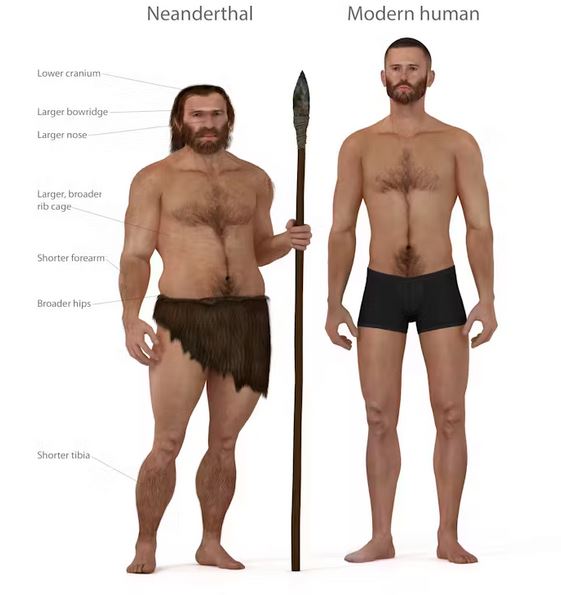
        • Distinctive features included a prominent brow ridge, large nose, and a receding chin.
    • Social Life:
        • Neanderthals were skilled hunters and gatherers, using tools such as stone flakes, scrapers, and spears for hunting and butchering animals.
        • They utilized fire for cooking, warmth, and protection, as evidenced by the presence of hearths in their archaeological sites.
        • Evidence suggests they had complex social structures and engaged in rituals and symbolic behaviours, including burying their dead with grave goods.
    • Habitat and Distribution:
    • Neanderthals inhabited a wide range of environments, including open grasslands, forests, and even cold tundra regions.
        • Their range extended from Western Europe to Central Asia, with evidence of populations in regions such as Spain, France, Germany, Croatia, and the Middle East.
    • Interactions with Modern Humans:
      • Neanderthals coexisted with early modern humans (Homo sapiens) for thousands of years in Europe and Asia.
      • There is evidence of interbreeding between Neanderthals and modern humans, with genetic studies indicating that non-African humans carry about 1-2% Neanderthal DNA.

    PYQ:

    [2019] The word ‘Denisovan’ is sometimes mentioned in media in reference to

    (a) Fossils of a kind of dinosaurs

    (b) An early human species

    (c) A cave system found in North-East India

    (d) A geological period in the history of Indian subcontinent

  • Zoonotic Diseases: Medical Sciences Involved & Preventive Measures

    Ferroptosis Cases in Severe Covid Patients

    Why in the News?

    Columbia University study on COVID-19 fatalities found ferroptosis as the main cause of lung cell death, advancing understanding of lung disease development.

    What is Ferroptosis?

    • Ferroptosis is a type of regulated cell death characterized by the iron-dependent accumulation of lipid peroxides to lethal levels.

    Other forms of cell death: 

    1. Apoptosis (highly regulated process that occurs in multicellular organisms to eliminate unwanted or damaged cells without causing inflammation),
    2. Necrosis (cell death characterized by rapid and uncontrolled cell lysis, often accompanied by inflammation and tissue damage).
    3. Autophagy (involves the degradation and recycling of cellular components through lysosomal machinery).

    Mechanism of Ferroptosis:

    The precise molecular mechanism underlying ferroptosis is still being elucidated, but it involves the deregulation of iron metabolism and lipid peroxidation. Here’s a simplified overview of how ferroptosis occurs:

    1. Iron Accumulation: Ferroptosis is characterized by the accumulation of iron within cells, particularly in the form of labile iron pools. Excess iron can lead to the generation of reactive oxygen species (ROS) through Fenton chemistry.
    2. Lipid Peroxidation: ROS generated from excess iron promotes lipid peroxidation, particularly of polyunsaturated fatty acids (PUFAs) within cell membranes. Lipid peroxides accumulate and propagate, leading to membrane damage and loss of membrane integrity.
    3. Glutathione Depletion: Glutathione (GSH) is an antioxidant that helps to neutralize ROS and prevent lipid peroxidation. In ferroptosis, there is a depletion of cellular GSH levels, which impairs the cell’s ability to counteract oxidative stress.
    4. GPX4 Inhibition: Glutathione peroxidase 4 (GPX4) is an enzyme that catalyzes the reduction of lipid hydroperoxides to their corresponding alcohols, thereby protecting cells from lipid peroxidation. In ferroptosis, GPX4 activity is inhibited, leading to the accumulation of lipid peroxides and cell death.
    5. Mitochondrial Dysfunction: Ferroptosis is associated with mitochondrial dysfunction, including alterations in mitochondrial membrane potential and morphology, as well as disruption of mitochondrial metabolism and bioenergetics.
    6. Cellular Consequences: The accumulation of lipid peroxides and mitochondrial dysfunction ultimately leads to cellular damage, loss of cell membrane integrity, and cell death by ferroptosis.

    Significance of the Study

    • Targeting and preventing ferroptosis could offer novel treatment avenues for COVID-19 lung disease and its possible future mutations.
    • Inhibiting this form of cell death may help improve the treatment outcomes for severe cases of COVID-19.

    PYQ:

    [2020] COVID-19 pandemic has caused unprecedented devastation worldwide. However, technological advancements are being availed readily to win over the crisis. Give an account of how technology was sought to aid management of the pandemic.

  • Global Geological And Climatic Events

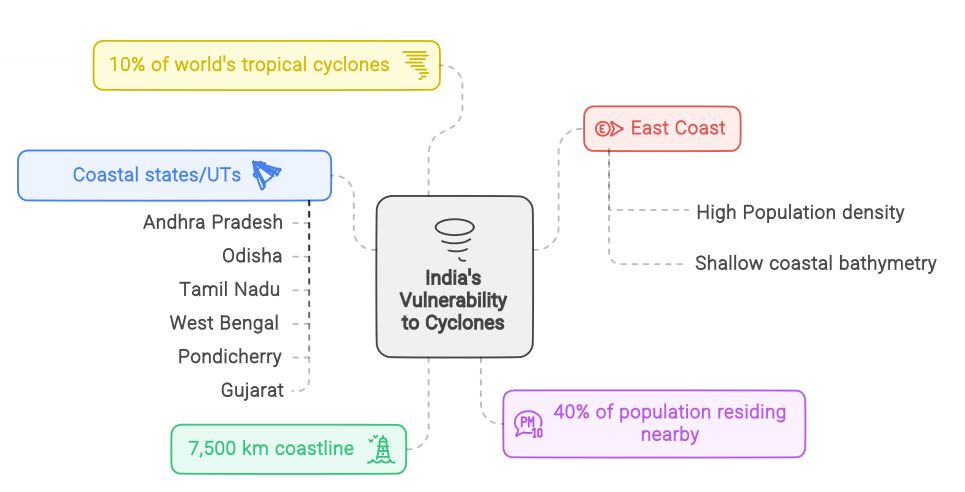
    Cyclone Remal to make landfall

    Why in the News?

    • Cyclone Remal is forecasted to make landfall between Sagar Island in West Bengal and Bangladesh’s Khepupara on Sunday midnight.
    • The name ‘Remal’ originates from Oman and means ‘sand’ in Arabic.

    What are Cyclones?

    • Cyclones are wind systems rotating inwardly towards an area of low atmospheric pressure. They are categorised into Tropical (Temperature-induced) and Temperate (extra-tropical) cyclones(airmass-induced).
    • Formation Conditions: Tropical cyclones originate in warm regions, requiring conditions such as
    1. Warm sea surface (> 27°C),
    2. Coriolis Force,
    3. Pre-existing low-pressure systems,
    4. Small vertical wind speed differences, and
    5. Upper air divergence.

    Characteristics of Tropical Cyclones:

    • They form over warm water bodies due to energy derived from the condensation of warm water within cumulonimbus clouds.
    • Wind rotation is influenced by the Coriolis force, resulting in anti-clockwise rotation in the northern hemisphere and clockwise in the southern hemisphere.

    Regional Movement of Cyclones:

    • In the northern hemisphere, cyclones initially move westward under earth rotation and the Easterlies.
    • As they progress towards higher latitudes, the Coriolis force deflects them rightward, towards north and later east.
    • By 30° latitude, the diminished warmth halts cyclone activity.

    Naming of Cyclones: 

    • Responsibility of RSMCs and TCWCs: The naming of cyclones that form in every ocean basin across the world is carried out by the Regional Specialised Meteorological Centres (RSMCs) and Tropical Cyclone Warning Centres (TCWCs).
    • Procedure in the North Indian Ocean: For north Indian Ocean including Bay of Bengal and Arabian Sea, the RSMC, New Delhi assigns the name to tropical cyclones following a standard procedure.
    • Agreement by WMO/ESCAP Panel: The WMO/ESCAP Panel on Tropical Cyclones in 2000 agreed in principle to assign names to the tropical cyclones in the Bay of Bengal and Arabian Sea.
    • Selection Process: Each country would sent their suggestions, based on which the Panel would finalise a list.
    • Retirement of Names: Generally, names of some storms that cause widespread damage and deaths are usually retired and are not brought back or reused later, at least for 10 years. These names are then replaced with new names.
    • Unique Policy for North Indian Ocean: Unlike in other regions, the names of tropical cyclones over the north Indian Ocean once used, will cease to be used again.

    Destruction Caused by Cyclones:

    • Strong Winds/Squall: Cyclones cause infrastructure damage through high-speed winds.
    • Torrential Rains and Inland Flooding: Heavy rainfall leads to floods, soil erosion, and embankment weakening.
    • Storm Surge: Abnormal sea level rise inundates coastal regions, causing floods, erosion, and destruction.

    PYQ:

    [2015] In the South Atlantic and South Eastern Pacific regions in tropical latitudes, cyclone does not originate. What is the main reason behind this?

    (a) Sea Surface temperature are low

    (b) Inter Tropical Convergence Zone seldom occurs

    (c) Coriolis force is too weak

    (d) Absence of land in those regions

  • The Crisis In The Middle East

    Arab League demands UN Peacekeepers in Palestine

    Why in the News?

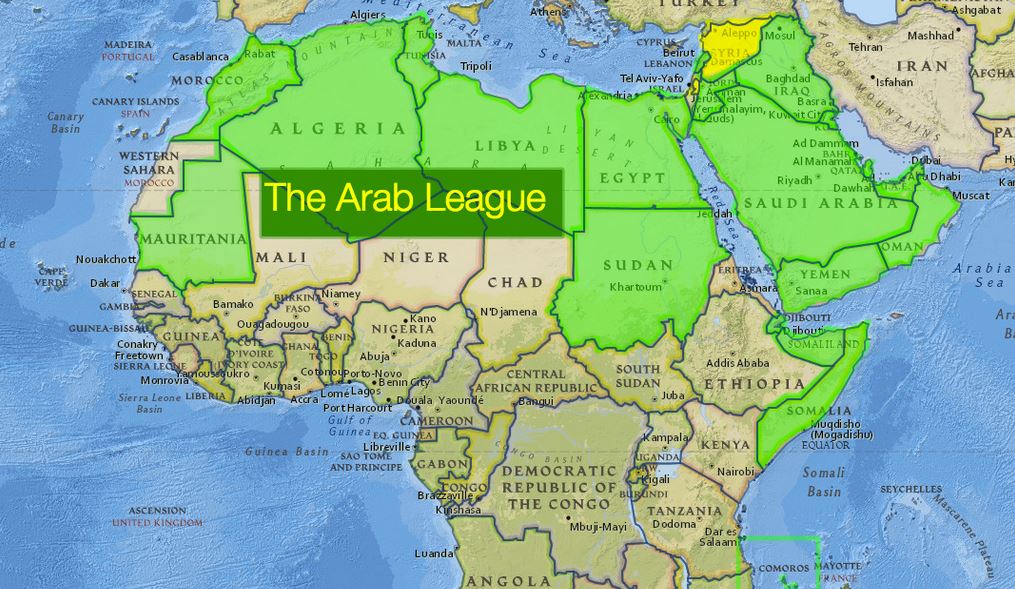
    The Arab League called for UN peacekeeping forces in the Palestinian territories during a summit in Bahrain’s Manama. The “Manama Declaration” issued by the league sought UNPKF in the occupied Palestinian territories” until a two-state solution is implemented.

    Back2Basics: United Nations Peacekeeping

    • UN Peacekeeping is a collective effort by the international community, led by the United Nations, to maintain peace and security in regions affected by conflict.
    • UN peacekeepers are often referred to as Blue Berets or Blue Helmets because of their light blue berets or helmets) can include soldiers, police officers, and civilian personnel.

    History:

    • The concept of UN peacekeeping emerged in the aftermath of World War II, with the establishment of the United Nations in 1945.
    • The first UN peacekeeping mission was established in 1948, following the Arab-Israeli War, to monitor the ceasefire between Israel and its Arab neighbours.
      • This mission, known as the United Nations Truce Supervision Organization (UNTSO), set the precedent for future peacekeeping operations.
    • Since then, the scope and complexity of UN peacekeeping have evolved significantly, with operations conducted across the globe in regions affected by conflict, civil war, and humanitarian crises.

    Operations:

    • UN Peacekeeping is guided by three basic principles:
    1. Consent of the parties
    2. Impartiality
    3. Non-use of force except in self-defence and defence of the mandate
    • UN peacekeeping operations are deployed with the consent of the main parties to the conflict. It can be deployed at the request of the parties involved in a conflict or with the authorisation of the UN Security Council.
    • The objectives may vary depending on the specific context but often include monitoring ceasefires, disarming combatants, facilitating the delivery of humanitarian aid, promoting human rights, and supporting the establishment of democratic governance structures.
    • UN peacekeeping operations operate under the principles of impartiality, consent of the parties, and non-use of force except in self-defence and defence of the mandate.

    India’s Role:

    • India has been one of the largest contributors to UN peacekeeping operations since their inception.
    • India has contributed nearly 195,000 troops, the largest number from any country, and participated in more than 49 missions and 168 supreme sacrifices while serving in UN missions.

    About Arab League

    Details
    Establishment Founded on March 22, 1945, in Cairo, Egypt.
    Founding Members Egypt, Iraq, Jordan, Lebanon, Saudi Arabia, Syria.
    Objective Promote economic, cultural, political, and military cooperation among member states. Safeguard independence and sovereignty.
    Functions 
    1. Operates on consensus among member states. Decisions are made through consultations and discussions.
    2. Regular meetings among Arab leaders to address regional issues, formulate policies, and coordinate actions.
    3. Specialised committees and councils address specific areas of cooperation, such as economic affairs, social affairs, and defence.
    Member States Egypt, Iraq, Jordan, Lebanon, Saudi Arabia, Syria, Libya, Tunisia, Algeria, Bahrain, Comoros, Djibouti, Kuwait, Mauritania, Morocco, Oman, Palestine, Qatar, Somalia, Sudan, United Arab Emirates, and Yemen.
    Observer Nations
    • Non-Arab countries with observer status include Brazil, Eritrea, India, Venezuela, and others.
    • No voting rights are accorded to Observer nations.
    Important Achievements
    • Proposal of the Arab Peace Initiative in 2002.
    • Coordination of military efforts in various conflicts.
    • Promotion of economic cooperation through initiatives such as the Arab Free Trade Area.
    • Facilitation of cultural and educational exchange programs among member states.
    Challenges Internal divisions, Differences of opinion over the Palestinian-Israeli conflict etc.


    PYQ:

    [2014] Recently, a series of uprisings of people referred to as ‘Arab Spring’ originally started from

    (a) Egypt

    (b) Lebanon

    (c) Syria

    (d) Tunisia

  • Cyber Security – CERTs, Policy, etc

    Southeast Asia origin of at least 45% cyber frauds targeting Indians

    Why in the News?

    Over 5,000 unemployed/employed Indians are reportedly trapped in Cambodia and forced to work into cyber fraud, resulting in an estimated Rs 500 crore loss in India over six months.

    Present Cybersecurity Status of India:

    • India has secured 10th rank in the Global Cybersecurity Index (GCI) 2020 by ITU (International Telecommunication Union) by moving up 37 places.
    • The US topped (1st), followed by the UK (United Kingdom) and Saudi Arabia tied for the second position together.
    • India secured the fourth position in the Asia Pacific region.

    What is the Budapest Convention? Is India a party to it?

    • The Council of Europe’s (CoE) Cybercrime Convention, commonly known as the Budapest Convention, was opened for signature in 2001 and came into force in 2004.
    • It is the only legally binding international multilateral treaty on cybercrime, coordinating investigations between nations and criminalizing specific cybercrime activities.
    • Budapest Convention is supplemented by a Protocol addressing xenophobia and racism committed through computer systems.
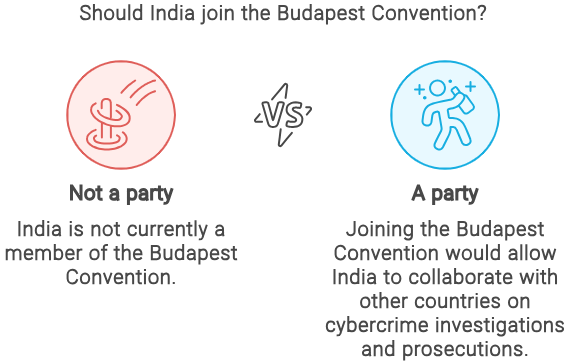
    • As of now, the Convention has 56 member countries, including the US and UK. However, India is not a party to the Budapest Convention.
    Indian Nationals vs. Organised Crimes in the South Asian Region:

    • Most web applications use the Chinese language to perform financial fraud, thereby not ruling out the Chinese connection.
    • Financial crimes such as digital arrest, stock market scams, investment scams, and romance or dating scams account for a loss of over ₹1,776 crores in 89,054 cases in the first four months of the year spurt in organized crime from Southeast Asia.
    • Numerous Indian nationals employed within a suspected fraudulent operation based in Sihanouk City, Cambodia, have voiced their grievances against their employers.

    What are the causes of the increase in Organized Financial Fraud?

    • Weak Prevention Measures:  Online Platforms in India at present account for 89% of all fraud incidents, with 40% of companies losing over $1 million.
    • Rapid Digitization and Payment Systems: After the pandemic, there was a massive shift, with the average Indian company now operating at least more than two online platforms in the normal course of business.
      • This has made it easier for fraudsters to operate anonymously and target a large number of victims.
    • Informal Investigation and Prosecution: India lacks the standardized data formats protocol system from the core banks itself. This makes it difficult to track devices and jurisdictional issues in interstate cases.
    • Lack of Deterrence: With only 26% of victims able to recover lost funds, fraudsters are encouraged to target individuals and organizations. The total value of frauds reported in 2021-22 was a staggering ₹60,414 crore.
    • Lack of Awareness: Sharing sensitive financial details with others or storing them insecurely it makes a common man vulnerable to fraud.

    What are the Initiatives taken by the government to tackle cyber crimes in India?

    • National Cyber Security Strategy 2020: Currently being formulated to enhance cyber awareness and strengthen cybersecurity through more rigorous audits.
    • Draft Personal Data Protection Bill, 2018: Based on the recommendations of the Justice BN Srikrishna Committee, this bill aims to secure citizens’ data.
    • Indian Cyber Crime Coordination Centre (I4C): Approved in October 2018, this initiative addresses all types of cybercrimes in a comprehensive and coordinated manner.
    • National Computer Emergency Response Team (CERT-In): Functions as the nodal agency for coordinating all cybersecurity efforts, emergency responses, and crisis management.
    • National Critical Information Infrastructure Protection Centre (NCIIPC): Established to protect and ensure the resilience of critical information infrastructure.

    Way Forward:

    • Update and Enforce Laws: Regularly update the Information Technology Act and other relevant laws to address emerging cyber threats and ensure strict enforcement.
    • Upgrade Cyber Defense Systems: Invest in advanced cybersecurity technologies and infrastructure to protect critical information systems.
    • Training Law Enforcement: Provide specialized training for law enforcement agencies to equip them with the skills needed to investigate and prosecute cybercrimes.
    • Collaborate with Industry: Foster partnerships between the government and private sector to share threat intelligence and best practices.

    Mains question for practice:

    Q Discuss the current challenges of cybersecurity in India, citing examples of recent trends in cybercrime. What measures have been taken by the Indian government to address these challenges? 15M

    Mains PYQ

    Q What are the different elements of cyber security? Keeping in view the challenges in cyber security, examine the extent to which India has successfully developed a comprehensive National Cyber Security Strategy.(UPSC IAS/2022)

  • Monsoon Updates

    What is La Nina, expected to set in later this year, and how it could impact global weather

    Why in the news?

    The India Meteorological Department (IMD) has recently forecasted that La nina will affect the Indian monsoon in August and September.

    What are El nino and La nina?

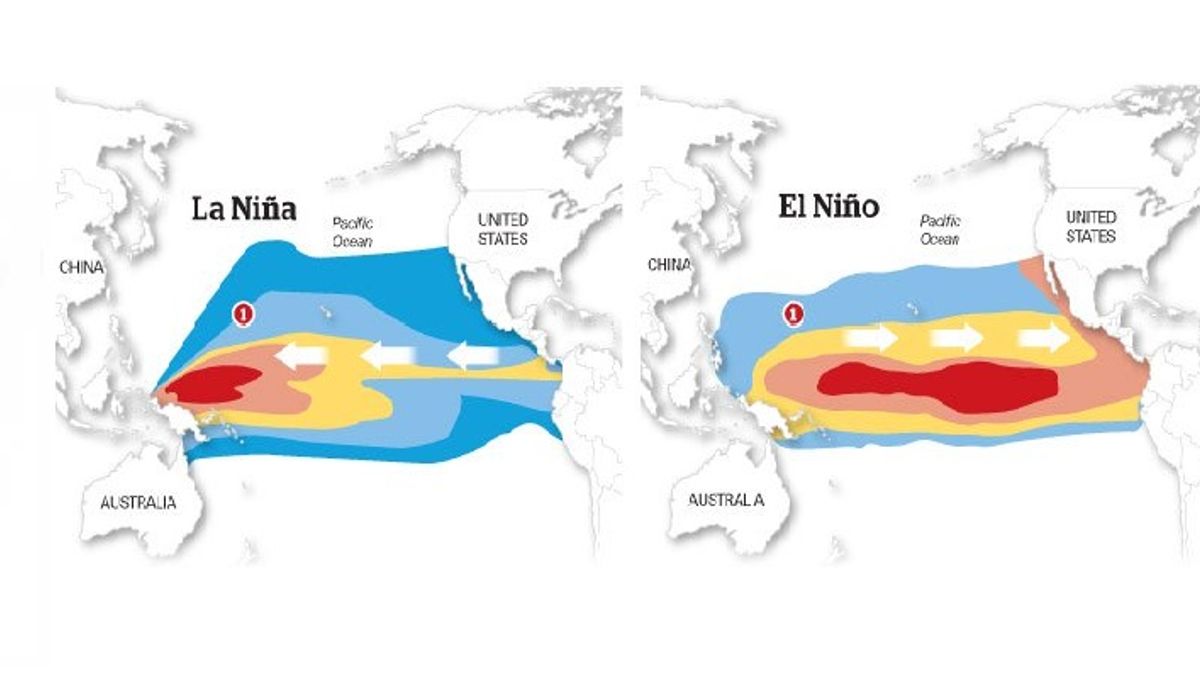
    • El Nino and La Nina are climate phenomena resulting from ocean-atmosphere interactions in the central and eastern tropical Pacific Ocean, significantly influencing global weather patterns.
    • El Nino (meaning “little boy” in Spanish) occurs when weak trade winds allow warm surface waters to accumulate near South America, reducing the usual upwelling of cold, nutrient-rich water. This leads to warmer-than-average sea surface temperatures.
    • La Nina (meaning “little girl” in Spanish) involves strong trade winds pushing warm water towards Asia, increasing upwelling and resulting in cooler-than-average sea surface temperatures along South America.
    • Together with a neutral phase, they form the El Nino-Southern Oscillation (ENSO) cycle.

    How could the incoming La Nina impact global weather?

    • Temperatures
        • Global temperatures are likely to decrease compared to the recent record-breaking heat during the 2023-2024 El Nino event.
        • However, despite the cooling effect of La Nina, temperatures will still be higher than in previous decades due to the long-term warming trend from greenhouse gas emissions.
    • Rainfall
        • La Nina typically brings drier conditions to parts of Southeast Asia, Australia, and the southern United States.
        • Wetter than normal conditions are expected in parts of South America and eastern Africa.
    • Tropical Storms
        • La Nina is associated with increased tropical storm activity in the Atlantic Ocean and fewer storms in the Pacific.
        • The 2023 Atlantic hurricane season could see more intense storms due to La nina conditions.
    • Economic Impacts
      • Droughts and floods linked to La nina can negatively impact agriculture, food security, and infrastructure in affected regions.
      • Fishing communities in the eastern Pacific may face reduced catches due to cooler ocean temperatures.

    La nina’s impact on India

    • Positive Impact on Monsoons
        • La Nina generally leads to above-average monsoon rainfall in India. Since 1950, out of the 13 droughts India faced, only one was during a La nina year.
        • The extended La Nina event in 2022 led to a change in wind patterns, with winds blowing from north to south instead of the usual northwesterly direction.
        • This caused pollutants from agricultural burning in northern states to bypass Delhi and reach southern regions like Mumbai.
    • Negative Impacts
      • La Nina can sometimes lead to heavy rains and floods in some parts of India, while the Western Ghats may receive average or below-average rainfall.
      • Winter rainfall is less than normal in north India, and snowfall over the Western Himalayas is also lower than usual during La Nina years.
      • Farmers may be at risk of losing their standing Kharif crops if heavy rains occur during this period.

    Is climate change affecting EnSO?

    • El Nino–Southern Oscillation (ENSO) is a global climate phenomenon that emerges from variations in winds and sea surface temperatures over the tropical Pacific Ocean.
      • Climate change is likely impacting the ENSO cycle, potentially altering the frequency and intensity of El Nino and La Nina events.
      • Studies suggest that global warming may change mean oceanic conditions in the Pacific, possibly leading to more frequent or intense El Nino events.
    • The World Meteorological Organization (WMO) has indicated that climate change is expected to influence extreme weather events associated with EnSO, including more severe droughts, floods, and heatwaves.

     Way Forward:

    • Develop more accurate climate models for better prediction of EnSO events and their impacts.
    • Foster international collaboration to share data, resources, and strategies for managing EnSO-related challenges.

    BACK2BASICS

    India Meteorological Department (IMD)

    • The India Meteorological Department (IMD), established in 1875, serves as the national Meteorological Service and is the principal government agency responsible for meteorology and related subjects in India.
    • Operating under the Ministry of Earth Sciences, IMD is headquartered in New Delhi.
    • IMD is one of the six Regional Specialized Meteorological Centres of the World Meteorological Organization.

    Mains PYQ:

    Q Most of the unusual climatic happenings are explained as an outcome of the El-nino effect. Do you agree? (UPSC IAS/2014)

  • Foreign Policy Watch: India-SAARC Nations

    BIMSTEC acquires ‘legal personality’ after charter comes into force

    Why in the News?

    The Ministry of External Affairs has announced that with the establishment of its inaugural charter on May 20th, the Bay of Bengal Initiative for Multi-Sectoral Technical and Economic Cooperation (BIMSTEC) will now accept new members and observers.

    About BIMSTEC: 

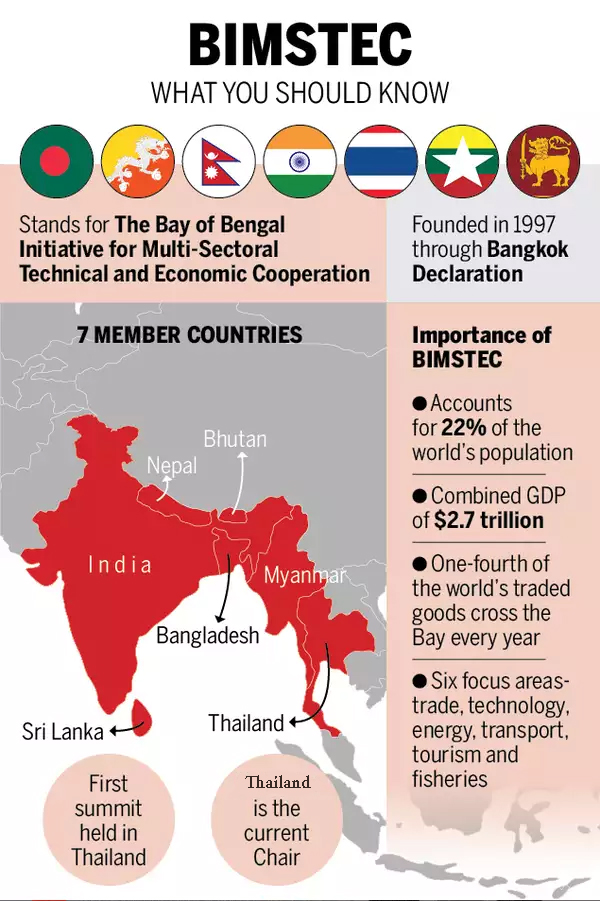
    • The Bay of Bengal Initiative for Multi-Sectoral Technical and Economic Cooperation (BIMSTEC) formed in 1997 is a multilateral regional organization comprising seven member states: Bangladesh, Bhutan, Sri Lanka, Nepal, Thailand, Myanmar, and India.
    • Aim: To promote technical and economic cooperation among its member countries, particularly in sectors such as security, connectivity, trade, agriculture, environment, science and technology, and people-to-people contact.

    Adoption of the Charter:

    • After years of deliberation, the BIMSTEC leaders adopted the organization’s first charter during their 5th summit.
    • This charter provides a legal framework for the group, granting it a “legal personality” and enabling the structured diplomatic dialogue with other countries and regional groupings.
    • In the context of international organizations like BIMSTEC, obtaining legal personality means that the organization is recognized as a legal entity in its own right, separate from its member states.

    Significance of BIMSTEC for all member countries:

    The charter’s implementation enhances cooperation and deeper integration within the Bay of Bengal region, benefiting all member states economically and strategically.

    • Enhanced Cooperation: With the charter in place, member countries can engage in more structured and organized cooperation across various sectors such as security, connectivity, trade, agriculture, environment, science and technology, and people-to-people contact.
    • Strengthened Regional Integration: The charter facilitates deeper integration within the Bay of Bengal region. By establishing common goals and mechanisms for cooperation, it promotes economic growth, social development, and cultural exchange among member countries.
    • Diplomatic Dialogue: The charter enables BIMSTEC to enter into structured diplomatic dialogue with other countries and regional groupings. This opens up avenues for broader engagement and partnership, enhancing the geopolitical significance of the BIMSTEC platform.

    Challenges in the present world context: 

    • Historical Discord: Long-standing historical discord between member states, such as Bangladesh and Myanmar, presents a challenge to cohesive cooperation within BIMSTEC. These tensions can hinder progress on joint initiatives and impede the organization’s effectiveness.
    • Geopolitical Complexities: Geopolitical complexities, exacerbated by events like the Rohingya refugee crisis and the coup in Myanmar, add layers of complexity to regional dynamics.
      • These complexities can strain relationships between member states and complicate efforts to foster collaboration and integration within BIMSTEC.
    • Stagnation of SAARC: While BIMSTEC offers an alternative platform for regional cooperation, the near stagnation of SAARC underscores the challenges faced by regional organizations in fostering meaningful collaboration.

    Way forward:

    • Need a Conflict Resolution Mechanisms: Implement effective conflict resolution mechanisms to address historical discord and tensions between member states.
    • High Diplomatic Engagement: Encourage regular diplomatic engagement and dialogue between member states to address geopolitical complexities and build trust.

    Mains PYQ

    Q Do you think that BIMSTEC is a parallel organization like the SAARC? What are the similarities and dissimilarities between the two? How are Indian foreign policy objectives realized by forming this new organization? (UPSC IAS/2022)

  • Innovations in Biotechnology and Medical Sciences

    Xenotransplantation: Prospects and Challenges

    Why in the News?

    The recent passing away of Richard Slayman, the first recipient of a modified pig kidney transplant, has drawn attention to xenotransplantation—an innovative medical procedure with the potential to revolutionise organ transplantation.

    What is Xenotransplantation?

    • It involves transplanting live cells, tissues, or organs from nonhuman animal sources into human recipients.
    • It seeks to address the critical gap between organ demand and supply.
    • Xenotransplantation, pioneered in the 1980s with heart transplants, has emerged as a promising solution to alleviate the organ shortage crisis, particularly prevalent in kidney transplantation.

    Examples:

    • Chimpanzee-to-Human Transplants: In the 1960s, there were attempts at chimpanzee-to-human kidney transplants, heart transplants, and liver transplants.
    • Pig-to-Human Heart Transplant: In 2022, a groundbreaking milestone was achieved with the first successful transplantation of a pig heart into a human with end-stage heart disease

    Procedural Details

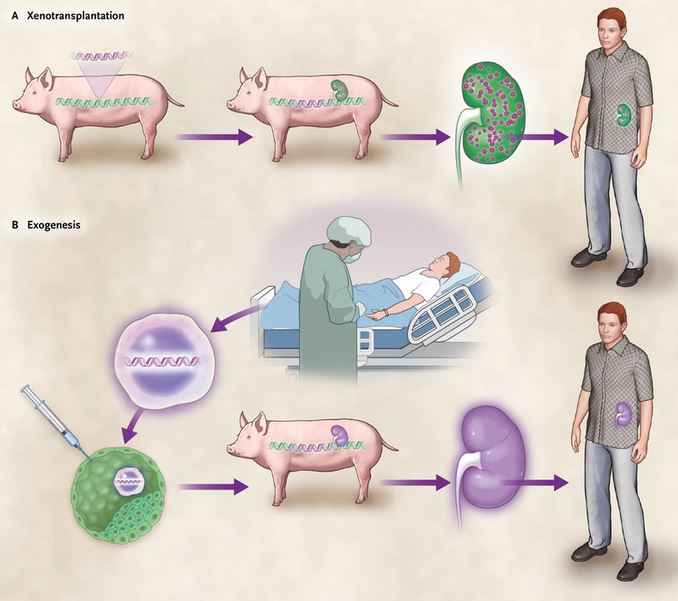
    • Xenotransplantation involves genetic modifications to animal organs, like 69 CRISPR-Cas9 edits to a pig kidney, removing pig genes and adding human genes for compatibility.

    Why is the Pig a Preferred Source?

    • Anatomical Resemblance: Pigs are favoured for xenotransplantation due to their physiological similarities to humans, facilitating successful integration. Pig organs, like heart valves, have been used in human medicine for over 50 years.
    • Breeding Advantages: Extensive pig farming ensures a readily available and cost-effective supply of organs, with diverse breeds offering size-matching opportunities.

    Challenges associated

    • The main challenge is preventing organ rejection. Innovative methods, such as embedding the pig’s thymus gland under the kidney’s outer layer, help manage immune responses.
    • There are also significant concerns regarding potential infections from both recognised and unrecognised infectious agents that could affect not only the recipient but also the wider population.
    • Retroviruses present in the animal organs pose a risk of cross-species infection, which could remain latent and cause diseases years after the transplantation.

    PYQ: 

    [2017] With reference to agriculture in India, how can the technique of ‘genome sequencing’, often seen in the news, be used in the immediate future?

    1. Genome sequencing can be used to identify genetic markers for disease resistance and drought tolerance in various crop plants.
    2. This technique helps in reducing the time required to develop new varieties of crop plants.
    3. It can be used to decipher the host-pathogen relationships in crops.

    Select the correct answer using the code given below:

    (a) 1 only
    (b) 2 and 3 only
    (c) 1 and 3 only
    (d) 1, 2 and 3

  • Tax Reforms

    Supreme Court upholds ICAI Rule on Tax Audit Assignments

    Why in the News?

    • The Supreme Court upheld a rule issued by the Institute of Chartered Accountants of India (ICAI) that limits Chartered Accountants to accepting no more than 60 tax audit assignments in a financial year.
      • The court found that the rule does NOT violate the fundamental right to practice a profession under Article 19(1) (g) of the Constitution (apart from also being violative of the right to equality under Article 14).

    Tax Audit Regime: A Quick Backgrounder

    • The mandatory tax audit regime was initiated in 1984 with Section 44AB in the Income Tax Act, of 1961 which required certain businesses and professionals to get their accounts audited.
      • Tax Audit aims to ensure compliance with the provisions of the Income Tax Act, 1961, and detect and prevent tax evasion and fraud.
    • In 1988, the ICAI limited Chartered Accountants to a specified number of tax audit assignments to ensure quality and reduce the risk of misconduct.
    • This limit was part of the guidelines issued in 2008, which replaced previous notifications and were challenged in various High Courts.

    About the Institute of Chartered Accountants of India (ICAI):

    Details
    Establishment The Institute of Chartered Accountants of India (ICAI) is a statutory body established by an Act of Parliament, viz. The Chartered Accountants Act, 1949.
    Regulatory Body The second largest professional body of chartered accountants in the world after the American Institute of Certified Public Accountants (AICPA).

    Only licensing authority for chartered accountants in India

    Headquarters New Delhi, India, with 5 regional offices and 163 branches across the country.
    Functions Regulates education, training, and examinations for Chartered Accountants. Formulates accounting and auditing standards.
    Membership Granted to individuals who complete prescribed education and training and pass final examinations.
    Powers of ICAI
    • Involves theoretical education and practical training under a practising Chartered Accountant.
    • Conducted at Foundation, Intermediate, and Final levels, held twice a year in May and November.
    • Formulates Accounting Standards (AS), Auditing Standards (SA), and other guidance notes.
    • Investigates complaints of professional misconduct against members and takes disciplinary actions.
    International Affiliations Member of international accounting bodies including-

    1. International Federation of Accountants (IFAC),
    2. Confederation of Asian and Pacific Accountants (CAPA), and
    3. South Asian Federation of Accountants (SAFA).


    PYQ:

    [2018] With reference to India’s decision to levy an equalization tax of 6% on online advertisement services offered by non- resident entities, which of the following statements is/are correct?

    1. It is introduced as a part of the Income Tax Act.
    2. Non-resident entities that offer advertisement services in India can claim a tax credit in their home country under the “Double Taxation Avoidance Agreements”.

    Select the correct answer using the codes given below:

    (a) 1 only

    (b) 2 only

    (c) Both 1 and 2

    (d) Neither 1 nor 2

Join the Community

Join us across Social Media platforms.