💥UPSC 2027,2028 Mentorship (April Batch) + Access XFactor Notes & Microthemes PDF

Archives: News

  • Waste Management – SWM Rules, EWM Rules, etc

    Remoulding the Global Plastics Treaty

    Why in the news?

    As discussions for an international legally binding treaty on plastic pollution continue, it is essential to consider how it can support a fair transition for informal waste collectors and recyclers.

    Observations by the OECD Global Plastic Outlook

    • In 2019, global plastic waste production was 353 million tonnes, more than double the amount in 2000. This number is expected to triple by 2060. Only 9% of plastic waste was recycled in 2019.
    • 50% of plastic waste was sent to landfills, 19% incinerated, and 22% disposed of in uncontrolled sites or dumps.

    Challenges due to Plastic Pollution:

    • Soil Pollution: Plastic waste can contaminate soil, reducing its fertility and affecting plant growth.
    • Marine Pollution: Plastic waste in oceans can harm marine life, alter habitats, and disrupt natural processes, making ecosystems less resilient to climate change.
    • Water Pollution: Plastic waste can contaminate groundwater and waterways, affecting human consumption and aquatic life.
    • Health Risks: 
      • Microplastics: Plastic waste can break down into microplastics, which can be ingested by humans and animals, potentially causing health problems.
      • Toxic Chemicals: Plastic products can leach toxic chemicals, such as phthalates and BPA, into food and water, posing health risks

    Significance of Recognizing the Issue

    • Crucial role of recycling workers: Informal recycling workers recycled 85% of the 9% recycled plastic, playing a crucial role in global waste management.
    • Economic and Environmental Contribution: These workers alleviate municipal budgets, promote circular waste management solutions, and help mitigate greenhouse gas emissions. Their efforts significantly reduce plastic in landfills and prevent plastic leakage into the environment.
      • Despite their contributions, informal recycling workers are often overlooked and remain vulnerable. They face risks such as privatization of waste management, waste-to-energy projects, and exclusion from public policy interventions in plastic waste management.

    Global Plastic Treaty Needs Just Transition

    • Need for Intergovernmental Negotiating Committee (INC): Established in 2021, the INC aims to create a legally binding agreement to reduce plastic pollution. The INC has held several meetings, with the final one scheduled in South Korea.
    • Promoting Informal Workers Participation: The International Alliance of Waste Pickers (IAWP) emphasizes the need to support and integrate informal waste pickers into the treaty discussions. Their historical contributions should be acknowledged, their rights protected, and their perspectives included in policy implementation.
    • Building Clarity: There is no universally agreed-upon terminology for a just transition or a formal definition of the informal waste sector. Clarifying these definitions is essential.

    India’s Voice is Important

    • India promotes repair, reuse, refill, and recycling without eliminating the use of plastics. This approach emphasizes country-specific circumstances and capacities.
    • India’s informal waste pickers are indispensable and remain central to the discussion on plastic waste management.
    • Rethinking EPR norms is crucial to integrating the informal worker cohort into the new legal framework.
    • As a key representative from the Global South, India’s perspectives and approaches are vital in shaping the Global Plastics Treaty.

    Conclusion: By incorporating the perspectives of informal waste workers and ensuring their livelihoods are protected, the Global Plastics Treaty can embody social justice and equity principles, contributing to a sustainable future while leaving no one behind.

    Mains PYQ:

    Q What are the impediments in disposing of the huge quantities of discarded solid wastes which are continuously being generated? How do we remove safely the toxic wastes that have been accumulating in our habitable environment?  (UPSC IAS/2018)

  • RBI Notifications

    Why has RBI policy panel kept repo rate unchanged, hiked GDP growth projection?

    Why in the news?

    The RBI’s Monetary Policy Committee kept the repo rate at 6.5% for the eighth consecutive time, due to persistent high retail inflation from sticky food prices.

    Monetary Policy Committee (MPC) 

    • The Monetary Policy Committee (MPC) of India is responsible for setting the benchmark interest rate in the country.
    • The committee consists of six members: the Governor of the Reserve Bank of India (RBI), the Deputy Governor in charge of monetary policy, an Executive Director of the RBI, and three external members nominated by the government.
    • The MPC meets at least four times a year and publishes its decisions after each meeting. The committee’s primary objective is to maintain price stability while considering the goal of economic growth.

    Why did the RBI keep the Rates Unchanged?

    • Inflation Concerns: The Monetary Policy Committee (MPC) kept the repo rate unchanged at 6.5% due to persistent high inflation, with April 2024 retail inflation at 4.83%.
    • Caution on Food Inflation: The policy stance remains cautious due to the risk of rising food inflation from heatwave conditions, which may impact the final journey of disinflation.
    • Flexible Inflation Targeting: Under the regime, the RBI aims to keep inflation within the 2-6% range and achieve a 4% target on a durable basis.
    • Supply Side Disruptions: Persistent supply shocks in cereals, pulses, spices, and vegetables contributed to elevated food inflation, impacting overall inflation management.

    What happens to Lending Rates if the Repo Rate is left steady?

    Lending Rate:

    The lending rate, also known as the bank rate, is the rate at which commercial banks borrow money from the central bank without securities. It is typically higher than the repo rate and is used for longer-term lending. The lending rate is used to assess the long-term monetary goals of a bank and is often used to manage liquidity in the system

    Repo Rate 

    The repo rate, on the other hand, is the rate at which the central bank lends money to commercial banks against government securities as collateral. It is used for short-term lending and is typically lower than the lending rate

    • Relief for Borrowers: With the repo rate steady at 6.5%, external benchmark lending rates (EBLR) linked to the repo rate will not increase, keeping equated monthly installments (EMIs) on home and personal loans unchanged.
    • Potential MCLR Increase: Lenders might raise interest rates on loans linked to the marginal cost of fund-based lending rate (MCLR), as the full transmission of the 250 basis points hike in the repo rate from May 2022 to February 2023 has not yet occurred.

    Why Has MPC Hiked GDP Growth?

    • Improving Demand: The MPC raised the GDP growth forecast for FY25 to 7.2% from 7% due to strengthening rural and urban demand conditions buoyed by favourable monsoon forecasts.
    • Robust Economic Activity: Indicators such as healthy growth in the eight core industries, strong Purchasing Managers Index (PMI) in manufacturing and services, and overall resilient domestic economic activity support the upgraded growth projection.
    • Sectoral Strength: The manufacturing and services sectors continued to exhibit robust performance, with the PMI for services standing at 60.2 in May 2024, indicating strong expansion.

    Conclusion: The RBI’s cautious approach to keeping rates steady while boosting GDP growth projections aims to balance economic growth and inflation control, with a focus on addressing persistent food inflation.

    Mains PYQ:

    Do you agree with the view that steady GDP growth and low inflation have left the Indian economy in good shape? Give reasons in support of your arguments. (UPSC IAS/2019)

  • Foreign Policy Watch: India-Myanmar

    India issues new advisory against fake job rackets in Myanmar, flags another ‘dangerous’ area


    Why in the news?

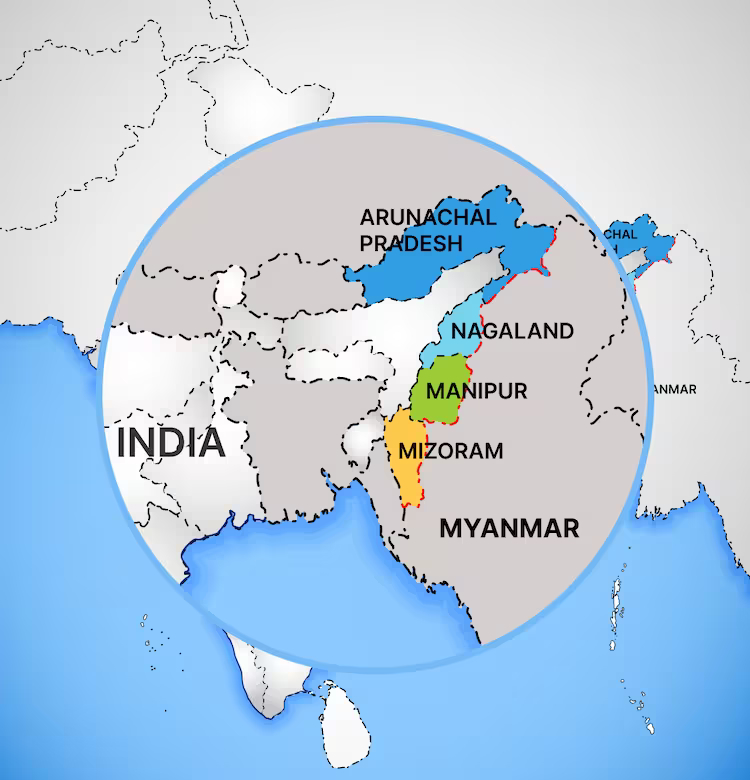
    The advisory was shared on social media by the Indian Embassy in Yangon on Monday (June 3 2024), urging caution against job offers in the Pha Lu area, south of Myawaddy town. This region has recently emerged as a hotspot where most Indian victims are being trafficked, often via Thailand.

    Highlights made by the Indian Embassy’s Advisories:

      • The embassy has issued multiple advisories warning against fake job rackets in Myanmar, highlighting the significant and ongoing threat.
      • Declared New Danger Zone: The Pha Lu area, south of Myawaddy town, has been identified as a new hotspot for trafficking, necessitating heightened vigilance. Previous advisories flagged Myawaddy, Yangon, Laukkaing, Lashio, and Tachileik as risky areas.
        • There’s been a rise in Indian nationals falling victim to crime syndicates in the Myawaddy region on the Myanmar-Thailand border.
    • On Security Issues:
      • Broader insecurity: Not just Indian nationals, but individuals from countries like Malaysia and the UAE have also been targeted by these syndicates.
      • Social Media Caution: Emphasis on avoiding job offers made through social media or unverified sources.
      • Security Worsening: The security situation in Myanmar has deteriorated since the February 2021 military coup, exacerbating human trafficking issues.
    • Consultation Urged: Indian nationals are urged to verify job offers and consult respective Indian embassies before accepting employment abroad.

    India-Myanmar Bilateral Relations:

      • India and Myanmar signed a Treaty of Friendship in 1951, and the visit of Prime Minister Rajiv Gandhi in 1987 laid the foundations for a stronger relationship.

    Significance of India-Myanmar Relation:

      • Economic Cooperation: India is Myanmar’s 4th largest export market and 5th largest import partner. The bilateral trade target of $1 billion was achieved by 2017.
      • Strategic Cooperation: India’s engagement with Myanmar is motivated by a desire to counter China’s growing influence in the region and enhance its own influence and standing.
      • Security Ties: India and Myanmar have cooperated on security issues, including combating drug trafficking and insurgent groups operating in the border areas.
      • Recent Developments: India gifted Myanmar its first submarine, and the two countries have carried out joint operations against insurgent camps.

    The relationship faces challenges such as the Rohingya issue, the coup by the military junta, and the exploitation of the porous border by terrorist outfits and insurgent groups

    Way Forward:

    • Need Monitoring and Ground Surveillance: India can collaborate with social media platforms to monitor and remove fraudulent job postings and take legal action against those responsible.
    • Stronger Bilateral Cooperation: Strengthen cooperation with Myanmar and neighboring countries like Thailand, Laos, and Cambodia to crack down on human trafficking networks and facilitate the safe return of victims.

    Mains PYQ:

    Q Cross-border movement of insurgents is only one of the several security challenges facing the policing of the border in North-East India. Examine the various challenges currently emanating across the India-Myanmar border. Also, discuss the steps to counter the challenges. (UPSC IAS/2019)

  • Modern Indian History-Events and Personalities

    131 years of Gandhiji’s Natal Satyagraha

    Why in the News?

    • On June 7, 1893, Mahatma Gandhi faced racial discrimination when he was forced off a first-class train compartment at “Pietermaritzburg railway station” in South Africa.
      • This event ignited the spirit of civil disobedience in him through his first non-violent protest in the “Natal Satyagraha”.

    History of ‘Satyagraha’

    • The terms originated in a competition in the news-sheet Indian Opinion in South Africa in 1906.
    • Mr. Maganlal Gandhi, grandson of an uncle of Mahatma Gandhi, came up with the word “Sadagraha” and won the prize.
    • Subsequently, to make it clearer, Gandhi changed it to Satyagraha.

    About the Pietermaritzburg Incident 

    • Gandhi’s forced removal from a first-class train compartment in 1893 served as a catalyst for his commitment to resisting racial discrimination.
    • This event inspired him to pursue nonviolent resistance, planting the seeds for his philosophy of Satyagraha.

    Its’ Aftermath

    • Formation of Natal Indian Congress and Advocacy
      • Establishment: Gandhi organized the Indian community and founded the Natal Indian Congress (NIC) in 1894 at Durban to advocate for their rights.
      • Campaigns: He initiated various campaigns, including petitions and boycotts, challenging discriminatory laws and policies in South Africa.
    • Natal Satyagraha
      • The passage of the Asiatic Registration Act in 1906 sparked the Natal Satyagraha, protesting against this discriminatory law.
      • Gandhi emerged as the leader of the movement, advocating for nonviolent resistance and civil disobedience.
      • Satyagraha emphasized confronting oppression with moral courage and integrity, without resorting to violence.

    Gandhiji’s South Africa Settlements:

    • Phoenix Settlement in Natal: Founded in 1904, the Phoenix Settlement was established by Gandhi as a communal living space and centre for social and political activism. It served as a hub for his Satyagraha campaigns against racial discrimination and injustice in South Africa.
    • Tolstoy Farm outside Johannesburg: Gandhi established Tolstoy Farm in 1910 as a self-sustaining community inspired by the teachings of Russian writer Leo Tolstoy. It served as a refuge for Indian immigrants and a base for organizing resistance against discriminatory laws.

    Characteristics and Impact of Natal Satyagraha

    • Mass Participation: The movement garnered widespread support from the Indian community, involving thousands in nonviolent protests.
      • He mobilized support for the welfare of Indians and established the Transvaal British Indian Association in Johannesburg in 1903.
    • Arrests and Imprisonment: Gandhi and many others faced arrests and imprisonment for their acts of civil disobedience. He faced imprisonment multiple times for his nonviolent protests, including the Volkrust Satyagraha in 1913.
    • Attracted International attention: The Satyagraha attracted international attention and led to negotiations, culminating in the Indian Relief Act in 1914.

    PYQ:

    [2019] With reference to the British colonial rule in India, consider the following statements

    1. Mahatma Gandhi was instrumental in the abolition of the system of ‘indentured labour’.
    2. In Lord Chelmsford’s ‘War Conference’, Mahatma Gandhi did not support the resolution on recruiting Indians for World War.
    3. Consequent upon the breaking of Salt Law by Indian people, the Indian National Congress was declared illegal by the colonial rulers.

    Which of the statements given above are correct?

    (a) 1 and 2 only

    (b) 1 and 3 only

    (c) 2 and 3 only

    (d) 1, 2 and 3

  • Tribes in News

    Andaman’s Onge Tribe

    Why in the news?

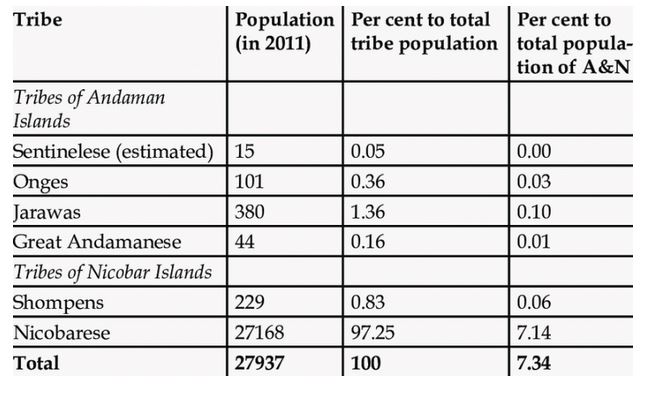
    The king and queen of the “Onge tribe” welcomed a baby boy in the Andaman Islands, marking a significant moment for the tribe. With the arrival of the newborn, the tribe’s total population now stands at 136, as confirmed by an official source.

    About Onge Tribe 

    • The Onge are PVTGs (Particularly Vulnerable Tribal Groups) native to the Andaman Islands.
    • They have traditionally been hunter-gatherers and fishers, while also practising cultivation.
    • Their population significantly decreased after colonization, from 672 in 1901 to around 100.
    • They practice a form of animism, with ancestor worship being significant.
    • They traditionally make decisions through group consensus.
    • Today, the surviving members are confined to two reserve camps on Little Andaman: Dugong Creek in the northeast, and South Bay.
    • Genetically, the Onge are distantly related to East Asian populations and show affinities with Southeast Asian Negrito ethnic groups.

    Other Indigenous People of Andaman and Nicobar

    1. Great Andamanese Tribe

    • One of the largest tribes, the Great Andamanese tribe is currently settled on the Strait Island under the Andaman & Nicobar Administration. Despite their historic bravery, diseases and other challenges have reduced their population to 43 individuals as of the 2001 census.
    • Government initiatives: The administration provides housing, coconut plantations, and rationing to support their livelihoods and well-being.

    2. Jarwas Tribe

    • Jarwas inhabit the Western coast of the Middle and South Andaman Islands. They are known to be hostile but have shown receptivity to friendly contact expeditions since 1974. Their present numbers are estimated at between 250–400 individuals.
    • Jarwas are nomadic hunters and gatherers, using traditional methods like bows and arrows for hunting and fishing.

    3. Sentinelese Tribe

    • Sentinelese reside on the small North Sentinel Island, maintaining a wary stance towards outsiders.
    • Despite initial scepticism, contact expeditions have made progress since 1991, albeit with caution.

    Note: Shompen Tribe are native to the Nicobar Islands.

    Who are the Particularly Vulnerable Tribal Groups (PVTGs)?

    • These groups are among the most vulnerable sections of our society as they are few in number, and have not attained any significant level of social and economic development.
    • They generally inhabit remote localities having poor infrastructure and administrative support.
    • 75 such groups have been identified and categorized as Particularly Vulnerable Tribal Groups (PVTGs).

    Origin of the concept

    • The Dhebar Commission (1960-1961) stated that within Scheduled Tribes there existed an inequality in the rate of development.
    • During the fourth Five Year Plan (1969-74) a sub-category was created within Scheduled Tribes to identify groups that were considered to be at a lower level of development.
    • This sub-category was named “Primitive tribal group”.
    • In 2006 the government of India proposed to rename PVTGs.

    Features of PVTGs

    • The features of such a group include a:
    1. Pre-agricultural system of existence
    2. The practice of hunting and gathering
    3. Zero or negative population growth
    4. Extremely low level of literacy in comparison with other tribal groups
    • Groups that satisfied any one of the criteria were considered PTG.


    PYQ:

    [2019] Consider the following statements about Particularly Vulnerable Tribal Groups (PVTGs) in India:

    1. PVTGs reside in 18 States and one Union Territory.
    2. A stagnant or declining population is one of the criteria for determining PVTG status.
    3. There are 95 PVTGs officially notified in the country so far.
    4. Irular and Konda Reddi tribes are included in the list of PVTGs.

    Which of the statements given above are correct?

    (a) 1, 2 and 3

    (b) 2, 3 and 4

    (c) 1, 2 and 4

    (d) 1, 3 and 4

  • Foreign Policy Watch: India-ASEAN

    Preparing for ASEAN-India FTA Review

    Why in the News?

    The Commerce Department is gearing up for the upcoming negotiations on the ASEAN-India FTA review. The ASEAN-India FTA, while beneficial, has led to a widening trade deficit for India.

    ASEAN-India Trade in Goods Agreement (AITGA):

    • The AITGA, signed in 2009 and effective in 2010, aims to reduce tariffs and non-tariff barriers on goods between ASEAN and India, covering sectors like agriculture, textiles, electronics, and machinery.
    • AITGA is an important component of the ASEAN-India Free Trade Area (AIFTA), which aims to create a single market for goods and services among ASEAN and India.

    Major Concern: Growing Trade Deficit

    • Since the ASEAN-India Trade in Goods Agreement (AITGA), India has been facing a growing trade deficit.
    • The trade deficit means India is importing more than it is exporting. In 2022-23, India imported goods worth US$87.57 billion, while it exported US$44 billion.
    • In 2022-23, ASEAN made up 11.3% of India’s global trade. This deficit has grown a lot this year.

    Because of this, there’s a need to urgently review and change the current trade setup between ASEAN and India.

    Key Areas of Negotiation

    • Rules of Origin (ROO): Modifications in ROO are planned to increase market access for Indian products and prevent the rerouting of goods, particularly from China, through ASEAN countries.
    • Trade Remedies: A new chapter on trade remedies will aim to protect domestic industries from unfair trade practices and import surges.
    • Exclusion of New Areas: The agreement will not expand to cover additional areas like labour, environment, MSMEs, or gender to avoid complicating the pact.


    About ASEAN

    Details
    Establishment Established in 1967 with the signing of the ASEAN Declaration (Bangkok Declaration).
    Chairmanship Rotates annually among member states based on alphabetical order of their names.
    Objective To promote political and economic cooperation and regional stability among member countries.
    Members
    • Brunei, Cambodia, Indonesia, Laos, Malaysia, Myanmar, Philippines, Singapore, Thailand, Vietnam.
    • East Timor (Timor-Leste) applied for membership in 2011 but is not yet a member.
    Objectives
    • Accelerate economic growth, social progress, and cultural development.
    • Promote regional peace and stability based on the rule of law and the UN charter.
    • Establish an ASEAN community comprising three pillars: ASEAN security, economic, and socio-cultural.
    ASEAN Charter
    • Launched in 2008 to create a legal entity and establish a single free-trade area for the region.
    • ASEAN Intergovernmental Commission on Human Rights (AICHR) was established in 2009.
    • Adopted the ASEAN Human Rights Declaration in 2012.
    ASEAN Plus Six
    • ASEAN Plus Three initiated integration efforts with East Asian countries (China, Japan, and South Korea).
    • Expanded to the East Asia Summit (EAS) including ASEAN Plus Three, India, Australia, and New Zealand.
    India and ASEAN
    • A key pillar of India’s foreign policy and the foundation of Act East Policy.
    • India has a separate Mission to ASEAN and the East Asia Summit (EAS) in Jakarta.
    • ASEAN is India’s fourth-largest trading partner.
    Delhi Declaration Identifies Cooperation in the Maritime Domain as a key area of cooperation under the ASEAN-India strategic partnership.
    Delhi Dialogue Annual Track 1.5 event for discussing politico-security and economic issues between ASEAN and India.
    ASEAN-India Centre (AIC) Undertakes policy research, advocacy, and networking activities with organizations and think tanks in India and ASEAN.
    Strategic Cooperation India places ASEAN at the centre of its Indo-Pacific vision of Security and Growth for All in the Region (SAGAR).


    PYQ:

    [2018] Consider the following countries:

    1. Australia
    2. Canada
    3. China
    4. India
    5. Japan
    6. USA

    Which of the above are among the ‘free-trade partners’ of ASEAN?

    (a) 1, 2, 4 and 5

    (b) 3, 4, 5 and 6

    (c) 1, 3, 4 and 5

    (d) 2, 3, 4 and 6

  • Parliament – Sessions, Procedures, Motions, Committees etc

    President appoints Narendra Modi as PM-Designate

    Why in the News?

    Narendra Modi will take the oath as the Prime Minister for a third consecutive term, following an invitation from President Droupadi Murmu to form the government.

    Constitutional Provisions for PM Post

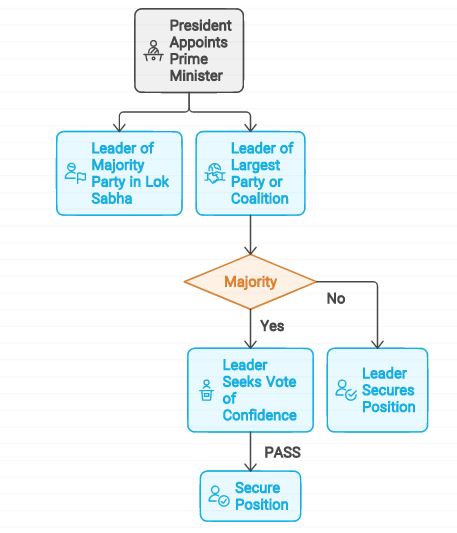
    • Article 75: It states that the President shall appoint the Prime Minister, who is usually the leader of the majority party in the Lok Sabha (House of the People).
    • Article 74: The Prime Minister is the head of the Council of Ministers and provides advice to the President on matters of governance.

    Appointment of the Prime Minister

    The appointment of the Prime Minister of India involves specific constitutional provisions supervised by the President. Key features related to the appointment of the Prime Minister as mentioned in the Constitution of India include:

    • The Prime Minister is appointed permanently by the President of India.
    • The President invites the leader of the majority party in the Lok Sabha to form the government.
    • If no political party holds a majority, the President can use discretionary powers to appoint the Prime Minister.
    • The President may invite the leader of the largest party or coalition to seek a vote of confidence from the Lok Sabha, with a tenure of about a month to secure this vote.

    Position of Prime Minister in India’s Democratic set-up         

    • Head of Government: The Prime Minister is the chief executive authority in the country, responsible for leading the government and overseeing the functioning of various ministries and departments.
    • Leader of the Council of Ministers: The Prime Minister is the leader of the Council of Ministers, which comprises cabinet ministers, ministers of state, and deputy ministers. They coordinate the activities of the government and guide policy decisions.
    • Advisor to the President: While the President of India is the head of state, the Prime Minister acts as the president’s chief advisor and assists in exercising executive powers.
    • Principal Link between President and Parliament: The Prime Minister communicates the decisions of the Council of Ministers to the President and represents the government in Parliament.
    • Symbol of Unity and Stability: The Prime Minister symbolizes the unity and stability of the country’s governance. They provide leadership and direction to the nation, fostering a sense of unity and purpose among the citizens.
    • International Representation: The Prime Minister represents India on the international stage and plays a significant role in foreign policy formulation. They engage in diplomatic relations, attend international summits, and represent India’s interests globally.
    • Crisis Management: During times of crisis, such as natural disasters, security threats, or economic challenges, the Prime Minister takes charge of crisis management efforts and leads the government’s response to address the situation.

    Powers and Functions of the Prime Minister

    The Indian Constitution outlines the powers and functions of the Prime Minister, who is appointed by the President and holds significant authority over the President, Council of Ministers, and parliamentary houses. These powers include:

    • Function Relative to the President: The Prime Minister serves as the main channel of communication between the President and the Council of Ministers, overseeing the administration of Union affairs and appointing key administrative officials.
    • Functions Relative to the Council of Ministers: The Prime Minister advises on the nomination and selection of Council Ministers, can allocate and shuffle ministerial departments, and has the authority to demand resignations from ministers. The resignation of the Prime Minister leads to the dissolution of the Council of Ministers.
    • Parliamentary Functions: The Prime Minister leads the lower parliamentary house (Lok Sabha), can suggest the dissolution of the Lok Sabha, and is responsible for announcing and introducing government policies in parliamentary sessions.
    • Miscellaneous Functions: The Prime Minister holds additional roles such as chairman of the National Water Resource Council, NITI Aayog, National Integration Council, Inter-State Council, and NDA, among others.

    Appointment, Tenure, and Removal

    Eligibility: According to Articles 84 and 75 of the Constitution of India, the Prime Minister must:

    • Be a citizen of India.
    • Be a member of the Lok Sabha or the Rajya Sabha, or become a member within six months of selection.
    • Be above 25 years of age if a Lok Sabha member, or above 30 years if a Rajya Sabha member.
    • Not hold any office of profit under the government of India or any state government.

    Oaths of Office and Secrecy:

    Before entering office, the Prime Minister must take an oath of office and secrecy in the presence of the President of India, as per the Third Schedule of the Constitution.

    Tenure and Removal from Office:

    • The Prime Minister serves at the “pleasure of the President,” but must maintain the confidence of the Lok Sabha.
    • The term can end if a simple majority of Lok Sabha members no longer have confidence in the Prime Minister, known as a vote of no-confidence.
    • A Prime Minister can also resign from office. Morarji Desai was the first to do so while in office.
    • Additionally, ceasing to meet the qualifications under the Representation of the People Act, 1951, can lead to removal from office.

    PYQ:

    [2015] Consider the following statements:

    1. The Executive Power of the union of India is vested in the Prime Minister.
    2. The Prime Minister is the ex officio Chairman of the Civil Services Board.

    Which of the statements given above is/are correct?

    (a) 1 only

    (b) 2 only

    (c) Both 1 and 2

    (d) Neither 1 nor 2

    [2019] Consider the following statements:

    1. The 44th Amendment to the Constitution of India introduced an Article placing the election of the Prime Minister beyond judicial review.
    2. The Supreme Court of India struck down the 99th Amendment to the Constitution of India as being violative of the independence of judiciary.

    Which of the statements given above is/are correct?

    (a) 1 only

    (b) 2 only

    (c) Both 1 and 2

    (d) Neither 1 nor 2

  • In news: Volkhov River

    Why in the News?

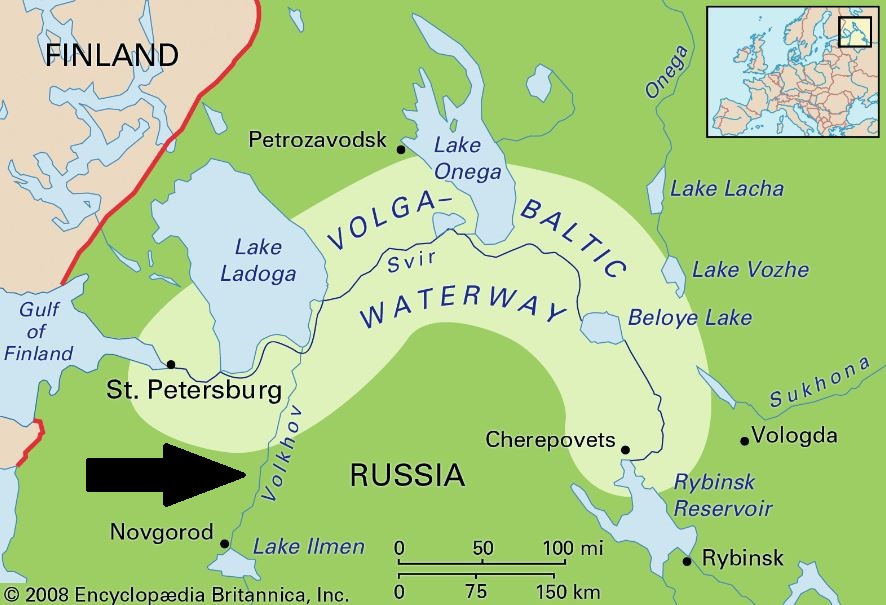
    Four medical students from India studying in a university in Russia drowned in Volkhov River near St. Petersburg.

    About Volkhov River

    • The Volkhov River is a significant waterway in northwestern Russia.
    • It is located in the Leningrad Oblast and Novgorod Oblast of Russia, in the northwestern part of the country.
    • It stretches approximately 224 kilometers (139 miles) from Lake Ilmen to Lake Ladoga.
    • Origin: It flows out of Lake Ilmen north into Lake Ladoga, the largest lake in Europe.
    • Tributaries: The Msta River is the largest tributary of the Volkhov.
    • Major Cities: Several cities and settlements are situated along the banks of the Volkhov River, including Novgorod, Veliky Novgorod, and Volkhov.

    PYQ:

    [2020] Consider the following pairs:

    River – Flows into

    1. Mekong – Andaman sea
    2. Thames – Irish Sea
    3. Volga – Caspian Sea
    4. Zambezi – Indian Ocean

    Which of the pairs above is/are correctly matched?

    (a) Only 1

    (b) Only 2

    (c) 3 Only

    (d) None of the above/More than one of the above.

  • Foreign Policy Watch: India-Canada

    India second-biggest foreign threat to Canadian democracy: report

    Why in the news?

    A parliamentary committee report in Canada has claimed India as the second-biggest foreign threat to the country’s democracy.

    About the Khalistan Movement

    • Origins and Objectives: The Khalistan Movement is a separatist movement seeking to create an independent Sikh state called Khalistan in the Punjab region of India.
    • Activities in Canada: Canada has a significant Sikh population, and some members support the Khalistan Movement. This has led to tensions between Canadian Sikhs and the Indian government.
    • Notable Incident: The murder of Hardeep Singh Nijjar, a pro-Khalistan ideologue, in Surrey, British Columbia, on June 18, 2023, intensified these tensions.

    Historical Background

    • Canada and India established diplomatic relations in 1947. The relationship was enhanced by personal ties between Indian Prime Minister Jawaharlal Nehru and Canadian Prime Ministers Louis St. Laurent and Lester B. Pearson in the 1940s and 1960s.
    • Canada provided significant aid to India under the “Colombo Plan”, including food aid, project financing, and technical assistance. India has been one of the largest recipients of Canadian bilateral aid, amounting to over $3.8 billion CAD.

    Recent Developments

    • India and Canada have seen significant growth in bilateral trade, reaching $8.16 billion in 2023.
    • Canada is home to over 1.2 million people of Indian origin, who are well-integrated into the mainstream and active in politics.
    • The two countries have a strategic partnership underpinned by shared values of democracy and pluralism, with regular high-level interactions and long-standing people-to-people ties.
    • India and Canada have signed several agreements, including the Air Services Agreement, Extradition Treaty, Mutual Legal Assistance Treaty, and Nuclear Cooperation Agreement.

    Challenges

    • Interference Allegations: Canada claims that India has expanded its interference efforts beyond countering pro-Khalistani activities to include targeting Canadian politicians, ethnic media, and Indo-Canadian communities.
    • Mutual Suspicion: The Canadian Security Intelligence Service has also accused India of being involved in the election process in Canada, a claim denied by India.
    • Ethnic and Political Dynamics: The presence of a significant pro-Khalistan population in Canada complicates bilateral relations, with domestic politics in both countries influencing diplomatic interactions.

    India’s Stand

    • Denial of Allegations: The Indian government has consistently denied allegations of interference in Canadian affairs and the murder of Hardeep Singh Nijjar.
    • Counter-Terrorism: India views the Khalistan Movement as a terrorist threat and seeks to counter its activities both domestically and internationally.
    • Diplomatic Responses: In response to accusations from Canada, India has taken measures such as suspending visa services and issuing official statements to refute claims of interference.

    Way forward:

    • Regular Consultations: Establish a framework for regular high-level meetings between Indian and Canadian officials to address mutual concerns and prevent misunderstandings.
    • Bilateral Committees: Form joint committees to handle specific issues such as security concerns, immigration, and trade disputes.

    Mains question for practice:

    Q Discuss the origins and objectives of the Khalistan Movement and analyse the current challenges it poses to bilateral relations between India and Canada. 15M

  • Capital Markets: Challenges and Developments

    Regulator SEBI expands promoter definition for IPO-bound companies    

    Why in the news?

    • SEBI expands promoter definition for IPO-bound companies, including founders holding 10% or more, and their immediate relatives.
      • According to current SEBI regulations, a promoter is someone who controls the affairs of the company or can appoint the majority of directors or is named as such in an offer document.

    What is an IPO?

    • An IPO is an initial public offering, in which shares of a private company are made available to the public for the first time.
    • An IPO allows a company to raise equity capital from public investors.
    • The Dutch are credited with conducting the first modern IPO by offering shares of the Dutch East India Company to the general public.

    What Norms Say

    • Expanded Definition of Promoter: The definition of a promoter has been expanded for companies preparing for an IPO. A promoter is someone who controls the company’s affairs, can appoint the majority of directors, or is named as such in an offer document.
    • Previous Criteria: Founders holding 25% were previously deemed promoters due to their negative control and power to block special resolutions.
    • New Criteria: Founders holding 10% or more must classify themselves as promoters if they are key managerial personnel (KMP) or directors in the company. Immediate relatives on the company board or KMP will also be classified as promoters, even if they hold just 1%.

    About Declassification and 31A of LODR (Listing Obligations and Disclosure Requirements) Regulations

    • Declassification Difficulty: The current regulations do not provide an easy path for declassifying a promoter as a public shareholder.
    • Rule 31A of LODR Regulations: To be declassified, a person must not hold more than 10% in the listed company along with their relatives.
    • Restrictive Nature: This restrictive rule makes declassification almost impossible for immediate relatives who are classified as promoters by virtue of their relationship, especially problematic for married daughters with no active role in the company.

    Issue Over Subjective Definition

    • Subjective Nature of Promoter Definition: The definition of a promoter has been historically subjective, leading to varying interpretations and legal disputes.
    • Court Rulings: There have been several court rulings addressing the subjective nature of who qualifies as a promoter, highlighting inconsistencies and complexities.
    • Complex Criteria: Accounting standards and regulatory criteria for determining control and influence in a company are often complicated and can be interpreted in multiple ways.
    • Need for Objectivity: Experts argue for a more objective test to ascertain control and promoter status, which would provide clearer guidelines and reduce disputes.
    • Example: Vinod Kothari, Director at Vinod Kothari Consultants, points out that moving towards an objective test is a positive step, given the current complexities in determining control.

    Way forward: 

    • Standardised Guidelines: Develop clear and standardised guidelines for identifying promoters, reducing subjectivity and ensuring consistency.
    • Detailed Disclosures: Mandate detailed disclosures from companies about their promoters, including shareholding patterns, roles, and influence in decision-making.

    Mains PYQ:

    Q In the light of Satyam Scandal (2009), discuss the changes brought in corporate governance to ensure transparency and accountability. (UPSC IAS/2015)

Join the Community

Join us across Social Media platforms.