💥UPSC 2027,2028 Mentorship (April Batch) + Access XFactor Notes & Microthemes PDF

Archives: News

  • International Space Agencies – Missions and Discoveries

    Blaze Star: A Celestial Phenomenon in the Making

    Why in the News?

    • NASA predicts the dim star T Coronae Borealis will become visible to the naked eye by September 2024, reaching brightness comparable to Polaris.
      • A dim star known as the “Blaze Star,” officially designated as T Coronae Borealis (T CrB), located 3,000 light-years from our solar system, is set to become visible to the naked eye for the first time since 1946.

    About the Blaze Star

    • The Blaze Star located in the constellation Corona Borealis, also known as the “Northern Crown,” is situated between the constellations of Bootes and Hercules.
    • To locate Corona Borealis, begin by identifying prominent stars in the summer night sky, such as those of the Big Dipper.

    Understanding the Blaze Star Phenomenon

    • The Blaze Star is a rare recurrent nova, a binary star system comprising a cool, red giant star and a smaller, hotter white dwarf star in orbit around each other.
    • Every 80 years, the red giant transfers matter onto the white dwarf, triggering explosive phenomena.
    • Historical observations suggest the Blaze Star is on the brink of another explosion, following similar brightness patterns observed before previous eruptions in 1866 and 1946.
      • Precursor Signs: The star has been steadily brightening since 2015, followed by a visible dimming in March 2023, mirroring past eruption precursors.

    Implications for Observation

    • Peak Visibility: During its brightness peak, the Blaze Star is expected to be visible to the naked eye for several days, extending to just over a week with stargazing binoculars or a small telescope.
    • Astronomical Insights: The impending eruption offers a unique opportunity for astronomers to observe and study this celestial event, providing valuable insights into stellar evolution and dynamics.

    PYQ:

    [2013]  Consider the following phenomena

    1. Size of the sun at dusk

    2. Colure of the sun at dawn

    3. Moon being visible at dawn

    4. Twinkle of stars in the sky

    5. Polestar being visible in the sky

    Which of the above are optical illusions?

    (a) 1, 2 and 3

    (b) 3, 4 and 5

    (c) 1, 2 and 4

    (d) 2, 3 and 5

  • Innovations in Biotechnology and Medical Sciences

    Neo: A Novel Protein in Bacterial Defense

    Why in the News?

    “Klebsiella pneumoniae” bacteria might employ a newly discovered protein called “Neo” to halt bacteriophage infections.

    About Neo Protein

    • Discovery Details: Researchers, led by Stephen Tang and Samuel Sternberg, reported the discovery of Neo in a 2023 preprint paper on bioRxiv, while investigating Klebsiella pneumoniae.
    • Neo’s Defense Strategy: Bacteria employ diverse immune systems to fend off viral infections, including defense-associated reverse transcriptase (DRT) systems, which Neo is a part of.
      • DRT-2 System: This system involves de novo gene synthesis via rolling-circle reverse transcription (RT) of a non-coding RNA (ncRNA).
      • Operational Process: In uninfected cells, the ncRNA and RT enzyme catalyze the synthesis of a repetitive single-stranded cDNA.
      • Activation by Phage: Phage presence triggers the synthesis of the second-strand cDNA, resulting in long double-stranded DNA.
      • Role of Neo Protein: The translation of this double-strand cDNA produces the Neo protein, which induces potent growth arrest (cell dormancy), thereby protecting the bacterial population from phage proliferation.

    Biotechnological and Medical Implications

    • Potential Applications: Neo represents a promising tool for controlling viral infections, holding significance in both biotechnology and medicine.
    • Evolutionary Connections: Neo’s discovery sheds light on the shared evolutionary history and functional mechanisms of retroelements in the human genome and bacterial reverse transcriptases.
    • Technological Influence: Bacterial reverse transcriptases, predecessors of their eukaryotic counterparts, share analogous mechanisms and have revolutionized molecular biology research methods.

    What is Reverse Transcriptase?

    • Reverse transcription, the conversion of RNA into DNA, is facilitated by the enzyme reverse transcriptase.
    • Discovered by Howard Temin and David Baltimore in 1970, reverse transcriptase has transformed molecular biology research, particularly in studying RNA viruses like HIV.
      • Practical Applications: Reverse transcriptase is instrumental in gene cloning, PCR techniques, genome analysis, and viral load detection in diagnostics, such as the case of SARS-2, aiding in virus surveillance, healthcare management, and vaccine development efforts.


    PYQ:

    [2019] What is Cas9 protein that is often mentioned in the news?

    (a) A molecular scissors used in targeted gene editing.

    (b) A biosensor used in the accurate detection of pathogens in patients.

    (c) A gene that makes plants pest-resistant.

    (d) A herbicidal substance synthesized in genetically modified crops.

  • Trade Sector Updates – Falling Exports, TIES, MEIS, Foreign Trade Policy, etc.

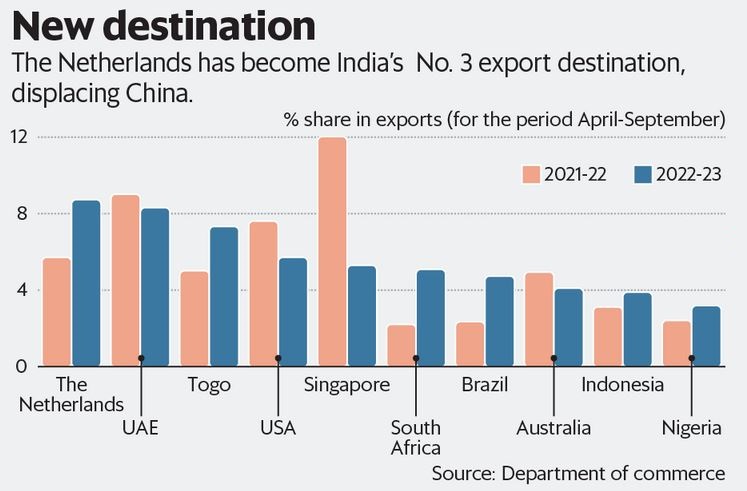
    Netherlands becomes India’s 3rd Largest Export Destination in 2023-24

    PC: LiveMinit

    Why in the News?

    During fiscal year 2023-24, the Netherlands emerged as India’s third-largest export market, with a trade surplus expanding to $17.4 billion.

    India’s Trade with the Netherlands

    • Key Export Commodities: Notable export items to the Netherlands include petroleum products ($14.29 billion), electrical goods, chemicals, and pharmaceuticals, showcasing robust growth in these sectors.
    • Continual Expansion: India’s exports to the Netherlands have steadily risen by approximately 3.5% to reach $22.36 billion in 2023-24, illustrating sustained growth momentum.
    • Mutual Investment: The Netherlands is a significant investor in India, with foreign direct investment (FDI) amounting to about $5 billion during the last fiscal.
    • Corporate Presence: Over 200 Dutch companies, including industry giants like Philips, Akzo Nobel, and KLM, operate in India, while Indian firms like TCS, HCL, and Sun Pharmaceuticals have a substantial presence in the Netherlands.

    Shift in Trade Dynamics

    • Outpacing Major Destinations: The Netherlands has surpassed traditional trade partners such as the U.K., Hong Kong, Bangladesh, and Germany in terms of India’s export focus.
    • Long-term Growth: Export figures have shown consistent growth since 2000-01 when India’s exports to the Netherlands were a mere $880 million.

    Significance: Gateway to Europe

    • Strategic Positioning: The Netherlands’ efficient ports and extensive connectivity with the EU via roads, railways, and waterways have positioned it as a vital gateway to the European market.
    • Strong Ties: Diplomatic relations between India and the Netherlands, established in 1947, have evolved into robust political, economic, and commercial partnerships.

    India’s Trade Dynamics

    Export Figures:

    • Forecasted to reach approximately US$776.68 billion in FY 2023–24.
    • Slightly surpassed the US$776.40 billion recorded in the previous fiscal year.
    • Concluded with the highest monthly merchandise exports of US$41.68 billion in March 2024.

    Import Figures:

    • Total goods imports decreased by 5.66 percent to US$675.44 billion.

    Global Merchandise Export Ranking:

    • India advanced from 19th to 17th place.
    • Marginal increase in share from 1.70 percent in 2014 to 1.82 percent in 2023.
    • Exported to 115 countries out of a total of 238 destinations during FY 2023-24.

    Key Export Markets:

    • Include the US, UAE, Netherlands, China, UK, Saudi Arabia, Singapore, Bangladesh, Germany, and Italy.
    • Represent 46.5 percent of India’s export portfolio.

    Diversification Strategy:

    • Focus on expanding beyond traditional sectors like iron ore and agricultural commodities.
    • Target sectors include electronics, pharmaceuticals, engineering products, and food items.
    • Plan to introduce goods such as alcoholic beverages, prepared meals, confectioneries, jackfruit, and bananas.
    • Emphasis on market research and analysis for product customization.

    Trade Partners:

    • China emerged as India’s largest trading partner, surpassing the US.
    • Bilateral trade with China totalled US$118.4 billion in FY 2023-24.
    • Bilateral trade with the US amounted to US$118.3 billion in the same period.
    • India’s exports to China increased by 8.7 percent in FY24, driven by various sectors.
    • Imports from China rose moderately, totalling US$101.7 billion.

    (Source of Data: Ministry of Commerce and Industry, Department of Commerce)

    PYQ:

    [2013] The balance of payments of a country is a systematic record of:

    (a) All import and export transactions of a country during a given period of time, normally a year.

    (b) Goods exported from a country during a year.

    (c) Economic transaction between the governments of one country to another.

    (d) Capital movements from one country to another.


  • Indian Army Updates

    Tele MANAS cell for Armed Forces

    Why in the News?

    • The Ministry of Health and Family Welfare (MoHFW) and the Ministry of Defence (MoD) have entered into a Memorandum of Understanding (MoU) to foster collaboration in operating a special cell of Tele MANAS.
      • This collaboration, spanning two years, aims to establish a pilot project at the Armed Forces Medical College in Pune.

    Suicides and Fratricides in Armed Forces: A Global Issue

    • As per information given in Parliament in April 2022, there were two cases of fratricide each year from 2019 to 2021 and one case in 2021.
    • In an older reply in Rajya Sabha on suspected suicide cases in the Army, the Government informed that during the years 2016 to 2018 there were 104, 75 and 80 cases, respectively.
    • A 2018 study correlated extended deployment to a 15% increased suicide risk in the U.S. military, the U.S. Department of Defence recorded 503 suicides among active-duty personnel in 2019.
    • Common reasons that forces an individual to take extreme steps are:
      • Family issues,
      • Family separation,
      • Prolonged deployment in difficult areas,
      • Continuous exposure to hazardous situations,
      • Traumas originated in Counter Insurgency or Counter Terrorism operations and
      • Wide range of Human Resource management issues.
    • Preventive Measures: The Army in its latest advisory issued in August 2023 stated that officers and religious teachers – at least one Pandit, Maulvi, Granthi or Pastor – are posted in each unit and selected other ranks are being trained on the nuances of counselling.

    What is the Tele MANAS Initiative?

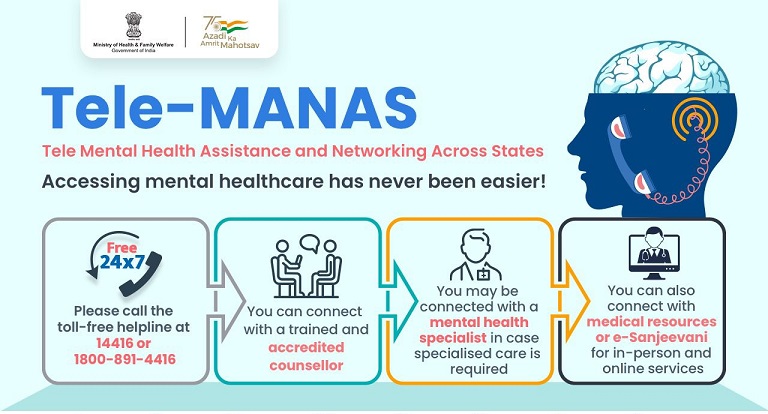
    • Tele MANAS, or Tele Mental Health Assistance and Networking across States, stands as India’s National Tele Mental Health Programme.
    • It is envisioned as the digital extension of the District Mental Health Programme (DMHP).
    • Its announcement came in the Union Budget of 2022.
    • The Ministry of Health and Family Welfare (MoHFW) serves as the nodal agency overseeing its implementation.
    • The primary aim is to ensure universal access to equitable, accessible, affordable, and high-quality mental health care through round-the-clock tele-mental health services.
    • The International Institute of Information Technology, Bengaluru, serves as the technology partner.
    • The nodal centre for Tele MANAS operations is located at NIMHANS, Bengaluru.
    • The National Health Systems Resource Centre operates within the health system domain.
    • Helpline numbers for assistance are 14416 and 18008914416.
    • The implementation structure comprises two tiers:
    1. Tier 1: Consists of State Tele MANAS cells comprising trained counsellors and mental health specialists,
    2. Tier 2: Comprises resources from the District Mental Health Program (DMHP) and medical colleges.

    Reach and Impact

    • Nationwide Presence: Currently, 51 operational Tele MANAS cells operate across all 36 States and UTs, delivering services in 20 diverse languages.
    • Remarkable Response: Since its inception in October 2022, Tele MANAS has received over 10 lakh calls and manages a daily average of more than 3,500 calls.

    National Mental Health Programme (NMHP):

    • The NMHP was launched by the Government of India in 1982.
    • It was initiated to address the significant burden of mental disorders in the population.
    • Mental disorders affect approximately 6-7% of the population in India.
      • Objectives of NMHP: Ensuring the availability and accessibility of minimum mental healthcare to all, particularly the vulnerable and underprivileged sections of the population.
    • As part of NMHP, the District Mental Health Program (DMHP) was introduced in 1996 during the IX Five Year Plan based on the ‘Bellary Model’:
      • The Bellary Model emphasizes the importance of early detection, short-term training for physicians, and health worker training in identifying individuals with mental health issues.


    PYQ:

    [2023] Why suicide among young women is increasing in Indian society?

  • Electoral Reforms In India

    The verdict points to the importance of economic issues

    Why in the news?

    The outcome of the Lok Sabha elections surprised those who had relied on the flawed exit polls.

    The visible message from the general elections of 2024 emphasized two main points:

    • Revival of Federalism: The elections underscored the importance of revitalizing federalism, moving away from the centralized control that had characterized the previous decade. It highlighted the need for state governments to have more autonomy and the ability to deliver public services without excessive interference from the central government.
    • Constructive and Inclusive Political Approach: The results indicated that political parties need to adopt a more constructive and inclusive approach to nation-building. This includes a stronger focus on social justice, addressing economic issues such as unemployment and low wages, and ensuring that policies cater to the needs and rights of various segments of the population, including youth, women, farmers, and workers. The electorate showed a preference for parties that prioritize livelihood and employment issues along with social justice.

    Need to revive the Federalism

    • Decentralization of Power: Federalism ensures a more balanced distribution of power between the central and state governments. This decentralization allows states to manage their affairs more effectively, tailoring policies and programs to their specific needs and circumstances.
    • Enhanced Public Service Delivery: State governments are primarily responsible for delivering essential public services such as health, education, and infrastructure. A revived federalism would enable states to perform these functions without undue interference from the central government, leading to more efficient and responsive governance.
    • Cultural and Regional Autonomy: India is a diverse country with varied cultural, linguistic, and regional identities. Federalism respects and accommodates this diversity by allowing states to preserve and promote their unique identities and traditions within the framework of a united nation.

    Political Parties need to be more constructive, and inclusive in their approach to nation-building

    • Addressing Economic Challenges: Parties must focus on pressing economic issues such as unemployment, low wages, and the rising cost of living. Constructive policies that create jobs, support small businesses, and address economic disparities are crucial for national progress.
    • Social Justice and Inclusion: Inclusivity involves addressing the needs and rights of marginalized and disadvantaged groups. This includes ensuring social justice for various castes, genders, and socio-economic backgrounds. Emphasizing social justice can help reduce inequality and promote a more cohesive society.
    • Responsive to Public Needs: Political parties need to listen to and address the genuine needs and concerns of the populace. This involves creating policies that reflect the realities faced by people in different regions and socio-economic conditions.

    Conclusion: The 2024 Lok Sabha elections underscored the need for revitalized federalism and a constructive, inclusive political approach focused on economic issues and social justice to address diverse public needs effectively.

    Mains PYQ 

    Q How far do you think cooperation, competition and confrontation have shaped the nature of federation in India? Cite some recent examples to validate your answer. (UPSC IAS/2020)

  • Civil Services Reforms

    Mission Karmayogi: For civil servants who are better prepared and citizen-oriented

    Why in the news?

    The” Indian Institute of Public Administration” evaluated the impact by gathering feedback from supervisors on recently trained staff, and reported enhanced proficiency in data analytics and e-governance tools.

    Observations Assessed by the Indian Institute of Public Administration

    • Increased Proficiency: The Indian Institute of Public Administration (IIPA) observed increased proficiency in data analytics and e-governance tools among recently trained staff.
    • Skill Development: Section officers and administration assistants across the country have completed 15 lakh online learning modules on data analytics, Government e Marketplace (GeM) modules, and advanced software tools like Excel, leading to enhanced skill levels.
    • Supervisor Feedback: Feedback from supervisors indicated noticeable improvements in the capabilities and efficiency of the trained staff, reflecting the positive impact of the training programs.

    About Mission Karmayogi and Gati Shakti

    • Mission Karmayogi: Launched by Prime Minister Narendra Modi, this initiative aims to transform India’s three million civil servants into citizen-centric, future-ready, and result-oriented professionals. It includes digital training courses and the use of an online learning portal, iGOT Karmayogi Bharat.
    • Capacity Building Commission (CBC): Constituted in 2021, the CBC provides policy guidance and tools to enhance the capabilities of all levels of India’s civil services, collaborating with various ministries and training institutions.
    • PM Gati Shakti: This platform integrates legal and geographic layers to plan and execute mega infrastructure projects efficiently. It promotes a “whole of government” approach for de-siloed, harmonized national priorities.
    • Training and Certification: Over 24,000 officials have completed PM Gati Shakti learning modules, and over 3,88,000 personnel have been certified in emerging technologies through iGOT Karmayogi Bharat.

    Issues and challenges 

    • Resistance to Change: Bureaucracy often resists change due to a preference for the status quo, which can hinder the adoption of new approaches and technologies.
    • Shift from Generalist to Specialist Approach: Moving from generalist to specialist roles can encounter resistance despite the need for domain expertise, which may slow down the development of specialized skills.
    • Technical Governance Demands: Effective governance today requires technical proficiency, necessitating skilled personnel. The lack of such skills can hinder the effective implementation of the mission

    What is Needed to Achieve the $30 Trillion Economy by 2047?

    • Improved Governance: Efficient and competent civil services are essential for achieving India’s ambitions. Civil servants must be trained to be citizen-centric, future-ready, and result-oriented.
    • Infrastructure Development: Speed up the construction of mega infrastructure projects such as railways and highways.Overcome delays caused by inter-ministerial permissions through integrated planning.
    • Skill Development and Training: Equip civil servants with skills in emerging technologies like AI, IoT, and Big Data. Ensure continuous learning and skill enhancement for civil servants through platforms like iGOT Karmayogi Bharat.
    • Citizen-Centric Approaches: Promote citizen-centric approaches among civil servants to improve public service delivery.Enhance the capacity of police personnel and other frontline workers to address citizen concerns effectively.
    • State and Municipal Roles: Strengthen the role of state governments and municipal corporations in delivering services and infrastructure.Implement capacity-building programs at the municipal level for better service delivery.
    • Tax System Reforms:Develop a tax system that is painless and rewards honest taxpayers. Train tax personnel to address systemic taxpayer grievances effectively.

    Way forward:

    • Continuous Training and Development: Expand online learning platforms like iGOT Karmayogi Bharat to offer specialized courses in emerging technologies, leadership, and governance for civil servants at all levels.
    • Performance Evaluation and Feedback Mechanisms: Establish robust performance evaluation systems to assess the effectiveness of training programs and identify areas for improvement.

    Mains PYQ:

    Q Initially Civil Services in India were designed to achieve the goals of neutrality and effectiveness, which seems to be lacking in the present context. Do you agree with the view that drastic reforms are required in Civil Services. Comment (UPSC IAS/2017)

  • Labour, Jobs and Employment – Harmonization of labour laws, gender gap, unemployment, etc.

    Why Federal Polity is the key to more jobs? 

    Why in the news?

    India’s general election results were surprising, defying exit poll predictions. Despite high economic growth, voters, especially informal workers earning under ₹10,000 monthly, expressed economic concerns.

    About the 8% Real GDP Growth in FY24:

    • Growth Not Inclusive: The 8% real GDP growth has not reached the majority of the population, especially informal-sector workers.
    • Rural Wages: There’s a contraction in real rural wages, highlighting the dire state of the rural economy.
    • Income Inequality: High economic growth has not alleviated income inequality, which is reflected in the election results.

    The Plight of Taking the Masses into Consideration:

    • Economic Concerns: Despite the hype around economic growth, voters expressed deep concerns over the state of the economy.
    • Low Incomes: Over 90% of informal-sector workers registered on the e-Shram portal have a monthly income of ₹10,000 or less.
    • Election Results: Voters in poorer states have different perceptions; some still support the incumbent government in the hope of better employment and future prospects.
    • Policy Priorities: The new government must prioritize creating employment opportunities and addressing the economic challenges faced by the masses.

    CASE STUDY: Bangladesh:

    • Role of NGOs: In Bangladesh, NGOs have significantly contributed to social development, especially for women.
    • Employment Generation: NGOs have provided skilled women power to the apparel industry, enhancing employment opportunities.
    • NGOs in India: The NGO sector in India has faced scrutiny and high-handedness. The new government should collaborate with NGOs for development programs and employment generation activities.

    The Centre has to Work Through the States for Reforms:

    • Agricultural Sector: With a significant workforce employed in agriculture but contributing minimally to the GVA, reforms in agriculture and allied sectors are essential.
    • Animal Husbandry and Fisheries: Encouraging growth in animal husbandry, fisheries, and poultry can provide additional income to farmers.
    • Employment in Other Sectors: To address the surplus workforce in agriculture, employment opportunities must be created in other sectors like textiles, leather, construction, and food processing.
    • Incentives for Investment: Correcting past policy mistakes and providing incentives for investment in key sectors is crucial.
    • Infrastructure Development: Improving infrastructure in smaller towns can boost the handicraft, tourism, and hospitality sectors, generating higher incomes and better market access.
    • Open Network for Digital Commerce (ONDC): Utilizing ONDC to provide new opportunities for craftsmen to access broader markets.
    • Government Vacancies: Filling government vacancies transparently can address educated unemployment and prevent demotivation among young people.

    Conclusion: Develop schemes that specifically cater to informal-sector workers, ensuring they benefit from economic growth. This could include social security measures, skill development programs, and financial inclusion initiatives.


    Mains PYQ:

    Q ”Economic growth in the recent past has been led by increase in labour productivity.” Explain this statement. Suggest the growth pattern that will lead to creation of more jobs without compromising labour productivity. (UPSC IAS/2022)

  • Climate Change Impact on India and World – International Reports, Key Observations, etc.

    A call to action for a sustainable future  

    Why in the news?

    World Environment Day (WED) on June 5th is a global event where people come together to celebrate the importance of environmental conservation and sustainability, emphasizing the urgent need to tackle environmental challenges.

    World Environment Day 2024 Theme

    Theme: “Land Restoration, Desertification, and Drought Resilience”

    • Highlighting Critical Issues: Focuses on the significant threats posed by land degradation and desertification, which impact food security, biodiversity, and climate change. For example, the United Nations estimate that about 30% of land is degraded worldwide
    • The urgency for Action: Emphasizes the need for immediate actions in the face of the triple planetary crisis: Climate Change, Nature and Biodiversity Loss, and Pollution and Waste.
    • Shared Responsibility: Stresses collective action and individual responsibility in restoring ecosystems, urging everyone to contribute to solutions.
    • Empowering Youth: Encourages young people to lead the change towards a sustainable future with the #GenerationRestoration slogan.
    • Alignment with Global Goals: Supports the UN Decade on Ecosystem Restoration (2021-2030) and the Sustainable Development Goals, promoting a comprehensive approach to environmental protection.

    India’s Ambitious Renewable Targets

    • Renewable Energy Goals: India aims to achieve 450 GW of renewable energy capacity by 2030, emphasizing solar and wind energy.
    • Solar Energy Initiatives: Major solar projects, including the world’s largest solar park in Karnataka and the International Solar Alliance (ISA), aim to promote solar energy adoption.
    • Wind Energy: India is one of the world’s largest producers of wind energy, with significant wind farms in Tamil Nadu and Gujarat.
    • Policy Support: The government has introduced various policies and incentives to encourage investment in renewable energy, including subsidies, tax benefits, and easier land acquisition processes.
    • Sustainable Development: These initiatives align with India’s commitments under the Paris Agreement to reduce carbon emissions and promote sustainable development.

    How COVID-19 Shows Us the Way Forward

    • Environmental Awareness: The pandemic has heightened awareness of the interconnectedness between human health and the environment, highlighting the importance of preserving natural habitats to prevent zoonotic diseases.
    • Reduction in Pollution: Lockdowns and reduced industrial activities during the pandemic led to significant decreases in air and water pollution, demonstrating the impact of human activities on the environment.
    • Green Recovery: The concept of building back better suggests incorporating green recovery strategies into post-pandemic economic plans, focusing on sustainable practices and renewable energy investments.
    • Resilient Systems: Emphasizes the need for resilient and adaptive systems that can withstand future shocks, including those caused by climate change and environmental degradation.
    • Global Cooperation: COVID-19 underscored the importance of international cooperation and collective action to tackle global challenges, a principle that is equally applicable to environmental issues.

    Conclusion: By embracing the lessons from the pandemic, setting ambitious renewable energy targets, and focusing on land restoration and resilience, the global community can work towards a sustainable and resilient future. World Environment Day 2024 serves as a pivotal moment to reflect on these goals and renew our commitment to environmental stewardship.

    Mains PYQ:

    Q Access to affordable, reliable, sustainable and modern energy is the sine qua non to achieve Sustainable Development Goals (SDGs)”.Comment on the progress made in India in this regard. (150 Words, 10 Marks) (UPSC IAS/2018)


  • Health Sector – UHC, National Health Policy, Family Planning, Health Insurance, etc.

    [pib] CSIR’s PI-CHeCK Project

    Why in the News?

    • The Council of Scientific and Industrial Research (CSIR) celebrated the completion of the initial phase of its groundbreaking health monitoring project, Phenome India-CSIR Health Cohort Knowledgebase’ (PI-CHeCK).

    What is Phenome?

    • The human phenome refers to the comprehensive set of observable physical and biochemical traits, behaviours, and characteristics exhibited by an individual as influenced by genetics, environment, and lifestyle.
    • It encompasses a wide range of attributes, including but not limited to:
    1. Physical characteristics such as height, weight, eye colour, hair colour, facial features, and body shape.
    2. Biological functions and processes like metabolism, hormone levels, blood pressure, and immune response.
    3. Behavioral traits include personality traits, cognitive abilities, temperament, and mental health conditions.
    4. Disease susceptibility and health outcomes, such as the presence or absence of genetic disorders, chronic illnesses, and response to medical treatments.
    5. Environmental factors such as diet, exercise habits, exposure to toxins, socioeconomic status, and cultural influences.

    What is the PI-CHeCK Project?

    • PI-CHeCK launched on Dec 7, 2023, assesses risk factors for cardio-metabolic disorders in the Indian population.
    • ‘Phenome India’ health check-up camp targets CSIR employees, pensioners, and spouses across 17 states, and 24 cities.
    • Nearly 10,000 volunteers provide comprehensive health data.

    Objectives:

    • Developing India-Specific Algorithms: The project highlights the necessity of developing risk prediction algorithms tailored to India’s diverse genetic and lifestyle landscape, as existing algorithms may not accurately represent the Indian population.
    • Advancing Precision Medicine: CSIR’s commitment to advancing precision medicine is evident through the project’s focus on Predictive, Personalized, Participatory, and Preventive healthcare.
    • Catalyzing Nationwide Initiatives: By generating a comprehensive phenome database, PI-CHeCK aims to catalyze similar initiatives nationwide, ensuring more accurate risk prediction algorithms for India’s diverse population.

    PYQ:

    [2021] “Besides being a moral imperative of a Welfare State, primary health structure is a necessary precondition for sustainable development.” Analyse.

    [2018] Appropriate local community-level healthcare intervention is a prerequisite to achieve ‘Health for All’ in India. Explain.

    [2011] Aspartame is an artificial sweetener sold in the market. It consists of amino acids and provides calories like other amino acids. Yet, it is used as a low-calorie sweetening agent in food items. What is the basis of this use?

    (a) Aspartame is as sweet as table sugar, but unlike table sugar, it is not readily oxidized in human body due to the lack of requisite enzymes.

    (b) When aspartame is used in food processing, the sweet taste remains, but it becomes resistant to oxidation.

    (c) Aspartame is as sweet as sugar, but after ingestion into the body, it is converted into metabolites that yield no calories.

    (d) Aspartame is several times sweeter than table sugar, hence food items made with small quantities of aspartame yield fewer calories on oxidation.

  • Food Processing Industry: Issues and Developments

    [pib] FSSAI Directive on Fruit Juices

    Why in the News?

    • FSSAI has mandated the immediate removal of any claims stating ‘100% fruit juices’ from labels and advertisements of reconstituted fruit juices by all Food Business Operators (FBOs).
      • FBOs must utilize existing pre-printed packaging materials before September 1, 2024, to comply with the directive.

    Compliance Guidelines on Fruit Juices

    • Products falling under this standard must be labelled as per the Food Safety and Standards (Labelling and Display) Regulations, 2020.
    • The term “reconstituted” must be specified in the ingredient list for juices reconstituted from concentrate.
    • Additionally, if the product contains added nutritive sweeteners exceeding 15 gm/kg, it must be labelled as ‘Sweetened juice’.

    Issues with such ‘Sweetened juice’

    • Misleading Marketing Practices: FSSAI has observed numerous FBOs inaccurately labelling various types of reconstituted fruit juices as 100% fruit juices.
    • Regulatory Assessment: Upon evaluation, FSSAI determined that such claims are misleading, especially when the major ingredient is water, and the primary ingredient is present in limited concentrations or when the juice is reconstituted using water and fruit concentrates or pulp.

    About Food Safety and Standards Authority of India (FSSAI)

    • The FSSAI is an autonomous body established under the Ministry of Health & Family Welfare, Government of India.
    • It was established under the Food Safety and Standards Act, of 2006, which consolidates various acts and orders that have hitherto handled food-related issues in various ministries and departments.
    • FSSAI is responsible for protecting and promoting public health through the regulation and supervision of food safety.

    Functions of FSSAI include:

    • Setting Standards: FSSAI sets standards for food products and regulates their manufacture, storage, distribution, sale, and import, to ensure that food items are safe for consumption.
    • Licensing and Registration: FSSAI grants licenses and registrations to food businesses based on their compliance with food safety standards and regulations.
    • Inspections and Monitoring: FSSAI conducts inspections, surveillance, and monitoring of food products and food businesses to ensure compliance with food safety standards.
    • Awareness and Education: FSSAI works towards creating awareness about food safety and hygiene among food businesses and consumers. It provides information and education programs to promote safe food handling practices.
    • Research and Development: FSSAI undertakes research and development activities related to food safety and standards.

    Health Awareness Initiatives by FSSAI

    • “Heart Attack Rewind”: This is FSSAI’s inaugural mass media campaign, designed to support its goal of eliminating trans-fat from India by 2022.
    • FSSAI-CHIFSS Collaboration: FSSAI has partnered with the CII-HUL Initiative on Food Safety Sciences to foster collaborations between industry, the scientific community, and academia to enhance food safety.
    • State Food Safety Index (SFSI): Developed by FSSAI, the SFSI evaluates states’ performance on five key parameters of food safety: Human Resources and Institutional Data, Compliance, Food Testing Infrastructure and Surveillance, Training & Capacity Building, and Consumer Empowerment.
    • Eat Right India Movement: This is a joint initiative by the Government of India and FSSAI aimed at revolutionizing the country’s food system to ensure safe, healthy, and sustainable food for all citizens.
    • Eat Right Station Certification: FSSAI awards this certification to railway stations that meet the benchmarks outlined in the Food Safety and Standards Act, 2006, ensuring the provision of safe and wholesome food to passengers.

    PYQ:

    [2018] Consider the following statements:

    1. The Food Safety and Standards Act, 2006 replaced the Prevention of Food Adulteration Act, 1954.
    2. The Food Safety and Standards Authority of India (FSSAI) is under the charge of Director General of Health Services in the Union Ministry of Health and Family Welfare.

    Which of the statements given above is/are correct?

    (a) 1 only

    (b) 2 only

    (c) Both 1 and 2

    (d) Neither 1 nor 2

Join the Community

Join us across Social Media platforms.