💥UPSC 2027,2028 Mentorship (April Batch) + Access XFactor Notes & Microthemes PDF

Archives: News

  • Nuclear Diplomacy and Disarmament

    50 year of Pokhran-I: Why India conducted its first Nuclear Tests?

    Why in the News?

    In the year 2024, India’s Pokhran-I have completed 50 years of its tests. The present variation in adopting Nuclear policies (especially Russia and China) around the world, reminds us of the historic Pokhran tests of 1974 by the Indian Government that were held amid secrecy.

    Background:

    • Post-World War II, new global alliances and alignments emerged amidst the Cold War between the US and USSR.
    • The Nuclear Nonproliferation Treaty (NPT) signed in 1968, aimed to prevent the spread of nuclear weapons. It defined nuclear-weapon states and non-nuclear states, but India objected to its discriminatory nature towards non-nuclear states.
    • India refused to sign the NPT due to its failure to address India’s concerns about the discriminatory nature of the treaty, particularly regarding non-nuclear states’ obligations.

    Why did India choose to conduct Nuclear Tests? 

    • India viewed the NPT as discriminatory towards non-nuclear states like itself, leading to its decision to conduct nuclear tests independently.
    • Indian scientists, notably Homi J Bhabha and Vikram Sarabhai, laid the groundwork for nuclear energy in India. The Department of Atomic Energy (DAE) was established in 1954.
    • Changes in leadership post-1960s, coupled with conflicts with China and Pakistan, influenced India’s decision to pursue nuclear capabilities. China’s nuclear tests in 1964 also played a role.

    How did Pokhran-I happen?

    • In Secrecy and Uncertainty: India conducted the nuclear test at Pokhran in 1974 without prior announcement, even amidst internal uncertainty among key decision-makers.
      • Operation Smiling Buddha (MEA designation: Pokhran-I) was the code name of India’s first successful nuclear weapon test on 18 May 1974.
      • The test demonstrated India’s nuclear capabilities and its ability to defend itself, though India chose not to weaponize immediately. The choice of Buddha Jayanti for the test date carried symbolic significance.
    • By Autonomous Approval: Despite opposition from some advisers, Prime Minister Indira Gandhi gave the go-ahead for the test, signaling India’s resolve. 

    What was the impact of the Pokhran-I Test?

    • Global Criticism: India faced criticism and sanctions from various countries, including the US, following the tests. The US enacted the Nuclear Non-Proliferation Act in 1978, halting nuclear assistance to India.
      • Despite international criticism, India asserted itself as a nuclear-capable nation, paving the way for future developments like Pokhran-II in 1998.
    • Diplomatic Goals: India sought acceptance as a responsible nuclear power and aimed to join international groups like the Nuclear Suppliers Group (NSG), facing resistance from some countries, notably China.
      • India’s nuclear tests marked a significant milestone in its defense and foreign policy, shaping its stance on nuclear issues and its position in global nuclear politics.

    Way forward for being in the NSG group:

    Engage in Diplomatic Outreach:

    • Strengthen bilateral relations with NSG member countries.
    • Engage in diplomatic dialogue to address concerns and build consensus on India’s membership.

    Demonstrate Commitment to Nonproliferation:

    • Continue adhering to nonproliferation norms and standards.
    • Showcase India’s responsible nuclear behaviour and track record in nuclear security.

    Mains PYQ

    Q With growing energy needs should India keep on expanding its nuclear energy programme? Discuss the facts and fears associated with nuclear energy. (250 Words, 15 Marks) (UPSC IAS/2018)

  • Historical and Archaeological Findings in News

    Was the Stone Age actually the Age of Wood?

    Why in the News?

    New research suggests the Stone Age be termed the “Wood Age” due to advanced wooden tools found in Schoningen, Germany.

    About Schoningen Wooden Artefacts

    • A study of around 300,000-400,000-year-old wooden artefacts excavated from a coal mine in Schoningen, Germany, between 1994 and 2008.
    • It reveals that these were not merely “sharpened sticks” but “technologically advanced tools” requiring skill, precision, and time to build.
    • The tools demonstrated a broad spectrum of wood-working techniques including splitting, scraping or abrasion.

    Back2Basics: Periodising Human Prehistory

    • Prehistory vs. History: Human ‘history’ began with the advent of writing, while everything before that is ‘prehistory,’ studied using archaeological evidence and ethnographic research.
    • 19th Century Periodization: Danish archaeologist Christian Jorgensen Thomsen introduced the Stone Age, Bronze Age, and Iron Age classification based on technological advancements. This classification has been refined to reflect diverse cultural experiences.

    The Stone Age Timeline

    • Beginning: The Stone Age began when hominids first used stone tools, around 3.4 million years ago in Ethiopia, and lasted until about 6,000-4,000 BP (Before Present).
    • Divisions: The Stone Age is divided into:
    1. Palaeolithic (Old Stone Age): Characterized by rudimentary stone tools and a hunter-gatherer lifestyle, ending around 11,650 BP.
    2. Mesolithic (Middle Stone Age): A transitional phase.
    3. Neolithic (New Stone Age): Beginning roughly 12,000 BP in West Asia, marked by settled agriculture and domestication of animals.

    Use of Wood: Preservation Bias and Archaeological Evidence

    • Stone Tools: Stone tools provide significant insight into the lives and capabilities of early humans. Charles Darwin noted that even the rudest stone tools required a high degree of mental sophistication and physical dexterity.
    • Other Materials: Evidence shows the use of bones, antlers, clay, and some metalworking alongside stone tools. However, evidence of woodworking is limited due to wood’s perishable nature.
    • Lesser Evidence of Wood: Wood has been recovered from less than 10 of thousands of Lower Palaeolithic sites (up to around 200,000 BP). The earliest wooden dwellings date to only 700,000 BP, much later than the earliest stone tools.

    PYQ:

    [2021] With reference to the period of the Gupta dynasty in ancient India, the towns Ghantasala, Kadura and Chaul were well-known as

    (a) ports handling foreign trade

    (b) capitals of powerful kingdoms

    (c) places of exquisite stone art and architecture

    (d) important Buddhist pilgrimage centres

  • NPA Crisis

    RBI flags supervisory concerns over ARCs functioning

    Why in the News?

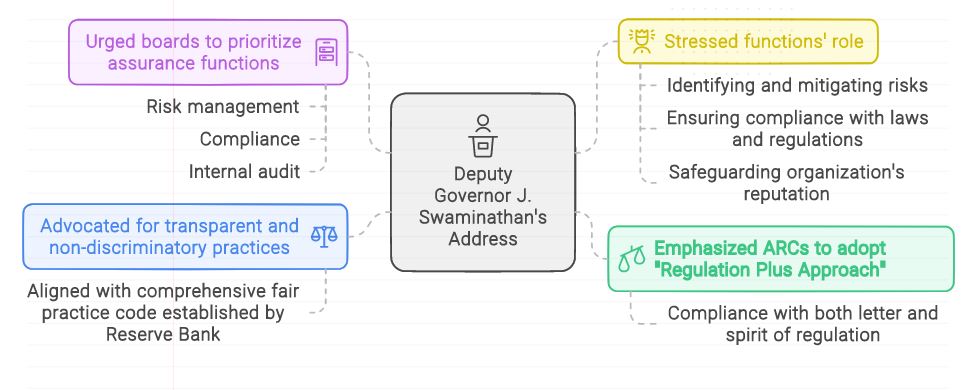
    • After the allegations of ‘unethical practices’ by ARCs, including aiding defaulting promoters, the RBI intervened, with the Deputy Governor urging integrity and ethical conduct in their operations.

    The new guidelines laid out by the RBI:

    • Enhanced Capital Requirements:
      • Minimum Capital Requirement Increase: ARCs are now mandated to maintain a minimum capital requirement of Rs 300 crore, a significant increase from the previous Rs 100 crore stipulation established on October 11, 2022.
      • Transition Period for Compliance: Existing ARCs are granted a transition period to reach the revised Net Owned Fund (NOF) threshold of Rs 300 crore by March 31, 2026.
      • Interim Requirement: However, by March 31, 2024, ARCs must possess a minimum capital of Rs 200 crore to comply with the new directives.
    • Supervisory Actions for Non-Compliance:
      • ARCs failing to meet the prescribed capital thresholds will face supervisory action, potentially including restrictions on undertaking additional business until compliance is achieved.
    • Expanded Role for Well-Capitalized ARCs:
      • Empowerment of Well-Capitalized ARCs: ARCs with a minimum NOF of Rs 1000 crore are empowered to act as resolution applicants in distressed asset scenarios.
      • Investment Opportunities: These ARCs are permitted to deploy funds in government securities, scheduled commercial bank deposits, and institutions like SIDBI and NABARD, subject to RBI specifications. Additionally, they can invest in short-term instruments such as money market mutual funds, certificates of deposit, and corporate bonds commercial papers.
      • Investment Cap: Investments in short-term instruments are capped at 10% of the NOF to mitigate risk exposure.

    About Asset Reconstruction Company (ARC):

    Description
    About ARC is a special financial institution that acquires debtors from banks at a mutually agreed value and attempts to recover the debts or associated securities.
    Regulation
    • ARCs are registered under the RBI.
    • Regulated under the SARFAESI Act, 2002 (Securitisation and Reconstruction of Financial Assets and Enforcement of Securities Interest Act).

    (Note: For reading more details on SARFAESI Act you can visit on our article named “RBI asks for SARFAESI Act Compliance” of Sept 2023)

    Objective ARCs take over a portion of the bank’s non-performing assets (NPAs) and engage in asset reconstruction or securitization, aiming to recover the debts.
    Functions
    • Asset Reconstruction: Acquisition of bank loans or other credit facilities for realization.
    • Securitization: Acquisition of financial assets by issuing security receipts.
    Foreign Investment 100% FDI allowed in ARCs under the automatic route.
    Limitiations
    • ARCs are prohibited from undertaking lending activities.
    • They can only engage in securitization and reconstruction activities.
    Working
    • Bank with NPA agrees to sell it to ARC at a mutually agreed value.
    • ARC transfers assets to trusts under SARFAESI Act.
    • Upfront payment made to bank, rest through Security Receipts.
    • Recovery proceeds shared between ARC and bank.
    Security Receipts Issued to Qualified Institutional Buyers (QIBs) for raising funds to acquire financial assets.
    Significance
    • Banks can clean up their balance sheets and focus on core banking activities.
    • Provides a mechanism for resolution of NPAs and debt recovery

    PYQ:

    [2018] With reference to the governance of public sector banking in India, consider the following statements:

    1. Capital infusion into public sector banks by the Government of India has steadily increased in the last decade.
    2. To put the public sector banks in order, the merger of associate banks with the parent State Bank of India has been affected.

    Which of the statements given above is/are correct?

    (a) 1 only

    (b) 2 only

    (c) Both 1 and 2

    (d) Neither 1 nor 2

  • Forest Conservation Efforts – NFP, Western Ghats, etc.

    New Study Unveils the Origins and Challenges of Baobab Trees

    Why in the News?

    A recent study uncovers the origins and evolution of Baobabs, uniquely shaped trees in Madagascar, with species also native to Africa and Australia.

    Do you know?

    • Mandu, in the Dhar district of Madhya Pradesh, is perhaps the only place in India where baobab trees are found in abundance, with an estimated 1,000 trees in the periphery of the town.
    • Madhya Pradesh state government has plans to apply for a GI (Geographical Indication) tag for the Khorasani Imli or the fruit of the baobab.
    • A Baobab tree near the Golconda Fort in Andhra Pradesh is believed to be more than 400 years old.
    • Aside from Mandu, baobab trees have been recorded in Prayagraj (formerly Allahabad) in Uttar Pradesh, Wai in Maharashtra, and some places in Gujarat and Andhra Pradesh.

    About Baobab Trees

    • Baobabs are deciduous trees (that lose their leaves in autumn) belonging to the genus Adansonia. It comprises 8 distinct species:
      • Adansonia digitata in continental Africa.
      • Adansonia gregorii in Northwestern Australia.
      • 6 other species endemic to Madagascar.
    • Baobabs are known for:
      • Great heights, with some extending up to 50 metres.
      • Exceptionally long lifespans, going up to 2,000 years.
    • They have trunks with large circumferences; thin, spindly branches.
    • Nicknamed “upside down” trees because their tops resemble uprooted plants turned upside down.

    Conservation Status:

    • Threatened’ with extinction according to the IUCN Red List of Threatened Species.
    • Least Concern’ category but still faces threats such as residential and commercial development and livestock farming and ranching.

    Importance of Conservation:

    • The study emphasized the conservation of the baobab as a keystone species:
      • Keystone species provide essential resources, such as food or shelter, for a guild of animals.
      • In return, these animals provide essential services, such as pollination or diaspore dispersal.

    Why Baobab tree is called the “Mother of Forests”?

    • They can store large amounts of fresh water in their extraordinary trunks.
    • It also allows the baobab tree to produce nutritious fruits even during the driest years.
    • This makes them true life savers during times when water is scarce.
    • In local cultures, they are revered for multiple uses:
      • Edible fruits and seeds.
      • Seed oil used for cooking.
      • Bark fibre used for clothing.


    PYQ:

    [2021] “Leaf litter decomposes faster than in any other biome and as a result the soil surface is often almost bare. Apart from trees, the vegetation is largely composed of plant forms that reach up into the canopy vicariously, by climbing the trees or growing as epiphytes, rooted on the upper branches of trees.” This is the most likely description of​-

    (a) Coniferous forest

    (b) Dry deciduous forest

    (c) Mangrove forest

    (d) Tropical rain forest

  • Food Procurement and Distribution – PDS & NFSA, Shanta Kumar Committee, FCI restructuring, Buffer stock, etc.

    How Punjab and Haryana remain key to National Food Security?

    Why in the News? 

    The recent drop in agricultural production due to El-Nino has highlighted once more the critical role Punjab and Haryana play in ensuring India’s food security.

    Role of Punjab and Haryana for the Food Security of India:

    • Punjab and Haryana are crucial in years with bad monsoons or climate shocks.
    • The average per hectare wheat and paddy yields in these states are 4.8 tonnes and 6.5 tonnes, respectively, significantly higher than the all-India averages of 3.5 tonnes and 4.1 tonnes.

    Wheat Production:    

    • Traditional procurement: Until the mid-2000s, Punjab and Haryana supplied over 90% of the wheat for India’s public distribution system (PDS) and other government programs.
    • Impact of the Green Revolution: The spread of high-yielding varieties to other states and the establishment of infrastructure for buying grain at minimum support prices (MSP) reduced Punjab and Haryana’s share to around 65% by the early 2010s.
      • In 2019-20 and 2020-21, total wheat procurement reached record levels (39-43.3 million tons), with Punjab and Haryana’s share falling to just over 50%. Madhya Pradesh became the top wheat procurer in 2019-20, surpassing Punjab.
    • Climate Shocks: The last three years have seen production setbacks due to climate shocks, including: An unseasonal temperature surge in March 2022. Heavy rain in March 2023 during the grain formation stage.

    Recent Climate Impact: 

    In 2023-24, unusually warm temperatures in November-December impacted wheat yields, especially in central India. The delayed winter, attributed to El Nino, led to premature flowering and shortened the vegetative growth phase.

    Regional Impact:

    • Madhya Pradesh’s wheat procurement dropped significantly from 12.8-12.9 million tons in 2019-20 and 2020-21 to about 4.6 million tons.
    • Uttar Pradesh and Rajasthan also saw significant declines from their 2020-21 highs.
    • Punjab and Haryana have been less affected due to longer winters and later sowing (early to mid-November).
    • Uttar Pradesh and Bihar reported good production due to near-normal March temperatures, but much of their produce was sold to private traders at prices above the MSP.

    Rice production in the states:

    • Traditional Procurement: Government rice procurement was historically concentrated in Punjab, Haryana, and the Godavari-Krishna and Kaveri delta regions of Andhra Pradesh (AP) and Tamil Nadu (TN).
    • Diversification: There has been a diversification in rice procurement, with new states like Telangana, Chhattisgarh, Odisha, and Uttar Pradesh (UP) becoming significant contributors to the Central pool.
    • Change in Procurement Shares: The combined share of Punjab and Haryana in total rice procurement decreased from 43-44% in the early 2000s to an average of 28.8% in the four years ending 2022-23. In the current crop year, this share has risen to around 32.9%, with some procurements still pending in Telangana, AP, and TN.

    Impact of Irrigation:

    • Farmers in Punjab and Haryana, with assured access to irrigation, did not suffer production losses from last year’s patchy monsoon attributed to El Niño.
    • In contrast, states like Telangana saw reduced rabi paddy planting and struggled with irrigation due to depleted groundwater levels.

    Policy implications

    • NFSA Entitlements: Under the NFSA, about 813.5 million people are entitled to receive 5 kg of wheat or rice per month through the Public Distribution System (PDS) at highly subsidized prices.
    • Current Government Policy: Since January 2023, the current government has been providing this grain to all NFSA beneficiaries free of cost.

    Way Forward:

    • Adoption of Climate-Resilient Varieties: Develop and promote high-yield, climate-resilient wheat varieties that are tolerant to heat, drought, and diseases.
    • Efficient Irrigation Systems: Invest in modern irrigation systems such as drip and sprinkler irrigation to ensure efficient water use.
    • Invest in Agricultural Research: Increase funding for agricultural research institutions to develop new wheat varieties and innovative farming techniques.

    Mains PYQ:

    Q Why did the Green Revolution in India virtually by-pass the eastern region despite fertile soil and good availability of water? (UPSC IAS/2014)

  • Electoral Reforms In India

    Can parties be de-recognized or de-registered? | Explained

    Why in the News?

    The ECI urges star campaigners to uphold societal harmony, sparking debate on its efficacy in curbing MCC violations and enforcing norms.

    Criteria for Registration of Political Parties:

    • Section 29A of the Representation of the People Act, 1951 (RP Act) outlines the criteria for registering a political party with the Election Commission of India (ECI).
    • Any party seeking registration must submit a copy of its memorandum or constitution. This document must declare that the party will faithfully adhere to the Constitution of India.
    • Additionally, it must commit to the principles of socialism, secularism, and democracy, and uphold the sovereignty, unity, and integrity of India.

    How are political parties registered in India?   

    • A political party recognized as a ‘National’ or ‘state’ party under the Election Symbols (Reservation and Allotment) Order, 1968 (Symbols Order) by the Election Commission of India (ECI) is referred to as a Recognized Political Party (RPP).
    • Recognition as a ‘National’ or ‘state’ political party is contingent upon meeting specific criteria, such as winning a requisite number of seats or obtaining a required percentage of votes in a general election to the Lok Sabha or State Assembly.
    • Currently, there are 6 National political parties and 61 state political parties that have been granted recognition. Recognized parties benefit from additional privileges, including the reservation of a symbol during elections and the designation of forty ‘star campaigners’.
    • Registered political parties enjoy the following legal benefits:
      • Tax exemption for donations received under Section 13A of the Income Tax Act, 1961.
      • Common symbol for contesting general elections to the Lok Sabha/State Assemblies
      • Twenty ‘star campaigners’ during the election campaign. As per the ECI, there are 2,790 active registered political parties in India.

    What are the issues related Criteria for Deregistration?

    • Misuse of Privileges: Non-contesting RUPPs raise concerns about potential misuse of benefits like income tax exemption and donations for purposes such as money laundering.
    • Absence of De-registration Powers: The Representation of the People Act (RP Act) does not explicitly empower the Election Commission of India (ECI) to de-register political parties for failure to contest elections, conduct inner-party elections, or submit required returns.
    • Legal Limitations: The Supreme Court ruling in “Indian National Congress versus Institute of Social Welfare & Ors (2002)” affirmed that the ECI lacks the authority to de-register political parties under the RP Act, except under extraordinary circumstances such as fraudulent registration or cessation of allegiance to the Constitution.
    • Violations of Model Code of Conduct (MCC): Recognised political parties have been found guilty of breaching the MCC, which prohibits the exploitation of caste and communal sentiments for electoral gain, as well as voter bribery and intimidation.

    What needs to be done? (Way Forward)

    • The Election Commission of India (ECI) has proposed amendments to the law in its 2016 memorandum for electoral reforms, aiming to grant the ECI the authority to deregister political parties.
    • The Law Commission’s 255th report on ‘Electoral reforms’ in 2015 also advocated for amendments allowing the de-registration of a political party if it abstains from contesting elections for 10 consecutive years. These recommendations should be put into effect.
    • Paragraph 16A of the Symbols order grants the ECI the power to suspend or revoke the recognition of a recognized political party if it fails to adhere to the Model Code of Conduct (MCC) or comply with lawful directives from the Commission.
    • Although this provision has been utilized only once, as seen in the temporary suspension of the National People’s Party’s recognition in 2015 for non-compliance with ECI directives, stricter enforcement of this measure would foster adherence to the MCC.

    Mains PYQ:

    Q Discuss the role of the Election Commission of India in the light of the evolution of the Model Code of Conduct.(UPSC IAS/2022)

  • Mother and Child Health – Immunization Program, BPBB, PMJSY, PMMSY, etc.

    Do no harm: conservative, non-surgical approaches advised over hysterectomy for gynecological conditions

    Why in the News?

    According to the recent report published in Women’s Reproductive Health under the title ‘Reported Reasons for Undergoing Hysterectomy Among Women Aged 45 Years and Above‘, it was seen that data is lacking on women’s health conditions; thus the true magnitude is never known, impeding funding and escaping the attention of policymakers.

    What is Hysterectomy?

    • A hysterectomy is surgery to remove the uterus. After a hysterectomy, you will not menstruate (have periods) or be able to get pregnant.
    • Uterus removal is a common treatment for a variety of conditions that affect a woman’s reproductive organs.

    Key highlights of the Report:

    Reasons for Undertaking Hysterectomy:

    • Medical Conditions: Common medical reasons such as fibroids, excessive bleeding, prolapse, endometriosis, and cancer.
    • Socioeconomic Factors: Influence of sociodemographic factors like age, education, income, and access to healthcare services.
    • Cultural and Regional Differences: Variations in hysterectomy rates and reasons across different regions and cultural contexts within India.

    Frequency of Hysterectomy:

    • Global Context: Hysterectomy is one of the most frequently performed surgeries among women worldwide.
    • Prevalence in India: The countrywide hysterectomy prevalence rate is 11.5%. The highest prevalence is reported in the southern (18.2%) and western (12.7%) regions of India.
      • According to the NFHS-5 (2019-2021), 3.3% of women aged 15–49 underwent hysterectomy, a slight increase from 3.2% in NFHS-4. Alarmingly, 50% of women who underwent hysterectomy did so before the age of 35.
    • Regional Variations: Andhra Pradesh has the highest prevalence rate at 63 per 1,000 women, followed by Telangana (55 per 1,000), Karnataka (29 per 1,000), and Punjab (23 per 1,000).
    • Sociodemographic Factors: Higher risk of hysterectomy among women from the OBC category, the richest wealth quintile, those with lower education levels, those who married at a younger age, and those with three or more children.

    Most Cited Reasons for Hysterectomy:

    • Primary Reasons: 
        • Heavy Menstrual Bleeding or Pain: Cited by 32.1% of women as the reason for undergoing hysterectomy.
        • Fibroids or Cysts: Cited by 24.2% of women as the reason for the surgery.
        • Uterine Prolapse: Cited by 16.3% of women.
    • Less Frequently Reported Reasons:
        • Cancer: Among the least reported reasons for undergoing a hysterectomy.
        • Severe Post-Partum Hemorrhage is also among the least reported reasons.
    • Sociodemographic Factors: 
      • Higher risk of undergoing hysterectomy among women from the OBC category, the richest wealth quintile, those with lower education levels, those who married at a younger age, and those with three or more children.

    What are the Ministerial guidelines?

    • Hysterectomy is a major surgery with a long recovery time and should be considered only after less invasive treatments have been tried.
    • The government emphasizes on attempting nonsurgical alternatives in elective cases before opting for a hysterectomy.

    Way Forward:

    • Healthcare Providers: Train healthcare providers about the potential overuse of hysterectomy and emphasize the importance of considering nonsurgical alternatives.
    • Public Awareness: Launch awareness campaigns to educate women about gynecological health, the implications of hysterectomy, and available alternatives.

    Mains PYQ:

    Q Public health system has limitation in providing universal health coverage. Do you think that private sector can help in bridging the gap? What other viable alternatives do you suggest? (UPSC IAS/2015)

  • Historical and Archaeological Findings in News

    The Battle of Udagai: Cholas vs. Cheras

    Why in the news?

    • The southern part of India historically ruled by the Chera, Chola, and Pandya kings, was known for its great literature, art, culture, and temple architecture.
    • It also witnessed fierce battles among these kingdoms led by Raja Raja I.

    Who was Raja Raja I?

    • His reign marked a golden era for the Chola Empire through extensive military conquests, administrative reforms, and cultural patronage.
    • Ponniyin Selvan (The Son of Ponni) is a Tamil language historical fiction novel with the story of the early days of Prince Raja Raja I (also called Arulmozhivarman).

    Here are detailed facts and key events from the reign of Raja Raja I:

    Background and Ascension to the Throne:

    • Full Name: Arulmozhivarman, popularly known as Raja Raja Chola I.
    • Reign:
      • He reigned from 985 AD to 1014 AD, taking the throne following the death of his father Sundara Chola.
      • He was succeeded by Rajendra I.

    Military Conquests:

    Raja Raja I embarked on several military campaigns that significantly expanded the Chola Empire.

    • He conquered parts of what is now Tamil Nadu, northern parts of Sri Lanka, and the Maldives, consolidating the Chola influence across the region.
    • His most notable military achievement was the conquest of the ancient Chera capital of Mahodayapuram and the invasion of Sri Lanka, where he captured the northern half of the island.
    • Nagapattinam Port was his major naval base.
    • His success allowed his son Rajendra Chola to lead the Chola invasion of Srivijaya (Sumatra) and Kadaram (Malaysia).

    Administrative Reforms:

    • He streamlined the administrative structure of the empire with precise revenue collection and management systems.
    • He implemented a well-organized provincial administration with efficient governance, dividing his empire into various provinces under the control of local governors.

    Cultural Contributions and Temple Building:

    Raja Raja I was a great patron of the arts and architecture. Under his reign, Chola architecture and Tamil literature flourished.

    • Construction of the Brihadeeswara Temple in Thanjavur (Dravidian style).
    • Completed in 1010 AD
    • He also supported the revival of Hinduism and promoted Shaivism, actively endowing temples and supporting the livelihood of the temple priests. He called himself Shivapada Shekhara’.
    • He also allowed for the flourishing of other religious practices for example Vaishnavism and Buddhism.

    Trade and Diplomacy:

    • His reign saw an increase in trade and diplomatic contacts with far-off kingdoms, including those in Southeast Asia.
    • The Chola navy played a crucial role in protecting and enhancing trade routes in the Bay of Bengal and the Arabian Sea.
    • To promote trade, Rajaraja sent the first Chola mission to China.

    About the Battle of Udagai/Udayagiri

    • It occurred in 1003 CE between the Cholas and the Cheras at Udagai, now known as Udayagiri in Kalkulam taluk of Kanniyakumari district, during the reign of Raja Raja I, the greatest of Chola kings.
    • It was the bloodiest war in medieval Indian history, where the Cholas plundered Udagai and returned to their headquarters in Thanjavur with tonnes of gold and the best elephants.
    • The battle began with the conquest of Kanthalur Salai in the Chera Kingdom.
    • The Chola army was led by Raja Raja’s son Rajendra.

    Evidence from Epigraphy

    • The Discovery of a Chola period epigraphy near Chengam suggests that Salai was an army training centre run by the Cheras.
    • The training centre was a challenge to the Cholas.
    • The battle marked the end of the relationship between the Cholas and the Cheras, which had been established through marriages.

    Aftermath of the War

    • The battles terminated the relationship between the Cholas and Cheras during the reign of Rajendra Chola.
    • In 1004 CE, Raja Raja celebrated his birthday grandly in the Chera kingdom, renaming the village Muttam as Mummudi Chola Nalloor.
    • He granted the temple at Thirunanthikarai for a seven-day celebration of his birthday.
    • Subsequently, he returned to Thanjavur with gold, elephants, and cattle.
    • Kamban Manian, a Chola general, brought a Shiva idol made of emerald to Thirupazhanam near Thanjavur, though it is no longer found there.

    PYQ:

    [2020] Consider the following events in the history of India:

    1. Rise of Pratiharas under King Bhoja.
    2. Establishment of Pallava power under Mahendravarman-I.
    3. Establishment of Chola power by Parantaka-I.
    4. Pala dynasty founded by Gopala.

    What is the correct chronological order of the above events, starting from the earliest time?

    (a) 2 – 1 – 4 – 3

    (b) 3 – 1 – 4 – 2

    (c) 2 – 4 – 1 – 3

    (d) 3 – 4 – 1 – 2

  • Wildlife Conservation Efforts

    Scientists document Sperm Whales ‘Phonetic Alphabet’

    Why in the news?

    • A recent study has uncovered the intricate structure of their communication system, which appears to possess a “phonetic alphabet,” offering new insights into the depth of their social interactions.
      • Sperm whales, the largest toothed whales, utilize a diverse array of vocalizations to communicate, including bursts of clicking noises known as ‘codas’.

    About Sperm Whales (Physeter macrocephalus)).

    • Sperm whales, the largest toothed whales
    • It has a series of vertical creases or wrinkles on its body and a small, inconspicuous dorsal fin located near the rear of its back.
    • The sperm whale uses ‘echolocation’ to navigate and locate prey during these deep dives.
      • Prey: Sperm whales primarily feed on squid (including the giant squid) sharks and deep-sea fish.
      • Habitat: Sperm whales are found in deep oceanic waters worldwide, from the equator to the edges of the pack ice in the Arctic and Antarctic.
      • Behavior: Known for their exceptional diving capabilities, sperm whales can dive to depths of over 2,000 meters (6,560 feet) and stay submerged for up to 90 minutes. They are social animals, typically found in groups called pods’, which can contain up to twenty individuals.
    • Conservation Status: Listed as ‘VULNERABLE’ by the IUCN.
      • Threats cause: Collisions with ships, entanglement in fishing gear, and noise pollution.

    Insights from the Study:

    • Expressivity: The study, which utilized data from Project CETI demonstrated that sperm whale calls exhibit a broader range of expressivity than previously recognized, hinting at a nuanced mode of communication.
    • Social Dynamics: Like all marine mammals, sperm whales rely heavily on vocalizations as an integral aspect of their social interactions.
    • Contextual Analysis: The next phase of research aims to decipher the behavioural context surrounding sperm whale vocalizations, shedding light on their potential meanings.

    About Project CETI (Cetacean Translation Initiative)

    • Project CETI is a non-profit, interdisciplinary scientific and conservation initiative on a mission to listen to and translate the communication of sperm whales off the island of Dominica in the Eastern Caribbean.


    PYQ:

    [2013] Consider the following animals

    1. Sea cow
    2. Sea horse
    3. Sea lion

    Which of the above is/are mammal/mammals?

    (a) 1 only

    (b) 1 and 3 only

    (c)  2 and 3 only

    (d) 1, 2 and 3

  • Land Reforms

    Supreme Court lays out 7 Sub-Rights of Right to Property

    Why in the news?

    The Supreme Court’s ruling safeguards landowners from arbitrary government acquisition, emphasizing adherence to Article 300A, ensuring the constitutional right to property and sub-rights compliance.

    Procedural Sub-Rights under Right to Property

    These seven rights are foundational components of a law that is in tune with Article 300A, and the absence of one of these or some of them would render the law susceptible to challenge:

    1. Right to Notice: Individuals must be informed about the intention to acquire their property.
    2. Right to Be Heard: Affected individuals have the right to voice objections.
    3. Right to a Reasoned Decision: The government must justify the acquisition with a reasoned decision.
    4. Public Purpose Justification: Acquisitions must serve a demonstrable public purpose.
    5. Right of Restitution or Fair Compensation: Landowners are entitled to fair compensation for their property.
    6. Right to An Efficient and Expeditious Process: Acquisition procedures should be efficient and adhere to set timelines.
    7. Right of Conclusion: The process concludes with the physical transfer of property; failure to take possession renders the acquisition incomplete.

    Back2Basics: Right to Property in India

    • The Right to Property was initially a fundamental right under the Constitution of India, included in Part III (Articles 19 and 31).
    • Through the 44th Amendment Act of 1978, this right was removed from the list of fundamental rights. It was reclassified as a constitutional right under Article 300A.

    About Article 300A:

    • Article 300A was introduced to the Constitution, stating that “No person shall be deprived of his property save by authority of law.”
    • Legal Framework: This implies that the government can still acquire private property, but this acquisition must be done through a law that justifies the acquisition and provides for fair compensation to the affected parties.

    Current Legal Status

    • Not a Fundamental Right: The Right to Property is no longer a fundamental right, which means it cannot be directly enforced through the Supreme Court or High Court under Article 32 or Article 226. However, it remains a constitutional right.
    • Protection under Law: Any person deprived of his property under any state enactment can approach a High Court challenging the legality of the act under Article 300A.
    • Legal Recourse: Affected individuals have the right to legal recourse if they believe that the acquisition was not justified or that the compensation was inadequate.

    Recent Judgment: Human Rights 

    • Case Background: The judgment supported a Calcutta High Court decision that dismissed an appeal by the Kolkata Municipal Corporation regarding the acquisition of private land.
    • Court’s Order: The Corporation was ordered to compensate with ₹5 lakh for costs within 60 days.
    • Human Rights Perspective: The right to property is not only protected as a constitutional right but has also been recognized as a human right by a “Bench of Justices P.S. Narasimha and Aravind Kumar”.

    Legal Interpretations and Clarifications

    • Justice Narasimha clarified that the phrase ‘authority of law’ in Article 300A extends beyond the state’s power of eminent domain.
    • It necessitates a proper legal framework for property acquisition.
    • The ruling underscored that mere possession of eminent domain power and the provision of compensation do not justify compulsory acquisition if due processes are not followed.

    PYQ:

    [2021] What is the position of the Right to Property in India?​

    (a) Legal right available to citizens only

    (b) Legal right available to any person

    (c) Fundamental Right available to citizens only

    (d) Neither Fundamental Right nor legal right

Join the Community

Join us across Social Media platforms.
