💥UPSC 2026, 2027, 2028 UAP Mentorship (March Batch) + Access XFactor Notes & Microthemes PDF

Archives: News

  • Foreign Policy Watch: India-Middle East

    Vision 2030: Saudi Arabia’s Shift towards Modernity

    Vision 2030

    Introduction

    • Crown Prince Mohammad Bin Salman’s Vision 2030 seeks to reshape Saudi Arabia, moving away from oil dependence and embracing modernity.
    • This transformation faces resistance from traditionalists but aligns with a changing global image of Saudi Arabia as a tourist-friendly, welcoming nation.

    Al-Ula: A Modern Oasis

    • Historical Significance: Al-Ula, an ancient city along the incense route, is pivotal in MBS’s vision to modernize Saudi Arabia.
    • Breaking Stereotypes: Saudi Arabia aims to challenge traditional beliefs by welcoming tourists beyond pilgrimage destinations.
    • Nationalism Beyond Religion: The country’s evolving nationalism is detached from religion, emphasizing individual liberties and empowerment.

    Winds of Change

    • Empowering Women: Saudi Arabia promotes gender equality, offering scholarships and opportunities for young women.
    • National Transformation: Young Saudis actively participate in the modernization drive, recognizing its benefits.
    • Welcoming the ‘Other’: Saudi Arabia’s newfound friendliness towards foreigners, including easing visa norms and hosting entertainment events.

    Challenges on Path to Modernity

    • Cultural Sensitivities: Transitioning from conservative traditions is challenging, but Saudis are adapting to change.
    • Historical Significance: Al-Ula’s archaeological treasures pose challenges given their potential impact on religious perceptions.
    • Top-Down Change: Past experiences highlight the complexities of enforcing societal changes from the top.

    Global Engagement

    • Strategic Foreign Policy: Saudi Arabia’s balanced foreign policy has insulated it from regional conflicts.
    • Cultural Riches: The country aims to showcase its archaeological wonders to the world.
    • Green Initiatives: MBS’s ‘green’ approach and emphasis on renewables align with global trends.

    Opportunities for India

    • Improved Working Conditions: Indian migrant workers can expect better conditions and a renewed social contract.
    • Educational and Cultural Exchanges: Indian educators and artists have opportunities to contribute to Saudi Arabia’s educational overhaul.
    • Counter-Terrorism Cooperation: India can leverage Saudi Arabia’s counter-terrorism initiatives.
    • Bilateral Investments: Collaboration in infrastructure and service sectors presents growth potential for both nations.

    Conclusion

    • Saudi Arabia’s journey towards modernity is marked by challenges and opportunities.
    • As it reshapes its identity and engages with the world, India stands to benefit from this evolving partnership, contributing to mutual growth and cooperation.
    • Saudi Arabia’s aspiration to excel in various fields aligns with India’s interests, paving the way for a fruitful relationship.
  • Innovations in Sciences, IT, Computers, Robotics and Nanotechnology

    Merging Brain Tissue with Electronics in Computing

    Brain Tissue

    Introduction

    • Researchers have achieved a groundbreaking fusion of brain-like tissue with electronics, creating an ‘organoid neural network.’
    • This innovation marks a significant advancement in neuromorphic computing, directly incorporating brain tissue into computer systems.

    Brainoware: Brain Tissues in Computers

    • Development Team: A collaborative effort by scientists from Indiana University, the University of Cincinnati, Cincinnati Children’s Hospital Medical Centre, and the University of Florida resulted in this breakthrough.
    • Publication: The study, published on December 11, signifies a convergence of tissue engineering, electrophysiology, and neural computation, expanding the horizons of scientific and engineering disciplines.

    Context of Artificial Intelligence (AI)

    • AI’s Foundation: AI relies on artificial neural networks, silicon-based models of the human brain capable of processing vast datasets.
    • Memory and Processing Separation: Conventional AI hardware separates memory and processing units, leading to inefficiencies when transferring data between them.

    Introducing Biological Neural Networks

    • Biocomputing Emergence: Scientists are exploring biological neural networks, composed of live brain cells, as an alternative. These networks can combine memory and data processing.
    • Energy Efficiency: Brain cells efficiently store memory and process data without physically segregating these functions.

    Organoid Neural Networks

    • Biological Components: Brain organoids, three-dimensional aggregates of brain cells, were used to create an ‘organoid neural network.’
    • Formation: Human pluripotent stem cells were transformed into various brain cells, including neuron progenitor cells, early-stage neurons, mature neurons, and astrocytes.
    • Reservoir Computer: The network was integrated into a reservoir computer, comprising input, reservoir, and output layers.

    Brainoware’s Capabilities

    • Predicting Mathematical Functions: Brainoware demonstrated its ability to predict complex mathematical functions like the Henon map.
    • Voice Recognition: The system could identify Japanese vowels pronounced by individuals with a 78% accuracy rate.
    • Efficiency: Brainoware achieved comparable accuracy to artificial neural networks with minimal training requirements.

    Promising Insights and Limitations

    • Foundational Insights: The study provides crucial insights into learning mechanisms, neural development, and cognitive aspects of neurodegenerative diseases.
    • Challenges: Brainoware necessitates technical expertise and infrastructure. Organoids exhibit heterogeneous cell mixes and require optimization for uniformity.
    • Ethical Considerations: The fusion of organoids and AI raises ethical questions about consciousness and dignity.

    Future Prospects

    • Optimizing Encoding Methods: Future research may focus on improving input encoding methods and maintaining uniformity in organoids for longer experiments.
    • Complex Computing Problems: Researchers aim to tackle more intricate computing challenges.
    • Ethical Discourse: Ethical debates surrounding organoid consciousness and dignity will continue to evolve.

    Conclusion

    • The creation of Brainoware and the integration of brain organoids with computing systems represent a pioneering step towards more efficient and ethically-conscious AI systems.
    • This innovative approach may revolutionize computing paradigms while prompting profound ethical considerations.
  • Freedom of Speech – Defamation, Sedition, etc.

    Split Verdict in Kunal Kamra’s Petition: Implications of IT Rules Amendment

    Introduction

    • A two-judge Bench of the Bombay High Court recently delivered a split verdict on a comedian’s petition challenging the IT (Intermediary Guidelines and Digital Media Ethics Code) Amendment Rules, 2023.
    • These rules grant the government the authority to establish a fact-checking unit (FCU) to identify fake, false, and misleading information about the government on social media platforms.
    • The case will now be referred to a third judge by the Chief Justice of the Bombay High Court due to the disagreement between the two justices.

    Provisions of IT Rules (2023)

    • Fact-Checking Unit (FCU): Amended IT rules empower the government to establish an FCU to identify and remove fake, false, or misleading information related to the Central government’s business on social media platforms.
    • Consequences for Non-compliance: Failure to comply with FCU directives may result in intermediaries losing their safe harbour protection under Section 79 of the IT Act, 2000.

    Court’s Concerns and Observations

    • Unfettered Power: The Court expressed concerns about the government’s unfettered power in the absence of clear guidelines and guardrails, emphasizing the need for necessary safeguards.
    • Ambiguity in Terms: The Court noted ambiguity in terms like “fake, false, and misleading” which are subjective and open to interpretation, posing challenges in distinguishing between them.
    • Selective Application: The Court questioned why the IT Rules exclusively targeted digital media, leaving print media unaffected, especially when the same content appears in both forms.
    • FCU’s Role: Concerns were raised about the FCU’s role and the absence of recourse for users whose content is removed after being flagged by the FCU. The Court expressed worries about the user’s lack of remedy in such cases.
    • Overreach: The Court raised concerns about the potential overreach of the Rules, emphasizing that even well-intentioned regulations must have limits to avoid excessive use of power.
    • Lack of Opportunity for Defense: The Court found it remarkable that there was no provision in the Rules allowing an intermediary to defend or justify flagged content, violating principles of natural justice.

    Legal Arguments

    • Petitioners’ Stand: The petitioners argued that the amendment violated freedom of speech and expression under Article 19(1)(a) and did not satisfy reasonable restrictions under Article 19(2). They contended that the government’s power to decide the truth of content was excessive.
    • Government’s Stand: The government defended the FCU, stating that it would only notify intermediaries about flagged content, and the intermediaries could choose to remove it or add a disclaimer. Users aggrieved by intermediary decisions could seek legal remedies in court.

    Conclusion

    • The split verdict highlights the complexity and significance of the IT Rules (2023) and their potential impact on freedom of speech and expression.
    • The Court’s concerns about ambiguous terms, selective application, and lack of safeguards underscore the need for a balanced approach to regulate online content while protecting fundamental rights.
    • The case’s referral to a third judge will determine its outcome and implications for digital media regulation in India.
  • Right To Privacy

    Internet Shutdowns in India: Upholding Constitutional Rights

    Introduction

    • The Internet serves as a vital source of information, entertainment, healthcare, education, and livelihood.
    • However, the rampant instances of Internet suspension in India, often without public disclosure, raise concerns about constitutional rights and economic losses.

    Constitutional Provisions for Right to Internet

    Landmark Case Constitutional Provision Explanation
    Anuradha Bhasin vs. Union of India and Ors. (2020) Right to Freedom of Speech and Expression under Article 19(1)(a) Grants the right to freedom of speech and expression, which encompasses access to information and the Internet.
    Faheema Shirin RK vs. State of Kerala and others (2019) Right to Education under Article 21A Guarantees the right to education for children aged 6 to 14;

    Internet access is crucial for modern education.

    K.S. Puttaswamy (Privacy) vs. Union of India (2017) Right to Privacy under Article 21 Protects the fundamental right to privacy, and Internet access is often used for secure communication.
    Anuradha Bhasin vs. Union of India and Ors. Freedom to Practice Any Profession or Carry on Any Trade, Business, or Occupation under Article 19(1)(g) Ensures the freedom to conduct various trades, businesses, and professions, often requiring Internet access.


    Mechanisms allowing Internet Shut-downs

    Mechanism Authorities Purpose
    Temporary Suspension of Telecom Services (Public Emergency or Public Safety) Rules, 2017 Home Departments in the states, state government review committee, central government (under this law, but rarely used) Enforces shutdowns for public emergency or safety reasons.
    Section 144 of the CrPC Local law enforcement authorities Enables shutdowns, particularly before 2017, to maintain public order and safety.
    The Indian Telegraph Act, 1885, Section 5(2) Home Secretary of the Union or state governments Allows blocking of messaging during a public emergency, safeguarding public safety, or protecting sovereignty and integrity.

    Landmark Precedence: Anuradha Bhasin Judgment (2020)

    • Supreme Court’s Ruling: In January 2020, the Supreme Court of India recognized access to the Internet as a fundamental right under the Indian Constitution.
    • Restrictions Guidelines: The Court mandated that any government-imposed Internet restrictions must be temporary, limited, lawful, necessary, and proportionate. It also emphasized judicial review.

    Unfulfilled Promises and Ongoing Restrictions

    • Broken Promises: Despite the Anuradha Bhasin judgment, Internet shutdowns increased in India, making it the leader in global Internet suspensions.
    • Recent Examples: The Union Territory of Jammu and Kashmir (J&K) and Haryana have imposed Internet restrictions without timely publication of orders.
    • Compliance Issues: Lack of publication erodes public trust and limits the ability to challenge the legality of restrictions.

    Need for Transparency

    • Publication’s Significance: Non-disclosure of orders hinders legal challenges and perpetuates illegal restrictions.
    • Statutory Recognition: The government’s failure to give statutory recognition to the Supreme Court’s directions creates awareness issues.
    • Economic Impact: In 2020, India suffered $2.8 billion in losses due to 129 Internet shutdowns affecting 10.3 million individuals.

    Widespread Impact

    • Economic, Psychological, and Social Harm: Internet suspensions harm the economy and disrupt daily life, education, healthcare, and communication.
    • Democratic Right to Protest: Restrictions on Internet access hinder the democratic exercise of the right to protest.
    • Verifying Information: The Internet helps verify rumors and disseminate the truth during emergencies.

    Socio-economic Disparities

    • Mobile-Dependent Users: The majority of Internet users rely on mobile data services, making Internet restrictions detrimental to lower socio-economic groups.
    • Broadband Accessibility: Limited access to broadband Internet exacerbates the impact of shutdowns.

    Conclusion

    • To uphold constitutional rights and unlock the full potential of Digital India, the government must adhere to the Supreme Court’s guidelines, ensuring transparency and legality in Internet shutdowns.
    • Addressing compliance issues and minimizing restrictions can benefit the nation’s economic and social well-being.
  • WTO and India

    At World Economic Forum, how India made a mark

    Davos 2024: While world is fighting for land, India is winning foreign  investments at World Economic Forum

    Central Idea:

    India’s notable economic growth, showcased at Davos 2024, positions it as a global player addressing challenges such as geopolitical incidents, climate change, and technology risks. The country’s achievements in technology-driven governance, active participation in global discussions, and emphasis on socioeconomic aspects contribute to its recognition as a resilient and influential economy.

    Key Highlights:

    • Technology-driven Governance: India’s effective use of technology for governance solutions at scale is highlighted, especially in the context of Artificial Intelligence (AI).
    • Global Participation: India actively engages in global discussions, particularly on socioeconomic issues, reflecting its role as a responsible and influential partner in the world.
    • Women Empowerment: Davos discussions spotlight Indian women’s substantial contribution to the economy, managing businesses worth $37 billion annually. Advocacy for financial institution investments in women-owned businesses is emphasized.
    • Energy Transition: Amidst the focus on climate change, challenges related to energy transition are discussed, with attention to the importance of non-disruptive processes and policy strategies.
    • Equitable Growth: India’s growth trajectory is highlighted as equitable, encompassing infrastructure development, gender inclusivity, and addressing the needs of disadvantaged sections through social security measures.
    • Global Recognition: Moody’s recognizes India as a “pocket of resilience” in the face of global economic challenges, acknowledging the country’s stability and receiving attention across economic, social, and political dimensions.
    • Favorable Investment Destination: India is presented as a favored destination for global investments, with the government’s mission to achieve developed status by 2047.

    Key Challenges:

    • Geopolitical Incidents: India’s integration into the global economy makes it susceptible to geopolitical incidents, requiring a responsible approach to maintain trust.
    • Energy Transition Challenges: Balancing import dependence on fossil fuels with the need for sustainable alternatives poses challenges in India’s energy transition.
    • Inflation Risk: Sticky inflation globally poses a risk to India’s growth trajectory, requiring vigilant economic management.

    Key Terms/Phrases:

    • AI Leadership: India’s leadership role in adopting and leveraging AI for business solutions.
    • Women’s Self-Employment: The substantial contribution of Indian women, managing businesses with credit from financial institutions.
    • Green Hydrogen: Highlighting alternative energy sources, like green hydrogen, to address energy transition challenges.

    Key Quotes:

    • “India can appear as a ‘pocket of resilience’ amid the risk of sticky inflation affecting the growth trajectory of the global economy.” – Moody’s Investors Service
    • “India’s economic prowess consistently outshone several large economies, showcasing a robust growth trajectory.”

    Key Examples/References:

    • UN World Investment Report: Recognizing India as a favored destination for global investments.
    • Moody’s Investors Service: Acknowledges India’s resilience in the face of global economic challenges.

    Key Facts/Data:

    • Indian Women’s Contribution: Ninety million women are self-employed, managing businesses worth $37 billion annually.
    • Government’s Mission: Prime Minister’s goal to propel India into developed status by 2047.

    Critical Analysis:

    • Equitable Growth: The focus on growth reaching every part of the country is critical for inclusive development.
    • Global Recognition: Recognition at the global level highlights India’s role in shaping the world’s economic, social, and political landscape.

    Way Forward:

    • Continued Reforms: India should maintain a proactive approach to governance and reforms, especially in technology adoption and energy transition.
    • Global Collaboration: Strengthening collaborations with global partners ensures a more sustainable and inclusive future.
    • Inclusive Policies: Continued emphasis on gender inclusivity and social security measures contributes to a more equitable growth trajectory.
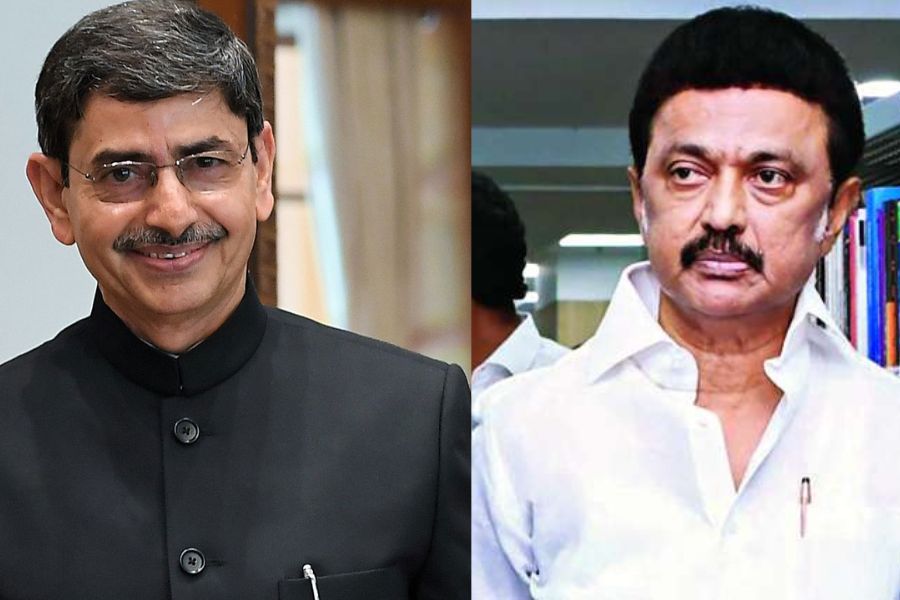
  • What is needed from a Governor is reticence

    M.K. Stalin | Governor R N Ravi 'instigates' communal hatred, is threat to  Tamil Nadu's peace: CM Stalin tells President Droupadi Murmu - Telegraph  India

    Central Idea:

    The article discusses the controversial statements made by the Tamil Nadu Governor, R.N. Ravi, regarding the factors leading to India’s Independence. Despite his background in physics and a career in the Intelligence Bureau, Mr. Ravi expressed views on historical events, specifically downplaying the impact of the Quit India movement and attributing British departure to factors like Netaji Subhas Chandra Bose’s actions and the Naval Mutiny.

    Key Highlights:

    • Governor R.N. Ravi, in breach of the expected reticence of constitutional authorities, delves into historical interpretations related to India’s Independence.
    • Ravi suggests that the Quit India movement had minimal impact on the British decision to leave, attributing it more to Netaji Subhas Chandra Bose’s Azad Hind Government and the 1946 Naval Mutiny and Air Force Rebellion.
    • Ravi’s views are reportedly based on Intelligence Bureau files, raising questions about his in-depth study of India’s national movement.

    Key Challenges:

    • Constitutional authorities, like Governors, should refrain from publicly expressing opinions on historical matters unrelated to their duties, especially without comprehensive knowledge.
    • Ravi’s assertion regarding the Quit India movement and the reasons for British departure may stir controversy and be seen as an attempt to rewrite historical narratives.

    Key Terms/Phrases:

    • Quit India movement
    • Intelligence Bureau (IB)
    • Azad Hind Government
    • Naval Mutiny and Air Force Rebellion
    • Netaji Subhas Chandra Bose
    • Mahatma Gandhi
    • Indian National Army (INA)
    • Constitutional authority

    Key Quotes:

    • “The Quit India movement made little impact on the British decision to leave India.” – Governor R.N. Ravi
    • “The British left because they felt ‘insecure’ after the ‘Naval Revolt and the Air Force Rebellion.’” – R.N. Ravi on British Prime Minister Clement Attlee’s alleged statement.

    Anecdotes:

    • The article mentions the lawyer Bhulabhai Desai, Jawaharlal Nehru, and others defending INA officers at their court martial, emphasizing the united front among leaders despite ideological differences.

    Key Statements:

    • Constitutional authorities, like Governors, are expected to maintain reticence and avoid public expressions of opinions on historical events.
    • Mr. Ravi’s views on the Quit India movement and the reasons for British departure may not align with historical consensus.

    Key Examples and References:

    • Reference to the impact of INA trials on British rule withdrawal, as noted in Kailas Nath Katju’s unpublished biography.
    • Mention of historical leaders’ admiration for Netaji Subhas Chandra Bose, despite ideological differences.

    Key Facts/Data:

    • Mr. Ravi’s background in physics and a career in the Intelligence Bureau.
    • INA trials and their impact on public sentiment, as highlighted in Kailas Nath Katju’s biography.

    Critical Analysis:

    • The article criticizes Mr. Ravi for venturing into historical interpretations without a detailed study, emphasizing the need for constitutional authorities to exercise restraint.
    • It questions the validity of Ravi’s claims regarding the Quit India movement’s impact and the factors influencing the British decision to leave.

    Way Forward:

    • Constitutional authorities should adhere to their roles and avoid making public statements on historical events.
    • Encourage informed discussions on historical matters and ensure that statements align with widely accepted historical narratives.
  • Foreign Policy Watch: India-France

    What makes the India-France ‘strategic partnership’ tick

    France touts Indian strategic partnership, seals new defence deals during  Modi visit – Euractiv

    Central Idea:

    The article discusses the robust and special “Strategic Partnership” between India and France, tracing its origins, evolution, and current dimensions. It emphasizes the enduring nature of the relationship, marked by shared values, geopolitical convergence, and mutual respect, evident in diverse sectors such as defense, space, education, and commerce.

    Key Highlights:

    • Origins and Evolution: The strategic partnership has deep roots dating back to 1998, with France being the first P-5 country to support India’s claim for a permanent seat in the UN Security Council.
    • Geopolitical Convergence: Both nations prioritize multipolarity, strategic autonomy, and share concerns about a unipolar world, contributing to their natural convergence.
    • Defense Collaboration: Collaboration includes the development of submarines, joint military exercises, and the acquisition of Rafale aircraft. The recently concluded Defense Industrial Roadmap further strengthens defense ties.
    • Space Cooperation: Cooperation in the space domain, which began in the 1960s, has seen a revival, with joint missions and agreements signed between ISRO and CNES.
    • Commercial and Civilian Ties: Efforts are underway to broaden the partnership into commercial and civilian spaces, with joint working groups in various sectors and a growing number of Indian students pursuing higher education in France.

    Key Challenges:

    • Commercial Transition: Moving the partnership from government domains to commercial and civilian spaces presents a challenge, requiring sustained efforts to enhance cooperation in diverse sectors.
    • Differences Management: While strategic partnerships don’t require convergence on all issues, managing differences privately and not publicly is crucial for maintaining a mature and resilient relationship.

    Key Terms:

    • Strategic Partnership: A special relationship between nations marked by cooperation in various domains, including defense, space, and commerce.
    • Multipolarity: A global order characterized by multiple centers of power and influence rather than a single dominant force.
    • P-5: The five permanent members of the United Nations Security Council, including France.
    • Geopolitical Focus: Shifting attention and strategic interests from one region to another based on changing global dynamics.

    Key Phrases:

    • Civilization Exceptionalism: Shared trait between India and France, emphasizing pride in their respective civilizations without imposing their values on each other.
    • Argumentative Intellectualism: Common characteristic shared by both nations, highlighting their appreciation for intellectual discourse.

    Key Quotes:

    • “India and France have valued strategic autonomy in their own fashion.”
    • “‘Strategic Partnership’ does not require convergence on all issues but sensitivity so that differences, where these exist, are expressed in private and not publicly.”

    Key Examples and References:

    • Jacques Chirac’s Declaration (1998): France’s support for India’s claim for a permanent seat in the UN Security Council.
    • Defense Industrial Roadmap: Agreements and collaborations in the defense sector, including the acquisition of Rafale aircraft and submarine development.

    Key Statements:

    • “It is clear that the two countries do share a ‘Strategic Partnership’ that is special.”
    • “Both countries were quick to espouse the virtues of multipolarity.”

    Critical Analysis:

    The article provides a comprehensive overview of the India-France strategic partnership, highlighting its historical context, geopolitical rationale, and practical manifestations. It underscores the challenges of transitioning from government-centric collaborations to broader commercial and civilian engagements. The emphasis on managing differences privately and the maturity of the relationship reflect a nuanced understanding of international diplomacy.

    Way Forward:

    • Enhanced Commercial Ties: Continued efforts to broaden the partnership into commercial and civilian sectors, fostering economic collaboration beyond defense and space.
    • Cultural and Educational Exchange: Strengthening cultural ties, fostering educational collaborations, and encouraging more Indian students to pursue higher education in France.
    • Diplomatic Sensitivity: Maintaining sensitivity in handling differences and ensuring that diplomatic disputes are resolved privately to uphold the mature and resilient nature of the partnership.

    The India-France Strategic Partnership, rooted in shared values and mutual respect, continues to evolve positively, presenting opportunities for further growth and collaboration across various domains.


  • Indian Army Updates

    [pib] Exercise ‘SADA TANSEEQ’

    Introduction

    • The inaugural edition of the India-Saudi Arabia Joint Military Exercise ‘SADA TANSEEQ’ was commenced in Rajasthan.

    Exercise ‘SADA TANSEEQ’

    • It is a joint military exercise conducted between the armed forces of India and Saudi Arabia.
    • The exercise is designed to enhance the capabilities and interoperability of the troops from both nations in conducting joint operations in semi-desert terrains.
    • It focuses on tactical training and sharing best practices in conducting operations in a sub-conventional domain.
    • The primary objective is to strengthen the bond, cooperation, and camaraderie between the Indian and Saudi Arabian armed forces.
    • It also serves as a platform for achieving shared security objectives and fostering bilateral relations between the two friendly nations.

    Key components of the Exercise

    • The exercise typically involves various military training activities such as establishing mobile vehicle checkposts, conducting cordon and search operations, house intervention drills, reflex shooting, slithering, and sniper firing.
    • These activities help in building the capacity of the troops to work together effectively in semi-desert terrains, which can be crucial for addressing security challenges.
  • Innovations in Sciences, IT, Computers, Robotics and Nanotechnology

    Unlocking the Science of E Ink Displays

    E Ink Displays

    Introduction

    • E-readers like the Kindle offer an enjoyable reading experience with their paper-like E Ink displays.
    • Developed at MIT in the 1990s, E Ink technology is now owned by E Ink Corporation.

    What is E Ink Displays?

    • Microcapsules and Charges: E Ink displays operate using microcapsules containing positively charged white particles and negatively charged black particles suspended in fluid. By applying electrical charges, these particles rise to the surface, creating text and images.
    • Reflective Light: Unlike LCD and LED displays that require backlighting, E Ink displays reflect ambient light, resembling paper and reducing eye strain during prolonged reading.
    • Energy Efficiency: E Ink’s lack of backlighting results in minimal power consumption, as energy is only used when the image changes. This makes it ideal for devices like e-readers and ensures a long battery life.
    • Outdoor Legibility: E Ink displays offer high contrast and readability even under bright lighting conditions, unlike LCD/LED displays that suffer under sunlight.

    Differentiating E Ink from E Paper

    • While often used interchangeably, E Ink and E Paper represent distinct display technologies. E Paper encompasses any screen mimicking real paper.
    •  Whereas E Ink specifically employs microcapsules with white and black particles in a clear fluid.

    Applications of E Ink Displays

    • E Ink in E-Readers: E Ink gained popularity in early e-readers like the Amazon Kindle, offering clear text even in bright sunlight. It remains a feature in Kindle and Kobo e-readers today.
    • Brief Stint in Mobile Devices: E Ink briefly appeared in some early cell phones but was eventually replaced by more advanced displays.
    • Revival in Mobile Devices: Some startups are reintroducing E Ink in smartphones, emphasizing reduced screen time and enhanced focus on communication and productivity.
    • Beyond Mobile Devices: E Ink displays are expanding to various urban applications, including bus stop displays and walking direction signs. Restaurants are adopting E Ink menu boards for their matte, glare-free surfaces and readability in diverse lighting conditions.

    Pros and Cons  

    • Advantages: E Ink displays excel in low power consumption, making them suitable for devices requiring extended battery life. They also minimize eye strain due to their paper-like visual experience, matte surface, and outdoor readability.
    • Drawbacks: E Ink displays have slower refresh rates compared to LCD and OLED screens, rendering them unsuitable for video or animation. They also have limitations regarding color and resolution and remain relatively expensive for larger sizes.
  • Tax Reforms

    Why Centre plans to replace the Indian Stamp Act, 1899 with a new law

    stamp

    Introduction

    • Stamp duty, a tax levied for registering various documents, plays a significant role in India’s financial landscape.
    • However, the existing Indian Stamp Act, 1899, has faced challenges with redundancy and non-uniform application.
    • To address these issues, the Ministry of Finance has introduced the ‘Indian Stamp Bill, 2023,’ seeking to revamp and modernize the stamp duty regime.

    Understanding Stamp Duty

    • Nature of Stamp Duty: Stamp duty is a government tax levied for the registration of various documents, such as agreements and transaction papers, with the registrar.
    • Tax Calculation: The amount is typically a fixed value based on the document’s nature or a percentage of the agreement’s stated value.

    Scope of Stamp Duty

    • Applicable Documents: Stamp duties are imposed on a range of documents, including bills of exchange, cheques, promissory notes, bills of lading, letters of credit, insurance policies, share transfers, debentures, proxies, and receipts.
    • Jurisdiction: While levied by the Central government, stamp duty revenues are collected by individual states within their territories, as authorized by Article 268 of the Constitution.

    Indian Stamp Act, 1899

    • Fiscal Legislation: The Indian Stamp Act, 1899, is a fiscal statute governing the imposition of taxes in the form of stamps on transaction-recording instruments.
    • Instrument Definition: Under Section 2 of the Act, an “instrument” encompasses any document creating, transferring, limiting, extending, extinguishing, or recording any right or liability.
    • Stamp Characteristics: A “stamp” is defined as any mark, seal, or endorsement authorized by the State Government, including adhesive or impressed stamps, for the Act’s duty purposes.
    • Taxable Instruments: Section 3 of the 1899 Act specifies that certain instruments or documents are chargeable with amounts listed in Schedule 1 of the Act, including bills of exchange and promissory notes.

    Reasons for the Indian Stamp Bill, 2023

    • Redundancy and Inoperability: The Ministry of Finance cites the redundancy and inoperability of several provisions within the Indian Stamp Act, 1899.
    • Lack of Uniformity: The absence of provisions for digital e-stamping and the lack of consistent stamp duty legislation across Indian states necessitate a new law.

    Notable Provisions in the Draft Bill

    • Digital E-stamping: The draft Bill introduces provisions for digital e-stamping, enabling electronic payment of stamp duty.
    • Digital Signatures: It includes provisions for digital signatures, redefining “executed” and “execution” to mean “signed” and “signature,” incorporating electronic records and signatures as defined in the Information Technology Act, 2000.
    • Penalty Enhancements: The draft Bill proposes increased penalties, raising the maximum penalty from Rs 5,000 to Rs 25,000 for contravention of the law and imposing a daily penalty of Rs 1,000 for repeated offenses.

    Conclusion

    • The ‘Indian Stamp Bill, 2023’ represents a significant step towards modernizing stamp duty laws in India.
    • By addressing the shortcomings of the existing legislation and introducing digital-friendly provisions, the bill aims to streamline and enhance the stamp duty regime, facilitating smoother transactions and compliance in the country’s financial landscape.

Join the Community

Join us across Social Media platforms.