💥UPSC 2027,2028 Mentorship (May Batch) + Access XFactor Notes & Microthemes PDF

Archives: News

  • Indian Missile Program Updates

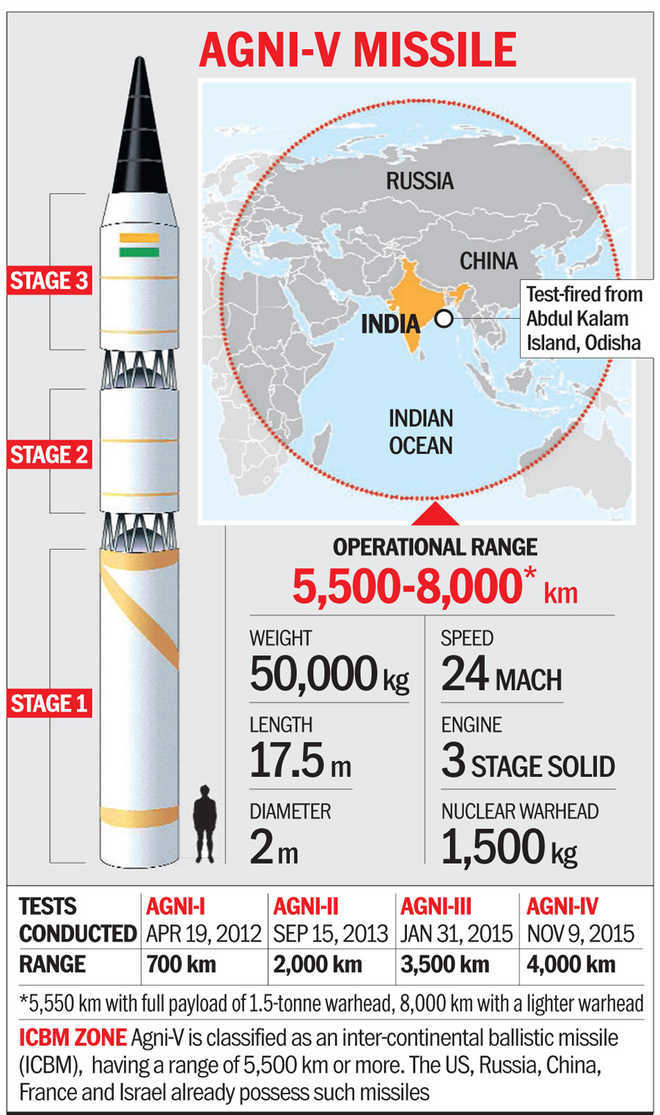
    India test-fires Agni-V Ballistic Missile amid LAC heat

    agni

    India successfully carried out the night trials of the Agni V nuclear-capable ballistic missile days after Indian and Chinese troops clashed in Tawang district of Arunachal Pradesh.

    Why in news?

    • It was a midnight test fire.
    • And there are rumours about the increased range and stealth capabilities of Agni-V missile.

    Agni Missiles

    agni

    • Agni missiles are long range, nuclear weapons capable surface to surface ballistic missile.
    • The first missile of the series, Agni-I was developed under the Integrated Guided Missile Development Program (IGMDP) and tested in 1989.
    • After its success, Agni missile program was separated from the IGMDP upon realizing its strategic importance.
    • It was designated as a special program in India’s defence budget and provided adequate funds for subsequent development.

    Variants of Agni missiles

    1. Agni I: It is a Medium Range Ballistic Missile with a Range of 700-800 km.
    2. Agni II: It is also a Medium Range Ballistic Missile with a Range more than 2000 km.
    3. Agni III: It is also an Inter-Medium Range Ballistic Missile with Range of more than 2,500 Km
    4. Agni IV: It is also an Inter-Medium Range Ballistic Missile with Range is more than 3,500 km and can fire from a road mobile launcher.
    5. Agni-V: Currently it is the longest of Agni series, an Inter-Continental Ballistic Missile (ICBM) with a range of over 5,000 km.
    6. Agni- VI: The longest of the Agni series, an Inter-Continental Ballistic Missile (ICBM) with a range of ICBM 11,000–12,000 km.

    Strategic significance of Agni Missiles

    • The success of AGNI missiles is in line with India’s stated policy to have ‘credible minimum deterrence’ that underpins the commitment to ‘No First Use’.
    • What makes Agni 5 agile is that it is a “canisterised” missile. It means that the missile can be launched from road and rail platforms, making it easier for it to be deployed and launched at a quicker pace.
    • The canisterisation also gives the missile a longer shelf life, protecting it from the harsher climatic conditions.
    • While India is among the handful of nations with ICBM capability.
    • The next generation of the missile, Agni VI, under development, is expected to have a range of around 8,000 km.


    Click and get your FREE Copy of CURRENT AFFAIRS Micro Notes

    (Click) FREE 1-to-1 on-call Mentorship by IAS-IPS officers | Discuss doubts, strategy, sources, and more
  • Women empowerment issues – Jobs,Reservation and education

    The silent revolution of “Nari Shakti”

    revolution

    Context

    • On the occasion of the 75th year of India’s independence, the Prime Minister articulated a bold vision that in the coming 25 years, “Nari Shakti” would play a vital role in India’s socio-economic developmental journey.

    Click and get your FREE Copy of CURRENT AFFAIRS Micro Notes

    Background: Status of women In India

    • Elevated status in ancient texts and thoughts: Culturally and mythologically, women have enjoyed an elevated status in India. For example, it is mentioned in the Kena Upanishad that it was the goddess Uma who enlightened the three powerful but ignorant gods, Indra, Vayu, and Agni, to the profound mystery of Brahman.
    • Experience of women in modern era is far from ideal: Women have faced discrimination in the household and at jobs, and for a long time, they were victims of political indifference and neglect.
    • Recognizing the Nari Shakti: In recent decades, “Nari Shakti” has been reasserted through micro and silent revolutions. There are some silent women-led changes transforming our society politically and economically But there is need to highlight the challenges that remain in women fulfilling their true potential as modern nation-builders of India.

    revolution

    Nari Shakti The silent revolution: Role of Women in Indian democracy

    • Gender gap in voter turnout is diminishing rapidly as women often exceeds male voter turnout: Research on women voters using historical data has revealed that since 2010, the gender gap in voter turnout has diminished significantly and the recent trends show women voter turnout often exceeds male voter turnout. This massive increase is a nationwide phenomenon and is also observed in less developed regions of the country where traditionally, the status of women has been significantly lower.
    • Dramatic increase in women contesting election particularly in panchayat level: Since 2010, many more women have been contesting elections. To put this in perspective, in the 1950s, in the state assembly elections, women contested elections in approximately 7 per cent of the constituencies, but by the 2010s, women were competing in 54 per cent of the constituencies. This is particularly remarkable at the grass roots panchayat level where 50 per cent seats have been reserved for women for over a decade now.

    Results of this positive change

    • Women voters can no longer be neglected or marginalized: A key implication of this is that women voters can no longer be marginalised or neglected; they demand respect and command attention.
    • Political entrepreneurs compelled to address women issues: This silent revolution has compelled political entrepreneurs and grounded leaders to design policies addressing issues that women care about. It is not surprising that some of the most dramatic policy changes concerning poverty reduction since 2015-16 have been in the form of networking of households across the nation through amenities such as cooking fuel, sanitation, water, and electricity. These are also the key drivers of long-term economic growth.
    • Rising women voters compelled political parties to make law and order a critical issue: In less developed regions where women and children have been the biggest victims of lawlessness, the silent revolution of rising women voters has compelled political parties to make law and order a critical political issue.
    • Positive response by political parties: Political parties and leaders are now responding to this by improving access and affordability to basic needs of ordinary people like amenities and infrastructure rather than focusing on the rhetoric of caste and communalism. This is in sharp contrast to the “democratic recession” that is being experienced in the rest of the world.

    revolution

    Challenges ahead

    • Women employment a biggest challenge: According to World Bank data, the female labour force participation rate has declined from 32 per cent in 2005 to 19 per cent in 2022. Labour force participation does not consider unpaid domestic services, which include household services such as taking care of the children and the elderly.
    • More hours spent is in unpaid domestic services: Our research based on data from the time use surveys in India in 2018–19 reveals that women in the age group of 25 to 59 years spend approximately seven hours daily in unpaid domestic services.
    • Double burden of working is one of the reasons behind decline of women labour participation: Double burden of working women perhaps is one of the critical reasons for the decline in the women’s labour force participation rate. In sharp contrast, working or non-working men in the same age group spend less than 45 minutes on unpaid domestic or caregiving services.
    • Declined fertility rate: Fertility rates have declined dramatically below the replacement rate, the share of the ageing population has increased, and there is an alarming increase in the percentage of kinless elderly.

    Did you know Baumol Cost Disease?

    • The care industry is labour-intensive and, therefore, subject to Baumol Cost Disease, implying that the cost of providing care would keep rising over time.

    Way ahead

    • On labour force participation: It is essential to look at the experience of advanced countries, where increased participation of women in the labour force has come at the expense of family structure.
    • On dynamics of household and elderly care, sharing burden by men is a necessity: If we want more women to participate in the labour force, and at the same time preserve the family structure, then men would have to share the burden of unpaid domestic services. This would require a break from tradition and the creation of new modern narratives and myths.

    revolution

    Conclusion

    • As India takes over the presidency of G20, it is an occasion to celebrate “Nari Shakti” and political empowerment a stupendous increase in women voter turnout in the decade has strengthened and made our democracy more progressive. Women’s political empowerment has been a bottom-up revolution in India and holds lessons for other countries.

    Mains question

    Q. Culturally and mythologically, women hold a high position in India. However, there are still challenges in women fulfilling their true potential as India’s modern nation-builders. Discuss.

    (Click) FREE1-to-1 on-call Mentorship by IAS-IPS officers | Discuss doubts, strategy, sources, and more

  • Economic Indicators and Various Reports On It- GDP, FD, EODB, WIR etc

    Capital Expenditure and Fiscal Consolidation

    Fiscal

    Context

    • The 2023-24 Union budget will be announced on February 1, followed by the states’ respective budgets. These budgets will set the policy tone for the rest of the year and, as such, are followed closely.

    Click and get your FREE Copy of CURRENT AFFAIRS Micro Notes

    Situation of Capex and fiscal consolidation after pandemic

    • Rise in fiscal deficit: The overall fiscal deficit of the government has soared and we believe the next few years will be all about getting it back on track.
    • Rising interest payments: This is important because interest payments on past debt make up a whopping 50 per cent of net tax revenues for the central government, leaving very little room for other spending.
    • less room for social spending: Given the needs of the economy on various fronts like health, education and capex, it is important to lower the interest burden over time. That can only be achieved by fiscal consolidation.

    Analysing the tax revenue and expenditure of central and state Government

    • Central government tax revenues have risen faster than state revenues: Both benefitted as small and informal firms struggled with the lockdowns and lost market share to large firms, which tend to pay more taxes.
    • Disparity in revenue collection: A large chunk of the tax revenues in the early part of the pandemic period came from the “special” duty and surcharge on oil, which went primarily to the central government. To be fair, the central government subsequently cut the duty on oil (in both 2021-22 and 2022-23) and the tax share that went to the states rose somewhat.
    • Capex of centre is more: The Centre has committed to more current expenditure than the states. While it increased across the board during the pandemic, current expenditure rose more for the central government.
    • Higher spending on social schemes: This was led by higher social welfare spending (for instance, on the free food distribution scheme) and, more recently, higher subsidies (for example, fertilisers) in the face of rising commodity prices.
    • States have a moderate capex: The common perception is that states have gone all out on unsustainable current expenditure. But the data shows that it’s just a few states which have spent heavily (for example, Telangana, Assam, West Bengal and Punjab).

    Fiscal

    Analyzing the capex and fiscal deficit of central and state government

    • The central government capex has risen but state capex has contracted: Making a commendable choice, the central government used both its tax bounty as well as its ability to borrow more at a time when banking sector liquidity was loose to raise capex spending, which rose by 1.2 per cent of GDP between 2019-20 and 2021-22.
    • Cut in state capex: On the other hand, the states cut back on capex, which has fallen as a percentage of GDP over the last few years, and continues to be on a weak footing in the current year. In fact, putting the central government’s capex alongside the state and public sector capex shows that the overall public sector thrust is not any stronger than it was back in 2018-19.
    • Centre has breached the fiscal deficit target: The central government’s fiscal deficit has overshot targets while the state deficit is relatively contained. At a budgeted 6.4 per cent of GDP in 2022-23, the central government’s fiscal deficit has risen above the pre-pandemic level of 3.4 per cent in 2018-19, and is well above the 3 per cent medium-term target.
    • Sharp fall in states fiscal deficit target: Even though the state fiscal deficit rose in the first year of the pandemic (from 2.5 per cent of GDP in 2018-19 to 3.8 per cent in 2020-21), it has fallen sharply since (to 2.7 per cent in 2021-22).
    • Low borrowing by states: In fact, state government borrowing is rather low in the current year so far. If this continues, the fiscal deficit could be even lower in 2022-23 (around 2.5 per cent of GDP), which is well under the 3 per cent medium-term target, and bang in line with pre-pandemic levels.

    Fiscal

    What are the challenges?

    • Less consolidation by states: The states have less fiscal consolidation to do than the central government.
    • High quality spending: Both have a common challenge to commit to more capex, which is considered high quality spending as it “crowds in” private investment if done responsibly. And we believe investment is the only sustainable way to increase the capacity of the economy to grow and create jobs.
    • Balancing the capex and fiscal consolidation: For the central government, the challenge is to hold on to its capex push at a time of fiscal consolidation. For the states, the challenge is to start doing more.

    Fiscal

    What should be the way forward?

    • Lowering the fiscal deficit: The central government’s aim is to lower the fiscal deficit by about 2 per cent of GDP over the next three years. About half of this consolidation can come from lowering current expenditure to pre-pandemic levels.
    • Raising the tax revenue through formalization: Continued formalisation of the economy that raises tax revenues (though “organic” formalisation will likely be more sustainable than “forced” formalisation).
    • Disinvestment of PSUs: A bigger push for disinvestment by selling stakes in public-owned companies, and further tax reforms (in terms of direct taxes and the GST).
    • Capex cut is the last option: If these don’t work, the default option will be to cut capex, which is a concern as it has implications for medium-term growth.

    Conclusion

    • Fiscal consolidation and capital expenditure should go hand in hand. More government spending means more infrastructure building and more chances of growth and employment. However, this spending should be done with sound fiscal base.
  • Historical and Archaeological Findings in News

    India’s experience under colonial rule: A study by Dylan Sullivan and Jason Hickel

    colonial

    Context

    • A recent study of India’s experience under colonial rule by Dylan Sullivan and Jason Hickel concludes that data from the Census of India reveal that between 1880 and 1920 approximately 100 million Indians died due to British policy in India. Their method is to calculate the excess mortality, being the difference between the actual deaths and the deaths that may be expected.

    Click and get your FREE Copy of CURRENT AFFAIRS Micro Notes

    What are assumptions made by their study?

    • Mortality rate before colonial rule: Before colonial rule, the mortality rate of India is unlikely to have been very different from that of contemporary England.
    • Deaths due to colonial policies during the period of 1880-1920: The resulting estimates for excess deaths during 1880-1920 are 50 million in the first case and 160 million in the second one, respectively. The authors settle for the midway figure of approximately 100 million for the deaths caused in India due to colonial policy.
    • Figure is greater than deaths from famine in other countries: For perspective, they point out that this figure is greater than the death from famine in “the Soviet Union, Maoist China, North Korea, Pol Pot’s Cambodia, and Mengistu’s Ethiopia”. In their view, this provides a direct assessment of the consequences of the Raj for India.

    Study quantifying the impact of colonial rule in India

    • Change in national income as a basis to quantify impact of colonial rule is non-existent: Attempts to quantify the impact of colonial rule in India have mostly relied on the change in national income. But reliable income data for the nineteenth century are almost non-existent. Population figures, though, are available from the time of the first Census of India in 1871.
    • Steady rise in mortality rate: The mortality rate in British India is seen to rise steadily after 1881, recording an increase of close to 20% by 1921. As it is unusual for the mortality rate of a country to rise continuously due to natural causes, this suggests that the living conditions worsened during this period.
    • Mortality rate dipped in last census in British India but famine is not recorded: The mortality rate dipped in 1931, which was the last census conducted in British India, but the last famine recorded in the country was yet to come. It took place in Bengal in 1943, in the last five years of the close to two centuries of British colonial rule.

    colonial

    How recurring famines are recorded?

    • British arguments for the empire: Arguments include “English forms of land tenure, the English language, banking, the common law, Protestantism, team sports, the limited state, representative assemblies, and the idea of liberty”, have been advanced by the Harvard historian Niall Ferguson.
    • No mention of the famines: There is no mention of the famines which started almost at the onset of rule by the East India Company in Bengal, the de-industrialisation of India in the nineteenth century, the drain of wealth, or the worsening food security as India’s peasants were forced to grow commercial crops for export so that Britain could balance its trade.
    • Population explosion but the life expectancy increased: The belief that British policy in India caused repeated famines is bolstered by the fact that there has not been a single famine since 1947. This is despite a population explosion following a sharp fall in death rates. The decline in the mortality rate surely signals improved living conditions. The Census shows that in the 1950s, life expectancy at birth of Indians increased by more than it did in the previous seventy years.

    Census as a double-edged sword

    • Worsening gender inequality in India after 1947: It points to a worsening gender inequality in India. A simple indicator of this would be the ratio of females to males in the population. It is believed that in the absence of factors that lower the life chances of women, including foeticide, this ratio would tend to one. The Census of India shows that we have not attained that level in our recorded history, except in pockets within the country.
    • Trend in gender inequality: While this is disturbing in itself what is more so is that this ratio has steadily declined after 1947. After declining for four decades from 1951 it started inching up in 1991. But in 2011, it was yet lower than what it was in 1951.
    • Life expectancy faster for man than women: So, even though life expectancy increased soon after Independence, in the early years at least it increased faster for men than it did for women.

    Conclusion

    • The Census of India not only helps understand the perils of British rule, but also flags the roadblocks lying ahead. As India chants Vasudhaiva Kutumbakam at the G-20, implying that the nations of the world are a family, it behooves us to ensure that all the persons in our own family enjoy the same freedoms.

    Mains Question

    Q. According to the census of the time discuss the impact of colonial rule in India. The Census of India not only helps understand the perils of British rule, but also flags the roadblocks lying ahead. Discuss.

    (Click) FREE1-to-1 on-call Mentorship by IAS-IPS officers | Discuss doubts, strategy, sources, and more

  • Direct Benefits Transfers

    What is Public Financial Management System (PFMS)?

    pfms

    The Public Accounts Committee (PAC), in its report found that the tasks related to the implementation of the PFMS appeared to have been dealt with a casual approach and there was no proper financial planning.

    Public Finance Management System (PFMS)

    • PFMS is an online platform developed and implemented by the office of the Controller General of Accounts (CGA) under the Union Ministry of Finance.
    • The PFMS portal is used to make direct payments to beneficiaries of government schemes.
    • PFMS initially started as a Plan scheme named CPSMS of the Planning Commission in 2008-09 as a pilot in four States of Madhya Pradesh, Bihar, Punjab and Mizoram.
    • It was for four Flagship schemes e.g. MGNREGS, NRHM, SSA and PMGSY.
    • In December, 2013 the Union Cabinet approved the national roll out of PFMS for all States.

    Mandate of PFMS

    PFMS has been mandated the following:

    • It acts as a financial management platform for all plan schemes and allows for efficient and effective tracking of fund flow to the lowest level of implementation for the planning scheme of the Government.
    • It is mandated to provide information on fund utilization leading to better monitoring, review, and decision support system to enhance public accountability in the implementation of plan schemes.
    • To result in effectiveness and economy in Public Finance Management through better cash management for Government transparency in public expenditure and real-time information on resource availability and utilization across schemes.

    Achievements of PFMS

    • PFMS can be credited to the transformation of Direct Beneficiary Transfers space in financial governance in India.
    • An estimated 102 crore DBT transactions were done through PFMS in FY 19-20 amounting to about ₹2.67 lakh crore.
    • Through efficient use of technology, PFMS is estimated to have saved about ₹1 lakh crore in direct beneficiary transfers.

    Factors that could determine the successful evolution of PFMS in future

    • Agility in terms of Onboarding/Integrating all Govt. accounts: Only after ensuring significant coverage, the true execution of the concept will take place.
    • Effective data management capabilities: PFMS will have to add significant data management capabilities in order to ensure better monitoring/review to deliver on the idea of a decision support system for effective cash management or management of idle float in the system.
    • Constantly upgrading: Adaption to rapid changes in technology is another key area that would call for a considerable amount of focus both in terms of gradation and monitoring.
    • Collaboration with the banking system: Lastly, one of the most critical factors for the successful execution of PFMS is its integration with the banking systems.

    What did PAC observe now?

    • PAC is concerned over data security of PFMS.
    • It observed that in the absence of a dedicated workforce, a key strategic system like the PFMS could possibly encounter new threats every now and then owing to the advancements in technology.
    • It stressed the need for a thorough assessment of physical and technical infrastructure along with back-up arrangements required in the PFMS scheme.

    Conclusion

    • The PFMS has revolutionized the ways public finances are managed in the country.
    • With constant improvement and increasing coverage, the scope of PFMS is ever-increasing.

    Back2Basics: Public Accounts Committee

    • The PAC is a committee of selected members of parliament constituted for the purpose of auditing the revenue and the expenditure of the Government of India.
    • It was established in 1921 after its first mention in the Government of India Act, 1919.
    • PAC is one of the parliamentary committees that examine the annual audit reports of CAG, which the President lays before the Parliament of India.
    • It seeks to examines public expenditure.
    • Those three reports submitted by CAG are:
    1. Audit report on appropriation accounts
    2. Audit report on finance accounts
    3. Audit report on public undertakings

    Its members-

    • It consists of not more than twenty-two members, fifteen elected by Lok Sabha and not more than seven members of Rajya Sabha, the upper house of the Parliament.
    • The members are elected every year from amongst its members of respective houses according to the principle of proportional representation by means of single transferable vote.
    • None of its members are allowed to be ministers in the government.


    Click and get your FREE Copy of CURRENT AFFAIRS Micro Notes

    (Click) FREE 1-to-1 on-call Mentorship by IAS-IPS officers | Discuss doubts, strategy, sources, and more

  • Cyber Security – CERTs, Policy, etc

    Draft cybersecurity strategy has been formulated: Centre

    The National Security Council Secretariat (NSCS) has formulated a draft National Cyber Security Strategy, which holistically looks at addressing the issue of security of national cyberspace, the government informed the Lok Sabha.

    What is the National Cyber Security Strategy?

    Conceptualised by the Data Security Council of India (DSCI), the report focuses on 21 areas to ensure a safe, secure, trusted, resilient, and vibrant cyberspace for India.

    The main sectors of focus of the report are:

    • Large scale digitisation of public services: There needs to be a focus on security in the early stages of design in all digitisation initiatives and for developing institutional capability for assessment, evaluation, certification, and rating of core devices.
    • Supply chain security: There should be robust monitoring and mapping of the supply chain of the Integrated circuits (ICT) and electronics products. Product testing and certification needs to be scaled up, and the country’s semiconductor design capabilities must be leveraged globally.
    • Critical information infrastructure protection: The supervisory control and data acquisition (SCADA) security should be integrated with enterprise security. A repository of vulnerabilities should also be maintained.
    • Digital payments: There should be mapping and modelling of devices and platform deployed, transacting entities, payment flows, interfaces and data exchange as well as threat research and sharing of threat intelligence.
    • State-level cyber security: State-level cybersecurity policies and guidelines for security architecture, operations, and governance need to be developed.

    What steps does the report suggest?

    To implement cybersecurity in the above-listed focus areas, the report lists the following recommendations:

    • Budgetary provisions: A minimum allocation of 0.25% of the annual budget, which can be raised up to 1% has been recommended to be set aside for cyber security.
    • Ministry-wise allocation: In terms of separate ministries and agencies, 15-20% of the IT/technology expenditure should be earmarked for cybersecurity.
    • Setting up a Fund of Funds: The report also suggests setting up a Fund of Funds for cybersecurity and to provide central funding to States to build capabilities in the same field.
    • R&D, skill-building and technology development: The report suggests investing in modernisation and digitisation of ICTs, setting up a short and long term agenda for cyber security via outcome-based programs and providing investments in deep-tech cyber security innovation.
    • National framework for certifications: Furthermore, a national framework should be devised in collaboration with institutions like the National Skill Development Corporation (NSDC) and ISEA (Information Security Education and Awareness) to provide global professional certifications in security.
    • Creating a ‘cyber security services’: The DSCI further recommends creating a ‘cyber security services’ with cadre chosen from the Indian Engineering Services.
    • Crisis management: For adequate preparation to handle crisis, the DSCI recommends holding cybersecurity drills which include real-life scenarios with their ramifications. In critical sectors, simulation exercises for cross-border scenarios must be held on an inter-country basis.
    • Cyber insurance: Cyber insurance being a yet to be researched field, must have an actuarial science to address cybersecurity risks in business and technology scenarios as well as calculate threat exposures.
    • Cyber diplomacy: Cyber diplomacy plays a huge role in shaping India’s global relations. To further better diplomacy, the government should promote brand India as a responsible player in cyber security and also create ‘cyber envoys’ for the key countries/regions.
    • Cybercrime investigation: It also suggests charting a five-year roadmap factoring possible technology transformation, setting up exclusive courts to deal with cybercrimes and remove backlog of cybercrimes by increasing centres providing opinion related to digital evidence under section 79A of the IT act.
    • Advanced forensic training: Moreover, the DSCI suggests advanced forensic training for agencies to keep up in the age of AI/ML, blockchain, IoT, cloud, automation.
    • Cooperation among agencies: Law enforcement and other agencies should partner with their counterparts abroad to seek information of service providers overseas.

    What next?

    • India has to contend with the importance and necessity of cyber offences as much as cyber defence.
    • As of today, India’s primary or possibly only response measures appear to be defensive.
    • India has to also invest in more offensive cyber means as a response.


    Click and get your FREE Copy of CURRENT AFFAIRS Micro Notes

    (Click) FREE 1-to-1 on-call Mentorship by IAS-IPS officers | Discuss doubts, strategy, sources, and more

  • Civil Aviation Sector – CA Policy 2016, UDAN, Open Skies, etc.

    What caused the great Indian Airport jam?

    airport

    As more passengers take to the skies, airports in India’s top cities—Delhi, Mumbai, and Bengaluru—are witnessing heavy traffic.

    What is causing congestion at airports?

    • There are lengthy queues at airport entry, check-in counters, security, and immigration.
    • There is crowding at baggage claim areas too.
    • This is the result of an unexpected surge in demand for air travel because of the holiday season—the last two years saw muted demand during this period because of the pandemic.
    • Air traffic has been 1-7% above pre-covid levels of 4 lakh daily flyers for the past 10 days.
    • Consequently, the personnel strength of CISF at check-in, the number of X-Ray machines and automatic trays for security, as well as baggage belts, have fallen short in handling the demand.

    Which airports are most affected?

    • The congestion is more severe at airports with maximum connectivity such as Delhi, Mumbai, Bengaluru, and Hyderabad.
    • The worst-hit is Delhi—the busiest airport in India and 10th busiest in the world.
    • Delhi handles the largest share of international as well as domestic air traffic in the country with a 27% share in international segment for the country and 20% in overall air traffic in India.
    • The airport, with three terminals, has a capacity to handle around 70 million passengers per annum.
    • Over the last 10 days, the airport has handled over 190,000 passengers daily, which is close to its full capacity.

    Is airport congestion an India-specific problem?

    • Globally, air travel continues to face disruptions.
    • Europe’s busiest airport, London Heathrow, needs to hire around 25,000 staff to manage peak hours.
    • Schiphol in Amsterdam has imposed a 20% cap on capacity to manage traffic.
    • The aviation industry laid off thousands of people during the pandemic, and expects staff strength to realign by mid-2023.

    What is being done to decongest airports?

    • The aviation ministry has recommended a reduction in the number of flights and more manpower at all check-in and baggage drop counters.
    • It has sought for increasing the number of X-ray machines and baggage trays for security check.
    • The government will also analyse manpower requirements at immigration counters and, if required, additional personnel will be deployed.
    • IndiGo, the largest airline in India, has asked fliers to report 3.5 hours early for domestic flights from Delhi.

    Easing the airport congestion  

    • There is no immediate solution, and the government’s action plan will only bring temporary relief. Increasing the number of personnel at entry, security, and immigration will take time.
    • Higher usage of the contactless travel platform—Digi Yatra—for passengers without check-in luggage is expected to ease the congestion a bit.
    • Cities like Delhi and Mumbai need additional infrastructure.
    • However, the Jewar airport in Noida and the Navi Mumbai airport are expected to be operational only by 2024.


    Click and get your FREE Copy of CURRENT AFFAIRS Micro Notes

    (Click) FREE 1-to-1 on-call Mentorship by IAS-IPS officers | Discuss doubts, strategy, sources, and more

  • GI(Geographical Indicator) Tags

    GI tag sought for Beypore Uru

    beypore uru

    The District Tourism Promotion Council, Kozhikode has applied for a Geographical Indication (GI) tag for the famous Beypore Uru (boat).

    Beypore Uru

    • Beypore Uru is a wooden dhow (ship / sailing boat / sailing vessel) handcrafted by skilled artisans and carpenters in Beypore, Kerala.
    • They are a symbol of Kerala’s trade relations and friendship with the Gulf countries.
    • It is purely made of premium wood, without using any modern techniques.
    • The wood used is still sawed the traditional way which requires immense expertise.
    • It takes anywhere between 1-4 years to build each Uru and the entire process is done manually.

    Its historic significance

    • Historical records show that Beypore has been a legendary maritime hub for traders from across the world since the 1st Century C.E.
    • The iconic Uru ships have been in high demand for around 2000 years.
    • The history of Khalasis, skilled natives engaged in launching the Uru boats at Beypore, dates back to 2000 years.
    • The prominent people among them are Odayis. They manage the technical matters of ship building.
    • Their family name comes from Odam (a type of small ship previously used in interactions/trade between the Malabar coast and Lakshadweep).
    • They are also referred to as Mappila Khalasis as majority of them are Mappila Muslims.


    Try this PYQ:

    Q.With reference to ‘Changpa’ community of India, consider the following statement:

    1. They live mainly in the State of Uttarakhand.
    2. They rear the Pashmina goats that yield fine wool.
    3. They are kept in the category of Scheduled Tribes.

    Which of the statements given above is/are correct?

    (a) 1 only

    (b) 2 and 3 only

    (c) 3 only

    (d) 1, 2 and 3


    Post your answers here.


    Back2Basics: Geographical Indication (GI)

    • A GI is a sign used on products that have a specific geographical origin and possess qualities or a reputation that are due to that origin.
    • Nodal Agency: Department for Promotion of Industry and Internal Trade (DPIIT), Ministry of Commerce and Industry
    • India, as a member of the World Trade Organization (WTO), enacted the Geographical Indications of Goods (Registration and Protection) Act, 1999 w.e.f. September 2003.
    • GIs have been defined under Article 22 (1) of the WTO Agreement on Trade-Related Aspects of Intellectual Property Rights (TRIPS) Agreement.
    • The tag stands valid for 10 years.


    Click and get your FREE Copy of CURRENT AFFAIRS Micro Notes

    (Click) FREE 1-to-1 on-call Mentorship by IAS-IPS officers | Discuss doubts, strategy, sources, and more

  • Foreign Policy Watch: India-China

    India-China clash: Why China has opened new front?

    China

    Context

    • There has been yet another transgression by Chinese troops across the Line of Actual Control (LAC) between India and China. That it culminated in violence, that it took place this time in the Eastern Sector of their boundary dispute, or that it should take place in the middle of winter should surprise no one. If there is one lesson that can be drawn from India’s experiences with Chinese transgressions over the last decade or so, it is that the Chinese seem to set the pace on the nature and timing of these transgressions.

    Click and get your FREE Copy of CURRENT AFFAIRS Micro Notes

    Army’s statement about the clash

    • On December 9, 2022, People’s Liberation Army (PLA) troops contacted the LAC in the Tawang sector, which was contested by own troops in a firm and resolute manner.
    • This face-off led to minor injuries to a few personnel from both sides,” “Both sides immediately disengaged from the area.”

    China

    Events of Chinese transgressions: Need to understand the nature and timing

    • Depsang in Ladakh, 2013: Chinese troops came across the LAC, pitched tents and refused to move for several weeks until New Delhi threatened to cancel the planned visit of Premier Li Keqiang to India. This might have been a diplomatic victory for the Indian government but it also highlighted the inability of the Indian military to bring an end to the standoff or the unwillingness of the government to let the military take the lead in responding.
    • Chumar in Ladakh, Sept, 2014 in the middle of the Xi Jinping’s first visit to India: Chinese intruded at Chumar, also in Ladakh, in the middle of Chinese President Xi Jinping’s first state visit to India. This was in keeping with a reasonably long tradition of Chinese transgressions during important visits but it was also notable for confronting Indian troops in an area where they enjoyed a degree of military advantage.
    • Doklam in 2017: China provoked India with infrastructure development in a third country in Bhutan’s Doklam territory. This was a case of China trying to browbeat an Indian treaty ally.
    • Transgression across multiple locations in 2020 and Galwan valley clash: The Chinese PLA took advantage of Covid-19 and a lack of Indian military alertness to transgress across multiple locations on the LAC in eastern Ladakh. On June 15, 2020 episode when 20 Indian soldiers were killed and several others were injured in violent clashes with the PLA troops in Ladakh’s Galwan Valley.

    Why China has opened new front in Tawang?

    • Status quo along the boundary are no longer going to be limited to the Western Sector: China has traditionally been active in areas close to Ladakh given the significance of the Xinjiang-Tibet region in its domestic narrative. However, with its sights on an ageing Dalai Lama, and the issue of his succession, Beijing will want to bring into focus its claims on Tawang, and the rest of Arunachal Pradesh.
    • Huge investment in infrastructure in eastern sector: China has invested in infrastructure in the Eastern Sector over many years. This includes rail, road, and air connectivity, better telecommunications, as well as improved capacity to station and supply troops and artillery.
    • Centrality of the boundary issue in the India-China relationship: External Affairs Minister S Jaishankar has repeatedly asserted that it is no longer possible to separate the boundary question from the overall relationship and that peace and tranquillity on the LAC is the key to restoring relations. However, China is likely to keep up the pressure on the ground along the LAC, even as they continue to suggest that the two countries look beyond the differences, much like Chinese Foreign Minister Wang Yi’s comments during his March 2022 visit when he claimed that the two sides need to “inject more positive energy” into the relationship.

    China

    India’s preparedness and learnings from the incident

    • Indian Army anticipated such kind of transgression in eastern sector: The Indian Army had for long anticipated that the PLA would activate the eastern sector of the LAC, and to that extent, it is evident that steps were taken to beef up military preparedness in the region.
    • Light on what gaps to address: What the incident has effectively achieved though is the lighting up of one more section of the LAC at a time the issues in Ladakh have not yet been settled, from the point of view of India.
    • China appears not want to disengage: After 16 rounds of talks, a disengagement has taken place in eastern Ladakh, but it has not restored the status quo that prevailed in April 2020. China, for its part, appears reluctant to hold any further rounds of talks on the leftover problems in Ladakh, including its play in Depsang and Demchok areas.
    • China is only increasing the economic gap between itself and India: China has only increased the economic gap between itself and India and in the intervening years, not only built up more infrastructure in its border provinces but also tried to integrate these regions much more closely with neighbouring economies such as Pakistan and Nepal through grand projects such as the Belt and Road Initiative and pressuring Thimphu to open formal diplomatic ties with Beijing.

    Way ahead

    • India’s relationship with China has been teetering from bad to worse over the last 32 months since the standoff in Ladakh began, and it seems unlikely to improve unless Beijing’s calculus vis a vis India and the region undergoes a drastic change.
    • While Delhi’s G20 leadership may bring opportunities for engagement with Beijing, what is required first is a clear vision and a grand strategy to deal with the China challenge, instead of reacting to each crisis as it emerges.

    China

    Conclusion

    • With its sights on an ageing Dalai Lama, and the issue of his succession, Beijing will want to bring into focus its claims on Arunachal Pradesh. The border stand-off seems to have been managed for now, but Delhi needs a clear vision, grand strategy to deal with China instead of reacting to each crisis as it emerges.

    Mains question

    Q. There has been yet another transgression by Chinese troops across the Line of Actual Control (LAC) between India and China. Why China has opened new front in eastern sector? Discuss.

    (Click) FREE1-to-1 on-call Mentorship by IAS-IPS officers | Discuss doubts, strategy, sources, and more


  • Wildlife Conservation Efforts

    Wildlife (Protection) Amendment Bill and the Forests rights

    Wildlife

    Context

    • Rajya Sabha passed the Wildlife (Protection) Amendment Bill, 2021. The Lok Sabha had passed the Bill in the Monsoon Session. While aspects of protecting species against wildlife trade in line with international standards have scrutinised by civil society, MPs and the Parliamentary Standing Committee, the impact of the criminal legal framework fostered by the Wildlife Protection Act (WPA) is less known.

    Wildlife

    Wildlife (Protection) Amendment Bill, 2022

    • The latest amendment invests in this conception of protected areas and species by adding to the list of protected species and augmenting the penal repercussions.
    • The Bill amends the Wild Life (Protection) Act, 1972 by increasing the species protected under the law.
    • There are 50 amendments to the Act proposed in the Bill.
    • Substituting the definition of ‘Tiger and other Endangered Species’ to ‘Wild Life’, this Bill includes flora, fauna and aqua under its protection.
    • The Bill also regulates wild life trade as per the Convention on International Trade in Endangered Species of Wild Fauna and Flora (CITES).

    Click and get your FREE Copy of CURRENT AFFAIRS Micro Notes

    Criminal laws and wildlife conservation in latest amendment

    • Criminal laws remain unchallenged: The need for criminal laws to assist wildlife conservation has remained unchallenged since its conception.
    • Human- animal conflict not interpreted correctly: From regulated hunting to complete prohibition and the creation of ‘Protected Areas (PA)’ where conservation can be undertaken without the interference of local forest-dwelling communities, State and Forest Department control over forests and the casteist underpinnings of conservation would not have been possible without criminal law. In this context, pitting wildlife species against communities as human-animal conflict has eluded the true cost of criminalisation under the WPA.
    • Questionable WPA’s policing framework: The recent move to increase penalties by four times for general violations (from ₹25,000 to ₹1,00,000) and from ₹10,000 to ₹25,000 for animals receiving the most protection should raise questions about the nature of policing that the WPA engenders.

    Wildlife

    Study by the Criminal Justice and Police Accountability Project (CPA Project) in Madhya Pradesh

    • Records found says forest dwellers are majority of accused in wildlife related crimes: found that persons from oppressed caste communities such as Scheduled Tribes and other forest-dwelling communities form the majority of accused persons in wildlife-related crimes.
    • Found that forest department use threat of criminalisation for cooperation: The Forest Department was found to use the threat of criminalisation to force cooperation, apart from devising a system of using community members as informants and drawing on their loyalty by employing them on a daily wage basis.
    • Cases filed not only for serious crimes: Cases that were filed under the WPA did not pertain solely to the comparatively serious offence of hunting; collecting wood, honey, and even mushrooms formed the bulk of prosecution in PAs.
    • Cases files are still pending: Over 95% of the cases filed by the Forest Department are still pending.
    • Most cases filed were for hunting were lesser protected animals: Hunting offences that were primarily filed against Schedule III and IV animals (wild boars) which have lesser protection than tigers and elephants formed over 17.47% of the animals ‘hunted’ between 2016-20. Among the animals hunted the highest, only one in top five belonged to Schedule I (peacock). Surprisingly, fish (only certain species relegated to Schedule I) formed over 8% of the cases filed. A whopping 133 cases pertaining to fishing (incorrectly classified as Schedule V species) were filed in the last decade in Madhya Pradesh.
    • Making FRA subservient to the WPA: Forest rights, individual and collective, as part of the Forest Rights Act (FRA) were put in place to correct the injustice meted out by forest governance laws. These rights recognised forest-dependent livelihoods. But in inviolate PAs, making the FRA subservient to the WPA, thereby impeding its implementation.

    Wildlife

    What is forest rights Act, 2006?

    • Recognizing rights of forest dwelling communities: The Forest Rights Act (FRA), 2006 recognizes the rights of the forest dwelling tribal communities and other traditional forest dwellers to forest resources, on which these communities were dependent for a variety of needs, including livelihood, habitation and other socio-cultural needs.
    • Aim to balance rights and protect: It aimed to protect the marginalised socio-economic class of citizens and balance the right to environment with their right to life and livelihood.
    • Individual rights: The Act encompasses Rights of Self-cultivation and Habitation which are usually regarded as Individual rights.
    • Community forest rights: Community Rights as Grazing, Fishing and access to Water bodies in forests, Habitat Rights for PVTGs, Traditional Seasonal Resource access of Nomadic and Pastoral community, access to biodiversity, community right to intellectual property and traditional knowledge, recognition of traditional customary rights and right to protect, regenerate or conserve or manage any community forest resource for sustainable use.

    Conclusion

    • Criminal cases filed by the department are rarely compounded since they are meant to create a ‘deterrent effect’ by instilling fear in communities. Fear is a crucial way in which the department mediates governance in protected areas, and its officials are rarely checked for their power. Unchecked discretionary policing allowed by the WPA and other forest legislations have stunted the emancipatory potential of the FRA. Any further amendments must take stock of wrongful cases (as in the case of fishing) and resultant criminalization of rights and lives of forest dwelling communities.

    Mains question

    Q. Briefly explain the Wildlife (Protection) Amendment Bill, 2022. Illustrate with an example how criminal laws and wildlife conservation are working under the Wildlife Protection Act and Forest Rights Act.

    (Click) FREE1-to-1 on-call Mentorship by IAS-IPS officers | Discuss doubts, strategy, sources, and more

Join the Community

Join us across Social Media platforms.