💥UPSC 2026, 2027, 2028 UAP Mentorship (March Batch) + Access XFactor Notes & Microthemes PDF

Type: IOCR

  • Forest Conservation Efforts – NFP, Western Ghats, etc.

    Mangrove Alliance for Climate (MAC) launched at COP27

    Note4Students

    From UPSC perspective, the following things are important:

    Prelims level: MAC

    Mains level: Mangrove conservation efforts

    mangroves

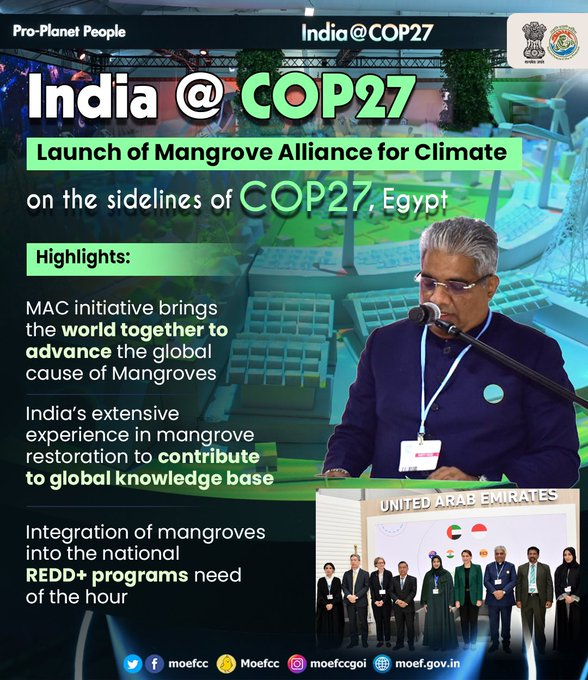
    At the 27th Session of the Conference of Parties (COP27), this year’s UN climate summit, the Mangrove Alliance for Climate (MAC) was launched with India as a partner.

    Mangrove Alliance for Climate (MAC)

    • An initiative led by the UAE and Indonesia, the MAC includes India, Sri Lanka, Australia, Japan, and Spain.
    • It seeks to educate and spread awareness worldwide on the role of mangroves in curbing global warming and its potential as a solution for climate change.
    • Under MAC, UAE intends to plant 3 million mangroves in the next two months, in keeping with UAE’s COP26 pledge of planting 100 million mangroves by 2030.

    Working of MAC

    • MAC would work on a voluntary basis. It means that there are no real checks and balances to hold members accountable.
    • Instead, the parties will decide their own commitments and deadlines regarding planting and restoring mangroves.
    • The members will also share expertise and support each other in researching, managing and protecting coastal areas.

    Why protect mangroves?

    • Infrastructure projects — industrial expansion, shifting coastlines, coastal erosion and storms, have resulted in a significant decrease in mangrove habitats.
    • Between 2010 and 2020, around 600 sq km of mangroves were lost of which more than 62% was due to direct human impacts, the Global Mangrove Alliance said in its 2022 report.

    Importance of mangroves

    mangrove

    • Biodiversity: Mangrove forests — consisting of trees and shrub that live in intertidal water in coastal areas — host diverse marine life.
    • Fishing grounds: They also support a rich food web, with molluscs and algae-filled substrate acting as a breeding ground for small fish, mud crabs and shrimps, thus providing a livelihood to local artisanal fishers.
    • Carbon sinks: Equally importantly, they act as effective carbon stores, holding up to four times the amount of carbon as other forested ecosystems.
    • Cyclone buffers: When Cyclone Amphan struck West Bengal in May, its effects were largely mitigated by the Sundarbans flanking its coasts along the Bay of Bengal.

    Threats to Mangroves

    • Anthropogenic activities: They are a major threat to the mangroves. Urbanization, industrialization and the accompanying discharge of industrial effluents, domestic sewage and pesticide residues from agricultural lands threaten these fragile ecosystems.
    • Saltpan and aquaculture: This causes huge damage to the mangroves. Shrimp farming alone destroyed 35,000 hectares of mangroves worldwide.
    • Destruction for farming: 40% of mangroves on the west coast has been converted into farmlands and other settlements in just 3 decades.
    • Sea-level rise: This is another challenge to these mangroves- especially on the Bay of Bengal coast.

    Mangroves in India

    • India holds around 3 percent of South Asia’s mangrove population.
    • Besides the Sundarbans in West Bengal, the Andaman region, the Kutch and Jamnagar areas in Gujarat too have substantial mangrove cover.

    How can India benefit from MAC?

    • India is home to one of the largest remaining areas of mangroves in the world — the Sundarbans.
    • It has years of expertise in restoration of mangrove cover that can be used to aid global measures in this direction.
    • The move is in line with India’s goal to increase its carbon sink.


    Try this PYQ:

    Q.Which one of the following is the correct sequence of ecosystems in the order of decreasing productivity?

    (a) Oceans, lakes, grasslands, mangroves

    (b) Mangroves, oceans, grasslands, lakes

    (c) Mangroves, grasslands, lakes, oceans

    (d) Oceans, mangroves, lakes, grasslands


    Post your answers here.

     

    Click and get your FREE Copy of CURRENT AFFAIRS Micro Notes

  • Climate Change Negotiations – UNFCCC, COP, Other Conventions and Protocols

    Energy Transition Accelerator (ETA): A new carbon offset scheme by the US

    Note4Students

    From UPSC perspective, the following things are important:

    Prelims level: ETA

    Mains level: Climate finance committments by Developed Countries

    eta

    The US has unveiled a new carbon offset scheme called Energy Transition Accelerator (ETA) for climate finance.

    Energy Transition Accelerator (ETA)

    • ETA is carbon offset plan that will allow companies to fund clean energy projects in developing countries and gain carbon credits that they can then use to meet their own climate goals.
    • The plan will be developed by the US along with the Bezos Earth Fund and the Rockefeller Foundation.
    • It would receive inputs from public and private
    • The concept is to put the carbon market to work, deploy capital otherwise undeployable, and speed up the transition from dirty to clean power.

    Benefits of ETA

    • It may be good for renewable energy projects for sure and for those coal plants that are very old and unviable and which India wishes to shut down.
    • The scheme comes at a time when there is growing mistrust among developing countries about developed nations failing to deliver on climate finance commitments.

    Limitations of ETA

    • The proposed initiative would be insufficient to make up for the lack of funding from rich countries.
    • What developing countries need is predictable finance – not offset markets.
    • The proposed initiative cannot make up for the US’s failure to provide its fair share of climate finance – an estimated $40 billion of the unmet goal of $100 billion a year.

    Conclusion

    • ETA appears to be a substitute for deep decarbonization needed within the US and other industrialized countries.
    • For developing countries like India, the first priority would be to meet their own targets and not provide offsets for reductions in developed nations.


    Click and get your FREE Copy of CURRENT AFFAIRS Micro Notes

  • G20 : Economic Cooperation ahead

    PM unveils G20 logo: Significance of the lotus on it

    Note4Students

    From UPSC perspective, the following things are important:

    Prelims level: G7, G12, G20

    Mains level: India's presidentship of G20

    g20

    PM unveiled the logo, theme and website of India’s G20 presidency.

    What is G20?

    • The G20 was formed in 1999 in the backdrop of the financial crisis of the late 1990s that hit East Asia and Southeast Asia in particular.
    • The first G20 Summit took place in 2008 in Washington DC, US.
    • Its aim was to secure global financial stability by involving middle-income countries.
    • Its prominent members are: Australia, Brazil, China, France, Germany, India, Japan, Republic of Korea, Russia, Saudi Arabia, South Africa, Turkey, the UK, the US, and the EU.
    • Spain is invited as a permanent guest.

    Presidency of G20

    • The presidency of the G20 rotates every year among members.
    • The country holding the presidency, together with the previous and next presidency-holder, forms the ‘Troika’ to ensure continuity of the G20 agenda.
    • During India’s presidency, India, Indonesia and Brazil will form the troika.
    • This would be the first time when the troika would consist of three developing countries and emerging economies.

    How does the G20 work?

    • The G20 has no permanent secretariat.
    • The agenda and work are coordinated by representatives of the G20 countries, known as ‘Sherpas’, who work together with the finance ministers and governors of the central banks.
    • On the advice of the G7 Finance Ministers, the G20 Finance Ministers and Central Bank Governors began holding meetings to discuss the response to the global financial crisis that occurred.
    • Since 1999, an annual meeting of finance ministers has taken place.

    Economic significance of G20

    • G20 is the premier forum for international economic cooperation representing around-
    1. 85 per cent of the global GDP,
    2. 75 per cent of the global trade, and
    3. Two-thirds of the world population

    Significance of the G20 logo

    • The logo bears a lotus and the message of ‘Vasudhaiva Kutumbakam — One Earth, One Family, One Future’.
    • The lotus flower symbolises our Puranic heritage, our aastha (belief) and boddhikta (intellectualism).


    Click and get your FREE Copy of CURRENT AFFAIRS Micro Notes

  • Climate Change Negotiations – UNFCCC, COP, Other Conventions and Protocols

    27th edition of UN-Conference of Parties (UN-COP)

    Note4Students

    From UPSC perspective, the following things are important:

    Prelims level: COP 27

    Mains level: Climate change related negotiations

    cop

    The port city of Sharm El-Sheikh, Egypt is hosting the 27th edition of the UN-Conference of Parties (UN-COP).

    Quick recap

    • Last year, PM Modi, at the 26th edition of the COP in Glasgow, Scotland, committed to India becoming net-zero, or in effect carbon neutral, by 2070 along with Panchamrita
    • Environment Minister will be leading the Indian delegation to COP-27 in Egypt.
    • India is determined to press developed countries into making good their unfulfilled commitment to deliver $100 billion a year of climate finance by 2020 and every year thereafter till 2025.

    Conference of Parties (CoP): A Backgrounder

    • The CoP comes under the United Nations Climate Change Framework Convention (UNFCCC) which was formed in 1994.
    • The UNFCCC was established to work towards “stabilisation of greenhouse gas concentrations in the atmosphere.”
    • It laid out a list of responsibilities for the member states which included:
    1. Formulating measures to mitigate climate change
    2. Cooperating in preparing for adaptation to the impact of climate change
    3. Promoting education, training and public awareness related to climate change
    • The UNFCCC has 198 parties including India, China and the USA. COP members have been meeting every year since 1995.

    COP1 to COP25: Key takeaways

    • COP1: The first conference was held in 1995 in Berlin.
    • COP3: It was held in Kyoto, Japan, in 1997, the famous Kyoto Protocol (wef 2005) was adopted. It commits the member states to pursue limitation or reduction of greenhouse gas emissions.
    • COP8: India hosted the eighth COP in 2002 in New Delhi. It laid out several measures including, ‘strengthening of technology transfer… in all relevant sectors, including energy, transport and R&D,  and the strengthening of institutions for sustainable development.
    • COP21: it is one of the most important that took place in 2015, in Paris, France. Here countries agreed to work together to ‘limit global warming to well below 2, preferably at 1.5 degrees Celsius, compared to pre-industrial levels.’

    Significance of COP

    • The event will see leaders from more than 190 countries, thousands of negotiators, researchers and citizens coming together to strengthen a global response to the threat of climate change.
    • It is a pivotal movement for the world to come together and accelerate the climate action plan after several discussion.

    Key agenda of the COP27

    Ans. Loss and Damage Funding

    • The term ‘Loss and Damage’ refers to the economic and non-economic impacts of climate change, including extreme events in countries that are particularly vulnerable to the adverse effects of climate change.
    • Rich countries, historically responsible for the climate crisis, have bullied poorer nations to protect polluters from paying up for climate damages.
    • The term was brought up as a demand in 1991 by the island country of Vanuatu, which was representing the Alliance of Small Island States (AOSIS).


    Try this PYQ:

    Q.With reference to the Agreement at the UNFCCC Meeting in Paris in 2015, which of the following statements is/are correct?

    1. The Agreement was signed by all the member countries of the UN and it will go into effect in 2017.
    2. The Agreement aims to limit the greenhouse gas emissions so that the rise in average global temperature by the end of this century does not exceed 2 degree Centigrade or even 5 degree Centigrade above pre-industrial levels.
    3. Developed countries acknowledged their historical responsibility in global warming and committed to donate dollar 1000 billion a year from 2020 to help developing countries to cope with climate change.

    Select the correct answer using the code given below:

    (a) 1 and 3 only

    (b) 2 only

    (c) 2 and 3 only

    (d) 1, 2 and 3


    Post your answers here.


    Click and get your FREE Copy of CURRENT AFFAIRS Micro Notes

  • Russian Invasion of Ukraine: Global Implications

    Black Sea Grain Initiative

    Note4Students

    From UPSC perspective, the following things are important:

    Prelims level: Grain Initiaitve, Black Sea

    Mains level: Implications of Russia-Ukraine War

    black sea

    The UN Secretary-General Antonio Guterres has called for the renewal of the Black Sea Grain Initiative as Russia has agreed to resume its participation.

    Black Sea Grain Initiative

    • The Initiative eased Russia’s naval blockade and saw the reopening of three key Ukrainian ports.
    • The agreement to create the sea corridor was negotiated by representatives from Ukraine, Russia, the UN and Turkey in July this year.
    • The agreement created procedures to safely export grain from certain ports to attempt to address the 2022 food crisis.
    • It provides a safe maritime humanitarian corridor for Ukrainian exports (particularly for food grains) from three of its key ports, namely, Chornomorsk, Odesa and Yuzhny/Pivdennyi in the Black Sea.

    Outcomes of this deal

    • Approximately 9.8 million tonnes of grains have been shipped so far since the deal was brokered.
    • People hoarding the grain in the hope of selling it for a sizable profit owing to the supply crunch were now obligated to sell.
    • The initiative has also been credited for having made a huge difference to the global cost of living crisis.

    What would suspension of the deal mean?

    • In a nutshell, the deal’s suspension was expected to re-introduce the price pressures on grain prices, especially that of wheat, with inventory being at historical lows.
    • It could particularly impact countries in the Middle East and Africa such as Egypt, Turkey, Lebanon, Sudan and Yemen which have benefitted from the resumption and are particularly dependent on Russian and Ukrainian exports

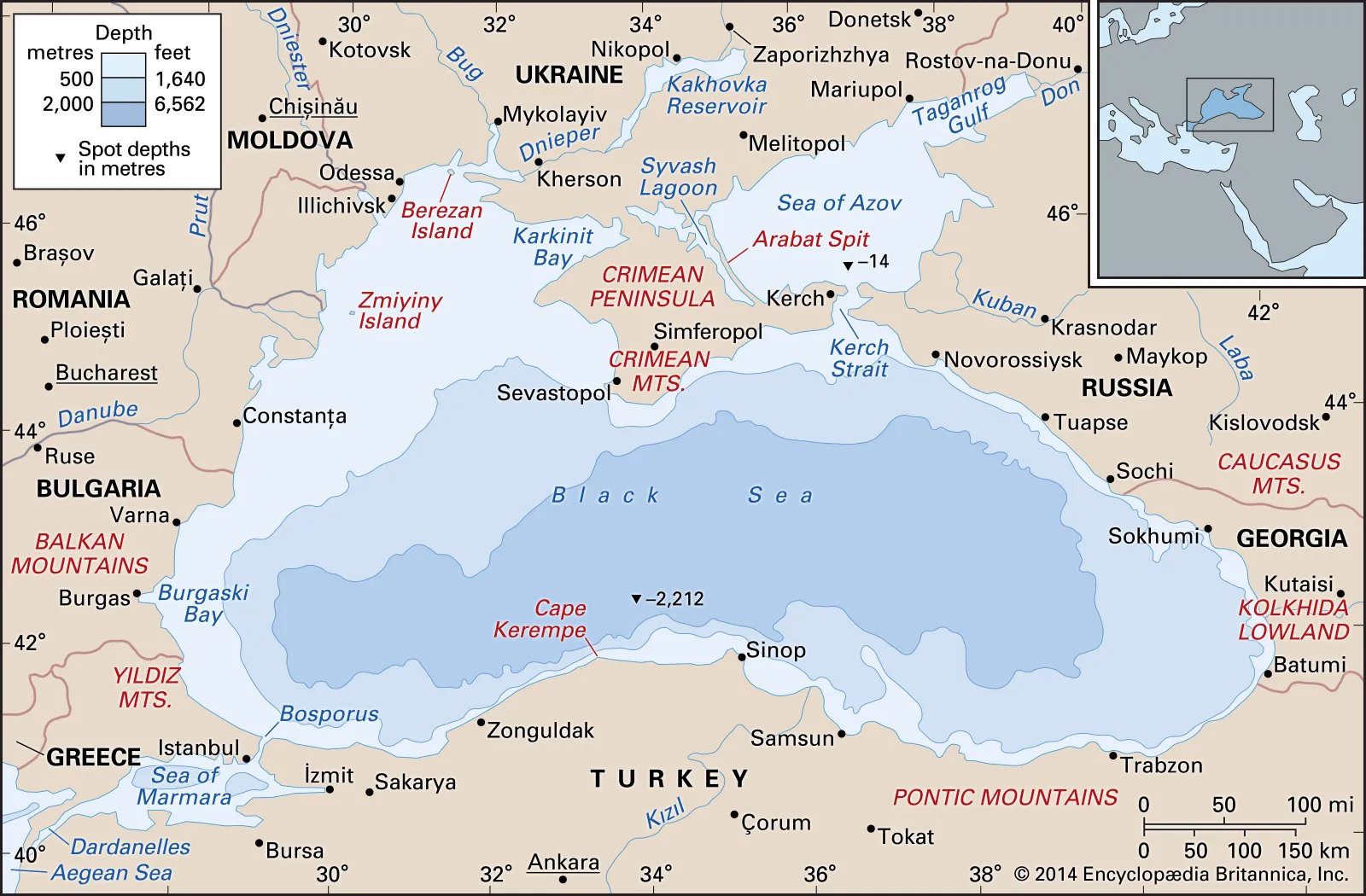
    About Black Sea

    black sea

    • The famed water body is bound by Ukraine to the north and northwest, Russia and Georgia to the east, Turkey to the south, and Bulgaria and Romania to the west.
    • It links to the Sea of Marmara through the Bosphorus and then to the Aegean through the Dardanelles.

    Significance of Black Sea for Russia

    • Domination of the Black Sea region is a geostrategic imperative for Moscow.
    • Black Sea has traditionally been Russia’s warm water gateway to Europe.
    • For Russia, the Black Sea is both a stepping stone to the Mediterranean.
    • It acts as a strategic buffer between NATO and itself.
    • It showcases the Russian power in the Mediterranean and to secure the economic gateway to key markets in southern Europe.
    • Russia has been making efforts to gain complete control over the Black Sea since the Crimean crisis of 2014.


    Click and get your FREE Copy of CURRENT AFFAIRS Micro Notes

  • AIIB & The Changing World Order

    AIIB set to lend Pakistan $500 million

    Note4Students

    From UPSC perspective, the following things are important:

    Prelims level: AIIB

    Mains level: Not Much

    The Asian Infrastructure Investment Bank (AIIB) is scheduled to lend $500 million to Pakistan in this month.

    Asian Infrastructure Investment Bank (AIIB)

    • The Asian Infrastructure Investment Bank (AIIB) is a multilateral development bank with a mission to improve social and economic outcomes in Asia, began operations in January 2016.
    • It aims to stimulate growth and improve access to basic services by furthering interconnectivity and economic development in the region through advancements in infrastructure.
    • AIIB has now grown to 102 approved members worldwide.
    • The US & Japan are not its members.
    • It is a brainchild of China. It has invested in 13 member regions.

    Capital and shareholding of AIIB

    • It has authorized capital of US 100 billion dollars and subscribed capital of USD 50 billion.
    • It offers sovereign and non-sovereign finance for projects in various sectors with an interest rate of London Interbank Offered Rate (LIBOR) plus 1.15 % and a repayment period of 25 years with 5 years in grace period.
    • China is the largest shareholder in AIIB with a 26.06% voting power, followed by India with 7.62% and Russia with 5.92% voting power.

    Try this question from CSP 2019

    Q.With reference to Asian Infrastructure Investment Bank (AIIB), consider the following statements

    1. AIIB has more than 80 member nations.
    2. India is the largest shareholder in AIIB.
    3. AIIB does not have any members from outside Asia.

    Which of the statements given above is/are correct?

    (a) 1 only

    (b) 2 and 3 only

    (c) 1 and 3 only

    (d) 1, 2 and 3


    Post your answers here.


    UPSC 2023 countdown has begun! Get your personal guidance plan now! (Click here)

  • Foreign Policy Watch: India-ASEAN

    Why is ASEAN holding a special meeting on Myanmar?

    Note4Students

    From UPSC perspective, the following things are important:

    Prelims level: ASEAN

    Mains level: Military coup in Myanmar

    asean

    Foreign ministers from member countries of the Association of Southeast Asian Nations (ASEAN) are meeting to discuss an intensifying crisis in Myanmar, 18 months after agreeing a peace plan with its military rulers.

    What is ASEAN?

    • ASEAN is a political and economic union of 10 member states in Southeast Asia.
    • It brings together ten Southeast Asian states – Brunei, Cambodia, Indonesia, Laos, Malaysia, Myanmar, the Philippines, Singapore, Thailand and Vietnam – into one organisation.
    • It was established on 8th August 1967 in Bangkok, Thailand with the signing of the Bangkok Declaration by the founding fathers of the countries of Indonesia, Malaysia, Thailand, Singapore, and the Philippines.
    • The preceding organisation was the Association of Southeast Asia (ASA) comprising of Thailand, the Philippines, and Malaysia.
    • Five other nations joined the ASEAN in subsequent years making the current membership to ten countries.

    Why is the meeting happening?

    • ASEAN’s peace effort is the only official diplomatic process in play.
    • There has been a failure with the junta unwilling to implement a so-called “five-point consensus” that it agreed to with ASEAN in April 2021.
    • The United Nations has backed the ASEAN plan, but with suspicion the generals are paying lip service and buying time to consolidate power and crush opponents before a 2023 election.
    • For ASEAN to remain credible as a mediator, it may need to present a new strategy before the summit.

    What is the consensus?

    • The agreement includes-
    1. Immediate end of hostilities
    2. All parties engaging in constructive dialogue
    3. Allowing an ASEAN envoy to mediate and meet all stakeholders, and
    4. ASEAN to provide humanitarian assistance.
    • So far, the only success cited by ASEAN chair Cambodia has been allowing some humanitarian access, but that has been limited and conditional.

    How has the Junta (Military govt. in Myanmar) responded?

    • The military government has accused critical ASEAN members of meddling and warned them not to engage.
    • It has accused its opponents of trying to sabotage the ASEAN plan and has justified military offensives as necessary to secure the country and enable political talks.
    • Instead of advocating for the five-point ASEAN plan, the generals have instead been pushing a five-step roadmap of their own towards a new election, with few similarities.


    UPSC 2023 countdown has begun! Get your personal guidance plan now! (Click here)

  • Terrorism and Challenges Related To It

    Pakistan is out of FATF ‘Grey List’ on terror funding

    Note4Students

    From UPSC perspective, the following things are important:

    Prelims level: FATF

    Mains level: Terror financing and money laundering

    Global terror-financing watchdog FATF has announced Pakistan‘s removal from its grey list, saying the country has largely completed its action plans on anti-money laundering and financing of terrorism.

    What is the FATF?

    • FATF is an intergovernmental organization founded in 1989 on the initiative of the G7 to develop policies to combat money laundering.
    • The FATF Secretariat is housed at the OECD headquarters in Paris.
    • It holds three Plenary meetings in the course of each of its 12-month rotating presidencies.
    • As of 2019, FATF consisted of 37 member jurisdictions.

    India’s say in FATF

    • India became an Observer at FATF in 2006. Since then, it had been working towards full-fledged membership.
    • On June 25, 2010, India was taken in as the 34th country member of FATF.

    EAG of FATF

    • The EAG is a regional body comprising nine countries: India, Russia, China, Kazakhstan, Kyrgyzstan, Tajikistan, Turkmenistan, Uzbekistan and Belarus.
    • It is an associate member of the FATF.

    What is the role of FATF?

    • The rise of the global economy and international trade has given rise to financial crimes such as money laundering.
    • The FATF makes recommendations for combating financial crime, reviews members’ policies and procedures, and seeks to increase the acceptance of anti-money laundering regulations across the globe.
    • Because money launderers and others alter their techniques to avoid apprehension, the FATF updates its recommendations every few years.

    What is the Black List and the Grey List?

    • Black List: The blacklist, now called the “Call for action” was the common shorthand description for the FATF list of “Non-Cooperative Countries or Territories” (NCCTs).
    • Grey List: Countries that are considered safe haven for supporting terror funding and money laundering are put in the FATF grey list. This inclusion serves as a warning to the country that it may enter the blacklist.

    Consequences of being in the FATF grey list:

    • Economic sanctions from IMF, World Bank, ADB
    • Problem in getting loans from IMF, World Bank, ADB and other countries
    • Reduction in international trade
    • International boycott

    How had it impacted Pakistan economically?

    • A country on the ‘grey list’ is not subject to sanctions.
    • However, the ‘grey list’ signals to the international banking system that there could be enhanced transaction risks from doing business with the said country.
    • In 2018, the Economist noted that there had been no direct economic implications when Pakistan was on the grey list from 2012 to 2015.
    • Instead, Pakistan managed to obtain a $6 billion bailout package from IMF in 2013 and raise additional funding in global debt markets in 2015.

    Pakistan claimed the politicization of FATF. Is that true?

    • In the run-up to the February 2018 decision, the US had weaned Saudi Arabia away, leaving only China and Turkey supporting Pakistan.
    • China eventually withdrew its objection.
    • A few days later, India publicly congratulated China for its election as vice president of FATF, lending credence to the speculation that a deal had been reached behind closed doors.

    How Pakistan managed to get out of the ‘inglorious’ list?

    fatf

    • Removal from the list mark the culmination of a four-year reform process that has required far-reaching changes to Pakistan’s financial system.
    • It appears that, Pakistan has performed well in particular to laws governing money laundering and terrorism financing.
    • Pakistan was given an action plan by FATF in 2018 to address strategic counter-terrorist financing-related deficiencies.

    Conclusion

    • This is not the first time for Pakistan to exit Grey List. It has been swinging on its position on terror financing.
    • Pakistan first figured in a FATF statement after the plenary of February 2008.


    UPSC 2023 countdown has begun! Get your personal guidance plan now! (Click here)

  • Solar Energy – JNNSM, Solar Cities, Solar Pumps, etc.

    International Solar Alliance approves funding mechanism

    Note4Students

    From UPSC perspective, the following things are important:

    Prelims level: ISA

    Mains level: Solar energy

    To bolster investments in solar power projects, the International Solar Alliance (ISA), in its General Assembly approved the ‘Solar Facility’, a payment guarantee mechanism.

    What is Solar Facility?

    • It is expected to stimulate investments into solar projects through two financial components:
    1. Solar Payment Guarantee Fund and
    2. Solar Insurance Fund
    • The thrust of the facility is to attract private capital to flow into “underserved markets” in Africa.
    • The ISA would aim to crowdsource investments from various donors across the globe and proposed projects in Africa would be able to purchase payment guarantees or partial insurance premium from these funds.

    Why such move?

    • ISA’s mission is to unlock US $1 trillion (₹80 lakh crore) of investments in solar power by 2030 while reducing cost of the technology and its financing.

    What is International Solar Alliance (ISA)?

    • The ISA is an alliance of more than 121 countries, most of them being sunshine countries, which lie either completely or partly between the Tropic of Cancer and the Tropic of Capricorn.
    • It is headquartered in Gurugram, India.
    • The primary objective of the alliance is to work for efficient exploitation of solar energy to reduce dependence on fossil fuels.
    • The alliance is a treaty-based inter-governmental organization.
    • The initiative was launched by PM Modi at the India Africa Summit and a meeting of member countries ahead of the 2015 United Nations Climate Change Conference in Paris in November 2015.

    Objectives of the ISA

    • To mobilize investments of more than USD 1000 billion by 2030
    • To take coordinated action for better harmonization, aggregation of demand, risk and resources, for promoting solar finance, solar technologies, innovation, R&D, capacity building etc.
    • Reduce the cost of finance to increase investments in solar energy in member countries
    • Scale up applications of solar technologies in member countries
    • Facilitate collaborative research and development (R&D) activities in solar energy technologies among member countries
    • Promote a common cyber platform for networking, cooperation and exchange of ideas among member countries

    What does ISA formation signify?

    • Climate action commitment: It symbolizes about the sincerity of the developing nations towards their concern about climate change and to switch to a low-carbon growth path.
    • Clean energy: India’s pledge to the Paris summit offered to bring 40% of its electricity generation capacity from non-fossil sources (renewable, large hydro, and nuclear) by 2030.
    • Global electrification: India has pledged to let solar energy reach to the most unconnected villages and communities and also towards creating a clean planet.
    • Global cooperation: It is based on world cooperation irrespective of global boundaries.
    • India’s Soft power: For India, possible additional benefits from the alliance can be a strengthening of ties with the major African countries and increasing goodwill for India among them.

    Key initiatives

    [A] Global Solar Atlas

    • ISA alliance has partnered with World Bank to launch Global Solar Atlas at an ISA event at the World Future Energy Summit in Abu Dhabi.
    • Global Solar Atlas is a free online tool that displays annual average solar power potential at any location in the world and thus identify potential sites for solar power generation.

    [B] OSOWOG Initiative

    • Under the ISA project, India envisaged having an interconnected power transmission grid across nations for the supply of clean energy.
    • The vision behind the OSOWOG mantra is ‘The Sun Never Sets’ and is a constant at some geographical location, globally, at any given point of time.
    • With India at the fulcrum, the solar spectrum can easily be divided into two broad zones viz. far East which would include countries like Myanmar, Vietnam, Thailand, Lao, Cambodia etc. and far West which would cover the Middle East and the Africa Region.

    Implementation

    • The OSOWOG would have three phases.
    1. Phase I: Middle East, South Asia and South-East Asia would be interconnected
    2. Phase II: Solar and other renewable energy resources rich regions would be interconnected
    3. Phase III: Global interconnection of the power transmission grid to achieve the One Sun One World One Grid vision

    Benefits of the project

    • Attracting investment: An interconnected grid would help all the participating entities in attracting investments in renewable energy sources as well as utilizing skills, technology and finances.
    • Poverty alleviation: Resulting economic benefits would positively impact poverty alleviation and support in mitigating water, sanitation, food and other socio-economic challenges.
    • Reduced project cost: The proposed integration would lead to reduced project costs, higher efficiencies and increased asset utilization for all the participating entities.

    Various challenges

    • Lack of Funding: Providing the money for promoting solar electricity among the members is a challenge. The Alliance has very little money of its own.
    • Expensive implementation: The cost of power has two components. The variable cost is the payment made for the numbers of units of electricity purchased. In addition, the buyer is required to pay a certain amount towards the fixed cost of solar supply.
    • Battery-based Storage: Solar electricity is available only during the day when the sun shines. Thus, the storage of electricity is a difficult task.
    • Cross-border transmission: Solar electricity has to overcome the roadblocks of transmission.  Cross-border transmission of electricity requires the establishment of transmission lines from the producer to the consumer country.
    • Peak hour load:  The demand for electricity, however, is more during the morning and evening which are called “peak hours”. But it can be produced when the sun is shining.
    • Climate change: Sudden overcast and rainfall in many parts of the tropics has been a major issues these days. Such weather hampers solar energy production
    • Desired global consensus: It is hindered with the issues of intricate geopolitics, unfavourable economics, unwarranted globalisation and undue centralization that act against the concept.
    • Highly ambitious: In a nation like India, it took us this long to connect all the regions of the country through a national grid and we are talking about ‘one world, one grid’.

    Way forward

    • ISA should focus on its core goals such as- aggregating demand, tariff, technical collaborations, and financial assistance for achieving its target.
    • It further needs to ensure that solar benefits are clear and tangible to users beyond its cost ambitions.
    • ISA should demonstrate business models that are viable for users, suppliers and financiers.
    • Further, the alliance should support member countries in implementing policies to expedite these business models.
    • Geo-politically, this is being touted as a clever strategy however financially and technology-wise, this has to make sense.


    UPSC 2023 countdown has begun! Get your personal guidance plan now! (Click here)

  • Poverty Eradication – Definition, Debates, etc.

    About 41.5 crore Indians out of multi-dimensional poverty since 2005-06

    Note4Students

    From UPSC perspective, the following things are important:

    Prelims level: Multi-Dimensional Poverty Index

    Mains level: Persistence of acute poverty in India

    poverty

    About 41.5 crore people exited poverty in India during the 15-year period between 2005-06 and 2019-21, out of which two-thirds exited in the first 10 years, and one-third in the next five years, according to the global Multidimensional Poverty Index (MPI).

    What is global MPI?

    • The global Multidimensional Poverty Index (MPI) is an international measure of acute poverty covering over 100 developing countries.
    • It complements traditional income-based poverty measures by capturing the severe deprivations that each person faces at the same time with respect to education, health and living standards.
    • The global MPI was developed by OPHI with the UN Development Programme (UNDP) for inclusion in UNDP’s flagship Human Development Report in 2010.
    • It has been published in the HDR ever since.

    poverty

    Multidimensional poverty in India: Major improvements

    poverty

    • The report shows that the incidence of poverty fell from 55.1% in 2005-06 to 16.4% in 2019-21 in India.
    • Deprivations in all 10 MPI indicators saw significant reductions as a result of which the MPI value and incidence of poverty more than halved.
    • Improvement in MPI for India has significantly contributed to the decline in poverty in South Asia.
    • It is for the first time that it is not the region with the highest number of poor people, at 38.5 crore, compared with 57.9 crore in Sub-Saharan Africa.
    • Bihar, the poorest State in 2015-2016, saw the fastest reduction in MPI value in absolute terms.

    Long way towards alleviation

    • Despite the strides made, the report notes that the ongoing task of ending poverty remains daunting.
    • India has by far the largest number of poor people worldwide at 22.8 crore, followed by Nigeria at 9.6 crore.
    • Two-third of these people live in a household in which at least one person is deprived in nutrition.
    • There were also 9.7 crore poor children in India in 2019-2021 — more than the total number of poor people, children and adults combined, in any other country covered by the global MPI.

    Why multi-dimensional poverty does persist in India?

    Poverty is not just the absence of income, money and/or money-like resources required to meet needs.

    • Multiple disadvantages: A person who is poor can suffer multiple disadvantages at the same time – for example they may simultaneously have:
    1. Poor health or malnutrition
    2. Lack of clean water or electricity
    3. Poor quality of livelihood options
    4. Little/No schooling
    5. Disempowerment
    6. Threats of violence
    7. Climate change vulnerability etc.

    Other factors include:

    1. Limited financial resources
    2. Material deprivation
    3. Social isolation
    4. Exclusion and powerlessness
    5. Physical and psychological ill-being
    • Multiple dimensions: Focusing on one factor alone, such as income, is not enough to capture the true reality of poverty. National MPI ensures a holistic approach towards defining poverty at the national level.
    • More comprehensive: MP measures can be used to create a more comprehensive picture. They reveal who is poor and how they are poor – the range of different disadvantages they experience.
    • Better targeting: As well as providing a headline measure of poverty, multidimensional measures can be broken down to reveal the poverty level in different areas of a country and among different sub-groups of people.
    • Priority definition for target groups: It offers statistics that determine the national priorities by using a set of dimensions, indicators with respect to the urban and rural areas of India along with an indicator-wise deconstruction and breakdown.

    Various govt. interventions to for poverty alleviation

    (I) Food Security

    • National Food Security Act 2013 (also ‘Right to Food Act’): It aims to provide subsidized food grains to approximately two thirds of the country’s 1.2 billion people.

    (II) Employment and Skilling

    • National Rural Livelihood Mission (NRLM)Ministry of Rural Development started NRLM 2011 to evolve out the need to diversify the needs of the rural poor and provide them jobs with regular income on a monthly basis.
    • Mahatma Gandhi National Rural Employment Guarantee Act (MGNREGA) – In 2005 Ministry of Rural Development initiated MGNEREGA to provide 100 days of assured employment every year to every rural household. One-third of the proposed jobs would be reserved for women.

    (III) Income Support

    • PM Jan Dhan Yojana (PMJDY): The Ministry of Finance in 2014 initiated PMJDY that aimed at direct benefit transfer of subsidy, pension, insurance, etc., and attained the target of opening 1.5 crore bank accounts. The scheme particularly targets the unbanked poor.
    • PM Kisan Samman Nidhi (PM KISAN): PM KISAN is an initiative by the government of India in which all farmers will get up to ₹6,000 per year as minimum income support.

    Various challenges

    • Pauperization: Every year a huge number is added to the population pool of the country. To exemplify, this pandemic has led to severe pauperization of migrant workers.
    • Regional divide: Incidence of extreme poverty continues to be much higher in rural areas than in urban areas.
    • Jobless growth: Despite rapid growth and development, an unacceptably high proportion of our population continues to suffer from severe and multidimensional deprivation.
    • Inadequate resources: The resources allocated to anti-poverty programmes are inadequate and there is a tacit understanding that targets will be curtailed according to fund availability.
    • Implementation bottlenecks: Lack of proper implementation and right targeting has been legacy issues in India. There has been a lot of overlapping of schemes.


    UPSC 2023 countdown has begun! Get your personal guidance plan now! (Click here)