💥UPSC 2026, 2027, 2028 UAP Mentorship (March Batch) + Access XFactor Notes & Microthemes PDF

Type: IOCR

  • Primary and Secondary Education – RTE, Education Policy, SEQI, RMSA, Committee Reports, etc.

    E9 Initiative for Digital Learning

    Note4Students

    From UPSC perspective, the following things are important:

    Prelims level: E9 Initiative

    Mains level: Digital learning coalitions

    Nine countries including India, China and Brazil will explore the possibility of co-creating and scaling up digital learning to achieve the UN sustainable goal on quality education under the E9 initiative.

    The E9 is the first of its kind global collaboration for digital learning. Note the participating countries.

    E9 Initiative

    • It is the first of a three-phased process to co-create an initiative on digital learning and skills, targeting marginalised children and youth, especially girls.
    • The initiative aims to accelerate recovery and advance the Sustainable Development Goal 4 agenda by driving rapid change in education systems.
    • It is spearheaded by the UN, the E9 countries – Bangladesh, Brazil, China, Egypt, India, Indonesia, Mexico, Nigeria and Pakistan.
    • It will have the opportunity to benefit from this global initiative and accelerate progress on digital learning, according to UNESCO.

    Various functions

    • The initiative will discuss the co-creation of the Digital Learning initiative by the nine countries.
    • This Consultation will highlight progress, share lessons and explore opportunities for collaboration and scale-up to expand digital learning and skills.
    • In addition, a Marketplace segment, for public-private partnership will focus on promising local and global solutions and opportunities for digital learning to strengthen local ecosystems.

  • Women empowerment issues – Jobs,Reservation and education

    Global Gender Gap Report, 2021

    Note4Students

    From UPSC perspective, the following things are important:

    Prelims level: Global Gender Gap Index

    Mains level: Gender disparities in India

    India has slipped 28 places to rank 140th among 156 countries in the World Economic Forum’s Global Gender Gap Report 2021, becoming the third-worst performer in South Asia.

    For the 12th time, Iceland is the most gender-equal country in the world. The top 10 most gender-equal countries include Finland, Norway, New Zealand, Rwanda, Sweden, Ireland and Switzerland.

    Global Gender Gap Index

    • The report is annually published by the World Economic Forum (WEF).
    • It benchmarks countries on their progress towards gender parity in four dimensions: Economic Participation and Opportunity, Educational Attainment, Health and Survival and Political Empowerment.
    • The report aims to serve “as a compass to track progress on relative gaps between women and men on health, education, economy and politics”.

    Highlights of the 2021 report

    Indian prospects

    According to the report, India has closed 62.5% of its gender gap to date.

    • Economic participation: India’s gender gap on this dimension widened by 3% this year, leading to a 32.6% gap closed to date.
    • Political empowerment: India regressed 13.5 percentage points, with a significant decline in the number of women ministers.
    • Income: Further, the estimated earned income of women in India is only one-fifth of men’s, which puts the country among the bottom 10 globally on this indicator.
    • Health: Discrimination against women is also reflected in the health and survival subindex statistics. With 93.7% of this gap closed to date, India ranks among the bottom five countries in this subindex.
    • Violence: Wide gaps in sex ratio at birth are due to the high incidence of gender-based sex-selective practices. In addition, more than one in four women has faced intimate violence in her lifetime, the report said.

    India’s neighbourhood

    • In South Asia, only Pakistan and Afghanistan ranked below India.
    • Among India’s neighbours, Bangladesh ranked 65, Nepal 106, Pakistan 153, Afghanistan 156, Bhutan 130 and Sri Lanka 116.
    • Among regions, South Asia is the second-lowest performer on the index, with 62.3% of its overall gender gap closed.
    • Within the region, a wide gulf separates the best-performing country, Bangladesh, which has closed 71.9% of its gender gap so far, from Afghanistan, which has only closed 44.4% of its gap.
    • Because of its large population, India’s performance has a substantial impact on the region’s overall performance.
  • Foreign Policy Watch: India-Afghanistan

    Heart of Asia – Istanbul Process (HoA-IP)

    Note4Students

    From UPSC perspective, the following things are important:

    Prelims level: Heart of Asia – Istanbul Process

    Mains level: Afghan peace process

    External Affairs Minister S Jaishankar has attended the Heart of Asia Conference in Dushanbe, Tajikistan.

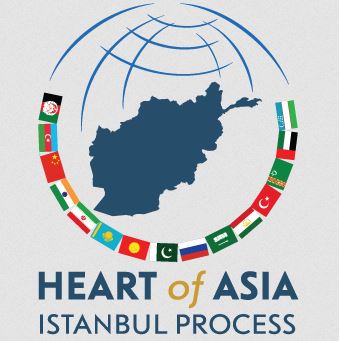
    The 9th Heart of Asia-Istanbul Process (HoA-IP) ministerial conference is part of the Istanbul Process – a regional initiative on security and cooperation for a stable and peaceful Afghanistan – that was launched on November 2, 2011, in Turkey.

    Note the participating countries from the logo itself.

    Heart of Asia – Istanbul Process

    • The Heart of Asia – Istanbul Process (HoA-IP) is an initiative of Afghanistan and Turkey, which was officially launched at a conference hosted by Turkey in Istanbul on 2 November 2011.
    • Since then, Afghanistan supported by fourteen participating countries and supporting countries beyond the region as well as 12 Regional and International Organizations is leading and coordinating this Process.

    Goals of the Process

    • The HoA-IP aims at promoting and strengthening peace, security, stability and prosperity in Afghanistan and in the region.
    • The HoA-IP has become one of the most interactive voluntary state-groupings in the HoA Region.
    • It brings Afghanistan’s immediate and extended neighbours as well as international supporters together through the following focus areas:
    1. Political Consultations
    2. Implementation of the Confidence Building Measures (CBMs)
    3. Cooperation with Regional Organizations

    Note: India too, has held the Ministerial Conferences of HoA-IP back on 4 December 2016 at Amritsar.

  • Hunger and Nutrition Issues – GHI, GNI, etc.

    Agri Ministry questions Global Hunger reports’ methodology

    Note4Students

    From UPSC perspective, the following things are important:

    Prelims level: GHI

    Mains level: Poverty and Hunger

    Union Minister of State for Agriculture has questioned the methodology and data accuracy of the Global Hunger Index (GHI) report, which has placed India at 94th (out of 107 countries) rank in 2020.

    About GHI

    • GHI is a peer-reviewed annual report, jointly published by Concern Worldwide, an Ireland-based humanitarian group, and Welthungerhilfe, a Germany-based NGO.
    • It is designed to comprehensively measure and track hunger at the global, regional, and country levels.
    • It says the aim of publishing the report is to trigger action to reduce hunger around the world.
    • According to the GHI website, the data for the indicators come from the United Nations and other multilateral agencies, including the World Health Organisation and the World Bank.

    Various indicators used

    1. UNDERNOURISHMENT: the share of the population that is undernourished (that is, whose caloric intake is insufficient);
    2. CHILD WASTING: the share of children under the age of five who are wasted (that is, who have low weight for their height, reflecting acute undernutrition);
    3. CHILD STUNTING: the share of children under the age of five who are stunted (that is, who have low height for their age, reflecting chronic undernutrition); and
    4. CHILD MORTALITY: the mortality rate of children under the age of five (in part, a reflection of the fatal mix of inadequate nutrition and unhealthy environments).

    What is the concern?

    • India was ranked below countries such as Nepal, Bangladesh and Myanmar when it was among the top 10 food-producing countries in the world.

    Actual scenario

    • The Comprehensive National Nutrition Survey (CNNS) compiled in 2017-18 showed an improvement of 4%, 3.7% and 2.3% in wasted, stunted and malnourished children respectively.
    • The first-ever CNNS was commissioned by the government in 2016 and was conducted from 2016-18, led by the Union Health Ministry, in collaboration with the UNICEF.
    • The findings were published in 2019. CNNS includes only nutrition data, whereas NFHS encompasses overall health indicators.
  • Disasters and Disaster Management – Sendai Framework, Floods, Cyclones, etc.

    [pib] Coalition for Disaster resilient Infrastructure (CDRI)

    Note4Students

    From UPSC perspective, the following things are important:

    Prelims level: CDRI

    Mains level: India's leadership in Climate change mitigation

    The Prime Minister has recently addressed the third edition of the annual conference of the Coalition for Disaster resilient Infrastructure (CDRI).

    What is CDRI?

    • The CDRI is an international coalition of countries, UN agencies, multilateral development banks, the private sector, and academic institutions that aim to promote disaster-resilient infrastructure.
    • Its objective is to promote research and knowledge sharing in the fields of infrastructure risk management, standards, financing, and recovery mechanisms.
    • It was launched by the Indian PM Narendra Modi at the 2019 UN Climate Action Summit in September 2019.
    • CDRI’s initial focus is on developing disaster-resilience in ecological, social, and economic infrastructure.
    • It aims to achieve substantial changes in member countries’ policy frameworks and future infrastructure investments, along with a major decrease in the economic losses suffered due to disasters.

    Try this PYQ:

    Q.Consider the following statements:

    1. Climate and Clean Air Coalition (CCAC) to Reduce Short Lived Climate Pollutants is a unique initiative of G20 group of countries
    2. The CCAC focuses on methane, black carbon and hydrofluorocarbons.

    Which of the above statements is/are correct?

    (a) 1 only

    (b) 2 only

    (c) Both 1 and 2

    (d) Neither 1 nor 2

    Its inception

    • PM Modi’s experience in dealing with the aftermath of the 2001 Gujarat earthquake” as the chief minister led him to the idea.
    • The CDRI was later conceptualized in the first and second edition of the International Workshop on Disaster Resilient Infrastructure (IWDRI) in 2018-19.
    • It was organized by the National Disaster Management Authority (NDMA), in partnership with the UN Office for Disaster Risk Reduction (UNDRR), the UN Development Programme, the World Bank, and the Global Commission on Adaptation.

    Its diplomatic significance

    • The CDRI is the second major coalition launched by India outside of the UN, the first being the International Solar Alliance.
    • Both of them are seen as India’s attempts to obtain a global leadership role in climate change matters and were termed as part of India’s stronger branding.
    • India can use the CDRI to provide a safer alternative to China’s Belt and Road Initiative (BRI) as well.
  • Air Pollution

    World Air Quality Report, 2020

    Note4Students

    From UPSC perspective, the following things are important:

    Prelims level: World Air Quality Report

    Mains level: Air pollution in Delhi

    Delhi remained the most polluted capital city in the world but India, on the whole, had improved its average annual PM 2.5 (particulate matter) levels higher in 2020 than in 2019, according to a report from World Air Quality Report Air.

    Try this question from CS Mains 2015:

    Q.Mumbai, Delhi and Kolkata are the three megacities of the country but air pollution is a much more serious problem in Delhi as compared to the other two. Why is this so?

    World Air Quality Report

    • It is released by a Swiss air quality technology company IQAir.
    • IQAir is an air quality technology company that since 1963 seeks to empower individuals, organizations and communities to breathe cleaner air through information, collaboration and technology solutions.
    • The 2020 Report is based on PM2.5 data from 106 countries that have been measured by ground-based monitoring stations.

    Highlights of the report

    • Of the 14 most polluted cities, 13 were in India.
    • When ranked by cities, Hotan in China was the most polluted, with an average concentration of 110.2 µg/m³, followed by Ghaziabad in Uttar Pradesh at 106.
    • Delhi’s concentration level, based primarily on data from the Central Pollution Control Board, was 84.1 µg/m³ in 2020, a 15% improvement from the 98.6 µg/m³ recorded in 2019 — a consequence of the lockdown.
    • Bangladesh and Pakistan were the countries in 2020 with worse average PM 2.5 levels than India, says the report.
    • China ranked 11th in the latest report, a deterioration from the 14th in the previous edition of the report. In the 2020 report, 106 countries were evaluated.
  • Health Sector – UHC, National Health Policy, Family Planning, Health Insurance, etc.

    ACT-Accelerator Coalition

    Note4Students

    From UPSC perspective, the following things are important:

    Prelims level: ACT-Accelerator

    Mains level: Coronovirus outbreak

    ACT-Accelerator, a global coalition formed in April 2020 to fight the novel coronavirus disease (COVID-19) is facing a severe fund crunch to meet its goals for 2020-21.

    ACT-Accelerator

    • The Access to COVID-19 Tools Accelerator (ACT Accelerator) is a G20 initiative announced on 24 April 2020.
    • A call to action was published simultaneously by the World Health Organization (WHO).
    • The ACT Accelerator is a cross-discipline support structure to enable partners to share resources and knowledge.
    • It comprises four pillars, each managed by two to three collaborating partners:
    1. Vaccines (also called “COVAX”)
    2. Diagnostics
    3. Therapeutics
    4. Health Systems Connector
    • India is an active donor in this alliance.

    Try this PYQ based on a global coalition:

    Q.Consider the following statements:

    1. Climate and Clean Air Coalition (CCAC) to Reduce Short Lived Climate Pollutants is a unique initiative of G20 group of countries.
    2. The CCAC focuses on methane, black carbon and Hydrofluorocarbons.

    Which of the above statements is/are correct?

    (a) 1 only

    (b) 2 only

    (c) Both 1 and 2

    (d) Neither 1 nor 2

  • Foreign Policy Watch: India-Africa

    Maritime border dispute between Kenya and Somalia

    Note4Students

    From UPSC perspective, the following things are important:

    Prelims level: Map marking of these countries

    Mains level: Issues in Africa

    In a move that is set to further undermine stability in East Africa, Kenya has said that it will not take part in proceedings of the International Court of Justice (ICJ) over its maritime border dispute with neighbouring Somalia.

    Can you recall the terms like “Scramble for Africa”, “Paper Partition of Africa”? If yes, then you know very well the malady of the present-day Continent of Africa.

    What is the news?

    • Nairobi has accused the top UN body of bias.
    • The move comes after Somalia’s decision to sever diplomatic relations with Kenya in December after it accused Nairobi of meddling in its internal affairs.
    • The maritime dispute is said to form a crucial part of the diplomatic quarrel between the two countries.

    The disputed area

    • The main point of disagreement between the two neighbours is the direction in which their maritime boundary in the Indian Ocean should extend.
    • According to Somalia, the sea border should be an extension of the same direction in which their land border runs as it approaches the Indian Ocean, i.e. towards the southeast.
    • Kenya, on the other hand, argues that the territorial southeast border should take a 45-degree turn as it reaches the sea, and then run in a latitudinal direction, i.e. parallel to the equator.
    • Such an arrangement would be advantageous for Kenya, whose coastline of 536 km is more than 6 times smaller than Somalia’s (3,333 km).

    Why is this area important?

    • The triangular area thus created by the dispute is around 1.6 lakh sq km large and boasts of rich marine reserves.
    • It is also believed to have oil and gas deposits.
    • Both Somalia and Kenya have accused each other of auctioning off blocks from this area, Al Jazeera reported.

    How have Kenya and Somalia tried to resolve the dispute?

    • After negotiations to resolve the issue bilaterally failed, Somalia in 2014 asked the ICJ to adjudicate.
    • Kenya resisted, arguing that the world court did not have jurisdiction to hear the case.
    • In 2009 both countries had a commitment to settle the dispute out of court.
    • However, in February 2017, the ICJ ruled that it did have the right to rule in the case, and in June 2019 said that it would begin public hearings.
    • These hearings never took place, as Kenya successfully applied to have them postponed thrice– the last one being in June 2020, when it cited difficulties due to the Covid-19.
  • Tax Reforms

    Explained: The Cairn Tax Dispute

    Note4Students

    From UPSC perspective, the following things are important:

    Prelims level: PCA

    Mains level: Cairn Issue

    In December 2020, a three-member tribunal at the Permanent Court of Arbitration in the Netherlands ruled against India in its long-running tax dispute with the U.K.-based oil and gas company Cairn Energy.

    PCA Ruling against India

    • The tribunal ordered India to pay about $1.4 billion to the company.
    • Following this, Cairn Energy has successfully moved courts in five countries, including the US and the UK to recognise its claim as per the arbitration award.
    • The Netherlands, France, and Canada are the other three countries.
    • Such recognition by courts opens the door for Cairn Energy to seize assets of the Indian government in these jurisdictions by way of enforcing its claim, in case the latter doesn’t pay its dues.

    What is the dispute about?

    • The dispute started in early 2014 when Indian tax authorities started questioning Cairn Energy requesting information on the group’s reorganization in the financial year 2006-07.

    Issue over the tax due

    • This escalated, and by 2015, the authorities had sent the company a draft assessment order, assessing in the process that there was a principal tax amount of $1.6 billion that was due.
    • The year in reference, 2006-07, was one in which big corporate changes and developments took place in Cairn Energy.

    Basis of the tax demand: Sale of Shares

    • It was the year in which it not only undertook a corporate reorganization but also floated an Indian subsidiary, Cairn India, which in early 2007 got listed on the Indian Stock Market.
    • Through the corporate reorganization process, Cairn Energy had transferred all of its India assets, which were until then held by nine subsidiaries in various countries, to the newly-formed Cairn India.
    • But the tax authorities claimed that in the process of this reorganization, Cairn Energy had made capital gains worth ₹24,500 crores.
    • This, the department asserted, was the basis of the tax demand.

    Is this case similar to Vodafone’s battle with the government?

    • The Vodafone case in 2007 was triggered by Hong Kong’s Hutchinson Telecommunications’ sale of its stake in India’s Hutchinson Essar to Vodafone based out of the Netherlands.
    • The Hong Kong firm made a capital gain on this, which the Indian tax authorities deemed fit to tax.
    • They held that Vodafone should have withheld the tax, and therefore imposed liability on it.
    • The Supreme Court quashed the taxman’s demand that the sale of shares, in this case, would amount to transfer of a capital asset within the meaning of Section 2(14) of the Indian Income Tax Act”.

    What governs the Sale of Shares?

    • In the Union Budget of 2012, the Income Tax Act, 1961 was amended to make sure that even if a transfer of shares takes place outside India, such a transfer can be taxed.
    • This was done when the value of those shares is based on assets in India. And this was applied retrospectively.

    Cairn won over Retrospection

    • The action against Cairn Energy was based on this move.
    • India lost its arbitration case against Vodafone as well, with the government being asked to fork out around ₹80 crores.

    What happened after the tax claims in the Cairn Energy dispute?

    • After receiving a draft assessment order from the tax authorities, Cairn UK Holdings Ltd. appealed before the Income Tax Appellate Tribunal.
    • The tribunal, while providing the company relief from back-dated interest demands, however, upheld the main tax demand.
    • The company had initiated proceedings of arbitration under the U.K.-India bilateral investment treaty.
    • But during this time, the government sold Cairn’s almost 5% holding and seized dividends totalling ₹1,140 crore due to it from those shareholdings and set off a ₹1,590-crore tax refund against the demand.

    What was the main argument of Cairn Energy during the arbitration?

    • The claimants, Cairn Energy and Cairn UK Holdings argued that till the amendment was made to tax retrospectively in 2012, there was no tax on indirect transfers.
    • Indirect transfers here meant transfer by a non-resident of shares in non-Indian companies which indirectly held assets in India.
    • The application of the 2012 amendments, they alleged, constituted “manifest breaches” of the U.K.-India bilateral investment treaty.

    What was India’s defence during the arbitration?

    • India’s counter to the main charge of Cairn Energy was that its 2006 transactions were taxable irrespective of the 2012 amendments.
    • It argued that “Indian law has long permitted taxation where a transaction has a strong economic nexus with India”.
    • It said even if it is retrospective, it is “valid and binding applying the longstanding constitutional, legislative and legal framework in which the claimants have invested”.

    What did the arbitration tribunal rule?

    • The tribunal said the tax demand violated the U.K.-India bilateral investment treaty.
    • The tribunal said India “failed to accord Cairn Energy’s investments fair and equitable treatment” under the bilateral protection pact it had with the United Kingdom.
    • It also ordered India to compensate Cairn Energy and its subsidiary for “the total harm suffered” as a result of the breaches of the treaty.

    India’s way ahead

    • It has been reported in the media that India will appeal against the tribunal’s decision.
    • If enforcement proceedings are initiated, India is confident of addressing them and will strongly defend its interests.

    Back2Basics: Permanent Court of Arbitration (PCA)

    • It is an intergovernmental organization located in The Hague, Netherlands.
    • It is not a court in the traditional sense but provides services of arbitral tribunal to resolve disputes that arise out of international agreements between member states, international organizations or private parties.
    • The cases span a range of legal issues involving territorial and maritime boundaries, sovereignty, human rights, international investment, and international and regional trade.
    • The PCA is constituted through two separate multilateral conventions with a combined membership of 122 states.
    • The organization is not a United Nations agency, but the PCA is an official United Nations Observer.
  • Oil and Gas Sector – HELP, Open Acreage Policy, etc.

    What is OPEC+?

    Note4Students

    From UPSC perspective, the following things are important:

    Prelims level: OPEC+

    Mains level: India's oil import

    India, the world’s third-biggest oil importer, has said that the decision by major producers to continue with output cuts as prices move higher could threaten the consumption led-recovery in some countries.

    Try this PYQ:

    Q.The term ‘West Texas Intermediate’, sometimes found in news, refers to a grade of

    (a) Crude oil

    (b) Bullion

    (c) Rare earth elements

    (d) Uranium

    What is the news?

    • The Organization of the Petroleum Exporting Countries (OPEC) and its allies, a group known as OPEC+, agreed not to increase supply in April as they await a more substantial recovery in demand amid the COVID-19.
    • Crude prices rose after the announcement and are up 33% this year (meanwhile India flaring up prices to 100 Rs/litres for Petrol).

    What is OPEC+?

    • The non-OPEC countries which export crude oil along with the 14 OPECs are termed as OPEC plus countries.
    • OPEC plus countries include Azerbaijan, Bahrain, Brunei, Kazakhstan, Malaysia, Mexico, Oman, Russia, South Sudan, and Sudan.
    • Saudi and Russia, both have been at the heart of a three-year alliance of oil producers known as OPEC Plus — which now includes 11 OPEC members and 10 non-OPEC nations — that aims to shore up oil prices with production cuts.

    Concerns for India

    • Rising oil prices are posing fiscal challenges for India, where heavily-taxed retail fuel prices have touched record highs, threatening the demand-driven recovery.
    • India imports about 84% of its oil and relies on West Asian supplies to meet over three-fifths of its demand.
    • As one of the largest crude-consuming countries, India is concerned that such actions by producing countries have the potential to undermine consumption-led recovery.
    • This would hurt consumers, especially in our price-sensitive market.