💥UPSC 2026, 2027, 2028 UAP Mentorship (March Batch) + Access XFactor Notes & Microthemes PDF

Type: op-ed snap

  • Foreign Policy Watch: India-Australia

    Common values, shared threats in India-Australia cyber security ties

    Note4Students

    From UPSC perspective, the following things are important:

    Prelims level: International Cyber Engagement Strategy

    Mains level: Paper 2- India-Australia relations

    Context

    Western and media attention may be focused on the conflict between Russia and Ukraine, but countries have not taken their eye off the Indo-Pacific where there is clear evidence of the changing world order.

    India and Australia faces a common threat to cyber security

    • The India-Australia ECTA is a concrete example of the bilateral faith in common values, and understanding of threats and goals.
    • A reflection of this is cooperation in cyber security.
    • China is accused of having amassed a large number of cyber weapons and has allegedly carried out sophisticated operations aimed at espionage, theft of intellectual property, and destructive attacks on internet resources of some countries.
    • Advanced Persistent Threat (APT) groups: Australia and India have been at the receiving end of several such campaigns by the so-called Advanced Persistent Threat (APT) groups, supported by or assumed to be located in China.

    Steps toward cooperation in cyber security

    • At the June 2020 virtual bilateral summit, Prime Minister Narendra Modi and his Australian counterpart Scott Morrison elevated the bilateral relationship to a Comprehensive Strategic Partnership.
    • New cyber security framework: The new cyber framework includes a five-year plan to work together on the digital economy, cybersecurity and critical and emerging technologies.
    • Bilateral research: This will be supported by a $9.7 million fund for bilateral research to improve regional cyber resilience.
    • An annual Cyber Policy Dialogue, a new Joint Working Group on Cyber Security Cooperation and a joint working group on ICTs have been established.
    • An annual India-Australia Foreign Ministers Cyber Framework Dialogue will be held.
    • India to be part of International Cyber Engagement Strategy: India will now be included in a core Australian initiative called the International Cyber Engagement Strategy — it began in 2017 to actively conduct capacity-building arrangements in Indonesia, Singapore and Thailand, and support similar activities in Malaysia, Vietnam and Cambodia.
    • A joint Centre of Excellence for Critical and Emerging Technology Policy, to be located in Bengaluru, will be set up.

    Steps taken by India to improve cyber security

    • India has set up the office of the National Cybersecurity Coordinator, a national Computer Emergency Response Team (CERT-IN), a national Critical Information Infrastructure Protection Agency (NCIIPC), and made appropriate amendments to the Information Technology Act and Rules to enhance its cyber security posture.
    • This has upped India’s rank to 10th in the Global Cyber Security Index (GCI) 2020, from 47th just two years earlier.
    • India has capable cybersecurity professionals.

    Conclusion

    Deepening cooperation can develop avenues for mutual learning and create complementary markets in cyber tools and technologies, boosting bilateral business and strategic commitments on both continents.

    UPSC 2023 countdown has begun! Get your personal guidance plan now! (Click here)

  • Poverty Eradication – Definition, Debates, etc.

    ‘Mission Antyodaya’ can help transform rural India

    Note4Students

    From UPSC perspective, the following things are important:

    Prelims level: Not much

    Mains level: Paper 2- Importance of Mission Antyodaya

    Context

    This article argues that given the right momentum, the ‘Mission Antyodaya’ project bears great promise to eradicate poverty in its multiple dimensions among rural households.

    Background of Mission Antyodaya

    • The ‘Mission Antyodaya’ project was launched by the Government of India in 2017-18.
    • The Ministry of Panchayati Raj and the Ministry of Rural Development act as the nodal agents to take the mission forward.
    • Key goals: The main objective of ‘Mission Antyodaya’ is to ensure optimum use of resources through the convergence of various schemes that address multiple deprivations of poverty, making gram panchayat the hub of a development plan.
    • Annual survey: This planning process is supported by an annual survey that helps to assess the various development gaps at the gram panchayat level, by collecting data regarding the 29 subjects assigned to panchayats by the Eleventh Schedule of the Constitution.
    • Also, data regarding health and nutrition, social security, good governance, water management and so on are also collected.
    • The idea of the Ministry of Panchayati Raj to identify the gaps in basic needs at the local level, and integrating resources of various schemes, self-help groups, voluntary organisations and so on to finance them needs coordination and capacity-building of a high order.
    • If pursued in a genuine manner, this can foster economic development and inter-jurisdictional equity.

    Infrastructural gaps as pointed out by the Mission Antyodaya Survey

    • The ‘Mission Antyodaya’ survey in 2019-20 for the first time collected data that shed light on the infrastructural gaps from 2.67 lakh gram panchayats, comprising 6.48 lakh villages with 1.03 billion population.
    • The maximum score values assigned will add up to 100 and are presented in class intervals of 10.
    • While no State in India falls in the top score bracket of 90 to 100, 1,484 gram panchayats fall in the bottom bracket.
    • Even in the score range of 80 to 90, 10 States and all Union Territories do not appear.
    • The total number of gram panchayats for all the 18 States that have reported adds up only to 260, constituting only 0.10% of the total 2,67,466 gram panchayats in the country.
    •  If we consider a score range of 70-80 as a respectable attainment level, Kerala tops but accounts for only 34.69% of gram panchayats of the State, the corresponding all-India average is as low as 1.09%.
    • The composite index data, a sort of surrogate for human development, are also not encouraging.
    • Although only 15 gram panchayats in the country fall in the bottom range below 10 scores, more than a fifth of gram panchayats in India are below the 40 range.
    • The gap report and the composite index show in unmistakable terms that building ‘economic development and social justice’ remains a distant goal even after 30 years of the decentralisation reforms and nearly 75 years into Independence.

    Way forward

    • Converge resources: Given the ‘saturation approach’ (100% targets on select items) of the Ministry of Panchayati Raj, the possibilities of realising universal primary health care, literacy, drinking water supply and the like are also immense.
    • But there is no serious effort to converge resources (the Mahatma Gandhi National Rural Employment Guarantee Act, the National Rural Livelihood Mission, National Social Assistance Programme, Pradhan Mantri Awas Yojana, etc.) and save administrative expenses.
    • Deploy the data to India’s fiscal federalism: Another lapse is the failure to deploy the data to India’s fiscal federalism, particularly to improve the transfer system and horizontal equity in the delivery of public goods in India at the sub-State level.
    • The constitutional goal of planning and implementing economic development and social justice can be achieved only through strong policy interventions.

    Conclusion

    The policy history of India has been witness to the phenomenon of announcing big projects and failing to take them to their logical consequence. ‘Mission Antyodaya’ is a striking case in recent times.

    UPSC 2023 countdown has begun! Get your personal guidance plan now! (Click here)
  • The goal of an energy-secure South Asia

    Note4Students

    From UPSC perspective, the following things are important:

    Prelims level: SDGs

    Mains level: Paper 2- Energy security of South Asia

    Context

    Given that a 0.46% increase in energy consumption leads to a 1% increase in GDP per capita, electrification not only helps in improving lifestyle but also adds to the aggregate economy by improving the nation’s GDP.

    Widening electricity coverage in South Asian nations

    • The electricity policies of South Asian countries aim at providing electricity to every household.
    • The issues these policies address include generation, transmission, distribution, rural electrification, research and development, environmental issues, energy conservation and human resource training.
    • Bangladesh has achieved 100% electrification recently while Bhutan, the Maldives, and Sri Lanka accomplished this in 2019.
    • For India and Afghanistan, the figures are 94.4% and 97.7%, respectively, while for Pakistan it is 73.91%.
    • Bhutan has the cheapest electricity price in South Asia (U.S.$0.036 per kilowatt hour, or kWh) while India has the highest (U.S.$0.08 per kWh.) 
    • South Asia is reinforcing its transmission and distribution frameworks to cater to growing energy demand not only through the expansion of power grids but also by boosting green energy such as solar power or hydroelectricity.

    Adapting to renewable

    • Geographical differences between these countries call for a different approach depending on resources.
    •  India leads South Asia in adapting to renewable power, with its annual demand for power increasing by 6%.
    • India’s pledge to move 40% of total energy produced to renewable energy is also a big step.
    • Prime Minister Narendra Modi in his ‘net-zero by 2070’ pledge at COP26 in Glasgow asserted India’s target to increase the capacity of renewable energy from 450GW to 500GW by 2030.
    • The region is moving towards green growth and energy as India hosts the International Solar Alliance.
    • South Asia has vast renewable energy resources — hydropower, solar, wind, geothermal and biomass — which can be harnessed for domestic use as well as regional power trade.

    Steps toward SDGs

    • Solar power-driven electrification in rural Bangladesh is a huge step towards Sustainable Development Goal 7.
    • Access to electricity improves infrastructure i.e., SDG 9 (which is “build resilient infrastructure, promote inclusive and sustainable industrialization and foster innovation”).
    • Energy access helps online education through affordable Internet (SDG 4, or “ensure inclusive and equitable quality education and promote lifelong learning opportunities for all”), more people are employed (SDG 1: “no poverty”), and are able to access tech-based health solutions (SDG 3, or “ensure healthy lives and promote well-being for all at all ages”).

    Regional energy trade

    • The South Asian Association for Regional Cooperation (SAARC) prepared the regional energy cooperation framework in 2014, but its implementation is questionable.
    • Energy trade agreements: There are a number of bilateral and multilateral energy trade agreements such as the India-Nepal petroleum pipeline deal, the India-Bhutan hydroelectric joint venture, the Myanmar-Bangladesh-India gas pipeline, the Bangladesh-Bhutan-India-Nepal (BBIN) sub-regional framework for energy cooperation, and the Turkmenistan-Afghanistan-Pakistan-India (TAPI) pipeline, rumoured to be extended to Bangladesh.
    • Challenges: ‘South Asia’s regional geopolitics is determined by the conflation of identity, politics, and international borders.
    • The current participation in cross-border projects has been restricted to respective tasks, among Bhutan and India or Nepal and India.
    • It is only now that power-sharing projects among the three nations, Nepal, India, and Bangladesh, have been deemed conceivable.

    Way forward

    • Energy framework: Going forward, resilient energy frameworks are what are needed such as better building-design practices, climate-proof infrastructure, a flexible monitory framework, and an integrated resource plan that supports renewable energy innovation.
    • Public-Private Partnership: Government alone cannot be the provider of reliable and secure energy frameworks, and private sector investment is crucial.

    Conclusion

    While universal coverage can catalyse the region’s economic growth, energy trade must be linked to peace building.

    UPSC 2023 countdown has begun! Get your personal guidance plan now! (Click here)

  • Economic Indicators and Various Reports On It- GDP, FD, EODB, WIR etc

    Anchoring inflationary expectations

    Note4Students

    From UPSC perspective, the following things are important:

    Prelims level: Inflation expectations

    Mains level: Paper 3- Understanding inflation anchoring

    Context

    The RBI released the Inflation Expectations Survey of Households (IESH) for March 2022 on April 8. The survey results present interesting behavioural insights for public policy, particularly from a gender perspective.

    Significance of inflation expectations

    • The impact of inflation — the overall increase in the prices in an economy — is felt by everyone.
    • High inflation adversely affects the poor.
    • Individuals, therefore, form expectations about how prices will behave in the future to take precautions.
    • If they anticipate high inflation, they negotiate wages or rents to compensate against a potential fall in their purchasing power.
    • Self-fulfilling: Increased wages increase the cost of production, making expectations self-fulfilling and, therefore, playing a pivotal role in determining inflation.
    • Anchoring inflation expectations: Central banks raise interest rates to ‘anchor’ high inflationary expectations when temporary price shocks, on account of drought or disruption in global supply chains, entail the risk of getting transmitted into actual inflation.

    What shapes inflation expectations of individuals?

    • A recent study carried out by Acunto et al., 2020, validates that what agents frequently purchase, instead of those purchased infrequently, shape their perception of the general level of inflation.
    • Factors shaping individual’s perception: A significant factor shaping perceptions on inflation are the prices that individuals observe in their daily lives, originally posited by Robert Lucas in his seminal Islands model.
    • Therefore, generalising aggregate inflation expectations for making general views of prices in the economy could be misleading.
    • This insight has implications for gender-based differences in anticipating inflation in the future.
    • Existing literature shows that women have higher inflationary expectations compared to men.
    •  However, a new study reveals that it is not the innate characteristics as much as the traditional gender roles that explain this divergence.

    Natural experiments

    • To test its validity, trends of Inflation Expectations Survey of Households (IESH) before and after the lockdown period present itself as a crude ‘natural experiment’.
    • The authors hypothesise that if traditional gender roles are the primary reasons behind the gender inflation expectation gap, then the lockdown-imposed work-from-home (WFH) arrangements or loss of employment should contribute in closing this gap.
    • The logic: during the lockdown, people in urban areas lost jobs or remained at home, taking a relatively equal share in the frequent day-to-day purchases.
    • Two categories of occupations are studied here: homemakers (assumed to be dominated by women) and financial sector employees (assumed to be dominated by men).
    • Looking at the trends of the RBI surveys for the period between March 2018 and March 2020, homemakers report higher inflation expectations than financial sector employees.
    • However, this gap has narrowed over the last two years and has almost converged in March 2022.
    • A possible explanation of closing of the gap could be the gradual ‘experience effect’ of male-dominated financial sector employees.
    • Experience effect, contrary to Rational Expectations Theory that assumes individuals base their decisions on the information available to them, is based on the premise that actual personal experiences shape behaviour more than being informed about the outcome of the event.

    Conclusion

    Focus could be shifted more on the microfoundations — understanding macroeconomic outcomes by studying factors that shape individual behaviour and decision making — for making better policy decisions concerning macroeconomic phenomena.

    UPSC 2022 countdown has begun! Get your personal guidance plan now! (Click here)

  • Russian Invasion of Ukraine: Global Implications

    India, Europe and the Russian complication

    Note4Students

    From UPSC perspective, the following things are important:

    Prelims level: Not much

    Mains level: Paper 2- India's engagement with Europe and factors shaping it

    Context

    The re-election of Emmanuel Macron as the president of France on Sunday has sent a sigh of relief across Europe and North America. Delhi too is pleased with the return of Macron, who laid a strong foundation for India’s strategic partnership with France.

    Why France election matters to the regional and domestic order in Europe

    • Unlike the Soviet Union, which sought to shape European politics though left-wing parties, Russia today influences European politics through right-wing parties.
    • Victory for Marine Le Pen, Macron’s opponent, would have dramatically complicated the geopolitics of Europe.
    • Le Pen, like so many other right-wing leaders in Europe, has close ties to Vladimir Putin.
    • Le Pen’s victory would have not only altered France’s international trajectory, but also shaken the EU to its political core.

    Three factors shaping the transformation of India’s ties with Europe

    • Russia’s threat to the regional and domestic order in Europe is among multiple factors shaping Delhi’s intensifying engagement with Brussels.
    • Three major external factors are facilitating the transformation of India’s ties with Europe.

    1] Russian Question

    • For India, a normal relationship between Russia and the West would have been ideal.
    • But Russia’s confrontation with the West comes during India’s rapidly expanding economic and political ties to Europe and America.
    • Delhi might be sentimental about India’s historic Russian connection but it is not going to sacrifice its growing ties to the West on that altar.
    • Russia’s declining economic weight and growing international isolation begins to simplify India’s choices.
    • During the last few weeks, Delhi has insisted that its silence is not an endorsement of Russian aggression.
    • India’s position has continued to evolve.
    • Delhi’s repeated emphasis on respecting the territorial integrity of states is a repudiation of Russia’s unacceptable aggression.
    • Meanwhile, geographic proximity and economic complementarity have tied Europe even more deeply to Russia.
    • The EU’s annual trade with Russia at around $260 billion is massive in comparison to India’s $10 billion.
    • Putin’s reckless invasion of Ukraine has compelled Europe to embark on a costly effort to disconnect from Russia.
    • The war in Ukraine has certainly presented a major near-term problem that needs to be managed by Delhi and Brussels.

    2] China Question

    •  Moscow has been deepening ties with Beijing for more than two decades triggering many anxieties in Delhi.
    •  In February, Putin travelled to Beijing to announce a partnership “without limits”.
    • India has no option but to manage the consequences of the Russian decision.
    • In the last two decades, China has emerged as a great power and now presents a generational challenge for Indian policymakers.
    • That challenge has been made harder by Putin’s alliance with Xi Jinping.
    • As Delhi strives to retain a reasonable relationship with Moscow, Europe emerges as an important partner in letting India cope with the China challenge.
    •  Thanks to the growing problems of doing business with Xi’s China, Beijing’s geopolitical alliance with Moscow, and the rapid deterioration of Sino-US relations, Brussels is ready to invest serious political capital in building purposeful strategic ties with India.

    3] American Question

    • Until recently it appeared that Europe’s calls for “strategic autonomy” from the US were in sync with India’s own worldview.
    • But the Ukraine crisis has underlined the US’s centrality in securing Europe against Russia.
    • In Asia, Chinese assertiveness has brought back the US as a critical factor in shaping peace and security.
    • Washington wants a strong Europe taking greater responsibility for its own security; it would like Delhi to play a larger role in Asia and become a credible provider of regional security.
    • Above all, America wants India and Europe to build stronger ties with each other.

    Conclusion

    For the first time since independence, India’s interests are now aligning with those of Europe. Together, Delhi and Brussels can help reshape Eurasia as well as the Indo-Pacific.

    UPSC 2022 countdown has begun! Get your personal guidance plan now! (Click here)

  • Zoonotic Diseases: Medical Sciences Involved & Preventive Measures

    Settling India’s COVID-19 mortality data

    Note4Students

    From UPSC perspective, the following things are important:

    Prelims level: Not much

    Mains level: Paper 2- Covid-19 mortality data

    Context

    Over the last year, the World Health Organization (WHO) has been busy, in an unprecedented effort, to calculate the global death toll from COVID-19.

    Revision of Covid-19 death toll by WHO

    • Globally from an estimated six million reported deaths, WHO now estimates these deaths to be closer to almost triple the number.
    • The new estimates also take into account formerly uncounted deaths, but also deaths resulting from the impact of COVID-19.
    • For example, millions who could not access care, i.e., diagnosis or treatment due to COVID-19 restrictions or from COVID-19 cases overwhelming health services.
    • India’s stand: India is in serious disagreement with the WHO-prepared COVID-19 mortality estimates.
    • The argument being made by India’s health establishment through a public clarification is that this is an overestimation, and the methodology employed is incorrect.

    India’s Covid response

    • India’s COVID-19 response has been replete with delays and denials.
    • For instance, for the longest time that India’s COVID-19 number rose, the health establishment continued to insist that community transmission was not under way.
    • It took months and several lakh cases before they agreed that COVID-19 was finally in community transmission.
    • The devastation of the second wave showed how unprepared we were to combat the deadly Delta variant.
    •  By the time the wave subsided, India’s population was devastated, and helpless, seeing dignity neither in disease nor in death.

    Conclusion

    The figures ratchet up not only issues of administrative but also moral accountability for governments that they have been previously side stepped.

    UPSC 2022 countdown has begun! Get your personal guidance plan now! (Click here)

  • Foreign Policy Watch: India-Sri Lanka

    Finding workable solutions to India-Sri Lanka fisheries issue

    Note4Students

    From UPSC perspective, the following things are important:

    Prelims level: Palk Bay

    Mains level: Paper 2- India-Sri Lanka fisheries issue

    Context

    After a gap of 15 months, the India-Sri Lanka Joint Working Group (JWG) on fisheries held its much-awaited deliberations (in virtual format) on March 25.

    Background of the issue

    • As sections of fishermen from the Palk Bay bordering districts of Tamil Nadu continue to transgress the International Maritime Boundary Line (IMBL), cases of many of them getting arrested and their boats being impounded by the Sri Lankan authorities continue.
    • Apart from poaching in the territorial waters of Sri Lanka, the use of mechanised bottom trawlers is another issue that has become a bone of contention between the fishermen of the two countries; the dispute is not just between the two states.
    • Use of mechanised bottom trawlers: This method of fishing, which was once promoted by the authorities in India, is now seen as being extremely adverse to the marine ecology, and has been acknowledged so by India.
    • The actions of the Tamil Nadu fishermen adversely affect their counterparts in the Northern Province.
    • Reason for transgression: The fishermen of Tamil Nadu experience a genuine problem — the lack of fishing areas consequent to the demarcation of the IMBL in June 1974.
    • If they confine themselves to Indian waters, they find the area available for fishing full of rocks and coral reefs besides being shallow.
    • Under the Tamil Nadu Marine Fishing Regulation Act 1983, mechanised fishing boats can fish only beyond 3 NM from the coast.
    • This explains the trend of the fishermen having to cross the IMBL frequently.

    Way forward

    • Transition to deep-sea fishing: While Indian fishermen can present a road map for their transition to deep sea fishing or alternative methods of fishing, the Sri Lankan side has to take a pragmatic view that the transition cannot happen abruptly.
    • In the meantime, India will have to modify its scheme on deep-sea fishing to accommodate the concerns of its fishermen, especially those from Ramanathapuram district, so that they take to deep-sea fishing without any reservation.
    • Alternative livelihood measures: There is a compelling need for the Central and State governments to implement in Tamil Nadu the Pradhan Mantri Matsya Sampada Yojana in a proactive manner.
    • The scheme, which was flagged off two years ago, covers alternative livelihood measures too including seaweed cultivation, open sea cage cultivation, and sea/ocean ranching.
    • During Mr. Jaishankar’s visit, India had signed a memorandum of understanding with Sri Lanka for the development of fisheries harbours.
    • This can be modified to include a scheme for deep-sea fishing to the fishermen of the North.
    • Joint research on fisheries: . It is a welcome development that the JWG has agreed to have joint research on fisheries, which should be commissioned at the earliest.
    • Institutional mechanism: Simultaneously, the two countries should explore the possibility of establishing a permanent multi-stakeholder institutional mechanism to regulate fishing activity in the region.
    • Using common thread of culture, language and religion: The people of the two countries in general and fisherfolk in particular have common threads of language, culture and religion, all of which can be used purposefully to resolve any dispute.

    Conclusion

    What everyone needs to remember is that the fisheries dispute is not an insurmountable problem. A number of options are available to make the Palk Bay not only free of troubles but also a model for collaborative endeavours in fishing.

    UPSC 2022 countdown has begun! Get your personal guidance plan now! (Click here)

  • Food Procurement and Distribution – PDS & NFSA, Shanta Kumar Committee, FCI restructuring, Buffer stock, etc.

    Why reforming the system of free food is necessary

    Note4Students

    From UPSC perspective, the following things are important:

    Prelims level: NFSA 2013

    Mains level: Paper 3- PDS reforms

    Context

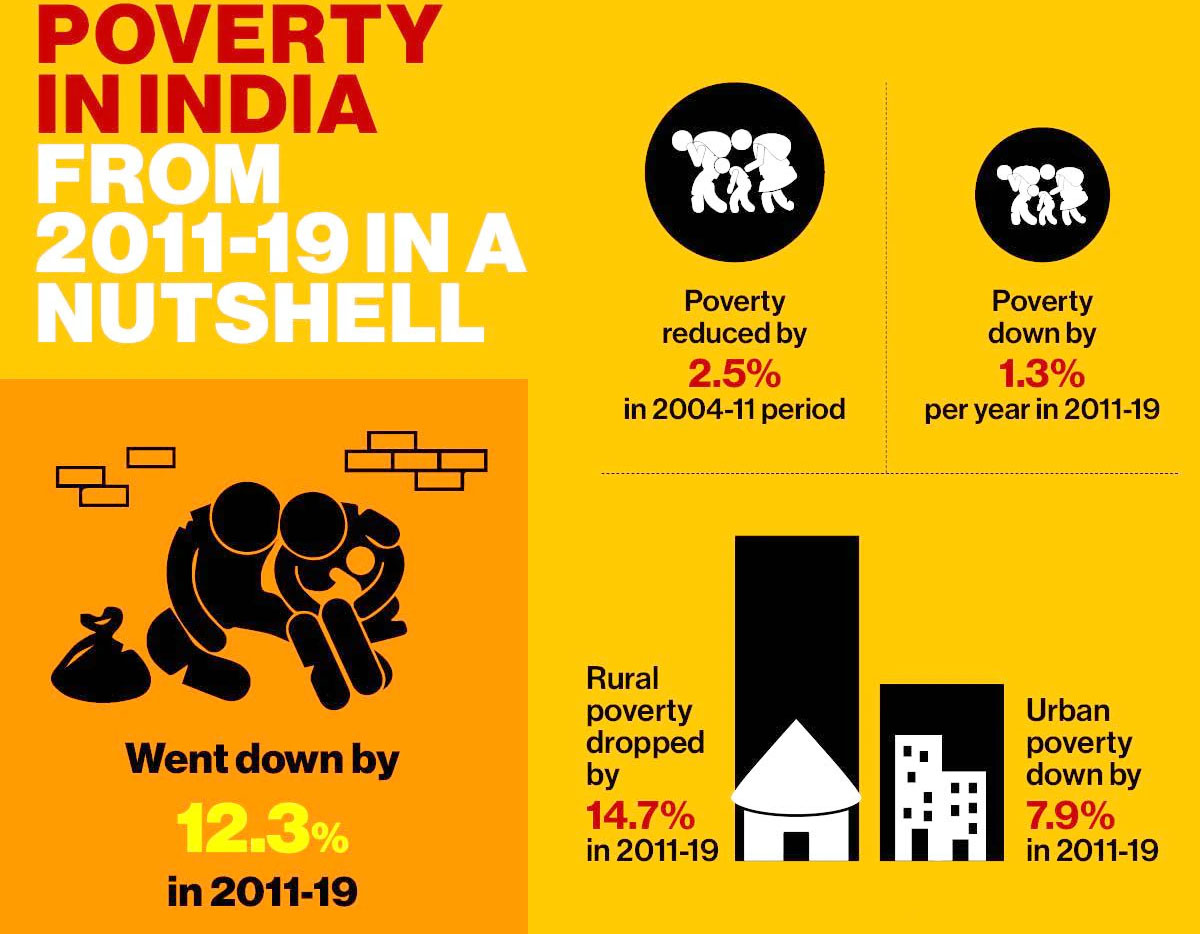
    The release of two new working papers, one from the World Bank and the other from the IMF, has led to a renewed debate on poverty in India.

    A substantial decline in extreme poverty in India

    • Both papers claim that extreme poverty in the country, based on the international definition of $1.90 per capita per day (in purchasing power parity (PPP), has declined substantially.
    • The World Bank paper uses the Consumer Pyramid Household Surveys (CPHS) data to conclude that 10.2 per cent of the country’s population was at extreme poverty levels in 2019.
    • The IMF paper calculates poverty by using the NSO Consumer Expenditure Survey as the base and adjusts it for the direct effect of the massive food grain subsidy given under the National Food Security Act (NFSA, 2013) and PM Garib Kalyan Anna Yojana (PMGKAY) during the pandemic period.
    • It claims that extreme poverty has almost vanished – it was 0.77 per cent in 2019 and 0.86 per cent in 2020.
    • Another estimate of poverty by the NITI Aayog, the multi-dimensional poverty index (MPI), has put Indian poverty at 25 per cent in 2015 based on NFHS data.
    • How MPI is calculated?: This MPI is calculated using twelve key components from areas such as health and nutrition, education and standard of living.

    How much should be the coverage under NFSA, 2013?

    • The offtake of grains under NFSA in FY20 was 56.1 million metric tonnes (MMT).
    • Following the outbreak of Covid-19, the government launched the Pradhan Mantri Garib Kalyan Anna Yojana (PMGKAY) in April 2020 to distribute 25 kg cereals per family per month in addition to food transfers under the NFSA.
    •  That catapulted the offtake to 87.5 MMT (under PMGKAY and NFSA) in FY21.
    • The scheme continued in FY22, and the grain offtake touched 93.2 MMT. 

    Issues with the wide coverage

    • A further extension of free food on top of the NFSA allocations was uncalled for.
    • This will strain the fisc, reduce public investments and hamper potential job creation.
    • A look at the size of food freebies will help understand the gravity of this problem.
    • As of April 1, the Food Corporation of India’s wheat and rice stocks stood at 74 MMT against a buffer stock norm of 21 MMT – there is, therefore, an “excess stock” of 53 MMT. 
    • The cost of excess stock: The economic cost of rice, as given by FCI, is Rs 3,7267.6/tonne and that of wheat is Rs 2,6838.4/tonne (2020/21).
    • The value of “excess stocks”, beyond the buffer norm, is, therefore, Rs 1.85 lakh crore — this, despite a total of 72.2 MMT grains distributed for free under the PMGKAY in FY21 and FY22.
    • Ballooning food subsidy: All this results in a ballooning food subsidy for FY 23, it is provisioned at Rs 2.06 lakh crore, for FY 23, it is provisioned at Rs 2.06 lakh crore.
    • But this amount is likely to go beyond Rs 2.8 lakh crore with the continuing distribution of free food under the PMGKAY.
    • This would amount to more than 10 per cent of the Centre’s net tax revenue (after deducting the states’ share).

    Way forward

    • It is all the more important to change the current policy of free food given the massive leakages in the PDS.
    • As per the High-Level Committee on restructuring FCI, leakages were more than 40 per cent based on the NSSO data of 2011.
    • Ground reports suggest that these leakages hover around 30 per cent or so today.
    • Make PDS more targeted: In reforming this system of free food, wisdom lies in going back to the Antyodaya Anna Yojana (AAY).
    • Under AAy, the “antyodaya” households (the most poor category) get more rations (35 kg per household) at a higher subsidy (rice, for instance, at Rs 3/kg and wheat at Rs2/kg).
    • For the remaining below poverty line (BPL) families, the price charged was 50 per cent of the procurement price and for above poverty line families (APL), it was 90 per cent of the procurement price.
    •  This will make PDS more targeted and lead to cost savings.
    • Use of technology: There could be some problems in identifying the poor. However, technology can help overcome this difficulty.
    • Option of cash transfer: This measure should be combined with giving people the option of receiving cash instead of providing grains to targeted beneficiaries.
    • The savings so generated from this reform can be ploughed back as investments in agri-R&D, rural infrastructure (irrigation, roads, markets) and innovations that will help create more jobs and reduce poverty on a sustainable basis.

    Conclusion

    The government needs to bite the bullet and emulate the Vajpayee  government (which had introduced AAY) in using scarce resources more wisely.

    UPSC 2022 countdown has begun! Get your personal guidance plan now! (Click here)

  • Russian Invasion of Ukraine: Global Implications

    India can be the fulcrum of the new global order

    Note4Students

    From UPSC perspective, the following things are important:

    Prelims level: Not much

    Mains level: Paper 2- Opportunities for India in the wake of Ukraine-Russia conflict

    Context

    As Mahatma Gandhi’s nation, India must be a committed and relentless apostle of peace and non-violence, both at home and in the world.

    How the Russia-Ukraine conflict is reshaping the world order

    • Ever since the fall of the Berlin Wall in 1989, a paradigm of free societies, frictionless borders and open economies evolved to be the governing order in many nations.
    • This catalysed freer movement of people, goods, services and capital across the world.
    • India too has benefited enormously from being an active participant in this interconnected world, with a tripling of trade (as share of GDP) in the last three decades and providing vast numbers of jobs.
    • Such tight inter-dependence among nations will lead to fewer conflicts and promote peace, was the established wisdom.
    • The Russia-Ukraine conflict has dismantled this wisdom.
    • Mutually beneficial to mutually harmful: If inter-connectedness and trade among nations were mutually beneficial, then it follows that its disruption and blockade will be mutually harmful.
    • Global Village was built on the foundation of advanced transportation networks, cemented with the U.S. dollar as the reserve currency and fenced by integrated payment systems.
    • Any disruption to this delicate balance runs the risk of plunging the ‘Global Village’ into disequilibrium and derailing the lives of all.

    Trade opportunity for India

    • Trade with other nations should and will always be an integral cornerstone of India’s economic future.
    • A reversal towards isolationism and protectionism will be foolhardy and calamitous for India.
    • As the western bloc of nations looks to reduce dependence on the Russia-China bloc of nations, it presents newer avenues for India to expand trade.
    • It presents a tremendous opportunity for India to become a large producing nation for the world and a global economic powerhouse.
    • However, to capitalise on these opportunities, India needs free access to these markets, an accepted and established global currency to trade in and seamless trade settlements.

    Suggestions for India

    1] Bilateral currency agreements are unsustainable

    • The American dollar has emerged as the global trade currency, bestowing an ‘exorbitant privilege’ on the dollar.
    • But a forced and hurried dismantling of this order and replacing it with rushed bilateral local currency arrangements can prove to be more detrimental for the global economy in the longer run.
    • We had an Indian rupee-Russian rouble agreement in the late 1970s and 1980s, when we mutually agreed on exchange rates for trading purposes.
    • Now, with India’s robust external sector, a flourishing trading relationship with many nations and tremendous potential to expand trade, such bilateral arrangements are unsustainable, unwieldy, and perilous.

    2] Avoid discounted commodity purchases from Russia

    • In the long run, India stands to gain more from unfettered access to the western bloc markets for Indian exports under the established trading order than from discounted commodities purchased under new bilateral currency arrangements that seek to create a new and parallel global trade structure.
    • It entails a prolonged departure from the established order of dollar-based trade settlement or jeopardises established trading relationships with western bloc markets, it can have longer term implications for India’s export potential.

    3] Non-disruptive geo-economic policy

    • India needs not just a non-aligned doctrine for the looming new world order but also a non-disruptive geo-economic policy that seeks to maintain the current global economic equilibrium.
    •  By the dint of its sheer size and scale, India can be both a large producer and a consumer.
    • To best utilise this opportunity, India needs not just cordial relationships with nations on either side of the new divide but also a stable and established global economic environment.

    4] Social harmony is a must

    • Just as it is in India’s best interests to balance the current geo-economic equilibrium, it is also imperative for India to maintain its domestic social equilibrium.
    • Social harmony is the edifice of economic prosperity.
    • Fanning mutual distrust, hate and anger among citizens, causing social disharmony is a shameful slide to perdition.

    Conclusion

    The reshaping and realignment of the world order will be a unique opportunity for India to reassess its foreign policy, economic policy and geo-political strategy and don the mantle of global leadership.

    UPSC 2022 countdown has begun! Get your personal guidance plan now! (Click here)

  • Anatomy of communal violence in India

    Note4Students

    From UPSC perspective, the following things are important:

    Prelims level: Not much

    Mains level: Paper 2- Communal violence in India

    Context

    Communal violence, a complex phenomenon, has been over-simplified to suit a convenient political narrative.

    India’s syncretic traditions and impact of invasions

    • For aeons, India has had syncretic traditions inspired by the Vedic aphorism, “Ekam sad vipra bahudha vadanti” (there is only one truth and learned persons call it by many names).
    •  Because of this underpinning, Indian society has never insisted on uniformity in any facet of life.
    • This equanimity of Indian society was, however, disrupted by invading creeds.
    • The first such incursion came in 712, when Muhammad bin Qasim vanquished Sindh, and as Chach Nama, a contemporary Arab chronicle states, introduced the practice of treating local Hindus as zimmis, forcing them to pay jizya (a poll tax), as a penalty to live by their beliefs.
    • In the 11th century, Mahmud of Ghazni, while receiving the caliphate honours on his accession to the throne, took a vow to wage jihad every year against Indian idolaters.
    • The fact is, ties between the two communities were seldom cordial.
    • There were intermittent skirmishes, wars and occasional short-lived opportunistic alliances.
    • When Pakistan declared itself an Islamic Republic in 1947, it would have been natural for India to identify itself as a Hindu state.
    • It didn’t, and couldn’t have — because of its Hindu ethos of pluralism.
    • India, is, and will always be, catholic, plural, myriad and a vibrant democracy.

    Conclusion

    It’s relevant to recall what Lester Pearson (14th PM of Canada) said: “Misunderstanding arising from ignorance breeds fear, and fear remains the greatest enemy of peace.”

    UPSC 2022 countdown has begun! Get your personal guidance plan now! (Click here)