💥UPSC 2026, 2027, 2028 UAP Mentorship (March Batch) + Access XFactor Notes & Microthemes PDF

Type: op-ed snap

  • Corporate Social Responsibility: Issues & Development

    Environmental-Social-Governance (ESG) Framework

    Note4Students

    From UPSC perspective, the following things are important:

    Prelims level: CSR and ESG frameworks and other such initiatives

    Mains level: CSR and ESG corporate governance and responsibility

    CSR

    What’s the news?

    • The growing importance of Corporate Social Responsibility (CSR) and Environmental-Social-Governance (ESG) frameworks in the business world.

    Central Idea

    • In recent years, Corporate Social Responsibility (CSR) has evolved from a mere obligation into a potent tool for companies to contribute to society and the environment. Concurrently, the ESG disclosures gained prominence as a means to showcase energy conservation efforts and align with global commitments to combat climate change.

    What is Corporate Social Responsibility (CSR)?

    • CSR refers to the practice of companies and businesses taking on initiatives and actions that contribute positively to society, the environment, and various social causes beyond their core profit-making activities.
    • CSR has become a legal requirement for certain companies under the Companies Act of 2013 in India.

    CSR

    What is Environmental-Social-Governance (ESG)?

    • The ESG framework assesses a company’s performance and impact in three key areas: environmental sustainability, social responsibility, and corporate governance.
    • ESG goes beyond traditional financial metrics to measure a company’s efforts and policies related to issues such as energy conservation, carbon footprint reduction, diversity and inclusion, employee well-being, community engagement, ethical business practices, and more.

    The significance of ESG

    • Addressing Climate Change: ESG provides a structured approach for businesses to tackle environmental issues, particularly climate change. It helps companies mitigate risks, enhance sustainability, and contribute to global climate goals.
    • Social Responsibility: ESG encompasses social aspects such as diversity, employee well-being, and community engagement. Prioritizing these areas fosters ethical practices and positive relationships with stakeholders.
    • Strong Governance: The “G” in ESG underscores effective corporate governance, which promotes transparency, accountability, and ethical business conduct. This builds investor trust and long-term sustainability.
    • Financial Performance: Companies emphasizing inclusion and diversity tend to achieve financial goals more consistently. Additionally, ESG integration enhances resilience during crises and supports innovation.
    • Meeting Stakeholder Expectations: ESG aligns with consumer and investor preferences for environmentally and socially conscious practices. Companies embracing ESG attract responsible consumers and investors.
    • Regulatory Compliance: ESG disclosure requirements are evolving, reflecting their increasing importance. Adhering to ESG standards positions companies to comply with changing regulations.
    • Long-Term Value: ESG contributes to long-term value creation by managing risks, fostering stakeholder relationships, and positioning companies for sustainable growth.

    The confluence of ESG and CSR and their advantages

    • Enhanced Sustainability: By aligning sustainable business goals with the established CSR framework, companies can expedite the transition to environmentally friendly and socially responsible practices. This alignment ensures that sustainability becomes a central tenet of the company’s operations.
    • Multi-Stakeholder Approach: Implementing both ESG and CSR requires the collaboration and shared vision of internal and external stakeholders. This approach fosters better communication, cooperation, and effective execution of CSR initiatives, which benefits the company’s overall impact.
    • Boosted Brand Recognition: The combination of ESG and CSR efforts enhances a company’s brand image, portraying it as environmentally conscious, socially responsible, and committed to ethical practices. This positive perception resonates with customers and stakeholders alike.
    • Risk Mitigation: Effective CSR practices coupled with ESG considerations help companies manage risks associated with environmental and social factors. This proactive approach minimizes potential negative impacts on the business’s reputation and bottom line.
    • Supply Chain Optimization: The confluence of ESG and CSR prompts companies to rethink and optimize their supply chains, from procurement to production. This transformation encourages environmentally friendly practices and reduces the overall environmental footprint.

    Case Studies: Embodied Synergy

    • Global giants such as Google and the luxury brand Chanel exemplify the positive outcomes of blending CSR and ESG principles.
    • Google’s substantial investment in an energy-efficient supply chain significantly boosted its brand while catalyzing its green transition.
    • Similarly, Chanel’s partial stake acquisition in a natural fiber manufacturer demonstrates a commitment to sustainable supply chain practices.
    • These examples illustrate the potential of combining CSR and ESG for transformative impact.

    What are the concerns raised?

    • Transition Costs: The transition from traditional to sustainable business practices can be accompanied by high costs. Integrating ESG principles and expanding CSR initiatives might require substantial investments in infrastructure, technology, and employee training, which could strain financial resources.
    • Risks and Uncertainties: Certain environmental or social initiatives might not yield immediate returns or could face opposition from stakeholders.
    • Smaller Businesses: The smaller businesses might find it challenging to prioritize ESG given their limited resources. Balancing ESG considerations alongside day-to-day operations could be more difficult for smaller enterprises compared to larger corporations.
    • Legitimacy of Self-Regulation: CSR is legally mandated in India but is self-regulated and voluntary in some regions, like the EU, UK, and US. Some experts raise concerns about the legitimacy of private self-regulation compared to regulation imposed by legislative bodies.

    Way forward

    • Advocating Regulatory Mandates for ESG: Push for regulatory mandates for ESG similar to CSR to ensure a structured approach. Collaborate to define legal integration, especially for smaller businesses.
    • Incentivizing ESG Investments: Reforms in economic policies and taxation can offer incentives like tax concessions, spurring ESG investments for sustainable practices.
    • Comprehensive Policy Frameworks: Implement organization-wide policy frameworks, embedding sustainability into all decisions, ensuring accountability, and facilitating regulatory compliance.
    • Holistic Integration: Infuse CSR across supply chains, led by transparent, larger corporations setting standards for others.
    • Digital connectivity and financial inclusion: with a projected 40 percent of the population transitioning to urban life by 2030, the aspirations of rural regions are harmonizing with urban benchmarks. However, the translation of intentions into action necessitates addressing crucial imperatives such as digital connectivity and financial inclusion.
    • Unified Approach: Blending CSR and ESG aligns business goals with sustainability, benefiting consumers, investors, employees, and society overall.

    Conclusion

    • The amalgamation of CSR and ESG provides a dynamic route towards sustainable growth. This synergy encapsulates responsible corporate citizenship and offers a transformative pathway to address challenges collectively. By harmonizing these two pillars, businesses contribute to a future where progress is intertwined with responsibility, promising a thriving world for all.

    Also read:

  • Climate Change Impact on India and World – International Reports, Key Observations, etc.

    Extreme heat can impact your mind, not just the body: Here is how

    Note4Students

    From UPSC perspective, the following things are important:

    Prelims level: Heatwaves

    Mains level: Heatwaves carry a dual impact: physical discomfort and psychological distress, coping strategies

    heat

    What’s the news?

    • As heatwaves grow fiercer and more frequent, their influence on mental health becomes undeniable, prompting experts to explore the intricate connections.

    Central idea

    • In recent times, the intensifying and prolonged heatwaves have gone beyond scorching temperatures and have started to scorch minds as well. The impact of soaring temperatures on mental health has gained newfound recognition, necessitating a deeper examination of the interplay between climate change and our psychological well-being.

    What are Heat Waves?

    • Heatwaves generally occur in India between March and June.
    • IMD declares a heatwave event when the maximum daytime temperature for a location in the plains crosses 40 degrees Celsius.
    • Over the hills, the threshold temperature is 30 degrees Celsius.

    What is meant by Climate Distress?

    • Climate Distress is a term coined to describe a range of emotions triggered by the environmental changes brought about by climate change.
    • It encompasses feelings such as anxiety, terror, sadness, shame, and guilt, all of which stem from the recognition of the broader consequences of climate change

    Frequency of Heatwaves in India

    • Increase in frequency and intensity: India has been witnessing an increase in the frequency and intensity of heatwaves in recent years.
    • For instance: In April and May 2022, around 350 million Indians were exposed to strong heat stress. On average, six heat wave events occur every year in the northern parts of the country.
    • Rise in summer temperatures as well as winter temperatures: Summer temperatures have risen by an average of 0.5–0.9 °C across districts in Punjab, Haryana, Uttar Pradesh, Bihar, and Rajasthan between 1990 and 2019. In addition, around 54% of India’s districts have seen a similar rise in winter temperatures.
    • Temperature rise projection: It is expected that between 2021 and 2050, the maximum temperature will rise by 2–3.5 °C in 100 districts and by 1.5–2°C in around 455 districts. Winter temperatures will also rise between 1°C and 1.5°C in around 485 districts.

    Heatwaves: The Looming Threat

    • Studies have uncovered alarming correlations between elevated temperatures and a rise in suicides, violent crimes, aggression, hospitalizations for mental disorders, and even mortality.
    • Patients with conditions like schizophrenia, dementia, psychosis, and substance use disorders are particularly vulnerable.
    • For every 1-degree Celsius increase, the risk of death among patients with such disorders rises by nearly 5%.
    • A seminal study analyzed data from over 2 million individuals with private insurance, revealing a spike in emergency department visits for mental health issues during the hottest days of summer.

    heat

    The Physical-Mental Connection

    • Heat’s influence isn’t confined to discomfort; it sets off a cascade of physiological changes that translate into emotional and mental shifts.
    • Increased heart rates due to heat can lead to heightened anxiety.
    • The neurotransmitter serotonin, linked to mood regulation, anxiety, and depression, also affects temperature perception.
    • Certain drugs can amplify heat’s impact on body temperature regulation, such as common medications for schizophrenia, depression, and bipolar disorder.

    Heatwaves: The Potent Agents of Psychological Distress

    • Rise in Suicides and Violent Crimes: Research has uncovered a striking connection between heatwaves and a surge in suicides, violent crimes, and aggression. Studies have reported a 0.7% increase in suicides linked to rising temperatures. Additionally, a 4% to 6% increase in interpersonal violence, including homicides, has been observed during heatwaves.
    • Aggravation of Mental Illnesses: Conditions like anxiety, schizophrenia, and depression are exacerbated by heatwaves. Irritability, anger, and anxiety intensify, making symptom management challenging.
    • Sleep Impact: Heatwaves disrupt sleep patterns, impacting mental health. Disturbed sleep leads to mood disorders, anxiety, and cognitive impairment.
    • Vulnerable Groups: Older adults, adolescents, and those with preexisting mental issues are especially vulnerable. Physiological vulnerabilities worsen their mental distress during heatwaves.
    • Physiological Stress Response: Heatwaves trigger increased heart rates, heightening anxiety levels. The physiological stress response amplifies emotional arousal.
    • Medication Interaction: Mental health medications interacting with heat worsen physical and mental effects, exacerbating psychological distress.
    • Routine Disruption and Isolation: Heatwaves disrupt routines and limit social interactions, fostering loneliness and frustration, amplifying psychological distress.
    • Climate Change Impact: Heatwaves are part of climate change’s wider impact, contributing to environmental uncertainty. This awareness triggers anxiety, fear, and helplessness.

    Coping Strategies

    • Recognizing the Reality: Understanding that the threats posed by heatwaves and climate change are real is the first step. Acknowledging the potential impact on mental health helps individuals prepare and seek appropriate support.
    • Traditional Coping Strategies: While traditional coping strategies like cognitive behavioral therapy and medications are valuable, the unique nature of climate distress requires acknowledging that the threat is tangible and not just a matter of perception.
    • Advocating for Change: Channeling distress into advocacy can be empowering. Participating in climate initiatives and advocating for policies addressing the root causes of climate change can provide a sense of purpose.
    • Fostering Resilience: Building resilience through mindfulness techniques and stress reduction practices can help individuals manage the anxiety and fear associated with climate distress.

    Conclusion

    • Heatwaves carry a dual impact: physical discomfort and psychological distress. Recognizing and addressing the mental health implications of climate change is an urgent endeavor. As our understanding evolves, it becomes imperative to support individuals and communities in navigating the profound mental effects of escalating temperatures.

    Also read:

    Heat domes, anticyclones and climate change: What’s causing heat waves across the world?

  • BRICS Summits

    15th BRICS SUMMIT

    Note4Students

    From UPSC perspective, the following things are important:

    Prelims level: BRICS and other multilateral forums

    Mains level: India’s multipolarity rhetoric and challenges

    What’s the news?

    • India’s pivotal role in the upcoming BRICS summit in South Africa from August 22 to 24 underscores its evolving diplomatic challenges and potential impact on global geopolitics.

    Central idea

    • The global geopolitical stage is once again witnessing the active participation of India. With the BRICS (Brazil, Russia, India, China, and South Africa) summit around the corner, India finds itself at a crucial juncture of international diplomacy. This summit not only tests the waters of Indian diplomacy but also holds clues to the trajectory of global geopolitics.

    All you need to know about BRICS

    • BRICS is an acronym for the grouping of the world’s leading emerging economies, namely Brazil, Russia, India, China, and South Africa.
    • Jim O’Neill, a British economist, coined the term ‘BRIC’ to describe the four emerging economies of Brazil, Russia, India, and China. He made a case for BRIC on the basis of econometric analyses projecting that the four economies would individually and collectively occupy far greater economic space and become among the world’s largest economies.
    • The importance of BRICS is self-evident: it represents 42% of the world’s population, 30% of the land area, 24% of global GDP, and 16% of international trade.
    • The five BRICS countries are also members of the G-20.

    Agenda of the BRICS

    The regular annual summit and deliberation of BRICS has considerably widened over the years to encompass topical global issues such as:

    • International terrorism
    • Climate change
    • Food and energy security
    • International economic and financial situation
    • Reform of the Bretton Woods Institutions
    • Trade protectionism and the WTO

    Significance of BRICS for India

    • Economic Cooperation: BRICS countries together account for a substantial portion of the world’s population and GDP. For India, being part of this grouping allows for enhanced economic cooperation, trade, investment, and collaboration in various sectors, contributing to economic growth and development.
    • Global Influence and Voice: BRICS provides India with a platform to engage on the global stage and express its views on important international issues. As a member of BRICS, India’s voice is amplified in discussions related to global economic governance, trade, climate change, and more.
    • Geo-political: BRICS offers India the opportunity to diversify its economic and diplomatic engagements beyond traditional partners. It helps India strengthen ties with fellow emerging economies, reducing dependency on a few major economies.
    • Strategic : The BRICS Summit provides India with a forum for engaging in strategic dialogues with like-minded countries on various geopolitical and security matters. This is particularly important given India’s strategic interests in its neighborhood and beyond.
    • Trade and Investment Opportunities: BRICS countries offer substantial trade and investment opportunities for India. The collective market potential of these nations can help Indian businesses expand their global footprint and increase exports.
    • Development Cooperation: BRICS member countries often cooperate in areas of mutual interest, such as development financing, infrastructure projects, and technology sharing. This cooperation can benefit India’s efforts to address its development challenges.
    • Technology and Innovation Sharing: BRICS cooperation can facilitate the sharing of technology, innovation, and best practices among member countries, aiding India’s efforts to modernize its industries and infrastructure.
    • Joint Efforts on Global Challenges: BRICS members often work together to address global challenges, such as climate change, sustainable development, and poverty alleviation. Collaborative efforts can amplify India’s contributions to these issues.

    Achievements of BRICS

    • Establishment of the New Development Bank (NDB): BRICS countries established the New Development Bank in 2014 to fund infrastructure and sustainable development projects in member countries and other emerging economies.
    • Contingent Reserve Arrangement (CRA): The CRA was established to provide member countries with financial support in times of crisis. It acts as a mechanism to address short-term liquidity pressures and enhance financial stability among BRICS nations.
    • Economic Cooperation and Trade: BRICS countries have increased economic cooperation and trade among themselves.The BRICS Trade Fair promotes business-to-business interactions, showcasing products and services from member countries and facilitating trade deals.
    • Joint Efforts on Global Challenges: BRICS members have collaborated on addressing global challenges such as climate change, sustainable development, and poverty alleviation. BRICS members issued a joint declaration at the 2018 summit in South Africa, emphasizing their commitment to the Paris Agreement and sustainable development.
    • Academic and Cultural Exchanges: BRICS countries have promoted academic and cultural exchanges, fostering mutual understanding and collaboration among scholars, students, and cultural groups from member states.The BRICS Network University fosters collaboration among universities in member countries, promoting academic research and exchange programs.
    • Strengthened Global South Voice: BRICS has become a platform for emerging economies to assert their interests and perspectives on global issues. It has strengthened the representation of the Global South in international discussions.
    • Infrastructure Investment: The BRICS NDB has funded various infrastructure projects in member countries, contributing to development and job creation while addressing critical infrastructure gaps.The NDB approved a $1 billion loan to South Africa for renewable energy projects, supporting the country’s transition to cleaner energy sources.

    15th BRICS Summit 2023

    The 15th BRICS Summit was held in Johannesburg, South Africa, from 22-24 August 2023.

    The important highlights of the Summit are as follows:

    • Theme: “BRICS and Africa: Partnership for Mutually Accelerated Growth, Sustainable Development and Inclusive Multilateralism”.
    • Gifts from India: The PM of India gifted Bidri Surahi, Nagaland Shawl, and Gond Paintings to BRICS leaders.
    • BRICS-Africa Outreach and BRICS Plus Dialogue: India participated in the BRICS-Africa Outreach and BRICS Plus Dialogue:
    • Participation: The meeting included leaders from BRICS countries along with guest countries from Africa, Asia, and Latin America.
    • Invitation for International Initiatives: India extended invitations for countries to join international initiatives like the International Solar Alliance, One Sun One World One Grid, Coalition for Disaster Resilient Infrastructure, One Earth One Health, Big Cat Alliance, and Global Centre for Traditional Medicine.

    Joint Statement: Leaders express support for India’s G20 Presidency.

    • Support for G20 Presidencies: Backed Brazil and South Africa’s G20 Presidencies in 2024 and 2025, focusing on global South representation.
    • Opposition to Unilateral Measures: Condemned unilateral coercive actions, advocated inclusive multilateralism, and upheld international law.
    • Global Governance Enhancement: Aimed to improve global governance through agility, efficiency, representation, and democratic accountability.
    • Human Rights Cooperation: Committed to cooperating on human rights under equality and mutual respect principles within BRICS and international platforms.
    • Agriculture and Food Security: Strived for fair agricultural trade, ending hunger, sustainable agriculture, and resilient practices.
    • UN Reform: Supported comprehensive UN reform, including the Security Council, for enhanced democracy, effectiveness, and developing country representation.
    • Peaceful Conflict Resolution: Committed to peaceful dispute resolution through dialogue and inclusiveness while recognising women’s participation in peace processes.

    Expansion of BRICS

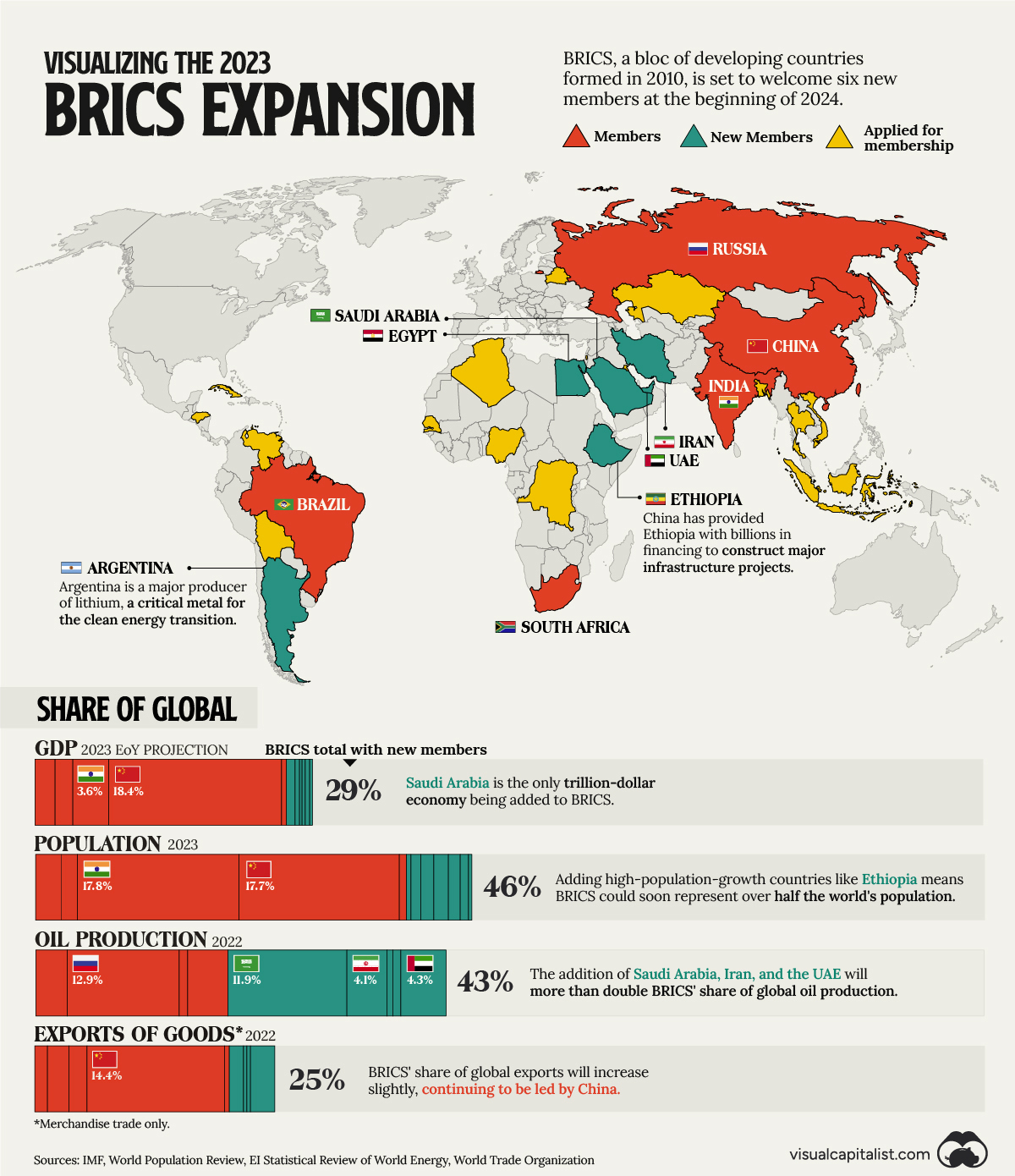
    More than 40 countries have expressed interest in joining BRICS, and 22 have formally asked to be admitted. Therefore, leaders of the BRICS in the 15th Summit have agreed on mechanisms for considering new members.

    Expansion of BRICS

    • First phase of expansion: The countries including Argentina, Egypt, Ethiopia, Iran, Saudi Arabia, and the UAE have received invitations to join BRICS. This new membership is set to take effect from January 1, 2024.

    Reasons for the BRICS expansion:

    • China’s strategic move for global influence.
    • FOMO: Fear of missing out on a visible club.
    • Limited options in other groups.
    • Anti-western sentiment and Global South unity

    Challenges faced by BRICS

    • Divergent National Interests: BRICS members have diverse economic and political priorities, which can sometimes lead to conflicting interests. Example: China’s emphasis on export-led growth might conflict with India’s efforts to reduce its trade deficit with China, creating economic tensions within the group.
    • Economic Inequalities: Challenge: Economic disparities among BRICS countries can hinder equitable distribution of benefits from cooperation. Example: South Africa, with a smaller economy compared to China and India, might find it challenging to compete for investment and trade opportunities within the group.
    • Geopolitical Competition: Geopolitical rivalries and regional conflicts among BRICS members can strain cooperation. Example: China’s territorial disputes in the South China Sea have led to tensions with other BRICS countries like India, which has concerns over freedom of navigation.
    • Differing Political Systems: BRICS countries have different political systems and levels of political freedom, impacting their approaches to governance and international relations. Example: Russia’s political landscape differs significantly from the democratic systems in Brazil, India, and South Africa, potentially affecting consensus on certain issues.
    • Infrastructure and Connectivity Gaps:  Inadequate infrastructure and connectivity gaps within BRICS countries can hinder trade and collaboration. Example: Insufficient transport and logistics infrastructure in some member countries can hinder smooth movement of goods and services.
    • Institutional Limitations: The institutional structure of BRICS, including the New Development Bank, might face limitations in terms of resources, decision-making processes, and lending capacity. The NDB might struggle to finance large-scale projects without relying on external resources beyond the BRICS nations.
    • Economic Volatility: Economic fluctuations and market vulnerabilities can impact the stability of BRICS economies. Example: The global economic recession triggered by the COVID-19 pandemic affected BRICS nations differently, leading to varying levels of economic contraction and recovery.
    • Regional and Bilateral Disputes: Regional and bilateral disputes among BRICS members can strain the group’s unity and shared objectives. Example: The Doklam standoff between India and China in 2017 created tensions and highlighted potential areas of conflict within BRICS.
    • Leadership Rotation and Priorities: Each BRICS member country holds the rotating presidency for a year, which can impact the continuity of the group’s priorities. Example: Each new presidency might emphasize different areas of cooperation based on its national interests and foreign policy goals.

    Reforms needed in BRICS

    • Inclusion of Civil Society and Private Sector: Involve civil society organizations and the private sector in discussions and initiatives to broaden perspectives and encourage innovation.
    • Promotion of Sustainable Development Goals (SDGs): Align BRICS activities more explicitly with the United Nations’ SDGs to foster sustainable and inclusive development across member countries.Launch joint projects on renewable energy deployment across member countries, addressing SDG 7 (Affordable and Clean Energy).
    • Humanitarian and Disaster Response Collaboration: Establish a BRICS Disaster Response Task Force to coordinate resources and expertise during natural disasters.
    • Expanding Membership or Partnerships: Consider the possibility of expanding the membership or establishing strategic partnerships with other emerging economies that share similar interests and values.
    • Promotion of Digital Connectivity: Foster digital connectivity and technological collaboration among BRICS members to capitalize on the benefits of the digital economy.
    • Regular Assessment of Goals and Progress: Periodically evaluate the achievements, challenges, and relevance of BRICS objectives to ensure they remain aligned with member countries’ evolving interests.
    • Climate Change and Environmental Cooperation: Establish a BRICS Environmental Fund to finance joint environmental protection and conservation projects.

    Way Forward for India

    • BRICS’ Role: BRICS can serve as an alternative platform to address global governance deficiencies, despite its imperfections. It could initiate discussions on more inclusive global governance.
    • Navigating Complexity: India’s geopolitical choices are complex due to its affiliations in various forums. India’s participation in non-Western platforms reflects a response to historical inequities.
    • Balancing Geopolitical Shifts: As competing blocs emerge, India must balance affiliations between a China-centric and a West-centric world order. Striking this balance is crucial to India’s global positioning.
    • Managing China’s Rise: India needs to consider whether its actions inadvertently support China’s ascent. While India must moderate China’s influence, it should avoid alienating other global South nations.
    • Safeguarding National Interests: India’s active participation in global forums must align with promoting equitable global governance while ensuring its national interests are safeguarded.

    Conclusion

    • Amid global uncertainties, India’s role in the BRICS summit gains prominence. Balancing between non-Western forums and Western ties, India aims for equitable global governance while managing China’s ascendancy. These decisions could mold India’s path and impact the evolving international landscape.
  • Genetically Modified (GM) crops – cotton, mustards, etc.

    Gene-edited mustard: Less pungent, more useful

    Note4Students

    From UPSC perspective, the following things are important:

    Prelims level: GM crops and recent developments

    Mains level: Gene-edited mustard and its advantages

    What’s the news?

    • Scientists have used gene editing to create mustard plants with lower glucosinolate levels in seeds, improving their suitability for cooking oil and animal feed, potentially reducing India’s reliance on imported vegetable oils.

    Central idea

    • India’s domestically grown oilseeds, like rapeseed and mustard, provide cooking oil and protein-rich livestock meals. However, the pungent flavor from high glucosinolate levels limits consumer appeal, and an unpalatable meal poses livestock challenges. A genetic breakthrough offers hope, potentially transforming mustard’s applications.

    Rapeseed-Mustard: A Key Crop

    • Rapeseed-mustard plays a vital role in India’s oilseed landscape, accounting for 42.6% of vegetable oil production and 30.3% of meal production, second only to soyabean.
    • Glucosinolates in mustard seeds contribute to the characteristic pungency of their oil and meal.

    What is glucosinolate?

    • Glucosinolates are a group of sulfur- and nitrogen-containing compounds found in plants, including rapeseed-mustard.
    • These compounds contribute to the distinctive pungent taste and aroma of mustard seeds and other cruciferous vegetables.
    • The glucosinolates in mustard seeds are responsible for their characteristic flavor but can also limit their acceptability for consumption and livestock feed due to their strong taste and potential negative effects on animals.

    The Distinction Between GE and GM Crops

    1. Genetically Modified (GM) Crops:
    • Contain foreign genes from other species, such as Bacillus thuringiensis bacteria in cotton or Bar-Barnase-Barstar in GM hybrid mustard.
    • Subject to stringent environmental release regulations in India, requiring clearance from the Genetic Engineering Appraisal Committee (GEAC) under the Ministry of Environment.
    • GEAC’s approval is not solely binding; final authorization comes from the Union Government.
    1. Genetically Edited (GE) Crops:
    • Are transgene-free or non-GM, containing no foreign genes.
    • The Cas9 enzyme, used for gene editing, is eliminated in subsequent generations, resulting in transgene-free lines.
    • Benefit from an exemption provided by the MoEFCC on the requirement for GEAC approval for open field trials of GE plants free of exogenous introduced DNA.
    • Approval is now necessary at the level of an Institutional Bio-Safety Committee (IBSC) comprising scientists engaged in GE crop development and the DBT.

    A Breakthrough in Gene Editing

    • Researchers, including those at Delhi University and the Indian Council of Agricultural Research, have employed CRISPR/Cas9 gene editing to address the glucosinolate issue.
    • They edited 10 out of 12 GTR genes in the Varuna mustard variety, significantly reducing glucosinolate content in seeds while maintaining higher levels in leaves and pod walls.
    • This editing also improved resistance to fungal pathogens and insect pests, enhancing the plant’s defense mechanisms.

    Significance of this development

    • Reducing Edible Oil Imports: India’s significant dependence on edible oil imports, valued at $20.84 billion (Rs 167,270 crore) for the FY ending March 2023, underscores the need to curb foreign exchange outflow and enhance domestic production.
    • Addressing Economic Strain: The extensive import value strains India’s trade balance and foreign exchange reserves, making it imperative to boost self-reliance in edible oil production.
    • Promoting Agricultural Self-Sufficiency: This development aligns with India’s goal of achieving greater agricultural self-sufficiency by reducing reliance on imports and enhancing domestic oilseed production.
    • Impact on Oilseed Crops: Mustard and soyabean, cultivated across 9 million and 12.5 million hectares, respectively, are key to India’s oilseed sector. Mustard’s higher oil-extractable content of 38% accentuates its significance.
    • Nutritional and Livestock Benefits: Mustard’s improved suitability for culinary and animal feed purposes positively impacts both human nutrition and the livestock sector.
    • Scientific Innovation: The creation of genetically edited (GE) low-seed, high-leaf glucosinolate mustard lines and GM hybrid mustard showcases India’s scientific capabilities and innovation in agriculture.
    • Enhanced Food Security: By augmenting domestic oilseed production and quality, this development contributes to India’s food security and reduces its vulnerability to global market fluctuations.

    Conclusion

    • The genetic breakthrough in editing mustard genes offers potential to revolutionize India’s oilseed sector. By lowering seed glucosinolate levels and maintaining higher leaf levels, it improves culinary and feed suitability. As the GE variety undergoes trials, it addresses oil seed production, import reliance, and self-sufficiency needs.


  • Poverty Eradication – Definition, Debates, etc.

    India’s Remarkable fight against Poverty

    Note4Students

    From UPSC perspective, the following things are important:

    Prelims level: NA

    Mains level: India's remarkable poverty alleviation journey, factors behind, persisting challenges and way forward

    What’s the news?

    • On the 77th Independence Day of our nation, Prime Minister Narendra Modi addressed the nation from the historic Red Fort in Delhi, heralding a remarkable achievement in the fight against poverty.

    Central idea

    • The Prime Minister’s announcement highlighted the lifting of 135 million people from poverty in five years, as confirmed by the MDPI from NITI Aayog. This aligns with UNDP’s estimate of 415 million lifted out of poverty between 2005–06 to 2019–21, a commendable milestone in India’s history.

    Remarkable Achievements in the Fight Against Poverty

    • 135 Million Uplifted: Between 2015-16 and 2019-21, 135 million people were lifted out of poverty.
    • 415 Million Escaped Poverty: From 2005–06 to 2019–21, India lifted 415 million people out of poverty (MDPI).
    • Extreme Poverty Reduced: Extreme poverty decreased from over 80% to around 15% based on the MDPI.
    • Leading Rice Exporter: Successful policies resulted in India becoming the largest exporter of rice.
    • Top Producer of Milk and Cotton: India emerged as the largest producer of milk (222 MT) and cotton (39 million bales).
    • Infant Mortality Decreased: Infant mortality decreased significantly from 57% in 2005–06 to 35% in 2019–21.

    Factors Behind This Achievement

    • Economic Policy Transition (1991): The shift to a market-oriented economy in 1991 generated substantial resources for poverty reduction.
    • Strategic Government Initiatives: Targeted policies like the PM Garib Kalyan Yojana directly impact poverty reduction by providing essential commodities.
    • Education and Skill Development: Prioritizing education and skill enhancement empowers individuals, grants access to improved livelihood opportunities, and contributes to child nutrition.
    • Agricultural Reforms (Green Revolution): Innovations like the Green Revolution augmented rural incomes, lifting communities out of poverty by enhancing agricultural productivity.
    • Women’s Empowerment: Focusing on women’s education and participation correlates with positive effects on family welfare and economic growth, as exemplified by proposals to train women in self-help groups for drone operation.
    • Technological Advancements: Technological breakthroughs have streamlined service delivery, as seen in the provision of commodities through the PM Garib Kalyan Yojana and enhanced agricultural productivity via the gene revolution in cotton.
    • Global Integration: Embracing globalization and trade expanded economic horizons, fostering growth, job creation, and effective poverty reduction.
    • Resilience and Adaptability: Society’s adaptability to changing economic conditions bolstered resilience against poverty, preventing further economic deterioration.
    • Public-Private Partnerships: Collaborations between the government and the private sector magnified poverty reduction efforts, as evident from Punjab Agricultural University’s role in the Green Revolution.
    • Civil Society Participation: Non-governmental organizations and civil society groups complemented government initiatives, actively contributing to poverty alleviation and service delivery.
    • Data-Driven Decision Making: Utilizing data to identify poverty pockets and target interventions precisely enhances the efficacy of poverty reduction strategies.
    • Foreign Exchange Reserves: India’s growth in foreign exchange reserves from $1.4 billion in July 1991 to approximately $600 billion bolstered the economy against external shocks, enhancing its ability to sustain poverty alleviation efforts.

    Challenges and Concerns

    • Child malnutrition: Despite progress, 32% of children are underweight and 35% are stunted, according to the NFHS-5.
    • Climate Change Impact: Increasing extreme weather events due to climate change pose a threat to food security and poverty alleviation.
    • Gender Gap in the Labor Force: Women’s participation rate in the labor force remains low at around 30% (2021–22).
    • Quality Education Gap: Ensuring quality education and skill formation for women beyond the 12th grade is a challenge.
    • Access to Nutritious Food: Ensuring equitable access to nutritious food, especially for vulnerable populations, is a challenge.

    Way Forward: A Blueprint for Transformation

    • Education Empowerment: Strengthen education programs beyond the 12th grade, providing quality education and skill formation for women to enhance their contribution to poverty reduction.
    • Enhanced Gender Participation: Implement measures to boost women’s participation in the labor force, aiming to bridge the gender gap and empower women economically.
    • Climate-Resilient Agriculture: Prioritize sustainable agricultural practices that address climate change challenges, ensuring food security and rural income stability.
    • Nutrition Interventions: Develop targeted interventions to address child malnutrition, focusing on reducing underweight and stunting rates among children under five.
    • Data-Driven Approach: Continuously utilize accurate and comprehensive data to inform policy decisions, ensuring effective poverty alleviation strategies.

    Conclusion

    • India’s remarkable poverty alleviation journey reflects recent unparalleled progress. Leveraging inclusive growth, women’s education, and agricultural innovation can drive lasting transformation. Safeguarding against climate change and enhancing food systems can pave the way for a prosperous and equitable future.


  • Artificial Intelligence (AI) Breakthrough

    Generative AI systems

    Note4Students

    From UPSC perspective, the following things are important:

    Prelims level: Generative AI Models in News

    Mains level: Generative AI revolution, advantages, concerns and measures

    AI

    What’s the news?

    • The advent of generative artificial intelligence (AI) presents a world of possibilities and challenges.

    Central idea

    • The rapid rise of generative AI is reshaping our world with technological wonders and societal shifts. LLMs like ChatGPT promise economic growth and transformative services like universal translation but also raise concerns about AI’s ability to generate convincingly deceptive content.

    What is generative AI?

    • Like other forms of artificial intelligence, generative AI learns how to take actions based on past data.
    • It creates brand new content—a text, an image, even computer code—based on that training instead of simply categorizing or identifying data like other AI.
    • The most famous generative AI application is ChatGPT, a chatbot that Microsoft-backed OpenAI released late last year.
    • The AI powering it is known as a large language model because it takes in a text prompt and, from that, writes a human-like response.

    What are large language models (LLMs)?

    • Large Language Models (LLMs) are advanced AI systems designed to understand and generate human-like language.
    • They use vast amounts of data to learn patterns and relationships in language, enabling them to answer questions, create text, translate languages, and perform various language tasks.

    Potential of large language models

    • Economic Transformation: LLMs are predicted to contribute $2.6 trillion to $4.4 trillion annually to the global economy.
    • Enhanced Communication: LLMs redefine human-machine interaction, allowing for more natural and nuanced communication.
    • Information Democratization: Initiatives like the Jugalbandi Chatbot exemplify LLMs’ power by making information accessible across language barriers.
    • Industry Disruption: LLMs can transform various industries. For example, content creation, customer service, translation, and data analysis can benefit from their capabilities.
    • Efficiency Gains: Automation of language tasks leads to efficiency improvements. This enables businesses to allocate resources to higher-value activities.
    • Educational Support: LLMs hold educational potential. They can provide personalized tutoring, answer queries, and create engaging learning materials.
    • Medical Advances: LLMs assist medical professionals in tasks such as data analysis, research, and even diagnosing conditions. This could significantly impact healthcare delivery.
    • Entertainment and Creativity: LLMs contribute to generating creative content, enhancing sectors like entertainment and creative industries.
    • Positive Societal Impact: LLMs have the potential to improve accessibility, foster innovation, and address various societal challenges.

    Case study: Jugalbandi Chatbot

    • Overview: The Jugalbandi Chatbot, powered by ChatGPT technology, is an ongoing pilot initiative in rural India that addresses language barriers through AI-powered translation.
    • Universal Translator: The chatbot’s core function is to act as a universal translator. It enables users to submit queries in local languages, which are then translated into English to retrieve relevant information.
    • Accuracy Challenge: The chatbot’s success relies on accurate translation and information delivery. Inaccuracies could perpetuate misinformation.
    • Ethical Considerations: Ensuring accuracy and minimizing biases in translation is crucial to avoid spreading misconceptions or causing harm.
    • Cultural Sensitivity: The initiative highlights the need for culturally sensitive deployment of advanced AI technology in diverse linguistic contexts.
    • Positive Transformation: Jugalbandi Chatbot showcases the potential benefits of leveraging AI for bridging language gaps and providing underserved communities with access to information.
    • Complexities and Impact: As the pilot progresses, its effectiveness and impact will become clearer, shedding light on the complexities and possibilities of utilizing AI to address real-world challenges.

    Concerns associated with large language models

    • Misinformation Propagation: LLMs can be harnessed to spread misinformation and disinformation, leading to the potential for public confusion and harm.
    • Bias Amplification: Biases present in training data may be perpetuated by LLMs, exacerbating societal inequalities and prejudices in generated content.
    • Privacy Risks: LLMs could inadvertently generate content that reveals sensitive personal information, posing privacy concerns.
    • Deepfake Generation: The capability of LLMs to create convincing deepfakes raises worries about identity theft, impersonation, and the erosion of trust in digital content.
    • Content Authenticity: LLMs’ production of sophisticated fake content challenges the authenticity of online information and poses challenges for content verification.
    • Ethical Considerations: The development of AI entities indistinguishable from humans raises ethical questions about transparency, consent, and responsible AI use.
    • Regulatory Complexity: The rapid progress of LLMs complicates regulatory efforts, necessitating adaptive frameworks to manage potential risks and abuses.
    • Security Vulnerabilities: Malicious actors could exploit LLMs for cyberattacks, fraud, and other forms of digital manipulation, posing security risks.
    • Employment Disruption: The widespread adoption of LLMs might lead to job displacement, particularly in sectors reliant on language-related tasks.
    • Social Polarization: LLMs could exacerbate social polarization by facilitating the dissemination of polarizing content and echo chamber effects.

    What is the identity assurance framework?

    • The identity assurance framework is a structured approach designed to establish trust and authenticity in digital interactions by verifying the identities of entities involved, such as individuals, bots, or businesses.
    • It aims to address concerns related to privacy, security, and the potential for deception in the digital realm.
    • The framework ensures that parties engaging in online activities can have confidence in each other’s claimed identities while maintaining privacy and security.
    • The key features:
    • Trust Establishment: The primary objective of the identity assurance framework is to foster trust between parties participating in digital interactions.
    • Open and Flexible: The framework is designed to be open to various types of identity credentials. It does not adhere to a single technology or standard, allowing it to adapt to the evolving landscape of digital identities.
    • Privacy Considerations: Privacy is a core concern within this framework. It employs mechanisms such as digital wallets that permit selective disclosure of identity information.
    • Digital Identity Initiatives: The framework draws from ongoing digital identity initiatives across countries. For example, India’s Aadhaar and the EU’s identity standard serve as potential building blocks for establishing online identity assurance safeguards.
    • Leadership and Adoption: Countries that are at the forefront of digital identity initiatives, like India with Aadhaar, are well-positioned to shape and adopt the framework. However, full-scale user adoption is expected to be a gradual process.
    • Balancing Values and Risks: The identity assurance framework acknowledges the delicate balance between competing values such as privacy, security, and accountability. It aims to strike a balance that accommodates different nations priorities and risk tolerances.
    • Information Integrity: The framework extends its principles to information integrity. It validates the authenticity of information sources, content integrity, and even the validity of information, which can be achieved through automated fact-checking and reviews.
    • Global Responsibility and Collaboration: The onus of ensuring safe AI deployment lies with global leaders. This requires collaboration among governments, companies, and stakeholders to build and enforce a trust-based framework.

    Way Forward

    • Identity Assurance Framework:
      • Establish an identity assurance framework to verify the authenticity of entities engaged in digital interactions.
      • Ensure trust between parties by confirming their claimed identities, encompassing humans, bots, and businesses.
      • Utilize digital wallets to enable selective disclosure of identity information while safeguarding privacy.
    • Open Standards and Adaptability:
      • Design the identity assurance framework to be technology-agnostic and adaptable.
      • Allow the integration of diverse digital identity credential types and emerging technologies.
    • Digital Identity Initiatives:
      • Leverage ongoing digital identity initiatives in various countries, such as India’s Aadhaar and the EU’s identity standard.
      • Incorporate these initiatives to form the foundation of the identity assurance framework.
    • Privacy Protection and Selective Disclosure:
      • Prioritize privacy by using mechanisms like digital wallets to facilitate controlled disclosure of identity information.
      • Empower individuals to share specific attributes while minimizing unnecessary exposure.
    • Global Collaboration and Leadership:
      • Encourage collaboration among global leaders, governments, technology companies, researchers, and policymakers.
      • Establish a collaborative effort to ensure the responsible deployment of AI technologies.
    • Balancing Values and Risks:
      • Address tensions between privacy, security, accountability, and freedom.
      • Develop a balanced approach that respects civil liberties while ensuring security and accountability.
    • Information Integrity:
      • Extend the identity assurance framework principles to information integrity.
      • Validate the authenticity of information sources, content integrity, and information validity.
    • Ethical Considerations:
      • Recognize and address ethical dilemmas arising from the use of AI-generated content for harmful purposes.
      • Ensure that responsible and ethical practices guide the development and deployment of AI technologies.

    Conclusion

    • The generative AI revolution teems with potential and peril. As we venture forward, it falls upon us to balance innovation with security, ushering in an era where the marvels of AI are harnessed for the greater good while safeguarding against its darker implications.

    Also read:

    What is Generative AI?

  • Banking Sector Reforms

    How NBFCs can be used to address the problem of credit inadequacy in India

    Note4Students

    From UPSC perspective, the following things are important:

    Prelims level: NBFCs and other related concepts

    Mains level: credit inadequacy and the role of NBFCs

    What’s the news?

    • India’s Non-Banking Financial Company (NBFC) sector is on a path of recovery after a turbulent period following the collapse of IL&FS and the challenges posed by the COVID-19 pandemic.

    Central idea

    • India’s NBFC sector’s revival aids credit flow in tandem with banks, bolstered by upgraded outlooks from ICRA due to enhanced oversight, wider bank credit, robust market performance, reduced NPAs, and higher provisions. However, Ind-Ra and Fitch’s caution highlights concerns over certain NBFCs’ unsecured credit exposures.

    Non-Banking Financial Company (NBFC)

    • A NBFC is a financial institution that offers various financial services similar to those offered by traditional banks, but it does not hold a banking license and cannot accept deposits from the public.
    • NBFCs provide services such as loans and credit, investment and wealth management, insurance services, money market operations, and other financial products.
    • They play a crucial role in extending credit to sectors of the economy that might not be served by traditional banks, contributing to financial inclusion and overall economic growth.

    What is credit inadequacy?

    • Credit inadequacy refers to the insufficiency of available credit or loans to meet the financial needs and investment requirements of various sectors within an economy.
    • In the context of India, it signifies a situation where the amount of credit available from traditional banking sources is limited and falls short of what is required to support economic growth, business expansion, and other investment activities.

    What are credit sources?

    • Credit sources refer to the origins or channels through which funds are made available for lending or borrowing purposes.

    Credit sources within the Indian financial system

    • Credit Flow through Financial Intermediaries (Banks and NBFCs):
    • This channel involves banks and Non-Banking Financial Companies (NBFCs) acting as intermediaries between savers and borrowers.
    • Banks collect deposits from individuals and businesses and then lend these funds to borrowers in the form of loans.
    • NBFCs, while similar to banks, cannot accept deposits but can still provide credit by borrowing from other financial institutions or markets and lending those funds to borrowers.
    • Market credit through bond markets:
    • This channel involves borrowing and lending directly through the financial markets.
    • Various participants, like mutual funds, insurance companies, and banks, engage in the bond market.
    • Borrowers issue bonds, which are essentially debt instruments, and investors purchase these bonds, effectively lending money to the issuers in return for interest payments.

    Evolution of credit and banking sector challenges

    • Historical Credit Growth:
    • Between 1991 and the early 2000s, annual bank credit expanded by 15% on average.
    • From 2003 to 2008, the growth rate surged to 28%, driven by optimistic disbursements for the commercial sector due to positive growth outlook.
    • Challenges and Non-Performing Assets (NPAs):
    • The rapid credit expansion of 2003-2008 led to an increase in non-performing assets (NPAs) during the early 2010s.
    • The Reserve Bank of India (RBI) introduced asset quality reviews in 2016 as NPAs rose from 3.4% to 10% between 2013 and 2017.
    • The rise in bad assets hampered banks appetite for commercial sector exposure, leading to a shift towards retail loans.
    • Credit Slowdown and NBFC Emergence:
    • Bank credit growth declined after 2016, reaching 10% annually pre-Covid, and further dropping to 7% during the pandemic.
    • This slowdown created an opportunity for Non-Banking Financial Companies (NBFCs) to step in and bridge the credit gap.
    • NBFCs compensated for reduced bank credit, particularly in MSMEs and real estate, where they contributed 60% of incremental credit flows between 2014 and 2018.
    • Disruption and Liquidity Crisis:
    • A major infrastructural lending-focused NBFC’s collapse in 2018 created a sector-wide contagion.
    • Both commercial banks and NBFCs experienced a sharp decline in incremental credit, resulting in liquidity challenges.
    • This crisis highlighted the vulnerability of NBFCs due to concentrated liability books and disrupted funding sources.

    Significance of NBFCs in a capital-constrained nation like India?

    • Filling the Credit Gap: In a country where credit flow is limited, NBFCs step in to bridge the credit gap, particularly in sectors like MSMEs and real estate. They contribute 60% of incremental credit flows to these sectors, supporting their growth and development.
    • Niche Expertise: NBFCs possess specialized sectoral expertise and flexibility in underwriting. They can evaluate borrowers based on unconventional parameters, extending credit to segments that traditional banks might consider riskier.
    • Financial Inclusion: NBFCs extend credit to underserved and remote regions where traditional banks have limited reach. This contributes to financial inclusion by providing loans to individuals and businesses that might otherwise be excluded from the formal credit system.
    • Timely Investment: With quick and efficient loan processing, NBFCs enable timely investment and economic activity. This agility is crucial in addressing credit needs promptly, supporting growth in various sectors.
    • Alternative Funding: NBFCs raise funds through diverse channels such as bank borrowings, market issuances, and commercial papers. This alternative funding approach ensures that credit is available even when traditional banking sources face limitations.
    • Complementary Role: NBFCs complement traditional banks by extending credit and financial services. They serve as an alternative credit avenue, ensuring a broader spectrum of borrowers can access the funds needed for their ventures.
    • MSME and Real Estate Focus: NBFCs’ emphasis on MSME and real estate financing fills a critical gap. These sectors, vital for India’s growth, often face challenges in accessing credit from traditional banks due to perceived risks or constraints.
    • Sectoral Growth: NBFCs, with their specialized approach, contribute to sectoral growth. For instance, they supported 60% of incremental credit flows to MSMEs and real estate developers between 2014 and 2018, facilitating expansion in these key sectors.
    • Diversified Credit Landscape: NBFCs enhance the overall credit landscape by offering an alternative credit channel. Their presence helps distribute credit more evenly across sectors, promoting balanced economic growth.

    How can NBFCs be used to address the problem of credit inadequacy in India?

    • Targeted Credit Access: NBFCs can cater to segments that traditional banks might find riskier or less viable, such as MSMEs and real estate developers. Their specialized approach, nimbleness, and sectoral expertise allow them to provide tailored credit solutions to these underserved sectors.
    • Financial Inclusion: NBFCs extend credit to areas where traditional banks have limited reach, fostering financial inclusion. They can provide loans to individuals and businesses in remote and underserved regions, contributing to economic growth across the nation.
    • Flexibility in Underwriting: NBFCs often adopt innovative and tech-enabled approaches for assessing creditworthiness. This enables them to evaluate borrowers based on unconventional parameters, extending credit to those who might not meet traditional banking criteria.
    • Quick and Efficient Processes: NBFCs, with streamlined operations, can offer faster loan approvals and disbursements. This agility in processing loans can bridge the credit gap more rapidly, supporting timely investment and economic activities.
    • Sectoral Focus: NBFCs can concentrate on specific sectors or niches, catering to unique credit requirements. For instance, they can offer specialized real estate financing or support to micro and small businesses, contributing to sectoral growth.
    • Liquidity Channels: NBFCs can raise funds through various channels, including bank borrowings, market issuances, and commercial papers. This diversity in funding sources enables them to overcome liquidity challenges more effectively.
    • Diversification of Funding Sources: For sustainable growth, NBFCs can diversify their funding sources to reduce reliance on specific channels, reducing vulnerability to liquidity shocks, as highlighted in the article.
    • Complementing the Banking System: NBFCs complement traditional banks in extending credit and financial services. Their presence provides an alternative credit avenue, ensuring that credit is available to a wider spectrum of borrowers.

    Conclusion

    • In a country where financial inclusion and access to bank credit remain challenges, NBFCs play a vital role in reaching underserved segments. Learning from the crisis of 2018–2021, diversifying funding sources, and implementing short-term liquidity buffers can fortify NBFCs against future shocks.
  • Industrial Sector Updates – Industrial Policy, Ease of Doing Business, etc.

    A ‘fab’ way to conduct India-Japan tech diplomacy

    Note4Students

    From UPSC perspective, the following things are important:

    Prelims level: Semiconductor and its applications

    Mains level: India-Japan semiconductor collaboration and its significance

    What’s the news?

    • In July 2023, India and Japan announced a landmark collaboration aimed at bolstering the semiconductor sector’s resilience and jointly developing the semiconductor ecosystem.

    Central idea

    • India and Japan’s pioneering collaboration aims to fortify their semiconductor industries and drive joint innovation in semiconductor design, manufacturing, equipment research, supply chain resilience, and talent development. This strategic partnership signifies a noteworthy advancement in both government-to-government and industry-to-industry engagements.

    What are semiconductors?

    • Semiconductors are a class of materials that exhibit the unique property of electrical conductivity, lying between conductors and insulators.
    • Unlike conductors, which allow electricity to flow freely through them, and insulators, which do not conduct electricity at all, semiconductors have an intermediate level of electrical conductivity.

    Semiconductor fabrication

    • Semiconductor fabrication, also known as semiconductor manufacturing or semiconductor processing, refers to the intricate process of creating semiconductor devices, such as integrated circuits (ICs), microchips, and other electronic components.
    • These devices are the building blocks of modern electronics and play a crucial role in various technologies, including computers, smartphones, televisions, and many other electronic devices.

    The India-Japan Semiconductor Collaboration and a Strategic Policy Alignment

    • Common Vision and Agreements:
      • India’s Make in India and Japan’s Society 5.0 visions converge in the pursuit of self-reliance and innovation.
      • Bilateral agreements have been signed for technology transfer, cooperative semiconductor research, and reciprocal trade in related products.
    • Industry Leadership:
      • Japan’s advanced semiconductor industry’s global prominence complements India’s growing IT sector and rising demand for semiconductors across industries.
      • Their complementary strengths lay the groundwork for a mutually beneficial collaboration.
    • Addressing Challenges:
      • Geopolitical tensions and supply chain disruptions in the Indo-Pacific region highlight the need for diversified semiconductor supply chains and international collaboration.
      • Joint research efforts combine resources and expertise to address complex semiconductor design, manufacturing, and material challenges.
    • Human Resource Development:
      • Skill exchange programs, workshops, and training initiatives underline the commitment to cultivating skilled professionals.
      • The emphasis is on preparing the workforce for the evolving semiconductor landscape.

    What are the challenges?

    • Technological Challenges:
      • Semiconductor Miniaturization: The challenge of creating smaller and more powerful semiconductor components to meet the increasing demand for compact and efficient devices
      • AI Integration: Integrating artificial intelligence into various applications requires specialized semiconductors that can handle complex AI algorithms efficiently. Developing such chips is challenging due to the need for high computational power and energy efficiency to accommodate AI workloads effectively.
      • Quantum Computing: Quantum computing, a cutting-edge technology, relies on quantum bits (qubits) for enhanced computational capabilities. Developing stable and reliable qubits is a challenge due to the delicate nature of quantum states and the need for advanced error correction mechanisms.
    • Supply Chain Resilience:
      • Disruptions in Semiconductor Supply Chains: The article highlights disruptions caused by supply chain vulnerabilities due to factors such as geopolitical tensions and natural disasters. Collaborations between nations like India and Japan aim to strengthen semiconductor supply chains to minimize such vulnerabilities.
    • Geopolitical Uncertainties:
      • Tensions in the Indo-Pacific Region: Geopolitical tensions in the Indo-Pacific region impact trade, technology transfer, and collaborations. The partnership between India and Japan reflects the need for like-minded countries to work together amidst such uncertainties.
    • Talent Shortage:
      • Shortage of Skilled Professionals: The article does not explicitly mention a shortage of skilled professionals in the semiconductor industry. However, the skill exchange programs and training mentioned in the article suggest that developing a skilled workforce is a priority for the partnership.

    Indo-US Collaboration and the Emerging Landscape

    • Technology Partnership: The technology partnership between India and the United States encompasses investment, innovation, and workforce development. This collaboration underscores both countries’ commitment to advancing their semiconductor ecosystems in a strategic and comprehensive manner.
    • Academic Involvement: India is set to sign an agreement with Georgia Tech University, demonstrating a focus on academia-industry collaboration to foster semiconductor research and talent development.
    • Private Sector Investments: The partnership is reinforced by specific investments from Micron Technology and Applied Materials to establish semiconductor manufacturing units and research centers, signaling tangible private sector involvement.
    • Global Implications: The collaboration reflects global recognition of India’s semiconductor capabilities by the United States, positioning India as a significant player in semiconductor development on the global stage.
    • Supply Chain Resilience: The partnership’s emphasis on investment and innovation aligns with the broader goal of diversifying semiconductor supply chains, reducing dependencies, and enhancing resilience.
    • Complementary Collaborations: The collaboration complements India’s partnership with Japan, creating a multidimensional approach that addresses diverse aspects of the semiconductor landscape.

    Conclusion

    • The India-Japan semiconductor partnership signifies a paradigm shift in global technology alliances. This collaboration not only holds the potential to reshape the semiconductor landscape but also contributes to regional stability and innovation. As India and Japan march forward hand in hand, their combined efforts promise to shape a future characterized by cutting-edge technologies and a shared resolve to achieve new frontiers of technological brilliance.
  • Banking Sector Reforms

    De-dollarisation: Is it a gateway to rupeefication?

    Note4Students

    From UPSC perspective, the following things are important:

    Prelims level: Key concepts: rupeefication, Dollarisation, De-dollarisation

    Mains level: De-dollarisation, rupeefication advantages and challenges

    dollarisation

    What’s the news?

    • Countries worldwide are pursuing de-dollarisation to reduce reliance on the US dollar in international trade, exploring bilateral currency agreements and strategies like rupeefication.

    Central idea

    • In the past century, a single currency has dominated the global economy, transitioning from the pound sterling to the US dollar, now comprising 59.02% of COFER. The US dollar’s prevalence is due to its pivotal role in international trade. India’s push for the Indian Rupee’s use in trade showcases this trend, aiming at bolstering economic autonomy.

    What is meant by Dollarisation?

    • US dollar as a substitute for domestic currency: Dollarisation refers to the phenomenon where countries adopt the US dollar as a substitute for their domestic currency to varying degrees.
    • This practice can take several forms:
    • Financial dollarisation (substituting domestic assets/liabilities with foreign ones)
    • Real dollarisation (pegging domestic transactions to exchange rates)
    • Transactional dollarisation (using the US dollar for domestic transactions)
    • Poor performance of the domestic currency:
    • Dollarisation typically arises due to the poor performance of the domestic currency, caused by factors such as political instability or economic uncertainty.
    • It can also result from financial market liberalization and economic integration, leading to reduced exchange rate risk and increased capital inflow.
    • The US dollar’s dominance: The US dollar’s dominance as an anchor currency for international trade contributes to its widespread acceptance and high demand, thereby driving dollarisation trends.

    What is meant by De-dollarisation?

    • De-Dollarisation refers to the global trend of countries reducing their reliance on the US dollar in international trade and financial transactions.
    • This movement involves shifting towards bilateral currency agreements, using domestic currencies for trade, and promoting alternatives to the dollar.
    • The aim is to achieve greater economic autonomy, reduce risks associated with dollar fluctuations, and challenge the dominance of the US dollar in the global financial system.

    What is meant by Rupeefication?

    • Rupeefication refers to the process of internationalizing the Indian Rupee (INR) by promoting its use in international trade and financial transactions.
    • This strategy involves enabling trade partners to transact in INR, issuing financial instruments denominated in INR to foreign entities, and facilitating greater access to the INR in global markets.
    • The objective of rupeefication is to enhance the INR’s status as a global currency, reduce dependence on the US dollar, and strengthen India’s economic resilience and autonomy on the global stage.

    De-dollarisation in motion

    • Brazil’s Bilateral Currency Trade: Brazil is expanding bilateral currency trade agreements, notably with Japan and China. These agreements involve using domestic currencies for trade, reducing reliance on the US dollar.
    • China’s Leadership in De-Dollarisation: Following sanctions against Russia, China has been at the forefront of reducing dollar reliance. China’s actions have prompted other BRICS nations to follow suit in decreasing dollar usage.
    • Indonesia’s Local Currency Trade System: Indonesia has adopted a Local Currency Trade (LCT) system to lower the role of the US dollar in its current account transactions. This shift aims to promote greater usage of domestic currency.
    • Africa’s Consideration for Intra-Africa Trade: African nations are contemplating replacing the US dollar with domestic currencies for intra-Africa trade. This approach aligns with the broader global trend of de-dollarisation.
    • BRICS Summit and Integrated Payment System: The upcoming BRICS Summit will address the challenges of de-dollarising trade and establishing an integrated payment system. This reflects the growing global emphasis on reducing dollar dependence.
    • India’s Multi-Faceted Approach: India, while pursuing de-dollarisation, also considers bilateral currency agreements. However, it might opt out of a common BRICS currency due to existing trade commitments with the US and Europe

    How is India actively advancing its systems to bypass the US dollar and fortify the INR?

    • Bilateral Currency Agreements: India is engaging in bilateral currency agreements with multiple nations. These agreements encourage trade partners to transact in INR instead of the US dollar, reducing the reliance on the dollar in international trade transactions.
    • Special Rupee Vostro Accounts (SRVAs): India has established Special Rupee Vostro Accounts with various countries, including the UK, Russia, Sri Lanka, and Germany. These accounts enable foreign entities to transact in INR directly with Indian banks, promoting the use of the Indian currency.
    • Currency Internationalization: By promoting the use of INR in international transactions, India aims to increase the acceptance of its currency in global markets. This strategy involves initiatives to make INR more widely recognized and used beyond its borders.
    • Reducing Dollar Dependency: India’s efforts to develop systems that bypass the dollar aim to reduce the country’s dependence on the US dollar for international trade and financial transactions. This can enhance India’s economic autonomy and mitigate the risks associated with fluctuations in the value of the dollar.
    • Enhancing the INR’s Global Role: Strengthening the INR involves making it a viable alternative to the US dollar in global transactions. By creating systems that support the use of INR in trade and finance, India aims to increase the currency’s global significance.

    Advantages of rupeefication

    • Risk Mitigation for Exporters: Rupeefication provides exporters with a means to limit their exposure to exchange rate risks. By invoicing trade in INR, exporters can avoid the uncertainties associated with fluctuating US dollar exchange rates, enhancing predictability in their earnings.
    • Deepened Markets and Wider Access: The adoption of rupeefication can lead to increased market access and deeper trade relationships. As the INR gains wider acceptance, exporters can tap into new markets and expand their customer base.
    • Lower Borrowing Costs for the Private Sector: Rupeefication enables the private sector to access international financial markets with reduced borrowing costs. This can result in enhanced profitability and investment opportunities for businesses.
    • Public Sector Financing Flexibility: The public sector benefits from the ability to issue international debt denominated in INR. This provides an alternative source of financing for government projects without depleting official US dollar reserves.
    • Strengthened Economic Autonomy: By promoting rupeefication, India can gradually reduce its reliance on the US dollar, leading to increased economic autonomy. This reduces vulnerability to external economic shocks and fluctuations in the value of the dollar.
    • Microeconomic Growth and Livelihoods: A focus on rupeefication encourages the growth of the private sector, leading to increased economic activities and job opportunities. This approach can contribute to the improvement of livelihoods across various sectors.
    • Enhanced Monetary Policy Autonomy: As rupeefication gains traction, India can exercise more control over its domestic monetary policy. This autonomy allows for tailored economic measures that align with the country’s specific needs.

    Potential challenges associated with its implementation

    • Exchange Rate Volatility: Shifting towards rupeefication could expose businesses to exchange rate volatility if the INR’s value fluctuates significantly against other major currencies. This could impact the predictability of earnings and increase risks for exporters.
    • Limited Acceptance in International Markets: Achieving widespread acceptance of the INR in global markets might be challenging. Many international transactions are still predominantly conducted in the US dollar, which could hinder the seamless adoption of rupeefication.
    • Global Economic and Political Factors: External economic and political events can impact the feasibility of rupeefication. Global factors such as economic crises or geopolitical tensions could influence the willingness of other nations to engage in transactions using the INR.
    • Trade Balance and Reserves: A swift shift to rupeefication might impact India’s trade balance and foreign exchange reserves, potentially necessitating greater reserves of foreign currencies to manage trade deficits.
    • Gradual Implementation: Rapidly transitioning to rupeefication might lead to economic disruptions.

    Way forward

    • Gradual Transition: To address the challenges and uncertainties associated with shifting towards rupeefication, a gradual and phased approach is recommended. This allows businesses, financial institutions, and the economy as a whole to adapt to the changes smoothly.
    • Macroeconomic Stability: Maintaining macroeconomic stability is crucial. Efforts should be directed toward ensuring the stability of the INR’s value to inspire confidence among trade partners and investors.
    • Promoting INR Use: Initiatives to promote the use of the INR in international transactions should be continued. This could involve diplomatic efforts to foster bilateral agreements, increasing awareness about the benefits of INR invoicing, and addressing concerns about exchange rate risk.
    • Collaborative Approach: Collaborating with other nations and international organizations is essential. The adoption of rupeefication requires cooperation and coordination among various stakeholders to establish the INR as a viable global currency.
    • Balancing Trade and Reserves: Balancing trade and managing foreign exchange reserves remain crucial. Gradual rupeefication should align with maintaining a stable trade balance and adequate reserves to manage potential deficits.

    Conclusion

    • While the journey towards de-dollarisation and rupeefication is multifaceted and not devoid of challenges, India’s persistent efforts to limit dollar reliance while nurturing the international status of the INR underscore its commitment to greater economic autonomy. By gradually integrating the INR into the global financial landscape, India aims to bolster its economic resilience, promote growth, and enhance its position as a global economic player.

    Also read:

    The Future of the US Dollar As a World Reserve Currency

  • For India’s 15 to 34-yr-olds, top concern is jobs, economic struggle: What Lokniti-CSDS’s latest survey reveals

    Note4Students

    From UPSC perspective, the following things are important:

    Prelims level: NA

    Mains level: India's youth aspirations and prominence of unemployment

    What’s the news?

    • A recent report released by Lokniti-CSDS has unveiled significant insights into the perspectives of India’s youth, aged 15 to 34, regarding the most pressing challenges confronting the nation.

    Central idea

    • The Lokniti-CSDS report provides a comprehensive insight into the concerns and preferences of Indian youth, shedding light on their perception of the country’s key challenges and their aspirations for the future. The report, conducted across 18 states with a sample size of 9,316 respondents, reveals a comprehensive picture of the concerns, hopes, and choices of India’s young population.

    Findings of the Report

    • Unemployment, A Central Worry:
    • 36% of the surveyed youth view unemployment as the most critical challenge facing India.
    • This represents an increase of 18 percentage points since the previous survey in 2016.
    • 40% of highly educated respondents, including graduates and those with advanced degrees, identify unemployment as the most pressing issue.
    • Other Notable Concerns
    • 16% of respondents expressed concerns about poverty.
    • 13% highlight inflation as a major challenge.
    • Gender plays a role: 42% of males compared to 31% of females see unemployment as their top concern.
    • Occupational Diversity:
    • About 49% of the surveyed youth are currently engaged in some form of work.
    • Among those working, 23% are self-employed, indicating an entrepreneurial inclination.
    • Various sectors are represented: 16% are professionals, 15% are engaged in agriculture, and 27% are skilled or semi-skilled workers.
    • Only 6% are employed in government jobs.
    • Aspirations and Preferences:
    • When considering ideal career paths, 16% of respondents aspire to roles in the health sector.
    • 14% prefer jobs in the education sector.
    • 10% express interest in science and technology-related roles and entrepreneurship.
    • 2% are content with continuing in their current jobs.
    • Employment Choices: Government Jobs and Entrepreneurship:
    • 60% of respondents favor government jobs, reflecting their consistent appeal over time.
    • Over 25% lean toward entrepreneurship, showcasing a growing trend in entrepreneurial ambitions.

    The Significance of the Age Bracket Between 15 and 34 for India

    • Demographic Powerhouse: The youth aged 15 to 34 constitute a considerable 34% of India’s population, making it a demographic powerhouse. With over 40 crore individuals, their collective influence is significant in determining societal trends, economic patterns, and policy priorities.
    • Human Capital Reservoir: This age group forms the core of India’s human capital reservoir. Their energy, creativity, and potential can drive the nation’s progress across various sectors. The report’s insights highlight the youth’s aspirations, which, if harnessed, can contribute to the nation’s growth.
    • Agents of Change: As the report suggests, the youth possess a dynamic outlook and are open to exploring diverse career paths. Their adaptability and willingness to embrace new opportunities position them as agents of change, capable of shaping industries and driving innovation.
    • Future Workforce: This age range encompasses individuals in different stages of education and employment preparation. Their choices and preferences, as illuminated by the report, offer insights into the future composition of India’s workforce, guiding policy decisions and skill development initiatives.
    • Socio-Economic Transformation: The youth’s concerns, such as unemployment and poverty, directly correlate with the socio-economic fabric of the nation. Addressing these challenges is crucial for achieving inclusive growth and elevating the living standards of millions.
    • Cultural and Social Trends: The age group between 15 and 34 witnesses the convergence of traditional values and modern aspirations. Understanding their perspectives can aid in shaping cultural and social trends, influencing areas ranging from consumer behavior to family dynamics.
    • Global Competitiveness: India’s global competitiveness is intricately linked with the capabilities of its youth. As the report reveals, their interest in sectors like technology and entrepreneurship can position India as a hub for innovation on the global stage.
    • Long-Term Implications: Investments made in education, skill development, and employment opportunities for youth can have long-term implications. Nurturing this demographic can result in a more educated, skilled, and capable population, boosting economic growth and societal progress.

    Addressing Youth Concerns: A Path Forward

    • Targeted Employment Generation: Address the rising concern of unemployment by implementing policies that stimulate job creation across sectors. Encourage public-private partnerships to create diverse and suitable job opportunities for educated youth.
    • Inclusive Economic Policies: Formulate and execute inclusive economic policies that uplift marginalized sections of society. Tackling poverty and controlling inflation will directly alleviate concerns among youth from lower economic backgrounds.
    • Gender-Responsive Initiatives: Develop gender-specific initiatives to provide equal opportunities for education and employment. Empower young women with skills and education to bridge the gender gap in the job market.
    • Education Reforms: Align educational curricula with the aspirations of youth. Promote practical skills alongside traditional academic subjects, enabling them to pursue careers that resonate with their interests.
    • Fostering Entrepreneurial Ecosystems: Establish supportive ecosystems for entrepreneurship. Offer mentorship, funding, and regulatory frameworks that encourage young individuals to embark on entrepreneurial ventures.
    • Government and Private Sector Collaboration: Foster collaborations between the government and private sector to create a diverse range of job opportunities. Provide stability through government jobs while embracing innovation through private sector growth.
    • Youth-Centric Policies: Translate the insights from the report into concrete policies that address the concerns of youth. Regularly review and adapt these policies to ensure they remain relevant and effective.

    Conclusion

    • The prominence of unemployment as a pressing issue underscores the need for focused efforts to address this concern, especially among educated youth. As the nation strives to harness the potential of its youth population, understanding their viewpoints and preferences becomes essential for shaping policies and initiatives that align with their aspirations and drive sustainable growth.