💥UPSC 2026, 2027, 2028 UAP Mentorship (March Batch) + Access XFactor Notes & Microthemes PDF

Type: PIB

  • Health Sector – UHC, National Health Policy, Family Planning, Health Insurance, etc.

    [pib] Electronic Vaccine Intelligence Network (eVIN)

    Note4Students

    From UPSC perspective, the following things are important:

    Prelims level: eVIN

    Mains level: Vaccination programme in India

    The eVIN has reached 32 States and Union Territories (UTs) and will soon be rolled out in the remaining States and UTs of Andaman & Nicobar Islands, Chandigarh, Ladakh and Sikkim.

    Try this question from CSP 2016:

    Q.‘Mission Indradhanush’ launched by the Government of India pertains to:

    (a) Immunization of children and pregnant women

    (b) Construction of smart cities across the country

    (c) India’s own search for the Earth-like planets in outer space

    (d) New Educational Policy

    About eVIN

    • The eVIN is an innovative technological solution aimed at strengthening immunization supply chain systems across the country.
    • This is being implemented under the National Health Mission (NHM) by the Ministry of Health and Family Welfare.
    • It aims to provide real-time information on vaccine stocks and flows, and storage temperatures across all cold chain points in the country.
    • This system has been used during the COVID pandemic for ensuring the continuation of the essential immunization services and protecting our children and pregnant mothers against vaccine-preventable diseases.

    Components of eVIN

    • eVIN combines state-of-the-art technology, a strong IT infrastructure and trained human resource to enable real-time monitoring of stock and storage temperature of the vaccines kept in multiple locations across the country.
    • At present, 23,507 cold chain points across 585 districts of 22 States and 2 UTs routinely use the eVIN technology for efficient vaccine logistics management.

    Benefits of eVIN

    • It has helped create a big data architecture that generates actionable analytics encouraging data-driven decision-making and consumption-based planning.
    • It helps in maintaining optimum stocks of vaccines leading to cost savings. Vaccine availability at all times has increased to 99% in most health centres in India.
    • While instances of stock-outs have reduced by 80%, the time taken to replenish stocks has also decreased by more than half, on an average.
    • This has ensured that every child who reaches the immunization session site is immunized, and not turned back due to unavailability of vaccines.

  • Digital India Initiatives

    [pib] Bharat Airfiber

    Note4Students

    From UPSC perspective, the following things are important:

    Prelims level: Bharat Air Fibre Services

    Mains level: Digital India

    The Union Ministry of Communications has inaugurated “Bharat Air Fibre Services” at Akola in Maharashtra.

    Try this PYQ from CSP 2018:

    Q: Which of the following is/are the aim/aims of “Digital India” plan of the Government of India?

    1. Formation of India’s own Internet companies like china did.
    2. Established a policy framework to encourage overseas multinational corporations that collect big data to build their large data centers within our national geographical boundaries.
    3. Connect many of our villages to the internet and bring WiFi to many of our schools, public places and major tourist centers.

    Select the correct answer using the code given below:

    (a) 1 and 2 only

    (b) 3 only

    (c) 2 and 3 only

    (d) 1, 2 and 3

    Bharat Air Fibre Services

    • The Bharat Air Fibre services are introduced by BSNL as part of Digital India initiates by the GoI.
    • It aims to provide Wireless Connectivity in the range of 20 KMs from the BSNL Locations.
    • It provides internet connectivity upto 100 Mbps speed.
    • It is completely wireless and offers broadband up to 10Mbps up to a distance of 5 Kms.
    • These services are special and different from other operators as BSNL is providing unlimited free voice calling.
    • Customers at remote places also will be benefitted as BSNL comes with the cheapest services with the support of Telecom Infrastructure Partners (TIPs).
  • Finance Commission – Issues related to devolution of resources

    [pib] 15th Finance Commission submits report on Agricultural Exports

    Note4Students

    From UPSC perspective, the following things are important:

    Prelims level: Finance Commission

    Mains level: Finance Commission, Its evolving role in fiscal federalism

    The High-Level Group on Agricultural Exports set up by the Fifteenth Finance Commission has submitted its report to the Commission.

    Try this PYQ from CSP 2019

    Q.In India, which of the following reviews the independent regulators in sectors like telecommunications, insurance, electricity, etc.?

    1. Ad Hoc Committees set up by the Parliament
    2. Parliamentary Department Related Standing Committees
    3. Finance Commission
    4. Financial Sector Legislative Reforms Commission
    5. NITI Aayog

    Select the correct answer using the code given below.

    (a) 1 and 2

    (b) 1, 3 and 4

    (c) 3, 4 and 5

    (d) 2 and 5

    Why focus on Agri-exports?

    • India’s agricultural export has the potential to grow from USD 40 billion to USD 70 billion in a few years.
    • The estimated investment in agricultural export could be in the tune to USD 8-10 billion across inputs, infrastructure, and processing and demand enablers.
    • Additional exports are likely to create an estimated 7-10 million jobs.
    • It will lead to higher farm productivity and farmer income.

    Highlights of the report

    (A) The HLEG has made its recommendations, major among which are:

    • Focus on 22 crop value chains – demand-driven approach.
    • Solve Value Chain Clusters (VCC) holistically with a focus on value addition.
    • Create a State-led export plan with participation from stakeholders.
    • Private Sector should play an anchor role.
    • The centre should be an enabler.
    • The robust institutional mechanism to fund and support implementation.

    (B) State-led Agri Exports

    The Group has recommended a State-led Export Plan –  a business plan for a crop value chain cluster. It will lay out the opportunity, initiatives and investment required to meet the desired value chain export aspiration.

    The Group has also said that for its success, the following factors needed to be considered:-

    • Plans should be collaboratively prepared with private sector players and Commodity Boards.
    • Leveraging of state plan guide and value chain deep dives.
    • The private sector should play an anchor role in driving outcomes and execution.
    • The centre should enable state-led plans.
    • Institutional governance should be promoted across the state and centre.
    • Funding through the convergence of existing schemes, Finance Commission allocation and private sector investment.

    Back2Basics: Finance Commission (FC)

    • The FC is a constitutionally mandated body that decides, among other things, the sharing of taxes between the Centre and the states.
    • Article 280 (1) requires the President to constitute, “within two years from the commencement of this Constitution.
    • And thereafter constitute FC at the expiration of every fifth year or at such earlier time as the President considers necessary.
    • An FC “which shall consist of a Chairman and four other members”.

    Divisible Pool of Taxes

    • Under Article 280(3) (a) the FC must make recommendations to the President “as the distribution between the Union and the States of the net proceeds of taxes which are to be, or maybe, divided between them under this Chapter and the allocation between the States of the respective shares of such proceeds”.
    • Accordingly, the FC determines a formula for tax-sharing between the states, which is a weighted sum of the states’ population, area, forest cover, tax capacity, tax effort and demographic performance, with the weights expressed in percentages.
    • This crucial role of the Commission makes it instrumental in the implementation of fiscal federalism.
  • Higher Education – RUSA, NIRF, HEFA, etc.

    [pib] Highlights of the National Education Policy (NEP) 2020

    Note4Students

    From UPSC perspective, the following things are important:

    Prelims level: National Education Policy

    Mains level: Need for imbibing competitiveness in Indian education system

    The Union Cabinet has approved the National Education Policy 2020, making way for large scale, transformational reforms in both school and higher education sectors.

    Practice question for mains:

    Q.What are the key features of the National Education Policy, 2020? Discuss how it will facilitate the universalization of education in India.

    School Education   

    • New Policy aims for universalization of education from pre-school to secondary level with 100 % Gross Enrolment Ratio (GER) in school education by 2030.
    • NEP 2020 will bring 2 crores out of school children back into the mainstream through the open schooling system.
    • The current 10+2 system to be replaced by a new 5+3+3+4 curricular structure corresponding to ages 3-8, 8-11, 11-14, and 14-18 years respectively.
    • This will bring the hitherto uncovered age group of 3-6 years under the school curriculum, which has been recognized globally as the crucial stage for the development of mental faculties of a child.
    • The new system will have 12 years of schooling with three years of Anganwadi/ pre-schooling.
    • Emphasis on Foundational Literacy and Numeracy, no rigid separation between academic streams, extracurricular, vocational streams in schools; Vocational Education to start  from Class 6 with Internships
    • Teaching up to at least Grade 5 to be in mother tongue/ regional language. No language will be imposed on any student.
    • Assessment reforms with 360-degree Holistic Progress Card, tracking Student Progress for achieving Learning Outcomes
    • A new and comprehensive National Curriculum Framework for Teacher Education, NCFTE 2021, will be formulated by the NCTE in consultation with NCERT.
    • By 2030, the minimum degree qualification for teaching will be a 4-year integrated B.Ed. degree.

    Higher Education

    • Gross Enrolment Ratio in higher education to be raised to 50 % by 2035;  3.5 crore seats to be added in higher education.
    • The policy envisages broad-based, multi-disciplinary, holistic Under Graduate Program with flexible curricula, creative combinations of subjects, integration of vocational education and multiple entries and exit points with appropriate certification.
    • Academic Bank of Credits to be established to facilitate  Transfer of Credits
    • Multidisciplinary Education and Research Universities (MERUs), at par with IITs, IIMs, to be set up as models of best multidisciplinary education of global standards in the country.
    • The National Research Foundation will be created as an apex body for fostering a strong research culture and building research capacity across higher education.
    • Higher Education Commission of India (HECI) will be set up as a single overarching umbrella body for entire higher education, excluding medical and legal education. HECI to have four independent verticals  – National Higher Education Regulatory Council (NHERC) for regulation, General Education Council (GEC ) for standard-setting, Higher Education Grants Council (HEGC) for funding,  and National Accreditation Council( NAC) for accreditation.
    • Public and private higher education institutions will be governed by the same set of norms for regulation, accreditation and academic standards.
    • Affiliation of colleges is to be phased out in 15 years and a stage-wise mechanism is to be established for granting graded autonomy to colleges.
    • Over a period of time, it is envisaged that every college would develop into either an Autonomous degree-granting College or a constituent college of a university.

    Others

    • An autonomous body, the National Educational Technology Forum (NETF), will be created to provide a platform for the free exchange of ideas on the use of technology to enhance learning, assessment, planning, administration.
    • NEP 2020 emphasizes setting up of Gender Inclusion Fund, Special Education Zones for disadvantaged regions and groups
    • New Policy promotes Multilingualism in both schools and higher education. National Institute for Pali, Persian and Prakrit, Indian Institute of Translation and Interpretation to be set up
    • The Centre and the States will work together to increase the public investment in the Education sector to reach 6% of GDP at the earliest.
  • Innovation Ecosystem in India

    [pib] Atal Innovation Mission launches ‘AIM-iCREST’

    Note4Students

    From UPSC perspective, the following things are important:

    Prelims level: AIM-iCREST

    Mains level: Innovation ecosystem in India

    NITI Aayog’s Atal Innovation Mission (AIM), has launched AIM iCREST – an Incubator Capabilities enhancement program for a Robust Ecosystem, focused on creating high performing Startups.

    Note the following things about AIM-iCREST

    1) Meaning of the acronym as it gives the central idea of the initiative

    2) Aims and objective

    3) Technological partners

    AIM-iCREST

    • AIM iCREST, as the name suggests, has been designed to enable the incubation ecosystem and act as a growth hack for AIM’s Atal and Established incubators across the country.
    • Under the initiative, the AIM’s incubators are set to be upscaled and provided requisite support to foster the incubation enterprise economy that will help them to significantly enhance their performance.
    • This will be complemented by providing training to entrepreneurs, through technology-driven processes and platforms.
    • The program aims at going beyond incubator capacity building.  This is a first of its kind initiative for advancing innovation at scale in India.

    Various partners

    • AIM has joined hands with Bill & Melinda Gates Foundation and Wadhwani Foundation – organizations that can lend credible support and expertise in the entrepreneurship and innovation space.
    • These partnerships will provide global expertise and showcase proven best practices to the AIM’s incubator network.

    An initiative for incubators

    • India needs world-class incubators fostering world-class startups leveraging the tremendous innovation talent of our country.
    • For the first time in the Government, the Incubator capacity development program is being extended to the entire portfolio of supported Atal incubators.
    • This programme is unique also in its design – it is a combination of interactive practices in the field of incubation; enabling the incubators to support sustainable and successful startups.

    Back2Basics: Atal Innovation Mission

    • Atal Innovation Mission (AIM) is NITI Aayog’s flagship initiative to promote a culture of innovation and entrepreneurship in India
    • AIM has been established to create and promote an ecosystem of innovation and entrepreneurship in a holistic manner through various initiatives at school, university and industry levels
    • The Atal Innovation Mission has thus two core functions:
    1. Innovation promotion: to provide a platform where innovative ideas are generated.
    2. Entrepreneurship promotion: Wherein innovators would be supported and mentored to become successful entrepreneurs at Incubation Centres.
  • Global Geological And Climatic Events

    [pib] Tuting-Tidding Suture Zone (TTSZ)

    Note4Students

    From UPSC perspective, the following things are important:

    Prelims level: Underthrusting, TTSZ

    Mains level: Himalayan Orogeny

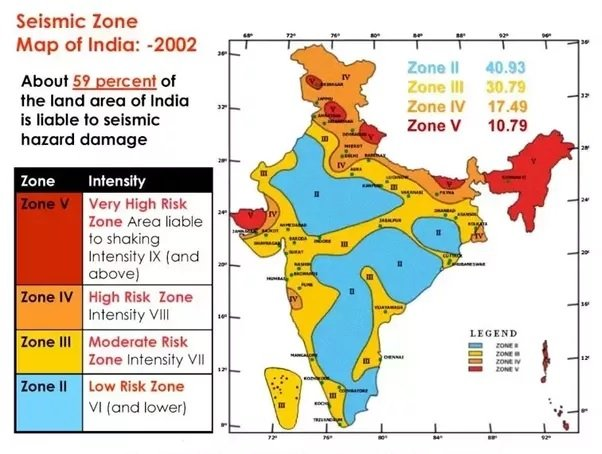
    Earthquake prone zones in India:

  • Promoting Science and Technology – Missions,Policies & Schemes

    [pib] Knowledge Resource Centre Network (KRCNet)

    Note4Students

    From UPSC perspective, the following things are important:

    Prelims level: KRCNet

    Mains level: Not Much

    The Ministry of Earth Sciences (MoES) has planned to develop a World-Class Knowledge Resource Centre Network (KRCNet).

    Note the salient features of the KRCNet. UPSC may puzzle you asking which of these is/are not a feature of KRCNet.

    KRCNet Portal

    • KRCs will be connected with each other and integrated into the KRCNet portal.
    • It will be a single point entry to the intellectual world of the Ministry of Earth Sciences (MoES).
    • The resources and services of the MoES system will be accessible 24X7 through a one-point dynamic, updated and integrated on this portal.

    Salient features of the KRCNet:

    • Establish a Total Quality Management (TQM) system by securing ISO certification for documenting MoES knowledge resources, its maintenance, easy retrieval and dissemination.
    • Collect, collate, analyze, index, store and disseminate the intellectual resources, products and project outputs available in MoES headquarter and its institutes.
    • Develop and maintain an up-to-date meta-data of the print & digital resources available in MoES headquarter and MoES institutes, including MoES services.
    • Provide 24X7 accesses to the subscribed knowledge contents through the KRCNet portal.
    • Application of information-analytical tools & techniques like bibliometrics, scientometrics, big-data analytics, social media analytics etc., for policy formulation, report preparation and information dissemination.
    • Periodically organize training workshops to popularize the usage of electronic journals, databases, digital products, data analytics etc.
  • Housing for all – PMAY, etc.

    [pib] Special Window for Affordable and Mid Income Housing (SWAMIH)

    Note4Students

    From UPSC perspective, the following things are important:

    Prelims level: SWAMIH Fund

    Mains level: Housing for all

    Union Minister for Finance has informed that so far Rs 8767 crore has been approved for 81 projects under Special Window for Affordable and Mid-Income Housing (SWAMIH) Investment Fund I.

    Try this MCQ:

    Q.The SWAMIH Fund recently seen in news is related to:

    (a) Higher Education (b) MSMEs (c) Housing (d) Highways

    SWAMIH Fund

    • In November 2019, the Finance Minister had cleared a proposal to set up a ‘Special Window’ called SWAMIH in to provide priority debt financing for the completion of stalled housing projects.
    • SWAMIH Investment Fund has been formed to complete the construction of stalled, brownfield, RERA registered residential developments that are in the affordable housing / mid-income category.
    • The Sponsor of the Fund is the Secretary, Department of Economic Affairs, Ministry of Finance, and Government of India on behalf of the Government of India.
    • The fund is set up as a Category-II AIF (Alternate Investment Fund) debt fund registered with SEBI and would be professionally run.

    Why need such funds?

    • Several real estate projects have suffered due to a combined effect of two changes in the real estate sector.
    • On one hand, incremental launches and slow sales have increased unsold inventory in each project.
    • While the effect has then got compounded by the fact that consumer preference is now towards completed projects rather than under-construction projects.
    • This preference has developed as consumers are largely avoiding taking project completion risk and instead are more inclined to completed projects.
  • Higher Education – RUSA, NIRF, HEFA, etc.

    [pib] INDSAT exam under ‘Study in India’ Programme

    Note4Students

    From UPSC perspective, the following things are important:

    Prelims level: IndSAT

    Mains level: Study in India Program

    The Ministry of HRD conducted the first-ever Indian Scholastic Assessment (IND-SAT) Test 2020 under its ‘Study in India’ programme.

    Try this MCQ:

    Q.The INDSAT recently seen in news is a:

    a) Free-to-air educational TV channels for school education

    b) A satellite for educational purposes

    c) IMD weather forecasting system

    d) Online examination for foreign students in India

    INDSAT Exam

    • The Indian Scholastic Assessment or IND-SAT is a standardized online proctored test for students seeking scholarships with Study in India (SII).
    • This exam is to gauge the capability and tenacity of students applying to study in India.
    • The scores will serve as a criterion to shortlist the meritorious students for the allocation of scholarships for undergraduate as well as postgraduate programmes under ‘Study in India’ programme.
    • The exam is conducted in the proctored internet mode by the National Testing Agency.

    What makes it special?

    • Nearly five thousand candidates from Nepal, Ethiopia, Bangladesh, Bhutan, Uganda, Tanzania, Rwanda, Sri-Lanka, Kenya, Zambia, Indonesia and Mauritius appeared for the exam.

    About Study in India

    • The Study in India is a programme of MHRD under which foreign students come to study in 116 select higher education institutions in India for undergraduate and postgraduate programmes.
    • The selection of the students is based on their merit in class 12 / school-leaving exam.
    • About top 2000 students are given scholarships, while some others are given fee discounts by the institutions.


  • Skilling India – Skill India Mission,PMKVY, NSDC, etc.

    [pib] Kumhar Sashaktikaran Yojana (KSY)

    Note4Students

    From UPSC perspective, the following things are important:

    Prelims level: Kumhar Sashaktikaran Yojana (KSY)

    Mains level: Welfare schemes for various vulnerable sections of population

    The Centre has distributed 100 electric potter wheels to 100 trained artisans under the KSY.

    Try this question from CSP 2018:

    Q. Consider the following provisions under the Directive Principles of State Policy as enshrined in the Constitution of India:

    1. Securing for citizens of India a uniform civil code.
    2. Organising village panchayats.
    3. Promoting cottage industries in rural areas.
    4. Securing for all the workers reasonable leisure and Cultural opportunities.

    Which of the above are the Gandhian Principles that are reflected in the DPSP?

    (a) 1, 2 and 4

    (b) 2 and 3

    (c) 1, 3 and 4

    (d) 1, 2, 3 and 4

    Kumhar Sashaktikaran Yojana

    • KSY is an initiative of the Khadi and Village Industries Commission (KVIC) for the empowerment of potters’ community in the remotest of locations in the country.
    • It reaches out to the potters in U.P., M.P., Maharashtra, J&K, Haryana, Rajasthan, West Bengal, Assam, Gujarat, Tamil Nadu, Odisha, Telangana and Bihar.

    Benefits provided

    This program provides the following support to potters.

    • Training for advanced pottery products
    • Latest, new technology pottery equipment like the electric Chaak
    • Market linkages and visibility through KVIC exhibitions

    Back2Basics: KVIC

    • The KVIC is a statutory body formed in April 1957 under the ‘Khadi and Village Industries Commission Act of 1956’.
    • It is an apex organisation under the Ministry of Micro, Small and Medium Enterprises, with regard to khadi and village industries within India.
    • It seeks to plan, promote, facilitate, organise and assist in the establishment and development of khadi and village industries in the rural areas.
    • Its head office is in Mumbai, whereas its six zonal offices in Delhi, Bhopal, Bangalore, Kolkata, Mumbai and Guwahati.