💥UPSC 2026, 2027, 2028 UAP Mentorship (March Batch) + Access XFactor Notes & Microthemes PDF

Type: Prelims Only

  • Modern Indian History-Events and Personalities

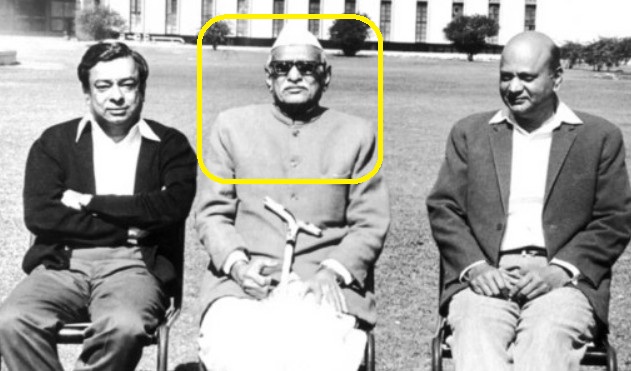
    Veer Savarkar and His Contributions

    Note4Students

    From UPSC perspective, the following things are important:

    Prelims level: Veer Savarkar

    Why in the News?

    Prime Minister paid tribute to Veer Savarkar on his death anniversary (26th February), acknowledging his contributions to India’s freedom movement.

    About Veer Savarkar: Life, Contributions, and Legacy

    Details
    Who was Veer Savarkar? Born on May 28, 1883, in Bhagur, Maharashtra.
    • Founded Abhinav Bharat Society (1904) for armed resistance.
    • Led India House in London (1906) and the Free India Society.
    • Arrested in 1910, sentenced to life imprisonment in Cellular Jail (Kala Pani, Andaman & Nicobar Islands).
    • Became President of the Hindu Mahasabha (1937-1943).
    • Died on February 26, 1966, after fasting till death.
    His Contributions • Advocated armed revolution against British rule.
    • Coined Hindutva (1923), defining Indian identity beyond religion.
    • Opposed Partition, emphasizing Hindu political unity.
    • Championed military nationalism over passive resistance.
    • Writings and ideology influenced Indian nationalist movements.
    Literary Works The First War of Indian Independence (1909):  Reinterpreted the 1857 Revolt as a nationalist struggle.
    Hindutva: Who is a Hindu? (1923): Laid the ideological foundation of Hindutva.
    My Transportation for Life (1950): Memoirs of his imprisonment in Cellular Jail.
    Six Glorious Epochs of Indian History: Advocated Hindu resistance against foreign invaders.
    Controversies Gandhi Assassination Case (1948): Arrested but acquitted due to lack of evidence.
    Mercy Petitions (1911-1924): Wrote clemency petitions for early release from prison, debated as tactical or compromising.
    Opposition to Quit India Movement (1942): Rejected Gandhi’s call, favored military strength over civil disobedience.
    Hindutva Ideology: Critics claim it fostered religious divisions, while supporters see it as reviving Hindu identity.


  • Climate Change Negotiations – UNFCCC, COP, Other Conventions and Protocols

    ‘Cali Fund’ launched at CBD COP16

    Note4Students

    From UPSC perspective, the following things are important:

    Prelims level: Cali Fund

    Why in the News?

    A new international biodiversity fund, the ‘Cali Fund’, was launched at the 16th Conference of Parties (COP16) to the United Nations Convention on Biological Diversity (CBD) in Rome.

    What is the Cali Fund?

    • The Cali Fund is an international biodiversity financing mechanism launched on February 25, 2025, at COP16 of the UN Convention on Biological Diversity (CBD) in Rome.
    • It collects funds from private companies that utilize Digital Sequence Information (DSI) from nature in their businesses.
    • The fund supports biodiversity conservation, scientific research, and indigenous communities.

    Key Features of the Cali Fund:

    • Funding Source: Businesses using genetic data (DSI) from plants, animals, and microorganisms will contribute financially.
    • Utilization of Funds:
      • 50% allocated to indigenous and local biodiversity projects.
      • Supports scientific research and developing nations’ biodiversity action plans.
    • Global Management: Managed by UNDP and UNEP, with MPTFO handling finances.
    • Alignment with Global Goals: Supports Kunming-Montreal Global Biodiversity Framework (KMGBF) to reverse biodiversity loss by 2030.
    • First-of-Its-Kind: Direct private sector contributions to a global UN biodiversity fund.

    What is Digital Sequence Information (DSI)?

    • DSI refers to genetic data extracted from plants, animals, and microorganisms.
    • Used extensively in industries such as:
      • Pharmaceuticals (medicine development).
      • Cosmetics (natural ingredient research).
      • Agriculture (crop improvement, pest resistance).
      • Biotechnology (genetic engineering, bioinformatics).

    About the Convention on Biological Diversity (CBD):

    • The CBD, with 196 contracting parties, stands as the most comprehensive international agreement focused on nature conservation and the sustainable use of natural resources.
    • It was opened for signing at the 1992 UN Conference on Environment and Development in Rio de Janeiro.
    • The CBD has 3 main objectives:
    1. Conservation of biological diversity (including genetic, species, and habitat diversity).
    2. Sustainable use of biological diversity.
    3. Fair and equitable sharing of benefits arising from the use of genetic resources.
    • It addresses biodiversity at all levels: ecosystems, species, and genetic resources.
    • The Conference of the Parties (COP) is the CBD’s governing body, and it meets biennially to assess progress, set priorities, and develop action plans.
    • The Secretariat of the CBD is located in Montreal, Canada.
    • To further its goals, the CBD includes two binding protocols:
    1. The Cartagena Protocol (2000), which regulates the transboundary movement of living modified organisms (LMOs) and came into force in 2003.
    2. The Nagoya Protocol (2010), which provides a legal framework for the access to genetic resources and the fair sharing of benefits from their use.

    PYQ:

    [2014] With reference to ‘Global Environment Facility’, which of the following statements is/are correct?

    (a) It serves as financial mechanism for ‘Convention on Biological Diversity’ and ‘United Nations Framework Convention on Climate Change’

    (b) It undertakes scientific research on environmental issues at global level

    (c) It is an agency under OECD to facilitate the transfer of technology and funds to underdeveloped countries with specific aim to protect their environment.

    (d) Both A and B


  • Wildlife Conservation Efforts

    Species in news: Gharials

    Note4Students

    From UPSC perspective, the following things are important:

    Prelims level: Gharial

    Why in the News?

    Madhya Pradesh CM released 10 gharials into the Chambal River at the National Chambal Gharial Sanctuary in Morena.

    Species in news Gharials

    About Gharial

    • The gharial (Gavialis gangeticus) is a unique species of crocodilian, characterized by its long, slender snout, which is perfectly adapted for catching fish.
    • The species derives its name from the “ghara”, a bulbous growth found on the snouts of adult males, which aids in vocalization and mating displays.
    • It is a fish-eating crocodile native to the Indian subcontinent.
    • They are a crucial indicator of clean river water.

    Conservation Status:

    • Recognizing the rapid decline in gharial populations, India launched captive breeding and release programs in the late 1970s.
    • Between 1975 and 1982, the country established 16 captive breeding centers and 5 protected sanctuaries to ensure the survival of the species.
    • Gharials are ‘Critically Endangered’ in the IUCN Red List of Species.
    • The species is also listed under Schedule I of the Wildlife (Protection) Act, 1972.
    • Today, gharials primarily survive in 5 major refuges:
    1. National Chambal Sanctuary (NCS) – The largest stronghold of gharials.
    2. Katerniaghat Wildlife Sanctuary in Uttar Pradesh.
    3. Chitwan National Park in Nepal.
    4. Son River Sanctuary in Madhya Pradesh.
    5. Satkosia Gorge Sanctuary in Odisha.

    PYQ:

    [2013] Consider the following fauna of India:

    1. Gharial

    2. Leatherback turtle

    3. Swamp deer

    Which of the above is/are endangered?

    (a) 1 and 2 only

    (b) 3 only

    (c) 1, 2 and 3

    (d) None


  • Waste Management – SWM Rules, EWM Rules, etc

    What is Black Plastic?

    Note4Students

    From UPSC perspective, the following things are important:

    Prelims level: Black Plastic

    Why in the News?

    A recent study suggested that black plastic contains harmful flame retardants, which may leach into food at hazardous levels.

    What is Black Plastic?

    • Black plastic is often made from recycled electronic waste like old computers, TVs, and appliances.
    • These electronics contain flame retardants (such as bromine-based compounds), heavy metals (lead, cadmium, mercury), and other hazardous chemicals.
    • Flame retardants are added to prevent fire hazards, but they can persist in recycled plastics.
    • Many of these chemicals are now banned in several countries due to their toxicity.
    • However, legacy plastics containing these substances continue to enter the recycling stream, leading to contamination of household products.

    Threats Posed by Black Plastic:

    • Contains Toxic Chemicals: Made from recycled e-waste, it may have flame retardants, heavy metals, and antimony.
    • Food Contamination: Heat and acidic foods can leach harmful chemicals into meals.
    • Environmental Impact: Difficult to recycle, it pollutes landfills and groundwater.
    • Health Risks: Linked to hormonal issues, neurological damage, and cancer.

    PYQ:

    [2019] Why is there a great concern about the ‘microbeads’ that are released into environment?

    (a) They are considered harmful to marine ecosystems.

    (b) They are considered to cause skin cancer in children.

    (c) They are small enough to be absorbed by crop plants in irrigated fields.

    (d) They are often found to be used as food adulterants.


  • Gravitational Wave Observations

    New Experiment to Test Quantum Gravity

    Note4Students

    From UPSC perspective, the following things are important:

    Prelims level: Quantum Gravity

    Why in the News?

    A new proposal published on October 29, 2024, suggests an experiment that could provide direct evidence for quantum gravity, unifying general relativity and quantum mechanics. A new experiment proposes testing weak gravitational fields at the quantum level, a historic breakthrough in physics if successful.

    What is Quantum Gravity?

    • Quantum Gravity is a theoretical framework that aims to unify general relativity (which explains gravity at large scales) and quantum mechanics (which governs subatomic particles).
    • Since gravity behaves differently from the other fundamental forces in quantum mechanics, physicists have been searching for a theory that integrates gravity into the quantum world.
    • General relativity treats gravity as the curvature of spacetime, while quantum mechanics describes forces through particle interactions.
    • Gravity has never been directly observed in quantum form, unlike the other fundamental forces.
    • Theories like String Theory and Loop Quantum Gravity attempt to explain quantum gravity but lack experimental validation.

    Significance of the Experiment

    • First Realistic Test for Quantum Gravity: Most quantum gravity theories rely on extreme conditions (e.g., black holes), making them impossible to test. This experiment provides a lab-based alternative.
    • Testing Gravity at the Quantum Level: If a small mass in quantum superposition is influenced by gravity, it could prove gravity itself is quantum in nature.
    • Weak Gravity Instead of Strong Gravity: Unlike previous studies focused on black holes, this experiment explores weak gravitational interactions, making it more feasible.
    • Towards a Unified Theory of Physics: Proving quantum gravity could merge general relativity and quantum mechanics, solving a major gap in modern physics.
    • Challenging Existing Theories: If results differ from both classical and quantum predictions, it could suggest a new force or a modified gravity theory.
  • Modern Indian History-Events and Personalities

    Battle of Karnal (1739)

    Note4Students

    From UPSC perspective, the following things are important:

    Prelims level: Battle of Karnal

    Why in the News?

    On February 24, 1739, the Battle of Karnal marked a turning point in the history of Mughal empire.

    About Battle of Karnal 

    • The Battle of Karnal on February 24, 1739, saw Nadir Shah’s Persian army defeat Mughal Emperor Muhammad Shah ‘Rangila’ in under three hours.
    • Despite having 300,000 soldiers, the Mughal army was crushed by Nadir Shah’s 55,000 well-trained troops using modern tactics and superior firearms.
    • Following the victory, Delhi was sacked, 30,000 civilians massacred, and the Mughal treasury looted, including the Koh-i-Noor diamond and the Peacock Throne.

    Impact on Mughal Decline

    • Economic Collapse: The Mughal treasury was emptied, crippling military and administrative strength.
    • Weakening Central Power: Governors of Bengal, Awadh, and Hyderabad declared independence.
    • Military Decline: The Mughal army’s outdated tactics were exposed; future invasions (e.g., Ahmad Shah Abdali, 1748-1761) followed.
    • Rise of Regional Powers: The Marathas expanded, eventually capturing Delhi (1771); the Sikhs grew in Punjab.
    • British Expansion: The East India Company took advantage, leading to British rule after 1857.

    PYQ:

    [2019] With reference to Mughal India, what is/are the difference/differences between Jagirdars and Zamindar?

    1. Jagirdars were holders of land assignments in lieu of judicial and police duties, whereas Zamindars were holders of revenue rights without obligation to perform any duty other than revenue collection.

    2. Land assignments to Jagirdars were hereditary and revenue rights of Zamindars were not hereditary.

    Select the correct answer using the codes given below:

    (a) 1 only

    (b) 2 only

    (c) Both 1 and 2

    (d) Neither 1 nor 2


  • Government Budgets

    What is the ‘Quality of Public Expenditure’ Index?

    Note4Students

    From UPSC perspective, the following things are important:

    Prelims level: 'Quality of Public Expenditure' Index

    Why in the News?

    The Quality of Public Expenditure (QPE) Index, developed by the RBI, evaluates how efficiently government funds are used, focusing on expenditure composition and its long-term impact on economic growth.

    About the QPE Index

    • The QPE Index by the Reserve Bank of India (RBI) measures how effectively government funds are utilized.
    • It focuses on fiscal discipline, capital investment, and efficient allocation of public resources for long-term growth.
    • Key Indicators of the QPE Index:
    1. Capital Outlay to GDP Ratio: Measures government spending on infrastructure as a percentage of GDP. Higher ratio = better quality expenditure.
    2. Revenue Expenditure to Capital Outlay Ratio: Lower ratio preferred, as excessive spending on salaries & subsidies reduces funds for development.
    3. Development Expenditure to GDP Ratio: Tracks spending in education, healthcare, infrastructure, improving human capital & productivity.
    4. Development Expenditure as % of Total Expenditure:  Higher share indicates better resource allocation.
    5. Interest Payments to Total Expenditure Ratio:  Lower ratio = better debt management & fiscal sustainability.

    Key Findings from RBI’s QPE Index Analysis:

    • 1991-2003: Post-liberalization, focus on reducing fiscal deficit led to a decline in public investment.
    • 2003-2008:  FRBM Act (2003) improved fiscal discipline, increasing capital spending & state revenues.
    • 2008-2013: Global Financial Crisis (GFC) led to higher government spending, increasing fiscal deficits but supporting recovery.
    • 2013-2017: 14th Finance Commission (2015) increased states’ share in central taxes, boosting development expenditure.
    • 2017-2020:  GST implementation challenges affected the Centre’s revenues, but states benefited from higher tax shares.
    • 2020-PresentRecord capital expenditure boosted infrastructure & economic recovery, improving public expenditure quality.

    PYQ:

    [2014] With reference to Union Budget, which of the following, is/are covered under Non-Plan Expenditure?

    1. Defence-expenditure

    2. Interest payments

    3. Salaries and pensions

    4. Subsidies

    Select the correct answer using the code given below:

    (a) 1 only

    (b) 2 and 3 only

    (c) 1, 2, 3 and 4

    (d) None


  • RBI Notifications

    Rupee-Dollar Swap Auction

    Note4Students

    From UPSC perspective, the following things are important:

    Prelims level: Rupee-Dollar Swap Auction

    Why in the News?

    The Reserve Bank of India (RBI) will conduct a $10 billion dollar-rupee swap auction on February 28, 2025, aimed at injecting durable rupee liquidity into the banking system.

    This 3-year forex swap is expected to inject ₹86,000 crore into the banking system at a time when there is a liquidity deficit of ₹1.7 lakh crore in the financial sector.

    What is the RBI’s Forex Swap Auction?

    • Forex swap auctions are a tool used by the RBI to manage liquidity and stabilize financial markets.
    • In return, the RBI will inject rupee liquidity into the banking system.
      • Buy-Sell Swap: RBI buys dollars now and sells them back later (liquidity injection).
      • Sell-Buy Swap: RBI sells dollars now and buys them back later (liquidity absorption).
    • After 3 years, the transaction will be reversed, with the RBI selling dollars back to banks and absorbing rupee liquidity from the system.

    How does it work?

    • Auction Process:
      • Banks bid in the swap auction by quoting the swap rate (forward premium).
      • The lowest premium bids are accepted first (similar to G-sec auctions).
    • Liquidity Injection:
      • Banks sell US dollars to the RBI at the prevailing exchange rate.
      • The RBI provides rupees in exchange, boosting liquidity in the banking system.
    • Reverse Swap After Three Years:
      • On March 6, 2028, the swap will be reversed.
      • The RBI will return US dollars to the banks and absorb the equivalent amount of rupees.
    • This allows the RBI to control liquidity over a longer period without permanently altering its forex reserves.

    Significance of this move

    • Reduces Borrowing Costs: More liquidity in the system lowers short-term interest rates. Bond yields and corporate borrowing costs decline, benefiting businesses and NBFCs.
    • Stabilizes Foreign Exchange Markets: The rupee’s availability increases, reducing pressure on exchange rates. Lower hedging costs for companies with foreign liabilities.
    • Enhances RBI’s Monetary Policy Toolkit: This approach provides a temporary boost to liquidity, while ensuring a controlled reversal in the future.

    PYQ:

    [2015] Convertibility of rupee implies:

    (a) Being able to convert rupee notes into gold

    (b) Allowing the value of rupee to be fixed by market forces

    (c) Freely permitting the conversion of rupee to other currencies and vice versa

    (d) Developing an international market for currencies in India


  • [pib] Bay of Bengal (BOB) Inter-Governmental Organisation

    Note4Students

    From UPSC perspective, the following things are important:

    Prelims level: BOBP-IGO

    Why in the News?

    India has taken over the Chairmanship of the Bay of Bengal (BOB) Inter-Governmental Organisation from Bangladesh at the 13th Governing Council Meeting in Male, Maldives.

    What is BOBP-IGO?

    • BOBP-IGO is a regional fisheries body promoting sustainable fisheries management and improving the livelihoods of small-scale fishers in the Bay of Bengal region.
    • It was established in 2003 and is headquartered in Chennai.
    • It evolved from the Bay of Bengal Programme (BoBP), which was launched in 1979 under the Food and Agriculture Organization (FAO) of the United Nations.
    • Members:
      • Full Members: Bangladesh, India, Maldives, Sri Lanka.
      • Cooperating Non-Contracting Parties: Indonesia, Malaysia, Myanmar, Thailand.
    • Objectives: Enhance marine fisheries management, build fisher capacities, promote policy cooperation, and combat Illegal, Unreported & Unregulated (IUU) fishing.

    Significance of India’s Chairmanship in BOBP-IGO

    • India will lead policies for sustainable fisheries management and marine conservation across member nations.
    • This would strengthen monitoring, surveillance, and enforcement to prevent overfishing and illegal activities.
    • It will facilitate collaboration among member nations, exchange best practices, and integrate advanced technology in fisheries.
    • It would promote scientific research, innovation, and economic growth while reinforcing India’s influence in the Indian Ocean Region.

    PYQ:

    [2022] Do you think that BIMSTEC is a parallel organisation like the SAARC? What are the similarities and dissimilarities between the two? How are Indian foreign policy objectives realized by forming this new organisation?


  • Festivals, Dances, Theatre, Literature, Art in News

    Tea Tribes and Jhumur Dance

    Note4Students

    From UPSC perspective, the following things are important:

    Prelims level: Jhumur Dance

    Why in the News?

    Prime Minister witnessed the largest-ever Jhumur dance performance in Guwahati, to commemorate the 200th anniversary of Assam’s tea industry.

    What are Tea Tribes/Tea Garden Communities of Assam?

    • The Tea Tribes or Tea Garden Communities of Assam are descendants of laborers brought by the British in the 19th century to work in tea plantations.
    • These workers were mainly from Jharkhand, Odisha, Chhattisgarh, West Bengal, and Andhra Pradesh.
    • Many were brought through forced migration, and even voluntary migration occurred under exploitative conditions.
    • They were subjected to poor wages, inhumane working conditions, and restricted mobility.
    • The community is concentrated in Upper Assam districts like Tinsukia, Dibrugarh, Golaghat, Sonitpur, and Sivasagar, and in the Barak Valley.
    • They currently have Other Backward Classes (OBC) Status but demand Scheduled Tribe (ST) status, as many of their sub-groups, like Munda, Santhal, and Oraon, hold ST status in their original states.
    • Despite adversity, the Tea Garden Communities preserved their cultural identity, with distinct festivals, music, and dance forms.
      • Their major festivals include Tushu Puja and Karam Puja, celebrated with the traditional Jhumur dance.

    About Jhumur Dance 

    • Jhumur (also spelled Jhumoir or Jhumair) is a folk dance of the Sadan ethnolinguistic group, mainly practised by Assam’s Tea Garden Communities.
    • It originated in Chotanagpur Plateau (Jharkhand, Odisha, Bengal, and Chhattisgarh) and was brought to Assam during the British colonial era.
    • Over time, it blended with Assamese culture, incorporating Assamese musical and linguistic influences.
    • Performance and Style:
      • Women are the primary dancers, standing shoulder-to-shoulder in synchronized formations.
      • Men accompany them with traditional instruments like madal, dhol, dhak (drums), cymbals, flutes, and shehnai.
      • Attire: Women wear red and white sarees, while men wear kurta-dhoti with gamocha (traditional Assamese cloth).
    • Jhumur songs depict both celebration and hardship, narrating:
      • Love and Nature – Seasonal changes, harvest, and romance.
      • Hardships of Tea Workers – Struggles, migration, and exploitation.
      • Festivals and Community Life – Unity, faith, and social cohesion.
    • It serves as a cultural bridge, helping retain their traditions and forge a unique identity in Assam.

    PYQ:

    [2021] With reference to India, the terms ‘Halbi, Ho and Kui’ pertain to​:

    (a) Dance forms of Northwest India​

    (b) Musical instruments​

    (c) Pre-historic cave paintings​

    (d) Tribal languages​