💥UPSC 2026, 2027, 2028 UAP Mentorship (March Batch) + Access XFactor Notes & Microthemes PDF

Type: Prelims Only

  • Modern Indian History-Events and Personalities

    85th death anniversary of Shaheed Udham Singh

    Note4Students

    From UPSC perspective, the following things are important:

    Prelims level: Udham Singh

    Why in the News?

    • On July 31, 1940, Indian revolutionary leader Udham Singh was executed at the Pentonville prison in London for killing Michael O’Dwyer, the former lieutenant governor of Punjab.

    Udham Singh (1899-1940) and his Contributions:

    Details
    Birth and Early Life Singh was born in Sunam in Punjab’s Sangrur district in 1899.
    Political Activism Became associated with the Ghadar Party while in the US, which was founded by Sohan Singh Bhakna in 1913 and headquartered in California.
    Purpose and Actions In 1934, Singh travelled to London to assassinate Michael O’Dwyer, the former Lieutenant Governor of Punjab during the 1919 Jallianwala Bagh massacre.
    Reason for Targeting O’Dwyer O’Dwyer had ordered Brigadier Reginald Dyer to Amritsar before the massacre, fearing a second Indian mutiny due to Hindu-Muslim unity and demonstrations.
    Assassination of O’Dwyer On March 13, 1940, Singh shot O’Dwyer at a meeting in Caxton Hall, London.
    Arrest and Execution Arrested immediately, held in Brixton prison, sentenced to death, and hanged on July 31, 1940, at Pentonville Prison.
    Legacy and Recognition
    • Regarded as a hero for avenging the Jallianwala Bagh massacre.
    • Gandhi termed it an “act of insanity”.
    • He symbolized Hindu-Sikh-Muslim unity by adopting the name ‘Ram Mohamed Singh Azad’ during his trial.
    Posthumous Honors
    • His remains were returned to India in 1974 and cremated in his village in Sunam.
    • His statue was installed at Jallianwala Bagh in 2018;
    • Udham Singh Nagar district in Uttarakhand is named after him.


    PYQ:

    [2014] The Ghadr (Ghadar) was a:

    (a) Revolutionary association of Indians with headquarters at San Francisco.

    (b) Nationalist organization operating from Singapore

    (c) Militant organization with headquarters at Berlin

    (d) Communist movement for India’s freedom with head-quarters at Tashkent

  • Innovations in Biotechnology and Medical Sciences

    ‘Zombies’ in our Genes helped us evolve      

    Note4Students

    From UPSC perspective, the following things are important:

    Prelims level: Endogenous Retroviruses and their significance in human evolution

    Why in the News?

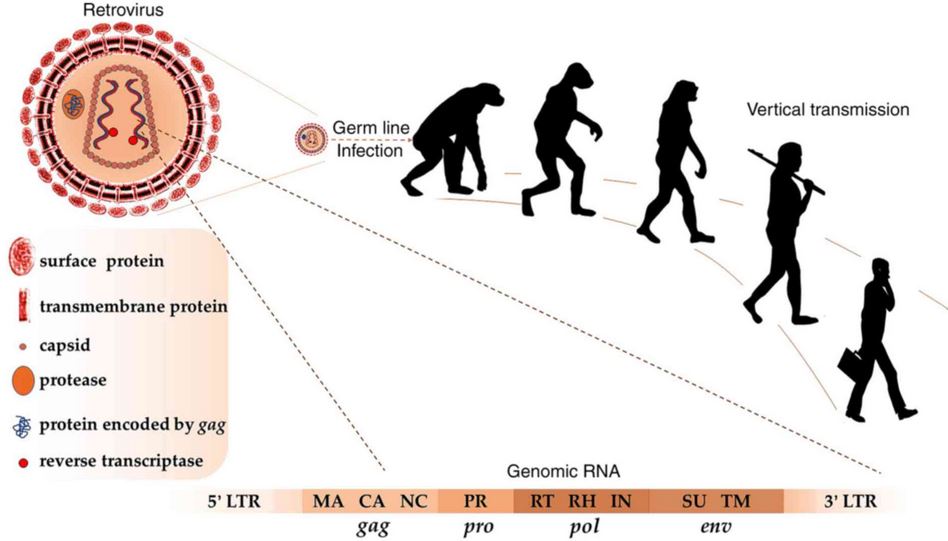
    Research suggests that around 8% of the human genome is composed of Endogenous Retroviruses (ERVs) often referred to as ‘zombie’ regions.

    Retroviruses and Human Genome Integration

    • Most viruses can’t affect the human genome, but retroviruses are an exception.
    • Retroviruses can integrate and reshape the genomes of their hosts.
    • They have an RNA genome and can reverse-transcribe it to DNA, inserting it into the host’s genome.
    • This process is facilitated by the enzyme reverse transcriptase.
    • Discovered by Howard Temin and David Baltimore in 1971, this enzyme converts the virus’s RNA into a corresponding DNA sequence.
    • Historical Discoveries:
      • Viral causes of cancer were known even before the mechanism was understood.
      • In 1908, Oluf Bang and Vilhelm Ellermann discovered the viral cause of chicken leukosis.
      • In 1957, Ludwik Gross isolated a leukaemia-causing virus in mice.

    What are Endogenous Retroviruses (ERVs)?

    • ERVs are remnants of ancient viral infections that have integrated into the genome of the host species.
    • When these retroviruses infect germ cells (sperm or egg cells), their genetic material can be passed down to the next generation, becoming a permanent part of the host’s DNA.
    • Zombie Regions:
      • They refer to inactive viral sequences within the genome that no longer produce functional viruses but remain as embedded genetic fossils.
      • These regions are a result of retrovirus integration that has lost its ability to replicate and produce proteins, yet they persist in the host’s DNA.

    Evolutionary Significance of ERVs:

    • In the life cycle of a retrovirus, reverse-transcribed DNA is integrated into the host’s DNA with the help of integrase.
    • The viral DNA, called a provirus, hijacks human cells, turning them into virus-making factories.
    • Over tens of thousands of years, many retroviruses have left genomic elements in human genome, contributing to evolutionary processes.
    • Example:
      • Syncytins are genes thought to have descended from ERVs and are crucial for placental development. These genes originally came from viruses and were acquired during mammalian evolution.

    Their Contribution to Human Biology

    • ERVs are highly expressed in the placenta and may influence conditions like preeclampsia.
    • Researchers found that a particular RNA derived from an ERV is dysregulated in early-onset preeclampsia, suggesting it could be used as a biomarker for the condition.
    • ERVs play a role in cell-type differentiation during embryo development.
    • A protein called MERVL-gag is derived from an ERV. This transition is crucial for producing pluripotent stem cells capable of forming different cell types.
    • Researchers also found that a human ERV element LTR10 affects tumour formation in colorectal cancer.

    PYQ:

    [2021] Consider the following statements :​

    1. Adenoviruses have single-stranded DNA genomes whereas retroviruses have double-stranded DNA genomes.​

    2. Common cold is sometime caused by an adenovirus whereas AIDS is caused by a retrovirus.​

    Which of the statements given above is/are correct?

    (a) 1 only

    (b) 2 only

    (c) Both 1 and 2

    (d) Neither 1 nor 2

  • Capital Markets: Challenges and Developments

    SEBI’s proposed measures to curb F&O speculation    

    Note4Students

    From UPSC perspective, the following things are important:

    Prelims level: Types of derivatives

    Mains level: Measures taken by SEBI related to derivatives

    Why in the news?

    SEBI has proposed a series of measures to curb speculative trading in the index derivatives segment due to concerns over the exponential increase in trading volumes in futures and options, especially among individual investors.

    What are the different types of derivatives?  

    Note: Derivatives are financial contracts deriving their value from an underlying asset such as stocks, commodities, or currencies.
    • Futures: 
        • Futures are standardized contracts obligating the buyer to purchase an underlying asset (such as stocks, commodities, or currencies) at a predetermined price on a specified future date. They are traded on exchanges, with daily settlements based on market price changes.
        • Futures contracts have margin requirements and are marked to market daily, ensuring liquidity and reducing credit risk.
    • Options: 
        • Options give the buyer the right, but not the obligation, to buy (call option) or sell (put option) an underlying asset at a predetermined price within a specified time frame. Unlike futures, options are not obligatory; the buyer can choose whether to exercise the option.
        • Options can be traded on exchanges or over-the-counter (OTC) and require the payment of a premium by the buyer.
    • Forwards: 
        • Forward contracts are similar to futures but are privately negotiated agreements between two parties to buy or sell an asset at a future date and price. They are customizable and traded over the counter, which allows for flexibility but introduces counterparty risk.
        • Settlement occurs at the maturity date, and forward contracts do not have standardization like futures.
    • Swaps: 
      • Swaps involve the exchange of cash flows or financial instruments between two parties, often based on interest rates or currencies. Common types include interest rate swaps and currency swaps, which allow participants to manage exposure to interest rate fluctuations or gain access to different currencies.
      • Swaps are typically traded over the counter and can be tailored to meet the specific needs of the parties involved.

    What measures have the SEBI proposed?

    • Increase in minimum contract size for index derivatives from Rs 5-10 lakh to Rs 15-20 lakh, which can be further increased to Rs 20-30 lakh after six months.
    • Upfront collection of option premiums by brokers from clients.
    • Intraday monitoring of position limits for index derivative contracts by Market Infrastructure Institutions (MIIs).
    • Providing only one weekly options contract on a single benchmark index of an exchange.
    • Removal of calendar spread benefits on the expiry day for positions involving any of the contracts expiring on the same day.
    • Rationalisation of options strikes, with a uniform interval up to a fixed coverage of 4% near the prevailing index price and an increased interval as the strikes move away from the prevailing price.
    • Increasing margins on the expiry day and the previous day to address the issue of high implicit leverage in options contracts near expiry.

    Why have these measures been proposed?

    • The measures aim to enhance investor protection and promote market stability in the derivative markets, amidst concerns about an exponential rise in the volume of trade in the futures and options (F&O) segment, particularly by individual investors.
    • In the Union Budget 2024-25, the Securities Transaction Tax (STT) on F&O of securities was doubled to 0.02% and 0.1%, respectively, effective October 1, 2024.
    • Data shows that in FY 2023-24, 92.50 lakh unique individuals and proprietorship firms traded in the NSE index derivatives segment and cumulatively incurred a trading loss of Rs 51,689 crore, with only 14.22 lakh investors (about 15%) making a net profit.

    Way forward: 

    • Enhancing Investor Education and Awareness: To mitigate the risks associated with speculative trading in index derivatives, it is essential to implement comprehensive investor education programs.
    • Strengthening Regulatory Oversight and Compliance: SEBI should enhance its regulatory framework by implementing robust monitoring systems that ensure compliance with the proposed measures.
  • Pharma Sector – Drug Pricing, NPPA, FDC, Generics, etc.

    [pib] National Pharmaceutical Pricing Authority (NPPA)

    Note4Students

    From UPSC perspective, the following things are important:

    Prelims level: National Pharmaceutical Pricing Authority (NPPA)

    Why in the News?

    The NPPA monitors the prices of scheduled as well as non-scheduled medicines under Drugs (Prices Control) Order, 2013 (DPCO, 2013), informed the Union Minister of State for Chemicals and Fertilizers.

    What are Scheduled and Non-Scheduled Formulations?

    [A] Scheduled Formulations:

    • Defined as formulations listed in Schedule-I of the Drugs (Prices Control) Order, 2013 (DPCO, 2013).
    • Ceiling prices of these formulations are revised annually based on the Wholesale Price Index (WPI) for the preceding calendar year.
    • National Pharmaceutical Pricing Authority (NPPA) is responsible for revising and notifying these prices.

    [B] Non-Scheduled Formulations:

    • Defined as formulations not included in Schedule-I of the DPCO, 2013.
    • Prices of these formulations can be increased by manufacturers, but the Maximum Retail Price (MRP) cannot be increased by more than 10% during the preceding 12 months.
    • NPPA also monitors the prices of non-scheduled formulations to ensure compliance.

    Action is taken against companies selling formulations at prices higher than permissible, and overcharged amounts are recovered.

    About National Pharmaceutical Pricing Authority (NPPA)

    • NPPA was set up as an independent regulator on August 29, 1997, for drug pricing and ensuring affordable access to medicines.
    • It is an attached office of the Department of Pharmaceuticals (DoP), Ministry of Chemicals & Fertilizers.
    • NPPA is not a Statutory or Constitutional Body.
    • It is responsible for implementing and enforcing the provisions of the DPCO.

    Functions of NPPA:

    • Fixation and revision of prices of ‘Scheduled’ drugs under Drug (Price Control) Orders.
      • Scheduled drugs (15% of the pharma market) are allowed an increase based on WPI.
      • Non-scheduled drugs (85% of the pharma market) are allowed an automatic 10% increase annually.
    • Monitoring and enforcement of drug prices.
    • Ensuring availability and accessibility of all medicines and medical devices, including non-scheduled drugs.
    • Undertaking or sponsoring studies on drug pricing.
    • Collecting and maintaining data on production, exports, imports, market share, and profitability of pharmaceutical companies.
    • Advising the Central Government on changes or revisions in drug policy.

    Back2Basics: Drugs (Prices Control) Order (DPCO)

    • The DPCO is an order issued by the Government of India under Sec. 3 of Essential Commodities Act, 1955 to regulate the prices of drugs.
    • The Order provides the list of price controlled drugs, procedures for fixation of prices of drugs, method of implementation of prices fixed by Govt., penalties for contravention of provisions etc.
    • Under the provisions of DPCO 2013, only the prices of drugs that figure in the National List of Essential Medicines (NLEM) are monitored and controlled by the regulator, the National Pharmaceutical Pricing Authority.
      • Essential medicines are those that satisfy the priority healthcare needs of the majority of the population.


    PYQ:

    [2019] How is the Government of India protecting traditional knowledge of medicine from patenting by pharmaceutical companies?

  • Interstate River Water Dispute

    In new: Mekedatu Project

    Note4Students

    From UPSC perspective, the following things are important:

    Prelims level: Mekedatu Project

    Why in the News?

    Karnataka CM has offered to discuss with Tamil Nadu, the implementation of Mekedatu Project across River Cauvery.

    About Mekedatu Project

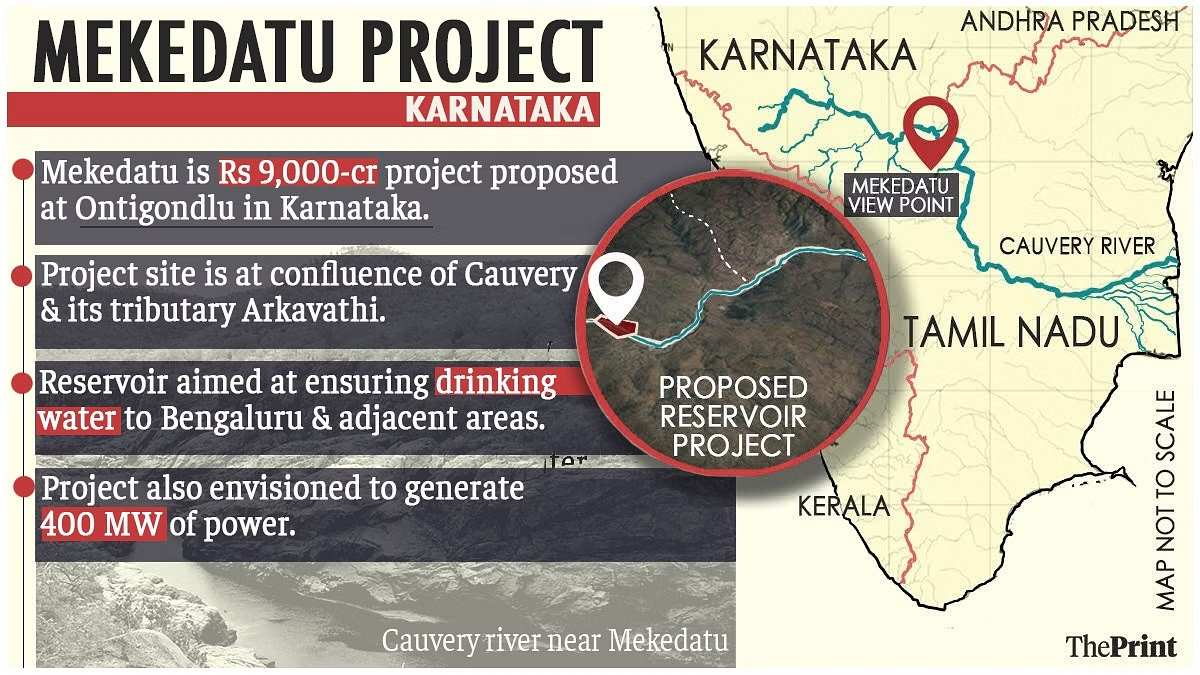
    • Mekedatu is a location along Kaveri in the border of Chamarajanagar and Ramanagara Districts in Karnataka.
    • Karnataka intends to build a reservoir across River Cauvery near Mekedatu.
    • The dam is proposed to have a capacity of 48 TMC feet (thousand million cubic) and is estimated to cost Rs 6,000 crore.
    • It was first proposed in 2003 with an intention:
      • To use the water for a hydro power station (400 MW) and
      • Supply drinking water to Bengaluru city.
    • At Mekedatu, the Kaveri runs through a deep, narrow ravine of hard granite rock.

    Tamil Nadu’s concerns over the Project

    • Tamil Nadu has all along strongly opposed the project and approached the Supreme Court as well.
    • Its argument is that any dam proposal by upper riparian states in the Cauvery basin would deprive the state’s delta farmers of their rightful share of water as per the top court verdict.
    • Tamil Nadu contends that the proposed dam violates the final award of the Cauvery Water Disputes Tribunal, which determined the water-sharing arrangements between the two states.

    About Cauvery River

    • The Cauvery River, also spelled as ‘Kaveri’ and known as ‘Ponni’ in Tamil, originates from Talakaveri in the Brahmagiri range located in Karnataka’s Kodagu district.
    • It spans approximately 800 km, traversing through the states of Karnataka and Tamil Nadu, until it eventually discharges in the Bay of Bengal.
    • The river’s catchment area covers regions in Tamil Nadu, Kerala, Karnataka, and the Union Territory of Pondicherry.
    • Key tributaries that join the Cauvery include Harangi, Hemavati, Kabini, Suvarnavathi, and Bhavani.
    • Cauvery remains perennial due to its dual reliance on both advancing and retreating monsoons for rainfall.

    Justifications and proposals by Karnataka

    • Ensuring adequate flow to TN: Karnataka argues that the construction of the Mekedatu dam will not hinder the stipulated quantum of water release to Tamil Nadu nor be utilized for irrigation purposes.
    • Allocation of funds and willingness to negotiate: The Karnataka government has earmarked Rs 1,000 crore for the project, indicating its commitment. It also expresses willingness to engage in discussions and negotiations with Tamil Nadu to address concerns and find a resolution.
    • Clearance of feasibility study: The Central Water Commission cleared a feasibility study for the Mekedatu project in 2018, providing additional support for Karnataka’s justifications and indicating the project’s viability.

    PYQ:

    [2016] Recently, linking of which of the following rivers was undertaken?

    (a) Cauvery and Tungabhadra

    (b) Godavari and Krishna

    (c) Mahanadi and Sone

    (d) Narmada and Tapti

  • Historical and Archaeological Findings in News

    [pib] India concludes 46th World Heritage Committee Session in New Delhi

    Note4Students

    From UPSC perspective, the following things are important:

    Prelims level: 46th World Heritage Committee, UNESCO

    Why in the News?

    • The 46th Session of the World Heritage Committee has concluded successfully.
      • It was the first time India hosted this international assembly.

    Capacity-building initiatives proposed by India

    • India pledged $1 million to the UNESCO World Heritage Centre to support capacity-building initiatives and conservation projects in developing countries.
    • India proposed to develop and implement training programs for heritage professionals from around the world.
    • India proposed exchange programs for heritage professionals and researchers.
    • Leading Indian heritage institutions, such as the Archaeological Survey of India and the Indian National Trust for Art and Cultural Heritage (INTACH), will play a key role in implementing the initiatives.

    About the World Heritage Young Professional Forum

    • The World Heritage Young Professionals Forum is an initiative by UNESCO to engage young professionals in the field of heritage conservation.
    • The first World Heritage Young Professionals Forum was organized in 1995.
    • The primary aim is to engage young professionals in heritage conservation and management through capacity building, networking, and awareness-raising.

    Back2Basics: UNESCO World Heritage Sites

    Description
    UNESCO World Heritage Sites Landmarks or areas selected by UNESCO for their cultural, historical, scientific, or other significant value, legally protected by international treaties.
    Importance World Heritage Sites represent collective and preservative interests of humanity, signifying remarkable accomplishments and intellectual history.
    Selection Criteria Sites must be already-classified landmarks, unique and significant culturally or physically, such as ancient ruins, historical structures, cities, monuments, etc.
    Conservation World Heritage Sites require practical conservation to protect them from risks like trespassing, uncontrolled access, or administrative negligence.
    World Heritage Committee Selects and monitors World Heritage Sites, manages the World Heritage Fund, and provides financial assistance. Composed of 21 states parties elected for a four-year term.
    Membership India is NOT a permanent member of the World Heritage Committee.

    It has been selected for a term from 2021 to 2025.


    PYQ:

    [2014] Consider the following international agreements:

    1. The International Treaty on Plant Genetic Resources for Food and Agriculture
    2. The United Nations Convention to Combat Desertification
    3. The World Heritage Convention

    Which of the above has / have a bearing on the biodiversity?

    (a) 1 and 2 only

    (b) 3 only

    (c) 1 and 3 only

    (d) 1, 2 and 3

  • Russian Invasion of Ukraine: Global Implications

    Why are Russian athletes ‘banned’ from the 2024 Paris Olympics?

    Note4Students

    From UPSC perspective, the following things are important:

    Prelims level: Paris Olympics

    Why in the News?

    • Athletes from Russia and Belarus are banned from participating in the ongoing Paris Olympics under their nations’ official flags.
      • Many of them compete under a separate category called Athletes Individuals Neutres (AIN) in French, which means Individual Neutral Athletes.

    Reason 

    • The ongoing war in Ukraine and the conflict between Israel and Hamas add to the geopolitical tensions.
    • The Paris Summer Olympics are “the most geopolitically charged Olympics in decades.”
    • The International Olympic Committee (IOC) sanctioned Russia and Belarus after the Russian invasion of Ukraine in 2022.
      • The invasion violated the Games’ Olympic Truce, which says nations should not attack each other from 1 week before the Olympics to 1 week after the Paralympics.
      • Belarus was implicated for allegedly allowing Russia to use its territory for military purposes.
    • In October 2023, the Russian Olympic Committee was suspended after declaring authority over Ukrainian sports organizations in certain regions.

    Political Neutrality and Violations

    • The IOC cited Russia’s International Friendship Association (IFA) as a political body violating the IOC charter.
    • The charter states that sports organizations within the Olympic Movement should apply political neutrality.
    • Russia’s announcement of the Friendship Games in 2024 led to accusations of politicizing sports.
    • Critics note the concept of “political neutrality” is not based on objective criteria and is challenging to interpret consistently.

    What is Individual Neutral Athletes (AINs)?

    • The IOC allows athletes from these countries to participate as individual-neutral athletes (AINs).
      • Athletes must not represent their country or any associated organization.
      • They cannot actively support the Russian invasion of Ukraine.
    • AINs are athletes with Russian or Belarusian passports qualified through existing qualification systems.
      • They will compete under a neutral flag and uniform, with a neutral song played if they win medals.
      • The audience cannot wave their flags.


    Do you know?

    The Indian Olympic Association was suspended in 2014, leading to three athletes competing under the Olympic flag.

  • What is Oropouche Fever?

    Note4Students

    From UPSC perspective, the following things are important:

    Prelims level: Oropouche Fever

    Why in the News?

    Brazil has reported the first deaths from Oropouche fever.

    About Oropouche Fever

    • Oropouche fever is a viral disease caused by the Oropouche virus.
    • The virus is transmitted primarily through the bites of infected midges, specifically the Culicoides paraensis, and mosquitos.
    • The World Health Organization (WHO) reported the first-ever outbreak in Cuba on June 11, 2024.

    Symptoms:

    • Symptoms are similar to those of dengue fever and typically begin between four to eight days after the bite.
    • Common symptoms include:
      • Sudden onset of fever
      • Headaches
      • Body aches
      • Chills
      • Joint stiffness
      • Nausea and vomiting (occasionally)
    • Most patients recover within seven days, and severe cases are rare.
    • There is no evidence of human-to-human transmission.

    Treatment and Prevention

    • There is no specific vaccine or antiviral treatment for Oropouche fever.
    • Treatment is usually symptomatic, focusing on relieving fever and pain.
    • Preventative measures include avoiding bites from midges and mosquitos by using repellents, wearing protective clothing, and using insect nets.

    PYQ:

    [2010] Widespread resistance of malarial parasites to drugs like chloroquine has prompted attempts to develop a malarial vaccine to combat malaria. Why is it difficult to develop an effective malaria vaccine?

    (a) Malaria is caused by several species of Plasmodium
    (b) Man does not develop immunity to malaria during natural infection
    (c) Vaccines can be developed only against bacteria
    (d) Man is only an intermediate host and not the definitive host

  • Innovations in Sciences, IT, Computers, Robotics and Nanotechnology

    What is FnCas9 Enzyme?

    Note4Students

    From UPSC perspective, the following things are important:

    Prelims level: FnCas9 Enzyme

    Why in the News?

    • Scientists from the “CSIR-Institute of Genomics and Integrative Biology” have developed an enhanced genome-editing system using FnCas9 that can modify DNA more precisely and more efficiently than existing CRISPR-based technologies.
      • CRISPR occurs naturally in some bacteria, as a part of their immune system that limits infections by recognizing and destroying viral DNA.

    What is FnCas9?

    • FnCas9 is a variant of the Cas9 enzyme derived from the bacterium Francisella novicida.
    • It is used in genome editing technologies, particularly within the CRISPR (Clustered Regularly Interspaced Short Palindromic Repeats) system, to make precise modifications to DNA sequences.

    What is CRISPR-Cas9 System?

    • CRISPR-Cas9 is a revolutionary genome-editing tool adapted from a natural bacterial defense mechanism against viruses.
    • Bacteria use CRISPR sequences to store segments of viral DNA, which helps them recognize and combat viruses in subsequent infections.
    • The most commonly used Cas9 enzyme is derived from Streptococcus pyogenes.

    Mechanism:

    • Guide RNA (gRNA): A specifically designed RNA molecule that matches the target DNA sequence.
    • Cas9 Enzyme: Acts as molecular scissors that cut DNA at a location specified by the gRNA.
    • Proto-spacer Adjacent Motif (PAM): A short DNA sequence adjacent to the target site that Cas9 must recognize and bind to in order to cut the DNA.
    • DNA Repair: Once the DNA is cut, the cell’s natural repair mechanisms either repair the break or introduce desired genetic changes.

    Applications:

    • Agriculture: Enhancing crop yield and nutritional value.
    • Healthcare: Diagnosing and treating genetic disorders.
    • Research: Studying gene functions and interactions.

    Challenges with Traditional Cas9: SpCas9 can sometimes cut DNA at unintended sites, leading to potential unintended genetic modifications.

    How FnCas9 overpowers traditional Cas9 (SpCas9)?

    • FnCas9 is known for its higher specificity in targeting DNA sequences compared to SpCas9, resulting in fewer off-target effects.
    • More accurate targeting reduces unintended genetic modifications.
    • It ensures more reliable and safer genome editing.

    Achievements by Indian Scientists

    • Scientists at the CSIR-IGIB in New Delhi have modified FnCas9 to enhance its efficiency without compromising specificity.
    • Key Modifications include:
      • Amino Acid Tinkering: Researchers modified amino acids in FnCas9 that interact with the PAM sequence to increase binding affinity.
      • Improved Binding: Enhanced binding affinity allows FnCas9 to sit more securely on the DNA, improving gene-editing effectiveness.
      • Flexibility: The enhanced FnCas9 can access and edit hard-to-reach regions of the genome.

    Experimental Results:

    • Enhanced FnCas9 cuts target DNA at a higher rate than the unmodified version.
    • FnCas9 improved ability to detect single-nucleotide changes in the genome, broadening its diagnostic and therapeutic applications.
    PYQ:

    [2019] What is Cas9 protein that is often mentioned in news?

    (a) A molecular scissors used in targeted gene editing

    (b) A biosensor used in the accurate detection of pathogens in patients

    (c) A gene that makes plants pest-resistant

    (d) A herbicidal substance synthesized in genetically modified crops

    [2016] In the context of the developments in Bioinformatics, the term ‘transcriptome’, sometimes seen in the news, refers to:

    (a) a range of enzymes used in genome editing

    (b) the full range of mRNA molecules expressed by an organism

    (c) the description of the mechanism of gene expression

    (d) a mechanism of genetic mutations taking place in cells

  • Defence Sector – DPP, Missions, Schemes, Security Forces, etc.

    DAC approves amendment to MQ-9B UAV deal with US

    Note4Students

    From UPSC perspective, the following things are important:

    Prelims level: MQ-9B HALE UAV

    Why in the News?

    • The Defence Acquisition Council (DAC) has reviewed and approved amendments to the deal for 31 MQ-9B High Altitude Long Endurance (HALE) Unmanned Aerial Vehicles (UAVs) from General Atomics of the US.
      • The DAC also approved a proposal for the scheduled refit of aircraft carrier INS Vikramaditya later this year.

    About MQ-9B HALE UAV

    • The MQ-9B drone is a version of the MQ-9 “Reaper” and has two models: Sky Guardian and Sea Guardian.
    • It is built by the General Atomics.
    • This drone can fly over 40,000 feet high, making it useful for watching the Himalayan border areas.
    • It can stay in the air for up to 40 hours, perfect for long surveillance missions.
    • The MQ-9B has advanced features like automatic take-off and landing, a system to avoid other objects, secure GPS, and encrypted communications.
    • It can offer 80% of a manned aircraft’s capabilities at 20% of the cost per hour.
    • Deployment:
      • The MQ-9B drones are planned to be deployed at four places, including INS Rajaji near Chennai and Porbandar in Gujarat, by the Indian Navy.
      • The other two services will keep them jointly at two bases in Sarsawa and Gorakhpur in Uttar Pradesh at Air Force bases due to long runway requirements.

    Specifications of the Procurement:

    • India is looking to procure 31 MQ-9B UAVs, including 15 Sea Guardians for the Indian Navy and 16 Sky Guardians (eight each for the Indian Army and Air Force).
    • The Indian Navy has leased two MQ-9As with the maiden flight taking place on November 21, 2020.
    • The estimated cost is $3.99 billion.
    • As part of the deal, General Atomics will establish a Global Maintenance, Repair, and Overhaul (MRO) facility in India, contributing to offset obligations.

    Significance of the deal

    • The SeaGuardian model can help the Navy patrol large areas more economically than manned aircraft.
    • For the Army and Air Force, these drones will help monitor movements along the borders, especially with China.

    Back2Basics: Defence Acquisition Council (DAC)

    Details
    Constitution Established under the Defence Ministry for guiding defence procurement planning.
    Role Highest decision-making body in the Defence Ministry for new policies and capital acquisitions for the Army, Navy, Air Force, and Indian Coast Guard.
    Formation Created in 2001 following recommendations on reforming the National Security System after the Kargil War.
    Chairman Minister of Defence.
    Members Chief of Defence Staff (CDS), Minister of State for Defence, Three Service Chiefs (Army, Navy, Air Force), Chief of Integrated Staff Committees, Defence Secretary, Secretary Defence Research & Development.
    Functions
    • In-principle approval of the 15 Year Long-Term Integrated Perspective Plan for Defence Forces.
    • Accord of Acceptance of Necessity for acquisition proposals.
    • Categorize acquisition proposals into ‘Buy’, ‘Buy & Make’, and ‘Make’.
    • Decisions on offset provisions for acquisitions above Rs. 300 crores.
    • Decisions regarding the transfer of technology under the ‘Buy & Make’ category.


    PYQ:

    [2018] What is “Terminal High Altitude Area Defense (THAAD)”, sometimes seen in the news?

    (a) An Israeli radar system

    (b) India’s indigenous anti-missile programme

    (c) An American anti-missile system

    (d) A defence collaboration between Japan and South Korea