💥UPSC 2026, 2027, 2028 UAP Mentorship (March Batch) + Access XFactor Notes & Microthemes PDF

Type: Prelims Only

  • Renewable Energy – Wind, Tidal, Geothermal, etc.

    [pib] Viability Gap Funding (VGF) Scheme for Offshore Wind Energy Projects

    Note4Students

    From UPSC perspective, the following things are important:

    Prelims level: Viability Gap Funding (VGF) Scheme; Its features.


    Why in the News?

    • The Union Cabinet, chaired by the PM, approved the Viability Gap Funding (VGF) scheme for offshore wind energy projects.

    Note: Offshore wind energy projects refer to developing and operating wind farms located offshore, typically in coastal waters or oceans.

    Back2Basics: Viability Gap Funding (VGF) Scheme

    • The VGF scheme is a financial tool to support infrastructure projects that are economically justified but face financial viability challenges.
    • It was launched in 2004 to address the gap between economically viable infrastructure projects and their financial feasibility under traditional financing models.
      • Administration: Administered by the Ministry of Finance, Government of India, the scheme operates as a Plan Scheme with annual budget allocations.

    Features:

    1. Capital Subsidy: VGF provides a grant (capital subsidy) to infrastructure projects to make them financially attractive for private sector participation. This subsidy helps cover part of the cost that private investors would find economically unviable.
    2. Project Eligibility: Projects eligible for VGF are typically selected through competitive bidding processes. They must demonstrate economic justification but face challenges in attracting private investment solely on commercial terms.
    3. Disbursement Timing: The VGF grant is disbursed during the construction phase of the project. However, disbursement is conditional upon the private sector developer making the required equity contribution to the project.
    4. Budgetary Allocation: Funds for VGF are allocated from the government’s budget. Sometimes, contributions may also come from the statutory authority that owns the project asset.
    5. Limitations: Additional financial assistance beyond the VGF amount is capped at 20% of the total project cost. This additional support can be provided by the sponsoring Ministry, State Government, or the statutory entity involved.

    Benefits:

    • Encouraging Investment: By reducing the financial risks associated with infrastructure projects, VGF encourages private sector participation, leading to faster project implementation and improved service delivery.
    • Infrastructure Development: The scheme supports the development of critical infrastructure such as transportation (roads, railways, airports), energy (power generation, transmission), and public utilities.

    About VGF Scheme for Offshore Wind Energy Projects

      • The VGF scheme aligns with the National Offshore Wind Energy Policy (2015) to harness India’s offshore wind potential.
      • It aims to reduce power costs from offshore wind projects, making them viable for DISCOMs through government support.
      • It seeks installation and commissioning of 1 GW of offshore wind energy projects (500 MW each off the coast of Gujarat and Tamil Nadu).
    • Functionaries: 
      • Private Developers will execute projects via transparent bidding.
      • Power Grid Corporation of India Ltd (PGCIL) will build power evacuation infrastructure.
    • Total outlay: Rs. 7453 crore, including Rs. 6853 crore for installing and commissioning 1 GW of projects in Gujarat and Tamil Nadu.

    Advantages of Offshore Wind Energy:

    • Offshore wind offers higher reliability, lower storage requirements, and greater employment potential than onshore wind and solar.
    • The development will attract investments, build indigenous manufacturing capabilities, and foster technology advancements.

    Environmental and Economic implications:

    • 1 GW projects will generate 3.72 billion units annually, reducing CO2 emissions by 2.98 million tons per year for 25 years.
    • Expected to kickstart India’s offshore wind sector, supporting initial development of 37 GW capacity with an investment of Rs. 4,50,000 crore.
    • Creates an ecosystem for ocean-based economic activities, contributing to India’s energy transition goals.

    PYQ:

    [2018] With reference to solar power production in India, consider the following statements:

    1. India is the third largest in the world in the manufacture of silicon wafers used in photovoltaic units.
    2. The solar power tariffs are determined by the Solar Energy Corporation of India.

    Which of the statements given above is/are correct?

    (a) 1 only

    (b) 2 only

    (c) Both 1 and 2

    (d) Neither 1 nor 2

    [2016] Give an account of the current status and the targets to be achieved pertaining to renewable energy sources in the country. Discuss in brief the importance of National Programme on Light Emitting Diodes (LEDs).

  • Food Safety Standards – FSSAI, food fortification, etc.

    Possible risks of “Acute Poisoning” due to high Capsaicin Levels

    Note4Students

    From UPSC perspective, the following things are important:

    Prelims level: Capsaicin Poisoning

    Why in the News?

    Food safety authorities in Denmark have recalled three types of South Korean spicy instant noodles due to potential risks of “acute Capsaicin poisoning.”

    What is Capsaicin?

    • Capsaicin, the chemical responsible for chili pepper spiciness, is primarily found in the white membrane (placenta) of some chili peppers.
    • Mechanism of Capsaicin:
      • Capsaicin binds to TRPV1 receptors in the human body, which detect heat and pain.
      • These receptors are tricked by capsaicin into reacting as if there is a rise in temperature, causing a painful, burning sensation.
      • The body’s response includes sweating, facial redness, runny nose, teary eyes, gut cramps, and diarrhoea as it attempts to cool down and expel the perceived heat.

    Evolutionary Benefits of Capsaicin

    • While birds avoid chilies, rodents consume them.
    • Birds lack TRPV1 receptors, unlike rodents act as seed dispersers, aiding in the germination of chili seeds.
    • Capsaicin serves an evolutionary purpose by deterring mammals from eating the seeds and protecting the plant from fungi and insects.
    • Producing capsaicin is resource-intensive, making spicy chilies more vulnerable to droughts.

    Human Affinity for Spicy Foods

    • Over 3,000 chili cultivars have been bred for varying color, taste, and pungency.
    • Some experts believe humans’ love for spicy foods stems from their antimicrobial benefits, which are particularly useful in hotter climates where food spoils faster.
    • Psychologists argue that eating spicy foods is similar to thrill-seeking activities, providing a simulated risk without actual danger.

    Potential Risks of Capsaicin

    • High concentrations of capsaicin can cause heartburn, gastrointestinal pain, and diarrhoea.
    • Long-term ingestion of high levels may lead to chronic gastrointestinal disorders.
    • Capsaicin poisoning is rare due to the large amount required for toxicity, with a person needing to consume around 2.5 liters of Tabasco sauce to overdose.
  • Forest Conservation Efforts – NFP, Western Ghats, etc.

    How long is Carbon is stored in plants?

    Note4Students

    From UPSC perspective, the following things are important:

    Prelims level: Carbon-14, Carbon Storage in Plants

    Why in the News?

    A recent study in the Science journal indicates that the storage of carbon in terrestrial vegetation is more short-lived and more vulnerable to climate change than previously estimated.

    Carbon Absorption and Storage in Plants

    • Current models may overestimate the time carbon remains stored in plants, meaning it returns to the atmosphere sooner than previously expected.
    • Experts emphasised that while plants and forests play a crucial role in drawing down carbon dioxide, their potential is limited.
    • The study calls for a rapid reduction in fossil fuel emissions to mitigate climate change impacts.

    Key Findings:  

    • Plants and soils absorb 30% of annual carbon dioxide emissions from human activities, mitigating climate change.
    • However, there are gaps in understanding the stability and mechanisms of this carbon storage.

    Use of Radiocarbon (Carbon-14) in Research

    • Researchers used Carbon-14, a radioactive isotope, to track carbon accumulation and turnover in the terrestrial biosphere.
    • Nuclear bomb testing in the 1950s and 1960s increased atmospheric C-14 levels, providing a unique opportunity to study carbon cycling.

    Study Results

    • By analysing C-14 accumulation in plants from 1963 to 1967, researchers compared these findings to current models.
    • The analysis showed that net primary productivity (the rate of new plant tissue creation) is likely at least 80 petagrams of carbon (PgC) per year, higher than the 43-76 PgC per year predicted by current models.
    • The C-14 accumulation in vegetation during 1963-67 was 69 ± 24 ×10²⁶, suggesting a more rapid carbon cycle between the atmosphere and biosphere than previously thought.

    Back2Basics: Carbon-14 and Carbon Dating

    • Carbon dating is a widely used method for determining the age of organic materials that were once living.
    • The method is based on the radioactive decay of Carbon-14 (C-14), an isotope of carbon with an atomic mass of 14.
    • It works by measuring the ratio of C-12 to C-14 in the atmosphere, as well as in plants and animals that acquire carbon through photosynthesis or food consumption.

    The Half-Life Concept

    • Carbon-14 has a half-life of 5,730 ± 40 years—i.e., half the amount of the radioisotope present at any given time will undergo spontaneous disintegration during the succeeding 5,730 years.
    • Because carbon-14 decays at this constant rate, an estimate of the date at which an organism died can be made by measuring the amount of its residual radiocarbon.

    Implications of the Study: Reforestation is inadequate

    • Today, reforestation is proposed to remove CO2 from the atmosphere, but trees do not return the CO2 to the geological layers from which the fossil fuels came.
    • This sink is transitory and this study shows us that its duration is even shorter than we thought.

    PYQ:

    [2012] Consider the following agricultural practices:

    1. Contour bunding
    2. Relay cropping
    3. Zero tillage

    In the context of global climate change, which of the above helps/help in carbon sequestration/storage in the soil?

    (a) 1 and 2 only
    (b) 3 only
    (c) 1, 2 and 3
    (d) None of them

  • Innovations in Biotechnology and Medical Sciences

    AMRSense Project

    Note4Students

    From UPSC perspective, the following things are important:

    Prelims level: AMRSense Project, AMR, National Programme on AMR Containment

    Why in the News?

    • The AMRSense Project of the IIIT-Delhi has won the joint second prize in Trinity Challenge’s competition focused on combating Antimicrobial resistance (AMR).
      • The project shares the £600,000 joint second prize with ‘OASIS: OneHealth Antimicrobial Stewardship for Informal Health Systems,’ also from India.

    The Trinity Challenge

    • It is a global initiative aimed at fostering innovative solutions to major global health challenges, particularly focusing on pandemic and epidemic threats.
    • It operates as a charity organization.
      • Objective: The Trinity Challenge seeks to harness the power of data and analytics to address global health threats, including pandemics, epidemics, and antimicrobial resistance (AMR). It encourages collaboration across sectors to develop data-driven solutions that can protect populations worldwide.
      • Focus Areas: The initiative primarily focuses on:
    1. Enhancing global health security by improving early detection and response to disease outbreaks.
    2. Strengthening health systems and resilience against future health crises.
    3. Promoting innovations in public health, healthcare delivery, and data analytics to mitigate health risks.

    What is the AMRSense Project?

    • The AMRSense is aimed at addressing the critical issue of Antimicrobial Resistance (AMR) through a comprehensive and proactive approach.
    • The project focuses on empowering communities, particularly Community Health Workers (CHWs), with tools and strategies to enhance AMR surveillance and management.
    • It seeks to bridge the gap in data collection and evidence-based interventions at the community level in India.
    • Collaborators: The project involves collaboration with CHRI-PATH, 1mg.com, and the Indian Council of Medical Research (ICMR).

    Four Components of AMRSense:

    1. Community Engagement: AMRSense empowers CHWs with AI-assisted tools for accurate and simplified data collection related to AMR. This helps in improving the quality and reliability of AMR data gathered from local communities.
    2. Data Integration: The project integrates various sources of AMR-related data, including antibiotic sales, consumption patterns, and WHONet-compliant surveillance data. This integration is facilitated through open-source tools and APIs, aiming to create a unified AMR data ecosystem.
    3. Predictive Analytics: AMRSense employs federated analytics across the OneHealth ecosystem. This approach provides integrated insights into AMR trends, facilitating proactive decision-making and interventions to manage and mitigate AMR risks.
    4. AMRaura Scorecard: This tool is designed to monitor and evaluate AMR trends over time. It helps in assessing the effectiveness of interventions and guiding targeted strategies to combat AMR effectively.

    Impact and Future Prospects

    • AMRSense aims to fill gaps in CHW awareness, training, and motivation, enhancing community-level AMR data collection and management in India.
    • The project’s comprehensive approach seeks to foster proactive AMR surveillance and management practices.

    National Programme on AMR Containment

    • India has launched a “National Programme on AMR Containment” during the 12th five-year plan (2012-2017) which is being coordinated by the National Centre for Disease Control (NCDC).
    • The network of labs is being expanded in a phased manner and currently includes 35 state medical college labs in 26 States/UTs.


    PYQ:

    [2020] What is the importance of using Pneumococcal Conjugate Vaccines in India?

    1. These vaccines are effective against pneumonia as well as meningitis and sepsis.

    2. Dependence on antibiotics that are not effective against drug-resistant bacteria can be reduced.

    3. These vaccines have no side effects and cause no allergic reactions.

    Select the correct answer using the code given below:

    (a) 1 only

    (b) 1 and 2 only

    (c) 3 only

    (d) 1, 2 and 3

  • Climate Change Negotiations – UNFCCC, COP, Other Conventions and Protocols

    67th Global Environment Facility (GEF) Council meet

    Note4Students

    From UPSC perspective, the following things are important:

    Prelims level: 67th Global Environment Facility (GEF) Council

    Why in the News?

    • The 67th meeting of the Global Environment Facility (GEF) was recently held in Washington DC. It concluded with the approval of $736.4 million in funding for 34 nature protection and renewal projects.

    About Global Environment Facility (GEF) 

    Details
    Establishment
    • A pilot program in 1991 by the World Bank
    • Restructured after the 1992 Rio Earth Summit.
    Objective Grants and blended finance for environmental projects
    Funding
    • Over $1 billion annually; $22 billion grants to date
    • World Bank serves as the GEF Trustee
    Replenishment $5.33 billion pledged for 2022-2026
    Member Countries 184 countries
    Main Governing Bodies
    • Assembly: Composed of all 184 member countries, meets every 3-4 years at ministerial level. Reviews policies, and operations, and approves amendments.
    • Council: Main governing body with 32 members from member countries (14 developed, 16 developing, 2 economies in transition). Meets biannually to develop policies, approve projects, and evaluate operations.
      • India, Bhutan, Maldives, Sri Lanka, Nepal, and Bangladesh have together formed a Permanent Constituency in the Executive Council of the GEF.
    • Secretariat: Based in Washington, D.C., reports to Council and Assembly, oversees project implementation and policy adherence.
    • STAP (Scientific and Technical Advisory Panel): Provides scientific advice on policies, strategies, and projects, consisting of six internationally recognized experts.
    • GEF IEO (Independent Evaluation Office): Reports to the Council, evaluates GEF’s impact and effectiveness, and shares best practices and lessons learned.
    Operational Agencies 18 agencies including UNDP, UNEP, World Bank
    Financial Mechanism for
    • Convention on Biological Diversity (CBD) (1994)
    • United Nations Framework Convention on Climate Change (UNFCCC) (1991)
    • United Nations Convention to Combat Desertification (UNCCD) (1994)
    • Stockholm Convention on Persistent Organic Pollutants (2001)
    • Minamata Convention on Mercury (2013)
    • Montreal Protocol on Substances that Deplete the Ozone Layer (1987)
    Focus Areas Biodiversity, Climate Change (Mitigation & Adaptation), Chemicals & Waste, International Waters, Land Degradation, Sustainable Forest Management
    Additional Initiatives Circular Economy, Capacity Development, Debt-for-Nature Swaps, Gender Equality, Indigenous Peoples

    Outcomes of the 67th GEF Council Meeting

    [1] Funding Approval:

    • A total of $736.4 million was approved for 34 projects worldwide.
    • These projects span various environmental sectors and include initiatives under the GEF Trust Fund, Global Biodiversity Framework Fund (GBFF), Least Developed Countries Fund (LDCF), and a Multi-Trust Fund project.

    [2] GBFF Initiatives:

    • The GBFF approved its first work programme, allocating $37.8 million specifically for enhancing protected area management in Brazil and Mexico.
    • This initiative aims to support sustainable practices across more than 30 million hectares of protected areas, with a focus on indigenous-led conservation efforts.

    [3] GEF Trust Fund Projects:

    Several projects were funded under the GEF Trust Fund, including:

    1. Sustainable Cities Integrated Program.
    2. Initiatives targeting chemical and waste pollution in Bolivia’s cement, textile, brick, and glass sectors, as well as Brazil’s cement industry.

    [4] Projects in India:

    India secured funding for two significant projects:

    1. Enhancing biodiversity conservation to meet global targets, focusing on expanding protected areas and community-led conservation practices with a funding of $6.7 million.
    2. Conservation and sustainable management of wetlands, forests, and grasslands along the Central Asian Flyway, receiving $10.7 million.

    [5] Global Impact and Targets:

    • Several projects aligned with the Global Biodiversity Framework’s 30X30 target (conservation of 30% of Earth’s land and sea by 2030), including initiatives in Argentina, Central Asia, and Namibia.
    • These projects aim to reduce ecosystem degradation, combat biodiversity loss, and strengthen protected area management.

    [6] Future Plans (GEF-9):

    • The Council discussed plans for the ninth replenishment funding cycle (GEF-9) from 2026 to 2030.
    • This period aligns with global environmental goals and targets set under international agreements like the Biodiversity Plan.

    PYQ:

    [2014] With reference to ‘Global Environment Facility’, which of the following statements is/are correct?

    (a) It serves as financial mechanism for ‘Convention on Biological Diversity’ and ‘United Nations Framework Convention on Climate Change’.

    (b) It undertakes scientific research on environmental issues at global level.

    (c) It is an agency under OECD to facilitate the transfer of technology and funds to underdeveloped countries with specific aim to protect their environment.

    (d) Both (a) and (b).

  • Judicial Reforms

    What is ‘Blood Money’ in Islamic Law?

    Note4Students

    From UPSC perspective, the following things are important:

    Prelims level: Principle of Diyya; Reparative Justice

    Why in the News?

    • The Indian Government has approved the transfer of the sum of $40,000 for preliminary discussions regarding the release of Nimisha Priya from a Yemeni prison.
      • Currently, Priya’s mother is in Yemen, trying to waive her death penalty by paying “blood money” to the murdered man’s family.

    Nimisha Priya’s Case Details

    • Priya, a nurse, moved to Yemen in 2008 and married Tomy Thomas in 2011 before returning to Yemen.
    • She faced abuse and exploitation by Talal Abdo Mahdi, leading to the tragic events resulting in Mahdi’s death and Priya’s arrest.
    • The $40,000 payment aims to initiate negotiations for Priya’s release.
    • To waive the death penalty, Priya’s family may need to raise $300,000-$400,000.
    • The ‘Save Nimisha Priya International Action Council’ is fundraising to meet this requirement.

    What is Blood Money?

    • According to Islamic law, victims of crimes have a say in how criminals are to be punished.
    • In the case of murder, this principle applies to the families of victims.
    • Although murder is punished via the death penalty, the victim’s family (specifically, heirs) may choose to “forgive” the murderer in exchange for monetary compensation.
    • This is the principle of Diyya, or, as it is commonly referred to “blood money”.
    • It can be traced to the Holy Quran.
    • Applicability:
      • Blood money is applicable in cases of unintentional homicide (Qatl Khata) or accidental death, as well as in cases of bodily injury or harm caused by negligence or unintentional actions.

    Practical Implications of Blood Money

    • Scholars believe that the idea behind this is to encourage the virtue of forgiveness, while also providing reparative justice to the victims’ family.
    • The scriptures do not set any specific amount as compensation.
    • The sum is generally arrived at via negotiation between the murderer’s family/representatives and the victim’s family.
    • Some Islamic countries, however, have set minimum compensation amounts.

    Significance of Blood Money

    • Forgiveness from the victim’s family is highly encouraged and considered virtuous in Islam.
    • Blood money aims to prevent cycles of vengeance or retaliation (Qisas) that could lead to further social harm or conflict.
    • It promotes reconciliation and mutual understanding.
  • Tourism Sector

    In news: PARIVESH Portal

    Note4Students

    From UPSC perspective, the following things are important:

    Prelims level: PARIVESH Portal

    Why in the News?

    • Kerala is set to construct a ropeway in Sabarimala by compensating the Forests department with alternative land at Chinnakkanal in Idukki.
    • The 2.7-kilometre-long ropeway aims to transport goods from the Pampa base station to the Sabarimala Sannidhanam.
      • Once the land is transferred for compensatory afforestation, an application will be submitted in the PARIVESH portal for clearance from the Ministry of Environment and Forests.

    What is PARIVESH Portal?

    • PARIVESH, which stands for Pro-Active and Responsive facilitation by Interactive Virtuous & Environmental Single-window Hub.
    • It is an online portal developed by the Ministry of Environment, Forests, and Climate Change.
    • It is designed to streamline and expedite the process of obtaining clearances related to environment, forests, wildlife, and Coastal Regulation Zone (CRZ) from central, state, and district-level authorities.
    • Purpose and Scope:
      • PARIVESH is intended to enhance efficiency, transparency, and accountability in the clearance processes for environment, forests, wildlife, and CRZ.
      • It aims to reduce the turnaround time for obtaining clearances and improve responsiveness through workflow automation and real-time information availability.
    • Functionality:
      • It serves as a role-based, web-based workflow application where user agencies can submit proposals online for clearances.
      • It operates on a Web Architecture using IIS as an Application Server, .NET framework, and SQL Server as a database server.

    Benefits to Users:

    • Allows for online submission and monitoring of compliance reports, including geo-tagged images of sites through a Mobile App, enhancing compliance monitoring.
    • Integrates Geographic Information System (GIS) interface for Appraisal Committees to analyze proposals efficiently.
    • Accessible 24×7 from any PC with internet connectivity, ensuring continuous availability for users across different locations and time zones.

    PYQ:

    [2019] Consider the following statements:

    The Environment Protection Act, 1986 empowers the Government of India to

    1. State the requirement of public participation in the process of environmental protection, and the procedure and manner in which it is sought.
    2. Lay down the standards for emission or discharge of environmental pollutants from various sources

    Which of the statements given above is/are correct?

    (a) 1 only

    (b) 2 only

    (c) Both 1 and 2

    (d) Neither 1 nor 2

  • 10th International Yoga Day

    Note4Students

    From UPSC perspective, the following things are important:

    Prelims level: International Yoga Day

    Why in the News?

    Prime Minister Narendra Modi is leading the celebrations of the 10th International Day of Yoga at the Sher-e-Kashmir International Convention Centre (SKICC) in Srinagar.

    About International Day of Yoga

    • The International Day of Yoga is observed annually on June 21 worldwide since 2014 to celebrate the practice of Yoga, which originated in ancient India.
    • Yoga is renowned for its physical and mental health benefits, promoting well-being globally.
    • PM Modi proposed the idea of a Yoga Day during his UN address in September 2014.
    • In December 2014, India’s Permanent Representative to the UN introduced the draft resolution in the UN General Assembly.
    • It was adopted with support from 177 countries without a vote.
    • The first International Day of Yoga was successfully celebrated on June 21, 2015, in cities around the world, including New York, Paris, Beijing, and New Delhi.

    Why 21st June was chosen for this day?

    • The date of June 21 was chosen because it is the longest day of the year in the Northern Hemisphere, symbolizing spiritual significance across various cultures.
    • In Hindu mythology, this day marks the transition to Dakshinayana and is associated with the first yogi, Shiva, who began teaching Yoga to humanity.

    Back2Basics: Yoga

    • Yoga originated in ancient India and has its roots in Indian philosophy, spirituality, and culture.
    • The word “yoga” is derived from the Sanskrit word “yuj,” which means “to join” or “to unite.” It signifies the union of mind, body, and spirit.
    • Historical References:
      • Yoga-like practices were mentioned in the Rig-Veda, an ancient Hindu text dating back to approximately 1500 BCE.
      • References to yoga can also be found in the Upanishads, which are philosophical texts from around 800 to 400 BCE.
    • Contributions of Sage Patanjali:
      • Patanjali is considered the father of classical yoga.
      • He compiled the Yoga Sutras, a foundational text that provides a systematic and philosophical framework for the practice of yoga.
      • The Yoga Sutras were written around the 2nd century BCE.

    Eight Limbs of Yoga:

    Patanjali’s Yoga Sutras outline the eight limbs or stages of yoga, known as Ashtanga Yoga. These limbs include:

    1. Ethical principles (yamas),
    2. Positive duties or observances (niyamas)
    3. Physical postures (asanas),
    4. Breath control (pranayama),
    5. Sense withdrawal (pratyahara),
    6. Concentration (dharana),
    7. Meditation (dhyana), and
    8. Self-realization (samadhi).

    Schools and Styles: There are various schools and styles of yoga, each with its own approach and emphasis. Some popular styles include Hatha, Vinyasa, Ashtanga, Iyengar, Bikram, Kundalini, and Yin yoga.


    PYQ:

    [2014] Which one of the following pairs does not form part of the six systems of Indian Philosophy?

    (a) Mimamsa and Vedanta

    (b) Nyaya and Vaisheshika

    (c) Lokayata and Kapalika

    (d) Sankhya and Yoga

  • Wildlife Conservation Efforts

    Striped Caecilian: Limbless Amphibian spotted in Kaziranga’s fauna

    Note4Students

    From UPSC perspective, the following things are important:

    Prelims level: Striped Caecilian, Herpetofauna

    Why in the News?

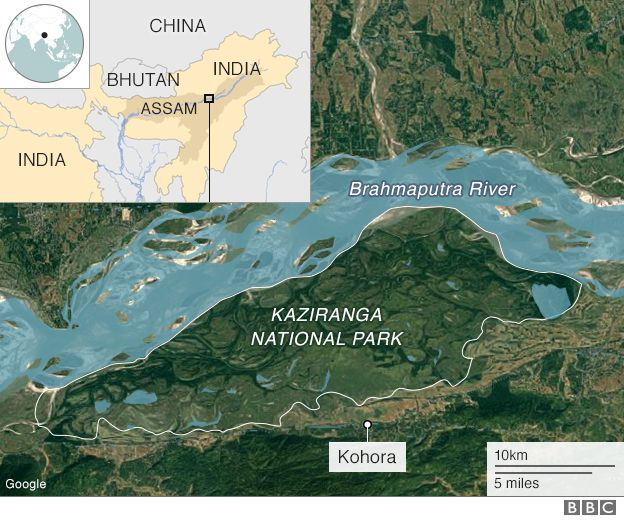
    • A limbless amphibian, the striped caecilian (Ichthyophis spp), has been newly identified within the 1,307.49 sq. km Kaziranga National Park and Tiger Reserve.
      • Assam’s wildlife officials reported its discovery during a herpetofauna survey.

    Back2Basics: Herpetofauna

    • Herpetofauna refers to a group of reptiles and amphibians collectively.
    • The term combines “herpeto-” from the Greek “herpeton,” meaning “creeping animal,” and “fauna,” referring to the animal species found in a particular region or time.
    • Herpetofauna play essential roles in ecosystems:
      • They act as both predators and prey, help regulate insect populations, and serve as indicators of environmental health.
      • They serve as environmental indicators and play significant roles in pest control.

    About Striped Caecilian

    • The Striped Caecilian (Ichthyophis spp.) is a type of limbless amphibian belonging to the family Ichthyophiidae.
    • Caecilians are often mistaken for snakes or worms due to their elongated, cylindrical bodies and lack of limbs.
    • They are primarily found in tropical regions of Africa, Asia, and the Americas.
    • They usually live underground or in moist soil habitats.

    Key features of the Striped Caecilian include:

    1. They have smooth, cylindrical bodies with a ringed or striped pattern, hence the name “striped.”
    2. Caecilians are predominantly fossorial (burrowing), spending most of their lives underground or in leaf litter. This behaviour makes them elusive and difficult to study.
    3. They are carnivorous, feeding on small invertebrates found in soil and leaf litter.
    4. Their eyesight is generally poor, and they rely on chemoreception (sensing chemicals in the environment) to locate prey.
    5. Caecilians are known for their unique reproductive strategies, which can involve live births or laying eggs. Some species exhibit parental care, with adults guarding eggs or young offspring.

    Significance: Kaziranga’s Biodiversity

    • Kaziranga National Park’s diverse ecosystem, encompassing flood plains, wetlands, grasslands, and hill tracts, provides an ideal habitat for herpetofauna.
    • The park hosts 24 amphibian species, 74 reptile species, and 21 of India’s 29 species of tortoises and freshwater turtles.

    About Kaziranga National Park

    Details
    Location Assam, India
    Geographical Features Situated between Brahmaputra River and Karbi (Mikir) Hills
    Significance Eastern Himalayan Biodiversity Hotspot
    Rivers Diphlu River runs through the park
    Highways National Highway 37 passes through the park
    Legal Status
    • Designated as a National Park in 1974.
    • UNESCO World Heritage Site (1985).
    • Important Bird Area by Birdlife International
    Key Conservation Achievements
    • Houses around 2/3rd of the world’s Great Indian One-Horned Rhinoceros.
    • Declared a Tiger Reserve due to high tiger density
    ‘Big Five’ species Great Indian One-Horned Rhino, Asian Elephant, Royal Bengal Tiger, Asiatic Water Buffalo, Swamp Deer
    Aquatic Species Gangetic River Dolphin
    Vegetation Wet Alluvial Grasslands, Tropical Moist Deciduous Forests, Semi-Evergreen

    Forests


    PYQ:

    [2024] The organisms “Cicada, Froghopper and Pond skater are:

    (a) Birds

    (b) Fish

    (c) Insects

    (d) Reptiles

  • Insolvency and Bankruptcy Code

    Proposed Amendments to Insolvency Resolution Process by IBBI

    Note4Students

    From UPSC perspective, the following things are important:

    Prelims level: IBBI, IBC

    1. Why in the News?
    • The Insolvency and Bankruptcy Board of India (IBBI) has proposed amendments to the Insolvency Resolution Process for Corporate Process regulations to enhance efficiency, reduce costs, and increase transparency.
      • This aims to align with the Companies (Registered Valuers and Valuation) Rules and streamline the Corporate Insolvency Resolution Process (CIRP).

    Do You Know?

    Since its enactment, the IBBI has achieved notable successes in resolving insolvency cases and recovering debts:

    • Debt Resolution: The IBC has successfully resolved Rs. 3.16 lakh crore of debt across 808 cases within seven years (as per CRISIL).
    • Higher Recovery Rates: Creditors have realized an average of 32% of admitted claims and 169% of the liquidation value through IBC proceedings, demonstrating higher recovery rates compared to previous mechanisms.
    • Behavioural Change: Companies have been proactively involved in the settlement of debts amounting to over Rs. 9 lakh crore before cases enter formal insolvency processes.

    Proposed amendments by IBBI

    • Simplified Valuation: Instead of separate reports for different types of assets, there will be one comprehensive valuation report covering the entire company. This helps in keeping valuation consistent and clear.
    • Single Valuer for Small Companies: For smaller companies with assets up to ₹1,000 crore and MSMEs, only one valuer will be appointed to determine the company’s value unless there’s a good reason for more than one.
    • Option for Two Valuers: If needed, the creditors’ committee can choose to have two valuers to deal with complex cases, but they have to explain why.
    • Faster Appointment of Representatives: Representatives appointed to represent creditors can start participating in meetings as soon as their application is submitted, to avoid delays.
    • Guarantees in Resolution Plans: If a resolution plan suggests releasing guarantees, it won’t stop creditors from going after guarantors or using the guarantees according to their agreements.

    About Insolvency and Bankruptcy Board of India (IBBI)

    Details
    Establishment Established on 1st October 2016 under the Insolvency and Bankruptcy Code (IBC), 2016.

    • Objective: To promote a creditor-driven insolvency resolution process and enhance India’s credit culture and business environment.
    Responsibility Responsible for implementing and enforcing the IBC,

    IBC consolidated laws related to insolvency resolution for individuals, partnership firms, and corporate entities.

    Functions
    • Regulates insolvency professionals and processes.
    • Oversees insolvency professional agencies, entities, and information utilities.
    • Enforces rules for corporate and individual insolvency resolution, liquidation, and bankruptcy.
    • Sets eligibility criteria and curriculum for insolvency professionals.
    • Collects and maintains records on insolvency cases and disseminates related information.
    Composition Total 10 members

    • Chairperson appointed by the Central Government.
    • Three members from central government officers (Ministries of Finance, Corporate Affairs, Law).
    • One member nominated by RBI (Reserve Bank of India).
    • Five other members nominated by the Central Government, including at least three full-time members.

    The term is 5 years or until age 65, with reappointment possible.

    Adjudicating Authorities under the IBC:

    Under the IBC, two primary adjudicating authorities handle insolvency cases based on the nature of the entity:

    • National Company Law Tribunal (NCLT): NCLT adjudicates insolvency cases involving corporate entities and other limited liability entities.
    • Debt Recovery Tribunal (DRT): DRT has jurisdiction over insolvency cases concerning individuals and partnership firms, excluding Limited Liability Partnerships (LLPs).

    Recent Amendments to the IBC:

    • Approval for segregated sale of assets or resolution plans.
    • Increase in the number of NCLT benches to 16 for faster adjudication.
    • Extension of timelines for filing claims to accommodate procedural complexities.
    • Sector-specific amendments tailored to address unique challenges in various industries.
    • Modifications in procedural forms such as Form G2 to enhance clarity and efficiency in insolvency proceedings.

    PYQ:

    [2017] Which of the following statements best describes the term ‘Scheme for Sustainable Structuring of Stressed Assets (S4A)’, recently seen in the news?

    (a) It is a procedure for considering the ecological costs of developmental schemes formulated by the Government.

    (b) It is a scheme of RBI for reworking the financial structure of big corporate entities facing genuine difficulties.

    (c) It is a disinvestment plan of the Government regarding Central Public Sector Undertakings.

    (d) It is an important provision in ‘The Insolvency and Bankruptcy Code’ recently implemented by the Government.