💥UPSC 2026, 2027, 2028 UAP Mentorship (March Batch) + Access XFactor Notes & Microthemes PDF

Type: Prelims Only

  • Judicial Reforms

    Veer Parivar Sahayata Yojana

    Why in the News?

    The National Legal Services Authority (NALSA) has launched the ‘Veer Parivar Sahayata Yojana’, aimed at improving legal aid for defence personnel and their families.

    Back2Basics: National Legal Services Authority (NALSA)

    • Established under: Legal Services Authorities Act, 1987 (in force from 1995)
    • Mandate: Ensure free, competent legal aid to the socially and economically disadvantaged
    • Leadership:
      • Patron-in-Chief: Chief Justice of India
      • Executive Chairman: Senior Supreme Court Judge
    • Core Functions:
      • Legal literacy campaigns
      • Lok Adalats for amicable dispute resolution
      • Legal aid in civil and criminal matters
      • Outreach in rural and vulnerable communities

    About Veer Parivar Sahayata Yojana:

    • Launched by: National Legal Services Authority (NALSA).
    • Objective: Provide legal assistance to defence personnel, ex-servicemen, and their families.
    • Key Features:
      • Legal Clinics: Set up at Zilla, Rajya, and Kendra Sainik Boards
      • Welfare–Legal Integration: Sainik Boards become legal service hubs
      • Paralegal Volunteers: Defence families encouraged to participate, enhancing local legal access
    • Legal Assistance includes:
      • Land and property disputes
      • Matrimonial and family matters
      • Service-related entitlements
      • Utility/civil grievances (e.g., billing disputes)
      • Support for personnel in remote/conflict zones

    Free Legal Aid in India:

    • Constitutional Backing
      • Article 21 (FR): Access to justice as part of the right to life
      • Article 39A (DPSP): Legal aid and equal justice, added via 42nd Amendment Act, 1976
    • Legal Framework:
      • Legal Services Authorities Act, 1987: Four-tier system—National, State, District, Taluka
      • Section 341, Bharatiya Nagarik Suraksha Sanhita, 2023: Legal aid for indigent accused persons
    • Eligibility Criteria:
      • Women and children
      • Scheduled Castes/Scheduled Tribes
      • Persons with disabilities
      • Industrial workmen
      • Victims of disasters (natural or human-made)
      • Persons in custody or shelter homes
      • Economically weak (annual income:
        • Below ₹1 lakh generally
        • Below ₹5 lakh for Supreme Court cases)
    [UPSC 2020] In India, Legal Services Authorities provide free legal services to which of the following type of citizens?

    1. Person with an annual income of less than Rs 1,00,000

    2. Transgender with an annual income of less than Rs 2,00,000

    3. Member of Other Backward Classes (OBC) with an annual income of less than ₹ 3,00,000

    4. All Senior Citizens

    Select the correct answer using the code given below:

    Options: (a) 1 and 2 only * (b) 3 and 4 only (c) 2 and 3 only (d) 1 and 4 only


  • Women Safety Issues – Marital Rape, Domestic Violence, Swadhar, Nirbhaya Fund, etc.

    Internal Complaints Committee (ICC) under POSH Act

    Why in the News?

    A student in Odisha, died by suicide after her sexual harassment complaint was rejected by her college’s Internal Complaints Committee (ICC), showing the urgent need for stronger grievance systems.

    About Internal Complaints Committee (ICC):

    • Legal Basis: Mandated under the Sexual Harassment of Women at Workplace (Prevention, Prohibition and Redressal) Act, 2013 (POSH Act).
    • Applicability: Mandatory in all organizations with 10 or more employees.
    • Purpose: Provides a redressal mechanism to ensure a safe and dignified workplace for women.
    • Composition:
      • A Presiding Officer who is a senior woman employee.
      • At least two internal members with legal or social expertise.
      • One external member from an NGO or with knowledge of sexual harassment issues.
      • Minimum 50% of ICC members must be women.

    Powers and Functions:

    • Complaint Handling:
      • Accepts complaints within 3 months of the incident.
      • Offers conciliation (on request) or initiates a formal inquiry.
    • Inquiry Process:
      • Holds powers similar to a civil court (summon, evidence collection, sworn statements).
      • Must complete inquiry within 90 days.
    • Confidentiality: Identity of complainant, respondent, witnesses, and proceedings must be kept confidential.
    • Post-Inquiry Actions:
      • Recommends disciplinary action or closure.
      • Employer must act on recommendations within 60 days.
      • Assists in filing FIRs if the complainant seeks criminal action.

    Back2Basics: POSH Act, 2013

    • Full Form: The Sexual Harassment of Women at Workplace (Prevention, Prohibition and Redressal) Act, 2013.
    • Background:
      • Originated from the Vishaka Guidelines (1997) issued by the Supreme Court.
      • Inspired by the Bhanwari Devi case and public pressure after the Nirbhaya case (2012).
    • Constitutional and Global Basis:
      • Upholds gender justice under Article 15.
      • Based on India’s commitment to CEDAW (Convention on the Elimination of All Forms of Discrimination Against Women, 1979) (ratified in 1993).
    • Key Provisions
      • Workplace Scope: Includes private and public sectors, government offices, NGOs, informal sectors, and domestic work.
      • Definition of Harassment: Covers physical contact, unwelcome advances, sexually coloured remarks, explicit content, and verbal or non-verbal conduct.
      • Mandatory ICC: All organizations with 10+ employees must set up an Internal Complaints Committee.
      • Local Committee: District-level Local Committees must be set up for smaller workplaces or domestic workers.
    • Employer Responsibilities:
      • Conduct awareness sessions and training.
      • Ensure safety and publish the organization’s POSH policy.
    • Timelines:
      • Complaints must be filed within 3 months.
      • Inquiries must be completed within 90 days.
    • Penalties:
      • Fine of up to ₹50,000 for non-compliance.
      • Repeat violations can lead to license cancellation.


    [UPSC 2007] Consider the following statements:

    1. The Judge (Inquiry) Bill 2006 contemplates establishing a Judicial Council which will receive complaints against Judges of the Supreme Court, Chief Justices, and Judges.

    2. Under the Protection of Women from Domestic Violence Act, 2005, a woman can file a petition before a 1st Class Judicial Magistrate.

    Which of the statements given above is/are correct?

    Options: (a) 1 only (b) 2 only (c) Both 1 and 2* (d) Neither 1 nor 2


  • Festivals, Dances, Theatre, Literature, Art in News

    Artform in News: Soharai Mural Paintings

    Why in the News?

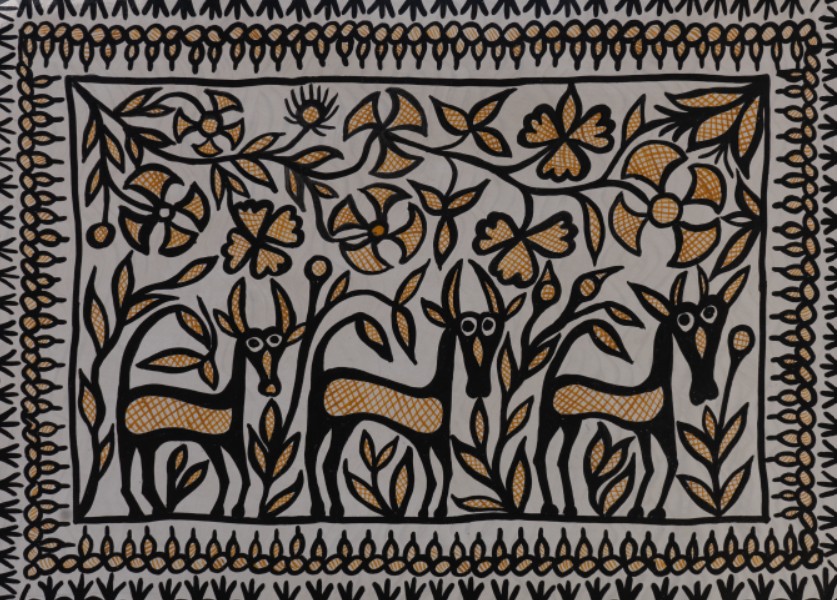
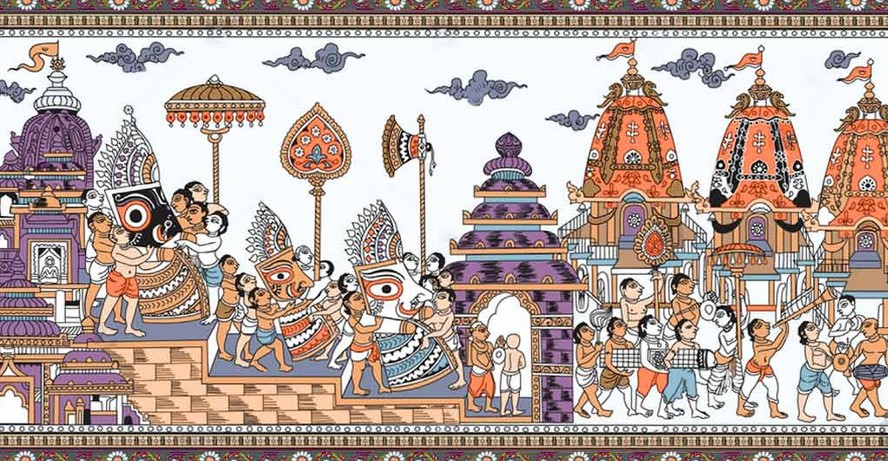
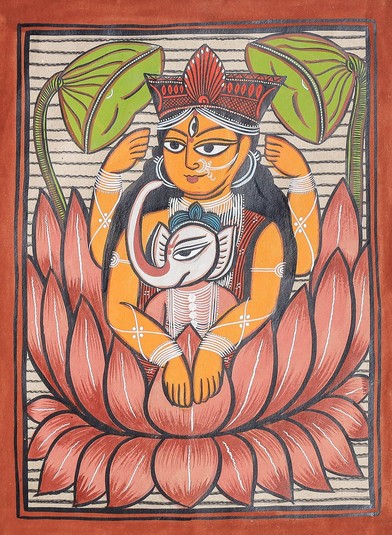
    The second Kala Utsav 2025 at Rashtrapati Bhavan celebrated India’s tribal art, with artists from Jharkhand, Odisha, and West Bengal showcasing Sohrai, Pattachitra, and Patua paintings.

    Artform in News: Soharai Mural Paintings

    About Sohrai Paintings:

    • Origin: Indigenous to Jharkhand, especially the Hazaribagh region.
    • Etymology: Derived from ‘Soro’ meaning “to drive away with a stick.”
    • Historical Roots: Traces back to the Meso-chalcolithic period (9000–5000 BC).
    • Archaeological Evidence: Similar rock paintings found at Isko Rock Shelter in Barkagaon.
    • Key Features of Sohrai Art:
      • Practiced By: Women of Kurmi, Santhal, Munda, Oraon, Agaria, and Ghatwal tribes.
      • Geographical Spread: Found in Jharkhand, Bihar, Odisha, and West Bengal.
      • Materials Used: Natural substances like charcoal, clay, and soil.
      • Themes: Celebrates nature—forests, rivers, animals—along with harvest and fertility.
      • Festival Link: Painted during the Sohrai festival, marking the harvest season and winter.
      • Ritual Role: Rice-gruel mandalas drawn to welcome cattle into homes.
      • GI Tag: Awarded in 2020 for Sohrai Khovar Painting.

    Back2Basics:

    Pattachitra Painting:

    Artform in News: Soharai Mural Paintings

    • Origin: Odisha, associated with the Jagannath Temple, Puri.
    • Material: Painted on cloth (Pata) coated with chalk powder and tamarind seed glue.
    • Colors Used: Made from vegetables, minerals, and earth sources.
    • Artistic Method:
      • No pencil outlines.
      • Borders are painted first.
      • Sketching is done with light red and yellow brushes.
      • Finished with lacquer coating for shine and durability.
    • Themes: Centered on Krishna Leela, Jagannath tales, and other mythological stories.

    Patua Painting:

    • Origin: West Bengal, practiced by the Patua (Chitrakar) community.
    • Spread: Also found in Bihar, Jharkhand, Odisha, and Bangladesh.
    • Format: Painted on scrolls (pati or patta) backed with old sari fabric.
    • Tools & Colors: Uses bamboo-goat hair brushes and vegetable dyes, fixed with gum.
    • Usage:
      • Scrolls used to narrate folk tales.
      • Focuses on Mangal Katha, especially in Kalighat and Kumartuli.
      • Practiced by both Hindu and Muslim Patuas.


    [UPSC 2015] Kalamkari painting refers to:

    Options: (a) a hand-painted cotton textile in South India* (b) a handmade drawing on bamboo handicrafts in North-East India (c) a block-painted woollen cloth in Western Himalayan region of India (d)  a hand-painted decorative silk cloth in North-Western India


  • Innovations in Biotechnology and Medical Sciences

    Novel Microscope observes Molecular Motion

    Why in the News?

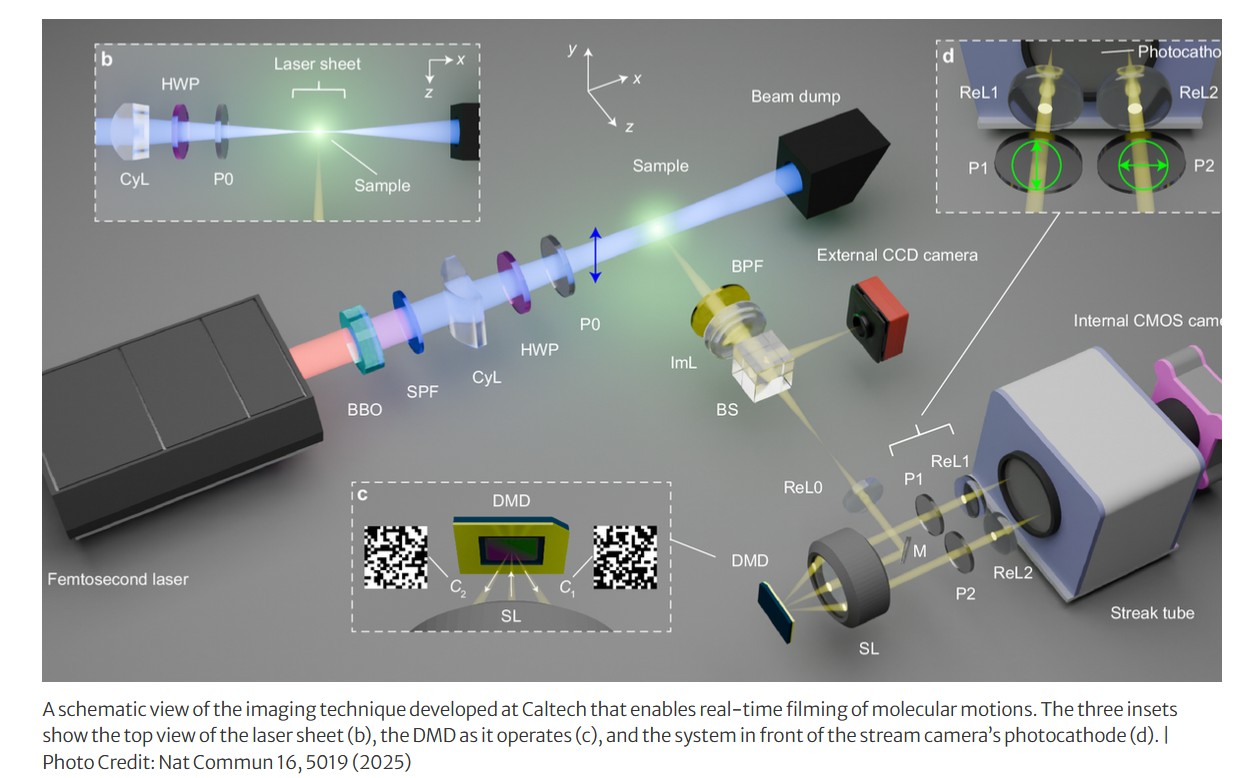
    Over a century after Einstein explained Brownian motion, California Institute of Technology (Caltech) scientists have created a powerful microscope that shows molecules moving in real time at an extremely tiny scale.

    Novel Microscope observes Molecular Motion

    What is Brownian Motion?

    • Definition: Random movement of tiny particles in a fluid due to constant collisions with surrounding molecules.
    • Significance: Validated the existence of atoms and molecules; explained by Albert Einstein in 1905.
    • Particle Behavior: Smaller particles move faster and more erratically; larger ones move slower.

    About Caltech Microscope:  

    • Resolution: Angstrom-level (1 Å = 0.0000000001 m).
    • Speed: Captures hundreds of billions of frames per second.
    • Advantage: Wide-field, single-shot imaging with no sample damage.
    • How It Works?
      • Setup: Fluorescent molecules in water illuminated by ultrafast lasers.
      • Light Capture: Scattered light directed via Digital Micromirror Device.
      • Streak Imaging: Light converted to electron patterns revealing molecular size.
      • Reading Size: Faster changes = smaller molecules; slower = larger.
    [UPSC 2000] Which one of the following can be used to confirm whether drinking water contains a gamma emitting isotope or not?

    Options: (a) Microscope (b) Lead plate (c) Scintillation counter* (d) Spectrophotometer


  • Innovations in Sciences, IT, Computers, Robotics and Nanotechnology

    Bamboo-Polymer Composite as alternative to Plastics

    Why in the News?

    IIT Guwahati researchers have created a strong, eco-friendly material using bamboo and biodegradable plastic to replace regular plastic in car interiors and other uses.

    About the Bamboo-Polymer Composite:

    • Origin: Made using Bambusa tulda, a fast-growing bamboo from Northeast India.
    • Composition: Reinforced with bio-based and petroleum-based epoxies for strength.
    • Objective: Reduce dependence on synthetic plastics in industrial sectors.
    • Process: Bamboo fibres undergo alkali treatment to bond well with polymers.
    • Evaluation: Tested across 17 parameters—tensile strength, water resistance, cost, etc.

    Key Features and Benefits:

    • High Strength: Suitable for load-bearing automotive components.
    • Thermal Stability: Can withstand high interior vehicle temperatures.
    • Low Moisture Absorption: Ideal for humid environments.
    • Eco-Friendly: Biodegradable, lowers environmental impact.
    • Cost-Effective: ₹4300 per kg—commercially viable.
    • Best Variant: Bamboo + bio-based epoxy FormuLite chosen through performance scoring.

    Applications:

    • Automotive: Dashboards, door panels, seat backs.
    • Electronics & Packaging: Lightweight, durable material.
    • Aerospace: Used for sustainable composite components.
    • Construction: Green alternative for interiors and fixtures.
    [UPSC 2021] Consider the following statements:

    1. Carbon fibres are used in the manufacture of the components used in automobiles and aircrafts.

    2. Carbon fibres once used cannot be recycled.

    Which of the statements given above is/are correct?”

    Options: (a) 1 only* (b) 2 only (c) Both 1 and 2 (d) Neither 1 nor 2


  • Corruption Challenges – Lokpal, POCA, etc

    [pib] Lokpal of India

    Why in the News?

    The Lokpal of India, India’s central anti-corruption ombudsman, is moving forward to fill 81 approved posts on a deputation basis.

    Historical Context of the Lokpal:

    • Initial Proposal (1966): First proposed by the First Administrative Reforms Commission to tackle high-level corruption.
    • Legislative Failures (1971–2008): Multiple Lokpal Bills introduced in Parliament but none were passed.
    • Jan Lokpal Movement (2011): Nationwide agitation led by Anna Hazare demanded a powerful and independent anti-corruption body, catalyzing public and political support.
    • Enactment of Law (2013): The Lokpal and Lokayuktas Act was passed in 2013, providing for:
      • A Lokpal at the central level.
      • Lokayuktas in states.
    • Formal Establishment (2014): Lokpal of India was notified on January 16, 2014 under Section 3 of the Act.
    • Initial Functioning: Operated with encadred staff (mostly Central Secretariat Service); became functionally active only in 2019.
    • Organisational Restructuring (2024):
      • Due to rising complaints and staffing gaps, a new Organogram was approved in August–September 2024.
      • The Full Bench of Lokpal, using powers under Section 34, sanctioned 81 deputation posts.
      • These are stop-gap until regular recruitment begins under the upcoming Service Regulations, 2024.

    About Lokpal [vs. Lokayukta, A Comparative Overview]:

    Lokpal (Central) Lokayukta (State)
    Legal Basis Established under the Lokpal and Lokayuktas Act, 2013 Also mandated under the Lokpal and Lokayuktas Act, 2013 (Section 63); specifics vary by state
    Jurisdiction Covers central public servants, including the Prime Minister (with some exceptions), Ministers, MPs, and officials in Groups A–D Handles cases involving state public servants, such as Chief Ministers, Ministers, MLAs, and state officials
    Appointment Appointed by the President based on recommendations of a Selection Committee (PM, LoP, CJI, jurist) Appointed by the Governor; appointment process defined by state legislation
    Composition Chairperson (former CJI/SC judge/eminent person) + up to 8 members (50% from SC/ST/OBC/Women/Minorities) Composition varies by state; usually includes a Chairperson and members with similar qualifications
    Tenure 5 years or until the age of 70, whichever is earlier Defined by respective state laws
    Salary & Removal Chairperson = salary of CJI;

    Members = salary of SC Judges;

    Removal by President after SC inquiry

    Modelled on Lokpal Act; removal by Governor based on state-specific processes
    Powers
    • Investigates corruption under Prevention of Corruption Act
    • Can confiscate illegal assets
    • Can refer cases to CBI
    • Jurisdiction over NGOs receiving significant foreign or govt. funds
    • Submits reports to President, tabled in Parliament
    • Investigates under state anti-corruption laws
    • Can recommend prosecution/disciplinary actions
    • Handles complaints related to state schemes, contracts
    • Submits reports to Governor, tabled in State Legislature
    Recent Institutional Reform
    • In 2024, Lokpal approved a new Organogram and framed Service Regulations, 2024 for structured staffing.
    • As a stopgap, 81 posts are being filled via deputation.
    Varies across states; no uniform push for staff standardization as seen at the central level.


    [UPSC 2025] Consider the following statements about Lokpal:

    I. The power of Lokpal applies to public servants of India, but not to the Indian public servants posted outside India. II. The Chairperson or a Member shall not be a Member of the Parliament or a Member of the Legislature of any State or Union Territory, and only the Chief Justice of India, whether incumbent or retired, has to be its Chairperson. III. The Chairperson or a Member shall not be a person of less than forty-five years of age on the date of assuming office. IV. Lokpal cannot inquire into the allegations of corruption against a sitting Prime Minister of India.

    Which of the statements given above is/are correct?

    Options: (a) III only* (b) II and III (c) I and IV (d) None of the above statements is correct

    [2013] ‘A national Lokpal, however strong it may be, cannot resolve the problems of immorality in public affairs’. Discuss.


  • Wetland Conservation

    Ramsar COP15 opens in Zimbabwe

    Why in the News?

    Delegates from 172 countries convened in Victoria Falls, Zimbabwe, for the 15th Meeting of the Conference of the Contracting Parties (COP15) to the Ramsar Convention on Wetlands.

    Highlights of Ramsar COP15

    • Theme: Protecting Wetlands for Our Common Future
    • Host Nation: Zimbabwe (holds presidency of the Ramsar Convention for 3 years)
    • Expected Outcome: Adoption of the Victoria Falls Declaration, a global framework to protect wetlands

    About the Ramsar Convention:

    • Adopted on: 2 February 1971, in Ramsar, Iran.
    • Objective: Conserve and ensure the wise use of wetlands globally.
    • Key Functions:
      • Identify wetlands of international importance.
      • Promote sustainable management practices.
      • Foster international cooperation in wetland conservation.
    • Governing Body:
      • Conference of the Contracting Parties (COP) meets every 3 years.
      • Reviews implementation, adopts site designations, budgets, and policy actions.
      • Includes member + non-member states, IGOs, and NGOs as observers.

    Criteria for Ramsar Site Designation:

    A wetland must meet at least one of the following 9 criteria:

    1. Unique or rare wetland type.
    2. Habitat for endangered, vulnerable, or endemic species.
    3. Crucial for migratory waterbirds.
    4. High ecological, hydrological, or biodiversity value.
    5. Supports ecosystem services (e.g., flood control, water purification).
    6. Provides cultural or spiritual value.
    7. Serves sustainable community livelihoods.
    8. Holds scientific or educational importance.
    9. Requires global cooperation due to threats.

    India and the Ramsar Convention:

    • Joined on: 1 February 1982.
    • First Ramsar Site: Chilika Lake (Odisha), 1981.
    • As of July 2025:
      • Total sites: 91
      • Total area: ~13.58 lakh hectares
      • % of India’s wetland area under Ramsar: ~10%
    • Top States: Tamil Nadu: 20 sites (highest); Uttar Pradesh: 10 sites
    • Note: India has never chaired a Ramsar COP session.

    Global Snapshot and Other Facts:

    • Total Members: 171 countries.
    • Leading Countries:
      • United Kingdom: 175 sites (most)
      • Mexico: 142 sites
      • Bolivia: Largest area (~1.48 lakh sq. km under protection)
    • World Wetlands Day: Celebrated on 2 February annually.
    • Montreux Record: Register for Ramsar sites under serious threat needing urgent conservation.
    [UPSC 2019] Consider the following statements:

    1. Under Ramsar Convention, it is mandatory on the part of the Government of India to protect and conserve all the wetlands in the territory of India.

    2. The Wetlands (Conservation and Management) Rules, 2010 were framed by the Government of India based on the recommendations of Ramsar Convention.

    3. These Rules also encompass the drainage area or catchment regions of the wetlands as determined by the authority.

    Which of the statements given above is / are correct?

    Options: (a) 1 and 2 only (b) 2 and 3 only (c) 3 only* (d) 1, 2 and 3


  • Wildlife Conservation Efforts

    150 years of Jim Corbett

    Why in the News?

    As India marks Jim Corbett’s 150th birth anniversary (1875–2025), it reflects on his legacy as a hunter, naturalist, author, and conservationist—after whom Corbett National Park is named.

    https://www.downtoearth.org.in/wildlife-biodiversity/150-years-of-jim-corbett-will-the-real-carpet-sahib-please-stand-up 

    Who was Jim Corbett?

    • Full Name: Edward James Corbett (1875–1955), nicknamed Carpet Sahib in Kumaon.
    • Profession: British hunter, naturalist, author, and later a wildlife conservationist.
    • Famous Books: Man-Eaters of Kumaon, The Man-Eating Leopard of Rudraprayag, My India, Jungle Lore, Tree Tops.
    • Hunter Turned Hero:
      • Known for tracking and killing man-eating tigers and leopards in Kumaon and Garhwal.
      • Used patient observation and deep knowledge of terrain and animal behaviour.
    • Shift to Conservation:
      • Grew concerned about dwindling tiger numbers and deforestation.
      • Advocated for wildlife protection and ecological balance.
    • Commemoration: India’s first national park was renamed Jim Corbett National Park in 1957 in his honour.

    Back2Basics: Jim Corbett National Park

    • Established: 1936 as Hailey National Park; later renamed in 1957.
    • Location: Nainital district, Uttarakhand; core of Corbett Tiger Reserve.
    • Historical Importance:
      • Launch site of Project Tiger in 1973, India’s flagship tiger conservation programme.
    • Geography:
      • Lies in Shivalik and Outer Himalayan foothills.
      • Rivers: Ramganga, Sonanadi, Mandal, Palain, and Kosi.
      • Area: Over 500 sq km (includes Sonanadi Wildlife Sanctuary as buffer).
    • Biodiversity:
      • Flora: Moist deciduous forest with Sal, Khair, and Sissoo; 600+ plant species.
      • Fauna: Over 230 tigers (highest density in the world), elephants, leopards, deer (sambar, chital, barking), sloth bears, wild boars, birds, and reptiles.


    [UPSC 2013] Consider the following pairs : National Park River flowing through the Park

    1. Corbett National Park : Ganga

    2. Kaziranga National Park : Manas

    3. Silent Valley National Park : Kaveri

    Which of the above pairs is/are correctly matched?

    (a) 1 and 2 (b) 3 only (c) 1 and 3 (d) None*


  • Indian Missile Program Updates

    UAV Launched Precision Guided Missile (ULPGM)-V3

    Why in the News?

    DRDO has successfully test-fired the UAV-Launched Precision Guided Missile (ULPGM)-V3.

    UAV Launched Precision Guided Missile (ULPGM)-V3

    About ULPGM-V3:

    • Overview: It is a fire-and-forget air-to-surface missile developed by Defence Research and Development Organisation (DRDO).
    • Variants: It is an upgraded version of V1 and V2, with improved range, autonomy, and targeting precision.
    • Development: Collaboration by Adani Defence, Bharat Dynamics, Newspace Research Technologies, and over 30 Indian MSMEs/startups.

    Key Features:

    • Weight: 12.5 kg
    • Range: 10 km (day), 2.5 km (night)
    • Accuracy: Passive homing infrared with HD dual-channel accuracy (~10 cm)
    • Warhead Options: Anti-armour, penetration-cum-blast, pre-fragmentation
    • Guidance: Fully autonomous with two-way datalink for mid-course updates
    • Environment: Operates in plains and high-altitude regions, day and night
    [UPSC 2025] With reference to Unmanned Aerial Vehicles (UAVs), consider the following statements:

    I. All types of UAVs can do vertical landing. II. All types of UAVs can do automated hovering. III. All types of UAVs can use battery only as a source of power supply.

    Which of the statements given above are correct?

    (a) Only one (b) Only two (c) All the three (d) None *


  • Manipur Crisis

    Extension of President’s Rule in Manipur

    Why in the News?

    Home Minister is set to move a statutory resolution in the Rajya Sabha to extend President’s Rule in Manipur by another 6 months.

    What is President’s Rule?

    • Overview: It refers to the suspension of a state’s constitutional machinery, placing the state under direct control of the Union Government.
    • It is also known as State Emergency or Constitutional Emergency.
    • Constitutional Basis:
      • Article 355: Obligates the Union to ensure that governance in every state is in accordance with the Constitution.
      • Article 356(1): Allows the President to assume control of a state’s executive if the Governor reports a constitutional breakdown or the President independently concludes so.
      • Article 365: Deems a state’s failure to comply with Union directions as a failure of constitutional machinery.

    Duration and Extension of President’s Rule:

    • Initial duration: Valid for 6 months from the date of proclamation.
    • Extensions: Can be extended every six months, subject to parliamentary approval, for a maximum of 3 years.
    • Parliamentary Approval (Article 356(3)):
      • Must be approved by both Houses of Parliament within 2 months.
      • Requires a simple majority (members present and voting).
    • Beyond 1 Year: Allowed only if:
      • A National Emergency (Article 352) is in operation in the whole or part of the state.
      • The Election Commission of India certifies that elections to the Legislative Assembly cannot be held.
    • Beyond 3 Years: Requires a constitutional amendment (e.g., 67th and 68th Amendments extended President’s Rule in Punjab).

    Implications of President’s Rule on a State:

    • Executive Powers (Article 356(1)(a)):
      • The President assumes functions of the state government via the Governor.
      • Administration is carried out by the Governor, with support from the Chief Secretary and advisors.
    • Legislative Powers (Article 356(1)(b)):
      • The Legislative Assembly is either suspended or dissolved.
      • Legislative powers are exercised by Parliament or delegated to the President.
    • Financial Powers (Article 356(1)(c)):
      • The President may authorize expenditure from the Consolidated Fund of the State pending Parliament’s approval (under Article 206 and Article 357).

    Revocation:

    • President’s Rule can be revoked at any time by the President under Article 356(2).
    • No parliamentary approval is required for revocation.

    Supreme Court Judgments related to it:

    • S.R. Bommai v. Union of India (1994):
      • President’s Rule is subject to judicial review.
      • A floor test is the proper method to prove majority.
      • The Governor’s report alone is not sufficient for justification.
    • Sarbananda Sonowal v. Union of India (2005): Widened the scope of Article 355 for preventive action by the Union.
    • Rameshwar Prasad v. Union of India (2006):
      • Dissolution of Bihar Assembly was declared unconstitutional.
      • Use of Article 356 to prevent political defections was struck down.

    Key Reforms/Recommendations:

    • Sarkaria Commission (1987): President’s Rule should be used only as a last resort after exploring all other options.
    • Punchhi Commission (2010): Proposed localized emergency provisions for specific districts or regions instead of the entire state.
    • National Commission to Review the Working of the Constitution (2000):
      • Article 356 should remain but be used sparingly.
      • Suggested amendments to allow its use without National Emergency if elections cannot be held.
    [UPSC 2018] If the President of India exercises his power as provided under Article 356 of the Constitution in respect of a particular State, then

    Options: (a) the Assembly of the State is automatically dissolved.

    (b) the powers of the Legislature of that State shall be exercisable by or under the authority of the Parliament.

    (c) Article 19 is suspended in that State.

    (d) the President can make laws relating to that State.