💥UPSC 2026, 2027, 2028 UAP Mentorship (March Batch) + Access XFactor Notes & Microthemes PDF

Archives: News

  • Civil Aviation Sector – CA Policy 2016, UDAN, Open Skies, etc.

    Import Ban on Drones

    The Government has banned the import of drones barring for R&D, defense, and security purposes.

    Why in news?

    • To promote Make-in-India drones.
    • Before this order, the import of drones was “restricted” and needed prior clearance of the Directorate General of Civil Aviation (DGCA) and an import license from DGFT.

    India’s sources of Imports

    • For its defense needs, India imports from Israel and the US.
    • Consumer drones such as those used for wedding photography come from China and drones for light shows also come from China apart from Russia.

    Why need drones?

    • Indian drone manufacturers and service providers arrange drones for a variety of use cases such as survey and mapping, security and surveillance, inspection, construction progress monitoring, and drone delivery.

    What does the order say?

    • The Directorate General of Foreign Trade (DGFT) issued an order prohibiting with immediate effect the import of drones in Completely-Built-Up (CBU), Semi-knocked-down (SKD), or Completely-Knocked-down (CKD) forms.
    • Import of drones by government entities, educational institutions recognized by the Central or State governments, government-recognized R&D entities, and drone manufacturers for R&D purposes as well as for defense and security purposes will be allowed.
    • For this, there has to be an import authorization obtained from the DGFT.
    • The import of drone components is “free”, implying that no permission is needed from the DGFT allowing local manufacturers to import parts like diodes, chips, motors, lithium-ion batteries, etc.

    Steps taken to promote indigenous drone manufacturing

    • In August last year, the Government brought out liberalized Drone Rules, 2021 which reduced the number of forms to be filled to seek authorization from 25 to five.
    • They also dispensed with the need for security clearance before any registration or issuance of the license.
    • R&D entities too have been provided blanket exemption from all kinds of permissions, and restrictions on foreign-owned companies registered in India have also been removed.
    • The Government has also announced a production-linked incentive scheme for drones and drone components with the aim to make India a “global drone hub by 2030”.
    • Foreign manufacturers will be encouraged to set up assembly lines in India.

    Why such a blanket ban?

    • Most drone manufacturers in India assemble imported components in India, and there is less manufacturing.
    • The import ban will ensure that an Indian manufacturer has control of the IP, design, and software which gives him or her a total understanding and control of the product.
    • Over a period of time, this can enable further indigenization.

    Possible repercussions of the ban

    • The ban is likely to hurt those who use drones for photography and videography for weddings and events.
    • These drones primarily come from China because they are cheaper and easy to use and India still has a lot of catching up to do in manufacturing them.

    Also read

    [Sansad TV] Perspective: Keeping Drones in Check


    UPSC 2022 countdown has begun! Get your personal guidance plan now! (Click here)

  • Police Reforms – SC directives, NPC, other committees reports

    Centre extends Police Modernisation Scheme

    The Union government has approved the continuation of a police modernization scheme for five years up to 2025-26 with a financial outlay of ₹26,275 crores.

    What is the Modernization of Police Forces Scheme?

    • Police’ and ‘law and order’ fall under the category of subjects within the domain of the State as per Entry 2 of List II of the VIIth Schedule in the Constitution of India.
    • Thus, the principal responsibility for managing these subjects lies with the State Governments.
    • However, the States have not been able to fully modernize and equip their police forces up to the desired level due to financial constraints.
    • It is in this context that the Ministry of Home Affairs (MHA) has been supplementing the efforts and resources of the States, from time to time, by implementing the MPF Scheme since 1969-70.

    Objectives:

    • The focus of the scheme is to strengthen police infrastructure at cutting edge level by constructing secure police stations, training centers, police housing (residential), equipping the police stations with the required mobility, modern weaponry, communication equipment, and forensic set-up, etc.

    Components of the scheme

    • The scheme included security-related expenditure in J&K, northeastern States, and Maoist-affected areas, for raising new battalions, developing high-tech forensic laboratories and other investigation tools.
    • Provisions have been made under the scheme for internal security, law and order, and the adoption of modern technology by the police.
    • Assistance will be given to the States for narcotics control and strengthening the criminal justice system by developing a robust forensic setup in the country.

    Funding pattern

    • Under the Scheme, the States are grouped into two categories, namely Category ‘A’ and Category ‘B’ for the purpose of funding both under ‘Non-Plan’ and Plan.
    • Category ‘A’ States, namely, J&K and 8 North Eastern States including Sikkim will be eligible to receive financial assistance on a 90:10 Centre: State sharing basis.
    • The remaining States will be in Category ‘B’ and will be eligible for financial assistance on a 60:40 Centre: State sharing basis.


    UPSC 2022 countdown has begun! Get your personal guidance plan now! (Click here)

  • Real Estate Industry

    Capital Gains Tax

    The capital gains tax structure in India is complicated, and it is time for a relook since the union budget has provisions for 30% tax on cryptocurrency.

    What is Capital Gains Tax?

    • Capital gains tax is levied on the profits made on investments.
    • It covers real estate, gold, stocks, mutual funds, and various other financial and non-financial assets.

    Types

    • It is divided into long-term capital gains tax (LTCG) and short-term capital gains tax (STCG) depending on how long you have held the investment in question.
    • Unlike income tax, the percentage of tax does not change on the basis of your overall tax slab.
    • The LTCG tax, excluding surcharge, on equity is the same for gains of ₹10 lakh or ₹10 crore.
    • There is also a separate set of deductions that apply to LTCG, which do not apply to ordinary income.

    Why is it so complicated?

    Capital gains tax is complicated for a few primary reasons.

    • First, the rate changes from asset to asset. LTCG tax on stocks and equity mutual funds is 10% but on debt mutual funds is 20% with indexation.
    • Second, holding period changes from asset to asset. The holding period for LTCG tax is two years in real estate, one year for stocks, and three years for debt mutual funds and gold.
    • Third, exemptions available against it come with their own complex conditions. For instance, buying a house after selling one can get you an exemption, but the new house must be bought in two years or built in three years of the sale.

    Is cryptocurrency taxed as capital gains?

    • The 2022 budget has proposed a 30% tax on cryptocurrency, which is higher than capital gains tax in many cases.
    • Besides, under capital gains tax, investors can adjust profits and losses on different investments against each other or against profits/losses in the future.
    • However, this cannot be done with cryptocurrency.

    What distortions does it create?

    • As capital gains tax is the same regardless of your overall income it can compound inequality.
    • For instance, a person with a salary of ₹40 lakh will pay 30% tax on it but just 10% LTCG tax on gains from stock trading.
    • A person with a salary of ₹5 lakh will pay a 5% tax on it but the same 10% LTCG tax on stock trading.
    • Second, the smaller one-year qualifying period for LTCG in stocks compared to three years in debt mutual funds may encourage short-term trading in equity.

    What can be done to fix these anomalies?

    • The government can bring about uniformity in rates and holding periods for various assets to ensure that the tax for one asset is not more attractive than another.
    • A uniform and long holding period to qualify for LTCG can also discourage short-term trading and speculative  behavior  in assets  such as  stocks.
    • The exemptions for LTCG such as reinvestment in another house property or capital gains bonds can also be made simpler, with fewer conditions.
    • Small investors can also be given relief by reducing rates of capital gains.


    UPSC 2022 countdown has begun! Get your personal guidance plan now! (Click here)

  • ISRO Missions and Discoveries

    What are Earth Observation Satellites (EOS)?

    After a disappointing 2021 which saw just one successful launch, ISRO is getting back to business with the EOS-04, an earth observation satellite.

    What are EOS?

    • An EOS or Earth remote sensing satellite is a satellite used or designed for Earth observation (EO) from orbit.
    • It includes spy satellites and similar ones intended for non-military uses such as environmental monitoring, meteorology, cartography, and others.
    • The most common type is Earth-imaging satellites that take satellite images, analogous to aerial photographs.
    • Some EOS may perform remote sensing without forming pictures, such as in GNSS radio occultation.

    What is EOS-04 all about?

    • The EOS-04 is fourth in a series of earth observation satellites that are being launched under a new generic name.
    • It is designed to provide high-quality images for applications such as agriculture, forestry, and plantations, flood mapping, soil moisture, and hydrology.
    • It will complement the data from Resourcesat, Cartosat and RISAT-2B series of satellites that are already in orbit.

    Why such different nomenclature?

    • Two years ago, ISRO had moved to a new naming system for its earth observation satellites which till then had been named thematically, according to the purpose they were meant for.
    • The Cartosat series of satellites were meant to provide data for land topography and mapping, while the Oceansat satellites were meant for observations overseas.
    • Some INSAT-series, Resourcesat series, GISAT, Scatsat, and a few other earth observation satellites were named differently for the specific jobs they were assigned to do, or the different instruments that they.
    • All these would now become part of the new EOS series of satellites.

    What other satellites are being launched?

    • Besides EOS-04, two other small satellites —INSPIREsat-1 and INS-2TD — will ride on the heaviest version of the PSLV rocket in the early hours from the Sriharikota launch range.
    • The other co-passenger, INS-2TD, is a technology demonstrator for the first India-Bhutan joint satellite that is scheduled to be launched next month.
    • The two countries had signed a space agreement last year, and its first outcome would be the launch of Bhutan-Sat, or INS-2B, on a PSLV rocket.

    How many satellites does India have in space?

    • India currently has 53 operational satellites, of which 21 are earth observation ones and another 21 are communication-based.
    • EOS-4 launch would be the 54th flight of the PSLV rocket, and the 23rd of its most powerful XL-version that has six strap-on boosters.


    UPSC 2022 countdown has begun! Get your personal guidance plan now! (Click here)

  • Hunger and Nutrition Issues – GHI, GNI, etc.

    World Food Programme (WFP)

    India signed an agreement with the United Nation’s World Food Programme (WFP) for the distribution of 50,000 tonnes of wheat that it has committed to sending Afghanistan as part of humanitarian assistance.

    What is WFP?

    • The WFP is the food-assistance branch of the United Nations (UN).
    • It is the world’s largest humanitarian organization focused on hunger and food security, and the largest provider of school meals.
    • Founded in 1961, it is headquartered in Rome and has offices in 80 countries.
    • In addition to emergency food relief, WFP offers technical assistance and development aid, such as building capacity for emergency preparedness and response, managing supply chains and logistics, etc.
    • The agency is also a major provider of direct cash assistance and medical supplies and provides passenger services for humanitarian workers.

    Feats achieved

    • As of 2020, it served 115.5 million people in 80-plus countries, the largest since 2012.
    • The WFP was awarded the Nobel Peace Prize in 2020 for its efforts to provide food assistance in areas of conflict and to prevent the use of food as a weapon of war and conflict.

    WFP in Afghanistan

    • The wheat will be taken through Pakistan to the Afghan border crossing and handed over to WFP officials in Kandahar.
    • The WFP runs its own logistics network inside Afghanistan, partnering with civil society groups.


    UPSC 2022 countdown has begun! Get your personal guidance plan now! (Click here)

  • Modern Indian History-Events and Personalities

    Places in news: Chandernagore

    The Registry Building, a two-storey structure at Chandernagore built in 1875 and a symbol of French settlement of the colonial town, has been awaiting restoration for a long time.

    French in India

    • France was the last of the major European maritime powers of the 17th century to enter the East India trade.
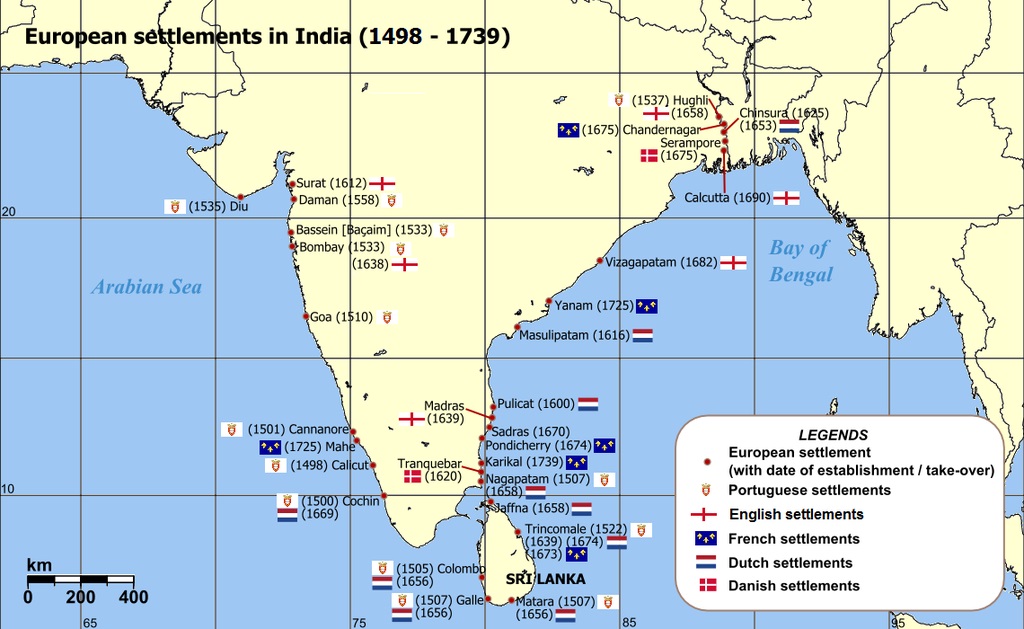
    • The French settlement in India began in 1673 with the purchase of land at Chandernagore from the Mughal Governor of Bengal.
    • The next year they acquired Pondicherry from the Sultan of Bijapur. Both became the centers of maritime commercial activities of the French in India.
    • Joseph Francois Dupleix who was initially appointed as Intendent of Chandernagore in 1731, sowed the seeds of colonization.
    • The village, which hitherto was engaged in maritime commerce along with Pondicherry, got fortified by him.

    Significance of Chandernagore

    • Chandernagore, though a part of French colonies in India, was unique in many ways.
    • It was very active in spearheading the freedom movement against the British. Due to its close proximity to Calcutta, it became a safe haven for freedom fighters of all hues.
    • Even Aurobindo Ghosh who was one of the accused in the Alipore Bomb case of 1909, was acquitted unconditionally and after a short stay at Chandernagore moved to Pondicherry.
    • Since the partition of Bengal in 1905, Chandernagore was in the thick of activities of freedom fighters against the British and produced several martyrs including Kanailal Dutt.

    Merger into India

    • As the British decided to hand over powers to the people of India by August 15, 1947, the people living under French rule in Pondicherry, Chandernagore, Karaikal, Mahe and Yanam were eager to join their homeland.
    • But the French were yet to learn their lessons. They tried all the tricks in the book to avert this.
    • Facing the onslaught from the people under their rule and the British and Indian rulers, the French declared Chandernagore as free city in 1947.
    • In June 1948, they conducted a referendum in which an overwhelming majority of 97 per cent people opted for a merger with India.
    • After so many legal hurdles, it became a part of India on October 2, 1955.

    Back2Basics: European Colonies in India


    UPSC 2022 countdown has begun! Get your personal guidance plan now! (Click here)

  • Cyber Security – CERTs, Policy, etc

    Taking a byte out of cyber threats

    Context

    Cyber-attacks may be a relatively new phenomenon, but in a short timeframe have come to be assessed as dangerous as terrorism.

    A cyber attack is a type of attack that targets computer systems, infrastructures, networks, or personal computer devices using various methods at hand. India is ranked 10th (among 194 countries) in the Global Cybersecurity Index (GCI) 2020 ahead of China and
    Pakistan.

    The increasing threat of cyber attacks

    • Stuxnet Worm in 2010: Resulted in large-scale damage to Iran’s centrifuge capabilities.
    • Natanz nuclear facility (Iran) in 2021: Targeted the industrial control systems and destroyed the power supply to centrifuges used to create enriched uranium
    • Chinese cyberattack on the power system in Mumbai brought the entire city to a halt.
    • Ransomware as a Service (RaaS) — a business model for ransomware developers — is no mere idle threat.
    • Advanced Persistent Threats (APT) attacks are set to increase, with criminal networks working overtime and the Dark web allowing criminals to access even sensitive corporate networks.

    Tools of Cyberattacks

    • Malware: Malicious software to disrupt computers. It can include Viruses, Spyware, Trojans, etc.
    • Phishing: It is the method of trying to gather personal information using deceptive e-mails and websites.
    • Denial of Service attacks: A Denial-of-Service (DoS) attack is an attack meant to shut down a machine or network, making it inaccessible to its intended users.
    • Hacktivism:  Misusing a computer system or network for a socially or politically motivated reason. For example, hacktivists can block access to Government’s website, deface the government’s website or unblock the sites which have been blocked by the Government.
    • Social Engineering: Entice users to provide confidential information. For example, these days u must have come across some of the fake Facebook accounts which are opened in the name of your close friends. First, the cyber attackers send you the friend request in the name of your close friend. Once u accept it, they will ask to request you to transfer some money.

    Consequences of Cyberattacks

    • Impact on data: Confidentiality, Integrity and Availability of information.
    • Impact on Critical Information Infrastructure: Presently, most of the sectors are critically dependent on the use of ICT to carry on their operations. These sectors are Banking and Finance, Power systems, Transport sector, Telecommunication, etc. Cyber attacks on these critical information infrastructures can bring the entire country to a grinding halt. For example, the recent Chinese cyber attack on the power system in Mumbai brought the entire city to a halt.
    • Creates Distrust: A cyber-attack on a specific component exposes vulnerabilities in the entire system which may negatively impact relations with allies and adversaries and questions our nuclear reliability.
    • Financial loss: Estimates of the cost to the world in 2021 from cyberattacks are still being computed, but if the cost of cybercrimes in 2020 (believed to be more than $1 trillion) is any guide, it is likely to range between $3trillion-$4 trillion.
    • Threat to National Security and peace and stability in a country.

    Steps taken by India to improve Cyber Security

    • Section 66F of ITA: Specific provision dealing with the issue of cyber terrorism that covers denial of access, unauthorized access, introduction of computer contaminant leading to harm to persons, property, critical infrastructure, disruption of supplies, ‘sensitive data’ thefts. Provides for punishment which may extend to life imprisonment.
    • National Cyber Security Policy 2013: Policy document drafted by the Department of Electronics and Information Technology. Established National Critical Information Infrastructure Protection Centre (NCIIPC) to improve the protection and resilience of the country’s critical infrastructure information; Create a workforce of 5 lakh professionals skilled in cybersecurity in the next 5 years.
    • National Critical Information Infrastructure Protection Centre (NCIIPC): It has been setup to enhance the protection and resilience of Nation’s Critical information infrastructure. It functions under the National Technical Research Organization (NTRO).
    • CERT-IN: Organization under the Ministry of Electronics and Information Technology with an objective of securing Indian cyberspace. The purpose of CERT-In is to respond to computer security incidents, report on vulnerabilities, and promote effective IT security practices throughout the country. According to the provisions of the Information Technology Amendment Act 2008, CERT-In is responsible for overseeing the administration of the Act.
    • Cyber Surakshit Bharat Initiative: It was launched in 2018 with an aim to spread awareness about cybercrime and build capacity for safety measures for Chief Information Security Officers (CISOs) and frontline IT staff across all government departments.
    • Cyber Crisis Management Plan (CCMP): It aims at countering cyber threats and cyber-terrorism.
    • National Cyber Coordination Centre (NCCC): It seeks to generate necessary situational awareness of existing and potential cyber security threats and enable timely information sharing for proactive, preventive and protective actions by individual entities.
    • National Cyber Security Coordinator (NCSC) under National Security Council Secretariat (NSCS) coordinates with different agencies at the national level for cyber security matters.
    • Cyber Swachhta Kendra: This platform was introduced for internet users to clean their computers and devices by wiping out viruses and malware.
    • Information Security Education and Awareness Project (ISEA): Training of personnel to raise awareness and to provide research, education, and training in the field of Information Security.

    Challenges

    • Structural:
      a)Absence of any geographical constraints.
      b)Lack of uniformity in devices used for internet access.
    • Administrative:
      a) Lack of national-level architecture for cybersecurity
      b) Security audit does not occur periodically, nor does it adhere to the international standards.
      c) The appointment of the National Cyber Security Coordinator in 2014 has not been supplemented by creating liaison officers in states.
    • Procedural
      a) Lack of awareness in local police of various provisions of IT Act, 2000, and also of IPSC related to cybercrime.
      b) Lack of data protection regime.
    • Human Resource Related
      a) Inadequate awareness among people about the security of devices and online transactions.

    Way forward

    • International Convention: Presently, Budapest Convention is the first international treaty that promotes greater cooperation between countries in fighting cybercrimes. India should accede to Budapest Convention at the earliest. It would reduce India’s capacity to combat cybercrimes at a global level.
    • PPP Framework for Cyber Security: Presently, most of the cyber security operations are carried out by the Government agencies such as CERT-In. Given the fast-changing nature and intensity of cyber threats, there is a need to leverage private sector expertise in combating cyber crimes through the PPP framework.
    • Capacity building and skill development- Recently, according to a report published by NASSCOM, India needs around 10 lakh, cyber security experts. However, presently there are only around 64,000 professionals. One of the main reasons for the lower number of cyber security professionals is due to lack of an adequate number of specialized courses in cyber security, poor training Infrastructure, lack of availability of trainers, etc. Hence, accordingly, the Government has to recognize the lacunae and increase the number of Skilled professionals.
    • Promoting Startups in the field of Cybersecurity.
    • Investment in R&D to improve Cyber Security- Big data, AI
    • Learning from best practices such as the Tallinn manual of the US.

    Conclusion

    Failure to build resilience — at both the ‘technical and human level — will mean that the cycle of cyber attacks and the distrust they give rise to will continue to threaten the foundations of a democratic society. Preventing erosion of trust is critical in this day and age.

    UPSC 2022 countdown has begun! Get your personal guidance plan now! (Click here)

  • Modern Indian History-Events and Personalities

    Back in news: Liberation of Goa

    The PM recently took a jibe at then PM Nehru, saying that it could have liberated Goa in 1947 itself had Nehru sent the Indian Army there.

    What is the news?

    • Goa was liberated 15 years after India attained freedom.
    • PM Modi accused Nehru as guilty of leaving satyagrahis in the dismay, refusing to send the Indian Army to liberate Goa, even after 25 of them were shot dead by the Portuguese Army.

    Goa’s Colonization: A backgrounder

    • Goa became a Portuguese colony in 1510, when Admiral Afonso de Albuquerque defeated the forces of the sultan of Bjiapur, Yusuf Adil Shah.
    • The next four and a half centuries saw one of Asia’s longest colonial encounters — Goa found itself at the intersection of competing regional and global powers.
    • It received a religious and cultural ferment that lead eventually to the germination of a distinct Goan identity that continues to be a source of contestation even today.
    • By the turn of the twentieth century, Goa had started to witness an upsurge of nationalist sentiment opposed to Portugal’s colonial rule, in sync with the anti-British nationalist movement.

    Beginning of freedom movement

    • Tristao de Braganza Cunha, celebrated as the father of Goan nationalism, founded the Goa National Congress at the Calcutta session of the Indian National Congress in 1928.
    • In 1946, the socialist leader Ram Manohar Lohia led a historic rally in Goa that gave a call for civil liberties and freedom, and eventual integration with India.
    • This event became a watershed moment in Goa’s freedom struggle.
    • At the same time, there was a thinking that civil liberties could not be won by peaceful methods, and a more aggressive armed struggle was needed.
    • This was the view of the Azad Gomantak Dal (AGD), whose co-founder Prabhakar Sinari is one of the few freedom fighters still living today.
    • Finally, Goa was liberated on December 19, 1961 by swift Indian military action that lasted less than two days.

    Recognition of Goa

    • The Supreme Court of India recognized the validity of the annexation and rejected the continued applicability of the law of occupation.
    • In a treaty with retroactive effect, Portugal recognized Indian sovereignty in 1974.
    • Under the jus cogens rule, forceful annexations including the annexation of Goa are held as illegal since they have taken place after the UN Charter came into force.

    Why was Goa left un-colonized?

    As India moved towards independence, however, it became clear that Goa would not be free any time soon, because of a variety of complex factors.

    • No immediate war: Then PM Nehru felt that if he launched a military operation (like in Hyderabad) to oust the colonial rulers, his image as a global leader of peace would be impacted.
    • Trauma of Partition: The trauma of Partition and the massive rupture that followed, coupled with the war with Pakistan, kept the Government of India from opening another front.
    • Internationalization of the issue: This might have led the international community to get involved.
    • No demand from within: It was Gandhi’s opinion that a lot of groundwork was still needed to raise the consciousness of the people, and the diverse political voices emerging within be brought under a common umbrella.

    Nehruvian dilemma

    • India’s global image: Nehru was headed in shaping India’s position in the comity of nations.
    • Trying peaceful options: He was trying to exhaust all options available to him given the circumstances that India was emerging from.
    • Portuguese obsession: Portugal had changed its constitution in 1951 to claim Goa not as a colonial possession, but as an overseas province.
    • Portugal in NATO: The move was apparently aimed at making Goa a part of the newly formed North Atlantic Treaty Organisation (NATO) military alliance. Hence the collective security clause of the treaty would be triggered.
    • Weak indigenous push: Nehru saw it prudent to pursue bilateral diplomatic measures with Portugal to negotiate a peaceful transfer while, at the same time, a more ‘overt’ indigenous push for liberation.

    Why did Nehru wait until December 1961 to launch a full-scale military offensive?

    India could no longer be seen to delay the liberation of Goa because:

    • Portuguese offensive against Satyagrahis: The firing incident also provoked a sharp response from the Government of India, which snapped diplomatic and consular ties with Portugal in 1955.
    • India as torchbearer of de-colonization: India got itself firmly established as a leader of the Non Aligned World and Afro Asian Unity, with decolonisation and anti-imperialism as the pillars of its policy.
    • Criticisms from African nations: An Indian Council of Africa seminar on Portuguese colonies organized in 1961 heard strong views from African as this was hampering their own struggles against the ruthless regime.
    • Weakening Colonialism: The delegates were certain that the Portuguese empire would collapse the day Goa was liberated.

    The debate in 2022

    • Politics needs to be charitable to history, because at some point it would be put to the same scrutiny and judgment as it becomes history itself.
    • Goa has seen 60 years of eventful liberation and successful amalgamation in the Indian Union.
    • It is more important for it to look ahead to its future than to rapidly receding, increasingly dim images in the rear-view mirror.


    UPSC 2022 countdown has begun! Get your personal guidance plan now! (Click here)
  • Police Reforms – SC directives, NPC, other committees reports

    What is Habeas Corpus?

    The Supreme Court has decided to examine a habeas corpus plea made by the children of a Pakistan national who they believe has been unlawfully detained for seven years.

    What is Habeas Corpus?

    • Habeas corpus is a recourse in law through which a person can report an unlawful detention or imprisonment to a court.
    • He/she can request that the court order the custodian of the person, usually a prison official, to bring the prisoner to court, to determine whether the detention is lawful.
    • In India the power to issue a writ of habeas corpus is vested only in the Supreme Court and the High Court.
    • Habeas corpus is the writ which was visualized as an effective means to provide a quick remedy to a person who has lost his personal liberty without any legal justification.

    What is Article 32?

    • Article 32 deals with the ‘Right to Constitutional Remedies’, or affirms the right to move the Supreme Court by appropriate proceedings for the enforcement of the rights conferred in Part III of the Constitution.
    • It is one of the fundamental rights listed in the Constitution that each citizen is entitled.
    • It states that the Supreme Court “shall have the power to issue directions or orders or writs for the enforcement of any of the rights conferred by this Part”.
    • The right guaranteed by this Article “shall not be suspended except as otherwise provided for by this Constitution”.
    • Dr B R Ambedkar has called it the very soul and heart of the Constitution. It cannot be suspended except during the period of Emergency.

    Rights protected by A32

    • The article is included in Part III of the Constitution with other fundamental rights including to Equality, Freedom of Speech and Expression, Life and Personal Liberty, and Freedom of Religion.
    • Only if any of these fundamental rights is violated can a person can approach the Supreme Court directly under Article 32.

    Types of Writs under it

    Both the High Courts and the Supreme Court can be approached for violation or enactment of fundamental rights through five kinds of writs:

    1. Habeas corpus (related to personal liberty in cases of illegal detentions and wrongful arrests)
    2. Mandamus — directing public officials, governments, courts to perform a statutory duty;
    3. Quo Warranto — to show by what warrant is a person holding public office;
    4. Prohibition — directing judicial or quasi-judicial authorities to stop proceedings which it has no jurisdiction for; and
    5. Certiorari — re-examination of an order given by judicial, quasi-judicial or administrative authorities.
    • In civil or criminal matters, the first remedy available to an aggrieved person is that of trial courts, followed by an appeal in the High Court and then the Supreme Court.
    • When it comes to violation of fundamental rights, an individual can approach the High Court under Article 226 or the Supreme Court directly under Article 32.


    Try this PYQ:

    Q.Which of the following is included in the original jurisdiction of the Supreme Court?

    1. Dispute between the Government of India and one or more States
    2. A dispute regarding elections to either House of the parliament or that of Legislature of a State
    3. A dispute between the Government of India and Union Territory
    4. A dispute between two or more States.

    Select the correct answer using the codes given below:

    (a) 1 and 2

    (b) 2 and 3

    (c) 1 and 4

    (d) 3 and 4


    Post your answers here.


    UPSC 2022 countdown has begun! Get your personal guidance plan now! (Click here)

  • Indian Navy Updates

    In news: Exercise Milan 2022

    Exercise Milan as well as the Fleet Review by President is scheduled to be held this month for which 46 countries have been invited.

    Exercise Milan

    • Milan began in 1995 and is held biennially and brings together Navies of all the countries in the region.
    • It has so far been held at Port Blair in Andaman and Nicobar but is now being shifted to Visakhapatnam which offers more infrastructure as well as sea space for the exercise.
    • It has several themes such as anti-submarine warfare among others along with deliberations, including by subject matter experts.

    What is Fleet Review?

    • A Fleet Review is usually conducted once during the tenure of the President.
    • The first PFR was held in 1953 for the first President Dr. Rajendra Prasad.
    • Since Independence 11 PFRs have been conducted by the Navy, of which two have been International Fleet Reviews in 2011 and 2016.
    • In terms of significance, the Navy’s Presidential review is second only to the Republic Day Parade.


    UPSC 2022 countdown has begun! Get your personal guidance plan now! (Click here)

Join the Community

Join us across Social Media platforms.