💥UPSC 2027,2028 Mentorship (April Batch) + Access XFactor Notes & Microthemes PDF

Archives: News

  • Economic Indicators and Various Reports On It- GDP, FD, EODB, WIR etc

    Decoding India’s projected GDP

    Why in the News

    Union Minister Piyush Goyal stated that India will become a $30 trillion economy in 20-25 years, emphasising India’s “strength-to-strength” growth and the vision of matching the US economy in scale. However, an analysis of India’s GDP trajectory and exchange rate trends over the past 25 years suggests that this goal appears overstated unless the rate of economic growth increases substantially. The divergence between nominal GDP growth and exchange rate depreciation is central to understanding why India may fall short of this projection.

    How is the Size of an Economy Measured?

    1. Gross Domestic Product (GDP): Represents the total annual value of goods and services produced within a country.
    2. Nominal GDP: Expressed in current prices and domestic currency (rupees).
    3. Conversion to USD: For global comparison, GDP in rupees is divided by the exchange rate (₹ per $).
    4. Example: India’s nominal GDP in FY 2024 is ₹330 trillion, translating to about $3.9 trillion at an exchange rate of ₹84.6 per USD.
    5. Comparative Context: The US GDP in 2024 is estimated at $41 trillion, nearly 10 times India’s size.

    Where Does the Divergence in GDP Projection Arise?

    1. Historical Growth (25 years):
      • India’s nominal GDP grew at a compound annual growth rate (CAGR) of 10.3%.
      • The rupee depreciated by 3.08% per year.
      • This combination would yield a net dollar GDP growth of around 7.2% CAGR, resulting in a $31.9 trillion economy by 2048.
    2. Recent Growth (past 11 years):
      • India’s nominal GDP CAGR dropped to 8.2%.
      • The rupee’s depreciation averaged 3.08%, giving a dollar GDP CAGR of just 5.1%.
      • Under this trend, India’s GDP would reach only $17.4 trillion by 2048.
    3. Key Finding: The long-term projection is highly sensitive to assumptions. Small changes in growth or currency value lead to large differences in dollar GDP outcomes.

    Why is the $30 Trillion Target Difficult to Achieve?

    1. Slowing Growth Momentum: India’s nominal GDP growth rate has weakened since 2014, reflecting post-pandemic structural and demand-side constraints.
    2. Exchange Rate Depreciation: The rupee has steadily weakened over time, eroding the USD value of India’s output despite growth in rupee terms.
    3. Inflation Differential: India’s higher inflation compared to advanced economies results in faster currency depreciation, reducing the global GDP value.
    4. Projection Assumptions: To achieve $30 trillion, India must sustain a nominal GDP CAGR of ~11% and limit currency depreciation below 2.5%, a historically rare combination.

    Is the $30 Trillion Vision Still Useful?

    1. Aspirational Benchmark: The projection serves as a long-term vision anchor for policy and investment decisions, guiding structural reforms.
    2. Strategic Optimism: Such forecasts reflect confidence in India’s demographics, industrial potential, and service exports.
    3. Policy Implication: Even if unattained, the projection pushes economic governance to focus on productivity, export competitiveness, and rupee stability.

    What Needs to Change for Realising the Vision?

    1. Sustained High Growth: Requires double-digit nominal growth through manufacturing diversification, digital economy expansion, and logistics reforms.
    2. Rupee Stability: Demands foreign investment confidence, fiscal discipline, and stronger current account performance.
    3. Inflation Control: Stable inflation curbs depreciation and maintains global competitiveness.
    4. Structural Reforms: Continued focus on labour, land, and capital market reforms to support long-term productivity.

    Conclusion

    India’s $30 trillion projection embodies the nation’s growth ambition, but economic realism demands higher productivity, policy consistency, and exchange rate stability. Without stronger structural momentum, India may remain well below that figure by mid-century. The aspiration, however, serves as a strategic motivator to deepen reforms and strengthen global competitiveness.

    Value Addition

    Potential vs. Actual GDP

    • Concept: Potential GDP is the highest level of economic output a country can sustain without triggering inflation. Actual GDP is the output the economy is currently producing.
    • Analytical Insight: India’s $30 trillion projection represents potential GDP, based on the assumption of sustained double-digit nominal growth, efficient use of labour, and strong capital formation. However, actual GDP growth depends on real-world constraints such as productivity levels, policy bottlenecks, and infrastructure capacity.
    • Example: Between 2003-08, India’s actual growth (9%) was close to potential, driven by investment and exports. Post-2014, growth averaged ≈6-6.5%, showing an increasing gap due to slowing manufacturing, skill mismatch, and weak private investment.

    Nominal vs. Real Growth Distinction

    • Concept: Nominal GDP measures total output using current prices (includes inflation). Real GDP adjusts for inflation, showing actual growth in production volume.
    • Analytical Insight: A rise in nominal GDP may overstate economic progress if inflation is high or the rupee depreciates. Thus, even with strong nominal growth, India’s dollar GDP may stagnate or fall in global rankings.
    • Example: In FY2023-24, India’s nominal GDP grew by 9.6% in rupee terms, but the rupee’s depreciation from ₹79 to ₹83 per USD meant real GDP in dollar terms grew only 5%. This illustrates how inflation and currency value distort perceptions of “growth.”

    PYQ Relevance

    [UPSC 2020] Define potential GDP and explain its determinants. What are the factors that have been inhibiting India from realizing its potential GDP?

    Linkage: The PYQ tests conceptual clarity on potential GDP, its determinants, and growth constraint. This is a recurring UPSC theme reflecting India’s long-term economic health and reform needs.

     

  • Foreign Policy Watch: India-United States

    India-US seal 10 year defense partnership framework

    Introduction

    India and the United States have signed a 10-year defence partnership framework (2025-2035), signaling a new phase in their strategic collaboration. The pact provides a unified vision and policy direction for deepening cooperation across logistics, supply chains, joint production, and technology sharing. It underscores the commitment to a free, open, and rules-based Indo-Pacific, amid growing regional tensions and China’s assertive rise.

    Why in the News

    This is a landmark development in India-US relations, marking the first-ever decade-long institutionalized defence framework between the two nations. It reflects a qualitative shift from transactional defence cooperation to a strategic partnership architecture. By formalizing continuity in defence ties, the framework aims to sustain policy alignment, interoperability, and deterrence capabilities in the Indo-Pacific, making it a cornerstone for regional stability.

    Deepening Defence Convergence

    1. Framework Vision: Provides unified strategic direction to strengthen defence cooperation and stability across all military domains (land, air, sea, cyber, and space).
    2. Interoperability Focus: Prioritizes joint logistics, training, and maintenance mechanisms between forces, ensuring mission readiness and operational synergy.
    3. Symbolic Continuity: Extends beyond annual dialogues or ad hoc exercises, ensuring defence engagement remains insulated from political transitions.
    4. Technology Integration: Encourages co-production and co-development of high-end defence platforms such as Super Hercules, Globemaster, Chinooks, Apaches, and M777 howitzers.

    Evolution of India-US Defence Partnership

    1. Early Frameworks: The 2015 framework initiated by PM Modi and President Obama laid the foundation for institutional defence cooperation.
    2. Key Milestones:
      • LEMOA (2016): Enabled reciprocal logistics access.
      • COMCASA (2018): Facilitated secure communications interoperability.
      • BECA (2020): Enabled real-time geospatial intelligence sharing.
    3. 2025 Framework Significance: Builds upon these foundational agreements, institutionalizing long-term coordination on strategy, logistics, and supply chain resilience.

    Strategic Significance for the Indo-Pacific

    1. Regional Stability: Anchors both nations’ commitment to a free and open Indo-Pacific, countering coercive or unilateral actions.
    2. Maritime Domain Awareness: Supports enhanced naval cooperation and situational awareness across key maritime chokepoints.
    3. Military Exercises: Expands the scope of Yudh Abhyas and Malabar exercises for joint readiness.
    4. Quad Convergence: Aligns with broader QUAD objectives in maintaining rules-based order and crisis response architecture.
    5. Geoeconomic Angle: Bolsters defence supply chains and manufacturing cooperation amid China-centric dependencies.

    Institutional and Industrial Collaboration

    1. Defence Production: Boosts joint manufacturing of key platforms, LCA Tejas engines, MQ-9B drones, and advanced radar systems.
    2. Private Sector Linkages: Encourages collaboration between Indian and US defence industries, including Hindustan Aeronautics Limited (HAL) and General Electric (GE).
    3. R&D Synergy: Promotes innovation under the India-US Defence Acceleration Ecosystem (INDUS-X) to co-develop futuristic technologies.
    4. Skill Transfer: Enhances training, skill-building, and exchange programs for defence personnel.

    Diplomatic and Strategic Implications

    1. Policy Continuity: Reinforces long-term strategic trust and shared security outlook.
    2. Strategic Deterrence: Strengthens collective deterrence against regional instability in the Indo-Pacific.
    3. Bilateral Reliability: Demonstrates resilience of India-US defence ties beyond short-term political cycles.
    4. Global Relevance: Projects both nations as key stakeholders in shaping Indo-Pacific architecture for the 21st century.

    Conclusion

    The 10-year India-US Defence Partnership represents a strategic deepening and institutional maturity of bilateral defence relations. It embodies both nations’ shared vision of collective security, deterrence, and technological partnership in the Indo-Pacific. By ensuring interoperability and policy continuity, it not only strengthens defence preparedness but also cements India’s emergence as a regional security anchor and a global strategic partner of the United States.

    PYQ Relevance

    [UPSC 2020] What is the significance of Indo-US defence deals over Indo-Russian defence deals? Discuss with reference to stability in the Indo-Pacific region.

    Linkage: The question is important as it reflects India’s shifting defence axis from Russia to the US amid Indo-Pacific power realignments. It continues UPSC’s recurring theme of India’s strategic autonomy and evolving role in global security architecture.

  • Festivals, Dances, Theatre, Literature, Art in News

    Lucknow named UNESCO ‘Creative City of Gastronomy’

    Why in the News?

    At the 43rd session of UNESCO’s General Conference held in Samarkand, Uzbekistan, Lucknow was officially designated a “Creative City of Gastronomy”, making it only the second Indian city after Hyderabad (2019) to receive this title.

    About UNESCO Creative Cities Network (UCCN):

    • Aim: To promote the integration of cultural industries into economic, social, and environmental policies, strengthening innovation and cultural diversity.
    • Establishment: Created by UNESCO in 2004 to foster global cooperation among cities leveraging culture and creativity for sustainable urban development.
    • Creative Fields: Recognises excellence across 7 categories: Design, Film, Gastronomy, Literature, Media Arts, Music, and Crafts & Folk Art.
    • Membership Scope: Encompasses over 250 cities worldwide, selected through a rigorous UNESCO evaluation process assessing creativity, sustainability, and community engagement.
    • Core Objectives:
      • Encourage innovation-driven growth and cultural diversity.
      • Facilitate knowledge-sharing, cultural exchange, and urban identity building.
      • Support creative economy development and inclusive city policies.
    • Collaborative Role: Serves as a global platform for member cities to share best practices, co-develop cultural initiatives, and enhance local creative ecosystems.

    Creative Cities in India:

    • Jaipur – Crafts & Folk Arts (2015)
    • Varanasi – Music (2015)
    • Chennai – Music (2017)
    • Mumbai – Film (2019)
    • Hyderabad – Gastronomy (2019)
    • Srinagar – Crafts & Folk Arts (2022)
    • Gwalior – Music (2025)
    • Kozhikode – Literature (2025)
    • Lucknow – Gastronomy (2025)
    [UPSC 2024] Which one of the following was the latest inclusion in the Intangible Cultural Heritage List of UNESCO?

    Options: (a) Chhau dance (b) Durga Puja (c) Garba dance* (d) Kumbh Mela


  • Women empowerment issues – Jobs,Reservation and education

    [pib] Swasth Nari, Sashakt Parivar Abhiyaan (SNSPA)

    Why in the News?

    The Union Health Ministry has achieved three GUINNESS WORLD RECORDS titles under the “Swasth Nari, Sashakt Parivar Abhiyaan (SNSPA)”, highlighting India’s leadership in women’s health and preventive care.

    Guinness World Records Achieved

    • Most people registered on a health care platform in one month: 3.21 crore (3,21,49,711).
    • Most people signed up for breast cancer screening in one week: 9.94 lakh (9,94,349).
    • Most people signed up for vital signs screening online in one week (State level): 1.25 lakh (1,25,406).

    These records reflect unprecedented participation across India’s digital health platforms under the Ayushman Bharat initiative.

    About Swasth Nari, Sashakt Parivar Abhiyaan (SNSPA):

    • Objective: Strengthen women’s, children’s, and family health services, focusing on rural, tribal, and underserved regions.
    • Launch: Introduced on 17 September 2025 by the PM, jointly led by Ministry of Health and Family Welfare and the Ministry of Women and Child Development.
    • Scale: Over 10 lakh health camps at Ayushman Arogya Mandirs, Community Health Centres (CHCs), and District Hospitals.
    • Screenings: Anaemia, hypertension, diabetes, TB, breast and cervical cancers, sickle cell disease, reproductive health conditions.
    • Services offered: Maternal, child, adolescent health including antenatal care, immunisation, nutrition counselling, menstrual hygiene, mental health, lifestyle awareness.
    • Digital Monitoring: SASHAKT portal ensures real-time data tracking and transparency.
    • Jan Bhagidaari: Collaboration with private hospitals, SHGs, Anganwadis, Panchayati Raj institutions, volunteers.
    • Tribal Focus: Specialised medical services and tailored counselling for remote and tribal areas.

    What is Rashtriya Poshan Maah?

    • Overview: Part of POSHAN Abhiyaan (National Nutrition Mission); celebrated annually since 2018.
    • 2025 Edition: 8th Poshan Maah, aligned with SNSPA for synergised impact.
    • Aim: Mobilise communities to improve nutrition of children, pregnant women, lactating mothers, and adolescent girls.
    • Activities: Poshan Panchayats, health and nutrition camps, recipe demos, rallies, school-Anganwadi outreach, Jan Andolan approach.
    • Focus Areas (2025):
      • Anaemia Mukt Bharat and micronutrient awareness.
      • Complementary feeding practices for infants and toddlers.
      • Poshan-Vatika (nutri-gardens) for food security.
      • Promotion of traditional and regional diets for sustainable nutrition.
    [UPSC 2024] With reference to the ‘Pradhan Mantri Surakshit Matritva Abhiyan’, consider the following statements:

    1. This scheme guarantees a minimum package of antenatal care services to women in their second and third trimesters of pregnancy and six months post-delivery health care service in any government health facility.

    2. Under this scheme, private sector health care providers of certain specialities can volunteer to provide services at nearby government health facilities.

    Which of the statements given above is/are correct?

    Options: (a) 1 only (b) 2 only* (c) Both 1 and 2 (d) Neither 1 nor 2


  • [pib] Rehabilitation Council of India (RCI)

    Why in the News?

    The Rehabilitation Council of India (RCI) has announced major reforms aimed at enhancing transparency, efficiency, and inclusivity in the national rehabilitation system.

    About the Rehabilitation Council of India (RCI):

    • Overview: It is a statutory body established under the Rehabilitation Council of India Act, 1992, and came into statutory force on 22 June 1993.
    • Vision: To build a skilled, ethical, and inclusive rehabilitation workforce aligned with India’s disability rights framework and United Nations Convention on the Rights of Persons with Disabilities (UNCRPD) commitments.
    • Nodal Agency: Functions under the Ministry of Social Justice and Empowerment, Government of India.
    • Historical Background: Initially set up as a registered society in 1986, later granted statutory powers to regulate rehabilitation education and practice nationwide.
    • Regulatory Role: Acts as the national authority for training, education, and certification of professionals working in rehabilitation and special education.
    • Central Rehabilitation Register (CRR): Maintains and updates the CRR, a national database of all certified rehabilitation professionals in India.
    • Scope of Coverage: Regulates 16 professional categories including special educators, audiologists, physiotherapists, occupational therapists, and clinical psychologists.
  • Ocean Governance – UNCLOS, ISA, High Seas Teaty, etc.

    [pib] National Marine Fisheries Census, 2025

    Why in the News?

    Union Minister of State for Fisheries, Animal Husbandry, and Dairying George Kurian officially launched the National Marine Fisheries Census (MFC) 2025 at ICAR–Central Marine Fisheries Research Institute (CMFRI).

    About National Marine Fisheries Census, 2025:

    • Objective: To collect detailed data on fishermen population, crafts, gear, livelihood patterns, and welfare indicators for evidence-based policy and blue economy planning.
    • Overview: The 5th national enumeration of India’s marine fisheries sector after 1980, 1998, 2005, and 2010 rounds.
    • Implementing Agencies: Conducted by the Department of Fisheries (DoF) under the Ministry of Fisheries, Animal Husbandry & Dairying, coordinated by ICAR–CMFRI with Fishery Survey of India (FSI) as operational partner.
    • Coverage: Encompasses 1.2 million fisher households across 4,000–5,000 marine fishing villages in nine coastal states and four UTs, including Andaman & Nicobar Islands and Lakshadweep.
    • Funding & Legal Basis: Financed under the Pradhan Mantri Matsya Sampada Yojana (PMMSY) with an allocation of ₹16.2 crore for digital census operations.

    Key Features:

    • Digital Data Collection: First paperless marine census using apps, VyAS Bharat, VyAS Sutra, and VyAS NAV, enabling geo-tagged, real-time data capture and validation.
    • Technological Integration: Uses drone-based craft surveys and live dashboards at CMFRI; establishes a National Marine Fisheries Data Centre for analytics and storage.
    • Expanded Scope: Covers ornamental fisheries, seaweed farming, and post-harvest value chain activities; includes data on credit, insurance, and welfare access.
    • NFDP Linkage: Mandates registration on the National Fisheries Digital Platform (NFDP) to ensure DBT-based benefit delivery under PM Matsya Kisan Samridhi Sah-Yojana (PM-MKSSY).
    • Inclusive Approach: Involves 1,000+ trained enumerators with state departments and fisher cooperatives, promoting community participation for accuracy.
    • Government Initiative: Promotes safety tools like vessel transponders and turtle excluder devices (TEDs); embodies the vision “Smart Census, Smarter Fisheries.”
  • Artificial Intelligence (AI) Breakthrough

    [31st October 2025] The Hindu Op-ed: AI’s rewriting the rule of education

    PYQ Relevance

    [UPSC 2023] Introduce the concept of Artificial Intelligence (AI). How does AI help clinical diagnosis? Do you perceive any threat to privacy of the individual in the use of AI in the healthcare?

    Linkage: The PYQ highlights AI’s role in improving efficiency while raising privacy concerns. This theme directly relates to ethical and responsible use of AI in education.

    Mentor’s Comment

    India’s education system is witnessing a paradigm shift. The government’s decision to integrate Artificial Intelligence (AI) into school curricula from as early as Class 3 (2026-27) marks a decisive break from conventional learning. It signals not just a content shift, but a pedagogical revolution, from rote learning to personalised, data-driven education. The move holds immense promise but also raises profound questions on inclusivity, teacher readiness, and ethical adaptation.

    Introduction

    India’s AI-enabled education initiative, aligned with the National Education Policy (NEP) 2020, seeks to embed AI learning across the entire K-12 spectrum. The objective is to build a tech-savvy, future-ready workforce capable of thriving in a knowledge-driven global economy. However, as India gears up for this transformation, the focus extends beyond hardware and software, it includes teacher capacity-building, curriculum redesign, and equitable access to technology.

    Why in the News

    India will become one of the first major education systems globally to introduce AI at the school level. This move marks a sharp contrast to traditional “one-size-fits-all” models, where uniform pedagogy dominated classrooms.

    The Ministry of Education’s pilot programs have already trained over 10,000 teachers since 2019, in collaboration with Intel, IBM, and premier national institutes. Yet, the scale of reform, covering over 9 million educators, poses a massive challenge. AI’s integration represents not only an educational reform but also a socio-economic turning point, redefining teacher roles, learning processes, and workforce readiness.

    How is AI Transforming Teaching and Learning?

    1. Personalised Learning: AI-powered platforms analyse student behaviour, learning speed, and comprehension to design custom lessons, ensuring each learner’s unique needs are addressed.
    2. Enhanced Engagement: Adaptive systems use gamified interfaces and feedback loops to sustain learner attention and motivation.
    3. Human-AI Synergy: AI acts as an assistant, not a replacement, to educators, allowing teachers to focus on empathy, creativity, and conceptual depth.
    4. Real-Time Feedback: Automated assessment tools provide instant analytics on student performance, aiding teachers in timely interventions.

    How Are Teachers Being Equipped for AI Education?

    1. Teacher Upskilling: Over 10,000 educators trained under pilot projects since 2019 by MoE in collaboration with Intel and IBM.
    2. Curriculum Integration: AI modules embedded within existing NEP frameworks from kindergarten to Class 12.
    3. Pedagogical Shift: Teachers transition from content delivery to concept facilitation, focusing on AI-driven planning, analytics, and adaptive mentoring.
    4. Challenge of Scale: India’s 9 million teachers require reskilling; success depends on effective outreach and digital readiness.

    What Are the Opportunities and Disruptions Ahead?

    1. Employment Generation: AI adoption projected to create four million new jobs by 2030, with rising demand for digital adaptability.
    2. Skill Realignment: Emphasis on critical thinking, empathy, and creativity, complementing AI’s automation capabilities.
    3. Workforce Transition: AI-enabled education aims to prepare students for jobs that do not yet exist, requiring continuous learning.
    4. Economic Implication: According to NITI Aayog, AI could add up to two million jobs in India’s tech sector in the next decade

    Does AI Ensure Inclusivity and Accessibility

    1. Breaking Barriers: AI tools help overcome language, disability, and learning challenges, enabling wider access.
    2. Customised Content: AI-powered language processing supports non-native speakers and visually impaired learners.
    3. Digital Divide Concern: Equal access to AI resources remains uneven, demanding policy interventions for infrastructure parity.
    4. Diversity Support: In a multilingual India, AI can act as a bridge between learners of different socio-linguistic backgrounds.

    Could AI Become the Great Equaliser in Education?

    1. Equitable Opportunities: AI democratises learning by offering universal access to quality resources.
    2. Smart Governance: Data-driven insights help design evidence-based educational policies.
    3. Social Equity Impact: Reduces dependence on geography or school infrastructure, aligning with SDG 4 (Quality Education).
    4. Ethical Imperatives: Algorithmic fairness, data protection, and bias elimination remain essential for sustainable AI deployment.

    Conclusion

    AI’s integration into education represents a transformative leap rather than a linear reform. The focus must remain on teacher empowerment, inclusive infrastructure, and ethical governance to ensure the AI revolution benefits all. India’s model, if executed successfully, could emerge as a global benchmark for equitable, adaptive learning in the 21st century.

  • Foreign Policy Watch: India-ASEAN

    After ASEAN Summit: Group’s importance for India, amid US-China tussle

    Introduction

    ASEAN, established in 1967, comprises 11 countries, forming one of the world’s most successful regional organizations. With over 40-50% of global trade transiting through the region, ASEAN represents both an economic hub and a strategic pivot in the Indo-Pacific. The 2025 Summit reinforced ASEAN’s centrality amid a shifting balance of power between the US and China, while India emphasized trade cooperation and connectivity.

    ASEAN’s Strategic Importance for India

    1. Geopolitical Significance: ASEAN lies at the heart of the Indo-Pacific, acting as a bridge between the Indian and Pacific Oceans.
    2. Economic Weight: ASEAN is India’s fourth-largest trading partner after the EU, US, and China.
    3. Strategic Leverage: Provides India a platform to balance China’s regional assertiveness and engage in multilateral security frameworks.
    4. Connectivity Corridor: India’s projects such as the India-Myanmar-Thailand Trilateral Highway and Kaladan Multimodal Project enhance physical and economic connectivity.
    5. Regional Integration: Strengthens India’s participation in regional supply chains, energy cooperation, and maritime trade.

    How the US-China Rivalry Shapes ASEAN’s Role

    1. Regional Polarization: ASEAN faces pressure between the US-led security framework and China’s economic dominance.
    2. Maritime Disputes: The South China Sea remains a flashpoint due to overlapping territorial claims, especially involving the Philippines, Vietnam, and China.
    3. Security Realignment: The Philippines has taken an increasingly muscular stand, rejecting China’s claims under the 2016 Hague ruling.
    4. Economic Competition: While China drives trade and infrastructure investment, the US advances Indo-Pacific partnerships emphasizing rule-based order and open seas.
    5. Strategic Autonomy: ASEAN states attempt to maintain neutrality and avoid direct alignment with either power bloc.

    India’s Engagement in the ASEAN Framework

    1. Act East Policy: Deepens trade, connectivity, and strategic cooperation in Southeast Asia.
    2. Trade Liberalization: India signed the India-ASEAN FTA in 2009, expanding goods trade and tariff concessions.
    3. Economic Challenges: India exited the RCEP (Regional Comprehensive Economic Partnership) over market access concerns but remains committed to ASEAN-based trade.
    4. High-Level Diplomacy: Prime Minister Narendra Modi reaffirmed ASEAN centrality in the Indo-Pacific vision and proposed renewed cooperation on connectivity and digital economy.
    5. Institutional Dialogue: India participates in ASEAN-led forums like EAS, ARF, and ADMM+, ensuring consistent engagement.

    Lessons from ASEAN for Other Regional Grouping

    1. Institutional Continuity: ASEAN demonstrates sustained dialogue and incremental cooperation since 1967.
    2. Economic Integration: The ASEAN Free Trade Area (AFTA) and upcoming ASEAN-Australia-New Zealand FTA reflect progressive liberalization.
    3. Replicable Model: Regional blocs like SAARC, BIMSTEC, and BBIN can emulate ASEAN’s approach to consensus-building and functional cooperation.
    4. ASEAN Centrality Principle: Encourages issue-based cooperation despite internal diversity, offering lessons for South Asian regionalism.
    5. Leadership in Transition: Malaysia and Thailand’s evolving chairmanship roles underscore ASEAN’s adaptability in managing complex geopolitics.

    Trade and Connectivity Imperative

    1. Physical Infrastructure: Projects such as Kaladan and Trilateral Highway facilitate India’s access to Southeast Asian markets.
    2. Digital and Maritime Corridors: Enhance India’s trade routes and logistical resilience against Chinese dominance.
    3. Supply Chain Diversification: Reduces dependence on China while integrating India with East Asian production networks.
    4. Economic Opportunities: ASEAN’s collective GDP of over $3 trillion presents scope for India’s pharmaceutical, IT, and engineering exports.
    5. Strategic Balancing: Economic linkages act as a counterweight to China’s Belt and Road Initiative (BRI).

    Conclusion

    ASEAN remains a cornerstone of India’s Indo-Pacific engagement, offering both strategic depth and economic opportunity. As the US-China competition intensifies, India’s sustained engagement, anchored in connectivity, trade, and institutional cooperation, can ensure regional stability, multipolar balance, and long-term strategic autonomy.

    PYQ Relevance

    [UPSC 2024] The West is fostering India as an alternative to reduce dependence on China’s supply chain and as a strategic ally to counter China’s political and economic dominance.

    Linkage: The article aligns with this PYQ as it highlights ASEAN’s centrality in India’s Indo-Pacific outreach, where Delhi’s engagement acts as a counterbalance to China’s dominance. It reinforces the West’s strategy of integrating India within regional supply chains and strategic coalitions to diversify away from Chinese dependence.

  • Modern Indian History-Events and Personalities

    The debt we owe Sardar Patel

    Introduction

    Sardar Vallabhbhai Patel, revered as the “Iron Man of India,” was the chief architect of India’s political integration post-Independence. Through his pragmatic diplomacy, courage, and commitment to national unity, he merged 565 princely states into the Indian Union. His ideals of discipline, inclusivity, and moral integrity remain vital for guiding modern India’s governance in the Amrit Kaal era.

    Why in the News

    Sardar Patel’s 150th birth anniversary reaffirms his unmatched contribution to the unification of India and democratic consolidation. As India enters Amrit Kaal, the period leading up to its centenary of independence, Patel’s legacy of decisive leadership and nation-first philosophy assumes renewed importance. The Statue of Unity, the world’s tallest statue, symbolically embodies his central role in India’s unity and governance ethos.

    The Architect of India’s Political Integration

    1. Unification of Princely States: Integrated 565 princely states into the Indian Union post-1947 through negotiation, persuasion, and firm resolve.
    2. Operation Polo (1948): Directed the liberation of Hyderabad from the Nizam’s rule, ensuring integration without prolonged conflict.
    3. Diplomatic and Administrative Skill: Balanced firmness with negotiation, earning the title “Sardar” during the Kheda and Bardoli Satyagrahas.
    4. Vision of National Cohesion: Promoted unity through shared governance, nationalism, and the constitutional integration of diverse territories.

    Leadership and Statesmanship Rooted in Inclusivity

    1. Gandhian Influence: Deeply aligned with Gandhi’s ideals of service and integrity, yet maintained independence in judgment.
    2. Integrity in Politics: Declined to contest for the Prime Minister’s post in 1946, respecting Gandhi’s preference for Nehru, a testament to selflessness and discipline.
    3. Ethical Governance: Emphasized humility and restraint as hallmarks of political leadership.
    4. Moral Foundation of Statecraft: Advocated that governance must be rooted in moral strength and national interest rather than personal ambition.

    Builder of Administrative and Institutional India

    1. Institutional Foundation: Strengthened civil services, describing the IAS as India’s “steel frame.”
    2. Administrative Vision: Advocated efficiency, accountability, and discipline in the bureaucracy.
    3. Law and Order Consolidation: Ensured stability and continuity during India’s transition from colonial rule to independence.
    4. Economic Realism: Supported pragmatic economic planning rooted in agricultural and industrial development.

    Patel’s Relevance in Amrit Kaal

    1. Unity in Diversity: His inclusive nationalism aligns with current goals of cooperative federalism and social harmony.
    2. Decisive Governance: Embodies the need for strong yet empathetic leadership amid complex socio-political challenges.
    3. Internal Security and Integration: Symbolic for managing contemporary issues in Kashmir, Northeast, and border regions.
    4. Vision for Developmental Democracy: His emphasis on grassroots governance resonates with present Panchayati Raj and Digital India initiatives.

    Enduring Legacy and National Reverence

    1. Statue of Unity: The 182-metre statue at Kevadia, Gujarat, commemorates his role in shaping independent India.
    2. National Recognition: October 31 is celebrated as “Rashtriya Ekta Diwas” to honour his vision of unity.
    3. Guiding Spirit for Youth: Inspires leadership anchored in discipline, patriotism, and service over power.

    Conclusion

    Sardar Patel’s leadership exemplified firmness with fairness, strength with compassion, and vision with humility. As India advances through Amrit Kaal, his model of inclusive nationalism, institutional integrity, and unwavering unity must serve as the nation’s guiding ethos.

    PYQ Relevance

    [UPSC 2022] The political and administrative reorganization of states and territories has been a continuous ongoing process since the mid-nineteenth century. Discuss with examples.

    Linkage: This theme echoes Sardar Patel’s foundational role in integrating 565 princely states and shaping India’s federal structure post-1947. His efforts mark the starting point of India’s political reorganization, continued through later phases of state formation and administrative realignment.

  • Wildlife Conservation Efforts

    Nauradehi WLS to become 3rd home for Cheetahs in Madhya Pradesh

    Why in the News?

    Madhya Pradesh CM has announced that Nauradehi Wildlife Sanctuary will soon become the third home for cheetahs in the State, after Kuno National Park and Gandhi Sagar Sanctuary.

    About Nauradehi Wildlife Sanctuary:

    • Overview: Largest wildlife sanctuary in Madhya Pradesh, covering 1,197 sq km across Sagar, Damoh, and Narsinghpur districts; located between the Narmada and Ganga river basins, forming a key ecological transition zone.
    • Establishment: Declared in 1975 to conserve the Indian wolf (Canis lupus pallipes), the flagship species. Habitat includes dry deciduous forests, scrublands, and grasslands supporting leopard, sloth bear, blackbuck, nilgai, chital, and hyena populations.
    • Upgradation (2024): Elevated to a Tiger Reserve to strengthen protection and become eligible for Project Cheetah under the National Tiger Conservation Authority (NTCA).
    • Connectivity: Linked with Panna Tiger Reserve and Satpura Tiger Reserve through the Nauradehi–Panna corridor, ensuring gene flow across Central India’s forest landscapes.
    • Habitat Characteristics: Open woodlands, scrub forests, and wide grass patches with undulating terrain ideal for high-speed pursuit predators like cheetahs.
    • Prey Base: Rich in blackbuck (Antilope cervicapra), chital (Axis axis), nilgai (Boselaphus tragocamelus), and wild boar.
    • Environmental Setting: Moderate rainfall, tributaries of the Narmada River, and dry tropical climate create a balanced hydrological regime.
    • Scientific Endorsement: Recognised by Wildlife Institute of India (WII) and NTCA as among India’s most feasible future cheetah habitats.

    Nauradehi WLS to become 3rd home for Cheetahs in Madhya Pradesh

    Cheetahs and their Reintroduction in India:

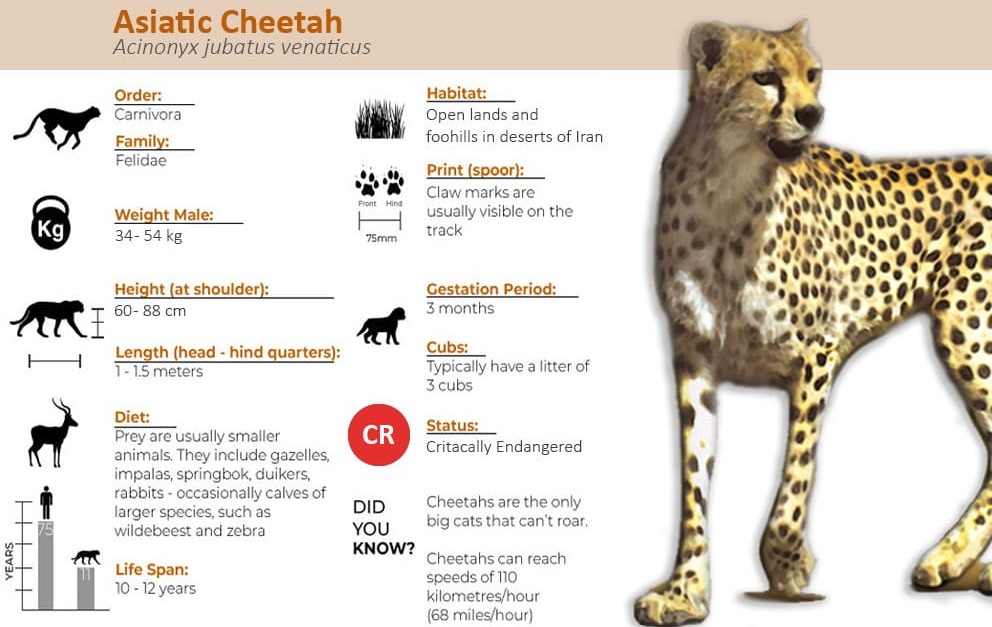
    • Overview: The cheetah (Acinonyx jubatus) is the world’s fastest land mammal (80–128 km/h). Two subspecies: African cheetah (A.j. jubatus) across Africa and Asiatic cheetah (A.j. venaticus) confined to Iran (< 30 individuals).
    • Conservation Status: Asiatic subspecies Critically Endangered by the IUCN; global population ≈ 6,500 mature individuals.
    • Extinction in India: Last recorded in Koriya (Chhattisgarh) in 1947; officially declared extinct in 1952 due to hunting and grassland degradation.
    • Project Cheetah (2022): Implemented by Ministry of Environment, Forest and Climate Change (MoEFCC) and NTCA with WII support; aims to restore cheetahs in India’s grasslands and revive lost ecological roles.
    • Translocation Phases: Eight cheetahs from Namibia (Sept 2022) and twelve from South Africa (Feb 2023) released at Kuno National Park (Madhya Pradesh).
    • Meta-Population Plan: To establish a connected population across Kuno, Gandhi Sagar, Nauradehi, and Mukundra Hills (Rajasthan) ensuring genetic diversity and landscape-level connectivity.
    • Long-Term Goal: Create a self-sustaining population of 35–40 individuals within 15 years through science-based, landscape-driven restoration.
    • Current Phase: Majority under semi-captive adaptation at Kuno; expansion to Nauradehi and Gandhi Sagar Tiger Reserves planned to reduce crowding and enhance resilience.


    [UPSC 2012] Consider the following:
    1. Black-necked crane 2. Cheetah 3. Flying squirrel 4. Snow leopardWhich of the above are naturally found in India?(a) 1, 2 and 3 only  (b) 1, 3 and 4 only*  (c) 2 and 4 only (d) 1, 2, 3 and 4


Join the Community

Join us across Social Media platforms.
