💥UPSC 2027,2028 Mentorship (April Batch) + Access XFactor Notes & Microthemes PDF

Archives: News

  • Judicial Reforms

    Need to address the systemic issues plaguing the judiciary

    The article highlights the issues facing the judiciary in India and emphasises the need for addressing these issues.

    Separating judiciary from the executive

    • Today, the judiciary, especially the SC, is called upon to decide a large number of cases in which the government has a direct interest.
    • These can be politically sensitive cases too.
    • The framers of the Constitution understood the importance of the oath of office of judges of the Supreme Court of India (SC) and carefully designed its language.
    • The words, “without fear or favour” to “uphold the constitution and the laws” are extremely significant and stress the need for a fiercely independent court.
    • Article 50 of the Constitution provides: “The State shall take steps to separate the judiciary from the executive in the public services of the State.”

    Master of roaster issue

    • The Chief Justice of India is the first amongst the equals but by the virtue of his office assumes significant powers as the Master of the Roster to constitute benches and allocate matters.
    • The SC has re-affirmed this position in a rather disappointing decision in Campaign for Judicial Accountability and Reforms v. Union of India, (2018).
    • The result has been catastrophic.
    • Many matters were either treated casually or deflected for no reason from serious hearing.

    Accountability from legislature and executive

    • The SC is expected to seek strict accountability from the legislature and executive and any infraction of the Constitution and laws must be corrected.
    • Yet, this is not happening.
    • A country of billion-plus needs its highest court to stand for the people, not seemingly for the executive of the day.

    Inherent and fundamental challenges

    • The judiciary is besieged by inherent and fundamental challenges.
    • Millions of pending cases, quality of judges and their decisions, organisational issues and its integrity and impartiality, need urgent attention.
    • Yet, in the last two decades precious little has been done.
    • Justice is eluding the common man, including the vulnerable sections of society.

    Way forward

    • The new Chief Justice must seriously introspect and free himself of the bias in constituting benches and allocating cases and take concrete steps to revitalise the administration of justice.
    • Only then will the rule of law be restored and the Constitution served.

    Consider the question “Examine the inherent and fundamental challenges faced by the judiciary in India. Suggest the measures to deal with these challenges.” 

    Conclusion

    The Chief Justice of India on account of the position he holds as paterfamilias of the judicial fraternity, was suspected by none other than Dr B R Ambedkar. Let us hope the new Chief Justice makes serious efforts to prove otherwise.

  • Zoonotic Diseases: Medical Sciences Involved & Preventive Measures

    Understanding infections after Covid-19 vaccination

    Breakthrough infections

    • There have been several cases of Covid-19 vaccinated people, even those who have received both doses, testing positive for the virus.
    • Such cases are referred to as “breakthrough” infections, indicating that the virus has been able to break through the defences created by the vaccine.
    • Such cases have led to some doubts being expressed about the effectiveness of the vaccine, and contributed to the already prevailing vaccine hesitancy. 
    • However, vaccines protect not against the infection, but against moderate or severe disease and hospitalisation.
    •  It typically takes about two weeks for the body to build immunity after being vaccinated.
    • So, the chances of a person falling sick during this period are as high — or as low — as the chances for any person who has not been vaccinated.
    •  Also, those in the priority list of vaccination, such as healthcare workers and frontline workers, have been prone to getting infected due to prolonged occupational exposure to the virus

    Full protection not possible

    • It is very well understood that no vaccine offers 100% protection from any disease.
    • However, according to the Centers for Disease Prevention and Control (CDC) in the United States, vaccinated people are much less likely to get sick, but it is never entirely ruled out.
    • Then there is the emergence of new variants of the virus.
    • Some variants of the virus are able to evade the human immune response, and therefore have a greater chance to break through the defences created through the vaccine.

    Breakthrough cases in India

    • Among 10.03 crore people who had taken only the first dose of Covishield vaccina, 17,145 had got infected.
    • That translates into a 0.02% prevalence.
    • Among the 1.57 crore people who received the second dose as well, 5,014, or about 0.03%, had got infected later.
    • About 1.1 crore doses of Covaxin have been administered until now.
    • Of the 93.56 lakh who took only the first dose, so far 4,208 have got the infection.
    • That is about 0.04% of the total.
    • Among the 17.37 lakh who have taken the second shot, only 695 had been infected, again 0.04%.

    Challenges

    • “Given the scope of the pandemic, there’s a huge amount of virus in the world right now, meaning a huge opportunity for mutations to develop and spread.
    • That is going to be a challenge for the developers of vaccines.
  • Zoonotic Diseases: Medical Sciences Involved & Preventive Measures

    Emergency use nod for Virafin

    About the drug

    • It is used in treating people with chronic hepatitis B and C. 
    • The Drug Controller General of India (DCGI) granted emergency use approval for pharma major Zydus Cadila’s antiviral drug ‘Virafin’, to treat moderate COVID-19 disease in adults.
    • When administered early on during COVID, Virafin will help patients recover faster and avoid much of the complications.
    • It significantly reduces viral load when given early on and can help in better disease management.

    Findings of the clinical trials

    • A single dose subcutaneous regimen of the antiviral Virafin [a pegylated interferon alpha-2b (PegIFN)] will make the treatment more convenient for the patients.
    • When administered early on during COVID, Virafin will help patients recover faster and avoid much of the complications.
    • In the phase-3 trials, the drug was able to achieve “better clinical improvement in the patients suffering from COVID-19”.
    • A “higher proportion (91.15%) of patients administered the drug were RT-PCR negative by day seven as it ensures faster viral clearance”.
    • The drug reduced the duration for supplemental oxygen to 56 hours from 84 hours in moderate COVID-19 patients.

    How the drug works

    • Type I interferons are the body’s first line of defence against many viral infections.
    • In old people, the ability to produce interferon alpha in response to viral infections gets reduced, which might be the reason for higher mortality.
    • The drug when administered early during the disease can replace this deficiency and help in the recovery process.
  • RBI Notifications

    RBI extends Ways and Means credit for States, UTs to Sept

    About Ways and Means credit

    • Simply put, it is a facility for both the Centre and states to borrow from the RBI.
    • WMAs are temporary advances given by the RBI to the government to tide over any mismatch in receipts and payments.
    • Section 17(5) of the RBI Act, 1934 authorises the central bank to lend to the Centre and state governments subject to their being repayable “not later than three months from the date of the making of the advance”.

    Extension of the scheme

    • The RBI decided to continue with the existing interim Ways and Means Advances (WMA) scheme limit of ₹51,560 crore for all States/ UTs shall for six months given the prevalence of COVID-19.
    • Based on the recommendations of the Advisory Committee on WMA to State Governments, 2021 — chaired by Sudhir Shrivastava — the RBI had revised the WMA Scheme of States and Union Territories (UTs).
    • The WMA limit arrived at by the Committee based on total expenditure of States/ UTs, works out to ₹47,010 crore. 

    What RBI said about SDR

    • The RBI further said Special Drawing Facility (SDF) availed by state governments and UTs will continue to be linked to the quantum of their investments in marketable securities issued by the Government of India.
    • The net annual incremental investments in Consolidated Sinking Fund (CSF) and Guarantee Redemption Fund (GRF) will continue to be eligible for availing of SDF, without any upper limit.
    • CSF and GRF are reserve funds maintained by some State Governments with the Reserve Bank of India.
  • Animal Husbandry, Dairy & Fisheries Sector – Pashudhan Sanjivani, E- Pashudhan Haat, etc

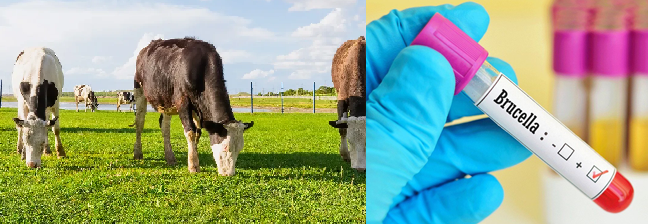
    Brucellosis: Preventive measures launched

    Health and Animal Husbandry teams have launched preventive measures and initiated an epidemiological investigation, after one case of brucellosis, was confirmed in a prisoner.

    • The infection is passed on to humans through the ingestion of unpasteurized milk and milk products or contact with animal secretions.

    Brucellosis:

    • Brucellosis is a bacterial disease that mainly infects cattle, swine, goats, sheep and dogs.
    • Humans can get infected if they come in direct contact with infected animals or by eating or drinking contaminated animal products or by inhaling airborne agents.
    • According to the WHO, most cases of the disease are caused by ingesting unpasteurised milk or cheese from infected goats or sheep.

    Symptoms:

    • Fever, sweats, malaise, anorexia, headache and muscle pain
    • While some signs and symptoms can last for long periods of time, others may never go away.
    • These include recurrent fevers, arthritis, swelling of the testicles and scrotum area, swelling of the heart, neurologic symptoms, chronic fatigue, depression and swelling of the liver or spleen.
    • Human to human transmission of the virus is rare.
  • Hunger and Nutrition Issues – GHI, GNI, etc.

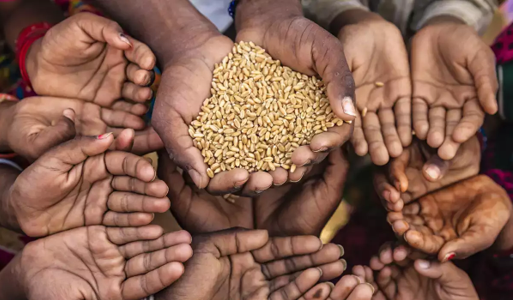
    Centre to give 5 kg foodgrains free to poor

    The Central Government announced that 5kg of free wheat or rice per monthwill be provided to around 80 crore people for the next two months, May and June.

    Major Highlights:

    • This will be extended to beneficiaries under the National Food Security Act(NFSA).
    • Nearly 8 million tonnes of food grains will be distributed under this scheme.
    • The scheme is expected to bring relief to NFSA beneficiaries as it will be in addition to the regular entitlement of 5kg highly subsidised foodgrains to each beneficiary at Rs 3, 2 and 1 per kg of rice, wheat and coarse grains.

    Pradhan Mantri Garib Kalyan Anna Yojana (PMGKAY):

    • Pradhan Mantri Garib Kalyan Anna Yojana is a food security welfare schemeannounced by the Government of India in March 2020.
    • PM-GKAY is a part of Atma Nirbhar Bharat to supply free food grains to migrants and poor.
    • The program is operated by the Department of Food and Public Distributionunder the Ministry of Consumer Affairs, Food and Public Distribution.

    Aim:

    • To feed the poorest citizens of India by providing grain through the Public Distribution System to all the priority households (ration card holders and those identified by the Antyodaya Anna Yojana scheme).
    • PMGKAY provides 5 kg of rice or wheat (according to regional dietary preferences) per person/month and 1 kg of dal to each family holding a ration card.

    Eligibility/ Beneficiaries:

    • Families belonging to the Below Poverty Line – Antyodaya Anna Yojana (AAY) and Priority Households (PHH) categories will be eligible for the scheme.
    • PHH are to be identified by State Governments/Union Territory Administrations as per criteria evolved by them.
    • AAY families are to be identified by States/UTs as per the criteria prescribed by the Central Government:
      • Households headed by widows or terminally ill persons or disabled persons or persons aged 60 years or more with no assured means of subsistence or societal support.
      • Widows or terminally ill persons or disabled persons or persons aged 60 years or more or single women or single men with no family or societal support or assured means of subsistence.
      • All primitive tribal households.
      • Landless agriculture labourers, marginal farmers, rural artisans/craftsmen such as potters, tanners, weavers, blacksmiths, carpenters, slum dwellers, and persons earning their livelihood on daily basis in the informal sector like porters, coolies, rickshaw pullers, hand cart pullers, fruit and flower sellers, snake charmers, rag pickers, cobblers, destitute and other similar categories in both rural and urban areas.
      • All eligible Below Poverty Line families of HIV positive persons.
  • Foreign Policy Watch: India-United States

    Data and a new global order

    Digital data revolution

    • The Industrial Revolution restructured the global manufacturing order to Asia’s disadvantage.
    • But in the ‘Digital Data Revolution’, algorithms requiring massive amounts of data determine innovation, the nature of productivity growth, and military power.
    • Mobile digital payment interconnections impact society and the international system, having three strategic implications.

    3 implications of mobile digital payment interconnections

    1) Symbiotic nature of military and civilian system

    • Because of the nature and pervasiveness of digital data, military and civilian systems are symbiotic.
    • Cybersecurity is national security, and this requires both a new military doctrine and a diplomatic framework.

    2) Productivity advantage of data to Asia

    • The blurring of distinctions between domestic and foreign policy and the replacement of global rules with issue-based understanding converge with the growth of smartphone-based e-commerce, which ensures that massive amounts of data give a sustained productivity advantage to Asia.

    3) India can negotiate new rules as an equal with US and China

    • Data streams are now at the centre of global trade and countries’ economic and national power.
    • India, thus, has the capacity to negotiate new rules as an equal with the U.S. and China.

    How data shaped US-China relations

    • Innovation based on data streams has contributed to China’s rise as the second-largest economy and the “near-peer” of the U.S.
    • The national security strategy of the U.S. puts more emphasis on diplomacy than military power to resolve conflicts with China, acknowledging that its military allies have complex relationships with Beijing, as it seeks to work with them to close technology gaps.
    • China’s technology weakness is the dependence on semiconductors and its powerlessness against U.S. sanctions on banks, 5G and cloud computing companies.
    • But China’s digital technology-led capitalism is moving fast to utilise the economic potential of data, pushing the recently launched e-yuan and shaking the dollar-based settlement for global trade.

    How global strategic balance will be shaped by data standard

    • China has a $53-trillion mobile payments market and it is the global leader in the online transactions arena, controlling over 50% of the global market value.
    • India’s Unified Payments Interface (UPI) volume is expected to cross $1 trillion by 2025.
    • The U.S., in contrast, lags behind, with only around 30% of consumers using digital means and with the total volume of mobile payments less than $100 billion.
    • The global strategic balance will depend on new data standards.
    • The U.S., far behind in mobile payments, is falling back on data alliances and sanctions to maintain its global position.

    India’s role in digital economy

    • With Asia at the centre of the world, major powers see value in relationships with New Delhi.
    • India fits into the U.S. frame to provide leverage.
    • China wants India, also a digital power, to see it as a partner, not a rival.
    • And China remains the largest trading partner of both the U.S. and India despite sanctions and border skirmishes.

    Way forward for India

    • India, like China, is uncomfortable with treating Western values as universal values and with the U.S. interpretation of Freedom of Navigation rules in others’ territorial waters.
    • New Delhi’s Indo-Pacific vision is premised on “ASEAN centrality and the common pursuit of prosperity”.
    • The European Union recently acknowledged that the path to its future is through an enhanced influence in the Indo-Pacific, while stressing that the strategy is not “anti-China”.
    • The U.S. position in trade, that investment creates new markets, makes it similar to China’s Belt and Road Initiative.

    Conclusion

    India alone straddles both U.S. and China-led strategic groupings, providing an equity-based perspective to competing visions. It must be prepared to play a key role in moulding rules for the hyper-connected world, facing off both the U.S. and China to realise its potential of becoming the second-largest economy.

  • Disasters and Disaster Management – Sendai Framework, Floods, Cyclones, etc.

    [pib] Satellite-based real-time monitoring of Himalayan glacial catchments

    Melting of glaciers in Himalaya and GLOFs

    • The Himalayan region is home to the largest ice mass outside of the planet’s Polar Regions.
    • The glaciers in the Himalayas are melting at a faster rate creating new lakes and expanding the existing ones.
    • The rising temperatures and extreme precipitation events make the region increasingly prone to a variety of natural hazards, including devastating glacial lake outburst floods (GLOFs).
    • GLOFs occur when either a natural dam containing a glacial lake bursts or when the lake’s level suddenly increases and overflows its banks, leading to catastrophic downstream destruction.
    • However, the remote, challenging Himalayan terrain and the overall lack of cellular connectivity throughout the region have made the development of early flood warning systems virtually impossible.
    • In their recent work the Scientists point out that the surge of meltwater in mountain streams is most commonly caused by cloud-burst events during the monsoon season (June–July–August) time frame.

    Satelitte-based real-time monitoring

    • Satellite-based real-time monitoring of Himalayan glacial catchments would improve understanding of flood risk in the region and help inform an early flood warning system that could help curb disaster and save human lives, says a recent study.
    • This should be the future strategy to reduce loss of human lives during glacial lake outburst floods (GLOF), said a study carried out by scientists from IIT Kanpur.
    • The IIT Kanpur team suggests that efforts to help mitigate GLOF events in the future should include the creation of a network of satellite-based monitoring stations that could provide in situ and real-time data on GLOF risk.
    • The integration of monitoring devices with satellite networks will not only provide telemetry support in remote locations that lack complete cellular connectivity but will also provide greater connectivity in coverage in the cellular dead zones in extreme topographies such as valleys, cliffs, and steep slopes.
  • Coronavirus – Health and Governance Issues

    Why single price of vaccine across the country is good idea

    The article deals with the issues of different prices set for the Covid vaccine and its implications.

    Understanding the positive and negative externalities

    • Vaccines have a positive externality; it is a good whose consumption benefits not just the one who has it.
    • A vaccinated person is not only relatively protected against the disease himself/herself, but also less likely to transmit it to others.
    • Usually, a person getting vaccinated takes into account only his/her own cost and benefit, while ignoring the fact that he/she lowers the chances of infecting others.
    • It is the opposite of smoking, which has “negative externality”.
    • Since every individual ignores the full set of benefits/costs from consuming goods with positive/negative externalities, the market isn’t always the most efficient mechanism for allocation of such goods.
    • That is a key reason why governments treat goods having large positive externalities as “public goods” and provide these while factoring in the full costs and benefits to society.

    Analysing the issues with vaccine policy

    1) Vaccine inequality

    • It requires vaccine manufacturers to supply 50 per cent of their production to the Centre at controlled prices, while allowing them to sell the remaining half in the open market including to state governments at pre-announced “self-set” prices.
    • To start with, the new policy can lead to differential access to the vaccine.
    • Manufacturers are supposed to “transparently declare” their prices in advance for their 50 per cent supply to the open market.
    • But there is no limit per se on the retail price they would charge.
    • This could lead to a whole range of prices and vaccine inequality, apart from diversion of supplies from the controlled low-price government centres to the open market.
    • So, we may well have scarcity in the “mass” segment co-existing with a glut in the “elite” segment.
    • There is also concerns about economic efficiency and the potential for market failure.

    2) Economic efficiency and potential for market failure

    • Imagine there are two sets of people in India.
    • The first consists of those who are better off and can afford to stay back or work from home.
    • This lot is also less likely to cause infection to others.
    • The second set is mostly blue-collar workers, small traders, vendors and agriculturists.
    • The nature of their work — on the shop floor or in the field — makes them naturally prone to infect others.
    • It follows, then, that society gains from first vaccinating the latter, as they have a higher negative externality.
    • The market will ignore those with lower purchasing power, despite them having a higher probability of spreading the disease.
    • In fact, the bigger the income difference between the two segments, the greater will be the extent of market failure from simultaneous over-provisioning and under-provisioning.

    Way forward

    • The solution could be a single price to be paid to vaccine makers for all the doses that they supply.
    • The price should be high enough to stimulate them to rapidly ramp up production.
    • Those government should pay directly to the vaccine maker or the hospital administering the dose for those without sufficient means.
    • The suggested solution is similar to the fertiliser subsidy, which is now disbursed to companies only after actual sales to farmers.

    Consider the question “What policy should be followed for the vaccination in the country? What are the issues with the curent policy which involved different price for government and for open market.”

    Conclusion

    A single price for Covid-19 vaccines will stimulate production, ensure efficient vaccination.

  • Civil Aviation Sector – CA Policy 2016, UDAN, Open Skies, etc.

    [pib] Drone use permission for feasibility study of Covid-19 vaccine delivery

    Conditional drone use exemption for vaccine delivery

    • Ministry of Civil Aviation (MoCA) and Directorate General of Civil Aviation (DGCA) have granted conditional exemption to the Indian Council of Medical Research (ICMR).
    • The exemption is granted for conducting feasibility study of Covid-19 vaccine delivery using drones in collaboration with IIT Kanpur.
    • The permission exemption is valid for a period of one year or until further orders.

    Entities using drone on conditional drone use exemption basis

    • Conditional drone use exemption has been granted to the below entities for said purposes:
    • Nagar Nigam of Dehradun, Haldwani, Haridwar & Rudrapur for preparation of GIS based property database & electronic tax register.
    • West Central Railway, (WCR) Kota for train accident site & maintaining safety & security of the railway assets.
    • West Central Railway, (WCR) Katni for train accident site & maintaining safety & security of the railway assets.
    • Vedanta Ltd. (Cairn Oil & Gas) also received the conditional drone usage exemption for data acquisition for asset inspecting & mapping.

Join the Community

Join us across Social Media platforms.