💥UPSC 2027,2028 Mentorship (April Batch) + Access XFactor Notes & Microthemes PDF

Archives: News

  • Climate Change Impact on India and World – International Reports, Key Observations, etc.

    Eastern India most vulnerable to climate change, says study

    About the report

    • Published this week, the report on ‘Climate vulnerability assessment for adaptation planning in India using a common framework’ was conducted in 2019-2020 across 29 States.
    • It was part of a capacity building programme under the National Mission on Sustaining the Himalayan Ecosystem and National Mission on Strategic Knowledge for Climate Change.
    • The report was prepared by IISc, IIT-Mandi and IIT-Guwahati.

    Major findings

    • Along with Chhattisgarh in central India, Jharkhand, Mizoram, Odisha, Assam, Bihar, Arunachal Pradesh, and West Bengal are the eight most vulnerable States.
    • These eight most vulnerable States require prioritisation of adaptation interventions.
    • Jharkhand, with the highest vulnerability indices VI of 0.674, topped the list of States most vulnerable to climate change.
    • The major drivers for the vulnerability of all the States included lack of forest area per 1,000 rural population, lack of crop insurance, marginal and small operational land holding, low density of health workers, low participation of women in the workforce, yield variability of food grains, and a high proportion of the population below the poverty line.
    • Tamil Nadu and Kerala are among seven States that are the least vulnerable but there’s more to it meets the eye.
    • However, the vulnerability indices (VIs) for these seven States range from the lowest of 0.419 for Maharashtra to 0.468 for Uttarakhand, which is on the higher side.
  • Climate Change Negotiations – UNFCCC, COP, Other Conventions and Protocols

    India-U.S. climate partnership

    Leaders Summit on Climate

    • Leaders Summit on Climate included 40 heads of state and government.
    • At the summit, President of the United State and Indian Prime Minister launched the ‘India-U.S. climate and clean energy Agenda 2030 partnership’. 
    • The goal of the partnership are given below:
    • 1) Mobilise finance and speed clean energy deployment.
    • 2) Demonstrate and scale innovative clean technologies needed to decarbonise sectors, including industry, transportation, power, and buildings.
    • 3) Build capacity to measure, manage, and adapt to the risks of climate-related impacts.

    India’s progress on NDC

    • Despite development challenges, India has taken many bold steps on clean energy, energy efficiency, afforestation and bio-diversity.
    • That is among the few countries whose NDCs are 2-degree-Celsius compatible.
    •  India is targeting a 2030 GDP emissions intensity ( i.e., volume of emissions per unit of GDP) that is 33%-35% below 2005 levels.
    • It also seeks to have 40% of power generated from non-fossil fuel sources by 2030.
    •  India’s per capita carbon footprint is 60% lower than the global average.
  • Global Energy Review 2021 report

    Initial estimates for 2020 energy demand and CO2 emission was released recently in an annual report Global Energy Review by International Energy Agency (IEA).

    https://www.world-nuclear-news.org/BlankSiteASPX/media/WNNImported/mainimagelibrary/corporate%20branded/Global-Energy-Review-2021-(IEA).jpg?ext=.jpg

    • The Global Energy Review is annual update on the latest trends in world energy and CO2 emissions.
    • It covers all the main fuels and technologies, providing insights across regions, economies and countries.

    Highlights of the report:

    • Global energy-related carbon dioxide (CO2) emissions are on course to surgeby 1.5 billion tonnes in 2021 driven by in the resurgence of coal use in the power sector.
      • The second-largest increase in history.
      • This would be the biggest annual rise in emissions since 2010, during the carbon-intensive recovery from the global financial crisis.
    • CO2 emissions will increase by almost five per cent in 2021 to 33 billion tonnes.
      • The key driver is coal demand, which is set to grow by 4.5 per cent, surpassing its 2019 level and approaching its all-time peak from 2014, with the electricity sector accounting for three-quarters of this increase.
    • Global energy demand is set to increase by 4.6 per cent in 2021, led by emerging markets and developing economies, pushing it above its 2019 level.
    • Demand for all fossil fuels is on course to grow significantly in 2021, with both coal and gas set to rise above their 2019 levels.
    • Oil is also rebounding strongly but is expected to stay below its 2019 peak, as the aviation sector remains under pressure.
      • More than 80 per cent of the projected growth in coal demand in 2021 is set to come from Asia, led by China.
    • Electricity generation from renewables is set to leap by over eight per cent in 2021.
    • The biggest contribution to that growth comes from solar and wind.
      • Electricity generation from wind is projected to grow by 275 terawatt-hours, or around 17 per cent, from last year.
      • Electricity generation from solar PV is expected to increase by 145 terawatt-hours, up almost 18 per cent from last year.
      • Their combined output is on track to reach more than 2800 terawatt-hours in 2021.
    • Renewables are set to provide 30 per cent of electricity generationworldwide in 2021.
    • China is expected to account for almost half of the global increase in electricity generation from renewables, followed by the US, the European Union and India.
  • J&K – The issues around the state

    Task force in J&K under Article 311 to act against govt staff without probe

    Why the task force

    • The Jammu and Kashmir administration has set up a Special Task Force (STF) to initiate action against government employees suspected of activities against security of the State.
    • The order has been passed under provisions of Article 311(2) (C) of the Constitution.
    • The STF would be headed by the J&K Additional Director General of Police, CID, and include Inspectors General of Police, Kashmir and Jammu, a representative of Law, Justice and Parliamentary Affairs, and a representative of the department the employee belongs to.

    What are the provisions under Article 311 (2) C

    • Article 311(2) says no government employee shall be dismissed or removed or “reduced in rank” except after an inquiry.
    • However, its sub-section C says this clause will not apply “where the President or the Governor, as the case may be, is satisfied that in the interest of the security of the State, it is not expedient to hold such inquiry”.
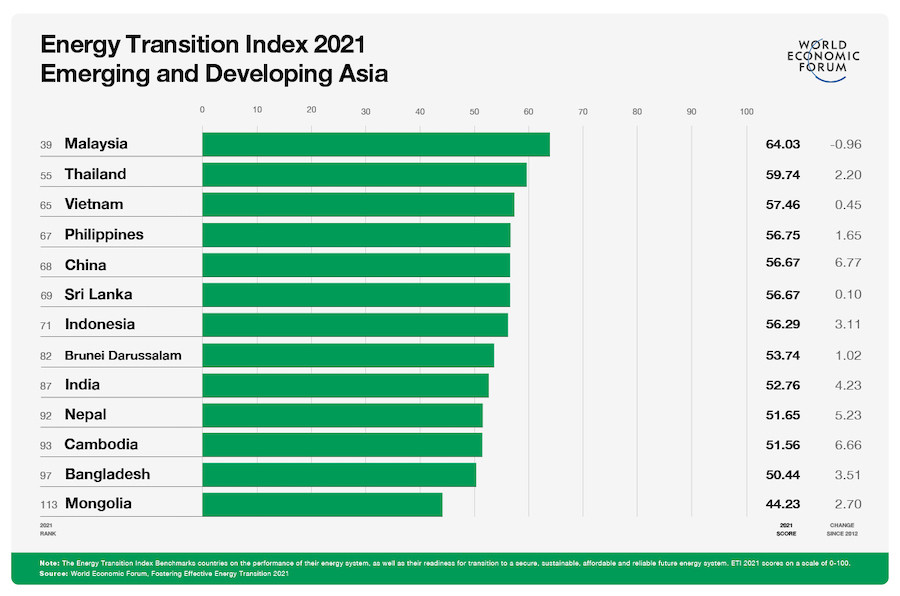
  • India ranks 87th in global energy transition index

    India has been ranked at the 87th position among 115 countries in the Energy Transition Index (ETI).

    • The latest report is based on a revised ETI methodology that takes into account recent changes in the global energy landscape and the increasing urgency of climate change action.
    • 92 out of 115 countries tracked on the ETI increased their aggregate score over the past 10 years, which affirms the positive direction and steady momentum of the global energy transition

    Highlights of the report:

    • The top 10 countries in the index are Western and Northern European countries.
    • Sweden is in the first position followed by Norway (2nd) and Denmark (3rd).
    • Other countries in the top 10 are Switzerland (4), Austria (5), Finland (6), the United Kingdom (7), New Zealand (8), France (9) and Iceland (10).
    • China (68) and India (87), which collectively account for a third of global energy demand, have both made strong improvements over the past decade, despite coal continuing to play a significant role in their energy mix.
      • “China”s improvements primarily result from reducing the energy intensity of the economy, gains in decarbonising the energy mixthrough the expansion of renewables and strengthening the enabling environment through investments and infrastructure.
    • Zimbabwe is the last ranked country.

    India specific highlights:

    • India has been ranked at the 87th position among 115 countries.
    • India has targeted improvements through subsidy reforms and rapidly scaling energy access, with a strong political commitment and regulatory environment for the energy transition.

    About the Energy Transition Index (ETI):

    • ETI is a report from World Economic Forum (WEF).
    • It is an annual ranking.
    • The index tracks nations on the current performance of their energy systems across various aspects.
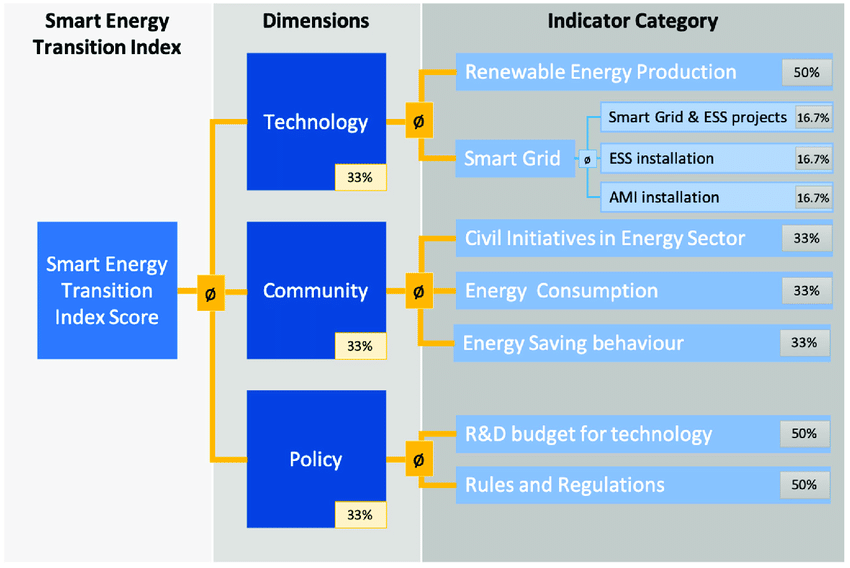
    • The index benchmarks 115 countries on the current performance of their energy systems across three dimensions :
      1. Economic development and growth
      2. Environmental sustainability
      3. Energy security and access indicators — and their readiness to transition to secure, sustainable, affordable, and inclusive energy systems.

  • Foreign Policy Watch: India-United States

    India as a country of Particular concern: USCIRF

    About USCIRF

    • U.S. Commission on International Religious Freedom (USCIRF) is an independent bi-partisan commission.
    • USCIRF recommendations are non-binding.
    • The Trump administration had rejected the USCIRF recommendation to designate India a CPC last year.
    • Last year India had denied visas to members of USCIRF who wanted to visit India for their assessment.

    What are the key concerns of the report

    • The key concerns of the 2021 report include the Citizenship Amendment Act.
    • On the National Register of Citizens (NRC), the report says, “The consequences of exclusion – as exemplified by a large detention camp being built in Assam – are potentially devastating…”
    • Efforts to prohibit interfaith marriage – such as those in Uttar Pradesh and Madhya Pradesh – are also highlighted as a concern.
    • In an apparent reference to the Tablighi Jamaat Markaz in March 2020, the USCIRF says that at the beginning of the COVID-19 pandemic, disinformation and hateful rhetoric often targeted religious minorities.

    Recommendations of the report to the US Congress

    • The USCISRF recommended that the administration impose targeted sanctions on Indian individuals and entities for ‘severe violations of religious freedom’.
    • A second recommendation was for the administration to promote inter-faith dialogue and the rights of all communities at bilateral and multilateral forums “such as the ministerial of the  Quad].
    • Another recommendation – to the U.S. Congress – was to raise issues in the U.S. – India bilateral space, such as by hosting hearings, writing letters and constituting Congressional delegations.
  • Coronavirus – Health and Governance Issues

    Very few post-vaccine infections

    Breakthrough infection

    • ICMR said that a small fraction of those vaccinated with either Covaxin or Covishield have tested positive (i.e. breakthrough” infections).
    • However, these instances do not undermine the efficacy of the vaccines.
    • The immune response begins to develop usually two weeks after every dose and there are variations within individuals, too.
    • Of the 9.3 million who received the first dose of Covaxin, 4,208 tested positive; and of the 1.7 million who received the second dose, 695 tested positive.
    • For Covishield, of the 100.3 million who received the first dose, 17,145 tested positive; and of the 15 million who got the second dose, 5,014 tested postive.

    What explains infections after vaccination

    • Healthcare and frontline workers, who were among the first to be vaccinated, were as a population far more exposed to the virus and therefore more susceptible.
    • Secondly, the emergence of “the highly transmissible second wave (newer variants) ” may have contributed to instances of infection among those vaccinated.
    • Several variants, which have mutations that have been shown to avoid detection by the immune system, and in some cases reduce the efficacy of vaccines, have been reported globally, including in India.
  • Police Reforms – SC directives, NPC, other committees reports

    Strengthening the process of choosing the police chief

    The article suggests the need for reforms in the process of appointment to the police chief to ensure the political neutrality of the police.

    Process of appointing and removing police chief

    •  A crucial way in which governments exercise control over the State police is through their unregulated power to decide who the chief will be.
    • There is no independent vetting process to assess the suitability of qualified candidates, and the government’s assessment, if it is done at all, remains opaque and is an exercise behind closed doors.
    •  The moot reform issue is in ensuring the right balance between the government’s legitimate role in appointing or removing the police chief with the need to safeguard the chief’s operational autonomy.

    Need for reforms

    Two elements are vital to reforms in this area.

    1) Shift the responsibility to independent oversight body of which government is one part

    • The National Police Commission (NPC) (1979), and the Supreme Court in its judgment in 2006, in the Prakash Singh case suggested establishing a state-level oversight body with a specified role in the appointment and removal of police chiefs.
    • While the Supreme Court entrusted the Union Public Service Commission (UPSC) with a role in shortlisting candidates from which the State government is to appoint the police chief.
    • However, the Model Police Bill, 2015 places the responsibility with a multiparty State Police Board, also referred to as the State Security Commission (SSCs) instead.

    No compliance with SC directive in the formation of SSC

    • While 26 States and the Union Territories have established SSCs, not a single one adheres to the balanced composition suggested by the top court.
    • Some do not include the Leader of the Opposition; others neither include independent members nor follow an independent selection process of the members.
    • In essence, the commissions remain dominated by the political executive.
    • Moreover, in as many as 23 States, governments retain the sole discretion of appointing the police chief. Assam, Jharkhand, Karnataka, Meghalaya and Mizoram are the only States where, on paper, the SSC is given the responsibility of shortlisting candidates.

    2) Need for transparency

    • The second element critical to police reforms is instituting an independent and transparent selection and decision-making process around appointment and removal, against objective criteria.
    •  On appointments, the Court and the Model Police Act require the UPSC/SSC to shortlist candidates on the basis of length of service, service record, and range of experience and a performance appraisal of the candidates over the past 10 years.
    • However, no further guidance has been developed on explaining these terms or specifying their elements.
    • Similarly, no scrutiny process has been prescribed to justify removals from tenure posts.
    • The National Police Commission had required State governments to seek the approval of the State Security Commission before removing the police chief before the end of term.
    • This important check was diluted under the Prakash Singh judgment that only requires governments to consult the SSC.
    • Most States omit even this cursory step.
    • The Supreme Court has rightly emphasised that “prima facie satisfaction of the government” alone is not a sufficient ground to justify removal from a tenure post in government, such as that of the police chief (T.P. Senkumar vs Union of India, 2017).
    • The rule of law requires such decisions be for compelling reasons and based on verifiable material that can be objectively tested.

    Way forward

    • Clear and specific benchmarks need to be integrated into decision-making processes, both on appointments and removals, to prevent politically motivated adverse actions.
    • In improving transparency the United Kingdom provides a useful example by introducing public confirmation hearings as an additional layer of check for the appointment of the heads of their police forces.

    Consider the question “Examine the status of compliance of the states to the directives of the Supreme Court with respect to the constitution of State Security Commission in the Prakash Singh case.”

    Conclusion

    Reforms are needed on urgent to ensure fairness in administrative decisions and to protect the political neutrality of the police. Any further delay in implementing reforms in this area will continue to demoralise the police and cripple the rule of law.

  • Renewable Energy – Wind, Tidal, Geothermal, etc.

    A fresh push for green hydrogen

    Green hydrogen could help significantly in India’s transition to low carbon future. However, there are several challenges in ramping up its manufacturing. The article suggests measures to deal with these challenges.

    Increasing the production of green hydrogen

    • India will soon join 15 other countries in the hydrogen club as it prepares to launch the National Hydrogen Energy Mission (NHEM). 
    • India will soon join 15 other countries in the hydrogen club as it prepares to launch the National Hydrogen Energy Mission (NHEM). 
    • In 2030, according to an analysis by the Council on Energy, Environment and Water (CEEW), green hydrogen demand could be up to 1 million tonnes in India across application in sectors such as ammonia, steel, methanol, transport and energy storage. 

    Dealing with challenges

    Several challenges in scaling up to commercial-scale operations persist. Following are five recommendations.

    1) Decentralise green hydrogen production

    • Decentralised hydrogen production must be promoted through open access of renewable power to an electrolyser (which splits water to form H2 and O2 using electricity).
    • Currently, most renewable energy resources that can produce low-cost electricity are situated far from potential demand centres.
    • Producing oxygen at such locations and then shipped, it would significantly erode the economics of it.
    • A more viable option would be wheeling electricity directly from the solar plant.
    • However, the electricity tariffs could double when supplying open-access power across State boundaries.
    • Therefore, operationalising open access in letter and spirit, as envisioned in the Electricity Act, 2003, must be an early focus.

    2)  Ensure access to round-the-clock renewable power

    • To minimise intermittency associated with renewable energy, for a given level of hydrogen production capacity, a green hydrogen facility will store hydrogen to ensure continuous hydrogen supply.
    • Therefore, as we scale up to the target of having 450 GW of renewable energy by 2030, aligning hydrogen production needs with broader electricity demand in the economy would be critical.

    3) Blending green hydrogen in industrial sector

    • We must take steps to blend green hydrogen in existing processes, especially the industrial sector.
    • Improving the reliability of hydrogen supply by augmenting green hydrogen with conventionally produced hydrogen will significantly improve the economics of the fuel.
    • This will also help build a technical understanding of the processes involved in handling hydrogen on a large scale.

    4) Facilitate investment

    • Policymakers must facilitate investments in early-stage piloting and the research and development needed to advance the technology for use in India.
    • The growing interest in hydrogen is triggered by the anticipated steep decline in electrolyser costs.
    • Public funding will have to lead the way, but the private sector, too, has significant gains to be made by securing its energy future.

    5) Focus on domestic manufacturing

    •  India must learn from the experience of the National Solar Mission and focus on domestic manufacturing.
    • Establishing an end-to-end electrolyser manufacturing facility would require measures extending beyond the existing performance-linked incentive programme.
    • India needs to secure supplies of raw materials that are needed for this technology.
    • Further, major institutions like the DRDO, BARC and CSIR laboratories have been developing electrolyser and fuel-cell technologies.

    Consider the question “Even before it has reached any scale, green hydrogen has been anointed the flag-bearer of India’s low-carbon transition. In lights of this, examine the challenges India faces in scaling up its green hydrogen production and suggest the ways to deal with these challenges.”

    Conclusion

    Hydrogen may be lighter than air, but it will take some heavy lifting to get the ecosystem in place.

  • Plasmid

    • Scientists have developed a Covid-19 vaccine that could offer protection against not only existing and future strains of the SARS-CoV-2 coronavirus.
    • The vaccine costs $1 a dose. It uses the plasmid of E-coli bacteria to produce the vaccine.
    • A plasmid is a small, extrachromosomal DNA molecule within a cell that is physically separated from chromosomal DNA and can replicate independently.

    • They are most commonly found as small circular, double-stranded DNA molecules in bacteria; however, plasmids are sometimes present in archaea and eukaryotic organisms.

Join the Community

Join us across Social Media platforms.