💥UPSC 2027,2028 Mentorship (April Batch) + Access XFactor Notes & Microthemes PDF

Archives: News

  • Wildlife Conservation Efforts

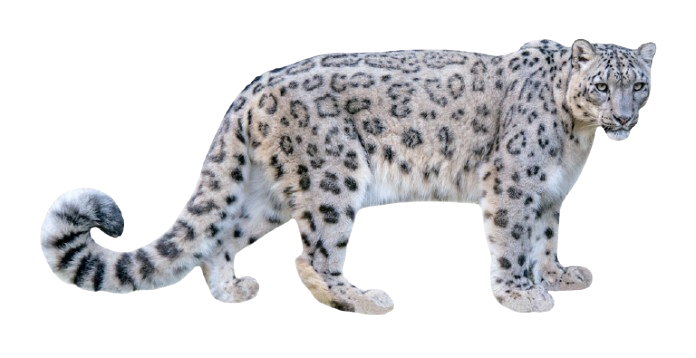
    Snow Leopards are the world’s least genetically diverse Big Cat

    Why in the News?

    A new Stanford University-led study has revealed that the Snow Leopard has the lowest genetic diversity among all big cats, even lower than the Cheetah.
    Snow Leopards are the world’s least genetically diverse Big Cat

    About Snow Leopard:

    • Overview: Also called the “ghost of the mountains”; Belongs to the genus Panthera but genetically distinct from tigers and leopards, with unique adaptations for alpine life.
    • Physical Features: Thick pale-gray fur with rosettes, powerful hind limbs, and a long, muscular tail that aids balance and warmth.
    • Habitat: Found at altitudes between 3,000–5,500 metres, thriving in rugged, snow-covered mountain ranges and alpine meadows.
    • Geographical Distribution:
      • In India: Present in Ladakh, Himachal Pradesh, Uttarakhand, Sikkim, Arunachal Pradesh, and parts of Jammu & Kashmir.
      • Globally: Distributed across Central and South Asian mountain systems, including the Himalayas, Pamirs, and Tien Shan.
    • Population Status:
      • Global estimate: 4,500–7,500 individuals.
      • India: Approximately 718 individuals, representing 10–15% of the global total.
    • Conservation Status:
      • IUCN Red List: Vulnerable
      • CITES: Appendix I
      • Wildlife (Protection) Act, 1972 (India): Schedule I
    • National Conservation Measures:
      • Project Snow Leopard (2009): Integrates community participation in Himalayan conservation.
      • SECURE Himalaya Project (GEF–UNDP): Focuses on sustainable ecosystem management.
      • Himalaya Sanrakshak (2020): Enlists local guardians for high-altitude habitats.
      • National Protocol on Population Assessment (2019):  Ensures standardized monitoring.

    Ecological Significance:

    • Apex Predator Role: Serves as the top carnivore in the Himalayan and Central Asian alpine ecosystems, maintaining the balance between herbivores like blue sheep, ibex, and argali.
    • Indicator of Ecosystem Health: Its presence reflects ecosystem integrity, as it thrives only in undisturbed, well-connected, prey-rich habitats.
    • Climate Regulation: Snow leopard landscapes, glaciers, permafrost zones, and alpine grasslands, act as major carbon sinks and regulate water flows to nearly two billion people across Asia.
    • Biodiversity Link: By controlling herbivore populations, it prevents overgrazing, thus preserving alpine vegetation and soil stability.
    • Cultural and Economic Value: Revered in Himalayan folklore and central to eco-tourism-based livelihoods, symbolizing coexistence between humans and nature.
    • Transboundary Importance: Its habitat spans across 12 range countries, making it a flagship species for international cooperation under the Global Snow Leopard and Ecosystem Protection Programme (GSLEP).
    [UPSC 2012] Consider the following:

    1. Black-necked crane 2. Cheetah 3. Flying squirrel 4. Snow leopard

    Which of the above are naturally found in India? Options: (a) 1, 2 and 3 only (b) 1, 3 and 4 only* (c) 2 and 4 only (d) 1, 2, 3 and 4


  • Nobel and other Prizes

    Nobel Prize in Economic Sciences, 2025

    Why in the News?

    The 2025 Nobel Prize in Economic Sciences (Sveriges Riksbank Prize in Memory of Alfred Nobel) was awarded to Joel Mokyr (Northwestern University, US), Philippe Aghion (Collège de France, INSEAD, LSE), and Peter Howitt (Brown University, US) for their pioneering explanations of innovation-driven economic growth.

    What is the Nobel Economics Prize?  

    • Officially called the Bank of Sweden Prize in Economic Sciences in Memory of Alfred Nobel, established in 1968.
    • It is NOT part of the original Nobel Prizes created by Alfred Nobel in 1895.
    • Created by the Swedish central bank to honor Alfred Nobel’s legacy.
    • Although not an original Nobel Prize, it is presented alongside the other Nobel Prizes on December 10, the anniversary of Nobel’s death.
    • Includes a diploma, gold medal, and a one-million-dollar prize for the laureates.

    Who are the Nobel Laureates for 2025?

    • Joel Mokyr (Northwestern University, USA): An economic historian, renowned for studying how scientific knowledge, cultural openness, and institutional change during the Enlightenment triggered the Industrial Revolution.
    • Philippe Aghion (Collège de France, INSEAD, LSE): A leading growth theorist, known for advancing the Schumpeterian model of innovation-driven growth and the economics of creative destruction.
    • Peter Howitt (Brown University, USA): Collaborator of Aghion, co-developer of the Aghion–Howitt growth model, integrating firm-level innovation dynamics into macroeconomic theory.

    Their Contributions:

    1. Joel Mokyr:
      • Demonstrated that before the 18th century, societies possessed “prescriptive knowledge” (how things worked) but lacked “propositional knowledge” (why they worked).
      • Showed that the Scientific Revolution merged science with craftsmanship, turning discovery into applied innovation.
      • Highlighted that the Enlightenment’s intellectual openness enabled acceptance of “creative destruction,” allowing new technologies to replace old ones without institutional backlash.
    2. Philippe Aghion & Peter Howitt:
      • Developed the 1992 Schumpeterian Growth Model, mathematically linking innovation, competition, and economic growth.
      • Explained that constant firm turnover—where new innovators replace old incumbents—creates long-term, stable growth.
      • Introduced the idea of “general equilibrium in innovation”, connecting household savings, financial markets, R&D investment, and production into a single dynamic framework.
  • Differentiated Banks – Payment Banks, Small Finance Banks, etc.

    RBI introduces Unified Markets Interface (UMI)

    Why in the News?

    RBI Governor has unveiled the Unified Markets Interface (UMI) a next-generation financial market infrastructure developed by the Reserve Bank of India (RBI).

    What is Unified Markets Interface (UMI)?

    • Overview: The UMI is a next-generation financial market infrastructure conceptualized by the Reserve Bank of India (RBI) to tokenize financial assets and settlements using the wholesale Central Bank Digital Currency (CBDC).
    • Purpose: It aims to modernize India’s financial markets by enabling blockchain-based asset transactions, improving market transparency, and streamlining settlements through digital automation.
    • Significance: The UMI represents India’s entry into asset tokenization, the conversion of real-world financial instruments into digital tokens, thereby integrating CBDC, smart contracts, and digital public infrastructure within a single interoperable ecosystem.

    Features of UMI:

    • CBDC-Enabled Settlement: Uses the wholesale Central Bank Digital Currency (CBDC) to execute high-value settlements instantly and securely.
    • Asset Tokenization: Converts traditional financial assets into digital tokens on blockchain, allowing fractional ownership and seamless transferability.
    • Unified Infrastructure: Creates an integrated, interoperable market interface linking banks, investors, and financial intermediaries on a single digital framework.
    • Smart Contract Automation: Employs programmable contracts for real-time clearing, settlement, and compliance, reducing manual intervention.
    • Transparency and Efficiency: Blockchain ensures immutable transaction records and enhances traceability, reducing fraud and settlement delays.

    Back2Basics: Asset Tokenization

    • Definition: The process of converting real-world assets, such as bonds, real estate, commodities, or equities, into digital tokens stored on blockchain networks.
    • Mechanism: Each token represents fractional ownership, enabling smaller investors to participate in high-value assets traditionally limited to institutions.
    • Technology Base: Built on blockchain and smart contracts, ensuring transparent, secure, and automated transactions.
    • RBI’s Application: Tokenized financial assets under UMI will settle through wholesale CBDC, providing real-time, tamper-proof, and traceable transactions.
  • Innovation Ecosystem in India

    Anna Mani and her contributions in India’s Atmospheric Research

    Anna Mani and her contributions in India’s Atmospheric Research

    Why in the News?

    The National Book Trust has released a book on highlighting physicist Anna Mani’s pioneering ozone and pollution studies in Pune decades before “climate change” entered discourse.

    Who was Anna Mani (1918–2001)?

    • Overview: Indian physicist and meteorologist from Peermade, Kerala; pioneered India’s meteorological instrumentation and atmospheric science.
    • Alma mater: Studied physics at Presidency College, Chennai (1939); trained at Imperial College, London; joined IISc Bengaluru under C.V. Raman, publishing five crystallography papers.
    • Professional Career: Joined the India Meteorological Department (IMD) in 1948; later headed its Instruments Division; earned the title “Weather Woman of India.”

    Key Contributions:

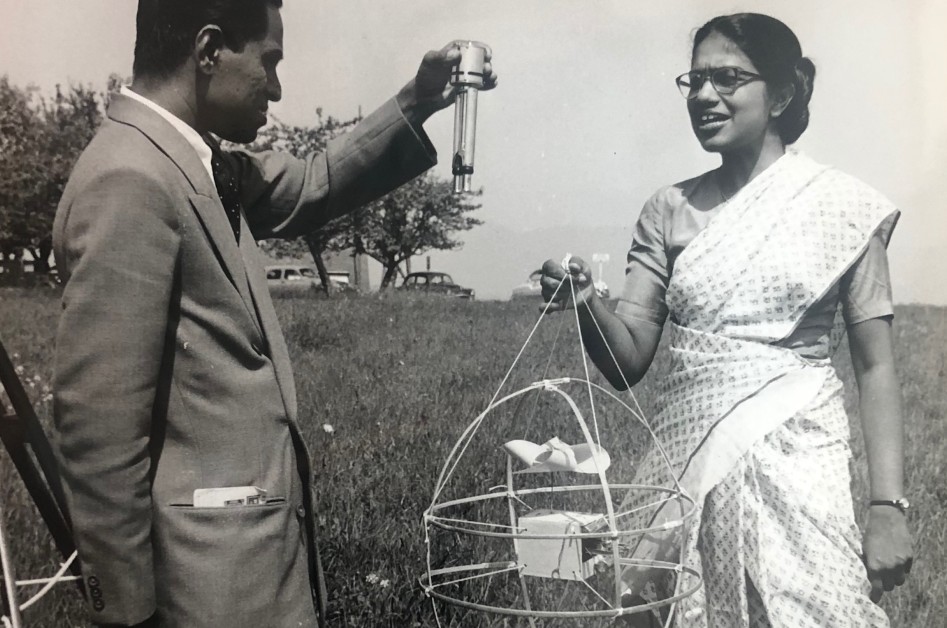
    • Meteorological Instrumentation: Designed and standardized 100+ weather instruments, including India’s first pyranometers and sunshine recorders, ending dependence on imports. Established the Regional Instrumentation Centre, Pune, for nationwide calibration.
    • Measurement Infrastructure: Created a national network of solar, wind, and radiation observatories; introduced WMO-grade calibration; data later used for India’s first Wind Energy Atlas.
    • Ozone & Atmospheric Research: In 1964, developed India’s first ozonesonde balloon measuring ozone up to 35 km; integrated into the WMO Global Ozone Mapping Programme. Her studies on ground-level ozone and urban aerosols anticipated modern air-pollution science.
    • Instrument Design & Ethics: Innovated with glass and Teflon components to remove chemical errors in ozonesondes; upheld the credo “wrong measurements are worse than none.” Her Pune lab became a model of scientific precision.
    • Publications: Authored “Handbook for Solar Radiation Data for India” (1980) and “Wind Energy Resource Survey in India” (1992), both still reference standards for renewable-energy studies.
    • Environmental Vision: Warned early about CFC emissions and ozone depletion; connected industrialization to atmospheric alteration, foreshadowing the Anthropocene concept.
    • Legacy: Her datasets form India’s earliest continuous record of ozone, radiation, and aerosol change, anchoring present-day climate-model validation and policy research.
  • RTI – CIC, RTI Backlog, etc.

    20 years of Right to Information (RTI)

    Why in the News?

    RTI activists across India marked 20 years since the Right to Information Act, 2005, came into effect.

    About the Right to Information (RTI) Act, 2005:

    • Overview: Passed by Parliament in 2005, replacing the Freedom of Information Act, 2002.
    • Objective: Empower citizens to access information freely from public authorities to promote openness and good governance.
    • Scope: Applicable to Central, State, and Local Governments, public sector undertakings, and statutory bodies.
    • Key Provision: Under Section 22, the RTI Act overrides all other laws that may restrict access to information.
    • Constitutional Basis:
      • It is derived from Article 19(1)(a), the Right to Freedom of Speech and Expression.
      • The Supreme Court has recognized access to information as implicit in freedom of expression.
      • Backed by Article 32 and Article 226, citizens can seek redress for violations through the Supreme Court and High Courts.
      • RTI upholds constitutional principles of equality (Article 14) and personal liberty (Article 21) by ensuring informed citizen participation.
    • Timeframe for Response:
      • 30 days in general cases.
      • 48 hours when life or liberty is involved.
    • Exemptions from Disclosure:
      • Section 8(1): Exempts disclosure of information that could compromise sovereignty, national security, strategic or economic interests, or affect foreign relations.
      • Section 8(2): Allows disclosure if public interest outweighs potential harm to protected interests.
      • Proactive Disclosure: Every public authority must digitize records and proactively publish information to minimize formal RTI requests.
    • RTI (Amendment) Act, 2019:
      • The amendment removed fixed tenure (5 years) and salary parity with Election Commissioners.
      • It vested powers in the Central Government to determine terms of service, tenure, and allowances for CIC and ICs.
      • This was viewed as reducing the institutional autonomy of the RTI framework, raising concerns among transparency advocates.

    Institutional Framework:

    1. Central Information Commission (CIC)

    • Composition: Chief Information Commissioner (CIC) + up to 10 Information Commissioners (ICs).
    • Appointment: By the President on recommendation of a committee comprising the Prime Minister (Chairperson), Leader of Opposition (Lok Sabha), and a Union Cabinet Minister.
    • Tenure: As prescribed by the Central Government or until 65 years of age, whichever is earlier.
    • Functions:
      • Inquire into complaints and appeals under RTI.
      • Exercise civil court powers for summoning witnesses or documents.
      • Conduct suo motu inquiries in cases of systemic non-compliance.
    1. State Information Commissions (SICs)

    • Composition: State Chief Information Commissioner + up to 10 Information Commissioners.
    • Appointment: By the Governor, based on recommendations from a committee chaired by the Chief Minister, along with the Leader of Opposition and a Cabinet Minister.
    • Qualifications: Persons of eminence in public life, not affiliated with political parties or profit-making roles.
    • Functions: Parallel to CIC at the state level, ensuring local compliance with RTI obligations.
    [UPSC 2019] There is a view that the Officials Secrets Act is an obstacle to the implementation of RTI Act. Do you agree with the view? Discuss.

    [UPSC 2018] The Right to Information Act is not all about citizens’ empowerment alone, it essentially redefines the concept of accountability.” Discuss.


  • Innovations in Sciences, IT, Computers, Robotics and Nanotechnology

    RRI technique yields Certified Randomness with one Qubit

    Why in the News?

    The Raman Research Institute (RRI), Bengaluru team has mastered the Leggett–Garg Inequality (LGI)–based quantum randomness certification technique.

    What is Quantum Randomness?

    • Overview: Quantum randomness means true unpredictability, results that even nature or science cannot predetermine. They arise from the laws of quantum physics, not from computer programs or hidden causes.
    • Ordinary Computers: In normal computers, random numbers come from formulas called pseudorandom generators. They look random but can be predicted if someone knows the starting point (the “seed”).
    • Quantum Systems: In quantum physics, when you measure something tiny, like the spin of an electron or the path of a light particle (photon), the result is decided only at the moment of measurement. No one, not even nature, “knows” the answer before that.
    • Why it Matters: True randomness is important for data security, safe online transactions, scientific research, and encryption, where predictability can lead to hacking or errors.

    What has RRI achieved?

    • Discovery: Scientists at the Raman Research Institute (RRI), Bengaluru, led by Prof. Urbasi Sinha, have found a way to create and verify true quantum randomness using a regular cloud-based IBM quantum computer.
    • Why it’s Important: Earlier, proving quantum randomness needed expensive lab equipment. Now it can be done remotely and cheaply, accessible to anyone with internet and quantum cloud access.
    • How it Works: The RRI team used just one qubit (the quantum version of a computer bit) to show that the randomness came from quantum effects, not from hardware noise or computer errors.
    • Key Finding: This demonstrates that even imperfect quantum computers can still generate trustworthy and verifiable random numbers, a capability that classical computers cannot achieve.

    What is the Leggett–Garg Inequality (LGI)–Based Test?

    • Basic Idea: The Leggett–Garg Inequality (LGI) is a scientific test that checks whether something behaves like everyday objects (predictable) or like quantum systems (unpredictable).
    • How it was Used: The RRI scientists measured one qubit at three different times to see if its behavior followed normal physics or quantum rules.
    • Two Conditions Checked:
      • LGI Violation – confirmed the qubit was behaving in a truly quantum way.
      • No Signalling in Time – ensured that each measurement was independent and not influenced by the previous one.
    • Result: Meeting both tests proved that the numbers generated were certified as truly random, coming purely from quantum physics, not from any background noise or interference.

    Real-life Applications:

    • Cybersecurity: Such randomness can make unbreakable encryption keys, protecting sensitive data from hackers.
    • Cloud Computing: People using quantum computers online can now access trusted random numbers for research or secure systems anywhere in the world.
    • Testing Quantum Machines: Helps scientists check the quality of quantum computers, since randomness shows how genuinely quantum the machine is.
    • Better Science: Used in simulations, artificial intelligence, and data analysis where unpredictability makes results more reliable.
    • Big Scientific Message: Confirms that the quantum world is truly uncertain, proving one of the most fascinating truths of modern science, that randomness is built into nature itself.
    [UPSC 2025] Consider the following statements:

    I. It is expected that Majorana 1 chip will enable quantum computing.

    II. Majorana 1 chip has been introduced by Amazon Web Services (AWS).

    III. Deep learning is machine learning.

    How many of the statements given above are correct?

    (a) I and II only (b) II and III only (c) I and III only * (d) I, II and III


  • Promoting Science and Technology – Missions,Policies & Schemes

    Maitri II Research Station in Antarctica

    Why in the News?

    The Finance Ministry has approved the establishment of Maitri II, India’s newest Antarctic research station, to be built in eastern Antarctica by January 2029.

    About Maitri II Research Station:

    • Objective: Advance research in climatology, glaciology, seismology, biology, and atmospheric sciences while maintaining eco-compliance.
    • Overview: India’s upcoming 4th Antarctic base, to be completed by January 2029 near Schirmacher Oasis, eastern Antarctica, replacing the aging Maitri (1989) which will operate as a summer camp.
    • Implementing Agency: Executed by National Centre for Polar and Ocean Research (NCPOR), Goa under the Ministry of Earth Sciences (MoES); estimated cost ₹2,000 crore.
    • Design & Technology: Features AI-enabled systems, automated sensors, solar and wind power, and upgraded modular accommodation with strict environmental standards.
    • Construction Phases: Prefabrication in India → shipment via Cape Town → transport to Indian Barrier (120 km from Maitri) → on-site assembly during Antarctic summer.

    Back2Basics: India’s Polar Programmes

    • Antarctica Programme: Began in 1981; coordinated by NCPOR.
      • Dakshin Gangotri (1983) – first base, now decommissioned.
      • Maitri (1989) – inland station near Lake Priyadarshini.
      • Bharati (2012) – modern coastal station 3,000 km east.
      • Maitri II (2029) – to be India’s largest and greenest base.
      • Research covers ice-core climate records, marine ecosystems, space weather, and climate modelling.
    • Arctic Programme (2007): Also led by NCPOR; permanent station Himadri at Ny-Ålesund (Svalbard, Norway) studies Arctic warming, polar-monsoon linkages, biodiversity; India holds Observer Status in the Arctic Council (since 2013).

    Key Laws & Treaties governing Polar Expeditions:

    • India Antarctica Act 2022: Implements the Antarctica Treaty (1959); creates Central Committee on Antarctica Governance; bans mining, nuclear activity, non-native species; introduces permit system and Antarctica Fund; severe penalties (up to 20 years).
    • Antarctica Treaty (1959): 54 members (India joined 1983); ensures peaceful scientific use, bans territorial claims and military activity, upholds environmental cooperation.
    • Madrid Protocol (1991): Declares Antarctica a “natural reserve for peace and science”; forbids mineral extraction; mandates Environmental Impact Assessments (EIA).
    • Convention on the Conservation of Antarctic Marine Living Resources (CCAMLR, 1982): Conserves Antarctic marine biodiversity, regulates fishing and resource use to maintain ecosystem balance.
    [UPSC 2015] The term ‘IndARC’, sometimes seen in the news, is the name of Options: (a) an indigenously developed radar system inducted into Indian Defence

    (b) India’s satellite to provide services to the countries of Indian Ocean Rim

    (c) a scientific establishment set up by India in Antartic region

    (d) India’s underwater observatory to scientifically study the Arctic region *


  • Volga River

    Why in the News?

    This newscard is an excerpt from the original article published in the Indian Express.

    Volga River

    About the Volga River:

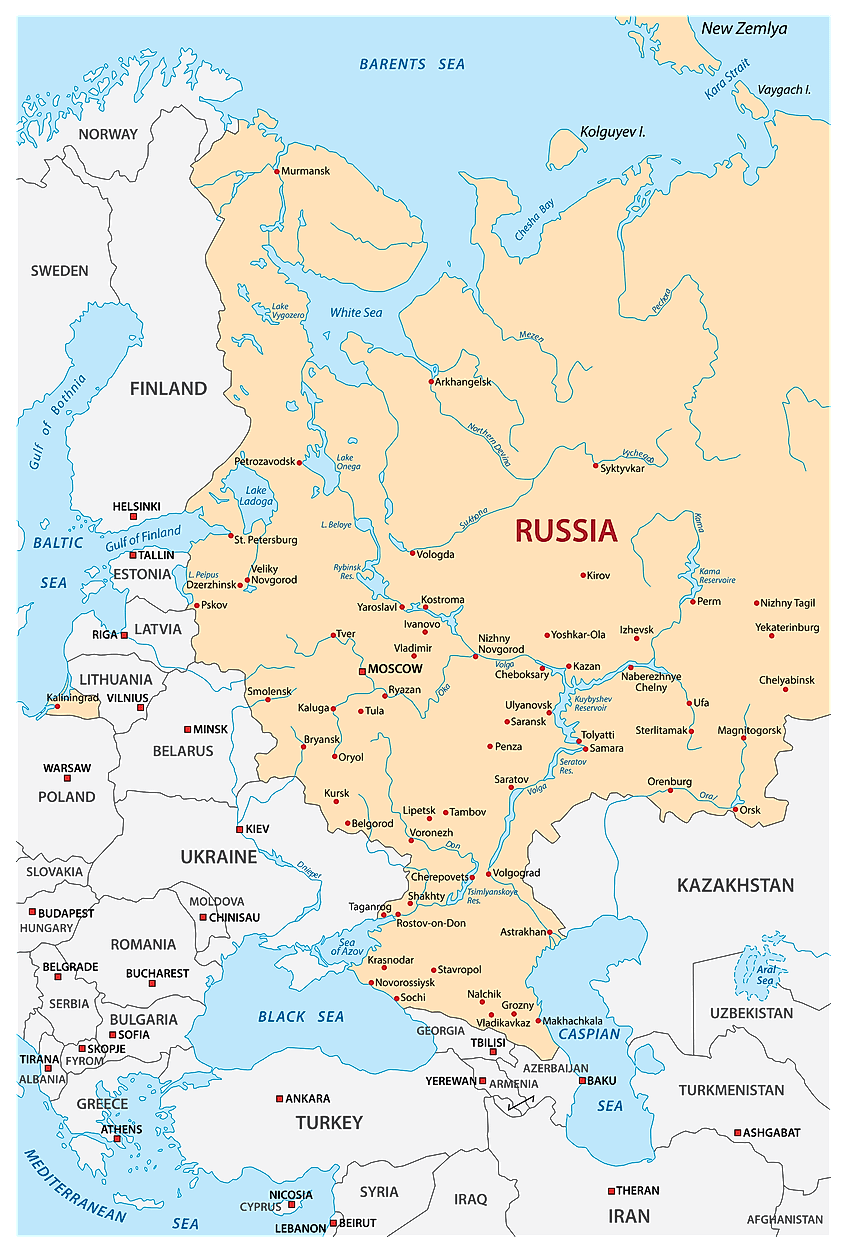
    • Overview: The longest river in Europe (about 3,500 km), originating in the Valdai Hills northwest of Moscow and flowing southeast to the Caspian Sea at Astrakhan.
    • Drainage Basin: Covers around 1.35 million sq. km, among Europe’s largest river systems, with major tributaries, Kama, Oka, Vetluga, and Sura.
    • Historical Role: Served as a critical front during the Battle of Stalingrad (World War II) and remains central to Russian historical and strategic narratives.
    • Cultural Significance: Revered as “Mother Volga”, symbolising Russian unity, resilience, and identity, deeply embedded in folklore and national consciousness.
    • Economic Importance: It contributes one-fourth of Russia’s agricultural output, supports industrial fishing, and sustains key industries, oil refining, shipbuilding, hydroelectric power.
    • Navigation & Connectivity: Linked to the Baltic, Black, and Caspian Seas through an extensive network of canals and reservoirs, forming the backbone of Russia’s inland transport system.
    • Urban & Industrial Corridor: Major cities like Kazan, Samara, Nizhny Novgorod, and Volgograd lie along its course, forming Russia’s industrial-agricultural heartland.
    • Ecological Richness: Supports about 260 bird species and 70 fish species, making it a key biodiversity hotspot within Eurasia.
    [UPSC 2020] Consider the following pairs: River Flows into

    1. Mekong: Andaman Sea

    2. Thames: Irish Sea

    3. Volga: Caspian Sea

    4. Zambezi: Indian Ocean

    Which of the pairs given above is/are correctly matched?

    Options: (a) 1 and 2 only (b) 3 only (c) 3 and 4 only * (d) 1, 2 and 4 only


  • Digital India Initiatives

    [pib] Bharat Taxi Initiative

    Why in the News?

    India is launching Bharat Taxi, a cooperative-based national ride-hailing platform under Digital India, with NeGD partnering Sahakar Taxi Cooperative for technical and advisory support.

    About the Bharat Taxi Initiative:

    • Objective: To create a citizen-centric alternative to global ride-hailing corporations, ensuring fair wages, cooperative governance, and local ownership.
    • Nature: A cooperative-owned, technology-driven national ride-hailing platform designed to provide affordable, secure, and transparent mobility solutions.
    • Timeline: Expected by December 2025, targeting both urban and rural transport needs.
    • Promoters: Supported by leading cooperative and financial institutions NCDC, IFFCO, AMUL, KRIBHCO, NAFED, NABARD, NDDB, and NCEL.

    Key Features:

    • Cooperative Ownership Model: Operated and governed by driver cooperatives, ensuring profit-sharing, fair pricing, and collective decision-making.
    • Digital Integration: Linked with national platforms such as DigiLocker, UMANG, and API Setu, allowing seamless identity verification, license validation, and service delivery.
    • Inclusive Design: Provides multilingual UI, accessibility for differently-abled users, and equal participation for women drivers.
    • Transparent Fare System: Uses open-source algorithms for real-time fare calculation to prevent overcharging or surge pricing manipulation.
    • Integration with Digital Public Infrastructure: Aligned with Aadhaar, UPI, and DigiLocker, facilitating digital payments and paperless onboarding.
  • Tribes in News

    Tribes in news: Siddi 

    Why in the News?

    President Droupadi Murmu met members of Gujarat’s Siddi Particularly Vulnerable Tribal Groups (PVTGs) community and praised their 72% literacy rate as a sign of social progress.

    President Droupadi Murmu met members of Gujarat’s Siddi Particularly Vulnerable Tribal Groups (PVTGs) community and praised their 72% literacy rate as a sign of social progress.

    About the Siddi Community:

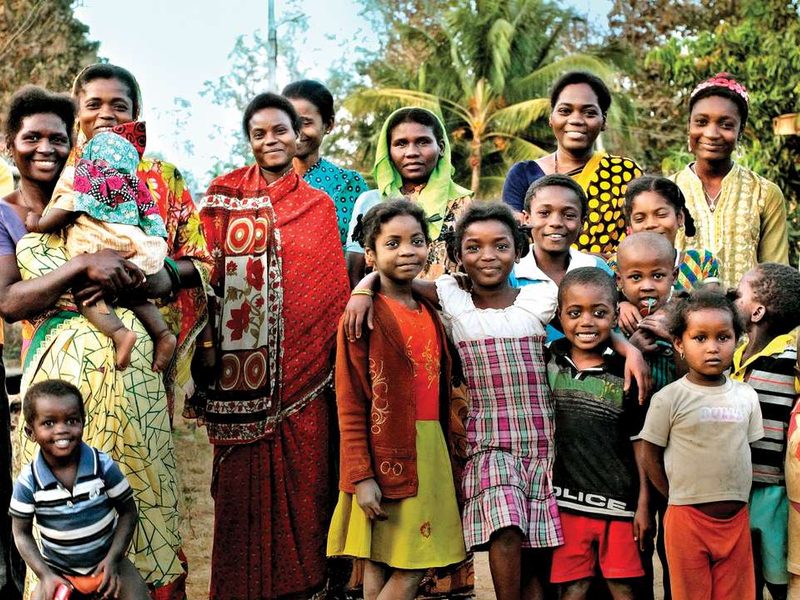
    • Overview: An Afro-Indian tribal group descended from Bantu-speaking peoples of Southeast Africa, brought to India via the Indian Ocean slave trade (7th–19th centuries).
    • Arrival in India: First arrived at Bharuch port (628 CE) with Arab traders; major influxes during Muhammad bin Qasim’s conquest (712 CE) and later under Portuguese and British.
    • Migration & Settlement: Brought as soldiers, sailors, slaves, and servants; some escaped bondage to form independent forest settlements.
    • Genealogy: Studies show 60–75 % African admixture mixed with Indian and Portuguese ancestry accumulated over two centuries.
    • Geographic Distribution: Concentrated in Karnataka (Uttara Kannada, Belgaum, Dharwad) and Gujarat (Junagadh, Gir-Somnath, Saurashtra); smaller groups in Maharashtra, Goa, Telangana, Andhra Pradesh; total population 40 k–2.5 lakh.
    • Historical Role: Served in Deccan Sultanate and Nizam armies; most famous figure, Malik Ambar (1600–1626), Ethiopian-origin prime minister of Ahmadnagar (now Ahilyanagar).

    Cultural and Demographic Features:

    • Social Status: Recognised as Scheduled Tribe (ST) in five regions and as a Particularly Vulnerable Tribal Group (PVTG).
    • Language & Culture: Speak regional languages, Gujarati, Konkani, Marathi, Kannada, but retain African musical and spiritual traditions, notably the Goma/Dhamaal dance rooted in Ngoma drumming and ancestral worship.
    • Religion: Predominantly Muslim (≈ 99 % in Gujarat) with Hindu and Christian minorities; practices blend Sufi, African, and Indian folk elements.
    • Livelihoods & Economy: Depend on agriculture, forest labour, crafts, and daily wage work; socio-economic deprivation and limited access to education, health, housing persist.
    • Cultural Continuity: Maintain African-Indian fusion in music, attire, and cuisine; Marfa music in Hyderabad and Dhamaal dance near Sasan Gir remain iconic.
    • Sports & Identity: Active in boxing and football, using sport for youth empowerment and social mobility.

Join the Community

Join us across Social Media platforms.