💥UPSC 2026, 2027, 2028 UAP Mentorship (March Batch) + Access XFactor Notes & Microthemes PDF

Archives: News

  • Modern Indian History-Events and Personalities

    William Jones and his linguistic studies

    This newscard is an excerpt from the original article published in the Indian Express.

    Try this PYQ from CSP 2016:

    Q.Who of the following had first deciphered the edicts of Emperor Ashoka?

    (a) Georg Buhier

    (b) James Prinsep

    (c) Max Muller

    (d) William Jones

    William Jones

    • William Jones was appointed as a judge on the Supreme Court of Judicature at Fort William in Bengal,
    • In the next couple of years, Jones established himself as an authority on ancient Indian language and culture, a field of study that was hitherto untouched.
    • He is particularly known for his proposition of the existence of a relationship among European and Indo-Aryan languages, which he coined as Indo-European.
    • He is also credited for establishing the Asiatic Society of Bengal in the year 1784.

    His linguistic studies

    • Jones’ was the first to suggest that Sanskrit, Greek and Latin languages had a common root and that indeed they may all be further related, in turn, to Gothic and the Celtic languages, as well as to Persian.
    • He also suggested that Sanskrit ‘was introduced to India by conquerors from other kingdoms in some very remote age’ displacing ‘the pure Hindi’ of north India
    • His claim rested on the evidence of several Sanskrit words that had similarities with Greek and Latin.

    Some examples of his propositions

    • As he studied the languages further, it became clearer that apart from Greek and Latin, Sanskrit words could be found in most other European languages.
    • For instance, the Sanskrit word for ‘three’, that is ‘trayas’, is similar to the Latin ‘tres’ and the Greek ‘treis’. Similarly, the Sanskrit for ‘snake’, is ‘sarpa’, which shares a phonetic link with ‘serpens’ in Latin.
    • For instance, ‘mata’ or mother in Sanskrit, is ‘mutter’ in German. ‘Dan’ or ‘to give’ in Sanskrit is ‘donor’ in Spanish.

  • Climate Change Impact on India and World – International Reports, Key Observations, etc.

    In news: Galapagos Islands

    Chinese ships are frequently entering Ecuador’s waters for commercial fishing near the Galapagos Islands.

    Try this question from CSP 2018:

    Q.Which one of the following can one comes across if one travels through the Strait of Malacca?

    (a) Bali

    (b) Brunei

    (c) Java

    (d) Singapore

    The Galapagos Islands

    • Renowned worldwide for its unique species, the islands host a wide array of aquatic wildlife, including marine iguanas, fur seals, and waved albatrosses.
    • The giant tortoises found here – ‘Galápagos’ in old Spanish– give the islands its name.
    • Ecuador made a part of the Galapagos a wildlife sanctuary in 1935, and the sanctuary became the Galapagos National Park in 1959.
    • In 1978, the islands became UNESCO’s first World Heritage Site.
    • It was here that the British naturalist Charles Darwin made key observations in 1835 that shaped his theory of evolution. Darwin described the islands as a “world in itself”.
  • Wildlife Conservation Efforts

    Species in news: Dhole

    Karnataka, Maharashtra and Madhya Pradesh rank high in the conservation of dhole in India, according to a new study.

    Dhole

    • The dhole is a canid native to Central, South, East Asia, and Southeast Asia.
    • India perhaps supports the largest number of dholes, with key populations found in three landscapes — Western Ghats, Central India and Northeast India.
    • It is a highly social animal, living in large clans without rigid dominance hierarchies and containing multiple breeding females.
    • It is listed as ‘Endangered’ by the IUCN as populations are decreasing and are estimated at fewer than 2,500 adults.
    • Factors contributing to this decline include habitat loss, loss of prey, competition with other species, persecution due to livestock predation and disease transfer from domestic dogs.

    Their significance

    • Dholes play an important role as apex predators in forest ecosystems.
    • Besides the tiger, the dhole is the only large carnivore in India that is under IUCN’s ‘endangered’ category.
  • Wildlife Conservation Efforts

    Species in news: Hoolock Gibbons

    Hoolock Gibbons, the only species of apes found in India, are threatened with extinction in the Ukhrul and Kamjong districts of Manipur, a report has claimed.

    Try this PYQ from CSP2013:

    Q.Consider the following pairs:

    Protected area:: Well-known for

    1. Bhitarkanika, Orissa:: Salt Water Crocodile
    2. Desert National Park, Rajasthan:: Great Indian Bustard
    3. Eravikulam, Kerala:: Hoolock Gibbon

    Which of the above pairs is/are correctly matched?

    (a) 1 only

    (b) 1 and 2 only

    (c) 2 only

    (d) 1, 2 and 3

    Hoolock Gibbons

    • The two districts used to be covered with dense, tropical rainforests, which provided ideal tree canopies for the arboreal, brachiating ape species.
    • Rampant deforestation for timber, forest fires and indiscriminate hunting had led to the decline in their population.
    • Without the tree canopies, the gibbons cannot swing from branch to branch and stake out their territories.
    • They also cannot adapt to living on the ground and cannot bear the high temperatures brought about by the loss of green cover.

    Conservation status (a/c to WWF India)

    • The gibbon has a much wider range, as it is found in all the states of the north-east, restricted between the south of the Brahmaputra River and east of the Dibang River.
    • Outside India, it is found in eastern Bangladesh and north-west Myanmar.
    • The eastern hoolock gibbon inhabits specific pockets of Arunachal Pradesh and Assam in India, and southern China and north-east Myanmar.
    • Of the two, the western hoolock is listed as Endangered in the IUCN Redlist, while the eastern hoolock is listed as Vulnerable.
  • Digital India Initiatives

    [pib] Bharat Airfiber

    The Union Ministry of Communications has inaugurated “Bharat Air Fibre Services” at Akola in Maharashtra.

    Try this PYQ from CSP 2018:

    Q: Which of the following is/are the aim/aims of “Digital India” plan of the Government of India?

    1. Formation of India’s own Internet companies like china did.
    2. Established a policy framework to encourage overseas multinational corporations that collect big data to build their large data centers within our national geographical boundaries.
    3. Connect many of our villages to the internet and bring WiFi to many of our schools, public places and major tourist centers.

    Select the correct answer using the code given below:

    (a) 1 and 2 only

    (b) 3 only

    (c) 2 and 3 only

    (d) 1, 2 and 3

    Bharat Air Fibre Services

    • The Bharat Air Fibre services are introduced by BSNL as part of Digital India initiates by the GoI.
    • It aims to provide Wireless Connectivity in the range of 20 KMs from the BSNL Locations.
    • It provides internet connectivity upto 100 Mbps speed.
    • It is completely wireless and offers broadband up to 10Mbps up to a distance of 5 Kms.
    • These services are special and different from other operators as BSNL is providing unlimited free voice calling.
    • Customers at remote places also will be benefitted as BSNL comes with the cheapest services with the support of Telecom Infrastructure Partners (TIPs).
  • Digital India Initiatives

    The digital lifeline provided by UPI

    The UPI sets the template for India in its journey toward digitalisation. This article by WhatsApp head Will Cathcart explains the success story of UPI and the future scope to build on its success.

    The success story of UPI

    • The UPI system set a national open standard for all of India’s banks, more than 155 of which have adopted it.
    • UPI is open standard that technology companies can adopt on an equal and level-playing field.
    • This means that no one company, foreign or domestic, can write the rules for the other.
    • Since its launch, the UPI system has grown to manage a 100 million-strong user base.
    • NPCI has also set a goal to increase UPI’s user base to 500 million by 2022, which if achieved, would be a true game-changer for Digital India.

    What the success of UPI means

    •  UPI has set important new frameworks around security and efficiency.
    • Because of the strong rules that India has put in place, payment transaction information remains with the banks and within the country.
    • And as a platform built on Indian technology and governed by Indian rules, UPI benefits Indians now and holds great potential for further innovation and commerce.

    Future scope for UPI

    •  It is imperative more tech companies are able to leverage the power of UPI to expand the digital ecosystem to accelerate financial inclusion.
    • UPI can also anchor a broader suite of fintech applications like micro-pensions, digital insurance products, and flexible loans.
    • These are custom solutions created by Indian technology companies, on the public infrastructure of UPI.
    • These solutions will first solve large social, business and financial problems in India and then become templates for other countries to deploy.
    • COVID-19 has only underscored the importance of these tools that will serve as critical lifelines for small and micro-enterprises and individuals as they look to recover.

    Consider the question “Within a short period from its launch the UPI has transformed the payment landscape in India. Examine the factors that contributed to the success of UPI and elaborate on its future scope.”

    Conclusion

    With courage, ambition, and boundless potential, India can emerge from this pandemic stronger than ever before — a leading democratic digital powerhouse that will lead the world in the 21st century.

    B2BASICS

    What is Unified Payments Interface (UPI)?

    Image for post

    • It was launched in April 2016 and in the last two years, the platform has emerged as a popular choice among users for sending and receiving money.
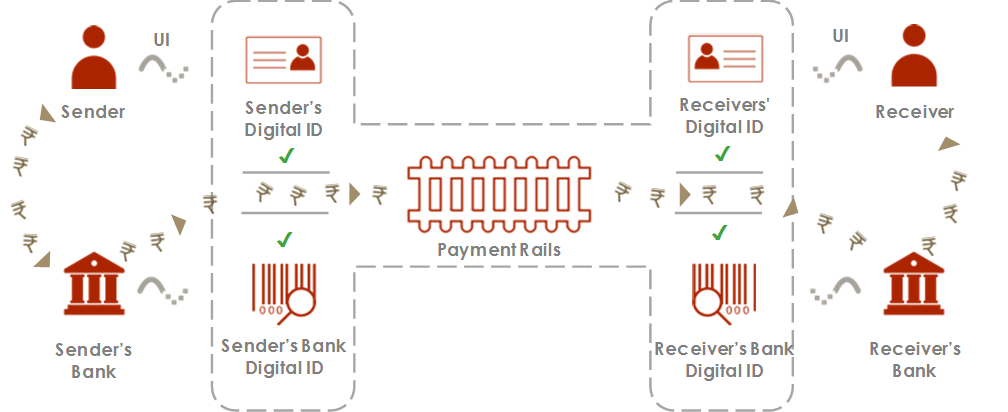
    • UPI is a payment system that allows money transfer between any two bank accounts by using a smartphone.
    • UPI allows a customer to pay directly from a bank account to different merchants, both online and offline, without the hassle of typing credit card details, IFSC code, or net banking/wallet passwords.
    • It also caters to the “Peer to Peer” collect request which can be scheduled and paid as per requirement and convenience.

    Original article:

    https://indianexpress.com/article/opinion/columns/coronavirus-india-economy-poverty-digital-payment-bhim-upi-6533171/

  • Higher Education – RUSA, NIRF, HEFA, etc.

    Understanding text and context of National Education Policy

    The article critically examines the various aspects of the National Education Policy 2020 and the issue of flexibility and exams has been analysed closely.

    Context of scepticism

    • The New Education Policy is a forward-looking framework for transforming Indian education.
    • But the past record on implementation of polity raises the concern that the New Education Policy should not turn out to be just “another document”.
    • Also, the emphasis in the document on critical thinking and free inquiry is entirely well placed.
    • But universities are being intimidated into political and cultural conformity.
    • The document lays down objectives; the strategy has yet to come.

    Walking the tightrope

    • On the language issue it prefers the long-standing recommendation of primary education in the mother tongue.
    • But does not categorically recommend curb English.
    • On the basic architecture of delivery, policy does not show an inclination towards public or private education both in school and higher education.

    School education: Most promising part

    • The policy focus on early child development, learning outcomes, different forms of assessment, holistic education, and,  recognises the centrality of teacher and teacher education.
    • The document recognises that “the very highest priority of the education system will be to achieve universal foundational numeracy and literacy.”
    • The suggestions for school education are ambitious, centred on the students, cater to their pedagogical diversity, and take on board the world of knowledge as it is now emerging.

    Multidisciplinary education

    • The document mentions the word multidisciplinary a bit too much, without explicating what it means.
    • One way of thinking about this is not in terms of multiple subjects.
    • It is reorienting education from disciplinary content to modes of inquiry that allow students to access a wide variety of disciplines.

    Two concerns

    1) Flexibility issue

    • Under the policy, students might need different exit options.
    • But it is unclear if the diploma or early exit options all be made available within a single institution, or different institutions.
    • If it is within single institutions, this will be a disaster.
    • Because structuring a curriculum for a classroom that has both one-year diploma and four-year degree students takes away from the identity of the institution.
    • There is also a risk that without adequate financial support, the exercising of exit options will be determined by the financial circumstances of the student.
    • The flexibility offered through multidisciplinary education is against the principle that different institutions have a different characters and strengths.
    • A healthy education system will comprise of a diversity of institutions, not a forced multi-disciplinarity.

    2) Issue of exams conundrum

    • The document rightly emphasises that focus needs to shift from exams to learning. But it contradicts itself.
    • Exams are burdon because of competition and cost in terms of opportunities.
    • So the answer to the exam conundrum lies in the structure of opportunity.
    • This will require a less unequal society both in terms of access to quality institutions.
    • Exams are also necessary because in a low trust system people want objective measures of commensuration.
    • So the policy reintroduces exams back into the picture by recommending a national aptitude test.
    • But the idea that this will reduce coaching is wishful thinking, as all the evidence from the US and China is showing.

    Consider the question “The National Education Policy 2020 moves away from rigidity and offers flexibility in many ways. In light of this examine the flexible dimensions offered in the policy and issues with it.”

    Conclusion

    The policy is commendable for focussing on the right questions. But the hope is that with this our education policy can be transformed into a treat, not another trick.

  • Urban Transformation – Smart Cities, AMRUT, etc.

    Issues metropolitan cities face

    Metropolitan cities of India suffers from various issues. This article analyses such issues and suggests some steps to deal with them.

    Inadequate public health infrastructure

    • India’s public health expenditure in 2018 was a mere 1.28% of GDP.
    • According to the World Bank, India’s out-of-pocket health expenditure was 62.4% in 2017, against the world average of 18.2%.
    • Manpower in the health sector is low with India’s doctor-population ratio being 1:1,457  against WHO norm of 1:1,000.

    Governance issues

    • Factors underlying city governance include spatial planning, municipal capacities, empowered mayors and councils and inter-agency coordination, and ward-level citizen participation.
    • Twenty-seven after the 74th Constitutional Amendment Act, these reform agendas continue to be slow in implementation.
    • India’s metropolitan cities have weak capacities in finance and staffing.
    • Bengaluru’s average percentage of own revenue to total expenditure is 47.9%, Chennai 30.5%, Mumbai 36.1% and Kolkata at 48.4%.
    • According to ASICS 2017, Mumbai has the highest number of officers per lakh population at 938 in the country.
    • Yet it is abysmally low compared to global cities such as Johannesburg with 2,922 and New York with 5,446 officers per lakh population

    Limited powers of mayors

    • The leaders steering India’s metropolitan cities are toothless.
    • No big metropolitan cities with 10 million-plus population has a directly-elected Mayor.
    • Mumbai’s Mayor has a tenure of 2.5 years, Delhi and Bengaluru, a mere one year.
    • Mayors do not have full decision-making authority over critical functions of planning, housing, water, environment, fire and emergency services in most cases.
    • Our metropolitan cities are far from being local self-governments.
    • Parastatal agencies for planning, water and public transport report directly to State governments.
    • The State government also largely controls public works and police.
    • Globally, metropolitan cities are steered by a directly-elected leader.
    • Evolved examples include the Tokyo metropolitan government and recent experimental models such as combined authorities in the United Kingdom and Australia.

    Suggestions

    • India needs home-grown solutions suited to its context and political realities while imbibing lessons on institutional design from global examples.
    • It is time the Central and State governments lead efforts towards a metropolitan governance paradigm.
    • The first steps should include empowered Mayors with five-year tenure, decentralised ward level governance, and inter-agency coordination anchored by the city government.

    Lack of transparency, accountability and citizen participation

    • Transparent cities with institutional platforms encouraging citizen participation improve urban democracy.
    • No metropolitan has functional ward committees and area sabhas.
    • An absence of citizen participation is worsened by poor transparency in finance and operations.
    • As per ASICS 2017, India’s big metropolitan cities on average score 3.04/10 in transparency, accountability and participation.

    Significance of smaller cities

    • A World Bank report notes that despite the emergence of smaller towns, the underlying character of India’s urbanisation is “metropolitan”.
    • Under this metropolitan character, new towns emerge around existing large cities.
    • According to a McKinsey report, in 2012, 54 metropolitan cities and their hinterlands accounted for 40% of India’s GDP.
    • The report also estimates that by 2025, 69 metropolitan cities, combined with their hinterlands, will generate over half of India’s incremental GDP between 2012 and 2025.
    • Despite this, India is yet to begin an active discourse on cohesive metropolitan governance frameworks.
    •  Studies by the Centre for Policy Research point that India’s spatial feature exhibits the growth of small towns beyond the economics of large agglomerations.
    • This indicates that while India’s urban vision should focus on its metropolitan cities to reap the benefit of scale, it shouldn’t ignore smaller cities.

    Consider the question “Examine the issues in the governance of metropolitan cities. To what extent the limited power of mayors contributes to the issues of the metropolitan cities in India?”

    Conclusion

    India should use the current pandemic as an opportunity to introspect and reform the way its metropolises are governed.


    Back2Basics: ASICS 2017

    • The Annual Survey of India’s City-Systems (ASICS) 2017 evaluates quality of governance in cities, covering 23 major cities in India across 20 states based on 89 questions.
    • Indian cities scored between 3.0 and 5.1 on 10, with Pune topping the charts for the first time.
    • Other cities that came in the top five include Kolkata, Thiruvananthapuram, Bhubaneswar and Surat, with scores in the range of 4.6 to 4.5.
  • Anti Defection Law

    Merger of political parties under Tenth schedule

    A political party is trying to win back its defected MLAs in Rajasthan. This has raised a new question- “Does the anti-defection law apply here?”

    Try this question for mains:

    Q.“Time and again, the courts have spoken out against the Governor acting in the capacity of an all-pervading super-constitutional authority.” Analyse.

    What does “merger” mean a/c to Tenth Schedule?

    • The Tenth Schedule of the Constitution prohibits defection to protect the stability of governments but does not prohibit mergers.
    • Paragraph 4(2) of the Tenth Schedule, dealing with mergers, says that only when two-thirds of the members agree to “merge” the party would they be exempt from disqualification.
    • The “merger” referred to in Paragraph 4(2) is seen as a legal fiction, where members are deemed to have merged for the purposes of being exempt from disqualification, rather than a merger in the true sense.

    The ‘merger’ Politics

    • The political party is arguing that a state unit of a national party cannot be merged without the party being merged at the national level.
    • However, the Tenth Schedule identifies this dichotomy between state units and national units.
    • As per Paragraph 4(2), “merger” of a party means merger of a legislative party of that House.
    • In this case, it would be the Rajasthan Legislative unit of the BSP and not the BSP at the national level.
    • Paragraph 1 of the Tenth Schedule which defines terms specified in the context of the anti-defection law states this clearly.
    • “Legislature Party” for the purposes of Paragraph 4 (which deals with mergers) means the group consisting of all the members of that House for the time being belonging to that political party in accordance with the said provisions.

    Role of Whip

    • Every legislative party identifies the party’s whip at the beginning of the Assembly’s term and conveys this to the Speaker.
    • A national leader’s direction cannot be considered a whip in the context of the anti-defection law.

    On what grounds is the case-based?

    • The contention is that the merger is illegal and unconstitutional because, for a national party, such merger has to take place at the national level.
    • Supporting this argument, there are two decisions of the Supreme Court: the 2006 Jagjit Singh v State of Haryana, and the 2007 ruling in Rajendra Singh Rana and Ors vs Swami Prasad Maurya.
    • In these cases, the SC ruled that the split cannot be recognised primarily because not all these MLAs split at once.
    • The key aspect is that these cases deal with splits where when one-third of the members of a legislative party split; they could not attract disqualification as per Paragraph 3 of the Tenth Schedule.

    Row over one-third

    • In 2003, through the 91st Constitutional Amendment, Paragraph 3 was deleted from the Tenth Schedule.
    • The amendment was made as the one-third split rule was grossly misused by parties to engineer divisions and indulge in horse-trading.
    • One-third was regarded as an easy target to achieve and the law now exempts defection only when it is at two-thirds (in a merger).

    Are there any such precedents?

    • In July 2019, 10 of the 15 one party’s MLAs in Goa joined the other taking the ruling party’s tally to 27 in the 40 member House.
    • Since they formed two-thirds of the strength of the legislative party unit, they are exempt from disqualification.
    • However, the Speaker’s decision not to disqualify them is under challenge before the Supreme Court.
    • Similarly in Telangana in 2016, two years after the 12 out of 15 of MLAs joined the ruling party.
    • The Speaker recognised the defection as a merger since more than two-thirds had moved.
  • Poverty Eradication – Definition, Debates, etc.

    Technical Platform on the Measurement and Reduction of Food Loss and Waste

    The Food and Agriculture Organization (FAO) has unveiled a new platform to help accelerate the global reduction in food loss and waste.

    Try this PYQ from CSP 2016:

    Q. The FAO accords the status of ‘Globally Important Agricultural Heritage System (GIAHS)’ to traditional agricultural systems. What is the overall goal of this initiative?

    1. To provide modern technology, training in modern farming methods and financial support to local communities of identified GIAHS so as to greatly enhance their agricultural productivity.
    2. To identify and safeguard eco-friendly traditional farm practices and their associated landscapers, agricultural biodiversity and knowledge systems of the local communities.
    3. To provide Geographical Indication status to all the varieties of agricultural produce in such identified GIAHS.

    Select the correct answer using the code given below.

    (a) 1 and 3 only
    (b) 2 only
    (c) 2 and 3 only
    (d) 1, 2 and 3

    About the Platform

    • The Technical Platform on the Measurement and Reduction of Food Loss and Waste brings together information on measurement, reduction, policies, alliances, actions and examples of successful models applied to reduce food loss and waste across the globe.
    • The platform will contain information on measurement, reduction policies, alliances, actions and examples of successful models applied to reduce food loss and waste.
    • The platform will be officially launched on the first International Day of Awareness of Food Loss and Waste on 29 September 2020.

    How will it work?

    • The platform is as a gateway to information on food loss and waste from various resources, including the largest online collection of data on what food is lost and wasted.
    • Links to related portals from development partners are also provided.

    Why need such a portal?

    • Food loss and waste is a sign of food systems in distress. Nutritious foods are the most perishable, and hence, the most vulnerable to lose.
    • Not only food is being lost, but food safety and nutrition are being compromised as well.
    • At least 14 per cent of food is lost (food wastage and food loss together), valued at $400 billion annually.
    • In terms of greenhouse gas emissions, the food that is lost is associated with around 1.5 gigatonnes of carbon dioxide equivalent.
    • Major losses are seen in roots tubers and oil-bearing crops (25 per cent), fruits and vegetables (22 per cent), and meat and animal products (12 per cent).
    • Reducing food loss and waste can bring about many benefits: more food available for the most vulnerable; a reduction in greenhouse gas emissions; less pressure on land and water resources; and increased productivity and economic growth.

    Food loss vs food wastage

    • There is a difference between food wastage and food losses.
    • Food is wasted when it is discarded by consumers or is disposed of in retail due to its inability to meet quality standards.
    • Food loss, on the other hand, occurs when it is spoilt or spilt before reaching the final product or retail stage.
    • For example, dairy, meat, and fish can go bad in transit because of inadequate refrigerated transport and cold storage facilities.

    Back2Basics: Food and Agriculture Organisation (FAO)

    Objective: Lead international efforts to defeat hunger

    Members: FAO has 194 Member Nations, two associate members and one member organization, the European Union

    Headquarters: Rome, Italy

    Year Founded: Established in 1945

Join the Community

Join us across Social Media platforms.