💥UPSC 2027,2028 Mentorship (April Batch) + Access XFactor Notes & Microthemes PDF

Archives: News

  • Higher Education – RUSA, NIRF, HEFA, etc.

    A disconnected pedagogy

    Context

    The gap between jobs, needs and knowledge, and the absence of role models, could be turning India’s demographic dividend into a nightmare.

    National curriculum and problems with it

    • What is in our national curriculum? It is a fixed set of topics prescribed in all subjects — from physics to geography, and engineering to planning.
      • And it is taught in English at our elite MHRD institutions.
    • Designed by professionals: It has not been designed by politicians but by our elite professors and bureaucrats: It is what they believe the nation really needs to know.
    • Issue of imposition: It is imposed on ordinary students and parents through competitive exams and on colleges and universities through various central regulatory agencies, most egregiously, through the UGC-NET, an objective-type multiple-choice (!) exam that decides who is fit to be a college teacher.

    Issues with the engineering curriculum

    • Doesn’t address the regional needs: We already know that the national engineering curriculum fails miserably in meeting regional needs.
      • No regional variation accounted for: Engineering for Himachal Pradesh needs to be different from that in Maharashtra or Kerala.
    • Not in sync with the demands of the industry: It must address the needs of core industries, local enterprises, the provisioning of basic amenities such as water and energy.
      • None of this is in our national curricula or practised at the IITs.
      • Moreover, there is no mechanism for engineering colleges to work with their communities.

    Issue with the social science curriculum

    • No interdisciplinary courses: Let us look at the UGC-NET curricula, which is largely what is taught in our elite institutions.
      • At the BA level, it is divided into several disciplines — for instance, political science, sociology and economics.
      • This is unfortunate since much of life in India is interdisciplinary.
      • As a result, many activities such as preparing the balance sheet for a farmer, or analysing public transport needs, and development concerns such as drinking water or even city governance, are given a miss.
    • Example of economics curriculum: The UGC-NET curricula in economics has 10 units, the very last unit is Indian Economics. Unit 8 is on Growth and Development Economics, where the student must know Keynes, Marx, Kaldor, and others.
      • There are various mathematical models, for example, the IS-LM macroeconomic model, whose validity in the Indian scenario is questionable.
      • Absence of important sectors: The study of sectors such as small enterprises or basic economic services such as transportation is absent. The District Economic Survey, an important document prepared regularly by every state for each district, is not even mentioned.

    Sociology curriculum and issues involved

    • Absence of certain important items: There is no preamble nor a list of textbooks or case studies.
      • Under “Social Institutions”, we have a list of timeless words such as culture, marriage, family and kinship.
      • Peasant occurs two times, but there is no farmer. Here is a sample question: “Who uses the phrase ‘fetishism of commodities’ while analysing social conditions?” followed by four names.
    • No mention of important data: There is also no mention of important data sets such as the census or developmental programmes including MGNREGA in either curriculum.

    Conclusion

    • National curricula divorced from the community: The training at our elite institutions, and consequently, in the national curricula, is not to empower ordinary students to probe their lived reality. Or to contribute professionally and constructively to the development problems around us. Rather, it is to perpetuate a peculiar intellectualism which is divorced from the community in which these institutions are embedded.
    • Need to rethink the one-nation-one curriculum: One-nation-one-curriculum certainly has some advantages in enabling mobility of some jobs, especially in the national bureaucracy and a multinational economy.
      • Cost to the developmental needs: But one-nation-one-curriculum comes at the cost of the developmental needs of the states and the emergence of good jobs there.
    • Turning demographic dividend into a nightmare: The above-stated asymmetry is behind the aspirational dysfunction in higher education. It is this disconnect between jobs, needs and knowledge and the absence of role models, which is slowly turning our demographic dividend into a nightmare on the streets.



  • Modern Indian History-Events and Personalities

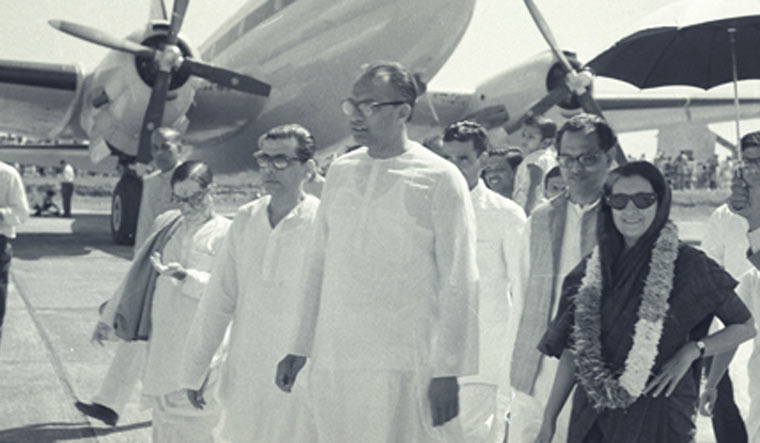
    Biju Patnaik: The flying ace who helped Indian and foreign freedom movements 


    Recently, 104th birth anniversary of former Odisha chief minister Biju Patnaik was celebrated. He was a decorated freedom fighter. PM tweeted an Intelligence Bureau document from 1945 to show how Patnaik bravely lent his flying skills to rescue freedom fighters like Ram Manohar Lohia.

    Biju Pattnaik

    • Bijayananda Patnaik (1916-1997), popularly known as Biju Patnaik, was an Indian politician, aviator and businessman. As politician, he served twice as the Chief Minister of the State of Odisha.
    • It is well known that Biju Patnaik actively helped freedom fighters in the 1940s.
    • His daring was evident as he actively joined the Quit India movement in 1942 and collaborated with the underground leaders like Jayaprakash Narayan, Aruna Asif Ali and Dr. Ram Manohar Lohia, even while in the British service.
    • Patnaik was imprisoned by the British Government for three years later.

    Role in foreign freedom struggles

    • As an officer in the Royal Indian Air Force in the early 1940s, Patnaik flew innumerable sorties to rescue British families fleeing the Japanese advance on Rangoon, the capital of Burma.
    • He also dropped arms and supplies to Chinese troops fighting the Japanese and later to the Soviet army struggling against Hitler’s onslaught near Stalingrad.
    • On the 50th anniversary of the end of the war, Patnaik was honoured by the Russians for his help,” the obit noted.
    • Interestingly, Nehru entrusted Patnaik with rescuing Indonesian resistance fighters who were fighting their Dutch colonisers.
    • Accompanied by wife Gyanwati, “the lanky pilot flew an old Dakota aircraft to Singapore en route to Jakarta where the rebels were entrenched” in 1948.
    • Dodging the Dutch guns, he entered Indonesian airspace and landed on an improvised airstrip near Jakarta.
    • Using left-over fuel from abandoned Japanese military dumps, Patnaik took off with prominent rebels, including Sultan Shariyar and Achmad Sukarno, for a secret meeting with Nehru at New Delhi.
  • Blockchain Technology: Prospects and Challenges

    Supreme Court ruling on Virtual Currency

    The Supreme Court in a significant move has set aside a ban by the Reserve Bank of India (RBI) on banks and financial institutions from dealing with virtual currency holders and exchanges.

    Why did the Supreme Court ban virtual currencies?

    • In a circular in 2018, the RBI had banned banks from dealing with virtual currency exchanges and individual holders on the grounds that these currencies had no underlying fiat.
    • RBI held that it was necessary for the larger public interest to stop banks from providing any services related to these.

    Why was the ban unjustified?

    • The court held that the ban did not pass the “proportionality” test.
    • The test of proportionality of any action by the government, the court held, must pass the test of Article 19(1) (g) which states that all citizens of the country will have the right to practise any profession, or carry on any occupation or trade and business.

    What are virtual currencies?

    • There is no globally accepted definition of what exactly is virtual currency.
    • Some agencies have called it a method of exchange of value; others have labelled it a goods item, product or commodity.
    • In its judgment the apex Court observed- Every court which attempted to fix the identity of virtual currencies, merely acted as the 4 blind men in the Anekantavada philosophy of Jainism, who attempt to describe an elephant but end up describing only one physical feature of the elephant.

    Similarities with Bitcoin

    • Satoshi Nakamoto widely regarded as the founder of the modern virtual currency bitcoin and the underlying technology called blockchain defined bitcoins as “a new electronic cash system that’s fully peer-to-peer, with no trusted third party”.
    • This essentially meant there would be no central regulator for virtual currencies as they would be placed in a globally visible ledger, accessible to all the users of the technology.
    • All users of such virtual currencies would be able to see and keep track of the transactions taking place.

    Are they different from cryptocurrencies?

    • Virtual currency is the larger umbrella term for all forms of non-fiat currency being traded online. Virtual currencies are mostly created, distributed and accepted in local virtual networks.
    • Cryptocurrencies, on the other hand, have an extra layer of security, in the form of encryption algorithms.
    • Cryptographic methods are used to make the currency as well as the network on which they are being traded, secure.
    • Most cryptocurrencies now operate on the blockchain or distributed ledger technology, which allows everyone on the network to keep track of the transactions occurring globally.

    Are cryptocurrencies dangerous?

    • The jury is out on that. Organisations across the globe have called for caution while dealing with virtual currencies.
    • A blanket ban of any sort could push the entire system underground, which in turn would mean no regulation.
    • In June 2013, the RBI had for the first time warned users, holders and traders of virtual currencies about the potential financial, operational, legal and customer protection and security-related risks that they were exposing themselves to.
    • The following year, the FATF came out with a report that highlighted both legitimate uses and potential risks associated with virtual currencies.
    • In a different report, it again said the use of such virtual currencies was growing among terror financing groups.

    Why did the RBI ban virtual currencies?

    • Owing to the lack of any underlying fiat, episodes of excessive volatility in their value, and their anonymous nature which goes against global money-laundering rules, the RBI initially flagged its concerns on trade and use of the currency.
    • Risks and concerns about data security and consumer protection on the one hand, and far-reaching potential impact on the effectiveness of monetary policy itself on the other hand, also had the RBI worried about virtual currencies.
    • In its arguments, RBI said it did not want these virtual currencies spreading like a contagion, and had, therefore, in the larger public interest, asked banks not to deal with people or exchanges dealing in these non-fiat currencies.
    • The RBI perceived significant spurt in the valuation of many virtual currencies and rapid growth in initial coin offerings as a risk.

    Proponent’s stance

    • They said the RBI action was outside its purview as the non-fiat currency was not a currency as such.
    • They also argued that the action was too harsh and there had been no studies conducted either by the RBI or by the central government.
    • Arguing that the ban was solely on “moral grounds”, the petitioners said the RBI should have adopted a wait-and-watch approach, as taken by other regulators such as SEBI.

    Faring the Proportionality test

    • In its judgment, the Supreme Court held that the RBI directive came up short on the five-prong test to check proportionality.

    It includes:

    • the direct and immediate impact upon fundamental rights
    • the larger public interest sought to be ensured; a necessity to restrict citizens’ freedom
    • inherent pernicious nature of the act prohibited or its capacity or tendency to be harmful to the general public
    • the possibility of achieving the same object by imposing a less drastic restraint

    Way Forward

    • The Supreme Court’s judgment could lead to the RBI rethinking its policies surrounding virtual currencies.
    • It is expected that the RBI will reconsider its approach to cryptocurrency and come up with a new, calibrated framework or regulation that deals with the reality of these technological advancements.
    • The decision will help those investors who had used legitimate money through banking channels.
  • Innovations in Sciences, IT, Computers, Robotics and Nanotechnology

    Media Access Control (MAC) Binding

    After seven months, the use of social media was allowed in Jammu and Kashmir with an order laying down the latest rules for the use of the Internet in the UT.  Among various conditions, the order says Internet connectivity will be made available “with mac-binding”.

    What is Mac-binding?

    • Every device has a Media Access Control (MAC) address, a hardware identification number that is unique to it. While accessing the Internet, every device is assigned an IP address.
    • Mac-binding essentially means binding together the MAC and IP addresses, so that all requests from that IP address are served only by the computer having that particular MAC address.
    • In effect, it means that if the IP address or the MAC address changes, the device can no longer access the Internet.
    • Also, monitoring authorities can trace the specific system from which a particular online activity was carried out.

    Permitted connections

    • The Internet can be accessed on all postpaid devices, and those using Local Area Networks (LAN).
    • While the postpaid SIM card holders shall continue to be provided access to the Internet, these services shall not be made available on prepaid SIM cards unless verified as per the norms applicable for postpaid connections.
    • Apart from this, special access terminals provided by the government will continue to run.
    • It is further directed that the access/communication facilities provided by the government, viz. e-terminals/Internet kiosks apart from special arrangements for tourists, students, traders etc shall continue.

    Only 2G permitted

    • Internet speed in J&K is still restricted to 2G.
    • This means very slow services — pictures will take a long time to be sent or downloaded, videos will be nearly impossible to share, and there will be a long loading time for most websites.
    • It also means that although in theory, the “whitelist system” — where people could only access some websites pre-approved by the government — has been removed, some sites designed for a 4G Internet experience will hardly work.

    Have curbs been lifted?

    • Not exactly. The latest order is to remain in force till March 17 unless modified earlier.
    • The government has been relaxing Internet and phone usage in the UTs in phases.
  • Innovations in Biotechnology and Medical Sciences

    Unguarded X hypothesis

    Men outnumbered women by 37 million in the 2011 Census of India, but among those over the age of 60, there were more than 1 million more women than men. In general, men live shorter lives than women worldwide. This is due to the chromosomal differences between the two, points’ new study.

    What are Chromosomes?

    • The human body is made up of cells, and in the centre of each cell is the nucleus. Chromosomes, which are located inside the nucleus, are structures that hold the genes.
    • It is the genes that determine the various traits of an individual including eye colour, blood type — and sex.
    • The human cell has 23 pairs of chromosomes. One pair is of the sex chromosomes, named X and Y, which determine whether an individual is male or female.
    • A female has two X chromosomes (XX) while a male has one X and one Y (XY).

    Unguarded X hypothesis

    • This hypothesis suggests that the Y chromosome in XY is less able to to protect an individual from harmful genes expressed on the X chromosome.
    • In a male, as the Y chromosome is smaller than the X chromosome, it is unable to “hide” an X chromosome that carries harmful mutations, which may later expose the individual to health threats.
    • On the other hand, the hypothesis goes, there is no such problem in a pair of X chromosomes (XX) in a female.
    • If one of the X chromosomes has genes that have suffered mutations, then the other X chromosome, which is healthy, can stand in for the first, so that the harmful genes are not expressed.
    • This maximizes the length of life, according to the hypothesis. And this is what the UNSW researchers set out to examine.

    Testing the hypothesis

    • In a statement issued by UNSW, PhD student and study first author Zoe Xirocostas said the
    • Unguarded X hypothesis appears to stack up, after examining the lifespan data available on a wide range of animal species.
    • Researchers studied lifespan data in not just primates but mammals and birds, but also reptiles, fish, amphibians, arachnids, cockroaches, grasshoppers, beetles, butterflies and moths among others.
    • It was found that across that broad range of species, the heterogametic sex (XY in humans) does tend to die earlier than the homogametic sex (XX in humans).
  • Economic Indicators and Various Reports On It- GDP, FD, EODB, WIR etc

    Way out lies within

    Context

    Domestic demand must play a greater role in India’s growth story.

    Recovery in the Indian economy

    • Sub-5 per cent growth rate: India’s fourth-quarter GDP growth (the calendar year 2019) printed another sub-5 per cent growth rate.
    • Favourable base effect: It would have been lower had it not been for the large downward revisions to previous years’ GDP that statistically boosted the last quarter’s growth rate because of favourable base effects.
    • The decline in GDP stabilised: Policymakers and the market heaved a sigh of relief that the relentless decline over the last three years at least seems to have stabilised around 4-5 per cent.
    • Why some countries prefer sequential growth rate: Because year-over growth rates are so strongly affected by what happened a year ago, most economies (including China) instead publish and conduct policy discussions based on sequential quarterly growth.
      • Better sense of momentum: Sequential growth rates provide a much better sense of the momentum and turning points in activity, which are critical to deciding whether, how much, and when the economy needs policy support.
    • The magnitude of recovery: The growth momentum rose, albeit modestly, from 3.8 per cent in the third quarter of 2019 to 4.1 per cent.
      • Non-farm and non-governmental GDP recovery: More importantly, non-farm and non-government GDP (the closest approximation to non-farm private-sector GDP) bounced much more sharply from 1.6 per cent (and no this is not a misprint) to 4.4 per cent in the fourth quarter.

    What is the dominant narrative of the slide in growth?

    • The deceleration in sequential terms: With the revised data, we now know that annual growth over the last four years has slowed from 8.3 per cent to 7 per cent to 6.1 per cent to 4-5 per cent.
      • The decline in non-farm private GDP: In sequential terms, the deceleration was far more dramatic, especially in non-farm private GDP, which after hitting a run rate of 13 per cent in the first quarter of 2016 fell to 1.6 per cent by the third quarter of 2019.
      • The dominant narrative of the cause of slide: The dominant narrative is that India’s woes are just an unfortunate and unintended consequence of demonetisation, the shift to a national GST, and the credit squeeze caused by the bad debt in banks and non-banks.
      • The dominant narrative on recovery: With a bit more fiscal support, some monetary easing, and extended regulatory forbearance to help banks work out their bad debts, these headwinds will fade and India will likely be back to its winning ways.

    Why real cause of the slowdown lays somewhere else?

    Following factors suggest that answer lies somewhere else.

    • Disruptive but not the drivers of the slowdown: While it is undeniable that facts stated in the dominant narrative had been disruptive, they couldn’t be the drivers of the decline.
      • Slide in growth started even before demonetisation: India’s growth had been sliding since the second quarter of 2016; nearly 6 months before demonetisation and a year before the GST was introduced.
      • By the third quarter of 2016, non-farm private sector growth had already slid to 3.5 per cent.
      • Bad debt problem predates slowdown: Although bad debt hit the headlines in 2016, the overleverage had already begun to tighten bank lending since 2014.
    • Fall in corporate investment- inexplicable cause: More inexplicable is the argument that falling corporate investment is the main culprit for the slowdown.
      • It is true that corporate investment is no longer running at the heady 17 per cent of GDP of the pre-global financial crisis (GFC) days but at a much more sombre 11-12 per cent.
      • However, this outsized adjustment had already taken place by 2010 and since then, corporate investment has flatlined at current levels.

    The answer lies in globalisation

    It is obvious once one eschews India’s exceptionalism and accepts that it is just another emerging market economy that grew on the coattails of globalisation with the minimal reforms. Globalisation has largely determined India’s fate.

    • Growth in corporate investment and exports: Contrary to a widely held misperception, India is and has been for a long time far more open to the global economy than believed.
      • Rise in corporate investment from 5 to 17%: The limited liberalisation of 1991-92, coupled with the corporate restructuring in the late 1990s, spurred corporate investment to rise from 5-6 per cent of GDP in the early 2000s to 17 per cent of GDP by 2008.
      • Increase in exports: Almost all of this expansion in investment was geared to produce for exports, which grew at an astonishing pace of 18 per cent per year-over-year in this period as global trade expanded at breakneck speed with the entry of China into the WTO in 2001.
      • 12% of GDP to 26% of GDP: Exports as a share of GDP more than doubled from 12 per cent in the early 2000s to over 26 per cent by 2008.
      • Slow growth in private consumption: In contrast, private domestic consumption, which is considered to be India’s great strength, grew only at 6 per cent annually, less than the growth rate of the economy, such that its share in GDP fell from 63 per cent to 56 per cent.
      • The engine of the Indian economy- Export: Since 2012, global trade has floundered and with that so has India’s economy.
      • Indeed, the entire rise and fall of investment, including the quarter-to-quarter twists and turns in it, can be almost fully explained by changes in exports.
      • The Indian economy has long been flying on one engine – exports — and that is now spluttering.

    What are the prospects of taking the economy back to its high growth path

    • Unlikely: So will the nascent recovery strengthen and take the economy back to its high growth path? Unlikely on current policies.
    • COVID-19 factor: In the near term, as in now widely feared, the COVID-19 outbreak could turn into a pandemic, sharply reducing global demand and trade.
      • With that, even expectations of a modest 2019-20 recovery to 5.25 per cent growth are under threat.
    • Backlash against globalisation: Over the longer term, it is unlikely that global trade will return to its pre-Global financial crisis growth rates not only because supply chains have stopped expanding in the absence of any material technology breakthrough, but there is also a growing political backlash against globalisation in the developed market that has led to increased trade barriers.

    Way forward

    • Search for new sources of growth: India too, like other emerging market economies, needs to face up to the reality that it can no longer depend on global trade to be the only growth driver. Instead, it needs to search and find new sources of growth and that starts with recognising and accepting reality.
    • Let domestic demand play a greater role in the economy: Policymakers need to stop thinking about India as a perennially supply-constrained economy focusing almost all policies and reforms to easing these constraints. Instead, it is time to let domestic demand play a greater role in India’s growth story.
    • Policy changes: The above factors mean that India Inc. needs to shift from producing what foreigners want to produce what residents can afford, it also means that policymakers have to reverse policies that have so far forced households to keep increasing savings (for retirement income, children’s education, healthcare, and housing) through a web of financial repression, regulatory distortions, and public spending choices.
      • It means redesigning India’s infrastructure to look more inward and less outward.
      • Reduce out of pocket expenses: Increasing public provisioning of healthcare and education, reforming insurance regulations to reduce out-of-pocket expenses and eliminating financial repression to raise returns on retirement savings.
      • Merely tinkering with macroeconomic policies will not be enough.


  • Higher Education – RUSA, NIRF, HEFA, etc.

    Teaching the teacher

    Context

    Our teacher education system must be aligned with global standards.

    Learning crisis and teacher vacancies in India

    • Teacher education as a status check on schooling education: Comparable to the role of a thermometer in diagnosing fever, an assessment of the quality of teacher education can be a status check on the schooling system.
      • Teachers remain at the heart of the issue, and translating schooling into learning is a critical challenge.
    • The gravity of learning crisis: The learning crisis is evident in the fact that almost half of the children in grade 5 in rural India cannot solve a simple two-digit subtraction problem,
      • While 67 per cent of children in grade 8 in public schools score less than 50 per cent in competency-based assessments in mathematics.
    • Teacher vacancies: India is dealing with a scenario of significant teacher vacancies, which are to the tune of almost 60-70 per cent in some states.
    • In fact, there are over one lakh single-teacher schools present across the country.
    • Excess teachers produced by TEIs: On the other hand, there are 17,000-odd Teacher Education Institutes (TEIs) that are responsible for preparing teachers through programmes such as the Bachelor of Education (B.Ed), and Diploma in Elementary Education (D.El.Ed).
      • 19 lakh teachers every year: Taking their sanctioned intake into account, at full operation, these TEIs could generate over 19 lakh freshly trained teachers every year as against the estimated annual requirement of 3 lakh teachers.
      • To put things in perspective, currently, there are about 94 lakh teachers across all schools in India.
      • Every year, the teacher education system could, therefore, be producing one-fifth of the total number of school teachers.

    The quality aspect of the teachers

    • Poor quality teachers: Not only are these TEIs generating a surplus supply of teachers, but they are also producing poor-quality teachers.
    • Pass percentage in eligibility test below 25%: Besides it being reflected in the dismal state of learning across schools, the pass-percentage in central teacher eligibility tests that stipulate eligibility for appointments as teachers has not exceeded 25 per cent in recent years.
      • This begs a pertinent question — how did we get here?

    What are the reasons for such problems?

    • The answers lie in:  The inadequacies of planning, regulation, policy and organisational structures.
    • The role and issues in NCTE: The National Council for Teacher Education (NCTE) and its four regional committees (north, south, east and west), established by statute, are responsible for teacher education in India.
      • Toothless in terms of powers: The Act assigns disproportionate power to the regional committees which grant programme affiliation while the Council has been rendered toothless.
    • Proliferation of sus-standard TEIs: Perverted incentives, widespread corruption and commercialisation have resulted in a massive proliferation of sub-standard TEIs.
      • In fact, while most of these TEIs are financially unviable, some function out of tiny rooms with duplicate addresses, and a few could even be selling degrees at a fixed price.
      • No system to ensure the entry of meritorious: These institutes function in isolation from the rest of the higher education system, and there is no system to assess and accredit them. Consequently, there is no systemic sieve to ensure the entry of only motivated and meritorious individuals into the teacher education space.
    • Disparity regional spread of TEIs: A more granular look reveals disparities across regions and programmes offered.
      • One-third in UP: Almost one-third of the TEIs are concentrated in Uttar Pradesh.
      • In fact, Ghazipur, a district in UP with a population of around one lakh, has a whopping 300 TEIs.
      • Approximately half of the total TEIs are in the northern region with Rajasthan having the second-largest number of institutes.
    • Poor planning: While there are about 17 recognised teacher education programmes, a majority of TEIs offer only B.Ed and D.El.Ed programmes.
      • This reinforces the point of poor planning as the country is actually facing a shortage of subject teachers in secondary schools and teacher-educators for whom a Master of Education (M.Ed) degree is a requisite (offered in less than 10 per cent of the TEIs).
    • Outdated curriculum: Adding to the mix of challenges is an outdated teacher preparation curriculum framework that was last updated over a decade ago.
    • Regulation by multiple agencies: On the governance front, multiple agencies have oversight on teacher education.

    Way forward

    • Collect the credible data: Any reform initiative must be built on credible data.
      • No data available: To date, there is no accurate real-time database of the number and details of teacher education institutes, students enrolled and programmes offered.
      • How the data can be helpful? Such data could be used to create a comprehensive plan for the sector, devising the optimal number of TEIs, their regional spread and programme-wise intake.
      • One cannot but underscore the significance of proper planning. The teachers will concur.
    • Develop the system of assessment and accreditation: An accurate system of assessment and accreditation must be developed to ensure high-quality teacher education.
      • The National Accreditation and Assessment Council (NAAC), responsible for quality-standards in higher education, has only covered 30 per cent of all institutes since its establishment back in 1994.
      • Given the extensive landscape of the teacher education sector alone and current capacity constraints, it is necessary that multiple accreditation agencies be empanelled.
      • A common accreditation framework should be designed through a consultative process including all relevant stakeholders to facilitate its wider acceptability.
      • A transparent and credible system of accreditation could form the bedrock for weeding out substandard TEIs and propelling quality improvements in the rest.
    • The curriculum of global quality: Core determinant of quality is the curriculum which must be regularly revamped and revised to ensure that our teacher education system is aligned to global standards.
      • Ideally, given that teacher education requires a good mix of curricular inputs and good-quality pedagogy, experts are rightly advocating for a shift towards integrated four-year subject-specific programmes to be housed in multidisciplinary colleges and universities.
      • In the first phase, these may be initiated in select central and state universities.
      • Potential to outsource teachers: This could also potentially serve as an avenue for India to outsource its surplus high-quality teachers to over 70 countries that face a teacher shortage.
    • Administrative will and execution: Finally, reforms must be driven by administrative will and executed through a well-established governance mechanism, clearly establishing ownership and accountability for set work streams across multiple agencies.
      • The draft National Education Policy presents a ray of hope.
      • Its vision to restore integrity and credibility to the teacher education system needs to be translated into effective action.

    Conclusion

    India is estimated to have the largest workforce within the next decade. This means that a population bulge is on the cusp of entering the higher education ecosystem now. The pressing need of the hour is to focus on providing the best quality teacher education to those who aspire to build the future of this country.


  • Minority Issues – SC, ST, Dalits, OBC, Reservations, etc.

    A blow against social justice

    Context

    The recent verdict of a two-judge Supreme Court Bench on reservations and Scheduled Caste and Scheduled Tribes promotions — has mainly raised four constitutional questions.

    The first question-Whether reservation in promotions is a fundamental right or not. 

    • Scope for the reservation: Addressing the first question, the scope for reservation for the Backward Classes is promised in Part III of the Constitution under Fundamental Rights.
      • Articles 16(4) and 16(4A) which empowers the state to provide reservation for SCs and STs are a part of the section, “Equality of opportunity in matters of public employment”.
      • The right to equality is also enshrined in the Preamble of the Constitution. Many construe that the reservation is against Article 16 (Right to equality).
    • The basis for the reservation: One should understand that the absence of equal opportunities for the Backward Classes due to historic injustice by virtue of birth entails them reservation.
      • In other words, the right to equality is the basis of reservation as there is no level-playing field among castes.
      • Articles 16 (2) and 16(4) are neither contradictory nor mutually exclusive in nature. In fact, they are complementary to each other; even Article 16(4) is not a special provision.
    • Whether reservation should be applied in promotions?
      • The answer is yes because, in India, where there is a peculiar hierarchical arrangement of caste, it is conspicuous that SCs and STs are poorly represented in higher posts.
      • Confined to lower cadre jobs: Denying application of reservation in promotions has kept SCs and STs largely confined to lower cadre jobs. This is even seen in the higher judiciary.
      • Hence, providing reservation for promotions is even more justified and appropriate to attain equality.
      • Need of the reservation at every level: The question of law is not about enabling reservations in promotions or not, but this judgment destabilises the very basis of reservation; when there is no direct recruitment in higher posts, the implementation of the reservation is justified at every level to get a reasonable representation.
      • Subdivision of reservation not correct: It is not correct to subdivide the scope of reservation at the entry-level and in promotions; this delineation will only lead to confusion in the implementation of reservation.
      • Now, by declaring that reservation cannot be claimed as a fundamental right is a dangerous precedent in the history of social justice.

    The second question- Can a court issue a mandamus to the state for providing reservation?

    • Will it be appropriate for the courts to issue a mandamus in this regard?
      • This is inappropriate because when the court is empowered to pass orders to create extra seats every year for forward-caste students who claim to be affected by reservation, why cannot it direct the state to provide reservation in promotions?
    • Use of powers under Article 142: The Supreme Court has extraordinary powers under Article 142, which empowers the Court to pass any order necessary for doing “complete justice in any cause or matter pending before it”.

    Third question-Necessity of quantifiable data

    • Data to prove inadequate representation: The next question is about the necessity of quantifiable data to show an inadequate representation of reserved category people.
    • Article 16 addresses the question: This question has been addressed in the Constitution. Article 16(4) reads: “Nothing in this article shall prevent the State from making any provision for the reservation of appointments or posts in favour of any backward class of citizens which, in the opinion of the State, is not adequately represented in the services under the State.”
    • How “opinion of the State” should be construes: Here, “in the opinion of State” should not be construed as the discretion of the state to give the reservation or not; on the contrary, if the state feels that SCs and STs are under-represented, then it is in the domain of the state to provide reservation.
    • Quantifiable data for exceeding the 50% limit: In the Indra Sawhney vs Union of India case (Mandal Commission) the idea of quantifiable data on inadequate representation was applied for exceeding the 50% cap for reservation; within 50% where the existing quotas for SCs and STs are accommodated were not affected.
      • Responsibility to collect data on the State: The responsibility of collecting data on representation by the Backward Classes lies with the state.
      • Pathetically, the last caste-based census was in 1935, and in the pre-Independence era, by the British government.
      • No caste-based census in India: After Independence, no government has had the inclination to conduct a caste-based census due to political reasons.
      • Even if a caste-based census is collected, the population and proportionate representation of SCs and STs will be low. For this reason alone, a proper caste-based census has not been conducted in independent India.
      • No mention of quantifiable data: Moreover, Article 16(4) clearly mentions that if the state, in its opinion, feels that SCs and STs are not adequately represented, then it can provide reservation for them. There is no mention of “quantifiable data” in the Constitution. Even after 70 years of SC/ST reservation, their representation is as low as 3%.

    Fourth question-Whether it is the obligation of the state to give reservation?

    • Obligatory on the government: Finally, if the argument is that it is not binding on the state to give reservation, it must be noted that when reservation rights are in Part III as Fundamental Rights, it is the obligation of the state to ensure reservation to the underprivileged.
    • Interpretation as obligatory provisions: This judgment has interpreted Articles 16 (4) and 16(4A) only as enabling provisions.
    • Enabling provisions mean that these provisions empower the state to intervene; it does not mean the state is not bound to provide it.
    • Interpreting the Constitution by paraphrasing and selective reading is dangerous.

     Administrative efficiency

    • Reservation should not affect the efficiency of administration: More importantly, this judgment has raised a new point — that the decision of the State government to provide reservation for SC/STs should not affect the efficiency of administration.
      • This implies that the entry of SC/STs in the job market can reduce the quality of administration; this by itself is discriminatory.
    • No evidence to support the claim: There is no evidence that performance in administration is affected on account of caste.
    • There have been many attempts to dilute reservation in the past. But, this judgment appears to be debatable in the larger context and should be challenged in a constitutional bench.

    Conclusion

    In a country of parliamentary democracy, even the Constitution of India can be amended. If the government at the Centre has a genuine concern for SC/STs, it can amend the Constitution using its political majority.

  • Economic Indicators and Various Reports On It- GDP, FD, EODB, WIR etc

    The growth challenge

    Context

    The focus in the near future should to increase investments and facilitate credit for funding these productive assets so that India’s potential output growth can steadily rise.

    Growth prospects of India

    • The NSO forecast at 5%: The latest data from the National Statistical Office (NSO) retained India’s economic growth forecast at 5 per cent for the current financial year.
      • Growth has dropped from 6.1 per cent in the previous year.
    • Fall in nominal GDP: More strikingly, nominal GDP growth has decelerated from an average of 11 per cent during 2016-17 to 2018-19 to 7.5 per cent this year.
      • Lower inflation added to the volume slowdown.
      • The value of India’s GDP for FY20 is estimated at around $2.9 trillion.

    Input and output side growth prospects

    • GDP is estimated from both output and demand lenses, using specific economic indicators as proxies for activity in specific sectors.
    • Output side: From the output side, sector-wise estimates were as following-
      • Agriculture sector growth was revised up to 3.7 per cent (up from the 2.8 per cent previously).
      • Agricultural production is expected to improve based on the third advance estimates of the rabi season crops, as well as higher horticulture and allied sector output (livestock, forestry and fishing), which now is significantly larger than conventional food crops.
      • Industrial activity was lowered to 1.5 per cent (from 2.3 per cent earlier).
      • The key concern regarding the continuing slowdown is the increasing weakness in the industrial sector (particularly of manufacturing, whose growth has progressively fallen from 13.1 per cent in FY16 to 5.7 per cent in FY19, and plummeting to 0.9 per cent in FY20).
      • Services output remained largely unchanged at 6.5 per cent.
    • Demand-side: From a demand perspective, the obverse side to the manufacturing slowdown is the even sharper drop in fixed asset investment growth — down sharply from an average 8.5 per cent during FY17 and FY19 to -0.6 per cent in FY20.
      • The causes for this contraction needs to be understood in detail, and we will return to this.

    Private consumption- a significant driver of growth

    • Private consumption at 60% of GDP: The other significant driver of growth in India has been private consumption. For perspective, the share of private consumption had averaged 59-60 per cent during FY16-FY20.
    • Government consumption 10% of GDP: Reflecting the higher spending over the last couple of years, the share of government consumption in GDP has risen from an average of 10.5 per cent of GDP over FY12-17 to almost 12 per cent in FY20, resulting in the share of total consumption above 70 per cent.

    Drop in the share of nominal investment

    • Drop from 39 % to 30 % of GDP: The really remarkable trend, though, as noted above, is the share of nominal investment in GDP progressively dropping from 39 per cent in FY12 to 30 per cent in FY20.
    • Is it a good sign? Part of this is actually good, reflecting higher Capex efficiency.
      • Slowing household consumption: One narrative underlying the contraction in fresh Capex in FY20 was slowing household consumption growth, which, in nominal terms, fell from an average 11.6 per cent during FY16-19 to an estimated 9.1 per cent in FY20.
      • Disproportionate contribution to lower growth: Though the deceleration prima facie does not seem significant enough to result in a broader economic slowdown of the current magnitude, the high share of household consumption has contributed disproportionately to lower growth.
      • Fall in capacity utilisation: A direct fallout of this is that seasonally adjusted capacity utilisation (based on RBI surveys) had shrunk from 73.4 per cent in the first quarter of FY20 to 70.3 per cent in the second quarter, and this is unlikely to have improved materially in the second half of the year.
      • This is one of the reasons for the low levels of fresh investment.

    Reduced flow of credit to the commercial sector

    • Impediment to growth revival: The other cause of the low Capex, more from the supply side, is a much-reduced flow of credit to the commercial sector, and this remains the proximate impediment for growth revival, with signs of risk aversion in lending still strong despite the recent measures by RBI to incentivise credit to productive sectors.
      • Funds from selected sources, over April-January FY20, was only about Rs 9 lakh crore as against Rs 15 lakh crore in the corresponding 10 months of FY19.
    • Bank credit lowest in three months: Growth in bank credit (which is still the largest source of financing) till mid-February 2020 was down to 6.3 per cent — the lowest in three years.
      • Even this is almost wholly driven by retail credit; incremental credit to industry and services over this period was negative.

    Investor confidence and coronavirus factor

    • A bright feature of the economic environment: One bright feature in this economic environment is strong foreign investor confidence in India, reflected in both FPI equity and FDI flows.
      • Many borrowers have used offshore sources to refinance or pay down domestic bank loans and debt.
      • A global risk-off environment might restrict even this channel in the near future.
    • Robust corporate bond issuances: Domestic corporate bond issuances have also remained robust, although the dominant set of borrowers still remain public sector agencies and financial institutions.
    • Coronavirus factor likely to moderate the gains: Monthly economic indicators suggest that the growth deceleration has likely bottomed out in the third quarter.
      • The bet has been on reducing inventories and the consequent production ramp-up to replenish stocks. However, the evidence on this is mixed.
      • The coronavirus effects, both concurrent and lagged, will also moderate some of the emerging positive effects of counter-cyclical policy measures of the past six months.
      • If the outbreak does not abate over the next month or so, the complex supply chains of intermediates sourced from China will run dry and add to the already weak system demand.
    • Growth prospects in the next few weeks: Surveys indicate that both business and consumer confidence, which while improving, remain muted. A growth revival, hence, is likely to be only very modest over the next few quarters.

    Conclusion

    A $5 trillion economy by 2025 is still a worthwhile target and aspirational; coordinated strategies, policies, execution and institutional mechanisms will be needed to move up to a sustained 8 per cent plus growth consistent with achieving the target. The focus in the near future should to increase investments and facilitate credit for funding these productive assets so that India’s potential output growth can steadily rise.


  • Human Rights Issues

    Explained: Why UN Human Rights Commission intends to intervene in a SC case against CAA?

    The UN High Commissioner for Human Rights “intends to file” an Intervention Application in the Supreme Court of India seeking to intervene in Writ Petition (Civil) No. 1474 of 2019 and praying that it be allowed to make submissions.

    On what grounds is a UN body seeking to intervene in a case regarding a domestic Indian law?

    • The Office of the High Commissioner for Human Rights (UN Human Rights) is the leading UN entity on human rights.
    • The UN General Assembly entrusted both the High Commissioner and her Office with a unique mandate to promote and protect all human rights for all people.
    • As the principal United Nations office mandated to promote and protect human rights for all, OHCHR leads global human rights efforts speaks out objectively in the face of human rights violations worldwide.
    • This resolution, adopted by the UNGA in 1994, created the post of the UN High Commissioner for Human Rights.

    Its jurisdiction

    • The application says that successive High Commissioners have filed amicus curiae briefs on issues of particular public importance within proceedings before a diverse range of international and national jurisdictions.
    • It includes the European Court of Human Rights, the Inter-American Court of Human Rights, the International Criminal Court, and at the national level, the United States Supreme Court and final appeal courts of States in Asia and Latin America.

    What exactly does the intervention application say?

    • The OHCHR has welcomed as “commendable” the CAA’s stated purpose, “namely the protection of some persons from persecution on religious grounds.
    • It also “acknowledges the history of openness and welcome that India has exhibited to persons seeking to find a safer, more dignified life within its borders”.
    • However the examination of the CAA raises important issues with respect to international human rights law and its application to migrants, including refugees, says the OHCHR.
    • The CAA, it says, raises “important human rights issues, including its compatibility in relation to the right to equality before the law and nondiscrimination on nationality grounds under India’s human rights obligations”.
    • The application acknowledges that “the issue of nondiscrimination on nationality grounds falls outside the scope of this intervention”, but insists that “this in no way implies that there are not human rights concerns in this respect”.

    Why intervene?

    • The application questions the reasonableness and objectivity of the criterion of extending the benefits of the CAA to Buddhists, Sikhs, Hindus, Jains, Parsis and Christians from Afghanistan, Bangladesh and Pakistan alone.
    • It points out that while the Indian government has suggested that persons of Muslim faith, regardless of denomination or ethnicity, are protected there.
    • However recent reports by UN human rights show that Ahmadi, Hazara and Shia Muslims in these countries warrant protection on the same basis as that provided in the preferential treatment proposed by the CAA.

    Is there a specific basis on which the OHCHR has faulted the CAA?

    The application flags some central principles of international human rights law:

    1. the impact of the CAA on some migrants
    2. the enjoyment of human rights by all migrants and the rights of all migrants (non-citizens) to equality before the law and
    3. the principle of non-refoulment, which prohibits the forcible return of refugees and asylum seekers to a country where they are likely to be persecuted
    • The application mentions that all migrants “regardless of their race, ethnicity, religion, nationality and/or immigration status enjoy human rights and are entitled to protection”.
    • It cites international human rights instruments to urge the inclusion of non-discrimination, equality before the law, and equal protection before the law into the foundation of a rule of law.
    • International human rights law, the application says, does not distinguish between citizens and non-citizens or different groups of non-citizens for the purposes of providing them protection from discrimination, “including in respect of their migration status”.

    India’s stance

    • The Citizenship Amendment Act is an internal matter of India and concerns the sovereign right of the Indian Parliament to make laws.
    • MEA spokesperson insisted that no foreign party has any locus standi on issues pertaining to India’s sovereignty.
    • The CAA was “constitutionally valid and complies with all requirements of (India’s) constitutional values”, and “is reflective of our long-standing national commitment in respect of human rights issues arising from the tragedy of the Partition of India”.

Join the Community

Join us across Social Media platforms.
